The Projection Booth turns its attention to Entertaining Mr. Sloane (1970), the adaptation of Joe Orton’s infamous stage play, directed by Douglas Hickox. Jonathan Owen and Rob St. Mary join Mike to dig into Orton’s razor-sharp wit, corrosive humor, and enduring legacy as one of Britain’s most provocative voices. The hosts unpack how the film confronts taboo subjects—sexuality, class resentment, violence—without softening Orton’s contempt for social respectability or his glee in watching social structures collapse.
At the center of the film is Mr. Sloane, a charming, amoral drifter and occasional rentboy played with unnerving poise by Peter McEnery. When Sloane encounters the aggressively lonely Kath (Beryl Reid) and her domineering, closeted brother Ed (Harry Andrews), he quickly embeds himself into their lives—sexually, psychologically, and economically.
The group also broadens the discussion to Orton’s screen legacy, touching on the other 1970 adaptation Loot, as well as the biopics Prick Up Your Ears and Joe Orton Laid Bare. Together, they consider how Orton’s work—and his life—continue to challenge audiences, remaining as abrasive, funny, and unsettling now as they were more than half a century ago.
Czechtember gallops forward with Oldřich Lipský's madcap musical parody Lemonade Joe (1964). Adapted from Jiří Brdečka’s novel and play, the film stars Karel Fiala as the squeaky-clean pitchman of Kolalok Cola who rides into town to clean up the Wild West. Standing in his way is Miloš Kopecký as the dastardly Horác Badman—better known as Hogofogo. With tinted black-and-white visuals, slapstick invention, and a send-up of both Hollywood westerns and consumer culture, this is pure Lipský—irreverent, dazzling, and completely unforgettable.
Mike is joined by Jonathan Owen and Alistair Pitts to unpack this fizzy Czech classic.
Music:
"Limonádový Joe - Úvodní titulky k americké verzi" - American Dub Version
"Limonádový Joe - Prolog a výstup Horáce" - Zdenìk Dítì, Zdenìk Stránský, Skupina Vìtrník
"Limonádový Joe" - Žlutý pes
"To jsem ja, ten kovboj (Rhinestone Cowboy)" - Waldemar Matuska
We conclude Czechtember 2024 with a film from František Vláčil, Adelheid (1969). Based on the book by Vladimír Körner, the film stars Petr Čepek as Viktor, a former Czech soldier turned caretaker of a confiscated German estate where he encounters the titular Adelheid (Emma Černá), who is being held as a prisoner. Their evolving relationship forms the core of the film, set against a backdrop of post-war displacement and political tension.
Cerise Howard and Jonthan Owen join Mike to discuss this underseen Vláčil film.
Czechtember* continues with one from Slovakian filmmaker Dušan Hanák, 322. Based on a short story by Ján Johanides, the film stars Václav Lohniský as Lauko, a man diagnosed with cancer. His ex-wife, Marta (Lucyna Winnicka), is fooling around with the young Peter (Josef Abrhám), while Lauko connects with the long-haired Vladko (Vladimír Weiser). Released in 1969, the film was banned immediately after its premiere.
Angela Mac and Jonathan Owen join Mike to discuss this fascinating avant-garde film.
*Czetchtember includes both Czech and Slovakian films.
Lumi Etienne and Jonathan Owen join Mike to discuss the
2006 film Taxidermia. Directed and co-written by György Pálfi, Taxidermia tells the story of three generations of an unusual family. Grandpa Vendel (Csaba Czene) is in the military and serves at an outpost under the boot heel of his commanding officer. Father Kálmán (Gergely Trócsányi) is a competitive eater. And son Lajoska (Marc Bischoff) is a taxidermist -- hence the name of the film.
Special Guests: Tereza Brdeckova, Irena Kovarova Guest Co-Hosts: Jonathan Owen, Emily Barney
On this special Czechtember episode we’re looking at Oldrich Lipsky’s 1981 film The Mysterious Castle in the Carpathians. Based on the novel by Jules Verne from 1892, the film tells the story of Count Teleke of Toloko (Michal Docolomanský), a blowhard opera singer who, along with his manservant, stop by the village of where he learns about the nearby Devil’s Castle which is said to be haunted.
Jonathan Owen and Emily Barney join Mike to discuss this off-beat adaptation (and the other three adaptations of the same story around the same time. Tereza Brdeckova talks about her and her father's work while Irena Kovarova shares her work representing Czech cinema.
We continue our Czechtember coverage with Ester Krumbachová’s sole credited role as director, Killing Mr. Devil AKA Murder of Mr. Devil AKA Vrazda ing. Certa. Released in 1970, the film stars Jirina Bohdalová as a woman who is plagued by the self-centered Dr. Bohous Devil (Vladimír Mensík). He’s an apparent bachelor who wants nothing more than to eat her out of house and home in a series of vignettes where she feeds his mouth as well as his ego.
Kat Ellinger and Jonathan Owen join Mike to discuss this two-hander about domesticity, witchcraft, and more.
We kick off another Czechtember with a month filled with murder. Up first is Jirí Weiss's 1967 film Murder Czech Style / Vražda po česku. The film stars our old favorite Rudolf Hrusínský as Frantiscek Pokorny. The film opens with him trying to commit suicide. As he lays in a tub, waiting for the inevitable, he recalls the events which put him there.
Jonathan Owen and Kat Ellinger join Mike to discuss this delightfully dark film which bridges the way between 90 Degrees in the Shade and The Cremator.
We conclude Czechtember 2022 with the 1965 film from Jirí Weiss, 90 Degrees in the Shade. The film was a Czech and British co-production meaning that there is both Czech and English version of the film. It’s the story of Alena (Anne Heywood), a woman who has been involved with a married man who is also her boss which will lead to a lot of intrigue when Mr. Kurka (Rudolf Hrusínský) audits the shop in which they work.
We’re wrapping up Czechtember 2021 with a look at Jiri Menzel’s Capricious Summer. Released in 1968, it’s based on a book by Vladislav Vancura and tells the story of three men on holiday who spend most of their time philosophizing and avoiding one woman while trying to woo another and getting nowhere.
Kat Ellinger and Jonathan Owen join Mike to discuss the film.
Kat Ellinger and Jonathan Owen join Mike to discuss Juraj Herz's Oil Lamps (1971), a tragic fin de siecle melodrama about the Stepa Kilianova (Iva Janzurová) and her husband Pavel (Petr Cepak), a former solider who suffers from syphilis.
Special Guest: David Wood Guest Co-Hosts: Jonathan Owen, Samm Deighan
We're looking at three films by Lindsay Anderson that all star Malcolm McDowell as Michael “Mick” Travis; The Mick Travis Trilogy. In If.... (1968), Mick is the leader of a student revolution. In O Lucky Man (1973), he’s a coffee salesman. And, in Britannia Hospital (1982), he’s an investigative reporter. We’ll be talking about how Mick changes through the three films along with their possible connections and contradictions.
We continue #Czechtember 2020 with the 1969 Slovakian film Birds, Orphans, and Fools by Juraj Jakubisko. It’s a story of three young people in the turbulent year and place of 1968 Slovakia. There are birds, the characters are orphans, and they often play the fool as we experience a slice of their lives.
Kat Ellinger and Jonathan Owen join Mike to discuss the film, Jakubisco's other work, and his fellow Slovakian filmmakers.
Special Guest: Jonathan Owen Guest Co-Hosts: Noel Thingvall, Jim Donahue
We continue Czechtember 2020 with a look at Jindrich Polak's Tomorrow I'll Wake Up and Scald Myself with Tea (1977). Based on a story from Josef Nesvadba and co-written by Milos Macourek, the film stars Petr Kostka as both Jan and Karel Bures, twin brothers, one of who has helped invent a rocket that allows people to travel through time.
A group plans to rent out a rocket just for them and, rather than going back to do a little sport hunting in the time of the dinosaurs like Ray Bradbury’s A Sound of Thunder, they want to go back to 1944 and speak to one Adolf Hitler...
We wrap up Polish Month on the Projection Booth with a look at Wojciech Has's The Hourglass Sanatorium. Based on a 1937 book from Bruno Schulz, the 1973 film stars Jan Nowiki as Josef, a man who travels to the titular sanatorium to see his father who is somewhere between life and death. Things only get stranger from there.
Our look at 1969 continues with a discussion of Jacques Rivette's L'Amour Fou. The story of a director, Sebastien (Jean-Pierre Kalfon), and an actress, Claire (Bulle Ogier). We watch them work together on the play Andromaque -- seeing the crafting of the production via behind-the-scenes 16mm footage as well as the 35mm film cameras that capture the real behind-the-scenes footage of Sebastien and Claire’s fizzling relationship.
Jonathan Owen and Samm Deighan join Mike to discuss the film and the overall cinema of Jacques Rivette.
We conclude Czechtember 2019 with a look at Ján Kadár and Elmar Klos’s The Shop on High Street. Also known as The Shop on High Street, the film was released in 1965 and written by
Ladislav Grosman, based on his own story and book. The film tells the tale of Tono (Jozef Kroner), a carpenter who has been refused from working on his little town’s major building project. Instead, he’s assigned to be the Aryan face of a Jewish shop run currently by Mrs. Lautman (Ida Kamińska), a nearly deaf and partially blind widow.
Jonathan Owen joins Mike to discuss this heart-wrenching story.
#Czechtember2018 concludes with a look at Václav Vorlícek's Who Wants to Kill Jessie? (1966). Co-written by Vorlicek and Milos Macourek, the film concerns a couple, Ruzenka and and Jindrich Beránek. Ruzenka (Dana Medrická) is a prestigious scientist who has discovered how to manipulate dreams -- though there are some unexpected consequences. Meanwhile, Jindrich (Jirí Sovák) makes his own discovery as he reads a comic series about Jessie (Olga Schoberová) and her anti-gravitational gloves, just the thing to help him out at his job.
Jerzy Skolimowski's Deep End (1970) stars John Moulder-Brown as Mike, a fifteen year old drop-out who finds work at a public bath where he takes care of the male patrons while Jane Asher plays Susan, the female attendant. Mike becomes obsessed with Jane while she juggles her fiance and side piece. It’s a rather unsettling coming-of-age story in the twilight days of swinging London.
Special Guests: Jiri Menzel, Peter Hames Guest Co-Hosts: Jonathan Owen, Samm Deighan
We kick off the first annual "Czechtember" with a look at the most-easily accessible films of the Czech New Wave, the charmingly disarming 1966 film Closely Watched Trains (AKA Ostre Sledované Vlaky or Closely Observed Trains). Co-written and directed by Jirí Menzel and based upon Bohumil Hrabal's novella, the film stars Václav Neckár as Milos Hrma, a young man from a family of eccentrics. Not wanting to work too hard, he gets a job at the local railway station where he's mentored by the earthly Hubicka (Josef Somr) and Nazi-sympathizer Zednicek (Vlastimil Brodský).
Interviews:
Peter Hames, author of The Czechoslovak New Wave: 1:28:00 Music: "Train Round The Bend" - The Velvet Underground
Jiri Menzel, director of Closely Watched Trains: 1:43:00 Music: "Down There By The Train" - Tom Waits


 Guest Co-Hosts: Jonathan Owen Rob St. Mary


 Guest Co-Hosts:
 Guest Co-Hosts:
 Guest Co-Hosts:
 Guest Co-Hosts:
 Special Guests: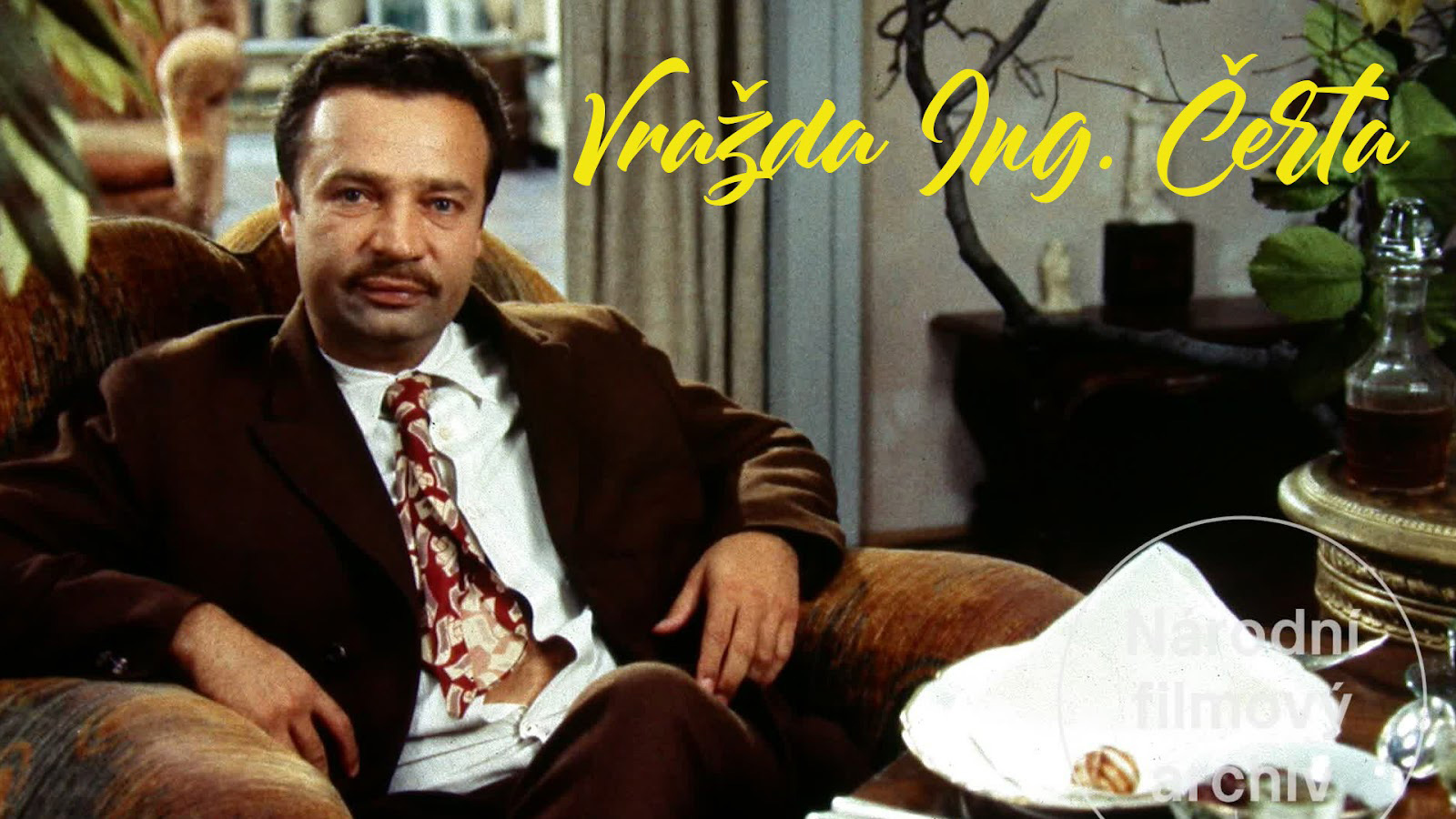
 Guest Co-Hosts: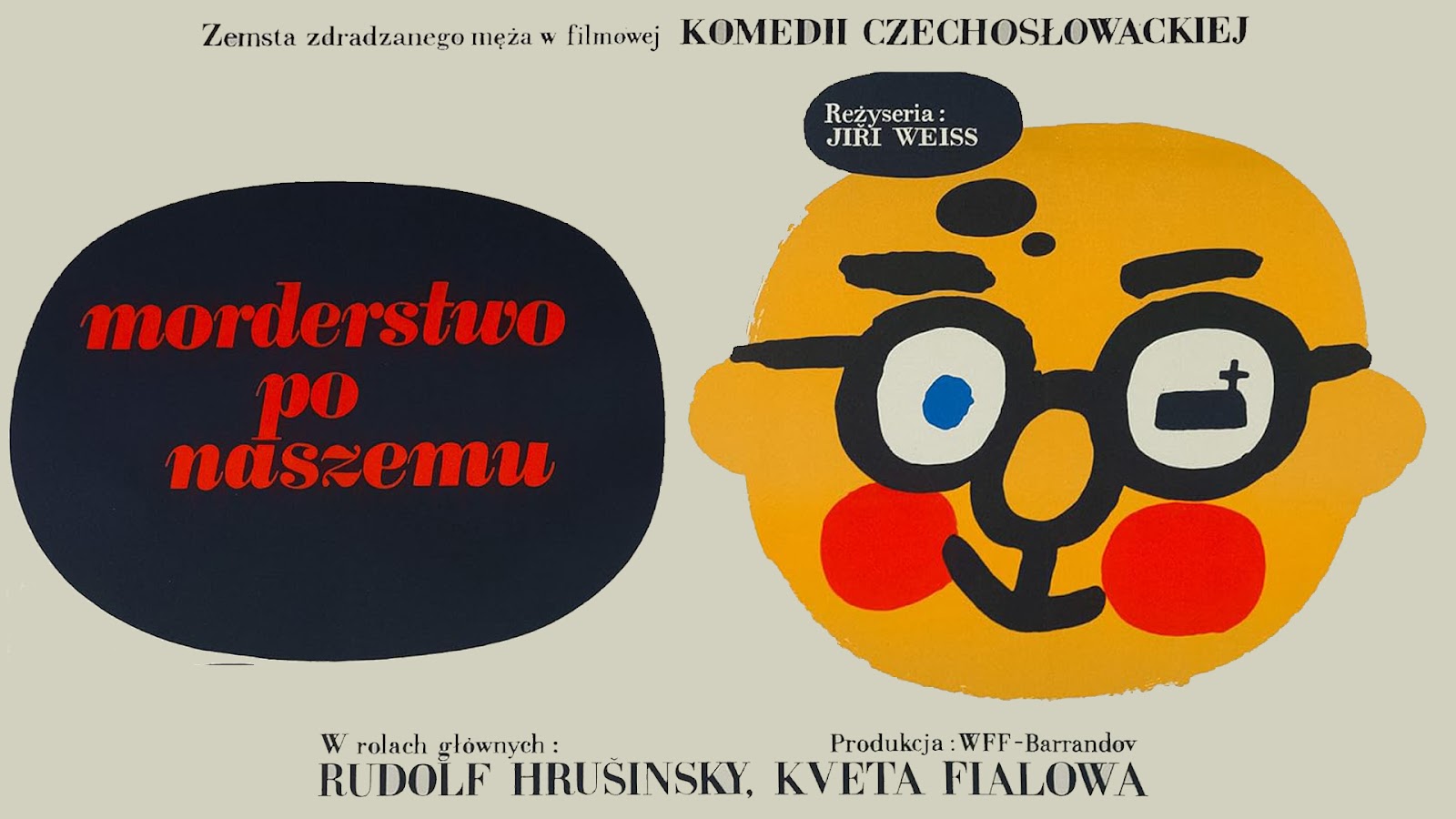
 Guest Co-Hosts:
 Guest Co-Hosts:
 Guest Co-Hosts:
 Guest Co-Hosts:
 Guest Co-Hosts:
  Special Guest:
  Guest Co-Hosts:
  Guest Co-Hosts:
  Guest Co-Host:
 Guest Co-Hosts:
 Guest Co-Hosts:
  Special Guests: