
Show notes
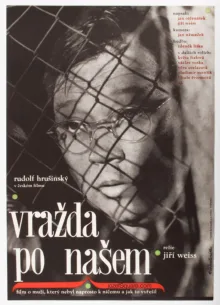
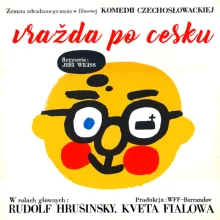
Jonathan Owen and Kat Ellinger join Mike to discuss this delightfully dark film which bridges the way between 90 Degrees in the Shade and The Cremator.
Labels: Czechtember Jiri Weiss Jonathan Owen Kat Ellinger Rudolf Hrusínský Vladimír Menšík
Transcript
An automatic transcript, tidied into paragraphs. It has not been proofread, so names, titles and spellings may be wrong, and it does not say who is speaking.
Show the transcript (about 14,300 words)
Speaker 1: Hold your ears. It's show time.
Speaker 2: People pay good money to see this movie. When they go out to a theater, they want cold sodas of hot popcorn and no monsters in the projection booth. Everyone pretend podcasting isn't boring.
Speaker 3: Turn it off.
Speaker 4: Just a me where I stop here. Stop here. I actually, I just, so we're gonna do. Yeah, except stuff that is a nostalgic it up.
It's just I Yeah, my game. MIKE WHITE: You welcome to the projection booth. I'm your host, Mike White, Jimmy, once again is Mr Jonathan Owen. Hello.
Good to be back. Also back in the booth is MS Kat Ellinger. We kick off another September with a month filled with murder up. First is Yuri Weis's 1967 film Murder Czech Style.
The film stars our old favorite Rudolf Hrusínský. As Frank De Pony, the film opens with him trying to commit suicide as he lays in a tub waiting for the inevitable. He recalls the events which put him there. We're going to be spoiling this film.
So if you don't want anything ruined, you're just gonna have to track it down, which might be a little bit of a challenge. I know DVD Lady has it and maybe I can make it available to my patreons and we'll find out Jonathan. When was the first time you saw this film? And what did you think, sir?
JONATHAN OWEN: I think I saw it first about five years ago when I was researching piece I was doing on vice's earlier film, 90 degrees in the shade. So it was just part of the research that I was doing for that. But I think I probably, when I first saw it, I liked it more, I think, than 90 degrees in the shade. Although I like that too.
But I thought this was such a fun film and also quite a touching film as well. And I think it treads that line nicely between being quite a touching or sympathetic character study, but also being like a fun new way film as well. And I love Rudolf Hrusínský and this is his film in many ways and I was just really dazzled by the ending as well. So, yes, it was like an immediate like for me.
KAT ELLINGER: How about you, Kia? Yeah, probably five years ago as well as part of some research for the creator. Yeah, I was just trying to check out, I'm gonna call him Big R because there's too much Slavic going on in the surname there. I'm gonna call him the Big R but I was researching his films around that period.
And obviously, like you said at the beginning of this episode. This one's quite a rare one. But what treat? I think it has a lot of parallels to the creator and it's just before the creator.
So people who've enjoyed the cremated would probably enjoy the humor in this one as well. But I also love and I was gonna ask Jonathan about this because I know you do these associations, this slant that it has on like Comedia Italiana, the Italian comedy style and all, obviously, I love all of that genre. And this is deliberately m mimicking that because you've got Czech style in there, not Italian style because they did divorce Italian style marriage. Italian style, Caprice Italian style.
There's like a bunch of them that came out in the sixties, but it's a lot, it is still in the vein of the Italian ones which are often bitter sweet. It's very ironic, very dark humor, often times with a lot of tragedy. So it is in that vein. But also then with the check avant garde, some really strange things happen in this film.
So I really love it. I do really love it. I think a lot of cremated fans would get a hell of a lot out of this film. JONATHAN OWEN: I think that's really true.
I think both in regard to the creator and the Italian connections as well. Yeah, it was interesting that, yeah, I saw it while I was researching 90 degrees and then you saw it while you were researching the creator. And I almost feel that the character that Krusinski plays is the sort of the stepping stone from the character of Kika in 90 degrees to C for in the creator. And again, he's just kind of, yeah, like Meek, literally, his name is me.
Yeah, means like Meek Humble. Yeah, he's this sort of Meek frustrated bureaucrat. And then by the point of the creator, again, he's a bureaucrat and of course, again, he's a murderer as he is here. But it's like the, I guess it's like the elevation or the apotheosis of the figure that he plays in murder check style.
By the time you get to the creator, he's like the kind of pen push or the sort of bureaucrat turned like destroyer of the world. So it's this nice kind of progression, I think in this type of character that he's playing from film to film. MIKE WHITE: Called them a murderer. And he doesn't kill anybody in this movie officially.
JONATHAN OWEN: That's true. Yeah, that's true. MIKE WHITE: I had no idea this was released by Facets on VHS back in the day. Like I had one collection of their Czech films when they were putting out things like, oh gosh, closely observed trains and just they had like this release of all these classics.
Apparently they must have done a second wave of that and I never knew that. So I missed out on this movie until this month for this podcast. I had never seen this one before. And wow.
Yeah, everything that you guys are saying checks all the boxes that I'm thinking of. Yes, it feels very much like a precursor to the creator. Yes, there are tons of influences. Tons of similarities between this and 90 degrees in the shade.
Yeah, this is like, fits perfectly into those two areas and wow, I was blown away by this movie. I had no idea what to expect and was just so pleased watching it. And of course, for me, it's great. You got Rosinski, you've got Vladimir Mensik.
I'm like, OK, sign me up, like whenever those two guys are in anything, I pretty much just will track down movies with those guys in them just to watch them perform. Mensik doesn't get a lot to do in this movie, but Krasinski is just amazing as always and I love that we are in his head for this whole thing to the point where he's breaking the fourth wall towards the end, his boss, the chairman is always breaking the fourth wall. He is always talking directly to us, the audience. I really like that.
And I love this voice over that Rosinski gives us to take sit inside of him and just show us what a Porsche love this guy is right at the beginning. It's just like, oh, yeah, just 6235 days until retirement. KAT ELLINGER: It kind of reminded me of Jack Lemon a bit as well in the apartment, that sort of thing. But a more evil sort of twisted version because the Italian style ones like divorce Italian style, you've got Marcello Mastroianni and the whole thing in that is he daydreams about killing his wife because they can't divorce.
But within the Italian ones, it's really about this male arrogance or these childish men, but they're quite inflated and that's why they're so good. Whereas this comes more into line with the Jack Lemon apartment era where he really is a loser, but you love him for that because you just think, oh, I'll look at him and then he's got that wonderful fastidious performance style like the whole opening scene where he's arranging his suicide, but he's moving the dirty socks out of the way and he is just so great and there's no dialogue until the monologue kicks in which is obviously makes it like the creator.
You get his little monologue on things. But you think what is this guy doing? And he's picking these socks up and he's putting his shoes down. I could watch him all day.
I could just watch him doing that. Not even speaking, he's so good. JONATHAN OWEN: It was interesting to read that New York Times review, which I think as far as I can see is the only kind of like English language published review of it at least from the time. And that was baffling because for me the worst part of that was, it just says at the end that how the reviewer just hates for Shinsky, they just think he has no charisma or no presence.
And to me. KAT ELLINGER: Who is this person? What is the business do they have? JONATHAN OWEN: You'll say it's Pauline Kael now so that I don't remember who it was, but it was not a I was wondering if it was John Simon but it wasn't, But I was wondering if it was him because it had that kind of typically rude, you know, unpleasant sort of physical description that John Simon always used to do where he would actually physically attack the actors, which is what this review does.
But yeah, I think it was not him. I think it was somebody who I'd not heard of before. MIKE WHITE: Yeah, it was Howard Thompson. I've never heard of him from August 20th 68 when he started comparing the movie to The Secret Life of Walter Mitty.
I was like, oh boy, what am I in for here? This light frothy comedy is gonna start up. But thank God, that comparison is one of the worst comparisons. JONATHAN OWEN: I've read it just completely missed the point as well because it says that the reviewer can't figure out why a the woman marries him.
And yeah, that just shows that he'd missed the whole point of the story, which is that it's this set up. And I think when you get that kind of detail, you realize. Yeah, they just missed the whole point really. So and for me, yeah, the criticism of Krasinski is just bizarre really.
I know that he'd not made the creator by this point. So I guess he'd not really established any kind of international presence. But still for me in this movie, like you say, it's all about that, just that, that physical presence that he has just those wonderful punctilious gestures and just that sort of sad sack quality that he has. It's so, I don't like to say appealing, but it is touching the word.
KAT ELLINGER: You just think if somebody's brought your references, Walter Mitty, that's just so depressing. That was just so entirely depressing. But I guess it's a very American view because the humor in this like all Czech films and the Italian ones is very European, which is why Wilder was so good because he was European and had that same sort of cynical really. But wondering why a woman would marry him?
No, in Hollywood women only marry for love. Of course you marry for any other reason. JONATHAN OWEN: Yeah, I was thinking as well, like when you mentioned the apartment and I was thinking and the fact that yes, as you said, they also were the Central European. And I think there's also that tradition of stories about the clerk isn't there or the office worker, this kind of this put upon frustrated, eternally overlooked figure and something that's there in, I guess it's there in, it's there and even something American Bar will be the Scriver.
I guess you have this whole tradition of stories about Meek put upon bureaucrats or clerks. And I somehow I don't know why because I've never worked in an office really. But I find that kind of, I find an affinity with those sort of stories really. I just love that kind of character somehow.
For me, it's such a, an archetype. MIKE WHITE: I think one of the other things that really made this movie feel similar to the creator is the Lisa score and just the way that it's so avant garde when we've got some of these early scenes and there's this flute playing and it just feels like the flute's going for a walk just all over the place and just throughout the movie, the music is very avant garde and just not necessarily a tune, but more of a feeling. And I really like that about this movie as well. The other thing I like here is that we are playing with voyeurism and dreams throughout the entire thing.
Like even one of the first things that they do when we see him at the office, when we get to meet Vladimir men's character. A meal when we meet the other office workers is what do they do? Oh, hey, the sexy lady across the way is taking off her clothes. Let's go take a look and you constantly have Herz Ins looking out windows looking at other people.
One of his habits is to go to the movies and I love that in the voiceover. He's, he points out this woman who's sitting next to him and goes, don't worry about her. She doesn't come back on the story. KAT ELLINGER: I do love that scene with the binoculars because we don't actually see much of what they're seeing and it gets scandal that they're like, come on, let me have a look and they're like, oh, and then you're like, what are they looking at?
We know it's a woman but we don't. I thought that was really fun but it does do all this playing around with the notion of seeing. And because then when it gets further on, you're thinking, is he imagining this or is something actually going on? Because it does make you doubt that this is a guy even when he gets married, do you think, is this a daydream?
It constantly plays with what is real, what is actually happening? And I think that's wonderful. Go back to what you said about the school though. I do love the jubilant car fire music.
It almost sounds like circus music. JONATHAN OWEN: Like a demented sort of waltz, isn't it? That's really classic. MIKE WHITE: You mentioned Alice or Ali, she is the girl of his dreams.
Actually, he's got two girls of his dreams. So there's one in the office who is, I waited too long and this doesn't work. And then when he's on this business trip, it took me a long time to figure out this whole thing of like the two offices and that you have to take a train to get from one to the other. And I was like, where is he at now?
So he's at this other office hanging out with the chairman and sees the gun. The boss is like, oh, yeah, you should go for this. Oh yeah, this is totally great. And so he starts going out with her and again, more like voyeuristic type things like he's looking at her through binoculars, even though she's just a few feet away, he's taking photos of her.
So he's looking through the camera box up at her because it's one of those old school cameras. So it's all looking at her through objects rather than actually seeing her. And I think that also helps when it comes to the idea of she's got a big secret that she's hiding and it's gonna take a while for him to find it out. And he can't seem to actually look directly at her and see what she actually is.
Instead, he's always got a layer between him and her. You don't want to look directly at this woman. What you want to do is punch a pinhole and send her a piece of paper and watch her through that. KAT ELLINGER: And there's like a physical layer as well isn't there because and when they do get married, she won't really touch it like she won't sleep with it.
She just caresses his face, which is sweet, but also really perverse. They sleep in these joining bed camp beds they look like and she'll just touch his face. That's all that's committed. And you just think this isn't gonna go.
Well, it did remind me a little bit of the man with two brains in that respect, but not as outrageous. He's not, he's much more passive than Steve Martin in the man with the two brains. Steve Martin's just raging, isn't he's ripping knobs off doors? But he does have that thing going on.
You just think this poor guy, he's just got married and she's OK. Not tonight. Here's your camp bed. JONATHAN OWEN: Yeah.
The theme of voyeurism is there all the way through and in some ways that's the sort of typical kind of lecturers, male voyeurism, isn't it that you see with men? She's character? But there's also something very sad about that too, isn't it? Because it's that?
Yeah, like you say, it's that character who never participates. He's always just on the outside looking in and he lives his life through movies through books. And yes, it's about that sort of un attainability as well of the sort of dream woman, even when she is like physically close to him. And I think also, like you say, it's the fact that he never sees something directly and I think that fits with the narrative too, with the way that the narrative is told where there's this sort of constant illusion.
This is constant shifting from place to place. And a lot of the time, it's not quite clear like where you are, like when it shifts from the office to like the holiday location, I think that it's easy to get confused by that. I think first viewing. KAT ELLINGER: The editing and they do this in the creator.
And I do wonder whether Herz based his casting, at least on seeing that film. I don't know, but they do it in the creator where a scene will start in one point and the character looks up and they're in another scene and it does start in this. So when he goes to that business conference, you just think he's still at the office for a while and you're like, hang on a minute and then the boss comes into his room and you're like, why there is some sort of conference, like, why is he in a hotel? And then when he gets married one minute, he's taking photos of this woman and he's drunk and he's on the bed and then he's like, why is my mother here and he's getting married?
And it's a wonderful way to edit it. It just makes it really confusing and brings you into his world, which you never quite know what you're seeing because he's constantly also fantasizing about things but not in that obvious way. Like to go back to that stupid Walter Mitty reference. Oh man, is daydreaming.
It must be that it's totally not that I'd say more seven year than Walter Mitty if you want to go Hollywood. But yeah, it does give you this sense then of this is the thing with Check Cinema though from this period, isn't it? Anything is possible? So you can go through a murder and the character can look right into the camera and say, no, that's wrong.
Let's go back. MIKE WHITE: And there are things that are preparing us for a radical moment like that. Like you said, the whole, why is my mother crying? Why is the meal shaved?
Oh This is my wedding. JONATHAN OWEN: Yeah. He's like a passive observer. Even at his own wedding, he's now I have to say something pretty important.
MIKE WHITE: And then when the wedding is over, Emile gives her a kiss and then there's a freeze frame. And I was like, oh, this is odd and then suddenly it becomes this whole series of still shots of all of the post wedding stuff. And I was like, OK, this is interesting, but this is great, Weiss is setting us up to show us like this is a very radical movie. You are not, I'm gonna keep you off balance so that when things like, yeah, this is all wrong, let's rewind the film.
Ok? It still took me by surprise, I didn't expect that we were going to do that in this film. But all right, it fits, it fits with the tone of this movie. JONATHAN OWEN: When it shifts to the, like, the holiday.
Like, they're in a sort of like a recreational cottage. I think I would, I would describe it as, and I think that I guess it's confusing because of the way it's edited. And I think also the context too because I think that was a specific thing that used to happen. I think in Czechoslovakia, which it doesn't really explain.
But I think, I think they used to, a company would give vouchers to workers to take a holiday. Basically, they would have these like holiday, I guess if it was like a small enterprise, it would be like a little cottage or if it was a bigger one, they might have, you know, like a big, like house or a castle even or something like that. But it would basically be, it would be like a weird mix of a holiday and a, like a works outing. So you would be like with your, if you were, I guess if you were a good worker or if you had the right connections or you'd done a kind of a political favor, you would get a voucher and you would go on this type of vacation.
And it's funny because I think he says that, yeah, I got voucher but of course I got it for April. So, on the one hand, it's not so much. So it's, it's gonna be raining. And I guess also the idea of April fool is there as well.
The fact that he's being taken for a fool. So he gets a holiday from his company. But of course it's not, it's not an ideal one. MIKE WHITE: You just know something is up from the get go, but especially after they get married and this is not 2023.
This is 19, what, 67. So when he's, oh, it was really good that you kept your name. And I was like, oh, that's a red flag right there. She doesn't stay with him.
She goes back to the job in the other office. So she only comes out on Saturdays and Sundays just spends one night, she gets the bed, he gets the cot, she just spends the one night and then when they part every single time it's a handshake or holding hands. It's never a kiss. There's no passionate kisses in here.
This is a very strict chased relationship. And you're like, ok, what's happening here? So we are really not too surprised when we find out that she's having an affair and it's only for me, the real surprise is who she's having the affair with. And it's one of these, oh, I can't make it out this weekend.
I'll be there. Wednesday. Whoops, something happened. Wednesday.
I'll see you the next weekend and then luckily Emile is there with his motorcycle and they drive over so he is able to see what's going on. And again it's him looking out the window, seeing her get out of a car seems pretty innocent. But that's when he finally realizes that something is up. KAT ELLINGER: Yeah.
It's really sad because you get his version of it after they get married, you get the little bliss thing, which is supposed to be the honeymoon where he is just to help him with the laundry and he gets back to the office and everyone thinks he's a legend or the blokes. There are like, well done. You and he's, everyone's suddenly interested in me, but it's not true. None of it's true.
And he has to keep going to the train station with his little flowers or he's on the train holding her hand and she can't wait to get rid of him, but he just doesn't see it. So it is, it is so sad then when he finally twigs that he's been set up, which is like the whole thing, probably why he was given that voucher in the first place as well. JONATHAN OWEN: You wonder how much it was, like, planned in advance and how much of it was. Yes.
KAT ELLINGER: Yeah. Because why is his boss in his room with him suddenly becoming his comfort? Doesn't he swap out for another guy as well? Like why would the main boss be putting himself?
He wouldn't he have his own room. It's like, oh, no, I'm in here and then he suddenly becomes, oh, I think you should talk to her. I think you should tell her. And you think, oh, he seems like a nice guy.
No, he isn't. JONATHAN OWEN: And there is a bit of a political satirical edge there too, I think, isn't there in that? It's elite figures. It's the sort of the people who were better connected or the people who were the bosses or he's a chairman, I think, isn't he officially?
And yeah, they were the people who had the status and they were the, I guess the manipulators and the people who enjoyed the sort of the privileges, it's the falsity as well of it because he's, yeah, don't call me chairman. No official names. And then in the next scene, somebody says, hello Mr Chairman. And it's, it's that.
KAT ELLINGER: Sort of, I did think to start with actually. Now you said that and going back to the film. So there was a lot, I didn't. One scene I remembered was the first quote unquote murder scene with the crash Hemet.
That was the thing that I remembered from it. But when they're first at that place I thought, are they at some sort of Communist meeting? Because everyone's dressed in the same suits as well and they're all in this little dining room and then the chairman comes in and everyone seems a bit on edge and you think what's going on is this some sort of, some sort of Communist meeting or some sort of political thing? And then you finally realize no, he's his boss.
But there is that strange undertone to it that when he first arrives at that place that everyone is a bit on edge that the chairman is coming in, which I think. JONATHAN OWEN: Is probably accurate because I think it was that typical sort of double edged sword of the Communist regimes. Where on the one hand, yeah, you would get like a vacation, they would give you things. But on the other hand, there was an expectation of how you were meant to behave.
And a, I believe, at least in the earlier period of communism in Czechoslovakia, like when people would go on these kinds of retreats, I think there would be people like watching them and checking that their behavior was in order and reporting on them if they'd done something a little bit naughty. And, yeah, I think there is that implicit sort of level of surveillance or control as well where the. MIKE WHITE: Bosses feel that they deserve everything even to sleep with your wife. KAT ELLINGER: Yeah.
And you're just gonna be have to put up with it. And this poor guy then on this futile project of trying to get this transfer and they're like, oh, we'll just make you, we'll make you more of a boss at your office. That's what he needs. But I don't want that.
MIKE WHITE: I just want to be with my wife. Just let me be in the same office, especially now that I suspect her of adultery. JONATHAN OWEN: And then you have that weird situation with the sister, don't you? Who?
She seems pretty nice when you see her? But yeah, you think, like, she must have been in on that as well and it's all this pretense, isn't it? Oh, I have, my sister is living with me. There's no spare room here and I think everybody is implicated in one way or another.
KAT ELLINGER: Also, this guy can get his o yes, basically because even though you think, well, it's her, she's going along with this thing, she's just as much of a mug because the whole thing is he doesn't want his reputation ruined or his marriage or whatever says, oh, we'll just set you up with someone respectable and then we can carry on affair and you can pretend you're working away and it's not gonna look as suspicious because she says she's been in this affair for seven years. Yeah, seven years. So it's like the legitimate and the illegitimate woman, which again goes back to Italian comedy and things like marriage.
Italian style where the Sophia Loren character and that is the illegitimate woman and you've got the legitimate woman. So there is this strange, even though very different cultures, there is a strange parallel between definitely a very similar sense of humor as Well, so she is being made legitimate, but only in a facade to hide the ill legitimacy. It's interesting to think about because in, I guess in Italian comedy, you understand it because it's Catholicism, it's all about that. All of that comedy is about the hypocrisy of Catholicism, men getting married, but they're always trying to have affairs, all of that stuff.
I wonder how that, because I don't know, an awful lot. I always thought from watching the cinema and especially communism. Everyone is a comrade. And there was, this was like this egalitarianism to the society when it came to gender, everybody works, everybody has a place and you look at the film and the Czech films are very different to Italian films in that sense, in the women often hold similar positions to the men and everybody.
But then seeing not to go too much off the point. But then seeing interviews with Vera, she was talking about how sexist it was working, which really surprised me because you look and you think there was much more of an equality there given how oppressive certain aspects of the society were. There's a weird equality there or even progressive, didn't women get the vote there a lot earlier on? And there was certain things going on in society.
But then you've still got this very old fashion without religion. I need to keep my mistress legitimized. It's an odd thing really. JONATHAN OWEN: That's a really fascinating area to look at, I think because, yeah, I think you see both sides of that here because, yeah, I think, as you say, in theory, under communism, women were meant to be equal and they were meant to have the same opportunities in their careers.
And I think you get a bit of a sense of that because the figure of Alice, she is, I think she's like a foreign correspondent or something like that. KAT ELLINGER: She actually, yeah, she's like a valued employee, isn't she? Like the boss speaks her, she speaks three languages and she does. So you get an idea.
She's got like quite a high position in the company. JONATHAN OWEN: And yet I think in practice, I think what people have said is that it did tend to replicate just the same old system where often the women had the kind of like lower status positions or they were paid less and the men were the bosses. And I guess in practice, it just tended to come out as the same thing. And one thing that this reminded me of, although I guess it's not really emphasized a lot.
Here was the scene when there's the scene when Emmy or the Vladimir men, she character, I think you see it at least one where he just goes like coffee and he just demands coffee from the milk, the woman in the, in the office. And I don't know if you've seen the film by Agnes Holland. It was a mini series that she made in, I think, 2018 or something like that called Burning Bush, which is about the death of Jan Paak who was the student protester in Czechoslovakia at the time of the Soviet occupation. One of the really interesting things in that is that there's this sort of subtle detail throughout the series where you have these office places and it could be like a, in a court or in a newspaper office.
And there's this sort of constant trope of like the male employees just saying to the female employees, oh, get me a coffee, make me some coffee. Obviously been planted in there deliberately just to show how that same old sort of sexism of men just ordering women around. It was still there really. And it's a little bit, it's not as emphasized here, but I think it's, you still get that sense really that women were just there to make the coffee and just that sort of casual harassment as well that you see from the emil character from men.
She's character where he, they. KAT ELLINGER: Even see them spying on the world because when they, one of the first scenes, the women come in and say, oh you're disgusting. But then they do that whole thing. Oh, we're all gonna laugh because this is banter to show that we've got a sense of humor about it.
That wouldn't roll in 2023. But that was a lot of my earlier work in life is, but, yeah, because you got to have a sense of humor. There is that office politic in it is. I just find it fascinating because I guess this idea of respectability and communism wasn't Catholic respectability, but it was still very fixated on the home and the family beat and all, and everybody had to be perfect and it was all about face, all about what people thought of you and I guess neighbors would talk about neighbors and everyone was on edge.
So they come up with this very elaborate plan just so this guy can carry on having an affair, you know, massive elaborate, like you said, they bring in the sister, they've got poor old Big R there with the sad flowers at the thing and even giving him a promotion almost as a trade off. Although he doesn't know that and just this whole madly orchestrated thing, which is so telling about Czech culture at the time, it does tie into what he was saying because she was talking about was very difficult to make film as a woman because I had a child.
And so therefore, I was expected to play the traditional role. And that surprised me because just all I know really of Czechoslovakian culture is through their cinema. And a lot of those films present as quite progressive in terms of gender politics. And then you get something like this, which exposes the fact that wasn't that progressive was all about that elite man.
Everybody is tap dancing around this bloody chairman. The whole thing is for him. JONATHAN OWEN: And then of course, like in the, without going too far into the very ending, like the final sequence. That's sad too, isn't it?
Because it's just replicating the same thing. It's not like he, it's his fantasy and it's not like he, that represents like a different system or a different way of life. He just wants the same thing. He just wants to be in that position himself.
KAT ELLINGER: It's, if you can't beat them, join them, basically, it's almost like he just gives up, he just gives up. It's a very cynical ending, which I love, I do love a cynical ending even though it's played out comically. Yeah, there is a lot of cynicism in this, even though parts of it are very whimsical and very sweet. There's, there is a cynicism in this.
JONATHAN OWEN: You get that sense of that kind of, that weird sort of Communist consumerism too, I think because again, this was not something that was meant to be part of Communist culture. And yet when you see the car that the chairman who's driving, I think he has like a sinker car, which I think was a French car. And then I think at the end, the car that in the fantasy sequence that is driving was a quite a kind of Fancy deluxe type of Skoda, which, I guess at one point, at least in Czechoslovakia was a desirable car to have.
And, yeah, I think those, there are those, oh, totally. KAT ELLINGER: If you look at Fair Out Vampire, which is about the state of the art might, might not get this. But Skoda were the joke of the UK in the eighties. And if you drove a, you were a joke, it was a hilarious if you owned a Skoda and then if you look at vampire, it's supposed to be this state of the art night rider type vampire car and it's a bloody Skoda.
And that just Skoda, you're like, oh my God, Skoda's were big in Czechoslovakia. Clearly, they had a whole different cultural thing. JONATHAN OWEN: Skoda and Larder. They were like the lowest that I think the only thing, the only worst thing you could have would be a reliant robin a three wheeler.
MIKE WHITE: But I didn't look at the time code to see when this happens. But it feels like right around the middle of the movie. You've got her leaving again and him running down the platform and it suddenly switches to slow motion of him running down the platform and he catches the train. It gets on the train, we just go back to the narrative after that.
But it introduces like, is the rest of this movie a fantasy now or is this all real? Because this is really where things start to change. We've got him shooting at the picture of his boss. He's starts to make these plans.
He sends his Telegram, he steals a gun from the night watchman. He buys a meals motorcycle from it. He gets the whole motorcycle outfit. He even has a fake mustache.
He looks like the outfit. He looks like one of the bad guys from Oz take on me video or you know, like he even has a wrench at one point. KAT ELLINGER: Yeah, he does. I love that because he tries to do the Martin Scorsese.
He tries to do that Martin Scorsese thing in taxi driver, he's outside the apartment being menacing, but he just looks ridiculous. MIKE WHITE: Then when the chairman goes away, he can't even start the motorcycle, I'm. KAT ELLINGER: Gonna, and his whole monologue is very determined and like you said, the whole tone switches because he is in a, it's like all this anger that's coming out of all these years of being pushed around and ignored. But even that's weirdly passive aggressive and when he tries to be out quite aggressive, it's just ridiculous.
So when he's outside the apartment, he's looking up and he's waiting, I think he's been standing there for seven hours waiting for them to come out. And this thing that this bike doesn't start, then he comes in his gun. Doesn't? That guy is just like, what are you doing?
Just, you know, get out calling the police. JONATHAN OWEN: There's that great line where he says try to plan a murder and being in this sort of like thriller type plot, it's actually very boring because it actually involves a lot of time waiting and you think? Yeah, that, that's what they mean by Czech style. This is the check, that kind of check observational comedy of the every day, isn't it?
I think that's creeping in there. KAT ELLINGER: Because he makes this reference to the fact that he gets his plan from watching films, doesn't he? Like, he's watched a lot of thrillers? So this is his base point and I'm really surprised he gets the keys actually because everything else, he just messes up.
But he, then he gets seen twice. It's just useless trying to get rid of his fingerprints. But even in that part, it's obviously it is a fantasy then because then he's, you know, we got to stop this, we got to stop this, go back. I'm gonna do it another way.
And so then you get the other one and then again, it's a different take on something like divorce Italian style because you're very aware in that, that Marcello is fantasizing about killing his wife. It's very clear that it's a fantasy and the rest of that film is quite straightforward and it's just funny, it's just funny that he imagines killing his wife. He is as pathetic though as the character here. But with this, it is a, again, this constant messing around like what is going on, what my favorite part though is the bathtub funeral thing.
But he's going in that, in that thing with all the candles around and to go back to your earlier point, Mike it, even though he's an observer at his own funeral, he's like commenting on who's there. And his colleagues are like, he's a very good office worker and he's just sat there watching it all in a bathtub. JONATHAN OWEN: I think you do see the woman, don't you? At the end?
Who was there at the beginning with him in the cinema where he said we never see this woman again. I think if I'm right, you do see in that funeral sequence crying? KAT ELLINGER: I didn't notice that. I didn't know.
I'm not sure. But yeah, I kind of, yeah, there is a woman crying. There's a, who is the woman? Oh, I guess she did care for me or is that the wife?
There's a few people at the funeral that they, you see them sat on their own. It's weird. They got there sat on their own on a chair and then the mother appears at the end of the aisle and everyone else is gone. And then someone else, there's so many little jumpy, weird little bits, but it's so typically check of this period, I think.
MIKE WHITE: Because he doesn't rewind the film just one time. He rewinds it a second time because he, once he, so he murders them in the boss's car after his assassination attempt. Fails and the boss just punches him and throws him out of the house. He goes out and I guess it's loosening the brick cables or something.
Right. And the car explodes in this beautiful fire. And you've got, yeah, all the jaunting music and it's fantastic. And then next thing, you know, he's there in the public square, everyone looking at him and judging him and he goes up on to the gallows and he's just like, why are you blaming me?
It's her fault. It's her fault. JONATHAN OWEN: When you have that the hang man who's got, he's got like a, sort of like a dinner jacket. Yeah.
Classic new wave type, sort of imagery. I think that. KAT ELLINGER: Is it coughing at the, because when he gets out of the car, what he goes home, like he does the first murder. He goes home, he's trying to hide his fingerprints and he's home.
Then the cops turn up. You don't see what they say and you think they're about to say, oh, we found your wife, which is, how would they identify us so quickly? They've just been incinerated. But then he gets out of the car and you think he's arriving at her funeral because there's like a funeral.
But then you notice he's in handcuffs, then you notice what are all these people doing here or is it because he was a chairman? And it's a big public funeral? And then the hangman's niece appears. JONATHAN OWEN: It's a huge crowd as well, isn't it?
It's like a, yeah. KAT ELLINGER: It's massive. It's like the whole city are out to watch him and those. MIKE WHITE: Shots of the audience and just all those faces.
It was just, I really like that. KAT ELLINGER: It is a wonderful scene and then he suddenly says, no, this is. MIKE WHITE: Back, turn it all back and then the film literally runs backwards and the audio is running backwards and it's holy shit. And I'll go all the way back to them in bed.
The first night we've got the caressing of the face and all of that. And then it's OK, great. Now he knows everything and he's, oh, I've got a perfect alibi just like in the American films. And then he like fake this heart attack come back and see me at 7 30 in the morning.
Meanwhile, I'll just take these pills here and he pockets the pills and he's just all right. And then next thing you know, he shows up at her place and that's when we find out he gets. KAT ELLINGER: On a plane flies over. Why does he get on a plane to go to Prague when he can just get, it's a train ride away.
MIKE WHITE: It's not a plane ride away. JONATHAN OWEN: He becomes a more adept kind of like thriller protagonist, doesn't he? With each rewinding, I think like by this point, yeah, he's got it down, performance. KAT ELLINGER: Changes here as well.
He becomes more akin to Copper King from the creator because he's more self assured and he's actually quite threatening in the scene that comes after that. You can just see the versatility of the actor in this because he goes from being absolutely like Frank spent the levels of ineptitude even trying to throw this thing at the couple and it just stuck and to this like quite sociopathic nasty guy, he's gonna go and strangle his wife and doesn't feel out of place because it's him, it's him, it doesn't feel out, I guess, knowing him in the cremate and knowing him in 90 degrees in the shade, we know what he's capable of now.
So I wonder what the performance went down at the time. But I think he's convincing his both, even though it's, it's supposed to be a fantasy. Absolutely. JONATHAN OWEN: Yeah.
That's one of the things that I think makes him so special as an actor that there were sort of various types of roles that he could just play perfectly. And, yeah, I think one of them is this sort of this poor downtrodden, middle ranking official type figure. But then there's also the sort of sinister character as well that he could do really well. And then there's the, I guess that's sort of that more jovial, more kind of patrician type figure that you see in something like capricious summer for instance, or even in Adela hasn't eaten dinner yet where he's this more like earthy type of character.
He's this sort of like life and soul of the party. And I feel in the sort of very last sequence where he takes over as the boss and he comes into the office and he just sends everybody else out of the boardroom there. You're seeing this other side of Krasinski, aren't you? You see this is the sort of this Lord of Misrule type figure that he could do well.
And yeah, he's just convincing in every single like incarnation and it just uses that so well. I think it's so obviously he was a very high status actor, I think even at this point. And as far as I know, I don't think we ever thought of another actor for the role. KAT ELLINGER: I don't think you could though, could you?
Because it's all about, it's his physicality. It's what he looks like the classes he puts on. Yeah, like at all of it, I couldn't imagine someone else in that. If you have men seek in that role.
He's brilliant. I always love it when he turns up and I know we always talk about him on here any time he makes an appearance. He's just so good there. Someone like that I couldn't imagine in that role.
A lot of the prominent Czech actors from that time, they all had their types. Whereas old Big R call him one of his key roles, wasn't it the good soldier just playing this sort of idiot type. And then he could play a very intelligent and cold psychopath at the other end of the scale. So, he was wonderful, but ridiculously prolific.
I think I've probably only seen about 5% of his films because he, and didn't he do theater as well? At the same time, they must have never, ever had a day off in 60 years or something ridiculous. MIKE WHITE: And then he was part of the whole legacy of ruins. Right.
JONATHAN OWEN: Yeah, it's a big family I think, starting from, I think his, I'm not sure how far back it goes, but I know that at least his, he came from, I think, a theatrical family, I think on both sides, I think. And then, yeah, his, there are two sons, I think that I know of This Jan Rosinski, I think was the name who is the young guy in girl on a broomstick. And then there's Rudolf Hrusínský Junior who I think is in, you see him in Snow Drop Festival with Rudolf Hrusínský. And then there's the grandson who is in, you know, the film Vampire Wedding from the sort of early nineties he is, I would say Rudolf Hrusínský junior, appropriately enough being named after him, he looks the most like him.
So it took me a while to figure out that the others were his children or grandchildren. But yeah, it is. Yeah, it's like a dynasty basically. I think of talented actors.
KAT ELLINGER: Hitting though because in this he ends up with a kid that doesn't look like him. MIKE WHITE: I'd be curious of Leonard Mill Brosky if he could play a character like this because he's got the meekness down and he can play a bastard pretty well. I can play not to do and all my good countrymen. But you really like him in that too.
But, yeah, I agree. I don't think anybody Butzin could play this particular role. He does it so well. This is just right there in his wheelhouse.
JONATHAN OWEN: It did make me think a couple of times of and it's good because I think we're doing this, this is another murder related film. But it did make me think of four murders are enough darling because I guess the protagonist of that who I think is played by, I think it's Lipsky, who was the brother of Lipsky. I think he's playing the main character in that. And he's also a similarly type of figure who just lives his life through comic books.
And it did remind me a little bit of that. And I think, like you said, like Kat said, I think there is that kind of connection to the sort of Czech comedy or parody films. And one interesting thing I found out was that I think we was even offered the chance to direct Lemonade Joe at one point. But he turned it down because I think he just felt it was not his type of movie and yet he said that, yeah, I wanted to be Balzac.
I wanted to make serious films about society. And yet in this film you do see him doing, I think in a way he's doing both really. Because I think you do have the there is still, I think a kind of a grounding and a real character in a real situation and you get all the sort of poignance of that, but then you also get all the fun of the, yeah, that sort of check parody, don't you? Of the play playing up the kind of genre elements at the end and I guess the reversing of the film, it's anticipating something like happy end, isn't it?
Really? Which I think was made, I think probably around the same time or maybe that was made a little bit after this. But yeah, I think you see a lot of those similar types of techniques. It's fascinating because he was a lot older than all of the other new wave figures and even older than people like yas or, I mean, he was born, I think vice was born in like 1913 or something like that.
And so he was at least two generations older than the new wave. And yet here he is making a new wave film. KAT ELLINGER: I think it's totally a new wave film. I think it's absolutely in that style, isn't it anticipates so much?
It's right. In the midst of that using all these. That's the thing I love about the Cheney Wave is it's not so much this sort of montage of cinema, like the French New Wave, they're bringing in all these other different things from literature, from art, from all these for a specific sense of humor, like Jonathan says that this observation or these very fastidious weird characters that you find in Dostoyevsky or caf a lot. And so it's very specifically of eastern Central Europe and that's what they're drawing from and they're just having a hell of a lot of fun with it.
They're like, what can we do with this film? Let's chop it up, let's rewind it. Let's keep breaking the fourth wall because I guess in one way, a lot of those directors at family, which the director wasn't here did get exposure to certain Western films. A lot of them were working in their own, just their own total little bubbles this period, especially the experimentation, just the fun they were having.
I think that's why I don't understand people that have got no interest in check. I don't know if they just think always be like Bergman do Swedish people in black and white or it will be very political. And yes, of course, some of these films are very political but always done in this very avant-garde way where you will never, not be surprised by it. You can, you can't ever second guess, check sixties film, can you?
MIKE WHITE: I definitely knew that we were in for a color change. Once we get the kind of change we get to him going to murder his, to murder Alice. And I was like, oh, that's interesting. It's more like a black and blueish than a black and white.
So, I don't know if they, when they put this out on Blu Ray, I almost hope that they do redo the color grading on the black and white part. So the color becomes a real surprise at the end. It was like when you're watching Schindler's List and it's ok. This film stock changed.
I don't know exactly how and then it's, oh, there's the little girl in the red dress. Ok. So this is color film now, but it's been desaturated. So it's very much that for the last bit of this film until we suddenly switch the color.
But right before that, we get the rewind of the film after he murders his wife. No, this isn't good. We go back to the bathtub. We get that amazing bathtub floating into the church type scene.
Oh, so good. And that it's, you know what? No, I'm not gonna do this. I'm gonna get out out of this tub.
I'm very woozy from all the gas that's been in here and then I'm gonna run down and go into the chairman's office, burst in and then I love how he sits the chairman down and he sits at the chairman's desk and he's just like, ok, you're gonna listen to me now. And then in the voiceover it's what we discussed is none of your business. And I love you. JONATHAN OWEN: It's even taking the high hand with the viewer too, isn't it?
It's, yeah, I'm in charge now. MIKE WHITE: Then we switch to color and we get to see him. Now, he's the branch manager, Meek. And the office girl we saw earlier is they're bringing him coffee and sitting on his lap and giggling and it's, oh, so now he's having the affair.
All right. Not today, sweetie. And then pick this up on Monday and then he's in a car now with Alice and there's a child in the car. The music is this angelic choir going on and then he tells us in the voiceover, he's just, oh, that, that kid, that's our little Carla.
She doesn't look like me. But all kids are beautiful and then the car fucking flies off into the distance like an American hippie in Israel. And you're just like, ok. Wow.
I couldn't believe that this ended with a flying car. KAT ELLINGER: What a movie. It is so wonderful. Again, people like, oh, I don't watch Subtitle films or Trek films.
No. Look at what you're missing out on flying cars and all this. JONATHAN OWEN: Christopher Nolan wouldn't give you that. I think it would be in a very way I think, wouldn't it?
I think it wouldn't be just that, it's just that light. It's the light touch, isn't it? It's just, yeah, we can do anything and it's fun and it's just, it's just throw away last two minutes. We're just gonna have a flying car.
We're gonna go into color. MIKE WHITE: Every round the film two times and had a flying bathtub at a funeral. Well, it's not really flying. It comes in.
It's amazing the way that the. KAT ELLINGER: The, it's an amazing shot though because the camera pans up to it and it's all these candles and it's like floating in the air and then you just see his little shoes at the end because he's still sat in it over this massive and it's like this very ostentatious funeral thing and you just think God this needs to be restored. Yeah, there's certain shots in this film that are incredible. But that one even, and it's a ludicrous image as well, but it's also really beautiful at the same time.
MIKE WHITE: How about when she, he's there waiting seven hours for her and she comes down, gets in the car kisses the boss, but the boss is a fucking skeleton about that. JONATHAN OWEN: And it's just like, yeah, it's that few seconds, isn't it? It's just really throw away. But yeah, I think the reason why the film is like neglected is that I guess basically vice was more or less at the end of his career.
Really? I think he didn't after he, because I guess he left Czechoslovakia. I think in 68 I think after the invasion, he just basically taught film. I think after that, I think he made a couple more things, but this was really coming to the end of his career.
And I think this part of his career in the sixties tends to be written off a bit really. And people tend to think of the mid to late fifties as his kind of glory years, like his greatest period, which I guess he's not, I would say personally, I think Romeo Juliet and Darkness is hugely considered to be his masterpiece. And I would say probably that's fair enough. But yeah, there's so much that people are missing if they don't look at this period too because yeah, he was a lot older than the other filmmakers, but he was still able to produce this kind of like, wonderful.
I don't like to say lighthearted, but this kind of very free spirited type of film making, he was able to do that as well. KAT ELLINGER: It's so different to Romeo and Juliet as well. You wouldn't think it was the same director, but it's not criterion approved though. We can only watch criterion approved check films though.
MIKE WHITE: Is that right? Is that the new rule? KAT ELLINGER: That's that whole thing, isn't it where you've got a few directors that are suddenly hip now is OK and it's like they seem to be all of Check Cinema. It's something that started to bug me now because there's other stuff that maybe isn't as political or it's not the lot, but bloody hell people are missing, obviously second run are very dedicated to that.
Also the other side of Czech cinema, this is a really good example of it made slap bang in the middle of the new wave, but it doesn't have, you know, the usual names tag to it and it's not really a political metaphor. It's more of a, just a fan. I don't think you could ever call it a Czechoslovakian film commercial. But it's comedy, it's more fun, isn't it?
It's more whimsical, it's not a statement film. And so there is a tendency now that it's wonderful that more people are paying attention to Czechoslovakian film. Now, I think that's a beautiful thing, but it does tend to be same with French film. It's all around a few French filmmakers.
And yeah, so I don't really like those labels in that respect. I'm saying New Wave because obviously it was a Czech, New Wave. But once something becomes new wave or not, and part of a movement or not, then a lot of this stuff is falling by the wayside. I would love to see this restored.
But we're now at the stage where the same Czech films are now getting the four K upgrades and this, what about all the rest this was supposed to be the floodgates opening. We're already at the point where we're restoring the same films. Now, that's not how it's supposed to work. JONATHAN OWEN: And like you say, it's only really, you're only really getting part of the picture.
I think if the focus is always on the new wave or the art cinema in quote marks. Yeah. KAT ELLINGER: And I love those films. Don't get me wrong.
But I think some of my most favorite Czech Cinema is also sort of stuff that we do on here is the Leap Ski comedies, even the Post Prague Spring stuff because they're so absurd. It's this whimsical fantasy stuff like this is the fairy tales and of course, I adore the key Czech New Wave stuff as well. But my personal favorites, ones that I will come back to time and time again are these like little gems like this because they are more, I guess they're less of statement and they're far more whimsical and therefore a lot more fun.
I love diamonds in the night. But Jesus Christ is, whereas if you watch something like this, it is, it's like Mike was having the time of his fucking life over there. And that makes me be happy. JONATHAN OWEN: I think that in any case, that sort of hard distinction of like art cinema versus genre cinema, I think in any case is very questionable.
KAT ELLINGER: It needs to go, it needs to go. JONATHAN OWEN: I think in this case particularly because yes, a lot of those so called genre films or, you know, commercial comedy films, they are in their own way, just as adventurous and just as formally playful. And if you look at something like Lemonade Joe or something like Happy and those are doing like really avant-garde things with the visuals and with the narrative, but they're doing it with this like tongue in cheek or they're doing it in a sort of lighthearted spirit, But that is formalist as well in its own way.
KAT ELLINGER: I get that's a good point. Actually, Jonathan, I guess it does come more into genre and I guess that's always the thing, isn't it? Something's genre then? Therefore, it's not as much art which is questionable with Czechoslovakia because it's all bloody state funded.
And I would say a lot of it comes under art cinema, even if it was more quote unquote popular genres, it's still not really being made for commercial profit, is it? It's hardly like Hollywood to add to Christopher Nolan or someone. These were hardly being made to be blockbusters, were they? So that, so there was, I guess there was a lot more freedom during that period for filmmakers to take risks that you couldn't in Hollywood because I want to make it a romance drama.
The car, what happens at the end, car flies off? He's got another man's kid in it, but it's fine because he's got his own folk piece at the office. They be like, no, that's never gonna happen in Czechoslovakia. This somehow comes into that sort of family bracket.
Is it like a family? You know what I mean though? There's that whole slate of comedies that they're kind of transgressive when you look at them, but they would have been shown to mainstream audiences. JONATHAN OWEN: When you look at something like you are a widow, sir, or is it?
I killed Einstein gentleman where you have that beginning and you have the kind of the beard. KAT ELLINGER: Have we done that one, Mike? I don't think we have. No, we have to do that.
MIKE WHITE: So, yeah. And I'm so glad that deaf crocodiles now getting into the mix and they're restoring Mysterious Castle and the Carpathians and they just did what? Prag nights, but at least they're finally getting in there too. There's I would say, oh boy, don't mess with second run, but it's, there's plenty of Czech films for everybody.
We could have three or four companies putting them out and oh yeah. JONATHAN OWEN: Yeah. One of the really, I think like overlook things about the sixties in Czechoslovakia was that, I guess you had that liberalization and that kind of internationalization in the sixties because of the political changes. And obviously that meant big benefit for like art cinema and the directors who wanted to be more politically engaged and more artistically experimental.
But another side was of that was that this meant interest in like genre and genre diversity and So I think one, the other side of the sixties film culture was this attempt to create a kind of like a domestic genre Cine him because I guess that had also been frowned upon in the earlier period because it was considered as too American or too commercialized to make horror films or to make detective stories. So you do, I guess it doesn't have quite the same status, it doesn't quite achieve the same height as some of the other types of films.
But you do see Czech Crime films. Prague Nights is a really good example where they're trying to make it. It's like an A or a Hammer style horror anthology. And so that was a really, yeah, really overlooked actually, I think, and that, yeah, that does deserve recognition.
I think there was something that I was thinking about in relation to this was that, I think in the late sixties there was this, I think at least there were at least two crime films with Krusinski playing a detective actually. And that like a sort of may gray style police procedural type of movie. KAT ELLINGER: I think I've seen one of those. I can't think what's it called?
JONATHAN OWEN: I always forget the name of them. I got them written down. KAT ELLINGER: I think I've seen one of those that sounds really. MIKE WHITE: In the music hall.
Was it? JONATHAN OWEN: That was one of them? Yeah, there was murderer hides his face. Was one of them.
And then traces of blood was the other. These were like late sixties and then in Polar who did tomorrow, I'll wake up and scold myself with tea. He did a few of them as well, I think. And there's one in the late seventies that he made called Death of Hitchhikers, which is quite grizzly really.
It's quite a surprising film to have come from Czechoslovakia, especially at that time, which was quite a sort of politically kind of repressive time. But yeah, there were attempts to make, I guess this type of film. There's also a film by her from I think the mid seventies called A Girl Fit For Killing, which almost has a bit of gel and it's an overused word, but I. KAT ELLINGER: Was gonna mention his sign of cancer.
Actually, I just did something on it for my pa and I called it a check. We can say the G word. You are right as close as they can get to a because they're slightly more restrained in what they could show and what was permissible. But then sometimes not, sometimes you get nudity and stuff where you wouldn't expect it.
And you think, oh. JONATHAN OWEN: Line of camp is a great example because I think that was the one where he did. Actually, he got the chance to go to Italy and to, he had to cut out some of the nude scenes, I think for the Czechoslovak, I think the bar studios told him to remove it, but then he got that kind of cope, that kind of deal with Maurice, and Carla Ponty. So he got the chance to go to Rome and to like reshoot them.
So I guess that does have an actual sort of Italian participation in it. KAT ELLINGER: Yeah, there's a, there's an interesting connection. This is why I was wondering about this. The Czech style thing is this is to go back to a couple of things you were saying actually Jonathan, one is this consciously trying to emulate other countries.
Films maybe be slightly more commercial here. They are making a direct reference to Italian comedies. And then you see someone like Ponte had his hand in Czechoslovakian film around this. I know this wasn't anything to do with him but you wonder this weird cross pollination between two countries that you wouldn't think one's in the Soviet Bloc Italy have got out of fascism is a bizarre side note, parallel thing, but they are clearly selling this as marriage Italian style or whatever.
And of course, see, then the Italians would do that. They would things off, they would do with the toto films, whatever happened to baby to, they would rip off like Hollywood films and Hollywood titles. So it's so weird that how it comes down to Czechoslovakia. And I'm just wondering where like he made that very deliberate reference and what that would have meant to the audiences at that time were they seen that many international films at that point.
We even see him actually in the film and he tells us he's seen international in the Hollywood Thrillers or whatever. Yeah, it's even commenting on cinema, commercial cinema in a way. JONATHAN OWEN: Yeah, that's a really good question. I think it's one that comes up in relation to some of the parodies because, yeah, you have parodies of things like westerns or this James Bond Thrillers And this is at a time when a lot of the audience wouldn't really have seen a James Bond movie or they may, I guess a lot of the time they were remembering maybe like older versions of those genres.
Like, I guess that's where the Nick Carter, they comes in dinner for Adela because I guess that was like an older model of like detective story that, that maybe older Czech viewers would have been aware of. And yeah, for me, that's always a, yeah, a really fascinating question. KAT ELLINGER: Would this have had any relevance to the audience? Would they have even have seen like a Pietro Germany film or Victorio to seek why?
Something so weirdly specific. JONATHAN OWEN: By the mid sixties, I think. Yeah, they would have been, I think that, yeah, because the liberalization starts around sort of 63 I would say when, you know, you get the first new wave films and this is 66. Yeah, I think it would have been in the air then I think people would have been seeing at least the European Western European gorillas, James Bond were a little bit off limits because there's that whole cold war, especially.
KAT ELLINGER: With all the county Communist stuff unless they redubbed it all to make the change the sides. JONATHAN OWEN: Conrad James, which makes me think wasn't there and I'm getting mixed up because I think it was, it wasn't for shiny. It was Jan Beri, wasn't it? He was, he was, I think screen tested for the role of Blofeld, but he was considered not, I was just trying to remember.
Was that or was it Jan? It would have been a greatest, it would have been a better anecdote if it was for. But yeah, it was Jan, I think, and I just thought he was too cuddly and Krusinski would have worked. I think that.
KAT ELLINGER: He would have been a great bond. MIKE WHITE: Yeah, it'd be so charming and then just turn it right around. KAT ELLINGER: He would have been a good gold finger. JONATHAN OWEN: I think, I think that pairing that kind of resonant voice would have worked so well, wouldn't it?
Although you would have had to speak English. MIKE WHITE: We were talking about him speaking English in, with 90 degrees in the shade, right? JONATHAN OWEN: But I think it was like, yeah, phonetically and then he just would, I guess the sort of the Italian thing again with the, where I think he would just say it phonetically in English. And then of course, it was dubbed by English actor and you lose that wonderful voice.
MIKE WHITE: Took away our voice. KAT ELLINGER: I know there's certainly we certain foreign actors I couldn't deal with being dubbed and he's won and Marcello Mastroianni is another. And I remember not to go too off the point. But some guy saying that he'd heard about an English dub of TV.
He was like, oh, this should be restored and that should never be, I would never want to watch that. So I did watch one film where Martello was dubbed and it was a very disturbing experience is certain actors, no actor should be dubbed really. But I think some voices become and is definitely one. His voice is so great.
Like Jonathan said that like peering quality to it, they can go either way, it can be like passive aggressive, it can be very sinister times or it can be fun. It can be warm as well, depending on his character. He was just so great at everything. JONATHAN OWEN: Can't imagine like an English because I'm thinking of one in 90 degrees, which just sounds a little too refined or it's a little too, it doesn't have that kind of earthiness somehow and he's able to somehow pull off that balance where he can do refinement, but it doesn't, never seems affected somehow.
He can also be earthy and he can be this kind of man of the world type figure as well. And I can't imagine an equivalent. Really? In a kind of English speaking context.
Maybe I'll have a read. I don't know. KAT ELLINGER: But I don't know. Oliver Reed was too.
You only have Moody one and Moody two. Oliver Reed. MIKE WHITE: We're going to take a break and we're gonna play a preview for next week's show.
Speaker 8: Good. They go about Christmas. They said, oh, they said to me not. Is she this slow?
Speaker 3: So we should have, you caught me? Does a shiver, juices probe. You are just a semi. Are you in tuck?
Some preservation? Maybe we don't. We just book up it, Sam 107. I'll have a stink about 10 years.
Helps. Let me show you. MIKE WHITE: That's right. The three of us will be back next week as we look at Esther Kaka's the killing of the engineer Devil.
A K A the killing of Mr Devil. Until then I want to thank my co-host, Kat and Jonathan. So Kat, it has been a while. What have you been up to?
KAT ELLINGER: So, yeah, I've been doing some Blu Ray production now. I've been doing a lot of stuff behind the scenes, obviously working with you on Jacobs for in, I've done a bit for severing. I'm working on another set for them at the moment. We did the Dance and Macabre Gothic Italian Gothics.
But for that and a lot of stuff at Radiance The Damiani Box that's just come out. That was one that I did. Oh my God. There's just been so much, I can't remember the last time I was on this show, I was still doing my Patreon as well.
But then on, and then obviously even more niche than talking about obscure chat comedy films. I now have a total other project that's not film related, which is talking about a DH D on a podcast and on YouTube called A DH D Wild Women, which is probably like, applicable or interesting to about 0.2% of people. But yeah, I've been doing a lot of that stuff and psychology and stuff like that. So it's been pretty crazy and I've just wrapped up producing a massive box set for Arrow, which is, it's gonna, people are gonna think it's insane and I don't think it's gonna have been announced by the time this podcast comes out.
So I won't say what it is. But yeah, that's kept me busy, busy. MIKE WHITE: And Jonathan, how about yourself? JONATHAN OWEN: I'm, I'm really happy to mention something that I've probably referred to a few times, but this is finally being published now.
And it's a contribution that I made to a collection of essays about Barredo Studios. And I have a chapter in that on your, I hurt and his relationship with Baron. And I think this is coming out in October this year and it's going to be called the Barrandov Studios, Central European Hollywood. And it looks like a really wonderful collection.
There's some really good pieces by a lot of really, really good British and American and Czech and Slo back scholars as well on various filmmakers and various periods of Bardos history. So, yeah, I'm really happy to have been part of that. I've also contributed to another collection which is on global cult cinema. And so I wrote a piece on check comedies for that about Czech parodies basically in the seventies and eighties.
And I think that probably will be coming out from Bloomsbury. Maybe next year. I think maybe early next year. I've also got a few other commentaries and booklets in the works.
Some of those I think have not been announced yet, but I think they are Check and Slow Back and Polish titles. It won't, won't be a big surprise. I think coming from me, look out for some of those. MIKE WHITE: Thank you so much folks for being on the show.
Thanks to everybody for listening. If you want to hear more of me shooting off my mind, I'll check out some of the other shows I work on. They are all available at Weirding Way Media dot com. Thanks especially to our patriot community.
If you want to join the community visit patreon dot com slash projection booth. Every donation we get helps the projection booth take over the world, this joy from the hood.
Speaker 9: You don't know about we go through that. You moving through the He is a bye. Come to, oh shit. Sho Week A B, I'm 30 A, the, oh, shit, love that.
Music credits
- "Parasol" - Helena Blehárová
Links & resources
Related episodes
Episodes that share keywords with this one.
90 Degrees in the Shade (1965)
Shared: Director Jiří Weiss, Rudolf Hrušínský, Vladimír Menšík
Jonathan Owen, Kat Ellinger

Happy End (1966)
Shared: Barrandov Studios, Vladimír Menšík, Czechtember
Ben Buckingham, Kat Ellinger

Marketa Lazarova (1967)
Shared: Composer Zdeněk Liška, Barrandov Studios, Vladimír Menšík
Kat Ellinger, Samm Deighan
Who Wants to Kill Jessie? (1966)
Shared: Cinematographer Jan Němeček, Vladimír Menšík, Jonathan Owen
Jonathan Owen, Jim Laczkowski
The Shop on Main Street (1965)
Shared: Composer Zdeněk Liška, Barrandov Studios, Jonathan Owen
Jonathan Owen
The Mysterious Castle in the Carpathians (1981)
Shared: Barrandov Studios, Rudolf Hrušínský, Rudolf Hrusínský
Tereza Brdeckova, Irena Kovarova, Jonathan Owen, Emily Barney
Comments
No comments yet.