
Special Report · Film year 2023
RoboDoc - The Creation of Robocop (2023)
- Special Guests
- Gary Smart, Christopher Griffiths, Eastwood Allen
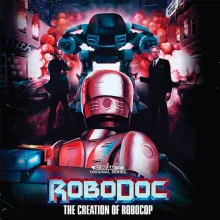
Show notes
Mike talks with Gary Smart, Christopher Griffiths, and Eastwood Allen, three of the filmmakers behind the four+ hour documentary RoboDoc: The Creation of RoboCop (2023).
The doc is currently being released one episode a week via ScreamBox. and will be released on Blu-ray on October 17, 2023 (opens in a new tab).
Labels: Christopher Griffiths Eastwood Allen Gary Smart Robocop Special Report
Transcript
An automatic transcript, tidied into paragraphs. It has not been proofread, so names, titles and spellings may be wrong, and it does not say who is speaking.
Show the transcript (about 15,200 words)
Speaker 1: Hold your ears. It's show time.
Speaker 2: People pay good money to see this movie. When they go out to a theater, they want cold sodas of hot popcorn and no monsters in the projection booth.
Speaker 3: Everyone pretend podcasting isn't boring. MIKE WHITE: Running off. PETER WELLER: All right. Are you ready?
Are you rolling test this test that are alive? You are coming with me.
Speaker 6: I'm thrilled to be aboard the Rubble cop documentary Rubble Dock. Your move, man. We were making something. PETER WELLER: Yeah, that is Rubble Car.
MIKE WHITE: Hey, folks, welcome to a special episode of the projection booth. I'm your host, Mike White. On this episode. I am talking with Gary Smart Eastwood Allen and Christopher Griffiths.
All about their documentary Robo Doc. The creation of Robocop. It is a four part documentary. Each episode lasts a little bit over an hour being put out by screen box currently airing on their on demand service.
Plus it'll be coming out on blu-ray sometime in October. You'll hear more details about that as you listen to the interview. If you're a fan of the show and going all the way back to the beginning of the projection booth, I think it was episode 16. We did a pretty major episode on it.
It was one of the first ones that really hit that sweet spot for me of trying to gather as many, many voices as we possibly could and putting together the best show about a particular film that we could. So, if you haven't heard that Robocop episode, I'm not sure if it holds up, but I'm pretty sure it does because we've got some great interviews on there. Nancy Allen was on there, Miguel Ferrer, Ed Newmeyer, Michael Minor. Ed Naha Ronnie Cox, just a whole bunch of voices on there.
All folks that had a hand in the creation of Robocop and we even have Monty Helman on there who was one of the second unit directors. Always great hearing more about Robel Cop. I'm very glad that the guys are very open about the fundraiser that they did for the documentary and just that they've been a little incommunicado over the last few years. So you get to hear a little bit more about that in this interview as well as the making of a four hour documentary about one single film who would be crazy enough to talk about a single movie for four hours.
Right? Thanks so much for listening and I hope you enjoyed the episode. I wanna know more of the history to this project. When did it start?
When did you guys start talking about this? And how did it actually come to fruition? Because you guys have worked together in the past many times. GARY SMART: Me and Chris and were just over 10 years, we started a company 10 years ago called Screenings UK Limited.
And our first project was the from the Story of Powers Documentary. Then we did the one after that called, he also called Bruce to The Story of Fright Night. And that's when he came on board for that. And obviously he was a edge from Matt with Chris and obviously he became kind of part of the fold then with Dead and court screenings.
It must have been before we were shooting. You also called Brewster, we probably win the stages at Chris. And I think when we were talking then about what we are next project. And basically, we were in a process, obviously a meeting around Chris' regards and obviously the company and also our future projects, we'll talk about what comes next.
Obviously, East was on board. We used to call Brewster East was a massive band. Sure, you probably know and he'll tell you in a bit and obviously Chris was and we was trying to think what's our next project gonna be? We always had to kind of system where we do one, release it and then as we release film another and he was working quite well really in terms of the and Brewster because he was independent, we was very much independent.
We had no real major pressures in terms of obviously the legalities of making these projects because he was very much under the radar. So it was quite a nice little routine we were having. So we for what comes next? Let's look at Robocop.
I remember Chris having a conversation with me around. He's about doing it. And then we reached out to a guy who had just done a book on Robocop. I won't mention his name, but he did coverage of obviously of the films in the franchise, quite generic coverage, to be honest.
And we thought, obviously, we reach out to him, basically say we got this idea to this project. What do you think as a fellow kind of UK creative, he immediately responded to Chris and says, don't do it. He's, I can't remember really what he was in the, there was no point in doing it. You're never gonna get the people involved.
You're not gonna get well, like all this kind of stuff. And I think for about 10 seconds, we thought, let's not do it. And then I think because he said that we said, fuck it, let's do it. And then that's how he started.
And then Chris will tell his story up soon when we went to the States and met Ed, how that kind of developed again and evolving. CHRISTOPHER GRIFFITHS: So we were filming the Brewster project. What was that summer of 2015? And I had Ed New on my Facebook and I had seen that Ed Meyer had interacted with fans and I said to Gary, I can't, should I message him?
Too shy? I don't want wanna message him and fair play as ever is the case. Numerous times, Gary's done this. He always pushes me.
He's like, come on, fuck it, do it, do it, ok? I'll do it. But I'm going in wide eyed like a fan boy. But the message reads like, hey, Ed, we're in town shooting this film project on Friday.
It'd be great to hook up with you as if I'm a professional. And then I think it was a couple of days of nothing. I thought he doesn't want to speak to us. And then he obliged.
He said, yeah, sure. Let's meet up, let's go for a meal in Burbank. So went down, got myself. I think the only thing I could find down there was the soundtrack to get him to sign it.
And I thought, well, at least we're doing that. And I think he thought we were approaching him because his partner at the time 1985 was Tom Hollands, the director of Fright Knights assistant. So I think he was under the impression that we were coming along to ask him some questions, which we never have to this day. Then just during the course of a meal, we explain what we did and then we fan boys.
And then he said, oh, you boys should do a documentary on robot cup and I think he bruised the day he said that because I think within a heartbeat, I was like making notes and, oh, what can we do? And talking the whole flight back Gary? And I, and then that's where I can probably safely move this conversation on to. Then we were working with Eastwood.
No one were fan boys of all things. Eighties. It was like, oh, guess who I met we met. So for a meal, New Myer.
And then of course, like he doesn't have to go searching IM DB or anything like that. And he is. And then, yeah, one thing led to another. EASTWOOD ALLEN: I remember he was deep into Post of Fright Night.
And I think Gary, I knew you guys had already met Ed New Myer and was well jealous because I came on board a bit after that to edit on Friday night. And that's how me and Chris got talking about Robo Cup and I knew Chris was like in the top 0.1% of Robo Cup fans. And I feel like I'm up there too. So it was like, I've met my person and then I remember Gary saying something about Ed had seen the Fright Night trailer or something.
And I said, oh, if we, whenever we do, I'm involved, I'd love to be involved in it. And then we obviously did a Kickstarter campaign and I did the Kickstarter video which was a load of fun. And then yeah, just super excited. I think in the back of my mind I was thinking, is this gonna happen though?
Because it is a bit of a sort of jump from Fright night to Robocop because Robo Cop, every everyone and their nan knows who robot cop is, even if you've not seen the film that there is another character. So yeah, I was just super excited and then met up with the guys who were on a plane to Burbank. Yeah, we did Burbank, we did Berkeley in near San Francisco to meet a bit Dallas, which was incredible where obviously they shot Robocop, then New York to pick up some more interviews and we picked up interviews for the Sequels as well.
Quite a few in New York. MIKE WHITE: You said you started the conversations in 2015. That's a little ways ago. So was that timeline from 2015 to now when we're talking today?
And I know that's an unfair question. GARY SMART: The original plan for our company was always to do one release and film release film. And that was the kind of plan really. And I think the problem we had with Robocop was that when we filmed Robocop before Penny wise, he started evolving and getting bigger and bigger again and again, the lads will tell you about that how it evolved, but he started getting massive.
So we even had our pickup shoots. I think we had some crew doing stuff for us so that we would have filmed it in the summer, even like up until probably the May June. And the following year we still have interviews done. People come out of the woodwork.
So we were like shit. Let's plan our next project. We plan Pennywise. Then we met a guy called John Campo Piano and we started doing that and I think what happened naturally with these things, if you lose that kind of like train and get, then get after the rise station, you completely.
And we did that. We took on two projects which were quite big. Obviously, Penny was nowhere near the size ignite dog, nowhere near the size of obviously rooster or a Robo Doc. But it shifted us a little bit and I think it was always trying to get well as well and it was always conversations.
It was always, let's just wait a little bit a while to get in and I was negotiating with his people and I was getting, people contacted him in Germany when he was going to do the convention there. He did something in Sheffield. So it was always holding out really. And also for our archive, remember very long process, the archive I priest would with Paul Samon and people like that.
And then if other things happen, it got bigger and bigger. He started evolving. The project started changing shape what he was gonna be. I would I would use excuse and day jobs, but it is a passive, you know, because it is day jobs.
We all work full time. All of our lifestyle changing. Chris got married East would changed his job and obviously, then he moved into his house and obviously, then he had a kid. I changed my jobs, moving to a new house and all these things do affect you in regards to what you can do.
At the same time, we were doing the projects which was stupid. But actually now the pros of that's coming now cos we're releasing three docks in one year we released and then COVID hit and COVID did kill, kill us for two years. It helped, I think in some ways regards to the process for some people because obviously mean people can spend more time on it. We killed in terms of the business point of view because nobody was buying anything that the whole industry collapsed really in terms of some of the post houses and also the business side of it.
And then we got out in 2021 after years and years of negotiations. So I think there's a lot of criticism and a lot of when our hands up that particularly me produce like fucking up regards to like the process. But I think that fuck up has actually helped us because what we've got now is what the lads wanted. We were told there's no way you're gonna get a four hour documentary we was told no way you're gonna get series, we were told there's no way you're gonna get anyone even interested in it, regard regards to buying it off us and distributing it.
That was all obviously because of waiting and streaming, developing and things. People like screen box developing that's helped us massively. And they've been amazing for a screen box have in terms of the form that we wanted to start moving forward in the delays have been a nightmare and stressful and we can go into that later on. But that's kind of like the very long winded sorry journey of how it's taken seven years, whatever it is, you know, obviously the first conversation we had, but I think it's, I think it's paid off.
I'm sure that the reviews we've been having and the feedback it definitely paid off the stress he was, didn't have one single hair on his face when we first met him. He was so young and now look at him, he's like a little old man. You can't see him going gray, he's gone gray. And as I mentioned, Chris, Chris has always been like that.
MIKE WHITE: How did you manage to get Weller? I've done a podcast on Robocop and there were some people that were just like, no, don't want to talk about this. Other people love to talk about it. Miguel Ferrer loves talking about or loved talking about Robo Cop but other people.
No, I'm good for now. CHRISTOPHER GRIFFITHS: CHRISTOPHER GRIFFITHS: Basically for the duration of the project you say like this eight years for more than 50% of that. It was much the same to us. You're not gonna get Weller.
We approached, we tried every avenue possible and we, to be honest, naively thought, I tell you what if Nancy Allen or Ed Newer or even Paul Ho reach out to him, he's gonna come aboard. No, it was a simple answer. We accepted for a long time. We weren't gonna get Weller.
And if anything, we are quite confident, working without Weller for all this time, he doesn't want to be involved. Fine. Tell you what we're gonna go and get. And I think this is how the Sequels kind of grew and grew.
We can't get Weller. Let's get Robert Burke in, let's get Richard Eden from the series and maybe that'll entice him. We tried so many different ways of getting him, I think from what I know. And what Gary said to reiterate is that I don't think he was the mindset was he just wasn't interested in talking about Robo Cup.
I've been there. I've done that doctor. Well, has very much got much broader horizons than just relishing in the past of Robo Cup with his doctorate and everything. But there just seemed to be this turning point where basically we encountered him.
We were invited by a convention in the UK here called for the Love of sci-fi where we know the guys because we were told, guess who's coming along. It's Peter Weller and very graciously they gave us the opportunity. They said, look, you guys know what you're on about. We know what you guys are doing.
Do you want to showcase any of Robo Doc and even more? Do you want to actually interview Peter Weller on stage? And so we did an interview is probably quite a strong term to use because I think it was like you ask a question and then about 30 minutes later, it's like, oh he's, he's done talking onto the next thing, but it was actually Eastwards afterwards was like, he didn't know who we were up to this point. He was like, I'm gonna go and tell him who we are.
And I think all of us like, no, no, don't do that. Don't do that for God's sakes. And he did and I remember it was almost like I could see it happening in slow motion. Him approaching him from behind.
I'm like, oh no, no, he did. He went and spoke to him. We all been toddle on behind like, yeah, we were thinking it's like an army of penguins and he said, we explained who we were. And the first thing I think he said was, you didn't record that, did you for your documentary?
We were like, no, not at all quick, hide the cameras and that's just basically kind of him on a face to face level and speaking on Gary's behalf as he's allowed me to, I know Gary was speaking to him one on one on email for some time as well. And although he might showcase this one persona if I'm not doing this. Well, well, I'm done with it. He was very gracious to Gary and it just after that physical meeting in Manchester, that's where the wheel started turning and he started expressing interest come the deal moment where they're disgusting.
And as what is completely out of my yard there, I haven't a clue how it works. I plead ignorance to all things admin, but that's basically where it happened. And I've got to say now in retrospect and especially watching it and I'm gonna let Eastwood take over here. But for my two seconds, I feel like an idiot all those years thinking we can get away with archive content.
He doesn't need to be there. We can build him up as this mystery and now watching it in its final film, like, how the fuck did we think we were gonna get away without having the lead guy? And I think hopefully I can segue that like Eastwood in terms of how that, to be honest, evolved the project exponentially. EASTWOOD ALLEN: I think when we think back to what we had in the documentary without, well, we did have some like exclusive archive and we were comfortable going.
Oh, this will be never before seen or heard. So we were happy with it as like Robo Cup complete Chris and I know Gary. Well, we've mined all of everything that's out there that everybody's seen that all the Robo Cup fans throw away. Still.
Sorry guys. We've already seen that. We did our dig in. We were the arch archaeologists on this project.
So we found some archive, we provided some archive and we were like, yeah, this is gonna be stuff in our dot That's exclusive, which fair enough, we can't get well there, but we've got some stuff in there. So it's not just repeating things that are on YouTube and what not. But what we were also thinking when we were thinking about that was well, it does in his Robo Cup interviews, he can recite the exact same lines. He's very rehearsed, he's very articulate, but the answers are obviously not generic, but the answers are if you're a fan of Robo Cup, you know what's coming, you'll set up someone ask a question, you know what's coming, Chris and I when we were preparing the interview, which we were shitting ourselves for because we're like, we know he's a character.
This is one of our heroes. We want to get it right. We want to really get into some of the content that's never been talked about. We were prepping the interviews for everything that's gonna be an exclusive in the dock.
So, yeah, we're going to cover the basics of the Suit. We know he had a terrible time. It was tedious for him. He struggled with the heat.
But let's ask him about the sound of it. Let's ask him about his voice. Let's ask him stuff that we've never heard him talk about before. And then we were also thinking, is he gonna give us the same sort of stock answers?
And then as soon as he found out, Chris and I were one British, but then two, Chris was Welsh. As soon as he found out Chris was Welsh and well has got Welsh ancestry. He was all over us. The fact that we had like the documents of the docks that he's in back in 1986 that we were provided by John Davidson.
I could literally give him notes from the notes he wrote in 1986 to prep him for the questions. He was like, why I, wow, this is some sort of interview that I wasn't expecting. I think we saw a lean in, didn't we Chris and go? All right.
Literally, we've got outtakes and you'll see it in the blue rays where, well, there's literally, this is fun as if to say, I've never had these sort of questions thrown our way kind of thing. So once we got that in the bag and Chris and I interviewed, well, and it came out the other end of it like literally high five in each other. Like call each other up. We called Gary.
We all like giddy kid. We were so happy we got him to handle a prop gun, which was one of my guns that we got him to play with. We got him to read the lines. Despite his management telling us he'd never read the lines.
He was just so relaxed and he gave the best interview ever. And then once we got the footage and was like, could you imagine this without this interview? Because I think some of the feedback we're getting now is Weller is the shining light. Weller is the one that is basically carrying this dog.
And he is, he really is, everybody's fantastic in it. But Weller is you've obviously seen parts of it, Mike or all of it. Well, it is literally on top form in the documentary, which to us is amazing. So we got a better interview that I think we anticipated and he's literally made it an 11 out of 10.
And he was so kind to us on in the interview. Despite us shitting ourselves. Initially, we spoke to him for four hours, 4.5 hours. He gave us like an extra 35 minutes.
So he was amazing. Took a little bit of warming up at the beginning. Chris and I were asking me questions and then it was only when Chris had mentioned that he had, he was Welsh and well, it literally was like, wow, these guys, I know he kind of, it was, it was unbelievable to see that we could literally see the gears change, couldn't we, Chris, when he said that. CHRISTOPHER GRIFFITHS: I think the embarrassing part is he probably knows more about Wales than I do and I'm from there.
But I think actually what Eastwood said, it was amazing. We had this a lot throughout the course of production where some people come along, wide eyed, excited. The one thing I've got to say watching this back, I can't believe the performances that everyone gives in this documentary, the energy, the animated nature of it and things I really enjoyed was like some interviews didn't start like that much like, well, and there's something just about that when you interview someone and it feels a bit like standoffish like a first day and then you just something cracks.
And I think there's very much the Welsh thing as he was there, but very much as well just we came prepared and we made a very smart move with that interview as well because we were thinking he could just fob us off in 30 minutes. So let's make this count. So rather than with all the other interviews doing them all chronologically the core questions, he made a smart move to say, let's start with these ones that we know, no one's gonna know. And then so if it's like shooting out a sequence, basically get your sort of priorities.
And I think my favorite sort of thing was once we knew we had them all, but that we have a reserve set of questions where we thought, oh, this could be a quite testy, like about the fact that people have said he was quite difficult on set. And I think we just gave each other a look or maybe even like a WhatsApp on the side going. Should we do it? Should we do it?
And we did. And then even getting to the point of I think I enjoyed, we did like we laid it out like a quiz game for him that he has called his effects team to some of them. Anyway, what they considered derogatory names or all these nicknames. But we actually played that a quiz with him.
So it was like, all right. Well, here we go. You came up with some names for your Robo team. What were they?
Who was Bart Nixon? And it was just, and you can just about see a slither of that in his interview. I think when he says, oh, what did I call the effects team? Put him on a quiz show?
So it was monumental. And as you said, it's been a long time but to get to that point and even more so now that thank fuck, it's out, it's just evolve emotionally. This is taking its toll on everyone here and more no doubts, but I feel like we're finally starting to see we are light at the end of the tunnel now. MIKE WHITE: Yeah, I thought for sure that Verhoeven would have been more of that energetic and just kind of wild man that he can be sometimes.
But yeah, Weller blew him out of the water, Mike. EASTWOOD ALLEN: He was a different type of intense velvet. We interviewed Verhoeven at his house, his and his wife's house in Malibu. Basically, we knocked on the door.
Martin Verhoeven, who was the savior. She, we would, wouldn't have Robber Coy about Martin Verhoeven because she handed Behooven the script back after he threw it in the trash. She greeted us with some like lollipops or popsicles. I think you call them the States.
We were all like literally like kids walking in and then Paul were home and was looking in this beautiful house of like, man shit. Where's Paul? And he was over by the piano reading his newspaper and he literally looked up at the gang of us. There was like five of us all in our robot polo shirts which Gary got me because he wanted to try and be formal and presentable and he literally looked up at us and we were waiting for him to say hi guys or hello.
Give us a bit of a stare and then carried on reading. That's what it all kicked in, especially for Chris because it was Chris's job to ask Paul the questions on the day, I think Chris's stomach dropped and we were all like shit. This is gonna be hard work. But again, he warmed up to us, he warmed up to Chris.
As soon as he realized we knew our shit, it was amazing. It's great in a way that it goes from those peaks and valleys moments because there was never Gary old tested this. There was never any just like steady. It was never like complacent.
None of the interviews are just like, ok, next one, it was all, there was so many like ups and downs and so many big characters and so many moments during the production that like it's made, it's imprinted a memory for us and it's added a bit to the mythos if you like of these characters that we knew were difficult, tricky tyrannical. But yeah, it was amazing and the fact that we got all that in the can and it's now out in the open is brilliant. CHRISTOPHER GRIFFITHS: I think it's testament as well to the editing Eastwood, John Davison, the producer.
He's a lovely bloke. And I tell you what you watch all these interviews and he's got this very jolly bubbly person. Oh yeah, it was all hell fire and brimstone. But he had bless him.
He had been on quite a long journey, I think when he came to do his interview with us. And that was probably the one interview I was like Oh, I feel like I'm, do you know what I mean? I'm invading your personal space a bit here. So there was moments where I think, and I think being very professional way, if he didn't know an answer, he was very straight.
We're going next. Don't know this, that and that might come across quite curse. But that's all been utilized and not out of context comments now. But those old moments where at the time you're thinking, oh, we've just lost.
That question is actually wound up in the documentary serving as these nice little segways for topics and again and watching it back now and certainly the correspondence we've had subsequent to the project and how supportive he's been with. Yep. I've got some stuff in the archive. I'll dig it out for you.
It just again, shows I think a lot of this project very much has been that just watching these people blossom for us and going. Yeah, we are that lovely. Either that or just that persistent. MIKE WHITE: Yeah, obviously four and some hours for this project, the editing is crucial and the use of those what I'll call outtakes.
Wonderful. And I love how the characters almost seem to talk to each other through those. CHRISTOPHER GRIFFITHS: I think even we got one more as well is another favorite of mine is just the Khan. Now, when they're explaining about the gas station sequence where when they film the explosion and John Davidson informs that oh, I saw Paul and talking to each other and again, he's got these kind of like cutaways actually looks like the dialogue as well, explaining the conversation saying, yeah, Paul, that explosion didn't register on camera and I wanted to kill him.
And then because the oops and in that particular moment we filmed that interview, God, I think the year later in Munich apartment, but his phone went off during the interview and it was just, he just has the, he's very placid and he just has this kind of stoic expression. He just goes, oops. No, so sorry. Just a simple.
Oops. And I thought it was hilarious watching that back as raw footage and then to see it made it in the final, I was like, yes. So, yeah, this very joyous being able to utilize. I think it shows that you can be creative with anything that comes your way within reason.
That's not putting things out of context. You should never do that, but just use what you've got. And I think that's what I absolutely love about this project. EASTWOOD ALLEN: I always think when you start up and you've got a load of footage.
In our case, we had 60 plus interviews. We had literally like 100 odd. It was like 100 and a bit hours, I think, no, 77 hours of footage. I've got that written down, haven't I?
You have to go through it. You have to literally look now, seven years later, a I could probably do a lot of this. But when I, in 2016 you'd have to literally watch through it. And I know Gary's done it on previous projects.
You transcribe it. We didn't transcribe it, word for word. But what I've done is make a document of all kind. It's tedious.
No one enjoys that side of it, but you need to get through that part to be able to do the fun stuff afterwards. So to make that part fun and I don't like listening to this, but I always think about this stuff when I'm doing it, look out for those little comments, those little reactions, even if it's somebody picking up a drink, just Mark it, just add a marker, just something that you can keep in your back pocket that you never know you might need. And we've got that sort of stuff, even if it's a glance, there's moments in the documentary where we introduced the gang and I've got like Paul mccrae laughing and doing like a head turn.
I knew in the film because again, like Chris and I, we've got these photographic memories when it comes to like Robo Cop that be me as a turn. I was like pocket, I'm gonna use that side by side later on. And when we enjoy the gang, they literally mimic each other things like that. That makes a tedious process can help you along the way.
When you're doing it because, yeah, nobody enjoys the assembly stage, the fun stuff after you've done the assembly and you know what you're working with, that's when you can grind it down and make it into something enjoyable. So I just, yeah, whenever I'm doing that, I just go, this is boring. But let me just figure out what I can keep and what I can stick. Like I said, in the back pocket to use later on, there's load, there's a load more.
I could probably do a two minute blueprint of literally just people doing weird looks or like saying, making weird noises or something. But yeah, that stuff's really fun to put together and that people have mentioned that as well because yeah, like Chris says, we're not trying not to do it our context. We're trying not to make anyone look like an idiot because that's unfair and we wouldn't do that anyway because that it's not supposed to be a silly jokey document documentary. It is humor in the film obviously.
So we want to play on that a little bit and lead into that. But yeah, I'm glad that people have recognized that sort of stuff. MIKE WHITE: When was the decision made that it was going to be too big for a feature length documentary and that you needed to break it into parts. GARY SMART: It was always going to be big originally, it was gonna be 90 minutes on the first film and obviously, then we were filming bigger and we ended up seeing people from number two, number three and then obviously the TV series and what not.
But then when we started deciding, obviously, we do it in three parts. I think two parts originally, we decided to do it and I think it was gonna be Rober Cup and then Rubber Cup Two and three in legacy. I think it was gonna be the screen box wanted to get in three parts once, obviously, we got involved with them. And then obviously, then the lads, obviously, again, they'll tell you in a second about obviously their idea to do a scene by scene dissection.
We had many debates, many rows actually about the length of the dot Because our previous dot Leviathan was seven hours and they said, and I about seven hours, five hours is boring bullshit. And we learned from that, even though people love Leviathan, we were really embarrassed by it in the end. And actually, when we had the opportunity to reedit it even this was like years ago, we reedited it obviously for Arrow Arrow release, which was producers we called it and it was, I think it was two hours an hour and a half. We'd like to go back on it again.
And I think for the 40th anniversary of the first film, I think we've got, I think everybody's skills have developed now where we could do something really nice with that. But again, we'll discuss that later lads. But in terms of obviously, you know, the length, I think we said about four hours, he was adamant on four hours because of the structure change of the dock. But we then started battling with our sales agent producers because they were, it was really weird because like about two years ago, everything had to be 100 minutes, everything had to be, and it was like this new kind of documentaries can't be any more than 100 minutes.
And if you do 100 minutes, you lose the audience. And I think particularly before streaming was getting big people trying to put docs on channels like H PM Max or things like that with channel four over here. And we always, for these, our dos would work on a format like that. It's not a TV, particular format.
So we were arguing all the time going, you know, with our sales people and our producers going, this is not, we're not that 100 minute format and we caved in on Penny wise. And that was some of the criticisms we had on Penny wise. And I think he's perfect then Penny wise is because nature of lock itself, we had a lot of criticism and people go, he should have been longer, it should have been three hours, should have been four hours, we could do it four hours, but it would have been boring. This is different, obviously, because he's a completely different kind of like format.
And then when we did The Hollywood Dreams Nightmares, we went over 100 minutes. There was a big debate about that, but that was because we had to cover some of his career. It was lots of films. And also the street was, I was 45 minutes on street and then another 20 minutes on New Nightmare.
15 minutes on Freddie versus Jason. Rewind it. I always remember the conversation with Eastwood. I remember where I was as well when the conversation happened on the phone and I'd been told by our sales agent or sales producer, it's got to be 100 minutes and you need to go and tell Eastwood it can't be any more than that.
It has to be this. And I remember phoning him and we had it say you have words. We had a debate because obviously I'm stuck in the middle sometimes with obviously our sales people who are going to sell the project for us. And also then the creative team who obviously they're putting their blood sweat and tears into it.
And I'm trying to balance that and try and be the good guy at the same time trying to be everybody's friend really. And it has to be and memory, there's no way there's no way we can be four hours and not 100 minutes. It has to be these because we're doing a dissection of a fucking film. And you can't do a dissection of a night mini film in 100 minutes.
It just wouldn't work. And, yeah, and also we'd waste a lot of stuff, man. And I was back and I know may not, I remember saying this to me but he's not, he was never said in the rugged away to me. This wasn't.
But he did, he said something to me in the lines of it's your company and you make a decision and you've got to stand up, you know what's right? And if you feel it's right, say he's gonna be over 100 minutes. And because he said that I just went back to him and said it's gonna be, it's gonna be four hours back to see it. There's no question about it.
He got 4.5 hours, nearly five hours in the end. He did. But again that we were looking with screen box on that, they've never restricted us the contract in an hour episode. I think they actually quite happy.
It was longer than an hour. But again, I have to tell you what I've already touched upon it, but why it went from a traditional dot to this, it couldn't be any less than that. EASTWOOD ALLEN: I'll let Chris talk about the interview side of it because in our questioning and Chris was the one asking the questions that most of the interviewees, Chris has obviously gone into detail and covered every scene anyway. So when I came back with all the footage, I've looked at everything.
I've gone, Jesus Christ, we've literally covered every single scene and it's not, I've said this before again, but like what it was never me saying, I want it to be long for the sake of it being long to be like record length. It's more what can we get in there? Because if we don't have it in there's nobody that no other company that's going to go out and produce a Robo Cup documentary and gets 65 interviewees and get the wealth of stuff that we've got. So if it's left on the cutting room floor, there's no one's gonna see that.
It'll just be me and Chris watching it when we go out to each other's house. So that was my thinking was like this is gold and everybody was on fire. Every interview was on was absolutely on fire. The scene by scene thing came naturally from my questioning.
We got that many people come out of the woodwork. Initially, we only had 16 people booked that. Gary and Mike, the producer booked for us in the States. We ended up coming back with 65 or 60 then we ended up getting a few more on the way back.
Some of the people we've outsourced to. So we ended up getting extras with Smith, things like that were outsourced. Do we want to leave those people out do. We want to cut it down?
Like I said, where's that footage gonna go? It's not in there for the sake of it. And hopefully, and I know some of the feedback I've had early on has been like, oh, it could be longer or we've left, it's finished and we want more and it's good. That's what we want, we want to do.
We want to have that balance of, there's a ton in there and some people that no doubt are gonna go. It's too long. It's four hours. We're not fussed about those people.
We want the people that are gonna go bloody love that film. And that's made me want to go and watch Robo Cop with a new understanding and we've had a lot of that so over to Chris. But that's sort of my two cents on the whole four hour episodic. Yeah.
CHRISTOPHER GRIFFITHS: But like he used to say, I think as part of the whole, like evolution, we naturally just drip into a beast. The idea of what we do with Dead Mouse productions and everything like that is, it's some films have already had documentaries. Hell raiser certainly had quite old school ones now, like early two thousands at the dawn of DVD Friday nights only ever had EPKS. Penny wise, we look for almost like gaps in the market and something like Robocop, which has had its fair share of 10th, 15th, 20th anniversary editions were maybe the odd new interview.
This was a bit more of a challenge. How can we make it bigger? So that was a starting point. The questions themselves.
The thing for me going on to the film Robocop is I'm biased because it's my number one film. It almost did it to me. Zero fat on that film. Every single scene slays in different ways affects heavy, the action, the drama, the even the dialogue, the boardroom scenes, everything's got something to it.
So by the time you're like, oh, we'll get that person you just have to look at. That's virtually every scene. We got small, smaller parts like Donna Keegan who's, who was or still is Jamie Lee Curtis stunt double. Certainly from the h2o days as the rape victim.
Ok, cool. We've got her. We were unfortunate. We didn't get the hop head obviously from the supermarkets at the mom and pop store sequence.
But in terms of some like funny situations we had whilst we were filming Penny wise, the story of it and we were in Vancouver, we got kids. So it was Eddie Spaghetti and it's Adam Fra or the actor. And I remember, I think we going into it was like he was in Robo Cup Two, wasn't he? Yeah.
Yeah, cool. All right. So we've got Robo Cup Two. What the hell Mr?
Shit. He's fucked up. Let's get him. Let's just do a little piece on two.
I was in that interview that he was like, oh, here's a little known story. I was actually supposed to be in one and it's in the mom and pop store scene. Bam. There's another scene filled Gary's at the moment producing now a ginormous Police Academy franchise documentary Scott Thompson.
And it was only from watching, I think it was actually one of the clips from our documentary at the time of I looked at the, there was what maybe I was the film, but it was the rape sequence basically or would be rape sequence. And then I looked closely and all these years knowing Police Academy, I know in Robocop. Well, it was the first time it ever dawned on me. I was like, is that Scott Thompson as in Mr Blue Oyster Bar From Police Academy?
And Robert, I never realized I never put two and two together. And so it was ironically when we were filming Hollywood Dreams and Nightmares, they had a green screen in the studio used it. So it was like, Gary, can you message Scott to come in? So he came in to do that.
Eastwood then subsequently had found Sage Parker Tyler from the birth in if you want to call it from cup. So we got her in and that's what it is. It's, there's just this, oh we found this person. Oh, we found that one and then that in turn makes us go well, fuck it.
Let's just get more of them. Do you know what I mean? If, and try and let's figure out we've got, and then place it all down. And I think one of the greatest things that could have possibly happened in retrospect now for was getting well at last and he sort of had the full edit already cut together.
So to be able to almost go, what are we missing here and here? And even at times we didn't probably even prompt him. He, I'm amazed to hear him talk about the stuff that doesn't involve him how much he loves the 209 boardroom sequence and everything being able to do that again with the questions that were laid out in the correct order, we were able to go. Oh, let's talk about this.
It was a giant wave we were given to ride which at times was treacherous, but at the same time, we were like, ok, so it, let's in for a Penny in for a pound. So it's, it really did evolve. And I think for everyone involved in this project in a very modest sense, I think we've really batter out the park. But believe you me long time.
Many points. I've just thought, fuck, I wish we hadn't started this now because he just tried to wrangle it. There's been a nightmare for everyone. Gary with the producer side Eastwood, the side and me with my ego of being the number one Robo Cup fan.
MIKE WHITE: You guys have mentioned several times World Cup Two. Is there another documentary in the works now? CHRISTOPHER GRIFFITHS: Yes, there is again the original intention. If you go back to that initial Kickstarter video, we did, I can remember the line, it might be Eastwood or it could be me says we would also like to look a little better at two and three.
And again, circumstance. Ok. You've got your continuing characters or actors throughout the franchise. There's not a great deal of them.
I think during that process of, we can't get, well, let's get at least one. Robo Cop. Oh, look, we got Robert Burke. Oh look, we got Richard Eden.
And so that kind of grew and oh, so let's get, let's get Tom Noonan. Let's get Gayle George, even Doctor Fax Linda Bauer from two. So yes, there is a two and three series and even the comic books actually, which were only lightly touched upon in the first documentary and you got like an assembly edit of two and much like Eastwood enjoyed dealing with one. They have a different story in this respect, given the reputation for the Sequels.
But being able to actually put Weller in there is insane. I'll say now I'm happy to on the record, there's not as much detail in terms of well side of things because it seems people see have selective memories when it comes to the making of two. But we've actually got a full fledged at least two hours on Rober Cups Two. And we were gifted by Paul Sammon who gave us a lot of stuff already somewhere in the region of about four hours of behind the scenes footage which I know appeared in the end on screen factoring.
But we've got the raw content. We've got good few tidbits that have never been seen before. So it's gonna be different. It's not scene by scene in as much as I hold them dear to my heart because they were the films watching grown up.
We don't go as far in detail and I don't think they're the kind of films that warrant. Oh, every single scene we all remember. But we've got a lot and we've got Fred Decker for three. So they are on the horizon.
Just, yeah, hopefully be out in the very near future. MIKE WHITE: You guys could probably do at least half an hour just on Rubble c rip offs or the weird Japanese tie ins like the fried chicken that he was selling. GARY SMART: I remember when that came out the KFC advert, I think he might have been in the States. He did the KFC had, they need the voice for it, I think.
And I remember just being really pissed off because we were trying to gain and then suddenly started reappearing doing cons and he was doing stuff like that and we were like, why would he do this? Now? We understood why he wouldn't do it originally. But he's like, hang on a minute, he's doing conventions.
He's doing voiceovers. He's actually talking Robo up again. So that's what I've been, began rewinding a little bit when we realized that we could get in hopefully. But I think a very clear out no more interviews for Robocop and unless someone that we desperately need and for number two and 30, yeah.
Me, I reached out the other day, I reached out because after our last interview, no response, but I reached out and I will try. Yeah. But again, I think actually we, I think we've, I think at the time he wasn't, I'm sure we've had that a few times with people and it's been really, people will criticize what we haven't got people and it's been genuine reasons was actually really ill. Obviously, when we, when he said yes to us and I think we were told we had booked him in the studio and we were told him obviously that day he was very sick.
Then they promised reschedule. Obviously, we were only there for a limited time and we wasn't that long, I don't think, were we when he passed away? So again, he wasn't, he came with Hague. We had, you had 23 days of Saint Hague for Hollywood Dreams where he was supposed to turn up at the studio and their papers, paper one and m wanted to do it.
And then obviously, circumstance, obviously, allow him to. But it's another example. We do try and did see it the other day, someone messaged him. This is documentary seven years and why didn't we get in?
We tried. But unless somebody is very important when the editing process starts again, or it already is in place for this, that if somebody's name pops up again, we can get I was saying to the lads, if happy with other project, we'd like to work on which you always kind of back burner because approaching big because we want to build obviously a rapport credibility rate in our projects. I think the last year or two years working in screen box has massively helped our credibility. But also this has and I think when you show somebody an episode of this, a manager or an agent and they can see what the quality of work goes into a project.
We what dead ma do in court screenings. I think that will entice people more now than they would have done two years ago when we were known for not releasing things and pissing people off. So I'm hoping now people go, oh this is good. This is something really special.
It's like my standard talking head documentary with super fans talking about the film they love and not the actual people who are involved in it. So I'm hoping that will help us if you're listening. MIKE WHITE: You mentioned a Blu Ray release. Is there a date for that to come out.
EASTWOOD ALLEN: It's October 18th for the US copy and there's also a Walmart exclusive on the same day which has got a really nice steel book cover. The Blu Ray has 60 minutes of bonus features. So there's nine special features on there. We've got a Rob Bot tribute.
We've got several pieces on the weapons and goes into details about the weapons and then some of covers also some of ho ho set tantrums. If you like, we've got a piece that Chris and I did about the history of the dock and how Robo Dock came to be, which I think will be enlightening for people because they can actually see some of the stills and some of the behind the scenes of how we actually made the documentary. What else have we got on there? Oh, yeah, a lovely video game piece that Chris put together about the oceans game or ocean software game that came out for the arcades in the early nineties.
Was it? Yeah, a few of the surprises in there. But yeah, again, it's 25 minutes shy of six hours of Robo Cup one content on that Blu Ray. So initially, again, we set out to do 100 minute documentary and grab what we could and the kick the Kickstarter backers signed up for that, we're giving them four or five times the amount of stuff.
So I appreciate it's been a long way and we've not been the best with communicating and things change and things that we promised back in the day change. Just naturally, it's a team of 56 people doing all of this. We started out as fans. So I appreciate everybody's patience.
I think it'll be worth the wait when they finally got it and then they can stop giving Gary a lot of hassle things crossed. MIKE WHITE: Are you the flack person, Gary? You get all the crap. GARY SMART: Yeah, I just blame these two.
But yeah, I'm the one I had death threats on our project, which has been interesting. Watson would kill you over a Blu Ray. I have no idea. I bigger cun than that to kill me for other reasons to be honest or the Blue Ray.
But, you know, you get, and I understand it, we, it's really hard and it probably important to address because he just brought it up. We've all set out to do with best intentions to do the best project possible. We're all fans. And again, back in the day when we were releasing Leviathan and Brewster, we had full creative control of these projects.
But what it meant was the projects were tainted in the sense that they weren't professional. They, we always did a professional job. We always put everything into it. People never couldn't really find our projects because they were limited to thousands and copies and they disappear.
We'll be lucky actually with that. Yeah, it was the A box he piled up at home and was going through that. CHRISTOPHER GRIFFITHS: Yeah, they were shifting out of your bathroom as well. It was impossible to take a piss in that toilet.
Oh, no, I just got it over that limited edition of your so called booster. GARY SMART: But in terms of obviously, you know, we've been lucky over the years they found a home obviously on bonus features. So he picked up Brewster. I, we was amazed we had the email, but I thought we were gonna be sued so evolved.
And obviously now he's on screen box when we've obviously had to engage now with people like screen box is because when you think about do, I can't remember that big. We, I think it was 36 or 33 grand we raised, I think he was on the Kickstarter, which back then was more than enough to get the production done even though we were shooting obviously over three different countries or three States or whatever. But then it's actually cost us. I think we tell it the other day about 2 50.
It's cost us now and when people criticize us because they put the 35 quid in which is brilliant and we really appreciate it because we couldn't have done the dock. We couldn't have filmed it without that out of that 250 grand English dot bound. We obviously that's probably about what nearly $340,000.33 of that came from the Kickstart. The rest has come out of our pocket.
We don't take salaries on these projects. We've always put the money back in. So Brewster was levi can put back into Brewster. Brewster put back into Penny wise.
So you understand the frustration, we understand it and I'd be pissed off. We're really hoping now when people see it, they understand why it's taking so long and dedicate to it, which no one else wants to do, no else willing to do it. And as said, I think we've given people a lot more than they originally intended. And also the fact that if you're a Kickstarter pledge, you're not just getting number one, you're getting number two and free as well when they're released as well.
Hopefully by screen box on free releases really as opposed to the one. And actually, I think today in terms of you put a Tenner 10 quid down to have your name on the credits, which a lot of people do on Kickstarter, but you're on store credits for cup one alone. It's not just one credit or it's four. And that sounds really silly of me saying that, but actually your name's on there weekly and it's been seen by a lot more people would have sort of Bruce that and the vibe.
And so we could have a whole podcast just on the Kickstarter kind of wars and whatnot. I'd never do it again. As much as it stared us and he's been brilliant for us and it was a breeze really? On Brewster and Leviathan.
I think the stress it gives everybody and I think sometimes the abuse it gives people when these guys are working their asses off and trying to say to people don't call these people scam artists. CHRISTOPHER GRIFFITHS: I think my favorite one is con con artist. That's the, and I laugh at that and in particular with Robo because we're a bit wide eyed. We offered our previews.
We showed the behind the scenes, we were wide eyed, showing all these photos and videos and God knows all this stuff about this. You just run off with our money and you just wanna sorry, I'm gonna have to gesture it but wave your hands like that. I don't know if it's a picture of Jim Carrey with his arms wide open like that. What is this?
What is this that you wouldn't talk about? I slapped Gary's arse in the middle of the night. I remember, I think my wife and I was like, oh what I do, you could that would put us up to a two star hotel. GARY SMART: We shared a bed, me and Chris did in the States to save money on our hotel rooms.
He sort of shared a room with Adam. You know, we had to, that's the level we go to. We stripped ourselves to a budget for the meal per day. So they're allowed to.
We do that because the money is for the project. If I put Kickstart right now and raise 250 grand for a project, you know how much that is going into the project when you raise 12, 3 grand and screen every Penny is going in and more. So, lots of regrets hands up. It's all these guys' fault, but it's worth it.
I genuinely think it's worth it, I think. And there's probably a few people who have died since they contribute to our projects. EASTWOOD ALLEN: Listen, if I was on the other side of this as a massive Robocop fan, I'll be going, where the fuck is this documentary that you all promised us? But from our point of view, the guys that we're in it, we're in that bubble.
It would be the worst scam of all time. It's more effort for us to do a four hour documentary to bring financiers on to spend more money out of our own pocket. But all we want is the best end result I want in 10 years time people are gonna forget that it took us seven years to make it. They're gonna just watch the thing and that's awesome.
That's the definitive robot of documentary. So I said to Gary, wait till it's out. You're gonna get a load of shit and apologies because you are the brunt of this. You are the face of the company and the face of this project.
But I think once it is out, once all four episodes are dropped and once people have got the blu rays fingers crossed and we're not scamming anybody, there's been none of that. They're getting a better end result and that's all we wanted. That's all Chris and I wanted, we set out was like, we want to make the definitive, we want to make the best. We want to leave.
No stone unturned. But yet it's taken us longer. The team's not got any bigger. We've been doing it, the stakes have got higher.
We've had more people. We've had pressures in terms of time frames. There's been five or six of us doing it all. So again, we're not taking, we never made any salary off this, all that stuff aside, we were doing it out of pure passion, but it's been frustrating from our side of things to just see some certain members, Gary just getting a load of shit.
But again, if I was on that side, I don't blame the people doing it. I just wish that they'd think we're putting this together because we want the best product. That's all we want. And I'm not talking about product to sell.
I'm talking about, we never get went into this to make money. I'm talking about product to add to the legacy for people who are watching 5, 10, 15 years. Time to go. That's cool.
That's all we wanted. So of these guys, I think I was the one that was just like, just wait and see. Don't forget about it, just wait and see. But obviously it's these guys company.
So it's a lot easier for me to say that. GARY SMART: To give Brandon Hills the credit he deserves from screen box when we met him and he came on board and Lauren's going out and then the stars, we know there's always arguments with producers that come on board and we always with them, but everybody had the best intentions to get this out. And I've been getting screen box involved and even though we had a bidding war on some other projects, they've got a lot to be thanked for why leash obviously, the creativity from the Eastwood and Chris and not shackling down, we've been 100 minute project to go.
Yeah, do it. And I've been, you know, they've never come back anything in terms of we want to cut these cities wrong. And I know I know people will work with other streamers who get lists, you know, and they're independent people who get a list of what can we need to remove these things need to be. We want this.
We've never had that from them. CHRISTOPHER GRIFFITHS: I think ultimately, there's parallels, especially watching robot. Now I'm watching that and I like, I empathize with that. I think you really can draw parallels Long Arch project.
Ok. We didn't have the heat because we're in the UK. Although it was hot over in the arguments, friction, tension, fun moments now, action, drama, comedy and then, and yeah, if you've got screen box and Orion pictures or why it's so revered for its time is because of what their output was and how they were like as Michael might have put it a producer driven company that let these films fly, limited budgets. But I'm very much on that sort of borderline independent side.
But actually that's why it feels a bit like it has happened again. We've got a distributor who's actually gone. No, you do the way fit will do like that and let it fly. I'm genuinely thinking there's gonna have to be a Robo dot doc I think, which is about the making of the documentary.
We're all prepared there to do our interviews on that. Give it a couple of years. MIKE WHITE: I'm not trying to be silly or stupid or anything. I'm just genuinely curious as far as Rob Boine, what is he up to these days?
Because I know I belong to a group on Facebook of trying to find Rob Boine. It feels like he fell off the face of the earth. CHRISTOPHER GRIFFITHS: We are a bit very much the underlined statement as we tried. We knew anyway, as ardent fans of Robocop the thing in a space and all his works, the howling, I think it's well known in the fan circles that oh Robert just stopped.
He went into real estate and everything like that when his final credit to Fight Club and some strange credit I think on like Game of Thrones even. He has become a bit of almost like a Howard Hughes, like the mystery man. And we had a few instances where again, tried to take that same approach we did with Weller of someone's gonna know him, someone's still in contact with him. And I know there was definitely the one instance where I'll let you say the other one.
But the first one I remember vividly was you might have showed us a photo on his phone of he was like, oh, I've got a photo of Rob here. Actually, he was at my barbecue the other week and it's someone wearing a balaclava on their head with a pair of glasses on top that looks like this UK comedy show called their Phone Jacket. It could have been anyone under that thing. But that was, that is the latest photo I've ever seen of Rob.
And I think Eastwood's got another one as well in regards to a call. EASTWOOD ALLEN: It was funny though because he just added against the mystique of the whole thing. Like I said, they were just, there was no like complacency in this whole project. There's always ups and downs, there's always like these character moments.
And yet Edie came into our production office in Burbank where we were shooting the Green screen and showed us a picture and I don't know if it was the second time he came back, but we were asking again about Rob Boine and why he's so elusive. And Ed Ed is obviously a friend of Rob and he got out his phone and was like, I'll call him and he was like, Rob Boine and Chris and I that Gary was there, Mikey or Adam was over there in my head. I was hanging over and we were all holding our breaths and he got up, Mr Boine or Rob Bow called it and had it on voice and speaker, somebody answered, I'm sure they were like breaths.
So it was definitely someone on the other end. It didn't say this might just be me like this might just me. I've just exaggerated it now after all these years, but this definitely happened. No one said anything.
I think Ed said something like Rob and then he hung up and it was just that Ed's Rob's friend, he was at a barbecue. He's got his name and his family and he just hung up and it is just he just not run away from the industry, but it was just, there was something with the documentary that took him out of context. He wasn't happy with it and he was, I'm done with this. We hope that he sees it again.
I think he's covered in the do in depth. You can see from you, if you listen to the Robo team, you listen to Peter Weller, just how well thought of he was and is John Davison? Everybody talks about him in just such high regard. We've got a tribute on the Blu Ray.
We would love a pint with him. We'd love to just have a chat with him and just say thank you for in our tribute. We've got a little line at the end, which is from us saying just thank you for your contribution to cinema because his work and the fact that he started at what 17 or something, but that's his work and dedication and that Suit. There's no no better Suit in cinema than that Suit.
MIKE WHITE: What are you working on now? Are you three working on another project together or are you working independently now. GARY SMART: With obviously cos ratings had a backlog. So we had obviously wise to get out Ben Robo Dock.
Hollywood drives nightmares, Ben Robo Dock. So that we've been working our ass off the last two years trying to get those three projects completed. We have two other projects which are obviously see films. One obviously is Police Academy Doc which is covering the seven films and sure he should come on board that for some motion graphic explorers.
And I know he very much helped regards to Hollywood dreams going over the explorers as well, giving some pointers on it as a producer and the same will be obviously with Police Academy. The next we would do want to do something next and we kind of talk about the other day on the podcast. I think we'd like to work together again. Hopefully.
I think after it's been a very tough process. But again, I think the next time we do it, we'll be working for a streamer as opposed to independently. So there'll be a lot more structure for us. People might be paid which will be nice up front or obviously for work we are doing.
We wanted to, there's a couple of franchises East viewers can't see wear a at the moment with a film we want to cover. We were in a better position. We were two years ago to approach some people for it. And I think we pitched that project in a right way in terms of there's a massive cult fan base for it.
People love that film. Yeah, we know the studio fucked it up. We know it was critically panned however, it's become a cult film and people love it. That's having the angle we go for, aren't it?
And I think we can find the right people or if there's one particular actor who's key to it. But that's something we've got ideas obviously for a series as well about, obviously about and what not. I think we all, we all said we get up out of the way in terms of release and then get back together maybe before Christmas and have a conversation, I think before Christmas and go, what do we want to do and start looking at with potentially someone like green box moving from January onwards back, maybe shooting in the summer next year, but building it up.
But I think that's probably my plan. I'm sure Chris will do what he's told and obviously he would be on board and obviously, Adam and Mikey as well. That's our core group of people. Really.
We're not stopping. And I think this is obviously, has helped us, I think in terms of but not on another level regards for the company as well. I think we've had some bad reputation because of obviously silly things out of our control for the last three releases have been very successful, but obviously Penny was won the go best documentary Award this year. We're hoping that how dreams is nominated and I hope the God that we get something, got to get some awards and recognition for.
Yeah, if we don't, there's some serious problems really. And I'll just blame Eastwood. EASTWOOD ALLEN: Just for you, Mike as well. I'll just say the T shirt, I'm wearing his last action hero.
So a film that again was we love this film. If it would have come out 10, 10 or 15 years after what was in 93 it would have been a success, I think just the fact that he came up with Jurassic Park. So there's, yeah, there's that angle to the fact that Schwarzenegger very rarely talks about it. I think he was caught once at like a convention dress like Jack Slater.
We know that he's a bit embarrassed by the figures that he did at the box office. But we'd love to dig into the production of that because that was one of the best made movies of the nineties when you look at it, like it was so slick and ahead of its time and meta and the cameos that they got in the soundtrack is incredible. The direction the action direction is amazing. The little kid in there is fantastic.
Danny Mangan. So there's so many, there's so many aspects. I'm just giving you some context might just so people are like what t shirts he's wearing, but that's pretty much cut that up how you want. But yeah, we bloody love that film.
CHRISTOPHER GRIFFITHS: From my end on doing something like matter of fact, I playing around last action hero was I think we found like going through each project. It's quite nice to shift gears a bit, change up the style. So there's, I can't see it being a four hour scene by scene by section. He says now, but I think it's interesting to kind of talk about for me, it's like film that never either have got a cult status.
I know there was that Island of Doctor Lost Souls documentary kind of different scenario. But again, a kind of a somewhat compromise production. I think it's got to have a kind of a good storied hook to it. And I think very much so with a character like Schwarzenegger, someone who's always about being first place goals, victories.
It's amazing that my perception from the very get go watching it the first time and even my man who's an absolute cinema snob is no last action. He was a great film and it was only getting older and understanding things more that in retrospect, oh, I didn't realize it was actually an absolute failure and how much that kind of impacted him. I'm not gonna say his career to be honest because he's always, he had planet Hollywood going for him at the time. But I think it's, it'll be interesting to delve into something where it's not just so much about making of it.
It's about let's try and figure out why this happened or at least give it's kudos. And I think we've hopefully done that with Robocop. I think I've certainly gauged the responses I've seen so far. It's like shit really is a good film and that's what we're here to do.
We're here to spread the word of all these films we love and justify and unpack why they're so good. So hopefully, I don't have to be embarrassed saying to someone. Oh, yeah, my favorite films Robocop and I think last action here is definitely in my top five Schwarzenegger, I think I think it's an unfairly looked upon films, certainly for its time. But there's a lot to counter the arguments to that.
Basically give it its time in the spotlight going in a little bit back. What I was gonna say before about backlash. We get my mind says to this. If we don't do it, no one's gonna do it.
Bear with us. We're gonna give you what you, we're gonna be the final word on these things. You just have to accept that we're just not doing it in the easiest of circumstances. Certainly.
Now, with families and daily jobs that don't seem to be getting any quieter these days. But I'm just glad when they're all out as Gary said, not doing a Kickstarter again. MIKE WHITE: As someone who gave to the Kickstarter for the Ro Cop statue. I know what it means to wait for Robocop.
So hopefully one of these days. CHRISTOPHER GRIFFITHS: It seems to be and I know the game, the Rogue City has just been announced. It's delayed. So there's a pattern emerging here.
Things don't happen overnight when it comes to Robo Cup. Oh, and of course, Robocop returns, which God knows where. That's at the moment. To be honest.
Now, maybe they should look to us to see that through. MIKE WHITE: I was so glad that you guys didn't cover the remake that much. So, thank you. EASTWOOD ALLEN: That's no, it's not.
No, it's not. And this is the thing. So I'm glad you mentioned that Mike. So we've had fans and we've seen comments where people are like, oh, but they don't care about the prime directive series or they don't care about the games that come up.
Basically, we want, we wanted to bottle this up. It's the Orion years. It's basically 19 eighties to what is it? 95 96 with the Ryan and obviously World Cup Three and the, and some of the comics and games that come after that if we start doing the remakes, which again not got much respect for the remake anyway, but it will just take the dock because there'll be another remake that we never covered in five years time.
So we go, they cover that. So that's why we've done it. We've bottled up if the Orion years to see it as the Orion years. So when people are like, why have you not covered that thing?
It's like there's your reason right there. Five of us making this stuff. If you get us another 25 people, we'll cover the entire Robo Cup franchise. We'll do every single Frank Miller comic Robo up there are terminated.
Comics, all the, all the remakes and series that you want, but we had to put a cap on it somewhere. CHRISTOPHER GRIFFITHS: I struggle to be honest with the remake, I'm biased. I fell as I actually fell asleep. I was excited.
I was in New York when they had those like Giant Cinema marquees up and just to see Robocop up there looking a little bit more like a Nolan batman which Robocop in big lights. And then I finally went to the cinema and I, you know, I fell asleep halfway through it and I don't think I had any reason to be tired that day and don't want to trash on it too much. To be honest. I think it was not an easy thing to do.
It was not done. Right. Hats off to them for at least trying. But I just genuinely can't, I just don't associate the remake with the original and I think in a good way, the image, the pop culture image of Robocop, unfortunately, unlike Pennywise where now quite often as if not an sort of an even balance between the newer version of Penny wise and the older one, Robo Cop just never seems to be that.
Oh, yeah. You know that the modern Jose Pala one is Robo Cop. It's always going to be that original Suit and you're never gonna top it. So I think, yeah, I'm glad it was very much a mandate of ours.
No, we'll stop there. All right. No, we'll stop at the series in 94. But that's it.
EASTWOOD ALLEN: The thing is we've got people talking about it as well and we said we're not covering like the Homeland covers it. It should tell a bit people this because they'll always saying, where is it? But we've got a lot of the cast and crew mentioned Ed New Mayer sort of rips into it and he talks about lifting the helmet off that we're never going to do. But obviously they do that in the remake.
He did pretty much say they did that in the remake and I was like, we're going out. So, yeah, it's the, for anyone wondering it's the arrived pictures is it's the good stuff we don't want to cover the make. GARY SMART: Until season four. CHRISTOPHER GRIFFITHS: Yeah, that was a very interesting one.
Maybe where there might have been temptation. I say that on my own behalf is that I know Neil Blomkamp was, I don't know if he is now quite active on social media. So there was a part of me going if you end up doing this true sequel, maybe we could be convinced to say, oh, what a nice way to bring it all back around the kind of going into that legacy sequel and maybe allow us on set to get some nice BT s but of course, now here we are now and still no rubber cup returns. So I hope that day comes but say this on the record.
I'm more than happy with what we've got and. EASTWOOD ALLEN: Robots just on Neil Blond quickly too. So when we dropped the trailer, he quickly followed me and I on Instagram not followed me like a stalker. And I said, oh, Neil, obviously, I knew he was doing Robocop returns at the time for a short stint.
This was like 2017 I think. And I said we would love to interview you for the, just for a legacy piece for something to do with Robocop. I know Chris you'd lined up sort of lee one as well. He was a massive Robocop fan who did the film upgrade, which is like a homage to Robocop.
Just thought we'd get some famous people to talk about the legacy. And Neil Blom to his credit said I had nothing to do with that first one. I adore it. It's one of my all time favorite films, but I don't think I should be interviewed for it and I was fantastic.
And then once he got took taken off of it, he unfollowed us yet just to tie that one in a little bow in terms of the legacy outside of the Orion stuff. We had a big brief encounter. MIKE WHITE: Now, if you can get Darren Aronofsky to talk about what he had in mind for his version of for a Cop, I'd be open to hearing that Aronofsky was getting associated with so many projects. It was like, oh a Lone Wolf and Cub remake and he's gonna do flicker, he's gonna do Robo Cop.
And obviously none of that happened like blum camp with his alien five stuff and just, there's so many titles that he gets associated with. CHRISTOPHER GRIFFITHS: That's another one. I'd be tempted to cover maybe a five in that week. It can't be alien five because it mitigates what happens in three and four.
So alien 2.5 whatever you want to call it. I think there's a good story to be told that and God knows there's enough cool visual references to work. Maybe something in the vein of Jodorowsky June. MIKE WHITE: Oh, that'd be nice or even whatever happened to Superman returns.
Thank you so much for your time. This is so great talking with you. Congratulations on Robo Doc. You definitely did a wonderful job and I look forward to getting the Blu Ray eventually and I was so glad to be able to watch all four parts of it.
Watch
Music credits
- "Helpless Woman" - Basil Poledouris
Links & resources
Related episodes
Episodes that share keywords with this one.
Night of the Creeps (1986)
Shared: Robocop
Fred Dekker, Tom Atkins, Heather Drain, Maitland McDonagh
Comments (2)
Anonymous Cult Screenings UK Ltd should be banned from all crowdfunding platforms. They’ve been taking people’s money for MULTIPLE “projects” without delivering on their promises for YEARS. Literally taking thousands of dollars from backers without even providing simple updates.Anonymous As a fellow contributor to the RoboDoc fundraiser I understand your frustration. I'm glad that the guys address this in the interview.