
Special Report · Film year 2023
Michael Jai White on Outlaw Johnny Black (2023)
- Special Guest
- Michael Jai White
Show notes
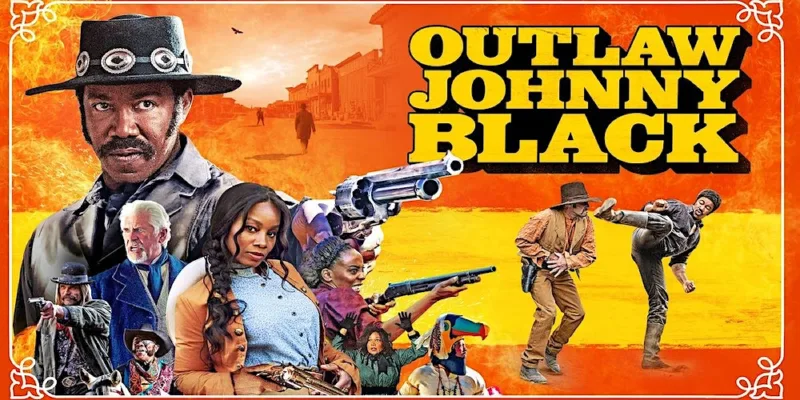
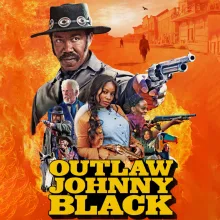
Writer/director/star Michael Jai White talks with Mike White about his latest film, Outlaw Johnny Black (2023), an action/western homage to movies like Take A Hard Ride, Buck and the Preacher Man, Joshua, etc.
The film plays select theaters starting September 15, 2023. Check local listings.
Labels: Michael Jai White Special Report
Transcript
An automatic transcript, tidied into paragraphs. It has not been proofread, so names, titles and spellings may be wrong, and it does not say who is speaking.
Show the transcript (about 2,800 words)
Speaker 1: Hold your ears, folks. It's show time.
Speaker 2: People pay good money to see this movie. When they go out to a theater, they want cold sodas, hot popcorn and no monsters in the projection booth.
Speaker 3: Everyone pretend podcasting isn't boring. Turn it off.
Speaker 4: I've been trying to tell y'all, Brett Clinton is coming to rob your bank. I came to put a bullet in them. My name is Johnny Black. I am no gentleman and I am no preacher.
Speaker 5: I thought I would join you for break of Hallelujah. That man is not what he pretends to be. Didn't the Bible say to turn the other cheek?
Speaker 4: Oh no, I mean, probably, yes, I said stop, stop me. But it also said you could hit a bully with a slingshot and this is mine. Phone crack shot. Mom.
Well, now you just shot.
Speaker 6: I think he ain't no preacher at all. False prophets rose among the people. You know this bow man. Reverend F.
Reverend Fairman.
Speaker 4: I'll be Reverend Fam and you'll be my deacon.
Speaker 6: Now, why in God's name would I agree to do something like that?
Speaker 5: There's oil been found on the property.
Speaker 4: Hallelujah. This town is about to come into a whole heap of money.
Speaker 5: We must arm ourselves and prepare for the worst.
Speaker 4: I'd rather die on my feet than live on my knees. Let's go.
Speaker 5: I say a life worth living is a life worth defending.
Speaker 7: I was beginning to think I lost you to another woman. If you have unforgiveness.
Speaker 4: In your heart, then you are shackled to your past. MICHAEL JAI WHITE: Let me down say turn it loose loose. If you don't drop your guns by the end of this sentence, that wasn't a complete sentence. MIKE WHITE: What happens when Pasty faced podcaster, Mike White talks with living legend Michael J White all about his latest film, Outlaw Johnny Black.
Well, you're about to find out folks because I had the pleasure of talking with Mr White all about his latest film. It is a Western where Mr White plays the titular character Outlaw Johnny Black had a great time talking with Mr White. I've been trying to do that for years. So I was very pleased when I got offered this interview and it was great finally being able to see Outlaw Johnny Black.
I was a backer of the Indiegogo or kickstart or whatever that was all those years ago. Always nice to see projects like that when they finally come to fruition. Thank you so much for listening and I hope you enjoyed the interview, the interview. I've always dreamed of Mike White.
Mike White. MICHAEL JAI WHITE: Yeah, this is a first for me. MIKE WHITE: I am super thrilled to be talking with you because I've been a fan for a long time. I love Black Dynamite.
So I'm super excited to talk with you about Outlaw Johnny Black. So thank you so much for your time today. MICHAEL JAI WHITE: Thank you, Mike White. MIKE WHITE: So tell me where the idea of about Johnny Black came from.
Tell me the process of it getting made. MICHAEL JAI WHITE: Well, I had this idea back when I did and wrote Black Dynamite. I always wanted to do an homage to Western Alo type of thing since I wrote Loving Westerns. And there were a few like fucking the preacher and take a hard ride.
And then I wanted to do a homage to as well. Evan developed this story that was loosely based on Black Wall Street or Greenwood, the early Tulsa Oklahoma and the founding of that. MIKE WHITE: Ok. I can definitely see that because I was curious as far as the makeup of the town and you don't really bring attention to it.
There's not a lot of times where oh, isn't it weird that this person is dating this person or there's a lot of normalization of things which I thought was fantastic. MICHAEL JAI WHITE: Thank you. Historically, there were a lot of stories like this when free black folks built towns that were thriving and they were faced with these circumstances where once they started to thrive, there would be powers that be, that would try to take that, that prosperity away from it. MIKE WHITE: Now with a project like this like Black Dynamite where it's really a passion project.
What were some of the challenges that you face? Because I remember reading about this, I think I supported the Kickstarter Indiegogo quite a few years ago. What was that gestation period like for you? MICHAEL JAI WHITE: Yeah, it was a little weird because like with Black Dynamite, what I did was a concept trip first.
And so I did the same thing with Al Johnny Black. But what confused people is even though it was a one day shoot, designed the trailer before I shot it. And so I knew exactly what I was gonna shoot. And once I got edited together, people thought it was a finished movie, even though I tried to explain, you know, this is a concept and they were like, so what is the movie coming out?
No, it's a concept and we tried to do a lot of things didn't really resonate people thought, oh, you're looking for funds like to complete a movie or so that kind of was a little bit of confusion and then eventually got independent money to go into shooting and completing the actual movie. And so that happened and we ran into something called the pandemic and that slowed things up because our intention was to get this out to a theater growing audience. And so that time is now it turned into something really positive because during the pandemic is when I edited the movie and this was the first time I was just home sitting with all the material.
And so I found myself basically editing by numbers, knowing what frame I was coming out of. And then I actually spotted all the music. My musical director David Hollander, who was the same musical director for Black Dynamite had been focusing in nothing but Italian Western music for 10 years since we had done Black Dynamite. And just so happens, that was like the perfect storm.
And so I had a library of 1000 songs or so from Enio Marconi and all these Italian composers. And I constructed it basically like I composed the soundtrack for outlaw Johnie Black based on hearing the things that I got and so I would then highlight scenes with music that I had drummed in my head. And so I never, I've never spot composed movie before. But this is the first one I did because I had so much time to sit with the materials the pandemic made me, it gave me time to really hone in on a lot of things that I wouldn't have been able to do and had it not been for band.
MIKE WHITE: You mentioned fucking the preacher man. And I know Fred Williamson had been in some movies as well. The and were Charlie. MICHAEL JAI WHITE: Those two un mentionable movie.
Yes, it was. MIKE WHITE: Tough for me to say that but, and then there was like, take a hard ride. It was an interesting phenomenon that the black action movies moved into black westerns in the seventies, or at least there was quite a few of them. There was at least six or seven I can think of without really trying.
Why do you think that was that kind of, hey, we've never been allowed to play cowboys other than maybe like a woody strode. But was that for you that appealed? MICHAEL JAI WHITE: I'm an homage to the historical fact that we had those type of movies. But a third movie that I was gonna do in this vein was also a horror movie because we had those g cul type of movies as well.
But with this movie, I'm paying homage to westerns just from start to finish. There's well, lovers of westerns are gonna see little influences from a lot of classics, I think even from the trailer, you can see things from Terence Hill and obviously Mel Brooks and those type of things. So yeah, so yeah, I believe that in that heyday of seventies black filmmaking, they wanted to branch into everything. MIKE WHITE: You have done so much over the years, acting, directing, producing, writing some choreography stunts.
This is not your first rodeo. Speaking of another black film, Black Rodeo, but this is not your first rodeo. How is it for you directing yourself and being the director of a project like this? MICHAEL JAI WHITE: It's absolutely natural.
It feels like I'm operating in my normal capacity. So it's actually a pleasure because then I don't have to worry about so many other things because I'm basically hiring people that I know hand can handle these different areas. And I'm detail oriented anyway and love the problem solving portion of it. Like logic puzzles.
And I like dealing with people and the fact that we're all basically, I always say we're like kids who ran away and joined the circus and made a living. So this, it's just a joy to be able to do something that's in my heart and be joined with other people. With the same scenario. I know we're gonna win in the end.
Anyway, the deck is stacked in our favor. So it's just a joy from start to finish for me. And I just, I don't know, there's nothing like more than doing that and no, really when it comes down to it, we're all servants. That's why I am.
I'm a servant. I'm put on this earth to do that. MIKE WHITE: Can you tell me a little bit about your crew that you must have had a really good working relationship with them? MICHAEL JAI WHITE: Yeah.
That's a bit of something that I really proud of because a lot of the crew, like you might have lighting people or gaffers and all that type of stuff and they pretty much, they do their job and they go home in this situation. This is the first time I've ever seen this, the crew were asking for scripts. They wanted to know they really wanted to read the script because they got engaged with what, what we were doing. And it was the first time many of the crew members had told me that they've invited their family to the set because of the atmosphere.
It really felt like extended family out there. So I, that's something I'm very proud of that occurred in this movie. And you know that, that way I wanna do all I can to make people feel like if they're leaving their family, they're leaving their homes to take part in this piece of art that I wanna make damn sure that they're gonna be proud of. MIKE WHITE: Where did you end up shooting this at?
MICHAEL JAI WHITE: We shot it all around the, in California and southern California. And we, there was about three or four different Western sets that we used here. So one of them when I shot my one day trailer, you shoot that was Paramount Ranch and sadly, that burned down, it burned down before we got the chance to shoot the physical production. But yeah, we used Universal, we used Sable Studios, Value Ranch and Big Sky.
I like to have these little Easter eggs. So we use some historically poignant places. There was a, there's a, the cave that I escape in happens to be for those nerds in out there that happens to be the bat cave that is the bat cave from the Batman TV series. And I wanted to go out of our way to use that because it's just part of history and I got a chance to use.
There's a tree where this ceremony occurs. And Russell Peters character mentions it is the tree of life or something like that there, but it is the Herbalife tree. I love these little nostalgic things that in little bread crumbs. But we use a lot of locals that had some significance.
MIKE WHITE: He mentioned the bat cave at night. You have done so many roles, either directly like Spawn or a Batman movie. You've done voices for at least Green Lantern, you've done a ton of stuff when it comes to comic books. Are you a comic book fan at heart?
Not really, I'm very involved in that world, but never really was much of a comic book fan and tell me about some of the people that you cast in here because I know not only do you have to have good actors but you also have to have some really good stunt people in here as well. MICHAEL JAI WHITE: I got a cast that dreams are made of the only person I was seeing for the lead female was no rose and she responded to that. And then Erica Ash and I had one person as a father figure in my mind, which was the first person I went to, which was Glenn Turner, I think, oh my goodness to work with people like that, I would forget to call cut because I'm just so enthralled watching this man work.
But yeah, I feel like I almost feel like I had an insider, like people like performers and just amazing individuals. All you had to do is put them in front of a camera and then, you know, people like Randy go tour and cowboy cro and people there's such such a resonance that comes out of them because of what they've been through in life. They're like real life superheroes. And so there's a lot that they don't even have to act through.
They just like you could take a Randy Couture and you could put them right beside Charles Bronson and you go, they're from the same tribe. And so, yeah, I had these individuals that you don't second guess in a Western setting. MIKE WHITE: I also appreciate that you bring the humor and you've got that nice balance between the humor and the action and the pathos of everything must have been a little, I would think a little difficult to find that balance for you. MICHAEL JAI WHITE: It starts with the script, you know, not to pat myself on the bed and it's gotta be there.
And that's the thing that, that draws the actors to it. I wanted to make sure I had a very balanced script and weaving these tales and really the most impactful storytelling is the storytelling that you can't see you. So I don't want to telegraph. And so there's folks who expect to see a funny movie, but then they're blindsided by some messaging that I never want to come off as preachy.
But deep down it's the message of the movie and it's a message that I'm proud to offer. I grew up with movies that had a morality too. And that's something that's really infused in westerns that I miss in movies today and to offer a story of redemption and forgiveness. And I think that's something that we could use today.
That's something I stand behind and I want to put out the end in the world now. MIKE WHITE: You are never one to not be working. So what is next for you? MICHAEL JAI WHITE: There's kind of a gag order on talking about some things with this old strike thing going on.
But yeah, I have a number of projects that are in the works that I feel represent the same brand that I'm showing in this movie. You can always entertain, you could always add butt kicking and action, but you're gonna have a story that somebody could walk away gaining from Mr White. MIKE WHITE: Thank you so much for your time. This is great talking with you.
MICHAEL JAI WHITE: Thank you. Thank you. Nice to talk to another fellow Mike White too.
Watch
Music credits
- "Main Title" (Take a Hard Ride) - Jerry Goldsmith
Links & resources
Related episodes
Episodes that share keywords with this one.
Comments (1)
Ryan Gettig Wow:)What a cool,concise,unique report!Well,I'll be supporting this Film.For Real.My fave Black Western is probably Thomasine & Bushrod,the Max Julian film!I dig the Romance & Outlaw motifs.The fact that the great Arthur Lee (LOVE)wrote the Title/Theme song is a cherry on top.Michael Jai White-your Trailer(and Trails!)got sizzle,sir.Love that line about "hi a bully with a slingshot":)LOL.Mike White-sight look's tight.Any Cinefile that doesn't ensconce himself on this site-Is missing out on the good things in Life!:)