
Episode 647 · Film year 1981
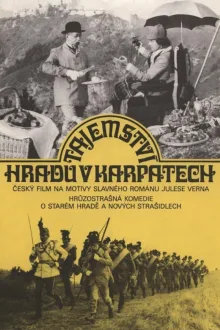
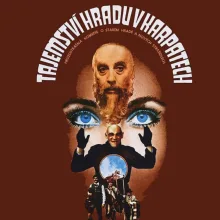
The Mysterious Castle in the Carpathians (1981)
- Special Guests
- Tereza Brdeckova, Irena Kovarova
- Guest Co-Hosts
- Jonathan Owen, Emily Barney
Show notes
Jonathan Owen and Emily Barney join Mike to discuss this off-beat adaptation (and the other three adaptations of the same story around the same time. Tereza Brdeckova talks about her and her father's work while Irena Kovarova shares her work representing Czech cinema.
Labels: Deaf Crocodile Emily Barney Irene Kovarova Jonathan Owen Jules Verne Oldrich Lipsky Rudolf Hrusínský
Transcript
An automatic transcript, tidied into paragraphs. It has not been proofread, so names, titles and spellings may be wrong, and it does not say who is speaking.
Show the transcript (about 22,400 words)
Hold your ears, folks. It's showtime people pay good money to see this movie. When they go out to a theater, they want cold sodas, hot popcorn and no monsters in the projection booth. Everyone pretend podcasting isn't boring.
Turn it off. Vvs Zaha Aoi Daum Stra Adolf. She w opera. Welcome to the projection booth.
I'm your host, Mike White. Join me. Once again is Mr Jonathan Owen. Hello.
Happy Chek Temba. Also joining us in the booth is MS Emily Barney and civil servant should only sing the national anthem on this special check timber episode. We are looking at Old Rich Lipsky's 1981 film, The Mysterious Castle in the Carpathians based on the novel by Jules Verne from 1892 which may have inspired Bram Stoker's 1897 book Dracula. The film tells the story of Count Tale of to Loco played by Mi Do, why do I do this to myself?
Why do I volunteer to say these actors names when I know I'm gonna just struggle through it. Doo Lomans. He's a blow hard opera singer who along with his manservant stop by the village where he learns about the nearby Devil's Castle, which is said to be haunted. We will be spoiling this film as we go along.
So, if you don't want anything ruined, please turn off the podcast and come back after you've seen the film. So, Jonathan, when was the first time you saw the Mysterious Castle in the Carpathians? And what did you think? I first saw it in 2015 and it was at the time that I was researching an essay on Dayla hasn't eaten dinner yet.
And so it was just a bunch of films by Lipsy that I was watching as preparation for the essay. And I think because it was in that context that I saw it probably didn't register as strongly as it should have done because I think because of the fact that the two films are in many ways closely related and this is not exactly a sequel but almost like a revisiting of similar ideas and a similar style, it kind of blended into Adela a bit. And so I think it took a few more viewings and a few more years to really properly appreciate it for what it is I think.
And I think what I've come to love about it is the gothic atmosphere that it has, which I think it genuinely does have as well as being this, this very crazy comedy. Do Lemanski performance in the lead role, which I think actually surpasses his role even as Nick Carter in Adela and some of the wordplay and stuff, which I think is very inaccessible, at least to a non native viewer on a, on a first viewing. So, yeah, it's something that I've come to love more and more. I think the more that I've seen it.
And Emily, how about yourself? I first saw it early in 2021. So we were kind of deep in pandemic times. I was just watching movies and I watched three Lipsky films kind of in a row.
I killed Einstein Gentleman, then Mysterious Castle and then Adela in that context, it's kind of the least crazy of the three. So I enjoyed it but maybe not as much as the other two, which, you know, it's a bonkers movie on its own. But at the time, you know, it kind of faded in the background, kind of like what Jonathan was saying. But so it's been great to revisit it from the podcast because it's very rewatchable.
There's just so much you kind of see each time you watch it again. And now it's kind of one of my favorite Lipsky films and I'm more of a horror, kind of, you know, weird person myself. So, you know, I really love just all the, yeah, gothic elements of it. So I enjoy it very much now.
Yeah, I don't remember the first time I saw this one, but I remember before I watched it was described to me as there's this inventor, they really focused on the inventor, character, whoever was telling me about it. It's like there's this inventor who is so far ahead of everything else and has all of these inventions that shouldn't exist in the time that this movie was set, you know, in the 18 nineties or whenever it was written, they shouldn't have closed circuit television, they shouldn't have these listening devices, these TV S that they're able to put in things.
But then everything is just slightly off, like the listening devices have to look like ears, the viewing devices look like eyes. And I kept thinking it was going to be more like Rosen Krantz and Gilded and Stern are dead where I think it's the, Gary Oldman character keeps figuring out things about like physics before he really should know them things like, oh, well, if I drop this rock and this feather at the exact same time, you know, they should land at the exact same time because of, you know, just the weight of them as saying that he doesn't take into account the air resistance and he drops them and of course, the rock lands first and then the feather slowly floats down.
You would think this would fall faster then this wouldn't you? And you'd be absolutely right. And it's constantly him coming up with these, like little ideas of how things actually work, even though he's in the wrong time. So I thought that it was going to be much more of that.
I didn't realize it was gonna be what it is, which I love how we want to like this main character. But he's such a dick. He's just from the minute that we meet him and just him with his little tiny pistol that he's got and just that he just thinks that he's so great that this opera singer that he makes poor, his manservant Ignac, he makes him carry all of these things on his back. Meanwhile, he's got nothing on his back at all.
It's like, what come on, dude. I mean, I think in regard to the inventions, I think it deals in a really inventive way with, I guess what would have been the problem for a film adaptation of this book being made in the late seventies or early eighties? Because I guess in the book, a lot of the inventions, I guess are just a little bit ahead of the technology of the late 19th century. So I guess it was working with, you know, the new inventions of electricity and the telephone.
Remember that in the book, I think it does mention Edison at least once. And it has to kind of like remind the reader that this is not set like in the, you know, the 17th century or the 18th century that this is sort of the present day. And that this is the time of technological wonders. And so I guess those technologies would have been amazing at the time that the book was written.
And I guess the problem for, you know, somebody adapting it in the late 20th century is that these things now are banal. And I think the fact that the technologies in the film are so crazy and that they're designed in this, in such a bizarre way, courtesy of course of Jan Schwang Meyer. And I think it manages to sort of preserve that sense of the bizarre and also make them funny though as well at the same time. And I think it treads that line between being amazing but also just being silly and I think that's kind of like a balance that the film gets right in other ways as well.
That can kind of like invest in it as a story while also sort of seeing it as ridiculous. And, yeah, as you said, I mean, there's nothing more ridiculous than the protagonist, I think. And what was really interesting to read about was that apparently the actor was not the desired choice of Lipsky. I think that Lipsky, although Dutch Lemansky had done Adela before that and had been brilliant as Nick Carter, I think Lipsky had a little bit of doubt about whether he could pull this character off, which does seem strange in retrospect, I can't think of anybody who would have been better in that role really.
Because, he just gets the absurdity of the character so. Well, I think, and also, while having this weird kind of dignity somehow, I think the he has a wonderful face, which is almost a little bit like Keaton esque. I think almost this little bit of this kness kind of stone face, which I think somehow just offsets how ridiculous he is as a character And yeah, he's, he's just a wonderfully absurd protagonist. I think, I really can't imagine anybody else in this role as you said that I was like, well, who else would play this?
I mean, he does hit it so well. And yeah, this is, it is a nice kind of counterpoint to dinner for Adele that he is that, you know, boisterous Nick Carter and just so full of himself and so sure of himself. And he seems to have the goods in that movie though. He has played for laughs at times.
But in this, he's this opera singer and he will take any opportunity in the world to sing opera and thinks that everybody, it's odd because he thinks that everybody in the world knows who he is. But then when he gets to the little village, they seem to know who he is. Which is odd for me. I was like, oh, I thought they would not know anything about, about him though.
I do like how, you know, you're talking about the language. And when the innkeeper is just like, oh, we've had talks like you in here before. I didn't take it so much that they knew who he was just that they knew he's some rich important man. Like, oh, you know, just the way he carries himself really sets him apart.
Ok. That makes sense. And I think he says, I think this Ignat says Milo, Milo something which indicates that he has this high status. And yeah, and then everybody is like in awe.
Which is odd because in the original book. So the book starts off with this, it starts off with the shepherd and he buys a telescope and happens to see that there's smoke coming from this nearby Castle which is supposed to be abandoned. And so he comes back to the village and he starts talking, hey, I saw this thing. They don't believe them.
They look, oh wow, there is smoke coming from the Castle and it sets off this whole adventure set. It really captures the imagination of the local forester Nick. I think his name is. And then also the local doctor and they both go off to investigate stuff.
And later on after they have their little adventure where things end very poorly for them. A noble man happens to come through and yeah, just because he's a noble man, people seem to treat him with just so much respect. They want him to come to their, like the wedding of the forester and his betrothed. They're just so into him just because he's a noble man and they will try to listen to what he says.
But at the same time, he just keeps laughing off all of the things that have happened to these people as superstition or there's a logical explanation for all this and nobody wants to hear that the village wants to believe in the supernatural. Whereas he's just like, well, it sounds like this happened. It sounds like that happened, you know, and he doesn't know of course about things like the wire that comes from the Castle all the way down to the inn, which is a two way listening device where they actually will broadcast like they, the voice of the from the Castle says to the forester don't do it.
You're gonna be cursed if you leave and basically stay away from the Castle. But he is obsessed. He wants to go and that character kind of becomes this via character here, the local civil servant who I love this guy and I love that he's got like a slightly lazy eye. So he always just looks goofy whenever I see him.
It's interesting that the book focuses so much more on the villagers. The doctor is a much bigger part and I guess the screenwriter Yez Bieda, he kind of wasn't interested in the villagers so much. So he wrote off, oh, the doctor can't come. The Sacristan's cow is Caling.
He's not in the movie at all. He just kind of wasn't really interested in them, which is interesting since Czech film has such a history of films about comedy, films, about villagers, but he just wasn't interested in that, just kind of wrote them off. That's one of the big differences I think, isn't it? That the book really takes a long time to bring in the count?
I think he comes in more or less about halfway through. And she's very strange. I mean, coming to the book from the film, I think you're thinking like we are, where, when is he going to show up? And yeah, you have a lot of these other characters and I think that was one of the problems that Beka had when adapting the book.
I think he had a lot of trouble trying to find a shape for it and trying to kind of get the narrative going. And I guess that was his solution. And I think the via character is good because he is a kind of a conflation. One of the great things too, I think is that he offset the protagonist because I mean, he seems like he is just this, this sort of what we would call in England, like a local yokel, but he turns out to be much more perceptive than the count, which is kind of funny that, that he, you know, the count brings all this supposed sophistication and civilization and of course, doesn't really notice anything.
Everything has to be pointed out to him throughout the story. You know, the book, he's, he's much more of a hero and he just kind of takes charge and it 's like, I don't want to go to the Castle, but we have to investigate. I'm gonna go and, yeah. So in the movie, he's of course just led by his desire to hear this Sweet voice again.
But yeah, he's, he's kind of a dumb, dumb in the movie. Yeah, because there's this whole thing once he finds out that the Castle is owned by Gortz. Robert Gortz. I think it's how they translate his name in this and he has history with Gortz and we get to learn the whole history of stuff and it's that part.
I will say that this is an interesting adaptation because there are a lot of things that are very faithful to the book. But then there are other parts where we just go off in completely new directions. But this whole idea of the count just happens to be going through this village and learns that the Castle nearby is owned by his former rival or his current rival because he hates this guy because he blames Gortz for the death of what they call her in the book la silla. I think it is.
But in the movie, she's Salsa Verde. So every time they say Salsa Verde, I'm, I'm just laughing, which is great. I mean, and that 's one of many things that is going on in this movie and like, even what's his name when he's on stage? The Canta Canto, which is like the Il Canta Canto, the singer.
So just happens to be going through this village where his enemy is or where he owns his Castle And he's like, I'm gonna see if, he thinks at first that it's just thieves that are up in there, robbers that are taking over the Castle and he's gonna bring the police and get this all taken care of. But then while he's going to the Castle, he starts to hear this song of his beloved. She was an opera singer just like him. But in the book, he's not an opera singer, he's just count kind of thing.
He doesn't sing opera with her on stage. But in the movie, they are fellow opera singers and he is obsessed with her that she disappeared or she died, but then her body was stolen and Gortz left a note for him. So he's now obsessed with this and that's really what kicks the story into gear. And it's interesting like you said, that doesn't happen till halfway through the book.
The book is oddly paced. I have to say it's, it's kind of a strange book. And then when we get towards the end. It just kind of fizzles out a little bit.
It doesn't really have a great, great ending. This is, I would say, and please the people from the Jules Verne society don't, don't punish me for this. I think this is a lesser ver, this feels like a lesser Vern work to me. Yeah, this was the first Verne book I had read and not being an expert or anything.
I feel like, ok, I understand why I've never heard of this book before. You know, it likewise. Yeah, I mean, I already read it. Yeah, in relation, having, having, I guess studied the film, I only came to through the film.
Yeah, I don't think it's something I would have read, you know, without any other reason, it's interesting that it has been adapted a few times considering that it is a very difficult book I think to adapt. And I mean, looking at the, one of the other versions that was made the Romanian version from the same year, I mean, it's interesting that, that too has to invent this whole back story because I guess that really reflects the fact that there's just not enough here, I think without inventing other elements. And I think that, that, as you say, the fact that in the book he the count is not an opera singer and that then Bee had to invent that whole sort of history about his relationship with Salsa Verde.
I mean, I think that was, I think, from what I've read, I think that was the point where it came to life. I think for bed, I think once he had found that element, he knew that it would work. And I think he had a lot of trouble initially trying to find his way into it. One of the other things I think that he worked on initially to try and sort of make it funny and to give it comedy was a language because I think one of the really interesting aspects is the language that is spoken by the villagers.
And you hear it, especially with Belia. So basically T Tele is speaking Czech pretty much standard Czech. And then the villagers speak this weird kind of mishmash of, I guess it's like Czech Slovak and it's more or less this kind of like cod Slavic language, which I guess would have been understandable to a native audience but just sounds strange and then you get little bits of like Roma, yes, like Cod Romanian, like a lot of the names of things. It's like, I think you see a Paulla for instance, when they're talking about like the TV set and a lot of things have this kind of Cod Romanian feel to them.
So that's another element that I guess Brodka brought in this kind of linguistic parody. And yeah, I think adds another layer to it. But again, that was something that I didn't really catch on a first viewing, I think. Yeah, I noticed that with any, any time there's text on the screen, I was like, that's not Czech and then I would look it up and it's like, that's not Romanian either.
It's just something he made up. So, and you'll see, there's like Czech subtitles sometimes when something's on screen, it's because the Czechs need to know what it says too. It's just nonsense. We could to this weird moments where the villagers, the innkeeper says something about like his lordship should sit on his ass.
And then the count is like such a charming dialect. And you see the innkeeper kind of put his hand up like, oh no, I shouldn't have said that. Yeah, it's like, it's like the joke that the innkeeper tells about that. I think it's about a general that he mentioned that stayed in this room.
And I think I wrote down how he says it in, I guess in this language it's something like BV. Yem Meral, Ala Dobre MV, which is like, basically I very hard to translate, but a rough translation would be something like I shit all over the battle but I slept well. But obviously it doesn't sound good in English because you've got that nice kind of like rhyming couplet in the original. So, yeah, a lot of it is kind of like really untranslatable.
Oh, very difficult to translate. Yeah, I was I was curious about that drug that the count gives to via the, where his fever disappears. And he's just like, oh, yeah, this is an imported slow back drug. And I'm like, is it Aspirin?
Like, I don't know what it is that, that he ends up giving him, but it is apparently a miracle cure. And again, science over the superstition of the villagers. I kind of took that again as maybe it isn't something special. It's just him presenting it as it's impo you know, the Avi's fiance is like imported, you know, and it's because I imagine, you know, Slovakia is kind of the more rural kind of area of the country, you know, they're not really known for their great achievements.
So I think that was kind of a joke that it was a Slovak drug, you know, it maybe it's just. Think that, yeah, it's meant to sound like this, this, yeah, very Fancy, exotic thing and it isn't because I guess Slovakia is not really that far from wherever this is meant to be. I guess it's not really very far. And as you say, you're not known, maybe at this point for, yeah, for very sophisticated medicines.
I love the fiance. I love the fast motion of her knitting the sweater and when she holds it up to him and then looks at the picture and the picture changes from him wearing his current outfit to wearing this new outfit that she's making for him. And it changes into this color photograph. Just these like little things that go on in the movie are really nice.
Or like when the count and his man servant are talking in his room and counts looking away from the window and out the window, you see a rocket ship taking off. It's like he's completely, again, completely clueless that there's this huge light in the sky and nobody seems to notice that or Fane, this character that we will meet shortly that he is sending rockets out. And that was his 420th time I think. And he's still missing the moon, but eventually he'll get it.
He swears that he will. Yeah, this, this time it won't fail, you know. Oh, and then you get old Tom, the quote unquote, deaf and dumb guy in the village. Wow.
That guy, that actor is amazing and the way that he moves his face and just his fake beard is beautiful. He seems to be the carrier of a lot of inventions. And I love the image of him going through the forest when he 's taking message up to the Castle and he's riding on that little scooter thing and just the way that his cloak is covering it all and just a little smoke stack is coming out the back. I love that.
And I love the music during that part as well. The music in this movie is pretty fantastic. There's a lot of really good caper music isn't there? I think in that.
Yeah, because there's even. A scene later on with some people that work at the Castle where it feels very keystone cops and even the policemen themselves feel very keystone cops. Yeah, there's a lot of fast motion, isn't there? I think a certain point.
I mean, I think the actor who plays Tom and that's another name actually, which is doesn't really translate as well because yeah, because I guess literally the name is, it would be like Tom, Tom, deaf and dumb, which the translation is Tom Hook on yxyx is also the word for German. So whether that's meant to indicate again, it's like this foreign kind of colonial presence in a way. And the actor is Augustin Kuban who I think is probably best known other than this, he's best known, I think for playing the figure of death in Desserter and the nomads, the Jacobus Go film which again, I guess puts his, puts his, you know, his appearance really to great use and yeah, he's just such a physically striking presence.
Yeah, he so is and I love when he's sneaking up on them in the forest, when they're finally going to the Castle and him in that giant tree and everything or him with the, he's got that staff that has the two branches that come out that have the ears on them and then the giant eyeball at the top and the way he's just like moving himself back and forth. And then you get to see the signal being played in the Castle because eventually we do get to see into the Castle and we get to see that. It is Baron Gortz and his personal inventor or Fane who's played by the one and only Rudolf Hosinski, I've never seen Krasinski play this broad of a comic character and I really kind of appreciate it just because I, you know, we've talked about him so many times on this show before we talk about that, his purring voice and just the way that he can play crazy insane and you don't know exactly which one he is, you know, in the cremate or a murder check style.
He plays such a different character than he does in this where he's got the super thick glasses plus the eye patch plus one arm is or the hand is cut off. So he's got like all of these kind of Mr hand from enter the dragon type devices going on with his fake arm. And yeah, he 's, he's amazing. I was thinking of the bathroom buddy and gremlins kind of at the end they kind of keep messing up totally, especially when he's like trying to get that, that knife to work.
His description is just kind of how it is in the book too. Which is interesting. Just that, that's how he's in the book. Like, he looks crazy but it's like, that 's kind of how it's written, you know.
So, yeah, I really appreciate that too. That, yeah, he's just playing this really broad character and just giving it his all, I mean, you feel in a way that, yeah, he didn't really even need to do this, this movie because it's not, I guess it's only a supporting part. But yeah, he just puts everything into it, I think, yeah, I mean, one of the really, I think interesting things about the all the inventions is that, yeah, you have the like the ear, you have the eye. And to me, it kind of relates to the fact that, you know, you also have this obsession with the voice, you know, of the voice of less Stella and there's always this kind of fetishistic quality to everything.
And maybe significant at one point that I think Tele describes one of the, he kind of misc describes one of these contraptions as an interesting folklor stick object. And it's almost like I think Beka and Sang Meyer are trying to kind of suggest that there is something very strangely kind of primitive or fetishistic about what beneath all of this sophistication and this, you know, this pretense of being very civilized and high brow that there is something much more kind of primal and primitive lurking beneath that And so for me, it's a movie that 's constantly kind of attacking, you know, ideas of sophistication and it's this arrogance, I guess, isn't it this arrogance of the civilized man, the supposedly civilized man who believes that he's better than everybody else.
And I think this is constant kind of undermining of all these pretensions to civilization or to progress. And I think it's quite a dark movie, I think what it's saying about, you know, progress and science and culture. It's really quite a, it 's quite a bleak message. Ultimately, I think, you know, bea like he kind of wrote Adela as how Eastern Europe views the West.
But this movie was how Western Europe views the East. And you hear these kind of little microaggressions that count Delia says, you know, oh all these people, he kind of reminded me a bit of agent Cooper and Twin Peaks when he first arrives, just all the trees and all these simple people. And you know, that's just how he navigates this this region. I think it's very smart that they make him into much more of an egotist than he is in the book because he becomes evenly matched for the Baron because the Baron, like you're saying is very, you know, he thinks that he deserves all these things.
He's got his personal inventor, he's got all of this techno technological advantage. He's very full of himself. Meanwhile, Tale of Taluk is full of himself as well, both in the book and in the movie, they get rid of Ignac pretty quickly. He goes to find the police, but I think it makes sense that they keep Villa with the count.
So it 's like basically two against two with that. And then also I'd like that. Villa is in love with Salsa Verde as much as the count is even though he's just had the one encounter, but he can't get the song out of his head. He just keeps seeing the image of her and her full opera regalia singing this area which he happened to spy through a window before the chain that he's holding on to becomes electrified and makes him drop, which again is very much like it is in the book, I think.
Yeah, I think my only problem with the film is that it doesn't have enough of Lester Brodsky, I think because I think the way it sets it up is you imagine that he's gonna play a much more important role and that he's gonna be almost like the kind of Doctor Watson, although I guess maybe a more perceptive Doctor Watson to the main character and then he's, as you say, pretty quickly dispatched and really replaced, I guess by the Viler figure as the sort of second fiddle. But yeah, I think that's true that there is this sort of mirroring of the protagonist and then of Gods.
And I guess they represent in a way the two, the two faces of supposed civilization, isn't it? It's like high culture and then science and technology. I think there is this, yeah, as I say, there is this sort of constant kind of critique and satire going on. I think about the pretensions of those things.
And I mean, I, from what I've found out, I think bea was not really a big fan of opera. I think he personally had this feeling that opera in the sort of 20th century that it was kind of ridiculous and he apparently liked opera music, but he didn't really care much for actually watching opera. So I think there is this constant pricking of pretension of high culture and especially opera. And I guess also in regard to science, I think at this point, I guess at the time when Byrne was writing, I mean, one could be maybe optimistic about the, you know, the promise of science and of technology.
But I think by this point, there is a sort of cynicism and what's interesting is that there are those two, there's a couple of references to the technical revolution aren't there? Or the at one point I think, I think it's gore he mentions that the scientific, technical or scientific, technical counterrevolutionaries and there is a pa a cheeky little dig there at, you know, communism itself, I think is this promise of you know this progress and modernity, which has not come to pass the. Costume that the Count wears when he gets that Telegram.
And he has that ridiculous, like swan headdress that moves and I don't know if that's an actual opera or does. He fly to see her because it looks like it starts to move. And then next thing, you know, he's joining her on. Stage or he's, he's, they show him on a train.
Oh, that's right. Or sort of like a coach or something. But yeah, there's like a scene of the wings flapping the headdress before he takes off. I really like that, that we have his flashback where he shows showing his point of view here.
He's narrating it. And then later on, we get her flashback, which is very odd because she has no agency in this movie whatsoever. But we get her flashback and she starts to narrate it and we get to see what happened after they parted and we get to see what a sex pest the Baron is. I mean, I love that whole sequence, especially the editing of him starting off in the back of the theater and then moving closer, closer, closer to the camera in all of those opera boxes and him holding his ear.
I mean, Milos, is it Milos Kopetski that plays the villain? He's fantastic. And I love how we have her. But then I noticed in that voice over that the count starts to take over the voiceover of that flashback and it's like, come on, she has nothing.
This poor woman, poor Salsa Verde. She's just an object and at the end, she's not even an object. She's just a fantasy. She has no corporeality other than the corpse that was kept inside of this room.
And then as soon as she's exposed to air, it just alters to dust, which that was definitely different from the book, there was no body that was being taken. It was just the image of her singing that Arya. And in the book, it's interesting too because it's, you know, it's, it's 1890 when the book comes out. So we're a little bit away.
I mean, Mobridge has to be doing his experiments. We need that. We have some early cinema stuff. But the way that they discuss it in the book, it sounds like a painting of her was turned against this mirror.
So it looks like it's really her as opposed to an actual motion picture image, which is what I think we're getting more towards with the movie. It feels more like motion picture and it feels like he's in his little projection booth when he's got her singing her Aria and then he's married up image and sound. He's got the little wax cylinder for her voice. So I'm surprised that that didn't go even more out there when it came to those inventions.
Yeah. I was kind of disappointed reading the book because the inventions of the movie are so crazy and I mean, they talk about creating all these, you know, lights and sounds to scare the villagers away, but they don't really say what they're scaring them away from, like they don't talk about what phonics working on. So, yeah, that, it was a little strange but then you have to kind of remember, ok, 1892 but this was revolutionary for the time. You know, I'm, I'm just a spoiled modern person reading this.
I know, I know what you mean though. Yeah, because I think when you get to the description of bless dealer and how this illusion is being produced, it doesn't really tell us very clearly in the book. I think you're just meant to figure out that it's some kind of combination of, it's like a, some kind of animated portrait you're using like light and projection and it's a little bit vague somehow. And I think, as you say, it's probably a little bit early for cinema, but it's kind of gesturing in that direction.
And then I guess in the movie, it is just, I mean, in part, it is just an actual like movie projection which I think gives it. And I think this is something that's been said. I think in the Brian Tabes review of the film from, from the time that it was released, I think where he says that there is this in a way, self reflexive element to the film where it's almost like implicating itself in that production of illusion. And relates, I guess to the, to the way the film begins because you get the first scene where it 's showing you the, I guess it's like the room of goats and then it shows you that TV, monitor with the surveillance footage and then it kind of moves into that and then the film begins, the film proper, the narrative begins from that.
So I guess there is this, yeah, there is this sort of self conscious element where it's somehow implicating itself. And I guess we only see what the character sees. So when we see the image of Laila at the window, we don't know until the characters know that that's actually a movie. So, yeah, I think that that adds a nice touch of kind of self consciousness somehow to it and clearly, it doesn't seem like film has been invented yet in the time period of the movie because you know, the count, he 's shocked when the film gets knocked over and it disappears like he has no idea what's happened, right?
And obviously nitrate stock as well since it burns up like nobody's business. Yeah. And that was the thing about Vern is that people still talk about is, oh, wow, he was so visionary and he was always thinking about the future and you know, would come up with these ideas in his science fiction that would eventually come true. It's very kind of Arthur C Clark as well with some of his forward thinking.
I mean, I think a lot of science fiction authors are always trying to figure out what the future's gonna bring and Vern was very good at it. But, yeah, to your point, it's like he's so close to talking about motion pictures, but it's just a little too early and I kind of wish that he had gone a little bit farther. Obviously, you know, no offense to Jules Verne. He's doing the best that he can in the late 18 hundreds here.
So that's great. But yeah, when it comes to Mysterious Castle being done in 1981 to being done, you know, almost 90 years later, it's like, ok, yeah, you can go bigger, you can definitely go bigger. So I did like that. They did go bigger and that they have the TV monitors because I don't think we get the monitoring really.
I think it's more, it's just audio that we get from the pub up to the Castle. We don't get the visuals as well. Almost glad that they didn't broadcast the audio from the Castle to the pub and create all of that stir that we have. Like you said, they go away from the village pretty quickly.
We're just there for just a couple scenes we don't get a lot of village time and we really spend more of our time going to and being at the Castle. And I love the whole thing of the room that they're in where they have the door that basically has the magic eye that will open the doors. And they just like a couple of yahoos just jumping back and forth through this door. Like, whoa, this is great.
And I'm like, was I like that when I was a kid the first time I went to a grocery store and the door opened for me, I probably was. And it kind of helps set up just, you know, they're not used to technology. Like the fact that that this is something a child would be excited about that this is just something completely new. You know, Billy doesn't know what a AWC is, you know.
And it's an amazing one, isn't it that, that toilet with the kind of weird sort of ornamentation along the sea with neon lighting have been invented? Because that's another great moment, isn't it? When, when you see that lit up, that sign is beautiful sort of doorway. I love that bit.
And you still want to go through it. Over the big arch with the two fingers pointing. Welcome Count Tale. And I love how Gortz is always on him, calling him Count to loo of Tele instead of Tale of Tolo.
Yeah, I was, I was just gonna go back to the issue of names and of food, which I think is something that is kind of constantly there, isn't it? I mean, you have like the Salsa Verde and there's one great joke that I actually had to look up because I not really sort of refined enough to, I've eaten this. But one point, you know, when he 's displaying it where it went good, he's displaying the objects that belong to famous composers. And then you come to the Torna D Os Rossini, which is this, I think it's like a steak dish with foie gras, isn't it?
But there's that kind of constant kind of combination of, I guess it's like high culture, you know, sort of confronted with food or with the body. And again, it's this, this constant kind of mockery, isn't it of the pretentiousness or the sort of high flowing qualities of opera or of high highbrow culture? And again, I guess another variant of that is the scene with the chamber part which he's singing to as though it's this holy grail for me. That's all about Bodeker, I think.
And his, I guess on the one hand being very sophisticated, you know, very sort of cultivated man, but at the same time, also being aware, I think of the sort of excesses of pretension that, that people could go to. And yeah, there is this sort of constant, I think mockery like that. I got a kick out of the Baron's quadroon when you first see him and he has all the gramophones surrounding him. I work in like the kind of audiophile industry.
So that's totally how audio files are today. So I got a kick out of that. And I love that. Or Phonic.
Yes, he does help out the Baron when he can, but he's just so much more into his own experiments. He really just doesn't care when he's making the apple float and it great. He's got an anti gravity device that he's working on it. Like it's nothing.
It's just like, and the apple floats up and the Baron isn't impressed or anything. It's just like, what are you doing? You know, and then eventually the apple falls and splashes and gets all this stuff on the Baron 's nice white shirt, but he's just constantly doing stuff, the whole thing where he's putting a plug up of nose like. Animal electricity tests.
It's so good. And that he finally uses that to like, ruin the phonograph recording of Salsa Verde just to get his revenge because once the Baron's done with Phonic, once he's done with everybody, he just wants to cut all strings and, you know, he blows up all the workers from the Castle. He tries to kill Phonic. But man, the end of this movie where they are, you're just like, is this guy dead now?
No, no, he's getting up. He's gonna do some more. Well, what about that character? He got stabbed?
No, no, he's gonna get up, he's gonna do something more. It's like nobody's really dead at the end of this movie until the walls start tumbling down, I think. Or even says, like I'm definitely dying at one point. And that's, he still doesn't die though.
But the only filled with an execution by double bass that I've ever seen, I think, I love that. The Baron too is obsessed with beards. He's got that whole thing. He loves Tom because Tom 's got that great beard and Tom 's beard does that awesome thing where it pulls apart and there's different objects on his chest.
There's the one where it's the three guns. There's another where I think it's a portrait of Laila or Salsa Verde that he's got there, which fascinates Villa, right? Ok. Let's open up with a bare bottom.
And that he's so mad. The beard is so mad at Oric because he's only got the goatee and he's just like, why don't you invent a beard for yourself? And it's finally revealed that Toma's beard is fake, like the Baron is so upset. And I thought for sure when or Fani had this knife going, I didn't think he was going to stab the Baron.
I thought he was going to cut his beard off and I was just waiting for that to happen. I'm surprised he doesn't make fun of Tolo for having no beard either because he's a very clean shaven man. At least VLI has got the mustache. That scene with, Baroni and the knife like that was pretty creepy.
You know, that's probably the scariest moment of the movie. Yeah, it is a bit of a shock there. But you do see the blood, don't you? I mean, I think that this maybe, I guess by this point they were a little bit freer in what they could do.
But yeah, I was a bit surprised to see that. Yeah, it actually is a real stabbing and that there's blood. And I know you have that, that you have that, that scene of the, it's like an animated scene, isn't it? Of the, of the fake arm and the various like implements coming in and out?
Of course, I mean, I guess even if we didn't know that this was Sang Meyer, I think we would guess. And I think this actually was made before dimensions of dialogue, but it's almost like a run up to dimensions of dialogue, isn't it? With those kind of like exchanges of objects and the mismatches of objects? So it's nice that Sang Me got this opportunity.
You almost feel like he's kind of playing around with some of his ideas there. And I guess this is sort of coming the end of the point where Schwang Meyer had been banned from making his own films. And you know, he would get these projects like this and of course, he worked on Adela as well and it's nice that I think Beka, who I think was in many ways like a sympathetic spirit to Schang Meer that they gave him this chance to kind of try out some of his kind of crazy conceits and ideas as well. Yeah, it sounds like I don't know much about Lipsky, but it sounds like he was very open to collaboration and improv.
So, yeah, he was just happy to have people bring their energy and do what they want to do. So I think Beka and Schacher were friends. Yeah, I think that's true because I think there's an animated film by Bede. I've forgotten the name now, which is based on the or I think where he used the artwork of Avian Meer over the wife of Schwang Meer and there was a Miller on the river.
That's right. Yeah. So, yeah, there was an admiration by Bed for surrealism. One of the interviews with Beet, he talks about his affinity with surrealism and I think specifically he talks about Valeria and a week of wonders and about how I guess something that connects surrealism with him was this love for popular culture or for sort of pulp literature.
And it's all about finding the, I guess it's the sort of, I think he calls it the unknown humor or the unconscious humor and also the sort of unconscious elements of poetry in popular culture. And if you think of something like the, you know, the love of the Nick Carter stories in Adela, I guess you have that same fascination really with, I guess, like, what we would call low culture or pulp and it's all about finding the strangeness in that. And I mean, for me, I think there's a really fascinating trajectory I think from Lemonade Joe to Adela to this film where I think in Lemonade Joe, you're seeing much more of a parody.
And I think that film, I think because of the time that it was made, had to be framed much more as a parody of the genre that it was working with. But I think by the time you get to this point, I think the time was a little bit freer. So I think they were a little bit less constrained to make everything, a parody of genre conventions. I think they were a bit freer to just make a real gothic film.
So I feel that somehow you see more of the love for the actual genre material in this movie than you do say something like Lemonade Joe, even though I mean, I love Lemonade Joe too. And I mean that I think was also popular because people just love Westerns. And of course, bea was probably the biggest fan of Westerns in Czechoslovakia. But I think somehow the genre is allowed to breathe a bit more in this film.
And then this film kind of came about because it was just a fluke that Baron of had just some space and they were just, hey, go make a movie really quick. So, I wonder if, you know, maybe they're a bit more hands off because they just, they just need something to be done fast. Yeah, I was, I was really surprised to read that. Yeah, I think it had been a project that had been knocking around, I think, since the sixties and had just been shelved at some point.
And I don't think Lipsky or Bed, I definitely Beet, I think, was not attached to it at first. And I think it was one of those projects that came about because of the Italian involvement in Czechoslovakia in the sixties. I think it was Maurice, Gas who I think initiated the idea of doing an adaptation of it. But I don't know if it was meant to be a comedy originally and then I think, as you say, by the late seventies, I think there was just this point where they had studio facilities free and I think it was just pretty much, just because they had the opportunity to do it and then I think bea got on board and, yeah, it seemed to have come together pretty quickly.
And just, yeah, Lipsky was attached first and I mean, he only makes comedy so it's like the second you add Lipsky like it's gonna be a comedy. It doesn't take a lot to push this in the comedy realm. I mean, they definitely play up a lot of things. But this idea of these two men who are obsessed with this dead opera singer and that the opera singer just doesn't exist that it's just a sats version of her.
It's a projection of her and that the one guy just doesn't understand that for the longest time in the book, he is constantly like, where is she? I gotta gotta go to the dungeon, I gotta find her. I gotta Salsa Verde is here someplace I need to find her. And in the movie it's, yeah, he kind of does that but he's not nearly as obsessed.
He seems to be, I don't know, he sees the body, sees her there and I think that that sates him for a while. But then when he finally hears her singing and rushes in and destroys the mirror accidentally, there is inherent comedy to this I think. But I found while I was listening to the books, I listened to it, I didn't read it. But I found the, it felt very much like it was doing that whole thing that a lot of authors were doing at the time, the whole idea of serialization because I felt very serialized as far as each chapter would take us to a point where it left us wanting more.
And I really appreciated the way that he did that again. I don't think this is the strongest Verne book out there, but I liked how he was setting up each chapter. And even when it came to the return of Nick from the Castle that we start off with his fiance, and we get to hear more about her and then eventually his story rejoins her and we get to hear a little bit of what happened. So as a reader, I was like, or a listener in this case, I was really intrigued as far as like how they're going to get back to this and tell me more about this story because we end one chapter with him with the Villa character, the forester trying to, he tries to climb up this chain to get around the drawbridge.
And next thing you know, he's passing out and then we don't know what happened to him until the end near the end of the next chapter. So I thought that was a nice way that he doled out information. And I was really paying attention to how we get information passed along to us in this version of it just again with, you know, when we meet via when we meet tale, when we meet Oran and the Baron, I mean, like I said, it does take a long time for us to actually see the Baron 's face. But then once he's there, he is big presence.
And in the book, Laila, like she never actually sees him, she just feels this presence. So it 's kind of funny that the movie does this 180 where you know, yo Kopetsky is just in your face and with all those great faces that he. Makes, which he says, I never want to see your face again. He 's like, OK, and then the next thing he sees he's all bandaged up and the way he's in the audience is like bandaged completely from head to toe and trying to clap and everything.
I'm just like, yeah, this is great physical comedy. I love it. And in the book, it's like she likes the Count, but it seems like her motivation to marry him is more, she just wants an excuse to retire to get away from the Baron. But in the movie, they're more just there in love.
They're kind of equal partners. And then she tells the Count about the Baron and the count says, hey, let's get married. It 's, it's kind of a more equal relationship in the movie, even though she is a very small minimal part of the movie. And her death is so strange where I'm like, did he did the Baron steal her soul by capturing it?
Like I kept thinking that he had a motion picture camera because I wasn't aware of what was going to happen. So I kept thinking that he had a camera in the audience and that he was capturing her and the night of her final performance, she does this big Aria and at the end she passes away and I was like, well, did he steal her soul with this equipment or something? But no, it just seems like this odd coincidence that she happened to have a, like an aneurysm that final night. And I, at least in the movie, it feels like she was scared to death or something, but I'm not exactly sure what happens why she has to die at that moment.
Well, that, you know, but she faints when Tele gets the Telegram to go to her and she faints and then it's, you know, they say, oh she has a heart condition. So I think the Baron is just playing on like he knows she has a heart condition and he knows he can make her at least pass. I don't think he intended to kill her, but he knew he could at least have her pass out and he could kidnap her. But yet in the book, it's, it's not as clear, I think what happens.
And then in the film, he delivers the ultimate shot which is the sort of party blower bang his name, which is just really ridiculous. And right in our faces should have been a 3d film. Jonathan, didn't we just see a bust of Beethoven in Murder Check style? Good question.
That sound right. I can't remember offhand. But it would make sense. Yes.
I think in the, in his, in the protagonist's apartment there is a bust something. Ok. Because when they, when they use the bust of Beethoven to break down the door, this feels very familiar. And it's ok.
Of course, because Beethoven only wrote one opera. So, and I just watched, Four Murders Are Enough. Darling. And I think there was something with a bust of some prominent person in that too.
I think that maybe that's where I'm getting it from. That's, that's probably where it's at because I knew sometime this month I had seen a bust of Beethoven other than being used as a battering. Ramp and just the way, I guess, progressively more squashed, isn't it? Each time?
It's really a again, total disrespect for my culture. When I love, when Oron is finally dying and he gives all of all of his inventions over and he's just like, make sure that these go to a safe place and then you get to see that I'd animation at the very end with all of the rats eating his book. It's so bad. You forget that the movie ends with the, with the count murdering himself because he shakes apart the opera house that he's in.
It's a dark ending, isn't it? I think, I think the fact that, yeah, that it's animated and the tone is still so jolly kind of belies the fact that. Yeah, it's pretty nihilistic, isn't it? Because again, and that's the ultimate commentary, I guess, isn't it on both opera, the high culture around the technology or the sort of idea of scientific progress?
Because both are paid to pretty quickly. And the tone of the movie is, yeah, this is the best thing we, you know, we didn't really need those inventions. They could only have done harm. So, just better let the mice eat them.
Yeah, it's, it's a very funny movie but it's very, you know, just man takes a woman's body and keeps it preserved in this room and, you know, it's, it's very dark, especially when you see the corpse after it's disintegrated and you just get the teeth and the hair and then that machine that was making it look like she was breathing. Oh, that's really pretty gruesome. Yeah, I really admire that. They went there because yeah, that could have just been done in a very silly way and just in this very pathetic way.
But yeah, there is something creepy isn't there in that? I think especially the other, as you say, the tea, the sort of like the sense of this body that's just been reduced to sort of like mechanical, like automata. It's a very, yeah, there is something pretty gothic about that. And yeah, I mean, that's, that's not in the book at all.
I don't think, I don't think there 's anything. Yeah, there's nothing comparable to that. Really. So, yeah, I do admire that.
They kind of like, actually did something that was a little bit more serious there. And the way the Baron talks about her, you know, he says, so she's only good to polish silver with now. And it doesn't matter that her body disintegrated. I own her soul, you know, I own her voice and her image.
Towards the end of the book is he's still, they destroyed the image. But yeah, he's got the voice and he's got that basically the wax cylinder type of thing with her voice on it. And that's when the Brosky character shows up again and shoots that out of his hand destroying it. And that's when he's just like I give up completely because now I don't have anything from her and I'm just gonna pull these Castle balls down on myself a little bit different here in this version, but pretty similar.
I would say, I mean, he does get the voice destroyed by Oric and then he eventually does get the Castle walls down on himself. But I don't think it's necessarily his choice in this one. No, in this one. Yeah, he has the detonation device and he, I think.
That's the wireless detonator. So yeah, it's like, ok, I have nothing left. So may as well. And I do love the final shot of the entire film where Villa is now married to the mayor's daughter, but he's still dreaming of Salsa Verde and he's basically got her in his arms and then all of the characters are back.
It's very much, you know, the curtain call for the film, like literally a curtain call for the film because they're all on this proscenium and you could see all of the characters back one last time before the curtain closes. And it's just totally mismatched, isn't it? I can't remember. Yeah, because you see, I think via is with Laila and then Salta Verde and or is just kind of like lying across the stage, isn't it?
And it's just, yeah, the most mismatched combination of couples you could imagine, I think and then the curtain closes and it begins and ends, doesn't it? With the curtain call? Which is a nice touch, I think because again, it's that sense of self consciousness, I think. Let's go ahead and take a break and play an interview with Arthur Tarea BVA and film programmer Irina Kova.
Right after these brief messages. Get ready for the ultimate adrenaline rush in Meg two. The Trench as action star Jason Statham reprises his role as rescue diver, naval captain Jonas Taylor and joins Chinese star Wei Jing in Ben Wheatley's sequel to the hit film, the Meg set four years after the events of the original film, Statham leads a daring research team in a battle of survival against multiple massive megs. Look for Meg two, the Trench on digital.
Step into the gallery, Dear Friends for horrors, Nightmares and Spooky Tales. This is the midnight viewing podcast and we like to discuss the frightening world of television horror anthologies from Rod Sterling's Night Gallery to Tales from the Dark Side to Hammer House of Horror and More. Father Malone Chris ST You and Mike White will be your docent during this midnight viewing available wherever you download your podcasts from Weirding Way Media dot com. My name is Teresa.
My name is Irena Cova. I don't even know where to begin. I guess if we can start with your dad and talk a little bit about him and his career and how he even became a filmmaker because he was a writer, director, animator. So many different things.
Can you talk a little bit about him? He was this generation being born still in old Australian Empire in 1917. That means that this was a generation of filmmakers with no film schools, of course. Now the question is where all these people have learned to all this from?
We all are now learning more but film schools and mostly from other films from films being already made. And definitely in the case of my father and his friends, those were first of all American films, good Hollywood films from the thirties and the early forties, of course, comedies by Lubitz or Capra or whatever. Then he was very touched by this what is called Western Epics. That means not only like Western simple sense but Westerns that in the same type are saying something really about the big country of America because he was living in a tiny, almost claustrophobic society and especially during World War Two, this was a big push and a big help.
Yeah, that you were born in the late fifties. And I'm so curious, how did you discover that your father was a filmmaker? That he wasn't just the guy who gets up in the morning, goes to a factory and comes back at five o'clock. Indeed, if he put the going to the factory because he was employed in animated studios, brother in and he was going practically every morning there.
But it was not very far. It was something like 10 minutes by walk. But the other thing was that this I would say film loving or films being filmed found this was a part of the life because I think we didn't have any television. But I think I was the first time in the movies when I'm something like three years old and it was something like a duty.
It was not all that I could go to the cinema. I was obliged to go to the cinema. So when he couldn't go with me, he was sending my mother or the search whatever. So I was from the very early age and movie cover.
And I realize one more thing because I'm a screenwriter and I'm, I'm a professor of screenwriting at a practical school. You meet very many people who are in fact not able to read screenplays because this is another way of reading. And in my case, or in the case of people like me, I was aware of the screen plays as soon as with the books because screenplays were everywhere around me. So in the moment when I start reading, when I was seven years old, I was reading books but also screenplays.
And I think it's developing also something like film. I yes, that you are not thinking in terms of literature, in the words, but you start to think in the, in the pictures and images. It was never learn that he was filmmaker since the very beginning, he was more filmmaker than anything else. In fact, were you pretty much always fated to become a screenwriter?
Script doctor? You've done so many things as well. Did you always just feel this is the natural path for you? It was not cheap but oh, I was living in a time and it was not really possible because when I was 12 years old, this was a Soviet occupation, Russian occupation in Czechoslovakia.
And this, this amazing world of Czechoslovak cinema somehow ended from one day to another. And I finished my high school in 1976 or seven. And I wanted to go to the film school, but I didn't want to go to study screenwriting because this was really horrible. We had a kind of studio system in Communist Czechoslovakia and the people were in these times teaching and would teach in ac put, those were really monstrous who teach you things.
And my father was still living and I asked him questions and he was answering, I was thinking they didn't, they wouldn't take me or to the screenwriting anyway, because my father was not in the Communist Party and everything which was important. And so I started some editing and it was a very good decision if I don't mention the fact that I destroyed a couple of very good anitas being their assistant because I'm not very organized person. But this, this is something like a presion. We say that everything that is wrong in itself since the first idea was born is in the and present in the editing room, you know, so you are facing all the programs, the film project met is the first idea.
So we learn a lot about the film language there. So I was grateful that I could study that. But I didn't realize that that thing was that I was one classified as a film editor. And besides, it was quite difficult to become a real film editor in that time.
And I couldn't write screenplays. So I was starting as a film critic in the very beginning, I was writing, you know, film magazines and like only newspapers and of course, things changed a lot for us. Yeah, of change. Men in Eastern Europe when was became a president, the world was open for my generation.
But in the same time, the world was open. But the film industry collapsed totally in this moment in the posthumous countries because the studio system were in fact funded by state was more complicated but more or less those were the state enterprises and suddenly there were no clients and no business and everything. So everything changed. So in fact, I was waiting another maybe 12 years doing different things that I don't regret.
And I think it was also good because you are becoming major. This is quite a horrible Buddhist profession where of course you write 10 skin plays, maybe one that is produced. And this is never based. What you would imagine.
What is the value of this in writing is that you like the project in the moment when you are working on it. And I think my father was very much aware of it. I learned this from him that this is not the very often, this is not the result because it's very uncertain. But this is the creative work itself on a project.
How did the Prague. Spring affect your dad and his fellow filmmakers. He was one generation older than the filmmakers of the new way, let's say. And a good thing.
For him that he was never really a part of this commerce system. But the this was a very special group of the artists who were functioning in fact as a kind of the train of communism. So for example, puppet, the puppet animator Vy Trinka or some others, those were people who were mostly doing films that were unpolitical, much closer to the Western culture. They could travel because they could speak languages, which was not obvious because the Western language is in this self deserved forbidden.
Since the beginning of fifties, I think my father had a kind of reputation since the fifties already or the late forties because he was for the screenwriter of the Triner. And the second, he was a screenwriter of another actor. And also Jan be was in fact something like a Astro win of Orson Welles if you know this kind of the artist and they wrote together a very beautiful comedy about Emperor Rudolph. The second, which was very funny.
It was a huge success. So from this moment, Iy Brea was classified as someone who is not bringing troubles but success and it's so good for everyone. For example, he was working with via me on his very beautiful film. One day.
One kid or one kid comes, it does, I think I know different titles. It's called Cassandra Cat. I think it was never released and kept in the United States in the end was it? Not sure if it was, but it's definitely now out on a beautiful Blu Ray, he had a humor, he had a poetry.
He was oriented very well in the contemporary Western film film, from Western Europe and from United States. And he was one of the admirers of, let's say America legend. Yeah, he was never in United States. In fact, he was supposed to go there twice, but he never came out from the different reasons.
But he saw so many films that he had his special vision of United States, I must say without having any illusions because we had an access. As a very few people had it to the American Press and to the American film press like American film or take one or also different the American magazines. And that's how I learned English for example. And so in this movie made this film called Lemonade Joe with Audrey Lipsky, which is in the same time parody and chant of admiration towards star American legend.
Yes, because you must realize that people who were working on lemonade, Joe, those who are very often people who never saw Western films in their lives, you know, so they had this love they had from the pictures from the telling of the others. And I still have a collection of the pictures from a classic American Western, very good ones. And if you see them, you can follow to which point, for example, the composition, photograph or composition, only what a job is taken is stolen from these classical America films made by John for the of the others.
This is very interesting. So his view on America and its culture was very, I would say ambivalent. He was a big admirer of this legend of the big culture. Let's say this is because big culture means means freedom.
You know, you take your horse and you ride and you have a lot of space. We have no space here. We have very tiny country. And plus this was a Communist country.
So people were really close like in a shoebox. And the other thing was that the he was from time to time very skeptical powers, official American politicians and so on, which is not always the case of the people who were very passionate in Czechoslovakia, for example, he was someone when he would, he live in the United States, he would certainly vote for Democrats and this kind of personality. And then after this was your question after 1968 because he was not in Communist culture. This was good for him because he couldn't be kicked off the Communist Party.
So he still could stay in the studios in Barb in these times, people are employed as a screenwriters or directors and they were earning something like a basic salary which was very low. And only after shooting, only after being employed making a film they were paid better. That means that he was something like out of business for the moment. The last film he was working on really well at their Prague nights that, that Crocodile really last last month.
But in the same time he was still writing and he wrote couple of screen plays, the player never released and realized. And then because he was very much friend with the director Ozzie Lipsky. Oh, by the way, has 100 years anniversary, 100 years from his birth next year and Lipsky was still part of the system. They were thinking that they would like to do something else together after.
And I think that the reason why it was possible was the fact that after six years of the transformation of the very negative transformation of Czechoslovak culture, the cinemas were empty and film industry was losing a lot of money. And in the end, it was more or less clear that and Lipsky was a member of the party was a kind of guarantee that politically it was ok, it was like that. So it was possible to make the film which was called Adela, didn't have her at dinner yet. And this is another dream of Y Brea because he was always very much in love in the, in the Nick Carter Crime Stories.
I remember that we had a book of N Car to Crime Stories since I was really a very small child around four years was very bizarre because it was a very beautifully made books made of these pulp fiction, this pulp and he started to write and what is important to know that in this time James Bond, which was already very much present on the international scene was not well accepted in Communist countries because he was taken as a kind of a kind of personalization of the capitalism, of its brutality and everything. And it's if they wouldn't see the comic part of these figures, and my friend didn't like the James Bond also because it was a little bit aggressive and brutal.
And if you live in a country like that, you are sensitive on this. But in the same time, he was fascinated by a certain un volunteering magic and humor of these Nick Carter stories. I found when I was writing his biography that in that time, there were already two films about James Bond being made, but they were a little bit forgotten and certainly didn't know that. And so he invented the very complicated story about the plan that it's humans and about an American genius detective who is con to come to the Austro Hungarian Empire to Prague to solve the problem.
And this is a very fine film because this is the same principle like Lila show that at the same time, there is something like a slight admiration or admiration for America and its people and its humor and everything and at the same time, this knowing that the people from the West, especially from America knew absolutely nothing about Eastern Europe that they had a very strange picture defeated by the propaganda, which was by the way, the case on both sides. And they made this film and it was the same thing like in a case of Limo Jo.
That means that first of all, everyone who was working on this show was absolutely enthusiastic. So the people were doing much more than they were asked to actress or the authors of the costumes and to animate the angel who was in charge to animate this plan, this Adela. So in the end, this film was something like a very unique in the middle of seventies, which were in fact a very dark part of the Czechoslovak history. So this was this Adela.
And afterwards, this was a time of I don't know, big political troubles. This is a time of Charter 77 or third time where people were pushed to be engaged officially against Charter 77 and forgotten to say one thing that can be interesting that I think it was in 1973. George Roy Hill was shooting in Prague Slaughterhouse number five. And the photographer Dop of the film was Miroslav Ulrich, who was a cheap photographer who was normally the p of Forman.
And my father had a big dream of his life to make a film very serious film about Wild Bill Hickock because Y Brechko was a really big fan of the Wild West stories. He wrote the amazing book about this, but he was not in this case, interested religion. He was really, he was interested in a true life of these people. And he was interested, his question was where the legend where the romanticism was born because he had a lot of books and he was thinking about that.
I said this through to your life in the seventies or sixties or the 19th century was something extremely rude. So who were really those people who were becoming heroes of the folk songs and of the films and everything. So he had this synopsis about Wild Bill Hop and he asked through Merola on wechat to meet George Roy Hill and he was very kind and invited him to come. But in this very day, my father was kicked off the, his job in Baran.
So we didn't come because in the end there, he was very much afraid this was not fun. In that time, I must say that I sort of film about Wild Bill, which was made, I think in nineties. And this is kind of very same story. So I, no, no, no, it was in the end, this was the only one story of his life.
So I think it's normal. So this was one of these missed opportunities. Yeah. And so after being made, this Adela didn't make her dinner yet they wanted to make because it was a very huge success also for international sales.
So they wanted to shoot a sequel. But it was not possible. They had a synopsis of the film which was called and the Car in Istanbul, they wanted to Coro with Turkey in the end. It was not possible and the time was going on and my father was very, very ill in that heart attack and they had a big problems and in that time, they were bypasses or possibility to cure the disease that so this was very difficult for him.
And in the end, Lipsky came in 1979 or 78. And he said, listen, what's going on? I know that there is something like three slot in the plants of Brando Prest Man's following. This was a plan five economy.
That means the regime decided that in the next year they were produced, I don't know, 200,000 of shoes or 40 films or 50 films. And then they were selling the plan. The problem was of course, that some sometimes people needed to 500,000 shoes or 10, 100,000 shoes. And in this case, that that's why it didn't function.
But basically in the cinema, if I if there wouldn't be the ideology I think was functioning quite well, it was very professional. And what happened this year was that the one film that was specified for some reasons that I don't know, somehow fell out of this program. And Lipsky said, we can, they can let you, they can let us in. But we must come very quickly with Chelsea.
My father said, oh my God, what do you want from me? I don't know. It. Just the full and movie and everything.
A Liski said the reason I had a book that I love all my childhood and this is Mr Castle in Carps by J. Should I tell them? Yes. And my father said, of course, tell them yes.
And so this was the beginning and it was a very quick action that had to be and then Easy Bridge Car read the novel. And in this moment, I was already quite ma I was 25 years old and he was talking with me about it. And he said this is a very complicated because I think that this, this is one of the very weak Gil Vers novel that cannot be really adapted for the movies. I must say that he was already involved in Gil Bene's novels before because he was a cori two films which was Baron Mundus.
And before very famous film, the invention of the Disaster by, by Rosa. So he knew very well the author and it was the author of his childhood too, eventually. But suddenly, and I discovered later also with several books, there are books that they are seducing you to be adapted because it's visual, it has a story. They are funny characters or interesting characters.
But in the moment when you start to change it from booking the screenplay, you realize that it has absolutely no logic. And when you start to do it loses all its charm. So now what to do because he was very, in a very bad physical state and it was very much in hurried. So he started to write, he didn't know what to do.
And because he didn't want to do, he started to invent a very special dialect. He only knew that they will transfer it from, it was already in their Pat, but they will transfer it in an existing bizarre landscape that theoretically is somewhere between Romania and Slovakia. We don't know exactly. And Ezy Breza started to invent a special Slavic dialect.
He took all the dictionaries of the possible dialect from of the Czech language. This is a small language difficulty but still when people left, they left mostly to this what the people in the film are saying. So I hope that the translation is of the film is at least a little bit funny because for us, it was always a big function. And he started, he didn't know what to write, but he start to speak with this new language is this new speak that he invented and he was more and more unhappy.
And so they finally, they put it together, they had actress and everything. It was not that cheap. It was, in fact quite an expensive show and they started to show without the really achieve the screenplay to the point that was normal in that time because in that time it was really, everything had to be really on the top and everything had to be proved also by the Committee Of Communist Party. And I think they skinned this because I remember my father was still going to the set with the little parts of screenplay they were missing.
Yeah, he was always present on the set. He was there officially as a costume advisor because he was specialist on everything like realities of the end of the 19th century. But in fact, he was bringing a small paper, he was always writing by hand and they were finishing everything di directly on the set. And the point is that when they finished the film, which was of course, very much wait, very much awaited by the audience and ever said, oh, this is not a good and my father was absolutely sure it was a very bad show.
And he said, well, what could I do? This was the only thing we could do in this very moment. And by the way, he was in a horrible estate and he died 11 year after 1982. And it is going to happen, I didn't think about it because I had my life and my only return to the, my father's work when I was around 55.
So I think 30 years later, and I wrote and published his biography because I realized that there is no one else to do it. No one was led. And in this moment I was invited to the small film festival here in Czech Republic to introduce this film, Mys Castle in Carpet was for me, something totally forgotten. And I was thinking, OK, I go there but it's 3030 °C in the afternoon, everyone will be on the, everyone will be go to the bus or whatever, to the to the p to this for us.
Then I came into, it was in a gym. They were young people over the river, it was full, they were sitting on the floor, they were standing, they were applauding. I was seeking my that was going on and they told me that in fact, this is the film of their childhood because me in the meantime, the culture of videotapes was born of the vi a steps of their parents, their parents or recorded them for the television or that they bought it. And those were children.
This is also the generation of my children who are watching this film again and again. And today you have children here who know this by heart. I know I felt better to who has a child than a three years old. He knew my house, Casian KPA by heart.
What happened next? That for example, I working as scrim doctor and one very fine film director like animated, which was a story taking place in the 16th century in the forest Deal in Bohemia. And I said, but what are you doing? You have, you're directly correct you.
So the Mystery House Of Carpet. And I said, oh, you are completely right. I absolutely didn't, didn't notice that because it was so much in me. I saw it 100 times when I was a child and I was very much afraid.
I said you were afraid this is a comedy. Oh, for me, it was not comedy. It was really horrible. And I was only laughing after.
So this is a story of mysterious life. Edgar Patin, you didn't. Tell me what was Oldrich Lipsky Light. So I have a project eventually to do something about these recoveries next year when the because first time lips t will have this one on tears.
And the second time someone told me it's right that it's, it's how much is the six years of the opening of the Lemonade Joe here in Czech Republic. So we would like to do something like a small exhibition and everything. S Lipsky was beginning as theatrical director original. He was not from Prague, he was from the country.
And I think they had a kind of amateur theater in a small town you know, in Bohemia. But he was also very much in, for the, for some reason, these guys, they could see a lot of Westerns during World War Two. Even when Americans already in war, Germans were confiscating the copies of the American films. But these copies, they were somewhere, they were Guardians and the young people giving money or the cigarettes to this guardian to show them to project themselves.
And I think also this motivation of doing something forbidden because it was not like going to the movies, you were doing something dangerous. So this was a part of a magic. And after, after the war, Lipsy was a persuaded Communist, I must say. But he never did anything wrong to any, anyone, anyone as far I know he was a very good guy and he was director of the CC con version of Lemon Angel in Prague in the fifties.
And I remember I just had in my hand a letter of someone on these times who said, but this guy, he is really, he has the qualities of ill and what he is doing on stage with this like Western thing. This is unbelievable. And then he started to do also films. Theres, those were really original films.
But later on, he started to do also other films. And I know that he was extremely attracted by Hollywood and his real life dream was to make at least one film in the United States think that he never, that he could never do. But I think he was quite close to that. And outside of Lemonade, Joe, he made, in my opinion, three great comedies in the beginning of seventies, which were the combination of the science fiction and comedies in a, in this Czechoslovak version quite funny.
And I think it could be quite interesting for the today's audience for the same reasons like this, Myres classmates at Pat and everything because this is a kind of humor that is in the same time. I don't know. I sometimes I feel that I land because it's so stupid. It's you could never really invent something so idiotic.
So Indian it has this quality. If I compare it to the Terrian poetic take, for example, multiple of five service in generous you go always too far more far than the normal also of polio though would go and it functions and then he left, he was very good partner for Yreka because he was a genius partner for the screenwriter because he was always saying I want to make exactly the screen screenplay by Brea. I don't want to do anything. I invent it's good like it is and I want to have it always in my side to tell me what to do.
So would the screenwriter can wish more? They were really very much chance more and more. There are a lot of comedies or a couple of comedies they were, that were funny here. But I don't think that they can have an international impact.
But some of these really, it's, I see it only today when I realize on which professional level this studio was really a word like because it's, it was not like that later on in nineties and whatever. Now it's quite ok also. But the, these films, but this, I don't know. Though, I don't speak the language.
And so I don't want to be obtuse when I ask you for more details about the language being used in Mysterious Castle just because I see Salsa Verde and I laugh, I see Conor Canto and I laugh but I don't understand all of the complexities of the Czech language that you were talking about. Can you dumb it down for me? Yeah, I think I saw that the, no, all the accent or the American accent but a very typically is accent in Texas. Yes.
It's if someone would be like someone from Texas playing Macbeth or whatever. Yeah, this is something like unappropriate, you know, not the, it's like that now or we do something to comment this. The way that the language works for Czechs that is in the film. It's, it's not only that, it's fun because it's, it is a dialogue but it's fun because it 's invented dialect.
So it's pushing something not only by the pronunciation but also the words that used and then they combine, they insert these words that are, for instance, for the Count t they, he uses this flower language or use, he's in love with using these foreign words within his like very noble language. And then to that contrast, the villagers speak this really broad dialect and vulgar words that of course, for kids are just hilarious and for the work of subtitles that we just finished with one of the best interpreters or translators from the Czech Alex Zucker.
It is really hard to really be honest or trying to use to interpret this the language. And at the same time, make it easy as a subtitles. Of course, there is lots of stuff lost in translation or we couldn't push it the same way as you would on a page because once you have it on a on a page, you could get used to certain ways of expression that doesn't work for subtitles. So it is, we had to dial it a little down.
But if there is, we try to preserve all the jokes of course, and then try to give you a feel of the language, but it is, it's and also there is there is this the third kind of language and it is this made up Romanian pigeon Romanian language. Sometimes you see it in the signs in the film, we completely avoided that because that was just way too much. And so in as much as for the Czechs, that those things are untranslatable, you only, there 's certain Roman like Latin words that, that you understand, because other languages and as much as Czechs would understand that Americans or whoever else would understand it.
So we left it without translation and as in Czech, it was not translated, except for translating of some posters or some something that was translated in c be translated in English. But yeah, that was a very tough job that, that, that thea sort of prepared for us. And yes, frankly, it's impossible to convey the how Czech can cherish this the language of the villagers. But there is plenty of physical humor as many gags.
And when you work on a film and you edit subtitles and you have to watch it again and again, I must say there are few spots where I always laugh and it will translate and as from the visual cues, it feels a lot like I'm missing a lot when it comes to Vlastimil Brodsky and the way that he interacts with the main character and just, it feels like he's barely tolerating the opera singer, main character. He and a fatherly figure to him, he's taking care of him at the same time. He's trying to advise him our Jonathan Owen who wrote the essay that comes with if the called him the Man Friday to the count, it is he is like taking back a little from the count, just calm down or do this or do that and the count and his attitude, he's, he's always overriding whatever Ignat says.
And so we tried to actually, we did have, there was one other issue with names like we kept them in the jag because translating names, it just becomes difficult. But if you imagine, like you would call him, maybe k would call him Ignatius. I just, that's what I think. Yes, I think that there is one point that could be interesting.
This is, these three comedies are built on the cliche of the cliche being, I don't know, elaborated by people who were fully aware of the fact that they are closed in the sort of bubble they couldn't travel, they didn't have any contact with the other cultures. So this cliche was the only one left. But in the same time it allows you to have fun of yourself to have fun of this cliche because you are aware of it. You know what I mean?
And this is, it seems to me to be very interesting. And I think this is the reason why it's so difficult to write comedies today because we know too many things. Yeah, very often comedies is based on the fact that the characters are a little bit that they are out of a different reason. I ignoring what's, what 's going on.
And I remember from these times and maybe this was a sort of inspiration for both of these films I had at home or we had it all one print of News Week. And there was a big picture of the woman in the Slovak national costumes who was selling painted eggs in the street of Prague, which was a very typical moment before Easter. This is a kind of souvenir. And so it was a market.
Yes. And this picture was sold in the new Sweet magazine, which was a very intelligent, in fact, like something like a common thing. That's how and that's how the street of the park are looking, which was really fantastic. And I was always very angry when I saw that.
And in the same time I realized more and more that this is exactly how the Westerners want to see the Eastern countries. So if you watch the, if you watch the Mr Castle Carper, and this is how the Westerners want to see the Eastern countries. This is the East. Finally, this is the East of the ballet book and everything.
And I think this was a little bit of point because suddenly when he found this as a screenwriter, this is a novel being written by Gilbert. This is slightly disregarding you on the part of the culture, you get it because it's really funny because you that, that is how Tele is seeing the villages and he's always very clever and he's most clever of all in the same time as we know, he's very stupid and that's it. There are some things. That you discover only when you work on subtitles because you really need to be precise about many things.
And so there were things that even I learned through our translator because we just wanted to convey everything really. And so for instance, opera, I forgot exactly what is called the Vampire something rather, it is a direct reference to the things that Americans would understand the connections with Dracula, which not necessarily every person who doesn't follow these kind of this kind of genre they would understand. But there are really funny things in the language. There is this the, for instance, the water mineral water, Kissy Beka, which to me, it sounded like an invented word Kissy Bea is this actually comes from German and it's supposed it was a marketed name of a German mineral water that was then popular probably in the early 20th century and in the Czech lands and people would actually know it.
But to a modern person, it sounds very made up and things like that they're just really hidden in it and that, that you really found out, find out only after you really study it closely. What was your guys' involvement with this new release from Deaf Crocodile? I am the founder and owner of a comeback company and death. Crocodile actually approached me to partner on releases of films from former Czechoslovakia.
And so The Mysterious Castle in the Carpathians is the third film that we worked on together. And so I mostly help out with our position or finding out whom we can approach for our position and advise on titles that could release. And then working mostly on extras and finding people like Tereza or making sure that people like Terez or people who are knowledgeable, can participate on the extras and finding extras like the fantastic extra that is on the Mysterious Castle, which is the film that, that is, I believe Coro it's called the Universal Brea Father, which I strongly recommend.
And on other release, for instance, for the Pied Piper, I approached Peter Hames whom you probably know from the work he's done on Czechoslovak New Wave, promoting writing. And so this is my role making sure that the film is presented in with this, the best information available and put in context for Americans and that we present the film or the information about the film that is not readily available. Have you noticed an uptick in interest in Czech films over the last few years? There is I believe a high interest in films that are more genre and that, that, that were, were outside of the Czechoslovak New Wave realm, New Wave.
The Czechoslovak Wave films were always very popular and very available and it helped other Czech films to the before because it's really hard to present films from a small country in America and such a wide market. And so having the Czechoslovak New Wave winds behind your back helped even the younger generations to present their films, especially after 1989. At the same time, it's occurs because everybody is interested in me Czechoslovak New Wave and compare everything with that. And so I believe that there is just much more now the work done on showing sort of the other films that were produced even in the sixties, like Bar Knight, for instance, that was the first release of the Crocodile in this realm.
And films that not even checks might know. I actually didn't know Park Knight before Dennis Buttock brought it up to my attention. And yeah, there were releases of the KBA films, etcetera. It's a drug, it's just much wider and because of the technologies and what they allow now, even for boutique distributors to make a really great job on putting films out, there's just so much more available.
And so I think that it's just much, much wider interest and also showing the genre, the wealth of the genre films. And for genre, when we speak with Czech about Czech films, I would really think it's, it's comedy that the Czechs are the strongest. I totally agree. If you had a magic wand and could release any particular film to a wide audience that you think really needs to see it, what would it be?
I, so the period that we call normalization was this time after six, after invasion, the Soviet armies or the Soviet bloc armies into Czechoslovakia. And then comedies because they were on a page or not political, they flourished and they also brought the audiences in. And so this is the golden time of comedies. There is already spoke about the films by Rybski.
And I would add to that re Glips had a really great knows for screenwriters. He, the screenwriters for comedies that he worked with are the best of screenwriters in that realm. And one of those, one of the screenwriters was Zig swag and the film Ball Lightning that I just saw a game on a big screen with people and the Ball Lightning. It is a perfect film.
It is an incredible comedy which speaks about really profound things with such a light touch. And there are some of the best acting Josef, I believe this is Josef Abraham's best role his career. And though this is a film that this is definitely a gem that, that people would appreciate. And I truly.
Love if I would be an American producer, maybe even a small one, I would make another version of this film. I don't know if there is an English title about the way to, it's. A name called Waiter Caper. This is a story of a, of a guy who is working in a bookshop and he has no money, but he's a womanizer.
So he has to pay a lot of money to his ex-wife and wife and everything. The they have brought children and everything. And one day he, I think he plays violin somewhere in the orchestra for fun. And because he so miserable people begging for a wait and they start to pay him in the restaurant.
And he says, he said, oh, this is a very good resource of money and he starts to become, to become an impostor and to travel around the country and the English tuxedo and everything and they came out from the people. And then, and this is really enormous, in my opinion, this is quite a simple film by, this is written by the next Vak I think well already. And so this really can be a success. I think that it's a little thin, but I don't think that it's such, such a perfect comedy as Ball Lightning.
But again, it's the same actor. It's Josef Abraham in the League ball. And there is, it's as what is really well taken is that you can take place anywhere, didn't, it's not. That's it, that's it.
Yeah, I always appreciate the caliber of acting when I watch these Czech films, especially seeing Rudolf Krinsky show up in Mysterious Castle. Oh my gosh, I was just tickled pink. Quite a range coming from the cremator. The sort of the most.
But that, that, that's also true that the actors who can't act in a comedy are just brilliant actors. That's let's start there. Teresa, what are you working on these days? I have one screenplay was already several times appreciated, but it takes time to produce it.
And this is the or today everyone to talk to the journals. It should be a, could be something like a mystery thrill of it being it's happening in 1939 just before the war started. And the hero is really a private detective who in the same time has his son in the madhouse and in the psychiatric clinic and he needs to take this so out of the country before the war starts. But it's quite a complicated, mysterious story and it's being made with this feeling.
We all have that something will something may happen and we don't know when and what and how. So this is definitely not a comedy. But then we are just before the end of production of the film about Agnes Of Bohemia, who was the Czech Czech princess in the 13th century and very, very special woman. And we are fascinated by these times are in fact, very full of culture and very civilized in Prague.
And there is a German woman directed for the thematic natural. So I hope that before the end of the year, we started shooting this and then we publish our small books and the heritage of my father in my small publishing house. Yes. And this definitely, I would like to, we would like to do something about the Lipsy next year on this anniversary.
So if we can invite you to take part of it a little bit, it would be great. And it, now, of course, I don't even know, what are you working on right now trying to identify some more films that we could release with that Crocodile. I just returned from Brock and so there's lots to fill in, but I'm also a film programmer. And so I'm preparing to retrospectives that hopefully we'll tour in America in a couple years from now.
That means which retrospectives. I'll spill the beans. Then it's a churn and ra films that are not that well known from this master. Thank you so much for your time today.
I really appreciate this. Thanks too. Thank you. All right, we are back and we were talking about the Mysterious Castle in the Carpathians and yeah, I don't know what was going on around this time.
So between Emily and Jonathan, you guys found 123 other versions of Mysterious Castle that were all done. One in 75 1 in 76 and another one in 1981 the same year, that Mysterious Castle and the Carpathians came out. So I don't know what was happening if happy rate was up if it was a Centenary. But I guess it was a hot property at the time and.
It's interesting that there were two Romanian versions, like they seem to kind of just embrace that. Hey, this is about us. We're gonna make some versions of it. It is strange that there are a few adaptations considering the challenge that it poses, I think.
And I think the, maybe people had just gone through so many other Vern books and this was kind of like one that had not been touched yet. And people just thought, yeah, we can do something with this and I mean, the remaining one watched it, watched it last night, actually, just as preparation for this. Of course, it's not subtitled in the, in the video that I saw. And, you know, Emily kindly showed me the wiki page where there is quite a detailed synopsis which was very useful.
And as far as I could see, there was a much more political dimension to this one. And I think there's a lot kind of in the, I guess in the first half of the film or the first hour of the film about it's like about revolutionary politics under Habsburg rule. And so, yeah, I guess it goes in a completely different direction really. And I think pretty much it's only really the last half hour of the, of the Romanian version from 81 that follows the events in the original story.
So, yeah, that makes a really fascinating, alternative, I think to this version, I would love to see it with subtitles. Yeah, I think it's only like 17 minutes from the end that he actually goes to the Castle in that one. So very different. I wondered while I was watching it.
I was just like, is this the same movie, like, was seeing some similarities, especially the device that was used to capture her in the theater and everything. But yeah, I was like, this is definitely very different and it was odd that the Lipsky version was so much more faithful than this version, but I mean, you're gonna take it and do what you want to or need to do with it. The only one that I was able to find subtitles for was the, I think it's a 75 TV movie version and that is so stuck in the pub for the longest time that I was like, really?
Ok, that's how you're going to go with this. But all right, I mean, again, it 's their choice. You're gonna do what you want to do with that. I recently watched all the Subspecies films which were shot in Romania because there was a new one and there was like a making of Pichette where they interviewed some local Romanians, you know about vampires and they were all like, we don't believe in vampires.
Like that's for silly, you know, those are silly stories for children. That's stupid. Americans create vampires. So, I kind of wonder if maybe the Romanian versions, they just shy away from the supernatural and they want it to be more serious.
Yeah, that's the impression I got from the 81 version that, yeah, there's very, very little sense of the fantastic, I mean, in quite stark contrast, I think, to Lipsky's film, which is just the bounds with just the most bizarre things. And, yeah, this felt very sober and, yeah, very much kind of underplaying the supernatural of fantastic elements. I would love to find that 76 French version because the stills look crazy and it's two hours like, I don't know what they could be doing for two full hours with that. Yeah, when the whole book itself took me 4.5 hours to listen to, I mean, yeah, what else can he do?
I love that in the Lipsky version. You've got where we feel is a destination that people are talking about. And then also when they're having a meal, they're drinking wine from Chateau Dracula from 1880. A very fine vintage.
Yeah. It's hard to believe that this was written. The book was written before Dracula because it almost feels like I think the book in a way, feels almost like a parody already, doesn't it? Because there's just so many gothic tropes that are sort of lumped together and it's almost like it was kind of pastiche, Dracula before Dracula was actually written because I think go is a kind of like a Dracula figure is I think if there is that kind of figure in the, in the book, I think it's him, but it feels like it was referencing something that didn't exist yet.
My favorite scene in the book isn't in the movie. But when the forester and the doctor go to the Castle, but it's too late. So they have to sleep outside and then, you know, they're woken by the roaring of beasts and these lights that make them look like grimacing corpses. You know, that was just a great, yeah.
Gothic image. It would have been interesting. Yeah, I did like the description of them as corpses and all the things that were flying around. And I'm just like, ok, again, thinking film projection as they're talking about that.
It's odd because I'm just starting to do my research again for an episode on Michael Man's to keep, only to realize I'm like, where was that set that was set in Romania, wasn't it? And I was like, oh, yeah, it's set in Carpathian. So I'm like, ok, so I'm definitely gonna be thinking of Mysterious Castle and the Carpathians as I rewatched the Keep now, which I think the Keep definitely needs, you know, a good sense of humor so that I'll be bringing that to it. It has an unintentional sense of humor.
Little old man, Ian Mckellen. If it wasn't for him, I think it works. But I'll look for your episode. The book is set in verse, isn't it?
I think the name of the town and I think you do get a sense of, I guess at least an attempt at a more realistic setting. And of course, the film just gives it this crazy name, doesn't it? Like the Werewolves Bill or the Upper werewolves? And I think the high werewolves, the highs.
And I think that is part of that satire, isn't it about this? I guess, kind of Western or West European ignorance about Eastern Europe that, you know, might as well be a fake place. It might as well have this fake language because there's all these preconceptions and, you know, sort of wrong ideas about this, this landscape. And, yeah, he's totally sending that up.
Berner Herzog's Nos Farra came out in 79 and was filmed in Czechoslovakia. The town it was filmed in is vocally nuts, which is like wolfskin. So I kind of wonder if RDE saw that and was playing into the, you know, here 's this Westerner, you know how they see our country. Yeah, it's a really good point.
I just, I thought of the tavern, you know, there's the scene where Jonathan Harker goes to that pub and everybody's, oh, don't go to the Castle. That kind of had that atmosphere and we haven't talked about, in the pub scene with that the old grandpa under the sheep skins, they kind of raise up with the, like Slivovitz or vodka. Just used to keep talking the little sort of files of Slivovitz the first time we meet via, he's buried under all these leaves and he's got his hand up and he's got his three fingers and there's all those signs that had the three fingers there.
And I'm like, is that some sort of like ward to ward off evil spirits or something? That's kind of what I thought, you know, and there's one in the window in the count's room too. Yeah, I got that impression that they've been put as kind of like a warning or as some kind of way to ward off evil. And then I think again, the tale just misreads it.
He just says, like, charming sort of folklore or something like that, charming, you know, folk art or something. I mean, that's, that's probably what I would do too, you know, just be like, oh, this is so great and everybody else, you know, don't go in the dark room, you know, this is so wonderful. The room that they're in the Castle or has that, you know, it 's like the spy painting, where it's like the glass and there's like a man looking in the window, like, it just kind of screams like someone's watching you right now.
I love the thing where he sings so loud that he shatters the microphone and eyepiece that they're looking at. So then they have to gas them and then come down from the top kind of, I could be like old boy for some reason just keeping them prisoner in that room, but they only keep them prisoner like overnight. But, you know, I had to do that in order to repair the painting and everything. And I love Brzezinski with the slaughtering tool that he has on his fake hand that he's repairing everything with.
That kind of reminded me of something like R two D two would have to make repairs. And it's funny how the count is so full of himself and the singing is, you know, kind of obnoxious. I mean, he's just breaking glassware left and right, but it also saves him, you know. So it, and there's that moment where, you know, Phil is telling him, oh, you know, what is your inner artist 's voice say?
And he's like, oh, my voice is just fine, but then it gets them out of the room. My voice is great and they of course, has to start singing again. And you're just like, oh my God for God's sakes, dude, ignorance. It's just, oh add it to the Bill like this happens all the time.
In a way. I think the sad fact that there isn't really a great tradition or there's not a big tradition of Czech C is about horror films. And I think when you watch a film like this, you feel that, you know, they could have gone further with that. And I think part of the problem was politics as usual that I think there was just a basic distrust or dislike of horror from the point of view of the authorities.
And it's, again, I think one of those strange situations, I mean, as with Lemonade Joe, I guess a little bit as well where you have parody without having a lot of examples of the original genre itself. Really? So, yeah, I think it's another film for me that just makes me sad that there was not more of a, you know, that there were not more examples of Czech or Czechoslovak gothic films. I mean, because, you know, it really has all the elements you could want.
I mean, of course, Beka himself tried with Prague Night, which is a really fascinating film from the late sixties, but I feel that it was, it was something that could have gone much further. A lot of his work is set in the past and it wasn't you think of him as, oh, he must just really love old things, but it's really more just that's what you could get made. Like it was really difficult to make something set in the present. So, you know, he may have done something more like that, but just the environment didn't allow it.
And I think Gilles Verne was a relatively acceptable writer, I think, although he was a kind of a pulp writer in a way or a genre writer, I guess there was also that there was a sort of educate, there's a sort of educational dimension, I guess to his work or there's this, there's this concern with serious themes like science and so on. So I think he was probably a little bit more acceptable than maybe another type of horror or genre writer. So, yeah, I think maybe that helped a film like this get made. And yeah, I mean, I've read about attempts to make horror films through the seventies and I think there was a film that was going to be made about zombies for instance, set in the Nazi era, set under the occupation, which sounds amazing.
But yeah, they always just hit against the sort of cultural restrictions of that period of normalization where there was just this, this, this distrust or dislike for anything that was considered as decadent or that was considered as morbid or unhealthy. So, yeah, it was just something that never happened, sadly. Well, wasn't it that far? A vampire came out the next year?
So maybe this was kind of leading the way. That's true. Yeah, I think there was a bit of I think things did liberalize a bit towards the end of the seventies, beginning of the eighties. And, yeah, that's where you see, like Ferret Vampire and this film, I think things had got so bad through the seventies and, I mean, the film industry had quite a lot of trouble in the seventies because I think the viewer, you know, the number of viewers was just falling off and so I think they realized they had to change things.
And, through the seventies, they had this really kind of tough guy called Ludwig Toman, who was the sort of central drama Turgeon, who was basically the kind of central authority who would give his permission or his veto to what could be produced. And I think he left his position, I think in 82. So I think certainly after 82 things did change. But I think even before that there was some liberalization.
So, yeah, this was a little bit of a freer time. I think, I, you know, wasn't really familiar with much Jules Verne. And the only other Jules Verne stuff I've seen is also Czech, you know, Karel Zeman's invention for Destruction and Ben Munchausen, which Yushi Verka also wrote. So I think that's also why he decided to do this even though it's just kind of a quick thing because he was already familiar with Jules Verne.
And so there was like an acceptance of Jules Verne within Czech culture because those were such beloved, you know, classics. I think around the time that this film was made, there was a film called Mystery of Steel Town, which is another Jules Verne adaptation. That's all about this town called Steel Town, which is developing. I think it's some kind of nuclear bomb.
And it's fascinating contrast with this film because that film is totally politically like on message. I mean, you know, it's very clear that, you know, they're identifying this kind of evil city with, you know, Western capitalism. So yeah, it makes a nice contrast with this film which has this possibly kind of underlying, you know, subversive element. Yeah, I watched that for some reason, I can't remember what it was.
I don't remember caring for it that much, but I do remember there being a couple of interesting bits in that Steel Top movie. You should probably say too that this is going to be perhaps by the time this episode is out, I'm not sure, but this is going to be Mysterious Castle and the Carpathians is going to be put out on Blu Ray by De Crocodile. So I'm glad that a lot more people will have an opportunity to see this movie and see more Lipsky. I mean, I'm all about more Czech films coming out to the populace and I'm so glad that this is one of them that is getting that restoration.
So I'm hoping that people will eat it up and want to see more of his stuff or more chuck films in general. So hopefully fingers crossed that dinner for Adele will come out one of these days on Blu Ray as well. I've been excited about the stuff that Crocodile is putting out and I think Severn's doing M Ona and then I card soon. And so keep it coming.
I will be buying. Well, I want to thank my co-host Jonathan and Emily for joining me today. So Emily, what is the latest with you? Well, I'm about to start another semester of Czech language classes at the TG Mazar School in Chicago.
They do online as well. But if you're in the area, they have Czech cultural events and they're just a really great organization. So look them up and Jonathan, what's the latest with you, sir? I'm really happy that you mentioned about the Death Crocodile release because yes, I actually wrote the booklet essay for that and I agree.
I mean, this is maybe something I would say anyway. But yeah, Def Crocodile is an amazing company. I think so. Yeah, I'm very excited to have been part of that of that release.
I also have a chapter coming out soon in a book called Baron of Studios, a Central European Hollywood. I have an essay on you're I hers in that book which will come out in October 2023. So maybe out by the time that this podcast is released, a few other things that I've been working on too, which hopefully will be released at the end of end of 2023. Thank you so much folks for being on the show.
Thank you so much for listening. If you want to hear more of me shooting off my mouth, check out some of the other shows that I worked on. They're all available at reading way media dot com. Thank you, especially to our Patreon community.
If you want to join the community, visit patreon dot com slash projection booth. Every donation we get helps projection booth take over the world.
Watch
Music credits
- "Carpathian Castle" - Michael Story
Links & resources
Related episodes
Episodes that share keywords with this one.
Lemonade Joe (1964)
Shared: Director Oldřich Lipský, Writer Jiří Brdečka, Barrandov Studios
Jonathan Owen, Alistair Pitts

Happy End (1966)
Shared: Director Oldřich Lipský, Barrandov Studios, Oldřich Velen
Ben Buckingham, Kat Ellinger
Four Murders Are Enough, Darling (1971)
Shared: Director Oldřich Lipský, Ústřední půjčovna filmů, Oldrich Lipsky
Cerise Howard, Rahne Alexander
Capricious Summer (1968)
Shared: Barrandov Studios, Rudolf Hrušínský, Vlastimil Brodský
Jonathan Owen, Kat Ellinger
Murder Czech Style (1967)
Shared: Barrandov Studios, Rudolf Hrušínský, Rudolf Hrusínský
Kat Ellinger, Jonathan Owen

Case for a Rookie Hangman (1970)
Shared: Composer Luboš Fišer, Barrandov Studios
Peter Hames, Kat Ellinger, Kevin Heffernan
Comments
No comments yet.