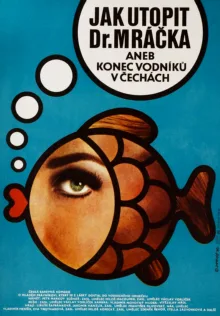
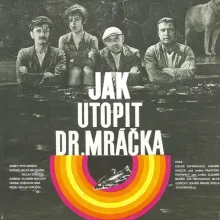
Episode 648 · Film year 1975
How to Drown Dr. Mracek, the Lawyer (1975)
- Guest Co-Hosts
- Rahne Alexander, Spencer Parsons
Show notes
Labels: Czechtember Jaromír Hanzlík Milos Macourek Rahne Alexander Spencer Parsons Vladimír Menšík Václav Vorlícek
Transcript
An automatic transcript, tidied into paragraphs. It has not been proofread, so names, titles and spellings may be wrong, and it does not say who is speaking.
Show the transcript (about 10,200 words)
Hold your ears, folks. It's showtime. People pay good money to see this movie. When they go out to a theater, they want cold sodas, hot popcorn and no monsters in the Projection Booth.
Everyone pretend podcasting isn't boring. Turn it off. Yeah. Get b we.
Welcome to the Projection Booth. I'M your host, Mike White. J Me once again is Mr Spencer Parsons. Hello.
Also back in the Booth is MS Rahne Alexander. Hey, it's good to be back. We conclude an extended September 2023 with a look at Vaclav Vlas how to drown Dr Mik. The lawyer released in 1975.
The film was co-written by Projection Booth. Favorite Milos Marek and stars Jerome Hanslick as the titular, I stumble over an English word as the titular Dr Marik, a lawyer who is unwittingly trying to displace a group of water sprites from their home. We will be spoiling this film as we go along. So if you don't want anything ruined, go ahead and track down the film and come back after you've seen it.
We will still be here. So I think this one was a new one for both of you so rain. What did you think about how to drown Dr Merik, the lawyer? This was a wild one.
Never imagined we'd be watching a mash up of like the little Mermaid and Incredible Mr Olympic with maybe like a touch of Godard in there. Maybe that was inspired by the subtitles. So, who knows? Who knows?
And Spencer, how about yourself? This is a really weird one and I'M always excited to watch a weird one check. Weirdness is particularly exciting but it is this mash up, there's the Little Mermaid, there's also a kind of Frankie and that sort of plot of they're gonna, gonna turn our beach into a toxic waste dump or I don't know much about water sprites, but I will say I want to find out more about the sort of mythology of water sprites. That's one of the elements of the true weirdness of this movie as an American.
There's a way in which, and I actually like this about the film. There's a way in which for the 1st 20 odd minutes, it gives no quarter to an audience that does not know the kind of mythology that's here. So it's, it's exciting to enter into this world where I will say I was completely baffled and quite worried that I was gonna remain completely baffled for the 1st 20 odd minutes of the film because I was like, what is the world of this? It all seems to be assumed and I couldn't quite track it.
But then that becomes, at least for me one of the pleasures of the movie. Yeah, I'd agree with that. I definitely agree with that. I, the second time I watched it this week it really, that really landed for me where it was just, there's, there's no hand holding here or fin holding, holding as it, as it were.
They say they turn into fish but they definitely don't turn into fish when they're underwater. I mean, there is some turning into fishes here, but it really happens to Doctor Merri check more than anybody. I actually have a problem with the hand holding of traditional Hollywood stuff. I'M a big horror guy and I'M getting really frustrated with how horror films handhold all the way and explain every piece of mythology.
If you did a Wiley Coyote Blumhouse horror film, you would have to explain the workings of gravity. This is interesting and refreshing, but I really do wonder about water sprites. One, everybody talks about it like normal two, the normal characters. And it seemed to be, you know, it's not like they've discovered something that's out of the usual here as soon as they find out.
Oh, I'M dealing with water sprites. Ok. Great. Now know what's on.
Oh, all you crazy people, your water sprites. I can deal with this. But it is fascinating. What are the rules for this?
Because there's the transformations into fish but not necessarily at the times that you would expect it, sometimes they'll just walk around underwater the way that they can go into water and suddenly appear in a different place messed with in some beautiful ways throughout the film. And then there are these transformations like into a bag of flour or into a sausage for various characters. And there's the souls that get kept in these like little like sugar balls and things felt a little bit like that gag in wet hot American summer with the can of peas that talks, there is like a talking sugar ball that I'M forgetting the name of the professor.
But this professor with this profound work is trapped in this sugar bowl that he talks to people. I should have remembered his name because that was one of my favorite parts of the film. It's just really wonderful nuttiness. So there's so many things at the w my point being sorry to go on.
My point being the water sprites can do all these different things, but I never really get a handle on what are the rules behind this. And again, I love that about it. It's refreshing II Barra. That's what it is.
I and there's also another lawyer that they have kept in one of these. And it's fascinating at one point, they tip it over. Actually, in both cases, they tip these things over and the spirit just flies away, I guess because we don't really see the spirit once it. Leaves, you can bring somebody back by pouring the spirit into the character's mouth after they're dead.
So, that's also fascinating. Yeah, I'M very unfamiliar with water sprays as well. I was thinking that they're very similar to my people in which I'M more familiar with from, you know, the, like Danish stories than Czech stories. And I like how they're the last water spray of Bohemia is the subtitle of the film.
It does live by its own thing. So apparently these water sprites can breathe underwater. They can transform into fish when they want to, they can go down the sink and come up any place that is connected by pipes, it looks like, well, they use a magic wand to transform other people into sausages and things, but the wand is broken. So you get the sausage still has a nose on it.
The bag of flower has ears still. It's funny because this reminds me a lot of another V Vork film, which was the girl on a broomstick, which also had kind of its own logic. And it was more when we talked about that one a few years ago. It was very much like Harry Potter if Harry Potter wasn't so cloying and it's this girl who really just can't get her act together and there's lots of shenanigans going on, lots of people being transformed into things.
And I think that between this, we've also talked about Who Wants to Kill Jesse? Another Belichick film. It feels like he's really dealing with fantasy because I know he does three wishes for Cinderella and a few. Well, actually we talked also about how about a nice plate of spinach, which is another one of his and he, yeah, he's very into magic and fantasy and films that I think, had I seen this when I was a little kid, I probably would have fallen in love with this movie, not to say that I didn't fall in love with this movie right now.
Yeah, I'd agree with that. I mean, I think I would have really been into this mythology as a kid, but I certainly would have like, missed out on the, like, the political complications that this, like, I kept, I kept re watching this to really delve into like, trying to understand like, what, what are the politics here? There's an aspect of this, which is like evoking, you know, the vampire societies and true blood and that kind of a thing, right? Where we've got these, these, this, this, this subset, these water sprites that are recognizing a crisis in their community.
Apparently they get some benefit out of drowning people, right? So what is the currency? That's the, that's the piece that's really missing for me most in this, like, what's the currency? What is it that they really get out of drowning people?
Is it some kind of resource that that, that keeps them thriving, that makes them fertile. Who knows? But I mean, it starts off real dark, right? And it starts off with more or less an intention.
Is it an intentional? They're driving a bus into the lake and drowning with 32 people? Right. So I'M like, ok, so this could just get real dark and just stay dark all the way through.
But everybody also in this, like all these characters also seem to be really interested in some kind of assimilation as well. And so, you know, they pull back from that murderous kind of plots, plot line pretty quickly and yeah, like really leaves me wondering like, what is the crisis here? What is really the crisis here? They just don't want to be mortal, right?
I guess maybe that's what it is. And they're gonna lose a home. You're right. The starting out with running this bus off of the road is really big and really strange, but also establishes a kind of stakes for the characters where because they're immortal, they can be very flippant, which then weirdly that's the mode of the film after, after this is that actually it is very much from the perspective of the water sprites in that there is death and crazy things that happen at all these different points.
But because they're immortal, the stakes are fairly low, it can at once be dark, but then also very light in terms of how it plays and I think 11 moment that stood out for me again. I don't know exactly what's at stake for them. But there was this kind of party meeting that they have where the speaker is, you know, back in the day we used to be total terrors, human beings. We're not anymore.
And that was like a really interesting moment of, ok, so you have this society of these immortal water stripes who don't really care for human life particularly. But they're also, you know, following like zoning regulations, they're involved in a legal process for whether their home is going to be zoned out of existence and that they'll, where would they go? Where do they move, et cetera. It's crazy.
By murdering humans. They collect souls, they put the souls into those pieces of pottery and then that becomes their wealth because towards the end, the patriarch of the whole group who's played by Milos Kopetski who we just saw for listeners. He was, we just talked about mysterious castle and the Carpathians and he's the main villain in there. Here.
He's Wasserman. I love how all of these names are jokes as well. There's like Lewis Waters. This one is Wasserman, but he's got all what, 10,000 souls he has in his basement, all in these little pieces of pottery and he is, he's very proud of it.
So I think that's his wealth because then he takes those souls. Five of them, I think, and he exchanges them for a pearl ring at one point. And then this other guy exchanges for pearl ring. Only later on we find out he gives that to his mistress and now to his wife.
And we, I like how we have all of these little ties. Like I didn't think we would ever see that character again, but he comes back towards the end also from what I understand the bus that has the 32 people on it, which kind of sets off this whole thing. I think that's where Professor Iki Barra is because I mentioned foreign scientists and he's looking for a formula that can change people from humans into fish. And yeah, since he died, all of his stuff went away and it's up to Dr Mak's mother who is super into this stuff to take notes from Icky Bar.
Yeah, Ibara and publish that eventually and also just test out the formula on her son. This is another thing about the movie on top of whatever that mythology is. You just gave actually quite a good plot synopsis. But the plot synopsis only comes from following these different threads.
It is not necessarily a causal plot synopsis where you can go. This is the goal and then this is what happens and that's what happens. It's more like this web of relationships with one, there is one central thing, but that's not quite enough to turn into a plot synopsis and you actually didn't mention this part, which is the sort of little Mermaid part that they've got it in for the lawyer who's in the title and wanna take him out. But one of the, one of the water sprites accidentally gives him, brings him back to life after he drowns in a heroic scene of mouth to mouth resuscitation and she thinks he 's cute and they have this, they have a love story throughout it.
But listing that kind of little Mermaid plot, it is not actually adequate to the task because this is a truly overcomplicated plot that is like really wacky. Oh yeah, because like Wasserman disappears for a lot of the film and he ends up going to this whole meeting where we find out a little bit more about the water sprites. It sounds like they're an endangered species. It sounds like through accidentally ingesting blood.
So if you eat a blood sausage, you are done for, if you happen to get a transfusion, you're done for, you also become a human. So they are losing all of these things. I think one, like one of the most eligible bachelors around accidentally ate some, some sort of blood and he ended up transforming into a human. And so that leaves our main female water spray.
Janna, I think her name is leaves her as this unm Marri able person because there's no one around to marry. But when he's at this conference, he meets the, meets somebody and it is just like, oh, I need two bachelors basically to be set down because there's this guy's daughter and there's my daughter and we need to have this, you know, these marriages, we need to keep the water sprays alive. But, yeah, to your point, it is very, very circular in the way that we move from thing to thing. Even the whole thing of why they are getting evicted from their house.
It's a present from the government because of the heroics of Lewis Waters who dives down, steals all of the souls apparently. But he, when he dives down, he forgets to put the face plate on his diving suit. So he's been underwater for what hours when they bring him up? They just go, oh, what is this thing?
Oh my God, that's not on his face. And it just comes up, spits out some water, fixes his mustache and he's all set and it's just like, oh, wow, what a heroic deed. You, we need to give this guy a house which in communist Czechoslovakia in 1975 it was probably a huge deal. And how dare you try to turn down the gift of the state.
So this is interesting too about the water sprites. They have kind of social class. It's hard to tell how much it's economic class, but I assume that it's also economic class. You have these couple who are at the top and you get their children, but then you got these kind of flunkies that got, that have to work for them that are clearly on the lower rung.
Can't we quite track all the politics of it? No, not precisely. But it definitely is, you know, working out this like web of social relationships and then this kind of class dynamic within like the group of water sprites that seems to be a little bit different from how the humans are represented. But on the other hand, it's so much from the point of view of the water sprites that I don't really know a lot about like Czech society as a norm.
We are, we are truly in the weird zone of these mythical creatures more than with the normal people. So much, so much comes back to this, this, this question of the politics that really, I think kept me re-watching the film. So we have gone for probably 20 minutes here and I haven't mentioned Vladimir Mensch is in this film. Hero of cinema.
I was about to mention at one point he doesn't have as big a role as in some of the other movies that we've watched. But boy, my face turns into a big smile. Anytime I see that guy on screen. He's fantastic.
He plays Uncle Charlie, I think is the character name. He decides that he doesn't want to be a flunky anymore. And that he wants to be his own man. And when he decides to do that, he goes into the hospital where he's fallen in love with this nurse.
And he's just like, hey, can we go someplace quiet? That 's what it is. If you make love to a human, you also turn into a human. So that's what it is.
He is just like, hey, yeah, can we go someplace real quick and you know, let's do it and she refuses, but I think she's game for it later on. But he eventually gets a transfusion from a Doctor and that's what turned some human and it feels like you don't realize that he's human for the longest time. I guess you can pass pretty easily in the society. And after that, he just kind of goes on a rampage trying to break the magic wand, turning the matriarch into the bag of flour, which Doctor Mir's mother just so happens to pick up and there becomes this whole thing about the matriarch being baked into a cake with, oh, wouldn't you know, there's a piece of blood sausage in there as well because of all the characters in the movie.
The dog is a huge character. And this dog is amazing heroic. Why do they. Keep this dog around?
This is this is the thing that puzzles me to no end. Introduce these things that are like direct threats to their lives. This dog who seems to require blood sausage. Like how many of us just kind of keep blood sausage around?
Much less, just like in a little napkin. But this is like throughout they're not, they're not taking any protective measures along these lines. And apparently just like a little nibble of this blood sausage is enough to like, destroy your immortality, right? And like, why blood, why is it just blood sausage just, does any meat really count?
You know, that was a question on my mind. But like this dog is ever present, you know, bringing chaos to this, this, this, this population that knows that it's threatened. It's puzzling, it's so puzzling and it's not even like I feel like anybody particularly likes the dog. Yeah.
And every time they turn somebody because at first they turn Lewis into a rag and the dog tries to steal them later on. He's got a brush in his mouth and the girl runs up. She 's like, that could be my uncle. There's the sausage bit too, the little sausage with a nose and instantly the dog is there to try to eat the sausage and the mystery of the bad pet.
This is something I love, I love in life and somebody has a bad pet but they really take good care of it. This is something that really endears me to people, I guess for this was a rather endearing quality that they keep this damn dog around. But some somehow they've got to, they've got to keep this dog even though it's constantly up to no good. I think it's just doing what a dog does.
I don't think there's any malicious intent. I mean, that's an interesting thing too. There's almost no malicious intent in the movie. There's a kind of lack of care.
Often the driving the bus off the road is lovers driving along and we don't quite understand how immortal they are yet. But it's, she's sitting in the, she's teasing the guy who's driving and she reaches over for the steering wheel and is messing around. And so there really is a sense of accident there which then a normal, a normal human being would care about and then they don't exhibit any particular care. But yeah, there's, it 's interesting because there are high stakes and there are definitely bad things that people do, but malice is removed from the equation for the most part.
Yeah. Other than trying to murder Doctor M after they're just like, even. That is the guy just won't make this zoning work out for us. He 's following the law too much.
We can't get around their zoning problem for our home. So we're gonna get kicked out. So, yeah. Yes, that's malicious on one level, but it's the way that they're playing.
It is so utilitarian. Well, and his assistant would be happy to help out because towards the end of the movie, they deal with him when they think, I mean, they, I think they try to kill Doctor M at least four or five times and there's one part where they're pretty sure he's dead and they go in, they're talking with his associate who is there in a, in a robe because Doctor M has borrowed his suit because that's another power that the water sprays have is when they come out of the water, their clothes are completely dry.
So it almost gives away that Doctor M is not a Water Sprite when he goes down in the basement and is completely submerged in water. But these guys, they hand over a whole envelope full of cash to the associate, to the assistant and he's more than happy. And that I love when Doctor comes back, quote unquote from the dead. And one of the first things he does is go over and pull that, that envelope full of money out of the guy's pocket and hands it back to the Wasserman's.
He's very, very straight and narrow. He's a smart person, but he's also a little bit of a dope. But I feel for this guy, he's not one of these where you're just like, oh gosh, just get your head out of your ass. He's a pretty competent guy.
And I like how we get to feel empathy for everybody in this movie. Not just our main character or you know, not just Dr Ebb, not just Jonah, not just, you know, Uncle Charlie, we feel for pretty much everybody other than maybe the matriarch and the patriarch because the matriarch is a total harpy. Yeah, like a disagreeable person lashes out a lot. And then those two end up as the, but of the biggest joke by the end of the movie, somehow getting transformed back into her normal form after being baked into some kind of cherry cake, whatever reason it makes her enormous and that this, this does lead me to one thing that I wanna discuss.
We don't have to address it exactly now. But of the special effects in this movie, all these beautiful in camera tricks with mirrors and force perspective and everything. I know enough to know how they're done. But they're really a delight every time and like the gag of her being enormous and creating trouble for her husband and the way that the movie.
Yeah, spoiler, whatever. We don't worry about spoilers here. But at the very end, the highest people in the this sort of class of the water sprites are reduced. The father figure, the patriarch, the guy in charge, he 's got to become a working man while meanwhile the matriarch is reduced to hiding out in a trailer.
I love that shot where she lifts the lid of this trailer. She's just enormous. It 's a great effect and it's totally done. Some kind of very basic in camera means that was one I that 's one that I couldn't quite figure out.
I figured out a lot of the other effects. But that one I really marveled at because I don't think that it's any kind of a chroma, key thing. I think it's some manner of mat or forced perspective that I'd have to watch 10 more times. But all of them are so delightful.
The largeness of that character really brings to mind that Boots Riley TV show. I'M a Virgo that just came out in the last year. You know, which is about a person who's, who's giant and like how he's having to like, negotiate the world. So it certainly brought that to mind.
I agree about the effects. Like I've done so well and one of the things that I really, really loved about this film is that I miss how films in general don't lean into the kind of the phoniness of a special effect any longer, right? Like the, they are well done. They're still like, you know, they're still a little like dazzling, but they don't, they also don't look real real, you know, in the ways that we become, become so detached to in film, I think, and I just wanted more of it.
I feel like I could have spent another three hours in just like the special effects mindset of what this film does, right? From the first, the very first time I watched it watching them jump into the sink, right, and disappear into the sink. I wasn't watching it that close that time. I was not watching that closely, but I was like, I'M really fascinated to see how they pull that off and of course, studying a lot closer was like, oh, ok.
Now I get it. I get exactly how they were able to do that. You can see it but the magic of being able to do it in a corny way and then also make it kind of believable, right? The sync trick, for instance, really benefits from the performers just going for it.
They go for the effect, they do it all in 11 shot, one take so quickly and they've worked it out so naturally their choreography around around the effect around what part is the sink that they can get into and what part of it is a mirror or that's reflecting some other stuff. There's also some care with it. There's a really wonderful shot of the sink where they stage a character that does not have to be there in the background, specifically to sell the effect by having his legs appear down below, below the sink. And obviously, it's another person's legs like in the reflection in the mirror.
But it 's like this wonderful kind of care and the belief of all these actors just like going for it. We see CG I all the time. That's more quote unquote photo realistic. And I know that there are a lot of CGG I artists out there that don't want to hear this kind of thing.
But the fact of the matter is that unless you're talking about how is replacing pieces of like architecture in the background. Nine times out of 10, we are aware of the CG I ness in the same way that we can be aware of older kinds of less photo real effects like these. But then there's the integrity of the place and how it's done. And so to me, it's six of one, half a dozen of the other, with some exceptions, and there is a certain kind of exception, a lot of effects that are done now are just as phony in their way and that can be a plus or a minus.
But there's also a way in which they don't lean into the kind of fantastical you're seeing a thing that is fantastical, but they're so the effects cruise and this is because of producers and directors that make them do this. They make a lot of choices for a kind of dull reality to imitate rather than creating yet another layer of a fantastical reality. And obviously, there are, we could go on forever about CG I effects and movies that actually are fantastical and beautiful. But we're talking about this movie right here.
So I just rather think about, yeah, how you do things with mirrors and mats and stuff that goes back to beer's. But that it 's done so confidently and beautifully that really lends a lot of fun and it creates the reality. It creates the alternate reality of the thing that we're watching. The whole thing of her.
So, apparently she's large because the flower rose when it. Was the flower rose. That's right. I got all mixed up with the cherries.
I was wondering what, how do the cherries manifest her coming back? But it 's because the flower rose, that 's the, when, when she was baked as a cake. I love that. The mother just finds the flower on the street with the ears on it.
And she's like, oh, it must be some sort of promotional gimmick and just picks it up and like, you know, again, 1975 communist Czechoslovakia, she just like tucks it under her arm. Like I hope nobody's watching because now I just got a free bag of flowers. But she's also a scientific genius too. That's like as a, these characters are really wonderful and surprising.
It's like she finishes the formula to turn people into fish. Then that had me questioning someone who's turned into a fish. Are they then do they become water sprites? Is this like a scientific method of taking humans and making them into water sprites in the same way that like the water sprites can get a transfusion or have sex or what have you and end up becoming human and that's a fascinating thing.
No, that, I mean, that leads to another little fascinating piece of this mythology which is, you know, there's, there's the discussion between the lovers, right. Once they've kind of realized that they're doing a reverse commute, one wants to become human, the other wants, you know, like on the trajectory of becoming a fish. And we don't really know whether this is leading to him becoming a Water Sprite per se. But they're discussing like, well, what kinds of fish have you turned yourself into?
When the question comes up? Have you ever turned yourself into a tortoise, which is a, and amphibian? Right. So we're talking about a whole other reptile.
Yeah. Right. Right. Right.
So it leads to one of the funniest jokes too. Where to me, my mind where they're talking about five tortoises living in one shell, right? Which is such a, such a funny gag to me. Internal mythology.
Just has me, me wondering like, what, what are the limitations of the transformations here? Because clearly we can have people turned into shoes and all these utilitarian things, right? Objects, flower a rag, that kind of a thing. But when there's this willfulness, like, what's the joy of being a carp versus a trout or, you know, whatever, whatever else they may choose to be?
Right. Well, there's that whole thing too we talked about on the episode about the cremator, which I wasn't familiar with until I watched that movie where around Christmas time you buy a trout or? Sorry, you buy a carp and you keep it in your bathtub until you're ready to eat it and then you knock it over the head and that's what you have for Christmas dinner. Like that was the traditional dish.
It's either Christmas or New Year's, but I think it's Christmas. Are they trying to play on this somehow? And I just kept going down these weird avenues thinking about these things. Like, even towards the end when they're, it's J and Doctor Mir by a river at one point, he's had the formula injected.
She's still a Water Sprite. And I'M like, is this gonna end like the shape of water? But in reverse where it's him changing or like he suddenly gets gills or something? You know, I would have been all for that.
But instead her father puts this pendant on her, which is almost like a mood ring. But it's to tell if there's still the Water Sprite. So if it turns blue, you're ok. But the second that sucker turns red, sorry, you're a human now.
And I love how she opens up the door. At one point, Doctor Muir checks in the room, she's up the door, she opens it up the pendants red and her father sees that and it's just like you've been up to the devil's business. All right. What is virginity to a fish?
Right. Like that's a question that really popped out to my mind as well. Like they've got this, these capabilities of like shifting and doing all, you know, already incorporated into the morality, like the benefit of killing people. So why are they holding on to this, like notion of virginity?
Clearly part of that has to do with like, oh, you're gonna be a human now and I want to be able to know whether or not you're still a Water Sprite. That's definitely a part of it. But they're like latching it on to this concept of virginity, which is so fascinating to me. One of the most fascinating things about this movie for me was that Czechoslovakians know this the sad trombone because they actually use a sad trombone noise.
If it's not the sad trombone, it's so close in this movie. I was like, oh, wow, that universal like, would I watch a Japanese film and have the sad trombone in it as well? You know, but here it is in this film and I was like, that's not exactly what I'M used to, but that sure is a close approximation of what we understand to be the sad trombone. But that leads to another thing.
Yeah, sound and the music in this movie obviously of the era of the place, but it was really very much charmed by not just this soundtrack itself, but by the kind of soundtrack that it represented, it's obviously a little bit at odds, but from, you know, what would have been a Western European kind of soundtrack or an American soundtrack at the time. But there are these kinds of similarities and the way in which the soundtrack is so whimsical throughout is actually not cloying was, it's interesting because if you had just played the soundtrack on its own for me before the movie, I might have gone.
Oh, ok. That 's, that's a little bit dated and whatnot. But it really was part of the overall charm that this very jaunty soundtrack throughout. And the tone is definitely also set by the opening credits which have this wonderful animation and these crazy hand drawn fonts for all the check that's appearing, which was just beautiful.
So to watch very funny animated credits that are then setting you up for this first scene where 32 people in a bus are plunged to their doom. The song that plays under the opening is really wonderful and charming. And then the music throughout is great and we get the love theme on saxophone at one point just before the sex scene. And I love the sense of a small combo making a soundtrack refreshing in our particular moment when we're used to either Mahler type symphonic or very electronic but also electronic but sounding really big.
Kind of wonderful to hear this throwback to like a small combo soundtrack. And yeah, that plays with the sad trombone feel. It's not I'M not gonna make a case that this is a really involved sound design, but just a lot of the fun of the like splish flash noises around all of them is great. Yeah, I noticed because the song at the beginning, which is another thing that is great about Horla Check is because he definitely has a great ear for music.
And the opening theme to Girl on a broomstick is a classic, but this one is really good as well. And I noticed at one point there was a musical Sting because the music, the music goes like da, da, da, da da. And at one point there's a musical Sting, which is that da da da but played like very heavy. And I was like, oh, that 's really nice.
Like the music, like you were saying it's, it's great. It's fun. It's jaunty and it doesn't draw too much attention to itself. It's not obnoxious whatsoever.
And yeah, I love a good animated credit sequence and this one is right up there that they are drawing these, they basically look like frogs, but then they'll have like cigarettes and things. And at one point, like, I think might be the very first credit is that to the matriarch and the patriarch or might be Janna and Dr me and they have their names there and it must be the matriarch and patriarch because it's, they're the frog creatures. One has a cigar and the other one doesn't. And then there are these little hands that are near the animated characters and they're pointing to like this name is this person and this name is this person.
And you're like, oh, ok, like this is telling you a whole story, like even showing the attempted drownings of Dr Mirac several times, really beautiful. And you guys both mentioned that this is something you would have been tickled by as kids. And that was like one of the things that struck me at that opening is I used to really get excited whenever I would see that kind of an animated title sequence. When I was about 10 years old.
There's a type of opening credit sequence that we know of that works this way, but very clever and very much of its own. Yeah. And I know that some people growing up in the States actually saw Three Wishes for Cinderella, but it was called something else. It was like Three Nuts for Cinderella because that played the CBS Children's Film Festival here in the States back in 74.
So there was exposure to some of his work to American audiences. It's kind of like tomorrow I'll wake up and scald myself with tea. There was a errant screening of that in the UK. And so people who saw that screening are, were constantly for years.
Like, what was this movie? What did we see this Crazy Czech film? And it's very much I'M sure like that, like had, like I said, if we ran across this, I think, girl in a broomstick, some people had seen and they were just like, what is this? This is the same kind of thing.
This is gosh, because yeah, it's just so fun and been talking about it for almost an hour and just like, really barely scratching the surface of everything that happens in here because of that weird cyclical nature that you're talking about where all of these little threads just lead to each other. There's not that real clear through line of this and you just get unexpected things just popping up very, very often. Like, oh, now this character is going to do this, OK? And it just lives by its own logic.
There's so much going on and there's everybody, this hole has something to do. My first impression of it was like, oh, there's too much going on here. Like, you know, it's like reacting in that way that I react to. Like, I'M not the biggest fan of, it's a mad, mad, mad, mad world, right?
Like, because I'M like, oh, it's just too much gives me, it gives me too much ada my first feeling about this was like, oh, maybe this is like touching on it. But as I rewatched it, I was really, really stunned about like, how, how every single character even with so much to do and with so much going on in this film, they've got something to do. And it all finally comes together at the end and then we even get a 12 months later and they're so concerned about being immortal. But then they have that line about, you know, I immortality lies elsewhere like in children.
And that we cut to 12 months later and we see that mirror, Che and Jana have had child and they're on this boat with all of these other characters except for the matriarch and patriarch who we see them off in the distance. Like you're saying, you know, there's the patriarch and he's shoveling in the dirt and then the trailer opens up and there's the wife in there just like, you know, oh, hey, I'M so hungry and I love how they say like she's gonna require £30 of meat a day. It's great. And it also has that kind of comedy sense of maybe this was my reading, but it wasn't just that, that our main couple has a baby.
It felt like everybody else got hooked up and it hadn't gone to a lot of trouble to do that. It was just, yeah, we're gonna show a year later and everybody is coupled among this group of people. And that was really fun. Yeah, because Charlie's got the nurse from the hospital, I think Lewis and maybe Mari's mother have hooked up.
I can't remember. Yeah. But, yeah, everybody's all coupled up. I mean, it's very, it, that ends like a typical American comedy, you know.
So it's, must just be more of a universal thing. I'd love that. Everybody's happy and everything except for the two people that were pretty miserable during the whole movie and they're paying the price now. Again, back to the politics that we can't totally suss out.
But there's coded as the upper class. They have the least happy end of everybody. Whereas the lower classes, their lives have improved through these actions. I love you.
Get those two guys that they end up sending down to marry the daughters and they're just completely clueless. I mean, this does play with a lot of regular comedy tropes. There 's always the, oh, I, you know, you mistake this for that. But of course, in this one, you've got people being mistaken for water sprites and vice versa.
But then you also have a cake being mistaken for a mother and all these things. They're like, why are you trying to steal my cherry cake, you know, leave my cake alone. But those two guys when they come down, oh, yeah, Janos, the one in the white bathing cap. And then of course they switch caps and then the guy goes off and immediately has sex with this woman and now he's mortal and I can remember what happens to the second guy, but it's almost exactly the same thing where it's just like, oh, well, it's my turn now and then he ends up being turned mortal as well.
It's just everything bad that happens to these guys and I love that. They're just cheese balls with the big mustaches coming right off the bus. So good. That's another thing too.
And this is just like time and place where it's made and our own moment of no matter what movie you go to see. Everybody has everybody except like certain character parts are cast with people that spend all their lives at the gym and look a particular way. And this is like a wonderful motley crew of normal to weird looking people and they have the interactions of finding each other really attractive and stuff, the main woman and it is definitely more conventionally attractive in expected way than usual. The expected way for films, almost everybody else is just like, really pretty great and normal looking and she's also j is not, well, while being more conventionally attractive is not really dorky and I pine for more movies cast that way.
I remember what it is. The second guy gets tied up, he's gonna prove how long he can quote unquote, hold his breath underwater, he's tied up by the arms and legs and it's just like, you know, more of a challenge and then he jumps into the water while Uncle Charlie's trying to stop him because he realizes what's happened and it 's just like, OK, that's it. And then there's a cut to, you know, another pot on the table type of thing. Mike, you're more the expert on Czech Cinema.
You've been introducing a lot of stuff to me. What are some of the things that you notice about this movie that are particularly Czech? I get the intro introduce to a Water Sprite mythology that we're not familiar with. And I like that it, that the filmmakers are so familiar.
But are there things about this, especially as a comedy that you find classically c. Not necessarily, I mean, the actors, of course, you know, having men, mens in here is fantastic and just all of these actors, there's not, I mentioned Milos Kopec earlier and he's another great one. Like I mentioned, he was in mysterious cast on the Carpathians. He was the main villain as well in dinner for Adele.
So of course, like that's the thing that I've loved the most about this journey into Czech Cinema over the years is starting to recognize these people and being able to say, oh OK, he was this character, he was this character just to start to see like how they play the different roles because he plays this a lot different than he does some of the other roles that I've seen, I've seen him be much more cartoonish in this one. He just seems flustered. I mean, there is some cartoonish aspect to him, but you know, he doesn't have like a big mustache like he does in Carpathians.
He isn't as affected as he is in dinner for Adele. He was also the bad guy in Lemonade, Joe. So yeah, just seeing these characters over and over again is fantastic. And I have to say I wasn't that familiar with Doctor Merch himself.
Yamel Jaromír Hanzlík. And then I'M looking up that he is still out there and playing stuff. He just had a stage play about his life where he's telling stories. And this was the one that blew me away.
If you go to his IM DB, the trailer that plays is for Carl Sagan's Cosmos. And I love Cosmos. I'M a huge fan and I'M just like, why, why are they playing this? Why is it Cosmos?
And I look at the picture of them and I finally realized he is Jonas Kepler whenever they would do like stories on Cosmos about Kepler, which they did a lot, believe it or not. He was in six episodes of Cosmos and he was the guy that was playing Kepler. So I'M just like, did they shoot something else? And they were like reusing this footage or did they shoot this specifically for Cosmos?
And if so why are they shooting it with these Czech actors? This is bizarre but fascinating at the same time. So that's what I noticed. But as far as particular things to this, I really like how universal these comedies are and that, other than the, occasionally I pointed out like, once or twice where it 's, hey, we're under a communist regime.
They don't really talk about it. It's just the way of the world. But then you see those little things, like I'll take this bag of flour or, you know, I'M going to give this guy a house because he did this great thing. That's not normally what you would see in an American comedy.
The total wackiness of this is different from the other Czech films that I've seen so far, which will have a lot of comedy, for instance, Daisies is really funny, but Daisies is also in its address, not exactly wacky and whimsical. It's, it's like, it's punk rock, like Daisies is aggressive and very deliberately strange. There are choices that may be whimsical but the overall approach of a movie like that is more experimental can be off putting to an audience. This, this seemed very much more straightforward.
And so I'M wondering if this movie counts as c New Wave or not? Is this more sort of traditional Czech Cinema and the new wave items that we've watched before are really separate from that? Or, I don't know, is the check new wave more capacious than I realized. I think they officially end the new wave.
When, when people write about it, I want to say that it definitely doesn't go past 68 when the tanks roll in. I think this is just more typical Czech Cinema. But the more I watch Czech Cinema, the more I realize just that it is of this flavor a lot. Yes, there were definitely some very groundbreaking things.
A lot of the, you know, the use of the documentary footage that, you know, people like Milos Foreman were doing or yeah, the wild stylistic stuff that had Lova was doing with Daisies and even some of the other films that she had done. But yeah, it feels like, yeah, you got your pearls of the deep filmmakers that are going on in the early sixties, but it feels like they kept true to so many of the things that they were doing that it eventually just kind of became the cinema. It's almost like new, New Hollywood filmmakers became, you know, at some point you're like, ok, well, maybe once Jaws and Star Wars hits, we can say that New Hollywood is over.
But those filmmakers didn't change. I mean, Taxi Driver is Taxi Driver, whether it's made in 76 or it's made, you know, closer to mean streets. I mean, those that, that young Turk phenomenon baked itself into cinema for a long time. And you could say that we're still feeling the effects today.
I don't want to repeat myself because I've gone over this before. But I do think like one of the things that's so exciting about this film is this really fun, delightful kind of tone that it takes on that super low stakes versus super high stakes. At the same time, we often now, especially with a lot of superhero movies and everything we will see immortal characters. That's not unusual in its certainly in American cinema.
At this point, mortality and immortality and Godlike figures are, are definitely what's for dinner in so much American cinema now. But this has a different sense of stakes about that when we see Godlike characters or mortals or if they die, we know they're gonna come back. The fate of the world is always very much at stake. And in this, yeah, there are high stakes for characters who will die as a result of how all this works.
But then there's also this kind of amazing feeling of totally low stakes for the people that we take on as main characters. And that just creates, it was very distinctive kind of tone that I can't like the tone of the opening credits. I get attached to the Pink Panther movies for instance, where like that, that, that kind of a thing, a different version of it. But then the movie itself is not quite like anything else that I've watched before.
The opening credits reminded me of the North Avenue Of Regulars. And so watching something like this, I'M like, well, I guess it 's kind of almost like a Disney film at times, you know, like you said, there is the overtones of the Little Mermaid. But it's like you take the little Mermaid and twist it and put it on its head. But, you know, even, you know, rain when you talked about The Incredible Mr Limpet, it kind of fits along with some of those wackier comedies from the 19 sixties.
I can really see a lot of that. I mean, because you had Bizarro stuff like Mr Lim, but, you know, that were just kind of regular and out there. But, you know, like I would say this fits along with that or like that darn cat or, you know, some of those. The Apple Dumpling Gang, like all those, all those films are the films that I, the only films I could watch when I was that age, right?
I think that time because, you know, be raised Mormon have that sanitized kind of thing. But there was so much of that tone, like this feels very much in that, you know, I don't, I don't resent any of those movies even though like, I had to watch them. They all had their own realities, right? Like a movie like Gus, right?
You've got a ball kicking donkey or whatever and everybody's just like, along for the ride and. Get that donkey off the field. That's that regulation. It's fun.
But then again with like deliberate and accidental drownings throughout and it's really funny because this is like a cute wacky kids comedy with a body temp. There's the quote right there for the box. All right guys, let 's go ahead and take a break and we're going to play a preview for next week's show right after these brief messages. You're convinced that the thing on this table isn't human.
Its cries are human. Do you know what it is? What I began with? No, an animal.
Well, we may as well discuss this frankly now that you know, the fact I wanted to prove how completely she was a woman. Oh, I'M gonna, I'M not beaten, get everything ready for what this time, I'll burn out all the animal that I own. I make her completely human. That's right.
We'll be back next week with a look at the island of lost souls until then I want to thank my co-host Rain And Spencer. So, Spencer, what is the latest with you, please. Recently wrote a piece for Split Tooth Media about the sort of what I call franchise surrealism of the Friday the 13th series, which is actually, I have always found to be a lot stranger than its reputation as just repetitive slasher. It, I'M not just actually quite serious about the surrealism of these films and the way that surrealism is in many cases is quite unintentional.
So I hope I haven't spoiled the articles for people. But if you go to Split Tooth Media, you can, you can read that. It was a very fun piece to write. I have still only seen Freddie versus Jason and Jason X.
Jason X is terrific. I will, I love Jason X. But yeah, if you see all of them, one of the things about this concept is it's even when the Sequels could be fairly cruddy. And let's be honest, even when the Sequels are fairly cruddy, they make each other better watching them together, enjoying them over, over time or re-watching a bunch of them all, all at the same time, the, they actually make one another better in a way that I think is different from the intentions and even the effects of some of the better kind of franchise series.
Ge generally the films make each other better when they are good and when they are better, but it doesn't matter with Friday the 13th, there are, there's some real weird duds but they become interesting in conversation with each other and marine what's going on in your world? Well, I am working on a piece for the Smithsonian. El Reed, the old timey musician, a couple of years ago, her album, her self titled album was inducted into the national recording Registry, you know, so the Canon of American Music. And so, yeah, I'M writing a piece, writing a piece for the Smithsonian about that.
So that'll, that hopefully will be up by the end of the year. That sounds fascinating. Yeah, she's a, she's a phenomenal musician, really like self taught musician. And built this amazing community, immigrated from the deep South up into Maryland and Pennsylvania and really established some really popular music camps in Maryland and in Pennsylvania where people would just come from all around and listen to music.
Right? Like these are things I think we kind of almost take for granted now, like they happen, right. These music festivals are all over the place. But yeah, she was really, really a champion of diverse music in that, in that way and really built a lot of communities.
So that's what that piece is really rooted in talking about. Well, thank you so much folks for being on the show. Thanks to everybody for listening. If you want to hear more of me shooting off my mouth, check out some of the other shows that I work on.
They are all available at Reading Way media.com. Thanks especially to our Patreon community. If you want to join the community, visit patreon.com/Projection Booth. Every donation we get helps the Projection Booth take over the world.
Do you see? Ok. To get out, phone you, Mr You Seeds Grass. She's from the that y the Forget.
Watch
Music credits
- "Znala panna pána" - Helena Vondráčková
Links & resources
Related episodes
Episodes that share keywords with this one.

Girl on a Broomstick (1972)
Shared: Director Václav Vorlíček, Writer Miloš Macourek, Cinematographer Vladimír Novotný
Hermína Franková, Hanna Frank, Kat Ellinger, Gil Kenan
What Would You Say to a Nice Plate of Spinach? (1977)
Shared: Director Václav Vorlíček, Writer Miloš Macourek, Vladimír Menšík
Jonathan Owen, Ben Buckingham
Who Wants to Kill Jessie? (1966)
Shared: Director Václav Vorlíček, Writer Miloš Macourek, Vladimír Menšík
Jonathan Owen, Jim Laczkowski

Happy End (1966)
Shared: Writer Miloš Macourek, Cinematographer Vladimír Novotný, Vladimír Menšík
Ben Buckingham, Kat Ellinger
Four Murders Are Enough, Darling (1971)
Shared: Writer Miloš Macourek, Stella Zázvorková, František Filipovský
Cerise Howard, Rahne Alexander
The Cassandra Cat (1963)
Shared: Vladimír Menšík, Stella Zázvorková, Ústřední půjčovna filmů
Spencer Parsons, Chris Stachiw
Comments
No comments yet.