
Special Report · Film year 2024
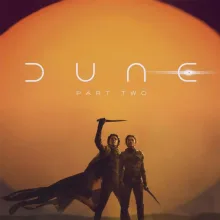
Dune Part Two (2024)
- Special Guest
- Max Evry
- Guest Co-Host
- Chris Stachiw

Show notes
Author Max Evry (opens in a new tab) discusses his 2023 book A Masterpiece in Disarray: David Lynch’s Dune. An Oral History (opens in a new tab) the definitive book about the 1984 film.
Labels: Christopher Walken David Lynch Denis Villeneuve Dune
Transcript
An automatic transcript, tidied into paragraphs. It has not been proofread, so names, titles and spellings may be wrong, and it does not say who is speaking.
Show the transcript (about 22,100 words)
Speaker 1: Hold your ears, folks. CHRIS STACHIW: It's showtime. People pay good money to see this movie. When they go out to a theater, they want cold sodas, hot popcorn and no monsters in the projection booth.
Everyone pretend podcasting isn't boring.
Speaker 3: Turn it off.
Speaker 4: It's breathtaking. When you see sand here. Imagine water. If you dive in, you.
MAX EVRY: Can't reach the bottom. You dive in. Yes, it's cold swimming. I don't, I don't believe you in the shadows of Baracus lie many secrets but the darkest of them all may remain at the end of House of Treaties.
My father didn't believe in revenge. What if Pola Treaties were still alive? Have you ever had a dream about your first ride? Don't try to impress anyone.
You are brave. We all know that. Be simple. The direct.
No, no, nothing further sea. I understand. Nothing Fancy. You will never lose people on training.
We gave them.
Speaker 3: Something to hope for. Let's not hope.
Speaker 4: May thy knife chip and shatter. MIKE WHITE: Welcome to the projection booth and the Kulturecast. It's a special crossover episode. I'm your host, Mike White.
Joining me, of course, is the host of the Kulturecast. Mr Chris Dash you. CHRIS STACHIW: I prefer to be known as Chris Muaddi. You shall now be known as us.
MIKE WHITE: I am the strength at the base of the pillar. You always stroke the base. We are back talking about Denis Villeneuve's Dune part two. Chris.
What did you think of Dune? Part two? CHRIS STACHIW: I actually enjoyed it a lot more than I enjoyed. The first one.
I felt that while there were things in it that are, it still has its problems. I'm not a big fan of Timothée Chalamet energy and what he brings to most things I've seen him and he's just, I don't know, I got about halfway through Wonka and I was like, this is so fucking twee and then he just that energy, he brings that energy all the time. And I think for me, this might be the, I've seen him personally because in terms of all, I actually find the Paul character to be better executed in this movie than in anything else I've seen other than the TV show.
But that doesn't, that never counted. That doesn't count. Not because it's a TV show, but because you're given plenty of time to do it, more time than these movies got. But I enjoyed it more.
I think that the additions to the cast amount to very little if anything at all, other than Austin Butler. I'm not surprised to see that it looks like Christopher Walken and Florence Pugh were on set one day. Maybe, I don't know, like it's very weird. Some of the stuff is weird and again, if you are to take a step back and look at David Lynch's Dune, which I know you and I both have in the last two years.
And this movie came out, we've. MIKE WHITE: Right after I saw this movie, like I watched Dune one, I watched Dune Two. I came home, I watched the Spice Diver. CHRIS STACHIW: Edit, the Spice Diver edit.
The original version of the movie has its own problems and this movie somewhat falls into similar traps just based on the way the narrative is executed. But I actually think that this movie does a better job at finishing the story of the first book than I was expecting it to given how poorly it executed the first half of the story. And I'm actually interested to see if they do make a third movie because the narrative where it's left is more interesting than where the Lynch one leaves it. The Lynch one kind of leaves it, you know, blue Sky on Mars a little bit right at the end, which I mean, it really that ending of the David Lynch always reminds me of total recall because it has that and we changed everything and now it's all good.
And as two people who enjoy the book, that is not how the book ends, not even close and this ends closer to the way the book ends. MIKE WHITE: Closer but distant in some places. CHRIS STACHIW: Yeah, I'm talking more about the broad narrative strokes of we're not left with the character of Paul at the end being like, oh, he's a baby face, white meat, good guy. And there's no complexity to his character.
And I'm not saying that's the case with Kyle Mclaughlin. But here there is a focus put on the internal struggle of Paul which I do appreciate because that's part of the narrative. That is what makes the way the narrative is told so important. And I have appreciate that Villeneuve and John Spates brought that to this.
But look, it's three hours. That's a long time. And the last movie is three hours. It's six hours of epic as fuck Dune made to look epic and executed epically and it's going to resonate with a lot of people and for the spectacle of it, I enjoyed it for what it is.
In terms of Dune, it does not fire on all cylinders. But if we're talking about this solely as an epic piece of filmmaking, I think it checks all the boxes, but in terms of it being a good adaptation of Dune, that is a lot more subjective, objectively. It's a well made, nice to look at film that looks like everything else. Daniel no has made, which is to say it's well shot because he knows what he's doing.
What about you, Mr Mike White? MIKE WHITE: Yeah, I definitely enjoyed this one. A lot more than the first movie as well. I don't know why was it?
Just because there's no Duncan Idaho in this one? I don't think so. CHRIS STACHIW: Wait, you didn't like Jason Momoa. MIKE WHITE: My boy, he was fine and it was nice to see Gurney again.
I re-watching the first one. I was just like, man, Doctor Yu. He got such a raw deal. That guy's barely in the movie and there's really just not a whole lot of explanation of the imperial conditioning and how Peter broke it and all these things, Peter is barely in that movie as well.
I'll tell you who else is barely in this movie. Aliyah. Over last weekend, I interviewed Max Ey who wrote the masterpiece of disarray, the book about the David Lynch’s Dune. And he was like, oh, there's that whole fast forwarding moment in Dune, the David Lynch’s Dune where it's like in the two standard years that followed blah, blah, blah, blah, blah.
And they just fast forward through the narrative and he was like, oh, they do the same thing in Dune part two. And I was like, actually they don't because this whole movie takes place over a nine month or less period of time because Jessica is pregnant at the beginning and she's still pregnant at the end. We never get to see Aliyah. I just kept wondering how the hell are they going to do?
Aliyah? Are they going to do a little girl? Are they going to do some sort of Bizarro CG creature like that awful baby in those twilight movies. What were they going to do with?
Aliyah? We'll solve the problem by just not doing anything with it. We'll show her in the womb and we'll show Anna Taylor Joy in a dream. That's it.
So, it is odd that Aliyah of the knife does not show up in this movie. There's some weird changes and there's some that I like a lot. I'm really glad that Gurney Halleck finally gets his revenge against Sabis RBA. But then that battle quote unquote is so anti climactic.
I'm just like, it's almost better that he didn't. CHRIS STACHIW: Obviously, before the movie came out, there was a lot of talk of who is Anya Taylor Joy playing and she's, and she's not even credited in the movie on top of everything else. She's literally uncredited again in a lot of ways, this movie reminds me of after reading Jurassic Park, this is how I felt about re-watching Spielberg's Jurassic Park, which is, this is fine for what it is in terms of being a big loud entertaining movie that is well made by someone who understands how to shoot a film well and understands how to make a film well.
And Steven Spielberg is at the top of that. I think Denny VN is as well. But yeah, the pro God, you know, the fucking problem with Dune is Dune. Stakes are really hard to convey.
And this movie I think does a semi decent job at conveying the stakes towards the end with the great houses showing up and nuking them in space and all, all of the things that we don't really see in the original movie, we understand the stakes here. But to your point because one of the characters who is such a big part of this, who will be part of the next movie. Assumingly they make a next movie. The Dune, it won't even be dude, part two, part three.
It'll be Dune. Messiah. I don't even know how they could call it Dune. Part three, I guess they could.
But that's the thing. It's, you leave one of the biggest characters out to tease another movie is what it ends up feeling like if you like Anya Taylor Joy and if this movie makes money, she's gonna be in the next movie and she's, again, she may even take the place of Timothée Chalamet. He may not even be in the next movie. They may jump it forward in head in time far enough where he's played by somebody else.
Theoretically, I don't know if they would do that, given that he is the quantity that he is given what he brings to the franchise as a whole because he's pretty much the face of it. Him and Zendaya are. But yeah, to leave the character of Aliyah out to give one of the main characters deaths to Paul La Trade. He's, by the way, spoilers.
I'm assuming everybody is. MIKE WHITE: Oh, yeah. Yeah. Sorry spoilers.
Everybody. CHRIS STACHIW: We haven't really spoiled anything yet other than Anya Taylor Joy. Who again, we, she said they, everybody knew she was gonna be in the movie just waiting for her to. So it wasn't a matter of if it's when.
MIKE WHITE: Oh, yeah, we saw her on the red carpet. Yeah. If you weren't looking at Zendaya in the robot dress, you were looking at Anya Taylor Joy. CHRIS STACHIW: I was similarly to yourself just waiting for her to show up.
And yeah, they, I think they, that's one of the biggest fumbles is her character not being in the movie, but then cutting to her in the womb a lot. Which I again, it's an interesting choice. I don't know how well it works. But yeah, for me, the things that work are the introspective scenes about Paul grappling with what this means to be part of a formula that you have no business writing.
You're a cog in the machine. You are one small cog in this giant machine to the point where we see Leia S do and Austin Butler and Charlotte Rampling. But there's a lot of Benny Jesuit stuff in this movie that's not in the original movie, it's obviously in the book. But if there's not another movie, it serves no goddamn purpose.
And I know there's gonna be a TV show supposedly on HBO Max. But a lot of the stuff that happens in the movie just it feels like to me, they should have done both movies back to back and in doing that, it would have allowed them to deal with some of the problems which is, it feels like they're retroactively filling in the problems of the first movie's back story and the second movie and that comes from not having it well thought out at the start, which is why I am surprised that they didn't do this like a Peter Jackson and Lord Of The Rings where all of it is created at once.
There's no universe where the last movie is a good movie. If it's the only one that exists because it literally doesn't tell an entire fucking story. MIKE WHITE: Basically, Jessica is the villain of the piece. Yeah, pretty much.
She's the one who realizes, oh, there are all of these believers in the South. I'm going to go to the South and I'm going to talk to them and basically build up the base for Paul being the Messiah here. Or actually, I don't even think she doesn't even think that Paul is the Messiah. She says at one point that she's going to give birth to the quiz hater act and that is Aliyah's character.
She's just setting the way for Paul to gain all of this power and then she thinks that she's going to usurp that with Aliyah and who she has this complete psychic bond with. There are literally two brains in the same body. I like that and I don't know how much I like that. Stilgar becomes a true believer and that he is always looking for signs.
I like the way that they played it in the Lynch version where it's just and he shall know your ways as if they, as if born to them, like those kind of things are like again, it is the legend, those kind of things. But with this, it's like, see what he did. Oh, he knows, he knows everything before him. See, he's the Messiah, he's mak, he's the one, he's Lisa, Al Gib.
Take a drink every time. Still girl says Lisa and Al Gib and you're going to be flat out within the first hour. But I do like this idea of the different factions of Fremen and that the northerners are a little more skeptical and the southerners are a bunch of yokels. So it's, ah, I can see some metaphors going on here.
CHRIS STACHIW: Almost all of the characters that are not given a lot in the original film are given a lot here. Like multiple scenes that take 5 to 10 minutes. You in a lot of ways, you could even make the case that the second half of the movie is Austin Butler's movie because he is the focus. Once he shows up, he is, there's not a whole lot of scenes left in the movie that don't have him at least sulking in the outskirts and, or just murdering people outright.
Which that's the thing II, I think for me, Fade Rafa is a really interesting character. That seems a little one note because he could have been given his own movie the way that they're portraying him here and he doesn't seem able to overcome the prophecy that they keep talking about. It's, he has nothing to do with it, but maybe he does and I don't, does that. Is that in the book?
I don't even remember that. MIKE WHITE: There are basically three people that could have been the quiet Haack, at least at that point in the Dune story, one of them is Paul, of course, one of them is Fade Rotha and the third one is missing from this movie. And that's count Fring who I guess was going to be played by Tim Blake Nelson, right? CHRIS STACHIW: Who was talking about being cut out of the movie, he was cut out of the movie.
They filmed his scenes. MIKE WHITE: Yeah, I would have loved to have seen that. I really, the way that he talks in the books. I thought that Jeff Goldblum would have been a perfect Count Fen Ring because he has that whole stutter thing that he does.
And I'm like, that'd be perfect. Why not cast him? But I guess he's too busy planning on the next Thor movie. CHRIS STACHIW: We haven't really talked about other than Austin Butler, like the people that show up in this movie that are cast in the bigger roles.
Why is Chris walking in this movie again? MIKE WHITE: Because he was in that video for Fat Boy Slim, which has the line walk without rhythm and you want to track the worm. So this is a whole big in joke that is happening here. CHRIS STACHIW: Feels like it feels like it.
If you want me to be honest with you, I was wondering if that was gonna be your answer because that would have been the answer I would have given. It's, is this like a fat boy slim thing that they're just trying to be funny about? MIKE WHITE: That's what it feels like. It feels like this is a meme come to life.
He could have been played by anybody walking is always great, but he barely has a presence here and I really wish that he had more of a presence. I think it's really smart the way that they introduce him in the Lynch movie right up front and which I think is how it is in the book. CHRIS STACHIW: Look, he's not even in the last movie. The emperor is not in the last movie, Princess Lan is not in the last movie, Fade.
Ralph is not in the last movie. The Beast RB is in the last movie, The Beast Rabon is barely in this movie. I'm just good for Dave Batista. Yeah, good for Dave Bautista.
Getting a check from this movie. But man, the amount of sidelining that his character is taken and understandably given the way that the narrative they're having it play out here goes. But even in a lot of respects Stellan Skarsgard gets sidelined who for me, probably the best part of the first movie is Stellan Skarsgard. And now it's the character of Paul's mother ends up being the villain.
So, yeah, of course, he's not gonna have as big of a part, right? Because he's not the villain of this movie. She is. MIKE WHITE: Yeah, they still drop the ball when it comes to the fre and gorilla activity.
We get to see I think two spice harvester explosions in attacks which is OK. We only have I think one in the la in the Lynch one. But then the thing about Austin Butler, like I like his scenes like this whole shooting in ultraviolet or sorry infrared film. So everything is super stark, black and white.
I like that effect that they're doing. I guess that's what life is like on Giddy prime and those bizarro like ink blot the fireworks like that. And I really like that whole scene. But at the same time, he's basically doing a Stellan Skarsgard impersonation which is weird like his voice is just there are times when one will speak to the other and it sounds like the same person is speaking.
CHRIS STACHIW: And I was watching a video was it last week about Austin Butler talking about that. And apparently he really, he really got a rise out of Stella Scars Guard who was like, how, how can you do my voice? MAX EVRY: How are you doing this? CHRIS STACHIW: It is a weird choice.
I will say it's mildly amusing that I think if he had been given a little bit more time on screen, you could say that Bae Rout in this movie is a like is a really great villain for cinema. Like he has a great, he's portrayed by a great actor. I think what he does when given the opportunity just fucking killing people with wanton abandon. That is an, that's an interesting character trait because again, it makes you understand and realize where this guy is coming from, but there's just not enough of him and it is a lot of non act like non verbal acting that he's doing.
It's a lot of physical presence, not verbal and yeah, when he opens his mouth, it's, it does just sound like Stellan Skarsgard. It's impressive but fucking bizarre. At the same time, he's doing a almost perfect younger Stellan Skarsgard. But yeah, you can't do that in the scene with the guy.
If you're standing with your back to the camera, that's not how that works. I, well, I guess we'll wait for this movie to come out on physical media so we can watch the subtitled version to know who is talking. MIKE WHITE: Hopefully, yeah, hopefully they do the italics for the person whose mouth you don't see moving kind of thing. Yeah.
The whole thing with Fade Rout is very interesting because I'm sorry to keep saying in the book, but in the book, there's this whole thing about him in the gladiatorial arena, I think he's killing his 1000th person that night. And there's this whole thing about how every person that goes into that gladiatorial arena has been preprogrammed. So if he says a word to them and I can't remember what the word is, but when he says a word to them, their muscles tense up or they suddenly relax or I can't remember which one it is, but that's basically like his safety valve so that if anybody is winning, he can just say that word and then use that moment of hesitation to murder them.
And he also has this whole thing of like a the blade, the thing that we've seen on stings girl, that is a thing as well. And there's just all these plans within plans of how he wants to get the slave master or the gladiatorial guy murdered and, or pin all this stuff on him. And yeah, it's just this whole political back and forth between him and his uncle and we don't really get any of that stuff other than, oh that one, a trie slave wasn't drugged. And then the uncle, the Baron, her Conan is like, oh, now you look like a hero because everybody knows that slave wasn't drugged.
So you look like you're a really tough guy. It's, oh, ok. But really his story doesn't go anywhere. And what's really bizarre to me is having recently seen Blade Runner 2049.
The scene where he gets his knives. The guy comes in and gives him his knives and he takes it and he just GKS two of these slave girls or whatever. They are harem girls around him. And I'm like, this is exactly what Jared Leto does to the one replicant that he has because he's, oh, she's not perfect.
She can't have babies or whatever. So he just straight up kills her. And I'm like, this is almost the exact same scene. It's very bizarre.
CHRIS STACHIW: I couldn't help but think about Blade Runner 2049 a lot while watching the first Dune. And then this movie, I love Dune a lot. I love the book. I love the original movie.
These movies are fine. I think Blade Runner 2049 is a better sci fi movie than these two Dune movies which is weird to say, but I think I've also gained a larger appreciation of Blade Runner 2049 in the last year and a half since you and I did the episode on your show for it. I really like that movie a lot. I like it more than the original Blade Runner probably.
I think it goes, I think it goes more interesting directions. Look Rutger Howard is not in it. So that's the big problem. But the 2049 has a very good performance by Ryan Gosling.
And that's the thing VV, new in these sci fi movies. He knows how to get good performances out of his actors. I just think the issue in Dune is, it's a little, it's a little bit too late. Some of the thing with Austin Butler and Fade route that feels like a little too much, too late.
You're introducing him in the third act of your movie. He should have been a looming threat and presence from the start. These movies have suffered from being two movies and I know as well as you do that in the next however long year, two years, there will be a cut of this movie online where somebody rearranges the movie best they can to better suit the original narrative. Here's the thing, half of the fucking scenes that they need are in the either of these movies because they didn't include them because they streamlined the narrative down, which is fine.
Again, that's the issue with Dune. Dune is such a broad narrative that asks a lot of the people enjoying it, both the physical copies of the book, the audio books or really the source material. It asks a lot of you as a reader, it asks you to be an active engaged reader because it's a high concept sci fi world. This movie, I don't think really captures part of it in this movie again, it still feels boring.
It makes all of this feel very, is it wrong to say? It makes it feel very parent like it feels like Earth in a lot of ways like this feels like a very earthly conflict and it doesn't feel like a conflict of the stars. And I'm not saying it needs to be Star Wars And I know people will say that Dune was copied to make Star Wars, which I mean, if you're talking about Joseph Campbell, then yes, everything copies Joseph Campbell, not just Star Wars copying dude Dune is working off of the same tenants that Joseph Campbell came up with.
So yeah, they're very similar. But I think that if anything, these movies suffer from not being one movie more than I think the first movie suffers more now with the second movie coming out of them, not just being one singular thing. MIKE WHITE: And had they shot the two movies back to back, maybe we would have had Stephen mckinley through the whole thing because the thing I didn't say about that stuff with Fade. Rutha is that at one point, Fade is like, oh, th for Howitt was the one who came up with this plan.
And then later on, Baron Harcon is, oh, I think that th for how it was probably behind us and then we have the whole thing of Thur and how he gets taken over by the Harkins and just this whole thing, of course, there's no heart plugs in the book, right? But this whole thing of, do you need my life old friend and gives th for the blade and th actually has a spike that's in his hand that he's going to kill Paul with, but he ends up just letting himself die rather than betray the house of tradies. You also get that whole thing too and I'm glad that they cut it out because Fuer thought in the book that Lady Jessica was behind the death of Duke Lado.
And then also Gurney Halleck thinks that Jessica is behind the Duke of the death of Duke Lato as well. And so you have this whole scene in the book of like him holding a knife to her back. And then Paul talking about you've never, you haven't heard my mother crying at night and all this stuff, Jessica and Paul, I know Paul says at one point, where are my feelings? I feel nothing and, but he has like the visions of the skull of his father and the painting of Duke Leto and everything.
But Jessica doesn't really seem to talk about him very much at all and she just seems much more driven like I'm saying, as far as, oh, we have this opportunity, I'm going to exploit this legend and bring my son to power and basically thrust him into this role, whether he likes it or not, the idea of being back to back. But then again, I guess you just five months into it, you're like, oh, yeah, Chris Walken. Can you fly over here to wherever we're shooting this thing and become part of this? Because, yeah, just to have that non integration of some of these characters is a little strange, even if you just introduce them briefly up front and frankly, I wouldn't have minded seeing Austin Butler in one of those big cod pieces with the wings and everything.
CHRIS STACHIW: For as much as people were extolling how great the production design of the original movie looked, they didn't really do a whole lot more here. They just were like you saw it once we're gonna do it again. And I'm not saying Dune needs to be fantastical, but I think it does and I think Yodo Rosy's Dune. I think that the dude mini series are both very good examples of Dune done in a way that is interesting to look at, look.
This movie is shot like a Roger Deakins movie for fuck's sake. And it's not a Roger Deakins movie. It's not, it's shot by the guy who shot the last dude movie as well. So it all feels up a piece, but it all feels very epic and it's trying to convey its epicness through the visuals and not as much through what the characters are doing.
And look that scene between Austin Butler and Timothée Chalamet at the end of the film where they're fighting. Flit looks great, not compelling because there's nothing compelling about these two characters meeting for the first time and fighting and dying immediately and look, I know that's the way it is in the book and I know that's the way it is in the original movie. And in a lot of ways my gripe here, my complaint here could be leveled against the original movie that yes, Fade Raha just is there and dies. But in the original movie, Fade Ratha is just there and then he just dies.
So that's fine. You haven't invested in him. So it doesn't matter that you're killing him in a lot of ways, he's just a device for the plot to function through in this movie. You give half of the third act to Austin Butler and then he just boop is dead just the way he dies in the last one and the fight is maybe two minutes longer than the original movie.
It's still just as protracted. It's still just as ok, he's actually just gonna kill him right here right now. Again, if you don't know the narrative, it might seem interesting. And that's the thing, I wish one of the people we could have on this episode with us would be somebody who has never read the book and has not seen the Lynch movie because I feel like this movie is entertaining for the person who hasn't seen those things.
And I'm not saying that's a bad thing. I'm just saying look realistically, people like Jurassic Park, but people that like the Jurassic Park book may not like the Jurassic Park movie because it's not the same. It's much more mature adult book. It spends half the time talking about copies eating amino acids or whatever the lysine contingency.
Like that's like a one line in the movie. That's a whole thing. There's a whole lead up to and you don't even know it's dinosaurs to begin with in the book. Like the first ha like 1st 3rd of the book is this a dinosaur book or what is this?
And that's the thing here. When you look at Dune, they don't explain what's going on in the first movie because they don't know there's gonna be a second movie. So now it's, oh, we can just retroactively explain things now. It's, yeah, I guess, but it just, it doesn't really work that way.
This is not a TV show. This is not the 1st and 2nd episode of a mini series. This is two movies. They should stand as two separate films.
MIKE WHITE: I'm OK with the way that they handled that, I think just because this, I do like this one a lot more and I'm ok with some of the departures, like I said, having Lady Jessica be so much more invested in the idea of making him this also that Johnny is like, you know what, fuck you man, if you're going to marry the princess, fuck you and she just walks away and there's none of this stuff. And I did notice so many things like have changed over the years with gender roles and everything. Of course, we did the swap last time of Leah kinds being a woman rather than a man, which I was absolutely fine with.
But I think we also got rid of Leah kinds being Chinese's parent. And so there is that lack of echoing of the idea that both Chany and Paul lose their father, even if she had lost her mother, that would have been something. But I think they just take that right out of there. So Paul is the only one that experiences that loss.
He doesn't have that connection with Chani, which was fascinating to me using Jessica as a villain rather than an ally and she drops out of the movie and out of the book when it comes to her role, she just disappears after a while. She's just there to basically be like, hey, cut Aaliyah some slack. And of course, we don't have Hera in this movie either. We don't have the Sons Of Jamas either.
That's OK. I'm all right with us just trimming down the fat, we've already seen that it works OK to not have Hera and Jamas in the movie from the short cut, shorter version of Dune. And really the kids, I don't even think that the Sons Of Jamas get one line in. Maybe, either the books or the movie itself.
Maybe they do in subsequent books. I don't know. But we just, they just are there like they just show up. Oh, Paul is about to ride a sand worm and these two kids are there.
I, why is that? I don't know if you don't know the book. If you don't know the cut scenes, then they're just like, oh these two little kids hang out with them. All right.
That's pretty cool. I can see the changes that they made and I respect almost all of them. I don't know if narratively and I think that's what we're both hitting on is narratively. Did they tell the best story that they could in the order that they did?
Did they bolster the right things and take emphasis away from the wrong things? Yeah, I don't know if they were truly successful in that because to take us into the second Dune movie and introduce us. Poor lady Fenwick. She is just so wasted other than to be like, oh, I'm gonna fuck this guy and get pregnant by him so I can preserve this bloodline.
That's her only purpose in this entire movie. And we don't even get to see the fucking, I guess they fucked because at some point she holds her hands over her stomach Oh, yeah. All set. Your only role is to be pregnant.
Yeah. To introduce her, to introduce the princess, to introduce the emperor. To introduce Fade Routh. It's like, all right.
Yeah, we are cramming a bunch of new characters in here that really don't have a whole lot to do. We're still, they're still trying to get something for Princess Lan to do. So they give her like the narration gig again and she's keeping a diary and we're finding out things from her. She basically is our voice over in this one, but just still done enough stuff.
So I liked a lot of the changes but not all. And then just the way that they handled the actual pacing of stuff. I was like, yeah, they could do a better job. CHRIS STACHIW: Yeah.
And you, we've talked a little bit about kind of the royal side of things. And I think it's also worth mentioning in terms of the Fremen characters. I actually think they do other than Stilgar, which is a big problem the way that they paint Stilgar in this movie. I actually like Zendaya in this movie.
I think she's pretty good again. It's a big departure from her character in the book. But I think if you have one character who's OK, maybe not because that is in the movie. Her character is literally like y I am not OK with this, you cannot solve everything only I can fix everything and look Paul knows that he's leaning into that intentionally, but at some point, but you can't undo what's been done and that is where the movie leaves us and that's why she leaves at the end.
And I like that, that is her character being given some agency here. She's not just, oh, I love Paul and that's it. No, she is firmly against Paul embracing the visions that he's having. And I, yeah, I find her to be immensely interesting as a character.
And if they do make Dune Messiah, she's gonna be like forefront in that entire movie. Look, maybe they don't recast Timothy Shalem if they don't, that means they have to cast Zendaya back as well. So that would be a good thing because she, I think she might be the best part of this movie. She's really good.
I think she's really well suited for this role the way they've written it for her. MIKE WHITE: I do really like her. Yes. And I like that.
She has more agency. CHRIS STACHIW: It's not really Chany though. That's the problem. She is very much a completely different character.
I think we just have to note that just so that everybody listening understands, we are aware she is a completely different character from the book. That singular reasoning makes her a completely different character. MIKE WHITE: I was so amazed because I was real listening to the book the other day and the whole thing with Paul taking the Water of life. Like after Jessica takes it, she almost looks like an addict.
She's just like you got to try this thing. This is amazing. She just, she looks like she's freaking strung out. And in the book, the taking of the water of life for Paul happens the way it does here where it's just, I got to take the water of life and then boom, cut to Jessica being like, hey Johnny, I called you here and I can't remember.
She gives Johnny some sort of like bullshit. Excuse. She's Johnny. You got to get up to the s and so Johnny comes up, she's like, oh, I'm sorry, I got you here under false pretenses.
But Paul, he took the water of life three weeks ago and he's in this coma and only me with my Benny Jesuit training. I able to determine that he's still alive. Otherwise we would have sucked all the water out of this guy. And Johnny figures out she takes the water of life, puts it on her fingers, puts it on Paul's lips, he licks it or whatever wakes up.
Oh OK. I've done all this. It's again anti climactic and I know that they shot that Lynch shot it almost like that originally. But then was like this scene needs something else.
So the whole thing of him going out to the desert and having all the worms show up and they're like almost paying homage to mode and stuff. I'm like Yeah, that's what you deserve. Like it needs something epic and it needs to cause ripples through the entire universe. Again, that line of, there's a place inside of women terrifying to us that we cannot look at this whole thing of and look in that place and you'll see me staring back him saying that is gone as well.
I'm like, yeah. All right. Again, it's that man woman thing where we're changing it and I'm absolutely fine with that. But I'm like, this should have been a bigger deal when Paul takes the water of life rather than him just laying there, puts little drops on his mouth and he's just like.
Ok. Yeah, I'm good now. And it's, they don't even give the impression that he's been out for three weeks. Right.
CHRIS STACHIW: Yeah. And that's the thing about doing it again. I just, again, it's ironic that J Arbor Demons in this movie because I think Dune in a lot of ways is similar to no country for old men. It works as a book because on the book, you have no, on the book in terms of Dune, you have no budget in the, on the page.
In terms of no country for old men. You don't have to have somebody narrating the character's internal monologue. It is done for you because the author wrote it. You don't have to wonder what the character is thinking.
They're fucking telling you a lot of the time and no country for old men. The movie suffers from that because the Cohens didn't do the thing they should have done, which is have some interior monologues of the characters. And in Dune, it's not that Dune is boring, but Frank Herbert doesn't get bogged down in the shit of people of the action of it all. It's not.
And then Paul took his knife and swung it and then somebody else swung it. There's not a lot of that in the book. The book is more about this world and what's been going on and all these people pulling and pushing and grabbing and groping and for all for the littlest piece of everything. And that is why for me, the Dune board game from the eighties is a good representation of the fucking universe of Dune because it's about 4 to 5 houses all competing for one thing that is so valuable.
Your entire house can become the wealthiest house in the universe because of this one thing because this one thing is so useful. And do you realize they're mining spice in this movie? Because it gets pretty much the spice gets sidelined in this movie? It's, yeah, it's weird again.
It feels like Dune. It looks like Dune but the things that they leave out and the things they just gloss over some of that is what makes Dune. MIKE WHITE: The thing that is also missing from this movie that I was very surprised about no Guildsman. There's nothing to do with the guilt.
How do they get around? CHRIS STACHIW: How do you get around? Fucking? Why is that's my point?
Why is the spice important? If not Guild navigators who literally are using it and they transform their bodies through using spice, doesn't matter. Their ships just show up. Ok.
Yeah. And look, I get that in Lynch's dude. They don't explain this giant fucking monster in a water tank. They don't explain it.
They say that this is, they say later on what the deal is, but I would rather have it and it not explained than not have it at all. And try to figure out why spice is so fucking important. MIKE WHITE: When the Guild navigators first off in the first movie, they're like, oh wow, it's really expensive to travel through space. CHRIS STACHIW: Yeah.
They're like, how many Solari did it take to get here? Like why are you asking this question if this ultimately doesn't matter? MIKE WHITE: Exactly. And there's no talk about that when it comes to the satellites and all of this stuff and how many ships show up and it's the guilt navigators that send back the all the ships of the great of the great houses, the whole lands.
Rod is out there waiting as opposed to this movie where it's just, oh, all those guys are still up there. All right. Fuck them. We're going to go jump in our ships and battle them and I'm like, that seems really out of line.
Like I don't recall a lot of space battles in these movies, but ok, sure if you're going to do that. But yeah, it feels like we're missing a major component. We've got the Benny Jesuit, but we don't have the Guildsman. And to me, like those two, I know the spice definitely plays a role when it comes to Benny Jesuits and their power and everything.
But of course, it majorly plays a role for the Guildsman and changes their whole body changes everything and like wear contact so that their eyes don't have that same blue within blue that the freemen have. Yeah, we're missing that. I would really like to know more of the power structure of what's going on here. That's a nit pick because the story doesn't necessarily need it and it does ultimately change how the end of the movie is.
Ok. We're going in a different direction. So I'm not mad about that. I'm not butt hurt by the changes that they're doing.
Some of them. I'm just like that was an odd choice and others. I'm just like, ok, yeah, we trim the narrative. It works well or like I said, we give Gurney his dude, he finally gets to kill the beast or bond beast or bond for all intents and purposes.
Disappears from the second half of the Dune book. You get those shots even in Lynch's movie where it's like Paul Smith walking up a Dune and looking really angry and that whole who is this mode. But that's about it. The whole thing, like how they don't know who Mo Ade is.
They figure that out pretty early in this one. There's no, 00, Paul is Mo Aib. We find that pretty early on in this one as. CHRIS STACHIW: Much as I enjoy the acting talents of Dave Bautista, which I do.
I'm not joking. I think Dave Bautista is a great actor. You wouldn't know it if you watch this movie and even the last one, that's the thing I like you did. I went back and rewatched the first one and yeah, in a lot of ways, all it does.
It is it sets him up to be a threat and then he's not a threat in this movie and it, and it's like, why did you even set it up in the first movie? Because we didn't really see it? Pay off. We never really saw him do a lot in the last movie we got to see Fade Rauha do more in one scene or two scenes in this movie than Beast Rabon ever really gets to do more or less in this movie.
The Beast Rabon fails over and over again. And that's the reason Fade Ralph has brought in. That's the reason he ends up being in the position that he's in at the end of the movie because he is no longer being trusted to keep order on Iraq is at least Gurney Halleck gets to kill him. That's the thing.
Speaking of no country for old men. You got the two leads from that movie in here with Josh Brolin and Javier Bardem who are really good in their respective roles as two of the kind of warring father figures for Paul in the 2nd and 3rd act of the movie. I really look, what else can we say about Javier Bardem? Other than he's one of the great actors working right now.
He, everything he's in is better for him being in it and he always shows up in everything that I've seen him in and look. Anton Sugar was a really great role for a really great actor who had already been doing a lot of good things. Just a lot of Americans had seen it. That's the thing, everybody.
Oh Javier Bar. Yeah, he's amazing. And that's why he's in this and same with Josh Brolin, my God. Just give him a couple lines of dialogue and he chews through that shit like crazy.
He brings that like gruffness. It's a little bit of cowboy energy, but it's needed here because I don't know, I just love, I love Josh Brolin and he's, I think he's better suited playing these kinds of roles at this point in his career because not a little goes a long way. But Thanos is like the career making role for Josh, bro. And I feel like that first Avengers movie is really good because of how good he is the performance that he turns in.
So at this point he can, he's similar for me to Robert Downey Junior, he can do no wrong because he showed up for the one of the biggest movies of all time. Yeah. Needless to say the supporting characters are given a fair amount of time in this movie and they, every actor for the most part that is one of those newer supporting characters or returning ones is given something to do other than the ones that aren't, which is the problem. The problem is like some are and some aren't and the ones that aren't are given even less.
We always joke about Virginia Madison in the original version of Dune has one line of mo of dialogue, right? Guess father. Yeah, father and then in the Spice Diver version and the other versions, it's she introduces the movie and she's in the known universe, blah, blah, blah, all of that, which is really great comes out of nowhere. It's, you get that shot and it's just her staring at the camera like it's so weird.
So David Lynch, why is Florence Pugh in this movie? That's the thing, the character, some of the characters that do show up are great, but the ones that don't are so bad. It's like, why is Florence Pugh in an extended cameo in this movie. Why is Chris walking in an extended cameo in this movie?
They are not given enough or if they were given enough, it did not end up in the finished product. MIKE WHITE: All right, Chris, let's go ahead and take a break and we're going to play an interview with Max Evry, the author of a masterpiece and disarray David Lynch's Dune and Oral history. And we'll be back with that right after these brief messages. CHEVY CHASE: Get ready to dive deep into the life career and unforgettable moments of the one and only Chevy Chase.
Join us on an exciting journey through the illustrious career of this comedy icon. As we explore his groundbreaking roles behind the scenes, stories and timeless contributions to the world of entertainment. Each episode of the Chasing Chevy Chase podcast brings you expert analysis and nostalgic reflections on Chevy Chase's most iconic characters in classic films like National Lampoon's Vacation, Caddyshack and Fletch. Whether you're a die hard Chevy Chase aficionado or simply curious about the man behind the laughter.
Chasing Chevy Chase is your go to podcast for all thing. Chevy Chase Tune in and join the conversation as we celebrate the life and legacy of a true Hollywood legend. Don't miss out, subscribe now to Chasing Chevy Chase wherever you get your podcasts and let the adventure begin. MIKE WHITE: Max.
How did you become a film journalist? MAX EVRY: I think like most modern day film journalist, I got into it as a scam to see free movies. I was unemployed and I wanted to go see these films. And a friend of mine had a rinky dink little website and he let me say I was a writer there and I lived in DC which at the time, which was a kind of small pond and then they started throwing interview ops my way because I guess his sight looked professional.
Oh, it wasn't. And I remember one of my first interviews was like Robert Town. I was petrified. I was like, jeez.
And no, but he was great and I felt like I had a little bit of a knack for it. And then I just started cold contacting some real websites or as real as any movie blog is started contacting them and yeah, and started getting opportunities and everything pointed towards New York. I was writing a T A TV show at the time that was going into production. And I, and that was also happening in New York.
It's just, and I had a girl that I liked who lived in New York. So everything was pointing to New York, basically freelance for many years and then made a huge transition to permanent. That's a. MIKE WHITE: It's a portmanteau.
I'm not familiar with. MAX EVRY: Still to this day, I'm, I'm 43 years old. I have been a professional movie journalist since 2005 and I have never been given health insurance by anyone. I've written, I done like every job there is to do.
I've been and podcasting video on camera interviews, senior editor, managing editor, all those, every position you can have at a website besides washing the dishes. I've done it. MIKE WHITE: But how did the Dune book come about? MAX EVRY: The Dune book came about during a nader in my professional career?
I had been at a once great website that had turned to what, what's the polite euphemism, dog shit. It basically had gone from very friendly Perma lancing to sweatshop. And I was, I was having an awful time. One point I was just, when I was thinking of leaving, I was looking at how many articles I'd done in the seven years and it was like 7000 articles.
Yeah, I think I was proud of five of them. Oh, this is all, this is like seo garbage listicles, crappy news bits. I didn't want my tombstone to read three new character posters for Mordecai. I wanted to do something with my life.
So I got an offer to pitch a book to 1984 publishing and they were excited to work with me. They basically let me pitch whatever I wanted. And I think, I think it was between the fog and Dune and I think I realized the fog is great. There's nothing really to say about it.
And the Dune, obviously, you had the Villeneuve movie was coming up and I was like, let's see what we can do with Dune and started digging into it. And the more I dug, the more I research and read about Lynch and read about the sort of harrowing production of the movie. I was just became more and more fascinated by it because it was like this gargantuan mammoth undertaking thousands of people, all these sets and like 50 speaking parts. It's, it's just this colossus of a movie and there's so many incredible intricacies to it that you would never notice on the first viewing.
Dune is not a great first viewing movie in general Dune is like 1/4 or fifth viewing kind of movie. I always say it's like the, like the earwig episode of Night Gallery, like it crawls into your ear, it lays some eggs and then it crawls out and then eventually the eggs hatch. You're like, oh, let's watch Dune. But early on it was when the in the process was when the arrow disc came out.
And I remember listening to your commentary. And that was one of the things that really made me appreciate how intricate everything was. I think you were the one who pointed out that in the scene where, the, hunter seeker comes out of Paul's bed, it comes out of the lion and the lion, of course, is the symbol for the emperor. And I thought that was such a great observation and it made me realize, oh, Lynch is really a great world builder like he's so good at that kind of thing.
And obviously, and then, you know, I found so many other great details like that and then of course, later discovered his Messiah script and discovered there are even more Easter eggs in the film that I did. I couldn't even conceive of until I read them. So it's, it's a movie that even in its incredibly trunked elated form is just an embarrassment of riches. MIKE WHITE: Your book is a oral history.
And I know when I tried to get anybody from the production to talk to me about it back in 2012, I think it was almost impossible. I just kept getting refusals. But you have some sort of magic, my friend that you were able to unlock some doors. So how did you do it?
How did you get a hold of all these people to talk about their experiences? MAX EVRY: It's a lot of persistence. It's a lot of detective work and it's a little bit of light stalking. I have a friend.
I don't know if you know her name is Heather Buckley. She does a lot of a home video featurettes and things like that. She's a producer on some features as well. She's really great.
And she told me early on. So I was like, how do you get talent for your stuff? And she's, unless you got a no, it's not a no. And I thought that was probably the best advice.
I got, because I definitely got a lot of nothing or we'll check or, and because it was, I think another thing that really helped was that it was such a long process of writing the book and it's very slowly meticulously build up your interview Arsenal and you get this person, you get this person, you get the DG A trainee, you get the assistant art director and then from there you get the art director from there, you get the ad from there, you get the producer from there, you get the director you build out, prove yourself too because like, you know, if, if I had been an asshole to the early people, it probably word would have got around.
Oh this guy is a dip shit like don't talk to him. So, but not, that's what happened to you like, but book is very honest but it's not exploitative. It's not, you know, about gossip or, and any of that stuff, it's about making the movie. And if the book had been studio approved, like Ed Nahas, the making of Dune was in 1984.
That's a great book. But it's, it's definitely hampered by the fact that it's an official book and I didn't have that problem. And that's, yeah, I, nobody ever told me you can't do this or I think maybe I think I had one talent tell me that they wanted to read their quotes and I was like, fine, I sent them his quotes and I never heard anything back. So it's like, you know, to a certain extent.
So like if you just don't be an asshole just, you know, don't be, don't be doing it for the wrong reason. Yeah, like I had a lot of details that were fed to me about, oh, this person slept with that person, this person at this and that, and it's like that would be for some people that would be the first thing they glom on to. And I'm, I was just like, it's not about making the movie. I don't care.
I don't wanna hurt people with love. I was trying to just trying to tell, you know, figure out how, you know, Dune happened. MIKE WHITE: Who were some of the more difficult people to get in touch with? MAX EVRY: I don't wanna say because I don't want to make them look bad, but I will tell you like, it wasn't always the people you thought David Lynch a person I thought I would never get ever was one email I said, and then there were other people who I thought would be like, oh easy peasy.
They actually either they wouldn't respond or they would say yes. And then I wouldn't hear from them for two years. It's called a Hollywood. Yes.
Everybody who did eventually give me their time was fantastic. Really generous. Kyle Blackman gave me an hour and a half. He didn't need to do that.
Sean Young gave me two days, two different days. Yeah. But Bob Ringwood was like, I think almost three hours. He's my favorite.
I love Bob. I'm sure if you've read the book, you know how awesome he is. He doesn't give a lot of fucks, but he's not an asshole about it. Like he's, he's very complimentary to people.
He's very complimentary to David. He's just, I had a problem with this. I had a problem with this. This wasn't right.
You know, this was not fair. This was bad. He told it like it was and I respect that and he's a genius too. I will say that if I ever do another book, which I hope I will, I would want to get at least one or two of the principles involved right away because I didn't get David until over a year into the process.
So for over a year, I didn't know if I had a book. I didn't have David. I didn't have Raffaele. I didn't have Kyle.
I didn't have Sean. I didn't have any of those. I would definitely want to secure the participation of at least a few key people so that I know that I'll have something of substance at the end. It's always a High Wire act.
You never know if the net is gonna be down there. MIKE WHITE: I can understand where you're coming from with that. But I have to say some of the stories from the people that weren't, the principles were some of the best ones in there, especially Molly RN. Her stuff was fantastic and also heartbreaking just because I know that Harrow was such a bigger part in the book and would have been in the movie.
But she's almost all on the cutting room floor. MAX EVRY: I will say she was one of the harder people to get. She was one of the last people I got and one of the first people I was looking for. But in that case, it was just because she hadn't really acted in almost 40 years.
She didn't have an agent. She didn't have any people to go through. I thought that was a real coup because yeah, her story is really interesting because there were other people on the film like Kyle Mclaughlin and Virginia Mason who'd also never really made a movie before and were plucked from obscurity and this was their first big break. And that was her story too, except that big break was taken away from her.
And I've seen many of the scenes, I think most of the scenes that she did shoot and she was really great. She had a really ethereal cool presence on film. I could definitely see why David gravitated to her. I think she got hired in the room when she auditioned.
At one point, they were talking about her for Princess Irulan. Also, I'm still in touch with her. She's great. MIKE WHITE: I went to see the 40th anniversary screening of a couple of weeks ago of June.
Yes and no, because I'm so used to the fan edits now that it felt so truncated. There were so many things where I was like, where's that line? Oh, I forgot that this isn't in here. So yeah, to even just Jamas and Jamis kids like the way that Jamis kids just show up and they're just hanging out and you're like, who are these kids?
They don't give you any explanation in the theatrical version of it. MAX EVRY: I recently did a audio commentary for the extended cut that Australian company called Via Vision is going to be putting out in. Fantastic. Yeah.
No, it was a great opportunity and I was like watching, I was doing my commentary and watching the movie and I kept waiting for certain scenes from the Spice Diver Ed to pop up and they weren't in there. And I was like, hey, where's the scene where they drained the bile of the worm? I know that's in here somewhere and oh, it's in the way wrong place. It's toward the end of the movie.
Like why did they do this? Honestly, every version of the movie that exists including The Spice Diver, which I love and think is the best version has some faults. The Spice Diver Cut maybe includes a little too much. I think he did a man's job on that and really put so much more effort and thought than the people at Universal did when they did their TV.
Cut. I really hope that someday either they'll give, they'll, they'll say, hey, David, we'll give $5 million to transcendental meditation. If you do a Dune cup, I hope that happens. Or maybe it'll have to be like they did with the touch of evil where they'll just have to try to piece together what the intention was.
And yeah, and then, and there is a lot of material that exists. I think you could even probably read my book and figure out have a vague idea of what the movie was supposed to look like instead of what we got. MIKE WHITE: It must have been tough for you to put together this oral history when so many of the main players have passed on like Jose Ferrer, Freddie Jones, which Jordan Kenneth mcmillan Jack Nance, it's gotta leave some holes for you to try to fill in too. MAX EVRY: There were people who died while I was writing it too.
I was in touch with Dean Stockwell agent. I think about two weeks before he died. I don't think, I don't think I would have gotten, I think he at that point he was not approachable, right? And, but Christopher Tucker who was uncredited for the film, but who did the Elephant Man makeup and Elephant Man and who did some uncredited stuff in Dune and some stuff that got cut like the second stage Guild Navigator.
I really wanted to talk to him and we were in touch and he was like, I'm really busy right now. Let's talk in a couple weeks and then three weeks later, he was dead in a lot of ways. That is part of what fueled the, my sense of urgency and my sense of comple is of trying to get as many people as I possibly could And they're only going to be around for so long. It's already been 40 years and some of them have better memories than others.
Probably the best memory of any of them was Alicia Witt who was only seven years old and was a child prodigy. So she soaked up quite a bit and, but no, but yeah, but yeah, they're all getting older. Mclaughlin's got gray hair now and they're all getting up there and Frank Price who I talked to I think was 91. It was like an now or never kind of situation.
It was also a little bit of scorched Earth on my part where at some point would have been happy to get seven or eight interviews. And then as I got further along, as I got David, as I got Kyle, I was, I don't just wanna write a book about Lynch's Dune. I wanna write the last book about Lynch's. I wanna make it virtually impossible for anybody to ever do this again.
So that was my sort of lunatic motivation modus operandi by then. MIKE WHITE: Was getting the interviews. Was that the biggest challenge for you or did you have other challenges along the way? MAX EVRY: Yeah, there were all kinds of challenges.
Like I really wanted to get J Jenkins casting notebooks. Which she told me we're in the Academy library and there are a couple problems with that. One was that I lived in New York and the Academy libraries in L A. Another problem was that they weren't letting anybody into the Academy library because of COVID.
But my book took so long that eventually they agreed to let a friend of mine in. And then of course, my friend was not allowed to take pictures. He had to just narrate everything into his phone. So I then had to transcribe like thousands of names from his gun.
Figure out who some of them were on IM DB. Oh, that's this guy. Yeah, it just like, yeah, everything was a challenge like that. But yeah, but no, but I had four big sort of holy grails when I was writing the book.
One was to get that Trinity David Kyle and Raffaella, another was to get the those casting notebooks. Another was to get John Dykstra to talk about why Apogee really left the visual effects on the film, which I think was a hugely catastrophic event. Unfortunately, I did not get the do the Messiah script before we went to publication. But shortly after I did, hopefully it'll be folded into future whatever, paperback versions or whatever, but it's online and people can read it on wired.
So the actual screen is out there. MIKE WHITE: Ok. I was gonna say, yeah. So how did that come about when, when, and how did you find.
MAX EVRY: That I had known since I was like a kid that David had wanted to do a sequel and that he supposedly started writing it and he told Chris Rodley, I believe, I think he said, I think I got about halfway through. I didn't know what that meant. Did that mean? You went, you got halfway through a treatment.
Did you get halfway through a script? What is that? What is halfway mean? And did you write a full script?
But it wasn't the second or third polished draft a lot of things. And then in the process of writing my book, I found an interview with Frank Herbert where he was telling a reporter, oh, that folder over there on my desk is David's draft of Dune Messiah. And I was like, oh, that is another clue that it probably really existed. And the thing was even though I talked to David and I was in touch with his people, I didn't want to get too Fanboy and be like, can I see the do too crap?
I didn't wanna be that guy. I think that was a bridge too far. And then I figured if anybody had it probably it was Brian Herbert, who was the executor of everything his father did. And, yeah, to put it bluntly, like Brian wanted absolutely nothing to do with me, which, you know, I don't begrudge him that at all because Dune is his birthright.
And if I had that was me and there was anything out there with the word Dune on the cover and I wasn't making money off of it. I'd probably be pissed too. So, yeah, but Brian was out and then I was doing of all things in, back in May of last year. I was doing a Reddit A Ma and I was telling, I was saying exactly what I just said.
I was saying I couldn't find it. Brian Herbert hates me, whatever. And somebody was just like, oh, I know where it is. And they gave me like the serial number of the file.
University California Fullerton where Herbert's archives are. And I was like, holy damn, just happened to be going there on a family trip. And yeah, I took a little trip to Fullerton to the library. I got two big files and I couldn't find it at one point.
I found a stage play that somebody had written of Dune Messiah. And I was like, oh, no, they meant the stage play disappointing. And I was literally like five minutes from leaving. I found everything except the Do Messiah script and came across a slim little folder.
It was dated January 1984. It was addressed to Vanderveer Studios where David was working and yeah, it was 56 pages. Exactly what David said. It was half a script and it was really crazy and wild and wonderful.
And I really wish he'd gotten to make it. I really wish he'd gotten to finish writing it. To me, the coolest thing about that script is I could show that to any of the jerky people online who are like, David just did it for money. He didn't care about Dune and he never even read the book or whatever.
And I would just show them that I'd be like, look, he wanted to make another one. What do you, what is wrong with you? He was really into this. He gave three years of his life to it.
Yeah. MIKE WHITE: Well, I think it's such a good adaptation. I'm listening to the book right now and to hear some of the exact lines coming in and they're coming in at the right time. I think it's a, of course, it's a little rushed because of the, in the two standard years that followed type of thing.
Like the second half of the movie is definitely contracted. But that first half I think is a damn good adaptation. MAX EVRY: You wanna know what's funny is there's a scene like that in Dune Part Two as well. There's a, there's totally a montage where they gloss over this happened in this.
And I was like, wow, they're doing it again. And there's also some scenes in Dune part two where there's some inner voice monologues, but they're different. They're like people talking to each other psychically or whatever. But it feels, it still feels lynchy, it still feels like that 84 film.
So, yeah, that is, you want to say though, you know, I've seen Dune part two and even though it's interesting to see the overlap and some of the same things that they do that Lynch, did I consider it to be a much more successful film than Doom? Part one was David's movie, I would say is three quarters all the stuff that's in Doom part one. And then just a little bit, as you said, a trunked Sliver at the tail end and Dune part two is that Sliver as a full three hour movie. And so Villa Neuve really gets to get into the nuance and the murkier political dimensions of what Herbert was writing about, especially the stuff about the dangers of fanaticism and charismatic leaders.
There isn't room for any of that kind of nuance in a two hour, 17 minute version of the film. True. It's arguable whether that would have ever shown up in any version of the film that Lynch did. But I don't know if he was necessarily interested in that stuff.
I think he see, he saw more of an opportunity to explore the spiritual journey that Paul goes through because I think that felt more autobiographical to him because David is not really a political guy. But even, even then the absence of those elements is in an in and of itself political. So I had a, somebody I was doing another podcast with said that David Lynch's movie is a propaganda movie that Benny Jesse it would make about Paul. I don't think there's any irony to it.
It's not like a starship Troopers kind of thing where they're, they're, they're putting the Aspirin in the apple sauce or whatever. I think most of what and doing is what Lynch intended. When Dune part two comes out, the great thing about it is, it's combined with part one is such an entirely different animal from what Lynch made that it does, even though it's great and it's so much truer to what Herbert was writing about. It doesn't diminish what Lynch did at all because it's like night and day is two completely different sensibilities at work.
And yeah, and I think there's something of value in both. It could wind up being one of those things like this, the thing from another world and there's John Carpenter is the thing and they're both good. I don't, I don't think I would discount either of those films. I have a preference.
I Carpenter is a little better. But yeah. MIKE WHITE: So settle the debate for me is it Chany or Cheney. MAX EVRY: Shani.
It's also Shawny And Doom part two. There are records of Frank Herbert reading from the book and I think he pronounced it Cheney and all the dunas that I know I pronounce it that way as well. And of course, Shan Young talks about it in my book. She says I just showed up said Shawny, nobody corrected me.
MIKE WHITE: Is it Harkonen or Harkonen? MAX EVRY: Harkonen sounds cooler, doesn't it? Yeah. Sorry.
Yeah. Potato, potato. MIKE WHITE: Tell me the Patrick Stewart story because I don't remember all the details around how he got cast. And there was like he got cast accidentally is what I keep hearing, but I don't remember it being that way.
MAX EVRY: There's so many different versions and of course, Patrick exaggerates a lot. Kyle sets the record straight a little bit. He just said, oh, when Patrick says he got cast on accident, he's taking the piss or whatever. But basically what happened was there was a London production.
I think it was Henry the fourth and Patrick Stewart was the lead and he is in kind of this big beard and long hair, very feral kind of Henry. And Dexter Fletcher was in the show as well. And Dexter of course, had been in Elephant Man. He was meant to be the lead character in Ronnie Rocket had that been made and he talked to Lynch and Raffaella about playing Paul and Dune and they were talking to him on the stage where this play was being put on.
And Lynch just saw Patrick Stewart in the corner rehearsing his lines and just asked De who's that? He said, oh, that's Patrick Stewart. And he's like, oh, ok, you jotted it down. And then when all the michos happened with Aldo Rey who had been initially cast as Gurney where, where he got into a fist fight with some Mexican police or whatever that alcohol was involved, Aldo is out and they Lynch just remembered this gruff guy with a beard and said, oh, bring me that guy and then he shows up and it's, it's Patrick Stewart looking the king and I or whatever and yeah, so it might not have been what he quite what he expected, but it was a last minute replacement.
And I think it was a brilliant happenstance because not only was it Patrick's first real Entree into sci fi, which is the genre that defined his career. You're talking about a really sprawling cast with like 50 speaking parts and he pops, he really pops just because the way he looks and the Shakespearean gravitas that he brought to that role. And yeah, Al Rey would have been fascinating but totally different and as they say in my book, they had to build a special, still suit for him. Just tuck in his gut and all that stuff.
Poor Aldo, feel bad for that guy. MIKE WHITE: It could have been the beast RBA'S father. MAX EVRY: Yeah. Yeah.
MIKE WHITE: Max, I have to tell you, I thought I knew a lot about Dune before I cracked the cover for your book and within the 1st 2030 pages, I'm just like, ok, I'm in for a ride. This guy did his homework. There's some great stuff in here and just stuff about the movie. But even things outside the movie you mentioned Rodnie Rocket things that I thought I knew a lot about, but he just blew me out of the water.
So many good stories and so much good material in there. MAX EVRY: Some of that is just because they, my publisher let me run wild. I think if I'd had a more commercially minded editor, they probably would have been like you could bring this down to 300 pages and I could have, but you would have lost, like you said, I wanna know about how this connected to Ronnie Rocket, how this connects to Elephant Man, how this connects to Wild at heart. There already was a book about the making of Dune and it ends right before post production.
And that's when the real interesting stuff started to happen. That's when the real catastrophic stuff started to happen. And then there's all this stuff that happened after you're talking about four decades of this film kind of burrowing its way into pop culture and having a downstream influence, not as noticeable an influence as something like Blade Runner or Brazil or one of those other movies from that era. But it definitely had an impact.
And I've even, I've had people say I didn't need a lot of these interviews that you did or I didn't need to hear about the woman whose father watches it every year on his birthday. And I'm like, that's the book. That is, that's why I wanted to write the book because I wanted there to be a document that was the disproving the years and years of ridicule that the movie got that. It was a bomb and nobody liked it that it was a black Mark on Lynch's career and all that stuff.
I'm like, no, there's, there's so many people famous and not famous who genuinely appreciate the film as they should because it's, it's really special. There's never been anything quite like it. Even Villa News movie is absolutely nothing like it. And I, and I think the biggest part of that is David because you watch a movie now the Marvels or Fast X and you know nothing about the people who made it absolutely nothing.
It's there to feed a brand and that's it. Every idiosyncrasy or directorial Mark has been completely bled from it. And even a movie like Danny Villeneuve's Dune is very true to Herbert's intention, but I don't know anything about Danny Villeneuve from watching it, but you watch David Lynch's Dune and David is imprinted on every single scene and for a movie that was as catastrophically unforgivably shop to ribbons as Dune was, most of the weird stuff was left in most of the stuff on the cutting room floor was like connective tissue and character building and world building and he, and helping to make the story flow and make sense, but it was the stuff that you would act today you would be keeping and you would be cutting like the cat rat milking Antidote Box or the giant grasshopper man in a terrarium.
It's all of that stuff. Be like baby be gone with you. I talk to Josh Miller on the best movies Never made podcast. And I said to Josh, you've been through development process, you've written big movies like Sonic the Hedgehog.
And at what point in the development process with the cat Rat Antidote Box have been cut and he's sometimes so it's not anybody telling you sometimes you cut that stuff yourself because it's not going to get through. So, yeah. Yeah, David push that sketch in front of Kevin Feig's face. They'd be like David, these two gentlemen are gonna escort you to the parking lot.
Here's a box with all the things from your office. Yeah. No, it's a remarkably wonderfully weird idiosyncratic movie. I love every frame of it.
I love just the experience of really being able to escape into a foreign world and it's like people talk about escapist movies. It's Dune was really going for it. It was trying to make you feel like you're transported to a foreign environment where you don't know the nomenclature, you don't know the culture, you don't, you know, it's like everything's supposed to feel new and exciting. MIKE WHITE: I really wish that I had your book before.
I did my commentary. But I'm also, I had two months to do my research. You had a few more years to do yours. So I can't be too jealous but my God filled in so many holes.
So many blanks and I'm sure I got so many things wrong. MAX EVRY: I wish I could have spent another year on it. That's how crazy I am. I wish I, there's still things I wanna know about just in just a few days.
Actually, I'm gonna be talking to Mark Siegel who worked with Bob Ringwood on the costume, the still suit manufacturing for Don Post. Yes, I'm, I'm gonna chat with him. Yeah, I'm still into it, man. I'm still, yeah, I'm like, I like the tragic figure in a noir.
You have to know what's in the suitcase. MIKE WHITE: Yeah, I hope that there is a second version of the book or a second edition because, yeah, what you found with New Messiah, what you're about to find out and I'm sure there's so many other things that are still, hopefully things are coming to the surface for you without having to dig too much these days. MAX EVRY: Yeah, I've had people who worked on the movie who have approached me just being like, hey, I read your book, like, why didn't you talk to me? I'd be like I wanted to, I don't know, maybe I didn't know your email or whatever.
It's been wonderful. Like the reception to the book has been beyond anything. I would have thought it's selling real well. We will sell out of the first run.
It's inevitable. So if you're listening to this, get it now in a beautiful hard cover with this nice red gilding and a little ribbon and everything. It's, it's a beautiful cover by Raid. 71.
People have told me such a sexy book. It's the only sexy thing I've ever been associated with. I'm hoping to continue doing more fun conversations like this. Hopefully more events.
I only believe it or not. I only did one signing in New York at Forbidden Planet. It's the only one I did. There was initially like so little interest.
They thought that the book was niche or whatever. Like even my distributor like way undersold Europe to the point where there were people in Europe for months being like, I can't get your book and we have it. It's in a warehouse if you should be able to get it. Yeah, I know.
But I'm starting to finally get some events lined up. I'm doing a, an intro and signing of a screening of Dune at Texas theater in Dallas on March 9th with Matt Soler Sites. That will also be the first time I've ever seen the movie in a theater. Oh, wow.
Yeah. Have you seen it in the theater? You just said you saw it at the f. MIKE WHITE: Yeah, I think I've seen it in the theater two, maybe three times.
But, yeah, I definitely missed it on its original run. I saw it on TV. And I think it was the TV cut. It just felt like it took all day long for them to show the movie.
MAX EVRY: Yeah, that was the first version I saw was the shitty TV cut. To the point where like when I finally did see the theatrical cut, I was like, oh, this is much better. Yeah. So it's just not as boring or stupid.
MIKE WHITE: Yeah. Or that opening narration. And I'll tell you another thing I didn't realize because I knew like what Sylvia Manzano says and what Virginia Matson say are so similar. And I kept thinking, how would they have had both of these in the movie?
At the same time, I didn't realize that Virginia Matson Zara's opening was a late addition to it. MAX EVRY: Yes. Some people said that it was supposed to be Sylvana doing the intro and then because Sylvana and Tina were going through a divorce, he cut her parts out about 30 seconds. A lot of people unfairly pillory Virginia for that crappy tact on narration.
But her fault like they did. The studio and the producers didn't have the confidence to be able to say people will get it. People will intuit what this world is as a, that's part of the fun of Dune is piecing together. This means this, you know, this, they're doing this because of this.
That's the fun of it. Maybe if David ever does a cut, he can eliminate a lot of that the same way Spice Diver did. MIKE WHITE: So, what about you? What are you working on now?
MAX EVRY: I'm working on another follow up article for Wired. That should hopefully be out little bit after June part two comes out. What? Yeah, I'm looking forward to people reading that and then I'm trying to get some other books off the ground.
They're not about Dune as much as I love talking about do in my whole life. Like I said, like a lot of these events, I have the one in Texas with Matt or sites and then I gonna be at a big Con Comic Con in Richmond on March 15th. I'm gonna be there with Mark Altman and the Inglorious tricks Treks birth guys who are awesome. And then I'm gonna be with them again.
End of March. March 29th at Wonder Con. We're gonna be doing a June 40th anniversary panel and the day before that, I will be in dark delicacies, the wonderful occult bookstore in Burbank. I'll be doing a signing there which is like Oh, what a dream like.
That's great. Yeah, I ca, I can't wait to meet people and the fans are great. I love the fans of this movie. There's a lot of shitty toxic fan bases out there.
I'm not gonna name names Zack Snyder, Chris Nolan Marvel DC. But the Dune fans, especially the David Lynch’s Dune fans are solid gold and I think some of that comes from the fact that most of them know that it's not a perfect movie. They know that it's flawed and they accept those flaws and they love it because it's so flawed and that's why I love them. MIKE WHITE: Max, where is the best place for people to keep up with you in your work?
MAX EVRY: You can't go wrong with Max Dey. Com, Ma Xevry.com. I am on the social media site formerly known as Prince. I think you know, the one I'm talking about has a symbol, it looks like a Swastika now.
Yeah, I'm there just Ma Xevry and if you're more interested in doing stuff, then you should go to my Instagram, which is Ma Xevry one and that is entirely devoted to David Lynch's Dune, the book, all the events and wonderful podcasts like this one that I'm doing and yeah, that's where it's all happening. MIKE WHITE: Maxie. Thank you so much for your time. I really appreciate this.
MAX EVRY: No, this has been great, Mike. Thank you for having me. I love the show. MIKE WHITE: I think I'm OK with the writing of the worms in this one.
You don't really get to see the worms when they're writing them. But at least it's better than that. So cheesy shot of Kyle Mclaughlin going up the side of the worm. That's, I still, we, I saw Dune recently in the theaters and I laughed out loud when I saw that shot.
It's just, it's still just so cheesy. But I love that movie. So I forgive it that, but I think it's ok the way that they handle the worms in this one, I think I just would have liked to have seen more of them when they're on top of the worms. And especially like, how do you get off of those things?
CHRIS STACHIW: If the popcorn buckets from A MC are any indication, there are plenty of ways to get off with sand worms if yeah, is that, that's the thing about the sand worms that I can't unsee now anytime I see them in the movie is I just think of this like giant unintentional sexual device and, or the worst conceived popcorn bucket because even if it doesn't look like a fleshlight, did anybody try it out and pull popcorn out of that bucket that had butter on it through those tendrils? Because now I need to wear like gloves or I need chopsticks to get the popcorn out because it's impractical.
And similarly to getting off the worms, we never see how it happens. So it might be just as impractical. There's like a giant ladder that they pull up to and it's just, they get off and climb down. Is that what it is?
A giant pile of sand? MIKE WHITE: Probably. Yeah, they're like, pull up next to that dude. And I want to jump off.
I know how sharp the teeth of the maker is. So, I don't know why you would stick your arm into that hole. It feels like the only thing that could be inside of that popcorn bucket is pain. CHRIS STACHIW: It is like the height of capitalist idiot bullshit.
The most boring dystopia that now we in the west have co opted something that was very popular in Japanese theme parks, especially Disney theme parks, which was themed popcorn buckets. Now, our movie theaters are doing it but they've never asked if they could and should they just did and look, I have a ghost face popcorn bucket from a MC that my folks got me that's sitting in our living room. It's a cool little thing because it's like a ghost face head and you pop the top open, you put popcorn in it. Practical a thing that is impractical.
That looks like a giant pussy. It's gonna get laughed at and it's like the wor it's the best and worst kind of publicity because like, again, like I said, with the worms in the movie, that's all I can see now. But at the same time at least you move the needle. I'm sure.
I don't know if anyone's went and saw this movie because L A popcorn bucket looks like a fleshlight. But you might have gotten some people to be a little bit more interested in Dune. Otherwise the sand worms are like uninteresting. It's like a very, again, like that's the thing.
Like all of this feels very, just blah, still like the design of everything just doesn't feel fun. It's so gray. Like it feels if I didn't know this was a den, the movie I would have told you is a Chris Nolan movie. Like, really like it feels like that, you know what I mean?
And if Chris Nolan style it just, there's something that's removed here that I don't know what it is a sense of fun, like sense of this could be entertaining. MIKE WHITE: It's not a Chris Nolan movie because it's a pretty straight ahead linear narrative. And other than the Batman movies, I don't know if he knows how to tell a straight ahead linear narrative. CHRIS STACHIW: If he had adapted Dune, he might have just done like Batman and just done it linearly.
Maybe that's the thing. I feel like Denis Neuve, like all of his movies feel of a piece and that's good because I like what he brings to things. I just don't think what he brings to Dune is the right thing. That's the thing.
I don't know his idea of what Dune is. And my idea and your idea. And Frank Herbert's idea, I feel like he's further in cinematic Dune territory than he is the book dude. And the book dude.
I mean, look, yes, we can keep saying it over and over again. The book is a lot more interesting because it's a co complex narrative. I have seen plenty of films that are complex narratives too. That's not fair.
Movies can be just as complex. Why are people still talking about Stanley Kubrick's films all this time later? It's not because there's not a lot to chew on. It's because there's more than enough to the point of people wrapping themselves in conspiracy theories that that shining is about the moon landing.
And that's the thing I'm not saying do needed to be that, but do needed to be a thing where people could actually look at it for what it is, which is a very bizarre story about what happens when power goes to someone's head. And I don't know if Denis V Neuve is necessarily super engaged with that idea. It doesn't seem to me he is, which again, like with Jurassic Park, like with other movies, you can take the idea and do your own thing with it in a lot of ways. One of my favorite movies, something we covered on the projection booth so many years ago was annihilation, which the book of annihilation is not even the same thing.
It's not even the same. It's so not even the same thing I've read the book twice and I'm not sure I understand it. I get the movie, the movie has a lot going on. It's an Alex Garland movie.
But for me that's more what I'm getting at. I like when someone takes the idea of something and does something with it that makes sense and doesn't devalue the franchise or the IP. But takes it and does something interesting with it. This just turns it into a very straightforward story.
This movie, not as much as the last one. Again, they have those questions of Paul and whether or not he's going to embrace the power, but then he just does and that's it. And it's like, and then he does. And so he knows he's a Har Conan.
So he's gonna be a hard Conan the end and it's whoa, you made that decision in the span of one scene. Ok? MIKE WHITE: Doesn't feel like there's a temptation, feels like he needs to be tempted and then given to the temptation and then revel in the temptation. CHRIS STACHIW: Because Dune Messiah is a story about how Paul is not, in fact a good guy, he is in fact not able to control what he started.
And in this narrative, you would be led to believe he had no interest in ever starting it to begin with. And in the book, that's also not the case. He's written differently in the book. He doesn't necessarily bristle at the idea of being in being given infinite power.
This, it's, I don't like the idea like why it's man, I also don't like that because you have to, you understand why, stop asking why you might not like it. But you understand why they're doing this because there's always going to be a pull and push in the universe for power and they get it. Princess Erland gets it. She goes, if you do this, it'll look like the other houses will realize you did this.
So you have to make sure that you don't look like the person who killed the Atras because then they won't trust you either. That's smart writing for that character. Why it's so few and far between is a shock. MIKE WHITE: You know, who else is missing from this movie that I just remembered?
And I'm kind of glad that he is Lido the son of Paul and Johnny because he's in the book. But you barely even, I don't even know if he's actually in a scene in the book, but they talk about him being down in the South and he's being protected down there. They want to keep him away from Paul Mo Aib so that he doesn't get injured and then he eventually gets killed. And that's a motivating factor a little bit for Paul, but not nearly as much as it should be for me.
So it's, I'm glad you're not there also, this whole thing of once they find Gurney and he's got all of his smuggler friends. There's the whole question of, do we kill the smuggler friends? Oh. Some of the smuggler friends joined you recently.
It sounds like they might be Sakar and they have a whole face off against the Sakar guys and they eventually, I think they let two or three of them live and then they release them and they're the ones that run in and tell the Harkins and the emperor that Paul is coming and that Paul is moad deep. I'm ok. Again, with these changes, I'm ok because Lido the baby was basically just a, oh, now it's personal type of moment for me then now it's personal for this one is when the beast r bond destroys the one ch and the water is destroyed.
I'm like, oh, that's a big deal to me. I'm like, shocked that the water was polluted and that all the rocks and everything fell into it. So I was like, oh, that's terrible. But no, again, nobody seems to care like they do have a scene where they go in and it seems like there's like refugees and stuff and I'm just like, oh, this kind of reminds me a little bit of Palestine right now, but I'm sure that was just a coincidence.
But just to see some of these homes being destroyed, the Har Conans coming in there and even torching the birds that live inside of the seat and everything. They're leaving no one alive. CHRIS STACHIW: I don't know if we mentioned it the first time we talked about the first movie, but this is the second time we're talking about the first movie now. And you mentioned the Fuer Howitt character.
Did they ever even say men chat in these movies? MIKE WHITE: That's right. Yeah, I don't think they see the juice of SAF food at all. It's only a real, only if you're paying attention.
Do you see that Peter and th for both have that little tattoo? They don't have the big bushy eyebrows that we had in the previous movie. There's no real mention of Benny Thax or whatever the home planet the men had again, like you're saying, you know, the whole Frank Herbert originally was basing all of this stuff off of the Middle East and oil and the Russians, obviously, Vladimir Harkonen, there's all of this history that he's building upon and basically casting it out into space. It feels like Villeneuve is taking all that stuff from space and putting it back here on Earth because it doesn't feel like these things are taking place on another planet.
It feels like they're taking place in another country and they just have to travel to this country of Baracus in order to fuck shit up. CHRIS STACHIW: And look, I think that's been the issue with Dune as a storytelling device. The planet throughout these adaptations. The scale is never made clear and I would you could level the same thing against Star wars.
Khorasan is a city planet. It is one giant city as a planet. We only spend one micrometer of time and one micrometer of an area in Khorasan. In those movies.
Similarly to Dune Stilgar is just the leader of the sitch that Paul ran into. There could have been. There are because again, the Fremen after this movie and in the narrative, they go and take over the fucking universe. That's literally what happens.
So there can't just be these little group of assholes. And that's the thing, that's what all of these things have really deprived the narrative of which is the, even as grand as this narrative is, it's not as grand as the actual these, there should be establishing shots like Star Wars where we under and even Star Wars struggles to convey how grand and insane the movies are. Look, Phantom Menace gets a lot leveled against it because it's a big CG I monstrosity and there's a lot of problems with it. But in a lot of ways, it helps expand the universe of Star Wars in a way that nothing else ever had, which is showing us that there's these really big extravagant places because in the original Star Wars, it was just a lot of matte paintings and small stuff and look, they abused the CG I and the F prequels a lot.
But at the same time, there was a level of this is a, they're traveling around the universe doing this and there's just none of that here. It seems like small groups of people. It's not that big of a deal. Yes.
Right. At the end we understand that the houses are part of this but the conflict doesn't feel like something that in the next movie they're gonna go and then he took over the universe, like, really? Ok. And look, here's the thing.
Kudos to V new for showing something in these movies that again feels like an anachronism that has no place. They have nukes, which they never talked about in the Lynch movie. I don't even do they mention it. MIKE WHITE: They do.
They do. Yeah, they, and they even put on, like, the old fashioned radiation suit kind of things. Yeah. Atomics.
Yeah. But they don't talk about how they're violating the treaties around the use of atomics. They do have, yeah, they've got the whole area where they keep the atomics in here. Right.
Gurney shows them where the atomics are. CHRIS STACHIW: Yeah, because he has to stick his fingers into the thing. It's like, it'll only open. MIKE WHITE: Only if your melons are high enough.
I didn't violate the treaty because I didn't use them against people. I use them against the shield walls. Suck on an emperor. CHRIS STACHIW: Until they use it on the ships at the end.
MIKE WHITE: Exactly. Yeah. Re-watching the movie. They do attack the herons at least three times and including like a blowing up of the whole refinery which really sets Rabon off so I can, they are doing a little bit more damage but it still doesn't feel.
And again, this is all taking place over nine months. Unless a trade, these women take a lot longer to gestate their pregnancies. CHRIS STACHIW: Yeah. The conflict feels so truncated.
And this is two movies. You're spending six hours talking about this and it still feels truncated. Yeah, it's, I don't know, look, I don't know if anyone could ever make Dune feel grand unless you do it as a TV show. That's the thing.
Game of Thrones would not have worked as a movie. Why? Because when they started jumping the shark in that show, not to spoil the show, but to spoil a thing that people had an issue with towards the end of that show, they were literally teleporting across the world that took weeks, months and years to travel. Sometimes part of the narrative of Game of Thrones is an army crossing a sea to come and attack the essentially middle Earth in Game of Thrones.
And in this, it should have been the same thing. Look, this is a conquest of the planet that they get to Racine at the end. And it's, this is where the big conflict happens. This movie doesn't treat it that way and neither does Lynch's movie for that matter.
None of these movies do a very job at conveying the scale of what the conflict of Dune is. That's because I genuinely think if this had been a TV mini series three or four seasons even because I think you could break the book, you could break the book up until two or three seasons of TV. Easily. You could have the first season end with the Duke dying, with Duke Leto dying and shit.
That's a lot of castle intrigue. And you don't, if people don't know that Doctor Huey is a turncoat, that could be the cliffhanger of episode one of the episodes, this shit writes itself. No. Instead we're just gonna rush and make a movie and here's what I don't get.
You're telling me if Deville Noble was like, I wanna make a TV show of Dune, they wouldn't back a fucking truck up to his house. That's what I don't understand. We saw what they did with the Lord Of The Rings and the people who are directing Lord Of The Rings were not Denis Villeneuve level of directors. They're much more just like people who work in TV.
And people who are used to working on high end TV. Shows. If you're worried about the budget. I again, this is a, this would have been a bigger deal if it had been a TV show, I genuinely feel like I think that the upscale version of the TV, show where it's like a Game of Thrones level TV show where they are shelling out the big bucks for the CG I effects would have been a better version of this because this narrative needs time to breathe.
That's why Dune is one book. And then there are how many other books? Oh, I don't know, like a million is my point. And everybody who's a big fan of Dune will say Frank Herbert's books are the books and Brian Herbert's stuff is take it as you will.
That's fair. But if you like Dune enough to continue reading, that must mean you see some value in that, the original narrative and how it's going to be recontextualized or furthered in other things. And this just doesn't feel as interesting or as grandiose or that all will turn into a worm at some point. None of that feels like a thing that's gonna be a thing here because this just seems way too grounded in reality to be, dude.
Where is the weird way? Don't even say it, do they? They, and that's fucking part of this. What the fuck Dune?
It's like making a Star Wars movie and never pulling out a Lightsaber. Oh, wait, you can do that. But not if you're telling the story about Jedi, you can't. And that's the problem.
If you're telling a story about Jedi's Lightsabers are expected. If you're telling a story about the character of Paul, you need to use the word men tats, you need to say Har Conans correctly you have to talk about the weirding way. You have to talk about those things because those are part and parcel to the narrative and they're not here and look, call me a nitpicker, call me a hater. Whatever the fuck you wanna call me, it's fine.
I enjoyed these movies for the movie versions that they're trying to be, but in terms of them being good adaptations of Frank Herbert's source material. They are not that. And that's the thing. I, the, I genuinely wonder if people who watch these movies are even gonna look at the books, if they would go pick up the books or would they just go, I'm good with this and this must be good enough.
And that's what I wonder. I don't think that this would make me go out and read the books because I think if I read the books, I'd be like, this isn't the movie that I liked and watch. It's so different. MIKE WHITE: And I would not be surprised if there was a podcast in 1984.
If the host of that would be saying the exact same thing about Lynch's movie. What the fuck is it with these weirding modules? That's not how the weirding way works and you don't use sound to attack these people. It's, but I love it.
I love what he did and I love that they gave them this technology in order to do it and it just made a lot of sense. I do have to wonder if there is a nod to Lynch in Villa News film, which is when they take the Baron's body out to the desert and just leave it there. And you get that weird shot of Stellan scars guard out on the desert and you see all of the ants crawling around him and the ants go into his ear. It's so reminded me of blue velvet.
CHRIS STACHIW: I've got to assume that's what that was. I was wondering if there was gonna be some Lynch in moment to pay homage to a movie that I think I'm assuming Geneva move likes that movie or maybe sees the value in remaking it. But yeah, that would be my assumption as well. If not.
What are you referencing? Please tell me. MIKE WHITE: That was odd to just throw him out into the desert like that. I did like that after he gets incapacitated the Baron.
That is that he starts to crawl for the throne. I was like, oh, that's pretty great. He's still so hungry for power that he's crawling up to get to the throne. I wish that it had been like a almost a John wick four type of thing of him constantly crawling up there and then getting thrown back down and crawling back up again.
But that didn't happen. CHRIS STACHIW: As a thing like that. The final conflict should have been more than five minutes because you've spent all this time telling us how important this is going to be and then it just ends just like a lot of the things in this movie. You know what Peter Jackson's Lord Of The Rings leaves out a lot of stuff.
I know people want to talk about Tom Bombadil being left out. Tom Bombadil wouldn't have added anything to the story the way Peter Jackson told it. And that's the thing. The way Peter Jackson and Philippa Boyens and Fran Walsh interpreted Lord Of The Rings through their lens is much more interesting to me personally than the way Deniel no adapted and interpreted Dune through his lens.
Then that's all. And that's really all I can say more is if this is for you. Cool. I get why it is for me, it is not the David Lynch one is because I appreciate the way he interpreted Dune through his lens of David Lynch more than Dennis lens.
MIKE WHITE: Chris, there was no scourge of the Shire in that return of the Kings. And that's really a shame. I wanted to see Sharky taking care of the Shire. CHRIS STACHIW: Yeah, that's the bad boys.
Two ending of Lord Of The Rings is where it's like, oh, there's another 100 pages you gotta deal with where Saran the white is now. He escaped and he's in the Shire and he's Yeah, it's maybe if you're a big fan of the character Saman, it disappoints you how he dies in the movies. But he got Chris Lee in that role. I think he kills it.
That's the thing that character is in that movie, a perfect amount and he's used perfectly. And there were plenty of those kinds of characters here. Like a Fade. Rabon is a secondary villain the way Saman is to s on a waste.
Austin Butler, not as much of a waste, but also a waste because at the same time, he wasn't in the last movie. If he had been in the last movie, be like, damn, he had a fully fleshed out character as opposed to just every time he's on screen, he has to kill somebody, which I get is neat. But it also feels like somebody just like dialing the multiplier up on like the how crazy this character just has to immediately be because we don't get a moment with him where he's not just like snarling, growling and looking weird, which again, he looks great, but it's just not a lot to him and that's for me, it's just, there's a lot to see here, but there's not a lot of substance behind it.
The thing that really soured me on this movie is just everything that they introduced feels. So there's not, they don't give any of it enough time. And so they're introducing a lot of stuff and they're just it and it's fine. That's fine.
But for me, I need this to be a complete thing and if there's a part three maybe it will be, but maybe this added things that it really didn't know how to add and it didn't land those additional things that it added and look, the original didn't either. But there are multiple versions of the original. So maybe that's where this lies. Maybe when this comes out on Blu Ray and four K, maybe once dude Messiah comes out, if it does, someone will take all three or these two and cut them and turn them into something else.
There was not, if I remember correctly, an extended cut of the last movie, there may have been deleted scenes on the Blu Ray, but there was never an extended version of this. Like there was with Lord Of The Rings. It's not like they shot all the things we're talking about. They made a choice to leave them out that if they never shot it, there's nothing to edit together.
It's more just chronologically adding things in. But then at the same time, if you do that with these two movies, you'll have Austin Butler in the first hour of the first movie and then in the first hour of the second movie, which is three hours later. So it's wait a second, maybe it doesn't really matter. So, yeah, I'm glad we got to talk about this.
This was actually not a movie I was gonna go out and see because the last movie just wasn't my jam. But I'm glad I enjoyed it more, that's for sure. MIKE WHITE: Yeah. I don't see myself sitting down and watching these very often.
I imagine Andrea will occasionally throw them on like she does and I'll just watch them. And really, I'll think about the Lynch movie and just think about how much I like that. And again, not entirely faithful to the book, but I love the ride that it takes me on. I'm not advocating slavish devotion to any source material.
I think that some of Villa's choices in here really made things better. And I liked what he was doing with a lot of this. It still felt uneven and I don't know if the cure would have been to do a hobbit to this and break it into three pieces because you have enough story for this. You wouldn't have to go to the silmarillion or anything to take pieces from that and try to shove it into Dune that it wouldn't make a whole lot of sense.
There's enough material to give you a nine hour version without much hesitation though, like you said, this would have made a fantastic TV series, even just like one episode, season two, season three day in the life of a siege and just what life is like when you wake up in the morning and just the care for the water and all of these things, all the rituals that you have to go through. That would have been a fascinating thing. To just follow some nobody Fremen and all of the shit that they have to go through in a day.
CHRIS STACHIW: When one of the most interesting characters in your entire film franchise as it is so far. One and two is the guy who tends to the water in the first movie in the capital of Eric. And he's a more interesting character than Fade Rabon is. Yeah, you've failed and missed the point.
Which is the world of Dune is what's interesting and the characters can be interesting in the focus, but the world is rich and full of things that are beyond comprehension. And that's Frank Herbert for you. And while I think we would both agree, we can appreciate someone else interpreting it at the end of the day, I might just advocate to go read the goddamn book with this one because the book is that good. It is that expansive.
It does feel like a fully fleshed out thing that you can wrap your arms around in its entirety and understand. And like you said, the movies aren't that, but they could never be that unless they did it in a way that makes it where like you said, I unders a day in the life of a Har Conan, even on Giddy prime, they do take advantage of it. But that's the thing. It's, I want more, I want the world to be bigger and broader.
I wanna sit with Sam and Frodo and watch them throw Bilbo a birthday party. Yes, it matters to the plot of the story, but it also matters in establishing the world and the rules and the connections between the characters in the Shire. And there's more in the first movie than there is here. But that's a problem because it feels like they just ignored it in the second movie.
It's, if you're going to introduce all these characters, you need to do more of that. Give this movie another 30 minutes is what I'm saying. Maybe that's a bad thing. I don't know if it would have fixed it, but I think you and I are both more on the fence on this one than we were on the last one in terms of enjoyment.
So it might have teetered me more into this is one I would enjoy if those things that were added were better executed. MIKE WHITE: Chris, thank you so much. This was a lot of fun talking about Dune part two with you. And when you're not talking about Dune part two, what are you up to these days?
CHRIS STACHIW: Talking about movies? Because hey, I like watching movies and not being able to enjoy them anymore. It's the struggle of doing this. Yeah, everything that I do and talk about in terms of audio can be found over at weirding way.
Media.com which yes is named for a thing from Dune. So if you don't realize how much we love Dune. It's right there in the name. That's all I'm saying.
What about you, Mike? MIKE WHITE: Same thing. Everything that I do is available at reading the media.com, including this podcast. And we should probably make sure to plug since this is both a projection booth Kulturecast crossover that we both have on our patreons that the $10 and up level you can listen to us and our dear friend Richard Haddam talking about James Bond movies every single month.
First of the month comes boom, new episode, talking about James Bond. We're going to be doing that for a lot of months because there's a lot of James Bond out there and maybe by the time we finish, there will be a new James Bond. Who knows? And you know us, we are going deep with this stuff.
Only the strong travel this deep as Paul mode once said, get your teeth.
Speaker 3: What the fuck you can tease? Don't fucking get your t smoke. Don't fucking get your T smoke. Double F fucker.
Get your, get your, get your, get your poker, get your, get your, get your F to four, right? You go this, this, he t I could get your teeth now. Well, don't provoke about your teeth now. Don't be your teeth don't affect the gu frankly, you too.
Ok?
Watch
Music credits
- "Travel South" - Hans Zimmer
- "Weapon of Choice" - Fatboy Slim
Links & resources
Related episodes
Episodes that share keywords with this one.
Blade Runner 2049 (2017)
Shared: Director Denis Villeneuve, Composer Hans Zimmer, Dave Bautista
Rob St. Mary, Chris Stachiw
The Dark Knight Rises (2012)
Shared: Composer Hans Zimmer, Legendary Pictures
Chris Stachiw, Spencer Parsons
True Romance (1993)
Shared: Composer Hans Zimmer, Christopher Walken
Andrew J. Rausch, Kendall R. Phillips
Comments
No comments yet.