Show notes
We also discuss the 1977 and notorious 1996 versions of the film along with some other films inspired by Wells's work.
Labels: Burt Lancaster Charles Laughton H.G. Wellls Ian Brownell Marlon Brando Michael York Tim Luz Val Kilmer
Transcript
An automatic transcript, tidied into paragraphs. It has not been proofread, so names, titles and spellings may be wrong, and it does not say who is speaking.
Show the transcript (about 26,000 words)
Hold your ears, folks. It's showtime. People pay good money to see this movie. When they go out to a theater, they want cold sodas, hot popcorn and no monsters in the projection booth.
Everyone pretend podcasting isn't boring. Turn it off. You're convinced that the thing on this table isn't human. Its cries are human.
Do you know what it is? What I began with? No, an animal. Well, we may as well discuss this frankly now that you know the fact I wanted to prove how completely she was a woman.
I'M not beaten, get everything ready for what this time? I'll burn out all the animal at home. I mean, you completely human. Yeah.
Welcome to the projection booth. I'M your host, Mike White. Joining me once again is Mr Tim Luz. You mutinous dog man.
Also joining us is Mr Ian B Brownell. Are we not men? We are kicking off our spectacular coverage with Erie C. Kenton's 1932 adaptation of HG Wells' 1896 book the Island of Doctor Moreau.
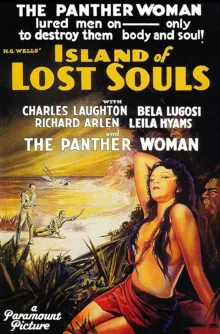
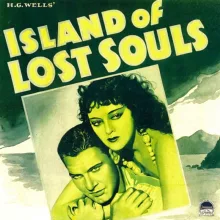
Here it is called The Island of Lost Souls and stars Charles Laughton as Moreau, a mad scientist who works to bend the will of nature to suit his needs. He works to create a race of human animal hybrids on this mysterious Island which is disturbed by Edward Parker and Ruth Thomas. Of course, we will be spoiling things as we go along. So if you Don't want any of this or any other version of Dr Moreau ruin for you, turn off the podcast, go watch all of them and come on back after you've seen them.
We will still be here. So Tim, when was the first time you saw Island of Lost Souls? And what did you think? I actually have the exact day written down.
It was October 15th, 2009. I remember because this is one of those movies I had wanted to see for years and for whatever reason, wherever I was, it was never on TV. It was very hard to find on video. I Don't know if that's kind of some sort of effect of all the various censorship of it over the years, but I just could never find it until finally, I, when I was doing my, try to see a new horror movie every day of October 1 year, I encountered this on the internet and sought and it did not disappoint after the years of build up and having seen various forms of this story.
Some really good. Some with Marlon Brando. I really dug this. I was very surprised it was much like watching freaks for the first time I was surprised by how much, even for a preco movie they got away with in this film, even if some of it's oblique and by implication, there's a lot of themes here.
It's like, wow, I can't believe they did that. And it's still really effective, still really, really creepy even watching it to this day. And I, how about yourself? I had a rather backwards journey into this film.
I think I've always known the story, but I Don't know if that's just because it's one of those stories that's in the collective western conscience and you're just born with it or possibly my father read it to me as a bedtime story. I was lucky enough to have one of those dads who read novels to his kids when they were little and not, you know, just wind in the Willows, but like Fred Kipling and John Low and Stevenson and things like that. So it's possible although it is kind of creepy for a kid. But then in the eighties, I was a big fan of Devo and I had no idea that Devo drew so much inspiration from this movie until I got the criterion disc like 2030 40 years later.
And in the nineties, I was a big fan of the Irish hip hop band, House Of Pain. And I did know that that was a reference specifically to the Burt Lancaster version. I had never seen the Burt Lancaster version, but there's a sample in there and Burt Lancaster has a very specific way of speaking. So I figured like, oh, I got to see that movie someday, but still the first film version of this I saw was the Marlon Brando version in the nineties, which I did like I saw it in the theater and I liked it.
Years later I saw the, I ran the Burt Lancaster version for this maritime movie Marathon. I used to program with some friends of mine and it wasn't till the criterion this came out that I finally saw Island of La Souls and all the great supplemental material that's on there. And then just a couple of years ago, I had the privilege of seeing it on 35 millimeter on a gorgeous studio print at the exhumed films, Haron, I think maybe 2018 or 19. And then I went out and finally bought a copy of the book and read it so a se security this journey.
But it all comes out in the wash because I really like all the versions of this story. But I obviously think this is the best movie. It must have looked glorious on 35 millimeter because I've only ever seen this on video as a Blu Ray slash DVD and television. I think my first experience was through a TV version of it or TV, broadcast of it.
But to see it on the big screen. That must have been awesome. Yeah, it was great. And it was like, you know, the fourth movie into a 24 hour Marathon.
So we were all still very fresh. I actually got to see it at the Boston 24 hour sci fi Marathon a couple of years ago. They had a pretty nice print and I'll admit it's with that one, you get a lot of hipsters who like to laugh at the old movies. And I love how this one, the longer it went on the quieter they got all of a sudden they're snickering and jokes just disappeared by the end of the movie.
Yeah, I Don't go to that sci-fi Marathon anymore because of that. But the exhumed, they cracked the whip, man. They're like, Moreau, if you talk during any of those movies, they will escort you out, which is great. But I actually, I worked on a film one time with a guy who, he was a horror movie director.
He hated black and white movies. He had nothing but shit talk for black and white movies. He complained about them. All.
The only one he ever said he liked was this one he was like, but have you seen that Charles Laughton Island of LA Souls like that? It's a great movie. So I do think even people who are dismissive of old movies have a hard time, they might think at the beginning it's a little cheesy or slow or whatever. But, boy, the Second Lawton is on there, you gotta shut up and just let the man go because it's fantastic.
What kind of human animal hybrid doesn't like black and white films? Come on. We all know these people. They're out there, unfortunately.
Yeah, it's true. It's horrifying, but it's true. They're probably not listening to this show, but they're definitely out there now. They'll just complain about it on like, you know, the itunes reviews.
Right. There you go. There you go. Yeah, especially if we start to get into politics.
So be careful because we Don't want to talk about all the metaphors that are behind this movie and the, and the source text or anything not to speak. Politics on podcast. That is the Law. Are we not?
No, we are men. That's the problem. Carl Strass cinematography is just awesome and even seeing it on the smaller screen to see the shadows and the once they get on to the Island, the way that the trees are and to see like, you know, beast people kind of hiding on the sides and stuff. Oh, it's, it's terrific, but I can't imagine see it on a big screen and catch all of those details.
I'M very jealous of you too. Listening to the commentary track, it was interesting to learn that all the fog in the movie was real fog and not like fake fog. I thought that was kind of fascinating. Struss also shot like Sign of the Cross and I Don't know so many other good movies I'M trying to think.
I mean, he, you recognize his credit? Oh Frenchman's Creek. That was another one that is a color film and quite beautiful. Didn't he work with dryer as well?
I know he shot, he shot the silent version of Ben Hur It is really famous for that and shot sunrise or like was one of two dps on sunrise. But sorry, I get my Merna and my dryer mixed up sometimes. So my bad. Sunrise is one of my favorites visually and I recognize a lot of that here.
Some of the camera moves like that beautiful shot went. Ruth is going to the bulletin board to see the list of survivors and it pulls back with her and moves with her as she walks away, dejected or that incredible camera shot of Parker sitting reading a book and the camera moves over him to just the edge of the pool and we just see lotus feet running around until she comes around and it pulls back to frame the two of them just beautiful smooth camera shots in this that I feel like we're a little uncharacteristic of that time.
Well, even the first time that you see Moreau and that he's at a distance and you're looking down at him. But the, that's like the only time where he's in a powerless type of framing everything else. It's like shooting up or, you know, just him very large in the frame. You get those awesome shots of the camera pushing in.
There's the one where it's like pushing in on one of the beast creatures and then it pushes in on Lawton in the return shot. Really nice stuff. Yeah. There's some almost Jonathan Demme kind of qualities to some of the scenes like that.
Like when Parker is confronting Moreau and it's just the two characters looking straight on camera until Parker punches him and it's really unsettling the way that Moreau just slowly leans into cameras. He's talking about what he planned for him. It starts with Parker looking at him and then Moreau matches his gaze and the ca the editing camera work does the same thing and Moreau is like, oh, you think you can stare down a camera? I'M Charles Laughton dude.
Like I'M gonna, I'M gonna do it 10 times better. So when the punch comes, it's like a relief to the audience like, oh thank God, we're out of that close up. Well, and thank goodness that Richard Arlen as Edward Parker can act pretty darn well, like everybody else. I mean, you've got Charles Laughton front and center Dr Moreau Bella, the go kind of hidden in here.
He only really has two scenes. But whenever he's on screen, he's amazing as the Sayer of the Law but it's so much Richard Arlen as the Shipwreck Survivor. Our main character A K, a Predic from the book. I Don't think that they ever call him Predic.
In any of the adaptations. They always change his name to something else. It's like Parker or Douglas or whatever it is, but they always have to change his name for whatever reason. Yeah.
I've never understood that. I Don't know why. I Don't know if the pre the dick part leads to too much humor. I Don't know.
But, yeah, I wonder if we pre it may just be an awkward name. But, does that roll off to like, well, but doesn't roll off Charles Latin's tongue? I think he would love to address someone as Mr Predic. But Parker is a part that could be so kind of bland and boring and yeah, Arlin does a good job of kind of the lingering moral disgust at M but also kind of self discussed like after he kisses Lotta and realizes what she is and he's angry at Morero.
But he's also just kind of like, oh, what did I just do? This is and on top of that, I also nearly cheated on my fiance. That's where you really feel like, oh, actually this is a good performance because I think the close up right after he kisses her for the first time, you're just fascinated what's going on in his mind. Did he taste something?
Did he sense something. Is it guilt? Is it like it's probably a series of things and he can't put his finger on it and that's all in one, like, you know, four second beat, that, that he does, which is really, you know, it stops you know, like you kind of freeze up. Or the scene with the captain on the boat where at first he's sort of amused by the captain.
And as the scene goes on, you can see him getting more and more unhappy with him until he finally punches bling. And it's like, all right, that's it. And you see how incredibly angry he is in that moment. I love those scenes on the boat.
The other movies, the other versions of the film Don't focus on the boat so much. I mean, the seventies version doesn't even have the boat barely. And there 's something really great about the film in terms of its location. Like it doesn't feel like it's on sets, like a lot of universal horror movies, be beautiful sets.
But there is something sort of otherworldly about the fact that this is all shot in exteriors on Catalina Island and a ranch and the boat journey, just like with King Kong. The fact that you have to travel, that the protagonist has to travel to this weird place just gives it the a much creepier, otherworldly feeling. Yeah, that was one thing I've noticed with all of the adaptations is just how long it takes you to get introduced to different things. To Montgomery who is Moreau's right hand to Moreau himself, to the actual beast.
People, every single movie handles it slightly differently. And then you compare that versus the book where again, it's like they, he hears about more for a long, long time before he actually sees Moreau and it's even longer until we hear more speak. I'M kind of glad that they have him so early in this one because it just sets you up much earlier. I mean, of course, this movie is what, 70 some minutes long.
It's not that long of a film and it's good to introduce Lawton pretty early on. I mean, I think it's what, within 10 minutes of the opening. But, yeah, the stuff on the boat is very fascinating, especially getting the drunk captain, which I think this is the only time where we see the drunk captain. He's right out of the book and having Maling here as well.
Yeah, very important to have him on the boat and to have Parker in this case experience. Like, who is this guy? What is this guy and every single time, no matter what if it's the book or whether it's the adaptations Parker Pendrick always gets the stuff mixed up and he's always just like, oh, what, what race are these people or you're, you're turning humans into animals and it's like, no no, actually reverse that. They do add one scene with the, with the junk doc captain later on.
I mean, that's not in the book when we, because we Don't, we Don't follow Parker's wife. You know, that's a very, that's an obviously a very Hollywood adaptation thing where it's like, well, we need the love interest be story. So we're going back to England and so then the captain does come back and get a sort of dressed down by his superior as part of that whole sort of story of the rescue as it were. That is not part of the vote.
Yeah, I Don't know if Pendrick even had or Predic even has a wife or girlfriend or anything. He's just, we stick with him. We never leave the Island until he leaves the Island at the very end of the book spoilers, but just as him and it feels very much like he has no one at home. He's not an outcast like Montgomery and Moreau are, but he's not like pining for his fiance when he's on the Island.
He's just like he's gone for a year. Nobody seems to really care. The scenes on the boat are important also for contrast because once we get on to MS Island, it is so oppressive and closed in even the exteriors with the vines and the trees and the set design and the bars and everything, you just feel like you're in a cage. And so the few times that we see the boat in the beginning and then when we cut back to Ruth on the mainland, it's our kind of one bit of relief we get for the rest of the movie.
We're just squeezed in there on that Island and it's so effective because of that. I'M really glad that Parker, he holds this film together a lot of it. I mean, of course Moreau is, you know, Lawton is the star, but he could have been as bland as like Bruce Cabot as Jack Driscoll. I never really got into that character in King Kong.
I was much more about Ann Darrow and Carl Denham. Sometimes I forget that Driscoll even exists until I think about the dude playing him later on. You know, I was like, oh, ok. Well, and that's such a different interpretation of that character to have Jeff Bridges there versus like Bruce Cabot, all American man type of thing.
And I was afraid that this Parker was going to be g wickers and, you know, I love baseball or any of those kind of things, but instead he's properly horrified. I mean, one of the first times we see him, he's screaming out in nightmares, I guess on the boat and it's Montgomery who's comforting him and kind of talking him down a little bit. But yeah, he's messed up at the beginning and then we get to see how he reacts to all of these things and he has good reactions because that was one thing as I watch these adaptations is like, if I saw these beast people, I probably have some really extreme reactions.
And I'M glad that he kind of helps us take us there. It's not just, oh, isn't that interesting? It does go a little bit to the book where it's almost more of an uncanny thing of like, oh, it looks like a person but there's something a little weird about it. But here if you saw them it 's like, no, there's something wrong, I'M gonna run.
No, thank you. They also with Richard Ar all I can think of his wings and all the incredible stunt work that he kind of had to shoot as an actor, fly flying. Yeah. And I always have huge admiration for him for that and I feel like he brings a lot of that here with this.
This is the kind of guy who's seen stuff. Yeah, that commentary track and the criterion is really interesting in so far as the making of the film, he doesn't really go into the thematics or interpreting anything, but he's right there telling you exactly how much money every single freaking person in the movie makes, which gets tragic when heard, ever heard a commentary track where they list the salaries of all the players, like when it gets to Lagos, it's just tragic. Oh, yeah. I mean, I think that's why they do.
It is to show like, yeah, the Panther woman who was a total unknown contest winner was paid more than Bela Lagos. Bela Lagos man just can't catch a break ever. And it shows who Arlan was that according to the commentary, he got more than Lawton. So I mean, he was definitely established in Hollywood and known as a leading man because of that.
Because of the small, small role of the gy, I was convinced for the longest time that this was pre Dracula. And you know, of course, Dracula put him on the map only to realize, no, this is after Dracula and he had lost all of his Dracula money pretty much already. So the poor guy made $850 for the scenes that he's in and he is in some of the thickest makeup I've seen, of course, like the makeup in this movie is incredible to look at all of these beast people and especially to see the stills of them. And that was one thing I really like that in the criterion disc as well as to see the stills because I didn't necessarily catch all of the beast people's features to see that one creature where it looked like a cheetah was almost coming out of his face.
I was like, oh, wow, that's really cool. That one freaked me out. I wonder if some of these they were like, yeah, you can't show that on screen, put it in the background somewhere but that cannot be upfront and screen. It 's going to be a little too much for audiences when.
They have the creatures walking and you see the hoof of the one person, like, it's a hoof and a foot and I'M like, oh, wow. I didn't expect that. That's very uncanny to me. Lagos has one of the thickest accents in Hollywood as well as, you know, the thick makeup.
So you, he's unmistakable, you know, you know, it's him that very first shot of him, the close up when he's got that lascivious look on his face. I mean, it's, it's great. I mean, he's acting through some of the most hair I think I've ever seen attached to a person's face. You still, you know, you can know exactly what 's going on in his mind.
And man, how he delivers that line, his is the House Of Pain. You know, there's just so much memory there of the horrible stuff this character went through in there. Yeah. And those beast people, I mean, so many of them, I didn't realize were wrestlers and that 's why they have the kind of odd big builds that they have and as I'M looking at them, I'M just like, oh, yeah, I guess like now or, well, a few years ago, like somebody like George the animal steel with all the body hair and stuff because these guys, some of them have less body hair than I have, but most of them have actually a little bit more, which is even scarier.
I think it kind of goes today where you still get wrestlers and large actors, you know, playing Suit Suit actors for monsters and things like that. It's kind of a natural place to go to. Well, speaking of suit actors, the other thing that was really interesting on the commentary was talking about this guy Charles Gomorrah, who plays the monkey in the boat scenes. And they go, they talk about a little on the criterion.
But I went and just like, looked up this guy because he had like a 40 year career almost exclusively playing guerrillas in a suit that and or in suits that he built himself. So he was like this very diminutive Filipino guy who like stowed away on a boat and went to Hollywood, right? As the film industry was getting built and he figured like this is my niche. I'M gonna like, make the most convincing looking gorilla suit and be a very convincing gorilla.
And he was in everything. He's in this sign of the cross playing these very, you know, sign of the cross is a really, and he's in Morocco too with Marlena Dietrich. Like those are very sexualized gorillas. But then he's in like Bob Hope movies and the Marx Brothers and all these like goofy comedies where, where they need a really convincing gorilla and they call this guy.
I mean, if you look at his IM DB, it's insane. It is the amount of movies and they're all like, you know, gorilla, gorilla gorilla or like occasionally he's like a monster or something, but mostly he's a gorilla. Yeah, I love that. His profile picture on IM DB is him and I married a Monster.
War of the Worlds is the one I always associate him with because he was in the Martian suit for those brief scenes with Ann Robinson. And I gotta say the gorilla suit that we see him in here. It's pretty good actually, for those few shots, it's not bad at all. It's for the time, it's pretty incredible.
I mean, it's all real animals except for this one, you know, fake animal and it blends right in. Well, it's thanks to that. It's an Asian actor, Tatsu Kamai playing me Ling, which is nice that there were, oh wow, we actually have real Asian people in there. Of course, he's not, you can't see his face through the makeup and everything.
But the Malin character is so important that it was nice that they had this very prominent role for this Asian actor. And also he's really the gateway for Parker to find out what is going on as far as like looking and seeing his ear and seeing all the hair and seeing the pointed this and again, you know, you're talking about those close ups. I love when we get in there and see that and just have that be a revelation as far as, oh, something is off here. I mean, I think I would have picked up on it a little bit earlier but, you know, you can't, you can't have your main characters know everything right off the bat or.
The shot a second later when he lunges at the captain, we just see the teeth as he's coming right at camera. That's such a good creepy shot. What I really like to on that boat when Parker gets kicked off and you get that stunt of whoever it was. I Don't imagine it was Richard Arlen falling off of the boat onto the other boat or the dock.
It was just like, wow, that looks like it hurt. I'M pretty sure we're getting like a shot of a dummy and then a really perfect cut to a stuntman rolling on the boat. But the editing is so good that it really does feel like a guy just got flung off and landed. It's yeah, very effective.
Good dummy work then if that's the case because it did not look like a dummy to me, which is terrific when you can hide that. This is 1932. Like, you know, dummy work in the eighties was still looking pretty bad. Like this is pretty, pretty good.
I didn't, I didn't see it as a dummy. I thought it was a stunt man too. Just when it's falling, you can see one of the joints go a little too far, the wrong way and just towards the end of the shot. But again, it's, it's cut together very.
Well whenever I think of a dummy shot. Now, I mean, of course, there are so many famous ones but I always think of the dummy from the sabotage video and just how long they hold on that dummy. I mean, on purpose. Of course, you know what it's like, wow, Nathaniel Hornblower really knows his stuff.
I always think of the floppy one from Don the dead that gets thrown around all through that movie until finally they just blew it up. I think of the great foggy dummies from the Temple of Doom Bridge sequence where they had those little gyrating gears in them, but they were tied down to the bridge. And so once Indie like breaks the bridge, the things undue and the little animatronic arms and legs start to wiggle pretty darn effective. I have to say.
That was really amazing. Yeah. When it's. Strange that this film isn't more well known, it's not in that pantheon like I thought for a long time because there's the universal logo in the beginning, I thought, oh, this is another universal horror movie.
No, no, it's Paramount movie and the commentator definitely makes that very apparent, which is great. Why Don't we talk about this more. Why Don't we know it more? And I think some of it is because it's a preco movie that wasn't allowed to be shown later on in subsequent runs.
Like the Paramount tried to bring it back out and what was it? 35 and then tried to bring it out again in 41 or 42 or something like that. And each time the green office was just like, yeah, no, no, this is this will never pass. And then they eventually brought it back out much later on in a really truncated form and they just kept cutting things up because we've got a lot of violence.
We've got blasphemy, we've got beastiality, we've got Moreau encouraging one of his beasts to rape Ruth. I think the character's name is. And then after that, that doesn't work out so well. So, hey, why Don't you go kill this comic relief captain as well?
And yeah, it's just it's super violent in that line of moros about like, do you know how it feels to be like God, it's like, yeah, that, that can set some people off. I mean, that would have to get cut from Frankenstein a year ago. Yeah, that line was permanently removed from Frankenstein. Like there are no versions where you hear that line or I think there is now on one of the blu rays.
You can actually hear the audio like separately, but I Don't think they, it was ever released with, you know, now I know what it feels like to be God. But in Mro and that was also really interesting. The sensor office, the preco sensor office didn't have a problem with anything in the movie. They said you're going to get, this is gonna get cut in.
Local states are going to cut this, which is why they empowered the code in 1934 anyway, because people in whatever town were just hacking these movies up and they wanted to, you know, get do away with that practice. But clearly movies like King Kong and Frankenstein did get reissued all through the thirties, forties, fifties. And I think you're right. I think this one didn't maybe at the end of the fifties, but still, like if you took out all that stuff, this wouldn't be as good a movie.
Like I think Frankenstein, even if you take out two or three key moments, you know, it's still Frankenstein and you're still really getting that story so much of what's great about this movie is how transgressive it is. I also have to wonder when it switched over to universal because I wonder if the fact that maybe it wasn't included in those shock theater packages that went to TV is part of the reason why it's not as well known. I mean, so many people grew up with the universal stuff being on creature features and late night TV, and things like that and if this was kept away from that because I know I never saw it on TV.
I wonder if that was part of it. I mean, the Divo guys in the, in their stuff, say they saw it on Ghoulardi at least in the seventies, early seventies or late sixties it was on TV. I love Devo and I love to hear Jerry and Mark talk about stuff, but the inclusion of all of the Devo stuff. Like at first I was like, oh, ok, we've got the music videos in here.
That's pretty cool. And then when they had the full interviews with those guys, I was like, guys, this really doesn't have that much to do with Dr M like, maybe put this out separately, like just put out the complete truth about Devo as a criterion release and then we can get all of these stories, all these videos. It's such a tenuous connection to the movie. It's funny you say that because my memory of that bonus feature was that it was an hour long, at least like from and when I went and rewatched it, I'M like, it's only 19 minutes.
It's not that different from some of the other ones. But I agree it feels like this little Mini documentary about Devo and how, you know, they were inspired by this movie. It's funny that the go to is Devo because for me it's always oingo Boingo and No Spill Blood. I mean, that song is straight from this movie right down to the Law being recited throughout the whole song.
That's always the go to me. Yeah. As I was doing my research, I didn't realize that. What was it?
The Meteors have a song about Island of lost souls. And then also Blondie and then the original version of the original lyrics to House Of Pain by Van Halen used to be about Dr Moreau, but then they eventually changed it by the time it came out in 1984. I Don't know if I can get my hands on an earlier version of the song, but I'd be very curious to hear what they had to say about it. What's the Blondie song?
It's just called The Island of Lost Souls. And then in the video, there are a bunch of people in like monkey masks and those kind of things. I had never actually seen that before. Yeah, me too.
Yeah. It was not Fab Five Freddy in his white Tuxedo doing that weird dance. It's like I Don't tend to see a lot of Blondie videos which by the. Way also is not five Fab Five Freddy in that video.
It's just some random guy but she says that it's fat, a fat five ready, but that's not him. And then the look of Moreau, we need to talk about what Lawton is doing just with his look, I mean, the white suit, I mean, again, we're going to talk about plantation owners and overseers and these kind of things, but his white suit and the little mustache that he's gotten in that great demonic goatee that he has the way that it comes to a point in the middle of his chin. Oh, what a look this guy has and Lawton. Lawton is the kind of actor that it just seems like Lawton is having the best time when he's on screen in so many movies, even when he's under all that makeup and hunchback of Notre Dame, it just seems like he's really having a great time.
I mean, him as Captain Bligh him and one of my favorite films, The Big Clock every time I see him on screen, I'M just like, this guy is fantastic. And here, wow, what, what a little devil this guy is. That moment just before he suggests like, oh maybe I'll create a woman that weird little naughty boy smile and giggle that he gets, which comes out of nowhere. But it's like, wow, this guy is really demented.
He's like I made a joke. It's almost Austin powers like, you know, oh, you know, I love Latin and I think it's interesting that Brando would play this part later because I feel like Latin is one of those actors who definitely obviously loves to fuck with people. Didn't have a lot of patience for, you know, directors that he didn't respect or whatever, but always was devoted to his craft and his performance. And he can do both, like he can thread the needle of clearly having a great time and hamming it up and, you know, really enjoying himself while still being very spooky and very credible, you know, in even the silliest of parts.
I mean, I really like the Jamaica in the Hitchcock movie that everybody always says is like the worst Hitchcock movie and that Charles Laughton is too Hammy in it. But I think he's great in that movie too. And I think it, that 's the thing with Brando. He just really obviously did not enjoy the craft of acting after a certain point and really kind of hated the industry he was in.
So all he wanted to do was fuck with the people that he was working with. Whereas Latin, I feel like kind of has his C and eats it too plentifully. There's a couple of little subtle things he does. I love when he first introduces Parker and Lotta, it's like, yo, let you leave you young people alone and you see him rub his hands together and like, I have to go to work now and you know, he's just going to be sitting out there watching as you know, they get to work.
It's just such a creepy detail or one of my favorite things in the movie as the beast, men are kind of getting out of control. And, you know, Lagos is having his amazing speech of, you know, part man, part beast and we cut back to Moreau and he has a weird little smile on his face. And now you could argue, it gets into the kind of weird B DS M aspect of more which I'M sure we'll get into. But I always took it as that's the moment Moreau realizes, oh my God, I succeeded.
They had this moment of self awareness there. They have this anguish of being aware of what they are. They are really human. I did it and it's just the moment where he's about to get killed too.
It 's like his moment of triumph is his moment of death. My favorite shot with him is the most obvious one when he lays back on this table and crosses his legs and he's just, he's giddy and diabolical and yet he seems bored at the same time. He encapsulates so many emotions as he's going through here. And yeah, just those little smiles or just the way that he'll read a line.
I mean, what a wonderful performance he 's giving in this. That's kind of a Brando move that, that sort of time when he 's lounging on the table. That's not a, not a nineties Brando, but like a late sixties, early seventies Brando move where he'd be like, I'M just gonna do this and see if the director has the gall to tell me not to do it. You know, it definitely has that kind of feel of, you know, an actor just kind of seeing what they can get away with, but still feels perfectly within character.
And I love that he actually knew how to use a whip and that he's using the whip, like with a band and in this movie, he just really seems to relish every single time he gets to crack that whip. Yeah, the commentary track talks about how he learned how to crack a whip for a play he was doing in London where he was playing like some kind of sadistic overseer. And so he got really good at the whip. So yeah, it's just one of those unexpected talents that becomes a total bonus for a character like this.
When he's making them recite the Law and it becomes the exclamation point to everyone. Bang, what is the Law or then when he hasn't, he's just using it to gesture when he's doing the tour around the campus and like, you know, who look at this, I made this thing, I made this asparagus. He just, he's another one of those actors who 's great with props. It all started with a Lily.
One of my favorite lines, the big clock is you know, if he insists on this, I should have to call him a liar and just the way that he purrs these lines and he PURs a line in here where he says I should much prefer Mr Parker that you Don't leave this room. And it's like, oh, man, what a delivery. That was the way he kind of rides the middle one, the boat sinks. He's like, I have no idea how this could have happened.
Looks over to Montgomery. I mean, the natives were rather restless but, and then he doesn't even finish the sentence. I mean, he's almost like twirling his mustache and kind of looking coy, but he's still again, totally credible. I love the detail you can see Oran right behind him with his big smile.
Like I did. That we should talk about women in this movie and women in the whole Moreau the book itself. I mean, while I was doing my research because I had never read the book before. I read it for this and I was reading somebody's term paper or something that was just like there were no women in the Island of Dr Moreau by HG Wells.
And I was like, well, that's not really true. There are are definitely, there's no human women, but there are female animals that are on the Island. And then also it's this puma that like we hear in the movie, we hear screams from another room and we Parker is very upset, you know, they're, they're affecting a living human being, you know, they're cutting up a man and all this in the book, it's a puma that is being cut up and eventually is going to be turned into what could be the Panther woman, obviously, the puma woman and that is Moreau's undoing once he the puma as it's being turned more and more and more into a human eventually rips the chains out of the wall and escapes, breaks Predis arm.
And then as after Moreau goes after her, eventually she ends up killing him or he dies of natural cause or falls or whatever. But she, I think that she murders him and then she dies as well. So we never get to see like the fully formed version of the puma woman. But I think that that as well as we'll talk a little bit more about how Wells and Joseph Conrad went back and forth, but also partially inspired by a character from a Joseph Conrad book.
I think that's part of the reason why we ended up with the Panther woman and a Lotta and I just, her role is fascinating to me and I'M so glad that they added her here and it's interesting that then she would carry through every single other official adaptation of Moreau. It kind of goes to the time period that, oh, we need a romantic triangle. We need some kind of more romantic interest. But the way it's worked in here is really, really good and she's such a sweet and innocent character and you really feel for her.
It's one of those things where going to the movie, you know, once you know what she is, it's like, ok, there's no way that she's going to be allowed to survive. The sensors would never allow for that. But I do love that they allow her a heroic sacrifice at the end that she's the one who saves everybody from Orion by attacking him. Notably the same way that he attacked Donahue, climbing up on a tree and jumping down and attacking.
Yeah, I think it's a great character and I totally understand why they carried it through and the other versions of the movie because you know, you want, I mean, it's just like, obviously, yeah, it's Hollywood. They want beautiful girls in their movies. But it's also like you get a sense of you can relate to the character even though she is technically a beast person. She doesn't really look like one.
And as much as you relate to Parker, I feel like you empathize with the beast woman. Like that's your second surrogate more than Montgomery. You're, you're feeling empathy for this character who's also trapped on the Island. And it just kind of fascinating.
It's funny you just mentioned we should talk about women when I was mentioning like, oh, I Don't think they cut to the Ruth character in the book. It just like as I was saying that I was like, you know, this is actually kind of an interesting character. So this is 1/19 century, like proper English lady who just charters a boat with one other guy to go sail off to some random longitude and latitude coordinates with no port, nothing. She's just like, yeah, I gotta go find my guy.
I'M like, ok, next time we remake the movie, let's do the version. That's just about Ruth, it's about like going and trying to rescue your guy there. I mean, that's quite, it's funny. It's taken as nothing like, yeah, of course, someone would do that then.
Yeah, of course. And that's what you would do for your fiance, right? I mean, you know, he's missing. Yeah, she is so self assured.
I really like that. I kind of imagined her as like this rich heiress and that's why she could do that. Like, I've got money. I'M chartering a boat.
I'M gonna do that. I love when Donahue gets on there like you friend, she's like, of course not. And he's like, all right, just asking. I was just being polite.
I do wish she had a little bit more to do in the movie other than just be, you know, sort of the damsel in distress or at least the threat of being in distress for the third act. But le hes does do a really good job on the part. I like that. She at least doesn't have to end up just running around screaming for the rest of the movie.
And it is a short movie, as you said. Was it her that was in freaked the year before the freaks. The, she's the good girl. She's not, she's not Cleopatra.
She's the other one, the one we like, she doesn't get turned into a chicken at the end, which would have been appropriate here, there's a lot of similarities with this movie. It freaks. I mean, like the ending is really similar. Well, I guess it's similar to Frankenstein too.
It's just that in Frankenstein, the, you know, the hordes of monsters who are attacking the characters are the humans, the villagers, you know, but, in all the other movies, this, I guess being the last of them, you know, it's like, it's, as you said, them all attacking Charles Laughton and him kind of loving it to some degree. I like that flip around that. The, you know, the Lynch Mob here are monsters chasing the human, not humans chasing the monster. Well, as I was reading the book or listening to the book, I kept thinking at the beginning about Planet of the Apes, which I wonder if Moreau was a little bit of an inspiration for Goul to write Planet of the Apes, just especially with their three guys in a life raft at beginning.
We Don't get that in Island of lost souls. We get that in the 96. I Don't think we get that in the 70 seven. Yeah, that's really fascinating to me, especially that opening with them on the boat and that they are talking about reverting to cannibalism and you really never find out if they partook in cannibalism or not.
And there was a great essay I read talking about the guilt of cannibalism that Prenda feels through the book and that he basically, he starts to project his feelings of guilt onto the swine Hyena character who interestingly enough comes back in the 96 version. But yeah, that was, that was really fascinating because yeah, I never thought about that but there's even a line later on about like, you know, we Don't what was it? We Don't need animals or cannibals on this boat. And I was like, oh, I think they're talking about you Mr.
Prenda and Donahue has that line about, you know, long pork when he's joking with them around dinner. So it's like, oh, it's still kind of there in the background. Yeah. Yeah, like cannibalism is so in the culture that they even have slang for it.
But I read that article too cause he sent it to us and I was thinking, yeah, that, you know, it's just an interesting observation that like in the very first pages, he 's stepping away from his humanity for a certain extent because he has no choice. But like, even though he doesn't eat human flesh. He was certainly contemplating it and would have, if the other guys hadn't beaten each other up again, it's just, it's just good writing. Like, remember, you know, back in, back in the glory days of literature, like, it's just a great opening scene.
It carries so much thematic heft. That scene comes back a little bit more in the 96 version. There's more of that in the director's cut of the film, which unfortunately, I did not track down, but I went to movie censorship dot com and saw some screen grabs and the two other guys end up getting to a fight, which we, I think we see that in the Finnish version. But then there's this whole thing where they go in the water and there's a shark and then one of the guys comes up and grabs onto the David Tha character.
And I'M like, well, that would have been interesting, but we'll definitely talk about the 96 version more later. I did watch the director's cut. I watched the director's cut of it. And the thing about it is because I have it on DVD.
But like the thing about it is as well staged as an action scene that it is like there's no room for the thematics we were just talking about because it is a extensive fight scene. There's danger, there isn't really talk about cannibalism, you know, it's just a lot of fighting and falling and sharks and, you know, it's like a, it's like a get him in the opening action sequence as opposed to a thought provoking sequence. It only kind of has the idea of the character actually has to kill. This guy has to hit him over the head knowing he's going to kill him in that moment to survive.
And he doesn't then drag him back onto the boat and start to eat him. Yeah, that would have been a good idea. There's already a shark there. That's kind of taking care of that.
So he just pulls them up, just give me an arm or a leg or something. You know, I'M starving. Come on, Bruce, we can split him. Come on, Bruce.
What do you like the leg of the wing? Lotta, the Panther woman definitely proves that there's a lot of eye makeup on the Island. I'M not sure exactly where it's at. I love that.
She has, she has very exotic features and of course, you know, I was talking about the Asian character, earlier. I Don't think that the actress that portrayed Lotta was Asian but they definitely quote unquote oriental her and make her more of the other. And it's, I mean, it's, it's pretty twisted when you hear Lawton talk about, you know, oh, she won't go for you or I Montgomery. And when it comes to Lawton to Moreau, I'M just like, is that because you're gay?
Like, I Don't like other than like, of course, you know, in the movie, he is the creator and he brought her life in the House Of Pain and she wants nothing to do with them that way. But he is coded as gay quite a bit in this movie. And I Don't know his relationship necessarily with Montgomery either. But, yeah, you talked about the sado sexual kind of stuff that's definitely running through this movie as well.
But just him going like, oh let 's put him in her, let's put Parker and Loda together in this room and see what happens and basically he wants them to mate. And I'M like, oh wow. And then when, when it doesn't work out later on, he's just like, oh, well, hey beast, man, why Don't you go mate with Ruth now that she's on the Island? It's like, holy shit.
If I can't get the human to mate with the beast, The other way is probably a whole lot easier. Yeah, that was the most fascinating thing in that, in that audio commentary for me, which was the guy talking about how there was a, I Don't know if it was, you know, an earlier play or for it was an earlier draft of the screenplay and I think it was an earlier draft of the screenplay. There was a faceless monster that was chained up. It was kind of that the monster in the closet and the thing that wouldn't die and more gets the bright idea later on that he's going to kill Parker and sew Parker's face onto this monster and then Ruth will be attracted to him.
I'M like, oh my God, that sounds so horrific. But the time here I'M like, they really thought they were going to get that on screen. Yeah, that's not gonna happen. They Don't spend a whole lot of time in the commentary track talking about the different drafts, but they do talk about how many writers were involved and some of those early ideas, which are, I really do think that the conception of the Panther woman is such a great, you know, if you're going to adapt a complex book into a much simpler film story, it's such a good conceit, I think because it is scary.
And then as you said, like in a 72 minute movie, there's that reversal of like, yeah, we Don't know exactly why Moreau and, or, and, or Montgomery haven't forced themselves upon this creation of theirs to test out the mating. But, you know, for whatever reason, the fact that they're going to make this stranger, you know, who she might actually want to sleep with, be like the person that they're going to mate them with. I mean, it does seem like what breeders do, like some breeders just with some animals, you know, I grew up on a farm and we had a guy come and bring with, I was, it was a sheep farm and we had, every year we'd have a visit from the guy with the ram ejaculator, which was like this machine you hooked up to the ram to collect its semen because very often they just weren't interested in impregnating the ewes.
And you're like, yeah, you know, Montgomery, you know, lot, lot and probably could have got in Montgomery to do that at least once. You know, even if it was just with a turkey baster or whatever, it's much more the idea that he wants them to see. Not only can she mate, but will she fall in love? Like, is she attracted to this person?
Like he's much more interested in the emotions or he's as interested in the emotions as he is in the actual biology, the reproductive system, he wants her to like, feel what humans feel. And that's just, that's all great. Like that's really good, good stuff. I think that's in that screenplay.
It implies this idea. He doesn't quite understand women. So he's like, I'M not sure how these female emotions work. So let's see if we can make this work this way.
But it's also really creepy because since we Don't know immediately what she is, and then when we, once we find out, we realize just how, how far ahead MRE has gotten in terms of making this work and this idea of Wow. He's actually kind of close to making these creations pretty human. And that's really, really creepy. We find him at this stage where he's almost perfected it.
I mean, the thing that's frustrating him is that creeping beast flesh, you know, he's not like, damn, I couldn't get the face right or? Damn. I got one hoof, one hand, you know, like those are, we see all the past experiments and we see his even earlier ones, the poorest gut souls who are like powering the treadmill there to power the electricity. But with Lotta he's actually like, yeah, he's basically nailed it.
He's, he's succeeded except it's not permanent and it keeps like growing back and that 's like the next thing he has to figure out which possibly is the mating. Like if he can mate a human with one of his creatures, maybe, then he can make a creature that doesn't revert back to a beast. Yeah. And just him outside of the window looking in just that voyeurism of it is so creepy and just like you said, he doesn't seem to understand how men and women get together.
So he's just like staring out there like leering at them until Montgomery 's like, hey, there's a problem at the House Of Pain. Let let's go back over here. You get this weird feeling or I get this weird feeling when Parker eventually figures out that she's not human. She is super upset because he rejects her and she's basically in her room crying and Lawton comes in, Moreau comes in and it 's like, what did you do?
How did he figure it out? Tell me what you did. Like this horrible, it felt like like this father coming in and being accusing of his daughter, which basically it is because he is the father, she is the daughter really and just that her holding her hands and stuff and it's like, oh wow, this is super sad really feel for Lotta like you really root for her. Like you said she is our secondary and protagonist in this film and does a hell of a job.
And I can't believe that this was the woman playing her. This is her first professional acting gig. She really does a great job, physicality. She brings to it when she's with Parker and like literally rubbing herself up against him like a cat.
It's so good. It's so suggestive. Yeah. And that scene where she starts crying and Moreau's reaction is to laugh out loud, like, ah she is human.
I've done it. And when he implies, you know, I'M gonna burn the rest of the humanity out back to the House Of Pain. Her panic on the bed where she's just like screaming. Oh, it's heartbreaking.
It's a great reversal because you see Moreau at like the his absolute lowest point, like you feel like we get to see him at his lowest point where he was like, well, that's it. This was my last shot. You know, I can't make it work. I'M a total failure and then she starts to cry and he's like, no way.
Like, you know, there's hope, none of these creatures have cried yet. Like I'M cracking something, the emotion, the human emotion is there and he gets all excited again again, a wonderful, huge, like 180 degree performance that lot gets to give. But also just for the character, I it's really great and like you were saying the Panther woman, I mean, it's a publicity stunt. Like she's not even an actress.
She's, she's like the winner of a contest like a summer long contest that Paramount did to like be the Panther woman. And there's great stories on the commentary track where they talk about like they narrowed it down to four finalists and they signed all four of them to contracts. But like she was the winner and, you know, just I it's, it's a gamble because this is a really important part. You can't just put anybody in it even though she doesn't have a lot of dialogue.
Like she really does have to act a lot and it's really good that, you know, the contest winner actually can do a performance. It makes me want to find more of her roles like that. Murders in the zoo one. They mentioned the commentary.
I'd like to actually find more of them and see her performances in other films because I think she is really great here. I do want to bring up also that, that scene is important because it's also the beginning of Montgomery's turn. And I really like Arthur Hall as Montgomery. He's easily my favorite version of this character in any of the films.
And his performance is really kind of pulled back and restrain. But it's fascinating to watch him over the course of the movie. His disgust with Moreau and, you know, at first he's like, he's a great man. He's a brilliant man, but we see that disgust building up until he's finally had enough and he's just like Loda.
No, you're not going back to the House Of Pain. That scene where Moreau is yelling at him because haven't you got that equipment fixed yet? I think he's sabotaging it. So Loda doesn't have to go back in yet.
I think he's trying to stall and give her more time before she actually ends up back in there. I really like the way Montgomery is played in all three of the versions. I think he's the most consistent character version to version. I think Nigel Davenport in the seventies version.
At first he starts out a little generic like he's just a drunk and a kind of a dick. But when he gets to have his heroic turn, I think you really are like, oh wow, like Nigel Davenport is like kicking it up into a gear. And even though, you know, Val Kilmer, we all know how all, all the horrendous stories of how awful he was to work with the envisioning of that character in that version as this sort of like failed doctor, sort of drugged out guy who is basically just like, stuck on this Island and high most of the time and just sort of disgruntled and almost has a death wish.
Like this is a very interesting character. It's the most interesting character in that version of the movie. I totally agree. And Montgomery of the book is very different from any of these performances as well.
Just his, you Don't really know exactly where he stands. Quite often. He doesn't really make friends with pre, he is kind of standoffish and he survives after more goes, but he realizes I can't go back home. There is nothing for me there.
He was about to be thrown in jail or was it that he was in a, was he in jail or was he in a sane asylum that, Moreau pulled him out of? But, yeah, he has nothing to go back to one way or? That's what it was. We never find out what it was some foggy night in London.
Something happened and we never quite find out and, but. He can't return. That's the main thing which gives him an air of mystery in this film. It seems to be some kind of professional indiscretion is how Morell puts it.
So, I was like, did he commit malpractice? Was he drunk during a surgery and killed somebody? Did he perform an abortion? Because you do, there are enough lines where you're like, oh, he really likes to drink.
Ok. I get it. I just wasn't sure if the drinking was his reaction to what he has to do on the Island or if that's part of what brought him there. I was amazed that they kept the story of how Moreau, got driven out of England with the flayed dog that escaped from his lab.
So I just have this image of this skinless dog running through the streets of England. Just people screaming and throwing up their hands and the newspapers got a hold of that and basically drove him out. That's, wow. That's wild.
But yeah, Montgomery survives after Moreau dies in the book realizes that he really has nothing to go back to. He ends up destroying the boats and gets in a fight, I believe with a few of the animal people, beast people ends up dying and then stupid pre he's running out to see what's going on with all of this stuff. And when he comes back to the house to Moreau's Place, he's like, oh, yeah, I heard a noise. I didn't realize I knocked this lamp over and burnt the whole freaking place down and it's like, it's such an important scene in all of these other movies is the conflagration is the beast people turning on Moreau and burning the whole place down.
But in the original book, it's like, yeah, some of the beast people get killed. The Hyena is still around eventually Predic manages to murder him. But it's basically a lot of animal people, these people just slowly reverting back to their animal form as much as they can. Because the thing that gets me is that more is not content to just take an animal and make them into a person.
He is mixing and matching. So there's like, what is it? A Vixen bear woman? There's a seder that he makes.
So it's like part goat, part per I mean, it's just, there's a horse and a gorilla. I think he 's got it. It is a creature which roams the earth alone. It is half man, half bear and half pig, horrific images that Wells is writing about.
And I love that he's writing this from a place of anti vivisection that he's basically coming at this as a almost a crusader. And it's so weird to me too because I always think of like, oh HG Wells, that's you know, 19th century. But it's like, no, he was alive during this time and he really hated the Island of lost souls like, oh OK. He was the Alan Moore of his day.
I know it's wild to think that HG Wells is like alive and well. Yeah. Well, in some of the articles you sent and also in the commentary track, they talk about, you know, the book as being satirical too and whimsical in the Jonathan Swift style. And I have, I must admit I've never read Jonathan Swift, but I thought that, I mean, I guess I'M now very curious to know about Jonathan Swift because I definitely saw like the Conrad and the Kipling connections.
And again, I didn't realize that these guys all born almost within like a few years of each other. So they really are commenting back and forth on each other's work, which is just really interesting as someone who just did not pay attention in high school English. I missed all that stuff and had to go back and reread it in my thirties. But without, you know, interesting people giving me the context and we didn't have podcasts then.
So, you know, I'M sure there's like the Rudyard Kipling podcast that I need to find. Although it's, I'M sure it's all very anti Richard Kipling these days. But I'd just be very interested to know more about Jonathan Swift, obviously seems like a very prominent figure of this era. Knowing some of Wells views on things.
I can see some of the satirical elements, especially his views on religion and especially sex, one of the laws that doesn't get translated into the movie is the whole, you know, not to take more than one mate. That is the Law and more than one wife. And of course, Wells being very free love, I'M sure he thought. Yeah.
Screw that. Yeah. That's the thing with all of these others that we're talking about. They all feel so of the past, you know, to think that Bram Stoker is a contemporary of Conan Doyle and that, you know, these guys are all, yeah, kind of passing ideas back and forth to know that Wells was kind of mad at Conrad because he felt that heart of darkness was too similar to Island of Dr Moreau.
And I'M like, wow, I, you Don't think about these things, you know, you Don't think like, oh, these guys are all here and that this is the turn of the century. So they're actually going to movies and seeing these things like, ok, I mean, by the time and we'll talk about this a little bit later on, but by the time the Island of lost souls comes out, there have been two unofficial versions of the same story that have been done and there have been authors that have been ripping off well with the same type of stories as well.
So it's like, wow, ok. There's a lot more going on in the early part of the, of the 20th century that I just completely forget or I just kind of assign it to an earlier, you know, like the Victorian age wasn't that long ago. Well, it floored me to read that, that, Heart of Darkness was like, came out two years after this, I would have thought, you know, 40 years before at least, you know, I just, yeah. I'M still stunned by the revelation that Wells didn't like the Invisible Man movie.
I mean, how can you not like The Invisible Man? That movie is brilliant? Any authors like, especially this era, like, like movies, I mean, movies are so simplistic. Noel Coward had a great line about the first film adaptation of one of his plays.
They asked him what he thought and he said, well, it was ok, but I'd prefer to just go home and have a hot cup of cocoa, you know, which just sort of basically summed up even though he had been an actor, movies and everything. But he was just like, yeah, you know, this isn't, this isn't really art, this is some silly populist thing, you know, he changed his tune and became quite a good writer and director of films too. But at the I guess that was still silent era. Yeah.
Well, I know when he was an actor, he was silent because he 's in AD W Griffith movie as like a kid. Noel Coward. But yeah, I Don't think many writers of literature enjoyed film adaptations of their work because they're just so simplistic. No, but to find out that Wells wrote, what was it?
Three shorts for Elsa Lanchester to be in that was also in, yeah, it's, it 's like, really? Ok. I didn't think that, HG Wells was a, you know, a screenwriter. I wonder, I wonder if those exist?
I want to find those, if those exist. If they did, they'd probably be on this disc. But you would hope that's the kind of thing criterion would dig out and figure out a way to put on a disk like this. Well, I'M guessing that the, and I know I'M getting ahead of myself, but I'M guessing that the 20 was it 26 1 that you shared with us?
Tim. I'M guessing that that was on the Lost Soul documentary disc because I had the Severn logo all over it. I Don't own The Lost Souls Disc yet. I really got to buy it was 1921 German one.
I wondered that because I did see that logo on there, I guess. So. That was an interesting one. Yeah, we'll definitely talk about that a little bit after the break.
But yeah, that was, that was a very fascinating fun. But yeah, I would have loved if they had that on this criteria as well as there was one from 1913, a French version as well. And it's like, ok, why aren't these on there? I couldn't find out if that one still exists or not, that's the problem.
Everything so much from that era is lost that it might not even exist anymore. And that was all of 23 minutes. I think it was. So, I Don't know how they managed to pack in everything in 23 minutes.
It 's already tough when it comes to like, you know, 60 70 70 80 minutes, you know, just this movie moves very, very fast and the pace is up and especially as we start to get towards the end of it. I mean, it becomes a snowball just rolling downhill very quickly. Once, once Ruth and the comic relief boat captain show up. I mean, then it just kind of pulls out all the stops.
It's like, ok, suddenly we get the love triangle that you mentioned before we get this whole thing of like, oh, now I'M going to have this beast, man rape Ruth and you know, I'll forget about Parker. Things will take care of themselves with this. And when that fails, he's just like, ok, now I need you to go kill this captain and then he keeps doing the same thing. Rose got this thing where he's just like, oh, where's Captain Douglas at or like, 00, now you can't get to the mainland.
Oh, I'M so sorry. Oh, how I. Love the premeditation. If you watch during that dinner thing, it's like another drink, Captain, another drink, Captain.
He's getting him drunk to make sure he's not gonna be off his guard when it comes time to have him killed. He's the very responsible captain. He's very temperate. Like he'll have a drink.
But he 's always like, whoa, whoa. That 's enough. That's enough. He knows when to say.
When this movie does not give you a good view of sea captains. They're all drunks escort in this movie. The guy that plays the second captain. I'M trying to remember the actors, I think.
Yeah. Yeah, he's great. He's got one of those great faces. So I remembered as soon as the guy that did the commentary mentioned that he was in Gone with the wind.
I was like, oh, yeah. Yeah, because he's got that great, like lumpy face and. I kept thinking of Michael J Pollard. He just kept reminding me of him very, very.
Yeah, like an older version. Well, I Don't know, Michael J Pollard always looked the same age. But yeah, he could be like Michael J Pollard's dad, you know, the way Alan Hale and Alan Hale Junior look identical. It's very hard to tell the difference.
Like, but he had that kind of putty nose, that sort of WC fields, kind of alcoholic nose, which I think is all like, it's such a great character actor trait. I mean, I Don't wish it on anybody but I do think it's a, you know, it's very cinematic, especially in black and white to have one of those like kind of diseased noses and he has that a little bit. But you can tell he 's very cheery about it. You know, he's just like, oh, he's a very jocular soul.
He's a really interesting character in that. He's kind of comic relief. But he's also, we get the sense he's been in a lot of scrapes. He talks about how, you know, the hinge is still working.
My Head Is Still here. I know what I'M doing. It's fine. He's cool headed and unafraid.
Maybe he should be a little bit more afraid. But you start to think, ok, maybe this is the guy that's going to save the day and like, no, no, he's dead. That's it. And it's kind of shocking to have this charming character so brutally murdered late in the film.
It's like, wow, the stakes are really high now. And of course, I mean, he had been around since the silent era and did a ton of shorts. But altogether, I think the number of credits for him on IM DB is like 340 something. It's like, holy shit.
They cranked him out in the silent era. Get five or six movies a week. Yeah. And he used to direct some of the Silence as well.
So he was he was all over the place when it came to that. I want to say he was working, Was he the one that was working with the keystone cops? No, that's the director of this film. The, like the director of Violet Osa started out as a Max Senate.
Actor was a keystone cop. And, yeah, and then directed for Max Senate as well. It looks like he did a lot of westerns late in his career. He was in, they drive by night.
I know that one, Mr Deeds goes to town. He has a small part, the Missourians Angel and the bad man. So a pretty wide career. Yeah, I mean, as a director, he did 100 and 46 titles and he did things like House of Dracula and the Ghost of Frankenstein House of Frankenstein, which I know John Landis doesn't think are great movies, but I definitely enjoyed them.
So sorry about that John. I love House Of Dracula House of Dracula has the cutest hunchback assistant in the entire universal monsters Cannon. She's adorable. I Don't think they're great movies, but I definitely like them more than John Landis seemed to when in that interview where he's talking to Rick Baker.
Yeah, he's very, he seems pretty contemptuous of them. But he also said something that totally contradicts what the commentary track said about Bella Lagos. Like he said that like the commentary track said Bella Lagos really wanted to play Frankenstein. It was and was sad that he lost out on that part and took the role in Island of Lost Souls to show that he could work with makeup, which the guy does say is maybe a little bit of a dubious claim because he basically said he took any role because he needed money.
But then John Landis was like, yeah, he said that Bela Lagos, he refused to play Dracula and didn't because he didn't want to do the makeup. So it was two conflicting story. I mean, sorry Frankenstein two conflicting stories on the same disc, which is always fun because, you know, there is no history in film history. I did some research into that and supposedly it wasn't the makeup.
It was that when Lagos he was going to do Frankenstein, the script was very different and it was just a straight rampaging monster. No pathos, no character to him. And that's why he didn't do it. And then wh came on, changed the script and that's when Karlov got involved.
So that's what I've heard is that was the script. It wasn't that he didn't want to play this, you know, part makeup. He didn't want to play just this straight stock monster. That wasn't very interesting.
Well, that makes more sense. I am a big fan of the TV Show Face off, which has nothing to do with the John Wu film. It's the makeup reality show and they've got Michael Westmore is one of the people on there. I didn't realize the Westmore had this dynasty that went back to Wally Westmore way back in the early part of the 20th century where and maybe, maybe he was a son of another makeup man, but they been doing makeup in Hollywood the Westmore for literally like a century.
So it 's just amazing. And when they brought up like, oh yeah, that was Wally Westmore that did the makeup. I was like Westmore, like as in Michael Westmore and I can't remember his daughter's name. She was the host of face off.
I was like, holy cow. I had no idea how far back. They were, they were all over the Star Trek franchise. There were like some siblings, I think in that whole group and they got very competitive from what I remember hearing.
Because the makeup in here, the creature designs are, are great and I love like towards the end when things are starting to fall apart and you get that pan of the different faces in the crowd and they just, it's like one person is uglier than the next person. I mean, no offense be men but they're not a pretty group of people as you go across them and you just see the pain that they've, that they've suffered. I mean, yeah, that the, all of the times that Lugosi shows up and does the recitation of the Law or you know, the whole thing of, you know, we are not men, we are not beasts, we are things that all of that is terrific.
And you, like you said, you hear the pain in his voice and you realize like, oh these guys have been through a lot of stuff because you Don't, I mean, you get the one guy who's on the table but you Don't necessarily see that much torture otherwise. But then you hear the pain in Lugosi's voice and you see the looks on these guys' faces and you're like, ok, yeah, shit's about to get real here. I like how it's also kind of gradual. Like the first time we see them on the boat when Moreau mentions, oh, I can give you a crew and we have that great pan across them on the boat, which I Don't know if you noticed mirrors the pan across the humans on the boat.
When they first pull Parker off of there's that great pan across all these guys. But when you start, you just see them. It 's like, all right, maybe this guy is just deformed. Maybe that 's just a weird looking guy.
And just slowly you start to see how grotesque they get the makeups, get a little bit more in the course of that pen and especially over the course of the movie, we just start to see more and more. They're like, wow, that's a little stranger. Oh, that's even stranger until you can't just accept. Ok, maybe this is just a strange looking guy.
The end of this movie and I know, we'll talk more about the 96 a little bit later. But the end of this movie reminded me a lot of the end of Apocalypse. Now, it reminded me of after Willard calls in the airstrike and just everything is going to shit at the end of the movie. You know, you've got Willard killing Kurtz, you've got the massacre of the ox that happens and, you know, all the fire that 's coming from the Napalm and everything.
And just, this reminds me a lot of that where it's like everything, all bets are off. You know, Law no more. There is no more Law. You told me doctor to spill blood.
You had had the one beast man kill the sea captain. Everything is going to hell. And when, when they're running out, they're trying to escape. And Montgomery does the last little humane thing where he doesn't shut the door, he leaves it.
He's like he might escape. So let's leave this door open and then you get Moreau going through that door and he tries to shut it and the beast men are already on him and you know, that's it as if he can't close that door, you know that his life is null and void and that he gets put into the House Of Pain. And then I love the commentary track pointed this out and I hadn't realized it before. So I went back and I rewatched the weird noises that he's making when he's on the table in the House Of Pain.
It almost sounds like ecstasy or maybe a little bit like laughter. And I'M like, wow, what an interesting choice for you. Yeah. I never took it that way until I listened to that commentary.
Like, yeah, there is a little bit of almost like a weird pain chuckle there or almost an orgasmic moan. I always just thought it was a strange moan. But then you're like, yeah, moan. Like you're you know, everybody else who's been in this house to pay him is screaming.
He's moaning. I didn't take it as ecstasy until it was pointed out that way. But then I was like, oh yeah, I guess there could, it could be tinged with a, you know, a flavor of that, you know, like he's terrified, but he's also turned on and is a, it's an experience and he's an experiential man. There's so many weird little hints of that with the character across the movie.
I mean, he's a guy who carries a whip. He's definitely into dominating people. He's a voyeur. And there 's that moment when he's talking about fixing the equipment with Montgomery where he's leaning against something that looks like a Saint Andrew's cross and just kind of poised against it.
Like, what's that doing in the lab? Or even when Parker first shows up, he's like, I guess, I bet you'd like a cold shower. It 's like there's this weird sex tinge to everything in this movie. And it's like that the big clock too you brought up the big clock and, you know, certainly, I mean, there's so many Latin performances that just ooze, that kind of titillation.
Yeah. Him and George Mccready in that movie, you're like, ok, and George Mccready is definitely the Jealous Lover in that movie. I mean, of course, you get a lot more in the remake of the Big Clock. I mean, it's, it's pretty much just with Will Patton, what 's going on.
But I prefer, yeah, I prefer the mccready Lawton relationship and that it is so, you know, on the DL but it's there for everybody to see. But because of Gilda, because of George Mccready and Gilda, you know, it carry like that relationship which is very homoerotic carries over into the big clock. So that, you know, I mean, when I grew up, all I knew of George Mccready was path of glory because that's the movie I'd seen over and over again as a young person. You know, it's still one of my favorite movies, but that was my soul image of George Mccready for like, I Don't know, 15 years and then, you know, when I saw his earlier work, I was like, oh yeah, this, this character, now I associate this actor with like sort of a slight homoerotic tinge just like Charles Laughton.
So in the big clock when you put both of those guys in the same scenes, it does, doesn't matter what decade they're taking place and what, you know, censorship was like, it just, it resonates that in a very cool way. There's also, you mentioned the Saint Andrew's cross. I believe the commentator said it looked like an inverted cross to him. I mean, there is, of course, this biblical imagery that goes through this whole thing, Of course, the story of creation and very much the idea of more as the creator.
And he's basically also the snake in the Garden Of Eden where he's trying to get Adam and Eve together with Loda and Parker. But then that moment at the end when Montgomery is rowing, Ruth and Parker away and he's just like, Don't look back and I'M just like, what are they going to turn to salt if they look back? It was just felt very much like the destruction of so. Yeah, it's a great last line.
I didn't realize that there's no score to this movie that is, there is no music other than anything that they might be listening to and credits Q is really conspicuously bouncing and happy after what we just watched. One of the things that one of the only things that I think it 's really, really good about the or at least really interesting about the Burt Lancaster version is that they do try to take some of what's in the third act of the book with flipping it from an Old Testament God into this idea that after they kill more, they're like, why he's not dead.
He's Jesus and they like, hoist him up. They Don't raise his arms like a cross. That would be a little too obvious. But basically he's just hanging there.
Burt Lancaster is just hanging there like a dead man who's just been lynched. But they're like, look, he's, he has risen, you know, like he's watching your every move. He's judging you. You can't see him but he sees you and like all that stuff, which is in the book is really interesting of just like, yeah, religious and you just kind of, you know, you pull these ideas out, you control people with it.
It's, and obviously Wells was not a big fan of organized religion and it comes through in the book and they try to get it in the 70 seventies version. I really wanted them to go farther with that in the book because yeah, as soon as he's dead, he's like, Frederick is like, oh, he's not dead. Oh, no, he chose to get rid of that form. He's now up above us, he can hear everything, he can see everything and he'll be back, eventually, he'll be back.
I mean, it is. So the Jesus story, it's wild and then he drops it for a while, but then he brings it back again. I was really hoping like I was, I was so sad that the slayer of the Law was one of the people that's murdered on that beach that I was talking about with Montgomery because I wanted the slayer of the Law to suddenly buy into it and become this almost, you know, Paul of Tarsus type of character, Saul of Tarsus Paul type of character going around proselytizing about that he will return, he will come down until then you must be good.
You must follow the Law and that 's what he, what Wells is going for, but he just doesn't lay it on a little thick enough. I mean, it reminded me a little bit of that it's not a good movie, but there's a Ricky Gervais movie where he's the only person that can lie and everybody else has to tell the truth. And he starts to make up a thing about the man in the sky who sees everything that's a lot more satirical. But I like the satire in this.
I just wish it was, it was a little bit more biting. Yeah, I'd like to see Bella Lagos with like Wafer like this is the body of our master. You know, he did a bunch of leaves. Oh, also, I almost forgot I gotta bring up.
I was a little surprised at the time to see that moment after Donahue is killed when Oran comes back with his shirt and it's just soaked in blood and it's like he bleeds, he can die. It's like, wow, you Don't normally see any blood in a 19 thirties horror movie that moment. And that's the kind of the thing that turns the Sayer of the Law around he can die. That's a big point.
That's grim. And also that he's a hypocrite. I mean, it's sort of like, that 's where this movie is really unrealistic, Like the idea that masses would turn on their leader just because he's a hypocrite like that never happens, you know, wouldn't it be great if that was the case? But yeah, it's true.
You Don't see a lot of blood, you Don't see any blood in universal movies, right? Is there any universal horror where you see actual blood let alone, like, have it be this plot? Not even in Dracula and it's all about blood? No.
Yeah. Yes. Yeah. You Don't see blood in Dracula?
That's wild. I know, I, and you had mentioned at one point that this movie reminded you of, I walked with a zombie and I could totally see that. And especially because really, and I mentioned this way earlier in our discussion, I mean, this is a slave revolt, you know, like all of these beast men are slaves and they could really easily be, I mean, really, you can, you can read this as this is slavery or even this is colonialism. I mean, the whole life.
The idea of I'M bringing in, you know, here's the great white man in his white suit with his whip and his gun and all this. Yeah. And he comes in and he's like, oh, I'M going to change all of you and you must follow my customs. Now.
You need to be like me, you need to start wearing clothes, you need to start, you know, obeying the Law. You need to adapt my religion. Basically. I mean, this is such a colonial tale.
Make people make the beast men who aren't up to your standards, make them feel bad about themselves. I mean, all of these beast men basically hate themselves. And it's all this guilt that that Moreau is foisting on them just like, well, you're not human enough, you're not man enough and they're trying their best. I mean that the litany of the Law always ends with are we not men?
And just they're trying their best. They want to be this. And then when Lagos as the Sayer of the Law is like we are not men, we are not beasts. You know, we're part men, we're part beast, we're things that's what really hits home for me.
And it's like this, this self loathing that they have and that it ends up being projected out as anger and hatred and revenge. I mean, the end of this movie reminds me and I can't remember if Manding ends in a conflagration. But it definitely reminds me of like a slavery story to have them finally turn and burn down the plantation. I also kind of saw it as a class warfare thing too.
I mean, Moreau has a really nice house. He could have provided some nice housing for the his creations. But no, they live in these terrible little huts. They're basically told, you know, you follow the rules, you do this, this is what you're supposed to do.
And once they realize the elites are vulnerable, it's like, oh let's get them and they get in there and start using the tools that they haven't been allowed to. I mean, like, Lotta is more human passing. So she's allowed to be in the house but they're not. And I was just going to bring up passing.
Yeah. Like, I mean, basically Moreau sets up this idealized standards that none of the creatures can ever, they can aspire to it, but they can never actually achieve it. It's just simply not in their DNA. It's, they're, they're a different race.
And so he's created this racial hierarchy where Lotta can pass. Like she actually does get into a relationship with our human protagonist where for while she passes until there's some tell tale ear or finger or something. Where, where or just it's that kiss where you know, she no longer can pass. And then as you said, it's self loathing for no other reason than she's been given the standard of beauty.
That is actually just, it's not that it 's unattainable, it's just not who she is like. And it's the same with all the other creatures. So, yeah, I think that's also an interesting reading. Yeah.
Moreau creates these creatures and then he cast them out, like each one of them is a rough draft, a pencil sketch for the next one. So he just keeps improving, improving, improving until he gets to a Lotta. But yeah, to your point, there's those strata of here are the earliest ones. They're not even allowed to be with the rest of the group.
They just power my generator and they're just outside stepping on this generator and giving me power again. Power. And yeah, I love when they break in at the end and they're just like, oh the little knives and they grab all those scalpels. It 's like, oh, that's, I can imagine them just all stabbing a little, a little Julius Caesar, all of them stabbing at M and killing them.
All that finale remind me of two different movies. I kept thinking of the original Day Of The Dead when they're all starting to go after the Colonel Rhodes character. There's a lot of that. In fact, there's a lot of Doctor Logan from that has a very Doctor Moreau vibe to him and Conquest and the Plane of the Apes, which is one of my favorites of that series when the Apes literally like, all right, that's it.
We're done. Revolution and they grab the guns and they're just going at it. Well, until in the theatrical ver or the TV version, they're just like, no, put down your weapons. Did they bring Robbie mcdowell in to like they did?
Yeah, because it was horrible. Ad R and just the close ups of the eyes. So you Don't see his mouth because it was. A little too, a little too extreme apparently for audiences.
Yeah. A little too revolutionary for eight o'clock at ABC Saturday family. I think they actually did that for the theatrical version too. Actually.
I think they, I think you're right. Yeah. Yeah. It wasn't until just a few years ago that you could actually see that real ending and it was one of those revelations for me when I was younger where I was like, this doesn't seem right.
This is not what's supposed to be happening. And like I was like, they totally dubbed over even that female ape. Who goes? No, I'M like that didn't sound right at all.
I also kept thinking of Night Breed and there they have their own version of the Law except there's there to separate the breed from man rather than enforce them as being men. In fact, a lot of the creatures in that movie feel like they would have been right at home on Morros Island. So guys, let's go ahead and take a break and we'll be right back after these brief messages step into the gallery, dear friends for horrors, nightmares and Spooky Tales. This is the midnight viewing podcast and we like to discuss the frightening World of television horror anthologies from Rod Sterling's Night Gallery to Tales.
From the Dark Side to Hammer House Of Horror and more, Father Malone Chris ST, you and Mike White will be your docent during this midnight viewing available wherever you download your podcasts from Weirding Way Media dot com. On the sixth day, God created man. On the seventh day, he rested and on the eighth day in the year 2010, in a remote laboratory, an exiled scientist created something impossible, unmistakably, human, undeniably animal on the Island of Doctor Moreau. I'd like to visit my children, my father, oh my God from director John Frankenheimer Hg Wells, most terrifying creations about the line that separates man from beasts and the notorious doctor who dared to cross it.
We are men because the father has made us burn Marlon Brando Tho killer David, the Island of Dr Moreau directed by John Frankenheimer. All right, we are back and we are talking about the Island of lost souls and we've mentioned a few times the 77 and 96 version and the 77. I Don't think I'd ever actually watch that until doing the research for this. And I have to say there are some things that I like, well, I love Barbara Carrera.
I grew up watching, never say never again. And holy shit. Oh, she's amazing in that. But to see her in this, I was like, ok, she's no Far Isabel.
But yeah, she's pretty good. Is she dubbed? Is it, is it her voice? I wondered if it was her actual voice?
It didn't sound like her to me. I mean, if I Don't know if she's putting on a thick accent in anything or what. But yeah, her character was a little confusing to me. She's Maria, I guess she's also a Panther lady in this.
Well, that's the thing. It's a real, they cop out in that movie because they never, I think originally the plan was and even the poster of the movie, one of the posters is that like Loda, she is one of Moreau's creatures. But in there's no reference to the movie as released or as you can watch on DVD where, she has any reference to being a beast. She's just like his adopted daughter essentially who says I could never leave the Island.
I, and I think originally, in fact, on the Blu Ray that I have, there's a bonus feature that just says still from alternate ending, I might even just say alternate ending and you click it and it's just a still AAA film frame of her with like red eye makeup or like red eye contact lenses and like, you know, wolf cat teeth in her mouth, like so on the boat when they were escaping, when he transforms back into a man, the idea is that she transforms back into the cat lady that she originally was, I guess, but none of that is in the movie and it's too bad.
If you look in the movie, the last shot of her, you can see the transformation starting to happen because she has contact lenses in and there's a little bit of makeup. So it was like the first shot of what would have been that transformation. And I know the Marvel comics adaptation actually has her full on transform and attack him right there in the boat. Yeah, because that's what I was expecting to happen and when it doesn't happen at the end of the movie, I'M just like, wait, that 's it.
Like she's always going to be human. Now. What about that animal flesh that just keeps coming back? And this is the first time I'M, I think we're seeing Moreau turning humans into animals, which just did not make sense to me at all.
It's like, oh yeah. No, I can turn animals into humans and for kicks, I like to turn people into animals. I really like that idea because he's like, all right now, I'M going to get firsthand observations from the person turning what it's like what's happening in their brain that I think is really fascinating, which is fine. Yeah.
I mean, it's a fine idea. It was just an interesting thing that they just switch it up. So I'M like, ok. And New York, I thought that his makeup again, I thought, looked really good.
I really like the makeup on Richard Basehart. And I barely even recognized Richard Baart because the last time I saw him he was hamming it up so much in an episode of Columbo that when he showed up here, I was like, is that him really? Like at first I was like, yeah, yeah, he's very subtle and I like him and say the Law and he's subtle and I like the horns on his head and everything I thought that that he looked really good. This was the.
Version I actually grew up with. So I was more used to this one and I always felt, I feel like Lancaster's Moro is a little closer to the book in terms of he's not just like this sadistic psychopath, he's very Amoral, especially when he, you know, finally moves on to murder Montgomery, but at least get a sense of why he's doing it. I mean, like with a lot and it's just like, I just want to see if I could with him. It's like, well, you can cure diseases and cure deformities and there's so much we can do with this.
He's very serious. He's very cerebral. I also, after watching Island of Lost Souls, this movie felt very slow. To me the pacing of the 32 when he's so good.
And this one is just like, wow, this is kind of slow and kind of small. I will say though the scene where Brad, the Michael York character is imprisoned and Moreau is trying to get him to revert to animal form and he's going back over his childhood memories trying to hang on his, to his humanity is such a good scene. It's some of the best acting I've ever seen Michael York do. I really love that scene.
And that was the moment I was like, all right, that's great. And I agree that the idea of bringing back the religious angle I think is really good. I wish there was a lot more of that in the other versions. My complaint about the movie, my main complaint is Michael York and it's not that he, his acting is bad.
I just feel like the way the character is written and directed is so dumb. Like he does not, he's not a smart man. Like he's brought onto this Island and immediately he's just like, he has no idea where he is. He doesn't know anything about these people and he's just like flying off the handle left and right going, you know, accusing Moreau of all kinds of things.
Like I'M just like, dude, what, where are you coming from? Like this character? It's not even that he has to be some kind of genius. But if you were in a situation like that where you Don't know where you are and you're trapped into these weird people, you would be pretty quiet, gathering information.
You wouldn't start accusing your host of all kinds of horrendous atrocities because he's probably gonna inflict them on you. I just think that's too bad and I do think it's a, it's a problem of the script and the direction because you're right, the makeup and the whole transformation and the prison scene, Michael York is very good and it looks good. I wish the other creatures looked as good. Like I think of the three movies.
This is the one where a lot of the creatures just look like, you know, they just went down to Toys R Us and put some, you know, heads on and did a little bit of extra work to hide them. But they Don't have the elaborate craft and care that the 32 version and the 96. Version, which is a little surprising considering it's John Chambers who did Planet of the Apes and those makeup still hold today. I will also say that scene with the fight with the tiger is really hairy to watch because it looks like that stuntman is really about to get eaten.
I know the fiberglass helmet he had as the boar man there pretty much kept him alive from the tiger actually crushing his head but that's a scary scene to watch. Yeah, I thought for years that this was a TV movie and when I watched it just, the production values looked like a TV movie. To me. I was very surprised to find out that it was a theatrical release because it just the pacing and everything.
Yeah, it just felt very, very slow. I watched it, I think last Saturday and I was like, OK, yeah, it's, it's like, let's, let's kick this up a little bit though. I Don't have as many problems with the 96 version as I know a lot of other people do. Like, some people are just like, oh, it's one of the worst movies ever made.
I'M like, that's crazy. That's, that's a crazy claim. One of the worst, it's one of the worst productions. It was a nightmare production, but it's a totally watchable movie.
The problem is you're going into a version of Island. Doctor Mro directed by John Frankenheimer with that cast. You're expecting something amazing. And I remember I was in 96.
I was so excited by this and I was incredibly let down by that one so much so that I immediately went home and started writing my own screenplay for a Doctor Mone movie. And I gotta say part of it is Val Kilmer for me because every time he's in a scene, man, the pacing of the scene just drags because he's just wandering around doing whatever. And you can see David Thewlis is getting frustrated with him. That scene with th this is like punching him and slapping him, yelling at him like that's not acting, that 's thas finally getting some back there.
If you want to see these guys acting, there's a bonus feature on the DVD like a generic like produced by Fine Line and they are talking as if it's just another movie. And oh yeah, it was really great working with Val Kilmer and oh yeah, this is a really interesting script, like, you know that that's acting, the best acting is that, you know, EPK bonus feature. That's the thing when I think the whole movie can be summed up by Montgomery's one line of, well, things didn't work out. Yeah.
And once he and Brando are gone, I feel like the movie almost starts to recover when it's just through us against the human animal creatures and the hyenas line. It's like, oh, I can see this almost starting to come back together again. But no, too late when you. Watch Lost Souls though, you do kind of wish it was Rob Murrow and not David Theiss because like to some degree or another, the character, the Parker character is supposed to be an everyman and you can't get farther from an every man than David Thewlis, you know, unless you're, you know, talking about Brando or Charles Laughton.
But like Thewlis is a very, very strange looking actor. He has a weird way of speaking. And, you know, if you saw Naked, the first movie, most of us knew him from, he was kind of permanently that character for like, at least 15 years. You couldn't see him in a movie without thinking of that guy, you know.
But I agree. I mean, one of the things that could, could have saved that movie is that the two starring roles have the least amount of screen time. And so you really, you know, I'M surprised because, you know, Marlon Brando has been fucking with directors for like 30 years before the making of that movie. And, you know, Frankenheimer is no pushover.
Richard Donner figured out how to work with Brando, even, you know, Andrew Bergman in the freshman figured out how, like they figured out how to placate him and get him to show up and do the performance in a way that, you know, I think is very amusing in Island of Doctor Moreau. But you can tell like nothing that Brando is doing is what's scripted or what the director wanted. It's 100%. I'd like to have this bucket of ice on my head.
I'd like to wear nothing but, you know, white paint and complain about the sun like there feels like there's not a single moment of the movie where Brando is in at 100% control and it's a, that's a little disappointing because I'M a big Frankenheimer fan. This is late in his career, obviously. But, it's also hilarious because Brando is fascinating to watch in anything. I mean, he's really, really a wild, wild.
Screen presence and kind of his interpretation of Murrow is not really this again, psychopath or even sadist, but like this almost like a cult leader is really fascinating, I think, taken the right way. He's so Jim Jones, I mean, this is totally Guyana when he shows up and he's got the sunglasses on and stuff and even to hear those tapes from Jonestown and then hear him, I'M like, are you doing a Jim Jones impersonation? You sound like Jim Jones and he 's got those fake teeth that affect his voice too. I'M like, that's just, that is a weird choice.
But then add in all of this other stuff that he 's doing and he becomes just absolutely bizarre to the point though where you're like, who's the person that makes these human animal hybrids? Maybe they should be the most eccentric person in the World that you've ever met. As Perth though. I do like him that moment where he's confronting Brandon.
He's like, look at these people, look at him. I mean, it's, yeah, when he points at Nelson De La Rosa, finally getting the version of this character that is sufficiently freaked out in a way that yes, I totally believe that. Or like, you know, has it occurred to you that maybe we're all out of your freaking minds. It's like, yeah, the arc of the character in the, in the David Thewlis performance is the correct arc, unlike the Michael York who just starts there, he just like from beat one, he's just freaking out.
Theiss really does sort of sit and observe and get scared and scared her and more and more freaked out until the point where he's just like, all right, I'M fucking trapped and I'M freaking out and I'M, you know, look at him, look. At him, but also figures out how to manipulate them. It's like, you know, there can only be one God. What about this guy over here?
And this guy over here that has guns aren't, you Don't, you want to be the one God and poor Fua Balk, who I actually think is great in this and she's really trying and hearing on the behind the scenes things of how she was treated by Frankenheimer, by the producers. It's just brutal. Yeah, she really wanted to do something. And the German guy who plays ML, like they went to that Island, they signed up for this thinking they were gonna have a really rich character to play and then they're just stuck there for all these months in total.
Total hell. Which is, you know, they're the only ones really from the cast who are interviewed in that sever documentary, lost souls. But you know, you can see why they wanted to get it off their chest. I mean, they were really disappointed the drawings, the concept art is what sold it for me with that stuff, especially the Jesus, like more holding the newborn baby and all the dog doctors behind or the vultures that like the right or the it looks like a Law office and the vulture has like little spectacles on and stuff because I was like, yeah, take this out into the real World.
What happens? Because when you think about a Jurassic Park is very much a Dr Moreau story and I suppose Westworld has to be too, but I feel it's more Jurassic Park because of the science and the creation, the John Hammond character. He's like, oh, I have to be there at the birth of every single creature is like, it feels very Moro for me and like, oh, I'M going to imprint on these creatures and then when the creatures turn on them and eat them, it's like that's what you deserve. John sorry to tell you, but you spend so much time saying if you, if you could, you didn't say if you should.
Yeah. And the John Hammond character in the Crichton novel is much more like Moreau, he's much less Santa Claus. He's not, you know, this benevolent guy who bit off more than he can chew. He's much more mis mischievous and Machiavellian.
I still feel bad that Beatty Wong ended up getting saddled with the villain roles in those Jurassic World films because it 's like, I love his character in the first Jurassic Park and it feels like they did him a deserve. I mean, I love Beatty Wong. So it's great that he shows up, but he suddenly becomes the mad scientist where he's like, I'll keep making bigger and bigger dinosaurs in order to make money. And I love that money is at the heart of these Jurassic Park movies.
But there's no such thing here with these Moreau movies. It's not like I'M gonna make these monsters and then we open a theme park. You know, it's, it 's, I'M gonna make these monsters because I can, because I want to, because I want to feel like it feels to be God and I wanna manipulate these things and it's like, OK, that's, that 's motivation, man. That's real.
Speaking of money. It really is a shame that the 96 1 didn't stay under the radar with like Jurgen Proch. Now as Moreau like Stanley intended and been like a $10 million movie because they probably would have left him alone. Richard Stanley, obviously, you know, he'd made two prior films.
He wasn't, you know, he's, he was not, I mean, this is what we try to do nowadays all the time, right? We get somebody who 's directed one successful independent film and then we put him in charge of like a $300 million movie. But of course, they're not really in charge, they're just like the director, but like, it 's not like, you know, when you're essentially making a low budget film that you're, you know, putting together with Scotch tape and bandaids and, you know, wishes, hopes and dreams and, you know, you could see if he could have secured the rights to the novel, a low budget or even a $12 million version of this, as you said.
Well, you know, he, that, that's who he said he originally wanted, right? Jurgen Jurgen Buckner. That would have been. Yeah.
And still with all the Stan Winston effects because I really Don't think the budget ballooned because of Stan Winston, it ballooned because of Marlon Brando and Val Kill. You still could have made that low budget movie with all those designs with, you know, Ron Perlman's Ram Horn and he's, he 's blind like Sarah, the Law can't see. And the Hyena man is like an incredible design and I Don't know who that actor is, but it's a really amazing or. Tamira Morrison is as he's, he's terrific.
He's really scary. Oh, yeah. Yeah. Oh yeah.
When he, when he licks his fingers after he puts the rabbit down, I mean, just that little movement. I'M just like, oh, that's great man. And this Montgomery feels a little closer to the Montgomery for me of the book as far as him. Not being able to break himself of eating meat and just like that his dog, quoting ends up tasting blood and it's like, oh, that wasn't good.
And you shouldn't have done that. I mean, he's not, he's not a dick in the book. The Montgomery is not that, but II, I like some of the things that, that not necessarily that Val Kilmer is doing but that the character is doing if that makes any sense because I think some of the choices that Kilmer was doing because I remember reading, I think it was in Entertainment Weekly before the movie came out. They were signaling that there were some problems with this film and they were talking about how be Kilmer would constantly impersonate Marlon Brando.
And then there's that moment in the movie where they bring him out on the pala and stuff and he's got the white face makeup and he 's got the red cross on his forehead and he's totally doing a Brando impersonation. And I was like, well, that would be ok if he now wants to become Dr Moreau, but he doesn't, he doesn't, it doesn't seem like he has any sort of motivation at all. Like you said, he just wants to kind of get high and have fun. That's the thing his relationship with Moreau in this version is so unclear.
It's like sometimes it seems like he's at odds with him, like he's trying to undermine him with the creatures. Sometimes it seems like he's right with the program. It just, it really feels like the script is lurching from scene to scene without any real direction where all this is going, which it sounds like was the case when they made it? Yeah, it seems like another thing like Marlon Brando didn't want to act with Fo Kilmer.
So Marlon Brando called the shots and so whatever was scripted between those characters is almost, it's so minimal to that, they almost have no relationship other than what foul Kilmer refers to early on. And he does do a Brando impression when they first land on the Island, which is kind of funny. But it makes more sense that he does that than dressing up like Moreau which, you know, I guess is supposed to be the beginning of his descent into madness, but he doesn't have that far to descend. He's already sleeping with the pig ladies and you know, taking the same medica, you know, he's got the medications full of like shrews and acid and, you know, in some kind of horse tranquilizer that also is supposed to keep the flesh from pulling back and he's eating that too, even though he's not a beast person, like the guy is pretty, pretty gone.
I mean, it's basically his character from real genius. If he had not, if he had not realized that they were using him and like if Mitch hadn't come along and kind of put him on the right path, he would end up on that Island. I was thinking there's a lot of Jim Morrison in there. Actually, I think there's less Chris Knight and more Jim Morrison like Jim Morrison, the distance from Jim Morrison to that Montgomery is a small trip and it kills me because it's not like these actors were doing this because they had a strong emotional connection to.
I want to do this with the character. They were just doing it for ego and to mess with people and it's, and as a result destroyed what could have been a great project. And I'll admit these days it's kind of tough to feel sympathetic for Richard Stanley giving all the allegations. But I will admit he was an amazing filmmaker at the time.
Like I loved his color out of space. I loved hardware despite it being hacked to pieces. I really like Dust devil. And I imagine this movie, if he had made it the way it was supposed to have made would have been probably pretty amazing.
Yeah, possibly. I mean, I never felt that sympathetic for him just because I feel, I Don't know, I'M, I'M, I'M an anti a tourist myself. So I feel like people think that like the number one job of a director is to have a, and the vision, visions are like opinions and assholes, you know, like the job of a director is to do all the things that he obviously couldn't do and, you know, maybe could have done on a project where he had more control or if he had a really strong producer that he was working with, who could work as a kind of intermediary between him and New Line.
But, you know, it doesn't seem like he had that kind of relationship with anybody either. Certainly not with Ed Pressman. So it's like I've always felt like, yeah, you know, once you cast Marlon Brando, if you're not up, I mean, if you Don't know what you're getting into, then you're an idiot because he 's literally got a 30 year track record of fucking with every single director he's ever worked with. But one of the thing that's interesting is Richard Stanley in the documentary does talk about how he feels like he was able to win Brando over and maybe that's wishful thinking, maybe not because Brando might have really liked him.
And if Brando's daughter hadn't committed suicide, and Brando really was allying with him in order to fuck with everybody else, he might have been able to stay on the picture and made a picture that was much closer to what he wanted to make because actually working with the director would have been Brando 's way of screwing with everybody else. I mean, I Don't want to disparage Richard Stanley's religious views, but just all the hoodoo voodoo stuff with the magic. I was just like, oh for fuck's sake, you sound like you're 12 years old when you talk like that because otherwise he sounds super intelligent and he was, you know, given the whole background about Conrad and Wells and just like, you know, his ideas all sounded very, very interesting.
And I was like, well, then I went to this magic man and he put a curse on him and then I got the directing gig back and I'M like, what the fuck is your problem, dude? I just magic unraveled and everything he, every spell he did came undone. He got a flesh eating virus. He wrote a really good adaptation.
I think, I mean, I think the adaptation, you know, updating it to modern day, present day and all the, all the stuff that he does in the screenplay is really intelligent. It is good. I mean, I think it's a really good take. Not that much of it survives into the movie, but a fair.
Amount of it though. I'd love to find a copy of his screenplay before it was messed with. I'd be really curious to read that and see what it's like because I bet it'd be pretty fascinating. I mean, I found a version that's out on the dropbox.
So if you want to grab that and I thought, I thought that was, I thought it was good. So, yeah, I didn't realize how many versions of this. There were, I of course, started watching some other stuff. I mean, of course, talking about the 96 version for just another second.
You can't watch the 96 version now and not think about Dr Evil and Mini Me or moreover, the what is his name, Dr Mephisto from South Park and his Mini me and just the whole nambla connection, the North American Marlon, you know, look alike association. I love when they brought the, those two characters on to South Park. I was just like, oh, for fuck's sake guys, this is hilarious. I love it when he was trying to mate the potbellied pig with the, with the elephant.
So you get a potbellied elephant. That was amazing. But I went through and I was watching a bunch of other stuff. But this was my first time I ever watched Freakazoid, the Warner Brothers cartoon that had an amazing play on Doctor Moreau.
I watched the Island of Doctor Hibbert from tree that 213. I think it was, I gotta wonder this Homer turning into a Walrus and Margie being a cat. My wife and I have been wondering for years if that's a reference to meet the Feebles where you have the couple, that's a Walrus and a cat. I'M like, I wonder if that's a little nod to that.
Surprise that a deep cut. Yeah, when I saw the Walrus and then I saw Walrus also in the, what was it, the 21 version that you sent us? I was just like, ok, Kevin Smith. That too actually.
And I, as I'M watching all of these two, I'M just like, holy fuck freaked. Alex winters freaked is very much. It's that thing of Michael York going from human to animal, but it's, you know, Eliza, see SKs turning all of these poor people into freaks and, you know, bringing out their inner personality through, you know, what the group does to them. I was like, oh, ok.
Yeah, that's a story as well. But yeah, that 21 version was fascinating to see. I wish, I Don't know if that's the best version. The one that we watched out on YouTube because I was really getting mad at the way that whoever colorized first off, it's colorized.
Second off, there's music to it, which was pretty good except at the end when they were using the cue that is used more in the shining. So I'M just like, can't disassociate. But third off, it was the inter titles and that it was leaving up the German and then it would switch to English and then would switch back to German. But then a lot of times I didn't see any English, it was just German.
I was like, oh, I give me a good version of this, please. I want to see this. I wouldn't have sent the colorized version, but it was the only one I could find that had in inter titles at all. So, it was fascinating again.
It's, it almost feels like a lot of the stuff is kind of pushed to the side in favor of this romantic triangle with this guy trying to find his wife with his best friend and they find her and then he's like, oh, forget my current wife. It's my old wife again. Yay. Yeah, I was having a little bit of a hard time keeping up with it at times.
I was just like, who is this guy now? And like the one African American gentleman that shows up and he's in the full Tuxedo with the top hat. I was like, ok, he reminded me of that famous picture of the guy who's got like, three oranges in his mouth for some reason. You do you know who I'M talking about?
I had trouble with that because I was like, is this really progressive? Because there's this moment where he's like, there's like, four of us, 33 white people and me and we have three guns and there's, there's this native here, forget the white people. I'M living with the native by and he just leaves them for most of the movie. I'M like, cool.
I kind of like that, but then he's pretty much a stereotypical black comic relief character for the rest of the movie. Unfortunately, although he does get to kill one of the main creatures with. Yeah, that was kind of cool. And I kept talking about how cool it was that there was an Asian character in the 32 version.
And here we are all these years before in Germany and one of the main characters is an Asian actor, who's basically, I guess he would kind of be in the Montgomery. He's basically the Moreau type characters right hand man. But rather than carrying a whip and beating the animals or the beast people, he's more in the lab with him. But, and then, yeah, I love that.
He's the one that turns the tables at the end of ruins, the biggest instead of being alcoholic, he has Morphe or something. But yeah, I thought that was kind of an interesting turn and I like this idea that there's an implication, he's just as responsible for this work as the more character is, but the more character doesn't want to share the credit. So he's trying to blackmail him using his drug habit into giving away all that credit and some of the staging of stuff like the big hot on fire at the end. That was a really great scene that was really well done.
I'M not doing my due diligence. I should say that I just won't keep saying the 1921 version. It was called the Island of the Lost So if people want to look for it is out on YouTube in this weird version. But yeah, so 1921 silent version and yeah, that I was so glad that you found that and I wish that I could find that 1913 1 which I really wasn't even aware of until just recently.
And I was like, oh wow, because I knew that obviously the Moreau story has been told and retold officially and unofficially quite a bit because it was like a little cottage industry over in the Philippines with some of the Filipino exploitation films to do the Moreau story I think. Is it Eddie Romero? I think he did it twice, right? Produced one and directed one.
Ok. That's what, right. Terrorism man and then the twilight people and there was like 13 years between them, which was wild as well to realize just how long his career was and that he was able to be involved in two different rip offs of Moreau within a three decade. The cast blocks of wood as the leads in both movies.
Because man, that Richard Dare Guy and terrorism, man, where he 's just like smiling at the most inappropriate times and like, oh, you're traumatized. That's great here. Let's hang out with me. Well, at least Pam Greer and Eddie Garcia is great.
She's the best thing in the movie. Definitely. And Batman or Man, Bat, whatever you want to call him, the Batman hybrid that just can't really fly very well. It was interesting again in both those that, I mean, you have the Moreau thing but to some degree it's kind of tucked to the side in twilight people where it's mostly just sort of this weird chase movie by the second half.
And terrorism. Man, it's only one creature. But I'll admit some of the ways they, the film was shot and the way they staged the story of that creature I thought was actually kind of interesting. I wish the acting was better because the rest of it in terms of production value, I thought was quite good.
So many of the rip offs, the sort of unofficial remakes are about one creature. You know, I mean, in some ways that's how they get away from the moros of it. It's like, it's an, it's a single experiment that this guy is working on and, you know, that that does kind of bring it into a different genre and usually, you know, doesn't have to be on an Island. And, you know, it's just all kinds of ways of taking some of the concepts that Wells created and, you know, just applying them to any type of science fiction monster movie.
I had forgotten about spy kids. Yes, I do watch the spy kids movie occasionally. There are some fun things to those and Steve Buscemi is this Moreau type character who's characters name is Romero, probably George, not Eddie, but in that he makes all of these like horse flies, which is what a horse with wings of a house fly and just all of these different creatures. So reminded me of the old text Avery cartoons where it'd be like, you know, we crossed a centipede with a chicken and we got drumsticks for everybody, 10 ft pole with a cat and we have a 10.
Foot, we want to see a Ray Harryhausen version of is Dr MRE where instead of just like human size, it's like all sorts of weird creatures that are kind of human but larger and stranger. That would have been incredible. That would be cool. But most of those movies start blocks of wood too.
So, you know. You know, if they did more right now, it would all be CG I creatures and they look as good as Dwayne The Rock Johnson. And it would also be, you know, I mean, not to disparage modern Blockbuster cinema. Although while we're at it, why not?
We're talking about like literally 100 year old movie that is not 100 year old. How old is, how old is 32 is how we're 10 years off. Yeah. Yeah.
It's like 90. 1, 91 year old movie. It holds up so well. And part of it is just because of how beautifully photographed it is.
And I do feel like that's one thing that we've just sort of lost for the most part in this sort of CG I, the dark CG, I muck. That is everything, you know, that, that we watch now where you can't really even see anything. So it's fine that it, you know, something may look really good but you Don't actually see it because it's not lit. It doesn't exist in the real World.
All of these movies, the creatures are practical there, aside from the cat person in the 96 version who like leaps and jumps like a Panther, that's obviously very bad. The rats and the rat things on the boat. That's right. There are rats in the director's cut that are really fake looking.
But like I remember what and I saw the Vala version in the theater and just like fur was like baffling CG I artists like they computer graphics, people could not figure out how to do fur for the longest time. And I feel like most of the nineties are like, look, we can do this thing, we can make Spiderman, we can make anything as long as the skin is 100% smooth and there's no fur. And then they've got this essentially tiger person that has to leap and jump and it doesn't even look like it exists in the same plane as the rest of the movie.
It's really, really fake looking. But other than that, the creature work in that movie is outstanding as it is in the 32 movie. I totally agree. Hyena looks amazing.
I wanted to mention real quick as far as the dispatching of Aisa, the FSA ball character that is really rough for me. And that like, you know, I keep talking about this whole colonialism like slave revolt type of thing. When Tamara Morrison says, you know, we were, you know, we've been in the House Of Pain. You mentioned it like she's the one that lives in the house and it's like we get the whip.
Nothing has touched your pretty skin. And then when he pushes her off and she hangs. Oh, and I thought that was actually lynches her basically. Yeah, he lynches her and I thought there was a very effective moment too that it was that it was all done in silhouette rather than, you know, showing it.
Yeah, I thought that was really nice. It is a tough scene. Yeah, especially for such a likable character. Oh God.
And I mean, I love Fua bulk. I've been, I've had such a crush on for the longest time. Yeah. From, from return to Oz on basically.
But certainly gas food lo. Return to Oz on the worst witch. Yeah. Yeah.
Yeah. I mean, she's she's the reason why I like the water boy. So, and I like Vicky and she likes me back and she showed me her movies and I like him too. I never saw the water boy That's Adam Sandler.
Yes, it is. Yes, it is. Actually I could be wrong. I think it's just water.
Boy. No. Definite her want me to kill them. Sign thing is like the most romantic thing in the movie.
Oh, I love it. I love it. Yeah. No, she, I, and I wonder if she was unwilling to do the death scene and that's why they staged it that way or if it was actually like an artistic touch on Frankenheimer's part.
But either way, I think it works, I think it actually works a lot better than the scene you were talking about earlier where, you know, David Thewlis is like convincing the Hyena man. Like there can only be one guy like it's like, this is, this is all happening, like you're on ac above a fire at gunpoint. Like this guy is really fast on his feet. It's not that eloquent a scene, the scene where he says all the stuff to her about how she's like essentially the house slave and he's like living in a cave in his own filth and everything like that.
That's a really poignant and well scripted scene. It, I can't remember now if it comes from the Richard Stanley version, but it's it's, it's great. It's very, very eloquently written and it, and it gets you and Farach has done a good enough job in this role that she hated doing. Obviously to really make you feel for her character.
There was one other article that I just wanted to mention really briefly, which was a great piece talking about how there are several female authors that have taken more from, essentially from the screen and taken him back to text and have written several, I think they were all Y a novels and it was usually like Moreau had children before he left England. I think two of them at least were like that. And there was one where he just had one child. There's one where he had five children and they're, they're all girls or all women characters.
And then the way that, these women authors are able to kind of reclaim this character or claim this character and, you know, really experience, it's basically the Panther woman because at least in one of these, it ends up that she is a human animal hybrid and that she was his perfect experiment and she can, feel all these things that nobody else can feel and you find out that it's because she is this hybrid. But it's interesting that we're, we're really taking that the character who didn't exist in the Wells novel and even some of the things in these Y A novels are just in the movies, but they're bringing them into these books.
Yeah, I thought that was really fascinating. I thought it was a very, interesting article. I was glad to find unfortunately, there's no lack of articles when it comes to people pontificating about, Island of Dr Moreau or any of these movies. Well, and we're contributing, contributing to it.
We go, we've been doing two hours of pontificating but I have to say it's a, it's, it's a worthy movie of that. I mean, as you said, there's so many ways to read this movie, most of them feel intentional, you know, and obviously the source material you can read over and over again and get something new out of it every time. And it's also just a damn good interesting story. That's one of the reasons I wonder if my dad read it to me as a kid as a little kid because the whole early chapters are so atmospheric.
It's a very cinematic book and you're right there from the very beginning and certainly when it gets to the Island, you're just, there's detail, but it's not bogged down with detail. It's just enough to really illustrate for you this, this World that Wells creates in what is essentially a fairly slim novel, you know, like it's not like it's Moby Dick or anything. This is a almost a novella. And but boy is it, is it a very evocative book and some dodgy science aside, it is one that really just updates very well.
I mean, when it came to the nineties, everyone's like, well, genetic manipulation and gene splicing, of course, you have to do the story again. And now we're moving into, you know, concerns about A I and everything and where technology is going. It's one of those ones that's sort of evergreen. You can always find something else to kind of attach to it or to use it as a metaphor for Wells, always in like the time machine.
And, you know, in almost all of his stories, like it doesn't get bogged down and how the technology works, you do sort of just take it as red, you know. And except for, I think one of the articles you sent us like was talking about how Island and Doctor Murrow is actually the outlier because all of his other films, even all of his other novels, even First Man in the Moon, all take place in these very familiar locations. They're all in these living rooms and country houses and they're not often space or underwater or on some mysterious Island except for this one.
All right guys, we're going to take another break and play preview for next week's show. She knew to gangster to sort of what's her, did you say? Finally you forget to all and the arm tatat to, can you hear me how confusing? So a couple of cold, I was like, wow, that the way just, that's right.
We'll be back next week and I am just kidding now that I must have made a joke when I was doing programming next week we're going to talk about man bites dog. So until then I want to thank my co-host Ian and Tim. So Ian, what is keeping you busy these days, sir? Well, you can hear me every month on the Brattle Film podcast, which I do with the fine folks who run the historic Brattle Theater in Cambridge, Massachusetts.
And you can read me on the letterbox that Ian Anthony Brownell or on my own blog, the film 5000 project at film 5000 dot com. I love you 5000, Ian, beautiful man. And Tim. What have you been up to?
Oh, well, my wife Agatha and I have a movie podcast at cinemas spec you can find us at www dot cinemas dot com where I torment her by making her watch all sorts of weird movies that she doesn't want to and she throws strange stuff at me as well. We've been on a bit of a break, but we're coming back with some Halloween episodes on Cabinet of Dr Caligari and Dawn of The Dead, which I'M very excited about because that's one of my favorites. Well, thank you so much guys for being on the show. Thanks to everybody for listening.
If you want to hear more of me shooting off my mouth, check out some of the other shows that I work on. They are all available at reading way media dot com. Thanks especially to our Patreon community. If you want to join the community, visit patreon dot com slash projection booth.
Every donation we get helps the projection booth and Dr Moreau take over the World try. So I say house sometimes we are experiments, Brian the.
Watch
Music credits
- "Island of Lost Souls" - The Meteors
Links & resources
- Become a supporter of The Projection Booth (opens in a new tab)
- Buy Island of Lost Souls on Blu-ray (opens in a new tab)
- Buy Island of Doctor Moreau by H.G. Wells (opens in a new tab)
- Buy Island of Doctor Moreau (1977) On DVD (opens in a new tab)
- Buy Island of Doctor Moreau (1996) on DVD (opens in a new tab)
- Buy Lost Soul: the Doomed Journey of Richard Stanley's Island of Dr. Moreau (opens in a new tab)
Related episodes
Episodes that share keywords with this one.
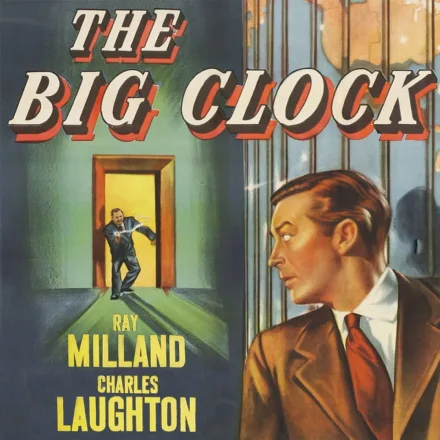
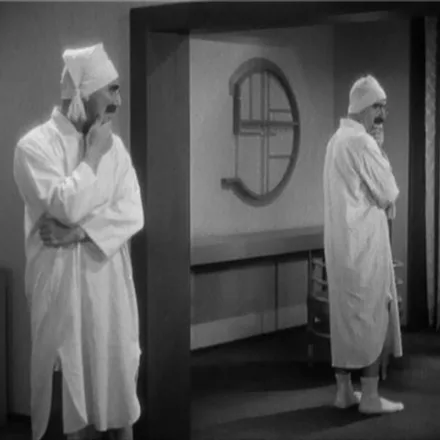
Duck Soup (1933)
Shared: Pre-Code Hollywood, Paramount Pictures
Robert S. Bader, Robert Weide, Joseph Adamson, Rob St. Mary and others
Trouble in Paradise (1932)
Shared: Pre-Code Hollywood, Paramount Pictures
Joseph McBride, Lutz Bacher, Ken Stanley, Paula Guthat
The Miracle of Morgan's Creek (1944)
Shared: Paramount Pictures, Ian Brownell
Stuart Klawans, Ian Brownell, Otto Bruno
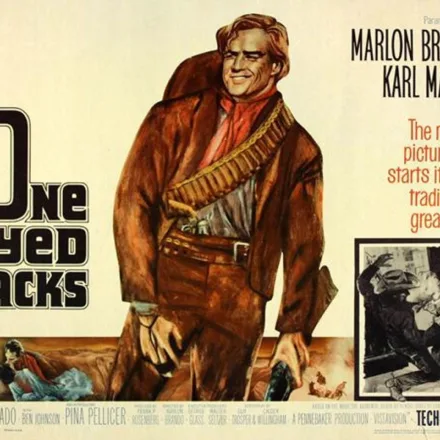
One-Eyed Jacks (1961)
Shared: Paramount Pictures, Marlon Brando
Toby Roan, Paul Zimmerman, Jamey Duvall

Top Secret (1984)
Shared: Paramount Pictures, Val Kilmer
Ian McNeice, Christopher Villiers, Martyn Burke, Jim Abrahams and others
Comments
No comments yet.