
Show notes
Joe R. Lansdale writes like everybody he knows is dead, and Hollywood has been trying to catch up with him ever since. The Texas storyteller joins Mike for a Projection Booth Special Report that runs from Batman comics to the movies he hopes to make next.
Lansdale, the author behind Bubba Ho-Tep (2002), argues the film needs no sequel: Bruce Campbell is that part. He explains why The Drive-In has been optioned again and again and never filmed, why he calls Hollywood a sack of weasels while happily cashing the checks, and how a screenplay for Ridley Scott paid for his house.
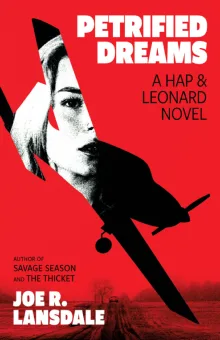
There is more: a four-year-old's love of Batman and the story "Subway Jack"; why he ended Hap and Leonard after 15 novels; his friendship with Bill Paxton, who sent him Frailty (2001) and optioned The Bottoms; Howard Waldrop adaptations, one starring and directed by Vincent D'Onofrio; and The Projectionist, the film he hopes to direct next year. He also talks Texas, genre, Edgar Rice Burroughs, and a daily three-hour writing habit.
Does a writer who ignores genre belong on screen? Joe has opinions.
Visit Joe Lansdale's official website at joelansdale.com.
Labels: Special Report
Transcript
An automatic transcript from Spreaker. It has not been proofread, so names, titles and spellings may be wrong, and it does not say who is speaking.
Show the transcript (about 8,800 words)
Hold your ears, folks. It's showtime. People pay good money to see this movie. When they go out to a theater, they want cold sodas, hot popcorn, and no monsters in the projection booth. Everyone pretend podcasting isn't boring.
Turn it off. Turn it off. Now! Hey folks, welcome to a special episode of The Projection Booth. I'm your host, Mike White.
On this episode, I'm talking with Joe R. Lansdale, whose stories bring together horror, crime, westerns, and a wicked sense of humor, all with a voice rooted very deeply in East Texas. You probably know his work from Bala Hotep, Cold in July, Happ and Leonard. or one of my personal favorites, The Drive-In, which is still waiting for its chance to hit the big screen. We talk about why that adaptation hasn't happened, why he doesn't think Baba Hotep needs a sequel, and why he's bringing Hap and Leonard adventures to a close. We also discuss Hollywood deals, writing with his family, and the comics and pulp stories that opened up his imagination.
Thanks so much for listening, and I hope you enjoy this interview. What's your relationship with Batman? I have a very strong relationship with Batman. Batman is one of the major reasons I'm a writer. There are other reasons, but that one's specific to being four years old and my sister-in-law, who was about 16 years older than me, my brother was about 17 years older than me, brought a stack of comic books for me to impress my parents that she's meeting the nephew.
And so she brought me this big stack of comics and then I asked her to read them to me. And it got me interested in comics and I started trying to draw them and write them. And eventually I found the Batman comics and just latched onto those and I wanted to tell stories. And then that led to other comics like Classics Illustrated, which led to books. So Batman was very important to me because also as a kid, I didn't come from another planet and I didn't have a power ring and I couldn't run real fast due to a chemical explosion.
And I didn't have the legs for Wonder Woman, so I ended up thinking maybe I could be Batman without realizing I needed a lot of money to be Batman. It's very much responsible for me wanting to tell stories and be involved as a writer. It opened up my imagination as a youth and never lost it. I'm still a Batman fan, and I've worked on Batman animation and done some books. I did a adult book and I did a young adult or I guess middle school book on Batman story.
And I did a couple of Batman novellas. So it's been a part of my life for sure. And it's been, it's inspired my entire life along with Edgar Rice Burroughs and all the things that you read as a kid. And then later, of course, all the things I read as a young adult, adult and so on. How was it for you when you first got to write a Batman story?
It was very exciting. It was very exciting. Martin Grunberg, he had an anthology because the Batman movie with Michael Keaton just went through the roof and everything was Batman. And they said, well, we want to do these stories. And so I did one for this anthology and it went over really well.
And I ended up doing yet another one for another anthology, Batman anthology. And it was really, I felt like I was coming home. And because as writing those stories, I got to use kind of the version of the Batman I wanted to use. I still believe that Subway Jack, which was one of the stories I wrote, is still one of my better stories, you know. And I love doing that.
The only thing that I missed out on is I never got to write a Batman comic. But strangely enough, I feel pretty satisfied having done all the Batman work I've done. I know you've worked also with Jonah Hex. Were you able to write comics for that or other media for that one? I wrote both.
I did comics. Tim Truman and I did several comics that were all part of a thing called Two-Gun Mojo. And it was my take on Jonah Hex and his take on Jonah Hex as an artist. And it did well. We did two more, you know, segments of comics.
We did another one that followed not long after that, and then there was a third, and then I wrote a little 12-minute, I guess, I don't know what it was, a showcase thing that DC had, and I wrote a story about Jonah Hex based on a comic that already existed, and Thomas Jane was the voice for Jonah Hex, and it was really received well, and it's pretty darn good. I know that you're ending the Half and Leonard series, or have ended that How did you come up with that series? Accident. I wrote a standalone novel, and the novel had the two characters in it. And I didn't really intend to have both of them in it.
I had one half, and it just sort of happened based on a lot of stuff in my own life, along with extrapolation to fit a more genre story. But about four years after that one, I was writing a novel for my publisher at that time, Mysterious Press. And it wasn't working the way I wanted, so I just said, you know what? I'm just going to write a Happy Lantern novel. Those guys are still with me.
They're still talking to me. And I did, and that started the series, even though I didn't write one every year. I did it first, and then I would take a break, and then I would go away for a while. And I think the last time I wrote, let's see, what was it? Four back-to-back.
Then I took about a three-year break, and then I've written the last three. And then there's... Altogether, 15 of them. And I wrote some novellas and short stories about them. I think there's four or five volumes of that.
And then there was a TV show, and I wrote one of the scripts for the TV show. So I've been involved with Happy Winter a while. They've been very good to me. Talk about how they were kind of still speaking to you. And I'm curious as far as you've been writing for so many years.
Do you feel like you're almost like a medium for these characters, or are you more in control, or are they more in control? I know it's my subconscious, so I guess I'm in control, but it's a part of me that I'm not as aware of. It's that part that's working from the subconscious. A lot of people work from the conscious mind, and that's fine. That doesn't work for me very well.
I work from the unconscious mind, and then my conscious mind will kind of tidy it up a little bit. I just feel like there's all this stuff, this well of the subconscious that I've learned to listen to, and it's been very good to me. Why are you bringing their story to an end? Well, I just felt like there was a natural arc where I had hit and I could feel it tapering. And I thought, well, that's good.
I don't want to write them beyond the point where they're not fun for me. And I don't want to write them beyond the point where they're not fun for readers. I've said a lot with them because they aren't just thrillers. They have a lot of social issues in them. And sometimes some of them are just thrillers, but they're not exactly mysteries.
They're more like crime novels. And, but I really enjoyed writing. I love that series. And I left the door open. I may come back to them in a few years, but that's not my plan.
I think too, as I got older, I wanted to investigate even other stuff. I've never done Just Happen, Leonard, but I thought I wanted to sort of put that on the shelf so I wouldn't have that to think about and have something newer to think about. And so that's the other reason that I stopped. And although they don't age as fast as I do, I do age them. And they were in their 50s, and I felt like, okay, that's getting at an age where some of the adventures that they have would not be quite as believable or acceptable.
Although in my 50s, I could have done what they were doing within reason because I was physically able. And a lot of people in their 50s are. But beyond that, you start to go, okay, things are starting to change, you know? So I just felt it was a natural place to end it. You talked about how they had been adapted, that you even wrote a teleplay for an episode of the show.
But what's been your relationship with Hollywood over the years? Because, you know, you've been writing since, what, early 80s? And starting in, like, the 90s, you know, you start doing, like, the Batman animated series. But what's that? How do you...
Well, I wrote some scripts in the 80s. I optioned some scripts in the 80s. And it never got made. But I got money from it. I've been actually pretty fortunate with it, though I have a lot of, you know, stories to say about them that are not kind.
Wow. I think that's the first time I've ever heard a writer complain about Hollywood. Right. It's like a sack of weasels, you know. But, you know, I had overall fairly good experiences.
And most of the stuff that's been filmed of mine, I'm happy with. And things that I didn't script, you know, for the most part. I mean, I did that script for the Happ and Leonard, and I sold a bunch of scripts. I did a script for Ridley Scott and David Lindstrom. had it for a while, and then Ridley Scott had it. It never got made.
But I made a tremendous amount of money off of it, because they bought it out eventually. I was able to buy a house. So in that way, they've been good to me. Used to, the options were pretty big. Now they're smaller than they used to be.
But all of the stuff of mine that was under option got made. I still got to cash the checks, you know. So in that sense, they're good to me. And in some of the things that I didn't like, I still signed the contract. So, you know, I can only complain so much.
I even think that things like Love, Death, and Robots, which were adapted from stories of mine, were excellent. You know, I thought they did a wonderful job. What was that screenplay you were talking about from the 80s? Dead in the West. It was based on one of my novels.
And what happens, it got bought up by a French producer, and they never made it, but now I don't own the film rights to it. You know, I own the book rights and comic rights, but I don't own the film rights. And I have no idea what happened to the guy. He just, I mean, he paid me a lot of money, and then he just disappeared. Has there ever been talk of making drive-in or the drive-in books into a movie?
Several times. It's been optioned before, too. but I'm not sure why that one hasn't been made. I've always thought that talk about a natural movie for a horror film that's In my view, it was a science fiction film, horror film, satire. It was all those things. You could decide it's one or the other or all of them, and I think it's all of them.
But I've always thought that it was a perfect idea for a movie. The scripts that were done, I never liked any of them because they can't follow the novel even close. They suddenly just use it as a vehicle to just throw stuff on the wall and see if it sticks. So I haven't been happy with that. Now I have a little more control over over things of mine that are being done a little more, you know, and, uh, still I'm surprised that it hadn't been made.
It has been option. There's been lots of interest in it over the years. And, uh, nothing. I don't want to ask you to tell tales out of school, but can you tell me some of the filmmakers that were, you were working with. For that or anything?
Oh, uh, Greg Nicotero was the last one. And then he got into doing the walking dead and that just took all of his time. So, It got lost there. There was a guy, Paul Salmon, who, strangely enough, I spoke to yesterday, that he's worked in film forever. I mean, at some point, I think he thought he might like to produce it.
I don't remember if he planned to direct it, but they had an option on it. And after that, I don't know. There was a couple of options from people I don't know that were, they paid me, the deal was made, but it never happened. Is that the same Paul Salmon that worked on Blade Runner and did the book about Blade Runner? Okay, yeah.
He's been on the show before. He's a great guy. Yeah, he is. I said I talked to him yesterday. My daughter said, I got somebody on the phone to talk to, and it was Paul.
They were at the World Fantasy Convention. Nice. That's great. Yeah, I'm asking about Drive-In Selfishly because that's probably, of all of the books, and you've written so many, that's probably one of my favorite ones. Well, thank you.
I think it's my most original novel. I really do. I also think it's more of a novel than people think. No, I think it's, I don't want to compare it to anything, but I think that like Lord of the Flies or 1984, not that it's necessarily like either one of those per se, but I think its intent was more that way than just a goofy adventure. And it's funny because at first I think that's what most people got out of it.
Oh, it's really weird and all this gory stuff. But as the years have gone on, people have begun to get something else out of it. And it's going back into print again. It'll go into print and then it'll fall out and then it'll come back into print. And so it happens here all the time.
In Italy, it's considered a major novels in print all the time. Yeah. I was wondering if you were like big with the French or something like that. Italians with that. It's been printed in France and I think Germany.
I forget all. It's been printed elsewhere, but for the country that's done well with it and has kept it consistent, it's Italy. I'm sure you've talked about this a thousand times, but I'm going to ask the thousand and first. Can you tell me a little bit about the potential sequels to Baba Nut? Jesus.
Baba Hotep. Mm-mm. Back at one point, they thought I never wanted there to be one. I thought you made the good one. Why make another one?
You know, and then I wrote a prequel after all that. Generally speaking, I don't think it needs a sequel. I saw it again just the other day. They had me introduce it and have a book signing at the Texas Theater, famous for the fact that's where Oswald was caught after the JFK assassination. They showed it and boy, that movie rocks and people just loved it as usual.
And I just thought, you know, you water it down when you start making all these sequels. I think Bruce and Don wanted to do that for a while. And then I think Bruce decided he didn't want to do it and he bailed. And I think when we spoke last, that was on text or something. He was saying, yeah, I didn't need it.
And a lot of, A lot of people want it, but honestly don't think it needs it. Now, that doesn't mean Don might not make a sequel at some point or that Bruce might not change his mind or that he might not get someone else to play the role. But for me, Bruce is that part. And on top of that, I just don't think you need another one. And I don't care who it is.
They're not going to be Bruce Campbell. And you can't get an Aussie, obviously, because like in the story, he didn't make it. In fact, Elvis didn't make it. I can say that because the movie's old enough that most people know that. But it's one of those movies that doesn't need a sequel.
No, I totally agree with you. And yeah, it was, for me, such a perfect film. And it just told such a great story. Yeah, I love that film. I really do.
Kind of remarkable to me that you wrote it so long ago, but it was such a great treatise on just growing older. Yeah. I have to say that every time I watch it, I think, man, I was zoned in on that. I think part of it is my mother had been in an accident and she had to be in a rest home. And so I was there a lot, you know, visiting with her.
And so I saw a lot of the people and borrowed a lot of that for the story. I didn't know I was doing that at the time. That was part of the background for the story. And think that maybe that dialed me in. I don't know.
But I've always been somebody that sort of understood mortality. And when you're young, of course, you seem pretty invincible up to a point. But I don't know. And I think my parents were older when I was born, so they both died when I was relatively young, 29 for my father and in my 40s for my mother, or just beginning to be. And You know, I think that maybe all that sort of dialed me into that.
Is there a difference for you between the adaptations that are animated versus live action? Do you tend to prefer one over the other? No, I like them both. I wrote one for George Martin based on a Howard Waldrop story. Excuse me, I'm thinking about a different one.
I'll come to that one in a minute because I did that too. was Night of the Cooters. And it was a 30-minute story, and there were several others adapted of Howard's work. It won a couple of film festivals. It showed at some film festivals. Vincent D'Onofrio stars in it and directed it.
I was really, really pleased with it. And I think George's plan is to put them all together into kind of like an anthology. It hadn't been done yet, but I believe they were still finishing up the fourth one when I last spoke to George. I guess it was last year we were at his theater. They showed the thicket.
And then after the thicket, he said, Hey, you want to see those other stories? That's part of the wall drop quartet. And I said, yeah. So the last one wasn't there. It wasn't finished yet, but I saw mine and the other two that were there.
Lee chickens and Mary Margaret road grader. And they're just great. And so I'm excited about them putting them together. And then, uh, called A Dozen Tough Jobs, which is about Hercules in the 1920s, who's a little bitty guy, and he's performing the labors of Hercules, sort of, in 1920s Mississippi. And so George asked me to adapt that, and I did, and that's a full-length feature.
If all goes well, it will come out next year. That sounds wonderful. I was excited to hear about new stuff. That's terrific. I'll probably, if everything goes well, the money holds and doesn't fall away, I'll be directing my first film next year called The Projectionist.
Oh, wow. Well, you'll have to come back on The Projection Booth to talk about that. Yeah, and there's another one they're working on. My son and I, Keith, are writing the script for Lost Echoes, which has got some interest and it looks reasonably good. You never can say anything about film.
But that may happen too. Plus the bottoms is under option. My friend Bill Paxton had it. for several years. And when Bill died, I just said that I just put it on a shelf, you know, and then a few years later I got thinking, okay, I need to drag this out. It's now under option.
The screenplay is being done. I don't know beyond that. I'm an executive producer on the film. And we'll see how that goes. And then there's another one, Edge of Dark Water.
And then one, Fender Lizards. So some of my stuff is, you know, out there rocking. In some cases, rocking really well. In other cases, you know, the rocker's not moving. So we'll see what happens with those.
There are always options. I've had the director that did Hell and High Water, his name I've forgotten at the moment. But he had... threw someone else an option on the pit for a while, and there was a draft, a screenplay draft done of that, and that never happened. And then it was optioned, I think, 11 or 12 times over the years, and I've read several screenplays that people did, and I thought the last one, the one that was probably the closest, you know. Most people, they just see us two guys fighting in a pit, and it always bothers me that they don't understand that it's about racism and it's about a lot of things like that.
And I always say, damn, do I have to just put the signs up? Or is it just that they're afraid to touch those things? And it could be that too. But it's funny, they never get the other aspect of it. You mentioned Bill Paxton.
How did you guys know each other? Was it just the Texas connection? In a way, I was a guest at a film festival. And I don't remember why. Maybe they were showing Bubba Hotep or something.
I don't remember. But it was in Texas. It was the Fort Worth Film Festival, I believe. And it was there. And he came to me and said, hey, I got a bone to pick with you.
And I went, what? He said, I sent you a DVD of my movie, Frailty, because I thought you might like it. And I think he wanted to, we talk about playing half, you know, and it was just loose. He was just messing with me, but he did send it to me and I promptly lost it. And I said, I'm sorry, Bill, I lost the damn thing.
I got somewhere in my ass. It got lost. And so he sent me another one. I saw it and I thought, wow, this boy knows what he's doing. And we just became friends.
And then he optioned the bottoms and that put us together more often. Either I would see him when I was out there. He came here a little bit. And then we talked on the phone and we did emails, text, all that sort of stuff. And it's funny because just about three or four weeks ago, James Paxton, his son, invited me and my daughter out to Dallas where they were showing a film that he's in right now called Last Train to Fortune.
And with Michael McDowell. Bernadette Peters is in it. Mary Steenburgen is in it. Anyway, we went and he wanted us to come and introduce it. And because...
We know him a little. We know Bill. And it was fun. And James will probably be in some things of mine the way it's looking right now. I hope so.
We're a great, great kid. I call him a kid. To me, you get to be 75, everybody's a kid. You get to be 85, I'll be a kid. Yeah.
Texas plays such an important role, at least for me, in your books. Absolutely. I'm so curious, like, yeah, is there a Joe Lansdale of some stripe without Texas? Because it's just so integrated in you and your work. Not a very interesting one.
There have been some... things of mine I've written that didn't deal with Texas directly. I always think about Robert E. Howard, who, when he wrote Conan, you know, he was a Texan too, and he wrote Conan. Those are just oil field workers and roughnecks, tough guys, you know, that I grew up with and he grew up with. And they became part of Conan's world, you know.
And I think that there are stories of mine that are not directly Texan, but I think they're influenced by and representative of certain Texan aspects. And on top of that, what makes them more unique for me is I don't fit the exact bill, at least as house people think of Texas. Texas are a lot more complex than people think. And it's not just a bunch of right-wing religious nuts, because I'm neither. But it's an interesting place in that it's, you know, when you think of some place, there's no place, in the United States that you think of as separate as Texas.
Part of that is it was a country before it was a state. That impacted. And also, there's so many things that have happened in Texas and so many things that are informed by Texas. When I go overseas, and I didn't even know I did it when I first started going over there when I was a young man, my wife wanted to go, where are you from? Texas.
Not U.S., Texas. And people go Texas, and then they were really interested in Texas. Right now, we go through periods where we get bad raps, and then we get over more than we deserve. There's a great John Steinbeck book. It's not a novel, although I think it's more novelistic than he claimed, called Travels with Charlie.
And in Travels with Charlie, it has a whole section on him going to Texas because that's what it is. It's about him riding around across the United States and riding. And that part on Texas nails it. And if you ever get a chance to read that, I go, yeah, he got it. He understood.
And it is a unique place, but it's more varied thing. I live in East Texas. I have a friend, Chef Jogato, who's a really great guy. And I can't get it out of his head that Texas is isn't a bunch of mountains and deserts. I said, it looks more like Louisiana.
It's swampy. It's got lots of trees. It doesn't look anything like that. And even in the books, when they go to do my covers, they would start doing a cactus. And on top of that, it would be the wrong cactus.
It would be the ones out in errors. But I would say, I'm telling you in the book what this place is like. But that myth is just so strong that people don't really know how different aspects of Texas are, you know, and where I live is totally different than West Texas, which is just bleak to me, especially North Texas is bleak. West Texas has some personality, so if you're kind of sociopathic, but the southern part is kind of cool, the rolling hills and all that, Big Bend out there, the southwest, and then central is Dallas, you know, and That used to be the Great Plains. And so all of those areas are different.
There are certain things that you can say are Texan that are kind of overall, but my accent isn't even the same as West Texas or North Texas. Although as more and more people move in here, those accents are beginning to change or go away. How important or beholden are you to genre? Do you ever think about that? Because that's one of the things I like about your books is that it doesn't seem like you give a damn about genre.
No, I don't. I'm a storyteller. I'm as influenced by Hemingway and Steinbeck and Fitzgerald as I am Robert Block, Matheson, Bradbury, Raymond Chandler, Edgar Rice Burroughs. Charles Portis, Roger Kipling, Jack London, Mark Twain, very much so. I mean, if all of those writers, the bulk of them, there are a few that didn't.
Chandler was definitely a crime writer or a detective writer. But a lot of them, they didn't write in one genre. You know, some did. Some identified heavily with it, but a large percentage of them didn't. And some, like Hemingway, and really, in many ways, wrote romance and adventure.
Oh, tried to be a genre writer a lot of people don't know that but he tried to write for the pulps and couldn't sell and so then he started thank goodness he went his own way and wrote the incredible stories that he wrote and f scott fitzgerald wrote some kind of mystery type stories early on in his career so did checkoff and so a lot of people and then of course twain wrote a little bit of everything but a lot of people you think of being one kind of writer and not the other kind that often isn't true. And if it is, it still doesn't restrict me because I like one more than the other. Cause I don't, I have days when I definitely want one kind of story. And then I have other days when I don't. And I also read a tremendous amount of nonfiction and biographies and memoirs and just finished my own memoir.
In fact, turned it in. So it's just, All this stuff to me is like, it's so exciting. Why limit myself to something that I might bore myself with over time by writing continuously? Another reason for Happ and Leonard, they were never consistent year to year. I'd had some periods where I'd write several and then disappear.
And I just felt it was time because I didn't want to repeat myself. And even if you look at the happening in novels, they vary quite a bit in how I approach detective or crime or mystery. They're not big on mystery. They have elements of mystery. So to me, I borrowed a lot of furniture from a lot of places, but I don't feel like I'm genre any more than I owe anything else.
Right. Is there ever anything that you're hesitant to write or stuff where you're just like, yeah, not for me? You mean type of fiction? Not necessarily. It just has to interest me.
There are probably certain things that just don't interest me. But I've even written a couple of romance-related stories. I wrote one for Ferrari magazine. I wrote one for another Italian magazine called Juliet Unchained. And it's in, I think it's, I believe it's been collected.
I've had so many collections, I'm not sure, but I believe it's in Senior Girls' Bayonet Drill Team, both of them. They certainly touch on romance, as much romance as they are anything, or failed romance or lost romance, but they're not any other thing. They're not crime. They're just stories. One of the things that I miss is all the old magazines, because I could just read stories.
I could read slice-of-life stories. I could read adventure stories. I could read what I call clockwork stories, meaning everything's... so tight and patterned that it all comes together. I don't like those as well as I do others, but I could read those, and then I could read something that was totally outside of it. And the pulp era would have been wonderful because they had stories, you know, I'm going to retrain stories, and westerns and all that.
And I love westerns and historicals. Westerns I'm probably the pickiest about, but, man, when I like a western, when I'll say Lonesome Dove, Glendon's Fourth Out's The Shootest. There's so, and I started to, I'm sorry that I'll keep going and going, but there's so many of them that I just love that are probably influential to a greater degree than I sometimes realize, because in many ways, they happen when they're novels or westerns. Oh, absolutely, yeah. Well, you seem to have such appreciation for the pulps, you know, like, you work at, you talked about Robert E.
Howard, but even working You mentioned Edgar Rice Burroughs before, and I know you've done Tarzan stories. Yes, I did a John Carter Mars short story. I love Edgar Rice Burroughs. I love that company. I'm friends with the people who are operating that.
And it's a great company. It's great people. And, you know, without Burroughs and comics, I wouldn't have been a writer because the comics made me want to tell the stories. And then when I read, I always tell people I wanted to be a writer. after I read those comics and started trying to draw and write. But I had to be a writer when I discovered Edgar Rice Burroughs because he opened my mind up, my imagination.
I've never given it back to him. That made me want to do it. And, you know, you may outgrow certain aspects of it, and I feel the same way about Howard to some extent, but there's a magic that they had that a lot of modern writers don't have. I remember there was something that Stephen King wrote and he mentioned the land that time forgot and how the character setting up talking about, and it says, then you'll forget me pretty soon. And he said, you do, you forget.
There was this guy that even introduced, if you think about Tarzan, it starts with the guys talking in first person about, you know, this, I shouldn't be telling this story. After a while, you go, what guy? Where'd that guy go? I forgot about him totally until I reread the book. I've reread the book now several times.
I think Tarzan is a classic, my favorite of the John Carter of Mars. That first-person narration in the early John Carter of Mars books is one of those things, too, that made me want to be a writer. I still prefer first-person because it makes me feel I'm part of it. It makes me feel that I'm that That probably, from the standpoint of the way I approach the story, comes from Burroughs more than anybody else. Stylistically, I'm influenced by a lot of other writers like Hemingway and Fitzgerald and Steinbeck and Bradbury, so many others.
But, you know, Burroughs was the man, and he was definitely pulp. And a lot of pulp, like Chandler was pulp, until he wasn't. And Hammett was pulp until he wasn't. James Cain was never a pulp, but he was identified with that. He wrote for Mercury Magazine and places like that.
Do you get a chance to read much these days? Yeah, I read. I'm a heavy reader and always have been, although I have to say in the last 10 years, I read a little less than I used to. And also, I watch movies and television shows because that's also part of what I write. And I'm interested in that.
And there are so many things available. People say, oh, there's all this crap, but And there is. But it's a renaissance. There's stuff here that, you know, you can see all kinds of things. It's amazing to me.
It's astonishing. But yeah, I read quite a bit. I just finished reading for the first time A Little House on the Prairie. I'd never read it. And then I read a biography of the author plus her daughter, because the two of them actually wrote the books.
A lot of people think it's Ingalls, but her daughter was an author before her, and she started encouraging her mother to do this, and then she would write and rewrite. Also, those novels are really more novels than they are nonfiction, which is what they purported to be, but they really aren't. They're things that did happen, and they're things that did happen to them, but it's novelized. You've mentioned so many projects that are coming out. How many things do you work on at a time?
It varies. Recently, I'm working on a screenplay with my son that we're doing with Joe Gatto and Jeff Speakman, a martial artist friend of mine who did Perfect Weapon. He and I are writing the script. Jeff would star in as a mentor to this younger guy, and Joe... who's also directed, mainly involved with cook shows, because he's a chef. But also he did one of my stories called Chompers, and a little short film that's just terrific.
And in fact, it's shown in a few theaters, you know. But he would direct it. It's a small film, but we're excited about it. And so that's what I'm working on right now. And I'm writing a story that may or may not come to fruition called Bobo the Zebra Boy. which is a play on pulps in a way.
I'll come back to that in a minute. But then I'm also finished up my memoir, but I'll probably on that one, unlike novels, have to go back in and make sure I've got things I want to have there, take out things that maybe I don't need. So I've got a lot of that going and hopefully the directing the film. But the zebra boy story, if I ever finished it, it would be more like a sketch than a story really. would be inspired by, you know, the Johnny Sheffield who played Boy in the old Tarzan movies with Johnny Weissmuller. But he, for a while, played Bomba, which were a series of books, and they were just awful, just god-awful.
He was in that series, but he also, when that series was over, he was going to play this zebra boy. And it was something about somebody being raised by zebras. And they made a pilot. But it never got off the ground, which is fortunate, I think. And he went on to sell lobsters and stuff like that.
Probably a better career at that point. I just always thought that was funny that there was going to be a series about a boy raised by zebras. So I'm doing a kind of humorous sketch more than it is a story. And I work on that part-time when I'm not working on the screenplay. So most days, I'll take a little time to work on that.
Plus, I have stories... and novels in my files, you know, computer files. If I get through working for the day on one thing and still have... And I only work for about three hours a day. I don't work beyond that. I'll go in and work on that for 15 minutes or 20 minutes or what have you.
Wow. Yeah, I was wondering what your schedule is because I know that they're... I get up in. The morning and I... Pretty much as soon as I can get coffee and take care of the dog and I have a series of exercises I do every morning.
And so... When that's done, I go upstairs and I write usually no longer than three hours. And sometimes I'll write half an hour or an hour because I try to give myself three to five pages. If I get three to five pages in 30 minutes and I'm happy with it, I'll quit. But if I've got 10 pages in me, I'll just keep writing.
But it's rare that I'll write beyond that. Once in a while, I'll come back in the afternoon or at night and work a little more. But not often. I get diminishing returns after about three hours. But I do it seven days a week, birthdays, Christmas, what have you.
I do take off now and again. Like you got a doctor's appointment or I have to fly out early, I just take off. If I have a chance to kind of pick up on it during the day, I might, but I never feel guilty about it because I look at all these tons of books and anthologies and stuff that I've written and I go, you know, I'm getting it done, so I don't really need to panic. What's amazing to me that you can switch subjects so quickly and be able to work on multiple things in one day. That's surprising. to me, too.
I haven't always been able to do that. When I first started out, I tried to write eight, nine hours a day, and it was just grueling to the point of not having any fun. And writing to me has to be about having fun, because I think I can then transfer that to the reader. But I write for me. I've always said I write like everybody I know is dead because I don't want to try to please people I don't know because I wouldn't know how to please them.
I don't know what they want. You know, they may want something totally different than what I'm doing. So should I be worried about that? I don't think so. And do well enough without being a cookie cutter type writer.
And I get to do the stuff I want to do. And so that's one of my rules. And the three hours a day and the seven days a week with occasional time off. You know, once in a while, I've actually taken a week off or more, but not often because it's hard for me to do. It's too much fun.
You know, to me, I never think of that as vacation. I'm having a vacation every day. Yeah. How is it working with your son on these projects too? It's good.
We've done others. We did a book called Big Lizard, which I wish it had got more attention. And then we did some other comic book work. We did some X-Files comics and we did a creepy comic. And we've done other things too.
Those are the things I think of off the top of my head right now. And then my daughter and I have done a lot of short stories together. And yeah, and she's got her first novel just came out, First Chance. seems to be doing really well. So we all work well together. My wife and I, she now has Alzheimer's.
And so she's, you know, we have her in care and down the road from me here where I can see her. She and I worked good in the sense that she managed everything and knew how to take care of all the work, the family. And that's what she loved. And she was terrific at it, you know, and she fixed a couple of my stories of mine that i said i can't get this to work she said well we'll do this and we wrote one story together but we she fixed a couple of mine by giving me suggestions for better endings and things and and i sold both of them she said yeah we need the money why don't you do this and this and she was right the twilight zone bought. Them You just mentioned the X-Files.
You have worked on all of these pre-existing properties. Is there anything where you just. Oh, right, right. Is there anything where you're just like, I want to work on this, but haven't been able to get to yet? Hmm.
I don't know. I wouldn't have... I had the opportunity once it was presented to me. I don't know how serious it was to write a Doc Savage novel. My friend Phil Farmer did do it, but I never got that real opportunity, and I didn't have time when it was suggested, and I don't know how serious a suggestion it was.
Kind of that, you know, but on the other hand, I'm okay if I don't. I much prefer to write my own world, although I've certainly written in other worlds, but the Doc Savage, that would be kind of cool, you know. I'm probably turning a little more towards scripts and screenplays now, because I've done 50-something novels, and I've got a play I want to write. I wrote two one-acts, and both were performed. One of them was the Off-Off Broadway play, and it was really cool to go to that in New York and see it.
It was well done. And the other one was in a, I don't know what you call it, a festival or something like that. I didn't go to that one. But I'd like to do that. I've written a book of poetry and I have a second book finished that I just need to put in order and wrap up and send it in to the publisher.
So I guess I've done so much so that if I never did another thing, I could go, you know what? I pretty much did what I wanted to do. But does that mean I won't come up with new ideas and new goals? Of course not. You know, you always do.
But I also hope that I'll know if I need to hang it up, that I'll know when to do it. I don't want to be out there just digging up worms. If I'm going to scratch, I want to find gold. It just depends. Like I said, I'm 75 now.
I feel good. I'm still working and can't complain. I've just had the most marvelous life. Writing sent me all over the world. I've met all kinds of people.
I've worked in every kind of medium just about, you know, that you can imagine. I would like to have, you know, some of my stuff's been done for like modern radio shows. I would like to have written a radio show, which, you know, I want to get paid. And, you know, and that's the other thing at this state in life, I've done a lot of free stuff too over the years, but I'm pretty much not doing that now. You know, I don't need to, I got nothing to prove.
I do have charities I take care of, so I don't need to take care of a charity for, you know, some small magazine. Sometimes I'll do reprints and I try to do those fairly cheap, you know, so people can have the story and that maybe I helped them a little bit, you know? So anyway, I'm sort of at that point where I'm going to do what I want. And pretty much have always done that as my daughter and wife would always say, you do pretty much what you want anyway. As long as I can take care of my family and my family, I'd pick shit with the chickens before I would let them do without.
But my kids are grown now, you know? They're taking care of themselves just fine. They don't need me. I'm at a point to where I don't have those particular concerns. I'm here if they need me, but it's just a different stage of life, and it's an interesting stage.
You know, the thing about getting old is none of it's good. It all sucks. But there are... I guess maybe a few things is I'm still here, which I kind of enjoy. I've had enough experience that I think I can do things I could not do before as a writer.
Physically, I'm, I've had some fallbacks from a bad operation where I had to learn to walk again. Oh, wow. I did it. It took me about four or five months, but I'm back. I'm healthy.
You know, I'm lucky. I'm very fortunate. So I got no gripes. Wow. Is there a good place for people to keep up with you and all these projects?
Yeah, you can go to Joe R. Lansdale, www.joerlansdale.com. You can go to my fan page on Facebook. I don't really have a real Facebook page. I mean, there's one there.
I've never been on it. But there's a fan page, and I'm on that. Plus, for those people who like to collect your stuff, there's Joe Lansdale Collecting, which I don't have anything to do with running it. But it's a cool page. My daughter put me on Instagram, so she takes care of Instagram stuff there, but I don't honestly ever go there.
You can find me on X and on Blue Sky. I mainly do that just for promotion because I'd really like to do less of that stuff. Yeah, I'd rather write than do all those kinds of promotional things. Used to, the publishers did that for you, but they aren't worth a shit at that anymore. Mr.
Lansdale, thank you so much. This was so nice talking with you. I enjoyed it.
Related episodes
Episodes that share keywords with this one.

John Dies at the End (2012)
Shared: Director Don Coscarelli, Composer Brian Tyler, Daniel Roebuck
Glynn Turman, Thomas Barker, Chris Stachiw
Strange Brew (1983)
Shared: Metro-Goldwyn-Mayer
Dave Thomas, Lynne Griffin, Craig Bierko, Skizz Cyzyk

Pat Garrett & Billy the Kid (1973)
Shared: Metro-Goldwyn-Mayer
Rudy Wurlitzer, David Wolf, Paul Seydor, David Lambert and others

Comments
No comments yet.