
Episode 824 · Film year 1958
Invention for Destruction (1958)
- Guest Co-Hosts
- Jonathan Owen, Earl Jackson
Show notes
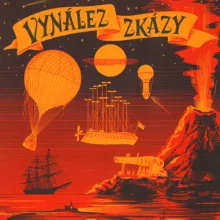
A world drawn in cross-hatched lines: water, ships and faces all look like Victorian engravings come to life. Czechtember 2026 opens with Karel Zeman's Invention for Destruction (1958), released in America as The Fabulous World of Jules Verne, as Mike welcomes back Jonathan Owen and Professor Earl Jackson.
Freely adapted from Verne's Facing the Fat, the film follows young engineer Simon Hart and Professor Roch, whose world-changing explosive lures the genteel pirate Count Artigas to a hollow volcano. Mike, Jonathan and Earl unpack Zeman's trickery: matte paintings, forced perspective, puppets, glass rippled frame by frame. They trace how Zeman strips out Verne's colonialism, the Cold War hunt for scientists humming underneath, and the real inventor who sued Verne. Along the way: Méliès, Guy Maddin and Hundreds of Beavers (2022).
Can spectacle this dense leave room for criticism, or is “wow” the most honest response?
Transcript
An automatic transcript from Spreaker. It has not been proofread, so names, titles and spellings may be wrong, and it does not say who is speaking.
Show the transcript (about 15,200 words)
Hold your ears, folks. It's showtime. People pay good money to see this movie. When they go out to a theater, they want cold sodas, hot popcorn, and no monsters in the projection booth. Everyone pretend podcasting isn't boring.
Turn it off. Turn it off! No! From the fantastic Jules Verne, creator of Around the World in 80 Days, comes now the most fabulous adventure on, over, or under the earth. The first motion picture produced in the magic image miracle of Miss Dimension.
Wonders never before seen will unfold before your startled eyes. Fantastic aircraft fly the skies. Electronic machines in incredible sea battle. Adventure in the mouth of a blazing volcano. underwater escape from Terror Island. The fabulous world of Jules Verne brings you the master storyteller of our time with wonders to delight and excite and stir your imagination.
The fabulous world of Jules Verne. Shoot them down. The traitors. Go on, shoot them down. Welcome to The Projection Booth.
I'm your host, Mike White. Joining me once again is Mr. Jonathan Owen. Hello, good to be here again. Also back in the booth is Professor Earl Jackson.
Hi, it's great to be back. Thank you. Checktember 2026 kicks off with a look at Carl Zeman's Invention for Destruction. Released in America as The Fabulous World of Jules Verne, the film is an amalgamation of live-action and animation that looks like a Victorian engraving or tintype photograph come to life. It's the story of an idealistic young engineer, Simon Hart, and his mentor, Professor Rook...
How do you say this? Rookham? Rosh? And his mentor, the Professor, whose world-changing explosive is coveted by the outwardly genteel Count de Artigas, a pirate who spirits them away to a fake volcano island fortress, as you do, to turn the invention into a weapon of conquest. Freely adapted from Jules Verne's 19... sorry. from Jules Verne's 1896 novel Facing the Flag, with a submarine, an airship, and a giant octopus borrowed from Verne's Voyages Extraordinaires.
It's a Grand Prix winner from the 1958 Brussels World Fair, and still one of the most commercially successful films ever to come out of Czechoslovakia. So Earl, when was the first time you saw Invention for Destruction, and what did you think? Well, the setting in which I saw it is actually really important to my experience of that film. Actually, I saw several because it was a retrospective for his work. I was living in Seoul then.
The Cinematheque, the Art Cinematheque, had just moved into this old, this Hollywood theater, which was this little building on top of an office building. And to get to it, you had to walk through this alley of traditional... Korean lunch places, and they had these outside ovens or stoves that were boiling pig heads. So I always had to hold my breath through that, and there were no lids on them. So you walk through, and you see all these pig heads with their eyes open, bobbing up and down.
But ahead of you, you see this huge sign that says Hollywood in Hangul, and then underneath it was a hand-painted poster of... Marilyn Monroe and Clark Gable from The Misfits. So you're walking through there. Then you get into the elevator. The third floor had this thing called the Colatech, which is a discotheque for people 65 and older.
So this is like widows and widowers would go there for dates. So there'd be these incredibly happy older people in the elevator dressed in fashions. every decade that you can imagine. And it's the only place in all of Korea where Koreans would smile at strangers. So I would have this experience and then walk into this amazing theater. And I saw several of Zeman's films there.
But it was just a wonderful context for it. I love that cinematic so much. But it was perfect because Korea is probably the most cinephilic society I've ever lived in. And everybody was so into him. You know, it was really terrific.
There would be like the curator did Q & As that were just unimaginable in America. So this was a great introduction to him. That's awesome. And Jonathan, how about yourself? Well, I think I saw it in, I think it was late, either late 2002 or early 2003.
And it was part of a traveling. Season of Czech animated films that was touring the UK. And so I think I, yeah, I would have seen it when I was about 24, I guess, or 25. And this was in Manchester at the now defunct Corner House Cinema, which I miss so much. Although the new cinema they have there is also nice.
But yeah, I have special memories of the The Corner House and all the things that I saw there. I think it was the first film of Zayman that I'd seen. And I'd seen, I think, just enough Czech or like Central East European animation to have a kind of like a background in which it kind of made sense. But at the same time, I think it was still different enough from anything that I'd seen to be quite, yeah, quite amazing, really. So, yeah.
And I think this film in particular is such a good introduction to his work. So, yeah, I was really taken with it. And the only regret I have is that I didn't see his work as a kid. And I believe that, you know, I think certain people that have talked about his work, like Tim Burton, for example, seem to have seen it when they were very young. And I loved animation when I was young and I loved like film trickery as well when I was a kid.
So, yeah, I really regret not having had that experience. But yes, even so, it was still pretty magical as a cynical 24 year old. Yeah. It makes you a kid, though. I felt totally like a kid watching it.
That's true. This was actually a new watch for me. I had heard about Zaman for years, and I'd run into some of his work in the past, but had never sat down and watched any of his stuff full way through. And wow, what a delight this was. I'm just always so tickled when I run across a film that I've not seen before that is just so... different in so many great ways.
I mean, there are films that I will talk about later that have come out in the last few years where they have a similar feel to this, but for this film to be coming out in the late 50s and just such a, for me, technical wonder to see this, just that this look looks like it is an illustration and just to see and to try to pull apart some of the special effects just to see that everything has those the lines going across it so it looks like it is a wood carving that's been stamped into something it looks fantastic that the water itself has those lines that everything has these lines it's just it looks so good I can't even imagine the effort that it took to make this movie seeing some of the special effects in the behind the scenes.
I'm just like, wow, that's how they did this? This is remarkable. Incredible. It was incredible. You know, like in 1911, there was an Italian film of the Inferno, and they based the look on Gustave Doré' s etchings for that edition.
And that is also absolutely amazing. But it's like a realistic attempt at those engravings. Siemens is actually more radical because he takes the technologies of the engravings and actually creates a new world. In something like Citizen Kane or The Best Years of Our Lives or The Little Foxes, they're experimenting with an analog for a three-dimensional space. He's creating a new kind of flat space.
Now, that flatness isn't the flatness of the movie screen. It's a flatness that can only exist in that cinema and that's amazing it's as if he created a world of non-Euclidean geometry it's utterly stunning. I'm a big fan of Parappa the Rapper, the old Sony PlayStation game where everything, you know, Parappa meaning paper, right? And just everything is so thin and two-dimensional and that. So watching this, yeah, I was really taken back to that as well, just to see how they're kind of putting the planes together instead of trying to to give you more they're they're giving you less but by giving you less they're giving you.
More and it's it's like taking technology isn't it of the engraving with the necessary lines like the cross hatching and then it's turning it into an aesthetic so it becomes like a deliberate aesthetic strategy and it's this combination of unity because there is extraordinary stylistic unity to it combined with that variety of means and as you said, Mike, it's just impossible as you're watching it to take it apart. And because there's so much density in terms of the trickery that's used every shot, you're looking at like different techniques and it's, and it's so, I mean, I think Zayman said that really it was so homemade in a way it wasn't, I don't think they were working in a particularly big studio with lots of money.
And some of it I think came out of economy. I think the fact that they couldn't build the big sets and, and that they had to basically use illustrations that were then blown up and that were stuck to boards and that were placed strategically in the sets. I love that. I just love the fact that at the same time as it's incredibly sophisticated, there is also that kind of artisan quality to it, which I think ties in nicely with what the film is about as well, I think, with the sort of humanity of the theme as well. So, yeah, I think it's a great combination of theme and... technique, really.
Yes. And what's amazing, too, is that not only did he want to do this, but that he could convince an entire team to do this, you know, because this clearly requires a lot of dedication in every aspect of this production. And for him to get people that dedicated to a vision that nobody has expected is just astonishing. In 1958, I mean, you know, Central Europe was no joke at that time. And this is such an incredible, you know, leap of the imagination.
It's just fantastic. Just to see him using so many techniques, like even the first time we get taken into this world and we start seeing all of these ships that they have, so many of these ocean-going ships, and you see our main one that will be I believe wrecked later on. And you see the guy with the megaphone and he is directing everybody on the deck. Well, if you turn to your left, you'll see this. And if you turn to your right, you'll see that.
And everyone's turning in time and moving back. And they've all got their binoculars or telescopes. I think the very first time you see that ship, And you start to see that there are people on the ship. I want to say that's all animated. It might be stop motion animation, just from the way that the captain with his megaphone kind of turns from one side to the other.
You're like, okay, well, that's a really human motion, but then you cut so quickly into it. And then there are live action people. And it's just like to see even, and I know we'll talk more about this documentary later on, but to see some of the behind the scenes where you're like, Oh, I thought that was the real person. And these other people were, you know, the ones that were being animated. No, it was quite the opposite that he's just pulling out all the stops to just be like, okay, well, yeah, in this, in this place, we're going to have in this technique.
And then he's layering all of these things on top of each other. You can see multiple planes are happening. And sometimes I don't even know what are the planes that I'm seeing. Like he will use force perspective, like nobody's business. He's using, again, sometimes to see the interactions between people.
You're like, okay, is he painting out half of this? Is this a double exposure? There's nothing that he's not doing in this in order to tell this story. And I know that I'm just going on and on about the technical wonder of this. It's a great story, but the story kind of needs this fantastical element to really propel it along.
And by him using all of these techniques, it's just this perfect marriage of Vern and Zeman to make this story happen. Right. And he takes all the terrible things of Vern out. Yes. He's extracted the colonialists completely out.
It was erased. Zeman, yeah. Well, it's a story that we've seen so many times before. I was reminded of so many films that we've talked about, especially the whole idea of the mysterious island, the. The industrialists or the man who wants power.
And you've got the professor who might be able to give a different type of power. When we've talked about any sort of James Bond film, you know, Bond was definitely inspired by a lot of Vern. I mean, even the volcanic headquarters, you're like, okay, well, that's a smirch headquarter right there. Like I can see Donald Pleasance, you know, hanging out in this place for sure. But even to Top Secret, the comedy film from the Zucker Abrams Zucker guys, it's like, okay, here's Professor Flamand, and he's got this way of doing this thing.
I think it's, you know, taking salt out of water or whatever. All right. And then the people in power want this technology. And so they're going to do whatever it takes, including usually kidnapping and then having the professor's daughter reach out to the hero kind of thing. We have so many of those elements here.
It's such a classic story. And I think that also the way that Zeman is telling it, telling it is making it more interesting because a lot of this stuff is just like, okay, well, which trope are we going into here? You know, like even when it comes to, like I said, like we're borrowing elements from other Vern things, but it's just such a nice amalgamation of all those things. Right. But, you know, 1896 was the pinnacle of French colonialism.
That's when they consolidated Indochine, you know, where they got Laos and everything all together. And, you know, West Africa, parts of India, there was all French colonies by 1896. And so like when, you know, there was a real there was an actual inventor named Turpin. who sued Jules Verne because he actually created an explosive in 1893 and was angry that France wouldn't buy it. But eventually France did buy it, and they used it in World War I. But Turpin did sue Verne, claiming that he was defaming him.
Verne won the suit, but then Verne's lawyer later admitted that Turpin was actually the model for Roche. Wow. Wow. Also, how clever is it that this is 1958 and we are in arms race between the Soviet Union and the United States and that this is all about kidnapping these scientists or kidnapping this scientist? And I'm like, oh yeah, I'm sure that this happened a lot.
Obviously, there was Operation Paperclip or whatever where we're importing all these Nazi scientists. The idea of The Soviets or the Americans stealing scientists from another country happen all the time. Yeah, it's quite interesting, isn't it? It reminds me of, it's a bit like what happened with the adaptation of Cracker Teat by Ottokar Bavra, which was filmed 10 years earlier, because I guess that was based also on a novel. And I think as with the novel of that, the novel was written before nuclear weapons were a thing.
And by the time the film is made, that is the very obvious context for it. And I noticed watching the film again, having read the book, that In the film, Rock does mention the idea of using the power for good as a benefit to humanity. And he is not really concerned with the applications of it. And from what I remember in the book, Rock doesn't really have any kind of altruistic motive. In fact, I think he's actually interested in vengeance.
He actually wants to wreak vengeance on the people that have rejected his invention. I feel there is a much more kind of specific tie to... not that it's explicit, but it's there. I think there is a tie to nuclear energy in the film. As you said, there is a much, I think, a much more humanistic idea to the film than there is to the book. The character of Rock is really redeemed, I think, in the film compared to how he is in the book, where the only thing that stops him from unleashing destruction is the fact that he sees the ship with the French flag on it.
That's the only thing that stops him in the book. And yeah, he has a much more kind of honorable motive at the end. Yeah, almost by accident. I mean, there's actually no moral compass in any of these films. It's all sort of associational logic in some ways.
Well, I'm curious, when you're talking about the colonialism of the French, is that how we could have around the world in 80 days? Is he just visiting different French colonies? Oh, I think so. And remember, the perspective from the air is the absolute masterful perspective, right? Even though we'll talk about it when we do on the comet, but the first thing is a French man in a balloon looking at the Middle East and saying, I'm so grateful that we had this chance to bring civilization to savages.
You know, so the perspectives in Verne are definitely diabolical. And I think it's wonderful that that is expunged in Siemens. Yeah, I feel that in the film that there aren't really any references really to specific countries either, I think. I think the only point where there is a sort of sense of a national difference is where you have the you know that that ship that's inspecting the pirates and they're speaking it sounds like some kind of pigeon german or something and it's it's obviously a foreign language but it doesn't it doesn't specify what it is and so yeah there aren't really any any specific references to any kind of nationalities which i think is nice in view of how nationalistic the book is yeah.
I'm glad you could pick that up because it I didn't hear from my savage ear. I could not hear that there was different language going on. So I'm glad that you point that out. I love those pirates. I love the look of them.
I love especially the first look that. We get of the. I guess he would be the... He's not really the captain. I guess he just kind of runs the ship.
Maybe he's the captain. The guy with the beard is who I'm thinking of that our main character sees at the asylum. And you get that great sequence of him signaling the ship with the lantern and everything. And it's just like, all of these sequences are just so well done. And I love the first time we see him, how he pulls the gun on Hart.
And he's just like, you know, it's like, what the hell's going on here? Gives you that nice air of mystery. But he, that guy really, really is striking to me. Just the outfits and everything. And just, I didn't see a lot of familiar faces in this unless I was just missing them.
Because I know for sure... What is... Jonathan, you're going to have to help me out here. Hogo Fogo from Lemonade Joe. I know he was.
Yeah, Milos Kapetsky. He's in... Yeah, he plays the lead role in Baron Monkhausen. And yeah, that's true. I believe in this film, Invention for Destruction, I think the actors mainly came from Moravian Theatre.
I think they were not actors i i yeah i i think i maybe recognize the actor that plays the rock but otherwise yeah i i i am not very familiar with them and as you say it's quite different when you get to baron munkhausen because that is kind of i guess for a for a czech audience it's kind of star-studded really because you have jana brekova jan beric um in kind of almost like cameo roles in some cases and Yes, in this case, I feel like it's almost like it's deliberately kind of making the actors less noticeable, isn't it? So that they just become part of the, I guess, part of the design, really. Although I've forgotten his name now, but the actor playing Rock, I think that gives quite a sensitive performance, I think.
So I think that, yeah, I think it was deliberately choosing less kind of starry or less well-known faces, I guess. The actors were willing to redefine what acting is for this very specific environment. I think that was really wonderful. I know that one of the questions would be, is the look of the film overpowering the actors or eclipsing them? I think that's the wrong attitude.
What I think is that they are perfectly adapted. to the environment of the film. And to think that they're upstaged, I think, is missing the point in the way that if you looked at a Bresson film and say, well, why didn't he hire professional actors? Or why didn't Dreyer learn the 180-degree roll before he shot Joan of Arc? The point is that this is a deliberate departure from what we've seen before. So I give the anchors a great deal of credit, even though they are actually subdued by the restraints of the image, but are absolutely vital in this, in the whole gestalt.
The whole name of the game is, too, trying to integrate them in with the rest of this world, too. And I love those types of shots, like the train conductor. And all of the things that are going on with that train conductor, the train that he's on with those lines going across it, the tracks themselves and how that looks. I mean, just so many elements. I mean, I've seen clips from these films before, not knowing that they were from these films.
For me, it's a famous image of this woman setting up these three smokestacks or smoke emitters and then pulling a train over in front of them. So now the smoke's coming out of three places in the, the train. And it's just like, wow, that's remarkable. Yeah. I mean, you look at this and you're like, oh my gosh, like I didn't even realize when they were looking at the, the, the, sanctuary sorry the asylum and the that that was all matte painting like i just thought oh well it's a model or whatever but no no it's a matte painting just again seamlessly integrated and you don't really for me anyway i'm i'm noticing how beautiful the shot is but i'm really looking at those actors just to see how they fit into the world that they're doing it's amazing to me too because it's like this homage to the early days of cinema, even though the early days of cinema, aren't that far behind us in 1958, you know, even now it's like this art form, isn't that old.
And then even in like 56, there was that, what was that one called? I want to say Lipsky directed at the extraordinary kinematograph of Huska, you know, Slava, something like that. And it's like, they're already like, Oh yeah, let's talk about the early days of cinema. And it's, okay, yeah, it's like this love letter to those days. Yeah, sorry.
And there's a beautiful touch, which is, again, not in the novel, where they bring the film reels, don't they, of this early sort of cinematic apparatus, which is a wonderful sequence. And it's just a nice way of integrating cinema into that, I guess, boom in early technology. And then you see the images that unfold and their cutouts. And it's interesting because, yeah, it's, I guess, deliberately to create that sense of distanciation, and to sort of bracket that, to frame that, that you're watching a film within a film and they're these beautiful kind of cutout images. And, and yet even those, although I guess they're meant to look less kind of real quote unquote than the images in the main film itself, there's still such a great attention to detail.
I'm always really impressed by the, you know, that scene where you see a, he's like a bodybuilder kind of lifting the weights. And then behind there's a little shadow of the figure as he moves his arms up and down. And it's just such a, beautiful sense of detail throughout really. But I love that scene. Oh yeah.
Yeah. I love that. I love the way that the titles animate. It was almost like a, an old newsreel or something. Cause it's like, well, we've got sports and we've got this and it's like those massive things.
It was almost, it reminded me of like a Kodak viewfinder when I was a kid, but like just at a massive scale. Yeah. Oh, so good. I love even some of those little trick things where it's like, uh, the, pirate captain shooting down that long, it looks like this long hallway, but that's all just forced perspective. And then you have the professor, whoever, behind the shots that are coming through the door.
So the animated shot and then the mirror is being destroyed with each one of those shots. Oh, it's so nice. That part. Yeah, I just kept going, wow, through the whole film. I can't imagine somebody not loving this film.
There's certain films that I think I could never forgive someone for not loving. This is definitely one of them. You just must not have the cinema gene in you to not just be enchanted by this film. I think the message as well, or the sensibility is just so benign as well, isn't it? it's so kind of tender. And what I, again, going back to the, but what I really love about the, the film is just the addition of all the, all the animals that are in the, in the, in the film.
I think in the book, it rarely, rarely mentioned, I don't think there's any animals in the, in the, there's no, there's no creatures in, in the book and i like the fact that it integrates that so you have the wonders of technology you have the wonders of like human invention but you also have wonders of nature and the way that integrates with the human world and there's something very loving about that i think and Oh, I. Love all the birds that are in this that really add again to some of the perspective. Or when the one guy goes down in the hold of the ship and there's all the rats that are moving around. Those are so cool. Yeah.
And did you notice that room with the rats is shaped like a human eye? It's like an eye-shaped room. I love that. And also, I love how comfortable people are with incredibly dangerous relations to space. Like when he climbs into the woman's bedroom window and she says, oh, well, can you step outside while I change?
He said, oh, yes, I'll just hang by my fingertips on this windowsill above, you know, certain doing while you get dressed even though you're already completely dressed anyway you know i love those kinds of things. The cannon and she's using like the cannonballs or whatever using that to um to. To iron her clothes yeah yeah. And the captain coming in being like, oh, you know, you've got this open flame underneath this cannon. It's very, very dangerous.
Yeah. It's the only moment of common sense in the entire Carol Zeman cannon. You know, I think you never see anybody correct people for like, I think I'll just ride this cannon vault and like observe the enemy, you know? Oh, yeah. I'd love the especially that machine room on the ship.
And when she's moving back and forth, and I'm just like, how are they doing this? Is this all real? Or is this, again, forced perspectives? You get those amazing shots, especially of the fish. And it's such a 20,000 Leagues Beneath the Sea, but I'm talking about the Disney version.
And this looks so much better than the Disney version, you know? Which, I mean, granted, a lot of people grew up on that movie. A lot of people loved that movie. I thought it was like, okay, yeah, this is all right. And then I see this, and I see those fish being animated outside of the porthole where the professor's looking at it.
I'm like, this looks amazing. Those fish look fantastic. And those underwater sequences with the rippling water are amazing. And one thing that I read about that I didn't really appreciate was that, because I guess when they're doing that with the live action and actors, I guess they had a kind of like a fish tank. They had some kind of tank of water in front of the camera.
But then when they were using puppets, they had to find a way to animate the ripple effect. So I think it was just something like they put a piece, it was a piece of glass that was kind of carefully cut sort of work to give that ripple effect that they would just move it slightly with each shot and that's just such a painstaking way to do it but the effect is incredible isn't it and again it kind of just integrates everything and yeah. Well you're talking about animals and i love how the daughter is uh taking the time to let go of her birds as the ship is sinking after they've rammed it with the, uh, the massive submarine and just how the, the submarines are so, you know, new in this era. And it's like, how's the ship moving?
You know, there was a rope. We don't know what's going on. And then it's like a tattoo. Here's how the ship is actually moving. Yeah.
Just such, such nice touches. And yeah, the whole thing of when they put on those deep sea outfits to go, uh, rummage through the shipwreck, uh, And that wonderful shot of the over-the-shoulder of our main character as he's watching them all traipse across the ocean floor. And I was making jokes because my wife loves the Meg and the Meg 2, and I was like, look, honey, it's just like the Meg 2. This whole we're traipsing across the ocean floor to save ourselves. No cool little pedal boat things with the flippers that are going.
I love this kind of I don't know if these are even real things or if they're just invented for the movie, but I love like the flippers that they will have to, to move things underwater along rather than any sort of other propulsion. Yeah. And I love the fact that there's still time for like a cutlass fight, isn't there? There's still time for a bit of just good old fashioned swashbuckling. And they find those cutlasses and, Are they doing that because they're fighting over the treasure or is it just a bit of spontaneous kind of like pirate kind of cosplay, I guess, that they found the cutlasses and they have to do a little bit of a.
Right, and also the British, like when the British came in their submarine too, I think that was another one of the things. Yeah, that's one of the few, I mean, if we can talk about plot holes, it's sort of ridiculous. But remember, the British read his journal and that's how they know what happened while he's unconscious. But then that submarine is destroyed, and he's the only survivor. But in the beginning of the film, he has his journal, right?
I think the journal was destroyed in the submarine. But I think what's important here is that you always begin with a retrospective eye, you know, telling you the whole story or promising you the whole story. You know, that happens in two of his other films, too. It begins with somebody writing. and saying, I'm about to tell you what happened. I think that's very interesting that you get this narrating eye that's going to sort of control the narration, but they don't really, because the narration is constantly going off the tracks.
I love that part. Yeah, there's a lot of message passing in this one. The balloon that he sends up with the message that's part of that, or... He also sends a message across the water to the daughter, uses the message as the sail for this little model that he's built and pushes it across. And then, of course, the professor misses out on the message after it flies away.
And do you notice that only one message is ever delivered? The one on the balloon is delivered to the British. Right. But then the one to the professor, he lets it fly. And then when they said, oh, we're going to go into the balloon and drop a message on the Navy, they don't.
You know, they just sail into the vanishing point of the sky. So messages are usually not arriving at their destination in this film. Exactly. Yeah. And it's like the most simple technology as opposed to all this very intricate technology, all the gears and all the machines that are running.
You mentioned that projector and there's a lot of moving parts to that as well. Yeah. Yeah. There are so many missed opportunities and they've even got more advanced tele telephones and things, which I don't know. I guess by 1896, we've got telephones going on or at least rudimentary ones.
Definitely have telegraphs. Yeah. Yeah. It is funny just how many missed connections we have. Yes.
Go ahead. Yeah, going back to the connection with early cinema, I read that because of the way that often the sets are built, where you have kind of basically, I guess they were like hardboard flats with the illustrations drawn on them just fixed into place. It meant that the images had to be very static and that the actors could only move within a certain sort of certain spaces. And yeah, it's incredible how I think we don't really notice that, do we, as viewers? It never feels like it's static or that there's no movement.
I think because just the texture is so dynamic, just from shot to shot, and just within the image, there's so much happening. So it's incredible. That makes it sound quite primitive, doesn't it? And yet, yeah, I didn't really even think about that until I read that, yeah, they were not able to really move the camera very much a lot of the time. Right.
But what's also interesting, especially I think what's coming out of our discussion, too, is that the spectacle is it threatens to suspend our critical view. our critical acumen, you know, because we're mostly just saying, wow, you know, but we're saying it in a complicated way. And I'm the worst offender in this way. But it would be interesting to see how we could move to a critical appreciation. I think actually appreciation here is the key term. But notice that, like, there's, you know, a huge stylization in the set of Caligari, but that kind of thing, German Expressionism, actually demands you leap right into critical analysis.
Harold Zeman's incredibly dense surface tempts us to stay there, right? And I have no answer to what I'm saying. I still think that the wow is actually probably the most honest response to this film. But I would try to think about this as in terms of, oh, re-situating the unconscious as underwater and stuff. But that doesn't really seem like a very fruitful inquiry to me, although I'm tempted to.
Yeah, that's true, I think. I think it's interesting how when one looks at the sort of international reception of his work, that it somehow defies the temptation, which I think is often there with films from the Eastern Bloc, to interpret them as allegories and to sort of take a political interpretation. And this doesn't really seem to happen with his films. And I don't know whether that's because it's not there or because, as you say, so much is on the surface that it almost like it seems to resist that kind of, Depth readings. Yeah, because I was thinking about that too, really, as to whether one could, and I guess this is perhaps more of an obvious case than some because there is that Cold War analogy that's there.
I think because that too is on the surface, so it doesn't really invite much further reflection, really. Right. It's really more meditation on cinema and the extension of its possibilities through its limitations. The person who reminds me most of is Edgar Ulmer, you know, who could do anything with like a zero budget, you know. And I admire that so much.
I mean, like with something like Avatar, this is going to sound ridiculous, but anyone can make a film if you have $ 100 million. You just hire the right people and the right machines. But if you can make a film with loyal subjects and a few engravings blown up, that's very expensive. Or with Ulmer making Detour with $ 39, 000 and nine days of shooting, I think is really impressive. So that's one of the things that I... why Carol Zeman is really a hero for cinema for me.
I think that's a really important point, I think, because although I guess he, I guess as an animator, just as with Yoshi Trunker, I think they did occupy something of a privileged place, I think, within the film industry. But I think it was a privilege that was more about being given a certain degree of, independence although i think even that i i think has been exaggerated a bit i don't think they were as independent from politics as people tend to assume they were but i think they were given space they were given resources and yet nonetheless it's still pretty small scale i think by say hollywood standards because yeah he was making these he wasn't even making them at barrandov which is like the main studio in prague he was making them in in zlin or got voldov as it was known then Yes, it's really more about just the dedication to the craft than it is about the sort of unlimited resources.
So yes, it's really a labor of love in every sense. Absolutely. Well, yeah, and I know how important things like puppetry were too, especially we've talked about Uri Hertz and how he came from the puppet background. We talked about Svankmajer and Svankmajer and Hertz's career kind of crossed paths quite a few times. Who's the other one that's so famous?
Yuri Trinkov. Just how important his cinema is as well. But yeah, I love this whole thing. I mentioned the one Lipsky film, but this also reminds me a lot of something like Lemonade Joe, where we are purposefully, in that one, it was purposely putting limitations on ourselves or playing with those limitations and making this look more like an older film, making it look more like a Tom Mix film than a contemporary 1964 Western. This whole idea that you're talking about, Earl, with the budgets and everything, this film, for me, reminds me a lot of a film which I don't know how much it cost, but I would not imagine it was that much.
I'm looking at something like Hundreds of Beavers. where it is all, you know, like, yeah, there are some real worlds in Hundreds of Beavers, but so much of it is all green screened. And just again, like these limitations of these filmmakers, they can't make a movie with literal hundreds of beavers. It's a few actors and then using all of these different techniques to make it look like there are so many more And it's so funny to compare. And that was the movie I got the most out when I was thinking about Invention for Destruction was I just kept going back to Hundreds of Beavers and just the ingenuity that those filmmakers had to show with everything in the northern world of snow and ice and these kind of things.
And so you have almost this white open kind of thing. And again, shooting it in black and white or shooting it in color and then knocking it back to black and white. It just really makes you wonder, how the hell are they doing this? And that's the same thing I kept getting with the Zeman film. But at the same time, I'm like, I don't really care after a while because I'm just having such a fun time watching this.
I think the thing that they share, the talented people in Zeman, is sincerity. I know this sounds like a really old-fashioned word, but they're sincerely dedicated to what they're doing. And that's what comes across. The other person I would compare this to is Guy Maddin. You know, just that wonderful, eccentric, isomorphic world that he can rule out is probably maybe one of the closest to Zeman that is like a current person, you know?
Yes, absolutely. And there's another one that we watched recently. And I'm trying to remember if it was based on a London film or not. It was a little bit later in these Czech films. It was from 79 called The Secret of Steel City.
Yeah, that's also Gilles Verne adaptation. Oh, that was Verne. Okay. I couldn't remember. Yeah.
And I got a lot of, and I guess it was the Verne that I was calling to just like, okay, yeah, this reminds me again, that kind of, artificial world that they were doing but not nearly to the level of this film and. Then of course there's also mysterious castle in the carpathians as well isn't there which is from another like lesser known jill verne uh book and uh i guess there is a speaking of lemonade joe again i guess there is a direct connection through yoshi badetchka because badetchka did i i i I believe that, although he's not credited, I think, on this, but I believe he did do some writing for this. He definitely did write the narration, I think, for Baron Munchausen. And I think one does find in Berdychka's work too, there is that fascination with that kind of turn of the century technologies and with like airships and things like that and just bizarre in I think what I like about Mysterious Castle and the Carpathians is similar to what this film does.
I think in that, because I guess Verne was writing at a time when a lot of these technologies were genuinely new and it's almost like writing about, you know, making these films in the mid 20th century, these things are now like accepted. They're part of our landscape. So you have to invent, but it's like you're creating these bizarre variations to sort of reimagine the shock and the surprise, isn't it, of the turn of the century. So it's that wonderful way of adapting it in a way that still seems striking to us as modern viewers, where you get these just bizarre contraptions and it's a kind of defamiliarization technique, I guess. And it's so different from the Polish Something like Hourglass Sanatorium is also about a person in a sanatorium, and you get the fantastic images.
But again, they have such a different trajectory. They go right into the unconscious. They go into the politics of sanity and things that we don't see here. But I think it's wonderful to think about the incredible range of Eastern Europe and Central Europe. what they left us in spite of the tremendous ordeals that they went through, the work that they've left us. It's just an incredible legacy.
Well, it's funny. So I don't remember how long ago it was, Jonathan, but we spoke about Tomorrow I'll Wake Up and Scald Myself with Tea, which had a little bit of a life outside of Czechoslovakia and a lot of people would talk about, oh yeah, I saw this movie when I was a kid, and just the impact that it had on them. This also had a major life outside of Czechoslovakia, and I mentioned how this was one of the best-known, the most box office that a Czech film ever got outside of Czechoslovakia. To see this with the new opening credits, you know, Joseph E. Levine presents, and then having Hugh Downs, who I mostly know from 2020, him doing this intro for the movie.
It's kind of wild to think that this was shown in American theaters under this, you know, the fabulous world of Jules Verne title. Great title, you know, because it does speak to more than just invention for discussion and destruction or facing the flag kind of, you know, one limited title for something. But yeah, it's wonderful to me that this managed to get out and so many people got to enjoy this. Right. Although it does give Jules Verne too much credit to put his name in the title.
True, true. It should be more of the wonderful world or fabulous world of Carl Zeman. Yes, yeah. But Americans need a famous name. You know, I understand why they did that.
And not a Czech name, it sounds just too sort of, yeah, too alien. I mean, Jules Verne is also pushing it because obviously it's French, but as far as we can go for strangeness. I was kind of pleasantly surprised actually watching, because this was the first time I actually watched the American dub. It was, I don't know where I'd got this impression, but I somehow had got the impression that they had like renamed everybody in the credits with like anglicized names, which they did do sometimes with, czech or russian films that would be bought for american distribution because i know it happened with hickory xb1 when that was turned into i think it was called journey to the end of the universe and you get yinjik pollack becomes jack pollock and you get these kind of name changes at least they didn't i was quite pleasantly surprised at least they didn't do that i think they just leave out the diacritics they leave out the accents but otherwise at least they give them.
The I didn't know they did that. I only saw it in Germany. We just got the real thing. Oh, that's a horrifying. Yeah.
That was AIP. I think that, uh, did that mainly. Oh, wow. Well, yeah, it was back before we could handle Sergio Leone's real name. He had an alias that was used in the credits and everything.
Oh, geez. Yeah. A lot of Italians did that voluntarily. A lot of Italian directors said that it was their idea, you know, um, But I'm glad that we're a little bit more mature now. Yeah, I'm watching the end credits based on the novel A Deadly Invention by Joel Verne, freely adapted for the screen by Carol Zeman.
Yeah, these look like, yeah, just the diacriticals are removed. These do look like real names. I'm glad for that because, yeah, I was hoping it wouldn't be, you know, Anthony so-and-so, Joseph with a PH, because there's another Zeman that works in here. I assume it has to be his brother. Is that Bojivoj Zeman?
That was the brother who was also a director? Yeah, I was wondering about the other Zeman who's also a director. I was wondering if that was a relative. I was just wondering how common the surname is. Right.
I have no idea about Czech names, unfortunately. Yeah, I'm not sure, really. And I think it's, I would say it's kind of not common, not uncommon, really. There's a few other people I can think of. There was a historian or journalist called Z.A.B.
Zeman. So there's a few of them. But yeah, I do. I believe Bourgeois was the brother because I think they worked together on Christmas Dream, which was the sort of it's a sort of animated live action film. short that was kind of their breakthrough, really. And then he made a, I think he's most famous for a fairy tale film called The Proud Princess.
So he was also a director of some, of some note, really, but mainly, yeah, in live action, I guess. Yeah, I was very happy there was actually a Zeman film that was shown at the Nitrate Picture Show this year. It was the one that's, it's on the disc. It's, is it Inspiration is the title for it? Oh, my God, how beautiful.
And to see that was a nitrate print that we got to see, that was just breathtaking. Wow. Wow. Yeah. It's really interesting to see some of his early work, isn't it?
I guess because I associate him now so much with the style that we see in Invention for Destruction and to see that he could do puppet films and he could do stop motion movies. And then towards the end of his career, I guess for various reasons, he kind of scaled back a bit on this type of film. And then he moved towards, I guess in a way more traditional animation, but he's using like cutouts against an animated background. Those films are really beautiful too. I guess they're never going to be quite as like spectacular because the technique is, I guess, more traditional.
As I say, it's really interesting to see him working in other veins and be just as magical really. Yeah. Yeah, speaking of which, you notice that when he features children, the films are more realistic than when he features adults. You know, Journey to the, what is the one called about the prehistoric, the kids go back? I mean, it's extremely realistic oriented.
Those kids are very practical. You know, they even like have a chart of the epics that they're returning to. Also, even when the stolen, the stolen aircraft, Those kids, you know, they're wild, but they still seem to be much more rooted in reality than any of the adults in the other films. I wonder if that's because he knows that children have a, you know, they already have a lot on their plate just dealing with reality. But those films are incredibly different than the ones where it's mostly adults.
So let's go ahead and take a break and we'll be back right after these brief messages. Hello, everyone. This is Malcolm McDowell. I just want to say that this is a request to listeners of the Projection Booth podcast to become patrons of the show via patreon.com. P-A-T-R-E-O-N dot com slash projection booth.
That's pretty simple. I think you can do that. It's a great show, and Mike, he provides hours of great entertainment. So now it's time to give back, my little droogies. Settle down and take a listen and have a sip of the old Malaco.
And then you'll be ready for a little of the old in-out, in-out, real horror show. Bye-bye. All right, we are back, and we were talking about the invention for destruction, but really we're talking more about Carl Zeman himself. And there was a great documentary made about him called Film Adventurer, or sorry, Carl Zeman Film Adventurer. And, well, actually, I take it back.
I liked it. I liked the documentary quite a bit. Don't know if I cared for the remaking of all the scenes. I guess I did. I guess it was kind of nice to see how these films films were made where we've got these students that are kind of redoing some of the scenes after a while, that got to be a little much.
I preferred actually seeing the evolution of his craft. Like we were talking about before the break to see, like, you know, I mentioned inspiration and my God, the, to have these figures that look like blown glass and to have the, reflections inside of drops of water or they look like they're in drops of water it's just amazing to see this and yeah just the creativity was limitless so yeah it's nice to see how a few of these shots are made but at the same time it's like no no give me more of that stuff i want to see more of like him in the workshop kind of thing. Please yes i'm surprised i got the the a professor could talk those students into doing this, I don't think would happen now. Certainly wouldn't happen in America.
They would just say, no, let's get some more CGI, you know. So they admired the students' willingness to do that, at least. And they were very dedicated to it, too. That was fine. I would like to talk about two of the...
Talking heads, though? These guys are big cultural stars in Japan. I was so surprised to see them out there. You know, one is Ono Kosei. He's their film critic.
He wrote the best book ever written about Otomo Kasuhiro, you know, the guy who did Akira. This book is just called The World of Otomo Katsuhiro, and it's the best illustrated book ever. I highly recommend it. And so to see him talking about Zeman was really something. But then the other guy, Yamamura Koji, is one of the most unusual animators in Japan.
You can find some of his work on YouTube. I highly recommend one that's called In Japanese, it's called Ikutaki no Kita. I say that because the English title is so hard to pronounce. It would be Many North. North means the plural of north.
So it's his emotional response to the tsunami. And it's just amazing. But the other one is called Moe Bridge's Strings, where he reinvents Moe Bridge's famous photo shoot of the horses to prove that at one point the horses, all four legs are in the air. So these guys are really, these were the perfect people to be talking about Zeman. I had no idea that they knew him.
And what they say is really wonderful. The subtitles are pretty good. But their passionate investment in Zeman, I don't think actually comes through in the English, but they're really invested. On the other hand, Tim Burton, you notice how little he is in it? I think he was high.
He just seems so mush mouth. Yeah, he does seem high. I think he was tweaking. No, he really was tweaking. So I think that they had to trim him a bit. but um but i i love the these two guys are absolute um royalty in animation and animation studies that was real cool to get those guys.
I was really curious about that yeah because it's something i've always wanted to pursue but i've never really found i've never really got very far in in looking into the connections with japan because i have heard that yeah zayman and I think other Czech animators too were really popular in Japan. And yeah, I know that Jerzy Barta, he was, I think he made a film in Japan in maybe like the 90s. And I've come across a few sort of connections like that. But yeah, I would love to know more about that really, about the relationship really. And also South Korea, because I met Korean students sometimes who've mentioned that there was a Czech animation called Pat and Matt that apparently was hugely popular there. in South Korea, and all Korean children watch it at some point.
I just love hearing about those connections. Oh, sure. I mean, Koreans will watch anything. That's why it's wonderful to teach there. I actually screened John Dillman for Korean graduate students, and it only had Dutch subtitles.
And they sat there and trance. They watched the whole thing. I did a simultaneous translation. And these are people whose English is, you know, their second language. They're hearing me do the English and they just still loved the film.
You know, so that is a place people should go if they like film. I mean, these people are serious, you know. So it doesn't surprise me that they know a lot of Czech animation. The retrospectives that both the Cinematheque and the Korean Film Archives have are out of this world. I don't think anything that's ever been made sooner or later ends up in Korea.
That's awesome, yeah. Yeah, I am so glad that you know who those gentlemen are and were able to speak to the importance of them. Because, yeah, of course, I just know Tim Burton and Terry Gilliam when they show up. And I'm just like, well, of course, Terry Gilliam. Is going to be in this.
Of course, he's going to be. And it's like, you know, Terry Gilliam's fantastic at making everything about himself. So I'm just like, all right, you're going to. Talk about Sid Sheinberg in this one, too, or no? We good?
OK. Yeah. Although he's a bit more forgivable than Tim Burton, I'm afraid. But yeah. Yeah.
No. And he was much more interesting. And just because that's the thing I like about Gilliam is that he crosses that line between animation and live action and that Munchausen was probably the film where he was the most in both of those worlds. You know, like you don't necessarily see a lot of that in something like the Fisher King or even, you know, 12 monkeys and things, but felt like, you know, he was really going back to his roots when it came to, uh, what he was doing on Munchausen. And of course to see his version and, and Zen's version, um, you know, so radically different, but also telling the same story.
Right. And just look at that. And at least when he borrows from somebody like that, he still credits them. You know, he's not Tarantino to say, oh, city on fire. I'll make reservoir dogs and then buy the rights to city on fire and not let it into the country.
You know, so at least Terry Gilliam knows where he's getting it. And he's also an educator. And that's important. I mean, gratitude is a very important thing. It's a human response.
And that came across clearly in what he said. Yeah. He wasn't trying to hide Le Jetty being an inspiration for 12 Monkeys. Yeah. Yeah.
But, I mean, in terms of intellectual density, Ono and Yamamoto had all the Americans beat the hell out of them. What they were saying was really dense. It comes across somewhat in the subtitles, but it looks like the subtitlers got tired. I was glad to see that the discs for this, because this was released as what, a three disc set on Criterion, but then you've got the second run disc as well. And just that they don't skimp on any of the extras.
I really enjoyed even seeing like the little commercial for the Zeman Museum over in Czechoslovakia. And I was like, oh my gosh, I have to go. I have to go there, man. And I love that the logo for the museum has that submarine with the little flippers first. So cool.
I mean, even also, did you notice the window dressings he did for that shoe store? Those are the most wonderful window dresses I've ever seen. There's one I want to make it the image for my Facebook page. It's so incredible. No wonder they picked it.
He was able to make the shift to animation because he had an eye that was really, really dynamic. I think his legacy is fared a bit better than Joji Trunk's because I read recently that I think There's a lot of complications about Jerzy Trinka's work in terms of rights, I think. There's a lot of some rights issues, I think. So I don't think there is like a Jerzy Trinka museum, which there also should be. So I think it's nice that Zeman at least is honored properly as he should be.
One thing I found a bit sad in the documentary was when it talks about what happened after 68, because it seems he fell slightly out of favor. You would think that because of the success that he enjoyed internationally, that he would always have been in favor. But it seems that after 68, there was less willingness to sort of invest in those kinds of productions. And it explains, I guess, why he had scaled back a bit. And it was also sad to learn that I think there's a reference to him watching like 2001, a space odyssey and feeling, well, this is the new trend.
This is like another level, another type of special effects. And I can't compete with that. And you think, well, that's it. so sad to think that because it's doing a it's a different thing you can have both you don't need to do and this is not about verisimilitude and uh yeah it's sad to think that he must have felt like that at that point. Right but one of the moving things was his daughter ludmilla um i thought she was wonderful and you know there is an entire genre of the rector's daughter's who dedicate themselves to preserving the memories of their father. Sam Fuller's daughter does that.
Edgar Allman's daughter does that. And even in Korea, Iman He was a great director, and his daughter has written books on him. And in Japan, there's Nakahira Ikko's daughter has written about him. There's something about daughters understanding what their fathers have done and being extremely articulate about it. But I was very moved by her.
She clearly loved and admired her father. And I think that's the human heart of this. Better than the kids that decided to remake the films. I thought she was really key to understanding what happened. Yeah, she was terrific.
And she shows up in some other making-ofs as well, which is really nice. And Yeah, just to have her voice as part of this is so crucial. And I was I'm glad, Jonathan, that when you talked about your trinkets not being as appreciated and the right stuff, I thought for sure you're going to be like, oh, it was very complicated. He was a Nazi sympathizer or something like that. So I'm like, okay, phew.
All right, it's just the rights thing. Okay, all right, good. Yes, yeah, exactly. Yeah, well, he made that one puppet show. Oh, we don't talk about that one.
That wonderful Trunker animation, what is it called? Spring Heel Jack and the SS, which is this brilliant anti-Nazi satire, which I think that says everything that he felt about Nazis, I think. You know, when I was in Germany, I watched Leni Riefenstahl's last interview. She died shortly after that. And they were saying, you know, some people don't think you should be going around aestheticizing Africa.
And she just looked at the camera and said, oh, I'm used to bad reviews. Those are her last words. I'm used to bad reviews. It was chilling. Yeah.
Fortunately, we don't have this problem here. No, no. Thank goodness. And yeah, I agree with you, Jonathan. It was pretty sad to see that he wasn't able to get that funding because it's like, you know, I was thinking about the whole thing of all of the problem solving.
And then for me, you know, filmmaking is problem solving and especially special effects are problem solving. And it just felt like he had that mind to be able to solve these problems. Things like When I was thinking about the making of Star Wars where it's like, okay, well, we've got this motion control arm and it's going to do these exact same movements and things. It's like, can you imagine what he would have done with something like that? Just to give him some of these things.
But I'm sure he was making stuff and doing things that most people couldn't think of or do anymore. just from poverty or from ingenuity, where it's like, okay, well, how am I going to solve this problem? How am I going to have these multiple planes of things, like having the ships in the background, having the moving water in the mid-ground, and then having the hash marks in the front, and making sure that all of the people in this entire movie, every single outfit they wear has stripes of some sort of way or pattern. I mean, just those things alone... just helps sell this whole idea. And he's just doing so many things to make this a sellable idea, to make you completely immersed in this, you know, 2D world that we've been talking about.
Yeah, it's amazing to see him do this. Yeah, I mean, I think the challenges are what inspired him. Maybe having the Star Wars technology would alienate him. I mean, he doesn't seem to be a man of... that likes easy answers, you know? It's interesting in the 70s that he makes, there's that wonderful cutout animation, what's called The Sorcerer's Apprentice, but has nothing to do with, I guess, the sort of the version that is most famous, I think was based on a novel.
That's really dark. I mean, that's a beautiful piece of like almost Gothic horror, I guess. And yeah, it's interesting that as you get into the 70s, he makes this very somber, film like that yeah i think that's a film that really needs more appreciation. Yeah and it it it's interesting too because like in the 1970s were such a a ripe time for more fairy tales because of the way that they kind of clamp down on anything seen remotely as political. But then you can go into a fairy tale world and be pretty political if you need to be.
You know, we talked. Go ahead. Sorry, yeah, that's what surprised me a bit, that he was out of favor in the 70s, because, yeah, as you say, you would think that he would be, you know, prime for that period, because you can understand what happened to the new wave and why the new wave was declared off limits after 69, 1970. But yes, it's sad that he had a similar fate in a way. Yeah, but it's odd that when the new wave was peaking...
They really had nothing to do with him. These were like two different phenomena that had no way to communicate with each other, which is in some ways sad. Although, you know, the trajectory of the new wave was in its own way wonderful, of course, and necessary. But it was funny that they didn't speak to each other. The closest connection there is with Pavel Yurachev, because Pavel Yurachev, I think, wrote the script for Jester's Tale, which is somewhat of an odd film, I think, in Zeman's filmography, because that's also rather sombre and, I guess, it's more satirical.
It's much more of an overtly anti-war film than his others. And I think, as I remember, the live action is a bit more prominent rather than being integrated with the animation. So I guess that's the closest he came to some kind of... new wave film yeah. Yeah well it's like it would take him so long to make these films he you know made 30 some films 33 films he directed but then a lot of them are shorts just because it's i mean i can't even imagine the amount of effort to make something like on the comet you know. No my god i think that's my favorite i really love that film because it makes so little sense And they're so committed to it, you know, like they're just being transported onto a comet.
Just everything about that film I loved so much. Yeah, absolutely. Yeah, it's that's what I like is when he embraces that absurdity. It's there throughout Invention for Destruction. There are so many absurd things, but it's yeah, he tends he starts to get more towards the surreal with some of these other ones.
Right. But then there's another part of that where one of the European forces, it's not clear which one, is going through the town and arresting, quote unquote, foreigners in this Middle East. You can't understand the definition of foreigner or the source of their authority to do that. So those kind of things still seem to be pretty political. I mean, generalized.
And also even those, you know, it opens up with postcards of the Middle East. Those postcards look incredibly like the things that the, who are the brothers? I can't believe I can't think of their name. Lumiere brothers. When they sent, they sent cameramen out to the Middle East and to Asia and the stuff that they brought back from, The Middle East really looks like those postcards.
And that really was actually part of the kind of French epistemological colonialism. And so to start with those postcards, I thought was very interesting. Then to create a world that looks like those postcards. And then have European military arrest foreigners in that postcard world. I thought it was absolutely perfect.
I wonder if he ever worked with Svankmajer at all, because it feels like the New Wave more embraced Svankmajer than they did Zeman. And I know by that. Would the. Times be right? They wouldn't overlap, would they?
Yeah, there's some overlap, but yeah, I guess they occupied different... I guess because they were based in different studios. So I guess that Zeman was based in Zlin, and then Schwankemeyer was based at Kratky Film. So, and then Yeah, I don't know of any connection between them. I mean, I would assume perhaps they knew each other.
I know that Bodechka knew Schwenkmeyer and he would have known Zeman. So I guess perhaps there was some kind of friendship or acquaintance. But yeah, that would have been, that's tantalizing. Yeah. I mean, there's nothing similar about their aesthetics at all.
But the fact that they're both such originals, for sure. Well, and I'm just thinking more of the stop motion in the puppetry and just thinking of things like the Punch and Judy short that Svankmajer did or Game of Stones, those kind of things. But yeah, he definitely... You think about something like, what was the one? Meat.
Meat love, that's what it was. And just how out there that one is. But yeah, it's almost like... I wonder, I'm going to have to go through Hames' book and see if he talks at all about Funkmeyer somehow meeting up with him or whatever, but it feels like that world must have been small enough that they would have crossed paths. Oh yeah, of course.
Yeah. Yeah, I'm just thinking that, because I guess Schwenkmeyer started in the mid-60s. So I guess that's the time that Zeman's work is kind of like reaching the peak of its popularity. And then Schwenkmeyer, I guess, in fact, strange similarity that Schwenkmeyer also falls out of favour, but in a more dramatic way. So I guess throughout the 70s, he's not really able to make his own film.
So I guess that kind of closes off any... prospect of a collaboration there and i guess when he was working on live action films providing the animated sequences so i guess a different different trajectory different different historical circumstances might have changed things i guess yeah. Yeah it could be just falling back into mysterious castle in the carpathians with all of his uh animated bits in there And I could see, you know, that would have been a natural, I think, for Zeman to be involved with because of that Fern connection. Sure. But, of course, if you think about the Soviet cinema of the 1920s, all the directors we loved from that period hated each other. You know, Eisenstein couldn't stand Vertov.
You know, people thought Eisenstein was a fraud, you know. So I don't know if it would be that way in the Czechs. I've heard people say that about Polish cinema, actually, that apparently that was incredibly fractious. You have Jaskier, who I think dismissed the cinema of moral concern. He just said it's like film radio or something like that.
And then I think Borowczyk and Baider, I think there was something between them. And yeah, I get the feeling Czech cinema was a little bit more fraternal. That's kind of a loaded word in that political context, fraternal. Sure. Yeah, yeah.
I always got the feeling that Uri Herz was a little bit removed because of his Slovakian background and that I don't hear Kubisku mixing with these folks that much, you know? But I don't know. I could be completely wrong. Yeah, I think the thing with Herz is because he'd not been to FAMU. So I think there was a little...
It seems there was a bit of a snobbery or a bit of an exclusivity around that apparently there was a cinematographer that wouldn't work with Herz because, yeah, he was not a FAMU graduate. Oh, wasn't that Lova's husband? Yeah, that's right. Yeah. Kuchera, yeah.
Later on, they did work together, but I guess by that point, he proved himself. But yeah, initially, I think there was that sort of standoffishness that you've come through it the other way, the wrong way, which I guess in most film industries would be the right way, because he started as an assistant and as a bit part actor, but he worked his way up in that much more traditional Hollywood route, really, rather than the film school route, I guess. Well, it's funny that we've talked this whole time. We haven't brought up Mel Yeh, who was such an inspiration for Zeman. You mentioned even the Lumiere brothers.
Yeah, Melier, just, again, a problem solver. Somebody who's taking this new device and basically, like, taking it apart, seeing how this thing works, and how can we, you know, tell stories in a new way. And, yeah, I can see him being such an inspiration for somebody like a Zeman. Right. But Melier, you know, his... star really got eclipsed by the 1920s so i think that you know of course we rediscovered him but for a couple decades i think nobody thought about him anymore i'm sure zaman must have and it does seem like a continuation of the pioneering spirit of mellier yeah.
I heard he was an inspiration for wes anderson too and i'm i'm guessing for fabulous mr fox but i don't i don't know i i have not really delved into too much Anderson. He keeps me very much at arm's length. Me too, because everything's in quotation. It's like, I'm only kidding. After a while, it gets a little tedious.
I'm just glad he wasn't in the documentary. But yeah, I could have done without Tim Burton in that documentary as well, though, to your point. Yeah, I think the directors could too. There is a temptation often I find just to throw in as many famous people as possible without really them saying anything. I guess that was the example there, wasn't it, really, of I think just having him because he's Tim Burton.
It could have been, you know, John Waters and Quentin Tarantino. They show up in every other documentary, too. John Waters, yes. Quentin Tarantino, I think I could ask. But just imagine how excited he would have been.
He'd be like, oh, my God, I'm the comet. It's such a great film. This is like my favorite movie. With all those bare feet, too, you know he would really be in his heaven But, you know, like I used to haunt the movie theaters in Chinatown in San Francisco. And it was wonderful.
So when suddenly America somehow discovered, you know, Hong Kong cinema, I really resented that. You know, they thought that Hong Kong cinema began with the whatever it's called, you know, the Ang Lee movie. I literally can't remember the title because I don't resent Ang Lee, but I do resent that. Yes. That is the beginning of Hong Kong cinema, because I used to go to these wonderful, like the Star or the World, where there would be like blue haired ladies arguing about their mahjong game around me.
Like the woman next to me had a live goose in her basket. And then the projectionist would say, oh, there's enough people here. Let's start the film. You know, it was just wonderful. And, you know, it's not smooth, this discovery that people had.
I'm sure you must feel the same way about people discovering, you know, Central Asian or Eastern Asian cinema. Because you've been in it for years and, you know, you have the real thing. Yeah, I think Czech cinema has been fairly lucky in that I guess that I think there's been a thing with Daisies. I think Daisies and I think Daisies, Valeria and A Week of Wonders, I think those are the films that have become the kind of like fetish. I can't stand that movie.
And I'm saying that quite confessionally. I've never liked that film. And I don't know why. Don't quote me. You've been recorded.
But I don't know why. I think partially I don't like it. It's because it has become the Czech film. Yeah, I'm finally covering it next year. After all these years of doing Czech Timber, I'm finally breaking down and talking about Daisy's.
I mean, I'm probably wrong, and I also admire what it does historically, but I just found it annoying. Yeah, I know my Eastern European film professor did not show us that one. He showed us a lot of other movies, but he didn't show us that one. I think for Hitlova, he showed us the Apple game. That was Herbert Eagle, wasn't it?
The professor said, yeah, great guy, yeah. Yeah, I would say that I think I prefer Fruit of Paradise for me as the much stronger film than Daisies, I would say. I watched it again a few years ago and I was just blown away by it. And I thought, yeah, this is the one. It's not Daisies, it's Fruit of Paradise.
Yeah, but you know, Daisies is one of those things that's up on that Mount Rushmore. And so it's like, all right, it's finally time to take that on. So I'll be cracking into that one. It's kind of, I hate to even use this word, but I think daisies is sort of like meme-able, isn't it? In a way that I think other films are not really so.
I mean, it's sort of surrealism with a capital S that keeps hitting you over the head with it, you know? Yeah. I enjoy it. I like that one a lot. And I remember liking daisies quite a bit too, but yeah.
Yeah. It was interesting. He, he didn't show it. Herbie didn't show us like the popular ones, you know, it's like when it came to Machiavelli, he didn't show a sweet movie. Did he show us WR?
I don't think he showed us WR either. It was more like switchboard operator, man is not a bird. Yeah. Yeah. And then when it came to Czech films, it was luckily it was closely watched trains or closely observed trains.
Oh, and I can't remember what else the Apple game, like I mentioned, but yeah, he didn't, he didn't shove the normal ones down our throats. Yeah. Yeah. Unfortunately we, I didn't see the cremator until the Czech temper series. I'm, Grateful for that, because, yeah, that movie still blows me away.
Yeah, it is, yeah. I guess that's the good side, that there are films that have been not even rediscovered, but actually discovered, I think, because I think that did get some kind of international exposure at the time, but I feel that the reputation of a film like that has really been developed in the last maybe 10, 15 years or so. I guess that's the good thing, that there are these... that have been made through, I guess, through some of the boutique labels, retrospectives and things. Yeah, they had that big retrospective of Uriah Hurst, what, two years ago, I think it was? And I keep waiting for some sort of box set or something to come out from that, because I think it's still kind of tough to see.
I mean, I'm sure I could get my hands on Farad Vampire without a problem, and I have before, but I would love it if there were a nice Blu-ray of that one now. Mm-hmm. I think there is a direct ramp. I think either this year or last year, I think one came out. Okay, good.
See, I'm not keeping up on my new releases. I've been trying to not buy things, so I try not to even look at Diabolic DVD or any place. I don't need that. I don't need new things. I tend to allow myself the indulgence if I'm working on it or if I have a podcast on it.
It gives me the excuse to buy it. But yeah, I know what you mean. No, yes. At the end of last year, I went nuts with all the films for 2026. And it's like, oh, do I really need to do that?
Yes, yes, I do. I need these extras. I need to be able to see these to speak about them. You've got to be informed about the. Yeah, well, we should probably say, too, I think you wrote the liner notes or the booklet for Invention for Destruction for the second run DVD, correct?
Oh, no, that was the new Trink release. Yeah, that's... I will cut that one out. Well, speaking of, is there anything else we want to talk about Invention for Destruction? I was going to take us to another break.
Okay, break sounds good. Okay, cool. All right, we're going to take another break and play a preview for next week's show right after these brief messages. Get the loudspeakers and the orchestra! You don't understand.
It's over. The whole orchestra will be destroyed, do you understand? Do you understand? You probably don't know the people. They will tell you that you are against Master Kos, because he let you in.
That's right, we'll be back next week with a look at. Jesus. That's right, we'll be back next week with a look at Peter Solon's The Barnabas Cost Case. Until then. Jesus.
Until then, I want to thank my co-hosts, Jonathan and Earl. Jonathan, what's the latest with you, sir? So I've got a chapter in a book that came out this year called... The book is called global cult cinemas, decolonizing cult films, sorry, decolonizing cult film studies. So I have a piece on that in that about Czech crazy comedy as an example of cult cinema.
I've also been involved in the new deaf crocodile releases, which are at the time of speaking are still pending. And that's going to be a lemonade Joe, but now titled soda pop Joe and your, I heard it's his film passage or passage. So, uh, Yes, those are a couple of things to look forward to. Even here, I feel too close. And of course, we're being punished now.
The forest fires. Obscene. Yeah, I mean, I always loved Canada, but my love for Canada is now, you know, 10 times greater and deeper. But I'm glad I was in on the action when I was a kid. Yeah.
Well, thank you so much, guys, for being on the show. Thanks to everybody for listening. If you want to hear more of me shooting off my mouth, check out some of the other shows that I work on. They are all available at weirdingwaymedia.com. Thanks especially to our Patreon community.
If you want to join the community, visit patreon.com slash projectionbooth. Every donation we get helps the Projection Booth take over the world. All right. All right. Would you like to ride in my beautiful balloon?
Would you like to ride in my beautiful balloon? We could float among the stars together, you and I. For we can fly. Up, up and away My beautiful, my beautiful balloon. The world's a nicer place In my beautiful balloon It wears a nicer face In my beautiful balloon We can.
Sing a song Up, up and away in my beautiful, my beautiful world Suspended under the twilight canopy We'll search the clouds for a star to guide us We'll find some change to find ourselves lovingly We'll find. A cloud to hide us, we'll keep the moon beside us. Your love is waiting there in my beautiful balloon. Way up in. The air in my beautiful balloon.
If you'll hold my hand, we'll chase. Your dream across the sky. For we can fly. We can fly. Up, up.
And away, my beautiful, my beautiful, my love. My love. Up and away. Up and away.
Related episodes
Episodes that share keywords with this one.
Murder Czech Style (1967)
Shared: Composer Zdeněk Liška, František Šlégr, Václav Kyzlink
Kat Ellinger, Jonathan Owen
Four Murders Are Enough, Darling (1971)
Shared: Cinematographer Jiří Tarantík
Cerise Howard, Rahne Alexander

Comments
No comments yet.