
Show notes
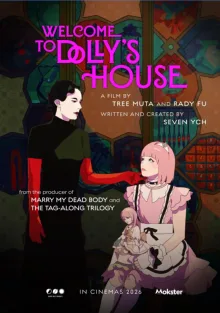
Mike talks with Seven about the ancient Chinese anthology Taiping Guangji that inspired the sorceress, an idea 25 years in the making that moved from live action to animation when costs soared, how rotoscoping cut time by half and expenses by 30 percent, actors performing every role twice, once on a bare warehouse stage and again in the dubbing booth, Taipei landmarks that became Dolly's house, and a sequel following the mysterious Catherine.
Transcript
An automatic transcript from Spreaker. It has not been proofread, so names, titles and spellings may be wrong, and it does not say who is speaking.
Show the transcript (about 2,700 words)
Hold your ears, folks. It's showtime. People pay good money to see this movie. When they go out to a theater, they want cold sodas, hot popcorn, and no monsters in the projection booth. Everyone pretend podcasting isn't boring.
Turn it off. Turn it off. Welcome to the Dory's House. Do you think it's a bit creepy here? Princess, have you forgotten that we're doing a urban legend?
Hello, I'm Maria. Ciao, I'm A-Yu. I'm Yaya. We can immediately let the channel go back to normal. Legend has it that she's a dance teacher.
Xia Yuxi can experience the soul. Of the master. What did you see? I still have the desire to be happy. I still have the desire to be happy.
No! No! Welcome home. Welcome to The Projection Booth. I'm your host, Mike White.
Today's guest is Director 7YCH. here to talk about the animated feature Welcome to Dolly's House, a rotoscoped fantasy spun out of a thousand-year-old Chinese folktale and reimagined around a modern online world of avatars, dolls, and digital identity. Welcome to Dolly's House is distributed in Taiwan by Paramount. I had a great time talking with Seven, and I hope you have a great time listening. Enjoy. What is your background?
I'm curious what brought you to this place of making this movie? I was major in branding advertising in university. After that, I got my master's degree in film directing. But actually, then I directed a few documentaries. Then I stepped into a multi-territory creative industry, such as I work with many talented from designs, contemporary art fields, avant-garde medias, comics, and animations.
So I think it's like a very mixed path for me. It's got to be so different directing documentaries to directing animation, or am I wrong? Very. Yeah. One of the reasons we choose to use animation for this film is that my executive producer told me it is impossible to shoot with live action method because based on this story, it's going to be really costly.
So yeah, animation is the best way. Can you tell me a little bit about your co-directors? Reddy Fu, he was actually my classmates from the Movie Academy. And then, Tri Muta, he's a very senior animation director in Taiwan. Yeah, experience with shorts and features.
Tell me a little bit about the Sorceress and the Wooden Bridge Inn. I'm very curious about that and how that relates to the film. Since I was a kid, actually, I was always fascinated with strange tales. like stories with sorcery or bizarre, eerie stuff, uncanny objects. And Tai Ping Guang Ji, this anthology written 1,000 years ago, is one of my favorites. And the story you just mentioned, the sorcerers in the Huden Bridge Inn, it's actually very interesting.
The leading role, these mysterious sorcerers who is actually very sassy, brilliant, attractive, but mysterious at the same time, dangerous. So I just wonder what if this kind of role exists in modern era and what would this kind of story be? So I started to create and assemble a little persona from this role. but invent a total original character, Madame Dolly, who's actually lived for two millenniums from Song Dynasty to the year of 3025. The whole story, we already create an online webtoon for that, but this film is focusing on a little side story of Madame Dolly. But it's actually a total fresh and new invention.
I love the way that the world of the internet is playing into the world of the film. Having a YouTuber as one of the main characters is fascinating. I think it's such a neat way to update that story that you're talking about, like thousands of years old. I do not want to tell a story like really ancient or something. I want to blend. the old with new, east with west.
So I found that this will echo to the internet environment we have today. And especially when, like, everyone has tons, thousands of avatars and, like, filters online. These kind of stories will be the perfect translation. Can you talk about dolls and just how those kind of play into everything? What's kind of your experience with dolls?
I do not have any personal history with doll or puppet, but somehow, Randy and I, we found this will be a very great metaphor to highlight the mirror image bound between us and our avatars online. We think this can be a very interesting storyline. Aside from that, dolls and puppets, they are really hot, like in every urban legend all over the world. Great object to use. And then also fortune-telling is actually a very big, huge cultural thing, like in Asia.
So already also, came up with the idea, like door reading, and we decided to create this and make it some sort of very important plot in this fiction film. You talked about how really the only way this story could be told is through animation, but there's so many different ways to animate. Computer animation, hand-drawn, all these kind of things. Can you talk about the rotoscoping? Because it's such a fascinating way of approaching stuff.
We use rotoscoping combining with 2D animation for, I think, two major reasons. First one is that, as you mentioned, it is really interesting how the animators reshaping and drawing from live action performance, we get to capture the fascinating elements from the performance and then translate into 2D drawings, paintings. And these somehow just echo to the theme, like human relationship with the dolls. Again, this mirror image or reflections. And the second reason is that for animation, actually a lot of expense is It is happening because of the time duration.
Animators have to draw with lots of efforts. You're spending tons of hours to make the film. that rotoscoping helps us to at least shorten, I would say, half of the durations of time and perhaps more than 30% of the expense. I think it's very fitting, too, because you're basically using these actors as human dolls. And the idea of I don't imagine that the actors that you're using for the animation part are the same ones that are doing the voiceover. Yes, they are.
They are. Okay. Yeah. That's great. So they can maintain that performance throughout both of those.
Yes. And actually they share with us, this is actually some kind of experience they have never expected because they get to play the role twice. firstly like in the environment more like a theater with nothing around them but only with the animation and style guide they saw from the directors and then a few objects like nearby them whichever things they will touch will be drawn in the later pictures we have to prepare for them after the live action performance, they perhaps maybe like 50 months later, they joined us again in the dubbing studio and then watch what has already been drawn and then do the dubbing for the second time. It is very, I would say, quote from one of their sentences like, their soul has been divided twice.
Because it feels really unreal that looking at their animated roles, avatars on screen, and then do the dubbing, it is really something for them. It's like you're ADRing a different version of yourself. Exactly. How close is the world of Welcome to Dolly's House to the actual world of Taiwan and Taipei? Yeah, actually, we're also rotoscoping the landscape and buildings, architectures from Taiwan.
For example, Dolly's house, I would say the fourth leading role in our film, the building itself is actually referenced from a 100-year-old antique mansion called Jukui Ju. It is really beautiful and with eclectic style. And then the garden and yard, in many of the scenarios, they are like garden actions. So the garden and yard part are sampled from a famous landscape called Songshan Tobacco Factory in Taipei. The style is a combination of baroque and fusion.
And then lastly, the rooms and interiors. We got the idea inspired from a very famous old hotel called Yuan Shan Hotel. It's a very iconic old hotel already with lots of urban legend itself and ever hosted lots of international big names. For example, President Dwight Eisenhower in the 60s. Yeah, the idea of the plants, the whole botanical artist, I loved that as a concept, and it was just such a breath of fresh air to see something that I've never seen before.
I'm so glad to hear that. Yeah, because we choose this occupation for the accent is because there is a very popular special ways to form botanical arrangement called bansai. Bansai is the craftsmen's use iron wires, lines, ropes to shape and rearrange the appearance and beauty of flowers and plants. So we think this is really a good way to showcase the character of A Yue, the actor. who's actually a manipulator of his girlfriend and the others. And a very special scene in the film, two of them actually is having a very intimate moment that we combine with the dance of like Ah Yue trying to manipulate and shape his plants.
So in a very artistic way, this is how we think these two very special programs can be combined together. When you're shooting these actors, are you shooting them on a green screen or to knock out the background? Or how do you actually shoot them? It's quite much like green screen environment, yes, but not entirely like that. Because our film is like roto animation, I would say.
So all the performance, they just gather in a very empty, huge warehouse. And we set up the furnitures and things in the middle. So we depict the area, the sizes. We are going to use, like in the picture, and measure. Put different measurement marks, like on the ground or on the walls.
So they will have the hint, like the arrangement they can perform. So yeah, this is pretty much like that. When did you actually create this? What were the years, the timeline for this? I have the whole Madame Dolly idea, I would say 25 years ago when I was still in the college.
But not... Until, I would say, maybe eight years ago, then we started to think, okay, this is maybe the right time to kick off the project. So we tried to find the best team and supportive financiers, but it was not very... I would say very smoothly at beginning because we were setting to be live action film. So as mentioned, it's going to be really costly.
So until like five years ago, finally, we just make a huge turn and realize that animation is the best way for this film. And then after that, we just finally get a good process of the productions from finishing the rewriting of the script and then production of the shooting and then production of the animation and lastly, the post-production of lighting, the effects, and all the sound and music design. Also, five and a half, six years ago, there was a global pandemic and I'm curious how that played into everything. Actually, it also... led to the idea that we have to make the story more related to internet. The internet setup is actually very important and cohesive to the positioning, the worldview we try to create it.
And at the beginning of the pandemic, we all got trapped at home. So by then, like our team just discussed that it is very important we made something echo to the situation nowadays. It feels like such a great pandemic project because I'm sure it's so time intensive and just doing all the work. But I'm curious, what was the, did you have one primary tool? What software were you using for the animation for this?
Except for the rotoscoping, actually, we use Premiere mostly. And yeah, because like for the 2D animation part, that is still the major, like the software we use. Still Premiere, even with the animation? Yes, because it's more frame-by-frame work. All our animators, like in the studios...
We value a lot their basic drawing skills. Tell me more about your composer because I love the score for this. Awesome. I will also let him know. We have two teams.
One, the major team for the sound design based in Taiwan. And the other half is from Japan, Tokyo. The way they co-work is We finish almost 80% of the animated materials and we send to Japan. And our sound director, he just flew to Tokyo and co-work with the sound designers there. And it's got fantastic work like making the audio, I would say experience, a very delicate thing.
Because I think they are just really experienced for animations and cartoons. So they really know what they are doing. So after they create most of the small sound effect, then they send the project back to Taiwan. And then the music composers, start to go by set to create the music. When is the first time you get to see this with an audience?
Because my background is quite related to marketing. Actually, we've done tons of screenings, test screenings from very early stage. I would say probably The earliest one is after the shooting part when we try to do the first draft of Addition. Yeah, and then after that, we gather all the feedbacks from our target audience and then rearrange the editing once. And then we proceed for the animation drawing part.
And then, again, after maybe two-thirds of the content are finished, prepared before even the sound and music involved, then we will start to do testimonial screening again. So along the way, dozens of screenings. You've been living with this story for 25 years, working on the film actively for eight years. This movie is so much about self-discovery and thinking about your presence online. How much did you think about this and how much did this Was this a journey of self-discovery for you?
Actually, at the beginning of the film, I quoted the poetry from Walt Whitman, Song of Myself. So that's actually a poem I really love. And for me, creating this film, it's like a process of communicating with myself. And I also believe that This is the idea my team and I want to communicate with the audience. The idea of wake up for another kind of conscious companionship that ourselves is actually the best and only partner to our own, no matter what.
If we can just embrace the true selves the inner part, inner child, whatever, we will finally get to embrace no matter how many avatars, filters we have online or elsewhere. Because for every atom belonging to them has to belong to us. Is there a good place for people to go online to find out more about the movie and where it's showing? We have an Instagram, but so far, just limited in that space. And we are really glad that in Taiwan, our distributor is Paramount, and they have put the first trailer online already.
Thank you so much for your time today. This was great talking with you. I really appreciate it. Thank you, Mike, for this early time in New York. Thank you.
She's your little Buddha. Dolly And she's gonna make you lazy Like the little drum in your ear. Transfixes you to your fear And now she's transfixed in your fear And. You know she's gonna stay there Cause her nails are deep in your. Hair And she made you so unaware Are you listening to your feelings?
The beach is. Coming nearer like. That little dome. And you're really transfixed at you. Can you look very clearly where you're going to turn?
You get paralyzed, paralyzed. Oh, turn, turn, turn, turn your feet. Now she's a star. . Save. Change your lane open to darkness.
Watch
Comments
No comments yet.