Special Report
Agent Recon (2024)
Show notes
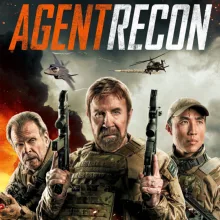
On this special episode Mike talks with writer/director Derek Ting, actor Marc Singer, and actress Nikki Leigh about their parts in Ting's latest film, Agent Recon. This action/sci-fi film opens in the U.S. on June 21, 2024.
Transcript
An automatic transcript, tidied into paragraphs. It has not been proofread, so names, titles and spellings may be wrong, and it does not say who is speaking.
Show the transcript (about 5,900 words)
Speaker 1: Hold your ears, folks. It's showtime.
Speaker 2: People pay good money to see this movie. When they go out to a theater, they want cold sodas, hot popcorn and no monsters in the projection booth.
Speaker 3: Everyone pretend podcasting isn't boring. Turn it off team Cobra has gone down checking for survivors. Grand horses are on their way.
Speaker 4: All right, listen up. The infected are ruthless, strong and they're smart. We were on a Recon mission killing infectors when we got redirected here to be an emergency. I want a ready off ASAP.
DAVID MACGREGOR: You thought you could use the help, Alistair?
Speaker 3: Yes, Jim. This nearby base was running tests. DAVID MACGREGOR: Where's fashion 13? Now, Captain Rupert hasn't responded in a week.
We gotta go. Now I will protect my team. Then let's get started. We need a team that knows how to work together.
Climbing down the stairs. That's a plan.
Speaker 4: Aaron. MIKE WHITE: Oh, Jim, I got this. Hey, folks, welcome to a special episode of the projection booth. I'm your host, Mike White.
On this episode, I am featuring three interviews. First up, we're gonna hear from writer director Derek Ting. After that, we're gonna hear from Marc Singer who plays Colonel Green. And after that, we'll hear from Nikki Le who plays Captain Lela Rupert.
They are all behind the film, Agent Recon. It is a brand new movie that is coming out June 21st, 2024. It's an action film. It's a return to form for Chuck Norris who's in it as Alastair and a lot of fun talking with dear Mark and Nikki and I hope you enjoy these interviews.
Thank you so much for listening, Mr Tang. Thank you so much for joining me today. I appreciate this same here. DAVID MACGREGOR: Glad to be here.
MIKE WHITE: Yeah, I'm so curious about you seem to do a little bit of everything, writing, directing, acting. How did you get your start? I know we only have 15 minutes. But can you give me a little bit of the Derek tinging story?
DAVID MACGREGOR: First love was acting and I did some theater in college and I just fell in love with it and I actually got some parts New York and then didn't think it was really a career. And later on, I got an opportunity to move to Hong Kong. So I moved to Hong Kong and some casting directors and directors asked me to be in some films and some of their stuff I revisited something that I was passionate about. And at that time, I was like, well, if I'm gonna actually try to pursue a filmmaking career, I'm gonna take control and I felt writing the script and writing a story was the way to go.
So I wrote my first script, six years of nights and weekends trying to write the script, get it together. And we produced my first movie Super Capitalist. And that came out in August of 2012. And from there, I've made four war films now.
And so hr recons the fifth and each time I guess in my career, what I've tried to do is just pursue being good at my craft. Each time I've taken on a project, I've tried to be a student of a certain area and focus on that. So super capitalist was about plot, very complicated financial plot. And then the second was a pure character story and that was just a romantic drama.
And so I watched a lot of romance movies, which is not something that I normally did as a kid. And so by my third movie, when we, when I made the first agent movie, which is now this is a trilogy. I went to what I really, the genre I really liked it which is action and sci-fi. And from there, I've just, just been building, I won't say a castle, but I've been building a home around this new world of action and aliens and new rules and killing zombies and empire like creatures.
MIKE WHITE: I really like that. You are concentrating on different areas depending on which film that you're working on it. That's a really great idea. DAVID MACGREGOR: Worked with stunt team for the first one.
I, one of the best stunt teams, Action Factory. They light people on fire. My stunt coordinator, he worked on Punisher with Netflix, other things too. Lots of big budget movies.
And then the second one, I did a lot of visual effects. So I worked with a lot of the top the effect supervisors and then this one is pulling it all together and I think I'm still learning, I'm enjoying wearing many hats and trying different things. But at the same time, it's a lot of this about making a movie is putting together a team and making sure your team is supportive and understands your vision. And at the end of the day, then it's really that team moving forward and trying to hit that vision as best possible.
So a lot of people, I think the director is a very big role, but it's not, ultimately, it's not the only role that will determine the outcome of film. MIKE WHITE: How was it when you first started directing other people. DAVID MACGREGOR: Because they came from the acting background. Like that's how I started.
I've taken a lot of classes, I'm a coach and all those things and then leading five movies and really being there and doing it under a lot of pressure when I direct people, I think actually, it's, it's more of a walk in the park because I don't have to do the other things I'm not acting on camera. So it was just me directing then. And because I understand different techniques to draw out a performance naturally, it's a lot easier for me to work with the actors. And I think most of the actors that I worked with that had good experiences, marks Singer, for example, did have we're, we're, we're friends and I learned a lot from him.
And in fact, I actually honestly with bar Singer, I didn't really have to direct him at all to say to. And that's the thing that's what I meant about, about bringing together a team is when you have a great team and you have, you've outlined the things that you're trying to accomplish and you've chosen a lot of things ahead of time. Then a lot of it just when you're in production and you're just executing and following through with your plans. MIKE WHITE: Tell me a little bit more about your team who are some of the people that you found yourself working with time.
DAVID MACGREGOR: And again, Sam Stone, Coroner Joe Fiddler, the second unit name for me. Like sometimes I'm busy doing something else and then like we need these shots and he, and then the first ad is driving everything Marissa plot is, this is the first time having a real ad, in fact, two A Ds. So it was just like such a luxury and she's really good director herself. And then my DP is amazing.
We had a team. He was not operating camera usually on a, on an Indie set. You have the DP, operating the camera. My idea was ok, you can work with the two camera guys and they had the re Alexa.
It's a really huge, it was a huge operation because the re is a beast. It's not just like a tiny camera or anything. You have to put it on the rig. And so he was, he sacked Trout's amazing too as well.
And he comes from the lighting department, which I think is really important. I think a lot of times camera dps come from the camera department, but when you have an understanding of lighting, that is just huge. So that was one of the, that's how it shows him is him coming from that arena. And obviously the cast Marc Singer Beastmaster and ve one of my childhood heroes and Chuck Norris, of course, working with him, he's so amazing, such a good person.
And really just, I think he just got behind the project because he wanted to support something, something cool and he loved the script. So thankful and what a great President Sunset, what a great person to work with. It just makes everyone feel at ease, honestly, not on pins and heels, but at ease. And of course, like Nolan has Emma Thomas and Zach Nider works, works with his wife, my wife.
She's a producer. She has definitely been a rock in terms of when I can't make decisions. She does and we co with each other very well. MIKE WHITE: Are you constantly talking about the film or do you actually take a break when you're at home?
DAVID MACGREGOR: We're always talking about stuff, but we're actually, our focus is on our son, a 6.5 year old who was on set with us. It was a very family set and we have all these behind the scenes that been running around and we posted something like where he's arm wrestling. One of our actors, she's in Scott Jenkins. He's huge.
Like 68. You saw him in the movie? They're arm wrestling. It's so funny.
But, yeah, super fun. MIKE WHITE: I was wondering if he was CG at first because he was so massive and then I was like, no, it's a real guy. Ok. DAVID MACGREGOR: He was a football player at the University Of Nebraska, which was like one of the top college football teams of all time.
So he's a big solid guy. Yeah, perfect casting for him. Very athletic and he has a great fight scene. MIKE WHITE: You've been in this business now for over 10 years and how have you seen things change?
Especially when it comes to the distribution of your own films. DAVID MACGREGOR: I've tried differing like gravitas when it, I worked with them on my first movie and the day and date model was something nobody ever heard of before. I'm like, I was the guinea pig. This is 2012 gravitas, nobody had heard, heard of them and Warner Brothers picked up our film through them.
So they were like the middle person to get Warner Brothers and super capitalist. My first film was next to Batman when it was coming out. It was insane. The people of course thought it was like that budget level, of course.
But yeah, distribution has changed a lot and then I and then Paramount pick it up my movie always. And that went 60 countries and translated and it's evolved so much and I'm a believer in, I'm a believer in cinemas. We're not doing that many starting out. I still think there's an opportunity there for certain films.
And I think this is one of them. Chuck has not done a movie in 12 years. The movie is shot that way. It's shot on the re Alexa $100,000 camera.
We had two of them, we mixed in a theater. I think the image is great and the visual effects are solid, but it's an action story too. It's an action film and it plays really well. I still think cinema has a place and it's for a movie like this because yeah, how many times has Chuck Norris done a film?
It's been so long like you have to see it in cinemas. But if you haven't, I actually think what is going on is amazing too. I think Amazon is a place where we wanna be because I think what Amazon is doing is they're bringing to life movies that you would have never thought were gonna get made. And I wouldn't say that they're doing great stuff all the time, but it's an interesting time because certain things that you wouldn't have ever imagined is their Green lighting.
And it's because it's not necessarily for the same reasons that you would have made a movie in the eighties and nineties. That kind of transformation is quite intriguing. I don't know what's going forward, but I know about Asian Recon and let me tell you the type of movie that you're watching is I think something that you can see with your kid who's maybe 10 to 15 years old. If you were a fan of Chuck and Marc Singer, I think you could probably bring your kid to watch it.
If you are a fan of martial arts and action, you should watch this film. And I think ultimately because this movie is a creator lip film, which is happening everywhere in news and media. The great thing is that the person behind it me is somebody who wants to have fun and misses that part of movies. Something that I could maybe watch with my kid and say, hey, remember I used to watch this guy but also like elements of action and having, having a thought process like the action.
If you watching it, there's, it's a chess match it isn't just flips and kicks. There's this character Jim figuring out how he's gonna be, he, how he's gonna beat this character because maybe he's out mashed. So it's things like that, that really excite me. And then I think finally they have a new world, like new rules zombies.
So I love a good zombie movie, but I know how to kill them, shoot them in the head. Right. So, in this one, we're trying something different and there's a science to it. So how do you kill and infect a human?
I think they have to figure it out or that's a different way. They have to find a different way to defeat that. Those are the things that, that make movies fun for me. That's those things that I wanna click on and watch and spend my time with, watch it with somebody and also not get something that I already know what's gonna happen.
MIKE WHITE: Is there a good place for people to keep up with you in the film? DAVID MACGREGOR: I'm actually just posted a behind the scenes on my YouTube. It's day two, it's like three. I have, I have a lot of, we have 12 days.
There were 12 days, very short shoes, very quick, but there are 12 solid days on these huge massive sets and you can definitely see all the things that we were doing and how we worked. But on a YouTube on my Instagram, go there and check it out. But yeah, it's good to watch those videos back. They're just good memories and we had a fun time making the film.
So seeing it though, if you're a filmmaker, you can glean a lot for what I'm doing in this, in the sense that I'm appealing to a certain audience. But I, and I'm, I don't have everything at my fingertips. For example, we shot in the ranch in these, in these hills. And when we scouted it was all desert.
And when I returned because it had rained. Day one, we had to work, I had to change a lot of things because it's like, how are you recording in the rain? I'm like, ok, why are they in the rain? So I'd like find some transitions last minute because, and then this is L A.
You never, it never rains in L A and of course, it's raining. So that, that was one obstacle. But another obstacle was I've been saying this, which was so frustrating. It's like, I'm never gonna be able to come back to this set.
It's so lush here. It's so Green. Like how am I gonna be able to reproduce this? There's no way I can reshoot this so I better get it right for the first time.
So short amount of time and the like rain and rain and oh man, but I was very blessed in the sense that it was beautiful. It was beautiful, like the hills, the rolling hills, it was beautiful. It was magical and then the rain made it so cinematic I felt and that was something I didn't expect. So sometimes things that are obstacles become great parts of the film.
I'll say the only thing is that it was painful and cold. I had this one clip where I'm crouched down behind the barriers. So I, in the movie I climb up these steps and I'm on the roof to pick off some of these infected aliens. Of course, they had to film that.
So I'm up there and I'm waiting for the whole crew to come up with these gigantic cameras that have to be like mounted. And so I'm waiting because it takes a while like this narrow stair to get up there. So I'm just like crouched down in the rain, huddled behind this like little barrier just so that the wind wasn't gonna make me freeze to death. I was like, oh man, but who cares?
Because it looked cool. And Marc Singer, Marc Singer, he watches the first couple. This is the first day it was raining and Marc Singer first shot and raining and Mark. We had a movie, the movie.
This is awesome. Like he was so excited. I was like, you're right. Yeah.
So good moments. But in crazy times because we have these expensive cameras in plastic bags, like walking through the mud and you're like Oh man, as a so I let me wear a different hat. I'm a producer. I'm like, please don't break the camera.
Yes, we have insurance but please don't like break anything or so. MIKE WHITE: I'm glad you survived Mr Ting. Thank you so much for your time. This was great talking with you.
DAVID MACGREGOR: Great, talking to you too. Thank you for, thank you for your time. Thanks for sorting, supporting the film and watching it and appreciate it. MIKE WHITE: Can you tell me about your turn on Columbo playing the young doctor on the soap opera?
In that one?
Speaker 7: I saw that for the first time just about a year ago or so. Somebody brought me a DVD in which that, that occurred. That's the first thing in Hollywood I ever did. I played a, and a doctor in a soap opera, so I was on television on television and I think I was one of the clue that Colombo put together to discover who the murderer was, but I've never seen it.
I've never seen it before. It's interesting looking back at your work in the past, even something small like that because it introduced me to the sound stages of Hollywood back in the day when we still used film and all the equipment was cumbersome and antique by today's standard. But what a training ground and what an insight into into that, what that was. So when I look back on it now somebody flipped me a DVD of it and I watched it and, yeah, I just, it's interesting to see the growth as an actor.
But it's also wonderful to look back nostalgically and remember what you were like and who you thought you were in those days. MIKE WHITE: I know everybody probably ask about Beastmaster and body chemistry and some of these bigger titles. But you were in one that I absolutely love called. If you could see what I hear, how was that being Tom Sullivan in that movie.
Was a real revelation in a lot of ways, preparing to play somebody who is deprived of their sight was a chin to make, first of all, to make the physical aspect of it believable. But secondly, to get into the spiritual sense of what that's like and to spend days at a time blindfolded and alert, trying to learn braille and sensing the world in a different psychological way and also in a different emotional way. And why I learned a lot from that. They an interesting exercise sometimes just that's just for the fun of it is in a conversation with somebody just to close your eyes and talk to them and spend some time in conversation that way.
The entire nature of what you absorb and what you respond with is altered by that. But if you could see what I hear was just we filmed that up in Teddy's Cove in Nova Scotia, the Sky. Blue ocean with the white capped waves and the lobster sandwiches and the sunny shores were, it was like we were on all on vacation. We really had to remind ourselves making film.
MIKE WHITE: So tell me about your experience making age of Recon. Obviously, you've been in this business for a lot of years. What is filmmaking like now for you? It's a great question because filmmaking, unlike any other experience that I can think of in the world is one in which the exploration of the inner self is shows up on the screen, what you've been through, who you are, what you've learned in life.
And then the what you represent when you come on to the set, if you're a veteran, the way I am, as you say, from decades of filmmaking, you can't help but have a certain sense of your own history. And also what that history exemplifies not as a, not just so much as a personal thing, but what I am, who I am, that kind of thing, but the stuff that you've seen, the stuff that you know, that you don't know that you exemplified by everything you do on the set that you have a lot to share with people. And that even that said that they have a lot to share with you.
And if you keep your eyes and ears open, you may learn something. And as long as you can keep that balance between what you're offering and what you're receiving. I think it makes for a happy creative situation in the world. And that probably is true in everybody's profession.
MIKE WHITE: You mentioned the way that equipment has changed over the years, obviously, you've changed as a person, but has your way of approaching roles, has that changed over the years as well? Definitely, there's no question about it. I take my work so much more seriously now and what was easy to me before I now delve so much more deeply into and my intention now in being an actor and what acting itself represents and the legacy that we are, we're going to leave it behind, whether we want to or not, that legacy should be contributed to in the best way possible.
So sure. Yeah, I take my work a lot more seriously. Now I have a great deal more fun. It's a little, I'm a lot more accessible, I think emotionally and personally, it's different for me.
Now. It's a and Agent Recon, I have to say with Derek Ting as the writer, director, producer and leading man, it was very generous of him to take me aboard because this is a new chapter in my work. And I hope that people who come to see it will not only appreciate Derek's work because he says you're a wonderful actor. He's great with the action scenes as well.
But, and for Chuck Norris, you could say the same thing, but also that they recognized in the deepening of my work. MIKE WHITE: I had an opportunity to speak with Mr Ting earlier this week and he said that you seem to have a ball on this particular shoot. We had a great time. We were filming on some of the legendary Hollywood ranches outside of Los Angeles.
Up in the hive herds of deer would come wandering through the set and the sets themselves, these old movie towns we were in these dilapidated in a post apocalyptic scenario where up one alley and down the next and up a flight of dark, there's an out on a balcony and across a rooftop, you had the sense that there was danger around every corner and a kind of AAA sense, an aroma and electricity in the air that was foreboding and to sing. These town sets brought back to life and put on a screen again and to be a part of it, that was an amazing experience.
I worked with Henry Fonda years ago on television mini series called Roots. And this was Roots part two. And he was standing out looking at one of these towns that was built for that specifically for that film, for that series later used, I think in True Grit starring John Wayne. And I said, what are you looking at Henry?
And he said, I haven't seen a set like this built in years and years. This is just really takes me back to a time pass. That's how I felt on those sets with Dre Mr Singer. MIKE WHITE: Thank you so much for your time.
I really appreciate this Agent Recon. I, that's what brought us together and I thank you Mike for sharing that with me. I hope I didn't talk. You all, you did not.
MIKE WHITE: I would love to do this again sometime. Thank you so much. I would love to know a little bit more about you and kind of how you got your start the business if that's all right.
Speaker 8: I honestly thought I was gonna have a normal life up until I went to college. I graduated cum lai. I was setting myself up for my future and found myself in a modeling career that eventually landed me a cameo in a movie. And from that cameo, I just was so excited about how everybody was working together for one major project or film.
And then I just wanted to be on it more like I wanted to be on set and with everybody longer and have more of a position. And so I was like, I wanna act like I wanna be on this more. I wanna be a lead like a leading lady if you will. And so I went to work and I asked people, what do I do?
And they were guiding me and you gotta get an agent, you gotta get a manager, which is not easy and also going into acting classes. And things like that. And it's been a pretty up and down road for me because there's a lot of stereotyping in typecasting. So it's been really beautiful to meet Mark Tillman, who's the casting director of this amazing film.
And he saw me just as someone that can do a different role than what, what meets the eye. So I thought that was really very innovative and beautiful and kind of him to see that in me and give me this chance. MIKE WHITE: And it really has, it was really fun and really something that I'm like, ok, more action was it just through the casting agent that you're able to find different ways or have you tried different approaches to say I'm more than just a pretty face, honestly. Yeah, I had to do a lot in the world of social media.
You can get a bunch of followers for doing the easy way out. They call it the T and a way. And I was like, no, I don't wanna do that. I have to really let people know I'm more than just whatever is on the outside and it was so hard by the way, it was so hard to not just fall into what's easy and what can get me the numbers right?
And to have people view me differently. And so I just kept putting out things that I enjoyed. Very gratitude based, very positive, based very, my degree is in psychology. So my social media.
I wanted it to reflect something that I was passionate about, which is psychology and mental health. And so it really took a turn and became that more or less, which was really nice. MIKE WHITE: So tell me about Agent Recon, what was this role like? And how was your experience on the film?
Yeah, this role was really great. It was nicely challenging, both emotional and physical and then entirety mental and it was really special to be around such great people. These people were all, they're all so integral, like from Derek Ting to Marc Singer and even Chuck Norris, these three especially are, they're so unique. These men, they're kind, they're family, you know, oriented, they're hard working, they are just respectable gentlemen.
And honestly, it was a pleasure and an honor to work with all of them. I definitely felt like it was such a warming set. It was like that first day that I stepped on a set, seeing that everyone was really working together, like really became a family that I really wanted to be a part of. So it definitely was able to put me in that reminiscing moment and being like, wow, yes, this is why I'm here.
I have been acting for over 10 years now, but it's always so nice when things run smoothly and respectfully. That's a big thing. There was no egos on this set. Everyone understood each person's position and respected it and yeah, everyone was in high spirits and really ready to work because of, I think because of the way that the tone was set.
MIKE WHITE: What did you have to do in order to get ready for it? Because it's really physical, definitely had to make sure that I was taking care of my body from going to the gym to making, making sure that I properly was stretching. And so you don't pull anything and eating just making sure that you are staying healthy or staying energetic and things like that. So you wanna read the script and you want to understand who your character is and you wanna understand the other characters as well.
So you can navigate it and visualize the movie a little bit before it's being shot and just making sure that you understand the relationship. So I really just had a deep dive into understanding the relationships between each character and understand who she was, who this captain was, right? Because you have such a ranking, but who is she on the inside? She's a daughter and she's also has a fleet of mostly men to advise and tell what to do.
And there's a lot writing on that, especially because in the military, her father was also there. So there's a whole other level to it. So just understanding these levels and these relationships and being able to really find her strength, which helped me find some strength as well, which was really nice. This one was just a new level, like a military level, which was really cool.
MIKE WHITE: When you get a role like this. Do you write out the background, come up with a back story for that person or is it more internalized for you? I like to write things out. I think it really does deep into my brain better.
So, yeah, so I literally do write things out. I'm constantly writing even through each little like line that I have. It's like, what's my intention behind it? So there's a lot, yeah, there's a lot of writing e even a bio or even like childhood story, depending where you need to pull from.
And just, yeah, where she's at in her life. MIKE WHITE: And when you're not on set, when you're between projects, what are you typically doing? Are you auditioning a ton or what do you do in between gigs? Honestly, the auditioning part, it ebbs and flows.
It's like it really is dependent more on the industry rather than myself as well as how hard our agents or managers are working or whatever. But honestly, on my free time, I'm doing a ton of silk work and also just trying to help my fellow people out there. And by reaching out through like social media, I'm also traveling a lot. And when I travel, I do a lot of I'm always researching health, health is like my passion and my drive.
So I'm constantly even traveling and on when I say health, I also not only mean like nutrition and physical health, but I also mean spiritual health and mental health. So I am constantly traveling around the world to find different modalities of health and experience them. And I feel like really just experiencing life in general and different cultures which allow me to be able to connect with more people and yeah, and just try and spread light wherever I go. MIKE WHITE: Do you have your next movie role lined up?
I do, I do, I can't really talk too much about it quite yet, but I do. It's pretty exciting. It's a sci fi film and yeah, this one's gonna be really fun. It really is.
I'm excited for everyone to see this when it once it starts to get in its rhythm. MIKE WHITE: And where's the best place for people to keep up with you in your work? I Instagram is probably the best because there's always that link. You can always figure everything out.
So my Instagram handle is Miss Nikki Lee and then make sure definitely to look for the blue verified checkmark because there's a lot of impostors. MIKE WHITE: Thank you so much for your time. This was a real pleasure talking with you. Oh, yeah, you too.
Thanks so much.
Speaker 3: You may three. You.
Comments
No comments yet.