
Special Report
Bruce Joel Rubin Books
Show notes
Find out more at https://www.brucejoelrubin.com/ (opens in a new tab)
Transcript
An automatic transcript, tidied into paragraphs. It has not been proofread, so names, titles and spellings may be wrong, and it does not say who is speaking.
Show the transcript (about 10,100 words)
Speaker 1: Hold your ears, folks. It's showtime.
Speaker 2: People pay good money to see this movie. When they go out to a theater, they want cold sodas, hot popcorn and no monsters in the projection booth.
Speaker 3: Everyone pretend podcasting isn't boring. BRUCE JOEL RUBIN: Turn it off.
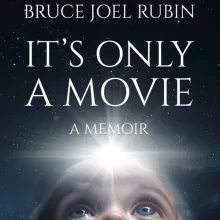
Mike White: Hey, folks, welcome to a very special episode of the projection booth. I'm your host, Mike White. On this episode, I am talking with Bruce Joel Rubin and Joseph Maddrey all about Bruce's latest works, including it's only a movie BJ R's autobiography, which he did with some help from Joseph as well as Paul Cronin who is back on our November Men episode. Find out more over at Bruce's website Bruce Joel Rubin.com.
That's Rubin. Thanks so much for listening and I hope you enjoy this interview. MIKE WHITE: Remind me how you guys know each other. JOSEPH MADDREY: It was probably 2012.
I was toying with the idea of writing a book about metaphysical horror films and Jacob's Ladder was gonna be one of one of the big titles there. So I think I started digging around. I found Bruce's preferred version of the script which was published by Applause and then that had a kind of 20 or 30 page essay in the back of the book about how he wrote it. And I love that film.
I loved it even more after reading the script and then after reading Bruce's essay, I just thought this guy is fascinating and I wonder if I can track him down and talk to him. So I got on the internet and it turned out that he was teaching a meditation class, a weekly meditation class about 10 minutes away from where I was living at the time. So I emailed Bruce and said, hey, can I come to this class? And I did and I think was there pretty regularly for about two years before I sprung this crazy idea of writing a book on him.
MIKE WHITE: That's the long cono it is. JOSEPH MADDREY: It is. You do what you gotta do, Bruce. MIKE WHITE: What did you think when Joe brought up the idea of doing this book?
BRUCE JOEL RUBIN: I didn't really think there was a book about me to be had, but I know he'd written other books about filmmakers and one of them he was working on was on Wes Craven who was someone I had worked with early days in Hollywood who I really thought was an amazing guy. And I really thought Joe was an amazing guy and I thought, let's see where this goes. And you know what we did rather simply was sit talk and we would talk at lunches and then we would talk on tape and he would record things. I said, and I would reference the story of my life up to that point.
And he sat there pretty wide eyed and interested and took it all down and then my memory, which is going quickly, but which is a good thing because I've not written a book and I wouldn't remember half of what I wrote, written already. But I gave him this series of interviews and he came back to me with a printed copy, beautifully put together of the story of my life. And I was very intrigued by it, but I did have this very odd feeling that it had no ending. And I didn't know how to put out a book that is all first act and second act, the end, it doesn't work.
I put it on the shelf and I didn't know if that was offensive or not, but I just felt I needed to know how this comes together. And it was mostly I thought in what in this part of my life that was called my quote unquote spiritual life because my career was pretty much not. It was winding down. It was, I'd done.
My last major film was the Time Traveler's wife and I was writing a lot of other scripts for people, but they were not the kind of scripts that I thought Hollywood was going to run, run after. But there were scripts that my brain and my heart read after and I was happy to write them, but I kept looking for something like enlightenment or a total like awakening. That would be the end point of the book. And a reason to have written the book and they never kept coming.
I don't know. When do you find me awaken after 50 years of meditation? Or at that point, it was like 44 years of meditation. And what happened was I stopped meditating.
I just saw I'm trying too hard to get somewhere. And the underlying truth of meditation is that you're already there. But it was only when I stopped trying to get there, that kind of awoken me. And it was a really interesting awareness that searching for something was a good effort.
But that finding it, the real discovery and this is a complicated story is there's nobody there to discover anything that there is no as they call it in certain parts of the Buddhist Hindu teaching. There's, there's no two, there's only one and that was a pretty major revelation, but it still didn't seem to finish the book and also for whatever is worth my life went on to me becoming very dualistic again there. I did a musical in London and on Broadway with my film Ghost. And it was tragically struggling for me on many levels.
And so every bit of spiritual attainment I thought I had was out the window with ghosts because I just thought, oh my God, critics hate it. And I'm having all these difficulties and I felt unworthy of publishing anything. So the book stayed on a shelf. And what happened was a friend of my son, Joshua's named Paul Cronin, asked my son if he could read it and he did.
And he came over to my house and said, I need to talk to you. He said, this is an important book. But he said, where is your dad in all this? And I said, what?
And I realized the book was wildly in person. It was about me, it was about my spiritual life. It was about my career, but it wasn't, didn't embody all of me. And he was very impressed by it.
And he wanted me to consider going forward with that. And I called Joe and I said, there's this other guy who's interested and the fact is they already knew each other because they both helped me pack up my house when I left California. And so they were a good team and I suddenly saw that there was a road forward with the two of them. And then I just slowly discovered that an ending started to come into play.
There's a story to be told and it's worth getting at. And if it wasn't for Joe, it wouldn't exist at all. If it wasn't for Paul, it wouldn't have found its wholeness. And in the end or a publisher since he's a publisher as well.
So, the book which is named, it's only a movie which comes from, the title comes from my mom when I was five years old, being movie theater and watching a movie that was horrifying and I was tucking under the seat and didn't know what to do. And she held my hand and hugged me and she said, honey, it's only a movie and in the end, there was a cosmic space. In that statement, it wasn't just about sitting in a movie theater. It's about living your life.
How do you see your life? And if you can begin to get some sense of the Witness, the spiritual Buddhist Hindu, Judeo Christian Witness of Life, you see it as a movie and it changes. How do you live it? How do you perceive it, how you bring it into your psyche?
MIKE WHITE: This almost started as a biography but then turns into an autobiography. Am I pretty close and getting that right? JOSEPH MADDREY: What was missing was the most intimate part of a biography because I came at it thinking that it was a two track story. I was really interested in Bruce's creative work.
His writing the films is I wanted to understand his creative process. What went into those films. That's just the sort of thing that I obsess over and the fact that it seemed to come from and feed back into this spiritual practice that he had I thought was really fascinating. I thought it was something that I was looking for a, as a writer was that sort of foundation for what I was doing.
And so I think that first manuscript was really about those two tracks and how they interweave and I didn't know probably the right questions to ask about Bruce's childhood and some of the stuff that he ended up putting in the book, the first, the version that I did that first draft I think was maybe 50 or 60,000 words. And I believe the finished book is 100 and 40. So that's a lot of content that just that Bruce said, here's, I don't think you Bruce took anything out of that first draft. So it really was just going, let me flesh all this out and I know the first chapter and the last two or three chapters were completely new when I saw your manuscript.
And then other than that, it was really just filling in a lot of material and it was things that only you would know. So had you not done that? I shudder to think that a lot of that would have been lost. That part of the story would have been lost.
I've told you many, many times. I'm, I'm grateful that she did that work because there's a whole list now for the book that was not something that I could have ever done. And whenever I start working on any kind of project like this. I always started because I feel like I'm in, I'm in a unique position to bring something to life that's important to me to make a book that I wanna read.
And it doesn't exist yet. So I'll do the work to make it exist. But II, I couldn't have written obviously your, your autobiography. So I'm, I'm grateful that Paul came along and nudged you a little bit and it got to where it got to.
BRUCE JOEL RUBIN: It's an interesting back story which I'll tell you quickly, but it does inform the whole process. Which is that my, roommate many years ago was a friend of Timothy Leary and he used to go up to Millbrook, New York and do LSD. And it was the Pure LSD that came out of Sandos laboratories in Switzerland. And he was going up one weekend and he had already given me a little pill that I could take whenever I felt the day was right.
But it had been two years held on to this pill. But I said it's gonna be today. I'm gonna do it today. He said great.
And strangely enough, the man who transported the pure L SS D from Switzerland to Tim Larry was stopping by my house that morning to drop off the LSD that he had to give it to Barry because he didn't want to carry it around the streets of New York all day. It's in my refrigerator. I take that pill that Barry gave me, that was a major overdose by itself and nothing happened. And Barry said we ha happened to have this vial of Pure LSD lysergic acid in the refrigerator.
Let me get an eyedropper and I'll give you a drop and he proceeded to go, whoops. And the whole eyedropper of LSD went surging down my throat. And what followed was something like a 2 to 4 billion year journey into something beyond any kind of comprehension that I had ever had. And when I came out of that, which I did, although I thought I had died and was still pretty sure in a way that I had died.
But I came back piecemeal like a finger and an elbow in a part of the room. And then it all assembled and I was back to where I started and I remember saying out loud, why am I back? And this voice which became the directive of every element of my life, including writing this book, said to tell people what you saw. And then I went, what did I see?
I could not find any con context for what had happened to me. So that gradually became exploring things like the Tibetan Book of the Dead and the Bardo State and the journey of the Soul after death. And then mystical traditions in Hinduism Buddhism judeo-christian teachings. And I realized there were people who had these kinds of experiences throughout history and wrote about them and that I had been given the injunction to tell people my journey about that.
And that's what started me finding I did a long world around the world hitchhiking experience for a year and a half looking for a teacher and then found that teacher. But four blocks from where I lived in New York City, I had to literally go around the world to go those four blocks. And the teacher that I found his name was Rudy. Amazing.
Another, I'll tell people read the book, but it's an amazing story. But he passed away and I followed another one of his students and ultimately asked, could I teach? And I was expecting him to say no and why I needed to know the, why, why wasn't I ready to teach? And his statement to me was yes, start tonight.
And we had about 100 people in the class and I sat down and I began to teach and I've been teaching now for half a century and it, and it's an evolving process. It's quite extraordinary. And in a way, much of what goes on in that process is now in a way filtered through the book, the teachings that have come out, come through, looking at life through a particular lens, which interestingly led to a very big Hollywood career with an Oscar and all that kind of stuff. But all of that was really an outcome of tell people what you saw.
And it's fascinating to me that could happen, but it would never have gotten on the page because I had not really considered writing a book until Joel came and said, can we do this? And I said, because of that voice in my head, sure. MIKE WHITE: Was there any reticence to really take that hard look at your own life? Once you decided this is gonna be more of an autobiography.
BRUCE JOEL RUBIN: There were hidden parts of my life as I think everybody has maybe not, mine were hidden. And I finally decided I can't hide this anymore. And the key one and this probably sounds like nothing in the year 2024. But it felt like a lot in the, in the 19 fifties and sixties was that I was gay and I had no way to share that with the world.
It's, it was illegal to be that I was an illegal entity in the world. I was not like anybody else. I knew any of my friends in cohorts and family and I was shamed beyond belief by my guilt in all of that. And I had kept it hidden.
I did ultimately slowly reveal it to my family therapists. And interestingly to two of my best friends who then I discovered were also gay, which is my whole life. I've been living, we all lived gay lives, not, we didn't really go out and have gay lives. But we were all gay.
At that point, we were very closeted and even to each other that turned out to be a really fascinating reality that I decided I should share. And because of the book, I realized it was time to come out to the world which I had done I did to my class and everybody I know and it's like the third sentence of the book. But it opens me up to a flow of honesty and depth that I might not have. I, many people want to color their lives in a certain way to make it look the more positive or more illuminated in a way.
I decided to just go for the flesh of it and tell people what it was and they could make up what they will. And I think again, it wouldn't happen if Joe hadn't asked me to do this, this unfolding and flowering in a way of psyche would not have taken place. And so I'm wildly indebted to Joe for saying, can we do this because it took that? And one of my, one of my teacher Rudy's statement, simple statement was if it's in front of you, it's yours.
So when Joe came and sat down and said, I'd like to do this, it wasn't like I could look left or right. I had to look directly in his eyes and go. Yes. And so here we are talking about something that took.
So I'm, I'm 81 now. So it's, it's a long story. It's episodic in a way, but it has great elements in it, of teaching or revelation. Many of which are in my movies, Jacob's Ladder is a big statement of what took place for me on that journey in LSD, the film Ghost.
Of course, it's not as much of a punch in the gut, but as much as a kind of a picture of the world that implies that life starts before you're born and continues after you die, which I think is a big statement to make without actually saying it have a key element of Ghost, which is also one of the great lessons I've had in this lifetime is the love inside you take it with you. And that to me is it's worth the whole movie. And it's to me, it's a real honest statement. And so it's in the movie and it's in the book.
JOSEPH MADDREY: One of the reasons we sat on the manuscript for so long was that Bruce and I became friends and it got to the point where we had done this manuscript, we gotten to know each other. I had the thing that I wanted to do, which was to read that book, to have that book exist and to be able to read it for myself. So it's just me being completely selfish. All right, I've read the book and we started, I kept going to class, we started getting together for lunch once a month for, until Bruce moved out of L A.
And that, that was the great outcome for me was the friendship. And so then the fact that the book got expanded and embellished and published and now exists and that people can really get to know Bruce the way that I know him, I think is a real gift. BRUCE JOEL RUBIN: Yeah. And that goes two ways.
Basically thought Joe was one of the really great people that I'd ever come upon. And the ex the emergence of friendship in life is one of the greatest gifts imaginable. And my whole life has been a kind of gift in that way. There are people who have come through who there is just so much love, open honesty, direct exchange.
There's something that's bigger than one. Then when two people come together, something bigger happens and with show that's been very much the case. And I just had this extraordinary feeling that I watch how the universe works. I watch who it brings into your life.
And I've added a kind of aligned Rudy's word. If it's in front of you, it's yours. I've added the word sacred. If it's in front of you, it's sacred.
And boy does that hit you over the head if you really get what that means. And I mean, everything Rudy also said, if spiritual life starts with making your bed in the morning. So if you're a practitioner who sits and meditates every morning, but the bed is a mess, you're not getting the message. It's a full experience.
It's like your life is that process. Your life is the meditation. The problem for most people is that they live a life that's completely externalized. It's completely in the manifested universe.
But we come from an un manifested source, whether we know that or not. And we all buy into some story about that. There's a million ways of looking at what is it. But the exploration of that, which is a meditative experience, it's going in instead of out starts to create harmony and balance in one's life in a way that you don't even know is possible so that you don't have to live in the turmoil of the external, which is an endless change.
And also as Buddhists put it impermanent. So there's great suffering to be had and having even getting everything you want and having to give it up, but even more and not getting what you want and having to give it up. Those are two means of enormous sadness and difficulty and struggle. The meditative journey takes you to a place where you can look at all that quietly and realize if I can quote myself and my mom, it's only a movie.
It's quiet, it's simple. It's something else. And the journey to that something else is extraordinary. And the human journey is an opportunity to see through the lens of the projector.
If you will, what's being put out on the screen of your existence and understanding the light source where it's coming from, how it moves into your field of vision and experience and then going, wow. Wow. Can be a shitty movie. It can be terrible.
It can have all these problems, but if it works in the end it works. And Jerry Zucker who directed Ghost said to me years ago and it's in the book, there are two halves to every movie, everything up to the end and the end. And if you get the end half of your movie works, that's a lot for a movie. So that's what I'm what I've been learning and what I teach.
And at the same time, the book is about how to all this arrived. And one of the great elements of the book is there's a lot of risk taking, just enormous amount of risk taking and the sense of something watches over that something goes, yeah, check, check and it all has to do with how much you are willing to tell people what you saw, how much you're willing to live the life and make something possible in the world and give yourself over to that and not hide, not run away, not limit yourself. I had some really difficult elements.
Simply two things. I was a film editor at NBC News, assistant, film editor. And just before the LSD experience and then I just said I have to go to, I have to go around the world. I have to go find a teacher.
I can't stay at NBC News. And my parents said, are you crazy? This is the best job ever. How you can't leave NBC as a film editor, you can't go traveling.
But I did and everything, all these things came together for me and I was on Victoria's peak in Hong Kong looking at airplanes land in the middle of the bay, which is amazing. And I sat there and this voice came to my head and it said you've now completed the around the world circuit, which is somehow something I had always wanted to do, whether it was this lifetime or another lifetime, I don't know, but something got completed. And I have all these stories of walking away from unbelievably successful things in order to pursue a deeper kind of spiritual mission if you were a writerly mission.
And the big one was because of my wife and she, we were, I had a movie open in Hollywood called Brainstorm. And Joe's written a book about this and it's a really a wonderful book and we were there for the premiere and nobody liked the movie and I, nobody went to see the movie, particularly Natalie Wood died when she was making it. It was a tragic film. But while we were there, we had lunch with Brian De Palma who was an old classmate from NYU.
And he said, Bruce, if you want a career in Hollywood, you gotta move here. And I was living in dekalb Illinois at the time, my wife was a professor at the University there, Northern Illinois University. And she went back, we both flew back and she went to the head of her department and quit her job. And then she said, you put the house on the market and we're moving to Hollywood that I'm telling you that story because it's not, there's so many people get credit in my life, but that story made everything possible.
And so we moved away from her se we, I had no money and we all he had was her income and that was now gone and we moved with nothing to Hollywood. And of course, risking everything in that way seemed to have some kind of an acknowledgment to the universe that we trusted, the guidance that we were trusting what it was saying to do. It didn't come from my brain, it didn't come from my head. It came from a deeper place in me which was like saying yes to my wife and she was doing the right thing.
And together that combination fueled a really remarkable, wonderful ride. So I the book for me is to sell that, to sell people on the idea that if you hear something deep inside your gut and your heart, be willing and open to trust its really important and it can change everything about your, your ride. And this life. JOSEPH MADDREY: Also a big part of your story, Bruce is being willing to do the work.
You were churning out screenplays, which I suppose is a good set up for the second book. We're not really just talking about one book, Paul Cronin, in addition to coming along and being interested in the biography, expanding the biography, putting that out of the world thinking that was important. And also at a certain point, he became aware that you had these unproduced scripts. I don't remember if he came to me or came to you first and said, which ones do you think really are the best ones that go out there?
I didn't hesitate. I knew exactly which three to pick and those are the three that ended up in the, you are visionary totally responsible for this. BRUCE JOEL RUBIN: I had never imagined that I would publish the unproduced screenplays. I didn't know why I would do that, but you saw them as precursors to the films that actually got made.
And they are pretty interesting films, scripts, they're not unworthy. And a film like Quasar, which we published is a film that Ingo Preminger who had just done. Mash wanted to produce. It's not like it was a script that would be a failure in Hollywood.
He was gonna make that his next movie after mash, the heads of Warner Brother at the time said, but we have a problem with the ending and I went ok, I can fix that. And Ino said, no, Bruce, you don't get it. They're not gonna make it. I didn't realize that was, there's their way of saying that and, but the ending is eminently fixable, still is fixable.
It's still in my mind kind of works. But nobody's ever seen that script. The fact that Joe felt it was important to have that movie come out on paper and let people read it at least know what it might have been is interesting. And it's a precursor to other films I've written.
And so Joe came up with the name, I believe it was Joe. But I think visionary screenplays, which is a little bit of a for me, a little bit of a hard one to swallow, but they are previ and they envision the films that came. And then there's one of them that I wrote when I was living in, I was living in Indiana in an Ashram. Not a long strange story, but I have been a curator of film at the Whitney Museum in New York.
And my teacher died and the only place I knew to study was in Indiana. So I gave up being a film curator in a major American Museum and moved to Indiana with nothing, but I didn't know what to do with the nothing I did. This thing of, I locked myself in a hotel room and I said, you're not coming out of here until you have a finished script. And I took the television off the wall.
Actually, most days, I don't think it was on the wall. I think it was on a desktop and I put it in the closet. My wife brought me dinner every day and I sat and I wrote, I, it took me a week and I wrote a screenplay called Teratoma, which is strangely predictive of the COVID ep episodes that we've been through in the last few years episode, maybe being the wrong word was maybe I should have gone for epidemic. But it's unbelievably insightful about all that.
But it has a whole other view, something both terrifying and ill and illuminating and it's a good script. And then I did this one called Secrets Of The Astral Plane about a ragtag group of American psychics, some of them kids, but people with no life but just talents, strange talents who have to save the presidency of the United States and the democracy that we live in. And they have to do it by fighting a amazing psychic who lives in Russia. So it's an American Russian story, which is also strangely contemporary.
So these are three scripts they're worth reading, I think, and they would never ever have found the light of day if it wasn't for Joe and her P P. MIKE WHITE: Tell me about your archives. Where's Joe finding all this? And did you have to refer back to it a lot as your writing your own autobiography or is this all for memory?
BRUCE JOEL RUBIN: I had a lot of archives piled up in my house in Los Angeles and Joe and Paul together. They got the Academy Of Motion Picture Arts And Sciences to take all of my archives, not all of them, but a lot of them and they help actually pack them up and get them to the Academy. So a lot of my filmic archives are there. And I'm glad because I had no, I don't know where I'd put them at this point.
And that was a real gift to me to have that get done. And again, I'm just grateful that they had the insight to do it. And there were tax advantages that I knew nothing about that they both brought to my attention, which was nice, but most everything was written from memory. And as I say, at 81 years old, I am watching my memory go right now.
I can't remember things like there's a good one. Microwave. I have to fight for the name, right? Microwave.
That's not a big deal. But when I can't remember my wife's name, we're gonna be in trouble. But for the time being, it's a slow disintegration and I watched that happen and I wrote the book at the right time and I'm about to do the most foolish but possibly joyful thing imaginable with all of this because I now have the text of the book. I'm gonna turn it into a, to a Broadway musical because I love the idea of my life being a song and dance routine rather than a heavy duty book.
And that people can sit back and, the melodies and watch the dance and see it as something joyful. And I don't know if it will ever make it to Broadway or anywhere. But the idea of sitting down and turning parts of my life into songs would be great. And I wrote a lot of songs for the Musical Ghost that ultimately got transformed by Ben Ballad and Dave Stewart into better songs than what I wrote.
But I had some that were really good and one that never got in the show, that's a love song to my wife. And that now is the foundational element for. It's only a movie. The music will happens.
MIKE WHITE: What was that like for you? Digging through those archives and finding those screenplays? BRUCE JOEL RUBIN: I hadn't read those three in a long time. So I read them over and it's intriguing to know that you had some talent and didn't know it.
If there was some capacity to tell stories in a way you didn't know you could do. So that was in, that was intriguing and Joe's embrace of those scripts was really important, especially Teratoma. The one that was written in eight days I went real. Yeah.
But he pushed me to read it again and I just did and I went, wow, this is, this is impactful. JOSEPH MADDREY: I remember your resistance to that one. I think, I think because you knew that it was the darkest one. And of course, I had come to you by way of Jacob's Ladder and I'm a horror fan.
So naturally that would be the one I gravitate toward. But I just said this is, you know that this is an amazing, it was, it felt so of its time, it felt like such a powerful precursor to Jacob's Ladder on kind of a thematic level in my head. I was thinking if this got made, it would have been like a David Cronenberg movie. If David Cronenberg was not an atheist, I was sold on that one right away.
But I don't know if we were working on the book yet or not. But I remember one day you pointed out this, the closet, the upstairs closet and opened the door and there were just boxes and boxes of everything you've saved every draft of every script or everything you'd written and research materials and just news clippings and fan letters and just all of this stuff. But you would just, you would, you put it away. It wasn't something that you spent ever spent any time going through or, but I guess you had decided these were things that needed to be p and at a certain point you decide what am I doing with all of this?
You open the door and said, I've got all this. What do I do with it? Yes, I right away. You said I'm thinking about just throwing all of this out, which for me as somebody who values your work as somebody who's very research oriented and archive minded.
I was pleading with you. I think right off the bat not to throw anything away. And then I spent, I said I will come back next week or whatever it was and came back every day for a little over a month, brought my laptop computer, went through everything, organ, I reorganized everything, put it in new boxes, cataloged everything. And then we donated it all to the Academy library.
That's an important thing to be done. And I was in again, it's about being in a unique position, being in the right place at the right time and going, I have an opportunity to do something that's meaningful to me and will be meaningful to other people. But I'm in a position to do something about it. I don't know.
Maybe I had already taken on some of Rudy's philosophy that's in front of you. It's your. BRUCE JOEL RUBIN: It's that, it's definitely, that is the definition of a friendship. And Joe worked really hard and it had nothing to do with him.
It had everything to do with his kindness to me and it was so generous and so ongoing and remains that way. And it's, it's, it's a teaching for me. Joe's. I look at people as teachers.
Joe is a great teacher and his affection for and intrigue with my stuff in a way that I didn't share. I was not, I didn't have that. And he put it in perspective. Again, this new book, three visionary screenplays is because he had that idea and I did not.
So I'm grateful, I'm grateful it's out there and these things have been preserved in a way. And again, they are part of the, this dogmatic thing. Tell people what you saw. That's all in those screenplays as well as in all the other stories, including my memoir.
MIKE WHITE: How many other unproduced screenplays do you think that you have? BRUCE JOEL RUBIN: I think I had 10 or 11 movies made. And I think I wrote 30 I would not necessarily bring any, all of those to the foreground. Many of them were hired gun for hire.
I never wrote a script for anybody that I didn't want to write. They were always projects I felt had had quality and importance in the world and were part of this dictum that I was telling people if it's important things, but they were not all commercial and most of them did not get made. They remain there, but they're not mine. I don't own them.
I was paid to write them. So I don't announce them as my scripts. I talk about them a little bit in my memoir because some of them were incredibly moving stories to me. And I wish they had gotten made, I wish somebody would do it.
But particularly in Hollywood today, I don't see a future for those films. But the idea of writing because something guides you to do it is such a gift. You feel such a richness of things unfolding as you put something on the screen or on paper or however you do it and you just feel it's preserved in a funny way in some place beyond your brain and other people's sort of background, it has existence and giving something existence in this manifested world is like what we're here for. And I really, I loved it and I've become a photographer in recent years and I alter and play with my photographs.
So I kept my impressionistic but they taking pictures of little cracks on the sidewalk and things. But they become interesting pictures. And my grandson who sometimes sits with me and helps alter the images himself has a moment that he comes to and every one of them and he goes done and I go, yep, done. And I like that word and I look forward to that word.
It's gonna be a song in my music and I don't know how one, what one does with that. Exactly. But it's the feeling inside is wonderfully completing. When I finished the book, the memoir, it was done.
I had done something I had been told to do long ago. It was now, there is an ending that speaks to me and I think will speak to people and it's worth getting to as simple as it may be. It's pretty beautiful and I have arrived at this thing of dung and I was really done and as an 81 year old person being done is a weird thing because I don't think there's nothing to wake up to in the day. And I discovered a couple of things.
One is that on the good days I wake up like a four year old and it's totally joyous. Wow, a whole day. Wow. And it's exciting and I, and I haven't had that in decades.
But the other thing I suddenly came to and I was talking to my old assistant, Anne yesterday, it was her birthday and talking about the musical and in an hour and a half conversation, something like 12 songs emerged and I got so excited, whatever done I had a month ago with the books is now shifted into who knows what. But waking up to writing a song is not a bad way to wake up. So it's a lovely kind of way of moving forward. And in the meantime, I have two books on Amazon that people can go to some problem with the hardback, softback pricing on the movie.
But they're getting that all worked out on the book of scripts and also with Joe's help. I did a, an audio version of the book which is like me sitting talking like this and it's a wonderful document to have and now they're doing the ebook. So it's a, it's really available And the engineer Tony Mercer is his name. Just devoted his time to working on this book.
Gift upon gift is what it feels like. And so there's just all this help to bring stuff into birth, into the birth and into the world and all you can say is which I do daily at this point. Thank you. So all I, all I ever say I, well, all day long, I just say thank you.
And I mean, I have a lot of reasons to do that including to you, Mike just even to have this dialogue. It's wow, thank you. MIKE WHITE: Do you have any moments of self revelation or discovery as you were laying everything out in the book and having to dive a little deep into your own life? BRUCE JOEL RUBIN: I've been pretty self revelation over the course of my life.
There wasn't a moment and where that came out as being. Well, this is this and this is that. But the revelations, the real revelations continue daily and I have to say they could probably be another book. I give them, I do these classes every week out.
There's a YouTube thing of my talks and there are hundreds of them now and they are where the revelations are posted. And I'd say the biggest revelations, the current revelations are, none of this is true, but it's none of us. What we think it is nothing at all. It's a big revelation.
And how do you lean into that? How do you lay into it when you need it to be meaningful and have substance? It has zero substance. On the other hand, it's happening, it's happening.
It doesn't exist for very long. It may be a snap of a finger but it's happening and it's an astounding amazing magical, mysterious reality that's forming. But it's nothing what our story minded self tells us at all. And I had a real hard day with that yesterday, like, because I about a book that's locking stuff in and talking about stuff.
And I mean, and they're saying this is means nothing. It's nothing. It's just for the moment there. But in a way that made me very happy, it exists for the moment.
And that's what I understand. And every day is a revelation in that regard. And so I put them out on my, in my talks to my students sometimes and that's how it works. And I don't know, I used to think I knew everything and now I will tell you, I don't know anything.
And what I have found is you drop off the knowing of things, it lightens the load. And then I came up with this kind of realization that enlightenment is letting go of everything just letting go. MIKE WHITE: Are you saying that ignorance is bliss? BRUCE JOEL RUBIN: It's a certain kind of ignorance is not intellectual mind, ignorance.
It is a larger awareness that the human mind cannot in any way, grasp or contain or synthesize or know contextualize or narrate what's really happened. It cannot as. JOSEPH MADDREY: Much as it's funny. And you're saying this, I'm remembering that one of the struggles I was having personally, when you said you didn't think the manuscript was there.
It didn't have an ending and I was trying to figure out how you write a story that is about getting beyond story because biography, the value of a biography. And I read a lot of biographies and I've written other biographies and it's, and it's a road map that as a reader, you can, it's a road map for life and it doesn't mean that you're necessarily going to follow, but you're gonna take what's valuable. You could figure out what applies to you, what you can relate to. And so you have these stories and stories are important.
And I think there was a point where when we were discussing the book in terms of structure and you very pointedly said that the first half of the story was up until winning the Oscar for Ghost. And that your life up to that point had been all about accumulation. And after that, your life had been about learning how to let go, learning how to surrender, being able to let go gracefully. That is the arc of everybody's life that and I think it sounds, I think some people are really resistant to that.
And a lot of biographies wanna have this three act structure where a constant accumulation, but that's not the reality of life. The real unless it really is up, you win the Oscar and then you die the next day. That's not the story. You're actually cheating the story.
And I found that really fascinating and it made your story really compelling. It made working on that manuscript really compelling to me because I haven't read a lot of biographies or even met very many people who are able to see their life in that way, embrace their life in that way and even love their life in that way because I think that scares a lot of people to look at it like that. BRUCE JOEL RUBIN: It's actually at the core of Jacob's Ladder. The Meister Eckhart quotation that the chiropractor lo gives to Jacob, which is, if you're afraid of dying, you're gonna see demons tearing you from your flesh.
But if you're open to dying, you see the same creatures as angels releasing you from your body. Bringing you from the earth. And that's the human journey. You need to learn how to let go if you wanna see angels because otherwise they don't release you gently unless you can let go.
They have to rip it away and ripping it away is horrific. And my journey in a way is to tell people let it go now because the lifting off of this earth should be light and beautiful and angelic and lovely. And if you are willing to hand yourself over this ride will be an amazing experience. If you do not, even if you've had the best life and most amazing successes and everything else.
If you're clutching that, they don't, you can't leave here holding anything, including your Oscar or anything else. You don't go with anything and not going with anything is only because you've learned to let it go. And that in the end summarizes much of what I have to say. MIKE WHITE: But Bruce is pretty funny.
Last time you and I talked, I believe you're working on the musical of Ghost. Now you're working on the musical of it's only a movie. Definitely, you keep busy. You may be 81 but you definitely keep busy.
BRUCE JOEL RUBIN: I have every intention of not keeping busy, but I am being pushed into this thing. I wasn't. But in my conversation with my friend Anne yesterday, the juice lit up that they, the inspiration started hitting in such a way that I couldn't write things down fast enough. I got it.
They gave me the, they, I, because it all comes from the, they, I don't know what they are. They yet the oneness of totality started flooding through and it started going write this down. I loved inspiration. I love it.
Every writer loves inspiration because the truth is none of us write from our own mind. None of us write from our own brain. And if we do, it's not gonna be good. But when we become the people, the stenographers of the universe and we take in the profound stories and music, note notes and whatever it is that's being flooded into the human genome.
What happens is so stunning and you get so enlivened by it and so excited and that's how I felt yesterday. And I don't even know that anyone would ever wanna make this musical would go to see this musical. I have no clue. And it doesn't matter.
It totally doesn't matter because I am so happy to allow this juice to pour through wherever it wants to go. And in some cases, it gave me financial success and movies that popular. It also came through and gave me movies that nobody went to see and caused me great suffering. It's not a gift exactly.
Other than the flow, the flow is the gift and you do with it as you can and you learn from it and that's what's been going on and the memoir is a test, a testament to that. There's a great journey to be, had, love it, have fun and do the work. JOSEPH MADDREY: And do the work for and Bruce for. As long as I've known, you've always been saying I don't have anything on my schedule for tomorrow.
I'm gonna wake up. I don't know what I'm gonna do. It's done. I don't, II, I think I'm done here And then I talked to you the next day and you spend 10 minutes talking about all the things that have come up and all the people who called you and popped in your life and think now you have new things going on.
That's what life does when you're willing to do the work. It just keeps, it keeps presenting things. BRUCE JOEL RUBIN: That's what I'm, I'm really understanding that and I watch what arises every day stuff arises. This conversation being one of the things that's arising and it has holy aspect to me sacred and I don't take it for granted and I don't go, oh God, I gotta do a talk.
It's not that it's such an incredibly wonderful opportunity to talk to the, to whoever listens whoever it may be. And I'll, I'll throw in another story and forgive me if this is something I've shared it's another point, but it's a really important story which was I wrote this movie, My Life, which was not autobiographical, but really meaningful to me and I loved it. It's about a guy who finds out he's gonna die and not live long enough to meet his son and has to resolve many of the issues in his life. And Michael Keaton's in it and Nicole Kidman, and I thought I'm directing my first movie and this is the most thrilling thing that ever happened.
And I make what I think is a good movie. I like I learned a lot from doing it and it opens to beyond less than mediocre reviews and no audience, nobody goes to see it. And I am in a pit of suffering from that film because I thought it was worthy and I thought it would really speak to people. I wanted it to speak to people.
It wasn't. So I had a deal with it internally and make peace with that. And I was at a party about 66. I don't know how many months, months later and a woman comes up to me and she says, I understand that you wrote this movie my life.
And I said, yes. And she said, I need to tell you a story. I said, OK, and she said my husband died three years ago and my son was 10 years old and he was not able to talk to me about the loss of his father and we had not talked about it and I was very concerned about that. And then I discovered that I have terminal cancer.
And I was so fearful that I was gonna die without having this moment with my son. And she said, we went to see this movie called My Life. And my son sat there sobbing and after we got home, he sat on my lap and we had the conversation that made it possible for me to leave this world. Thank you.
And this thing happened inside me where I went. Oh, that's why I made my life and it was for two people, them, and it was completely enough. And I've learned from that. I really have learned from that.
And we're all in that book, you save one person, you save the world. That's an idea. That's really how it works. And if you really understand that you begin to contribute to the human journey in a way that is really important.
It's not by speaking to the masses necessarily, it's fine if you're given that opportunity, but it's to speak to each other to the people around you and you hear one person deeply, you give them one thing that's really changing their life or gives them comfort. You've done something wonderful in this world and that's a gift. And that's, I think why we're. MIKE WHITE: Here bill other than supporting the release of these books, what are you up to these days?
Are you writing a musical? Perhaps? JOSEPH MADDREY: No music? That's not my genre.
I'm still mostly a horror guy. Bru It's funny, Bruce remembered that I was working on something with Wes Craven. Way back when I think I had just interviewed Wes is maybe what he was remembering around the time that, that he and I met her was starting the book and that, that was a long haul. Really?
Most of the work on that was done in the last four years. I think I really started working on that in earnest right before COVID and, but that book is done now. That's, that's another big one. I think it's actually longer then.
It's only a movie with quite a bit of information there. And I interviewed over 100 people who knew Wes at different times in his life and found some rare manuscripts that, that he wrote some unproduced stuff, some poetry he wrote in high school and college and short stories and all kinds. I just completely went down the rabbit hole and loved every minute of it. So that, that book which is called The Soul of West Craven is coming out at the end of May.
So that's I'm, I'm doing double duty now. BRUCE JOEL RUBIN: Watching you write that book, knowing what you went through. Knowing the incredible effort involved to make that book come into full life is like so inspiring to me. And have they been part of the personal stories that were involved and having known Wes way back in the day?
I feel like you have really done a great service to one of the really magical filmmakers of our, of our time. And it's really thrilling. It's really thrilling to know that Joe was helping people beyond me get their lives and their truths out into the. That's really beautiful.
JOSEPH MADDREY: That, that book has been another gift too. When I started out. I thought it's a shame. I can't actually be working with Wes writing the book because he had, had passed away in 2015.
And I didn't really start writing the book in earnest until 2019. But now that it's finished, I feel like I, in a way, I spent the last four years communing with Wes and living it inside his head and studying all this stuff and trying to figure out how he was thinking about things at different points in his life. And that's been a gift. I wouldn't trade that for anything.
And I'm glad that book is gonna be out in the world too because I think, and anybody who knows his film work and cares about it. We really get a lot out of it. MIKE WHITE: Gentlemen. Thank you so much for your time today.
This was such a pleasure talking with you. BRUCE JOEL RUBIN: Thank you. It's great to have the two of us together. I really am grateful to have Joe and I on the same show.
It's really a gift, Mike. You're a wonderful person to talk to. Thank you for letting us share this and for giving it, to whoever is gonna hear it.
Comments
No comments yet.