Episode 692 · Film year 1967
The Graduate (1967)
- Special Guest
- Beverly Gray
- Guest Co-Hosts
- Keith Gordon, Katharine Coldiron
Show notes
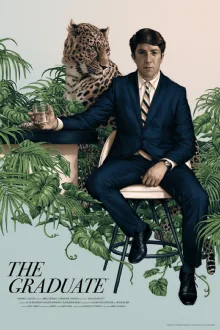
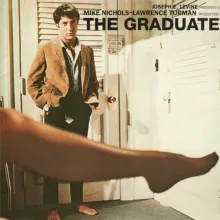
Keith Gordon and Katharine Coldiron (opens in a new tab) join Mike to discuss the seminal film along with homages and the "sequel," Rumor Has It. Beverly Gray (opens in a new tab), author of Seduced by Mrs. Robinson: How the Graduate Became the Touchstone of a Generation (opens in a new tab), talks about her work including her time on Death Race 2000.
Labels: Anne Bancroft Buck Henry Dustin Hoffman Katharine Coldiron Keith Gordon Mike Nichols Murray Hamilton William Daniels
Transcript
An automatic transcript, tidied into paragraphs. It has not been proofread, so names, titles and spellings may be wrong, and it does not say who is speaking.
Show the transcript (about 31,100 words)
Speaker 1: Hold your ears, folks. It's showtime.
Speaker 2: People pay good money to see this movie. When they go out to a theater, they want cold sodas, hot popcorn and no monsters in the projection booth. Everyone pretend podcasting isn't boring. Turn it off.
Hello? Darkness. My from the and everybody. I want you all to be quiet.
I've got Ben's college yearbook here and I just want to read you some of the wonderful things about Ben. Hey, there's the award winning scholar. We're all very proud of you. Ben, how are you track star?
What are you going to do? Now? I was going to go upstairs for a minute. I meant with your future.
You lie. Well, that's a little hard to say because I, so of the Mrs Robinson, you're trying to seduce me, aren't you? Have you gotten this room yet? I haven't.
No. Do you want to? I'll get undressed now. Is that all right?
Sure. Shall I mean, shall I just stand here? I mean, I don't know what you want me to do. Why don't you watch?
Oh, sure. Thank you, Benjamin. Are you having an affair with someone? Come?
I do think you should know the consequences of what you've done. I do think you should know that my wife and I are getting a divorce soon. What happened between Mrs Robinson and me was nothing. It didn't mean anything.
Well, that's not saying much for my wife. The point is I don't love your wife. I love your daughter. Sir.
Are you? I'm gonna ask you a question and then I'm going. No, no, I want to know why you're here in Brooklyn. Is it because I'm here?
Well, look, I love you, Parsley. Will you be getting married tomorrow? Why don't you just drag me off if you want to marry me so much? You can't stop me from seeing her.
Mrs Robinson. I'll find her. Sorry. We won't be able to invite you to the wedding, Benjamin, but the arrangements have been so rushed.
Oh, Jesus God. No. S I not the truth. MIKE WHITE: Welcome to the projection booth.
I'm your host, Mike White. Joining me once again is Mr Keith Gordon. KEITH GORDON: Hello and nice to be here. Mike.
MIKE WHITE: Also back in the booth is MS Catherine Cold Iron. We wrap up the first of several request months for 2024 with one from Brian Tessitore. It is Mike Nichols. The Graduate released in 1967.
The film stars Dustin Hoffman as Benjamin Braddock, the titular Graduate. He's facing his uncertain future and makes some questionable choices like sleeping the wife of his father's business partner. Mrs Robinson played by Anne Bancroft. If you've never seen the Graduate before, I would be a little surprised, but that's ok.
It is readily available. So go and watch the movie and come back after you have, we will still be here. So, Keith, when was the first time we saw the Graduate? And what did you think?
KEITH GORDON: I was about 12 or 13? It was definitely the first sort of R rated film I had ever seen. It was the first like with breasts in it. I have a long personal connection with the film, which actually really important watching it yet again this time too, which is that Mike Nichols and Elaine, my parents were encompassed with them, that the improvisational theater.
So they were very close for many years. I knew Mike is a little kid. He was also around when my parents were dying. Murray Hamilton, who I work with in Jaws two was somebody who became a close friend while he was, when, while he was still alive.
Now that I, that was after I first saw the film. But so there's a lot, this is one of those films that had a tremendous impact on me on a wanting to be a filmmaker level. It was really right up there with 2001 was the thing that turned me on to the idea of films is like the amazing thing. But this was right when I was turning into a teenager and realizing I think I wanna do this and this film as it has so many people blew me out of the water.
I just thought it was amazing and heartbreaking. And it was one of the first films I became aware of film style and using the way he used music and the way he used Montage and the way to tell a story. I don't think I'D, I think it was probably the first time I ever really started to really analyze and think about what Nichols did and how amazing that was. So it had a huge effect on me and I certainly have not my thing 25 times, but it's amazing that it continues to evolve.
I had such a different reaction of seeing it for this for the first time in years. I have very emotional reaction which I think has to do so with the personal connections and how many people around it are gone now. But also looking back at this film from the eyes of an older person, I think I was 13 when I first saw it. I'm 63 now.
So it's 50 years. And man, it's got a whole different level of impact when that part of youth is long gone. And you're looking back on all that's been lost and changed. And as much of the film is ambiguous, now you look back and was ambiguous as that ending is there was still that open window of hope for them along with all the that wonderful last shot, I was actually ended up in a puddle of tears this time.
And that really caught me off guard. I've never had that reaction to the film before, but it floored me saying it the first time in a while. So sorry for the lengthy answer, but it was kind of a complicated relationship with the film. MIKE WHITE: So no problem at all.
Catherine, how about yourself? Katharine Coldiron: It's very easy to have a complicated relationship with this film. I don't remember the first time I saw it, I was probably like a teenager. But part of the reason that I wanted to talk about this film with y'all is that when I was in college, I was a film studies major.
And so that meant that people at parties and so on constantly asked me what my favorite movie was and that meant I had to come up with a favorite movie, which if everybody listening knows that is a stupid question, it's like not a question you can answer. So I picked the Graduate as my favorite movie as the answer that I could give people when they asked. Not because it necessarily was my favorite movie because it was a rotating solar system of movies. That was my favorite, but the Graduate was defensible as a favorite movie.
It was a movie that most people had seen. I could talk about the sophisticated reasons. It was my favorite with people who cared. And I could just be like, yeah, youth rebellion to the people who didn't understand.
The other thing is, it was so funny to me. I watched it over the weekend for the first time in, I think, 20 years, which means the last time I saw it I was Ben's age and now I'm Mrs Robinson's age and I think that I feel exactly the opposite as you do, Keith. I was surprised at how little it had changed for me and I'm sure we'll get into why. But I just, that fascinates me that it changed so much for you, but not at all for me.
MIKE WHITE: I maybe I'm somewhere in the middle. I first saw this one when I was a teenager. I don't remember what year it was, but I probably rented it on VHS or it was just on cable and not necessarily knowing filmic techniques. I was still impressed by a lot of the film techniques, especially the editing, especially the shot of Benjamin coming up on to the, out of the water and on to Mrs Robinson and then his father's voice and he looks over as if his father was standing right over his shoulder.
Katharine Coldiron: That is so smooth. I don't think you could get it smoother with a computer these days. MIKE WHITE: No, it's a feat in 1967 they're doing this Montage and yeah, this is bringing so much of for me, the new wave coming to America. This is like people talk these days about Bonnie and Clyde and which is great.
I love Bonnie and Clyde. But people tend to forget these days. At least in my circle how much the Graduate had an influence and how much it was influenced by the French new wave. I saw this film again when I was 2223 somewhere around there and was going through a really rough time in my life.
And like you Keith, I was a puddle at the end of the movie, I could not stop crying. And that was the moment I think when I realized what the last shot was all about, I think I had taken it as, oh, they escaped and they're off on this bus and this is great and I didn't stay with them and stay with that. Look on their face watching it again for the podcast. I think I was somewhere in the middle.
I was very emotionally touched by it. But at the same time, enough distance had passed where I was like more watching it for the film making than the actual story I think. And for the emotional investment. So somewhere in the middle, I think I'm writing that line because this movie, it still just knocks my socks off as far as just how well made it is, how well acted it is.
And watching it again for this, it was the first time I really saw just how chunked out this movie is in very, oh, it's like vignettes more than anything and just that they add to each other. Katharine Coldiron: So, well, the way the acts are delineated by the songs, I don't know how I didn't see that before, but now it's incredibly obvious. Oh, so this is the end of the first act because we're playing Sound Of Silence again. Oh, so Scarborough Affair is going to enter the third.
Ok. Now, it's amazing how it's almost an obvious movie, but there's also all these like the animal prints that Mrs Robinson wears constantly, that could not be more obvious. But even though it's delightful, but there's also so many subtleties. MIKE WHITE: Not just the animal prints that she wears, but the animal prints that his mother wears as well.
It gets a little Freudian, I. KEITH GORDON: Think, great comedies. They always seem to have an obvious level. And then this other level, it's not surprising to me that there would be things like the animal print or whatever that are.
Yeah, they're on the nose but it's almost like the, on the nose buys you the room for the much stuff. And I, what great comedy films have is some ability to have them playing at the same time, whether it's this or Annie Hall or I think with Great Preston Stewart is they all have this thing on certain levels. There's just really goofy funny stuff that's on the nose and it's funny. And that's what buys the room or?
Oh, that's funny. But it's a lot more complicated. Katharine Coldiron: And now I'm just thinking about this way off, but I'm thinking about one of my favorite Buster Keaton gags when he puts a banana peel on the ground with the intention that his rival is going to slip on it because slipping on banana peels as old as time. And so he tries to get his rival to come and slip on it and he doesn't and he doesn't.
And enough time passes that he forgets about the banana peel. And so he slips on it himself. So you get the fulfillment of the obvious gag, but you also get this sort of series of tense moments that lead up to the obvious gag. MIKE WHITE: Want to talk a little bit about the opening of this film.
I love that we start with him on the airplane, that disembodied voice of the captain. The first of so many zoom outs, the use of the zoom lens in this movie is amazing. And especially because the zoom lens is very particular and I know some people that it's just anathema to them, the use of a zoom lens, but it works so well in this movie to be able to take us through space, but make it seem so artificial with the way that we're moving through these planes that there it's not the actual camera move moving. It's the actual lens itself and just that way of it isolating and spotlighting him and starting with him.
And I love that the shot of him with the white seat behind him is so similar to what we'll get later in the film when he's waiting and going through that whole musical Montage of his fling with Mrs Robinson where you have him against those pillows and you pull out from there, you have the one zoom out of Mrs Robinson when she's in the hallway saying goodbye to Benjamin and it zooms out and then you get to see that he's there with her and the distance between those two people, the camera is such a amazing part of this film and the use of that zoom just really knocks my socks off for me.
KEITH GORDON: What zooms do and they do in this film really? Well, that's different than a camera movement. Is it forces you in a very artificial way. But I think in a great article, a way to change perspective and the film's perspective and your perspective as a viewer, when you're starting those close shots, you're inside b his head.
And then as the camera comes back suddenly, it's not about him, it's about him in relation to the space around him. And the film keeps doing that over and over again. This is about him, but it's also about the fact that he's not connected to that world around him. He's not really on that plane he's not really in Los Angeles.
He's not on some level, he cannot connect to the world that he's in and he's isolated from it. And there's something about those dooms that even if you put the camera on a dolly and move. I don't think it would translate the same message that would feel more like the filmmaker changing perspective. Whereas there's something very subjective about a zoo where it, oh, here's this guy, oh, here's this guy in a bigger world and that bigger world than him are just not meeting each other at all.
And I think the really, for me, that's one of the things that I really think works great with the zoom of the film is that it enhances that sense of he is not at home anywhere, he doesn't fit anywhere. He has no place to be at least as the film start and for actually a good deal of the film. So for me that really, and then, and then this is when Mrs Robinson, you neither does she. Katharine Coldiron: There were lots of shots that like think about the shot when Benjamin, I know we're jumping out of order here.
When Benjamin comes down the stairs into the party, we see this close, this tight, close up on him and like the various people who come in to invade his space. But we don't have a master shot of the staircase or the room or the house or anything. All we have is just kind of him and these people really close up really claustrophobic. And that happens again when he goes into the hotel room at the Taft, you don't see the hotel room at all, you see him walking around it.
And in a certain way, you don't need to see the inside of a hotel room. You've seen it. It's not necessary for Mike Nichols to give us an establishing shot of the hotel room. But it's also indicating that the people are more important than the spaces that they're in, which happen throughout the film until you get to Berkeley where the space suddenly becomes Paramount when previously, it was much more about the people inside the spaces.
KEITH GORDON: I feel like the spaces of that home in L A, the pool, the neighbor, it's his connection to the space to me is what's really at play, not the fact that the space is unimportant, but that he's not connected to any of it. I mean, it's for sure. Katharine Coldiron: Yeah, the alienation is crucial. KEITH GORDON: To be the whole thing in the party.
For figures, things like a movie now like Son of Saul, where your entire two hours at concentration camp is in one close up essentially. And that's a way of being in a completely subjective space. It's not that the space isn't there. It's just a space that he doesn't even in that swimming pool and surrounded by the family and it's nickels doing different ways of telling that story.
But boy, it's like he's never anywhere, even with Berkeley, he begins to be in a place that he built, begins to build. And even then it's still, he's like the animals in that zoo, he's trapped in a space but he's not part of a space. And then at the end of the movie it's like he's on the bus and, oh, yeah. No wet.
Yeah, that's just a personal reading of it. Katharine Coldiron: We don't see the inside of his room in Berkeley very well. But we see these great wide shots of the campus which probably UCL A and I agree with you about the alienation, but I think I'm cottoning too much to a theory of Mike Nichols as a filmmaker that he's more interested in personal stuff, especially later in his career. And that made me one of the books that Keith sent us.
I was like, oh, that makes a lot more sense that he's about what goes on between people and the weirdness is of what goes on between people. And even though this is a very technically brilliant film that technical brilliance would become less and less a priority for Nichols after 1980. And I couldn't figure out why we were still thinking of him as an auteur until I read that I was like, oh, ok, that's why because he's thinking about people, but you have a way more personal and intelligent connection to Mike Nichols than I do.
So, you're probably right. I was just observing these, we don't get the lay of the land. And that's unusual in a film American, an American film. KEITH GORDON: You and I are, are, are not in such disagreement as it might sound because I do think that we're not getting the lay of the land.
I just think that there is a whole filmmaking point in that because I think he did do things in films, but he did get the lay of the land more and I think he was picking and choosing we even and I haven't rewatched them in a while, but even my memory of who's afraid of Virginia Walt. But you see that space much more. And then he went to a style where both in this and in big chunks of carnal knowledge, which to me is very thematically related. Again, people who are disconnected from themselves, from their own body, from interacting with other.
I feel like yes, he's doing all this work at times and all that. But to me, it's so close that it's it preclude connection. It's very much about the human beings. But part of the Symax file to me speaks of a lack of connection between human beings.
He's not playing with a lot of two shots. He's not playing with a lot of, oh, this is how people are interacting. It's people isolated from their surroundings even other human beings in their surrounding. And I feel like that's in only some of his stuff.
He doesn't do that. And to me that's why I think he is making a point with it because it's not, oh, that's just the style that he brings to everything. It's the film that he brings to films about people who are floating alone in space to me and were in some denial about what, where they're at emotionally. Katharine Coldiron: What Kyle Stevens says this is where I'm getting all of this Nichols divulged as much as an interview.
It's what has always interested me the things that go on between people, especially the unstated, less than immediately visible things that go on between people. It's what they say about Morandi that he paints the space between the bottles. So I think we're both talking about the same thing. There's no two shots, but it's still about interpersonal crap.
KEITH GORDON: No, it's absolutely. But sometimes it's about the fact that the interpersonal is not very personal and that's what's so interesting. This film and carnal allow to me are about incredibly intimate relationships that are somehow not intimate at all. They're about sexual relationships, romantic relationships, family relationships, and yet somehow these people are not in each other's or.
Katharine Coldiron: They might just as well be shaking hands. KEITH GORDON: Yeah. That's a really, it's a really that quote to something. MIKE WHITE: I love that he's isolating people even when it comes to them being in the frame by use of light by use of focus.
Think of that shot when Benjamin and Elaine are finally together and they have connected after he's been the worst piece of shit ever to have been a piece of shit on the face of the earth to her. And they're there in that car and part of her face is obscured by, I believe it's a steering wheel. He's over on the side, out of focus. She's just in that narrow focus right now and that narrow focus happens so often in this movie and especially it'll happen just shortly thereafter because they really don't get a second date.
As far as I can tell, it feels like they just have the one. He's a shit to her. Eventually he sees her crying, he realizes what a horrible person he is, they end up making up making up. And then that moment when she finds out what he and her mother have been up to the way that we are playing again with three planes of vision and the focus slowly coming to Elaine when she realizes what's happening.
And as soon as she becomes clear, it's the, oh my God moment for her. That's brilliant stuff for me and the way that we are moving in and out just with close ups and focus and all of this just through one single frame. KEITH GORDON: And to me what you're hitting on and because you're talking about it with Elaine and I do think that contrary to the movie cliche that I think Nichols is playing with and again, I don't know what was in Mike's head. I'm just, this is just my reaction to it.
But that relationship with Elaine is no more real than the relationship with Mr Mrs Robinson. Some way to witness on while Robinson is more honest, even if it's a lot more, more fucked up. But Elaine is believed that you're up to writing it and that really struck me watching it again this time. It's one date.
He treats you like shit. Most of the time they can say like a few minutes together and then I'm gonna marry her and she, it completely worked. Nothing real, no real connection, no real human sharing, no real human understanding. She shows up in his room in Berkeley.
Maybe I'll marry you. It's a very fantasy, almost like parody of old movie things that people meeting and being instantly in love, which I think is why the end of the movie is so powerful because we realize at that moment this is bullshit too. You know, it's nicer than the affair with the older woman who basically hates them and he ate her on some level, but it's nicer based on nothing and it's just as shallow and it's just as much still in Ben's head. It's his idea of romance.
It's his idea of I want what I want it's his idea of. No, she'll make me happy, but we don't see anything that convinces us. It's based on anything real between those two people. And that really came home for me seeing it this time even more was how weirdly detached from reality, even the good relationship in the film it and how to and how detached the film is in general.
There's no mention of Vietnam. There's no mention this film takes place in this weird movie bubble, which I think is again, Benny's bubble that he lives in and he may be angry at and hate it, but he's still driving that Alpha Romeo around and he's still having this very fantasy disconnected life, good and bad that has little to do with Mo, what most of us deal with as we get older have to actually make sense out of life. MIKE WHITE: This is not a romance because he becomes a stalker basically in the second half or the last third of the movie.
He just not. Katharine Coldiron: Basically he's high key a stalker. MIKE WHITE: He is, he's definitely a stalker. And what gets me though too?
There was a great extra on the criterion disk which was talking about Sam Moe and the relationship between the editor Sam Muste and Mike Nichols and this woman that was talking was saying, oh, there's coverage for a lot of these shots, there is coverage but they chose not to use them. So using that handheld at the party Oh my God. I love that. I love how uncomfortable that is and that you just feel like hands are coming in from all over the place.
And then you get that great voiceover of the woman who's just like, all right, everybody listen to me and that so speaks to me as far as like William Daniels as his father. Later on, he does the exact same thing. Does the whole like, all right, everybody, we're about to reveal Benjamin. Listen, everybody.
I want you all to be quiet. I've got Ben's college yearbook here and I just want to read you some of the wonderful things about Ben. Be quiet. Please.
Ladies and gentlemen, your attention, please. For this afternoon's feature attraction. Hey, over there. Yes, I mean you your attention, please.
MIKE WHITE: Everybody talking about Benjamin. Benjamin is as fake as that year book photo. There's nothing to him. It feels like he's gone through school.
He's done all of these things, but he has no idea where he's going to go and trust me. I have been there. I have felt very much like Benjamin has felt, I'm sure all of us have felt that way at some point, but I'm just like you gotta do something about it and he just, he wants to literally just float. He wants to be on that raft, that black raft and being black and white play such beautiful poetry in this movie.
Wants to be on that black raft and just float around, just drift. And I love how his dad is literally blocking out the sun when he's questioning him as far as what did you just do for the last four years? Why did you take all those classes? You got me?
He has no ambition at that point. And I have been there, Benjamin. Katharine Coldiron: The comparison to what do you got was very apt in one of the, one of the books that I read about that's very much the rebel without a cause feeling of OK, what do I do now, Ben? What are you doing?
Well, I would say that I'm just drifting here in the pool. Why? Well, it's very comfortable just to drift to. Have you thought about Graduate school?
No. Would you mind telling me then what those four years of college were for? What was the point of all that hard work? You got me?
Speaker 1: Hey Jie, what are you rebelling against? MIKE WHITE: What do you got?
Speaker 2: My dad never went to college. So it's really important that I go. That sounds familiar. So I graduated.
I call him up long distance. I said dad and now what he says, get a job. Same here. Now, I'm 25.
Make my yearly call again. Said dad. Now what he says, I don't know and get married. Katharine Coldiron: I mean, and something that I feel is lost in an adult interpretation of this film is how it feels that until you Graduate from college.
Certainly. Now, 1967 I'm not sure you feel like you have followed a program that other people have set out for you and you have done all of this work and now that you've done it, what is next? And I realize I'm very obviously stating the point of the film. But I remember feeling this way in 2003 when I graduated from college, I was like, ok, so I did what all of you told me to and do I get a reward?
Do I get to lie around for at least one summer before I work for the next 40 years? Is there some kind of pot of gold waiting for me now that I've chased your rainbow for 12 years? And the answer is no. MIKE WHITE: Not unless you consider crippling student debt to be a pot of gold.
Katharine Coldiron: I get Benjamin's desire to float and drift. I get it so well. And I feel that as an adult, you can look at this and say he's being hopelessly self indulgent. And what kind of alienated, spoiled Rich kid is this?
The fact that it speaks to so many people who are over his age either means that people's memories are better than I expect. Or here is my other theory of the film, Benjamin is essentially a Y A character, the way that young adult writers builds this sort of blank canvas into their books so that anybody can imprint on Harry Potter. Anybody can imprint on Katniss Everdeen. You can walk in and put whatever your desires and personality quirks are into this character because they're not a very particular character.
They're much more ambiguous and vague than that. And I think Benjamin very much is this kind of blank canvas that you can imprint with your own anxieties and feel that he is alienated in the same way you are when, in fact, that's not true at all because I didn't grow up in Beverly Hills. Are you kidding me? And also I, if anyone, I would be Elaine in this movie, if I'm seeing it at 21 but she is such a blank slate that there's just nothing there.
And that's, I think because this is the product of male filmmakers and a male novelist and they have no interest in giving her in her life. But I thought this was an illuminating way to think of this film that it's all very vague on purpose so that you can imprint on it yourself. KEITH GORDON: That seems like there's a lot of truth in it. II, I also think that the film and it's not really contradicted to that, an extension of it or very eight on it.
I think part of what makes the film so classic is that it can work on a couple of levels at one. I think the fact that we can, you can look at Benjamin on one hand and be judgmental and see what's fucked up about him as well as the world that he's in. And you can still simultaneously emotionally identify and go, he fucked up. He's screwed up.
He's living in a, in his own fantasy. He's just in his own way. He's as bad as his parent in the generation after he just cooler and at the same time, go, but I completely get it and I completely am him and I completely understand that that sense of wei and anger and hurt and disappointment. And I think a again, I feel like great, not the fake film, fake art has that ability.
You can be seeing both sides of the argument at the same time. And I feel like this is one of those movies where, you know, depending on how you wanna look at you can have. But I definitely feel when I watch this movie, a split between my intellectual analysis of the ideas and my emotional self, which completely identified with it and remembers my own early loss of sexual innocence and emotional innocence and work. And II I, it's so universal and yet specific to a very strange world that I feel like that where it works so well.
But I feel like that what you're saying, I think it part of, I think if he had been a more specific character in the traditional way, we it would have been so easy for millions of people for age 12 to age 90 to see themselves in the guide and to be able to have the film work on both levels and we need, we would just sit back further and go, oh, that's so interesting. And what look at what Nichols is saying about so, but it wouldn't have that this thing that we all get caught up in, that we are that guy even if we might criticize.
And I think what you're saying is a really interesting way of looking at that. And I do think that's true for certain universal characters that they are that way because there's enough ambiguity and blankness to do that. MIKE WHITE: I want, I don't want to derail our conversation, but I want to just look at one particular thing and get your guys' read on this, which is the opening credits when Benjamin is on the moving walkway and you get the sounds of silence going on, you get him moving from right to left or basically, he's stuck over on the right hand side of the screen.
He's in danger of disappearing off the right hand side of the screen. I think that all three of us have probably seen Jackie Brown which takes the same opening and does something different with it. It is across 100 and 10th street. The theme from another movie that's playing over that for me like Benjamin being in this and again drifting, he is being pulled along literally by life with this.
And you get that incredible song starting off with Hello Darkness, my old friend and Darkness plays a major role in this movie with between dark and light. You think about the scene of him and Mrs Robinson trying to have a conversation where he wants to know more about her and that scene. Oh My God. That scene is just fucking brilliant.
The way that it starts off with him wanting to talk and ends up with him just let's not talk about this and the all of the places that they go in there and the lights on the lights off the lights are in the background. All of those beautiful things here we have Darkness being addressed literally right in the opening of the song, you compare that with Jackie Brown and I'm just like, I don't see why you would do that. It feels like just a cinematic homage rather than any sort of purpose to what's going on. And I was just curious if I'm just being harsh on Mr Tarantino again or if you guys saw maybe there was a reason why that particular shot was parodied or paid homage to.
Katharine Coldiron: I have some thoughts. One is that he's declaring that the hero of his movie is a black woman, which is pretty radical when you're used to this shot being a young white man. One is that Jackie's moving in the opposite direction because if I'm not mistaken, she's going to work. Benjamin's going home, he's leaving the airport, she's entering the airport.
The other thing is she is extremely colorful, not just her skin, but also she's wearing, if again, if I'm not mistaken, a yellow scarf and a blue uniform and Benjamin is very black and white, it's a white thing and he himself has black hair and it's just all very monochromatic. Whereas Jackie Brown is her world is full of color. I feel like I think Tarantino is very deliberately opposing the shot while he's calling attention to the fact that he's echoing the shot, which is something he does a lot. KEITH GORDON: I have sometimes big feelings about the fact that he so I feel like I yeah, often just mimic things because it's cool to mimic things and quote things and he has fun with that.
But I do feel like in this case was making a point of doing the exact opposite jaw. And yes, it's a quote, but it's a quote that is making to me making a point about the difference in these two worlds, but I couldn't say it anywhere nearly as well. MIKE WHITE: So III, I mean, Benjamin, the Jackie has a purpose very much and I like to, I forgot that there's the disembodied voice again in this because you have him on the plane with the pilot's voice coming over and then you have the recording of the voice of the whole, if you wish to pass do so on the left type of thing just over and over again.
And then all of those people that are passing by, which is also interesting to see that he is, he's opposing them because they are going this way, they're going that Jackie Brown way and he's just floating over to the left and you get that a lot too when there's the other Montage while there's, I love that Nichols my God, dude, he uses another full song of Simon and Garfunkel and then another song right after it, you're just like, OK, that Montage is nope, here's another one and I just love that he does that so ballsy that he and that he does like the Scarborough Fair thing like four times later in the movie, it's wild.
But like with that Middle Montage, the way that Mrs Robinson is moving back and forth across the screen and Benjamin is just still and laying there in that bed and you see her like either taking off her clothes or putting on her clothes as she moves across the screen. KEITH GORDON: The two dogs, they would, I agree. I think it's one of the most masterful, cool things in the movie that you go right from one song to another dog. But it also speaks to me of a moment.
That was an album, a American culture and music, which is a huge driving culture was right at that moment going from a 45 D culture to an album culture that you were going into doctor in, into charger tempers you're going into, there was this transition to the musical pieces that were much longer and complicated and that we were no longer just looking for hits. We were looking for things that were more dense and where music had more. There's some, some virtual quality and I feel like that it's not accidental that he did that.
I actually found myself thinking, I whether subliminal or conscious it really echoed what was going on in music at the time, which was saying that, yeah, no piece of music is just freestanding. It's like part of a voice. And he did that by obviously having Tar will do all the songs. But I can't think of another American film that did that Italy mainstream American fell.
He had done that before where you had a rock or pop musician doing all the songs literally in the film and that being the voice of the film. But by doing it that way specifically to me, it really spoke to that album mean out which was a much more sophisticated way of looking at youth culture. It was music going. Yeah.
No, this isn't just teenybopper music. This is music that's actually a lot more deep than it's bo it's ever gotten credit for. And I feel like that was, that seemed very specific to me. Katharine Coldiron: It really struck me that after this comic scene of them bickering over whether they're going to have sex or he slams the door and it's like this sort of triumphal train going through the tunnel moment.
And then the song that starts is like the least fuck song of all time. Like who I can't figure out the meaning of that, whether it's supposed to be like sex will not solve your problems, young man or something else. But it's, this April comes, she will is a sweet little song but I sound of it. Oh, don't know that, that.
MIKE WHITE: No, you have to be some sort of psychopath if you have sex to sounds of silence. The contrast between, is it Dave Grusin or? Yeah, I think that he's the other musician that gets credit. Who does all the more like cherry blossom, apple wine type of music?
You know that good life type of music? Yeah, that's great. I love it and everything. But my God, whoever put together the soundtrack for this should be just taken out and shot because I think that the soundtrack for this is just an affront to good taste.
I think that Dave's music is great. I think Simon and Garfunkel's music is great. Some of those in incidental tracks where it's like the instrumental version of Mrs Robinson and stuff, but that Mrs Robinson isn't actually on the soundtrack album and that you get those weird like snatches of things. What the hell are you doing with this?
It's just, it's one of the most disappointing soundtrack albums in my collection. When I found that when I bought it, when I was a kid at a used record store, I was just like, yeah, this will be great. I love these Simon and Garfunkel songs. Do you get four and like that Big Break Green Pleasure Machine or whatever that is.
I'm just like, yeah, it's fun to listen to once every 16 years, but that's about it. KEITH GORDON: I understand your point about Mr Robinson. Although again, II, I don't actually know what the relationship of crime of when any of these songs were released as music versus the film did all the. Katharine Coldiron: You guys didn't do your homework.
This information is all in the stuff that Mike sent us. The editor was cutting the film to Simon and Garfunkel's first. I think their first record or whatever the previous record that came out before this movie and they had something else in mind or they were gonna ask no, they asked Paul Simon to write a bunch of different songs and he did and Nichols didn't like any of them. So they just used the songs that were that the editor cut the film to which is why there are all these, the Mrs Robinson is the only original one.
But I believe just because I've tangled with music publishing before and then Keith, I bet you have to, I bet it's not on the soundtrack album because of a Right. KEITH GORDON: Yeah. The album I would say definitely would. That would, if I there'd be no other reason not to include it, you'd sell a lot more copies.
I'm sure they want to, I haven't been able to do soundtrack albums for things of my own because the whites were so, in fact, the only way we could get songs a lot of the time to say we won't do a soundtrack album because it was just like it was so prohibited. And obviously it's not a little tiny indie movie. It was not a big expensive movie either. And yeah, there'd be no, there was, I am sure there was no artistic choice to leave.
All this is Robinson from the soundtrack album. I'm sure that was somebody saying we're not spending $450,000 for an album that will likely sell X number of copies to include that song. What's interesting in terms of how much of it's used in the film. I do think it didn't and I don't know.
And yes, I would have been, I have not done as much homework as I could. It. Well, I would just walk in the movie and be, but you know, the oh no one. But it's fair.
I'm actually hoping you'll have great insight that, that I'm actually hoping you'll go. Here's the answer. Because one of the things I've always thought about is we don't hear the full song of Mr Robinson. We do hear all those other songs, Mrs Robinson, we only hear fragments and I always wondered if that was a conscious choice on Nichols part because it was almost too on the nose to have all the lyrics to have verse after verse of Mrs Robinson.
You walk around the grounds and you're crazy and you're that unlike the other songs which are more poetically, right? But they're not so flaming on the nose to suddenly go to a song that's like the name of the character and what happens to the character. And I just feel like it's so unsubtle that it's, he took it as far as he could dare take it and you hear Mrs Robinson sung a few times you hear but it anymore and it would suddenly be like a bad rock and roll movie use of music. Here's the song about the character, but that's my guess.
But I actually don't know if or virgin whether that's the case, but I do think it seemed real deliberate. That song worked around as opposed to the other songs just being laid out in full. MIKE WHITE: Well, we're talking about how important albums are and just the way that the album was put together was really more what was I was finding offensive as far as Sound Of Silence, the Single Man Party Foxtrot. If you put this album on, you're just like, wow, like it's so schizophrenic and it's, man, there's two sides to an album for a reason.
Put all that Dave Gruson stuff on one side, put all the Simon and Garfunkel stuff on the other. Good done. I never have to play half of this album ever. Katharine Coldiron: The Dirty Dancing soundtrack is like this too for the record.
KEITH GORDON: But on the other hand, actually, the help album is the way you're saying it should be, which is a help album. If I remember correctly, all the Beatles songs are side A and all the George Martin instrumental pieces are side B so you definitely can. Katharine Coldiron: In Yellow Submarine is like that too. All the weird on side B it's, yeah, while we're talking about the music and Mrs Robinson, I knew that song long before I saw this movie for the first time.
So when I started hearing the whistling version and then the sort of guitar version I was like, OK, we must be coming to the end of the movie. It was an auditory cue of we're coming to the end. Now we're coming around the bend. And I'm curious if the timing was such that the song was a hit before the movie came out because if not, then that's clearly not the way that Nichols wanted it to be received.
But when I watched it this weekend, the same thing happened, I was like, oh, we're coming to the end now and it's not just because I know the movie. MIKE WHITE: Well, it's interesting that Benjamin Whistles Mrs Robinson at least three times. He's whistling the song. Like, it's very subtle the first time, but there's one time that he does that where it's just like, oh, he's whistling Mrs Robinson.
Interesting. Ok. And, yeah, I'm curious what the timeline was when it came to that particular song because, yeah, that was, an interesting way of going about it to not include that on there. And I agree with you as far as they, it would have been way too on the nose.
But I would have thought that just having it, maybe not even in the movie, but just as the final song on the soundtrack would have been an interesting choice. Katharine Coldiron: It would be over the credits in a modern film. MIKE WHITE: I love these older movies where they have the credits almost all at the beginning and then maybe give you a cast list at the end. But the way that they can end this movie so definitively.
KEITH GORDON: They now having to have the song at the end, it's really too bad because what you, it almost inevitably, even if it's a good song, it still feels too much. Oh, here's the theme of the movie. So it feels like what it is, which is something act on. III I think most people when they're making movies aren't sitting there thinking about what the credit is gonna be like, really for the filmmaker, the film ends, I think usually when that last fade out or cut to black habit that those credits are this other thing you are dealing with later and you're trying to make it feel of a piece and all that.
But on some level when you're editing the film, the thing you're building to is that last moment and then it's always a little bit of like, oh, we have to reenact minutes of credit in the song. And how do we do something that doesn't take away but adds the experience. And, it's not that it doesn't, it can't really work, but it's always a little bit strange. And I do think there's something great about movies just ending and you came to the end, the image went away and that was the end in a perfect world.
MIKE WHITE: They should have done out takes all of those funny out takes like Dustin Hoffman, putting his hand on Ant Bancroft boob and then cracking up and they both crack up and Murray Hamilton blows a line about you. You're a Dalmatian. Oh, I meant to say just despicable. Oh, man, what am I doing then?
And the whole crew laughs and yeah. Katharine Coldiron: I'm of two minds about this question just because I watched Sunset Boulevard over the weekend again for the 80 Jillian time. And the way that one ends with you in a pile of rubble and then you see the Paramount logo and it's over and it, oh, that's great. But I also love sitting in the theater seat and decompressing for 4.5 minutes and reliving the movie and thinking about the movie.
And also, as Kermit Frog said, these people all have families, they deserve to see their names up on the screen. MIKE WHITE: I don't know about you guys, but mine had a stinger. It was Samuel L Jackson coming into Dustin Hoffman going, I'm putting together a team. What do you guys think of Mrs Robinson?
What kind of life is Mrs Robinson leading? Because I am of many minds when it comes to her herself. The even just the reason why she doesn't want him to date Elaine, he gets her to say that she thinks he's not good enough or I don't know if that's the case, if that's just the excuse or if it's jealousy. I want to say that it is all jealousy, but then it is interesting the, oh my God, the seduction scene and how Elaine plays a part in the seduction scene and just the way that Mrs Robinson, like she's fishing when she's got him on the line and she draws him in and then lets him back out again and draws him back in, then lets him back out again and then finally just sits there and pulls and pulls until he comes up those stairs into her room and that wonderful shot of her naked body coming in reflected on the painting of Elaine.
Oh my God. And then those flash cuts of her nakedness or her body doubles nakedness and man, oh man. See what you will about Dustin Hoffman. But him and that expression on his face and just him going.
Oh my Christ. It's just so good. KEITH GORDON: It's, it's funny I've gotten much more and not actually, not that surprising. I feel much more empathetic towards her as I got older when I was a kid.
I think she was more villainous to me. And now I go, wow, she breaks my heart and she is as trapped in it all as Ben is and she as a, in that world. Yeah. Yes, it's true.
He has a way out. She has no way out. She's gotten, she's not going anywhere whenever she had that love of art. All the things that got lost, forced into a marriage in a dead world.
Clearly, there's somebody artistic in there. She was an art person and now she's living in hell and will never get to leave. And I actually find her, you know, she may be screwed up but boy, she breaks my heart and I do think part of me thinks that the fear of Elaine is that she knows that they will, they might really hit it off. And that Ben says this is the one good thing in my life that I look forward to.
I think it's probably a lot more true for her again, Ben has a future somewhere. What's for her when this affair is over nervous breakdown, if she's lucky. So, I think part of it is not wanting her daughter to take away. The one thing she thought the other thing is, I think on a practical level that really struck me this time is, oh, yeah, if you end up with my daughter, this will come out and I will have to live with that and I will have to live with you.
My daughter knowing this about me, I thought on a sheer practical level, you've been fucking somebody for months and then your daughter ends up married to them or with them or dating them for a year, they're gonna know and your daughter will never look at you the same way and your husband will. So she's also fighting for her life at that point. Purely practical level and she disguises it as she does with anger and all that stuff. And I'm the one in charge, but it's also holy crap.
I'm more doomed than ever. I will be all alone. I will not only not have been in this blue moment of sexual relief in a world where I have nothing. She's not sleeping with her husband anymore.
She tells us he's got nothing going on except this. But it would be inevitable that, you know, and it would be inevitable that Elaine would never forgive. So to me, there's a really basic human level that she has to, she has to adopt it and it's just a very clever negotiating technique to make it. She thought you're not good enough for her.
But I feel like that's all like a good actor when a scene you often cover your real objective by pretending to be about something else. I just feel like this time it really struck me like, yeah, she is so fucked if those two ever get together and not just in some of that in convenient way, but in what little is left of my life is gone. So that that was what hit me at this time particularly about that moment when she's like you can't and then she has to cover that because she can't afford to put that vulnerability. So she has to make it about you're not good enough or you're, that was what happened to me this time.
Katharine Coldiron: I had a lot of thoughts. One was at the end of the film in the scene when she coolly calls the police and says we have a burglar here. Are you armed? There's a read of the film of her as villain from start to finish that.
There's this very straight line where she sets out to stir the pot and fuck things up between her husband and his business partner in some machination that we're not privy to some kind of weird Beverly Hills nonsense. Or like I struggled so much with these characters motivations this time. I was like, why does she do this? Why does she do this?
Why does he agree to it? Why this is just going to make everything so messy if you sleep with the wife of your butt? So I could see how the plot was trying to set her up as a villain. I also thought she was deeply sad.
The family dynamics in the Rob family escaped me entirely because it seems like Elaine both doesn't want any part of her mother but also defends her. If I had a mother like that, I don't think I would have a good enough relationship with her to care to defend her. If this came out, she seems to switch between playing games with Benjamin and not playing games with Benjamin kind of back and forth with weird facility. I have every single time that I've seen this, I have been moved by the infinite dignity with which she reaches down to pick up the sheet after Benjamin whips it off of her and the way she delivers the line.
Yes, I think it's because you're not good enough for him is believable to me. But it's possible that there's some kind of weird Freudian thing going on where it's because you have had sex with me. Thus you are filthy and you shouldn't touch my daughter like that as opposed to because she actually thinks he's not good enough. It's because his association with her makes him not good enough for Elaine.
I think the film is actually more insightful about her than it is about Ben. But that might just because be, because I think Bancroft's performance is better. I think she's fascinating. I want to read a whole book about her.
But I also just watched the, Mini Capote versus The Swans and she really reminded me of the horrible Rich New York women who no parenting instincts only care about money. Oh, and the way that she looks exactly like Benjamin's mother. So here's a question like they have the same hair, do they have the same streaks in their hair? Mrs Robinson wears animal prints, but otherwise they both wear a lot of black and white.
They are clones of each other. And I was trying to figure out if that was a Jocosa thing or if it was a Beverly Hills thing, if they're like supposed to all the wives and all the husbands look alike or if it's like deliberately a mother thing. MIKE WHITE: I think it's deliberately a mother thing. And one of the reasons why I say that is we're introduced to this poor lady by getting a, it's an out of focus shot of her ass.
But that's the first way that we see her is when she comes in front of the camera lens, like we have William Daniels there out of focus in the foreground while Ben is in the background against the fish tank, which ironically has a little diver in there, which is exactly what he'll be in just a few scenes. But yeah, we're introduced to her that way. I want to say that she's got a lot of zebra print as well. Not necessarily the cheetah stuff that or leopard print that Mrs Robinson Rocks.
And I'm not sure if that's giraffe print on her sl slip or if that's more leopard print as well. But then to have the reaction that Mrs Braddock has when he says that he's going to marry Elaine and she screams. Ben says that he and Elaine are getting married. I don't believe it.
MIKE WHITE: That's what he says. Right. I'm going up to Berkeley today. MIKE WHITE: And it is one of the most bloodcurdling screams I've ever heard.
But then she turns it into a laugh. That's freaking brilliant man. I love that. She does that.
Katharine Coldiron: That scene when she's talking to him, when he's shaving, she is like full on wearing a negligee like it's not, it's black underwear. MIKE WHITE: That scene is really intense and when you get the moment of the blood, that's just, it's like a pact has been made. I will never speak of this. KEITH GORDON: I feel like the truth is both things which is that I do think there is the little boxes theme.
I do think it's the idea that all these families look alike. All the houses look like all the women dress alike. All the men vaguely look alike. And I also think it's heightened that the two mothers even look alike.
I actually think, I think Nicholas is gone for both. I think he's going for. Everybody in this world are trapped in a very small range of how to be. But I think those two women have even more in common.
And, yeah, on some level he is sleeping with his mother because all the women in that world and all the mothers in that world are really similar. And what we find out is that Mrs Robinson actually has a little more individuality and a little more personality and a little more soul than most of those women do at least as the film seat. And that's what's so tragic about her is she's trying to play that role in light but she hit the wall. I feel like she and Ben really are actually doppelgangers or something where they both at different points in their lives have gone.
I can't do this bullshit anymore, which is why I think they end up in that hotel together. They both need some way out at the sea. Oh and they're both grabbing it whatever lifeline and they're each other's lifeline, but they're also both so fucked up and neurotic and all that, that they can't do it in some healthy tweet way or romantic way or even dishonest way. But she is just as I think she picks him because it's, I'm going down for the third time here.
I gotta grab onto something and she's covering it up because that's what you do. And he's at the same point and I think they recognize that and it was like, game, recognize, game. It's like drowning, recognizes the drowning. And I think that's why they end up in that hotel together and why, in spite of all the friction and in spite of all of it goes on for a month.
That could have been a one night affair. It is. So there's something in each other that they are using it, keep each other alive, even if they're calling each other apart at the same time. At least that was, that's how it feels like to me.
Katharine Coldiron: Oh, that's fascinating. You just unfolded a whole corner of the map for me. But my friend Rick says that every woman in the world knows what she's doing when she takes off her pants and that men are much more willing to blindly rush into it. And I feel like Mrs Robinson is, I don't know your interpretation of it, which feels so right on.
Does not allow for that. If I were in her position, alcoholic or not, I would have thought through all the ramifications of this and part of it is that you may never get to go to another Beverly Hills party ever again. KEITH GORDON: I'm just intrigued by the idea that she's somebody who worked so hard at giving the impression she thinks about everything she does and that she spent a lifetime selling that about herself. But I do think she is such an unlikely target and it is so random that I think she's probably telling even herself.
I know just what I'm doing. And I think part of what the film reveals is she doesn't, she is not, she is not the automaton. She so wants to convince everyone including herself. She is, she's so not the clever manipulator.
She is wildly more human than that. And that's what really came through for me. Thing at this time is like how much of that felt like an act to me. And it's what I think right about an Brock performance because I feel like there's this whole surface.
But then watching it this time, I went, man, there is a much more complicated person underneath it that you have built a shell to kind of f function with. But that's not who's underneath. It's much like a Birdman character or something who's got this way they function in the world but crack the egg and oh no, you're not what you're telling everybody including yourself. You are.
And I felt that before, but I really felt that this time, I felt like she just as complicated as man and really not that different. Katharine Coldiron: Except she's angry, she is infuriated. KEITH GORDON: Then it's really rude and snarky and she's more, she's older so she does it with more impunity, but she's completely cynical and sarcastic about everybody and everything. Katharine Coldiron: I feel like she's calling on this well, of rage that I think is very inappropriate for women to express, particularly in the mid sixties, Beverly Hills milieu that Ben hasn't even got a clue exists at this time.
I think he's angry at the establishment in the kind of rebellious youth way. And I'm sounding very dismissive because I'm 42 and I got a lot of female rage myself. So I know this well, is huge and it's terrifying. And for him it's more what can the world give me and being angry?
That is not apparent yet. But it's gonna be a parent in five damn years because the world will drop all this stuff in his lap. KEITH GORDON: Well, I think you're absolutely right. And by the way, yeah, II, I don't think there, it's an equivalent amount of anger or justification.
I just mean, both of them are looking at the world in a, in an angry self. But I think, yeah, she's got a lot more to be angry about. She's also lived a lot more years trapped in a box and it said she's got her way out. Ben's got a way out.
He's male, he's that award-winning scholar. He can be angry and snarky about it all. But he also somewhere has an skate hatch even if he doesn't fully recognize it. She has not.
So, I don't mean that they're the same place but I do think they're both looking at this world they're in and they're angry at it. She got a lot more reason for rape, which is why in some ways I find her more empathetic now than I find him because I do look at her and go. Yeah, you better. She's gonna be angry.
She was trapped in a life and she spent the last 20 years trapped in a life and then she's never getting out of it. The ways out are being losing everything. She has essentially being the equivalent out on the street or losing her mind or living in this lie till she dies. And that's what I feel like she's looking at this point in the story and yeah.
So yes, she is by far, the more righteously angry, I just mean, they're both people looking at the system they're in and hating it. But she's got, she's a much bigger victim in a way and as angry as she, as much as she uses her anger to prevent, to say I'm not a victim. I'm in control here. I feel like it's that thing of the protest.
You must, the more she drives the show, I'm the person in control of a band. I'm the person, the more I go, man, you're not in control of anything. Neither of you are. Katharine Coldiron: I was gonna argue back against you because that scene of her in the bedroom packing with the phone call is so controlled.
But that's not the last time we see her, the last time we see her is screaming her head off at the church. So I think you're right. KEITH GORDON: Well, and she is good and she is able to control a man like everything. It all whole contradiction.
She could control him in a theme. But that's who she can control. She can control this 20 year old kid who has no idea what the fuck he's doing. Ok.
Wow. That's not really having control of your life. It maybe gives her a moment of feeling some agency that she can manipulate him but being able to manipulate a pretty viral 20 year old with sex and attitude, it's not much, she's smart enough to know. This doesn't mean I'm free.
This doesn't mean I'm in control of my life. It's a shot of whiskey. It's not a solution. She can't control her husband that way.
She can't control her friends that way. She can't control her world. That way she can be someone she can pick. And I think it's again part of why depicts him.
I don't necessarily think consciously, but she could probably have affairs with a lot of people. She picks this kid as science story because it's a chance to for once be the controlling factor. I don't imagine he has that almost any other time. MIKE WHITE: We were talking about the whole idea of the, everyone being the same in this world.
And there's a great commentary track that was on the laser disc. But Howard, so a film historian does this great commentary track and he talks about a bunch of things that aren't in the movie. We talked about the reverse shots and the establishing shots and those kind of things. Apparently after Ben is in the pool with the diving gear on, they actually pull back and it's a helicopter shot of all of these other locals and all of them have the pools in the backyard, all of them have parties going on at the exact same time.
So just to show how plastic this world is that they live in. And he was also talking about another few scenes and I just was not able to substantiate them, but there are a few other things where, oh yeah, they're going to do this. There was gonna be like this miniature house and all this. And I'm like, ok, I need to read more about this, but I was not able to find out more, but he does a great job especially because he times things out where he and she says in this line and then boom, the line happens.
I'm like that's skill. That is something that I wish to attain when I do commentary tracks is to be able to just cue stuff up verbally and then have the movie provide the answer. Katharine Coldiron: Oh, there are movies I could do that for not many. MIKE WHITE: But they, yeah, for me it's the trick of actually, like filling up the space up to that point and being able to time it as well as he did with that.
Yeah, it was really well done. And I think that the disc of this just has a lot of, terrific stuff on it. I'm, I'm glad to see that. It's still out there, still see that it's still ready, readily available because like I said, I don't know.
Now, Catherine, if you were to tell people that the Graduate is your favorite movie, whether it's true or not, if people wouldn't recognize what that movie is because it just doesn't feel like it has the staying power right now. Which is odd because when I was growing up, I used to listen to a lot of like classic rock and like, they would take over with freaking Cousin Brucey and these kind of things in the evening time and they would have like nostalgia periods of all this. And so I've heard so many clips from this movie just back then.
I would have cassette tapes of me recording the radio because that's how old I am hearing. Like the whole Mrs Robinson. You're trying to seduce me like that whole area, like probably two minutes before and two minutes after hearing that whole thing, it's ingrained in me. Now, when that music starts, I'm just like, oh, I know what this is from.
I know where we're going to go with this and such great writing. And it's amazing to me. I listen to the audio book and so much of the writing in this movie is straight from Charles Webb's book. It is one of those and I think Super even says he's, this is like the Maltese Falcon where you basically just put it in screenplay form and you're all set.
It's very similar to that as far as just how much of this book is whole cloth inside of the movie. KEITH GORDON: Yeah, I was blown away by that when I finally read the book and maybe it's been years since I've read it. So I don't remember all the egos, but I remember going, that's basically the script and I just had not recounted that much before. And it's funny because Buck Henry particularly but, and called the Willingham is over.
Big Buck Henry got all this credit and I think Buck Henry is terrific. So I'm not meaning to put him down, but he did when people talk about this movie, they, it's as if Buck Henry wrote an original thing out of Old Cloth and you read a book and you go, oh my God, two thirds of the great dialogue in the book. It was Buck Henry. It wasn't improvisation.
It wasn't, it was Charles Webb who wrote a lot of the most memorable lines and moments and it's, it, the book. Now, of course, for me, the book is, I remember it didn't have the same emotional impact. I think the book had a little bit more of a cynical disc to the feel. I think what I think the biggest change from book to movie here is really more again about Mike Nichols and about Buck Henry.
It was really more about director by casting by, you know, in the book, the image is much more and Nichols talked about it in his sound you picture when you read the book much more a young Robert Redbird and he really went against that and went with much more of a guy that it could be a loser, could not make it out. I suppose someone was gonna be ok when you read the book. The sense is, yeah, is as hardened and bulletproof as anybody. And the book just doesn't have a lot of art to it.
It has a lot of wit and I think what Nicholas brought in with the music and the acting and all that was the soft side underneath all that art surface, but the actual events and order events and dialogue, it's really close. So in a way that very rarely and it's a short book. So it's not even like they had to drop out whole, it's like a quarter page book where they had to lose whole characters and it's like 100 and 20 page book. But oh, it's the script.
Katharine Coldiron: This is the experience I had when I read True Grit because the Coen Brothers, true Grit is like word for word in a lot of places, Charles Portis novel, which was a real shock for me because that movie has such a particular dialect if that makes sense of English. And when I read, I was like, wait, so both of you got away with this, essentially Charles Portis got away with it. And then the Cohens got away with it to do a western in these incredibly weird terms. And it took directors that talented to pull it off, I think is, which is what you're saying about Nichols is you have to add, I don't know what you have to add something to do with cinema to turn this successful.
Otherwise it is just a string of empty disaffected jokes. MIKE WHITE: I think so much of it is that direction, the editing, the set decoration, all of these people are bringing so many great things and I really, I can't fault any of these performances either. They are great and yeah, Dustin Hoffman, as opposed to Robert Redford, Dustin Hoffman, he brings that neuroticism to the role that I could not picture Robert Redford doing like God love him. Robert Redford is a great actor.
He's also a very handsome man and sometimes I think the one might get in the way of the other just because he does feel like he could walk through the raindrops because he is so goddamn handsome. Whereas with Benjamin being played by Dustin Hoffman, he set apart from the rest of the world, the rest of the blonde haired people, just him coming in as the this Jewish man who is probably not playing Jewish, but that's absolutely fine. But just him being more nebbish and just the stuttering and everything. And again, even the stuttering was there in the goddamn book when I was reading it.
I was like, this is exactly like all of these little things. He does add great stuff. Like he does that little noise when he's like nervous, like whimpering almost. Katharine Coldiron: Which is supposedly imitating Mike Nichols.
KEITH GORDON: Like Nichols tells the story that he used, he got that. He said he gave that to Horan because he used to do it. I forget who it was. There was some huge studio deck or something that he had to work around who tell these very unfunny jokes?
And people said to Nichols, do you realize every time he tells one of those jokes you just go, you're trying desperately to know what to do. And Nichols said, I, when they told me that I thought I filed it and I gave the dust and rehearsal. He also tells a really good story and this is all on the criterion track, but it's really fun to listen to in terms of Redford, they had worked together Nichols had just directed Redford in Barefoot Park on Broadway, which Nichols were big Broadway hit. And I guess he and Redford got together and Redford that I wanna play band and Nichols said, you can't, you're too perfect.
You're two and you, I need to, he could be a loser. And that, and Redford said I can do that, I can play a loser. And Nichol said, like, how often have you struck out with women? And he said there was this long silence and red.
So what do you mean? And Nichol said, I rest my kid and I thought that was, I didn't know it was that I've heard a version of that story, but I didn't know that's the way that that's the way. Now again, I think Nichols was a rock and tour and a great storyteller. They I it may have been apocryphal, but that's the way he tells it.
Katharine Coldiron: I have thought about this so many times I legitimately cannot get my brain to imagine in this movie, I keep trying. I'm very good at fantasy casting, but in this case, I'm just like, there wouldn't be a movie. It wouldn't make sense. And it's very, it's in very high contrast when he goes to the fraternity at the end of the movie and everybody in that bathroom is like blonde surfboards.
Like they're exactly the type that, that Webb wrote. MIKE WHITE: It would have been Game Meets Game, it would have been another blonde God meets other blonde gods. And there's no difference between, there is. But Robert Redford, as Benjamin Braddock versus the guy that Elaine ends up trying to marry and really is married to at the end they say I do and the kiss and all that stuff.
So, yeah, there wouldn't have been that stark contrast. Katharine Coldiron: In my notes I wrote, he looks like a weird aryan professor. So there is a little bit of a because. MIKE WHITE: He's way more handsome.
Katharine Coldiron: But I also, I don't know if we're at this point yet, but I didn't because I live in Southern California now. I spent most of my life on the East coast and now that I live here, I understand the geography of Ben's journey at the end of the movie which he went from L A to No, he went from Berkeley to Los Angeles to Berkeley to Santa Barbara, which is a long fucking way. That's two days of driving. MIKE WHITE: And the way he's driving that Alpha Romero just crazy through this.
And I know there's a lot of it where it's not him driving. Obviously, it's a stunt driver with a looking like him from the back. But yeah, it's amazing to see him just tooling along those roads. And again, some of those shots are so gorgeous when he's doing that driving.
I was, I was confused because I'm a big fan of the Wayne's World series and I love how in Wayne's World Two. It so starts to parody this film. I especially love when he's driving in that version of the Alpha Romero and we'll go through tunnels and the F MS signal cuts out. So the music goes away until he comes back out of the tunnel.
It's a stupid joke, but it's one of my favorite kinds. I kept thinking that the whole, I knew a girl that lived on Gordon Street scene from Wayne's World Two where he pulls the actor and puts Charlton Heston in there. Instead, I once knew a girl who lived on Gordon Street. That was a long time ago when I was young.
Do we have to put up with this? I mean, you know, can't we get a better actor? I know it's a small part but I think we can do better than This Gordon Street.
Speaker 6: Oh, yes. Gordon Street. I once knew a girl who lived on Gordon Street a long time ago when I was a young man. Not a day passes.
I don't think of her and promise. I may know. I will always keep, I had one perfect day on Gordon Street. That's, five blocks up two over.
Thank you. MIKE WHITE: Where is that? I don't know that scene and I rewatched it again yesterday. I was like, they don't even say Gordon Street.
So I don't know where that comes from, but I still like wind through two despite that. And especially when he's up there, Sandra doing the whole thing again. Yeah, just brilliant. And again, 1992 or whenever that movie came out, I was the only one in the theater that knew what the hell they were referencing.
So that's another reason why I'm like, I don't know if it has the same impact now as it did back then because even in 92 I was the only one laughing in the movie. Katharine Coldiron: Thank you for bringing that back up because I was going to say, I think the Graduate is a landmark film and I think it continues to be perceived that way by people who make and listen to podcasts like this one. So I don't think that it's lost to this generation. I think it's just like the people who start to seek out movies like Citizen Kane or I guess you can't really say Gone with the Wind anymore, but it used to be Gone with the Wind or who construct a history of 20th century cinema in their heads.
They're always going to watch the Graduate. It's not going to slip off the list. And part of that is because it's so deft at despite its vagueness is pinning down what the national conflict between generations was doing in that year at that time. And that really didn't resolve itself until people Benjamin's age began making money and turning into Gordon Gecko.
Even though I think this is a movie that is amazingly timeless. I came in here ready to argue. This is a timeless movie that's not specifically about the generation gap in 1967. However, it also expresses that just so well and it's also a movie that has some cinema of pleasure in it.
Like when he comes out of that tunnel and the full song of Mrs Robinson starts even though it's an alternate version, I always get this rush of happiness even though I know the Mo the movie isn't a happy movie necessarily. And the fact that there is pleasure in it while there are politics, while there are insights on human behavior, there's just a lot in here. I don't think that it's going to fade away. I don't think it is fading away any more than Bonnie and Clyde is or will any more than the conversation is or will I just think that the people who are going to continue watching this movie as time goes on is not necessarily going to be a popular audience the way that it was in 1968.
KEITH GORDON: I agree. I think that we look, we have to be as frightening as to realize this is a 50 year old film. And when it came out, it would have the equivalent would have been something made in 1917, which is a big thing to actually be aware of. Katharine Coldiron: Oh, the film historian in me wants to argue with you so bad.
But I know I just mean. KEITH GORDON: In terms of years, I don't mean in terms of quality, I just meant period of time that we bath. So I just feel like, yeah, of course, it doesn't have the same generalized popular appeal. But I very much agree that for anybody interested in film, this isn't any art form.
This is gonna be one of those films that will be immortal or leap for the fairly distant future. I think people will look back at this movie. Either way, anybody who's interested in art does look at the great art from generations earlier. But sure, I don't know what film this evening look, Lawrence Of Arabia is unknown to most people though.
The all the films grew up with as like the great films. Most people if I teach or something and I know the students are 20 they're like, yeah, I never actually seen that and you know, it people are into films sometimes have seen the movie. So it's just the nature of time pass. It is that the things fade somewhat.
But I think this is, I think this is one of those films that is going to have an audience forever. It won't be huge, but I don't think it'll ever get lost anymore than any other great piece of art of a moment. MIKE WHITE: I know Catherine from what you've been saying that you definitely read that JW Whitehead book about the Graduate and that book, I thought it was great, but it was also very frustrating in the intro to it where he was basically cheering so many of the reviews of the movie that just did not get the ending.
We men made mention of the ending before and I really want to dive in a little bit more before we take a break and just talk about the how long that shot goes on. I think if you just see them get into the bus and see the looks of elation on their face and just, ok, good. Turn off the VCR. Let's go, you know, out for ice cream kids or something like that.
You'd be like, yeah, what a great comedy. What a great romance and all this but that they stay on it and the faces change and you see him smile, you see him not smile, you see her and you just watch all of those expressions passing over their faces and I think it was the smartest thing in the world to do to just stay on these people and then even give us that amazing reverse shot of all the people looking at them on the bus and when the bus moves off into the distance, you just like they're doomed. And I know Nichols said in interviews like they're gonna be their parents in five years.
Yeah, exactly. And I just don't see how people misinterpreted that ending. So it was very frustrating to read Whitehead bringing that up and just like these people thought it was happy. Just he writes it in a very well written way.
I thought that book was fantastic, but at the same time, I was just frustrated with the critics at the time. Katharine Coldiron: So we started on the critics of the time despite literally everything you just said about how the ending is staged. I think it's an easy ending to misinterpret, especially because Sound Of Silence is used yet again. And the context for that song has been multiple over the course of the film.
So to use it again, it's just like, oh that song I like again, instead of actually seeing that it's a deep pit of despair that is being invoked here. I also think that Katherine Ross is extremely beautiful and Dustin Hoffman is extremely interesting to look at, to not interpret the looks on their faces is a forgivable mistake. Further. I am trying to imagine seeing this film in 1967 and I cannot Mark Harris talks about it so perfectly.
This is the same year Doctor Dolittle was nominated for a best picture. How do you see a film like this and interpret it correctly? On first blush? I have no idea.
However, the shot is really luck Pong. How can you misinterpret it? So I share your frustration. But I'm also like, Bosley Crowther thought that Bonnie and Clyde was a piece of shit.
So, what are you gonna do? Have either of you or both of you seen Pearl because at the end of Pearl, there's this incredibly long shot of Mia Goss trying to hold a movie star smile and it takes a while for it to start to degrade, but he holds the shot for 2.5 minutes and her smile is just, it turns into erectus and it's fantastic. Part of what I think that final shot captures is what David Lynch called the ability to think while you're acting, which not all actors have. They don't necessarily have the capacity to look like they're thinking while they're being filmed.
And both of these can so you can tell exactly they're thinking about what they just did they're thinking about. And one of the critics said, Elaine is thinking about my God. I don't have any clothes. All she's got is her wedding dress.
KEITH GORDON: I think if you look at the history of film films that are different than what people use are, are, are again misinterpreted all the time. 2001 was dismissed by both by most critics. Doctor Grave. The New York Times wrote This is awful and horrible and it's not funny to make fun of a US president this way.
And there's, there's such a tradition of when filmmakers push the boundary that critics don't know what to do with it and they don't know what to make of it. And so I feel like this is no more surprising to me than you look at almost any film that broke the rules and more critics miss it than get it. So it is frustrating and it is bizarre but it's also the way it's what happened, it's part of raising the rule, it's part of giving the audience what seems like every happy ending they'd ever seen in a movie and then asking them to go.
But is that really a happy ending? That's a big ask. And I think, I think it's ok that people missed it because I think people then came around and got, and if he had made it any more obvious, it's a really fine line because if he hit you too far more over the head with it would have seemed so unsubtle that it wouldn't have had the deep echo of pain. It would have just thought, oh, filmmaker making ironic point.
So there's always a trade off because at some point if you make it so clear that no one can miss it, then you've also made it so clear that no one has a chance to discover it for themselves. And I think what Nichols does brilliantly is let you as an audience discover it. And with that, some people are gonna miss it because it's not what they're used to. Now, I think an audience would be, I think we've grown up with people more who used to irony and films and much more used to.
So now I think an audience would be more likely to go. Oh, I get it. But at that point it was a much more films generally were much more innocent and a happy ending was a happy ending and that looked like a happy ending. It is II, I agree.
It's a forgivable mistake. It's a mistake. But it's less of a bad mistake and some of the other reviews of other great films that you read and you go, oh my God, what planet were they on? You break?
You bend the rules. People are gonna not know what to think. MIKE WHITE: It's funny. It's almost like he dangles some, like film school 101 stuff in front of us.
Like the water symbol, symbolism. Oh, look at the fish tank, look at the pool, look at the rain. Yeah, I can get that on first blush. But then, yeah, you get something like this at the end and I always talk about what happens at the end of the movie in five minutes and five days and five years.
And this one, it doesn't necessarily give us the five days and five years, not even five minutes, but it gives us two minutes in which you get to unlock a lot of things that you're not getting otherwise. This is two years before Captain America says to Billy. We blew it at the end of easy rider. This feels like them saying we blew it here two years prior to that.
KEITH GORDON: America that was hard for, I mean, just into America, happy endings aren't happy endings. That's in 1967. Wow. Happy endings are lies.
Is, wow. Ok. That's try to say a and so the fact that anybody could hear I think is actually great. And that's what I do think a younger generation was even at the time we able to hear than probably 40 year old film critics who were used to that, that if you pulled an audience at the time, younger audiences would have been faster to get what that ending meant.
I would have, I would guess than the credits if I had to put money out because they were the ones again facing Vietnam Basing realizing that the dream that they've been raised on was a lie. It was that thing of the sixties of, oh, that America that Trump wants to take it all back to now. That were so great was never that great. And that was what that generation was like starting to really get is, oh, that, wow.
We're all dying in this war that there's no real reason for. And what the hell. And so I bet odds that a lot of 20 year olds thought the ending and got it in a way that they were just parents just missed. If I was gonna guess.
Katharine Coldiron: It reminds me of Infinite Jest David Fusser Wallace's great, gigantic postmodern classic people. Who were young at the time. And then people, especially people who became familiar with life with the internet before they were familiar with life without it. Those people understand that book inherently, it's like duck to water stuff.
Whereas for people who were 40 when Infinite Jest came out, it's what the hell is this. And I just thought that was a very helpful insight. When I read. MIKE WHITE: There's that story about what was it people that were occupying Berkeley leaving and going to see the Graduate because they, it was so popular and they wanted to see it.
And people, kids basically were seeing the movie over and over again. There was something like an average of at least three times for most people that saw it. That's remarkable to me that, that had that appeal and that it was just such a massive hit at the time. It's wonderful that it was all right.
We're going to take a break and play an interview with Beverly Gray, the author of Seduced by Mrs Robinson, how the Graduate became the Touchstone of a generation. And we'll be back with that right after these brief messages.
Speaker 7: Classy is a film journey to the East, a curated streaming service offering the best of contemporary and classic cinema from Eastern Europe and Asia using coupon code, Mike 50. You can get classy membership for just $5.50 a month giving you the opportunity to sample award winning films. Documentaries, silent masterpieces, classic comedies and more. You could also get access to the classy journal, exclusive cast and director interviews, video essays and watch lists.
Visit Klas SI K I dot online and sign up now to start your adventure and film. MIKE WHITE: Well, before we even start to talk about the Graduate, I'm curious about you. Can you tell me a little bit about your back story and how you got involved in writing?
Mike White: Yeah. Well, my background is pretty eccentric. Oh, I grew up in West Los Angeles so I guess I was oriented toward showbiz from the start and I was actually very interested in dance at a very early age, too far a field. But when I was four, I started dancing this modern dance at a place called Lester Horton's Dance Theater, which is legendary to people who are in the field.
And, among the really brilliant people who came out of there was Alvin Ailey. So I had a very interesting background as a small child. And then by the time of course, I grew up, went to high school, went to college and fell in love with academia. So I had been doing drama, I had been doing journalism and I thought that a university campus was the place for me.
So with that in mind, I got a phd in American literature and that's really what I hoped to do. And in the middle of all that, while writing academic papers which I enjoyed doing a great deal, but it also sounded like fun to be able to write for everyone else, you know, just to kind of step down from my high horse. And I walked into the offices of the UCL A Daily Bruin, this the school paper and said I would like to write about theater, which is something I was very interested in. And the rather snobbish or the very snobbish editor said, well, we can send you to the movies.
So I just started writing about movies. I remember early, early on interviewing an unknown guy named James Brolin and wondering if she would be successful at all and if I would be able to write something interesting about a guy I knew nothing about. So I have a great deal of fun doing all of that. And partly because of those writing credentials, all of a sudden a professor of mine who was a buddy called me in and said, a man named Roger Corman called me and he's looking for an assistant.
So, of course, I had to say who was Roger Corman and what kind of movies does he make again? But I went in for an interview. It was a very interesting time, you know, he all the posters on the wall and things and here I've been, you know, worrying about chaucer and things like that in my literary studies and around the walls, rolled the posters for you know, nurse movies and women in prison movies. And it seemed different, but it sounded like a, an interesting change of pace.
And since getting an academic job was not exactly easy to be offered, this job sounded like a great deal of fun and it was a great deal of fun. And, in that era, I, that first time I was with Roger at New World Pictures was a fairly short time. It was a very small office and you did everything you worked on scripts and you worked on publicity and you did a little bit of, I guess what you call bookkeeping and you did some casting. And then one day Roger called me in and said, take a letter, my God.
I should know I was a secretary too. I worked in production on big bad mama with Angie Dickinson, William Shatner, Tom Garrett. It is an interesting project and my biggest claim to fame from that particular period because Roger used to give me credit for it was thinking up the twist ending to the original Death Race 2000, which I was quite proud of. There are many stories and you may know that my first book is about Roger and tell some of those stories, but I really had a great deal of fun, but I still had this dream of being a serious sophisticated academic type.
So after a couple of years, I went back into academics and actually got what I thought at the time was a dream job and like a lot of dream jobs. This one was at the University Of Southern California, us c longtime rival at UCL A. But that's another story and had a kind of a checkered experience at US c and all of a sudden found myself needing a job again and had a baby. And just around at that point, Roger Corman came back into my life and said, you know, we need you.
I have a new company called Concord, New Horizons. I need you as our story editor. So I ended up doing that for a number of years. The total time that I worked for Roger in those two eras, you know, added up to not quite 10 years but close to 10 years.
And I feel I it's hard to count when you work for Roger, but I feel I worked on about 100 and 70 movies. So I had a lot of interesting experiences working with writers, with script, sometimes rewriting scripts, sometimes at the very last second, having to step in and fix things that needed to be fixed and doing a few cameo roles. And I remember Roger once said to me, after seeing the rushes for one of these films, he said, Beverly, I think you're the only woman in the film who keeps her clothes on. But so definitely, I'm, I'm a bit of a paradoxical person.
I think I like the dignity of intellectual pursuits. But I really like down and dirty low budget films and I had to come to appreciate them more because the films I worked on for Roger were not the ones that would have originally occurred to me to see for my own pleasure because I was much more of a musical comedy, you know, like comedy person and like a good thriller. But, you know, the sort of the cheap and the scary, I had to learn to appreciate those and in many cases, I did learn to appreciate them. I'll throw in one more thing just because it doesn't fit in with any of the rest of it was.
I did my junior year in Tokyo and worked at the 1970 World S And Osaka was one of 56 Japanese speaking guides at the US Pavilion just after we had landed on the moon, which made it a very interesting time to be talking to the public about the space program. So I've had an interesting run. MIKE WHITE: I'm a huge fan of Death Race 2000, but I didn't know it had a different ending. Can you tell me a little bit about that as well as what it was like to work on that film?
Well, it's not that it had a different ending. It's just that we needed one more twist. And I said, well, it's obvious what the twist should be. They should score the president.
And everyone said, ah yes, that's it. So it was, that was my contribution. But I will tell you one thing since you're a fan Death Race 2000, as you may know, started out as a short story by a man named IML Geor. And in that story, which was a short and sentimental story, but it had that central idea in it of running over pedestrians and scoring points in some future, they were Roger loved to piggyback on other people's trends and the trend was for sort of eerie, scary futuristic games.
And they were making a movie called Roller Ball and Roger found the story. I'm not quite sure how the racer it was called and bought it. And the first person he called in to write it A E Van Vogt kind of an aging science fiction writer came in. I remember him very dapper in a house tooth jacket.
He came in to tell us his ideas for how to turn his this story into a movie. And he said, well, of course, nobody would want a movie about somebody who deliberately goes out and runs down people. So I figured out that there is going to be something emanating from the dashboard of these areas, cars that scrambles people's brains and that's why they're running over people. And we all looked at each other and said, nah, she may not believe that people would do this but we believe people would do this.
And so that he was writer, number one writer, number two was a man named Robert Tom Thom. So he was called in to write this and somewhere because I kept it, he wrote the beginning of a draft and it was just brilliant writing. It was really wonderfully brilliant writing, but it just wasn't a screenplay. He was describing just the atmosphere of the stadium and the people and their clothes and the ones who weren't wearing clothes and he went on and on and on and it was brilliant writing, but it wasn't a movie.
And so we got rid of him and I wasn't crazy about the guys. Right? Glad. Well, I actually got to have lunch on the company which rarely happened and he got to be taken out to lunch and he ordered steak tartare, which told me something about the guy.
But then Chuck Griffiths whom I'm sure you know that name who was, yeah, synonymous with Roger for many years, he did a lot of the basic writing for the movie that actually got made. And that's where the Frankenstein character came from and so on. And then they hired Paul Bartel to do the direction and Paul Bartel is a very interesting and very inventive guy or was alas and he made a lot of his own changes and including some things that were just perverse and very poor. Like, like he said, I want to see Frankenstein dancing, we all sit dancing and he wanted to see it and it was in the movie and it's great.
But the interesting thing is that Roger thought he was making an action film and he wanted it to be, you know, a dark and exciting action movie. And with Paul around, it was obviously a black comedy and Roger was really upset by that. He just was very, very angry and he stormed into the editing room and tried to change things because he did change and throw out things. And I was not in the editing room.
So I haven't seen some of what was originally going to be there, but it's very interesting and I guess it's very Hollywood where the Roger who was offended by the comedy of the movie suddenly when everyone loved it decided that he had been responsible for the comedy of the movie. So he takes bows. He also at this point also, well before he passed away. But toward the end of his life, he was also telling people how he had come up with the idea of scoring points for running down.
People didn't come up with that at all. That was, that was there from the start. Although the dark comedy was not. And so it was all in all just an amazing movie to work on.
I've shown it to people at bookstores and festivals and things and it's pretty great and it has some pretty great people in it too. Oh. And that's when I met Sylvester Stallone. I forgot about that.
He was not a household name when he made Jeff Race 2000. He was known to the fellow who ended up directing it. Who is Paul actually knew Sylvester Stallone and asked him to come in and read. So again, it's amazing that I have memories about lunches on the company because we didn't get them.
But there were, we were sitting in this very dismal Ramada Inn that was near the office in the Sunset strip and it was a dark and gloomy. It was the most amazingly dark and gloomy coffee shop you've ever seen. And it's, we're sitting there eating lunch and in walk, somebody dressed all in black, you know, this big hulking figure and he was there to say hello to Paul and this was Celeste Stallone. We dressed in character for the role of Machine gun Joe.
MIKE WHITE: I know you also wrote a book about Ron Howard. Was that put together through the Corman connection. When I had written my first book and believe me, I had no idea what I was doing, writing that first book. Although I'm very, very proud of it.
I think it's the one book written about Roger that's not written by someone who's worships him from a distance or wants a job from him. It's, it's a very honest book. About Roger. I, of course, then I wondered what I would do next and I started thinking about Ron Howard.
I've done a lot of writing for the Hollywood reporter and a lot of it was for their issues on young actors. So I was very interested in kids stars and what happens to them. And here was someone who was a kid star who definitely had a future and a wholesome and even uplifting future and who was also a Corpsman veteran. So I knew that if I wrote about him, I would have the ability to talk to some people who had worked with him on Eat My Dust and Grand Theft Auto.
One of my absolute favorite stories. And let's see if I can get this out without sounding like an idiot. Is Aaron Aish, who has become quite a successful TV director who is one of the guys and he was going to be directing second unit on Ron Howard's very first picture as a, an adult director as opposed to a kid fooling around with his dad's camera. And Roger allowed Ron Howard to make this move.
Ron Howard accepted the role in Eat My Dust because he knew Roger's reputation for starting young people on their way. And he wanted to sort of get a quid quid pro quo as he starred, you know, at the height of the scene on happy days that she started and eat my dust. Would he have a chance to become a director. And Roger, of course, wasn't quite that much of a pushover.
He said, well, we'll see how the movie does and et cetera, et cetera. But ultimately, and they would have run, would, would have made a movie on any subject. He was just that eager to make a movie. So when Roger decided what he wanted was a movie that was kind of not exactly a follow up but in the same basic genre as eat my desk, you know, a teen car crash kind of movie.
Ron was very happy to do that. And he and his father that tells you something about Ron Howard. He was happy to acknowledge that he worked with his father. He and his father had a script pretty much ready to go and they were both lovely to work with, but I did not work with them.
A very good friend of mine Francis Dole did and, you know, they were just a wonderful team and a team with no kind of family stress and strain in there. They were, were two writers trying to get a project launched, but I'm reading up to a story. I'm quite fond of, it's a very complicated movie. It's The Cars and lots and lots of people and lots and lots of movement.
And Ron was shooting and simultaneously Allen orchestra shooting second unit. Now this being a Corpsman movie, you didn't have the usual kind of Hollywood lavishness. In other words, you know, you didn't have a bunch of duplicates of the same costumes. So that second unit could be using one and another one could be off doing something else.
So, Ron being a very, very systematic person, sat down first movie, but he sat down and he figured it all out that in the course of there was probably a three week shoot. It wouldn't have been longer than that. He never shot longer than that. So between him and the second unit, he had it all worked out.
Where are the pants going to be at four o'clock? It's, and that was kind of in its way a prediction of what a really solid filmmaker on how it has turned out to be. He does the work, he's got it figured out. He is the, he knows what budgets are, he knows that if he can survive a Roger Corman budget and timetable, he can survive anything.
And of course, there's the famous line which has been repeated interminably where Ron tried to get a little more money for a big crowd scenes for a big climax. And Roger said I can't do it. But Ron, if you do a good job for me, you'll never have to work for me again. And so it went.
MIKE WHITE: Tell me about the Graduate and what was your history with that film before you decided to write about it? It's a film I loved and it was in a year in film that I loved the year 1967. And my original thought was to do a book about the year 1967 because the movies that were up to the top honors were a very interesting bunch. And that's why as a young person, a college age person at that time, I love that year because much as one can appreciate a man for all seasons or enjoy my fair lady or the sound of music.
Those aren't stories that really touch on life as we know it. But in 1967 movies were touching on those things. And if you were a young person, then you were really excited. Here were the five nominees for best picture in 19.
Well, it was 68 by the time they were handing out awards but for 1967 movies in the heat of the night, guess who's coming to dinner, Bonnie and Clyde the Graduate. And then there's the other one from 20th century Fox, Doctor Dolittle with Rex Harrison, a really bad musical but four of those movies and some of the other movies of the that year, things like Cool Hand Luke Two for the Road. Those are movies that have a really young and contemporary quality. They really are talking about things that were in our heads.
Some, some of the, these movies are made in a more sophisticated way than others. I mean, guess who's coming to dinner is a little cornball, but it was talking about something that was gutsy in its day, you know, interracial marriage. So I was interested in the movies as a group and I'D actually had fried a contract to do a book about that when someone beat me to it and that person was Mark Harris. Yeah, that was not, not a happy time for me to discover that this book had just come out and that everyone had fallen all over themselves saying how good it was.
So that kind of messed up my deal. It took me a little while to recuperate from that because, you know, I had was actually trying to work on this project. It's, you know, it's the famous desk drawer project at this point, but I didn't get to write that book. But I think I would like to write about one of those films and the one was pretty obvious to me and it wasn't Doctor Dolittle.
Of course, Bonnie and Clyde, which was the one that to people like me were absolutely thrilling and they had kind of had kind of worn out, its welcome. It had pushed violence further than and then it had gone before in terms of American films, but it's been long since surpassed. It's, it's interesting how Bonnie and Clyde w which was the movie that critics and college students stood up and took notice of doesn't get talked about as much anymore. I was not about to try to write a movie about race.
That wasn't where gonna be an appropriate subject for me. And anyway, guess who's coming to dinner is corny no matter what. And the Graduate was a movie that I loved. It was fun.
It was interesting and it, I realized that it was also to a lot of young people or people in my age group. It was a movie that was important that seemed to encapsulate a lot of what a lot of young people were thinking. And the more I thought about the Graduate as more than just a fun and charming film. But it's a film that really had taken on a life of its own and that continued to be referred to.
It's amazing how often even now one sees references to it when our favorite president came into office and came down his golden staircase. People were referring to the beginning of the Graduate. We are now descending, making our descent into Los Angeles. I, when Mary Robinson became president of Ireland or whatever the post was, I'm not quite sure people were making jokes again.
There were cartoons in the New Yorker, maybe not last week but a few years ago, they, if you look at the Simpsons, it's there, you know, it's, it's just known. And so I was interested not only in the making of the movie because I didn't want to do just a making of the book, which is, I think what pictures of revolution mostly is and does a good job of it. It just a making of kind of book I was interested in. What happened next.
How did these movies and how did this movie in particular seep into our consciousness? How did it affect us? Who does it affect? How long did that effect last?
That was something I had a great deal of fun ferreting out. I talked to an awful lot of people. I talked to an awful lot of people about how do movies change your life and how did this one have any say at all in how you made your choices? And it was amazing to me how important the movie was and I should add, nobody making the movie anticipated this.
It wasn't really what they were after this was going to be Mike Nichols' very first movie as a director. It ended up being his second movie after who's afraid of Virginia Woolf. He just wanted to make a fun and interesting and arty kind of movie. Larry Termin the same.
They were fairly young men. They were both in their thirties at the time and they were really identifying with this movie of a rebellion against the generations. And I could see that that's what, what's been so interesting for me about the Graduate was how so many people identified with it but not always for the same reasons. I mean, I talked to women who, who were very young at the time who saw that movie, saw what Mrs Robinson was going through and putting other people through and said, I don't want that kind of life.
I don't want to have my life determined in the way that hers was. I want to make my own choices. I don't wanna be trapped in a marriage that I hate. A lot of people saw the movie in terms of its romance and of course, its sexiness.
But I for one saw the movie in terms of its parents and just the way that somebody who was 18 or 19 or 20 was coming back from a interesting college experience was starting to feel pushed into a corner because those lovely people, your parents were telling you how you ought to live the rest of your life. Now that you've done well in school, they had it all figured out. I know mine did and they were wonderful people but they were a little bit too sure of exactly what I should do with my life. So that's how the Graduate hit me.
MIKE WHITE: Well, I like the way that you put the book together as far as the, you know, the pre work, the actual making of what came afterwards. I mean, it's linear but you handle so much material in each section and in such an interesting way that it really was so compelling. I was, it's, it's weird to say this but it's a page turner where I'm just like, oh, well, what happens next? What happens next?
And I know some of these stories but just you tell them in great ways. Oh, I really appreciate that. And that's really nice. And I've, of course, got to remind you that not everyone agrees with you and some people have said about that middle section.
Why is she, why is she telling us what happens in the movie? We've already seen it. And of course they have, but I'D like to think that I've looked a little closer, seen it a little more often found things that maybe they didn't quite spot but that Mike Nichols and his cleverness and his team snuck in there. There is, there's an awful lot that went into the making of that movie and I it's was fun to point it out.
MIKE WHITE: Well, what were some of the biggest challenges putting this together other than, you know, Mark Harris kind of stealing your thunder a little bit. You know, Mark Harris is married to Tony Kushner. So he has a certain in, I'll never have so much time had passed that. It was hard to find out a lot of the things I wanted to know.
I was very lucky that there was that material at UCL A from Lawrence. Tin's archives. Interestingly, some of it when I brought it up to him. He didn't remember at all and I couldn't exactly play.
I mean, it had been a long time but he had lists of writers that he wanted to hire or directors that he wanted to, you know, they were pie in the sky, kind of list. He mentioned the Boko, for example, it's a screenwriter for to Graduate. I don't think so, but he was very forthcoming. I really liked Larry Terman.
I talked to him twice because of that, that other book. So over a period of time and he was crusty and he didn't give up points very easily. But he was very honest. I always felt that he was telling me the truth that he wasn't trying to inflate his own ego or make himself look good.
So he was extremely helpful. A lot of the other people involved with it were gone at that point, like Mike Nichols was gone or very hard to get to like Dustin Hoffman, whom I only had a very small conversation with. So I wish, of course, I'D, I'D had more chance to talk to them. I did very late in the game.
Get to meet Buck Henry. And unfortunately, it wasn't too long before he passed away. I was to, he's delightful. He was absolutely delightful.
He had had a stroke at that point. It was pretty sad to see him physically so damaged. But the wit was there. The wit was still definitely there.
MIKE WHITE: Why do you think we're still talking about this movie? 50 years later, first, of course, because it's very well made and it's a lot of fun, I think for some people, it's interesting as a kind of time capsule of a time and a place. But at the same time to me anyway, there is still a universality to it. And I had an interesting experience.
At one point I showed the films to a group that included people of a great range of ages. And some of them were what I would consider young men in their, probably their thirties, you know, like a young husband or a young single guy. And they were brothers and we talked about it afterwards and one of them clearly didn't find it all. You know, they'd come with their mom.
It was, you know, kind of a social event. The war, obviously, it didn't connect with him and his life at all. I could tell he, you know, enjoyed it mildly, I'm sure, but didn't really see why it w was worthy of attention. The other one said, no, I disagree completely.
I said, he said the idea of a gap between generations and people just aren't able to talk to one another. He said, Shamita still completely fresh and completely contemporary and he said, I, you know, I absolutely see it and I think not everyone perhaps, but a certain number of people do still see it and of course, for some their way in is having seen the parodies of it in on the Simpsons or in Wayne's World Two or various other places where the references pop up. And obviously they're curious, it keeps their imagination.
But I think fundamentally there is something in it that is ageless and I'D like to think so. MIKE WHITE: Anyway, some people say that the Graduate ignores what was going on in the world that it was so insular just to Southern California. And that it didn't look at the bigger picture of what was happening in America and especially in Vietnam. And I know you wrote a piece about that.
Can you talk a little bit about why you contend that the Graduate is a Vietnam movie? What's really interesting to me is that the makers of the film never saw it as about, they didn't see it as a blanket statement about a time. I, in fact, when I asked Larry Terman, what year do you think this movie was set in? He said, well, we kind of thought that it was set in the year of the original novel, which was around 1962.
So they had put it slightly back in time, which meant that was not an issue and it didn't much occur to them to make it an issue of this film. The amazing thing is that people who saw it, saw things in it that were not there except maybe subliminally the idea of the tensions in the country. The I mean, if, if anyone was trying to be realistic about Vietnam Benjamin Braddock would not have been floating around in the swimming pool, not worrying at all about being drafted because in that year, in the year 1967 everything was changing.
They never even thought to try to put those changes in it. Buck Henry tried a little and it just seemed fake and cheap. He tried to have some dialogue where Benjamin runs into some former classmate who was not quite as bright and well heeled and didn't go off to the Fancy college and instead got drafted and went off to kill yellow guys where his father had gone off to World War Two and killed white guys and yellow guys, et cetera. It just felt tacked on this so they didn't really try to do it.
They didn't particularly want to do it. That's what one of the things, one of the rather magical things that makes the film so memorable is that it captured as feeling without really planning to be about its own time, its own era and the crises and issues of its era. What's funny is that movies that came after that, that said, oh, kids are interested in Vietnam and they tried in many cases to make movies about that tension and getting straight as one of them. It's a movie that nobody watches.
Now it's tried to show the kind of genuine angst that was going on college campuses in terms of the draft and just the whole pensions of the generations on a campus. And I think it didn't work because it wasn't as universal as the Graduate. But, by the same token kids were feelings that they weren't in the same place as their parents that they weren't in the same place as the country that they had been taught about since elementary school with the pledge of allegiance and so on. They were feeling that tension, the tension shows up in the movie.
But the specifics of the draft, it would have been very hard to make a really good movie about Vietnam while it was going on and while things were changing constantly, certainly in the year 1967 they were changing a great deal and you can't really make a movie that stops time that quick. MIKE WHITE: Did you see the sequel? Quote unquote, rumor has it? Yes, I did.
And for those of your listeners who aren't aware of this thing and I don't remember the year. It was somebody's bright idea of capturing the sexiness of the Graduate. And the idea of the, this, you know, the kind of kinky idea of a guy who jumps into bed with several generations of the same family. But they said that it wasn't the Graduate.
It was theoretically based on the real story behind a real situation that led to the making of the Graduate. That's all bogus. But they had a character that they said it in Pasadena, which is kind of where Charles Webb's original probably took place. That's where he was from.
I remember in the family, Kevin Costner is the guy Shirley maclaine who is, who is not a bad choice is the aging Mrs Robinson type. You know, the kind of hot to trot grandma. At this point, there's the young daughter, oh, Jennifer Aniston, of course. And so this is supposed to be really spicy because it's not just that there's been an affair with, I have mother and daughter, but now we got three generations.
Oh, that's really sexy. Unfortunately, it's just kind of stupid. It's the Kevin Costner character who has been turned from Benjamin Braddock, whom we all loved into a tech entrepreneur with lots and lots of money whom we could care less about it. It is involved with these, these different people has the past with Shirley maclaine.
And then the Jennifer Aniston connection is just, it's so overtly trying to get at the sexy and suggestive and rather kinky aspects of the Graduate. And there's a certain sense of why I think what it lost with the movie has lost and it was involved with, you know, good people were involved with it and as directors and writers, well as actors. But I think The Graduate had the sexiness, but also much more importantly, that sense of confusion that young people felt because they weren't sure who they were, they weren't sure who they wanted to be.
Their knowledge that they didn't want to be their parents. But then what did that leave them with? Those are thought that I think a lot of us have had but rumor has, it isn't about that. It's just about bed hopping and that's not as interesting.
MIKE WHITE: What are you working on these days? Again? I've had various disappointments. I was interested for a while in sort of segueing from writing about Hollywood to writing about the fashion industry.
And Rudy Ruri, who's a very interesting person, inventor of the top, the famous topless bathing suit, which I remember. Well, from my day was certainly the thing one talked about didn't for various reasons that's not gonna work out and have some other things that I hope will happen. And I hope that one day you and I will be talking about. MIKE WHITE: I would like that very much because this has been a real pleasure.
Thank you so much. Oh, it's always fun to talk about and rocking. As you can tell, I like to do it. I like doing it a great deal.
And the only thing more fun than, than doing it is talking about it.
Speaker 6: Want to have sex in the bathroom. I don't know, Sarah. It's so cramped in there. They got that harsh light, sir.
I don't think you, sir. I don't know. Oh, come on, we're about to begin our final.
Speaker 2: Descent into Los Angeles.
Mike White: Oh, my sister, she bounces grandma. I told you never to call me that in public.
Speaker 6: Did mom sit with someone before marrying a Beau Burrows? Who mom like Beau Burrows? You seduced him and then she ran off with him a week before the wedding. Isn't that?
But don't believe everything you see in the movies. Get me a copy of the Graduate. It's my family. Jeff.
We are the Robinsons. Why has no one ever told me about this? Most of all you have to hide it from the kids cuckoo. You're Mrs Robinson?
Oh my God. It's him, him, him, son of a, oh jeez. So you want to know what happened between your mother and me and you and my grandmother? Oh, wow.
I know. Wow. Wow. I know.
How do people just know what they want? I have never known what I wanted. Believe I just did. That's so inappropriate.
I didn't, I, my God, I'm gonna do so much therapy. You slept with my mother and my grandmother. Maybe every girl in my family has to sleep with you. Well, I don't know if they have to, but they certainly have.
Mike White: All women become like their mothers. That is their tragedy.
Speaker 6: Jeff, wait, Jeff, I love you. MIKE WHITE: Don't say that, don't you say that Sarah?
Mike White: I didn't know where else to go. Come in, I'll put on a pot of bourbon.
Speaker 6: I wish the girl's mother was here.
Speaker 2: She could always put me at ease. What would you do? Just give me a hug. What the hell are you doing.
Mike White: The most screwed up person in the world? Well, did you sleep with a man who also slept with? Mom and grandma Catherine? You slept with dad?
Dad slept with grandma Catherine. MIKE WHITE: All right, we are back and we were talking about the Graduate and I talked about what happens five days, five minutes, five years after this and Buck Henry, he had an answer. I don't know if you guys remember the player and the opening of the player where, Buck Henry is there pitching to Tim Robbins character all about the sequel to the Graduate. The Graduate part two.
Good. Now, listen, the three principles are still with us, Dustin Hoffman and Bancroft, Katherine Ross, 25 years later. And so are the characters Ben Elaine and Mrs Robinson. Ben and Elaine are married still.
They live in a big old spooky house up in northern California somewhere. And Mrs Robinson lives with them, her aging mother who's had a stroke and Robinson has a stroke so she can't talk funny. Yeah. It'll be funny and weird and funny and with a stroke, ok, maybe it's not a stroke.
Maybe it's, I don't know what it's a malady of some sort. She's up there in the bedroom upstairs listening to everything that happens. They've got a daughter who's just graduated from college 2223 three year old, like a junior. Ok.
Julia Roberts comes from their daughter, the Graduate and the new, the new Graduate, maybe she had a stroke, maybe something, not as bad as that. But I just, I love that. He was pitching that and then a few years later that rumor has it, movie came out? I think that was, well, more than a few years ago, I think it was 90 something 90 for the player.
91. And then what 2004 for rumor has it? When I heard the premise of that movie, I was just like really a sequel to the Graduate. Katharine Coldiron: Charles Webb wrote one which.
MIKE WHITE: Was, yeah, though I tried to read homeschool and I was just not connecting with it. Did you try to read that one? Katharine Coldiron: No, I didn't. But I, the summary that I read is very, it sounds like it's a very angry book that kind of hates all of its character.
I have written unlikable characters but you can't write like a whole book with unlikable characters is just a ball of rage. Like, why would you write that? Turning Mrs Robinson into a super horrible overbearing villain that doesn't interest me out. MIKE WHITE: No, I totally agree.
And yeah, I on Wikipedia, there's a quote from David Olan from the L A Times who says home school is such a bad book on so many levels of failure and that it was a book which does not give us reasons for the readers to care about their characters after reading homeschool, I wish I we'd never seen Benjamin and Elaine get off that bus. Katharine Coldiron: Dear lord, that me. MIKE WHITE: So I don't know if this is another case of critics being wrong. But yeah, everything I read about the book, I was just like, yeah, and then I started trying to read it and I was like, I can't do this, I can't get through this one right now.
KEITH GORDON: And to me even, even the original book of the Graduate is not anywhere near as great as the film. That's the other thing is your story from a different place because to me, even the book was a little bit of that removed coal. I don't feel like he liked many of his characters in the book either. That, that's one of the things for me is that I think Nichols humanized those people a lot more, even though they're acting in human ways, I always felt like the book is very funny, but it doesn't particularly bring me inside them.
So the idea of revisiting them angrily that many years later seemed like, yeah, I don't know what I would get out of that. On the other hand, the book thing and player is hysterical because I can still see that movie getting made exactly that way. It made me not wanna watch the player again. I watched the opening for that because I knew it came up.
It was a reference and I went, oh, part of what's so wonderful about the player is that it's exaggerated but it's not very exaggerated at all. And you can really Buck Henry going in and making that pitch in an office just like that and it would be really pretty much like what he says and then you're gonna go, oh my God. That really is what we are. MIKE WHITE: Our beer, by the way.
Rumor has it 2005, not 2004. I think I watched the 2004 movie over the weekend as well. Shirley maclaine. I love Shirley maclaine but she just in the movie, they just basically have her cuss and that's supposed to be funny, I guess when old people cuss, it's very funny.
I could definitely see Robert Redford growing up into Kevin Costner, but the that they had be Burroughs played by Kevin Costner. And yeah, there's some twisted stuff in there where it's basically he ends up sleeping with Jennifer Aniston's character while you slept with three generations of this family. I think removing the Elaine character was a little bit of a mistake. I guess they just needed her to not be there so that there could be these stories and rumors and that things get unsubstantiated until the very end.
Katharine Coldiron: Why would you characterize a female character? Nobody likes women. Why would you bother to put her in the movie? MIKE WHITE: You're lucky.
I even let you talk. Katharine Coldiron: Try to shut me up white. MIKE WHITE: Yeah. Yeah.
I mean, and Jennifer Aniston is just like the milk toast and milk toast. I like her in comedies a lot. But, yeah, she just doesn't have a lot going on in the film. And it's another one of those where you're just like, all right, Mark Ruffalo is her boyfriend at the beginning of this.
How long until she realizes that he's boring and needs to dump him because that just seems so many of the romantic comedies, especially that Rob Reiner has done. I've found it very right in when Harry met Sally, the way that the two characters interact there. But in things, other things that he's done, didn't he do Sleepless in Seattle? That one is just like, oh, this guy's boring.
I wanna fuck Tom Hanks instead who wouldn't give me Bill Pullman any day of the week as well? You just made me a Bill Pullman. Tom Hanks sandwich. Katharine Coldiron: And if you're thinking of while, while you were sleeping, yeah, you're gonna pick Bill Pullman obviously who was the boring guy in Sleepless and Billman.
I don't know you're veering into areas that I know almost nothing about because I don't love rom Coms and especially post 1997. I've watched almost none. I haven't even seen rumor has it because I was like, oh, is it a rom com that came out after the Ferrelli Brothers? Eight romantic comedies alive?
Then I'm not interested. MIKE WHITE: Sorry, I, he was in that. It is Bill Pullman in there. KEITH GORDON: I never saw it.
I never saw it either. I never saw it. And rumor has it but, and rumor has it. It's not supposed to be the Graduate.
Right. It's a Graduate adjacent. It's like these were the role models for them. I'm just looking at the thing on IM DB and going, oh, they're like the role models for the Graduate or something.
And I managed to miss his entire, I had no idea this existed. MIKE WHITE: Charles Webb was in the class with the, basically the Elaine and the Ben characters and he heard that Ben was sleeping with Elaine's mother and he wrote this book about it. And then it was popular at the time. There was always a rumor that somebody in Pasadena was this actual family.
And then basically in order to stall the wedding with Mark Ruffalo because she doesn't want to have a wedding with Mark Ruffalo, she hides her wedding ring and all these things. She goes on a quest to find Benjamin Braddock and who is be Burroughs in this the Kevin Costner character just to confirm things. And then, yeah, finds out that he has severe testicular trauma so that he couldn't have kids. And you're like, do you believe him.
Do you not? So I was so surprised Christopher Mcdonald is in there in pure shooter mcgavin role but does not end up being the villain of the piece, which was very surprising. Yeah, I'm like, you just lost a whole opportunity there. That should have been you like calling Mark Ruffalo, get down here and see what's happening and just like blowing up all this stuff.
But no, he missed his chance. Katharine Coldiron: So I had to say that's not the worst premise connected to the Graduate that I've ever heard. But it seems like it wouldn't make a very good movie as opposed to a novel. And also you're really going to make a movie that touches on the Graduate.
That's like making a movie that touches on again. Citizen Kane. It's just a dumb thing to do. Tom Servo from Mystery Science Theater, 3000 with his wisdom.
Don't put a good movie in the middle of your crappy movie. It's just not smart to do that. KEITH GORDON: That's very true. And it's not, and it's a mistake that I feel like I've seen in my, I wish I could think of some good examples, but I feel like I've been watching really mediocre movies and somebody, some, whatever Mr Smith goes to Washington and will be on a TV set and I'll just go, oh, that's just not a good idea because.
MIKE WHITE: Yeah, as opposed to the Newlywed game, which I think they use very well. In the original Graduate where the sound of it is so overpowering and we didn't really talk about sound. We talked about the soundtrack, but the use of sound in the Graduate is so well done that things like the closeness of Benjamin's voice when his dad is outside of that room and he's just like here he comes, he's coming out, he's got his birthday gift and all this and then the voice sounds so close and then he opens up the door and you see him all the way across the room in that frogman outfit and that amazing heads and tails away where we go inside of him inside of his head and see everything from his literal ppov, but hear everything from his point of view as well and just get that Dave Bowman outside of the pod type breathing stuff and also the use of the pre lapse, not prolapse but pre lapse of dialogue where he's in the pool and then you hear him talking with Mrs Robinson.
Katharine Coldiron: I have a question about that. There's a scene where it's actually the scene where he is floating in the pool. Or no, he's the transition, right? The gorgeous transition where he comes up on the pool and also comes up onto Mr Robinson and then his dad says, Ben, what are you doing?
And he turns and looks at him and then he's in the pool again. And I noticed how in that whole Montage you're moving back and forth between the home and the hotel room and the home in the hotel room. And I was trying to figure out whether that was just indicating that this was all he was doing with his time was floating in the pool and fucking Mrs Robinson. Or if it was meant to be like the home and especially the parents are so overbearing that they got their fingers and everything that Benjamin does and no matter how he tries to escape it is his dad is always there saying, are you fucking her correctly, son?
I'm wondering whether it's a parental thing or if it's just no, this is time passing and we're showing these two location. KEITH GORDON: I think both. I love the second thing that you're saying. I don't think it's the obvious but I, yeah, I don't think you wouldn't need that long.
A Montage or complex mon just to show Owen he's lost on this boy. And I think there's a lot about diplomatic and I, it just so I hadn't thought about it, but when you say it sounds so right. And that fact that the parents, he goes to shut the door when he's in bed and the parents are there having dinner. That's not just saying time is passing.
That's saying there's still no space. I think that his parents are in the next room while bucking her and in a very, in an almost literal way and I had thought about that, but I think it's a, you're making a great point. Katharine Coldiron: The transitions in this movie are, are beautiful. They, like you were saying, like they overlap very lovely between sort of the bottom of the pool and the phone call with Mrs Robinson.
And then the, is he in the airport or is he at home? There's this nice way, that sound and dialogue presage the next movement and whether that's always meant to be a psychological move or it's just very graceful filmmaking. I'm not quite sure, but it's fine either way. MIKE WHITE: Yeah, I think it's really the use of the sound is very psychological in this, the way that they, he is isolating things or just bringing certain things up on the soundtrack.
I love when that Simon and Garfunkel, the big green Pleasure machine is playing and he's like, hey, can you turn it down and they're at the drive through and yeah, drive through and then he pulls the cover over the car and you can see them talking, but now we are not privy to them that they're in their own little bubble. And we just hear all the outside world. I really love that. Katharine Coldiron: The last time we did that was in the scuba scene when we go into Benjamin's point of view and we just see, we hear Day Bowman breathing and we see dad and he's saying all of these florid things, I'm sure, because it's exactly the same stuff that he was saying before we saw, before we switch to this pov and the stuff that dad is saying is so profoundly unimportant and so much the same stuff that we don't have to hear it.
And so then when we don't hear what Elaine and Ben are saying, it's almost like what they're saying is actually not that important or not that interesting. So I feel like the film is a little bit making fun of its characters at that point. And I know that this is a satire and that's what you do in a satire. But the idea that what they are saying to each other is just as empty as what his dad is saying to the party guests.
I find that upsetting. MIKE WHITE: I can see your point. But at the same time, I think we were talking about how brief their relationship is and really how surface it is for me. I don't see them really talking about that many important things other than just, oh, you feel this way?
I feel this way too. Maybe that would have been nice. But at the same time, I'm just like, it robs them of that moment in order to make his whole, I'm gonna marry this girl even more ironic for me. KEITH GORDON: I think that is the point of it and it is distancing and it is taking us away from something that we quote unquote wanna hear but I do think it plays into the, how bizarre this really is and reminding us that, yeah, he just basically was an absolute shit to her unforgivable.
And now they're all gonna be in love by the end of an evening of having some burgers and how silly that is on a certain level and how surface, how no less surface than everything else in this world that it, I think you need those little signifiers to have a chance of getting. No, this isn't a love story because again, remember especially in 1967 people do fall in love on a first date and it lives happily ever after. So I feel like those little clues are actually helpful because it's like it is so weirdly shallow that we can't even, we don't need to hear it to know they're in love.
Katharine Coldiron: Now, it does play to the aboutness of the film, the way that the film is about stories and about cinema and the way that Fred and Ginger dance and all is forgiven and it feels like that was the intention of Benjamin kissing her outside, on, near that poster, outside the strip show that you just kiss her and everything's fine. And so I get that, but I also feel like does this film want us to like its characters, does this film want its characters to speak for themselves or not? And I think it goes back and forth about that, the posture of the film.
One of the, one of the books that you sent us said that the posture of the film and the posture of Benjamin are so distinct and sometimes they mesh together but sometimes not. And picking those threads out of the film is frustrating and rewarding. MIKE WHITE: And love means never having to say you're sorry. Katharine Coldiron: No, that's not accurate at all.
MIKE WHITE: We've talked a lot about how the film is in its own time that it doesn't really speak to what was going on in the world. Vietnam is not on their TV S, they're, they're oblivious to it. They're living in their own bubble. They don't seem to care about anything in the world.
The only, there's like the moment where he's going in to buy a ring for a lane and there's a freaky couple coming out of the jewelry store. You get that. But I think the most telling thing for me is Norman Fells. Basically the precursor to Mr Roper.
He was working here. He eventually gets married to Mrs Roper and they just move up the block to have this new place. His whole thing about, I don't want any outside agitators. They're on Berkeley.
This is the hot bed. So I love how he's just paranoid about that, but rightly paranoid. But then how everybody else in that building, especially Richard Dreyfus seems to just be of that same mind where you want me to go call the cops. It's calm down Richard Dreyfuss.
It's so nice to see you. Thank you for stopping by. But yeah, you don't have to call the cops on them and just Benjamin with his whole stammering stuttering. No, she's fine.
She's fine. And just, I love those little moments too and yeah, just Norman fell. I always love seeing him. KEITH GORDON: But, and interestingly once again taking politics in a way out because it's tremendous misunderstanding of what an outside agitator is.
That character is just equated, being an outside agitator with just being a weird God and having a girl in the room and maybe he's just being perverted to her. Like he's somehow associated like sexual perversion and politics. And to me it's all the more again of that moment of not of the moment the way people like there's nothing about him that says outside agitator. It's, it's just what you call somebody.
You don't like it, not, we referring to what's going on at Berkeley. And so to me, it is yet in another way, the films are of underlying, none of these people are living in the real world, none of them are dealing with even the protests that are happening right on that campus. They're like, he does. That guy has never bothered to understand it.
It, anybody who's young and difficult is an outside agitator. It's just that it's like now the way the right would use woke or something it says, well, everything I don't like is woke in real life. Katharine Coldiron: He would probably use some kind of horrible blur. But what vocabulary he would use now is, yeah, woke.
It's also a joke on the audience that Elaine is at Berkeley, the center of degenerate hippies. Basically, it seems to get her MRS degree. I don't know if that's what the film implies, but it sure, it's like it when I was young, I thought this was insane that she was just like deciding between two men she was going to marry in the fall semester of her. Possibly junior or senior year.
No, finish college. Get a job then maybe later. No. What are you doing?
Because I was a child of the nineties and this was completely insane in my mind, but it does seem like she's motivated to get married. MIKE WHITE: And yeah, and you get him just trying to wear her down. And that does, that's a little bit different in the book because it goes on for way longer. And yeah, it what's interesting too because there's a whole scene that you see them do screen tests to on the criterion disk.
And it's the scene where Benjamin has gone down and I don't know why he does it. He goes down and he does a load of laundry, but then he doesn't use the dryer. He comes up with all of his wet clothes and just lays them all over the apartment. And I noticed when I was watching the screen test between Hoffman and Katherine Ross.
Did you just do laundry? And I was like, oh, ok. So it's this scene and it's just more of him. We'll go down and get the blood tests and then we'll go down and we'll get the, your birth certificate.
Do you have your birth certificate? I have my birth certificate. Where's your birth certificate? Oh, it's at your house.
I'll break into your house tonight. I'll drive down to your house and I'll break in. Is that ok? And then can we get married tomorrow?
And she's, when's it gonna be? And it's, yeah, it's even more insufferable than he is in this because he, yeah, he goes from stalker to just crazed maniac. KEITH GORDON: But what's amazing is it works. And that's what the comment on all of it.
If she wasn't also completely fucked up, she would go, you're a stalker or some 1967 equivalent and go goodbye. And yet she is somehow drawn on to this completely shallow obsession with her. So everybody still is a part of it. Everybody is playing into this really weird game.
There's a lot of way and what and for other choice is to marry like the world's most creepy looking guy in Vietnam. It, there's no choice in her mind appeals to go. I'm not marrying either of you and I'm not gonna be my mother and I'm not gonna be part of that. And I'm believing that's not even on her radar, which is a real interesting, also comment about where women were at that moment where that characters at that moment where people from the world that they shared that they come from.
Meanwhile, she's at a camp that's full of people who were protesting the war and actually fighting for things and she's going, which of these two guys that are clearly deeply flawed human beings? Am I marrying at age 20? Yeah, with no choice to do anything else. Which to me again, is completely weird and unlikable in a objective way.
But also, again, part of this alternate universe that these weird Rich people all live in. And again, it's fascinating about the film because they, everybody's infuriating, eatable in a way and yet your heart breaks through them all at the same time, which is why it's brilliant because you objectively want to slap them all and yet you also go. But I completely identify with them and I also feel with them and that makes no sense. But I think again, a lot of great movies do that.
You're finding yourself. I don't want to like this person. They're like, I, they stand for things I hate and they make choices I hate. And yet boy, I understand them too.
And that now what great art does is force you to go shit. I don't know what to think. Katharine Coldiron: I was thinking about pity in the early minutes of this movie because I realized when I watched the King's speech, that movie depends on getting you to like Colin Firth's character completely on pity. You feel sorry for him and thus you like him and thus the rest of the movie.
And I don't think this is necessarily a bad way to build empathy for your characters. But I think it's a lazy way to do it if you've got 90 minutes and you got to have a screenplay and you gotta have a production. Ok. But, and so I was thinking about how sorry we feel for Benjamin in.
I'm going to say the 1st 20 minutes of the movie, how he's being passed around among his parents' friends, which feels horrible and how he doesn't know what he's gonna do, which feels bad and the sense that when you look at Dustin Hoffman that you're looking at a sad sack and yet a charismatic one, I think that plus the humor works to get you on his side. And I don't think that's characterization. I think that's pity and humor and charisma. And of course, that led me to all the questions that we've been talking about for the last however long is there actual characterization in this movie?
And I'm not sure and it's not bad. It's brilliant. But thinking about how a director and a screenwriter get you on the side of the character is always worth doing. In my opinion, it.
KEITH GORDON: Is something in Nichols films. You not here, particularly in Car. There's a film I love and Catch 22 and it, he does deal with characters that are symbolic or archetypal or I think they're utterly brilliant films. But they're a lot of those characters are cartoony that Jack Nicholson in Carlyle is fucking brilliant.
But he is a cartoon of the fucked up man. And there's not a lot of depth and he keeps repeating with me. And in fact, the nightmare of that movie in the blas of movie, he said he does keep repeating infinity. He said he's utterly incapable of learning anything and he's the same pathetic mess.
He was at 18, he is at 45 or whatever he was, oh, he's gonna die that way. And if there was much more depth, the film wouldn't even work. So I feel like that's something with Nickel in general that he sometimes plays with the characters that are shallow. And he is saying, I'm showing you this and I'm good enough at the flight of hand that I'm gonna make you identify.
But when you slow down, you're gonna have questions too. And I actually think that is a kind of storytelling. I think film does it particularly well. Although theater does it too.
I think Harold Pinter does it. I think, I think there's a kind of storytelling that walks this fine line. I think David Lynch does it in his very different way. I think there's lots of filmmakers that do it in different ways or storytellers that do it where you go.
Yeah, they're cartoon but I feel for them but I hate them. But and I think that becomes the point. I think sometimes that's just part of the complexity but sometimes the point is what the fuck do I think about this first? That's the brilliance of the beast.
And I think that may be the case because I just want to think about other films of nickels that I love. There's a number of them that are not trafficking in very deep characters. Katharine Coldiron: I was thinking about that too. I was listening to you, but I was also thinking about two of my favorites of his are working girl in primary colors and both of those films have very specific characterization.
It takes time for you to figure out that Sigourney Weaver is the villain. It takes a long time for you to figure out just exactly who John Travolta is in primary colors and the cartoon that he's Bill Clinton, that sort of loses its cartoonish over the course of the film. And like the specificity of the characters in those films is what interests me and I know that you take a risk. But one of my favorite quotes is literature is the recognition of the particular.
And I know that we're talking about film, but that's not to say that I don't love films with tropes, like the way that cabin in the woods plays with that is like one of my favorite things that a film has ever done is you take tropes, you turn them on your head, but you work with them instead of just dropping them in a film lazily and saying, ok, we got to direct a video movie, but I wish that there was more specificity with these characters without losing their appeal. Nevertheless, everything you just said is smart.
KEITH GORDON: So, no, II, I think you're making great points, I guess to me, the fascinating thing about Nichols is a director and I think a lot of really great directors is that they do different things in different films and that I do think he's very capable of tremendously grounded humanism and he's capable of things like wit or angels in America that managed to be surreal and still grounded much more in a real humanistic look at characters. I feel like so many of the best directors. What's amazing is that they don't have a way they do it, they had, they go, they, what am I, what is it this story?
And he also evolved, I think as a director, I think he did get less distant, like a young artist. He was more about making points from a distance. And then I think he got more humanized and connected to his characters, but I don't know that one is better or just different part of what I appreciate about him is that each of the films I feel like II, a lot of my favorite directors. I love all the burger.
I love Bellini. I love people where there's this recognizable way that you think. But I also think there's another way of being a really great director, which is like a great character actor, like a Dustin Hoffman or Jeff Bridges or Meryl Streep or you are adapting to what it is you're doing in that film. And the whole fun is give being a chameleon and letting go of the way you do things and finding a new way.
I think Nichols is one of the directors and that was his particular brilliance is that each film he found the voice for that film, not like I'm Mike Nichols, I do films a certain way. And so this film will be that way. And so that's why I cherish about him as a director, but I don't disagree with you. I definitely think there's a whole different approach to characters, some of his other mostly later films.
But that's what's so neat is that he can watch a, that full of his movies and each one is like, is this the same person making this movie? And that's what's the. Katharine Coldiron: Rule part of what I like about American film is that you have to look pretty carefully for what you're talking about, especially in the studio system. Which especially during classical Hollywood.
But then later the studio system of the eighties and nineties, which is different. But the same, you have to look pretty carefully for the signatures for the things that make a film that filmmakers film. Peter Weir is another one like he and Mike Nichols I think are pretty similar. I'm sorry if I'm disrespecting anyone by saying that because Weir's early films are much showier, much more cinematic, more interested in telling a story with the medium.
And then eventually he just started to tell stories and I feel like that's Nichols' transition as well that the Graduate is in the very best way, a show off film, the way that it's put together, it's brilliant, it pulls it off. But the techniques, the cinematic techniques of the Graduate are very obvious. And then in Working girl in theory, anyone could have directed that movie almost exactly the same way and finding what makes it a Nichols film is wonderful and it makes it worthwhile. KEITH GORDON: Well, III I don't disagree at all and I think that there is a subtlety to the later work that I love both though I love show off films.
Kubrick is one of my favorite directors. I thought he did a whole career where he was making show off films in a way where he was, it really wasn't in humanity in the traditional sense while still saying. Katharine Coldiron: Oh God, no, not at all. KEITH GORDON: But then I also love filmmakers that are pure humanists.
And to me it's like loving different kinds of writing. It's like loving Flannery o'connor and that we, it's like, I think all sorts of arts have just the different voices that approach things in very different ways. And that to me is the fun with film is that I think you can make a genius movie a lot of different ways and when somebody can do it, one person can do it themselves in ways that's all the cooler. But I don't disagree with you on a, on a human level.
I definitely think he let you in much later, much more later in his career. But there's also, I love, I like John Huston jumped around all over all through his career. Sidney Lame was mostly a humanist, but you'll get some of his films like, oh, that's much more distant or showy or, and I guess the thing I love about movies and what made me fall in love with them is there wasn't a right answer it. It's all that.
It, you can make a great movie in a lot of different tones and a lot of different style and showing movies can work amazingly and change the world and so can like really that all completely naturalistic, simple Ozu or whatever you can make these like completely. And that's what's so amazing about it is an art form. You can make a 10 great movies and they're like completely different in terms of this issue of how cinematic are they and what is cinematic and the fun of that for me, forget the intellectual. It's just fun that like a great movie can be so many different things.
And I lo I just as a film fan, I'm a film fan for the world. And for me, the fun is that I can have that amazing experience with films that are so different in terms of that question of, are we human centered or are we distanced and image centered? I don't know it all that this leaves for me. MIKE WHITE: All right, we're going to take another break and play a preview for next week's show right after these brief messages, not A S and the key is to do for that.
Speaker 2: Ok. My favorite is of you. Bye bye Mr Spy is that to? But the this pass we saw the guy had a premium necessity not to meet here.
Oh Mo to hold up. Goodbye. Be my Mr Spy. Bye.
MIKE WHITE: That's right. We will be back next week with a whole month of science fiction films for sci fi July, including the unknown man of Shandor. Until then I want to thank my co-host Keith and Catherine Keith. What is keeping you busy, sir?
KEITH GORDON: Oh, like, yeah, I just got to get back from teaching at Sundance, which is always like my favorite two weeks of the year, like the Dan Filmmaker lab, I just came back from that. And so I'm very happy and idealistic about movies again and check back with me about the, I'll be back to killing, oh Keith. MIKE WHITE: It is summertime, which also means that His Jaws two season. So look for those royalty checks just pouring in coming up soon.
They still show up. KEITH GORDON: It's really amazing. It's bizarre. I still actually get not, you can't live on them, but there's still really actual checks all these years later.
So thank you to Fork and David Brown, that whole world. MIKE WHITE: I look forward to seeing you many times this summer as you pop up on my TV screen and Catherine. How about you? What's the latest with you?
Katharine Coldiron: A book of mine called Wire Mothers was just released. It is, and that's Wire. Wire, not Yr but Wire. It's a collection of short stories that came out with a small press last month and copies are finally starting to make their way into people's hands.
We really sit on Mother's Day, which is a very perverse thing to do. If you read the stories inside that's going, I'm appearing regularly on the podcast. The take up with two wonderful Saint Louis film critics. And we have, we're in the middle of a program.
I don't remember the name of it, but the series is Queer classics. So queer films from Hollywood prior to 1960. And you would think that there would be more movies to choose from. But there are not.
I'll be talking to Katie Carter about Little Caesar and my pick for this series is the 1959 film. MIKE WHITE: Thank you so much folks for being on the show as always. And thanks to everybody for listening. If you want to hear more of me shooting off my mouth, check out some of the other shows that I work on.
They are all available via weirding. We media.com. Thanks especially to our Patreon community. If you want to join the community, visit patreon.com/projection booth.
Every donation we get helps the projection booth take over the world. My shift the.
Watch
Music credits
- "Mrs. Robinson" - Simon & Garfunkel
Links & resources
Related episodes
Episodes that share keywords with this one.
The Parallax View (1974)
Shared: New Hollywood, William Daniels
William Daniels, Bonnie Bartlett, Barna William Donovan, Shane O'Sullivan and others

Carrie (1976)
Shared: New Hollywood, Coming of Age, Keith Gordon
Joseph Aisenberg, Nancy Allen, William Katt, Piper Laurie and others
Jaws (1975)
Shared: New Hollywood, Murray Hamilton, Richard Dreyfuss
Carl Gottlieb, John LeMay, Jamie Benning, Chris Sasser
All the President's Men (1976)
Shared: New Hollywood, Dustin Hoffman
Andras Jones, Robert Bellissimo
Straw Dogs (1971)
Shared: New Hollywood, Dustin Hoffman
Gordon Williams, David Weddle, Maitland McDonagh, Eric J. Peterson

All That Jazz (1979)
Shared: New Hollywood, Keith Gordon
Alan Heim, Keith Gordon, Deborah Geffner, Emma Westwood and others
Comments
No comments yet.