Show notes
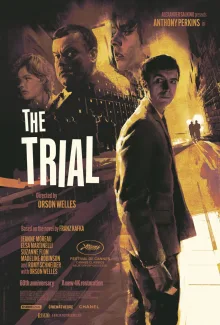
Playwright David MacGregor (opens in a new tab) and writer Mike Faloon (opens in a new tab) join Mike to discuss this beautiful, baroque interpretation of Kafka's work as well as 1962 Norwegian television film and the 1993 version starring Kyle MacLaughlin.
Labels: Anthony Perkins David MacGregor Franz Kafka Mike Faloon Orson Welles
Transcript
An automatic transcript, tidied into paragraphs. It has not been proofread, so names, titles and spellings may be wrong, and it does not say who is speaking.
Show the transcript (about 14,300 words)
Speaker 1: Hold your ears, folks. It's showtime.
Speaker 2: People pay good money to see this movie. When they go out to a theater, they want cold sodas, hot popcorn and no monsters in the projection booth. Everyone pretend podcasting isn't boring. ANTHONY PERKINS: Turn it off those in care.
Lots of care. You're under arrest. Who accuses me? What's the charge?
Mr Kay? Do you seriously think that we don't know who you are? Who are these people? The accusers?
How do you know you're arrested? They woke me up and told me, are you sure you were away? This could be a trap. Can there be any doubt this high five of that organization?
There isn't a hope of getting out of their clutches. You can't all be guilty. You have to kill me to be in chains is sometimes safer than to be free. MIKE WHITE: Welcome to the projection booth.
I'm your host, Mike White. Joining me once again is Mr David MacGregor. Nice to be here. Also back in the booth is Mr Mike Faloon.
DAVID MACGREGOR: And also glad to be here. MIKE WHITE: We continue our Patreon request month with one requested by Peter Rogers Orson. Welles', the trial released in 1962. The film stars Anthony Perkins as Joseph K in this adaptation of Franz Kafka's Nightmare and bureaucracy, we will be spoiling this film as we go along.
So if you don't want anything ruined, please turn off the show and come back after you've seen the movie, we will still be here. So David, when was the first time you saw the trial? And what did you think. MIKE FALOON: I saw it when I was a student at Michigan State University, they would run films on campus.
And that was one of the films that I went and saw. And so that was like in 1981 1980 something right along that. And on the one hand, I hadn't read the novel, the trial at that point and it's visually spectacular, just the sets and the lighting in particular, the weird thing was I found it a little hard to get Norman Bates out of my head as I was watching the film because not only is it the same actor, he looks almost identical and in large part, his affectations and mannerisms are consistent with Norman Bates as well, the nervousness.
And so it was a kind of an odd experience trying to disassociate this particular film and performance from what I'd seen in psycho and Mike. MIKE WHITE: How about yourself? DAVID MACGREGOR: I think it was part of a double feature I saw at film Forum probably mid to late nineties and I saw it with F is for fake and very similar to what you were just saying a moment ago. I was blown away by how it looked.
I don't remember if I had read the novel by that point as I was getting into Orson Welles, I started to realize sometimes with Orson Welles hearing about the movies is more enjoyable than experiencing them. The concept surrounding them real. I'm a magda moth to a flame with those sort of things and really drawn to them. And then as I experienced them, I've, I've found over time some definitely hit the Mark and others less so, but I really enjoyed coming back to it.
I haven't seen it in a couple of decades. MIKE WHITE: This was actually a first time watch for me. I really wanted to see it when it was restored and was touring around. I think it was just last year, late last year, showed it down at the Detroit film theater, wanted to go see it.
I don't remember what happened, but I didn't end up seeing it. So I watched it for this episode, watched it a few times and I don't want to sound rule about this or anything. But this movie actually really affected my dreams after I saw it the first time just because it is so nightmarish and so claustrophobic. Yeah, it's open.
We'll definitely talk about that as we go along. But it was really hard to sleep after I saw this the first time, I think that's great. I love when a movie affects me that much that I just keep thinking about it and that it even haunts my dreams. I think the look of this film is just absolutely stunning.
That goes for pretty much every Wells film. But this one in particular really strikes me for the way that he uses the sets, the way that we have this nightmarish world that's going on. I'm a big fan of these movies where there's a lot of opening and closing of doors and every time you walk through a door, it seems like you're walking into another place and some of that is Wells, but some of that even feels like it comes from Kafka. There's this very odd moment, I'd say, I don't know how many pages into the book where there are two gentlemen that are at the bank where Joseph Kay works at that are in a back room and they're being beaten by this third man and they shouldn't be there.
Why are they in the bank? They really should not be in the bank. They should be someplace else. And that fits perfectly with this with what Wells is doing where literally Kay will open up a door and walk through and he'll be in a completely different set.
And as we talked about with something like Wells' Othello, he might walk from one room to another one country to another. He'll walk the streets of Zagreb and then suddenly be in Paris and then he'll be over here. And I love the way that Wells stitches all that stuff together to create a world that is completely unreal, but is made out of real parts. MIKE FALOON: That doesn't matter what door you walk through or what room you enter, you're not going anywhere.
It's a labyrinth that you can't get out of. And that is the essence of Kafka's novel. That Life is Maze with no creator that you don't escape. So it's a little bit bleak.
But I will tell you to me, one of the most interesting things about the novel and about the film is that I think for most people, if you think about Kafka and you think about other works of his, the castle or the penal colony and he's this incredibly bleak, tragic depressing writer. And if you read about Kafka, when he's reading these works to his friends, he's in hysterics. They are the funniest things he has ever done in his life. And if you read the back story of the production of the film, according to Orson Welles, that they weren't hysterics half the time.
It is admittedly black comedy, blacker than black. But it, the absurdity of it does make it funny at times and it's like life in that sometimes all you can do is laugh at the horror of it. DAVID MACGREGOR: I was really surprised to the first time I heard any reference to the fact that when Kafka read to friends or did small readings that people responded like they did and that they saw the humor, I did not pick up on that at all. When I first read the novel, it didn't come up.
I was in grad school when I was reading it and it wasn't till later and that added a whole other layer to it. And then I certainly got more of that absurdist humor watching it just over the last couple of weeks. MIKE FALOON: I'm a big fan of absurdist humor. One of my favorite all time writers is a guy named Edward Lear who wrote absurd poems and they're just, they're nonsense, but they're brilliant.
And then, especially the first thing I ever read by Kafka was the metamorphosis. And just that opening when Gregor Samsa wakes up, he's a dung beetle. That's just funny stuff. At least for me.
And I'm not going to pretend that I'm anything approaching normal. But yeah, I found that funny. MIKE WHITE: I feel like it's a little bit of a misnomer to call this the Trial. And I think that the original title of the process makes a lot more sense because there is ultimately no trial in this movie or book.
It is a process. It is a system into which Joseph Kay has been entered that he will never be able to escape. Like you're saying, it's that, that maze, it's the maze without a center, he just keeps running around like a rat in a maze and he'll never find his way out of that. And it's that process, but it's also process almost like somebody being processed, the whole idea of coming to some place and giving your information and then being processed and moved down to the next station.
It just feels very, it's very fitting that this was shot primarily in a railway station because it just feels like you're moving from one place to another to another. But then the track goes back into a circle and just start from the beginning and go back and back and it's, yeah, I find that to be very fitting for this movie just to be called the process because like I said, there's no trial. It's really interesting when you watch different interpretations of this or go back to the Kafka and just the lack of questioning of what has Joseph K done?
I don't think he even asked that when the cops show up at his room in the very beginning, he just seems to take it in stride. He's not take it in stride, but he doesn't say that. What are the charges? You have to tell me what I've done.
He doesn't rail against that. That would be the one thing like everybody that I know would be like, what have I done? What are you accusing me of? Never really asked that?
He just seems to take it and go with it and just, he fights against the bureaucracy a little bit. And he has a very stirring speech towards the beginning when he first has his day in quote unquote court because it's not even that. It's just a hearing. It's amazing to me the attitude he takes as he is moved through this whole process.
MIKE FALOON: The character of Kay is different in the novel than he is in the film. A Wells reimagined the character, I would argue to a considerable extent, he's less of pure victim and more participant in the insane society of which he's a part. I think you could if you wanted to make an argument. Yeah.
The whole notion of the trial, maybe it's analogous to, that's the essence of life you're born and your entire existence is a trial of one sort or another that you're just trying to navigate your way through as best you can until the end. DAVID MACGREGOR: He does choose to protest. Like you said, that's courtroom speech. And other times that when he first meets with the advocate and his uncle is there and he's supposed to go off and speak with the advocate, he goes off with Lenny.
There's a representative from the court here, we can get some direct answers. And as soon as it's like squirrel, as soon as there's another and as soon as Lenny comes along, he's off to another pursuit and it just shows how much that fluctuates over the course of the movie. MIKE WHITE: Yet another woman that he either wants to have sex with or she wants to have sex with him because it feels like women are throwing themselves at him all walked through this whole thing. MIKE FALOON: I don't quite get that.
That's actually made expressly clear that in the film that women are attracted to accused men and they don't really fill that out as thoroughly as they might. But when I was watching the film, I was like, is it related to all the love letters that Jeffrey Dahmer got in jail? My, I like that guy, the dangerous unstable guy that might kill me. I like that.
I have heard or read also that for Wells in particular when he cast Anthony Perkins and he's aware of Anthony Perkins sexual preferences. He wanted to play with that and I'm gonna have beautiful women throw themselves at you and watch you squirm because that's not what you want at all. MIKE WHITE: Some of the most beautiful actresses that Europe had to offer at the time I believe. And it's funny because I think there's only really one woman that he wants initially, the woman that lives next door to him who's played by Jean Moreau.
And I don't think there's any interest from her back to him though. I was reading a review last night. And what did they totally screwed up her profession? MIKE FALOON: Because in the, in the novel, she's a typist in the movie.
In the movie, she's a burlesque performer. MIKE WHITE: I always got the impression from the book and this might just be my twisted mind that she was a prostitute with the way that they say, oh, she keeps all these weird hours. MIKE FALOON: And I was like, that's your twisted mind that. MIKE WHITE: Ok.
Good. That's fair. That's fair because otherwise, yeah, I guess she's one of those 850 typists that are hanging out at Kay's office. That is again one of the most striking visuals I've ever seen of all those people at those desks just going on into infinity and the noise of the typing.
It's just crazy. DAVID MACGREGOR: Going back to the women. I think this goes back to the novel. I think it would have been better or stronger.
I'm not sure of the right word. If one of the women had voiced that, I think that actually comes from one of the male characters who's, who says that they're all, I think it's the advocate who, who says that. But I also thought it was interesting the way that Wells did change her profession. So your mind may not be, you may not be alone.
And that twisted this Mike because that or he maybe he picked up on something in the book and just decided to move it a step further. MIKE WHITE: It felt like she was the prostitute that would sleep with everybody except for Kay is how I was taking it. MIKE FALOON: Right. Yeah, I get that.
MIKE WHITE: I don't want, you know, I've been criticized just a few times for being political on this podcast, but I don't think that, but for me, this whole thing, it's, it's amazing like you start off with Kafka's original text and you think about the time it was written, you think about him, you think about his background and all this and then there are so many layers of things that have happened, major events that have happened in the world that have been like layered on almost like sedimentary rock or something over time.
And so you're interpreting this in 1962 much less. I was talking about this in 2024. But in 1962 you're looking at Kafka, you're looking at German expressionism, you're looking at all these films that have come between when this was done and then when Wells is doing this, you're looking at Hitler, you're looking at the holocaust, you're looking at the house un American activities, just all of these layers on top of each other. And you can read this film in so many different ways.
It's really fascinating that you can have multiple interpretations of it. And you can also like you're saying, the way that Kay is being portrayed is vastly different than he is in the book, Anthony Perkins is definitely much more confrontational. I think it also helps that he's very handsome. And then, like you said, you've got the homosexuality of it.
By this time, I wanna say the wrong man had come out from Hitchcock. So you have that then you've got, like you said, psycho, I think that Wells is definitely playing with the psycho role that Perkins played. I think just two years prior to this. MIKE FALOON: Yeah, it was two years.
According to Wells, he didn't really care if his psycho. He thought it was a sick film And he also felt that Hitchcock had ripped off some of the things that he had used in a touch of evil. He was not a fan of the film. He was a fan of Perkins.
He wanted him and weirdly enough, like from our viewpoint now if you tell people the actor he wanted for the Advocate, the role that he ultimately played, he wanted Jackie Gleason because Jackie Gleason had just been in the hustler on the previous year and did a really nice job, not just a comedian but a very, you know, powerful dramatic role, but as well said, he got turned down and he couldn't afford an actor good enough. So he used. MIKE WHITE: Himself his cheapest actor he could find. Yeah.
MIKE FALOON: Well, I don't know if you guys have ever seen, I mean, because you mentioned that, that amazing office scene with all these typewriters and all these stenographers or secretaries or whatever, it's very reminiscent. There's an old silent film called The Crowd made by King Vidor in 1928 just before sound came in and it almost shot for shot. It has that same imagery and that's even present in the apartment as well. Billy Wilder's, the apartment, the office that Jack Lemmon works in has that same and it's just an overwhelming image of.
That's a lot of people, a lot of, a lot of typewriters and, it's a really impressive look. MIKE WHITE: Yeah, I would say even some of the shots of the office where Walter Neff works in double indemnity. I think some of that is there as well. But I want to say those desks are empty.
But you get that idea of the bureaucracy and having been driven to it because he was such a good boy all the time. And this is the one indiscretion that he chooses to do. Whereas with Kay, we don't know if he has performed in the indiscretions, but he, in this opening scene especially, he acts guilty as hell the way that he's stuttering and like you said, the way that he portrayed Norman Bates as the stuttering innocent guy. And he just, you're like, what is going on?
What are you trying to hide? And then he's making these slips with his words and everything I think, rather than saying a phonograph, he calls it a pornograph. ANTHONY PERKINS: Don't touch those record albums. What's this thing?
That's my pornograph? What's this? MIKE WHITE: I love it. Is it sexual?
Is that what's driving you crazy? But I love that. Wells was just like, oh, yeah, he's guilty. He was like, guilty of what?
I don't know, but he's guilty as hell. Is that original sin or is that something else? I don't know what he's guilty of, but Welles knew he was guilty of something. DAVID MACGREGOR: In that opening scene too.
There's, I think it was the word ovular and she was describing where the barber chair had been on the floor and then it gets moved and then that's not even in a word. MIKE FALOON: What's what a circular. ANTHONY PERKINS: Line with four holes circular. It's more ovular.
Don't write that down. Ovular sake. Why not ovular? We can write it down just because you say we shouldn't ovular isn't even a word.
You deny that there's an ovular shape concealed under this rug. DAVID MACGREGOR: Or is that? And then later he uses it and a different one of the inspectors calls on them like that's another mis you on his part. MIKE FALOON: What you're talking about the way it resonates with events of the 20th century or even before that, I think the spine of it is why we identify it with it so strongly, the absurdity and the chaos of law of the justice system.
And that's part of human history. It doesn't matter whether you're talking about Sócrates being condemned to death or Galileo being convicted of heresy or the Spanish inquisition. I will tell you flat out if Kafka were alive and he saw the US Supreme Court deciding that corporations are people. He would laugh hysterically because it's just so absurd.
And these are supposed to be ostensibly the best and the brightest, but they're partisan hacks paid off by billionaires. And that's the way law has always worked throughout human history. MIKE WHITE: There you go again. Getting so political.
MIKE FALOON: You mean factual? We don't want people speaking facts because I find those facts upsetting. I'd rather watch stuff where people tell me the things I want to hear. MIKE WHITE: Why aren't we watching the B movie?
Instead? This one's too tough. This one's too tough and going. DAVID MACGREGOR: Back to what you had said, Mike about how it works across so many different events across such a wide stretch.
I love how the movie on the one hand does look like the 19 teens and also looks very much like the 19 sixties. It's so fluid how that I didn't, I'd forgotten all about the computer scene, for example, which is, and even just, or even something as simple as having a record player in his bedroom. Clearly that wasn't in the original. And some of the scenes really do seem like what I visualized as I read the book and others so much from the Kennedy era.
I just, I love the way that was all meshed together so smoothly. Maybe that goes back to that maze idea, to the labyrinth. You think you're in one place and you're also in this other place. It's right next to it.
Unless you do have to open this door and there you move from one to the next. MIKE WHITE: I'd say a lot of the stylistics. Also a great deal of gratitude to film noir, which comes from expressionism and to go to another film, you mentioned the crowd, I would say a lot of metropolis in here as I'm walking out of work today and I'm this long line of people all moving at the same time leaving work all at five o'clock. We didn't have the whistle or anything to tell us it was time to leave.
But it just felt so like those workers down in metropolis that are all moving in clockwork and everything. But yeah, you've got the, especially the police or the inspectors where they wear the more like American style hats and they basically seem like either Gangsters or FBI people in the line between those two things is very slight. MIKE FALOON: Yeah, that's true. I love, I, you don't have those Factory images as much as we used to.
Certainly not in this country. But when they get used in film, you like Charlie Chaplin uses that in modern times. That's pretty much the opening of the film is all the Factory workers a cheek by Jowl rushing out and then he graphic matches to a herd of sheep to make his point without words because it's Chaplin. It's, those are great images.
They're just, they tell a story. In a heartbeat. MIKE WHITE: Kind of reminds me of the beginning of Joe versus volcano with that sad song that's playing as all the people go into work with the rain and everything. That's probably the last time I saw a really good Factory shot like that.
MIKE FALOON: I need to tell you guys this in case because I don't want this to slip through because the whole podcast would be pointless if we didn't mention this. But because you were talking about when a Uncle Max comes to his office to offer some familiar advice. When I read the credits, that character was not speaking English, but he was dubbed by Peter Sallis, who would go on to greater fame as the voice of Wallace in Wallace and Gromit. MIKE WHITE: Wow, that's awesome.
Wow. MIKE FALOON: That makes, that makes the film worth it right there. MIKE WHITE: I love how many of these characters are dubbed by Wells and there's certain where you're just like, oh, that's Orson Welles and then others where he's doing voices, especially the artist Tinel, where it's, is that him? And he just does such a creepy fe voice for that character.
He portrays him in my mind. He portrays him as sounding like a homosexual, but yet he's surrounded by all those little girls and they're desperate to get inside of the room with him. That is one of the strangest sequences in this movie for me. And it's in the book as well with like how he describes all the girls looking through all the cracks that are in the walls and then when you see Wells bringing that to life, oh my gosh, this is just such a nightmare of all those eyes staring in and again, that almost feels like a dolly painting or something with 1000 eyes staring inside of a room.
MIKE FALOON: Kafka was incredibly guilty about his sexuality. He liked pornography, he liked hookers. But if you his diary, un unexpurgated Diaries, which is published in English last year, there's a lot of homo erotic content to him. He was obviously deeply conflicted about his sexuality, about his own body.
He felt people looked at him and instantly loathed him based on the way that he looked. So it's a lot of guilt is there in Kafka's work. And I think partly that's expressed in that scene with the girls trying to get in there. MIKE WHITE: And I know we're jumping around like crazy.
But I think it's actually very fitting for this movie. It is, it is, even though it moves in a line, it seems to just move by its own logic or lack of logic because it does feel so like you're in this nightmare. We talked about Brazil a few years ago and with that, you've got your main character who has those dreams of him being this angel and hero and all these things. I don't think Kay has any sort of aspirations as far as that goes I think he just wants to keep his head down, get to where he needs to go or where he wants to go in business and he seems to be moving up fairly well.
So this whole idea of this trial just, and we should say too, I hope to God, nobody's listening to this that hasn't read the book or watched the movie. But when they arrest him, he doesn't go to jail, he doesn't go to prison. They just say you're arrested and then he goes on with the rest of his life. He goes to work that day.
There were three guys from the office to there when he's arrested, quote unquote to take him to work and he works a normal day and he never knows when his next hearing is going to be. There's, they tell him, ok, you're gonna be at this place on Sunday, but they don't give him an hour. They don't tell him what anything and they don't even tell him what room it's in and he goes around the entire apartment building going, yeah, I'm looking for a painter, my house painted and he just keeps going around and around. And then finally, and I love that.
One of the Magistrates I believe says, like guilt is attracted. It's almost like a divining rod. So he eventually does find the room. And as soon as he opens the door, the woman, she said he's, oh, I'm looking for a painter like, oh, you this way.
And she, he's what the, there is a painter here and she's like, no, come on, follow me. And that's when he opens the room and sees all of those people that have been waiting for him and they're like, you're late. I'm like, those kind of things are like, wow, I can't believe the picture that Kafka is painting for us and I can't believe how well realized the whole thing with the painting and stuff isn't there in the movie. But I do love that.
They accuse him of being a house painter at first and he's just, you're so ridiculous. I'm not a house painter and then he tries to turn the whole thing on its head. But unfortunately, it's interrupted by a woman almost being raped by a student in the back of the hall. DAVID MACGREGOR: Yeah, that's so striking too that the stage itself literally has no room for him.
He has to lean against the table. It's even so on the one hand this whole space and this whole event is centered around him, but there's no spot for him even when he rises. That's probably his shining moment when he says it's not about me. This is about other people in the same predicament.
He's got three or four inches of stage there before he slips off and he gets a couple of laugh. Yeah. MIKE WHITE: There's not even stairs. He has to climb up onto that.
DAVID MACGREGOR: Doesn't even have stairs to make his entrance. MIKE FALOON: Let me ask you guys a question overall and we'll just talk, we'll focus on the film as opposed to the novel. Do you feel as portrayed in the film that Kay is a sympathetic character? MIKE WHITE: I think he's sympathetic in so far as we follow him as a protagonist, he is something of a private detective trying to find out what's going on with his own life.
But we, I never get close to him. I never feel like this guy has to survive. I'm really rooting for this guy. It's mostly watching him and watching his reactions rather than rooting for him if that answers your question.
DAVID MACGREGOR: Yeah, I felt that too. I think the one I was most sympathetic or empathetic is when he's talking with another accused man where he's talking with block. And it seems like he's genuinely listening to block. They exchanged some laughs and it seems like a different side of K that comes through in that scene and in the courtroom when he's bumping the pulpit, so to speak, I felt for him then and at other times it really fluctuates over the course of the movie.
What about from your point of view. MIKE FALOON: The line that, you know, strikes me the most or one that resonates is just when he's defending himself initially early on and he's pointing out how he's not the lowest of the low he's not bottom of the barrel. He keeps people waiting for weeks before they can see him. And it's, that's, that's, you're not a victim of this system.
You wanna be in the system so you can treat people as badly as you are currently being treated. And so he's afraid of the thing that he's anxious to conquer. And it makes for a really interesting duality in that character. DAVID MACGREGOR: Yeah.
From what you were referencing with Kafka's diaries, that sounds like that's a contradiction or an inner conflict. He felt himself that seems to be coming across in the movie surfacing in the character. MIKE WHITE: Do I remember? Right.
That Kafka actually worked at a law firm for a while that he was a clerk. MIKE FALOON: He was, he had a degree in law. He initially he went to work in an insurance company. MIKE WHITE: Ok, I remembered him being in the, in an insurance company at some point.
I forgot that he, I thought that he went from school to a law firm to the insurance, but I didn't remember that he was the had the law degree. That's very fascinating. MIKE FALOON: I think that was part of he was, he had a very loud overbearing domineering father that he was trying to placate or make happy. And yeah, how do you do that while you go into law and who could complain about that?
He was the oldest of six kids. We had two brothers that had you know, died when he was a child and his three sisters, they survived him. Kafka died in 1924. All three of his sisters died in the holocaust.
MIKE WHITE: Oh, boy. Yeah, he was tubercular, I think and died when I want to see. He was about 40 years old. MIKE FALOON: He was four.
He was diagnosed with tuberculosis in 1917, mostly lived the rest of his life in sanatoriums. And, yeah, I don't if your listeners are familiar with Kafka's story, he had some stuff published before he died. Yeah. He died when he was 40.
But the big guns, the trial, the Castle America. They were always, they were all published posthumously after he was dead. And he had told his executor, Max Broad. I want you to burn everything that I've ever written.
And to me, it's what's really interesting is Max Broad? Some people have said you didn't fulfill his final wishes. What kind of friend are you? And Max Broad's response was I told him it's not gonna, it's not gonna happen.
I'm not gonna burn anything. And so if he really wanted someone to burn him, he would not have picked me, his closest friend. He met Max Broad in law school and they were really pretty much best friends. You don't ask your best friend to burn the work of a lifetime to ask a stranger to do that.
MIKE WHITE: Or you do it yourself. MIKE FALOON: Yeah. And as we were talking about the disconnected nature of our discussion. It was Max Broad, the original manuscripts of the trial were in chaos.
They were not organized line linearly in chapters and it was Max Broad basically who decided this is the order, I'm gonna put the chapters in and then Wells got hold of the film or the script and he did the same thing he said, no, I think this order is better. He changed the order of events in the film as compared to the novel. MIKE WHITE: It was very interesting to move that story about the man who's waiting to open that door and get into the law to move that from the priest talking about it towards the end to the very beginning of it.
And having this character die, I think Joseph Mcbride and his commentary for the criterion. This talks about how Wells like to have characters die at the beginning and then you investigate as, oh yeah, exactly. He's very Charles Foster Kane when it comes to OK, this character is dead. That character is not Kay, but he's living in existence.
That's a little similar to Kay as far as the absurdity of it. MIKE FALOON: Yeah, he's waiting for the law. He's waiting to be admitted to the law where everything will be answered and he never gets in. And I like that opening.
I like the pin animation. I like the look of it. And I think that was a good call to open it and you're letting the audience know right away. This is a fable of its own kind and it puts you in the right frame of mind for the film proper begins.
MIKE WHITE: Yeah, there's a do well, can't really call it a documentary. It was supposed to be a documentary, but it ended up being mostly a filmed Q and A with Wells from, I wanna say 81 called filming the trial. And in there, one of the people that asked him questions was comparing this to a fairy tale. And I can really see that as far as fairy tales aren't all light and fluffy and happy.
This is more like a grim brothers grimm or one of those words, here's a dangerous lesson for you kids. You should really pay attention. DAVID MACGREGOR: Yeah. And I saw in that, I think Orson Welles does mention the Brothers Grimm in his response to that question and he describes fairy tales as the stories people told to each other in the dark of the forest and how they've resonated all these centuries later.
And I never really thought about the setting in which fairy tales originate, have a mental sense of it chronologically. But don't think of it as where those stories were first circulating. MIKE FALOON: I don't know how many interviews you guys have seen with Orson Welles. I love watching Orson Welles interviews, not only because of his sheer presence and his speaking voice, but he's having a ball because he's just making shit up right and left.
Just, he's a complete fabulist. He will tell any story at any time. There's a, I mean, like a half hour TV program they did in France. It was him and Jean Moreau having a meal or dinner at the Ritz Hotel and Wells says he's just having a ball.
He's there. He's got his black silk bow tie on, he's stuffing himself with the finest food, finest wines. And he starts telling her the story about his dad, my dad and he was an inventor and he went broke, but then he made all the money back gambling. He broke the bank at Monte Carlo.
That was my dad. And when Booth Tinton wrote The Magnificent Ambersons. Yeah. The lead character.
That's my dad. That's all bullshit. It's all bullshit. The man who broke the bank at Monte Carlo, coincidentally enough was named Wells, but it was not Orson's death.
Orson's death was a hardcore alcoholic who died miserably. And Wells felt guilty about that the rest of his life because he literally told us that he was 15 at the time. And he told us that if you don't stop drinking, I will never see you again. And he never saw his dad alive again.
His dad drank himself to death. DAVID MACGREGOR: I think that's what I was trying to get to at the beginning of the episode when I talked about how much I like and find appealing, the ideas that Orson Welles was pursuing and the interviews are definitely one of his strongest. That's, that's him at his best. And to there was one other thing and I'll, I'll come back to it.
But the, from the UCL A, there was another 10, it was, I think I saw this as part of that double feature where there's, he was joining with the idea of filming Moby Dick him reading Moby Dick. So the only footage I saw of it was a shot of Mo Of Orson Welles reciting Moby Dick. And when I saw that, I came away thinking that I think that's Orson Welles' favorite way to do a movie him reading. And then I like, I think that came back to me, I don't think there's any validity to that now, but that was my impulse at the time.
But when he reads the credits at the end of the trial, they never scroll through the credits. He just, he goes through and reads off the cast. It kind of brought me back to watching him read that passage from Moby Dick. MIKE WHITE: And I wanna say that very similar to Magnificent Ambersons as well.
There's a lot of, you know, and I'm your humble narrator Orson Welles because he's not in that one, surprisingly, one of the few movies where he doesn't actually appear himself, but he definitely makes his presence known many people. MIKE FALOON: They probably don't know this about him. But to me it's, it's central to his character. He's a magician.
He liked doing magic tricks. He would bring rabbits to Hollywood parties. He liked amazing people. And that's the central part of his character that it's so lovable because even when he does bullshit his way through interviews and people ask him later, didn't you say this?
He'll just go. Well. That was just me pretending I understood French. He's shameless.
He doesn't care. It's a good story in the moment. I'm gonna tell it. MIKE WHITE: Yeah, it's all part of the magic and filmmaking is magic for him, which is great as well.
Talking about those whole things, how he's stitching together all of these different locations into one piece that's magic, the magic of Montage. And he knows that and he's able to master it and understand it. I love that about him. And I just to be able to find those locations to be able to turn on a dime.
Originally, they were supposed to shoot all of this in Zagreb. And then they're like, no, we don't have any money to build sets. And he just, and then he makes up that story about, I saw these two moons and they were the clock faces of this train station and I took a taxicab and they took me there and within 36 hours we had our sets or something. I was like, ok, yeah, I don't know how much truth there is to that.
But it's a great story. MIKE FALOON: I don't know if you guys have ever been there. They turned that train station into a museum for impressionist art. It was Guerre Dorsay now it's MS Dorsay and which is one of the great repurposing of a beautiful building because as, because in the Detroit area, at least Mike and I am, there's this relentless.
Let's tear it down, let's tear stuff down, let's tear stuff down. And I'm always really grateful when that impulse is stemmed. And it's, let's see if we can repurpose this because a lot of those old old buildings, you can't build those now anymore. MIKE WHITE: Like the train station for years that just sat empty.
I remember go, I worked at DTE, which is right there by the MGM Grand and where I parked, I could just see the light coming through the train station because it was abandoned. And I'm just like, it's a gorgeous building, but you're not doing anything with it. So to see that revitalized makes me so happy. Compare that to some of these almost brutalist buildings that we have in the trial with like when there's the woman who's dragging the guest across this kind of landscape.
And you've got these two huge buildings there that just look like they are ready to oppress people with just how awful this architecture is. It also made me realize because she's got a and they really play this up on the soundtrack. I also love how Wells uses sound effects and music. She's got this brace on her leg.
So every time she moves, you hear this freaking noise and she's one of at least two characters that have physical defects because you've got her with her brace and then you've got Romy Schneider later on with her webbed finger, which is such an odd touch. But I really like that. DAVID MACGREGOR: And then that same scene he keeps saying I want to help you. I wanna help you.
He doesn't, he doesn't. Oh at one point though, he's, he stopped even making that claim when she says my sister is moving because of you and then when he's on his heels, he said, OK, I don't even wanna help you. Now I wanna defend myself. MIKE WHITE: Yeah, it's like all of these things that are happening outside of the court system are what affects what he actually does inside of the court system.
And again, just trying to find help or not like you said before. The whole thing of the uncle coming in and being like, oh we gotta do this and that is oh, a hot piece of ass is here. She's the nurse of the advocate. I think I'm gonna go with her.
I love that scene with the advocate too. Where yeah, it's the same in the book as well as the movie where the uncle and Kay come in and there's the nurse and the nurse doesn't want them to see the advocate. They finally go in, they see the advocate and they're there and they're having this long conversation and then the advocate at one point is, oh, yeah. My friend and they're like, what?
He's, oh, yeah, my friend here and they, like, turn around and there's this guy, like, hidden in the corner and then this one, it's, he's way far away, but he's almost silhouetted and it just looks fantastic. And, oh, there was another person here the entire time. It was almost like one of those open up the door and in, walk into another place. But this time, it's just turn your head and boom.
There's a whole other person that we didn't even see in the room for the. MIKE FALOON: Record that, that shot of her dragging that case across that barren brutalist landscape. That's one of my favorite shots in the film. It's just amazing.
It's a very, very long take. It's a tracking shot. The actors have to be moving at exactly the right pace. It reminded me when I saw it, if, if you guys recall from the movie Eraserhead, when Henry is walking and going up and down those mounds of dirt and it's just that same post industrial wasteland look to it on the one hand it's leak, but it's gorgeous.
It's just beautiful in its own way. MIKE WHITE: Oh, yeah. There's not one frame of this film. That doesn't look fantastic the way that they shoot his room and you get that ceiling and it feels like the ceiling is so close to the top of his head.
Anthony Perkins is a tall man, but it just feels like he's going to brush up against that ceiling or when he gets introduced to the two guys that will eventually kill him and you get the harsh light coming in from the side and you got the one guy with the thick coke bottle glasses and everything and just the lines of the industrial stuff that's going on. I love how they make him stand underneath a light at that point as well. Like he's being interrogated just all of the way that this is shot. There is nothing in here where I'm like, oh, that looked pretty ugly.
I mean, everything looks gorgeous in this movie and to see the, I don't know how this was before it was restored, but this restored version, it's so sumptuous and you just feel like you could almost crawl into the screen. It is so alive. DAVID MACGREGOR: He talked about how he would and I think it was true to this movie, but I think perhaps all of his movies where he would set the lighting first and get all the visuals in place and then bring the cast in instead of instead of flipping it and blocking the scene out that way.
Everything seems so meticulous. MIKE FALOON: Yeah. I think he was like Joseph Von Sternberg. That way, there was nothing in the scene he focused on more than the lighting.
Get the lighting where I want it and then I'll put the camera and then I'll put the cast where I want them. MIKE WHITE: He uses people as part of the mise en se like when Kay's cousin is trying to get his attention when, because k no, I can't have my family come here to my work. This is upsetting and she's behind his shoulder and pressed up against what I guess is glass. Even though there, maybe there isn't even glass there.
And behind her are all of these men just standing there. It reminds me of later on you see all of these men stand, there's a few scenes like this. There's one where all these men are standing there and I want to say they don't have pants or shirts on. They just have numbers hung around their neck which again, just be brought back the holocaust for me.
And he's making his way through these men. And then there's another scene where it's all of these men and they're in their suits and they've got their hats and again, he's just trying to wend his way through here because they are part of the scenery. They're, they're almost furniture the way that these guys stand around. DAVID MACGREGOR: And I think there's a flash of a group of women.
I don't know if they're dressed the same but similarly, no one's speaking, no one's moving very little expression. Yeah. It's almost like chess pieces that he's navigating. MIKE WHITE: Those people at the opera house when he or I guess it's the opera house or the symphony.
There's one woman right in front who just never moves her face whatsoever. When you see all those men with the numbers, there's also this statue that you see later on in the movie. And I think it's just a shroud over the statue, but it has its arms out. It looks like it looks like the angel of death.
For some reason when I look at, I'm just like this is so striking to have this figure up on this huge pedestal and then we come down and hear all these guys and then we get, I believe that same figure right towards the end when they're about to kill him. MIKE FALOON: Yeah, it's I it's one of those things you look at and you think, wow, what does that mean? And then you think it looks cool, that's reason enough for it to be there. It looks cool.
MIKE WHITE: Exactly. Yeah. All those faces of the guys in the room like you were talking about the guys on the platform that where there's not enough room for him, even though he's supposed to be up there defending himself. That almost reminded me a little bit of m with the trial of Peter Laurie, but there's about maybe five or six times the number of people there, just an amount of extras that he was able to corral for this movie to look up in the gallery and just see people after people.
Now, I know there's ways, you know, he probably just went into Adobe Premiere Pro and just copied those people. It just moved them and made the crowd. So if you look really close on the right hand side, they're the same people as the left hand side. But in actuality, I know there's ways you have 100 people, you always put them in the shot.
It always looks like there's 1000 people there if you have 10 shots. But I don't care if he's doing that or if he actually had all of those people or if it was just 100 people, whatever he's doing, it looks fantastic with the way that he's framing these. MIKE FALOON: Absolutely. DAVID MACGREGOR: And it goes back to something he had said before to Mike about how it's so many times it's so expansive and so claustrophobic.
At the same time, I feel like there's, and I think that's one thing that I felt more reading the book than I did watching Anthony Perkins. I never, I didn't get the sense that he felt that inner terror that Kay Duds in the novel that I and I, when I first read the book and even the second time I read the book, I feel like I was not a lot of ways just pulling away this, this along the surface. I really wasn't getting the full depths of it, but that terror, deep seated beer came through so clearly. And I didn't always get that from Anthony Perkins as much.
And I thought it was interesting to also watch the, I think it's the 93 version and just his performance next to Kyle MacLaughlin's in that sense. But that, the way it's both so like that courtroom is so wide and just feel like it's so huge, but it just so it's so densely packed and that I did feel the pressure come sometimes I felt I was feeling his predicament more than he was like, you should be worried more than you are. MIKE WHITE: Yeah. It's almost a frustration point where you're like, come on, dude, you are in serious trouble and that's the way his uncle is when he shows up.
He's just, are you not working on this? Come on, let's get going. And I think some of that is because of the bad look that it will give to the family, but go back to what you're talking about before David. As far as Haka's father, I don't think we see or really hear about parents in this.
It feels like there's cousins and uncles but not the actual parents of this character. And I don't remember if they talk about that in the book either, but it was almost conspicuous in the absence. MIKE FALOON: Yeah. It's more of a, the oppression comes from the society itself as opposed to one domineering parent or one character.
It's a world in Kafka's novel. The claustrophobia is, the characters are trapped and confused in an absurd bureaucratic nightmare. And I think one of the great things Wells did is, as you guys were saying, there's massive spaces but then they're rendered claustrophobic by filling them with people and you can't get out, you can't escape. And I think that was really clever, a really interesting way of looking at it.
And one of the things that always struck me about this story, why Wells wanted to make it? The story goes that he was approached by the Falcons, the legendary sin movie producers. We want to make a movie when we want you to make Taras Bulba and that was already being done with H Brenner and Tony Curtis. So they, the story goes again, it's Wells telling this and he's such a fabulous.
You don't know that they gave him a list of I've seen 15 to 82 public domain movies. Public domain. We're going public domain. Which one do you wanna do?
And Wells picked the trial, which they then found out was not in the public domain, but it has led a lot of people to speculate. Ok? Is that because of him, is that because of Wells' experience with the Hollywood blacklist and the red scare? And he left the country.
Well, Wells left the country, I think in 1947. And I remember there was some interview, somebody asked him, why did you leave the United States Of America? And he said, because I wanted to be free, is that resonating as well? Because Wells was a guy, you're on a list and why are you on a list?
You don't know who put you on a list? You don't know. And he was subsequent investigation revealed he was being tracked by the FBI from Citizen Kane on that. He was a potential subversive, possible communist.
He wasn't a communist. He was, I guess we would call it progressive, a humanist. And that's scary enough. If you're trying to construct a totalitarian state, you don't want that.
So he left. MIKE WHITE: Yeah. You think back to things like cradle will rock, which was very, I wanna say pro union. So that's a big red flag.
And I do mean red, just like, how dare you want to organize labor? That's a communist idea. We would need our capitalists to be free. MIKE FALOON: Yeah.
Then it'll trickle down to the rest of us. MIKE WHITE: Oh, yeah, exactly. It works very well. Works very well.
You mentioned psycho before. And the other thing I kept thinking there's something in here where I wrote in my notes that it reminded me of psycho. It's when he does find those two guys from the very beginning of the film, the investigators that come in and talk about the ovular spot on the floor when he goes in that room and they're being there beaten at one point, somebody hits a light and the light's going back and forth just like at the end of psycho. I was like, oh, ok.
So it's almost, I don't know if Wells was just like, hey, watch me Alfred Hitchcock. I'll do you one better and I'll make this even better. MIKE FALOON: I just think he's happy to beg borrow steal from anybody. If it looks good, if it looks good, I'm using it.
But I thought the same thing when I saw that Sweet Light, I thought, oh yeah, that's where's mother. MIKE WHITE: I didn't include this in the homework, sorry for all the different movies and articles and things. But this movie also reminds me of one from 1970 by Pavel Jas called Case For Rookie Hangman. And that is ostensibly based on Gulliver's travels, but there's also a lot of Alice in Wonderland to it.
So, going back and I think the one of the kids in the kids, they're probably in their thirties in filming the trial compared it to Alice in Wonderland. And I can really see that, that nightmarish quality and that was another one where it was open up a door and I'm in a whole different place type of thing or even the floor starts moving at one point. The whole world is so unstable in that movie. And I liked Wells' original idea for this one where he was going to start making the sets starker and almost remove them from the rest of the world as you're going through this, like the whole world is falling apart.
There's a version that I found just yesterday. So nothing like last Minute called Processing by Paul Moberg. He's Norwegian and his version of the trial came out the exact same year. So one of those weird incidences comes out the exact same year and it was a TV movie and you can really tell that it's a TV movie, but he does a little of what Wells I think would have approved of by making it so super stark that they can't afford the sets and the sets are at the beginning, they're pretty ok.
And then it feels like by the end of it, he's almost in a void and the they actually go outside or at least it feels like they're outside in the very last scene of it. And you've got this house way off in the distance. And I think you also see that in the 93 version, this house off in the distance and K reaching his hand out to it and just the way that Luke Beg shot, that was very effective. It was a great, if that's their idea of a TV movie from 1962 I'm all in, it's show me more Norwegian TV movies, please.
MIKE FALOON: Yeah, there was that and like you said, there was the 1993 BBC version. It's creators are drawn to this is classic. Oh, yeah, let's do it. Let's do it again.
There's even in 1991 Steven Soderbergh did a film called Kafka. That was Jeremy Irons was Mr Kafka. And yeah, it was hard to say exactly what it was. It was, the trial is, but it was biopic ish.
It reminded me a lot of three days of the Condor. And then you got a minor insurance clerk, his colleague gets murdered and then he investigates and ends up uncovering a secret society, deep state illuminati thing who control the world. But this or anything I've seen because this has been done a lot in terms of stage plays and it's also been done on the radio. I still think in terms of representing or reimagining Kafka's the trial.
This is easily the best version I've ever seen. MIKE WHITE: By the way, I was one of the few people that saw Kafka back in 91 when it played at the theater. It was me, a friend of mine and I think we're the only ones in the theater. And I think that was pretty typical for the screenings of that.
I wanna say that was a back when people considered the second film to be your sophomore slump for directors. I think it was great. I had a lot of fun. Lem Dobbs writing Steven Soderbergh directing an amazing cast.
Great look to it. You haven't seen it since 1991. But I think of it fondly and I would recommend that people go check that out because it was a very interesting approach to the whole material. MIKE FALOON: Are you aware?
Slaughter? Beg went at it again. MIKE WHITE: No, I was not. MIKE FALOON: Yeah, he reed, it.
MIKE WHITE: Loves to do that. Oh, yeah. On his website the extension 765 or something. MIKE FALOON: He retitled the film.
It's no longer called Kafka. It's called Mr Knef. Oh, wow. And that was, I wanna say three years ago, I think 2021.
So 30 years after the original film, he's, ah, I got it, I can make it better. I can do. So he took another, he took another crack at it. MIKE WHITE: I love when he does that to his own stuff and I love when he has the balls to do that to somebody else's work too.
There's a Heaven's Gate version that he put together himself and I'm just like, that's amazing. Please get in that. Absolutely. Is the movie still out there?
The original version? Actually several versions. But now we have his to look at as well. I love it.
DAVID MACGREGOR: And it's like, ands covering, doing cover songs, right? Actually, I'm so glad you did share multiple versions of this because I appreciate the Wells version of the trial even more watching others. Like the BBC version is so much more realistic, so to speak in terms of its setting and the contrast, it really heightened for me then watching the interview where he talks about it being a fairy tale and being like a dream like that scene when they're in the Advocates Room and Lenny And K Steel off for a few minutes together.
And it's almost like a warehouse just filled with countless cases that are just tossed aside. Whereas the BBC, they go into a room that everything is stacked as you would expect it to be in reality. Another thing that I got from the subsequent watching, I've been wondering what you guys thought about this. What to what extent do other people in this world have their own version of a nightmare?
As there was I not listening to the advocate, they started to wonder how much of is he, does he find comfort? Because in that scene, he's not the low man on the totem pole. And to what extent does he really believe what he's saying to Kay or is he trying to convince himself and trying to get past his own nightmare? Or is it just, it's Kay's dream and everyone else doesn't really have that same level of emotional involvement.
MIKE FALOON: Prisoner and the warden or the, or the advocate, they're the same too. That's what it makes the world, especially nightmarish is. There's, you can try to pretend there's a hierarchy and an order, but there's not, there's just bleak chaos and absurd. The absurdity of existence.
MIKE WHITE: The advocate is such an interesting character, especially when he, for me, when he humiliates block in front of k, it's almost like I'm not a nice person and let me prove to you what a bad person I am or this is how I'd normally treat people. I'm treating you so much better, isn't it? Him that says that he has advocates as well? So it's like layers upon layers of lawyers as well.
MIKE FALOON: Yeah, he does say that that's wild. MIKE WHITE: Yeah. MIKE FALOON: Well, he liked a good villain. I don't know if you ever answered this question.
Maybe you guys know, I think for my money if you asked him, what was your favorite role you ever played? I think he would say Harry lying. He was great in that just a really slick, horrible sociopathic evil guy, but still very charming. MIKE WHITE: Between that and then his role in touch of evil.
I mean, what an amazing Hank Quinlan with his, you know, I know everything and then I love that. He's actually right at the end even though he's breaking the law to do all of this stuff. And he is supposed to be this peon of the law that he was right about who he was planting evidence on. I was just like, OK, that's the bitter irony of that role.
I love it. MIKE FALOON: Wells came back to the US pretty much to make that film. For universal. But then I think he just left again.
MIKE WHITE: I want to say you're right. I want to say he came back more in the seventies, right? MIKE FALOON: Like, yeah, in the seventies he came back but he made what was such of evil? 59 I wanna see then he and then he just took off again and went back to Europe.
He was never accepted in Hollywood. Ever from the moment Citizen Kane premiered and people booed his name every time it was announced at the Academy Awards, he was an outsider from the very start. He was supposed to be this wonder kind and just the jealousy and the fear that he seemed to generate because if people are unfamiliar with this guy, he was a prodigy. He was a musical prodigy as a child.
He was a theatrical prodigy. One of the most famous and notorious Broadway productions ever was Welles' production of Macbeth using a voodoo version of it and using a black cast. And it's like the ST stunning piece of the lighting is amazing. The staging is amazing.
He was 20 he was 20 when he just blew Broadway's mind and then he went into radio and he blew people's minds with the war of the worlds and the other things he was doing. And then he went into movies with Citizen Kane and he was an enormously talented guy just off the charts to be able to master not just one medium, one field, but to move almost seamlessly from one field to another and in large part, make a mockery of what other people had done up to that point and reinvented it to his own interests. MIKE WHITE: What did you guys think of the 93 version of it?
Because I'm still on the fence as far as, and I'm not saying different adaptations are bad. There's nothing inherently bad about multiple interpretations. Wells' version was one of many, but I'm still, I'm not sure exactly what to think of the 93 1. DAVID MACGREGOR: I think it feel it shaves off the highs and the lows, so to speak.
I don't feel like the same kind of roller coaster that I do. I think that's that visually and otherwise that sense of realism. So it's more of a to steady your through line if I had I seen it first and only, I probably wouldn't think I like it more because also because it stands in contrast to the Orson Welles version. So it actually reflected things back to me that I hadn't seen otherwise different so obviously different, but I not as provocative, I think in the end.
MIKE FALOON: I thought it was for my money too reverential. Like, oh my gosh, this is Kafka. We need to be a faithful at the adaptation of Kafka. Oh, we're gonna have Harold Pinter write the screenplay.
It's Harold Pinter. We're gonna have Anthony Hopkins. Oh my gosh. It's so important and I just think they lost the fun and the absurdity and the chaos of it.
It just felt a little too nippy talk for me, quite frankly. MIKE WHITE: Yeah, I wouldn't say it was slavish to the details. But there are certain things with Wells. I had absolutely no problem with him changing the ending.
I thought that the ending that he chose to go with was really, at least for this version, I wouldn't say for all versions of the trial. But for the version that he was doing, it felt like it was the right ending to not have Kay just roll over and let his throat be slit. Instead he is there screaming at them and they throw down a big thing of dynamite and I wanna see he's trying to throw it back and then it finally explodes before he can throw it back. But I love the idea that he was rebelling at the end and that, that feels like the k, it feels like the K in Wells', the trial is not the person, he's not falling apart towards the end.
Whereas the K of Kafka feels like he is just disintegrating almost through the entire book. At least that was my experience of it. DAVID MACGREGOR: Yeah, I got, I lost the ending in part because I found the original so effective, but also just the idea of blowing up a character and I it just, it flashed me back to an SC TV skit where they had the film report and they would blow up various celebrities. Well, I personally don't like, too many of those films coming out of Europe.
But I'll tell you, I do have a favorite director over there and that's Michelangelo Antonioni. Yeah. You see that movie is a brisky point. You remember how it ended?
Yeah. Everything at the end. Blow up, blow up, blow up John Candy and Joe Flaherty. So those two just dovetailed into my brain.
So even though I'm watching this horrible ending, which in theory I'm on board with, I couldn't push those other yahoos out of my brain. But at the same time when I watched him talk about it and how he said post holocaust, I had to do something that was different. That's where the theoretical part comes in. But yeah, I did, I was conflicted at that point.
I was watching it. MIKE FALOON: I didn't flash on SC TV, much as I love SC TV. What? Weirdly enough.
What I flashed on in that moment when he's screeching, screaming at his tormentors was near the end of Blade Runner when Harrison Ford's character Deckard is hanging by his fingernails from a steel girder and he spits up in the face of the guy who's gonna kill him, the guy, his enemy eventually saves his life. But that last moment of defiance, that last moment of fuck you, even if I'm gonna die. Yeah. That's a certain brand of heroism.
That, yeah, I like that a lot. MIKE WHITE: It's so sick for me the way in every version that I watch, the way that they are handing that knife back and forth between the two killers take this knife from us and kill yourself. And I do that. There's that deleted scene and I'm glad that they have that in filming the trial.
I wish that they had the audio for that, but at least they've got the subtitles where the computer is saying that he will not commit. Wait. Is it that he won't commit? He will commit.
And they're just going back and forth with this knife. He's just like, nope, not gonna do it. I'm not gonna make this easy for you. And I thought that worked better than killing poor K mclaughlin and him croaking out like a dog which I know is from the book.
But I just liked his defiance at that last part. MIKE FALOON: I think it was a good call, that computer scene that as we mentioned, Wells again, according to Wells, he cut it the afternoon of the premiere. He cut nine minutes out of the movie. MIKE WHITE: Very Kubrickian of him.
MIKE FALOON: Yeah, a couple of hours before it premiered because as he, as he said, and I think this is true. The intent was pure, the intent was good. It was all about the mechanization, industrialization, taking over human beings being dominated by machines. But then in the course of the movie, it just stopped it just slowed the movie to a, an absolute crawl.
And he had the, as they say, in the arts, you have to be willing to kill your babies. And it's good as a scene as it might have been. He had the Cojones to chop it and keep the forward momentum that the movie had achieved. Up to that point.
MIKE WHITE: I know some people have read the explosion as being a mushroom cloud. I don't necessarily see this as a commentary upon Hiroshima and Nagasaki or anything time appropriate, I suppose, but I just, I don't see it necessarily and I love that we have that still frame at the end as he reads those credits and God just Wells' voice, Mike when you're talking about him reading Moby Dick, I'm just like, yeah, that's what I want. I want him to read to me. I want to be in that velvety the lap of Orson Welles just telling me a story and that's what he does in so many of these movies.
You just feel like he's welcoming you in and sitting you down and just telling you this story. Yes, please give me more. MIKE FALOON: Even if it's a Paul Masson commercial.
Speaker 7: Ah, the French champagne. MIKE FALOON: Yeah, we shall sell that wine before it's time as yeah, that the outtake for that commercial are worth watching. If no one, you know, if people haven't seen that check it out on YouTube 90 seconds of a very drunk Orson Welles attempting to shoot a Parmesan commercial. MIKE WHITE: And of course, I have to mention the frozen peas commercial.
That's also a classic. I think we managed to drop in the frozen peas lines. I don't know how often. But last year in July we were doing a bunch of Wells things.
I was asking people, have you caught all of the Orson Welles references that we did this month and people caught almost every single one except that it was taking place in July because you can't start a sentence that way you can't start a sentence within July. You emphasize a bit in July. Why? That doesn't make any sense?
Sorry, there's no known way of saying an English sentence in which you begin a sentence within and emphasize it. Get me a jury and show me how you can say in July and I go down on you. That's just idiotic if you'll forgive me by saying. So that's just stupid in July.
I'd love to know how you emphasize Ian and in July. MIKE FALOON: Well, I think a lot of people these days they don't realize just how many commercials he was in. That's how he funded his films through his own acting. And he represented Carlsberg Beer Perrier Water cameras, copiers, he put, he signed his anything, give me some money.
And yeah, the Palmer songs are the most famous ones. MIKE WHITE: Talking about Soderbergh, that sort of reminds me of that Soderbergh method. And I know that Soderbergh isn't doing commercials, but that whole one for the studio one for me thing, we wouldn't get schizo if it wasn't for, I'm going to do this for you and then I'm going to use this money for me. There's your money, there's my money.
And I know also talking about why Hollywood didn't like Wells was that he would put in his own money into this stuff. So it reminds me a little bit of Coppola where he's just, I'll put my vineyard up as collateral. I'll do this. It was also amazing to me that Wells had any money at all to put into his projects.
And I know that there's a whole thing of, oh yeah, he left in what? 49 because of Huac? And I was like, is that really because of Huac or was that because you owe people money? But again, one makes a really good story.
Let's stick with that. MIKE FALOON: From the trial. He claimed again with Wells is always he claimed that he put $80,000 of his own money into it. Which for us.
Ok. Not that much, but that's close to a million dollars in today's money. MIKE WHITE: 80 grand's a lot for me. I don't know, you're probably over there lighting cigars with $100 bills or something.
I know that you writers make tons of money, writer and teacher, correct? DAVID MACGREGOR: Writer and podcast guest. MIKE WHITE: You are rolling in dough. I know I'm sitting here on a Golden throne myself.
MIKE FALOON: Yeah, me and Jeff Bezos are going out for sliders once we're done here. MIKE WHITE: Speaking of, let's go ahead and take a break and we're gonna play a preview for next week's show right after these brief messages.
Speaker 8: The bright young men, whoever made it through the hang ups, the mix ups, the foul ups and the grown ups. It is in a class by himself. Mrs Robinson. You're trying to seduce the graduate directed by Mike Nichols songs performed by Simon and Guff starring Anne Bancroft Dustin Houghton and Katherine Ross graduate, a Josephine Levine presentation produced by Lawrence Termin from Embassy Pictures in College.
MIKE WHITE: That's right. Our month of Patreon requests continues next week with a look at Mike Nichols the graduate. Until then I want to thank my co-host for this week, Mike and David. So David, what's the latest with you, sir?
MIKE FALOON: At this very moment, which is kind of the middle of May. I have a play, a new play running at the Purple Rose Theater called The anti-christ Cometh, but that's over at the end of May, but it is being published by theatrical rights worldwide. So with any luck, I'll get it out there. I wrote three Sherlock Holmes plays that are getting productions around the world, upcoming Dallas Beverly Hills, Golden, Colorado and New Zealand.
And I've optioned a few screenplays and I'm because I'm a masochist. I'm gonna try to finish writing a novel. I say that's shame, shamefacedly what I have no business even trying to do this, but I'm gonna try to do it. MIKE WHITE: And how about you, Mike?
DAVID MACGREGOR: I've just finished working on a memoir with composer and musician, Joe mcphee. That's gonna be out on Corbett versus Dempsey in the fall. I also had a lot of fun working on an oral history for the ERGS upcoming reissue of their classic punk rock record. Do Rock Cork Rod.
So that's coming out in the summer and my old band Egghead is gonna be doing some shows in the summer. We also were asked to do a reissue which is, it's like, it's like found money. This, this thing we made so long ago is coming back again. Nuts gets, and we get to open for the S and Boris, the sprinkler who were two of our favorites back in the day.
So, and then I also do a baseball zine called Zisk and there'll be a new issue of that out in the summer. MIKE WHITE: Is there a good place for people to purchase all of these reissues in your Zen? DAVID MACGREGOR: Yeah, there's a place called Dead Broke Records. They, that's the best place for the, for the Records and Quimby's or Atomic are really great Zen outlets.
So is antiquated future. So, yeah, thank you for asking. MIKE WHITE: Well, thank you so much guys for being on the show. Thanks to everybody for listening.
If you want to hear more of me shooting off my mouth, please check out some of the other shows that I work on. They are all available at Reading Way media.com. Thanks especially to our Patreon community. If you want to join the community, visit Patreon.com/projection booth.
Every donation we get helps the projection booth take over the world.
Watch
Music credits
- "Adagio d'Albinoni (For Baroque Organ)" - Tommy Desserre
Links & resources
Related episodes
Episodes that share keywords with this one.
Chimes at Midnight (1965)
Shared: Director Orson Welles, Cinematographer Edmond Richard, Jeanne Moreau
David MacGregor, Spencer Parsons
The Lady from Shanghai (1947)
Shared: Director Orson Welles, Orson Welles
Spencer Parsons, Peter Flynn

F for Fake (1973)
Shared: Director Orson Welles, Orson Welles
Matthew Asprey Gear, Peter Flynn, Spencer Parsons
The Other Side of the Wind
Shared: Director Orson Welles, Orson Welles
Joseph McBride, Andrew J. Rausch
The Magnificent Ambersons (1942)
Shared: Director Orson Welles, Orson Welles
William Friedkin, Joseph McBride, Christopher Welles Feder, Peter Bogdanovich and others
Comments
No comments yet.