
Show notes
We discuss the film and the book as well as highlighting some of Rosenberg's other directorial efforts.
Labels: Andrew Nette Dennis Hopper George Kennedy Harry Dean Stanton Lou Antonio Paul Newman Ralph Waite Strother Martin
Transcript
An automatic transcript, tidied into paragraphs. It has not been proofread, so names, titles and spellings may be wrong, and it does not say who is speaking.
Show the transcript (about 16,000 words)
Speaker 1: Hold your ears, folks. It's showtime people pay good money to see this movie. When they go out to a theater, they want cold sodas, hot popcorn and no monsters in the Projection Booth. Everyone pretend podcasting isn't boring.
Speaker 2: Turn it off.
Speaker 3: What are you doing there, fella? I just cut his thing. You better come along with that.
Speaker 4: You gonna get used to wearing them chains after a while. Luke, but you never stop listening to them clinking. But they're gonna remind you of what I've been saying. I wish you'd stop being so good to me, Kevin.
Or could you ever talk that way to me? Did you hear that? What we've got here is failure to communicate. What we've got here is failure to milk what we've got here.
What we got here, failure to communicate is a failure to communicate.
Speaker 3: Persuade me on set pedestal. But I shall, I ain't scary cause I got the virgin Mary reassured. MIKE WHITE: Don't welcome to the Projection Booth. I'm your host, Mike White and me once again is El Goro.
We're gonna open your balls. Also with us. Today is Mr Andrew Nette. EL GORO: What we got here.
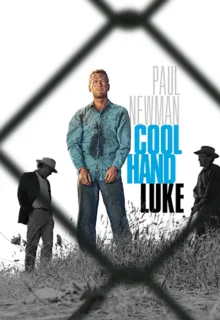
Failure to communicate. MIKE WHITE: Let's hope we can resolve that. Today. On this episode, we are looking at Stuart Rosenberg's 1967 film, Cool Hand Luke.
The film stars Paul Newman as the titular Luke. He's a former war hero who cuts the heads off some parking meters and gets tossed into a chain gang for his crimes. There he experiences some communication problems. We will be spoiling this film as we go along.
So if you don't want anything ruined, please turn off the podcast and go watch the movie. You really owe it to yourself until then we will still be here and waiting for you. So, Andrew, when was the first Time you saw a Cool Hand Luke? And what did you think.
EL GORO: This would have been one of the many films I saw on a Sunday night at the movie with my parents on TV, as I think I've said on this podcast before, movie night on Sunday, on free to air TV, was a big deal in our house and it exposed me to a large number of films that were probably far too sophisticated and totally inappropriate to me. They were great and this was one of them. I think I liked it at the Time, but it's a somewhat complex film and I probably didn't get all the aspects that I got when I rewatched it more recently for this podcast.
But it's a, yeah, it's a great prison film. It's a great Newman film. And I also think, Shout I'll do and this will happen again throughout the podcast, but shout out to Stuart Rosenberg who did some great stuff. He was the director of this film and no one ever really talked about it.
So, yeah, and I also think watching it again and I didn't get this obviously when I watched it when I was about 17 with my parents on free to air TV, but working class sort of rebel male rebels of the sort of mid sixties in America just before the counterculture. And this film is obviously one of one of several theme a along that theme that came out at the Time in 1919 66 1967. When I first saw this movie, I can tell you distinctly where I was first exposed to at least part of it. It came courtesy of a audio sample that was utilized in Guns N Roses, Civil War.
Their opening track on you. Your Illusion Two, which came out when I was a kid. And I apologize, I do apologize. I have that habit when I lay out the fact that I was only born in 85 to certain folks before that, the very first thing I was exposed to appropriately enough was Strother Martin's stuttering delivery of what we got.
I'm not gonna try it, but the failure to communicate. And then I probably looked around into seeing the film. So probably sometime when I was in high school, which I do think is the optimal Time for most young men to see a film like Cool Hand Luke. You come for the element of disillusioned rebellion and the sticking it to the authority.
And then as you grow up with the movie, you can become to appreciate the deeper themes involved. MIKE WHITE: Yeah, this was one that just always seemed to be around. I don't remember the first Time I saw it. I remember the first Time that I realized that the towering the road scene had the same music as Channel Seven action news.
And I'm curious, from what I understand, Andrew that actually crossed over the ocean and Australia used that as well. Correct. EL GORO: Absolutely. Absolutely bizarre.
That was on, I can't remember whether it was Channel Seven or Channel Nine News. But yes, it was used as the song for that, six o'clock. MIKE WHITE: Yeah. It was so strange when I just suddenly realized, oh, that's the same music.
And I was probably, I don't know, 1213 years old or something. And I just thought it was like the most astounding thing. Luckily I was smart enough to realize this movie came before the action news theme that it wasn't the, that Aslo Shiffrin didn't grab the news theme and just throw it into this movie. EL GORO: But at least got, if it got entered into a library, I hope he got a cut.
MIKE WHITE: Oh, yeah. I think that he made bank big Time when it came to the action news theme. Yeah. And yeah, it's, it's a great score.
And the thing that I really realized today when I was listening to it again, because sometimes I'll watch a movie. Sometimes I'll listen to a movie. Didn't realize just how much the movie is listening to the Convicts that we have. Paul Newman singing Plastic Jesus.
And then Plastic Jesus comes back as a reprise from the score. And just those times too where we've got so many spirituals being sung in here mostly by Harry Dean Stanton or Dean Stanton as he's known in this movie. And those also enter or are echoed by the score as well. And then the score does its own thing and sometimes the score I love, there are these moments in the movie where we are breaking up scenes and we just show, here's the trucks in the morning, they're out on the road, the sun has barely risen and then you get that great bbbbbbbbbbb and you get like that a few times.
There are moments where it's just like we don't really know how to go from this scene to another. So we're going to have this transition and those transitions are beautiful. The this movie is so well shot, of course, Conrad Hall just doing an amazing job with the look and feel of it, but all of the pieces just fire so well, the direction, the music, the cinematography the editing and of course, the acting and we talked a few months ago on this show about the Taking Appell on 123. And what a glorious Time that is for people who love character actors, especially seventies character actors like me.
And this is another one where you're like, oh, look at the background. There's Joe Don Baker. Oh, look it over. It's so many people in this movie.
It's wild and what a great cast of characters. EL GORO: I'm glad you brought up the different elements of the film that were really working for you and Andrew, I believe you did the same in so far that one of the people that does get overlooked in all of this. And Andrew, you alluded to this earlier was Stuart Rosenberg. In fact, I've come across a lot of cri lines of critique on this film that suggest that this film succeeds almost in spite of him that it is due to the presence of Newman and all the other gentlemen in the, in the film.
And it is to be fair. Mostly guys in this movie. I think we have a grand total of two women and only one has a speaking line. They have speaks with her buddy that she does look that Sweden instant God, there's got to be named Lucille, non female, non female roles.
And then I guess if we want to count the photograph anyway, I think that you completely cut Rosenberg out of the equation is doing him a tremendous disservice and it really, just to me, it kind of strikes up, this is a very sort of singular work in his filmography. He's done a lot of great films over the years, in my opinion. And some of them are rightfully regarded as classics flawed or otherwise, but none of them are quite at the same level, in my opinion as something like Cool Hand Luke, as much as I enjoy stuff like Anthony Ville Horror or recently I watched Brew Baker, which was very close in the theme to Cool Hand Luke and happened to Star the other person who was in Bush Cassie and the Sundance Kid.
Anyway, it almost feels like there are certain critics that seem to suggest that Rosenberg is a director unworthy of a film like this and I cannot disagree more. I totally agree. I totally agree with you about that. And what just picking up on a couple of the points you guys have made?
I agree with you, Mike that the way Bill passes, it marks the passing of Time. It's just absolutely terrific. The chain gang coming out and that dark blue morning and then trucks going out and they're on the chain gang just doing meaningless work clearing roads during the day and then coming back at night. Not a lot.
It's cos it's interesting, but apart from the escape scene and this is very typical of a lot of prison films and we'll talk about this later. Not a lot happens. So it's actually very, the way that Rosenberg is able to make this quite a gripping film, I think is really good. And I think he's, he was, I don't know if he was an Aber Roderick the nor be maybe that's the n Projection Booth podcast.
What an hour and a half on a theory. He was a solid filmmaker, Rosenberg. He was, I think a lot of modern critics when they used the words workmanlike, which is something I've seen applied to Rosenberg. It's actually a bit of a slight.
I think this guy was better than work workmanlike. I think pocket money. 1972 the laughing policeman, 1973 AM Amityville horror, Brew Baker, the Pope of Greenwich Village in 1984 which I watched again for the podcast, horrific pre gentrification New York film with Eric Roberts and Mickey Wilke. And also the other film I watched for this podcast was W USA.
I don't in 1970. I don't know if either of you guys have seen that film. Yeah, based on a Robert Stone book set in with W Woodward Joanne Woodward and Newman in a sort of again plea gentrified New Orleans in 1970 with an alcoholic Newman working as a disc jockey for a right wing radio station terrific film. And while I agree, Brook Brewbaker, another of Rosenberg's films in 1980 was very close to the spirit of Corp handle.
W USA is really a spiritual heir of this film in terms of another laconic male antihero role. But yeah, Rosenberg, terrific filmmaker. MIKE WHITE: I'm a huge fan of the laughing policeman and hope to do that on the show one of these days. I just, that's another one.
I speaking, going back to you taking impel 123, I put that alongside of the laughing policeman and Charlie Vere as three just super solid crime films that we've got Walter Matthau doing in the early seventies. And that's another one. Laughing policeman. Another one with an amazing cast.
You've got some people from this coming back. I know for sure. Anthony Zerbe comes back and then you also get Bruce Dern Lu Gasser Junior R IP. Yeah, it's terrific.
And Paul Newman who is to me so smart or was so smart also R IP for him. But he made, what, four movies with Rosenberg? I don't think he's gonna be making movies with somebody who can't hold water. He had faith in Rosenberg enough to work with him three more times, at least with the drowning pool.
Ws A and pocket money. EL GORO: The drowning pool. Yes, that was the other one. I, he's not going to align himself with lackluster talent and speaking of what you were saying there, Andrew the notion of using the term workman.
I've used it similar but to me it's always just been a director who could be relied upon, you could put him in pretty much anything and he's going to turn out at least something of a certain quality. And perhaps it is a genre bias, the fact that Rosenberg would dip into various genre storytelling, whether it be the, you know, thrillers or the horror films or what have you, maybe that was enough to disincline certain people from giving him the credit that he's due. But the way that this film is played out the space that is given for performance and also the spaces for those pregnant pauses.
Justice Lu says it's almost like he's just passing Time at times. The movie is just passing Time, but it makes us aware of it. It lets us follow these men in this never ending Time because that's one of the things that strikes me about this movie, unlike some other prison dramas where you'll market this based upon the years that pass and they'll acknowledge that you almost don't get that sense in Cool hand, Luke. How long did the events of this film take place?
Did they take place over a month? Did they take place over a week? Did they take place over several years? We don't know the weather net changes.
And so it just becomes the sort of purgatory for these men. This never ending flew of get up, do your work, keep passing the Time. And I think that actually works to the benefit of the film, rather than being a detriment. MIKE WHITE: And there's also this whole thing of looking for something to do.
I didn't have anything else to do. I was just passing the Time you're saying is when he talks about his war record, it seemed like the idea at the Time he just wants something to do something to entertain him. He's such an interesting character that he, it just feels like he was set on this path so long ago of challenging authority that he goes into the army that he does. All these great things gets the bronze Star, the silver Star, purple heart and he's busted back down to buck private before he leaves the army.
Ok. And that's his whole thing. It's just challenging authority. And then you get that weird complicated relationship with his mother part way through the first or second act, I guess it's the second act of the film and just what is going on with this person.
And I love that the actress who is playing his mother was only two years older than he was, but they made her look fantastic. She looks like she's about to die. And apparently she specialized in playing older women throughout much of her career. Even back in on stage, she would play older characters.
But when, as soon as he busts out and starts calling her Arleta by her first name, and you realize that the direction that Rosenberg gave her was to flirt with Luke. It's ok. This is a little twisted here and they don't go into his father too much in the movie. But in the book, he definitely talks about how his father was a preacher and ended up running off.
So it really puts this whole question of his faith into the spotlight. And we'll definitely be talking about that a lot more later. EL GORO: And I'm glad that element, at least in terms of his father being a preacher didn't make it into the film because to me that would have provided an yeah additional level of context and characterization. But to me, his defiance against God was just one more institution for him to push back against one more thing that is being set up to put him in a box to have given them these rules yet another boss, except this Time, it's the boss in the sky.
So I like the fact that element wasn't carried over into the film. It makes it feel a bit more and bridal. But he's also a very definitely Newman still. And it's amazing as you say, my, he was, I think he was 44 when he was in Cool Hand Luke and he looked, his body looks incredible, which is why you can get away with things in this film.
Like so much of the film just focusing on a little laconic smile or a little B Time. Nothing is a really Cool hand to have these little moments. And at the very end of the film, of course, you have this montage of Luke mugging for the camera and his best smirks miles and grimaces during the film, which in any other film I think would be terrible but worked in this film because you, he's also such a terrible reb he's a bit of and this is, he's a nothing rebel, he's not really rebelling against anything. He's got no direction, he's got no politics that we can see.
There's a, as you say, there's a mention of him being a war hero. And I do wonder and this is something that I think maybe in the book a bit more is the whole, the suggestion that he's also working through some sort of post traumatic shock disorder as a result of what went on with the war, which is very light in the film. But he's so charismatic that he lead these men look up to him partly because they're so bored and there's nothing going on, but partly because he is charismatic, but he's got nowhere to lead them and he doesn't really even want to leave.
And I think the most telling scene in the film is that, that scene towards the end where and where he has that his third breakout and you know, when he gets captured and it's gonna be when they're gonna kill him. Because Ro and Martin has already basically said the Time. But you're daring and drag line comes along for the ride because he's just following Luke wherever he wants to go in a sort of weird homoerotic. Also, this guy is so charismatic type of way.
And the Dragline saying, oh, look, it's really good the way that you pretended that the guards had broken you. I know I'm jumping ahead a lot here but that you planned this all along and it was such a great escape and Cool and Luke says that I never planned in my life. This guy has the cry of along boozer. He just gets into trouble charismatic but not really, not really any kind of great political leader or anything.
And I think that's the strength actually when I was thinking about it, of Newman's persona in this period of film. So I think, and it was e Birds that noted that Cool Hand Luke was less of a reinvention than it was a culmination of a series of films. He'd done the hustler hud Harper and Bob Ray, which are all about VW, what heroism was in mid mid 19 sixties America. And this is another one of those films, but his whole persona, when I was thinking about it, Newman, he's a very suburban nonthreatening rebel, which I think is probably re it's really interesting and I wonder whether that's why he was so popular in cinema because he's handsome as hell.
He's a rebel. He plays these rebellious individuals but they're not really rebelling against it. It's just a general rebellion against the sort of on oui that was mid 19 sixties culture before the counterculture really kicked in. MIKE WHITE: I was really reminded when I was reading the book, I was so reminded of one Flew or the Cuckoo's Nest.
And of course, I'm not the first person to think about that, but I looked up last night and Cuckoo's Nest came out in 62. I think this as far as the book goes, this book and movie were very close together. I wanna say 65 for the book, 67 for the movie. And then of course, Cuckoo's Nest, the movie would come out in the seventies and even on the audio commentary, I think it's Eric Lax is talking and he said that Newman feels more like a seventies hero in this movie than a sixties hero because he is having that on Wei and is having that problem.
But then when you think about things like Bonnie and Clyde came out the same year, this is the beginning, right? This is the beginning of New Hollywood and challenging authority. And this is as the old system is breaking apart. And I think Luke comes in at the perfect Time for that.
But this does feel more like a seventies film than a sixties film. A lot of times to me. EL GORO: It does, especially from, as you say, the sort of philosophy behind it, that broader sense of, that's that broader sense of something broaden within the institution that needs to be opposed. People are not quite sure how they're going to do it, but they just feel instinctually it needs to be pushed back against.
And that's one of the things that I enjoy about this film and why I said it's a film that the first Time everybody should see it ideally is when they're a teenager because there's something about that sort of directionless rebellion that resonates so strongly with practically any teenager. I would, I would put money down. Even teenagers today are still going to feel that that resonant call of what are you rebelling against? What have you got?
It fits in with that sort of vibe. But one of the things that definitely seems to Mark it in terms of the seventies film is the nature of how the film ends. Very little is actually accomplished by Luke, as you said, Andrew, he's not an effective rebel, but there's still the small hints crack in the seemingly insurmountable edifice of authority with the man with no eyes, getting his sunglasses broken, the laughter that's shared between the cons that sort of communion that they have. They can come together in celebration and to continue with the gospel of Luke, which yeah, that's a little bit on the nose.
This is a movie that's filled with on the notes religious. MIKE WHITE: That the man with no eyes, the man with the sunglasses, his boss Godfree. I'm like, oh boy. EL GORO: Just look at the pose of Luke after he eats eggs.
MIKE WHITE: And then that Dragline I you forget that this movie is revealed to be a flashback at the end that it is Dragline telling the story outside of the church which is in keeping with the book. But the movie doesn't start with Dragline talking about this starts with him cutting the heads off of the parking meters. But yeah, it's wild to realize, oh, this is Dragline telling this story. So it is that proselytizing it is that gospel like you're saying, it's him as Saint Paul basically going around and spreading the gospel of Luke.
It's wild though. I could say the Dragline is almost the Judas. If we're gonna say that the scene in the church is the garden of Gemmy. Yes, Jesus.
If I can say that him, Luke railing against God and having that conversation, why me? What are you doing? I try to fit in. You make it so I can't fit in.
You dealt me this shitty hand. And then when drag comes back in, he says, oh, they caught me right after I left you. I'm like, you might as well just walk right up to Luke and just playing a big old kiss on him because that's exactly what's going on here. And maybe it's that I'm recording on Good Friday.
But I don't think so. EL GORO: And again, if one gets the feeling that perhaps this was made in the seventies, the la the last image of the film may not have been Luke smiling, but Dragline hung from a tree just to put the complete bow on the Judas. Picking up on your point, Mike about those films of that. I definitely think Clyde Barrow in Bonnie and Clyde in 1967.
I think this film resonates very much and it's also the other, your point that you made Goro about directionless rebellion. Benjamin Braddock in the graduate. Another total bo famous another total misdirected. What am I even rebelling against Phil?
I also think what's his name? Nicholson in as Robert Deer in Bob Raffle's five easy pieces, which is another one of those angry young men rebelling against what? And then of course, as you say, Mike, RP Murphy. Nicholson is RP Murphy and One Flew Over the Cuckoo's Nest, which is a complete, complete completely ch ch It was Cool Hand Luke.
But it's interesting watching it now when you're a bit older because you just think, oh, Luke get your, can you get your act together a bit? Can you just because it's this series of bullshit hur victories that he wins, which are quite, which are great tiring the road is a great one. Hey, let's work really hard and finish this off really quickly. So we'll have an hour at the end of the day and it will really clip off all the g, the bullshit escapes that he does knowing that he's gonna get caught and of course he does get caught.
They want him as a leader. He's got moral authority over the prisoners. Why the guards hate him and they target him, but he's no leader and he's such a loner in that respect. I suppose he is a great model for alienated young boys, 1617, all over the world.
MIKE WHITE: If I had a poster of Cool Hand Luke in my dorm, that that would have been on brand for me. But yeah, he is a great character that way. And yeah, more of around the one flew, one flew over the cuckoo's nest connections when drag lion attacks Boss Godfrey at the end really reminds me of when rp mcmurphy Strangles the big nurse, the whole thing of her in her starch white uniform is very similar to Boss Godfrey and his sunglasses and like you said, removing of the sunglasses and it's great that we never even see his eyes like that shot at the end when his glasses go off.
You're like, oh, now I can see his face but you can't, he obscures that and then gets in the Car and you just see those sunglasses get crushed under the tire. Wow, that is amazing. What an amazing character and that they took that character from the book and just stripped out all of his dialogue and made him this force in nature. And I thought what they really did well too was to give Strother Martin and as the captain a lot more and really made him more integral.
They bring him in pretty early into the film. He is almost having a conversation with Luke at one point when they're talking about the war record and he's talking about all the men that they have there. And oh, we got this guy who's doing 20 years and it's so smart to use him as a villain and to have that 12 punch of him and Boss Godfrey. But then all those other minor villains of all the other bosses and again, a who's who of amazing fa faces with that BCAK looks so good in this and you compare what he looks like in what, two years in Easy Rider?
Oh Yeah. And then you look at the freaking Dennis Hopper. You're like in two years, you're gonna make that movie, this groundbreaking movie and you look pretty clean cut here. But yeah, and then who's some of the other bosses that you've got?
Like Robert Donner is Anthony. EL GORO: Is a prisoner but he's D boy. MIKE WHITE: Yes, Anthony is so good. Charles Tyner who I don't know if he ever gets any lines, but he's got the best face.
Most people would remember. I would remember him from Harold and Maude and just his s role in there where he is the one armed? Is he like former army guy? Right?
He's so good. All of these character actors and freaking strum Martin is just, he just exudes that like folksy, I'm just an ok guy, but he's got the biggest evil streak that you could possibly madge all of these guys, especially towards the end when they're trying to break Luke with the whole dirt and my call thing. EL GORO: Holy shit. And they basically murder.
And that's the great, there's lots of lovely light touches in this film, which I think is the script, obviously. But also let's again, let's give it to Rosenberg. Let's bring it on down for Rosenberg. Some lovely light touches like little thing when one of those prison guards says I've been guardi trying to justify what a good guy is.
I think he says in 20 years that I've been Garda prisoner, I've never shot a white man just that just that and there's, and as you say, Martin, really fantastic. And that line, what we've got here is a fa is failure to communicate, which isn't in the book, which they gave to him in the script and which I think worked because it's exactly the kind of thing that an uneducated prison warder who's been forced to start doing bosses where we've got to talk about how they communicate with the prisoners at this kind of stuff that's starting to happen with prison reform in the 19, the way that social services are going to 1950 you can see Martin, both of Martin's character basically being dragged into some seminar where he's lectured about the communication with where we're at.
Now we're about rehabilitated where about all of this. So he sit without really understanding it and it just sounds so evil. The other revelation for me in this film is George Kennedy as drag light. I just think as I obviously George much like for you guys, George Kennedy, I have seen George Kennedy and Umpteen Bill.
I'm gonna say most of them nothing I've really remembered. And my most vivid memory of Kennedy is, which is great. He's turning it up in the naked gun films with Leslie Nelson, which is fantastic. And then to see him in this film, the guy can really act, he's terrific, the great heart, but he's just the perv as the blustery sort of long-term con who doesn't really know he's king of this very small world.
And they establish, I think that and that's a key trope of prison films which I know we're gonna talk about later. Is that is the introduction to the, when the new cons go into the prison and basically get introduced to the guy who's the boss con who was a sort of blustering bully and ruled over this small hermeneutic all male world of the prison. But a as Dragline and he won an Oscar for this best supporting actor Oscar for Dragline. He's really good and it was a real revelation.
One of the great things about re-watching this film recently is this, wow, it's got Kennedy he was great at. And it's, it's interesting to look at the sort of how the prison dynamics roll out, especially in relation to where the prison genre would go. And I think part of it may be attributed to with a reduction of or a re relaxing of standards in the films and the solution of the Hayes Code, they could go get freer to show more brutality in prison life. But what's interesting with Cool Hand Luke is while there is elements of the prison that are very brutal, the treatment of the guards of the prisoners is certainly a monk up there.
Luke in particular, the actual treatments and the dynamics between the prisoners doesn't have that same level of menace that plays into so many other prison dramas that maybe it's because of their sort of shared issues that they're all in the, they're all in the chain gang. They all have to work and work backbreaking labor all day. But while there is a little bit of ribbing for the new meat that come in, they can integrate it in pretty quickly. Dragline has the boxing match against Luke.
But outside of that, there's not a lot of harassment, there is certainly not a any implication of sexual violence which is somewhat of a Hallmark in the prison genre which become, of course, later on again with the softening of the Hayes Code and the ability to show that kind of thing. But it is something that sets Cool Hand Luke very much apart from a lot of other prisons dramas that came afterwards in so far that so much of it is about the inherent camaraderie between these men. MIKE WHITE: Yeah. In the book, they call themselves the family, which I find to be very revealing that they aren't antagonistic with one another that they're trying to help each other out and to go back to the Christ metaphor.
It's a little last supper when they put so much food onto Luke's plate and he will get punished if he doesn't eat everything on his plate and the way the men come by and all take a bite off of his plate, they're all in this together, the way that they're taking communion, let's say, with his food and the way that they will throw down their plate after they're done or their spoon or whatever. And just that's it. I've done my part. They're all there could easily have turned into everyone's coming with knives and they're treating him like Julius Caesar.
But instead they're all there to feast off of his plate and save him. I love that, that whole moment. EL GORO: That's a class thing that characterizes prison films. I would say up until about the 19 nineties is that the, they're essentially stories of our working class life in prison and there is that kind of, it's damaged.
And I, and I think your point, El Goro is good about the way that, you know, as we go into the seventies and the eighties, these pri prison films become much more brutal and they show what's going on in prison much more. But there's still that sense of class solidarity. I think that you find in those earlier prison films, which I think breaks down as class breaks down as we're going towards the new millennium. And that's very on display in Cool hands.
Look, they're all bunch with the exception of the one character society red who's JD Cannon, you know that and that's his nickname. He can actually read or he can actually, he actually knows what's going on. He's slightly apart from the rest of the prisoners, but still in with them because there's that basic solidarity. There guards are all working class people too.
And of course, that's the classic prison trope, prison film trope. Isn't that really? The guards of the prison is the flipside of the same group of people there for the grace of God. There I go.
But also in some respects, the guards are as much trapped by this and this is something we can talk about when we talk about prison films. Later, the guards are as much trapped by life in prison and institutionalized by life in prison as and brutalized by life in prison as the prisoners are. And what you were talking about in the terms of the society that not only is he quoted as being of a different class but still part of them. He's also curiously coded as being very northern.
This is very Southern. It's a very Southern movie, but he's the one, not everybody attempts the Southern accent, but he doesn't even try. So he definitely feels somewhat othered. But at the same Time, he's still just part of the group.
I also love the fact that he's the only one who wears full pajama tops. He has like a full but enough set of pajamas that he wears. It's a small detail, but it's one that I appreciate. MIKE WHITE: I love those moments when the other cons know to give him space like when he gets the message about his mother dying and they all just move out and let him have that space or after he's eaten the 50 eggs and they all leave him there in that Christ like pose.
And I think it's the guy who is the other champion eater who's built like a brick shithouse. EL GORO: This guy, the actor that is Buck Kalan who was, yeah, he was a bodybuilder back in the day after he did a stint, I believe in the Navy Detroit to native by the way. So shout out to Mr Mike though. He did move to New York City apparently when he was like two.
But yeah, he was bodybuilder professional wrestler on some of the lesser circuits into that. I don't think he ever wrestled for Vince mcmahon Senior who would have been operating out of New York or in the Connecticut area around that Time. But yeah, as you said, he makes an impression when he first shows up, it's huge and you're not used to seeing a guy with that kind of build at this era. It's the same of impact that when William Smith would show up as a guest Star on various seven seventies television.
MIKE WHITE: Again, I think after Luke is done with the eggs, he leaves a tribute of his spoon because he used to be the champion eater around Luke's head. It looks like he's got that angelic radiance around him that you see in old paintings and so great. I just, there are so many things that are working so well for this and going back to Dragline, that's really for me where we get to see the character. What is going to paint Luke for the entire rest of the movie is when they do have that boxing match and Luke will not give up and it's just over and over.
You have to stay down, you have to give up. And I think that's even presage a little bit when Harry Dean Stanton singing Lord letter B and just, just leave it be if you don't have to be a dick all the Time. Luke or just be that rebel because he's not really a dick but he's, he's just always has to buck the system every single Time and he will just keep getting up, he'll keep fighting, he'll keep getting up. One of the other smart things I think from that they change from the book to the movie is it is not a matter of Luke come, Luke escapes.
Luke comes back. Luke immediately escapes again. That's there's a lot of Time in between those escape attempts. But in the movie, it's maybe a few weeks past between the third or 2nd and 3rd attempt.
But man, oh man, between the 1st and 2nd, I think it's what, that night he's already out the gate again or he's shaking the bush right there. That's the second one is when he's shaking the bush and that's like the day that they brought him back and when Strother Martin kicks him down the hill, it's ok. I guess I'm gonna escape again. Here's the string that I have, I already have this planned out.
EL GORO: It's intriguing, isn't it? Because it suggests that actually the fights is easy to escape. Pro is that life of them don't want to. And as I say, it's the brutality of the guards in somewhat is justified because this, the chain gangs, it's a group of men that outnumber the people that are watching them out in the open working on these fields and the working, doing these kind of jobs.
So the only way that you could keep kind of control is brutality and the brutality and the punishment is the only way that they could disincentivize people from wanting to try it again. But that second escape is one of my favorite smaller moments in the movie where he's breaking his chains and he does so by talking to the two black kids. And I love the interaction between them because there's an element of a small elements of the racial tension where Luke does call one of them boy, which yes, he's much younger than him.
But as we all know that term carries a lot more weight south in regards to African American. But what I love is what happens after when he tells them, hey, you're gonna see something funny. And at no point, do these kids point him out to the law at no point. Do they do it?
Because it goes completely without saying there would be no way in hell. Those kids would talk to the cops because it wasn't so long that they and the lady care hang in the bush or the laundry may even have memories of being chased by dogs or knew people who were it. Is that subtle elements that it's there? It's not necessarily signposted, but it's an element of the world building that I'd really appreciate.
And it's just funny seeing that kid to that accent. MIKE WHITE: It's the black church that he's hiding in. And when he goes into that black part of town, Don Pierce, the author even points out. Oh, yeah, there had been some young men who had been killed recently and you could even see the burned out wreckage of some stuff where a bunch of white guys came in and did their version of justice.
So it was like, yeah, this makes total sense that Luke is gonna go in there because nobody's gonna snitch on him whatsoever. And they don't even bother to ask the people that live there because they know they're just gonna get nos for answers. I didn't see anything. EL GORO: Just going back to that point about.
And this is something like I was really paying attention to it when I watched it this Time is the number of who's a prisoner and who's a guard and who's a prisoner that sort of crossed over to the guard speaks to that institutionalization of those prisoners. So dog boy, is he wearing a prisoner? He's a prisoner that looks after the dogs. There's also Clifton James.
I think we have to give any man loses his spoon, spends the night in the box. That great scene at the beginning where he just reels off all the offenses can do and then Luke finishes his sentence and Carr just says, I hope you're not gonna be a hard case, but he's terrific. That's Clifton James who plays Carr, who again is another one of those characters cos he's best known for muggy as Sheriff JW Pepper in Live and Let Die. And the man with the golden gut, but he's terrific as Car, I think he's a prisoner too because he's wearing kind of prison gear as well.
Well, I don't know that they refer to him as the walking boss. So he might be, he didn't seem to be wearing the same kind of stuff as the rest of them. He didn't strike me as a trustee because even dog boy was still wearing the prison grace. The fact that they have him in white.
I'm, I'm thinking he's, he's not sorry, he's a floor boss, not the walking boss, but I'm thinking that he's not a prisoner. But again, speaking of people that are trapped in there with him, the warden has his own little cottage out there. Who knows where the rest of the guards live? This guy actually has to live amongst them and literally smell them.
The one who spent the most Time around him. MIKE WHITE: He is there though when they're doing the 50 eggs thing. And I like that. He has this kind of camaraderie with them a little bit.
He doesn't seem like a hard ass, which is good. He's no pushover. And I wonder if the Coen brothers like this scene enough that it plays out almost exactly in the Hudsucker proxy with the whole, if you do this, they dock you. EL GORO: I have no doubt that Cool Hand Luke looms large in parts of the Cohen Brothers filmography.
Just compare some of the shots of the man with no eyes, with the gentleman from racing Arizona, the demonic biker and. MIKE WHITE: And oh brother, we're out though with all of the prison stuff. Yeah. No, that's, that's very true.
We were talking about drag and how he goes along with Luke during that last escape attempt. For me. One of the most heartbreaking things is when he goes. Oh, yeah.
I only had a few months left and I'm like, what the hell, why did you do this to yourself? EL GORO: He's not the sharpest tool in the ball. MIKE WHITE: No, but he is amazing. George Kennedy.
Just a, to add on to your point. He's so good. And I just love that even though he's supposed to be this big old lunkhead that you can see the wheels turning all the Time and just the way the chemistry between him and Paul Newman, especially during the egg eating scene when all of a sudden, Luke is like, oh boy, he goes over and lashes the water on his face and he just seems so decrepit. There's no way he's going to eat that last little bit of eggs.
And pretty soon people are like, oh, he's not gonna do it and then they start adding more to the bat and drags. They like, ok, where's the big money man at and then as soon as Society Red says, I believe you have it all, then Luke just pops back up. Ok. Last eggs.
EL GORO: Yeah. And that's definitely one of those things that has really entered into the, into pop culture and into the, into the zeitgeist, the 50 eggs. People say it's 100 eggs. It's no, it's 50 eggs.
But to the point that every Time I watch it, I can't help but think one of the parodies that was made of it, which was in an episode of Malcolm in the middle where one of the older brothers claimed that he could eat 50 marshmallow peeps because he was at military school. And I just love the end of it where he's about to give up. And that and one of the people who had betted that he could. So nobody says the rules say he has to have them in him, not that he has to, has to eat them.
And all of a sudden, you know, eat scarfs down the last of them. Every Time I see Luke failing on that last one, I had the thing of we just gotta get it inside him. MIKE WHITE: I did want to talk about this whole thing of, I don't know how upset the bosses are with Luke for not believing in God. Is it just an excuse for them or are they actually.
EL GORO: The one boss that drew talked about earlier? The one who says he never shot a white man. He actually feels like he's trying to reach out to Luke on a religious side because later when they break Luke and digging the ditch and Luke calls out to God and he's, what was that? Who are you calling out to?
I always got the sense that he at least was trying to evangelize, trying to bring Luke over, which is why he turned so brutal because Luke took advantage of his kind heart to escape the second Time by shaking the brat and sheer boss. I think that one was trying to get to him on make him right with God. Isn't he? The one that says when Luke's mother dies and he's chucking Luke in the box, that sort of small hot box they have to go.
He says, I'll say a prayer for your ma tonight. Luke. I think it was. Yeah, that's that guy.
Yes, the guards there is the flip side of the prisoners again. They're just, they're just working class stiffs who happened to be heavily armed and people. The where it all breaks down. One wonders was the motivation for him wanting to escape because his mother died or was the motivation because he was punished for something for nothing that he saw the corruption of the institution.
MIKE WHITE: I kind of wonder too because when Luke first really brings up God, it's when there's the rainstorm and we've got at least three rainstorms during this movie. So of course, you know, me looking for patterns. I'm like, ok, there's definitely a pattern going on here. And the second one is when he is out, all of the men except for drag and him are, the men are in the trucks.
Again, the bosses are in the trucks and Luke and drag are just outside in the rain. And he says talking about how God is the big bearded boss in the sky. And he starts basically challenging God at that moment. I love that line that love me, kill me, hate me.
That, that thing that he's just like taunting God. And then it's only maybe the next scene or two scenes later where he gets the Telegram from the folks that are saying that his mother is dead and I'm like, did she die when that was happening? Was that God trying to send a message at that moment? EL GORO: It could definitely be read that way.
MIKE WHITE: I'm super atheist. So this movie really gets to me because it's seeing somebody who doesn't believe in God getting punished for not believing in God. I'm just like, man, it happens, you Christians may run the world but you still treat us safely as like shit. EL GORO: And that's the thing that the film itself for all of its religious imagery, it doesn't come out on God's side because again, at the end of the film, when he's talking about, you know, he's praying to God.
Show me a sign. What does he show him Dragline showing up saying that you're screwed but take us back to prison or most likely kill you. But one of the most heartbreaking scenes in the movie to me and it still impacts me every Time I watch it is when he's singing, you know, Plastic Jesus, which, you know, it's his farewell to his mom and you get the sense that was a song that she liked and that's why he's singing it to her. But what is he singing about?
He's singing about a kitschy plastic effigy of a Christ figure. That, what value does it have? MIKE WHITE: It's, it's a piece of kitsch on a dashboard but it gives you hope, you know, it makes you feel like you're not gonna go to hell if you are driving 90 happen to fly off the road at the end of the day, it's a film that's open to a fair amount of interpretation. EL GORO: But if you walked away with it not believing, I think that's supported in the material.
MIKE WHITE: Even to go back to that moment with Luke having everyone eat off of his plate. It's pretty ironic that I think it's either the scene before or two scenes before is when all of the men are around him and they're just like, tell us about the picture. He's come in, the guy had the shit kicked out of him because he ran away again. Or that might be the first Time, second Time.
So he comes in, he's been beaten, they lay him out on the table again, like after the egg eating scene and they're just like, oh, tell us about the picture. How many girls did you lay? Da, da, da, da, da, da, da. And they're just all on him and he's just get away from me.
I had the picture made up. It's all phony and just like, really disillusioning all of these guys the first Time because they're gonna get majorly disillusioned later on when he turns quote unquote and he yells at them, stop feeding off me through me. Exactly. It so reminds me of, and I don't remember if this is in the Bible or if it's just in Jesus Grat superstar.
But it so reminds me of like when all the lepers are going for Jesus and it's just, there's so little of me and you can't do this to me. And then literally two scenes later, they are eating off of his plate and it's like they are feeding off of you at this moment, Luke, but this is the good version of it. EL GORO: I had not got half this religious imagery. I'm in Australia and I'm just not exposed to it as much as you guys are.
But I, yeah, I think you're about to break out into a sermon by. Again, it's a big part of this film is Luke as Christ figure and I like it. I like that. They do that and then they subvert it because stop living through me.
It's a counter prediction of I am the light and I am the way. No, don't follow me. I don't want you to be following me. And at the one Time where he's gone through this sort of thing and then everybody has left him.
He says, where are you now? You were all over before. Where are you now? You get that, that illusion to why?
Half 1000? I said, well, Christopher say me. But again, I like the idea that the conclusion of it is essentially him thumbing his nose at any sort of higher authority that it's not a direct attack, but it's with a wry bit of cynicism that's totally in keeping with the character of Luke and the character of the film. Because if I think if any conclusion is to be drawn is just as he says, he's just a big old sky boss.
It's another institution that Luke is gonna rebel against. MIKE WHITE: Yeah. When he betrays the men by becoming that lapdog to all the bosses. When Coco Lou Antonio flicks his cigarette at him while he's walking by and you just see that disgust on their faces.
I love that moment. And I keep wondering, when did he get the plan to do this? Because in the book, it's a really long con in the movie, it's still a little bit of a con and again, the men leave him alone when he comes back after he's had that revelation right after he's been out in that in the grave and coming out of the grave. No boss.
I won't do that in doing the initial version of grabbing. I think it's Luke excuse leg and just, oh, I'm so sorry. And then we'll get that later on when drag grabs the man with no eyes. But they, when he comes back into the shack to go to sleep, all of the guys just go away from him.
I'm like, oh, they're leaving him much like how they left him alone after his mother died. But here it's just pure disgust of our hero is no more. And then when he comes back and steals the truck, it makes that even better for those guys because now they get to see or think to themselves. Oh, he was just fooling them all along and to add on to your point from earlier, the whole thing of when the drag is like, oh you fooled them, you fooled them.
And he's no, they broke me and I'm like, whoa, ok. That you don't expect that from your hero to say no, that really affected me. EL GORO: They do truncate it down though. That, that the timing is truncated down from the book slide a lot.
I have to say the one thing about the film that annoys me is the way that Newman looks a million dollars, no matter what, he gets the shit beaten out of him by drag line. He's got, he's got, I think he's got a slight bruise, but other than that, he's fine. He has these terrible escape attempts and then he comes back and the next day he's actually looking like a million dollars again, as you say that scene with him being broken by the guards and then stealing the trucks and escaping very truncated. And unlike the, as you say, is dealing with a much broader expanse of Time.
MIKE WHITE: They did a great job of converting this book to a movie to the s adaptation to even have the author actually in the movie, basically reprising his role. And I, the one thing that I really appreciate too about the movie over the book, even the book's fantastic. The first Time I had read it, I think I've had a copy of it for probably 30 years, but I've never read it until this finally kicking my ass into gear to read this. The thing that I like in the movie is that we don't have to worry about who the narrator is because the narrator in the book is all sailor and he's telling us all of these stories.
So when it comes to Luke's escape, we are as in the dark as he is until he starts to get the details. And after the second Time it becomes a little if he, let's say where it's like, oh, you just happen to hear all of these details. But at least with the movie, we're not stuck with him. We are not inside of his head.
So we get to see Luke I out in the world. We're not just hearing the details of it later. And we're also kept in the dark as well a little bit when it comes to that photograph that I talked about, we don't know what all of that stuff is. So we get to hear about it like the other prisoners do.
And then it's nice. The third Time that Luke escapes in the book, he is with Dragline. So we get to hear everything from Dragline telling sailor the story telling all the men the story in the whole event. The whole book is a flashback of drag, telling the story.
And then it's sailor going off into his own world thinking about things and telling his point of view and then going back occasionally to the Dragline story, but I thought they did a really good job. And that also that motivating factor as far as this scene, what happens in the scene leads to what happens in the next scene, which ha which leads to the next scene, which leads to the next scene. There's nothing wasted in here as far as why we are seeing what we are seeing. There's no moment where it just they could have cut that out because everything has a very important piece.
This is a really well crafted script. EL GORO: When they ripped that photo up, which is the, which I think is the peak disgust with Luke having been broken and they rip up the photo which is loop with the two girls on one of his escapes and he sends that photo back to the prisoners. And I think it then functions as a sort of idolatry, masturbation piece for all the prisoners while they're. MIKE WHITE: Are they masturbating to the women or are they?
EL GORO: No, I think I was gonna say that. Yes, that's right. It's good Friday where you are. And then of course, they take the very final se scene of the film shows you that someone's taped the photo back up and if I was to roll with the Christian thing, I'd say that's their Bible.
And you notice that the design of the tears is a cross. MIKE WHITE: Oh, yeah. When you notice that where it is in the magazine on the other page is somebody with a rifle basically pointing at Luke. EL GORO: Yes, we need to give a shout out to Frank Pearson.
So Pearce's 1965 novel and Pierce was a really interesting guy. Cos he'd actually spent, it's interesting for lots of reasons. But one of the reasons is that he had spent Time on a Florida chain gang, but he does the adaption and he's helped by a guy called Frank Pearson. And I thought who's this obviously brought in to help a novelist who's got no script writing, period.
Through the script. Pearson, Star K Ballo, the Anderson tapes my absolute favorite John Le Carre adaptation. The looking glass War Dogs Day after Star is born and presumed innocent are all films that Pearson scripted. This guy's got, which is, which explains why it's a good novel, explains why the adaptation for the screen is so on point.
Because God, this guy Pearson Dog day afternoon, the Anderson tape the looking glass. You know, he can really, really script. I remember seeing an interview with him in the special features that was on the Blu Ray release that I have of this and he was talking about the movie I'd done prior to this was Cat Ballou, which was funny but not my kind of funny. He much preferred the more political laughs that he could do in something like Cool Hand Luke again.
MIKE WHITE: It all just comes together so well. And we talked about that music before I can't say enough good things about this score to do this Aaron Copeland America, that kind of stuff. But then you're doing more like rock influences at Time, the way that you're mixing in the harmonica and the banjo and that the drum, playing it with the, with the brushes and everything, everything just fits so well with this. And this is one of those scores where I can listen to it outside of the movie.
But it just takes me back into the movie every single Time I listen to it and makes me smile from. EL GORO: Harmonica to action news. So this is based on, what is it? A prison?
It's so fierce was in, it was actually based on the death of Luke. I think it's his, it's his life partly it's he. So he's in, he's on a Florida chain gang and he write, he'd also been a counterfeiter. I think he'd been a merchant marine which is Don Pierce.
And then he basically goes back to the US becomes a cat burglar and then gets busted and every and then lands on a, in a prison farm in Florida. He bases the book partly on his experience, his own experiences, believe that the 50 egg eating scene would actually happen here that and then he's also basing it on the other cons that he meets while he's in the prison farm. And then he's just making some of it up with an instilled up fiction and they build the, I mean, it, but one of the reasons it looks so good is that they build an exact replica of the prison farm.
He's on, I think it's road is it road Prison 36 which was also at one Time referred to as sunbed prison camp, which is just great that you'd call a place that's such a hell hole, sunbed prison camp. In Duval County Florida. I have no idea where that is. But in bases, I think a core part, I don't know if you guys read this, but the core part of the character of Luke is based on a prisoner called Arthur Ballater.
There's a story that Pierce in here when he's in road Prison 36 is this 19, incredibly charismatic, 19 year old guy who was in prison actually back in the early 19 thirties and his story had just continued on and he was like really charismatic and he was apparently like an amazing scape escape and a complete rebel, he would escape all the Time. He would rebel against the bosses. And what happens is that one night the guards put melet in one of the freaking sweat boxes, those those windowless outdoor solitary confinement cells and he dies.
And there's some evidence also and it's some evidence that he's strangled by the chain that held him in place in the sweat box. But anyway, this is a real case. You can read about it online and it actually received a whole lot of critical at a whole lot of media reporting. There's a, there's an article in The New York Times.
It's a 1932 piece from Time magazine that you can read online and it actually apparently got some international press and there was a trial that involved some of the guards were who were accused of being responsible for male Ford's death. And of course, none of no one ever saw the inside of it. None of the guards ever saw the inside of a prison. He, that the guards, I think one guard was convicted of manslaughter, but he paid a bond and just, you never spent a night in prison.
But the, but Pearce heard the story of Malat in prison and combined, that's a core part of the narrative in novel. Cool Hand Luke. MIKE WHITE: Yeah, I just knew that he was a real con. I don't know, I don't know when he wrote this compared to when because it doesn't sound like they were allowed anything in the joint.
So he's not writing it. EL GORO: He wrote it partly in prison. My understanding is that he jotted down, he started jotting down things while he was in prison and then he got out of prison. He wrote the book.
You've read the book, Mike, I've read the book. I don't know Al Gore whether you managed to look at the book, but it's written in that weird style where there's no inverted commas for the, for the dialogue. So there's quite a sort of Cormac mccarthy style. Yeah.
Yeah. And apparently that then he works on the book for a number of years until he finally gets rejected by publisher after publisher until it eventually gets picked up. I hadn't finished the book. I was, I was reading bits of it in preparation for this, but I wasn't able to fit it in the whole thing.
Unfortunately, it is one that I do intend on reading along with because we're talking about Don Pearson. And immediately when I start thinking about prisoner who writes books that then get adapted into films, my mind immediately goes to Eddie Bunker who of course did no be so fierce, which has turned in straight Time an Animal Factory if we want to talk about a rather brutal depiction of prison life. Animal Factory is right up there. I found a copy of Cool Hand Luke, the original gold medal film adaptation, the film tie in a second hand bookshop in Kok Cambodia in the mid nineties.
I know what it was doing there. Kamp Pot is this town on the south, a tiny town in the south of Cambodia which at that stage was surrounded by Khmer by sort of Khmer rouge guerrillas. So one of the CIA agents must have left it behind when they were. I think you're actually closer than you than you know, with that.
But carrying it around with me for ages when I was doing this podcast, I plucked it off the shelf and went, oh, I'm gonna read. So I read, I started reading, I took it with me to a screening of June th and then lost it in the cinema and I couldn't finish it. And then I rang up the cinema and said, is someone I got really specific has someone found by 1967 gold medal, paperback edition of Cool Hand it in the cinema. And the woman said no.
And I went, you're right. I didn't say that but I thought that and I went. Yes. Do you have it?
It's Cool in someone's taken. So that's a total diversion. I did. I only read about half.
See, now, I like the idea of it continuing to travel and the legend of this book. Yes. Yes. I wish.
I don't know if I put my name, prison writing. And this is something that's really interesting because I think, and this is something we can talk about when we talk about prison films, cos prison films, prisoners writing prisoners being parts of a creative community and published in books was something that I think was coincided with that huge upsurge in prisoners' rights campaigning when, when conditions in prison was actually a mainstream issue in the second half of the 19 sixties and the 19 seventies and even into the 19 eighties.
And as you say, there's heaps of rights for who bunker is one. There's another guy, there's another guy who wrote a book called If he If he Holland let him go. And he also wrote on the yard. There's a guy wrote with Cook On The Yard whose name I can't quite.
It looks like the gentleman was Malcolm Braley. Malcolm Braley. You are faster on Google than me. Brayley.
He rattles let him go. I think it is one amongst the beatnik scene in San Francisco in the mid 19 sixties. But on the yard by Braley is another one, lots of Australians. I mean, there was this whole thing for a while that Australians would get banged up in Thai prisons and this joke going around that if you really wanted to become a good novel, a really good writer, you'd basically go to the best finishing school for writer in Australia, which was a type written.
MIKE WHITE: If you're an author in Australia, aren't you automatically a prison author since you're whole? EL GORO: I like that. Very nice. Very nice.
Yes, that was a little, I'll take it with pride. Absolutely. MIKE WHITE: Well, let's go ahead and take a break and then we'll come back and talk about some other prison movies and we'll be back right after these brief messages. EL GORO: You obviously love podcasts.
But are you also a fan of movies and television? Do you want to listen to a show that reviews entertainment, honestly and cast pretentiousness to the wind that debates both film and TV topics in a fun, good spirited way while still getting to the heart of why we all love them so much? Then don't miss the award-winning weekly podcast, the Hollywood Outsider. Now available on your favorite podcast app or at the Hollywood Outsider dot com.
MIKE WHITE: All right, we are back and talking about Cool Hand Luke. We are not talking about Kiss me, the Phantom of the park and the break. Believe me, I wanted to talk about prison movies. We've been dancing around prison movies here.
I don't tend to like too many prison movies because they fall into so many tropes that we see over and over again, even though the most tropi I imagine is Shawshank. And I really like Shaw Shank and I am a criminal here. Ok. Thank you with you.
Come on part of it. EL GORO: You can't really, I think I'm obliged because I live like an hour away from where Shawshank was shot. So all of us make a pilgrimage to Mansfield at one Time in our lives. But no, I absolutely adore Shawshank and I know it's fashionable to put in certain segments to push back against the sentimentality of it as to something like Green Mile.
If we're gonna talk about prison films featuring an allegorical Christ figure. MIKE WHITE: Little Lord John CJ C. EL GORO: Stephen King is not a subtle writer. He's painting writer, not a subtle writer.
So yes, those ones are the ones where I would imagine particularly for people around my age. That would have been one of the earlier sort of exposures if unless they were digging into older films to the concept of prison Trump that and if they happen to have a subscription to HBO, they would have perhaps caught an episode of Oz which talk about brutality in prison. The Shawshank redemption is to prison films what Schindler live in a Nazi Poit a version that the terrible mainstream. I'm happy to say that prison films I think is one of the one areas of cinema where I don't think America has produced the best prison film.
Ok. So what would be your counter? I really like and I'm gonna mangle his name. Jacques A the pro A fro in 2009 which is French prison film.
I really like the whole all the proof that's that Jacques Becker 1960 prison film. I like Bronson. Adora Bronson. I just think this is one area I think the best prison films I've seen are, are from Australia and you look at films like Stephen Wallace's di a 1980 film which I recently did a commentary for Severin films.
So I'm completely a big bottle on that Ghosts of The Civil Dead by John Hillcoat in 1988. There's a Tr Australian prison film from 1994 called Every Night. And I also think points to chop in 2000, I mean, four really solid Australian prison film. And that's not even counting arguably the large number of prison films that mu much more con broader concept of a prison film which involved indigenous Black Australian.
So I mean, probably my favorite of those films, the one I did the commentary for is Stir by Stephen Wallace in 1980. It's, it's a terrific film, but I think it's, there's some good there are some good American printing films. I think. I like brute force by Bassan 19 II.
I like Don Siegel's Riot and Cell Block 11. I'm think I'm trying to think of other ones. I mean, there's other ones I like, I like my from the yard. I think it's quite good.
But I think this is one area I think where? Yeah, II, I don't think that America has produced the best prison film. So that's my second hot take for the podcast. MIKE WHITE: Perhaps.
You've never seen Johnny Dangerously has some of the best. EL GORO: The one with Mickey Rourke. MIKE WHITE: No, that's Johnny, handsome. Johnny.
Dangerous is Michael Keaton and Joe Piscopo. EL GORO: You've already blown that. Come up, come again, come again. Hit me again.
Are we talking about jokes or are we talking about Furious? I'll tell you what 11 that I absolutely adore from recent years. This one is, yeah, I have not seen Paddington Two, but I've heard it's an excellent film. MIKE WHITE: It does.
EL GORO: Yeah, Paddington goes to prison. All right. But certainly more on what you would refer to as prison spit type things. It's the line to be drawn between an attempt at a serious drama and ones that are just using the prison prison setting in furtherance of essentially an exploitation plot.
But it was S Craig Zeller's Brawl In Cell Block. 99. Oh my God. That is good.
Yeah, I agree. I like that. I like I like his stuff generally. As a novelist, as a filmmaker, he's top notch for me.
It's interesting that you talked about all I had a lengthy Twitter exch exchange. Yes, I am still on X excuse me, le lengthy X exchange recently with a whole lot of people. I found the entire series of Oz in an op shop recently and I was tweeting out, I exed out, I posted out look, how many of these should I pick up? Is this any good?
And I ended up buying the first two, but a series that people came back and said, this is virtually to a person said this is brilliant, especially the first two series. And it's interesting the way that Oz there that there's also been talk about the Golden Age of television is over and Oz was one of those shows along with the Sopranos and a couple of other shows that really were presage that whole golden age of television. No one ever talks about Oz though, we forgot it. Yeah, it gets overshadowed, especially by the Sopranos.
A lot of people will talk about. And that was one where when HBO first started streaming service where just like HBO on demand or something like that. That was actually the first of their series I sat and watched from beginning to end, I had these notions that I would watch the Prestige HBO shows. So OK, let's do all of Oz.
And then I went on from Oz onto the Sopranos and go through it. And yes, there is variable quality from season to season, sometimes episode to episode. But when that show was on and it's more than just the sum of its brutality, there were some wonderful character moments to be found within the context of that show. And it was definitely to going into some very heavy material at a Time where even today, you couldn't imagine certain people engaging with this, the same material, the same way that Oz did it.
I've never seen any of it. So I'm very OK. It passed me by and again, I bought a bootleg of the entire whatever the six seasons of Oz from a market in Cambodia in 2008. That's, that's the only place I buy physical media is in Cambodia and I bought it back and I know it's gonna be one of those compressed DVD s but ran the whole series on to about three disks and it's gonna look terrible.
Literally. That's what it's like. And that's how I watched the X File. So they, I'm, I'm very keen to watch the nice Pristine DVD versions of old run.
And that's something that's gonna be one of my viewing projects. MIKE WHITE: You mentioned, Don Siegel. I think one of my favorite prison movies is probably Escape From Alcatraz. I really like the Longest Yard and that's both the original and the remake.
I surprisingly liked the remake. EL GORO: Are we counting the remake with Adam Sandler or the remake in England? With Vinnie Jones? MIKE WHITE: Oh, I'm sorry, I'm talking about the Adam Sandler version.
EL GORO: Machine is a lot of fun. MIKE WHITE: Some of the character actors, William Ficher being in there. Yeah. But then you also have all the character actors that are in the first one too and just works very well.
Yeah, those are the ones I don't tend to do a lot of prison movies. I did watching some of the extras on the Blu Ray for Cool Hand Luke. It's pretty much just one extra and I think it might have been made for TCM. There's a lot of really good interviews in it but it moves very quickly.
It's only half an hour long. By the Time we were talking for half an hour, I don't even know if Luke was in prison yet trying to cover that whole movie half in half an hour. But they were saying, oh, yeah, it's a Warner Brothers movie. They're famous for two things.
One is prison movies and the other is letting their main characters die and they're not mutually exclusive. I was like, ok, yeah, I can see that because they are, there were so many prison movies back in the thirties and forties from Warner Brothers that was real staple of their films. EL GORO: And if dinner on the notion of the prison exploitation ones again, not high arts but high entertainment, you can't go wrong with Ricky O in terms of Christian films. And I also worshiped at the altar of direct video or I suppose in this point, direct streaming action films.
And that gets into the territory very heavily heavily of Scott Atkins. He, of course, doing the immediate Sequels to Walter Hill's undisputed films. Let's, let's just, they're, they're martial arts tournament movies set in a prison. That's all they are.
And they're very interesting for what they are. Another of the films that I watched on a Sunday night with my parents back in the early to mid eighties that left a real indelible Mark on me is Papillon. Yes, Papillon is fantastic. And which is an American French Coro.
So there you go, just for those people who are about to switch off protection. But because I said that comment about the Americans not making called Prison Song. That's that, that is a great I've been wanting to clear some Time because I think it's a beast of a film. It goes for about 3.5 hours, doesn't it?
Something about that? Yeah. But I just remember, I haven't watched it for a long Time, but I was completely Franz by Papi on and I just remember it not being afraid to go anywhere and we had alluded to earlier a few times in the episode, the film Ru Baker, which from the new director and looking back from my comments now when I start with Shawshank, you're immediately gonna go on the attack. Absolutely.
I just, and that was a film that I'd watched recently and I actually hadn't intended it necessarily in preparation for this. It was just a nice little bit of cinematic kismet that sometimes what I like to do is just chase whimsy when it comes Time for setting out what I'm going to watch and I got it into my head after I read a book recently, I'm going to watch every Nicholas Cage film I've not seen. And top of the list was apparently, and he had an uncredited role in this film called Brew Baker. So I just fired it up.
Check it out. There's Robert Redford. Let's, let's, let's have fun with this only to realize same director as Cool Hand Luke dealing with very similar territory. But again, with the lessening of the standards or the increasing of what they could actually show in the film definitely was a much more brutal prison film compared to Cool and Luke.
I remember liking it. I, sorry, I'm just still dealing with you creating your own form of prison by, by wanting to watch every Nicholas Cage. At this point. Just shy of 40 I can say without reservation that I am a fan of Nicholas Cage and his Nuvo shamanic.
I remember Brew Baker being very good, very d I think I watched a very grainy dark copy of it. I could hardly see. It could just seem. Yeah.
So, the red things, blonde hair every now and again, it's pretty dark grizzy and grim film, isn't it? Very much? And it had ya. It was very nice to see Yaffa Coto in that a year after that.
MIKE WHITE: A, yeah, I'm looking at the cast list right now and it's another just stack casting like Murray Hamilton, David Keith Morgan Freeman, Matt Clark, Tim Mcintyre and Emmett Walsh, who we mentioned before, Everett Mcgill, Val Avery, who also was in laughing policeman and then even Joe Spin and you can't go wrong with Joe Spin. EL GORO: I think that was he, is he playing one of the, you know, no, he's actually playing one and this is a, it's a film that's much, much more about the kind of dynamics of particularly the trustees, the prisoners who have been elevated to the position of guards and he's one of the trustees.
Ever mcgill is one of the trustees and some dark stuff with Everett Mcgill in that film. MIKE WHITE: So I mentioned the DVD or Blu Ray, I should say of the and they do have that one extra on there. They've got a audio commentary that's very good on there. One thing that I was hoping that they would have or be available somewhere is a Bruce Connor movie.
Apparently Bruce Conner was invited out to the set by his buddy Dennis Hopper and he shot a bunch of footage and that became a art piece called Luke and it's just basically behind the scenes, footage of them filming and I know for sure looking at us still from it, you get to see more of the road tarring scene. I would just love to see it as a little piece of ephemera just to see what was, what it was like to be on the set. I am surprised there's not more things written about. Cool Hand Luke.
That was very shocking to me. Of course, there's a lot of articles about the Christ stuff. There was actually somebody's basically high school or maybe college paper comparing one for the Cuckoo's Nest with a Cool Hand Luke, which was hilarious to find on, I think academia or something. But yeah, I'm surprised there were, are books written about this movie and book.
EL GORO: It's the Rosenberg. He's a marginalized director. If Arthur Penn had done Cool Hand Luke, you would not be able to move the amount of commentary and special blu-ray releases and articles that this film would have generated or a director of that caliber. None of those Rosenberg films I don't think even have Blues.
Most, I think most of them don't even have blues. Well, a lot of them wouldn't have blues. Laughing Policeman. I know that definitely does.
MIKE WHITE: Move isn't even available in any format. Yeah. EL GORO: Yeah, it's the Rosenberg effect. But we love you, Stuart.
You were really good. MIKE WHITE: On that note. Let's go ahead and take another break and play a preview for next week's show right after these brief messages.
Speaker 2: Those are the case loads of care you're under arrest. Who accuses me? What's the charge? Mr Kay?
You seriously think that we don't know who you are, who are these people? The accusers? How do you know you're arrested? They woke me up and told me, are you sure you were away?
This could be a trap. Can there be any doubt that behind my of that there isn't a hope of.
Speaker 3: Getting out of their clutches. You can't all be guilty.
Speaker 2: You have to tell me to be in chains is sometimes safer than to be free. MIKE WHITE: That's right. Last week was the execution. This week was the punishment and next week we are talking about Orson Welles' the trial until then I want to thank this week's co-host Al Gore and Andrew.
Andrew. What's the buzz? Tell me what's happening, what's happening? EL GORO: I'm just, I'm trying to write a novel and as you, as you would, you won't know but we're in, they're about to enter the editing phase for the book that you have a chapter in revolution in 35 millimeter political violence and resistance in films.
From the Art House through the Grind Cow. 1960 to 1990 will be out for a PM press later on this year. That's a mouthful. Yeah, I know.
MIKE WHITE: It's a nickname. A shorter name. EL GORO: Revolution 35 millimeter. MIKE WHITE: Perfect and Al Gore.
How about yourself? EL GORO: Still continuing on with my film podcast, the talk without Rhythm podcast at weekly film discussion podcast where generally I'll take two films that are somewhat tangentially tied together by a theme and talk about them recently. I've been doing a lot Patreon picks, which is always nice. I get exposed to a lot of films that I hadn't thought to cover and sometimes I'm joined by my very generous patrons not to date this episode.
But you already did mention that we are recording this on Easter weekend. So it's not too bad. The most recent one that I'll be recording tomorrow will be a discussion of The Lovely Lion Classic Roar and the Werder Hertzog documentary Grizzly Man. When people decide to step over that boundary with interacting with animals, you don't want to watch that video, I would, I would destroy it.
It would be the white elephant in the room. I adore Grizzly Man and Roar is a lot of fun as well. So that should be a lot of fun. MIKE WHITE: Thank you so much guys for being on the show.
Thanks to everybody for listening. If you want to hear more of me shooting off my mouth, check out some of the other shows that I work on. They are all available at Waiting way media.com. Thanks especially to our Patreon community.
If you want to join the community, visit patreon.com/Projection Booth, every donation we get helps the Projection Booth take over the world.
Speaker 8: What are you or is it that the tribulations? He's a tribulation. The nation maybe to the, to the line. Got.
I was lying to you. Will you Lord? Oh Lord. Oh, do you remember me?
I said, dear Lord. Oh, do lord you local? We be when the creek runs dry, we be you me. You in the freezer, Jesus, right on the de for, he's a rotten old.
He was.
Watch
Music credits
- "Plastic Jesus" - Flametrick Subs
- "Tar Sequence" - Lalo Schifrin
Links & resources
Related episodes
Episodes that share keywords with this one.
Move (1970)
Shared: Director Stuart Rosenberg
Paula Prentiss, Elliott Gould, Mike Sullivan, Emily Intravia
Kelly's Heroes (1970)
Shared: Composer Lalo Schifrin, Harry Dean Stanton
John Landis, Stuart Margolin, Gavin MacLeod, Samm Deighan and others
The Phynx (1970)
Shared: Lou Antonio
Bob Booker, Lou Antonio, Larry Hankin, Mike Sullivan and others
Trouble Man (1972)
Shared: Ralph Waite
Robert Hooks, John D. F. Black, Mary Black, Heather Drain and others
The Man Who Shot Liberty Valance (1962)
Shared: Strother Martin
Kenneth E. Hall, Joseph McBride, Jon Cross, Ben Buckingham
Comments
No comments yet.