Episode 689 · Film year 1982
The Executioner's Song (1982)
- Special Guest
- Lawrence Schiller
- Guest Co-Hosts
- Amanda Reyes, Mark Begley
Show notes
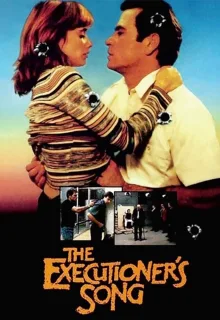
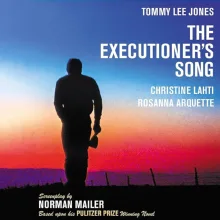
Made for TV Mayhem (opens in a new tab)'s Amanda Reyes and Wake Up Heavy (opens in a new tab)'s Mark Begley join Mike to discuss the film, capital punishment, and more while director Lawrence Schiller (opens in a new tab) talks about how The Executioner's Song came about.
Labels: Amanda Reyes Listener Request Mark Begley Mondo Justin Norman Mailer Rosanna Arquette TV Movie Tommy Lee Jones
Transcript
An automatic transcript, tidied into paragraphs. It has not been proofread, so names, titles and spellings may be wrong, and it does not say who is speaking.
Show the transcript (about 28,900 words)
Speaker 1: Hold your ears, folks. It's showtime.
Speaker 2: People pay good money to see this movie. When they go out to a theater, they want cold sodas, hot popcorn and no monsters in the projection booth. Everyone pretend podcasting isn't boring.
Speaker 3: Turn it off. It is one of the most unforgettable stories in American history. On the morning of January 17th, 1977 convicted murderer, Gary Gilmore was sentenced to be shot to death.
Speaker 4: Having been found guilty of the crime of criminal homicide, murder.
Speaker 3: In the first Gary, it was the end of a journey which began the day he got out of jail, shake it. You can't have it all in five minutes. Gary, you have to earn it bit by bit. You had to make the right good stuff in.
You don't you dare mess up for a time? It even seemed it might work both for Gary Gilmore and Nicole Baker, the new girl in his life. I don't want to just jump in bed with you. I want to make love to you if you feel like I'm in the right place for the first time in here with his welfare witch who was living on the government forever.
Hanover. All right. Carry. While two women fought for his love, Gary fought his own anger.
You wanna fight? Get out back. Gary's dangerous. He needs help.
I'll never hit you again. Sweetie. I'm sorry, you wanna die. You're gonna kill it.
Blow over. And after the anger came, the violence I gave you call this real sweet, the loving under dinger to protect yourself too bad. P and after the violence came the killings, this one, what kind of an idiot would do that? This one's pretty cool.
Gary, didn't he? Yeah, you commit a murder on Monday, you commit a murder on Tuesday. I wasn't about to wait till Wednesday rolled around and the events that led to the execution of the century. What would you say if I told you I deserve to die?
I don't want to ask myself whether your death will be more profitable to me than your life. I prefer to be shot. JJ. His crimes were unforgivable.
His story is unforgettable. Who's gonna play me in the movie? Yes, Tommy Lee Jones plays Gary Gilmore, the executioner's song based on the number one best seller by Norman Mailer. MIKE WHITE: Welcome to the projection booth.
I'm your host, Mike White. Join me once again is Mr Mark Begley. Let's do it. Also joining us is Miss Amanda Reyes.
AMANDA REYES: Are you the devil? MIKE WHITE: We are kicking off a month of Patreon requests with one from Dallas novel 1980 two's TV movie the Executioner's song based on a book by Norman Mailer with a screenplay by Mailer and maybe a little bit of Tracy Keenan win as well. It is the story of the last nine months in the life of Gary Gilmore who is Gary Gilmore. We hope to answer that question and ruin this movie for anyone who hasn't seen it.
You have been warned. So Mark, when was the first time you saw the Executioner's song? And what did you think? MARK BEGLEY: Well, I saw it when it originally aired.
So I would have been 13 going on 14. And that's the only time I've seen it. I had two or three vague memories of it and one proved to be a false memory. But I remember his execution of the gas station attendant and then his execution by the state of Utah.
And I remember that it was him and Rosanna Arquette and the ST scenes really stuck with me because I was pretty young and not used to watching that kind of stuff. But that was, that's really it. I knew his story just more over the years hearing about it. And at some point realizing that his brother was a writer for Rolling Stone because I had a subscription to Rolling Stone.
And that would always make me think of it when I would read an article by him and just think how odd that was. And other than my false memories of the movie and that connection and lumping it together with a lot of other true crime stuff from the area. This was almost completely brand new for. MIKE WHITE: Me and Amanda.
How about yourself? AMANDA REYES: I think I saw this sometime in the late nineties or early two thousands, like on T BS. And I don't remember what version I saw because I know there's a real long version and then there's like the two hour version and it was before I was really heavily involved in learning about the TV movie, but I was clearly love them. A mini series were different for me when I was a kid.
It was weird. I either watch a 22 episode TV show or a stand alone TV movie. But mini felt very like a commitment I didn't want to make. And also they were prestige productions and I was really into the genre stuff, but it came on and I think it just was on and I was home and I remember being really struck by its film quality, it really captures you right from the opening frames of those beautiful shots of Utah.
And of course Christine Lottie was in it and I've always loved her and I was really taken with it. I don't think I understood it even then, even though I would have been a little older at that point, because I don't think I really knew that much about Gary Gilmore and about the cultural impact that he had and still had at that point, I don't know if we're talking about Nike taking the, let's do it line to just do it and being inspired by Gary Gilmore. But he was such a, like a phenomenon and at the same time, maybe not a phenomenon, the more I think about how true crime was represented in the seventies.
But at the time I think I just was really taken by it because the cast was so amazing and it was really beautifully filmed and I haven't seen it since then. So now I've watched it twice and it is really depressing and it's still a really beautiful film and it's also really complex and I really liked it while watching it again for this. MIKE WHITE: I don't remember if I saw this when it originally aired, I would have been 10 years old. I definitely remember renting it on VHS or actually just taking it home for the night on VHS when I was working at Blockbuster Video when I was about 2021 something like that and watching it with the rest of my housemates and not really caring for it back then.
I remember really being excited to see Tommy Lee Jones, a young Tommy Lee Jones just because I really like him so much and I was excited. Oh, cool. He's gonna play a psycho Killer and thinking that he's gonna be super violent and crazy to the whole thing like his under siege character or something. But no, unfortunately, he's a little bit more sedate and I've watched it several times since then for this episode.
And I've watched many versions of it, like you said, there was, I've seen reports and I've seen personally so many different times for this. There's one that's about three hours long. It's reported that the TV version was three hours and 15 minutes or 200 minutes or sorry. Yeah, 200 minutes.
There's a director's cut. That's two hours and 15 minutes. There's the European cut which is 97 minutes and then there's a fan at it where somebody just took the bunch of stuff that they liked and put it all together. The version I watched for this one was about two hours and 15 minutes.
And I feel like I felt every fucking minute of this film, I feel bad for Dallas to have requested this movie because I'm not a fan, but I'm gonna try to not hold it against this movie as we discuss this one. So agree with you. There's a lot of beautiful shots of Utah. There's also a lot of Waylon Jennings.
And by the end of this, I just wanted to stab my ear holes out because that Waylon Jennings song that they play when they're like, they turn it off in the car where while he's taking that little van ride around the jail at the end of the prison, just like, oh, please turn that music off. I'm so tired of this song. AMANDA REYES: I actually think the movie is better served by the longer version, which I saw, which was the three plus hour one because there's so much that's been taken out that's in the book. Like the, there's an arm wrestling scene between Ben and Gary that I think is important.
And there's also a really great scene at the beginning where Gilmore is sitting in a car with his cousin Brenda and these young girls walk by and he's clearly taken by them and they don't go into it so much in the movie, which is unfortunate, this sort of attraction he has to girls that are very young. But in the book, Norman Mailer makes a point to say that he went to prison when he was like 19, got out at 35. And so his age range would be these girls because that was the last time he experienced being with a woman.
Those scenes fleshed out the film for me a lot better than the shorter version. But the shorter version I think gets to the point. It's a little more choppy, but it captures a lot of that weird relationship that he had with his girlfriend Nicole in a lot of ways. And I think the execution is really well done as well.
MIKE WHITE: Well, the weird relationship he has with Nicole but also the weird relationship he has with his cousin Brenda. Yeah, within the first of Brenda being there he goes and makes a pass at her. I was like, oh, it's that type of family? Ok.
MARK BEGLEY: Yeah, that was odd. I'm like, wait a minute he got picked up by his cousin. Isn't she? Is he the cousin or is she the cousin?
I'm like, wait a minute. No, she's the cousin. Ok. Goes back to that age thing where a lot of times when you're a kid you might have a crush on a cousin and slowly begin to realize that's inappropriate.
And yeah, he doesn't see that as inappropriate, laying a kiss on her. AMANDA REYES: And neither does her husband really. It's interesting because he's watching them through the window, which I remember from the book and he just has this very passive response to it, which I think is interesting because Joan Didion classified Mailer's Executioner's Song, the novel as a midwestern gothic. And that's how I see the film adaptation and the book itself.
I think she was right about that. And there's something about things that are left unsaid. That is a big part of the midwestern gothic. And it's really captured here the fact that she's been married a couple times, which she says to Gary in the movie and it's in the book as well.
And this sort of idea that these people just pass in and out of each other's lives with some amount of passion, but then the passion fades and they just are back at sort of their dead end existence. And I think the film of the book really captured that. MIKE WHITE: So did you have a chance to read the book? Because that was insurmountable for me.
It was like 43 hours for the audio book or 1000 pages. And I just could not do that. AMANDA REYES: I read the 1st 3rd of it. And so I got through the parts that we see at the beginning and to me, that's probably the heart of it.
I wanted to read the whole thing but the court stuff isn't as interesting to me as Gary's life. I know we'll get into the movie, but I think it's important to note that he got out of prison and nine months later, he was executed. This happens so fast and most people are on death row now. I don't know the whole history of death row inmates, but it feels like it takes years, I guess because they appeal a lot.
Apparently, if you don't appeal, you're dead in the year. And when you think about how much happened with him in those nine months, it like blows your mind. And I guess Schiller did like thousands and thousands of pages of transcripts. So many hours of interview.
I think it was like 30 something hours of just speaking to Gilmore and he spoke to everybody and then Mailer came back to Provo and he did other interviews and they finally got the widows of the victims to speak to them and they got Gary Gomer's mother. And so it's a huge book, but it really just encompasses such a short period of time. But for me, the heart of the film in the book is the story between Nicole and Gary. MIKE WHITE: Young Roseanne Arquette.
It is amazing to see just how great of an actress she was at this age and continues to be. Of course, I've been a huge fan of hers ever since. She's terrific in this movie. In fact, I would say all the performances are really solid.
I have a problem with the execution and I don't mean him getting shot. MARK BEGLEY: I started with what I assumed was the originally aired version, although it probably wasn't because it had tons of nudity in it. And I noticed when I kind of spot checked it again that it said it was a USA thing. So it was a different version, but it was the, I think the closest to what was originally aired as far as time.
So it's a little over three hours and it's weird after watching that. Then the next one I watched was the European theatrical cut, which is almost an hour shorter. And as Amanda has mentioned this, the like the arm wrestling scene is cut, it was hard for me to piece all of it together what was cut. But it seemed like important things to at least comment on his relationship with some of the people that were important in his life.
We don't get a lot of the burns stuff. It's just, oh, he's at the shop now. But they had an initial meeting Brenda takes and to get reacquainted with fern and then he's there. He's not at Brenda's anymore now.
He's at burns. So, I guess my point is even with the long version, it feels like stuff is missing that I was confused. As is he staying with Brenda sometimes or is he staying with Verne now all the time? Even the extended version, the long three hour cut seems to be missing stuff.
And I don't know if it's in the book because I didn't tackle that at all or if it's just the nature of a true life story where you don't necessarily get answers to a lot of the questions that are posed and that goes maybe more towards the philosophical questions that are posed. But I guess it's just messy because life is messy and we don't, it's not a narrative and then we don't have Mailer stringing things together concisely so that it's clear to the reader or to the viewer. But one of the interesting things that gets cut in the shorter version is Gary knocking down the curb in front of Verne's house and Vern lives right next door to the motel and I caught it on one of my, I think I tried to watch the fan edit as well.
And so I was like, oh, yeah, this was missing from the theatrical cut and the director's cut. But he's doing that and he makes a comment as to, I'm good at breaking rocks. A prison joke. And the motel manager is there cleaning the pool and he turns around and laughs and I'm like, oh, that's Bushnell.
And I didn't make that connection upon first watch because it's, he doesn't appear again until the end of the first half of the film. And that's completely missing from the shorter cuts. So there, it just pointed to me to an interaction that they apparently had early on when he was there. And that kind of connective stuff seemed important to me and why I ultimately enjoyed the longer version as well because some of that little stuff seemed to go towards his motives maybe and explaining how this all came to be a little better.
AMANDA REYES: Yeah, a lot of that connection is made in Mailer's book as well. Like, I can't remember the exact details, but he stays with Brenda at the beginning and then moves in with Vernon. I think there's a whole passage about that. But also in Mailer's original script, there is the part that opens the book where Brenda is sharing his letters and artwork with the family members and talking about why she chose to sponsor him.
And that's probably really important. And I don't remember when Jack Henry Abbott happened and we'll probably talk about Hi, Norman Mailer's relationship with him. But she saw something in Gary, which Mayer also saw and apparently Schiller saw too, this idea that he could be re rehabilitated because he was a beautiful letter writer. And also because he was a pretty good artist and there's something about that artistic quality that led to, I think this stereotype that he's probably a very sensitive person and it's in Mailer's original script and, but the movie opens up with them just picking him up at the airport.
And I feel like that's such an important scene too because I don't know if it's intentional or not. But I feel like Gilmore is made more enigmatic in the film in both versions, a longer version and the shorter version, it's hard to know what his motives are. And I think Mark is right that I like the idea of life just happens and this is the way it is and maybe we shouldn't be giving answers to something so senseless. And so maybe the movies benefit from that.
But I feel like Mayer put more into getting inside Gary's head probably in the book. MIKE WHITE: I love that scene at the airport where you can tell that he has been away for 25 years that he's fascinated by the magic eye door opening device and then he just keeps going back and forth. Like you said, he's like a little kid playing with that. And 25 years have passed this wasn't a thing when he went into prison.
So I'm sure nobody's writing an article about it and talking about it when they go on prison visits or anything like that. Oh, you should see the new thing, Gary, you can walk up to the door and it'll automatically open for you. So, no, this is his first time seeing this kind of technology and I thought that was nice. I wish there had been a little bit more of him seeing things that weren't around.
But instead it does manifest more in that inappropriateness, the young girls, those type of things. I can see where he is, that stunted person. And I think that scene that you're talking about with the artwork, I think that would have been really valuable to see to get a little bit more of Brenda because I feel like Brenda is the most fascinating character in this movie and she disappears for a long time, at least in the version I watched last night. And it was like, oh, where's Brenda?
She seemed very important. But after she and Nicole meet the first time, she's out of the story for quite a while. AMANDA REYES: To get back to Jack Henry Habbit. I wondered later if Mailer felt a kind of kinship with her because they both champion these people who would turn out to get out of prison and they sponsored them and then they would murder somebody in a pretty short period.
Of time. And so she feels really poignant to me and that's all in retrospect we couldn't have known at the time. I think that was going to happen. But, yeah, and also Christine Lotty, she should be in every scene of every movie ever made if possible.
You know what I mean? She's so great and she's great in this. She's so, she is great. MIKE WHITE: She's amazing.
Yeah. MARK BEGLEY: To go back to the doors and I know I missed some stuff. I always miss stuff on my first watch. And I, so I noticed it during the theatrical cut viewing that I had.
I'm like, oh, was that in the long version? Because I don't remember that and it just stuck out to me as that metaphor of going out, coming back in, going out, coming back in. So works as a dual thing there where, yeah, these are new. Most places didn't have this kind of thing as well as that recidivism that comes up.
MIKE WHITE: I was really tempted while I was watching this to read a lot into it. Things like the way that the mountains are shot at the beginning. I was just like the overwhelming nature of the nature itself and just how huge those mountains are and it feels like those in the sky are ready to crush everything underneath it. Or you get the shot of the airplane coming in and you're just like, oh, here comes darkness landing inside of this life.
Just all of these things. I was like, all right. I don't know if I'm reading too much into it. I don't think I was, I think that a lot of this stuff was intentional and I think that there's a lot of this that comes from more of the poetic writing and styling of Norman Mailer.
If anything, I feel like this movie might be in danger of being crushed under the weight of Norman Mailer just because he is almost as big of a star as Gary Gilmore. In this story, Norman Mailer writes the book, Norman Mailer gets sole credit for the screenplay, Norman Mailer rewrites a lot of the dialogue that's in here and makes it very poetic things that I just am like really Gary Gilmore would have said that. But again, maybe he is the sensitive artist, but there are times where he's like, oh, all this darkness and things like that.
I'm like, oh OK, that seems like it's coming out of nowhere, but I don't know if that's Malar Iss or if that's actually Gilmore himself. AMANDA REYES: Some of it's Schiller. But I think also to go back to the idea of midwestern gothic, is that another one of the tropes is that the land is really vast, but it is so vast that it swallows you up. So you picking up on that and saying, using that phrase, crushes the characters in a way is really poignant.
And I think astute because that's a huge trope used in that. And the other qualities I found in it. And all this again is like in retrospect, only because we've lived through the eighties now. But the way it captures Americana, that was such a big thing in this era.
When you think about all the movies that were about very blue Colliery people like Norma Ray or Tender Mercy or even the last Star Fighter, right? Which is about this kid living in a trailer park who does an extraordinary thing. That's very much Reagan eighties that is and Tom Shales. I don't have a quote, but he was, had very mixed feelings about this movie.
He was a critic, a television critic. And one of the things that he was worried about was that the way it said, he said it unintentionally glorified Gilmore. But there is this idea about the way the film captures that kind of Americana that at the time was being hoisted up, particularly by Reagan, that it does actually endanger the film in that way. There's a lot of Mailer is in there, what I know about Norman Mailer.
But I think that also Lawrence Schiller really understood the material. He was actually the guy at the front lines, getting out all the information to begin with and then brought Mailer in. But also he's an interesting filmmaker and he understood television. He worked heavily in it and you don't normally see those kind of landscapes on TV, because TV is a much smaller screen, especially back then.
And they tend to do things that are much tighter. The camera work tends to be much higher. But like Steven Spielberg, he opened it up because if you look at Del, there's a lot of wide open angle shots and stuff and that's really rare for those kind of things. And he went ahead and did it and I think you picked up on what he was trying to do.
So I would say there's a lot of Mailer in there, but I would also say there's probably a lot of Schiller as well. MARK BEGLEY: The Schiller stuff still fascinates me. And I think I had mentioned that in an email. I don't get what this guy does.
I get it. I read up on him enough to understand that he started as a photojournalist and it led down all these other avenues. And then in watching, I think it was the 40th anniversary part of the 40th anniversary thing for Executioner's Song. There's an hour long this not really interview, just him talking.
It's a lot like the interview you did where he goes through his memories of it and where that to me speaks in part to your question about the Malar Iss. And he mentions that he, there was a point where Mailer put in some an anecdote about the doctor that was prescribing this medication to him. And he's, that's not in the transcript, you can't put a thought in his head that he didn't say or there's no allusion to it from this guy. You can't do that.
Norman, I would tend to lean more towards. This was something from a transcript transcripted interview that Gilmore probably said and maybe there's still some artistic license going on. But I don't know. But the thing that bothered me about the Schiller stuff is I get that he is the bridge in the book between Gary Gilmore and Nicole once they're separated, once he's in prison and then she's eve eventually in a mental institution because of the suicide and he's that bridge.
And I just, I found it odd for the movie to have him in there as a character. Plus it also brings up the distasteful stuff about buying the rights, paying Gilmore for the rights, which is interesting to have, but I don't know that I wasn't expecting that. I didn't remember that and I wouldn't have made note of it as a kid when I first watched it. I'm like, why is this guy here and in a movie where you don't need a, you don't need that connection.
We can still have both sides. It doesn't, how do we know how we have both sides of the story? Right? On Nicole's side and Gary's side at this point since they're not together any longer.
Do we need that bridge in the movie itself? Of this character who is one of the people who it was is behind the book, regardless of him having a pseudonym being Larry Samuels in the movie. Do we need that? And that meta aspect which I think is so common these days to comment on the thing that you're making.
It seemed odd for me for a TV movie from 1982. AMANDA REYES: Mailer was originally going to make a fictional filmmaker and make him the protagonist kind of the story or the narrator of the story. And then he excised that and Schiller later said that he had good and bad feelings about the way he was written into the book, but he felt that it was Mailer trying to be accurate to the story, right? And so it is interesting that it takes this meta thing, but it was what happened and I guess if you're gonna portray the execution the way you do, maybe it's important to have the guy that Gary Gilmore requested to have in the chamber with him.
He asked him to be there and Schiller's been in all kinds of places, wasn't he? And Lee Harvey Oswald shooting or something like that? Like he's been all over history in the most amazing ways. MARK BEGLEY: Yeah, that was the other thing getting back to not knowing what he does.
It's weird to me, you mentioned the Marilyn book in your interview with him, which people will, won't get to hear in a little bit. So he just grabs the, gets these people to like, do the stuff that he can't do. He admits and not in the interview with you. But one of the other ones I watched that he's dyslexic and so writing and reading were not his strong suit.
So he's not gonna write the text for a photo book, a picture book about Marilyn Monroe. And, but he seems to do that with all kinds of different things. I'll grab this guy to do this and I'm gonna grab this guy to do that and I'm gonna grab this guy to do this. And I'm like thinking, what the hell do you do?
MIKE WHITE: But that's some of the most important work to be able to take those things. Basically, I consider that a producer to be able to take all those disparate elements and combine them all together to make the deals, to find the people to even get the idea and be like, who would be good for this? Maybe Joan Didion should write the executioner's song, maybe Mail or, I don't know and just work out all these things. I mean, it's like, wow, that's the person behind the scenes that's making all of this stuff happen and he doesn't get the credit for so much of it.
It's just this book comes out, this thing comes out, his name is on it, but it's probably inside the front cover. It's not on the cover itself. And yeah, to hear all of these stories. And I, there were tons of stories that I wasn't even able to get out of them.
But I should say real quick that the, one of my former co-host on the projection booth, Mondo Justin, after he left the show, he actually started to work for the Norman Mailer estate. And so he knows tons and tons about Norman Mailer and sent us all kinds of information about this stuff. And even when I was talking with him via email, he's, oh, make sure you ask Lawrence Schiller. And unfortunately, I got this email after I talked with him, make sure you ask him about the Manson family.
And I'm like, oh, ok, apparently the Manson family had him in his sights. They're gonna target him. I'm like, what? So I need to dig into that a little bit more.
That sounds wild. But yeah, he's just, he's a fascinating character. And yeah, I was so glad that Justin was able to send over so much material and so many of these interviews and just to see Mailer on these TV shows talking about this stuff, I thought it was fascinating and the movie, to me, it feels like more, it was about the book than the movie. And so the movie coming out, what, five years after the book is that right?
I'm trying to remember what the timeline is because it's the murders. Yeah, because there's the murders. There's the book, then the movie and we'll talk about how this kind of impacted pop culture as well as we go along. But yeah, I am with you guys as far as I'm not sure if Schiller being in the movie as a character is good or not, but I'm so happy to see Stephen Keats.
I love Steven Keats A K A, the Ivory Apes. Stephen Keats A K A Jackie Brown himself. And what was the other one? The last dinosaur?
He was also in. AMANDA REYES: He's great in that and he was in death and he was in a great TV movie called The Mysterious Island of Beautiful Women that I love. I did the commentary for that, but he's wonderful. He's so great and I agree with you and it's interesting, some of the critics were like very anti Schiller.
I think he is a bit of a controversial figure and this world. And so I remember one of the reviews said something like Norman Schiller cast a much thinner version of himself. What? Yes, yes.
And I was like, I was like, Shane, what's happening here? And I feel like people because he's considered by a lot of people to be an opportunist, right? That's a word that comes out and he's even said that people consider him that I feel like he's really got to push and pull with people and he draws that out of people. But Mailer said that the interviews that he did were so good because he just let people talk and he knew that they'd never been interviewed before.
So they would just, oh my God, you wanna know about me? And they would give him hours of interviews. And so the archive I work at, we actually have Lawrence Schiller's papers. Now, they're not available to the public yet, but I was able to go through some of them when we were rehousing them and he has all of the interview transcripts.
We have them. Now we have all the letters to Nicole which I was able to peep and they were very well written. They were a lot of them were very sexual and that's probably. MIKE WHITE: Yeah.
Yeah. Yeah. AMANDA REYES: Not Laura Schiller. No, Laura Schiller did take her in and did help her out as we see in the film.
But Yuri Gilmore, when he was writing to Nicole, there were, there were some pretty erotically charged letters and that makes sense because he hadn't had sex in a long time. And then he met this very young, beautiful woman who had a woman. Yeah, had very tragic backstory and I think the two of them together just collided in this weird, almost metaphysical way and he had to carry that over a prison, I think in his letters and I think it's conveyed through them what a little I saw of them and they're really fascinating, but I think he's actually really good with people and that really helped and it benefited Mailer a lot because he never got to meet Gary Gilmore.
He came after the fact. MIKE WHITE: She was 19 and had been married three times before with two daughters. AMANDA REYES: I feel like it was twice. Ok.
I'll be honest. MARK BEGLEY: Yeah, I've gotten different. I want to say in the movie, she says three but everything else I've read and heard the po, yes, I believe that's correct. AMANDA REYES: Yeah.
But she had a very tragic and another thing that they cut out of both the long version I saw the movie and the short version is she talks about her Uncle Lee who was like a family friend that she called Uncle Lee and he raped her and it's insinuated in the movies. But the fact is that led her down a very interesting path where the only way I think she knew how to express herself was sexually. And there are parts of the book that I love where they used to go to this. I think it was a drive in and she would take off all their clothes, they would perk on a hill and she would sit on the hood of his car nude.
She was just so imagine being used as an object that it became like a natural thing for her to just be that way. And it's so beautifully told in Mailer story. But they would talk about these moments they had together and a lot of them again were very sexual. And a matter of fact that girl, we see and I don't want to misquote here and get slander, use a slander thing.
But I think the girl you see him walking with that, the other guy says Gary's being inappropriate with your granddaughter to learn. I believe that she does have sex with Gary and Nicole and they have a whole thing going on there too. Well, they don't really go enough into her past to fully understand why she's sitting on Sterling's lap that way and making out with him. I think everything for her was about sex because that's all anybody ever wanted from her.
And that makes her character really tragic in the book in the movie. You don't see it as much. MIKE WHITE: Well, it's a little like adding gasoline to a fire when she shows up because he has gone a long time without having sex with a woman and he can have sex with a woman. And that was a little surprising to me of as far as how frank they were about him not being able to get it up when it came to being with her.
And it feels like she's doing all kinds of things for him trying to help him out, let's say, and I was just not shocked, but just my eyes were pretty wide going. Oh, they're frank about this. They are not hiding that he is very sexually dysfunctional. MARK BEGLEY: That was the false memory I had, I thought all this time that during one of their sex scenes that he was trying to have anal sex with her because that's all he knew that I'm watching.
Yeah, because I'm watching. I'm like that, I'm, it's been how many years now? 40 something years. And I had to live with that memory forever.
Any time I thought about this movie that came up in my head. I, that was the thing I remembered because I think I thought, oh, I'm so smart for figuring that out as a 13 year old. But when I watched one of the cuts recently, he says it's been so long since I or I haven't had, I'm not used to having sex with a woman. And so that was, and she's back to front with him.
And so I just extrapolated that in my brain as a kid that he was trying to have anal sex with her. And because that's what he was used to for the last however 20 something years, that's the implication, but it's not expressed in the way that I had in my head for 40 years. But yeah, they are very frank. MIKE WHITE: They've got the, he mentions this twice about holding down punks as in somebody who's about to get fucked in the ass, holding down punks and that he was held down when he got to prison.
And then eventually he becomes the guy that holds down the punks as they get fucked. And that they go back to that a couple times, including a scene with his brother who I didn't know for the longest time, it took me a long time to figure out that that was his brother. And I'm just like, wow, ok, again, very frank when it came to this. And again, she is the person who says at one point I'd rather sleep with a fellow than instead of hurting his feelings.
And so again, yeah, she just expresses herself sexually. He can express himself sexually and sorry to go on a little tangent here just to clarify the girl that he's with, that goes to the gas station where he first commits murder is that Vern's granddaughter? AMANDA REYES: No, that's, that's her sister. MIKE WHITE: That's her sister.
Ok? Because there's a lot more in the longer version of that where the whole hotel, hotel. AMANDA REYES: Such a great scene. So good.
MARK BEGLEY: And also the another thing that's missing for context, you were just talking about his brother. I believe in the shorter version. His ride to the prison is cut out because he is with, he's being driven there in a Rolls Royce or something and he's being driven there. I believe by the Canfield who's the woman who's trying to get one of the stays, who's ac lu I think.
MIKE WHITE: The woman that's white hair. MARK BEGLEY: So you, that's the thing about the shorter version. It, you miss a lot of the context and like her part is reduced and I think his is a little bit. Charles Cipher is cut completely out of three shorter cuts.
You don't see that courtroom scene, Rance Howard's part is reduced where now he's just at her house trying to get her to go. But he has an interview with Gilmore in the longer version. Yeah, that, that shorter version does it, I think a disservice as far as I know, it's a bit much, the three hour version just in time and you hit some lulls and stuff, but you get a lot more flavor out of it. Denver courtroom stuff is completely cut out of the shorter version.
That's part of the appeal process. I do find it interesting. Speaking about courtroom appearances that we don't really see any of the trial. It's really just the sentence and then he makes his comment about the jury finally being able to look at him.
But it's interesting to me in a movie about true crime that there is really none of the, I guess it doesn't really matter. We're given the viewpoint that he did these things and he's definitely guilty. So what's the point of that? It's really just about saying you've said you're gonna execute me.
So execute me. AMANDA REYES: Also. Mailer went into death about the victims as well, which I wish they had done a little more of that in the film. And I think we're more now and where we are, we're more like, let's not talk so much about the assailant, let's talk about the victims of these crimes.
But back then it wasn't so much a thing, but Mailer wanted to portray them and give their lives. They were both the young men who were married and had children and that's completely, really not even. You get the general idea. Maybe with the second victim because she finds him there in the hotel.
She's got a kid with her. I think when they're taking her out, but you don't really see anything about them. And I wish that had been in one of the versions of the film. MARK BEGLEY: That made me think about like me at the time just starting to get into true crime stuff and reading books about Ted Bundy and John Wayne Gacy.
And I remember watching the Mark Harmon, Ted Bundy, the victims were just nameless faceless victims and it's horrible. You get the idea that it's a horrible thing that's happened. These guys are doing horrible things. But now it's like with that recent Dahmer series on Netflix, I told my wife, I'm like, I have no interest in watching a movie from his point of view.
I just don't, I can't do it anymore. Ii I it's just, it's just distasteful. Like I would watch a documentary about him most likely, but I don't know that fine line of is this glamorizing this person. It's harder for me to toe that line just as a viewer and as a person anymore.
AMANDA REYES: Mailer talked about that in one of his essays about this idea that these people are led to doing not in so much Dalmer, but maybe Gilmore that are led so much to doing these kinds of things because it's their one chance to like be seen and be known and they hold some kind of power and this era. And it's interesting we say about Schiller and having a connection to Manson because I was thinking back and I, we had Charles Starkweather before him and of course, Jack the Ripper, but I feel like Charles Manson moved true crime into this realm of celebrity.
And since then, we've been struggling with this idea of catapulting some of these people like Ted Bundy and Jeffrey Dahmer into these, they become household names. And it's fascinating to me that we do that. I understand it's compelling and it's interesting and people want to know why people do the things that they do. But also you, we are walking that that very fine line of when does it become disgraceful?
When do these people become just fodder because they were so interested in the person who committed the crimes? And it's interesting and it's a little tangent, but there was a couple, I don't know if you guys remember them in Canada, Paul Bernardo and Cathy Homo, I think is how you say her last name. But they made a movie about them and when they were making the movie, the ca I think the Canadian Prime Minister at the time asked that people boycott the film because he didn't want to see them, like, put on some kind of step stool or horrified or anything like that.
And I was just like, wow, that's, you would never hear that here in America. And their thought process about that is so different than ours. And that's, I became really fascinated and the movie ended up being pretty mediocre and it didn't even get a, the release. But I thought it was so interesting that I was like, oh, there are other countries that actually care about the victims.
I should be thinking about that. You know what I mean? And it made me start to look at myself because I was a huge Jeffrey Dahmer, quote unquote fan when it happened. It was so fascinating to me and it still one, it is, but I do find it now more and more distasteful to just watch The Killer.
MIKE WHITE: It's almost like Manson by murdering a celebrity becomes the celebrity himself. He takes over by in making that incursion into Hollywood. He becomes the Hollywood star. And yeah, so many of these others and especially the ones who are more charismatic, like a Bundy and the ones that are just absolutely bizarre, like a gacy or a Berkowitz.
And yeah, this was definitely pre son of Sam because you do get all of that distasteful stuff with the selling of the rights and the debates and the contracts and these things, it almost feels like the, because I did watch some of the scenes from the longer version and it almost feels like they kept the wrong stuff when it came to the shorter version that they really should have been more judicious than that. Frankly. I don't need a half an hour of going back and forth about car payments and how he doesn't want the white car anymore.
He wants that white truck and then I don't know if it's like the signature move in this movie. But everybody when they drive because both Nicole and Gary love to do the incredibly fast backup thing and he just, he drives like shit and she does. MARK BEGLEY: That's a stick shift. That's a stick shift thing though.
Like you're out of gear or something, you start it up and it just starts rolling backward and then you put it in first and go. Yeah, I saw that in your notes and I was like, oh, I remember that happening with me and my beetle and it was like, I was trying to be cool or something, but there's some really bad German. Yeah. You've probably driven a stick shift in your life.
You're old enough to know I missed the stick shift. MIKE WHITE: Yes. Yeah. He takes off like a shot every single time and then I noticed the first time that he meets Nicole, she does the same thing and there's that weird thing how they both have the same style of car, the same model of car, which really gets played up in Cremaster.
We'll talk about that. MARK BEGLEY: But, and they pass each other, they pass each other because he gets his car and you don't realize it until later. I'm like, why are they showing? Did he turn around?
What are they doing here? And then I'm like, oh, that's supposedly her driving the other direction. The whole car stuff became so part of the story I thought was, is this the motivation? Partly because he needs $400 or he's gonna lose both cars or is it just to show his fru frustration?
I don't know. It was odd and that I love that car dealership guy because you get to see him so much. And all the versions, most of his stuff is still in there, I think because when, at least during the murder, when we get to the murders, he kills the gas station attendant, he is with her sister at that point. And then they go to the hotel and have that whole scene and then he goes back to the dealership.
But in the shorter versions, it's Bam kills the gas station attendant. Bam, he's at the dealership and then that night he kills the motel manager and whoever that car dealership actor is. He got, I think his time on screen is pretty much, even throughout. AMANDA REYES: It's more in Mailer's book.
But you'll see him swiping beer or banana gets a banana for Nicole's kids. When he would get really frustrated in Mailer's book, he'd always do like a six pack of beer. He had to do something when he got angry. And so I do think to that degree that I guess the car dealership is like a really important thing because he's getting really angry that the guy's been denying him and then he's been backed into a corner that he has to come up with all this money.
On top of the fact that Nicole took off and was not going to go get back together with him. I feel like it's better played in the book than in the movie. But yeah, I agree with you. I love that actor.
He's great in it and he's so non plus by it, he's had so many guys come through and try to get cars and he's just whatever dude. And this salesman is like, oh, that guy is hot and he's like, yeah, I just need my money. MARK BEGLEY: I don't give a damn. Right.
MIKE WHITE: And I love how he's reading the newspaper about the murder in front of Gary. This guy's a psycho maniac. MARK BEGLEY: I'm like, maybe that man deserved it. No, he didn't.
MIKE WHITE: Exactly. MARK BEGLEY: He gave you the fucking money. MIKE WHITE: And we don't know these victims at all to your point. Just he shows up at the gas station he takes the money, he takes the guy in the back and he shoots him in the back of the head and that's it.
There's no, who was this person? Can we talk with the family? None of that stuff? And it just feels so, and I know this is the nature of life.
Right. It just feels so random that it's just, he didn't have to kill the guy, but he did it anyway. He just happened to be at that gas station. It could have been another gas station, five miles up the road.
Maybe at that point he doesn't kill this person that is there. It just is so random when it comes to these murders. And that's really what for me is the scariest thing that you can just be living your life and somebody comes in with a gun and takes it. MARK BEGLEY: That was brought up in the Firing Line interview that I watched where Buckley was trying to get Maler to admit that Gilmore might have had something against Mormons and Mailer was like, but you can spot like I was there for a week and by then I could tell who was a Mormon and who wasn't.
So he may have very well been able to spot them too because he had, his mom was Mormon and he had grown up part of his life in Utah. Who knows that's pure speculation really? On Baylor's part or anybody else's, it's not something that Schiller got out of him or anything like that. But the two men that he kills are Mormon, but he's in Provo and Provo is fucking Mormon.
I actually have been there. I was probably there, to be honest with you around the time that they filmed this actually somewhere close in there. My elementary school best friend was Mormon and they moved back to Provo after his sixth grade year and I went the next summer and visited him there and man, oh man, it is Mormon. It's really Mormon.
And I was surprised because of that. I was surprised at how much beer there was in this movie and how many bars there are? And I'm thinking, I, if there were a dry town in the world, to me, it would be Provo but apparently not. MIKE WHITE: I found my superpower last night.
By the way, I finally identified another superpower that I have, which is if somebody lights a cigarette on TV, I can smell it. I was smelling smoke through so much of this. They are smoking like mad here and there's one shot. I think there's a, somebody's holding a beer and a cigarette at the same time.
And I'm just like, wow, this is my childhood right here. There's so much drinking. And to your point from earlier, he just walks into the store, grabs a case of beer, walks out with it, takes it to Verne as a peace offering because Verne to signed for this loan for the car. And to your point from earlier also, Mark, I kept thinking, why does he want this white truck so bad?
Because this some sort of thing once he gets this white truck, he's gonna, I don't know, go on a crime spree or something. And like why this, why is he fascinated by that? But he, whatever the reason he's just obsessed, like I'm done with this car. This car is junk.
I can't start it up. I want that white truck. I want that white truck and I'm just like, oh, all right, man. Like he is just another.
Speaker 8: Frustration, I guess. MIKE WHITE: Yeah, I think so. AMANDA REYES: That's another thing that it's more so in the book is where like they keep telling him you have to move slower, you have time to, he goes into the shoe store, you can't figure out how to make the shoes and he gets really upset. MIKE WHITE: And then right, that girl with the huge red hair was just like slow down.
AMANDA REYES: We got, I always feel sorry for Anne because they're in the script. It's playing girl, she's playing and I'm like, oh, that's a little person. Could you just send word of that a little better? And she's adorable.
But he wanted everything then and now and I feel like he just got in his head and I understand the motivation because he had so little for so long and he sees these things he wants and he doesn't understand that you have to take time with things, which was where Nicole also comes in because she was so quick to try things with him, but he couldn't wait for stuff. And I think what he would fixate on things. It's just that had to be it in the moment. And then, and he just like a cat has to sit in that spot and you can move the cat away and it just goes back to that spot.
And I feel like he had that kind of reflex where he just had to keep aiming for that one thing that he fixated on and he couldn't break that concentration from it. It's more so in the book. But I feel like the truck is part of that fascination. MIKE WHITE: And it is interesting because I didn't really get a lot of the religious stuff watching this.
At least the version I watched. You have the priest that's there at the prison and you have the amazing character Walter, the actor's name is Walter Pete Gallivan. Walter Kiewit who played Jacques Renault on Twin Peaks. I love every time that he's on screen and when Gary goes and hits him in the sucker, punches him in the back of the head at the shoe store.
And then you have Nicole going and threatening him at his trailer and then eventually he comes around sounds like he's more scared than anything. And then they have to have that prayer scene. And he's got that poster of Jesus on the inside of his trailer door. So that's open.
It's almost like a shrine when you open up his trailer. That for me was like one of the most religious parts of this movie. I didn't really get a lot of the Mormonism. We definitely, when we talk about Cream Master later on, we'll talk about the Beehive imagery but didn't get a lot of the Mormonism when I was watching this last night.
AMANDA REYES: I don't think it's really in there. MARK BEGLEY: It's not explicit that after a while you would forget that he's if, if it didn't get brought up where they are and it doesn't play a role really so much, maybe sub, sub, sub textually, that's where this is taking place. And by chance he's there really in a way because Brenda is the one that sponsors him instead of like his mom I think was in Portland at the time, I believe because she's cut out of the shorter cuts as well. I think.
So she has one short scene and. MIKE WHITE: Talk about his mom, but I don't think they show her in the version I saw. MARK BEGLEY: Yeah. So she just has one scene but she has been brought up with his brother and then some of the other people mentioned the mom, but yet you wouldn't know on the face of it that this is taking place in Utah.
It could be anywhere plains, the small town America, which I missed. And that, that's why that like all the beer and the bars and stuff was confusing to me. And maybe it's just my assumptions about Utah, but Provo is really, is really Mormon and Schiller says in one of the interviews that I listened to that they were very pleased with the book and the movie and swung their doors open to him. So there was nothing really anti Mormon about at least the films though.
MIKE WHITE: Apparently his parents did not get along when it came to the religious stuff. That was that his father was Catholic and she was Mormon and they would just fight back and forth and way to bring up a kid in that type of environment. AMANDA REYES: Not to mention all the other stuff like a very violent home boy. MIKE WHITE: And that definitely goes right through to Gary when he starts beating Nicole's kids.
Oh my God, that is horrible. MARK BEGLEY: There was a short interview of her and of Roseanne Arquette, sorry, included in your extras. And she mentions that these are non actor kids. These are like local kids and it's really hard to impress upon them that this is real and it really looks like he hits the one or slaps him.
I don't know how careful he was because she also mentioned that he was very much in character during the shooting and that she got hurt, not his fault, but she got hurt with that instinct to protect them. She fell and I think hurt her shoulder and significantly and that, and then of course, he hits her at one point when they're trying to have sex and you can't perform. And she made a comment which I believe gets changed in a couple of the versions where she says, why don't you go find yourself a young boy or something like that?
And then, and the unedited version it, yeah, you and seven other motherfuckers want this. MIKE WHITE: Will admit something that I feel really dumb about and maybe I shouldn't. It took me forever to figure out that Grace Zabriskie was Nicole's mother in this. And it also took me forever to figure out that Sterling is her brother.
And so that makes the scene of her crawling on his lap and giving him that big kiss. Wait really weird. AMANDA REYES: I don't remember Sterling being her brother. MIKE WHITE: Was it not?
I thought he's got the same last name. AMANDA REYES: Oh, he might, I feel like in the book I didn't make that distinction. So I don't know. It's Sterling Baker.
And yeah, that's right. No, I think you are right. No, I think you are right. He didn't seem to put out by that.
Did he? MARK BEGLEY: He didn't, is it by marriage though? Because he's the girl that she's with occasionally and that he goes to that. Gary goes to with the cigarettes to find out where she is.
I don't even know where my own husband is. And I'm like, is that a husband? And they're sisters? I don't know.
AMANDA REYES: I think his old lady, he had an old lady and he had a different girl that she went over to the house with because he was separated from her at the time that Nicole met Gary. So one of them is the one that you're talking about that says, I don't know where my husband is. Likely more her sister than the girl she went to the house with. I totally forgot that.
But no, I think you're right about the Sterling thing. MIKE WHITE: And then poor John Dennis Johnston, he barely is in the movie that we see or that I saw last night, but he gets a few more scenes and the longer version of it. And I just, I love that guy. I love his look.
He just was so 19 seventies to me. If anything, I just associated him and I don't think he was in any which way but loose, but it feels like he should have been. But he's of course chopper from Kiss Meets The Phantom Of The Park. Very familiar face for me.
MARK BEGLEY: I wanna say he's in one of Clint Eastwood's films. I was thinking the Gauntlet when I was watching it, but it was a different actor and Pale Rider. He's indefinitely. He looks like one of those guys that would be given shit to Clint Eastwood in a movie for sure.
MIKE WHITE: He shows up a ton in Philippe Moore films. We talked about him a little bit when we talked about communion a few months ago and pretty much everything that Philippe Moore does. He makes sure to include John Dennis Johnston. MARK BEGLEY: That, yeah.
And he has cut scenes as well. The poker scene early on and the subsequent cruising scene, right. Gets cut from the shorter versions. And another interesting thing, the I started watching the director's cut and found it odd that it was the edited version.
There's no nudity. I'm like, wait a minute, she's wearing her nightgown in bed and she doesn't put that on until she gets out and walked to the fridge on this scene. And the other version and that was where they swapped the line. She doesn't say seven other motherfuckers want this too.
So they, the cursing was limited to probably what had been on, allowed on TV at the point, which may have been shit. MIKE WHITE: It was pretty tough back then. I remember the big controversy over Dennis France's butt cheeks. MARK BEGLEY: Yeah.
And I think with stuff like this, they tended to be a little bit more lenient because I do remember seeing some films that were presented, even theatrical films that were presented uncut because of their social importance or whatever. And a lot of times with crews true stories, you could get away with showing a little bit more and even some nudity and stuff and I believe he says in interviews they let us get away with some shit and things like that. But no fucks and I'm like the one I watched had tons of fucks that the USA version.
But yeah, and then the frankness with sex, even if they're not naked and especially her, they're still having those conversations about his inabilities and his past and all that though is always like exerting that power even to the point where he's got that knife against her, which is really scary. MIKE WHITE: But once she leaves him, he just keeps going around to everybody. Like he was saying, he goes around to all of these different girlfriends to her mother. He brings each of them gifts.
He brings Grace Zabritski, a another case of beer. He brings her guns. He goes to the one girlfriend I think he brings her cigarettes. It's just he's going around trying to find more information about her.
And that's the most scary part to me is when he just keeps manipulating all of these people in order to try to get back to Nicole. And when he goes into that house and finds that vacuum and he's just, oh she must be here and he hides out when she comes in and he is just in boxer shorts and goes at her. I was just like, holy shit. It was really scary to me the way that he just pops into the frame and I just felt so bad for her.
And then he eventually gets more of that control. Even she will disappear again. And he goes through the whole thing again. And at that point is when he starts to commit the murders, but then again, the power that he has over her later on when he's in jail or prison and exerting all this, oh, I want you to bring me all these drugs.
I'm gonna commit suicide. And the line that, that Brenda has about, oh, you didn't take enough pills because you wanted to stick around and make sure that Nicole killed herself. I thought that was a, just a devastating idea and it really seems like that was what he was doing. AMANDA REYES: I wanted to talk a little bit if possible about the demographics of television.
And it's really important to when you think about TV, to remember that the most important demographic is women aged 18 to 49. And that's because women were housekeepers when television first became a thing and marketers and people who made commercials and sold products wanted those people to see the programs that their commercials were airing on because they were the number one consumer in the household. So women have always been like a target audience of television. Now, of course, they veered away from that, like, I know you had a Kak podcast and obviously Kolchak is not very female centric.
It has some interesting women in it, but it's not. And this movie isn't really female centric, but it does have some really interesting stuff about women and it has some pretty strong female characters. And I think Rosanna Arquette really acquits Nicole. Well, in this by saying, I'm not gonna let you do this to me and my kids and leave and I know of course that gets reversed when he goes to prison where it probably seemed she was maybe safer there and also the way he has control over her.
But I do think it speaks to this idea of spousal abuse that maybe we don't see so much and television in the way that it probably really happens because so many abused women do go back and the abuse continues here in a different way. And so I think that this film is really speaking to a female audience in a number of different ways. And I was really drawn to the fact that Brenda and Nicole are such strong, amazing characters in the film. MIKE WHITE: Yeah, I would say even Grace S Brisky is a pretty strong.
MARK BEGLEY: I was thankful while watching this that he didn't rape her or anybody else as much as he's trying with Lou Ann and Nicole's sister with apparently Verne's granddaughter that's only implied in the movie. But that doesn't ha I was like, oh God, we're gonna, I'm gonna have to sit through a rape scene here, aren't I? And thankfully that never happened and you just made a great point about yes, she does come back. But it is when he is locked up and he really can't.
He does exert power over her still, but he can't physically overpower her or continue physical abuse on her. So they're back to that weird trying to fix each other relationship in a way, which is one of the things that Rosanna Arquette mentions these people with these deep rooted wounds often connect and try to, if not successfully heal either that person's wounds or their own wounds with that person who's also incomplete. And yeah, I was just grateful that there wasn't any sexual violence really in the film. I'm getting too old for that shit.
And when you, once you have a daughter, it becomes a very different thing. AMANDA REYES: Yeah, it definitely takes another level like we were talking about with true crime too. Like there's only so much now I want to immerse myself in when I was younger. I was all over it.
And you're, you're like, oh, these are real people. I can't read this for entertainment. MARK BEGLEY: You know, as Ted Bundy for an example who killed by different accounts, maybe 40 women. It's like you don't know anything about them other than the horrific fate that they endured.
And I always think of the sorority house where he goes in and nothing's reported about them. I mean, you never get a chance to know what they were doing, why they were going through nursing school. This and this and just can't do it anymore. I can't that doner thing.
Perfect example. I had no, my wife, well, I wanted to watch it. I'm like, I don't think I can. AMANDA REYES: Yeah, I feel the same way.
But I feel also too if you want to talk about like the popular culture aspect of this movie is that I would have been like six or so when this actually happened and I wasn't there to see the conversations about it. But the death penalty has always been like a very controversial thing when everybody feels one way or the other about it. And I actually think Maler in talking about it in different essays and stuff points out maybe not overtly. But this idea that we all feel one way or the other.
But without any real personal experience with it, meaning we don't have somebody we know on death row or we haven't been affected by that kind of violence in our lives with somebody we love. And he had talked about in one of his essays being on Donohue and Donahue was trying to get a very specific answer out of him about whether he was pro or anti death penalty. And he's maybe Bose and I feel like that's a really honest answer. And I think Gary Gilmore brought out though a lot of the passion that people feel about whether it's right or wrong.
And I think specifically because he was like, first of all, he chose a firing squad which was blew everybody's mind because everybody thinks, oh, the lethal injection is like such a more humane quote unquote way to do it. But also that he didn't fight it. And a lot of people tried to stand up for him when he didn't want to be stood up for. And so he's speaking to a very specific time in the seventies when it was the first execution of 10 years.
And people were like, really starting to question whether or not retribution is a deterrent. It wa it was like, it has so many layers to it. And so we really spoke to the country on this level and so TV, movies have a way they get trashed a lot, but they also reach way larger audiences than most films. And so there, that movie was seen over two nights by millions and millions of people, by all accounts in the ratings, at least a third of America was watching it.
And probably more, that's just the numbers with the shares were, I think the first night was like 32% of the country and no night two was 36%. And what that means is 30 per, 36% of people with televisions in their homes were watching on the night at e but that basically means that there's more than one person in every household. Probably. So we're talking about like millions and millions of people ingesting this story and going to work the next day and talking about, oh, I've watched Executioner's Song.
Oh, what they did to him was completely justified. I don't know. It really felt like that's really cruel and unusual and blah, blah, blah. And so it probably generated a lot of what they call water cooler talk back then.
That was very important to have. And so the film really, it did and the book probably did a thing that a lot of theatrical films can't do. And I think it really generated discussion and debate among people in their everyday lives after the film aired. And that's really important to remember as well.
MIKE WHITE: Yeah, I was talking about the religious stuff earlier and I forgot completely about the whole, are you the devil thing that goes on here? And his talk about the, I think that was the first time he talks about holding down or being held down, talking about the ring that he wanted from a cellmate. And the person had been somebody that he knew when he was younger and he is the one that ends up either holding him. I think he holds him down while he's raped in prison.
I wanted that ring. It just, he makes it so simple and then he hands that ring back to Nicole and it's like, oh yeah, you might be the devil. You really are not a very good person, Gary. And even though he is charming and he writes really well, writes a letter, that's so good that Nicole almost crashes her car.
LAWRENCE SCHILLER: That was bizarre. AMANDA REYES: And it's a girl. It's like people, when people text and drive and while they were doing that in the seventies too, I guess. MIKE WHITE: But the structure of this movie is so much like a Law and Order episode where we've got the first half, like, it's almost literally half and half, at least in the version I watched half of it is white is driving him there and then the second half is all the court stuff, the court stuff to your point, it goes back and forth and back and forth.
Will he get executed? Will he not who's fighting the execution? What's going on with the coal, all of these things? It gets interesting slash tiresome.
Towards the end, I think the most fascinating part for me was Dennis L Boaz who shows up in this movie and I was just like, who the hell is this guy? And why is he dressed like a clown? And then only to find out not literal clown listeners, but he's got this crazy Jurd and a big old mustache. I'm just like, who is this guy?
And then I finally looked him up and he was an actual attorney. So towards the end, in the end credits they say and as themselves and I was like, oh, ok, I'm struggling to remember who he was, he just shows up very briefly and he's got this wild shirt on and there's a shot of him coming down these steps and all these reporters, he mentions the capitalist stuff which I want to talk about. MARK BEGLEY: Yeah. If we get into a discussion about our views on capital punishment and, or incarceration, I thought his little bit.
There was actually very interesting.
Speaker 3: I don't know how you come down on the incarceration question, whether it's for rehabilitation or revenge. But I was beginning to think revenge is the only argument makes any sense. MIKE WHITE: I looked him up from the State Bar of California website. He kept getting suspended because he wouldn't pay his fees.
So throughout the late seventies into the early eighties, he was admitted to the bar in 66 and throughout 79 through 82 he just kept getting suspended from the bar because he wouldn't pay his legal fees. Take that as you will. MARK BEGLEY: Fight in the system. The best quality version of the movie that I had access to was the director's cut, which I didn't finish because I'm like, oh, they're cutting out all the good stuff.
And even then I couldn't really make out what that ring was. Not that this is important in any way you cut this if you want. But they showed it enough times to where I'm thinking feels like I should know what this is like what it looks like. And he mentions that it was made out of silk.
So, maybe it was just not a sh, a recognizable shape at all. But, I don't know. I found that strange. MIKE WHITE: This is out on Blu Ray.
Right. And there is that director's cut. I don't know how many of these versions are out there and easily available. But the one I was watching on YouTube last night I had the director's cut on TV.
And then I had the longest version as of last night that I could find on my laptop. And I'm watching that and watching where they would fall out of sync. MARK BEGLEY: One of the versions you since length was inaccurate because there was like 20 or something minutes of repeated scenes. I don't think they were different versions of the scenes.
I think it was just like we need to fill this space or something. MIKE WHITE: It was almost like trying to trick the YouTube algorithm. MARK BEGLEY: If that was pulled from YouTube. That makes sense because I have seen films on there where the movie starts over.
MIKE WHITE: Oh, you know what I take it back. This one is that I just fast forward it and at three minutes and four seconds or three hours and four minutes there's credits and then it becomes the movie again. MARK BEGLEY: Then there's, they started showing scenes of his drive with Lou Ann again or something. I'm like, wait a minute.
Are these extended scenes that I need to watch or is it just so I didn't go through them but I'm like, oh, ok. So it wasn't actually that long. MIKE WHITE: It almost feels like the scenes that we didn't see in the other version are the ones that we see in here. But that's not true because I'm still seeing him running the drill in reverse or there is that there's some very well shot stuff in here, like the scene of him talking with the two lawyers and he's got the two phones and he's got them crossed.
So there's the black phone and the white phone and he's going back and forth. I really like the way that Schiller shot that. I thought that was very smart with the way that Tommy Lee Jones, you can hear his voice. But the other two guys that are questioning him, you're hearing the phone version of their voice.
So again, you're making the audience sympathize with Gilmore because we're getting the audio from his point of view. And I like of course the black and the white and we'll talk about that again in Cream Master. There's a lot of duality in Cremaster. But yeah, I thought that was very well shot and then that just real simple shot of after he's executed all the blood falling onto the floor.
I thought that was a really nice thing to do as well. And when they bring him into that room because I don't know if I just wasn't paying attention about the firing squad because when they take him into the room, I'm just like, that's the weirdest electric chair I've ever seen. MARK BEGLEY: It's vague and I think it wasn't until I read his Wikipedia entry is that they're covered. And so the second time I watch, whichever version I'm like, oh, they're back there behind that black curtain or wall.
AMANDA REYES: That's what he's looking at or. MARK BEGLEY: Holes cut out of it. And I'm like one of the shooters and the anonymity of the executioners. MIKE WHITE: That's why they wear the hoods.
But it's also when you do, I believe it's when you do electrocution or when you do the lethal injection, the guys who are injecting the prisoner don't even know if they have the lethal dose. It'll be like multiple people all pushing of a button type of thing. And you don't know if you're the one that actually committed the execution or not. It's just, it's a, it's an interesting way of protecting the executioner.
MARK BEGLEY: Yeah. And that's the same here where one of the guns has a blank in it. And then I think Michael Gilmore disputes that and says that when he looked at Shaw or whatever was over Gilmore, that there were as many bullet holes as there were executioners. AMANDA REYES: Yeah, that's interesting.
That's interesting. Yeah, because, yeah, I know that they don't want them to know if they shot shot fatal shot. Yeah. Which is really interesting.
And I think Norman Mailer actually tried to figure out who the executioners were to interview them. But they keep that really top secret and that was just not that he was going to break open. MARK BEGLEY: Buckley was like, why didn't we get that perspective because they won't allow it. I can't interview those guys for safety reasons and I, and for a lot of other reasons, but that brings up the weird question of like, why would it matter to the guys that are doing this, whether they knew that they were the one that dealt the fatal blow?
I don't know that they're vol, I think in a lot of cases they're volunteers from within the prison system. They volunteer to do this. Are they worried that it's gonna weigh heavy on their heads that they were the one that dealt the fatal blow? AMANDA REYES: I think that's the thing I think brings up a lot of interesting questions that killing of Caesar if we all stab him, none of us is the one person that killed him and anonymity just within the prison system too because once you find out that the prison guard number 12, whatever did something and talk about having animosity.
Yeah, Mala brings up a lot of really interesting stuff in his essays about like how having an execution in the morning disrupts their regular schedule. And if you don't feed the prisoners right at seven, they expect to be fed. Could that lead to a prison riot? Like he brings up all these really interesting ideas about these things about executions that I would never even think about outside of the fact of whether we think it's right or wrong.
There's also these things within the system itself that like the anonymity and this idea of the disruption that are like things in that kind of world that we would probably never consider. MIKE WHITE: All right. Let's go ahead and take a break and we'll be back with an interview with the director of the Executioner's Song Lawrence Schiller right after these brief messages. MARK BEGLEY: Hello, this is Mark Bigley, the host of Wake Up heavy recollections of horror.
Wake up Heavy is a show where I talk about movies that blew my mind as a kid. Things like Phantasm mornings are bullshit tourist trap.
Speaker 1: You are so pretty. MARK BEGLEY: Dead and buried. Welcome to Potter's Love and Halloween. Three guests have included friend of the show and host of the projection booth podcast, Mike White genre film journalists, Anya Stanley, Jerry Smith, Sam Panico and Simon Fitzjohn.
Every once in a while I even convince my own daughter Cleo to join me. That's me usually though it's just me and Mike and my memories of some really wonderful horror films. So come check us out. Wake up heavy.com soundcloud.com/wake up heavy or your favorite podcast platform and don't forget anything can happen when you wake up heavy.
MIKE WHITE: How did you even first meet Norman Mailer? Was that on the Maryland project? LAWRENCE SCHILLER: What happened with Norman was I had this book which I had conceived for the 10th anniversary of Marilyn's tragic death. With 24 of the world's foremost photographers, I owed a book to Random House because they had done ladies and gentlemen, Lenny Bruce, which I had done with Albert Cole.
So I took it to Random House and they loved the book, but they wanted a specific writer from Life Magazine to write the tips. And I said he's a great reporter, but everybody's already reported on Maryland. What we really need is a great non fiction writer or a great novel, the editor and the publisher of Gross Dunlop, Harold Roth. And Harold said to me, you don't know us.
We publish Nancy Drew in the Hardy Board. And I said, those are the finest children's books there are. He says the reason I mentioned it is because we are a very large publisher because a lot of book, he says, I hear you have a book on Maryland. Would you mind coming down and discussing it?
I went down there, sat in his office and he brought in an editor and we were talking, he says, who do you want to write the text? And I said, I don't know these are the exact word. I don't want to report her. Get me Gloria Stein and no, get me.
Somebody like Norman Mailer. I can have a cover of Life Time magazine and make it controversial the editor walked out quietly and Harold and I kept on talking, this would be good for the book of the month. Well, how much do you want to sell it? And the editor walks back in.
And so he says you got more than you need. He said, I just spoke to a Norman agent and he agreed to do it for $50,000 15,000 word. I said he did that without talking, right? Hey, Morgan owes him so much money.
He makes the deal some more. He makes sure he gets the money back. And I said, how many words to write? He says 15,000 for a major introduction.
I said perfect without going through all the times which began the Norman, he didn't deliver 15,000. I was very depressed. He delivered 95 thou and that started that level of love affairs. It became a international best seller.
I think it was published in 16 languages in different formats. And about two years later or three years later, I was at the Frankfurt sta and a photographer comes up to me and he says, you did the Maryland book. I said, yes, name is John. No, I got this book on graffiti all over New York and nobody wants to publish it and you get it published for me.
And I looked at it and I said, of course, I'll get Norman Mailer to write the text for another $50,000. Norman and I were now talking to each other. He went out with the kids on the subway center in the Bronx and all over and he wrote the text with the faith of graffiti, which became the first book done on what we now call urban art. And it became also a best seller.
And we started to do limited edition dite copies with flip Kate printed the text on letter press in a special section, making an art. And who did we distribute it with when art publisher Frager? So that was the second Warman and I had a good relationship and the years went by by and 19 seventies read this article about Khan in Draper, Utah that had attempted suicide because prison system wouldn't act. And his girlfriend sent to suicide at the same time and he had convinced her, what the article said, I think was that her children that were less than two years old were found in the same room where she had attempted suicide and she was laying in conference and I said to myself, wow, and got convinced that her to attempt suicide and she doesn't even take the kids to her mother or grandparent or friend next door.
I said, this guy's gotta be the definition of evil. I called ABC television and were making movies for by then. And I said, I want to go to Utah. I wanna aquire the right and so forth and I'll give you an option on the movie.
I retain all of the rights and they gave me an advance of 75,000 and I took off for Utah and spent the next on and off year and a half my life. The execution of song speaks for the adult and the film I directed Tommy Lee Jones won Emmy for best actor, speaks for his film. MIKE WHITE: I knew you started off as a photo journalist and you're talking about these books. But how did you actually make your way into making movies?
I wanna say one of the first things I saw that you did might have been one of your first projects, which was the American Dreamer. But had you done things before that? LAWRENCE SCHILLER: And that LM Kit Carson was a filmmaker with MS of avant garde short films. And he told me about a music group called Pacific Gas And Electric that was going to Lexington Kentucky to play for all the people in the hospital there that were trying to kick the habit of drugs.
And he says what the story is, how these guys themselves are on drugs and have to clean themselves up on the bus ride from New York to Lexington. And he says that's a little nice film. So we made that film, they had a hit song called Are you ready at that? My memory is not bad for 87 years old right now.
And out of that kip and I built a relationship. I then went and I finished, I think doing Butch Cassidy and Paul Newman had let me direct about nine or 10 minutes of the film. That one day I said to him, I'm getting tired of photographing different heads on the same bodies. And he says, start directing films.
I said, no, hire a still photographer to direct. Maybe if I shot commercials then can be. And he said, here, read the Rick Sh show me something in the film you want to direct and I'll speak to George Royal that's direct. And I directed nine minutes to put Caine Sundance did in a very unique way.
And that got me a job with both the little experience and doing to the gas and electric kit. Carson said, we can, we gotta find somebody. But really, so I had this idea of an individual who submerges himself in the myth of his characters. I went to Paul Newman.
I said, he's my friend. I said, Paul, this is great because I know the real Paul Newman and Joanne Wood. And I said, you just submerge yourself into this public person. Let's make a documentary.
And he said no. So I said to K Paul turned me down. We need something really controversial and I can't tell you if it was Kit Carson's idea or my idea. But one of us said, I know that another actor more controversial Dennis Hopper.
And next thing we did is we got on an airplane and walked in to Dennis at the Maple Dodge House unannounced to convince him to do the film. And that's how American Dreamer came about. Now, in those days I've used all my own money and I didn't know that you use other people's money to make films. So that's how I lost all my money investing it on films.
I didn't know that documentary make money, but they give you credibility. So I finished those two films and then I get a phone call, a guy by the name of but Rowley films in Canada that I saw. Ladies changed the blue and I saw that the gas and electric. And I hear about this film you made on Dennis Hopper, the American Dream.
I have an incomplete documentary. I bought some footage from David Wolper of a man skiing down about all of it. First yik Mirror. Would you take a look at it?
How would you make it into a documentary beca what you did for Barry go? You just redid the old film. You put Count Basie and you threw this out. He sends it all down to me and I'm living at the Chelsea Hotel in New York City at that time.
And I look at it and I knew a sketch artist and I had an idea of how to do the story from Kathmandu who invest pass the climb to Everest. And I had a concept and the concept was Mura was like Icarus, flying higher and higher, closer and closer to the sun and the stun melts the whack on his wings and casts them down into the sea. I knew a little about Greek mythology if my analogy is correct. So I was thinking of that idea, but I still had to earn money.
So I was still photographing movies and I got a job to photograph, paint your wagon. And Washington with produced, owned by Alan Jay Lerner and with Clint Eastwood and Lee Marvin. So I was up there and I had lunch one day with Alan Jay Lerner and I was telling him about this film, I'm gonna do about Icarus and this. And he said, oh, that's not the wrong way to do the narration.
To do the f you go read the Little Prince, please. That book. I never read the little Prince. So I read the book, the Little Prince children's and I saw how your Mira's story could be the narrative, not a third party narrative.
I went back to crowd and I sketched close up there, Jim death. He passed blah, blah, blah, blah, blah, blah, storyboard. It just go shoot it steam by steam and then use the documentary footage. So Budge said, how much do you want to do the film?
I said, all expenses and A n to it. A lot of money on $1500 a week. Who are you gonna get to do the camera work. I said, oh, that's easy.
We gotta get the same pan camera that Wolper used on the thing down the same lens. So it all matches. And I want the same cinematographer. They thinking we went to Japan, got the same cinematographer got in touch with pan, got the same cameras and we went back to Kathmandu.
We went back to Everest, we went to the ice fall. Then I was listening to more stuff with Mira dressed up and what you're doing, be back pain. Then we had to go to Mount Fuji forgot to do certain practice skiing footage to show him practicing the go down at. So we went to Mount Fuji there and we cut the film together in the Chelsea Hotel.
Willie Moore is the editor and we do a preview at Lincoln's fan in the theater there, Walter Reed Theaters. My memories, right? And we discover and knows that his dream is there and not shot. The moment flies back to Los Angeles.
I fly from New York to L A. They go up on Lul Holand Boulevard and we take all, all I need is a close up and I need Everest to reflect it and he lifts his goggles and he sees it for the first time. So it's a close up on mirror, trekking, close up, bumble by lifts his goggles and reflected in the sunglasses under the goggles is Everest in its glory. And 3 ft to the right.
I have an assistant holding a 30 by 40 color print of Everest and shaking it a little bit cut that in and the head when he goes by but doesn't listen, two years go by. Buds. Doesn't three years go by. I called Butch's wife.
What's happening? I own 10% of the film. I work for $1500 a week. When's he gonna release it?
And she said, oh, he's waiting to see what the competition is because he wants to win an Oscar. Another year goes by and I drive down Westwood Boulevard one day and I see the theater in the theater at Westwood Boulevard here in Los Angeles. The film showing five months later, it wins the Oscar for best feature rents documentary. After that, you just say to people, I won an Oscar, my film won the o but they actually give the Oscar and documentary to the producer even though I directed the whole film and cut Milly Moore.
So that's how I got into film. My first was from a Life Magazine story that I did on Helen Klaven, a Jewish girl who was flying from Alaska back to Brooklyn, New York with a Mormon preacher Ralph Laurie. And they crashed and they were gone for 49 days and they were discovered on a lake bed and I had done the Life Magazine story when they were found and lots of funny stories. So I directed and produced that as my first film called Ham Life with an Asner and Sally Struthers, I really wanted a different actress to play Helen Flament, but the networks controlled and I was just a new kid on the block.
I wasn't about ready to say I've taken the film someplace else, but the film was enough to get me started and I had some good lawyers and I was producing and directing my own film, owning them and licensing them to the networks around 1976. Is when I read this article about Gilmore, I already made a film about Marilyn Monroe for ABC. I had already done one about the Kennedy assassination. I was an executive producer.
So I was there when JFK was tragically assassinated and I was there when Bobby was killed, the ambassador, I go off to Utah and by then I'm in the movie business and I know that money buys rights. And I know when did I start using money? I really started using money on, hey, I'm alive. The real story because when I flew to Anchorage or Valdez or I can't remember what city I flew to first A P was there.
They were, their local guy was already there and to get the story away from A P and get it for Life Magazine, I paid $3000 out of my own pocket. I wrote a check. That's the first time I used money to acquire exclusive rights. Eventually I would give madam new $50,000 to acquire the rights for the big Vietnam story.
I did it using money to acquire exclusivity doesn't necessarily mean you're getting the true facts. You still have to be a journalist. You still have to be an investigative journalist and a lot of times the public confuses the 20, he's using money to get the story. So it's not true, trustworthy.
The difference is that none of the news media use money to buy stories because they are controlled by the FCC and certain rules and, but nowadays with cable, if they want a story, they don't pay somebody. What they do is they pay a location fee to use the house, the guy's house in which they're shooting it extra, start paying him. So what some people call checkbook journalism in those days, I was one of the early photojournalists that used financial resources. Sometimes I didn't have the money in the bank, but I'd call the magazine Hank Walker at the Saturday Post or play Blair or whatever.
And I say you gotta put $50,000 in my account. I just wrote a check to amount of new and then we lay off half of it with Power Match in France or when I did the Fisher Quintuplets play it off with their stern magazine. So there's a business aspect that people confuse with the journalism. I'm able quite honestly, I believe successfully to keep them separate Executioner's Song.
Yes, I went in there and acquired rice to exclusivity. David Clay Johnson, a good friend of mine was one of the guys I pushed aside, but I don't mean negatively. A good friend of mine. I'm saying he didn't have the ability to get the story.
He was there. There were a lot of other very famous. So I acquired the rights and spent time not only during the months leading up and including the execution, but almost a year, I'd go five days a week, go home on weekends here in LA. I interviewed, I don't know, 100 and 50 some odd people.
My memory is right and transcribed them. And at one point I ran out of money. But so I decided to sell my interviews with Gilmore to Hefner at Playboy. And I hired Barry Farrell, a friend of mine now passed on to help edit my interviews because I didn't, I was doing so many interviews, but I didn't have any objectivity anymore.
So he took my interviews of Gilmore edited and that was at that time, the largest single ta the largest by word count of an interview ever published by Playboy. I may be mistaken, I may be mistaken, but I think it was somewhere around 15 or 18,000 words. Eventually we would sell other things for serial rights to Hefner where the executioner. So we did that to keep me afloat.
And when I got done with it. All my original idea was to have Joan Didion write the book because she had written play it as it lays about the West and everything. And I knew from all my interviews, this wasn't a story of an execution. This was the story of what this was the story about the underbelly, a certain asp of this fine community of Mormons.
And but I had built up a good reputation with the Mormon community. I had access to anything I wanted. I even would lecture in and at BYU about journalism while I was doing interviews. And so Barry thought that he was gonna write the book because he had helped on the interview and his closest friend was jump to.
So I knew I couldn't hire John. And then I remembered something from my relationship with Norman that Norman had an act of violence in his life when he had stabbed his wife when he was drunk at a pardon? An impulse. Oh, right in the chest.
And Gilmore had probably two more young missionaries as an act of the reaction of Nicole said go jump in the lake and he was trying to find her. So I felt that Norman would have an understanding of this type of what I call knee jerk violence. You hit yourself in the knee, your leg jumps up, you know. So what I did is I sent the playboy in or Norman and his secretary read it first and then gave it to him, called me.
And he says, when can I meet Nicole? He and IG and I flew to New York. We went ice skating in Central Park. I remember Norman and then we went out and bought a chess set or checker set.
I don't remember. And he would sit and play chess or checkers with her. And that's how the two men he fell in love with her. I don't mean sexually story like, and I made the deal with Norman as a 5050 partner and got the book published and gave him a half a million dollars.
I got a half a million advance from the publisher. I gave him the whole half a million. So he didn't feel that I was to like taking money out of his credentials later on, he needed $100,000 more. And I got that also to the publisher.
We were 5050. And there was another great moment about the book besides getting into the whole story was when the book was done and everything he and I were on a train going from New York to Boston to see the editor at little ground. And we had a dummy cover that we had done. And that morning we read in the newspaper, The New York Times that Tom Wolfe was Googling the right stuff and would publish it at Christmas time as a narrative nonfiction book like he had done I knew Tom a little bit because Electric Kool Aid Acid Test is based on my Life Magazine essay, which in the new edition before Tom died, he wrote the introduction on how I motivated him.
And Tom. Tom and I were good friends. And at Christmas time when the book was gonna be released in November, there are so many books being released, they review book by tandem in tandem and we were scared Woman and I were talking that we might get reviewed in tandem with Tom or somebody else as a nonfiction book. So Norman took the cover and crossed out the word, a true story on it and wrote across the cover the word novel, a true life novel.
And that's how it got on the fiction list. And if it wasn't on the fiction list, we wouldn't have won The Pulitzer that year. And of course, Tom who was very upset, wrote this letter Norman, you had nothing to do with this book. This book is All All Larry.
I know how we interviewed blah, blah, blah, et cetera, which isn't true because the book is one of Norman's best writings. It's, you know, I might be a decent interviewer, but Norman is really a nonfiction writer and this, I would review it sometimes I'd have comments and critiques. We had 11 big fight, one real big fight. At one point, I'd interviewed Doctor Woods who was psychiatrist.
We had given Gilmore prop and Norman in the narrative had put, put some thoughts into Woods's head in the story, which didn't exist in my interview. I've never asked Woods that question. So I got on the phone screaming at Norman, how dare you put this into his mind? That's doctor.
He's got credentials. You gotta take it out. Norman said, are you ending me? I said, yeah, because I got cut on the book.
That's what our agreement says. And he hung up on me for six months. We didn't talk to each other. We only communicated by fax to our wives.
He would have Nora send me and I would have my wife at that time send him. And one day after about six months, the phone rings, I pick it up and it's Norman's voice and he says, hello lover. And we were back talking again and the film speaks for itself, Tommy and I think did all right. He was a very strong actor.
I'd only directed about three or four films. He had just come off of Cold Miner's daughter. I'd say we had half a dozen rough days. But he understood that I wanted to direct the film from the standpoint of reality.
And Lynn Stall Master, the great casting director on Golden Pond and all the Great Hollywood films. He had found Rosanna Arquette who had never made a film at a walk on with Eli Wallach on a film called The Wall. And we cast her and I sent her up to Portland where the real Nicole was hung out for a week. She came back and hired her for desperately seeking Fy, which came after a commissioner saw and from a production point of view.
But otherwise there are a lot of war stories about making the film shooting in all the real locations. The people in Utah were open prison. Let me use all the real prison guards to play themselves. I could, I shot every real scene in the prison and they wouldn't let me use the actual room where the execution took place.
So we built that as a set in another building on. I had hired Freddie Francis, a cinematographer that I had met as a photographer in London, one of the great British cinematographers and he came from London to shoot it. I wanted a European look at America visually. I didn't want an American Connie Hall would have died to do the film or has the Weckler or any of the great guys.
But I wanted a European look and Freddie would give me that this raw. It is broad shot raw and that's what it is. And I wanted to shoot it in all four season. That was the big fight I had with NBC.
They gave me $4.5 million to make the film for four hour mini series. And if I was gonna shoot it all four seasons, but I wanted the snow and this and that I needed another million dollars to lay off the company and bring them back. So, Bud Getz at Viacom gave me the other million and the film was successful and launched me into making other films, Peter, the great with that show and other things. I have my failures, my ups and downs, but that's what life is all about.
And I think it's good that you have lots of ups and downs. Look at, there's always downhill racers, always guy a little better than you coming down the hill behind you. MIKE WHITE: So it was four hours for U STV. Then there was a European version that was cut down, correct.
2.5 hours. LAWRENCE SCHILLER: It's the actually the opposite. The script that Norman wrote for me was written as a theatrical. Norman wouldn't write for television.
And then that script, we then took like the Rance Howard character and extended more scenes took this and extended. So the theatrical script, the version that was all over the world that gets for Viacom distributed and Virgin even distributed it. Bronson, I met with him on a boat on the Thames River Richard. And that film is tighter.
A little more tits and ass because you couldn't have a full frontal nudity on television and sold buttocks and a couple of things, language. But I did make some major breakthroughs with Tako at NDP. There were a couple things that their sensors didn't want me to shoot. And I remember going in and having this meeting with the sensor group and Tako himself was running there.
And I said normally in television, when you got a scene in the bar and somebody holding can of beer, I said, you see the word beer on it. So the audience, I was drinking beer. I said I gotta have a Budweiser or Splitz there. No, you can't do that.
I gotta have signs in the neon signs like there are in the bar Budweiser, Schlitz with her and I looked at them and I said this book won a Pulitzer Pro Ed Anholt who wrote Young Lions this and that worked with me and Naylor who wrote screenplay if I have Pulitzer Prize win a nonfiction book and I'm putting a fiction can of beer that makes the audience think that the whole scene might have areas of fiction. I said you are gonna destroy the credibility of the film by putting this. I have to stop in there, change the rules beer sign.
I got whatever I want. I couldn't use the word fuck. But they allowed me to use. I didn't give a shit.
That was a big break. Just the scene in the opening of the film when Gilmore is coming through the doors and Brenda, which is a story on how I cast her comes and she turns and says, you know, I don't give a sh something about zipping up your pant I don't care. He's still zipping up. That, that gives you an implication that something might happen between her and her boyfriend car.
So all those things were major breakthroughs, language through and everything. That was the first film that broke the barrier for any network on national brands. If you photographed the scene at a gas station, I got the real national brands in there. So there were a lot of breakthroughs.
MIKE WHITE: You said that there was a story behind the casting of Christine Lott. LAWRENCE SCHILLER: The network wanted me to hire God. I can't remember her name. A very fine actor who was on Broadway had been nominated for the MEMS and everything and they were really pushing hard and I was doing casting in a hotel in New York City and I get a phone call from the desk, Mr Schiller.
There's a woman down here who says she has an appointment list with you and she's not on the list you gave us and she's dressed pretty floppy dirty and she says she has her. I said maybe I messed up and get him and send her up and I open up the door and there's Christine Lottie sitting there standing there just completely in the part. She had made herself just look like a real Brenda physically as an actress. She didn't take three steps through the door and I bet you got the role.
Who's your agent? Because I knew the real Brenda in those days, I had to know reality. I wasn't, a theater. I wasn't a seasoned director.
I could never direct fiction. At that time, I had to direct real stuff that I had experienced. So that was a crutch that I used like when Tommy and I had dinner the first time at Frankie and Johnny when it was still upstairs in New York City, famous Frankie and Johnny. And we were walking, we were gonna go to the theater to see Susie Kurt asked the actress they wanted me to hire for Brenda and we were gonna go see Susie Kurt and we're walking down the street.
Tommy said about how did Gilmore walk? And I turned to Tommy and I said, how do you walk when you've been butt fucked for 25 years in prison? But that's me talking reality real. See everything in my mind was real.
I couldn't respond to him like a director Mike and of course, then eat it on the street that it stop or jump bull like that. Fuck. And the short and long of it is that tells a lot about me just how I answer the question. I'm always referring to reality.
I say on the step, the actors, the scene doesn't smell right? Not good and couldn't talk to the actors and say you need to do this or that or try this or that. I would do it from your real point of view of reality. That's how I direct.
MIKE WHITE: How was it working with Steven Keats because he's playing kind of a stand in for you. Correct. LAWRENCE SCHILLER: That was the worst decision I made by asking him to wear my own clothes that I had wore and retailed the suit that the safari suit because he didn't feel comfortable at it. He was unhappy and I didn't know how to direct the character.
So I never met Larry Sc, I was incapable of directing that character. MIKE WHITE: Yeah, I guess you've never met yourself as a stranger. LAWRENCE SCHILLER: Yeah, that way. Right.
He used my real dialogue in the phone booth, the Stamps on the beat. I miss that. That's all my real dialogue. MIKE WHITE: But so I apologize to Steven again if he's still with us from what I remember because I remember when this originally aired, it was pretty big hit when it came out as that many not young, calling off the ratings.
LAWRENCE SCHILLER: What do you mean? She was the big thing? And it took over. It was fair.
It was the first true crime film ever made. What do you call it? The, Ebert Siskel and Ebert gave it 10 thumbs up the reviews all over the place. Even the review of the book, The New York Times review and everything, Karen.
And then the reviews for the film, the next time I did something very good was like when I wrote the book with, James Waler American Tragedy on the OJ Simpson Case, the book, The New York Times said of all the books published, this is the best and it was the number one best seller. So once in a while I round all four for ba strike out a couple times. MIKE WHITE: It's just amazing to me that you're photojournalist, filmmaker, author, just all of these things and you just move in between these worlds and you're not name dropping but you knew and know a ton of people and you're just like, oh yeah, my friend Paul Newman, I directed the scene for Sunday.
It's good. I was like, this is amazing. The, these stories are fantastic. LAWRENCE SCHILLER: Larry, we have an actress very difficult to support.
You got along good with Elaine. May we want you to meet Barbara Streisand. I spent two years now with Barbara Streisand. After that I got along.
There are certain people I don't get along with obviously, but I get along with strong people because they understand, I think a little better. I've had my failures. I made bad films, maybe a couple films that I made just for the money when I was making too many films in a row because I wasn't a film maker, like people like Lucas or people like that. I was guy who was making film from the stories or the essays that I had done all the films I made besides Peter The Graves, all come from my journalism because I was trying to recreate reality on the brink.
MIKE WHITE: So, what are you working on these days? Because it feels like you are somebody that would never stop working. LAWRENCE SCHILLER: I'm now a consultant to a lot of major corporations and estates on centennials and how to preserve legacies. Very few people know that Kennedy family in the Kennedy library retained me in 2015 to manage and curate JFK centennial.
I curated the entire Smithsonian show I did opening night, some of the great talent produced it. Steven Kennedy Smith is a good friend of mine. I worked with Caroline. I spent two years working on the centennial of Ray Bradbury for the Bradbury estate.
I know how to preserve legacies because I understand pr I published maybe about 20 some odd books for other people in my, the of how it should come together and everything. And I did a new book on for the Ray Bradbury estate. He had done a book called The Illustrated Man. I decided that I wanted to redo that as a coffee table book, photographs.
And in today a requirement we changed the title to All of me as Illustrated. So it's not male or female. But that's an example of something that I would do in naked production. I just published, he published the accordion player of the Holocaust Survivor.
One important businessmen in the United States that reshaped Bank Of America. 50 year each chara did it. I worked as a consultant with him and I work with Mitsubishi heavy industries. Various people hire me for different reasons.
Now, I also manage very large databases. I have a whole crew that does large databases. We just finished databases. 14,000 documents and s on the history of slavery from 1544 to 1920.
For a gentleman by the name of James Rob who spent $800,000 over 40 years collecting it. We database it and record keeping and we have a system that's used by universities. We work closely with the Briscoe Center, Don Carlton in Austin, Texas, helping them acquire major archives, photographic and otherwise. And the Jacques Low Archive of JF K's photographers, we worked with the JLO estate and managing and monetizing that.
So we help monetize people's estates and archives and I'm 87 and I'm working for a consultant and as I say to my wife, one day, I'm just gonna get hit by a truck and that would be it. MIKE WHITE: Wow. What a morbid way to end this interview, Larry, it has been an honor talking with you. This has been wonderful.
Thank you so much. LAWRENCE SCHILLER: Thank you for, I still got a memory that I can remember some of these names and I hope I didn't accidentally drop in a some fiction here and there. I tried to keep it straight.
Speaker 3: There's a little guy in Utah with a single Christmas wish for one special thing that can't be substituted, Ted doesn't want to get electric trains, get toys or get pet fish. All he wants to get his ex and so much our art last year too, but not drink it. Watching. Let's throw another log on the fire and then let's throw Gary Gilmore on there too with a ribbon song and a card that will say, dear carry Merry Christmas to you.
MIKE WHITE: All right, we are back and we were talking about the Executioner's Song and I really want to get into how Gary Gilmore a little bit of this movie. But really Gary Gilmore was in the popular culture so much. You know, here we are in 2024 talking about this and I believe that he was apprehended in 1976. This movie comes out in 82.
This is not the end of the Gary Gilmore story by any means, there's still books plays so many things where he has become part of the popular culture. But back in 1977 7879 he was everywhere before he got executed and then even showing up on stupid things like SNL having multiple references to Gary Gilmore. I can't remember which episode it was where he, there's the lovely song. Let's Kill Gary Gilmore for Christmas.
AMANDA REYES: That blew my mind. That was the Candice Bergen episode from the second season. And I actually found a photo of her holding a newspaper and I think it says Kill Gary on it. And it's like, wow, that is dark, very dark.
MARK BEGLEY: I think there were some weekend update bits on him too. I've been working my way through the early seasons and I know he comes up more than once and I remember hearing odd things. I was so in 76 I was seven and then by the time he was executed, which was not that much longer. I was seven or eight.
And I remember hearing about it and probably more, maybe when the book came out because I would have been about nine or 10. So more cognizant. I remember catching stuff like Jonestown and still hearing about Manson even then because of the trials. And so you can help to skelter the movie, that movie.
And we mentioned that connection earlier. And Schiller in one of his interviews, talks about Stephen Atkin, he interviewed her and part of the reason for doing this was he missed his chance with Helter Skelter. He didn't get that book out, Leo he did, but there's that back to that connection. AMANDA REYES: These are all TV movies, right?
And there's one that I thought was really good that I watched for this called Kill Me If You Can, which came out in 1977 I think on ABC, it starred Alan Alda as Carol Chessman, who was what they called the Red Light Bandit. And the Red Light Bandit was a guy who he basically robbed people and he also raped women and what he would do is he would take them from where they were to another location. He would rape them and then he would just leave them. And he was the second to last person to be put on death row for not having killed anybody.
It was, there were no fatalities in any of the acts that he committed. But Harold Chessman swore that he was not a great person. He was also a career criminal like Gary Gilmore, but that he was not a rapist. And he thought that and one of the interesting things about chessman was that he defended himself, which just went haywire.
And the movie is a pretty accurate depiction of chessman's struggle on death row. He was finally executed and I don't want to be too spoiler, but he was executed by accident. What he did was 22 interesting connections. So he was also a very smart, very literate guy.
He wrote four books while he was on death row. One of them, I think he wrote like code or something because they kept trying to take paper and pens away from him because he kept writing about what it was like to be on death row. And the prison system was like, oh, no, this is good. And this was still when you could profit from committing crimes that it was only in 1982 that they were like, you can't make any money if you've been convicted from a crime.
So this was in the fifties, I think maybe sixties. And also Norman Mailer was one of the people that supported getting him off death row. And I thought that was really interesting because I feel like Mailer's path to Jack Henry Abbott, who we talked about earlier, who he helped to get out of prison and then would go on to kill somebody. I feel like his path was being drawn by these people that he was like cheerleading because they were very literate or interesting.
The point of the film isn't so much about him being on death row as it is about the fact that he didn't get due process because the guy doing the transcripts for the original court case was actually very sick and he did transcripts that were so indecipherable that they weren't allowed to do an appeal later because nobody could figure out what the transcript said. And so he kept getting denied all these things. Finally at the end, he gets somebody to give him a stay of execution. But the man's secretary got the wrong number and called the place where they're executing in the prison like two seconds after they killed him.
This is a true story. So he ended up getting executed 12 years after he was put on death row. It's amazing, Ronaldo is great in it. And then there was another story that I want to talk about.
It was on an episode of Lou Grant and I think it aired before this but would have come out after the Mailer novel, it was called Execution. And it was an episode. I don't know how familiar you are with Lou Grant, but there's a character played by Robert Walden. MIKE WHITE: I remember Lou Grant.
He was hilarious on the Mary Tyler Moore show. This must have been a really funny episode. Was this like when the clown died? AMANDA REYES: It was so funny.
It was so funny. So this is on the Lou Grant, the serious one that came the spin off, which is an amazing show. But Robert Walden played this character named Rossi and he gets assigned to cover this execution of this woman named Katie played by Terry Nunn of Berlin, who actually was doing a lot of TV back then and she's great in this and it starts where they show the crime and it's very much like a Gilmore crime and that her and this boyfriend of hers are robbing a convenience store and they asked the four people in the store to go into the back row.
And apparently they hear police sirens and they get scared. So they shoot them all in the back and kill them. I think one survives. So they get put on death row.
The boyfriend gets killed in like a prison fight and she's finds herself like three years later waiting to be executed and refusing to fight the execution. And Rossi starts to see all these things in her. So one of the things she does is she actually makes dolls and somebody becomes really interested in her dolls and wants to put them in this like folk art museum. And so she's very, this very artistic, really interesting woman who's somehow grown over like the three years since she went into prison.
And Rossi feels really compelled to do something to help her. And she's, I don't want your help. I'm done. And the thing that they raised in this, that I think is interesting with Gilmore is, did Gilmore, did he feel like he need to pay for his crimes or was it really just state assisted suicide?
Which is the question name the Luc Grant and is that right or wrong to have the state just pay for her because she really doesn't want to be in prison for the rest of her life. But the other thing that's so interesting about it is that they have a guy from England who comes over to try to get the rights to everybody's story and automatically pushes B Rossi out because he can't, can no longer cover the story to the degree that he was because all these people are giving their rights to this guy and he's, I think is supposed to be Schiller and the way he's portrayed in this episode is not very positive.
And I think that this episode is directly linked to Norman Mailer's story. And so I found it really interesting and there were other people who did it. There's an L A Law that really has no connections, but it's great because it's different lawyers having different perspectives on the death penalty. And I think it was called Fry Me to the Moon or yes.
And then there was another one, there's a TV movie with Bruce Davison and Joanna Cassidy called Life from Death Row where a death row inmate takes a news reporter and her crew hostage. There was the execution of I, oh, what was the name of the execution of? I can't remember her name but Jeff be he stars in it and it's the last two hours of a death row inmate's life before he's executed. And these were all done within 10 years of each other.
There was a lot of talk about execution on television at this time in popular culture just outside of the true crime stuff. There were people like interrogating this issue and we still don't have a clear answer as to whether or not it's right or wrong and I don't think we ever will. It's like abortion. Everybody's gonna have a really impassioned plea for or against it.
And I think TV did a really good job particularly in that Lou Grant because Lou Grant is actually really bore the death penalty because one of the people they killed was one of the reporters at the Tribune and Rossi's against it. So they have a lot of really interesting conversations about whether it's right or wrong. And I like that TV, can do this because as I mentioned before, the millions and millions of people are watching this and I think TV did a really good job of portraying the gray area of it. And I really appreciate that.
MIKE WHITE: That's fantastic that you were able to find all of that. And I'm, I appreciate all the research that you did there. AMANDA REYES: I get fascinated with themes in the films that I'm watched, especially TV, movies and I like to see who else is talking about it and what they're saying. And it turned out that this is all over television, at least in the seventies and eighties.
MIKE WHITE: Then there was this weird resurgence in the late nineties with Gilmore as well because there was Cream Master to Matthew Barney's film and then shot in the Heart, which was based on the book by Michael. Is it Michael or Michael Gilmore probably is spelled in a different way. And that book has come out and then was made into a movie by and Jessica Holland in 2001. So within a two year period, you have Gilmore being portrayed by Matthew Barney and then also Elias cos and I love Elias Kate.
I'm not a big Giovanni Rabii fan though. That's probably why I hadn't watched the movie. So like, yeah, I it's not small doses. It's small doses.
Definitely. But I this forced me finally to watch Cream Master Two because I've had all of these movies for years, used to sell bootlegs of them because I'm really not a big fan of the whole, let's sell these for thousands or hundreds of thousands dollars type of thing. So I was glad to finally sit down and watch this one and I was also glad it was only 80 minutes long. He does some interesting stuff in here a and really messes around with a lot of the symbolism that was happening around Gilmore's life.
There's bees and beehives and beehive, penises and beehive shapes all over the place. So going back to the whole idea of the Mormons that there's even shots inside of the Tabernacle, which I thought was forbidden to film inside of there. I think he even says this was stolen without permission, either that or it's a miniature, but I'm not sure which it was. And then the idea too of the Harry Houdini.
So apparently Gilmore's grandmother said that his father had been conceived that she had sex with Harry Houdini and that's why his middle name is Harian. MARK BEGLEY: Yes. Yeah. I don't know if she named at least what I read.
She just had a famous magician and somebody backtracked that to who was a famous magician back then. MIKE WHITE: But yeah, he was like 16 years old. AMANDA REYES: Such an interesting story because I think Diller and Mailer had talked about they, there was no point in trying to figure out if it was true or not because Gary and his mother believed it was true. And so to just approach it as like a piece of fact, at least for them.
And that must have been really amazing for Gary to think about, especially given his circumstances to come from somebody who is so prestigious and respected and admired and have this kind of like really short end of the stick life to such a contrast to his quote unquote grandfather. MIKE WHITE: And that Barney got Norman Mailer to play Perry Houdini was quite a coup as well. It felt beautiful visuals a little slow. I really liked to the idea of the gas station where there are the identical cars again, one black, one white or one darker in one lighter.
And then this almost this tube between them where Gary is inside of that. It was really striking visuals and some interesting music as well. There's a, an appearance by quote unquote Johnny Cash who is actually three people playing Johnny Cash. It's a incredible drummer and there's one of these like cookie monster singers, one of those like guys that does the heavy metal death metal type stuff and he's covered in bees and yeah, just the bees keep coming back throughout this whole thing.
I was like, oh, ok. That's cool. So I don't see me watching this again anytime soon, but I thought it was nice and then I did not get a chance to see shot in the heart. So I didn't get to see, Elias Cus being Gary.
MARK BEGLEY: Going back to the Michael Gilmore stuff, I believe I mentioned I had a subscription to Rolling Stone for a while and I think part of the book was exerted in Rolling Stone and that sort of was one of those instances where that kind of came back and my false memories of watching it came back and stuff and yeah, it would have been the late eighties or early nineties. I could be wrong about that but I seem to remember making that connection finally like, oh shit, that's his brother. Hey, what different path they went down.
MIKE WHITE: It's interesting that Johnny Cash shows up in the movie of Executioner's Song. That song about Johnny working on the assembly line in Detroit. I can't remember the name of the song that is at the beginning and then later on when he's having his little going away party that he's got the record player playing that exact same song when Uncle Vern puts the Peter Pan hat on him. I'm just like, oh, ok.
That's pretty ironic because this is, I guess he's the guy that never grew up, but he definitely is not the guy who lives forever like Peter Pan does. AMANDA REYES: You know, that's interesting. One of the things that they've omitted from the movie, all versions of the movie was that Gary Gilmore was really into weird hats and I think when Nicole met him, she was like, well, that's a crazy ad but he's kind of hot and it's just really funny and I think Brenda had made comments about his hat. He just had this obsession with like, funky hats and I feel like I would have liked to have seen that in the film because that's like a piece of Gilmore.
That's really interesting. And nobody knows why he liked hats, but he was really into them. MARK BEGLEY: Yeah. Maybe it was too to leave for us.
AMANDA REYES: Maybe. Yeah, maybe he shows. MIKE WHITE: Up to the murder in a sombrero. It's one of those hats with the beers with the little suck that I'm just here to fill up my beer holder.
Hold on. MARK BEGLEY: It probably would have worked at their first meeting as to, oh, he's harmless. He's wearing a weird hat or something. But, yeah, maybe after that just constantly see him in different hats would have been a little odd.
MIKE WHITE: Gary had game for days when it came to Tommy Lee Jones portraying him. At least, I don't know if in real life, I wouldn't be surprised if in real life too. But how he's just, I wanna count every freckle on your body. I'm just like, man, you are laying it on thick, but she is lapping it up.
AMANDA REYES: You're right. It's just Tommy Lee Jones. And you're like, oh, yeah, Gilmore wasn't quite that. But I could see the attraction there too.
But yeah, he was so great in this. And when you were talking about Cream Master, I just want, I did watch it and I thought it was a really interesting film. I think I like the part with the umbilical cord, with the mustangs the best because it was so interesting and weird and the bow scene was really beautifully done and upsetting for me to watch. But I wanted to mention when you're talking about that.
But one of the things I got from all the materials you sent us that I did not think I was gonna get was that Mailer comes across as like a personable guy in interviews and stuff. I always, because he's known for being brute and one of the stories you sent us, he got into a fistfight with Gore Vidal, which is really just him punching Gore Vidal because Gore Vidal wasn't gonna fight back too far. But, and he was known for this, he stabbed his wife, which is one of the reasons why sc I thought he'd be good to write this book because he understood that thin line of violence and when we cross it.
And yet I watch him in interviews particularly with Merv Griffin. And one thing he did in the Byron line interview that really struck me is that he comes across as like somebody that I feel like I could actually have a conversation with and might like him. And I never thought I would feel it. Especially when I saw tough guys don't dance because I was like, this guy is so over here that, like, I don't even, I wouldn't even know how to approach him.
But one of the things and I don't remember what the word was. Well, William Mc Buckley asked him a question and he used a word and Norman Mailer said, I'm sorry, I don't know what that word is. Could you what that means? And I was like, wow, that's one of the most literate men in the world admitting he doesn't know a word.
And I was so fascinated by like, him not being embarrassed by that or trying to like, oh, pretend like he knew it or figure it out and he comes across as just somebody I would have liked to have known in the real world. He was really interesting. MIKE WHITE: Yeah, it's too many times I've seen him on Dick Cavett and it just seems like I like to hear the sound of my own voice and I agree with you that a lot of these interviews that Justin provided us with very well spoken and, yeah, somebody who is much more personal than I thought that he would be.
I'm used to the idea of him and rip torn, going at each other and trying to kill each other rather than very well spoken guy who you actually want to hear what he has to say and he actually seemed interested in people, other people thoughtful was the thing that came to mind and I really only watched the Firing Line interview. MARK BEGLEY: But I was like, wait, yeah, I think my impression was also tainted by all those stories you hear. And he sure seems a lot more thoughtful than I've ever heard. Anybody describe him as before and with great care and answering some maybe tricky questions that were set up as traps.
Well, what do you think? What's your personal view on all this? And yeah, it was, it was, I came away with kind of the same feeling like, oh, this, I'd like to hear more of these kind of interviews from him about not even just this topic about other thing, the war, maybe World War Two since he wrote so much about that and some other timely topics and stuff. And yeah, that Fire Line interview I really enjoyed and yeah, William F Buckley aside.
MIKE WHITE: But yeah, he held its own beautifully. AMANDA REYES: Yeah, he did. And, but I feel like Mailer because I'm so knee deep in this. But I think Mayer is gonna be really defined by Gary Gilmore forever because that book did win the Pulitzer Prize.
But also his with Jack Henry Abbott and his not obsession. That's maybe not the right word but his interest in these type of characters. I really feel like defined him in a lot of really interesting ways that are poignant in retrospect, especially when we talked about how I wonder how much he related to Brenda who had championed Gary Gilmore like he did with Jack Henry Abbott. I just feel like so much of the, of the Executioner's Song is actually Mailer too to a certain degree, which is probably what makes the book so compelling that just he's so personally attached to it.
MIKE WHITE: Yeah, because it could have been just a, I saw what Capote did within Cold blood and I'm gonna do better with Executioner's Song it that if you're looking from the outside it and want to be very cynical, you could just paint it with that brush. But I'm like, no, there's a lot more going on than that. This is not just a obviously a cash grab. He's doing a lot of great work in here and also it was rewarded with the Pulitzer and I completely agree with that decision.
AMANDA REYES: We didn't talk about Tracy Keenan. When do we want to go into the, how Mailer came to write the script? MIKE WHITE: Yeah. So there's a nice article in The New York Times that I was able to track down from Jan 15th, 1982.
And it is Tracy Keenan when talking about how he wrote the screenplay for it. And Schiller even talks about that in one of the interviews that Justin was able to provide to us where he was saying that Wayne wrote the entire script and then Mailer took it and rewrote the whole thing. So when was like, this is my structure. This is my script.
Norman Mailer should not get sole credit on this. I found it interesting where he's talking about the, I think Schiller gives the example of right at the very beginning when they're picking up Gary from the airport and that the way that Tracy Keenan Wynn wrote that scene and then the way that Mailer just came in and just boiled it down to its finer essence. Yeah. Punched it up and then also just was like, I don't give a shit about you who gives a fuck if your shirt is tucked in or not, just like the little line that he throws in there, Teresa Keenan definitely seems to have a good case and I think that maybe they should have given him writing credit on this because I think he did a hell of a job with what he was able to do.
I would like to read that screenplay if I possibly could. AMANDA REYES: He took it as far as he could, he took it to arbitration, but the guilt went against his case and he said he had to accept that. But that must have been such a hate to do this quote, but shot in the heart because this was a huge prestige production that won Tommy Lee Jones and Emmy, I believe and got lots of note and he'd done the autobiography of Mi Miss Jane Pittman. I think so.
He was already prestigious. But like this would have been like a real feather in his cap. MARK BEGLEY: Yeah, I got the impression that he punched it up, gave it some flavor but that the whole script was already there. But the argument then becomes more of.
But Tracy Keenan Wynn was working off of Mailer's original work. So Mailer had already done the work and the writing technically because he's just transcribing the book into script form. And it was more like that's the justification. They used to get the sole credit and why it couldn't have been Tracy Keenan win and I forget which one they use for when it's a rewrite and whichever way is the correct way to say they didn't write it together.
They both wrote this because didn't Baylor win the Emmy for writing. AMANDA REYES: I don't think he did, but I'm not sure off the top of my head. I will say though that Schiller gave conflicting accounts of the screenplay because I was going through the newspaper archives and he did an interview. Apparently I can't remember it was Mailer, one of them claimed that Mailer did it on spec and that Schiller didn't know that he was writing the script behind the scenes because he just wanted so badly to be the screenwriter.
And an NBC executive said in an interview about this case that Schiller helped him with the second draft but Schiller claimed that he had no knowledge of the script. I find that really interesting. So there was like there is some little hiccups in the timeline and I don't really know whose version is correct, but she has been contradicted by some of the claims he's made about the script itself. MIKE WHITE: Yeah.
According to The New York Times article, Mr Wynn was hired by the producer director Lawrence Schiller to do this teleplay in September 1980. But five months later, Mr Mailer submitted his own screenplay on spec last December, Mr Schiller requested that Mr Mailer be given sole writing credit. The matter is now in arbitration and extremely emotional. Mr Wynn said I've been writing for 10 years and I felt my script for the Executioner's Song was my best work.
I can't do any better people. I showed it to felt it was the best script ever written for television. I got a copy of Mayer's script and read it in disbelief. It was like something out of the thirties radio flash.
We've just received word. If I had turned in a script like that, I'd have been fired. Tracy wrote a fine screenplay. Mr Schiller said it was a fine condensation of the book, but it wasn't new to me.
I'm a character in the book when I read Norman's screenplay, it was a new experience. He didn't condense scenes and drop characters. It was a new entity. Tracy gave me a better script about events, but Norman gave me a better script about characters.
MARK BEGLEY: So, yeah, I remember him. He repeats that in one of the interviews as well. That, that idea, it wasn't new to me. MIKE WHITE: Which is interesting, especially since you were there, nothing's gonna be due to you.
MARK BEGLEY: And I think it was more like the stuff where, you know, prior to him coming into the story, even though he had did interview them And that's where the story comes from. But, ah, that's interesting. It brings up that question that William F Buckley poses to Mailer and that everybody starts to talk about in these cases where something has been sensationalized and felt like I was gonna sympathize more with Gilmore in the film because I kept hearing about how intelligent he was and that I never really, I've never really felt that and I understand he had a awful childhood and was incarcerated for many years.
And I don't know, I guess I always go back to and maybe this is just some kind of protestant protestantism or fumbling over that word where at some point you take control of your life. You're an adult. What happened to you, the kid? Yes, that was awful.
But you're the one making your choices now and he makes some pretty awful choices in this. So then the question is, does the state have the right to say who and who shouldn't die? And I don't know, I think when I was younger, I would say yes. If that's what the jury decided or a judge decided, then yes.
And if they committed a horrible crime, and let's take Charles Manson, for example, he was on death row and then that at the time when that became unconstitutional and every death row sentence or every death sentence was commuted to life in prison. And so he, what lucked out, I guess even though no, he wasn't at either of the murders. Is Charles Manson. Should he have been executed?
Who's to say who has the right to say who should le I and Buckley in that interview with like uses the phrase unfit to live like is there no redeeming quality in this person whatsoever? So it's ok that the state, the state, not necessarily a state but the state quote unquote capital s puts this person to death. AMANDA REYES: That's, you know, slippery slope too though because when you think about Carol Chessman's case that I talked about in that movie, they were executing people for non fatal crimes and luckily they stopped that.
But like when do you start defining the crimes as execution? It's so and when you go, yeah, when you say unfit, you don't say it. But when William F Buckley says unfit, who determines that? And so it becomes really gray?
MARK BEGLEY: That that's the question who determines that? So for me, as a younger person being a lot more conservative than I am now I'm like, yeah, sure, fine just came back. The death penalty came back. A lot of it had to do with this case and great some people don't deserve to live.
And why has that changed over 3540 years where I think, and Mailer says this personally, do I think some people are unfit to live? Probably. Yeah, if you, if I went case by case and looked at some things and thought that's horrific and person has no redeem quality. I'm fine with it.
But he also points out the bureaucracy and the mistakes or somebody in the interview points out the things that and that Carol Ches case is a good example of that where these basically bureaucratic errors led to him being executed when he wasn't supposed to be. And how do you deal with that? The state making an error? And I don't think that the Gary Gilmore person or character really makes me feel one way about it or another than I already do.
He was shooting for it. He wanted it. But is that then assisted suicide? Is the state of helping him kill himself or is he just saying, hey, knock it off, you've decided I'm supposed to die.
So I have the guts to do it or is it you're doing the thing for me that I can't accomplish myself? Because obviously he doesn't want to spend his life in prison. That's his main thing. If he could escape he would.
So it's not like he has necessarily a death wish, but is it a su suicide or is it just, hey, you're sentencing me to death. So let's stop with all the rigmarole and get through it. AMANDA REYES: That's so interesting that those are where you pull out of it because at no point, have you said Gilmore felt bad for what he did and decided he would pay for his crimes? He, because he, I don't think he does.
And that's so poignant to think about because it's one thing if you get sentenced to be executed and you actually have general genuine remorse for what you've done. But, and he says to his uncle at one point, watch what I do. Don't listen to what I say, watch what I do and vindicating that and they are hinting that maybe it's because he's trying to make up for what he did. But I don't really feel like Gilmore cared about those people.
Matter of fact, he gets that one guy's name wrong in the last, one of the last interviews that he does and he's, oh, shoot, I didn't mean to get that guy's name wrong. And it's like, wow, you don't even know who you fucking killed. You know what I mean? And so I feel like that, I don't have an opinion necessarily on capital punishment one way or the other.
I know somebody who was touched by a really violent crime that their relative was brutalized, murdered and then molested after they were dead. And if I put myself in that person's place, I think, to myself, yeah, maybe I would be, I think it really comes down to what opinion am I allowed to have without actually knowing how I would feel if it really happened. And so I had to take the fifth on it because I can't say what it would be like to be in my friend's shoes or to be the person on death row and or the family member of the person on death row.
So I feel like I don't know, even with all the research I did over the last few weeks that I have an opinion one way or the other. MIKE WHITE: Yeah, I think I'm very much like you. I would have to look at each case and yeah, try to put myself in those shoes. And then also there's so many times where it's extenuating circumstances or the evidence is wrong, so many wrongful convictions getting overturned all the time.
And then there's also the idea of, do you end them soon and basically take away the punishment. The punishment is death as opposed to the punishment being in prison. And maybe prison shouldn't be a punishment, maybe it should be a place of reformation. So it opens up all of these questions.
And so I am very much like you, I would have to take the fifth on this. I don't think that I have an opinion one way or the other. MARK BEGLEY: We'd all have to intellectualize it. And Mailer even makes that point in that Fire Line interview.
You don't know, you're not in Gilmore's shoes and you're not in the victims or the victim's family shoe, then you can't really say one way or the other. And I think you could have a moral or ethical stance on it. But until I can tell you if somebody did something horrific to my wife or daughter, I'd want to murder them myself. That's human nature.
But the state taking on that responsibility for me, I could probably say I'm against like who are you people to decide that? But yeah, it's, you do have something horrible happen to you or your loved ones. You're gonna possibly change your mind on that. But that was what that interesting thing was with the weird lawyer dressed up in a clown suit that you mentioned, Mike was his.
And you just brought it up also again, is that the prison system is almost 100% punitive and there is no reformation. There is no education, there is no job training. I know that there are jails and prisons around the country that do this offer classes offer late skilled training in different jobs. But his point was we live in a capitalist country where pull yourself up by your bootstraps or whatever you're talking about a person who spent two thirds of his life in prison being told what to do and when to do it and when you let them go, they are on their own and you have not prepared them to be on their own.
And that was the other, it's just those few lines from this guy that just shows up for two seconds and it's like that's the story for me with him. Yeah. What is he supposed to do when he gets out? He's gonna be surprised by sliding doors that open on their own.
He's given two jobs that he's most likely gonna fail at or not be interested in and leave and no social skills. No, they're unprepared and for one thing, the prisons don't want them educated because they're gonna understand this if they don't already. But at least maybe work training for when they do get out. But that's a whole other story.
AMANDA REYES: Yeah. That might be the larger point of this film. Now, when you think about it because they do really express that very well. We might not like Gary Gilmore and we might feel ok with the circumstances that ended his life, but he was really left to hang there when they let him out without any idea of how to survive in a world that's moved past him.
He's 35 years old. He's lost half of his life in the system and was not given any trade or any abilities that he could rely on and maybe that's the larger theme. But with the execution is just such a controversial subject that it, that's what kind of overshadows it. But I think that's really pointing what you said and I agree with a lot of it.
MIKE WHITE: All right, we're gonna take another break and play a preview for our next week's show right after these brief messages. Meet Nikola and Luke, a gentleman among gentlemen. When somebody else is talking, Luke listens politely. You don't have to shape up fast and hard for this game.
We got rules here in order to learn them. You gotta do more work with your ears than with your mouth. When we got there, we got a Lucas Jackson. Maybe we ought to call it now here.
You don't listen much. Do you boy got much worth listening to what we have here is a failure to communicate. Have here is Paul new one and a motion picture that simply won't conform. Seven Arts in Cool hand.
The more we got here is a failure to communicate. MIKE WHITE: That's right. We'll be back next week with another request from a Patreon donor and another movie about a convict. Cool Hand Luke.
Until then I want to thank my co-host Mark and Amanda. So, Mark, what have you been up to lately, sir? MARK BEGLEY: Well, I think I'll plug the Chasing Chevy Chase Podcast since it has premiered and you'll be able to get monthly episodes of my myself and Chris Stasio discussing the fine films of Chevy Chase Over on Wintering Way, media.com and Amanda. MIKE WHITE: How about you?
AMANDA REYES: I think most of the things I've worked on recently haven't been announced yet. So I have some things coming out. I do blu-ray commentaries and liner notes and stuff for those people unfamiliar with me, but I will go ahead and promote my podcast and my book. So I'm basically a TV movie historian and I have a book called Are You in House Alone, a TV Movie Compendium 1964 to 1989.
It came out in 2017 and I have a companion podcast called the Made for TV Mayhem Show where my friend Dan Budnick and Nathan Johnson and I talk about TV movies as often as we can. It's sporadic, but you can find us on Spotify and Apple Podcasts. MIKE WHITE: Thank you so much folks for being on the show. Thanks to everybody for listening.
If you want to hear more of me shooting off my mouth, check out some of the other shows that I work on like Mark said, they are all available at Weirding Way Media.com. Thanks especially to our Patreon community. If you want to join the community, make a request yourself for next year, go ahead and visit Patreon.com/projection booth. Every donation we get, helps the projection booth take over the world.
How's Gary get the.
Watch
Music credits
- "Let's Kill Gary Gilmore for Christmas" - The Not-Ready-For-Primetime-Players
- "How's Gary?" - The Judys
- "Gary Gilmore's Eyes" - The Adverts
Links & resources
- Become a supporter of The Projection Booth (opens in a new tab)
- Buy The Executioner's Song by Norman Mailer (opens in a new tab)
- Buy The Executioner's Song on Blu-ray (opens in a new tab)
- Read Tracy Wynn Fighting to Get TV-Series Credit by Aljean Harmetz (opens in a new tab)
- Buy Are You In The House Alone?: A TV Movie Compendium 1964-1999 by Amanda Reyes (opens in a new tab)
Related episodes
Episodes that share keywords with this one.

Airplane II - The Sequel (1982)
Shared: Mark Begley
Ken Finkleman, Robert Hays, James A. Watson Jr., Al Jean and others
Comments
No comments yet.