
Special Report
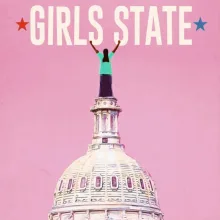
Girls State (2024)
Show notes
Find out more about Laura at her website: https://www.laurahudock.com/ (opens in a new tab)
Transcript
An automatic transcript, tidied into paragraphs. It has not been proofread, so names, titles and spellings may be wrong, and it does not say who is speaking.
Show the transcript (about 3,200 words)
Speaker 1: Hold your ears, folks. It's Showtime.
Speaker 2: People pay good money to see this movie. When they go out to a theater, they want cold sodas, hot popcorn and no monsters in the projection booth. Everyone pretend podcasting isn't boring.
Speaker 3: Turn it off.
Speaker 4: Something in the air and it's politics. Girls State is like high school, teenage girls who care about government.
Speaker 5: Are you friends? We'll become friends. Obviously in 2040. I intend to run for president.
So I think federal state, I'm going to run for Governor, Attorney General Supreme Court justice.
Speaker 3: What's that?
Speaker 4: Hey, we're never going to get the opportunity to talk to people from different parts of Missouri the way that we are right now.
Speaker 3: I am a very social person. I will talk to a wall often when women start talking politics, we get shut down, but I am not one to be left on the desk.
Speaker 6: We all have in our own different ways, grown up in a world where we've never seen a female president. But how do we change that? We step up?
Speaker 4: This is where it all begins.
Speaker 3: We all work very hard on the image of ourselves that we want to show to the world. It's exhausting. I know it's a lot of pressure. I can see it.
I was that same person. So good luck.
Speaker 5: I'll ask you soon. We are all Americans and we all want the best for this country. Standing in front of this crowd of future leaders. I can save the God, can save the world.
Women will save America. MIKE WHITE: Hey, folks, welcome to a special episode of the projection booth. I'm your host, Mike White. On this episode, I'm talking with Laura Hudock.
She is the DP of the new documentary Girls State which premieres on Apple Plus on April 5th 2024. Thank you so much for listening and I hope you enjoyed the interview. How did you become a camera operator and eventually a cinematographer, I guess at. LAURA HUDOCK: First started with me behind the camera when I was like 16, taking a still photography course in high school and realizing I had an eye, I and a love for it.
And my teacher actually pulled me aside and was like, you have an eye. This is something you can't teach, you should pursue this. And then I went to Sarah Lawrence College and my first year study was film theory and history. So I studied theory for a year before I even started making movies and that's really where I fell in love with, fell in love with cinema.
Had an incredible professor. There also took courses through his film school in addition, and went to the BBC Directors training program in London for a semester abroad and also an intensive cinematography courses at Fo in Prague. And I started working as a P A on a couple of movies while I was still in college. And then out of college, I ended up working at a rental house for a year.
At the time in New York, it was like Panna Vision and A CS C were the main houses. So I worked at CS C learned all the equipment coming through New York and then join the union after a year at the rental house and became a camera assistant. Starting off as a loader in a second on commercials, TV shows feature films, all pretty much narrative projects because my intention starting out was to become a narrative DP but it just in the early two thousands coming up as a woman, it, there just wasn't as much opportunity. The path forward as an operator in New York seemed impossible.
There was like no female operators. There was a couple great DPS like Gallen Kris and Nancy Schreiber. And even as an ac as a woman was, there weren't a ton of us at the time. And I just got to a point in my career was like, I don't wanna be an AC for the rest of my life.
That's not my path. And the only place I could find opportunities to start shooting was the documentary and, reality world. The reality is not my thing at all. But I needed to build some credits as AD P and started off when doing actually some pretty intense stuff.
One of my early gigs was 1st 48 falling homicide detectives in New Orleans on call for murders and then eventually advice on HBO. The, their weekly series I jumped into and Woman with Gloria Steinem, which was also a vice series and I got nominated for an Emmy and that helped sort of me get then the circus on Showtime. And then I've also done a number of feature documentaries and it snowballed into bigger and bigger documentary projects, but I always wanted to do narrative and I finally went back to my narrative contacts DPS that would be operators and become DPS sort of thing.
And was like, let me operate, let me give me a shot, give me a chance after having built this resume in the dark world. And I started day playing on a lot of TV shows and then eventually full time on TV shows and like Westworld And City on a hill. And then eventually got it, finally got my first opportunity to DP an episode of American Rust on Showtime. And now I have, I managed to over the years have a career where I bounce between the narrative and documentary worlds.
And I'm grateful now that I have both skill sets because they are there's a lot of overlap but there's also, they're also like learning two different languages in a way too. I didn't, I don't think everybody's, it can tackle. B but yeah, I'm grateful that I'm here but still a lot further to go. MIKE WHITE: I feel.
Yeah. What was that transition like for you when you first moved into reality work and documentary work? That must have been, like you said, learning that new language must have been pretty difficult. LAURA HUDOCK: Not as much because all of my still photography was documentary, portrait and travel photography.
So I basically built up my skill set, traveling with my still camera and learning how to gain access and trust of people with still frames and building up my skill set for working with light and composition and still photography. So that transition to shooting doc wasn't as tough, although it is a whole different on the narrative side, you have 100 person crew on the dock side. It's a very small, right? So it's, that is something you get used to in terms of you have to do.
Take on a lot more hats. MIKE WHITE: How do you communicate with the folks that you're helping with the director? Is it more their vision, your vision? How do you communicate with each other as far as this is the look that we're going to have.
LAURA HUDOCK: The relationship with the director. It's different project to project. But especially I think different of what's required you in documentary versus narrative. Sometimes in documentaries, the director is not even present.
And it's more about having a conversation with the director ahead of time of what are we going for and then relaying back like Obe is this, this is where we're at and this story and getting points that may be reviewing some footage. Sometimes it's more, it also sometimes documentaries have narrative elements where you actually are working more like a narrative DP and actually working through shots and looks. But a lot of documentary shooting, you are essentially editing in your head while you're filming, I'm building out the scene like this, these series of close ups and then I'm gonna pull back to this wide and then this is gonna, and I'm editing in my head, what they might, possibly, how they might possibly put it together.
It's not always how they put it together, but I give them what they need to put a scene together. And it's also different because you are working with real people with and often very sensitive situations and intimate moments of their lives. So you really with documentaries, it's more about you gaining access. Sometimes it's through the news for getting new access.
And then a lot of it, if it's an intimate verte situation, it's you yourself creating that trust and that safe space for them to allow you in into their world. And it's the magic happens when you are allowed into that space and you're allowed to capture these moments or get closer than you normally would and get intimate and really get into their lives with narrative. It's a whole other bottle wax because so you're dealing with the director and producers and wine producer and production designers. And usually, for example, in television first, you do a director scout and go through scenes of what the director might want, figure that out with them and the production designer and then you'll have a tech scout with your Gaffer and your grip and your team to figure out how you're gonna light it and execute the vision and communicate the director's vision to the team so that everybody is on the same page and often ahead of that and especially if it's a film, you'll be communicating with the director by looking at references, other movies or photographs or any sort of art form that might influence the narrative and discuss the look and then you discuss, OK, this is all right, we want it to be, let's say dreamy.
Ok, what kind of lenses and filters and light do we wanna create that look or do we want it to be a harsh reality? It's like you just, you try and get in the director's head of what is the, this the story and the narrative you wanna create. It involves a lot of conversations and then intuitive inspiration after that Yeah. MIKE WHITE: Tell me about your experience on Girls State and especially how was it working with so many other cinematographers.
LAURA HUDOCK: Yeah. Girls State, we had seven cinematographers total and we basically work together mostly in the prep in terms of deciding what the camera and lenses we're gonna be. We came down to the Canon C 500 Mark two and the Canon City primes most mostly we had conversations about basically wanting to build a package that was lightweight and versatile for a nonstop marathon of Verite 14 hours a day. And so that was the right choice and also lenses that were good quality but also lightweight and compact enough for the for Verite and full frame, we all decided to mainly stick with one focal length, which is the 50 prime and some and sometimes switching to the 35 just so we there was some consistency with the look as well as occasionally use this the 70 to 200 as the second camera for the interviews, as well as some of the shots and getting people in distant situations or on stage where you couldn't physically get closer.
But the majority of the time it was you move to get the shot rather than zooming in or zooming out. And then on the shoot, it was very sort of intimate situations. Each DP was teamed with subject, my subject was Emily Worth more. And in that team, it was just you and sound.
So it was a very small intimate sort of actual filming situation, even though it was a large team came together to make it and then we'd have big production office where we'd come together and share maybe what the story where the story is going or what we're getting or maybe watch some footage and like that. And then occasionally our characters might cross paths. I'm following Emily, someone's following somebody else and they come together and have a conversation. So, Sdps, we join together and just do your typical sort of cough, cross coverage and signaling and you can see the shot they're getting, you try and get the complimentary shot sort of thing, but most of the time it was just you and sound running the whole day long.
MIKE WHITE: Feels like there's so much action, so much activity and then you've got so many emotions as well. This is pretty intense for all the people that are involved. So it must have been something. How did you manage to gain the trust of your subject and make sure that she felt that you were going to not make her look bad.
That's tough because. LAURA HUDOCK: Usually that's something that's done like over time. But this was a shorter shoot. So we didn't really have that time to build up.
But what was helpful was having a little bit of time without the camera where you connect just human to human rather than I'm a robot doing a job, like it's really, you have to connect with your subject and I think just like, also sometimes sharing things about myself so she would feel comfortable to share, maybe keeping a distance at first and then moving in. But I think a lot of it is just the energy that you present, how you present yourself. People can feel whether you are open and receptive and curious or whether you're being judgmental or it's it's an energy and an openness that I try and bring that.
I guess they feel and also it helped like she's an aspiring journalist character. So at some point, she saw me just doing my job well and was like God and was like, I wanna be you. So that helped because she actually respected that I was working hard and trying to tell the story and also being respectful of her. And she responded to that.
And also part of it is just like good casting by the directors, I think pairing the right DP with the right subject sometimes is really the best and most important decision you can make because we were able to sync up relatively quickly and I'm still in contact with Emily. We're still friends and check in with each other now and then. So it's actually relationship that I will probably continue and maybe even in some way, a little bit of a mentorship. Yeah.
Yeah. MIKE WHITE: Tell me about your son person. How is that relationship? Like, because it sounds like you kind of had to be joined at the hip.
LAURA HUDOCK: I had to a transition of sound people. Because the first person was ill and then came in late. So it was a little, wasn't as smooth but basically with sound. Yeah, you need someone who's really good.
Who knows? Ok, she's on a 50 mil. This is gonna be my headroom or this is how much headroom she is or she's this far. It's why signaling sort of thing.
Hopefully you're with someone that, that knows camera well enough to know what you're shooting. And also I'm a fast mover and repositioning a lot and they just, they gotta be on their toes. Good image is nothing without good sound. So it's really important.
MIKE WHITE: Yeah. When you're done with the job, are you just done with it or do you actually go and see the premiere and take part in all of that? LAURA HUDOCK: It depends on the relationships. Sometimes there's some projects that I work on where I have a relationship with the director where they'll send me cuts and I'll be able to give notes and be like, oh, hey, remember this moment or actually I have this shots, I know that there's a shot that's stronger than this one if you wouldn't mind swapping it out.
And then sometimes I'm not involved in post at all. And then if I can go to the premiere for sure. It's really fun to see your hard work, appreciated by an audience and to reconnect with people from the movie that you worked with. And it's, it's a moment to appreciate the reward of hard work.
I was lucky enough to go to the Sundance premiere of Girls State and really had a good time. It was like, really well received and we had the Echo Theater with the big huge audience and it was like, it's pretty cool to be able to experience that. You don't always get that. MIKE WHITE: It must have been nice to see your subject again and actually hang out a little bit.
Yeah. LAURA HUDOCK: And then Em Emily was there and she and I connected and hung out and it was amazing. It was like, no time had passed. We're just like boom, click back in really tight.
It's amazing how an experience like that can create such a bond. And I feel like we really did create a bond and so grateful to her for being gracious and open with herself and her story to let me capture it. MIKE WHITE: What else are you working on these days? Do you have your next gig lined up?
LAURA HUDOCK: I do. I am working on something right now but it hasn't been announced yet. I can't really say what it is, but it is a feature documentary. That sort of is a mix of ver narrative, scripted scenes and some sort of magical realism in a way.
So unfortunately, I can't say what it is, you know, NDAS and all that. MIKE WHITE: Where is the best place for people to keep up with you in your work? LAURA HUDOCK: You can follow me on Instagram. It's Laura Dot Hudock.
Laur A Dot Hudock or Laura. Also my website Laura Hudock. Com. I'm, I'll repost my latest works there.
MIKE WHITE: Laura, thank you so much for your time. This was so great talking with you. Sure.
Speaker 9: My pleasure c come from my I cool. Don't that man? Yeah, like this. Yo, that thank you.
Comments
No comments yet.