Special Report
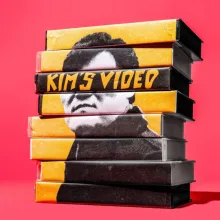
Kim's Video (2023)
Show notes
Thanks to Kim's Video for stocking Who Do You Think You're Fooling and You're Still Not Fooling Anybody as well as for buying tons of bootlegs from SuperHappyFun.com. Though, no thanks for selling me out to Matthew Barney's lawyers...
Transcript
An automatic transcript, tidied into paragraphs. It has not been proofread, so names, titles and spellings may be wrong, and it does not say who is speaking.
Show the transcript (about 3,400 words)
Speaker 1: Hold your ears, folks. It's showtime people pay good money to see this movie. When they go out to a theater, they want cold sodas, hot popcorn and no monsters in the projection booth. Everyone pretend podcasting isn't boring.
Speaker 2: Turn it off. Do you know Kim's video? Excuse me. A lot of things used to be here and they're gone.
Speaker 3: Nobody rents videos anymore. DAVID REDMON: Do you know Kim's video? I did. Were you a customer?
I was and how was it?
Speaker 5: Wow. And stepping into the gold mine of cool, they had things that didn't exist that never had come out. I miss it so much. We were actively cultivating Rare Bells.
We would watch these guys in suits, clear out rows and rows of VHS tapes. About a week or so later. Mr Kim would come into the store and they would replenish the entire row with all new bootlegs. DAVID REDMON: Mr Kan issued a public announcement.
Speaker 3: So let me promise to digitize the entire collection. How could anybody think sending this entire thing to another country made more sense than I speak. English? Had no one else shared that with you.
That's really weird. It's the thing. It's the promise.
Speaker 2: We knew we'd never see it again. Probably was gonna just disappear. Where are we going? I don't know, I didn't know what we were getting into.
This is where people. DAVID REDMON: Go to get murdered.
Speaker 3: We forget.
Speaker 5: Ok, they already, yeah.
Speaker 2: Yeah. It seemed like we could do something beautiful with this beautiful collection and we didn't, I didn't really know who we were working with. I am the local chief police.
Speaker 5: We said film knowledge matters more than ownership over movies.
Speaker 2: It was a fact. There was a part of me that felt like is this for real? MIKE WHITE: I turned to fiction movies to learn how to execute a heist la mafia, a non Hey folks, welcome to a special episode of the projection booth. I'm your host, Mike White.
On this episode, I'm talking with David Redmond and Ashley Saban. All about their new documentary Kim's video. It's a discussion of one of the most famous video stores in New York City that had quite an influence on other parts of the countries as well. Thank you so much for listening and I hope you enjoyed the interview.
I want to know how you started making films together because from what I understand you're actually a couple as well. DAVID REDMON: We're still a couple. ASHLEY SABIN: We survived. DAVID REDMON: We met about 20 years ago, I think actually 2222.
ASHLEY SABIN: If you don't want to remember those two years, that's your choice. You want the love story. That's what you want or what do you? MIKE WHITE: Well, did you become coworkers first to fall in love first?
What was the initial meeting? DAVID REDMON: So we were strangers who met and then decided to start spending time together. Our first date was a movie and then we started attending different direct action protests and brought my camera with us and then one thing led to another and we ended up in Brooklyn together just a lot of different protests back in the day about globalization and social class and equality and all that. And then we really bonded during the making of Mardi Gras made in China.
And then when that movie premiered, we were a couple and we continued making movies from that point forward. And here we are today 22 years later. MIKE WHITE: What is the division of labor? How do you two work together when it comes to a project?
ASHLEY SABIN: There's before children and after children at this old, before children, it was much easier in the sense that it was divided pretty equal. We're both shooting, both editing, both, producing both directing now with kids. That's why Ken's video is the way it is. It's the first film where we had full hunt two children.
So David went on the shoots. I think I maybe went on couple two or three shoots when we had childcare. But it's the childcare issue. But we found a way with Kim's video to make it work in the sense that when Da David would go and then come back and then our process is always to edit as we're going, I was able to have fresh eyes.
So that was an interesting sort of upside to not being able to go. DAVID REDMON: But the truth is she lost her Kim's video membership card and I had mine, you stole it. ASHLEY SABIN: So I don't think I lost it. DAVID REDMON: She wasn't allowed access to the collection like I was, when did you realize that Kim's video was going to be a project that there was something to the story that really captivated you when the movies told me that they wanted to be freed and they wanted to go home and home was back in New York City.
So when I went into the collection, I knew at that point that they were gonna leave, I didn't know how I didn't know when and something like that had never happened to me before. So all I had to do was listen. And so when you're talking about the division of labor, it was something that really came to us. And so both of us had to listen to how the form of the movie needed to be realized.
And Ashley really pushed me in the direction to do some voiceover and give a bit of direction or guidance to the audience. MIKE WHITE: How many trips did you make to Italy? DAVID REDMON: I don't remember maybe 20. Yeah.
MIKE WHITE: How could you afford that? That's crazy. DAVID REDMON: We found a way to stay next to Sicily without actually living or staying in Sicily. And plus as you see in the movie, much of the direction of it is movement.
There's movement to New York City, there's movement to Rome, movement to Korea. There's movement to Si Sicily and there's movements to different places throughout the movie and it was, it felt that way. And right now we're still dizzy and it's been seven years, it took six years to finish the movie. And here we are a year later, still dizzy, trying to recover, but we.
ASHLEY SABIN: Always do bit by bit. Usually it's just the two of us. Hence David not having a translator for a lot of the trips. It's a financial thing.
We're just trying to be lean and mean we have one credit card for the sole purpose of renting a car. We use the money that we get in from our other distribution of our other films and it's just little increments of payments. So over the course of six years, it is a lot. But that in the end it's, it's when you're in the middle of it's not because you're not taking on more than you can handle.
MIKE WHITE: Yeah, because you're making stuff as you're making this documentary right? There are other projects that you're working on that this time. ASHLEY SABIN: This was it for a long time. Yeah.
DAVID REDMON: Yeah. I mean, what came out of Kim's video was a movie but also a book that we're trying to write. ASHLEY SABIN: But that's now we're trying to do a fiction film based on Kim's video. We have the book like David mentioned.
But in the six years, it was also COVID, there was a lot going on in those six years. And I think that also we have small children. It's like a juggling act and we found the way. But that's why we're moving into the fiction real.
We've never made a fiction film, but we can't do another six year for one project with our kids will be 16. I can't do it. Come on, you gotta do something banging it out. Two years.
That's it finished. MIKE WHITE: When it comes to your other projects. How do you choose them or do they choose you like this one did? ASHLEY SABIN: Yeah.
It's a mixture we've had where we've chosen. David heard the sound of a donkey in the middle of the night and then woke me up and I was angry and he shared the sound but it calmed me down and we made a film about a donkey and it was narrated by Willem Dafoe. Then another film, a woman approached us, she was a model scout and we found ourselves in Siberia with young girls coming to Japan. It's a real grab bag.
I think the point for us is to really be open to that sort of sixth sense about things. If the story sticks enough and we're, we've talked about it enough then, ok, let's make that plunge, you know. DAVID REDMON: This fiction script that we're writing. Now, we've never had this approach before, but really it begins to write itself.
And we've heard people say this repeatedly, but we've never understood it. But now that it's happening, I fully understand what people mean by the script and the story begins to write itself. All we have to do is listen to it. We have to listen to the people we meet when they began to speak about material that is already in the script and they don't even know we're writing a script, right?
And so Ashley and I look at each other and literally our hair rises on our body and we're like, we can't believe this has just happened. I can give you numerous examples, but I'm not gonna bore you with those details. But I think you understand. MIKE WHITE: Is young man Kim going to be producing this new film.
DAVID REDMON: Are you gonna speak to him? Do you wanna be a mediator and ask him. ASHLEY SABIN: We have a good relationship with him. We never asked him for anything.
DAVID REDMON: Except to go to Sicily and see the collection. ASHLEY SABIN: That's right. And so I think with him, it's really important for us to have a mutual respect and not ask for too much because he's given a lot. So I don't think we would become it.
It's, it doesn't feel right. MIKE WHITE: Did you ever think that you would have to know so much about Italian politics before this started. DAVID REDMON: The funny thing is we know less about Italian politics, the more we made the movie, the more confusing the politics became. And I think that's what is in the movie itself, the sheer amount of confusion about how the collection got lost, what happened to it and then trying to figure out answers to these questions along the way.
And I think this is one reason why we decided to include movie clips in the trajectory of the story, blow up, blow out in the conversation. All three of those movies have common themes of confusion. Did they really capture what they think they captured? And then that's what we were dealing with as well.
That, that similar amount of confusion. MIKE WHITE: Yeah, the paranoia of those films definitely comes through as well. The authority figures when that alarm starts going off, when you quote unquote broke in. That was a real bizarre moment for me.
I can't even imagine what it was for you living that. ASHLEY SABIN: Yeah, it's just crazy. The door was open. We've talked to a lot of Sicilians and they're like, it's not that crazy, like they leave a lot of doors open.
And then the funny thing is if you watch Enrico who also did our, the musical, he's a composer and did the musical score the majority of it. He's so funny because if you watch that really closely. Like he opens it first and then he closes it and then he opened, he tries to open it and he's like, no, it was locked because he's scared. He's like trying to cover his ass.
Goddamn it. I don't want the mayor to think. I let this door open even though it's normal for them because, you know, it's trust, people aren't busting in to the Kim's Video collection. DAVID REDMON: People were.
That's why so many movies were missing. Oh, so the door was the door. No, a lot of movies were missing. MIKE WHITE: Yeah.
Yeah. Usually I ask filmmakers, what were some of the biggest challenges that they had to overcome? But this whole movie feels like it was just a series of challenges. How did you keep going with it?
What kept you motivated? DAVID REDMON: I think it really speaks to my background as you see in the movie rural Texas working class, given nothing and trying to find just throwing yourself into the world and appreciating what the world gives you. So I think that was the biggest challenge is trying not to take on more than what we could handle and really trying to define the boundaries and listen to the direction of where the story should go. So it was an exercise in patience, an exercise in tenacity and empathy, I would say.
ASHLEY SABIN: On just problem solution. That's our sort of life man mantras, there's always gonna be problems but there's always gonna be solutions. MIKE WHITE: When were you finished with the film? And what was the reception like if.
DAVID REDMON: You ask me the film's unfinished? ASHLEY SABIN: Ok, let's not go there. It says that on every. DAVID REDMON: Film, no, but especially this movie, the film officially premiered at Sundance in January 2023 in the A section called Next.
And I don't think it could have premiered in any other section because it's such a. ASHLEY SABIN: Bold and yeah, it's a great section. Fiction. DAVID REDMON: It's nonfiction.
It defies boundaries and that's what Kim's video was about. The video store, defied boundaries. And we tried to imitate the tapestry of Kim's video by weaving in the different genres of the movies in the movie itself. So even though it's a movie about movies, it's also an imitation of Kim's video.
ASHLEY SABIN: It's just been a great reception. It's our first film that like brings out some real belly laughs. We've made some depressing films. Let me tell you and not by choice.
It's just as the, there are a few that are like lighthearted. But man, this is the first one that's got good humor which both of us love. And so it's such a joy, especially in the dark times that we're in to watch the movie with an audience, hear them laugh and then watch them stay afterwards to talk to each other. That's so great.
MIKE WHITE: You make this nostalgic documentary, not nostalgic. You have some of that nostalgia in there but it's not just nostalgia, porn for lack of a better term. ASHLEY SABIN: Dave and I have bulls are really sensitive to sort the manipulative editing, especially where you see it a lot in that comes out of Hollywood where it's like it doesn't trust the audience, that's really important to us, to trust the audience. So that's why we set the film up as we did, which is David going on the journey because it's how we experienced it.
It's how he experienced it, trying to figure it all out. And so it's really, it's putting the trust in the audience to figure it out. DAVID REDMON: Themselves and taking them, you know, along the ride. I am a passenger, right?
Big five on the audience is the passenger. MIKE WHITE: So where are you in this new project? Are you still writing the script? ASHLEY SABIN: We got the script down, we got our actors.
I think we just need two more actors and we have locations, we just need 20 grand. So you got, if anyone knows a money tree that we can like 20 grand just because we're gonna do the same model of just bit by bit, we don't want the whole budget up front. So I think we're gonna shoot our players to shoot starting in May and then we'll have a July shoot and then hopefully at it over the summer and start the submission process. MIKE WHITE: Do you ever do crowdfunding.
ASHLEY SABIN: Horrible traumatized with crowd funding? Because I did a crowdfunding for our film girl model for outreach and we got it. It was 20 K but it was right after we got married. It was our damn honeymoon.
That was the worst. He got so mad at me. He was like, why did you watch this now? And then I made the second mistake of doing it for Kim's video during Well, we were the Sun man.
It wasn't for Kim's video. It was for, it was basically to pay because Nick Brewer, Alex Ross Perry and Sean Price. Williams are volunteering to organize the collection. I think they should get paid.
That's a job. And they live in New York City. So I launched a campaign on our release day at Sundance Film Festival, which people normally get employees. That was a bad idea.
But I thought maybe I can manage it all. I had to end the campaign early. It was not a good idea. But now on our website, it's like a splash page where if someone wants to donate and put it into paypal, it goes straight to Nick Brewer.
I don't know if that's gonna work either. But yeah, I don't know. Crowdfunding is not our bag of tricks. DAVID REDMON: Nick Sean and Alex have organized approximately 35,000 movies now on display in the basement of the Alamo, which is well lit.
Fabulous colors and really well organized Draft. ASHLEY SABIN: House had more like VHS shelves made. It's incredible because it's not a money maker in a sense, it's a museum. I think people rent, but that's not where their source of revenue as a company.
And the fact that these three guys are volunteering is just to me, that's the love and joy that this collection can further create and we can all be a part of, I find a lot of happiness out of when I think about all that. MIKE WHITE: Now, I'm confused. I didn't think there was a basement at the Alamo. DAVID REDMON: We say basement.
Actually, it's a, it's the bottom floor. ASHLEY SABIN: It is in the basement. You go all the way to the bottom. DAVID REDMON: It's not fair to say the basement.
Yeah, you're right. MIKE WHITE: You mentioned the website. What is the website? Where can people go to find out more about your projects?
ASHLEY SABIN: Carnivalesque films.com. So it's just carnival and then esque films and then.com. MIKE WHITE: Thank you so much for your time today. This was such a pleasure talking with you.
DAVID REDMON: Thank you. Wow. O yeah, thanks Scott side that bye. Ok.
Just he is right.
Comments
No comments yet.