
Episode 675 · Film year 1984
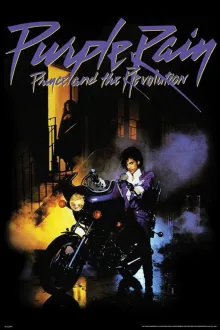
Purple Rain (1984)
- Special Guest
- Alan Light
- Guest Co-Hosts
- Bill Ackerman, Samm Deighan
Show notes
Our episode features an interview with Alan Light, author of Let's Go Crazy: Prince and the Making of Purple Rain (opens in a new tab). We also discuss the "sequel" to Purple Rain, Graffiti Bridge, and the "remake", Rain the color of Blue with a little Red in it.
Labels: Alan Light Albert Magnoli Bill Ackerman Clarence Williams III Musical Samm Deighan
Transcript
An automatic transcript, tidied into paragraphs. It has not been proofread, so names, titles and spellings may be wrong, and it does not say who is speaking.
Show the transcript (about 26,500 words)
Speaker 1: Hold your ears, folks. It's showtime people pay good money to see this movie. When they go out to a theater, they want cold sodas, hot popcorn and no monsters in the projection booth.
Speaker 2: Everyone pretend podcasting isn't boring. Turn it off.
Speaker 3: Prince in his first motion picture. We created the he li every bit of it. He risked too much for the one thing that meant everything. Use Prince the story, Purple Rain.
MIKE WHITE: Welcome to the projection booth. I'm your host, Mike White. Join me once again is Mr Bill Ackerman. BILL ACKERMAN: Which you could see my home.
It's so exciting. MIKE WHITE: Also back in the booth is MS Sam Degan, motherfucker, dearly beloved. We are gathered here today to get through this thing called Purple Rain. Great Movie, Purple Rain.
And I'm here to tell you, it was directed by first time feature director Albert Magnoli. The film stars the one and only artist formerly and presently known as Prince as the kid. He's a musical genius from Minneapolis who struggles with his art, his family and his love life. All set to the amazing sound of Prince.
The time Apollonia Six and more, we will be spoiling the film as we go along. So if you haven't seen Purple Rain, what the hell are you doing here? Just turn off the podcast. Come on back after you have, we will still be here.
So, Bill, when was the first time you saw Purple Rain? And what did you think? BILL ACKERMAN: The first time I saw Purple Rain, I was eight years old. It was during the summer of 1985 when it premiered on HBO.
My mother had recorded it for me with a remote control in her hand trying to edit out all the R rated components in real time. Although she wasn't quick enough to edit out the word motherfucker. So that's the first time I heard the word motherfucker and I didn't know what it meant because in the context of the film, I thought he's beating up the mother and I thought it had something to do with violence. I was way off.
That was my first R rated film along with the thing. So just seeing it at that age felt really transgressive and edgy. I didn't really think too deeply about movies at that age. I was just excited to see Prince in a movie because he was like one of the biggest things in pop music.
And that was when I was still only like a year or so into buying tapes for the first time. Like I bought Thriller And Culture Club and a few other things. But it was like still a new thing to be buying pop music. And so just seeing Prince in a movie was like a really big deal.
I was asking all the older kids about it who had seen it because it was just like this Forbidden Fruit kind of film for me. But I didn't really think about it in any kind of deeper way until I was a little older at the time. It was just everything that felt like hyperbolic and emotionally overwrought about Purple Rain just played completely straight and reasonable to me at that age, it wasn't like even that exaggerated a film. This is how people acted at that age, but I liked it then I grew to love it as I grew to understand Prince and his music a little better.
MIKE WHITE: And how about yourself? SAMM DEIGHAN: I honestly can't remember the first time I saw this. I think it's just like always been in my brain probably because the music videos that are taken from the movie were on when I was growing up. And I got pretty into prints early in high school and I watched it soon after that.
But same thing with Bill, it's the more I came to love Prince's music. It's not perfectly made, but it's a perfect film. If that makes sense. MIKE WHITE: I don't know how I missed out on this.
I remember those music videos. So I saw the clips and things, but I never sat down to watch this until I was working at a cable company when I got out of college. And so obviously, we had free cable at the office where I worked and you just had cable on all the time in the break rooms and every single room of the building basically. And there was one day where I went in for lunch and Purple Rain was on.
So it was already in progress and I sat down, I was just like, this is amazing. What? Oh my God, how have I missed this? And then fortunately since it was on cable, I went home and it was on again.
So I watched it straight through from the beginning all the way to the end. So I was probably, gosh, I was 12 when it came out and I was probably 22 or 23 when it finally hit me. And I was just like, this is the best thing ever. SAMM DEIGHAN: I'm glad we all agree.
MIKE WHITE: Oh, yeah. It's amazing. And it just, yeah, those heightened emotions. It's so melodramatic and just the use of the music and I really just never bought any Prince music when I was younger.
And now I have the soundtrack, probably like three or four different versions of the soundtrack. I never went before or after. Like, I know some of those songs, you know, Little Red Corvette was everywhere when you were that age in 1999. And then of course, Bat Dance.
Oh My God, that dance. I was so into that stupid video and song and it was so bizarre to go see Batman after you've heard that song like so many Times and then you hear the people say the dialogue that you've listened to the clips of so many Times. I don't know how many months before Batman came out, the music video for Bat Dance came out. But I felt like I had had the whole thing memorized and like, it was just part of my being at that point, Prince was amazing and we'll definitely be talking about that.
And it's just amazing for me seeing this one. I saw it at age 24 or whatever or 22. I was just like, oh, well, of course, Prince made a movie. Yeah, that makes total sense.
But then to realize, no, he really like he had the 1999 album, but it didn't really do that well in the charts. And so it was kind of a weird thing that he was able to make a movie at this point in his career and to make it this amazing, just it's mind blowing. BILL ACKERMAN: He had an album in the charts because 1999 was a platinum album, but it wasn't like, it wasn't like a multi platinum. He wasn't like as big as he got and that record actually sold a lot more after Purple Rain.
But right before this, we have Saturday night fever in 1970 really 78 is when it takes over. But 77 and you have flash dance right before this. And I feel like those kind of set the stage for Purple Rain in a big way. But those films take things that are very maybe Gay or effeminate or like things that are not macho, like disco and like synth pop kind of things and they like, try to push a, like a hetero like macho kind of thing about like disco is really thinking about Italian American guys.
Like it's not a Gay thing, it's not a black thing. It's making it like palatable for middle class white America and flash dance is taking something like underground disco and making it into strip club like hetero friendly thing with the sexualizing of the character, Purple Rain is taking Prince what he's still perceived as kind of a post disco figure and like someone that's playing with gender and gender fluidity in a way that is like still edgy post Bowie that way. And it's taking it and no, it's reselling him as a rock star, a heterosexual rock star.
And it's making him more white friendly. Like the band is more white Vanity is replaced by a more white looking actress. Like it's positioning him for a crossover in a way that made people slightly uncomfortable in some corners. But ultimately, the majority was like, yes, this is a good thing and now he's he's the new Michael Jackson now.
But that's interesting looking back at it as a black film when black films were really being pushed to the margins in a big way other than Richard Pryor and Eddie Murphy and comedies. And I don't know, that's ever really talked about that way because even though it's almost all black characters, it was just such a big crossover film to white people that I don't know if it was ever really talked about because race is never discussed in the dialogue. But I thought that was something that was always interesting about Purple Rain that at the time it was just like, oh, it's, it's the new Thriller in the movies and it's R rated.
But looking back, it's culturally interesting also just in the way they were rebranding prints. SAMM DEIGHAN: It's like I can see that's what they're trying to do, but it's so hard for me to watch it and not see it as an unintentional Queer film. It's like knowing about Wendy and Lisa's relationship and how central they are as side characters and Prince takes that post Bowie, post glam stuff to even more extremes. Yes.
The whole thing is about his relationship with Apollonia in a lot of ways. But it's like even his on stage dancing, like his dancing for Darling Nikki is extremely effeminate. MIKE WHITE: I'm trying to remember the story if it was magnoli or if it was one of the producers and they were out in, I think it was Los Angeles and taking a cab and one of them is like, well, what do you think about Prince and the cab driver who was a black man is like, oh, I don't pay attention to that homosexual slur and it's like, ok. Yeah, he was definitely seen that way by a lot of people and, yeah, he's mad feminine in this movie.
He really does a great job of crossing that line. And I know at one point, Morris Day calls him a slur for homosexuals and talks about how, you know, he's got this long hair and stuff. But yeah, it's amazing that he can play this basically heterosexual sex symbol, but I can see how he could appeal to everyone with the way that he is with his sexuality. SAMM DEIGHAN: It's wild even just like the purple motorcycle.
It's like when you think about Queer and Queer coded music icons from the eighties, like comparing Prince and Purple Rain to somebody like Rob Halford would be really interesting the way it's like someone is using these tropes against the tropes. Well, in opposite ways for both of them. MIKE WHITE: I dove deep into the research with this one and I'm so glad that there's so many books written about Prince and so many things about Prince and that even on. And thank you Bill for pointing out that there's the double DVD set out there where one whole disc is just dedicated to extras you've got a whole concert on there.
But the fascinating thing for me was seeing the TV premiere party for it. That was amazing just to see all the people that showed up for it and like looking around in the crowds and seeing all these stars that were big in 1984 to have fucking weird al there just like, oh yeah, well, we knew that Prince could act but wow, that he can sing too. BILL ACKERMAN: Warner owned was like a partial owner of MTV. Warner Brothers owns the film.
They own the record label and they partly own MTV. This is when that, that corporate synergy way of marketing. Music was still in its infancy. It's the same, it's right after flash dance, but it's the same year as you have Footloose, which is like all marketing and like like before that you have Isaac Hayes and Curtis Mayfield and the BG other music artists that like benefited from movie soundtracks in a major way.
But this is different because this also is like a benefit of timing because it's like Thriller is still like the biggest thing in the world in 84 and that came in 82. It was like that enormous that, that it was still like in the top of the Thriller. The video came out in January of that year. So he's still like everything else falls second to Michael Jackson.
The point that Thriller, the point that Purple Rain has made but it benefits from the Michael Jackson effect is what if we had another one? What if we had another Michael Jackson? What if we had him in the movies? That Prince was already established?
Little Red Corvette was on MTV before Billie Jean even so he was already positioned for it. But the impact of MTV on all of this is you can't underestimate it because that even just we're talking about the Androgyny of it. The push towards Androgyny and pop music around this time was so much different than it. Prior to that in the seventies, you had glam in England.
But because they had things like top of the pops that were so culturally resonant, I don't think it had the same impact here because it, unless it was like blended with horror like Kiss or Alice Cooper, like you didn't really have the same push for glam in America until MTV really brought it into like regular rotation and then heavy metal becomes more glam. R And B becomes more glam. And Prince was just positioned to coalesce all of it because Purple Rain, like you think about 1984 as a year for pop music and it's born in the USA.
It's Thriller. It's like a virgin, it's depeche mode, it's Van Halen and I feel like Purple Rain kind of synthesizes so much of what was hot in all these different areas in a way that like makes it a really interesting crossover record in a way that like his other albums don't really attempt that, but it's very calculated that way too, which is interesting because it actually works to cross over like or something like that. Man is also calculated, but it's, it doesn't age the same way because it's, there's not, the substance is not really there for him.
A lot of those songs. It's more kind of a curiosity where Purple Rain still holds up as a listening experience. SAMM DEIGHAN: How many of those songs were written before the movie was conceived and how many were written for the movie? Because I just, I've always been and this is something that we can definitely get into more later.
But one of the things I love so much about this movie is the way that it feels like like a bizarre hybrid of kind of a concert film and music videos and a musical. And some of the songs are so good at moving the narrative forwards in a way that I feel like you don't see that often. BILL ACKERMAN: Baby. I'm a star is the only one that I know was around for a while.
But everything else was written around the time of Purple Rain, which is different from Graffiti Bridge, for example, or Batman where he had songs that were much older, reworked for those projects. But yeah, no, this was a case where before Purple Rain Prince was like an album a year and he wasn't taking a lot of time and he would get bored really quickly with each record. By the time he was done with the tours, like, forget it. I'm on to the next thing he was recording by the time Purple Rain came out around the world in a day was almost done.
He was already done with that music by the time he was working that fast. And that's also the same year he wrote a Sheila E album, a time album. You like the Family album, Apollon. Yeah.
Like he was really like dominating the charts in a big way because that's the same year as City Lauper was big which she's so unusual has a cover of when you were mine. And then Chaka Khan had a come back because of a cover of I feel for you glamorous. Life was on the chart. So it was like before Purple Rain, he would get so impatient that he would really allow an album to work on radio tour.
It support it really singles promote the record this the way that other people do. 1999 had two years to gestate, which is rare for him. And so that was why it belatedly crossed him over with little Red Corvette. But if he had it his own way, he would work so fast that by the time people start to digest the record, he was like, nah, I'm tired of that.
I'm on to the next thing And so that's. SAMM DEIGHAN: He's like the faster of pop music. Well, it's just tireless. BILL ACKERMAN: That's why he likes Michael Bell House.
MIKE WHITE: It's not a coincidence that Amadeus came out the same year I feel because it feels like he is the modern day Amadeus just cranking through stuff, has all this music in his Head and he's just rushing to put it down. There's a great book called Prince in the Purple Rain Era Studio sessions by Dwayne to the hall, I believe it's pronounced. But that is great because it will tell you exactly when these songs were being laid down at least. And the songs just one after another after.
And you can see the dates of when these things were being recorded. And yeah, it's remarkable to see just the output. And according to Magnolia, when he and Prince initially got together on this, once Prince agreed, like you can do this, I think Prince played him 100 songs or something and he was just like take whatever songs you want. And there were some that were used like you were saying like baby, I'm a star.
But there were some that were recorded like right before stuff. I mean, the there are three songs that are played in the movie that he actually played live and then reworked. And it's those versions that are in the movie like Purple Rain itself. So you can hear some of the crowd stuff and that's the actual crowd as far as I understand.
And then a couple of them were written for the movie just like, hey, we need a song here and then it comes back with when doves cry, it's like what? SAMM DEIGHAN: Which is so crazy. MIKE WHITE: Yeah. Yeah, I think that and take me with you were written specifically for the movie.
BILL ACKERMAN: Yes. And the beautiful ones also was, yeah. But yeah, I would die for you baby. I'm a star in Purple Rain Roll from that First Avenue.
That concert like a benefit concert for the Dance Academy from 83 which was Wendy's first show. And they recorded, let's go crazy there too. But they ended up rerecording it in a warehouse because they had, they just wanted to try something else with it. But yeah, it's interesting how fast it all comes together to your point.
MIKE WHITE: He's writing all of those time songs too. So he's writing freaking the Bird and what's the other big one? Jungle Jungle Love? It's like all of the Apollonia songs and it's just, I think maybe he didn't write Modern Air but I bet you he did as well.
BILL ACKERMAN: No, he didn't write Modern Air that I know of. But it sounds awfully like his. SAMM DEIGHAN: It's crazy. It like I still find things recent or like in recent years that are so clearly influenced by his sound in pop music.
It just, I didn't realize that he wrote all this other pop music. Like it's just, it blows your mind. BILL ACKERMAN: Yeah. The Apollonia Six record.
Had he not gutted? It would have had Take Me With You. Glamorous Life. Manic Monday.
Some really big songs, Sex Shooter. Winded up being just the biggest thing just because that's all that was really left of the songs he even tried to write. But, yeah. No, it was interesting.
Like how, how prolific and how many keeper songs of all of that recording he had because, I don't know, I don't know. He has so many songs we haven't heard yet. So it's hard to say, which is. SAMM DEIGHAN: It's like hard to get your brain around someone just having this vault of like thousands of songs that they wrote because they just were bored all the time.
MIKE WHITE: Luckily when I did finally watch Purple Rain, one of my coworkers, his sister was a huge Prince fan. And so he had picked up all this information from having her as his sister. So it's like, oh, yeah, he's got all these songs and Vaults and he's telling me all these things about the backwards recordings, you know, the backwards messages that are in Purple Rain and this and I'm just like, ok, I had no idea just how amazing this guy was until that moment. And it just all hit right at the same time, Bill.
SAMM DEIGHAN: You've seen him a few Times we saw him together at, was it the very last show he played second to life. BILL ACKERMAN: It was one of them. It was like a Freddie Gray memorial. SAMM DEIGHAN: It was when there were those riots in Baltimore.
I was living there at the time and the show went on sale and I was like, we have to go because I will never have another chance. And it was one of the most incredible things I've ever seen like the sheer shredding. He didn't do the stage humping anymore. MIKE WHITE: But the dancing just this dancing is freaking amazing.
When he dances in little Red Corvette. The video, you're just like, holy shit. Like, yeah, I was a huge Michael Jackson fan back when, when Purple Rain came out. So I was right there that you were talking Bill about Thriller and just that long gestation period for Thriller, I was all about Thriller and you know, which is why I guess the whole Peter Asi thing really hurts even more because I was such a big fan and just feel very betrayed.
But I was just like, yeah, Michael Jackson, he's such a great dancer. And you know, I actually watched the performance where he did the moonwalk the first time and all this and then I go and I watch, you know, Little Red Corvette and I'm just like, holy shit. This guy puts Michael Jackson to shame. BILL ACKERMAN: He's amazing and he's the Ginger Rogers huge heels, but they both were drawing on James Brown in a big way.
So that also helped bring James Brown back for another round because after this, James Brown has living in America for the Rocky soundtrack. And that was also in a way benefiting from just the increased exposure for R And B front man and the influenced by him with Prince and Michael Jackson. So something about the time I thought was interesting when you look at how they're used in Purple Rain, everything about them is from Prince. The music is from Prince Morris Day's character is based on Prince's own behavior.
And it's interesting how they're the black side of Prince as an artist. And he's trying to embrace the white rock pop audience at that time. But he still wants Jungle Love out there. Like he still wants to, he still wants to play to the R And B audience.
But it's funny because they're his antagonists in the story. And like they are the Frankenstein monster that he wouldn't let them open certain shows when they toured together because he was afraid that they would blow him off stage because they were that good. Like all of his protege acts. So she's cute.
She should be the front person for my new band. But whereas the time he made the mistake of hiring the best people in Minneapolis and he hired Jimmy Jam and Terry Lewis to be in his band, which is like, you don't hire like people that are like going to potentially dominate like eighties pop charts. And production to be like your puppets, which is what he did. And so he tried, didn't Jimmy Jam wind up just like leaving Jimmy Jam and Terry Lewis missed a date because they got snowed in recording someone else like moonlighting as producers.
And so he fired them from the time. SAMM DEIGHAN: They worked with Janet Jackson. Right. BILL ACKERMAN: Yeah.
And Human League and a lot of big people, but Janet Jackson is probably who they're most associated with. And if you think about that Minneapolis sound of Modern Air like that synth funk sound like they brought that out in a bigger way than even Prince did probably as far as like that sound. But yeah, I just think it's interesting how Morris Day is showing all the sides of Prince that he doesn't want you to know the choreography like the rehearsals, the ambition to be famous is something that he plays it as I'm just an artist expressing myself through music.
But the hard driving R And B James Brown Taskmaster that Morris Day, that's Prince also. And it's interesting how he's choosing to have the villain play that side of his personality. But that's him too. I just think it's interesting how it's, he's a one man band that could record the entire record himself, but you don't see that side of him in the movie.
It's, oh, he's part of a collaborative band. Wendy Lisa helped write songs like it's, he's trying to make it seem like he's a normal musician when it's so funny that he's really the most abnormal person in pop music. SAMM DEIGHAN: There's so much dialogue, especially in the second half of the movie where at the club there's yelling at him for writing the really emotional songs that are too personal and they're just for him. And to me that's the most unbelievable part of the movie because it's like things like when doves cry and you're talking about like some of the biggest hits of the eighties are supposed to be built into this plot.
Like this music is too obscure, but it is such a good contrast to everything that Morris does. But also I need to know and I don't know if either of you know, the answer to this one of my favorite and we should probably at least briefly address that this film is pretty misogynistic much like the eighties themselves and the United States. Not so it's not Prince's fault, but there's this incredible scene where Morris and Jerome throw a woman in a dumpster. And since it's based on Prince's life, I'm wondering if he actually threw or had someone thrown in a dumpster.
BILL ACKERMAN: Albert Magnolia used to say that this is something that happened. I don't know if it happened in the time space or the Prince and the Revolution space or I don't think Prince had checked the bodyguard, throw anyone a dumpster. I have no idea. Like, and I have no idea if Albert Magnoli is just talking shit when he says that it's based, in fact, but I know that's a scene he did have to fight for and audience test audiences loved it, which is I.
SAMM DEIGHAN: It's one of those scenes I don't want to love but will always love. It's just, it's like just go back to your point about like why did he hire Morris and all these people who are a real threat to him because they're so talented in their own right? It's Morris and Jerome steal this movie. They are cartoonish villains in a way, but they have such good chemistry together and the whole three Stooges scene of what is the password?
Is it? What is it is? It's just, it wouldn't be the same movie without the comic relief that they provide. BILL ACKERMAN: The film that reminds me the most of in a lot of ways is the film that Albert Magnoli edited right before this Reckless.
Yeah, it's like part of his like brooding young man with a motorcycle trilogy because American Anthem also has that. That's a very sober, serious kind of movie. Whereas Purple Rain has a lot of humor to it. And yeah, it's all from their report.
It's and it's if you look at under the Cherry Moon, one of the things that's funny about that is that Prince is clearly jealous as shit that Morris got to steal the movie from him with all the Jerome scenes. So he basically takes back his persona and applies it on to himself. So that the character, he plays the Cherry Moon, he has Jerome himself as his buddy and they're just going around Paris being obnoxious in white society if they don't actually call up race per se. But it's by taking on that side of himself.
It's for grounding race in a way that Purple Rain does not by making him like this fish out of water in like wealthy white society with him and Jerome. But it's like him doing a lot of banter. That is very Morris Day, but it's more awkward when he does it. So it's one of the many problems that under the Cherry Moon runs into.
But it is noteworthy that it's like him trying to take back what he gave Morris in Purple Rain. MIKE WHITE: I love that. This whole movie basically boils down to a battle of the bands at the end of it. It's just ok.
We've got not enough spaces and too many bands. So who's going to win this contest and become, you know, the, one of the house bands here at First Avenue. And it's, it's great. I love that he's the winner.
And basically, it's like when he, when he plays and he ends up going down into the basement and the cameras following him through all of these corridors and then he finally realizes that the crowd is cheering for him because, yeah, Sam, like you're saying, how dare you play all these obscure songs? Nobody's gonna dig this. The one thing that I love is when they play a song, then they leave the stage and Billy Sparks is like, what's with this one song? Shit?
And I'm like, oh, yeah, I guess he does just play one song almost every single time. Like, you kind of buy into that, that idea from movies of when there's a song, a singer gets up sings one song and that's pretty much it. Like they don't continue on and it's like, you know, oh, I'll talk to the singer after the song is done. It's not like, you know, 45 minutes later, it's five minutes later when the song is done, they come and they sit down and so it took me a long time to realize like, oh yeah, he's just playing one song and just thinks it's the best thing.
So he just walks right off the stage and when he gets called out for it, I was like, oh yeah, this is kind of breaking film tradition here by actually calling him out for just playing the one. SAMM DEIGHAN: One of the only scenes where you see them play multiple songs is that really angry sort of climax moment where he's targeting Apollonia and makes the songs feel like they belong in the film narratively. And it's not just we're up here to perform. It's like this song is about what's happening in my life right now.
BILL ACKERMAN: Yeah, there was actually a song I love that was cut out of the film and I used to think that it was replaced by Darling Nikki. But the script looking at it was actually before that, it was a song called G Spot, which later came out as a Jill Jones song. But the idea was that he was doing the kind of funk that the time does, which is like a musical thing that doesn't translate probably to some listeners the same way that like emotionally direct lyrics like attacking Apollonia or speaking to her through, through song does.
So I guess I get, I get why they cut it. But it's, it's a good song. I wish they had kept it. MIKE WHITE: But when he sings, do you want him or do you want me because I want you and he just is screaming that out.
I get fucking chills every single time and oh so good. SAMM DEIGHAN: Going back to that contrast between him and the film and the Times music, you could kind of see it being about like a man trying to address emotions through music when everyone around him is don't be a fag swallow your feelings man up. There's no crying in baseball, but it's like learning how to embrace that side of himself is ultimately what makes him win the battle of the bands. It's, it's such an insanely simple plot that feels more complicated because of those unspoken racial issues and the, also the family issue.
MIKE WHITE: Yeah. Well, yeah, he embraces his femininity but he also embraces that other people can help him. And that Wendy and Lisa, even though it's, that's bullshit that I don't think that they actually had something to do with this one. Yeah.
I think if anything, it was more like him and Des Dickerson had stuff where they would actually contribute and things and he didn't, you know, like, eventually Des is out of the band type type of thing. But, yeah, that, that whole thing in the movie where it's like, oh, I have to embrace this because he's already started to embrace his father's music. And it took me so long to figure out that what his father is playing ends up becoming part of computer Blue. And then, you know, the song that he keeps hearing from Wendy and Lisa on the cassette tape that, that eventually becomes Purple Rain.
The first time I saw it just didn't click at all. And then I'm like, 00, yeah. Ok. I can see how this music is actually working in here.
So it's pretty clueless in my early twenties. BILL ACKERMAN: I always wondered if the reason that he uses his father's music and computer Blue is to help his old man have a paycheck from his huge record because his dad gets a piece of, one of the biggest albums of the eighties that way. But he could have clearly written that melody or some other kind of equivalent melody on his own. So, it's, and father's song was also supposed to be on an early iteration of the record.
So it's still in the movie. But that melody was partly like a gift to his old man. And I guess they mended fences a little bit after Purple Rain took over the world. But they had a weird relationship when he was growing up that it is part of what, I don't know that his dad was violent, but he was somebody that was a very unhappy and frustrated, talented, musically but difficult character in a way that Prince could have easily just gone.
That road. Had he not made certain choices to make him famous. SAMM DEIGHAN: Prince is also pretty difficult. It's just translated in a different way.
BILL ACKERMAN: That's very true. MIKE WHITE: You're talking about this whole fracturing of Prince's personality into things like the Apollonia Six and the time and things and this whole movie is about being fractured. I mean, he also, you know, he talks to people through a puppet. SAMM DEIGHAN: Those scenes are so unexpected.
The first time I saw it, I was like, what is happening. MIKE WHITE: And even the opening Montage is all fragmented when it comes to timeline because it's got him on stage performing. But then also getting ready for the performance and having this whole, I love that they kind of cop to this idea that it's the settling of the scores and the godfather, you know, all the five families and just seeing that Montage as you've got Michael, you know, baptizing his godson and then that you even have Apollonia having her name being taken from the Godfather because she wasn't Apollonia until she ended up meeting Prince.
Kind of like a lot of people end up getting weird names when they hang out with Prince. I'm looking at you Carmen Electra. SAMM DEIGHAN: Aside from Wendy and Lisa, who have the most normal names. BILL ACKERMAN: The Apollonia name, it is a godfather reference.
But it's also rebranding a Mexican American actress as Italian like the Italian mother. So it's another way of making someone that is not white seem white. SAMM DEIGHAN: I like that because the mother is played by a Greek actors. She's Greek right.
MIKE WHITE: From that name. I would think so. BILL ACKERMAN: Sam, this is something I was going to ask you yesterday. Oga Carlao.
Do you know who she is? She gets a splinter in the eye and zombie. SAMM DEIGHAN: Yes. Yes.
I was like, I know her from FCI movies but I know. BILL ACKERMAN: She was starring in Murder Rock the same year that she that Purple Rain came out. SAMM DEIGHAN: She's in some more Koma and more just Euro cult in general and having her be clearly Mediterranean looking actor. It gives her this ambiguity that it's interesting that they never address it.
But the fact that she and Apollonia do looks similar in a certain way. It's like he's obviously trying to become something more than he grew up with but is having trouble resisting the same patterns repeating themselves. MIKE WHITE: Yeah. When he smacks you got the father hitting the wife and then within, I think it's the next scene.
You've got Prince hitting Apollonia and it's just like, oh, here he goes, he's just follow, falling into that same pattern and then later on it's him about to and then he realizes that he's about to and then he ends up, you know, not doing that. I it's pretty simple stuff but it works, it works very well. BILL ACKERMAN: The script had this weird edible moment where the mother is drunk and she's looking at herself in the mirror remembering her youth and then she has a line like you look so pretty honey, just like me.
You could have been a girl like playing up the Androgyny Factor and starts almost flirting with him and gives the earring that he give to Apollonia. That's his mother's earring. There was this kind of weird ancestral theme beyond the violence of the father. There was like this sexual component with the mother that they dropped from the film, but it would have made it a lot more perverse had they retained that they.
SAMM DEIGHAN: Should have left it. MIKE WHITE: That mother, I mean, the mother and Jill Jones suffered the most, I think through the editing of this film, poor, poor Jill, but Yeah, the mother had a lot of stuff and they just kept chopping it out. BILL ACKERMAN: Yeah, Jill Jones had a song called Wednesday that you can find online that was supposed to be before he gets the card with Apollonia's contact information. Maybe I'm trying to remember the exact positioning of it.
But yeah, she was waiting on a solo career that Prince was supposed to give her. That ended up happening very belatedly and nothing really took off with it. But she was part of that world for a long time. She's in Graffiti Bridge also has her part cut down in that one.
SAMM DEIGHAN: How many women did that happen with? At least like a dozen? MIKE WHITE: And then it is interesting reading that script and to see he still prints in that early version, he's not the kid and then it's Vanity all through there rather than Apollonia. That Vanity was supposed to be the love interest also Vanity pretty dirty in the script, this whole thing of and they kind of keep a little bit in that opening Montage how Apollon is in the back of a cab.
And you can tell that she doesn't have enough money for the cab. And so she rushes out and there's supposed to be a whole thing where the kids sees her being questioned by the police and there's this rich guy or a guy who looks very affluent around this group of people who are just like you know, gawking at this whole thing and basically like the Vanity character or Vanity hooks up with this guy and that's why she has all that money because you can see Abalone has all that money in her hand. It was basically like, she prostitutes herself to this guy in the crowd.
At least that's how I read it. I don't know how you read it, Bill. BILL ACKERMAN: That's how you're supposed to read it. I did notice that in the script, that Vanity is a harder character.
She's playing the persona of the Vanity Six character. And so she's a tougher like when the like Minnetonka scene in the film, Apollonia forgives him and gets on the bike. There's don't get my seat wet. It's, it's not, she's not mad for that long.
She's still happy to be with him. SAMM DEIGHAN: Which is outrageous. She should have been way madder. BILL ACKERMAN: Whereas Vanity is pissed and she hitches a ride back like she's not putting up with that shit.
Like she's a harder character. Like and that changes how the scenes with Morris Day play because in the time second record, she shows up as a character in a skit like she's flirty Banter with her in Morris, she's Morris is equal in those kind of songs and had she played the character in Purple Rain, it would have felt like more equal. Whereas maybe I, maybe I'm misreading it. But those scenes feel like Morris Day comes off slightly more predatory because Abalon feels more like an innocent, a hick trying to break into the business.
Whereas Vanity would have come off as more experienced like somebody that would not be beaten by Morris Day no matter what Prince does or doesn't do to help her. It's a more gentler like softer version of the character for the film we have with Apollonia. SAMM DEIGHAN: To me, the most interesting parts of Apollonia's character are when she has these scenes with Morris. And the way that Morris wins her over is by being pretty upfront with her and talking very rationally about look, we both want to get famous and there's nothing wrong with that and we're not pretending that it's anything other than what it is.
But that doesn't mean that we can't party and have fun while trying to make great music and entertain people. And in their scenes together, she feels more equal than in her scenes with just prints. BILL ACKERMAN: He's playing a relatable person. Prince isn't even trying to do that.
But I agree that like that scene with Morris letting his guard down and also the scene where the house, the family scene at the end where he like says something so cold, but then he has that like moment of silent regret in the hall. Like you get so much more emotional complexity that I think a lot of films would. SAMM DEIGHAN: Have given and more nuance he winds up even though he is basically the, it's like, it's so confusing about whether he's really the antagonist or not because he's so much more relatable and funny than Prince's character.
It's like Prince's character's funny side shows up as him being eccentric and like the scenes with him in the puppet and the scenes where he does things that are more effeminate. It's not quite David Bowie otherworldly. It just makes him seem like he's really trying to be different from everyone. But in a way that's hard to put your finger on.
BILL ACKERMAN: Speaking, put your finger on like the violence against women between the two characters, Morris Day has someone else put a woman in a dumpster like he has his own capacity for violence, but it's different from the kid where it's like the kid like has this. SAMM DEIGHAN: Is going to beat her? Yes, it gets pretty dark. MIKE WHITE: Oh yeah.
Very, very dark. I mean, when doves cry is such a dark song the first time I heard it, I was just like, what the hell is this. BILL ACKERMAN: When doves cry is interesting because at the time that dropped Prince had stopped doing interviews, right? As 1999 took off.
And so as he's getting more famous, he's deliberately cultivating mystique in a major way like people like, what's the story with the little Red Corvette guy? Why won't he talk to us? And so all of a sudden he has this song that seems to be laying clues for who he is and why he's complicated, even though it has one melody. No baseline, it dominates the summer in a way that sets the movie up to take over because you couldn't get away from it.
In 1984. It was just everywhere you went, you saw the video on MTV, or you heard the song on the radio. But it's, it seems to be telling you something about who he is and it's, at the same time, it's unclear how much of it is a, an invention for the sake of the movie and for his own myth building, which he was clearly doing with Purple Rain. SAMM DEIGHAN: Which is some real classic fuck boy behavior.
Let's seem as mysterious as possible and cultivate this sense of like darkness and he's troubled and sad and so it makes you want to get to know him, but it's all smoke and mirrors. MIKE WHITE: That he was either instrumental in the casting of a Non African American for his mother or was just ok with it. You know, that's also adding to the whole thing because there was a lot of talk of him being mixed race and he just plays right into it. BILL ACKERMAN: Yeah.
And that's like something that wasn't unique to him. After Prince, you have Paula Abdul Mariah Carey. Like a lot of people play that card like as a way to cross over just by not talking about it or letting it be ambiguous for people. But Prince is the only one that actually makes a movie where it's like, oh my mother's white.
MIKE WHITE: Which makes me wonder how his mother felt when she saw the movie. It was just like, what? SAMM DEIGHAN: Maybe that was a way that he could say there are some autobiographical elements, but clearly, it's not a direct picture of my life. BILL ACKERMAN: Even as far back as the controversy signal, like the lyrics are like, am I black or white?
Am I straight or Gay? Like he enjoyed like raising the questions and then not telling you he. SAMM DEIGHAN: Enjoyed controversy so much. He wrote a song about it which also speaking of, OK, I need to know.
Do you think this counts as a musical? MIKE WHITE: Yes, I think it does. Yeah, especially because it's telling stories through songs and there are just so many darn songs. BILL ACKERMAN: I feel like it's a musical but a musical that is clearly, I know Magnolia spoke about cabaret being an influence but I know that this is post fame.
It's post flash dance. It's post Saturday night fever and it's, it. SAMM DEIGHAN: Does feel very fosse influenced. BILL ACKERMAN: Yeah.
The dark musical thing comes from Foy in a big way. But yeah, no, I do think that it's a film where the musical selections drive the narrative forward in a way that qualifies it as a musical in a way that under the Cherry Moon is not Graffiti Bridge is even more so than Purple Rain for better, for worse. It is a musical that way. SAMM DEIGHAN: For better or worse.
MIKE WHITE: We'll get there, we'll get there. The, one of the things that I like a lot about this movie is that when characters sing, they're singing in the Real World, they're not singing in this kind of make believe world, even though this is very, you know, it's not a set down as Graffiti Bridge and won't talk about that. But when he is up on stage or when anybody's up, up on stage and they're singing, you see all the activity of the club going on, like you see the waitress with drinks moving past things. I'm like, oh, ok.
This is really nice. It's not just the world stops. Prince is on stage and that's it. This is, no, we're doing business here.
The whole thing of Morris. Just like, I guess money isn't everything when he's talking with Billy Sparks, you know, not very many people in the club tonight. And I'm like, oh, wow, ok. Just really like sticking it too.
I'm just like, oh, if you want people to bring in the bodies, it's me and it's my new band, Apollonia Six. Forget about the kid. BILL ACKERMAN: Yeah. It's a competitive thing that, I mean, it comes from Prince as much as it comes from Morris Day.
I don't know if you thought the same thing watching the opening shots with all the new wave people faces. I always think of Cafe Flesh and Liquid Sky. And cult movies that adopt that kind of dynamic before it moves into something totally different. But I know that the origins of Purple Rain probably were a little bit more cultish than the film that ultimately was.
I know he had a film that got abandoned called The Second Coming. That was a little bit more like an overtly cult movie. It's weird to think about Prince watching Eraserhead and things like that. But apparently he was paying attention to enough in cinema that he was thinking initially a smaller scale kind of movie that that was going to be like this cool hip cult movie.
But then, then they decided to just let's just go all the way, let's go big. But it was originally, it could have been a lot stranger than what we have. Maybe more puppets. SAMM DEIGHAN: You meant to say let's go crazy.
BILL ACKERMAN: One person we should shout out though is Leroy Bennett who is the special lighting for the musical numbers? Like he's not the DP but the color palettes and choices in lighting are like such a huge component that never gets discussed with Purple Rain. Like the DP on this was Donald Thn who shot Thief for Michael Mann. It's like pretty noteworthy person in his own right.
But the lighting for Purple Rain musical numbers is like the major visual component I think for what makes it dynamic and that guy directed show the Cure concert film. And he also worked with people like Madonna nine inch nails, Lady Gaga Ramstein. But he was also the lighting guy from Dirty Mind up through the early nineties Prince shows. So he's somebody that doesn't get maybe the same shine as the musicians.
But the visual component is coming from him. That's something that like, what about the lighting in? Let's go crazy or Purple Rain. Like with the peach Light comes in at the climax.
It's like it's a subtle thing that you shouldn't be paying attention to it. But if you watch it just for the sake of something like this, you notice how much that lighting choreography is really key to those songs taking off the way they do. SAMM DEIGHAN: It's also incredible how different both the lighting and choreo the dance choreography feel between the Revolution and the time they look so starkly different. Do you know, did Prince do most of the dance choreography himself?
Not that it's super complicated, but it's like somebody definitely put thought into the dance that Prince's band is doing. It's like they do have choreographed moments and they are dancing in unison. But the fact that as you pointed out earlier, the way that the time you can see them rehearsing and it feels much more consciously rehearsed like they have steps that they're doing like the Bird. BILL ACKERMAN: It's a James Brown influence just that way of putting out a show.
But yeah, it, Prince and the Revolution and the time it was like boot camp. Like they work those guys and gals like every day like getting that choreography. Perfect. Revolution is just as choreographed as the time.
It's just the time is a lot more over with the dances. SAMM DEIGHAN: Yeah. It almost makes me think of a musical like white Christmas or something where so much of the plot is like you're watching these people rehearse and you're moving back and forth between what is the rehearsal look like and what is the actual performance look like and blurring the lines between those? MIKE WHITE: He would rehearse so much play a show.
Have everyone watch the show back like it was game film. He would record everything and have everything videoed. And then a lot of Times after that, you know, all day long they're doing this plus playing the show for however long watching the tape and then usually go out and play like a smaller gig at a club. And it's like, what, how are you able to do this every single day?
Apparently, it was a real thing to make the musicians get up at 7 a. M. For like, their calls and everything rather than noon when they usually would get up because they had lived this kind of nocturnal life. Yeah.
BILL ACKERMAN: I always find that so crazy that the, they would have these after shows at like small clubs. I can only imagine just they would be probably a lot more improvisational and j just less obligation to play the hits more pleasure for him as a musician to try stuff. SAMM DEIGHAN: But also no wonder he burned through people pretty quickly. I'm sure some of it was drug fueled, but it's hard to imagine people being able to keep up that pace forever.
BILL ACKERMAN: Drugs is interesting because there's a line in the script that got changed that powder white babe talking about talking and they change it in a very awkward loop to that Apollonia babe. And it's not because when it was Vanity, it wasn't even like a white person that he was describing, it was a reference to cocaine. And I don't know if it was just, I don't know why they removed all drug references from Purple Rain, but they clearly made a choice to not bring drugs in the picture. And I don't know if that was just because they didn't want to associate black people with drugs the way that do the right thing also does that later on in the decade.
Like they just didn't want any more of that negative kind of messaging. But I know that there's like an anti-drug line in pop life which was recorded right after Purple Rain came out. What are you putting in your nose? Is that where your money goes?
And I know that Vanity and Morris Day both. They had drug problems in the eighties. I don't know if that's part of why they fell out with Prince or not, but Prince ironically for someone that had the tragic passing related to drugs was like a very anti-drug figure in the eighties and even find Wendy for drinking a beer while press were around or something. It was like they were that he was that rigid with the chemical component, which is a thing that took down Rick James.
One of his adversaries, like it took down a lot of people in the music industry. It's so funny how squeaky clean he was considering how controversial he was at the same time because of the lyrics and the performance. SAMM DEIGHAN: In Purple Rain. It even shows up in the drinking scene where Morris and Apollonia are drunk and it's like, instead of it being directly about illegal drug use, it's, he's come on, don't do that to yourself.
It's like it takes a pretty clear stance. I might be an abusive egotistical piece of shit. But alcohol is where I Yeah, yeah. MIKE WHITE: Even the first time they're together, he's buying champagne for in that great scene where it's like your most expensive champagne, you know, keep the change and then how he says to Jerome, give my change back and I like how he says that loud enough that Apollonia can hear him and just realize what a piece of shit that he is.
BILL ACKERMAN: In the film. They don't really like underline that the mother is a drinker. No, they don't in the script. They do.
And so that what he's freaking out about Apollonia's drinking in the film. It's partly don't become like my mom. MIKE WHITE: Maybe you're just like my mother. Yeah, exactly.
SAMM DEIGHAN: But I wish that they had left some of that in the script because the mother's behavior just makes her seem like a crazy person. If there was a line about how she's frequently drunk to deal with my father to deal with the abuse. There are scenes where she's sitting and rocking and just her behavior is not like normal mom, middle class mom behavior. So like you, I feel like you need to explain that in some way.
BILL ACKERMAN: Yeah, she's institutionalized in Graffiti Bridge. So they basically try to make it seem like that's like how you're reading it is like how I ultimately chose to play it, but it was originally grounded in alcoholism. SAMM DEIGHAN: The ambiguous nature of it could have been resolved with one line of dialogue. MIKE WHITE: Yeah, I want to say she's, there's even a scene where in the script, this is where she's out drinking, isn't she like flirting with other men and stuff?
So like the whole thing with Clarence Williams the third being like, you're seeing other guys. It's like, where is this coming from? But in the script, it seemed like, oh, that's, that's really possible. BILL ACKERMAN: Doesn't she get picked up for solicitation or something?
I think essentially. SAMM DEIGHAN: And having some of that in the film would make his behavior because without any context, it just makes both of them seem way more unhinged in a, in a randomly chaotic way. Like his dad seems paranoid in a way that you would be if you did a lot of cocaine or a lot of meth or something without giving it any justification. It makes his father less relatable.
BILL ACKERMAN: They make the choice to have these characters be as relatable as parents in a teen movie, which is not at all. They're just the freak show. He describes him as a freak show. That's how they just chose to play it.
SAMM DEIGHAN: How old is he supposed to be? Because he does some, he sometimes gives off teenager vibes. BILL ACKERMAN: He's supposed to be like early twenties. Ok enough.
So that like when he doesn't initially want to take her home because he's embarrassed by living with his parents that it makes sense. MIKE WHITE: It's kind of nice that he's got the little entrance way through the almost like cellar doors that he can bring chicks home. SAMM DEIGHAN: Prince was. So even with Purple Rain was often so transgressive and confrontational when it came to sex, but so conservative with things like drugs and you know, in other ways and he only got more conservative as he got older, becoming like that super famous and like having that much pressure on him only drove him further into control everything.
BILL ACKERMAN: Yeah. But also maybe turning to religion. I know that he always was a religious kind of figure even before all this. But he only dove deeper into that as he got older, especially after he met Larry Graham and got into the Jehovah's Witness thing.
But even back when he did Purple Rain, even just like that line, I'm your Messiah or whatever and I would die for you. He changes that almost right away when they start playing it live because he just felt like a little bit like, I don't know if I should be saying that he changed. Yeah, exactly. He starts walking it back almost right away.
SAMM DEIGHAN: But this is also the guy who wrote Dirty Mind and Head and Darling Nikki, it's like, how conservative are you really? I feel like that sense of contradiction is so essential to his persona as a pop star, but also in Purple Rain. BILL ACKERMAN: This is also the same year that Marvin Gaye was killed. Isn't it just like that idea of the spiritual and the sexual kind of com inkling in a pop star?
He just took that tradition and ran with it. But it's hilarious that Purple Rain is a clear effort to dial back the outrageous behavior that's on dirty minded controversy in 1999. And it still creates the PM RC just from the one line in Darling Nikki. MIKE WHITE: Yeah.
By the way, masturbating with a magazine sounds very painful. I was picturing just masturbating to a magazine but with a magazine just changes everything. Ok. SAMM DEIGHAN: So I have a theory that she's just rolling it up.
She's not inserting it. It's a hell of a line. And when I know that he stopped playing that song decades ago. But when Bill and I saw him, he played maybe 30 seconds of it and I got so excited and then he was, like, just kidding.
BILL ACKERMAN: Yeah. Apparently the one time, like, he was on stage with some other musicians and they went into Darling Nicky, he just walked off stage. He's not going to be tricked into playing Darling Nicky Bastard. But he knew that song with the power of it was because I remember when he started the doing the Diamonds and Pearls era with the new power generation and he was talking about the strengths and weaknesses of that band versus the Revolution.
He said that the Revolution was a cold band and they could do it. Darling Nicky because Darling Nicky is the coldest song he had, but it didn't feel as, it didn't feel as right with his new band, which was like warmer. Do you think that film is a cold song? It's clearly positioned to be a tell off.
SAMM DEIGHAN: But yeah, my introduction to Prince was somebody gave me that double CD Greatest Hits Collection and I, which I fell in love with. And I never really saw Darling Nikki as being this nasty vindictive song. I thought it was just a song about a lady who's going to get her rocks off and she doesn't, if, if you're interested in that great. But otherwise she doesn't have time for you.
I don't think I saw it as insulting until I watched the movie and was like, whoa, this is a whole different song now. MIKE WHITE: Yeah. No, it sounds like she very much knows what she wants and, you know, she's got the whole guest book and everything, you know, keeping track of everybody. So she's very much like a manly character where you've got the little, you know, notches on your belt type of thing.
But for her, it's more the notch on the lipstick case. SAMM DEIGHAN: Too much for Prince, he's got to be in charge. MIKE WHITE: I love that they pay attention to the band that we get. You know, everybody's kind of got their moments and everything.
I really wish there was a lot more Doctor Fink. I would like to know how he got his doctorate. Is it a tradition, you know, like, is it an honorary doctorate or did he actually go to funky medical school or what happened? BILL ACKERMAN: They all had more lines in it, although he should probably be grateful that some of those scenes were cut because there's some scene in the script where they're feeling up Jill Jones in a way that's just out of nowhere and creepy.
SAMM DEIGHAN: The film kind of walks that line of like creepy misogynistic behavior for a lot of it, which is certainly not unique to Purple Rain. You see it in Saturday night fever, you especially see it in staying alive. You see it in some of the fosse movies, it just, especially movies set around music clubs and what's the Movie Streets of Fire where it's also basically a musical, just more culty. It's, you get the sense that the figures in those scenes are not, they're not mainstream America.
There are people who are edgier and maybe prone to crime in some of those other films. It comes so close to being super sleazy but shies away. BILL ACKERMAN: The foregrounding of like toxic masculine behavior in these films is a way of saying, hey, they're really straight guys. Don't worry.
It's not like it's Queer as you think from the music and the imagery and the dancing. It's over correcting in some bizarre way to say they're so mainly they're gonna, they're gonna slap a bitch. That's how they have to. SAMM DEIGHAN: They're so manly, they're going to throw a bitch in a dump.
BILL ACKERMAN: Exactly. Yeah. SAMM DEIGHAN: Even though I love that Morris himself gets thrown in the trash at the end of the movie. Nice little balance.
MIKE WHITE: Jousting scene almost when the kid shows up on this motorcycle. Apollonia has some of my most favorite lines in this movie and some of the most quotable lines for me. Do you think you scared me? You didn't that line?
That's one of my favorite things ever. SAMM DEIGHAN: Her lines all make her seem so dumb. It's at Times it's really endearing, but at other Times I'm like OK. Where's Vanity?
Vanity wouldn't put up with this shit. BILL ACKERMAN: When he starts just being creepy for its own sake to try to scare in his bedroom. It's just that, that's actually a thing that he doesn't know the Cherry Moon as well, but he does it as a bea Lagos thing where it's like he's like, deliberately trying to do the Dracula move. It's just like, where's this coming from?
I don't know. SAMM DEIGHAN: But the need to be edgy and dangerous and mysterious. But dude, there's a time and a place. BILL ACKERMAN: You need to have your sunglasses on inside the club.
You need to like circle around in a very weird way so that you can't see him and then he'll just disappear. Like that's how you be creepy. SAMM DEIGHAN: And it is creepy as much as I love Prince and his music and as much as I love Purple Rain, I feel like it tells you everything you need to know about Prince as a person and a lot of his ego issues and hang ups with women and feelings of competition and people being disloyal and just you get this air of he's never really able to let his guard down or trust anyone. It makes the film so sad in a way.
BILL ACKERMAN: I always think about how sad it is that him and Morris, like after this film came out, like Morris was just done with the entire project. He was being worked really hard. He was having to split his money with the rest of the time. He got like 50 grand or something for making Purple Rain, like some amount that was like, considering how huge that movie was.
Like, he did not get rich off of it. I know he said he's not a workaholic in some interview that I heard. And so he's just the process of making a movie is tough. Like he didn't show up for certain scenes.
Like when Jerome shows up the tickets, like that was supposed to be a Mor Day scene, like he didn't show up that day. And so this was creating tension for Prince. You're my old friend and you're not even showing up for shooting on the movie that's gonna change my life. What are you doing?
These kind of fights beyond the fact that he altered the time by firing Jam and Lewis? It's just, it just was not fun for them anymore. And it's sad because when the time started out, the first time record is just Prince and Morris playing together. There's no time band, it's just them as friends making funk records.
And for that to become something like this awkward professional dynamic, even when it gets back to Graffiti Bridge, it's just, it's the money changes, everything kind of problem with friendship. And just so that's something that the film doesn't really address. It's just like, oh baby, I'm a star works even for Morris and Jerome they're dancing in the audience. But in real life, that friendship was destroyed by that film.
SAMM DEIGHAN: I was reading that recently Prince's estate. I don't wanna say they sued him but they like issued him a warning that he's not allowed to use Morrison the time as an entity or pay them. And it's just like, OK, like, can you just let this end? BILL ACKERMAN: He made a record as the original seven, like the time reunited as the original seven, they weren't allowed to use the time because Prince controlled the name.
It's just, it's crazy. MIKE WHITE: Yeah, you mentioned Morris at the very end. It's amazing how those last three songs really tell such a story, you know, to have Purple Rain where it's, you know, dedicated to his father. This is a song that some of the girls in the band wrote and he just embraces so many things all at that moment.
And then you get to see as that song plays out and then as the subsequent two songs play out, you get the shots of Apollonia in the, in the audience. And it's like when he is saying like, I'll never hit you, I'll never lie. I'll never do this and that. It's like all sung to her and then you get, yeah, baby, I'm a star and it's just like this, it's ba basically a victory lap.
You know, he's just like, OK, I'm the star and here I'm gonna dance my fucking ass off in these amazing, like Spanish pants for matador pants or whatever he's got on. It just, it's remarkable how again. Yeah, that's why I think that this is a musical because it's telling stories through these songs and that he's got all these moments in that those, those three songs together at the end of the film. It's just incredible and there's so many moments where you're like, ok, it could freeze right here and be credits or could freeze right here and be the credits and then when it finally does freeze, it's a weird shot.
That really wasn't a freeze frame. It just like cuts from one thing to the freeze frame. And I'm like, what the hell happened? Yeah.
And then you get that weird, like musical glitch kind of thing at the end and then like, suddenly it becomes like greatest hits from the, from the movie. It just cut together hard cuts. No, like, you know, it's not a musical Montage by any means. BILL ACKERMAN: It's edited by the director.
So he clearly like, that's clearly what he wanted to do. But I agree. It's a very weird way to do it. SAMM DEIGHAN: Maybe he was just frustrated by the end.
It was like, fuck it. Here we go. We're done. It's important to end with baby.
I'm a star because he could have just ended with Purple Rain. If he were a normal person. If you were a normal person, he wouldn't have written the song. But if you were a normal person, you made a movie called Purple Rain, you should probably end it with the song, Purple Rain with everyone like swaying their arms in the club and people crying.
But it's then it goes on to be a romantic song. But then he still has to return to the main point which is he won the battle of the bands and he wants to be famous even if the whole movie he's saying no, I'm a sensitive artist. It's bitch, we know why you're here. And so does this movie.
BILL ACKERMAN: Yeah. Well, the way they sequence the album like it makes emotional sense to end it on Purple Rain. But yeah, the film, yeah, like you're saying it like it's the victory lap kind of component. MIKE WHITE: What's weird too that they use the version of baby I'm a star that has that backwards message because there's like what three or four backward sequences in Purple Rain.
Oh There's. SAMM DEIGHAN: Also the crazy, we didn't talk about this but the creepy scene where he brings her into his basement bedroom and she starts playing with his, I think that's an eight track and playing different samples and she plays a sample of a woman moaning and she gets a little bit like, oh but she sounds like she's having a great time and he's, it's backwards. It's a woman crying. You're just like, oh God.
And she's. MIKE WHITE: Like, what did you do to her. It's like, oh boy, I don't want to know is the. SAMM DEIGHAN: Implication that it's supposed to be his mother.
BILL ACKERMAN: I thought it was Jill Jones, but it could be his mother. SAMM DEIGHAN: Ok. That's what I assumed. But I don't think I have any kind of actual dialogue basis for that assumption.
BILL ACKERMAN: There's none Jill Jones's character correct me if I'm wrong, isn't she supposed to be like depressive or suicidal in the script? At one, if there's something that like spells out that she's an unhappy person and someone that has an infatuation with the kid. So I always thought that maybe that's how they, what she's meant to, but I don't know. It could be the mother that would make sense to you.
MIKE WHITE: Get that whole thing of how Clarence Williams the third is like, I'm better than you because I don't write down my music. It's all in my brain and then you, when, the kid is going crazy and he's breaking up the basement and all this stuff and he finds all of his dad's sheet music and it's like, oh, ok, he's, he's not better than I am, is how I took that. BILL ACKERMAN: Yeah. No, I, that's how I took it too.
Yeah. Just that the, he's human as well as I am also. SAMM DEIGHAN: That basement is full of secrets. MIKE WHITE: Yeah.
You don't want to know what happens in that basement. SAMM DEIGHAN: We all have a pretty good idea though. MIKE WHITE: I forgot that before that final freeze frame that I was talking about, it's that they have to have the ejaculating guitar and then it cuts to the freeze frame and I'm just like, I forgot that that ever happens in the movie. I had to, you know, I was just like, what?
BILL ACKERMAN: Really, when there's an ejaculated guitar and it's an afterthought that you just got a lot of movie on your hands. MIKE WHITE: All right, we're going to take a break and we'll be back with an interview with Alan Light, the author of Let's Go Crazy Prints and the Making of Purple Rain. And we'll be back with that right after these brief messages, get ready. CHEVY CHASE: To dive deep into the life career and unforgettable moments of the one and only Chevy Chase.
Join us on an exciting journey through the illustrious career of this comedy icon as we explore his groundbreaking roles behind the scenes, stories and timeless contributions to the world of entertainment. Each episode of The Chasing Chevy Chase podcast brings you expert analysis and nostalgic reflections on Chevy Chase's most iconic characters in classic films like National Lampoon's Vacation, Caddyshack and Fletch. Whether you're a die hard Chevy Chase aficionado or simply curious about the man behind the Laughter Chasing Chevy Chase is your go to podcast for all things.
Chevy Chase Tune in and join the conversation as we celebrate the life and legacy of a true Hollywood legend. Don't miss out, subscribe now. To Chasing Chevy Chase wherever you get your podcasts and let the adventure. MIKE WHITE: Begin, you talk a little bit in your book about growing up in Cincinnati and all this.
But how did you make that transition into writing about music and pop culture? ALAN LIGHT: I really did grow up around it. My mother was a writer, she was actually the, a former dancer and she was the dance critic for the Cincinnati Enquirer and for various magazines, journals. And so the idea that you would go to a performance and try to figure out what you saw and what you thought and how to communicate that that was really just dinner time conversation and a lot of time with her at the offices of the newspaper.
Fun fact whenever they would show the exterior in the WKRP in Cincinnati, the building that was the WKRP building was the Cincinnati Enquirer building. So it was the actual building where my mom worked, why music, why do we love the things we love? Who can answer that? I think from a very young age, it just felt like the thing that I wanted to be the closest to, wanted to figure out, wanted to understand.
And so whether that was like book reports in fifth grade about some Elton John biography that I found or writing for the high school paper, then going on and writing for the college paper and studying this stuff more seriously in college. It really was the only thing I ever seriously thought about doing and dedicated this kind of attention to. MIKE WHITE: How do you go from writing about music and then eventually writing about it professionally to them picking up book projects because you've written a ton. ALAN LIGHT: I came up working in magazines.
I started at Rolling Stone started in the, started as an intern, then as a fact checker and became a senior writer at Rolling Stone left there to go work on the launch of Vibe magazine. I was the founding music editor and then the editor in chief there for a number of years. And then we went through so much growth and Vibe that we ended up acquiring spin and I worked with both for a while and then took over and was editing spin for a number of years left that along with my publisher to go launch a magazine of our own, which was called Tracks, which we published for a couple of years until we ran out of money.
I think at that point really took a hard swallow and a hard look around and said it doesn't really look like anything good is happening in the magazine space as we continue to see to this day, I don't really see going back and taking a features editor job somewhere. So what is it that I like about this stuff? If it's not gonna be that format? Is it telling these stories?
Championing these artists being as close to this community as I can exploring this history and being open to what are other ways to do that. And certainly writing books was a AAA more natural extension of that scary at first and remains scary even as you can continue to do it over the years. But also I ran a benefit concert series for a number of years for an organization called Housing Works here in New York City that works with homeless people with A I DS to provide shelter and medical services and other services for them.
So that was a way to remain active and engaged. And then I got approached by somebody putting a channel together at Sirius. That was a music talk channel that we launched in 2016 and did for six or seven years until that channel went away. I think that continuing to pursue this stuff requires an openness to shape shifting because you don't know what it's gonna look like.
You don't know which opportunities are gonna be there. You don't know what's gonna come and what's gonna be taken away. But if it is storytelling in some ways, it would become a very cliched word. But if that's what it is and this is the environment and this is the community that you want to be part of trying to figure out or at least trying to take advantage of different ways to do that as they present themselves or as you come up with them.
So I fell into a couple of projects, chased a couple of others. Every one of them has been very different kind of how it evolved. But that's been a consistent piece of my life for the last dozen or so years. MIKE WHITE: Which kind of book was, let's go crazy.
Was that a pursuit or was that a fell into your lap? ALAN LIGHT: I had done a book about the song. Hallelujah, a book called The Holy or The Broken. That was actually my favorite, the most fun book for me to write because it was the most surprising book for me to write and got a lot of attention and some really nice reviews ultimately got optioned and turned into a documentary that came out two years ago now, but is still available on Netflix.
If you're curious, Hallelujah Leonard Cohen, a journey, a song is up there coming off of that. We were so this is like 2012 or something. And I had this realized we were coming up on 30 years since Purple Rain, 30 years since 1984. I've been kicking around this idea of doing something around 19, the summer of 1984 in music, which this is incredible.
It's the summer of not just Purple Rain, but born in the USA and the Victory Tour and Madonna's like a virgin and everybody's first project after a Thriller. And so all bets are off and everything just explodes. But realized that a lot of the stuff that I wanted to get at could sort of be contained within the Purple Rain story. I had done a lot of work with Prince over the years.
I knew that he wasn't gonna talk to me for a project like that. But I knew that if I went to the other, you know, the band people involved in the film, other people around him. If I went to them and said, I'm going to write a book about Prince, they would all say no. But if I went to them and said, I'm gonna write a book about Purple Rain, talk to me about whatever you want, talk to me about your involvement, talk to me about whatever is you feel comfortable.
That was something that I thought enough of them would participate in that there was a something that I could achieve along with using all the stuff that I've done with Prince over the years and to bring it back to the first thing you asked to my own history with the film and very clear recollection of the moment that it came out my own experiences going in the moment that the album and the film were happening that there was a way to look at all of that stuff and bring in some of the other sort of cultural forces of 1984.
And that felt like that could be a book. So I went back to my editor who had done the hallelujah book and said, look, I don't know if I don't have time to do a full proposal, go and shop it, go deal with this and still get it out in time for the anniversary that's coming up. So I wrote like a four page letter and said, not really take it or leave it. But if you're into it, then let's figure this out and go so that we can tie it into the anniversary that's coming up.
MIKE WHITE: How much of a Prince fan were you in 1984? ALAN LIGHT: Relative, relatively psychotic for the time my friends and I this is so I graduated high school in 1984. That summer is very neon bright in my memory as it is for I think any of us for that summer between high school and college my friends and I had been big Prince fans for a while. At that point, we had however discovered him on I think the second record I remember we got really the first thing I remember was the video for why you want to treat me so bad on the Prince, right on the second album and just took the top of our heads off and love dirty mind and controversy went and then in 1999 came out and now we were in a very different place.
He was becoming a big pop star and he was having huge singles and we went to see him on that, on the 1999 the Triple Threat tour and it just felt everything was going up up. And here was this guy who really did bring together all of the stuff that we loved, brought together funk rhythms and hard rock guitar playing and soul ballad singing and could do everything and could do everything that we were interested in. We were listening to, we were trying to figure out this mysterious personality and all of this doused in this sexuality which as high school students, obviously, you're trying to figure out and living through and then we get word that he's got a movie coming now and that made as little sense as it still doesn't make any sense.
That's the part when you take the Purple Rain story, when you look back and take it apart, that really defies any sort of logic is how the hell did this guy at this point in his career go off and get this feature film made. We can come back to that. So I remember we were counting down. I remember the album came up first, the single came out first.
I remember staying up with the cassette player set because at midnight, the radio station WBLZ in Cincinnati was gonna premiere the first single which turned out to be when dubs cry and recording it at midnight that night. And having just listening to it over and over, that sound came out. That didn't sound like anything that anybody had ever heard before. Waiting for the album, getting out, waiting for the movie, going the opening weekend to the movie and of course, going over and over with my friends from high school through the summer and then getting to college and everybody's bonding over that and going a bunch more Times with all my new friends in college.
So I saw it however many Times over those few months went to see when The Purple Rain Tour came through. It was by the next spring that I was able to go see it, but it was spring of 85 to go and see the store. I was all in at that point as so many of us were and really never lost that and made it very hard to keep it together when I was in his presence and spending time with him for a couple of different, a couple of different magazine stories over the years that all never went away. Yeah.
MIKE WHITE: How does Prince even get a movie made? Because this is not the golden time of musicals. We've had the jazz singer. We've had Sergeant Pepper's, we've had the Apple.
You mentioned one trick Pony in the book. So it's not like this natural thing. Oh, yeah, that's the next step in this evolution. ALAN LIGHT: No, two things.
One is, it wasn't natural for anybody. I mean, there were just disastrous, there was one trick Pony, you say Paul McCartney did give my regards to Broad Street that same year, which is just a debacle. And so Mick Jagger had tried to be a movie star and made just these awful free Jack comes out around that time. There was nothing that said it's an easy transition from being a rock star to being a movie star.
And he had one top 40 hit at that point, depending. He had maybe one, maybe two little Red Corvette had been the sort of the crossover song. And then 1999 came back and re charted. But even 1999 the first time it came out wasn't a big pop single.
It, they actually relaunched it after a little Red Corvette and it became a hit single. But he had just moved up to being an arena headliner. He had just moved up to really having any awareness outside of a hardcore R And B black radio following. But he had this, this, he said, I'm, he went to his manager and he said I wanna make a feature film and you're gonna get me a deal for that or you're fired and I'm gonna find somebody who can and his, the band all talk about.
He had this notebook that he would carry around with him and on the plane between tour stops, he'd be writing in it and say, yeah, this is, I'm working on the movie and they were all like, yeah, sure, Prince, OK. Of course, you're working on the movie. But there's no, it doesn't make sense, it doesn't make sense in terms of where his career trajectory was, in terms of where his visibility was. And as you said, in terms of what it meant for a musician to go carry a film like that.
But again, this is this explosive moment after everybody saw what MTV could be hearing from the executives at Warner Brothers. They said if he can do it cheap enough, we'll get a soundtrack album. It'll cover making the videos. It's not that big a risk for us, ok?
We'll structure a deal that's not gonna really put us out for too much. We're waiting on the next album anyway, and who knows where this video stuff is all going. And I think that was really the small bet that they were placing was, I don't know if the videos could be the trailer for the film and the then maybe it all works, which is absolutely what happened. Absolutely what the project became and to their credit, I guess Warner Brothers really did always have this reputation even at that point it wasn't what it was.
But as this, the most artist friendly, we get great artists to let them do what they're gonna do. There was a movie division and a music division. So we'll hammer it out. We'll figure something out and damn if he didn't go make it happen, not that it was an easy road they wanted to.
As I talked about in the book, there was a moment of wanting to go forward with the film but not having Prince play the kid. There's this moment if this is true where his manager says that the Warner Brothers movies executives were like, we'll do it, but we want John Travolta in the lead, which is just fantastic to think about, but he holds the line and somehow this thing gets done. MIKE WHITE: How does William Bln get involved? And have you ever had a chance to read the dreams screenplay?
ALAN LIGHT: I've never, I know that the dream screenplay is circulating and I've read parts of it but I haven't read the whole thing and I think he's just somebody who was as near as I can tell he was recommended. Bob Cavallo was Prince had several managers. It was Cavallo fag fag Noli. There were three guys but Bob Cavallo who was an industry legend and had managed like the loving spoonful.
He was the one of the management team who's tasked with. You're the Hollywood guy, figure out that this movie thing that he's talking about. And he said that William Blynn was somebody who, I don't know if somebody else knew him or was recommended to him, but they met William Berlin was really a TV, where he had worked on. Most notably, he had worked on roots.
That was the, he had worked on fame. He had a sort of, he had some experience within the sort of the biggest African American TV moment of all time and some within the kind of musical showbiz, whatever. Ok, let him take a crack at it. From all accounts, the meetings between William Blynn and Prince were awkward and they really didn't click.
But he got enough of a sense to go off and write something of a script. In the meantime, Prince was working on a version of the script on his own. And that was enough. As you said, it was initially called Dreams in the William Bland draft to have something that they were taking around that there was at least a first pass at this thing that they started to go out and shop.
MIKE WHITE: When does Magnolia get involved? And how does he earn the trust of Prince? Because obviously he's a young kid at this point, both of them. But he's not even a, this isn't, he's not even a director at this point.
ALAN LIGHT: No, he's just out of us c film school. He had won AAA student film Prize for a project that he had done at Southern Cal. As Bob Cavallo tells the story, he went to a screening of a film. Maybe you remember the time you, if you've looked more recently than I can't think it's reckless wreck, something like that.
It's one word rec plus sounds right. James Foley was the director is what I remember and somebody said he should see this film, see this director, whatever he goes, he went to some screening room saw the film thought it was ok. There was some other guy who was there some kid who asked, how do you like the movie? And he said, I thought it was ok.
I thought it was edited pretty well. And the kid was like, oh, I edited that and that was Al Magnolia and that was how they met. And he pitched himself as somebody who would, could take a crack at this film. There are many contrasting versions, not a, not shy about his own self, mythologizing.
So there are multiple versions of every story but whatever it is, he did earn Prince's trust, they did have meetings and those did go more successfully. Then the meetings with William and he said that script is crappy. We got, that's not it. But here's what we can take from that and here's what the story is.
And he said he had a really clear sense of it. He did his pitch of what the story should be and Prince said you get it, you get my story. How do you know all this about me? And he's like, I don't know anything about you, Prince.
Like no, but that's, you're, you're telling my story, you're, you see what I'm talking about and they connected sufficiently that he Prince signed off on going forward with, as you said, this kid, which in some ways I'm sure is, you know, very much to the advantage of the project that it was somebody who was younger and less experienced and more malleable and say what you will about Albert Magnolia. He winds up not only directing this film, he ends up, he's, he's the director of record on the sign of the Times film.
And for a period, he is actually Prince's manager. So he built a lasting relationship, working relationship out of this project with some experience and film, no experience in music or music management, but an extended and increasingly close relationship to an artist who is difficult to manage and difficult to keep those, keep that kind of a relationship going. MIKE WHITE: When it comes to the movie itself, how does Prince's parents, how do they react to the way that they're being portrayed on film? ALAN LIGHT: It's an interesting question.
They're there. They, his mother went to the Minneapolis premiere. I can't remember which is which the parents are really the whole parents thing is really in some ways the most interesting thing to think about because purple look, there's lots of, we all know there's lots of limitations around Purple Rain. This is not a great piece of filmmaking, but first of all, it's good enough as a vehicle for what it was really about, which was presenting this incredible presence and character and charisma and performer that Prince was and a story that was a little bit more than the bare minimum that you would need to get there.
And a lot of it when you talk to the band about it, the sort of band dynamic stuff, it's not a documentary, but it, they all say that those issues of how much would he let us contribute? How much was this him imposing a vision? It's the essence of the right thing about the creative tension within the band. The parents thing though is the most oo obviously fictionalized part of this story.
But we didn't know any. We knew so little about him at that time that the fact that his mother is white in the film, a lot of the world just assumed. Ok, that's the Prince story and of course his mother is bless both of his parents are black. But he wouldn't, because he wouldn't answer anything.
He wouldn't really answer that and kept this, kept this mystery, kept this, these what was true and what was not true in play. And when so much of the rest of it and the rivalry between the bands and the rivalry within the band and all of that stuff is rooted in reality. And the parents thing is this one thing that's really not, where does that piece come from. And from all accounts, Prince's initial version of the story, what he his vision of the story was this even like much darker that his father had already killed himself.
I believe that in his version of the story, his father had already committed suicide prior to the story, of course, in the film, he tries but then unsuccessfully but his, where he wanted to go with the parents story was like even harsher and bleaker than what we get in the film. So I don't know what the psychology, how much of that is that it's a better dramatic, whatever it is in terms of, feeding the story or what was that really about? Where did that piece of it come from? It's the most interesting thing to try to figure out within, within the making of the evolution of the film.
MIKE WHITE: You mentioned that when you went to college after the movie came out that you and your friends would quote a lot of bad Apollonia lines and I'm curious, what were some of those? ALAN LIGHT: Oh God, I don't remember. It's too, it's too long to remember the word for word quotes, but it is certainly true. And some of the better MS Day lines, I don't know if you've watched it with an audience recently.
No, I've never had a chance to see it with an audience. That's the interesting thing now is to see because there's because there's lots of like Latter day Prince fans and they see it and some of there's really like dumb misogyny slapstick. Cruelty. There's stuff that really doesn't play.
Well, many decades later, it was a certain thing at the time and to watch it on your own is one thing to watch that with an audience and feel the air go out of the room when Jerome dumps the woman in the trash can. And some of those other things, you really become aware of this is of another time and place. That's the stuff. And as you probably read, Purple Rain is being adapted into a Broadway musical right now, that was just announced.
And that's this. A lot of that is the stuff that they're really gonna have to figure out how to rec contextualize. I think that it will see it. You can imagine it working as a Broadway musical.
You can imagine it not working at all and being terrible. And there's a lot obviously that rides on who plays the lead and if they're able to pull it off, but there's a story, there's a very classic old school musical story that's within here. They're gonna have to flush it out. They're gonna have to add more songs.
There's a lot to be done, but figuring out how to massage that tone and the kind of humiliating Apollonia and in the waters of Lake Minnetonka and like some things that are fairly iconic that you can't erase but have to find another way to frame that I think is clearly one of the challenges for doing a modern day version, Ellen. MIKE WHITE: Don't you know what this means? This means that we can finally see Purple Rain with John Travolta. Like it was meant to be.
ALAN LIGHT: It's all the opportunity is back in front of us, but it'll be interesting. Again, there's the album is obviously just the print stuff. If you also have the time songs, the Apollonia X songs, some of the other things that didn't make the final cut, there was a song that Jill Jones who has a minor role was supposed to do in an early cut of the film. There's some other things like there's a lot within the Purple Rain project that you can expand and then other stuff from the catalog, it'll be interesting to watch, see what they do.
MIKE WHITE: Have you ever seen the Nigerian version of Purple Rain? ALAN LIGHT: I've seen pieces of it and I've seen em Moktar, that guy, I've seen play many Times, incredible guitar player. It's wild that it exists. It's a tremendous thing to see.
I don't, you don't fully know how to process something like that, like how to evaluate it, but it's pretty astonishing that it's actually it is out there. MIKE WHITE: Why didn't Morris Day become a huge, movie superstar? ALAN LIGHT: It's really, it's a good question and I, and for those who are curious, I point them to Morris actually wrote a memoir a couple of years ago. That's not bad.
That has interesting stuff. About Prince and his relationship to Prince, but also about his journey. And I think he went for too much, too soon. Everybody saw the movie and pointed out, ok, Prince is gonna be Prince, but Morris really has this sort of comic presence and that guy could go be a comedy star.
And the time broke up before, I don't know if it's technically before the movie came out, but before the two, they weren't on the tour, they were already done. They were already gone. Morris had left to go and moved to Hollywood to go do and made it. There were a couple of projects, there were a couple of TV projects.
He went into a bad drug phase and Cavallo says that there was the talk was that they were, they were sticking around ideas that there was talk at one point of a sequel and the sequel was really gonna be the time story that the snort of the print you would have prints enough to set it up, but then it would go off and be the time story. And that would really be the thing with, first of all that, the band exploded before that was possible and that there was just too much the between Prince and Maura. I mean, a sense for Mari said, I'm the star around here which does not fly anywhere within Prince world.
So he did a clean break, but it didn't, it wasn't the right project or he was becoming too difficult for the and he will, he says this in the book, too difficult for what his stature was at that point. And it is a shame. It does feel like that's the lost opportunity. Was there could have been this other career for him that just didn't, just didn't come together.
MIKE WHITE: How did Graffiti Bridge come about? ALAN LIGHT: Too many people saying yes to Prince and not enough people saying no. The next film project was sign of the Times. Sign of the Times is one of the great concert films of all time.
It had its own fraught. They shot it in Europe, but then the sound was messed up and they had to reshoot a lot of it on a sound stage at Paisley Park. And some of the Times isn't everything that it could have been. But it is in a lot of ways, the great document of Prince as performer at his peak with an unbelievable man, but he got talked into or Magnolia did or somebody a really bad distribution deal where they basically tried to do.
And this is the thing about Prince, the ideas were usually right history in the same way that all the things we thought he was nuts for fighting with his record label and to, you know, wanting ownership of his masters and all of that stuff that now is what every artist thinks about and talks about or I'll distribute my music on the internet. What are you talking about? That's crazy. And he didn't have the infrastructure to do it.
But the idea was right. And his idea with, for sign of the Times was really much like what Taylor Swift recently did with the film, which was we're gonna go around the studios and we're gonna lease it directly to theaters, but it wasn't Taylor did that as one deal with a MC that way. And as I understand it, he really tried to put together, they were out, going door to door, like putting this together through different theaters and different theater chains. And then there this kind of in between the person who was the company representing them for distribution went out of business and sin of Times kind of never got its shot is the end result of this is the, that's why it wasn't available for many years on video, the rights for a disaster like that was a mess.
So I think that he wanted to prove that he could, you know, still compete at the movie game. And by this time had Paisley Park had this sort of self contained studio space, shooting space, all of that and said, we can just do all of this and took everything in house to make that film. And he was the huge star that he was, he had just recently signed the biggest deal of all time with Warner Brothers. We know how that ends up working out.
But soon after that deal, I think nobody was in a, he's gonna make a movie, ok? He's gonna make a movie. I don't think anybody was gonna stop him. And it's, and it's terrible.
What can, what is there to say? Say what you will about Al Magnoli. And the interesting thing about Purple Rain is it is the most collaborative that Prince really ever allowed himself to be. It was still his vision and him calling the shots and all of that.
But from everybody around him, he really did go into it with this sense of, I'm gonna learn how to do this. I'm gonna watch, he watched every shot. He was there for everything. He was right over the director's shoulder.
He was still giving a lot of instructions, but he was listening enough to somebody who said, OK, we're gonna need this many cameras for coverage and this is how we're gonna shoot the live stuff and he was, he was a ai a sponge in that way. He was taking all of that in. It was the most that he worked. So he did work with the band.
He wanted to push the ba he knew that to be a rock star. He couldn't be the weird guy in the basement playing all the instruments himself and just be a mad genius. If he was a bad ass guitar slinging guy leading a rock band that was gonna resonate bigger to a bigger audience. And so that was what he was presenting.
And as a result, the band had much more input, have more writing credits, participated in the Purple Rain stuff in a different way than anything before or after. But by the time he made this project that everybody told him you can't, don't do it. It'll never happen. It's terrible idea.
He does it and becomes the first person in history with a simultaneous number one film album and single. Why is he gonna listen to anybody ever again? Why is he gonna listen when somebody says no, the next time and that in some ways becomes the great undoing this tension in print between wanting to be a cult artist who could do whatever he wanted at any time and a the biggest superstar in the world, he could be both of those things, but to be both of those things at the same time, everything's got a lock in together in the way that it did for Purple Rain and in the way that it did at other moments in his career, but not in any sort of sustainable way.
And by the time you hit Graffiti Bridge, it's just, it's a one man show and it's a one man show doing something that he may be the greatest musician in the world, but he ain't the greatest director or screenwriter in the world. And that's what's gonna go up on the screen. MIKE WHITE: I had heard how prolific Prince was and I had understood that he just always wrote. But when you're telling these stories about, oh, yeah, they needed another song.
So it comes back the next day with two and they're completely done. And one of them's when doves. ALAN LIGHT: Cry and one of them when doves cry, yes. Written on assignment overnight.
There's nothing to say. Spending time around Prince music just came out of him in a way that the rest of us just can't, we can't understand it. We can't know what that is. And he created a world being around Prince.
You entered this world where he was inside a bubble that nothing touched him that he didn't bring in, that he didn't want. And it was constructed so that he could create at any time anywhere. And this is a different world. This isn't, you can record on your laptop wherever you are that this is before all of that.
So if he's in Dayton and it's three o'clock in the morning and he has an idea. There's a studio on standby, there's an engineer on standby. Everybody gets that call. The band knows the phone rings in the middle of the night.
You're you report for duty. And if it's the middle of the, I always love this story, This Susannah Melvoin, it was Wendy's twin sister and she was Prince's girlfriend at one point and she was the singer in the family. She actually was the singer on the original. Nothing compares to you before Sinead did it.
She said she'd be, when she was living with Prince, she'd be home. Maybe the middle of the night the phone would ring. She'd answer it. He'd say, what are you doing?
She'd say I'm sleeping. He'd say wrong answer. I'm cutting hits, click. And that's what it was.
That's what it was all day, every day when he was on tour. And it would be three hours of sound check and a 2.5 hour show. And then most nights when he felt like it a two hour after show at some club somewhere, he would have that band playing 67 hours a day every day when. MIKE WHITE: The whole thing of them watching themselves back and him like, oh, change that don't do that.
ALAN LIGHT: Do this when and reviewing film, like a football coach, reviewing film and this is good, do that again. This you missed this step, do this other thing that was, you would do the show and then you would go back and review the show and then you would go out and play a club show. It was, that was everything. And I think you again just to go back to Purple Rain.
I do think that it, the successful part of the film is that you, it does convey at least that some of that feeling. So it's really easy to dump on Purple Rain. It's really easy to say. It's a bad B movie and it's corny and the performances are great.
But the rest of it is just junk and a lot of it is junk and they're amateur actors and amateur dancers. But there is some essence of truth in that film. There is some essence of emotional. Something that's the reason we reacted to it.
You went to, of course, it opens with that performance of let's go crazy and you don't care what happens after that because that is so incredible. But to go back again and again, they're very smart. It never goes more than about 10 minutes of drama without going back to a music performance. The balance is very well maintained and there is a feeling and there is that feeling of this guy and this sort of obsessive nature and this, the crazy psychology of what it is that made this guy that's as much as he revealed.
And it's again, it's not a documentary and it's not an autobiography and the character is not the same as him, but we were so fascinated with it because it did feel like that and it felt like that because there was some of that behind it. That was an actual thing. MIKE WHITE: What are you working on these days? ALAN LIGHT: I just launched a podcast just recently.
We did this, as I said, I had this show on C for 6.5 years and my co-host is Mark Goodman, who was one of the original MTV VJS. And we did this music talk show and had a great time and did thousands of episodes. They took our channel away and they gave it to Conan o'brien when they wrote him a $50 million check or whatever it was. So, there you go.
But we have relaunched the show and it's called Sound Up with Mark Goodman and Alan Light available wherever podcasts can be found. And we're doing that two Times a week and the same thing talking about music, news and topics and issues and guests and interviews and whatever and trying to see how this feels doing it in this format. And I've started working on my next book, which I guess I can say it's not a secret. I'm just a little superstitious about talking about it.
But the short version I will say is it is about the continuing ever growing Allure Of Fleetwood Mac Rumors album. Why is it? That is the one classic rock album that kids continue to love in a way that other stuff just sounds old and that one doesn't. So that's the sort of getting wading deeper and deeper into Mr Light.
MIKE WHITE: Thank you so much for your time. This was great talking with you. ALAN LIGHT: Absolutely. A pleasure.
MIKE WHITE: All right, we are back and we are talking about Purple Rain and we mentioned a few Times the sequel Graffiti Bridge because he made what three films. After this, there was under the Cherry Moon sign of the Times which is a concert film and then Graffiti Bridge. And I had not seen any of those. I mean, here I hadn't seen Purple Rain, so I was just good to be able to see that one and I just knew from the zeitgeist that the others weren't that good.
I heard sign of the Times is good and I'll have to check that out. But I did finally sit down and watch graffiti Bird this morning. And that was something that was really something. I don't know why I did that to myself.
You know, you mentioned Streets of Fire. I was reminded of that and I was also reminded of one from the heart, this whole idea of these like stage Bound, I guess this goes back to like the MGM musicals, but this like Stage Bound musical where you're just in this fake world and that is very much Graffiti Bridge. I think it was all shot at Paisley Park and that was kind of cool that it was playing with that a little bit. I think there are maybe a handful of shots that were shot outside, but everything is taking place in this world.
But man, oh man, they were laying on the symbolism so thick and that it becomes, you know, you mentioned him becoming a Jehovah's witness and the spirituality in this movie is just intense. One of the characters, the main love interest in the movie is an angel and it just, it's, it's painful to watch. BILL ACKERMAN: It's a very peculiar film and it's funny because it's, it's technically a sequel to Purple Rain. But like, in terms of the style and tone, it's such an extreme departure that it's like an odd, like you're saying, set bound fantasy.
I don't know if he was influenced at all by visiting the set of Batman and Tim Burton's way of constructing something all on a sound stage. But it's all the reality of Purple Rain is abandoned and it has a love triangle dynamic. It has competition with Morris Day and the time it has things that pay lip service to the things that are dramatically there in Purple Rain, his parents are addressed through dialogue. He's writing letters to his dead father because in the original script for Purple Rain, the father's suicide attempt maybe was more successful than the ambiguous kind of way it's treated in the final film where it's, you think he's probably gonna live because I would die for you.
It's so catchy that it's going to raise the dead. But like in the film that we have now, like he's dead and he's writing these like sad letters to his father. He's still playing music. The crowd is not always into, but we agree with the crowd more in this one because it's like all these kind of sub par, like more religious themed kind of songs.
There are a lot of good songs from different projects that are also in Graffiti Bridge, like join repetition is a song that a lot of Prince fans were into the bootleg scene before that came out in Graffiti Bridge. And the time stuff is OK. Something about it feels Impenetrable. Like when you talk about the spirituality, I don't really know what we're supposed to get from it.
And the efforts at sentimentality don't land because it's just all so cryptic and the humor in it is also very uncomfortable and crazily homophobic. At one point, the misogyny is more chauvinism than actual violence. But it's still a wildly sexist film that ended his movie aspirations. After, after that you have things that he shot like for home video and for television.
But it's like the last film that he really aimed at a theatrical market with it. He took it so badly that he had back to back critically and commercially like disastrous films. Warner Brother was like, you are not a filmmaker, Prince, I'm sorry. But it's also at a weird time for him musically because it's like 1984 he could be considered cutting edge.
Like he's somebody that is like hip hop is starting to happen. Heavy metal is getting more extreme, but he's still able to be this controversial cutting edge figure. 1990. It's like you have NW a public enemy, you have Slayer, you have like other things that are going to make him seem like very safe no matter what he does.
So he leans into New Jack Swing because this is the era of Bobby Brown. It's, he's leading into rock, but like his rock becomes increasingly unconvincing after Purple Rain. And I think he realizes that he lost the black audience in a major way that like he, by the time some side of the Times on he's making a concerted effort to get the black audience back and that Graffiti Bridge is pitched to a black audience in a way that Purple Rain is not like. And he brings in George Clinton, he brings in Mavis staples like he foregrounds an R And B sound Kevin Campbell.
He's going for the people that were like making new addition to stars and even like lip service to hip hop and he makes it work at least commercially the next year with diamonds and Pearls where it's like tentatively embracing all that stuff in a way that like connects. But Graffiti Bridge is like that awkward bridge. I'm sorry, between the eighties stuff and the nineties stuff that just falls between two stools as far as who is even really appealing to outside of hardcore Prince fans. So yeah, it's a kind of a sad footnote to Purple Rain, but now that people saw it to really even really for it to even register as like a proper sequel.
It's almost like one of those films. Like when Goddard makes Sequels to Breathless, it's Yeah, fuck you. I'll make your sequel. But it's like there's nothing to really connect it.
SAMM DEIGHAN: Like novel VG where people are like, sure we'll give you money because we think you're going to make a film about the new wave and he's OK. Give me a second. But I almost feel like this, that later stage of his career. To me, the real tragedy of or tragedy is a strong word.
The real frustration of that post 1987 ish shift in Prince's career is and it's not unique to him. But this thing seems to happen where when somebody gets famous and they make a shitload of money and they convince people that they're a genius, they no longer take any editorial comments, no criticism. And it's like you just think that everything you do is incredible. It will lead you to Graffiti Bridge.
So let it be a lesson. BILL ACKERMAN: That year when death cry was all over the radio, but it was via MC Hammer as prey. It was like he was still there, but he was already like a figure of the past. It was being re appropriated.
So it was like that was also part of like his desire to be hot was part of the problem because he didn't want to be Todd Rundgren like he didn't want to be Lindsey Buckingham. Like he wanted to be the biggest person and he can come up with great songs that way. But it also, yeah, like you're saying, he doesn't listen to anybody because he was right so many Times before. Like, how could he ever be wrong?
And it's look at Graffiti Bridge and you will find out. SAMM DEIGHAN: I don't know if you guys remember this, but there's this really funny Dave Chappelle skit. That's basically when keeping it real goes wrong. To me that's like late later prints in a nutshell is like he's trying so hard and it's just trying too hard.
BILL ACKERMAN: But by the time you get to butt less pants on MTV, and you say change your name of the symbol. Like there's all the stuff that kind of makes him ridiculous by the nineties and he has to tone it down and come back as a retro figure and start playing Purple Rain stuff again and basically embracing the fact that he's like an older guy. He's not gonna be quite as edgy, but he'll play the songs you want to hear live and he'll be polite and he toned it down but Graffiti Bridge and that appeared still like him thinking he can try anything and even make a more overtly religious film and have it make the same impact as Purple Rain because let's go crazy.
Has religious lyrics that are just buried like the are we going to let the elevator like the elevator being devil? He's doing the Christian rock thing in disguise then, but he's getting more overt with it by the time you get to love sexy and Graffiti Bridge. And this turns off lots of people. MIKE WHITE: What a baller move it is to have Dave Chappelle go on TV.
Tell this whole story about Prince and cooking pancakes for breakfast and then having Prince release a single with the image of Dave Chappelle dressed as Prince with the plate of pancakes. Genius fucking amazing. And Chappelle is just like, what am I gonna do? Sue the guy?
SAMM DEIGHAN: Seriously? I feel like that's the sort of thing that like when you can laugh at yourself and it's all right. I'm gonna, I'm not gonna let someone else become famous because they're telling a story about me without me also capitalizing on it. BILL ACKERMAN: Yeah, he was on Sesame Street when he had to change the name of the symbol and like someone, what do we call you?
And like he was making fun of his own like absurd situation like with, I love that episode.
Speaker 2: I'm just starting on the show tonight. And your name This is gonna be fun. I'm the artist formerly known as Prince. Oh, and I'm the bear currently known as not amused your name again, please.
My name has no sound. It's unpronounceable look fellow. This kind of monkey business might have kept you out of the draft, but you ain't gonna fool me. You know, how would your name appear on my list here like this.
Oh, ok. Doctor Rorschach. I'll play along. I see my mother and a butterfly doing the mambo on an orange.
Just check the list. Pretty mouthy for a guy with no name. Ok. Let's see.
We got railroad crossing that Yin Yang Zone we got, hey, hey, we, well, security in this place stinks. MIKE WHITE: I was very delighted when I finally tracked down Rain. The color of Blue with a little red in it. The, I guess it's Nigerian remake of Purple Rain.
It remake quote unquote. I mean, it's very loosely based, but it's pretty remarkable. Did you guys get a chance to see that one? SAMM DEIGHAN: I saw it a few years ago, but for some reason I don't have super clear memories of it.
BILL ACKERMAN: Yeah, I saw it played in Philly. It's Christopher Kirkley who's like a Portland based music label Head. But I guess it is a Nigerian. Yeah.
I don't know because like, it's to, what's the language that they're speaking? They described it as like the world's first tore language fiction film. Like in that, I know that I remember this, which I don't know. That's what I've read.
I don't know if it's true. And I be, what are your pronunciation of the, of the language? MIKE WHITE: So Toure is a, it's a language group closely related with Berber languages and dialects. They are spoken by the to Berbers in large large parts of Mali, Nigeria, Algeria, Libya and Burkina Faso.
So they talk a lot. There's a few Times where like his love interest goes off to Libya. They do talk about, I have been from this place to this place because it's all. And I didn't realize I'm, I'm kind of not that great when it comes to world music.
But yeah, the main character Madu Makhtar I believe is how you say his name, that he is a real life, a guitar player and that this is him playing the guitar throughout this whole thing, dressed in this great purple robe and then he's got the whole headdress thing and hides his face through a lot of it and it's slow, it's very slow moving. The music is not as driving as you are expecting from like Prince, you know, it's, it's more like almost Jam type stuff where it feels like they're just kind of making stuff up as they go along.
But I also, it's since it's such a foreign concept to me, almost all the music sounds the same. So when the Morris Day character steals the song from me, do, I'm just like, ok, they all kind of sound like you could just make up something else. But that sounds very, very culturally xenophobic. So I apologize.
BILL ACKERMAN: Yeah, the biggest difference is like the way the music is discovered by people because it's like radio, but it's also cell phone recordings, which I guess is how Madu Makar like initially built. His audience was just like this pirate trading of files, which is something totally alien to that Purple Rain. Like not that technology didn't exist in eighties but that it also since you mentioned the like the jamming nature of it, like it foregrounds like musicians playing with one another in a way that maybe Purple Rain doesn't.
But yeah, but it's, it hits a lot of the same beats as far as tensions with the father, like rivalry with local musicians, the discarded jewelry and the symbolic nature of jewelry, sharing with the love interest, even just overcoming arrogance and playing your bandmates song is like a way to achieve ultimate like personal victory in the climax. There's beats that come from Purple Rain, even the way the opening is edited is like Purple Rain, like the font choice for the title and he's watching Purple Rain on TV. But then they don't really lean too hard into making it.
Like it's not campy. Like, it's like they're just trying to tell the same story but it's not, there's not like a lot of nudge. Wink, wink. Like it's like Purple Rain.
Like they're not, maybe they're not trying to get sued. I don't know. But it's very different in a lot of ways and musically you're right. It's, it's just rhythmically like, very strange.
It's more gentle, but it also feels like almost more dissonant maybe to my ears than pop music from the eighties. MIKE WHITE: When he makes her purify herself and like Debo, that, that scene made me laugh. BILL ACKERMAN: Yeah, that scene is actually funny because it's like the most genteel variation of it. Oh, I ran out of gas.
Let's stay here. She's like, no, you didn't. The end right. MIKE WHITE: Goes over and turns on the motorcycle.
She's like, fuck you. She's like, I saw the Thriller video, I know what you're doing. It made me realize what? So I did a screening during the pandemic.
I was playing movies every Friday night and this was one of the ones that I did this, the Purple Rain remake. And it made me realize as I was watching it just, yeah, I was like, oh it's this story beat, it's this story beat. And so I just, it was a lot of fun. I had a really good time watching that one and I think it stands on itself.
It doesn't feel like it's a remake if you happen to know Purple Rain. Great. But I think this is an independent movie. If you don't know, Purple Rain, it's gonna feel completely original.
SAMM DEIGHAN: Which is the gold standard for that kind of remake is like being able to appreciate the influences if you're a fan of the original, but also being able to watch it as entirely its own thing. BILL ACKERMAN: Yeah, I didn't go back to it. But the film that actually remakes Purple Rain in its own way, that was a big hit. Was eight mile the Curtis Hanson film based on Eminem's biography.
But that has so much that they take from the plot from the love triangle, the competitive local music scene, the musical driven climax. I was thinking even the way the leadoff single is a more rock driven guitar sound would lose yourself versus a more black kind of foundation for the hip hop that he does. That's again like a Purple Rain embracing the larger white rock fan base to make your crossover biography movie. That's also like a myth building exercise.
SAMM DEIGHAN: Also lots of ego. There not a lot of love for the ladies and neither one, no, we need like the Wendy and Lisa version of Purple Rain where they're just the full protagonists. MIKE WHITE: Yeah. And I didn't realize how immensely talented those two are and just that they come from these rich lineages of musical families and that they've done so much post prints.
It's terrific. SAMM DEIGHAN: I remember finding out really only a couple of years ago that they were like long time partners on it's like on one hand my Head was blown, but on the other hand, I was like, that makes perfect sense. BILL ACKERMAN: I don't think they're romantically together anymore, but they're still partners like professionally. But even back in the time at the time, like the opening to computer Blue is the water warm enough.
Yes, Lisa, like people didn't know how to read it because again, like playing up the ambiguity of whether or not they were a couple was part of the many myths that they like having fun with the in a very homophobic era. So it's interesting. SAMM DEIGHAN: My sense growing up in the late eighties and in the nineties was very much that people were more willing to accept Gay men than they were to accept lesbians for a while and to see women. Or I guess growing up, I would hear more stories about, ok, here's an actor, a director, a musician who is mostly out and is Gay and is just living on their own terms.
Whereas I felt like I didn't hear that nearly as often about Gay women. And so for them to be like openly playing with that in the eighties feels way edgier than or at least as edgy as the way that Prince played with gender and sexuality. BILL ACKERMAN: At the time. This is before you get the cultural stereotype of lipstick, lesbians and like lesbians that look like heterosexual sex symbols in movies.
At that time, you were more likely to find like the female prison warden kind of character or whatever. Somebody that was like, yeah, playing up like negative stereotype or like his history, Rebecca, whatever, like you didn't have Wenny Lisa type characters as like Gay characters in movies. And so even though they don't really establish them as a couple outright, it's, it's also like just a rare female rock star at that time, you have Joan Jett, you have a few people, Chrissy Hind. But like for mainstream this is, yeah, but it's, and this is the same time as Madonna, but Apollonia might fit that part of the equation.
But for like guitar players of Wendy's caliber, you didn't have a lot of them in general, in pop music and so on and. SAMM DEIGHAN: The way that she's very obviously with and I know that Prince correct me if I'm wrong, but I'm pretty sure Prince chose all of their outfits and they didn't really get too much of a say in how sexualized they were made to appear on stage. Like I don't know if they were super against it, but it seemed if you want to be in the Revolution, this is part of the package. BILL ACKERMAN: Gay chapman used to be the keyboard player in the Revolution and part of the act involved her having to make out with Prince on stage every night as part.
And I don't know if that's what drove her out of the band or if there's other things. But when Lisa replaced her, it was like part of it was just like, yeah, that's the job is to be like an overtly sexual character on stage. I don't know that Wendy is sexualized the same degree as Vanity six or something. SAMM DEIGHAN: No, no, no.
I still think she manages Wendy specifically and this really comes through in Purple Rain. Wendy manages to be gorgeous and sexy while feeling kind of Queer and a little bit androgynous. She's never talked about the dialogue the way Apollonia is as being this just a target for predatory men around her. BILL ACKERMAN: Although there is the line calling out her period in a really cringy kind of way.
So it's, there is still misogyny aimed at her too. SAMM DEIGHAN: Sure. But it, but she's not, she's a sex symbol in a different way without fully becoming an object. MIKE WHITE: Well, and there's that moment and I can't remember if it's baby.
I'm a star. I would die for you where she's basically giving Prince Head on stage. Oh, computer. Really?
Thank you. SAMM DEIGHAN: Which I assumed was meant to be a David Bowie reference. BILL ACKERMAN: It's a total Bowie like Mick Ronson thing. Yeah.
Yeah. She's super young too. She's what, like 18 or 19 years old in that movie. SAMM DEIGHAN: Like it's, but she kills it and she's a great, she's a great guitar player very much.
BILL ACKERMAN: Yeah. Yeah. SAMM DEIGHAN: She also almost out dances, prints in certain scenes. She clearly understood the assignment.
MIKE WHITE: Like growing up with grunge and punk and all this stuff. I've never seen a band do the choreography like this. So to see the band, how they just are all moving together and stuff on the beat. I'm just like, that is so cool.
I wish I could have seen a band like that. But, you know, Nevada is not doing that. So pron isn't doing that stuff. You know, be amazing if prom did the choreograph, wouldn't it be great or the dwarfs, you know.
SAMM DEIGHAN: Yeah. What happened to all those riot girl bands? Did they not get the choreography memo? Come on.
BILL ACKERMAN: Someone could bring out a mirror to Kathleen Hannah. There you go. MIKE WHITE: Oh my God. That is the moment, man.
When I saw that the first time when he's just like, you know, now, Jerome, oh my God. BILL ACKERMAN: Morris Day forgot the comb that day. He's supposed to have a comb on stage and they're just like, they'll just make it work without it. MIKE WHITE: And he did, man, that whole thing.
His whole. Yes, I just love it. BILL ACKERMAN: Oh, that's another thing I was reading up, Ed Guerrero wrote a book called Friending Blackness, the African American image and film that I was, had a great chapter on eighties black representation in film in the eighties. And he was talking about how so many films in the early eighties that had black characters were buddy films that like had them with a white buddy.
Like it's Richard Pryor and Gene Wilder or Billy Crystal and Gregory Hines Hines. Yeah, Eddie Murphy and Nick Nolte. Eddie Murphy and Dan Aykroyd and for Jerome and Morris to have that buddy dynamic for so much of the film that was really refreshing for people because it's, you have things back in the seventies like uptown Saturday night, but it's not, you don't really have a lot of that kind of stuff in the eighties. And when you get to 84 that's when The Cosby Show takes off.
That's when something else that I'm trying to forget. But it's like when Thriller is the dominant thing, like, it's an interesting time for black representation and pop culture because it's on the one hand becoming more segregated in some ways like it, but Purple Rain, I don't know, for some reason it like feels more like a Rainbow Coalition type movie than it maybe is. And I don't know, it's just a weird time for because it's, it's the Reagan era. It's a more conservative climate and it's like a push back towards a more Eisenhower kind of value system.
So for black entertainers to thrive despite that is interesting because it's, I don't know that people got necessarily more racist than they were in the seventies. But that culture tended to marginalize people in different ways that the biggest people were still overpowering it anyway, like the biggest movie star is Eddie Murphy. The biggest TV star is Bill Cosby. The biggest music star is Michael Jackson, but it's, they're still kind of not surrounded by other black faces.
Like when you have Eddie Murphy, he's in a white world, but he's the fish out of water. That's the, you don't get him with other like black characters really until coming to America and like things later on, like when he has more control, but I don't know. MIKE WHITE: Well, that's the whole thing. I mean, the fish out of water going to Beverly Hills and experiencing that whole world and everything.
And that was like, it's such a major hit for him to cross over with Beverly Hills cop. And, yeah, I totally agree with you that, I mean, just that MTV was so influential in helping this movie, but at the same time MTV, just two years prior 81 whenever they started were just like, yeah, no black faces, please. SAMM DEIGHAN: We don't want any black people on this channel even if you think about like representation and how that affected Madonna's career. It's like when she starts to bring black dancers, Gay male dancers from the name is escaping me like with the ballroom scene from the ballroom scene and she's clearly also playing around with gender and sexuality in different ways and then gets super slammed because of it.
It just makes it so obvious how difficult that kind of representation was at that time, even though like Bill said, all the biggest pop stars. So like, why are we still having this problem and why are people fighting against it so badly? MIKE WHITE: Well, yeah, it's scary Times, you know, and you mentioned the PM RC, I mean, that was putting these people back in their place, both, you know, metal acts, anybody that was on the fringe because they weren going after the mainstream acts. It was all the quote unquote fringe acts and black acts, rap, heavy metal, you know, these types of songs and these artists just like, no, no, go back in your cave.
We don't want you out here. We're going to stick a label on your stuff so that it doesn't sell as well when it had, we're gonna, we're gonna stick a label on. SAMM DEIGHAN: Yes, we're going to stick a label on your stuff. So all the kids know what they should actually.
Yeah. BILL ACKERMAN: And it was allured to people like me and you as well. But at the same time, Walmart wouldn't carry that stuff and it was still a way to censor records. It still worked in a way in some towns.
SAMM DEIGHAN: But, you know, it worked in a very real way in more rural middle America. Whereas if you grew up in or around a big city, you had lots of other record store options. But overall it hurt people. MIKE WHITE: Walmart was the only way to get music for a lot of people which was just bizarre to think about.
And then, yeah, that carried on for me into the early nineties with stuff like, oh, we're not going to have the In Utero album available because of the controversial art or the whole thing with, Ritual de la Habitual by Jane's addiction. It's like, no, no, we have to have a different kind because there's, there's naked puppets on the front of this album. We can't have that stuff. BILL ACKERMAN: Yeah.
My favorite way of addressing that was ministry had a dotted line around the parental advisory sticker on the live album in case you didn't feel like showing up and you would get two copies of the booklet. So you could have one that was unblemished and then you'd have one, you could cut it out and mail it to tipper gore or whatever. It was just like, it was just hilarious that they, at a certain point I mentioned Eminem by a certain point. It's just like that war was lost by whoever was trying to stop explicit lyrics from being on record.
It's just like, oh, it's, this is just going to be the thing now. But yeah, Prince is right at that point where it's like the most innocuous record can still be the one that like brings the entire thing into, into courtrooms into Washington into like real dialogue. And I don't know, the heavy metal people got targeted more hip hop comes a little later, but like even Madonna dress it up with my love or whatever. Like how is that even like a thing to debate?
It's all, it's G rated. MIKE WHITE: All right guys. Let's go ahead and take another break and play a preview for next week's show.
Speaker 9: This is Alfred Hitchcock. I have just succumbed to the praise for Wide and splashy ties. I use them in my latest film frenzy as a murder weapon used to strangle women it's such an elegant way to go. My God.
What frenzy is rated R under 17, not admitted without parents. MIKE WHITE: That's right. Speaking of controversy, we'll be talking about Hitchcock's most controversial film frenzy next week until then I want to think this week's co-host Sam and Bill. So, Bill, what is the latest with you, sir?
BILL ACKERMAN: Other than recent episodes of genre grinder and Directors Club, I haven't been podcasting as much lately. I've been working on a few Blu Ray releases. Not a whole lot I can announce yet, but I guess the most recent things I was on was a couple of Vinegar syndrome releases. Amanda Reyes and I did commentaries for Fatal Games and for a film called Las Vegas Strangler, which is on a lost picture show box set and I wrote a booklet essay for the Radiance Films edition of Messiah of Evil.
Those are the most recent things that I could promote and same. SAMM DEIGHAN: How about yourself by the time this episode is out, it should have started, but I am embarking on a year long fritz long series that I'm really excited about working through his films chronologically and also thematically and this should also be out by then. But I was interviewed for video extra on the upcoming criteria on release of Heroic Trio and its sequel, The Executioners, which I'm super, super excited about. So those are probably the two biggest things.
MIKE WHITE: Thanks again, folks for being on the show Thanks to everybody for listening. If you want to hear more of me shooting off my mouth, check out some of the other shows that I worked on. They are all available at Reading Way media.com. Thanks especially to our Patreon community.
If you want to join the community, visit patreon.com/projection booth. Every donation we get helps the projection booth take over the world.
Watch
Music credits
- "Erotic City" - Prince and the Revolution
- "Baby I'm a Star" - Prince and the Revolution
Links & resources
Related episodes
Episodes that share keywords with this one.
Tango & Cash (1989)
Shared: Director Albert Magnoli, Cinematographer Donald E. Thorin, Albert Magnoli
Randy Feldman, Peter MacDonald, Lizzie Bassett, Chris Winterbauer
I'm Gonna Git You Sucka! (1988)
Shared: Clarence Williams III
Antonio Fargas, Peter McCarthy, Chris Cummins
Kelly's Heroes (1970)
Shared: Bill Ackerman, Samm Deighan
John Landis, Stuart Margolin, Gavin MacLeod, Samm Deighan and others
The Fly (1986)
Shared: Bill Ackerman, Samm Deighan
Emma Westwood, Stuart Cornfeld, Bill Ackerman, Samm Deighan

Comments
No comments yet.