
Show notes
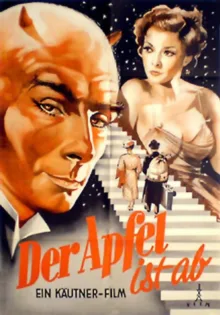
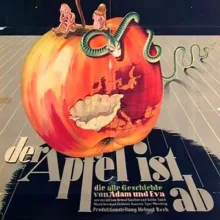
It's the story of Adam Schmidt (Bobby Todd) who is torn between his wife Lilith (Joana Maria Gorvin) and his mistress Eve (Bettina Moissi). Despondent, Adam tries to commit suicide among the ruins of post-war Germany. Instead of killing himself, he commits himself to a sanatorium where he undergoes an extended musical fantasy sequence which retells the Genesis story.
Transcript
An automatic transcript, tidied into paragraphs. It has not been proofread, so names, titles and spellings may be wrong, and it does not say who is speaking.
Show the transcript (about 14,300 words)
Speaker 1: Hold your ears, folks. It's showtime.
Speaker 2: People pay good money to see this movie. When they go out to a theater, they want cold sodas, hot popcorn and no monsters in the projection booth.
Speaker 3: Everyone pretend podcasting isn't boring. Turn it off.
Speaker 4: Milos Gosen hon a commission en Kor Morgen aus an un in him. Oh, yeah.
Speaker 5: And Theresa give me no. Oh, kindness yet. So nine, all of that Is that my.
Speaker 6: Right year of G is no reason and rights needs. Well, then there is a strict verboten and uproots of KP. MIKE WHITE: Welcome to the projection booth. I'm your host, Mike White.
Join me. Once again is MS Emily and Travia also back in the booth is MS Sam Degan. We are here with episode 666 at the projection booth. Look at Helmut Kitners 1948 film.
The Apple is up, which is also known as both the Apple Fell and the original sin. It's the story of Adam Schmidt played by the improbably named Bobby Todd who tries to commit suicide amongst the ruins of post war Germany instead of killing himself. He commits himself to a sanatorium where he undergoes an extended musical fantasy sequence which retells the Genesis story as you do, we will be spoiling this film as much as you can. If you haven't read Genesis, the whole Adam and Eve thing, it's all right here, but it's told in a little bit different way if you don't want anything ruined.
Just go ahead. Track down this movie. It's out there with English subtitles. I recommend looking on ebay.
I don't think it's on YouTube anymore. Watch that. Come on back. We will still be here.
Sam. When was the first time you saw the Apple Fell? And what did you think? SAMM DEIGHAN: The first time I watched this was in the context of a few years ago, I wrote this book about representations of World War Two and European art house movies.
And I did a whole chapter on German rebel films which this is often classified as, but this is not in fact a rebel film at all. Aside from the first five minutes, I didn't think too much about it at the time because it didn't make sense to include it in my book, but re-watching it now, I liked it a lot more. And I have to say if anyone who's listening probably likely hasn't seen many German films from this period. And this is definitely one of the most fun and imaginative.
They tend to be pretty dour, which this is fortunately not. MIKE WHITE: And Emily, how about yourself? EMILY INTRAVIA: This was brand new to me. This whole era of film and it's a shame and I'm excited now to know this is out there.
Sam, I want to read your book because this is just a whole new world to me. So watching this, I got the point of it pretty early. I thought I knew what I was getting and then it did something. One of my favorite things a movie can do, which is, it becomes a surprise musical.
So then I'm like, oh, this is why I'm here. Yes, we're doing musicals. This was new to me. This era is not obviously not something commonly known or discussed.
Even when I was trying to do a little research on this film, really hard to find anything written about it. It is even both this director and this particular film, it does not seem to be that well known out there. So it's exciting to dive into. SAMM DEIGHAN: It, which is so cool crazy because there's so much written about him in German.
He's like the fifties, German, Steven Spielberg. Like he's a very prolific popular director who made a lot of mainstream films. He hasn't had any kind of long term international legacy because he doesn't really make art films. He makes these kind of nicer bigger budget, literary adaptations, historical dramas, forgettable crime movies.
And then there's this. EMILY INTRAVIA: But I imagine the era and him having made films during Nazi Germany, not for the Nazis, but still being employed at that time. I wonder how much of that affected his international career or any kind of international evaluation of him? MIKE WHITE: I think he was also one of these guys where when there was the German new wave and post new wave that a lot of the German directors were like, oh, he's old school, don't pay attention to this guy, but he made what, like 61 film, something like that.
And there are a few of them that are available. Actually, Keno Lorber put out both black gravel and Port Of Freedom. So those are pretty easy to get. But this one not so much, like I said, you can find a DVD with English subtitles out on ebay or you can import it.
I ran into this one in a really odd way. I think it was just one of these, it's either on Twitter or Reddit where there was a clip from it and I just said whatever this is from, I have to see the entire movie, what can bring us to this. And I can't remember what the scene was. It had to have been part of the musical scenes because some of those are so ornate and so wonderful.
And I was just like, oh, what is this movie? I have to find it then. Fortunately, I found it with English subtitles and sight unseen. I programmed it for, I was doing movie nights during the pandemic and would do triple features and this was one of those movies as part of a triple feature.
I don't think that they were themed. I didn't tend to do a lot of theme nights. It was just basically, here's three strange movies or here's three movies that you're not going to be able to see other places and then we can and chat during the movie on the side and just enjoy ourselves and try not to think about the world that's out there. I feel like this is very appropriate for that because like you're saying, Sam, it starts in the rubble and we immediately go into the sanatorium, which is just this wild space.
The set is fantastic and when it becomes the fantasy and the musical sequence, it just is wonderful. It is not like anything I've really seen other than possibly some MGM musicals, but even those I don't think are nearly as odd as what I'm seeing in here more, more than anything. And I guess it's appropriate kind of reminds me a little of hell's a poppin just as far as how odd it can get. At times.
There's no trickery as far as the frame moving any of these kind of things, I guess. Maybe it's a Satan theme to it. But man, oh man, it's just a wild ride. SAMM DEIGHAN: There's this film genre that mostly was popular in the forties and fifties called Film Blanc.
It's the opposite of film noir. And this to me feels more like film blanc than anything else. And so if that term is not familiar, it's a fantastical take on what film noir does. So a film noir is all about emphasizing these social mores and morals that you're supposed to follow.
The rebel film, by the way. Does that as well. A lot of the rebel films are these kind of dour melodramas that remind Germans that like, ok, the war is over. Let's not think about it ever again.
Let's get back to our lives as soon as possible. Which the 1st 10 minutes of this movie is a perfect satire of the rebel films. But there weren't a lot of them made by 1948. So it's, it's not like he's doing it at the end of a cycle.
But film blanc, you have all these between two worlds is a good example. Helen Pres Burger made a few. There are movies that sort of take that morality idea. But they take you to these fantasy worlds.
A lot of the time they involve characters who die but are given a second chance in heaven to revisit their life decisions like all that heaven allows is that a. EMILY INTRAVIA: Matter of life and death. Is that another one? And that was the only movie because with this one watching it at a certain point, there's things obviously you're saying, OK, this aspect of the Wizard Of Oz where you're making these connections, but I'm watching it thinking this, I can't think of anything this reminds me of and then it hit me at a certain point of, oh, a matter of life and death.
That is the one film I could draw a line to of if I was trying to describe this movie to somebody who hadn't seen it, which is almost everybody I know the only movie I could think of to draw a good comparison to would be that one. SAMM DEIGHAN: That's also what it made me think of. And I know it's not a very popular genre, probably only talked about among film critics and film historians. But there's like, even if you just look on letterbox, you can find these long lists of things that qualify as film blanc and they all do such a weird twist on, let's remind you how to be a good citizen.
But first we're gonna have fun, we're gonna break into song, we're gonna meet Satan and possibly God. We're gonna, and it's just like this does all of that. And so I don't know what was in the global kool aid in the late forties. But everyone was so sick of being depressed from the war that they were just like time for some fantasy movies.
EMILY INTRAVIA: Nothing wrong with that. MIKE WHITE: This does start so dour and almost every shot that's in the opening of this movie is a canted angle and when they really make sure that you know that you are not in a good place at the beginning of this movie just with the way that it is being shot, they're not subtle about things. I mean, there's the Apple. During the opening credits, we pretty much moved to an Apple that's outside of this building and it's Adam's Apple juice is the business that he is running.
And you see that his dog mana, you see him, you see Adam, you see Lilith in the background, his wife and she seems bummed. He's bummed. We track across to the next window where we the eve and she's got her head down and she's bummed as well. And then Adam just goes outside and he's like, I think I'm going to commit suicide and he does a half ass job.
EMILY INTRAVIA: Of it in such a half ass job. I watched it and of course, I had really no idea. I just plunged into it without any contacts. And it was very hard to understand at first that I can be laughing at this because it's suicide and it's post World War Two Germany.
And you don't know, going in just where the tone is just yet. And once by the second attempt that goes awry in such a kind of laid back manner was where I was like, oh, ok. No, I get it. And then once you finish the movie to even go back and watch that opening again, knowing where things go, it's hilarious.
SAMM DEIGHAN: It feels like he's at least intentionally nodding towards the Italian neorealist films where it's life is hard and instead of trying to come up with some sort of solution, I should probably just jump off this building and kill myself. EMILY INTRAVIA: I can't pick between two women. I don't know. I guess I'll just die.
MIKE WHITE: And I like how obnoxious his dog is. His dogs. Just like, no, no, you aren't allowed to commit suicide so much so that he calls a cop over. Basically, he's making such a ruckus.
EMILY INTRAVIA: Yeah, his dog loves him. His dog's protecting him. I love that dog. MIKE WHITE: That dog is awesome.
EMILY INTRAVIA: I think we're all animal lovers on the call. So that helps. But the, as we get to the introduction later of the dog in the second reality and just the idea of, you know, this is the thing that makes life worth living. It's not necessarily a human relationship that can get very complicated and be very difficult.
It causes a lot of problems, but a dog will always love you and it will work out will always be the thing that brings you joy. And so that I'd connected deeply to that. SAMM DEIGHAN: And I love that. It's such a ridiculous looking little dog.
It's just, it's so endearing. EMILY INTRAVIA: It's gotta be a dachshund. It's Germany. MIKE WHITE: It's gotta be the most German dog we can get as long as it's not a German shepherd, he has to hide from it so he can try to commit suicide a second time.
And he has a rope around his neck or whatever that is and he jumps off and it basically breaks his fall and he's fine. Emily. I think you mentioned Wizard Of Oz. And yes, this is very Wizard Of Oz.
As far as once we get into the fantasy sequence, everybody that we saw in the reality is now Reflected counterpart. Yeah, which is kind of nice. And Lilith is Lilith. Eve is Eve.
Adam is Adam. But then I guess he's a coworker. He becomes Lucifer. EMILY INTRAVIA: Yeah, his partner because it's his partner who needs him.
What he needs from. Adam is different from what anybody else does because he needs him to financially fulfill his duties and continue the company and all of that he maybe has a relationship with Lilith. He's definitely taking joy in Adam's fall. Is it him who or Lilith who describes Adam as a garden gnome it early on.
It's Lilith. Ok. It's such a great insult for somebody and I can't wait to use it or have it be used on me. SAMM DEIGHAN: It's so good.
MIKE WHITE: And I love that throughout all the rubble. There's those posters that say why despair, clean out the rubble, you know, just get on living. So I totally agree with you Sam that this does feel very parodic. And then once he goes into the psychiatry office to the sanatorium, they've got the fake backdrops on the window so you can't even see outside it's so funny.
SAMM DEIGHAN: You know what, this very much shows my age probably. But the thing that makes me think of is that kind of awful but entertaining. First Resident Evil movie where they're going down in the layers of this building and there's, I don't know why this is part of the dialogue, but they're like explaining that to keep these people from being depressed and the Umbrella Corporation, they have fake backdrops on the windows. It's just so futuristic in a creepy way.
EMILY INTRAVIA: It's officially artificial in a way that is blatantly saying the world is great. No, actually pull up the curtain and there is rubble because we just lost a war in which millions of people died right here. But don't think about that, think about how great life is. And it's, I don't know, it's fascinating because I gave, I don't even know yet exactly what the film is trying to say in terms of that in terms of is this responsibility is a big part of it because the whole Adam and Eve story is all about free will.
But there's this kind of back and forth on and this is early on just when they were talking about the rubble is who is responsible for the situation. Is it Adam's fault that he's in love with both of these women? Is it God's fault? Is it God's fault to actually is free will a real thing when the entire time it's always intended.
And the fact that this movie is not called Adam Picks or rather in the biblical sense. It's eve that Picks the Apple. The movie is called the Apple Fell. It is not the Apple was picked.
So there's that too, that sense of responsibility and that, which I think probably does. You could look at it specifically in terms of post war and what was, what is the responsibility of a society? 10 years after this? There's a lot here, but it's also just a fun, cute, weird whimsical movie.
SAMM DEIGHAN: Even those elements of the window and the weird whimsical quality later in the film when they're in what is revealed to be heaven in the Garden Of Eden. It's basically these fake ass looking palm trees surround founded by barbed wires. I love it. It's this like fake Disneyland concentration camp version of the Barbie movie.
Did Greta Gerwig see this film? MIKE WHITE: The Gotta Wonder and I love the animals that are part of the Garden Of Eden that are, how do you describe these things? They almost look like they're curved like out of clay or something. EMILY INTRAVIA: Paper mache is definitely paper mache.
MIKE WHITE: Oh Yeah. And they animate the eyes and they animate the mouth. So like sometimes you'll just see them looking around and it's real Herky jerky animation. I love that.
There's, you know, the typical biblical thing when there's the lion and the lamb and they're hanging out together and the. SAMM DEIGHAN: Lion side eyes, the lamb, like, I'm just biding my time. MIKE WHITE: Wait for it as soon as that Apple goes down. So, are you?
EMILY INTRAVIA: I am a simple person and I agree, giraffes are weird. So anytime anybody acknowledges that, oh, what did you do to that thing? No, it's supposed to look like that. Like right away.
I was like, oh, this movie is speaking to me in terms of some of that dialogue and just understanding of the weirdness of the world is really. MIKE WHITE: Funny, that whole thing where they screwed up and they made the elephant one size and they made the net or the mosquito another size. So the mosquito is like 12 ft tall and the elephant looks like the size of a pot belly pig. EMILY INTRAVIA: But at the same time, why not?
Like why is an elephant that big and a nat that small? It's just because this is the way things landed and, but in any other reality, it could be flipped and it would make sense. SAMM DEIGHAN: That's also a linguistic joke. Making an elephant out of a mosquito is a German saying.
And so they're playing with the fact that a lot of animals are ridiculous looking, but there are just a lot of layers of jokes which is delightful. You gotta love that. MIKE WHITE: Now, to your point, Emily, there is not a lot of stuff written about this in English. I mean, with Krauter having made so many movies, there were some things about him but still very limited.
But about this movie, I wasn't seeing a lot. There was a nice article that was comparing this with the best two years of our lives. The William Wyler film from I think the same year talking about how post war was being treated in the US versus over in Germany. There was just a few other pieces, one said that this was originally written as a cabaret piece.
And I can kind of see that as far as the actual musical numbers and things. EMILY INTRAVIA: There's so many elements of cabaret in the second half when he, when, especially when they get to hell, that whole thing feels like a cabaret show. SAMM DEIGHAN: And even the set pieces that look like they're supposed to be a bar or an office with he details, it looks like a cabaret set. MIKE WHITE: The thing that impresses me the most about this movie is the set design and just to see, I mean, the set design, the direction some of the things that he chooses to do, the director himself is the one that's playing the psychiatrist.
EMILY INTRAVIA: Essentially playing God also. MIKE WHITE: Yeah, I guess he's supposed to be Saint Peter. But basically throughout my notes, I was just like, he's God, he's God. That's how I dug it.
I love when he still in the real world quote unquote. And he is having Adam pick an Apple so that he can basically have this temptation there with him all the time. You know, so definitely presaging we're about to see. But I love that the camera is inside of the cabinet.
And so it's all of these apples there in the foreground and then God or the psychiatrist and Adam on the other side and just looking at these apples, I really like that. I think that it's so smart and just like again with the set design to see the sanatorium and all of these white porcelain looking animals that are everywhere and just the huge staircase and then these lights up above and then when it becomes basically this heaven, all of these stars that are everywhere in the clouds. I mean, just it takes your breath away.
SAMM DEIGHAN: I love the stars and it does at times it looks like, I guess in my head, I could easily imagine it as being a much larger studio set, bigger budget thirties musical because they are just, even though it is smaller scale, there are just so many different set components for you to look at and it's a dynamic in that it's circular. EMILY INTRAVIA: So there's different angles and different dimensions that a person can be at. And it plays with scale then too because you have the animal size and the people size and Adam is a small man and then especially when he's made up to look like a little boy, big curly, cute hair and oh, you almost wanted to have like a lollipop in his hand the entire time.
But so you have him looking so much like a child to the angels who are normal people hate but have one of the designs, loved their wings chore. And then when God or director or Saint Peter is at one point doing something like formal where he's basically giving a big speech. It's when he ejects Lucifer from heaven and if you notice on his wings, he has like a little cloth over them. So it's like his formal judges cape.
It's so cute. SAMM DEIGHAN: And when Lucifer gets those bat wings, it's the best. Yes. MIKE WHITE: When Saint Peter commands all of the angels to basically present arms and all of their wings go up at the same time.
Oh my. So cool, so cool. Yeah, that whole scene of them ejecting Satan is sorry, Lucifer is terrific, especially when he Lucifer removes his hair, love awake reveal and then takes these two little horns and sticks them on his own head before he disappears in a cloud of fire. And I'm like, wow, serious drag.
SAMM DEIGHAN: Move parts of it. Definitely the way that the set is made up, especially when we're in that, that heaven sequence. It feels like you could be watching it as a live musical. When Lucifer disappears, there is a cloud, there's fire in a cloud of smoke, but it's like he jumps in a hole in the stage.
So it's not like it's some clever camera cut. It's like we're seeing that the actual stage was built for these wild, wild effects. MIKE WHITE: And really when you boil this whole movie down, it's all about choice. And I know that that's, oh yeah, it's the story of Genesis that's all about choice.
And you know, do you pick the Apple? Do you not pick the Apple? It's all about free will. But this is so much from the very beginning.
It is. I don't know if I want to go with Eve or if I want to go with Lilith. I'm married to Lilith. I really like Eve, but I don't think I can break up this marriage.
And then the whole rest of the movie is, well, do you want this, do you want that? And then, especially when he goes to hell and Lucifer is there going ok. Well, do you want this type of entertainment, this type of entertainment of entertainment and all of that entertainment? I mean, there's fighting, there's boxing, there's a Wagner Opera.
SAMM DEIGHAN: Oh boy, Cam also. Oh my God. Did you notice that in that sequence? There's this like torture scene and there's a guy in a uniform who turns and faces the camera and he has a Swastika in the middle of his chest which you almost never see in German films after 1945.
It's, it's like there for half a second. But holy shit. EMILY INTRAVIA: I was wondering about that for a movie that it seems to not directly be saying anything about the war and that showed up. And I wondered, I didn't even think about the actual context of.
Could you put that in a movie in the forties? Because I know in Germany for years, I don't know if it's still the case you basically Swastika of any kind is a crime to have and to show. But for that just wonder was that it almost felt like this me very specific not wing because I don't think it was intended to be in that tone. But this acknowledgment of, yeah, this is.
SAMM DEIGHAN: Hell, I wonder if he could have gotten away with making the same film in 1952 say because this is 48 and 4748 is when you start to see the rebel films emerge. And it's also when you start to see the US really stamp down on German culture and particularly really figure out ways to control the German Cinema industry, which is why so the rebel films I mentioned earlier that a lot of them have this message that like we just need to carry on with life and buck up and don't be depressed and don't grieve and don't want revenge and don't deal with things just move on.
And some of that came from German filmmakers, but a lot of it came by directive of the film office, they also per the US government really stamp down on any kind of visual references to Nazis in film. So he got in maybe a little bit under the wire here. MIKE WHITE: I mean, I thought the Wagner was bad enough where it was like, oh wow, Hitler's favorite music. Oh OK.
And then, yeah, when they showed the Swastika for that split second, I was like, oh OK. And yeah, I love how too so many of the entertainments being shown are being shown some odd angles, but a lot of them are running backwards, which I thought was terrific, especially like the boxing one. How you start with the, when they filmed it, they started with the face of the guy over the ring, but then they shot, you know, they play it backwards so that it was just, I was the carrier factor, but it was interesting too that it was a black boxer that was being beat up in that you could probably write a book about all the different references and things going on in this movie.
SAMM DEIGHAN: It's so many layers. MIKE WHITE: When he's playing a game with Eve and it's this black and white. I'm not sure what game it is, but it's all black and white pieces and they're playing it basically at Satan's lounge. Like what this is before they go into the dream sequence and you already are getting things like little demons and all these kind of things.
I'm like, really? Actually, I think it was Lilith that he is playing with and Lilith. She's not nice, but she's not the worst person I've ever met in a movie. And I guess that makes it a little bit easier as far as, like, more difficult I should say, for Adam to choose who he wants to be with, as long as he's with his dog, I guess he's happy, but he's just, he won't, he will not make a choice and he never even makes a choice.
I mean, I know we'll get there but spoiler alert, he doesn't choose Eve or Lilith. He ends up with a weird amalgamation of both of them. It's so creepy. SAMM DEIGHAN: But yes, we will get to the weird utopian.
We can erase the past and create a whole new future with some Nazi science. MIKE WHITE: Get those, those amazing things. Like when they're in that club, there's mirrors on the floor. So there's certain times where you think you're looking at them, but you're actually looking at the reflection or when Lilith visits him at the Sanitarium, you get that shot of her hands coming.
It's like this POV and you think he's going to be murdered. But oh, it's totally like that. SAMM DEIGHAN: I hear what you're saying about how Lilith isn't that evil or that bad. But I guess that's not my impression of her is very kind of classical Satanic tempter or temptress in that she is able to mask how bad she is and all he really sees is how alluring and attractive she is, but it seems like he knows that she's a little bit of a gold digger and kind of manipulative.
He's just like powerless to resist her. But her costumes. Oh my God, they're so good. EMILY INTRAVIA: When she goes to the institution and just that pattern.
Get up with a cape and hat matching. Oh, yes. SAMM DEIGHAN: Amazing. Oh, and oh my God.
So for our listeners earlier, I messaged Mike and Emily and said, am I losing my mind or is Eve wearing a dress made of saran wrap? And I have so many questions, I can't think of any other film and I'm sure some listener will be able to point something out, but it's hard to think of other films from the late forties or fifties where you see a woman wearing a see-through dress and you can see her nipples and she's basically topless. EMILY INTRAVIA: It makes sense because it's Eve and it's one of those things of any time you're doing it out of e sto story.
It's hard to do that visually because the whole point is that they are nude until they understand that they're not. And in this case, it's not that their bodies are in the sign of their guilt. And it's also that, that itself is very different because obviously, I think the big change too is that it's not Eve who commits the crime. Is that Adam via Lilith via Lilith is that, that's true.
You know, she's there as nude as they can be. And, but she's far more nude than I expect because it took me a minute to think. Oh, is that something on the dress? Oh, no, that's her nipple.
It's not the same, it was very shocking to me. SAMM DEIGHAN: And if for anyone who hasn't seen or can't find the film she has on this, it's basically like white, it looks like white, clear latex and there's a full skirt. So you think it's just this shiny white stuff and he's wearing the same type of material for his heaven outfit. But his isn't see through which is why I thought for a minute I was losing my mind.
But hers, it's like she has a full skirt so you can't see anything revealing below the waist, but her top, it's like they pulled it as tight as possible to her torso and it's almost like in an eighties sex comedy where you have somebody pressed up against the shower door and their boobs are squished. That's how hers are in this dress. It's so crazy. EMILY INTRAVIA: You would see it if she was wearing a bra.
So maybe that was also a part of it was that's holding her up because it's just so tightly wound around her. SAMM DEIGHAN: But the moral is, I don't know how they got away with that costume, but it's incredible. And it's also. EMILY INTRAVIA: Funny because eve is such a innocent Square, but very sweet and it's very much nudity can be very pure.
But you're right because I think the context of wheat it's 1948. I'm not supposed to see that. It feels like we see it is more risque than I would expect her to be. But that's, I think that's just the time when.
SAMM DEIGHAN: Lilith makes her way to the Garden Of Eden to do her Apple coercion she's wearing robe that looks like an evening lingerie robe of the same material. But she has these like feather embellishments over her nipples so you can't see her totally to. It's crazy. EMILY INTRAVIA: What's that lingerie?
Black lingerie from like the fifties and sixties that not Vivian Westwood. MIKE WHITE: Frederick's of Hollywood. EMILY INTRAVIA: Yes. Frederick of Hollywood.
That's what I was thinking. Will. Thank you. SAMM DEIGHAN: Lots of little feather ruffs on things.
There's a. EMILY INTRAVIA: Lot of texture which I love and I think you see that even with just, and I feel like this is something like as a kid and it reminds me in its own way. I'm just realizing this now. Pee Wee's playhouse, right?
Because you have even like the man child, right? The kind of look of Pee Wee sort of call the mind a little bit of Adam, but just something about the playhouse as a kid was so exciting was that you could feel it like you knew that if you touch the door, the way it was red and puckered and plastic, like you would feel it and the way things that were sparkly like the window had like sparkle around it. You could see the glitter and this movie has that in part because it's 1948 they're, they're literally gluing things on to something to make it shine and make it sparkle.
But the textiles to it are just so neat and tactile to look at that. It's something that's so appealing and just, you don't need to see heaven the way you think it was heaven. And you can tell that he's a box of phone where somebody has glued glitter over that phone to make it sparkly. SAMM DEIGHAN: God's God's glitter need it, need it right now.
MIKE WHITE: The way that it moves when it rings. SAMM DEIGHAN: God's vibrating glitter phone, he's ahead of his time. MIKE WHITE: I absolutely love when he becomes Adam. And like you said, he has that little spit curl, looks like a little boy, even though he's got the mustache, but he just has that like cy doll look to him.
EMILY INTRAVIA: And the way he walks the way he kind of and turns his feet in, he walks like a duck. It makes him look shorter too because his legs are probably farther apart. I have never seen that actor or anything else but he just a little Mr Bean right there. You could tell that he probably was very good at physical comedy in a lot of different contexts.
SAMM DEIGHAN: Now that you mention it, he does have some real Pee Wee energy when Pewee says I'm a rebel daddy. I'm a loner. It's like at the end when he's, I'm not making a choice. That's very similar.
MIKE WHITE: Once you get into that dream sequence, just you don't know what's going to happen next. Even if they are retelling the story of Genesis, you don't know what's gonna happen next. It's always surprising which way is going to turn what they're gonna show, which angle they're gonna choose to show us all the force perspectives of stuff where it looks like the sets go on for miles rather than for feet. That's why I wanted to talk about this movie.
I wanted to share this movie with more people than just that small audience of people that I watch it with during the pandemic because this is just such a treat to the sense of magical. Do I think this is the best movie in the world? No, you know, it drags a little here and there. But I definitely think that this is one that really needs to be rediscovered because it is just so much fun.
SAMM DEIGHAN: It also does so many in addition to the topless nudity and the crazy paper mache lion, it does so many things that feel like they don't belong in a late forties German film. Like when Lilith comes to the Garden Of Eden to tempt him, she starts off as what's maybe a paper mache snake in his bed and then she turns into this almost nude snake dancing woman who looks very similar to one of the vampire circus performers in Vampire Circus, the Hammer movie. I've never seen anything like that in the forties film.
What happened here? What was he on? And where can I get some? MIKE WHITE: At one point when he's about to commit suicide?
There's like, I don't know if he's an organ grinder but some sort of like street musician and he leaves his wallet with this guy. And then when it's the heaven sequence, that guy comes back and it's this chorus of angels, but the angels look like they're the pipes from an organ. And he's got that huge crank that he's cranking with all the little knobs. And at one point, Adam comes up and turns the knob and the look that guy gives him is just such a glare.
It's so good. And then you find out that it's all just music for a heavenly radio show. It's like, what? When did this happen?
EMILY INTRAVIA: This movie gave me a great idea for a band name which is closed because Fall of man, the sign that they put up at the end where I was like, that's perfect. SAMM DEIGHAN: I don't think we mentioned this, but early when he first arrives in heaven, there's this giant probably also paper mache or clay or something globe that's meant to represent the earth and he trips in it and breaks it and says, can't you just glue that back together and God's, of course, we can fix it, but we can't use glue and it's gonna take a long time.
So there's this whole like smaller side plot about God and some of the angels and the heavenly administrators trying to fix the globe and somebody runs in to sound the alarm that the Apple has fallen. And it's like they all assemble to try to save humanity. This is so good. EMILY INTRAVIA: They're fixing it but not, it's still imperfect.
And that's when they start talking about how now these people can't actually get together. So I guess we'll have to speak different languages because it doesn't matter. They're not gonna all of those different, more paradise. Yeah.
The thing is like when you're a kid and obviously the experience is different for everybody. But when you are taught certain things about religion, at least the way I learned, whether they said this or not was always as a kid. My image was, there's a guy up there with a lot of TV. S and a lot of I watch Clash Of The Titans a lot as a kid.
So I figured, oh, he's got like a giant play set and he moves people around and does that. And this movie is very much that same mentality of what a child thinks and how much of that is the way we're taught and how much of that is the idea of, look, we grow up thinking there is this one entity. And the only way we can think of entity is to put it in a person. And because the way we think of who's in charge, old white men are in charge with white hair.
So it's always God is always gonna look like the guy in this movie or when I was a kid, I thought he was George Washington. Like all those things that actually like even having been born 50 years later and grown up across the world. Some of that, those aspects of religion were so much the same way. I think I was brought up to think of things just and that's fascinating in its own way.
SAMM DEIGHAN: I think so. Fascinating. I love that. He looks like Sigmund Freud.
EMILY INTRAVIA: The facial hair. I think it definitely intense, but also a psychiatrist and the way he talks and the way Lucifer jokes at him, the way other characters talk about him being a quack. There's that too. You can listen to him and believe him or you can listen to him and be like saying it's very applicable both ways.
MIKE WHITE: You were talking about the costumes earlier and I forgot about the costumes that all of the male angels wear where it looks like a suit coat, but then it keeps going down. So it becomes a robe down below. And Man Lucifer just looks amazing when he's, you know, he's got that going. Plus he's got these black gloves on.
I'm just like this guy's got it going on, man. EMILY INTRAVIA: I would totally eat his Apple. SAMM DEIGHAN: Same. But can we for a moment talk about the fact that God keeps stressing that Lucifer has an English education.
What does that mean? Did he go to Eaton? MIKE WHITE: Almost like a xenophobic type of thing? Like, well, you left Germany, you come back here and you think, you know everything, but.
SAMM DEIGHAN: He's such a great character. MIKE WHITE: There's that thing too where you're talking about how the earth gets split apart and they put it back together eventually. And then am I remembering? Right?
That, that Peter like takes a drill and starts to drill into the right? I'm like, ok, Rebel Berlin was destroyed. SAMM DEIGHAN: So we have to reflect that accurately on this. MIKE WHITE: Well, yeah, because time does not matter when they go to earth.
It is not 4000 years ago when the earth was created before the dinosaur. Yeah. Yeah. Before they put saddles on them.
But yeah, they are not going back to that. They are going to basically contemporary Berlin, if not, maybe even pre war Berlin. But there is no pretense to the world is going to be populated by them. They don't seem to be the only people that are on earth because there's definitely a lot of demons.
There's definitely people around again. It's just kind of fucking with your head because you're like, oh, well, they'll go down and they'll be in this garden and then when you see the garden and it's nothing like a garden and it's just all manufactured. And then when they go to quote unquote earth and you're like, well, this is not what I was expecting here either. EMILY INTRAVIA: You're thinking, ok, now we'll get Cain and Abel and so on.
But no, let's, it's hard to imagine this version of Adam ever having sex. So there's that just the idea that these people are gonna reproduce. SAMM DEIGHAN: He doesn't seem to want to. MIKE WHITE: No, no, he's not interested in Eve at all.
Like you think that he's like, oh hubba, hubba, but actually what he's looking at is this fucking dog. EMILY INTRAVIA: If I touch it, will you bring it to life? Yeah, that's the plan. Ok, great.
Please bring this dog to life. It's so great. SAMM DEIGHAN: That's also what made me think of this as more film blanc than anything else because a lot of those play similarly fast and loose with time and physics. And are we in a dream?
Are we in the afterlife? Who knows that could change throughout the course of the film? And I like that about this a lot. It's moving in and out of biblical timelines and actual modern day Germany.
And it just, it's so creative. MIKE WHITE: I love when they are showing to Adam, there's a guy in the background who's painting a zebra and he's got checks of like a checkerboard pattern on the ass of the zebra. It's like he's still trying to figure it out? Like do I want to go with stripes or do I wanna go checks?
SAMM DEIGHAN: There's so many great details like that just packed in every scene. This needs a restoration so badly. Can you imagine seeing this in an actual big theater. EMILY INTRAVIA: With an audience too?
MIKE WHITE: That's the thing I can't imagine seeing this on the big screen because just the little version I've seen and the versions I've seen look pretty good and the contrast is terrific. But yeah, to see this in the theater, to see this with an audience, people would eat this up. SAMM DEIGHAN: It would be a concession. It as the Germans say.
MIKE WHITE: I would love if Krauter himself got more attention. And just, you know, like I said, there's the two movies of his entire body of work and he went through, through so many stages. This is a black and white film of his, I want to see what he does with color. I've heard that his color work is fantastic.
Luckily there are a lot of his stuff that you can find on certain corners of the internet with English subtitles, but nowhere near the whole package. SAMM DEIGHAN: I do think there are some crime films that you in particular would like, like he made this movie called The Devil's Commandment later in the fifties. That kind of reckons a little bit more with Nazism and German Complicity, but it's framed as more of a film noir. That's pretty interesting.
But he really is just one of those competent journeyman directors who worked in a lot of different genres. And to answer a question that Emily asked at the beginning about whether him working as a director under the Nazis negatively impacted his career. The answer to that in Germany is mostly no, very much not like France or other countries where people who worked as collaborators were just like shunned afterwards. A lot of German directors who didn't explicitly make pro Nazi films were just allowed to work again because of the US involvement and this mania for keeping the peace and just let's just move into the future and act like nothing happened.
They didn't really have too much pushback unless you were like an overt Nazi collaborator. And I don't think he made films that had too much political content when he was directing earlier in the forties and plus German directors, unless they found their way to Hollywood, they didn't really ever have much of an international audience. I would say post 1930 because everybody who was big in the twenties and early thirties working at studios like fa had to leave and go to England or France or Hollywood. That's why in the fifties and sixties, there are so many German directors who don't have big international reputations because their films just weren't being distributed really.
But now's the time I. MIKE WHITE: Didn't realize the extent of the American involvement with the rehabilitation, quote unquote of crazy. I didn't realize, like, Margaret Mead, the anthropologist was on a tribunal to come up with different ways through anthropology, how we could, you know, rehabilitate the Germans and just to read all of these different names that were involved and just all the different committees and it was like, Germany was the big problem to solve. And it's like, after, after January 6th, I'm like, maybe we should have done something like that here, as I.
EMILY INTRAVIA: Say, or just issue that here. SAMM DEIGHAN: I don't know that I totally, yes, they had all these committees but that they're mostly smoke and mirrors. Their main concern is wresting political control away from the Soviets which also extended to any kind of cultural influence that socialism or leftism might have. So part of why they're obsessed with putting out these committees is not because they felt any special concern for Holocaust survivors.
They were just like, how can we get business back to normal as quickly as possible and not have any Soviet influence. And the best way is to just have all these happy smiling citizens getting back to work, rebuilding the country. That's why you get all the stupid Holocaust show trials in the sixties and seventies where it's, let's hold five guys accountable and not really do anything. And those committees in 46 and 47 are the start of that.
It's, it looks great on paper, but they didn't do anything. MIKE WHITE: Yeah. It kind of reminds me when we were talking about the Black Legion. When that was broken up, those people weren't put in jail.
They were all still just out there. It just moves, you know, that, that type of thought process just seems to never go away. So I don't, to your point, I don't see them eradicating Nazism. I see them just bearing it under.
EMILY INTRAVIA: Just don't show it. I wish I could remember the name of it. I watched a documentary a couple of years ago that was about and Sam, you might be familiar with it how it was in, I think the late nineties or early two thousands, there was an exhibit at a museum in I think Berlin. And it was basically the first public exhibit that covered World War Two in Germany.
I think the big controversy was that it was about not just the Nazis but citizens who were essentially working with the Nazis one way or another, which in some cases, people didn't necessarily have a choice. Some did. And it was saying, saying, acknowledging this, these people also were doing great harm and apparently caused such an uproar in Germany because they, at least from this was a German documentary about this. But of course, I'm an American watching this who does not have that same context that it felt like such a no, we don't talk about this, that it was such a rare thing to address.
And that's what I think is so fascinating about Germany post, World War Two is just how as a people, as a society do you move on from that? And there's a lot of different ways you can do it and one way is to just very, very good. SAMM DEIGHAN: Yeah. When you think about the, we brought up the German New wave earlier, the German New wave directors, a lot of them grew up under an extremely prosperous government.
There was this wicht funder, the economic miracle of the late fifties where it's like business is booming. Everything's very profitable. We're totally fine now. We just won't have a military or ever show anything Nazi related.
And some of the leading government officials in the sixties and seventies were former Nazis. So it's like they really just tried to sweep it under the rug and act like it never happened. Similar documentaries being made in France in the late seventies and early eighties that were saying like, look at this level of collaboration and people freaked out about those. But for a documentary like that, you had to wait, like you said until the late nineties, early two thousands.
It's insane and people still freak out about it. EMILY INTRAVIA: And the difference too of when the generation has shifted enough to where the people are learning about it as opposed to having grown up knowing about it personally and knowing about it from a grandma who spoke about it or a father who spoke about it and now it is just new history and it has that distance of the old it can happen here when don't have that context again or don't have that actual connection to. It's feels the same way we read about that kind of history, which is why the ending of this is so insane.
SAMM DEIGHAN: It's, he doesn't have to make a choice. The world will just be reimagined for him. So delusional. MIKE WHITE: It's like we go back in time before the beginning of the fantasy sequence because he misses that 10 o'clock tram.
He's got the note from Eve, you know, eat me on the 10 o'clock tram. He misses the tram. He has a stream sequence. And then at the end of the movie, I believe it's either the 10 o'clock tram from the night before or it's the 453 in the morning tram the next day where he picks up this woman that was created for him is so Eve and Lilith and then little Cherubim shooting an arrow, you know, like a cupid arrow into the tank.
And that whole sequence with the special effects of these women moving around in the kind of liquidy look to it. It's just, it's really wild. SAMM DEIGHAN: It reminds me of metropolis a little bit. Oh, yeah.
When they're creating the double the woman who's supposed to look like Maria. But here it's just like because he can't choose, we're just going to synthesize these two women into one in order to entice you to have sex and therefore create the entire human race. EMILY INTRAVIA: Yeah, I will confess, I didn't really get it. I don't know that I understood exactly because at first I think it's interesting that Adam is, again, he's a garden gnome.
He is not sexy. He is not appealing. Presumably he's, he's a good businessman, so he probably has money but he is not a millionaire. And you have these two much more attractive women that should kind to be out of his league.
SAMM DEIGHAN: Both of them are totally out of his totally. EMILY INTRAVIA: And the Betty Veronica dichotomy, very appealing. Very, if you like the Maryland, if you like the Jackie and it, I guess that is something that I was grappling with was this, I guess it's that the system in order to continue in order for Saint Peter and Lucifer to get what they need this to work. They need this man to pick a woman and reproduce and continue the his reluctance to ever make a decision.
His kind of just apathy about everything is such a damn it. We just, we didn't really make him right. But it's all we got. So we're not going to start over again.
SAMM DEIGHAN: But why can't, it's if they can start over with the women, why can't they just let him go off into eternity with his dog? Right? And make a new Adam? Like how hard can it be?
Come on, God. EMILY INTRAVIA: Is it just settling? Is it just that idea of the world isn't right. It's still not going to be right.
It's never gonna be right. So, we're just gonna do the best of what we got is that kind of. SAMM DEIGHAN: Find some sort of compromise? I don't know, but it does feel very utopian and disturbing way.
MIKE WHITE: Paradise is a zoo. You've got angels coming through with guide books and they, when these angels are walking through, they take these little signs and stick them down so that their exhibits 13 and 13 A and they're like, they put a little fence around, around the Apple Homo sapiens. Yeah. And they're just, they're, they're not satisfied in paradise.
So they send them a care package with a piano in it and I'm like, ok, they're bored. Yeah, there's totally bored every once in a while. There's that guard angel that just shows up. Like he said, he puts that sign on the tree with the, he.
EMILY INTRAVIA: Has to open the tiny little gate to walk through it, which I love that little gag. MIKE WHITE: It's so good. And then when you know, Lucifer eventually knocks him out and that's what allows them to explore, you know, hell, basically. And the earth and like go some wild places.
EMILY INTRAVIA: They find one other way to have fun and get yelled at for it. They find a version of a carnival ride. What is that? What is it?
Stars. Yeah. They're sitting on the stars and it's basically like carnival music as they're sitting around and God's very bad because they use something that wasn't meant to be used that way. But it's like the one time they come to life in a way because the two of them are never that dynamic with each other.
They're never, they never seem to have fun or connect with each other. But in that moment they're so innocent and having a great time. And I wonder too if there's something of that, of this God designed the world to work this way. And even though his humans are idiots, they found a way to make something better.
But it, no, it's against the rules. No, we're gonna peel back on that and you take what we give you. SAMM DEIGHAN: It's very German rule following almost. MIKE WHITE: I always think of words and terms that my coworkers don't know with them being in their twenties and like care package, like we say, I'll send you a care package.
This is the original care package from the Cooper For American Remittance to Europe from 1946. So this is right then, you know, Care International. And I'm just like, that's hilarious that it's a care package with the piano inside of it and then they get the art supplies as well and they're just like, ok, what are we going to do? How are we gonna, you know, keep ourselves occupied also.
SAMM DEIGHAN: Why do they make the Apple forbidden? Just because it's biblical. It's like some guy comes along and he's all right. Do not pick the Apple and they didn't even notice that there was.
It's like when you tell a kid you see that piece of candy over there, you can't have it, then that's all they want. Even me as an adult, if someone tells me not to do something, my brains, I know what I should know what. EMILY INTRAVIA: Happens if I do push the button but don't push that one button. But if I push that one, but oh, I have a phone.
Speaker 10: Oh, how long can trusty cadet stimpy hold out. How can he possibly resist the diabolical urge to push the button that could erase his very existence? Will his tortured mind give into its uncontrollable desire. He withstand the temptation to push the button that even now beckons him ever closer.
Will he succumb to the maddening urge to eradicate history. A single button? Join me, Buckton for Joe like button. He home out folks hauled out.
SAMM DEIGHAN: It'll feel really good if you push it clearly. I would be the one picking the Apple. EMILY INTRAVIA: You're the reason we are what we are. You're the reason it hurts to give birth and all the other things that happened when man fell.
SAMM DEIGHAN: That's our time of shame. You mean? EMILY INTRAVIA: Yes. The red tent, period.
Yeah. And there's still plenty of societies today and different faiths and different areas where I can't shake some people's hands because at any given time might be my top of the b. SAMM DEIGHAN: Because you're unclean. I'm uncle.
MIKE WHITE: You're unclean for god's sakes. Don't drink any cold water because that would be really bad. SAMM DEIGHAN: No cold water. Ok.
I won't drink water while we're recording and that'll throw your chi way out of whack on a somewhat related note watching this again. Especially the second half. I was thinking that it would be a really interesting companion piece to what's it called Fruits of Passion, the Hilo a movie where it's like a similar paradise, I think. MIKE WHITE: Yeah.
SAMM DEIGHAN: Fruits of Paradise where Fruits of Passion is Terria where she does a much more kind of surreal, abstract retelling of Genesis. But they are both similarly imaginative and similarly anti authority in a weird way like hers more explicitly. But it's just fascinating to me that you would use this biblical story to explore what's going on in contemporary society in a country that is not majority Catholic wondered about that too. EMILY INTRAVIA: Even the way they talk in the beginning when we're still on earth, we're still in normal times.
The some of the there's conversations that seem like everybody is very religious or how everybody there shares at least a Christian education to where they can talk about the Bible. And everybody knows things which I also found that interesting to think because my understanding of Germany, especially at that time was that it was not overly Christian. SAMM DEIGHAN: There's a long tradition of kind of Lutheran and Protestant movements. It's especially weird to see it so soon after World War Two, when religion was, especially Christianity was very frowned upon.
But also the fact that it's not this lush, beautiful Garden Of Eden. It's an artificial paper mache zoo slash concentration camp that couldn't have been an accident. But it seems way too subversive for most of what was coming out at that time. It's just such a weird anomaly.
MIKE WHITE: Yeah. It's like you can see Coffin Joe being obsessed with biblical stories and images of how, how. SAMM DEIGHAN: Can I continue the race and make my own progeny with my long fingernails. MIKE WHITE: But then, yeah, this, I mean, obviously they got rid of a lot of people of different religions.
But it is very odd the just that they using this as the backbone of this story, but God. SAMM DEIGHAN: Bless him for doing playing fast and loose. Oh, yes. Oh, yeah.
In the best way. EMILY INTRAVIA: Even the mix of the little changes that make story wise, right? That it is Adam that actually is tempted not Eve that we start with. Eve is the other woman to Lilith.
And then it swaps back to Lilith some of those decisions that just, you know, take the story and just we step a little bit to where when you adapt a novel into a movie and you think, oh, but they're gonna, I know how it ends. Oh no, we're doing it just a little differently. SAMM DEIGHAN: I genuinely hope that there are some German kids out there who saw this as young children and thought that this was just the story of the Bible. EMILY INTRAVIA: I remember getting yelled at in religion class in fifth grade because I was defending Judas and saying how he was doing it so that he could give the silver to the poor.
Because my understanding of the whole, that whole aspect of the New Testament was Jesus Christ superstar. Yeah, he makes the wrong decision but it comes from a good place. My teacher didn't like that so much. MIKE WHITE: I forgot that when they go to hell and they are at that nightclub that what Satan what Lucifer gives them as presents that he gives Eve a mirror.
So it's the first time she's ever seen herself and she immediately, you know, shows it to Adam so he gets to kill himself and then he gives a gun to Adam watch how fun this is. Shoot this guy. Shoot this, wait over here. Oh, see all these waitresses over here, shoot them.
And then he's like when did they get back up? And he's like, no, no death. Yeah. It's just it's remarkable.
EMILY INTRAVIA: And then Adam is upset by it. Adam doesn't fully understand but he doesn't want this gun. He says no take this from me. It is this very which I also felt at the end, that's also the same scene where we get the glimpse of the Nazi Armband there is that this human heaviness that is there and it's not explored, it doesn't go into any more detail, but it's fair enough to.
That kind of gives you this little bit of depth of, there's more going on here, even if actual movie is totally very upbeat and very fun. So there's some serious aspects to this that I appreciated. SAMM DEIGHAN: And the way that whole, let us show you this array of entertainment sequence, it shows you conventional entertainment, like opera and dance, but it also suggests in darker and darker tones that violence is entertainment. It's so quick and they don't do anything beating you over the head with exposition about it, but it's like kind of an astute point that they're making.
MIKE WHITE: Well. And I love that the dance is the can, can and you get that real tight, close up of the woman's legs with looks like a hand as the garter grabbing onto the stocking, all those little details. And that whole sequence seems to be filmed with something going on where it's not necessarily a wide angle lens, but it's definitely distorted. EMILY INTRAVIA: There's something like expressionistic and uncomfortable and nightmarish about.
MIKE WHITE: It and it's like out of focus around the edges as they move through space. And this, this whole film, the camera does not stay still very much at all. It is moving a lot. SAMM DEIGHAN: The cinematographer Igor Oberg is not somebody whose name I recognize.
MIKE WHITE: I was just re-watching. I'm sorry, I was just re-watching the fantasy sequence. It's the, yeah, it's the opera where you get the little Nazi symbol on the guy's loin cloth. That's right.
SAMM DEIGHAN: It's like front and center. MIKE WHITE: Before we see the soldiers go in and March over the flowers. But when you see that Swastika there's a cut back to Adam and he puts his hand up really quickly to his chest. Yeah, like, oh, do I still have mine on almost.
EMILY INTRAVIA: It's fascinating how quick that is, but it's there and it's there to say something in as probably careful a way as it could say without being making it about that. And it's so fascinating and that's why I love to find something, some commentary from then on what that all meant and to see today how that plays to us watching it. 80 how many years later to make me do that? Math.
SAMM DEIGHAN: I have to wonder if this was ever shown on television, if that part was censored, which would be my guess, even though it's quick, it's like they could easily just cut out the Swastika and the hand gesture. MIKE WHITE: And yeah, again, Adam doesn't want to choose any of these entertainments. So instead Lucifer just gives him all of the entertainments all at once. So it becomes this huge cacophony and they're on a table in the middle and the tables just moving around and it's all of the entertainments on the outside and the camera, Susan, we're like les miserable.
EMILY INTRAVIA: The big turning stage. MIKE WHITE: Same. I was hoping you could talk more about lazy Susans. SAMM DEIGHAN: You'll have to listen to.
What is that commentary? Emmanuel? MIKE WHITE: Emmanuel? Yeah.
Ok. I'll have to listen to that to find out the secrets of the lazy Susan. SAMM DEIGHAN: It is amazing what some critics choose to talk about at length on commentary tracks. But in the case of this movie, I feel like you could do 10 commentary tracks and not cover at all.
It would be great. And I'm sure that this probably exists. I'm not sure, but I assume that this probably exists in German somewhere. A discussion of how they put together some of these sets.
I don't know if it's just if it's actually something that's moving or the camera is moving, it's so impressive. MIKE WHITE: I don't know what the budget is on this, but it doesn't feel like this is cheap. You know, there was so much care in the making of this film. EMILY INTRAVIA: And yet some of sequences and sets that you could have spent a lot more money on and made sure look impressive like Heaven, right?
The actual Garden Of Eden is deliberately cheap, shoddy and homemade and has that feel and, but it seems as though this movie was not budget restricted where, but it was a choice to not make heaven look big and grand impressive. Instead it is this very, you see the seas, whereas then this hell sequence of music is done in this very complicated, probably very time consuming expensive way. So it's just a very clear where the choices were made, which is fascinating. MIKE WHITE: I looked high and low for a soundtrack for this and was not able to find an album.
You would think there would be a German company that just for shits and giggles re-released. This is like, remember this quaint little movie from 1948? SAMM DEIGHAN: That would be nice. But I also think that this just isn't super well known.
And I also do really wonder about what the budget was because if they're making a film in 4748 they're using existing studio resources, they're filming inside a closed studio aside from certain shots like the rubble stuff at the beginning, I have to assume that because of what it was made and the financial situation Germany was in and the fact that German films weren't exported anywhere in the late forties, there wasn't some big international audience. They probably didn't have that big of a budget, which is maybe why some of those creative choices were allowed because he just was so well versed in filmmaking and worked.
EMILY INTRAVIA: With and theater and a lot of those more impressive sets being essentially what you would do on a stage versus necessarily a sound on stage. MIKE WHITE: It makes sense I mean, some of it reminds me of the expressionists, you know, just with like, we're not going to build these sets, we're going to paint the sh the studio system 25 to 45 went through a crazy amount of changes. SAMM DEIGHAN: But some of those technicians were still there and certainly some who had left during the thirties and most of the forties returned around the late forties.
It's just lucky you have people who know how to do this stuff because they have extensive film and theater experience. So you don't necessarily need a huge budget. You just need talented people and a lot of paper mache. EMILY INTRAVIA: It's so much paper mache and glitter.
Don't forget the glitter. MIKE WHITE: Of course not. I would love to know more about the production designer on this. I'd love to know more about the costumer.
I mean, everything that this movie does, it does very well. SAMM DEIGHAN: I need to know the history of that. See, through dress. Where is it now?
MIKE WHITE: I'd love to that. They even have the dolly couch in here. The Yeah, and they've got that, that's what they have in paradise when Lilith comes to visit him after doing that, you know, that the. SAMM DEIGHAN: Lip cushion not suggestive at all.
MIKE WHITE: It just sits right in the middle of it. It's not that Adam would get it anyway. SAMM DEIGHAN: No, no, he's basically.
Speaker 1: A two year old. SAMM DEIGHAN: The dogs chewing on it, but there's that incredible shot where instead of facing directly at her and the chair. There's the shot where Lilith leans back over the lips and the camera kind of goes over the edge of the chair so that it's like a person is standing and looking down at her. It's, there are so many great shots in this.
Yeah. EMILY INTRAVIA: There are choices and visions here openly. MIKE WHITE: I just hope they get their act together and really have a better release of this. At some point, more, more people need to see this movie because it just takes your breath away.
It's unlike anything. EMILY INTRAVIA: And that's a rarity for a film. MIKE WHITE: Even though it's telling one of the most wrote stories of all time. I know.
SAMM DEIGHAN: But with a dog, you're saying that there's not a dachshund in the original theme. MIKE WHITE: I've never seen it on the cover of the Watchtower. EMILY INTRAVIA: You know, was the line in Love. Actually, there was only two lobsters at the Birth Of Jesus.
SAMM DEIGHAN: Birth Of Jesus. I am mostly just now left with questions that I want the answers to. I want to try to find some of his other not obvious historical melodramas or literary adaptations and see if there's anything like this in his filmography because I don't think there is. But hopefully there's another hidden gem out there.
EMILY INTRAVIA: And it's in such an unusual film obviously. And when a and again, I don't, I'm not familiar with the director from what you're saying. Wasn't that experimental in terms of style and in terms of genre so that super mainstream. SAMM DEIGHAN: Yeah, like this.
EMILY INTRAVIA: Being his stab at that is so interesting and like, where did that come? Like, why tell this story this way if that's not necessarily something he does otherwise, like why this film then is such a question and the shame that we can't probably won't get an answer. SAMM DEIGHAN: I mean, if we ever get a time machine, I know where I'm going. 1948 Germany.
EMILY INTRAVIA: Also the name of a Palin Bres burger film. MIKE WHITE: I forgot about the pink glasses that Saint Peter wears glasses and he keeps forgetting that he's wearing them. So he keeps thinking, oh, things aren't that bad. Things aren't that bad.
And then I'll take the glasses off and be like, oh my God, this is terrible. SAMM DEIGHAN: Which that has to be a comment on the German government and us push for people to just forget about your troubles. Just you're happy citizens. Now everything's fine.
MIKE WHITE: Those posters, right? EMILY INTRAVIA: Put those rose colored glasses on, they live sunglasses on and it will all be ok. SAMM DEIGHAN: They're basically God figure is the one wearing the rose colored glasses just because his job. EMILY INTRAVIA: He's got a vision.
He cannot make that vision work. He cannot manage a team to get it done. SAMM DEIGHAN: But he does have a glitter phone. He has a glitter phone.
He does have a glitter phone. MIKE WHITE: You have to have priorities. Yeah. EMILY INTRAVIA: The only good person he hired was who ever decorated his place.
SAMM DEIGHAN: And Lucifer, he hired Lucifer, he just, they went different ways. MIKE WHITE: I mean, with episode 666, I was like, well, let, let's try to find something satanic, but I think this is a really great representation of Satan. SAMM DEIGHAN: This is also to the point that you were just making about how this is such a fascinating creative twist on the most predictable known story of all time. At this point, at least in the Western world, you could have picked so many more predictable satanic movie choices and I'm so happy that you picked this one instead.
Well done. MIKE WHITE: Mike, well done. Well, on that note, let's go ahead and take a break and we're going to play a preview for next week's show right after these brief messages. That's right.
We'll be back next week with a look at the Hungarian film Taxidermy until then I want to thank my co-host Emily and Sam. So Sam, what has been keeping you busy lately? SAMM DEIGHAN: Lots of work with vinegar syndrome this upcoming year. I'm working on a lot of as yet unannounced Hong Kong releases that I'm really excited about.
And this year for my Patreon which should be starting very soon after this episode is out. I'm doing a year long f for its long retrospective. So lots of discussions of, I wanna say German Cinema, but he did a lot more than that. So starting with German Cinema.
MIKE WHITE: That sounds fantastic. And Emily, how about yourself? EMILY INTRAVIA: I have survived. Hopefully the December rush of what I do on my podcast, The Feminine Critique, which normally is a movie podcast that I do with Christine big piece come December.
I devote it to the cozy Cardigan Christmas genre where I cover Hallmark and Lifetime and everything related. It's a bit of a marathon of sorts and it gets both harder and easier every year because I've gotten to the point where I don't know what's wrong with me. I actually did tear up recently at a movie. So I think they finally broke me.
Which is terrifying. But I, that's exciting. I don't know. It's, now, I have shed my big city ways and corporate job and became a baker and everything is so pastel.
It's, it's wild but it seems to be working out. So that, that's where you can generally find me. SAMM DEIGHAN: That's awesome. MIKE WHITE: That's terrific.
Yeah, you do. You're doing the Lord's work over there? EMILY INTRAVIA: It's rough work, Mike. I'm gonna get you back again, don't you worry?
I gave you a break this year. You survived Dolly Parton one year. And which was actually the best one I've ever done. Yeah.
SAMM DEIGHAN: Did you watch Smokey Mountain Christmas? EMILY INTRAVIA: No, we did Christmas on the Square. The Netflix musical musical, a musical opera, right? The entire thing was sung.
It is wild. But last year I made him watch a movie from like 2007 that was still finding its feet in the cozy cardigan genres. We'll see where that goes. MIKE WHITE: I was thinking about you when I was interviewing Stephen Tobolowsky for true stories because he was talking about how he was coming back for another Christmas movie and whatever it was part two.
And I was like, oh, I should, I should have told Emily about that. EMILY INTRAVIA: So maybe I could be on that episode but we can get you on there next time. They'll probably do a part three or whatever that movie is. It's Christmas in something probably.
SAMM DEIGHAN: Have you ever done an episode on the Angela Lansbury Classic? Mrs Santa Claus? EMILY INTRAVIA: I haven't done an actual episode on it but I have seen it and it's wonderful. It's Angela Lansbury.
SAMM DEIGHAN: I just watched it a couple of days ago and it blew my mind. I did not expect it to be about how Mrs Claus tells Santa to fuck off and goes to New York and learns about Judaism and feminism and starts a children's labor union wild Christmas movie. EMILY INTRAVIA: It's like these good trojan horses sometimes where you can actually talk about union politics where you can squeeze it in. Exactly.
As long as your characters are attractive and wear red and green and hold empty coffee cups, then you can sneak in politics so well. MIKE WHITE: Thank you so much ladies for being on the show. Thanks to everybody for listening. If you want to hear more of me shooting off my mouth.
Check out some of the other shows that I work on. They are all available at Reading Way media.com. Thanks especially to our Patreon community. If you want to join the community, visit patreon.com/projection booth.
Every donation we get helps the projection booth take over the world. Good.
Watch
Music credits
- "Number of the Beast" - Zwan
Links & resources
Related episodes
Episodes that share keywords with this one.
Black Gravel (1961)
Shared: Director Helmut Käutner, Composer Bernhard Eichhorn, Helmut Käutner
Samm Deighan, Andrew Nette
Duets (2000)
Shared: Emily Intravia, Musical
John Byrum, Kevin Jones, Emily Intravia, Maurice Bursztynski

Nineteen Eighty Four (1984)
Shared: Emily Intravia, Samm Deighan
Michael Radford, Samm Deighan, Emily Intravia
Comments
No comments yet.