Episode 684 · Film year 1989
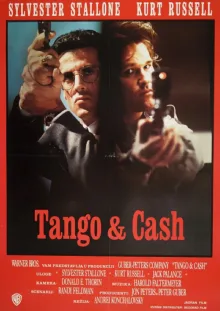
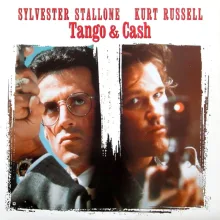
Tango & Cash (1989)
- Special Guests
- Randy Feldman, Peter MacDonald
- Guest Co-Hosts
- Lizzie Bassett, Chris Winterbauer
Show notes
Chris and Lizzie of the What Went Wrong podcast join Mike to discuss the film while original screenwriter, Randy Feldman, and producer Peter MacDonald talk about the making of Tango & Cash.
Labels: Albert Magnoli Brion James Harold Faltermeyer Jack Palance Kurt Russell Peter MacDonald Randy Feldman Sylvester Stallone Teri Hatcher
Transcript
An automatic transcript, tidied into paragraphs. It has not been proofread, so names, titles and spellings may be wrong, and it does not say who is speaking.
Show the transcript (about 27,600 words)
Speaker 1: Hold your ears, folks. It's showtime people pay good money to see this movie. When they go out to a theater, they want cold sodas, hot popcorn and no monsters in the projection booth. Everyone pretend podcasting isn't boring.
RANDY EDELMAN: I turn it off. Tell you one thing, whoever set us up is really connected. RANDY EDELMAN: What are you doing? What are you doing?
What are you doing? Relax. RANDY EDELMAN: So, and don't flatter yourself. Meet Ray Tango.
He likes money. You should go but doesn't bother with Cash. Meet gay Cash. He won't dance around trouble and doesn't mind stepping on toes.
I hate you. Karate guys. Two of L A's top rival cops are having a great time staying in rhythm, you know, man. Yeah, I hear you're the second best cop in L A.
It's funny. RANDY EDELMAN: I hear the same thing about. But they're going to have to work together. Even if it kills them.
RANDY EDELMAN: We'll take it. No, that's one of a kind. We won't put a scratch on it. Did you sleep with my sister?
I was so drunk. RANDY EDELMAN: I honestly, I don't remember. Ok, Sylvester Stallone and Kurt Russell Tango and Cash. MIKE WHITE: Welcome to the projection booth.
I'm your host, Mike White. Joining me is Chris Winter Bauer of the What Went Wrong podcast. Hello, Mike. Thrilled to be here.
Also joining us in the booth is Miss Lizzie Bassett, who is also of the What Went Wrong podcast. LIZZIE BASSETT: Hi, Mike. Very excited to be here. Can't wait to talk about this movie.
MIKE WHITE: Comedy Month continues with a film that I suppose could be categorized as a pure action film for some, but I just have a hard time taking it seriously and I think it's not supposed to be taken seriously. I'm talking about of course, the 1989 film Tango and Cash directed by quite a few people and the film stars Sylvester Stallone as a stockbroker comes super cop Ray Tango with Slobby Supercop Gabriel Cash played by Kurt Russell. Yes, they are an odd couple of cops who get sent up the river by Jack Palance as a crime boss who's French.
And there's a lot of other things that happen too. We will be spoiling this film as we go along. So if you don't want anything ruined, turn off the podcast and come back after you've seen the film, we will still be here. So Lizzie, when was the first time you saw Tango and Cash?
And what did you think it was last night? LIZZIE BASSETT: I watched it in preparation for this. And first I just wanna say thank you because I never would have sought this movie out on my own and man, I laughed a lot. It's a comedy for sure.
I don't know, 100% whether it's an intentional comedy. I think Kurt Russell is having a blast and is absolutely hilarious. I loved his drag moment. Chris, I know you texted me that you weren't sure loved it.
However, Sylvester Stallone is on an entirely different page. Poor thing. I don't totally know what's happening. But yeah, so my review is, it's a mess and I loved it.
MIKE WHITE: And Chris, how about yourself? CHRISTOPHER WINTERBAUER: I saw this movie growing up and it was one of those things. My dad huge eighties action film fans. So die hard by the time I was in 3rd, 4th grade Tango and Cash was one that we watched, I believe once I've seen it a couple times over the years, but even he knew it wasn't great.
Yeah, I this and this movie shows up. It's like used to show up on TNT every once in a while and I'd be like, yeah, I'll, I'll keep watching this movie. It just keeps changing what movie it is, right? So at first it's Lethal Weapon and then it's a prison break movie and then it's a weird romance love triangle with a sister and then it becomes Mad Max at the end and it's, and also just James Bond now that I'm older and I know that more of the references I can appreciate the pastiche.
Just fuck it. Let's throw everything at the wall. It's so maximalist. And I completely agree with Lizzie Kurt Russell is a star.
I love him in this movie. And Stallone is a fun contrast to that. LIZZIE BASSETT: I just feel like it was a little mean to put him opposite Kurt Russell. MIKE WHITE: I saw this one.
Kind of like you, I saw many times growing up and I just kept wanting to like it. I tried my best to like this movie and this movie just makes me angry every single time I see it because they don't know when to stop. It's just like you said, it's an exercise in excess. And what gets me is just last week, we talked about the film Bull Finger.
And in that there's a moment where Eddie Murphy is saying like, where's my asta la vista baby? I want the catch phrase, I deserve the catch phrase. Black guys don't have catch phrases in Hollywood. But all these white boys, they all have catch phrases and this whole movie is just like those quips at one after another after to the point where like they don't.
CHRISTOPHER WINTERBAUER: Even make sense. No, they don't like, for example, I hate Danish. I don't know what that is just in response to the. MIKE WHITE: To his ex wife.
I think that's Bridget Nielsen is a pastry is a Danish. Yeah. Yeah. LIZZIE BASSETT: Oh yeah.
There's a lot of self references from Stallone in this, in a way that I was like are the writers just. MIKE WHITE: When he attacks Jeffrey Lewis jumping through a screen door and then Kurt Russell says, is this how you screen all your guests? I'm like, oh my God, really? That's what we're doing with it.
Or there's a series at the beginning because like the whole movie begins with a, basically, it's a rip off of the opening of Jackie Chan's police story. But this makes way less sense. This whole thing of Raymond Tango driving along and Robert Czar is driving truck and he's coming towards him and he pulls out his gun. He's about to shoot him and you can have this whole thing of when they sh come out of the front windshield.
He goes glad you could drop in and then he holds up handcuffs. Do you like jewelry? Tiniest go? CHRISTOPHER WINTERBAUER: Oh, he's got, he is shooting a 1000 yard shot with a snub nose revolver with 100% accuracy.
It's amazing. He unloads it to presumably put in a different type of bullet. I'm not sure what the other type is because he's just trying to scare them. Yeah.
Yeah. It's a great, it's a great opening. I also read that opening was not part of the original, that was reshoots. MIKE WHITE: And I don't know if they were doing like, if they were like, oh, we really like Jackie Chan.
So we're going to take this bit from his. But I don't know why they chose to rip off. Police story in the beginning of this thing. But that was strange again, homage or what.
LIZZIE BASSETT: Homage or rip off is a good question for the whole movie. I did really love though in this sequence that he just openly fires at other police officers multiple times when he's trying to prove that the tank is full of cocaine. And then my f maybe my favorite part of the whole movie is that the cocaine starts pouring out of the truck. He just puts his whole hand in it and then he just sticks it in his mouth and he's, anybody wants some snow.
And I was like, are you dead? You'd be dead. Like, how much cocaine did you? CHRISTOPHER WINTERBAUER: Just his defense in court is, hey, if violating people's rights and locking them up for the wrong reasons is a crime, then I guess I'm guilty.
You're guilty in that. MIKE WHITE: Instant Libertarian police force. Yeah, it's great. And just that who happens to be driving by, who just happens to be driving by?
But it's, we've got James Hong who I guess is representing the triads or the tongs or something. And then we've got, I can't remember the other actor's name who in the script is very, it's supposed to be very Latino. So it's supposed to be almost like an assault on precinct 13 kind of thing where you've got the two rivals coming together to take down all of L A. They're supposed to be the big crime bosses and they have hired in the script anyway, they've hired Perre or Per who is supposed to be French.
But he plays number. CHRISTOPHER WINTERBAUER: Two is named Rec and I'm like, that should be French too. But he's, yeah, it's very strange. LIZZIE BASSETT: Honestly, the fact that he was French is news to me.
That's great. MIKE WHITE: Couldn't you tell by that outrageous accent that Jack Palance was putting in? LIZZIE BASSETT: No, I could not. CHRISTOPHER WINTERBAUER: Jack Palance who had gone to win an Oscar two years later in City Slickers.
Yeah, he, this was a fun paycheck role. It feels like there's so many times where he's just in a room talking to no one when he's watching the security footage of all of the final Mad Max fight. And it just seems like he's, it's like he's enjoying erotica in his own basement. It's just such an unusual sequence.
Oh, yeah. Well, I like all his guys are done. He's getting bored. More exciting.
Oh, it's very strange. MIKE WHITE: We have Tango already. We've got Perette and the two other bad guys showing up and then we have to introduce Cash, of course. And we also are introduced to one of the musical themes of this.
And now I love Harold Ft Meyers. Got to speak with him a few years ago about Beverly Hills Cop. But I have to say this is one of his lesser scores, especially this kid music thing and all the kids love for some sitcom. CHRISTOPHER WINTERBAUER: Right.
Let's settle into our five camera setup. LIZZIE BASSETT: And I think this was where I texted Chris also that I felt like Randy Newman watching this movie because they're just, it's all these random shots of L A with that music. And I was like, I love L A. It doesn't make any sense.
CHRISTOPHER WINTERBAUER: Also, his introduction actually makes less sense than Tango's in. He gets assaulted by this random guy through his door, gets shot twice in the chest with what looks like an enormous 44 magnum. And then the minute he returns, fire, that guy just bolts and then we get the World's most contained car chase inside underground parking lot. And then the most unnecessary nudity as two people who are having sex in the back of a car set up so we can see a woman's breasts in the 1st 15 minutes.
Presumably. MIKE WHITE: It took me so long to figure out that he has a gun as part of his boot. Apparently. CHRISTOPHER WINTERBAUER: Like, yes, he like fires it out of his boot.
It was like, I'm wondering if that's where Robert Rodriguez got his planet Terror inspiration. Yeah, he fires it out of his boot. It doesn't make a lot of sense. And then he has the weirdest gun he has a revolver with look at laser World's largest la laser site on top of it.
Like the original, it's like strapping a palm pilot onto the top of a gun. It was pretty amazing. MIKE WHITE: Yeah. And then we get to see him violate this poor guy's rights.
Like, big time to the point where I'm just like, this is not funny. Like, I've seen this scene play out before in other movies. This is not funny whatsoever. This is just pure abuse of police power.
It is awful to watch. LIZZIE BASSETT: Yes. And also Kurt Russell's character in this is just casually, extremely racist and it comes up multiple times and it has like a character trait that they're acknowledging, which is a cool way. And I was like.
CHRISTOPHER WINTERBAUER: Oh, which is so weird because this movie is only five years after big trouble in Little China, which we just covered and he is, they do such a good job of deconstructing the action hero in that movie with his character. So it's interesting. It's obviously he's just playing the role he's been given, but it does feel like a step back in terms of his evolution as an action star. MIKE WHITE: You mentioned the egregious nudity in that car chase.
There's also that weird moment where there's the Russian guy and I was wondering if it was a reference to Andrey Konchalovskiy, who's the director, one of the directors of fire director. Oh, I believe in Pka. And then Kurt Russell's man. Welcome to America.
Ok. CHRISTOPHER WINTERBAUER: Yeah, it's weird because my understanding was that Stallone likes Andre the original director and they both wanted to make the movie more serious. And then John Peters fired him because he wanted the movie to be more campy. And so maybe John Peters pushed for that scene.
What's, and it's all, it's, the whole thing is weird. It's also interesting because Jack Poll is, of course he's Ukrainian. His name's originally was like Vladimir. I can't remember his full name, but it's, yeah, there's definitely some cold, like they wanted to give it a cold.
Let's give it a little bit of a Cold War anchor here. It's 1990 1989 because it is unusual. There's no Russian baddies. You're expecting Russian baddies.
But you don't get, you don't get the right. It's not a commando or something like that. Like you don't get the thing you're expecting in the sense. MIKE WHITE: No, no.
People from Val Verde coming over and trying to ruin our country. CHRISTOPHER WINTERBAUER: Exactly. It's all just homegrown domestic, just domes. Just the French.
Yeah, exactly. MIKE WHITE: They're pretty racist through this whole thing because I remember at one point they describe Cash as a downtown clown and Tango as the Beverly Hills. Wop. LIZZIE BASSETT: They sure do.
I know I was like, wow. CHRISTOPHER WINTERBAUER: Stone was almost axel Foley. Like he really wanted that role and then he tried to rewrite that script to be more serious and they're like, no, and that's why he did Cobra and then obviously he's referencing it here. He just desperately wants to cool.
He wants to be Mel Gibson in Lethal Weapon so badly and it's just not happening. LIZZIE BASSETT: You know, it's a bit of a bummer. It makes sense what you're both saying about this having been originally maybe a more serious movie when Stallone was initially attached. And you can tell that's what he's trying so hard to play in this and it's too bad because I actually think he could have been fun.
I wish that he had the freedom to loosen up a little bit in this. Obviously, there's something delicious about how stiff he is in this, but I think he is funny. So I wish he had loosened up a bit. MIKE WHITE: I love Oscar.
I think he does a great job in Oscar as a comedic interpretation. And then as the same thing for even Death Race 2000, he's hilarious in that. But yeah, this one, I guess they knew that they had to have the street man because this is like you were saying before Chris, this is such a clone of Lethal Weapon and you'll hear the screenwriter talk later about that was the assignment was another Lethal Weapon. So it's who's rigs, who's Murta, who's rigs and neither one of them seemed to fit into those roles very well.
I would say that Kurt Russell is definitely channeling the Mel Gibson, especially with the hair and everything so much. But I don't think that Stallone wanted to be mural. He didn't want to have that stiffness on him and it doesn't work that he is Mr Quipp as Well, and they're just constant quip, quip quip back and forth and then all of the stuff with their penis sizes and the homo, which. LIZZIE BASSETT: By the way was confusing, I couldn't figure out if they were saying that it was too small or too large because they varied between the jokes back and forth.
And I was like, someone has to explain this. CHRISTOPHER WINTERBAUER: Stallone had done a lot of steroids by this point. MIKE WHITE: So, but they call him tripod at one point. LIZZIE BASSETT: They do.
But they had just made a joke about him having a tiny penis 30 seconds before that. So I was like, which is it? You're both naked and looking at each other. Someone needs to just come out and explain it for.
MIKE WHITE: The very first time that they ever meet each other. Tango's got his gun down at Cash's crotch. And I'm just like, OK, this is defining the relationship right here. And yeah, the way that they're set up because that was the original title.
This was the set up and it's this whole thing of OK, I guess the plan is that we're going to disgrace them, throw them in prison, but actually throw them in a different prison where they can be killed but not killed. They're like being tortured instead of being killed. I'm like, just kill these guys. I've got a gun in my room, I'll come down, I have.
Speaker 6: A gun in my room. You give me five seconds, I'll get it. I'll come back down here. Boom, I'll blow their brains out.
MIKE WHITE: We'll kill them together. It'll be fun. LIZZIE BASSETT: Could be dead so fast and yet they spend so much time slowly dipping them into electrocution tanks. CHRISTOPHER WINTERBAUER: Also, the lack of understanding about electricity throughout the movies being a running gag.
If you're touching a wire, but you're not touching the ground, you can't get that. I don't know that was a cool stunt though. Whoever that stunt man was the leap and grab of that wire was very well done. That was an impressive shot.
I just did also want to call it because it happens early when Kurt Russell just keeps his gun in the bottom of his unlocked file folder, the office and he's like, who messed with my gun. And I was like, you left it at the bottom of a file folder in the middle of the office. You can't be angry. MIKE WHITE: And I guess that's the setup for them being set up.
Is that somebody messed with this gun even though, yeah, I guess they just shot the poor corpse with that and then they put the gun back but they had to mess with his sights for that. CHRISTOPHER WINTERBAUER: I don't know. I don't know. I know enough about pistols to understand it.
MIKE WHITE: Yeah. And there's a lot of this tape as all of the evidence and I was so reminded of running man. And then even strange brew with the whole time code and time code is very hard to fake, man. LIZZIE BASSETT: I love strange brew.
MIKE WHITE: It was great seeing Michael Jeter in here and it was great seeing what's his name? Roy Brocksmith, who for me is always that creepy doctor from total recall that tries to talk Arnold Schwarzenegger into taking that pill. He's always so good, but he's barely in this movie. Him and Jeter are barely in this and same with Michael J Pollard who again, I love to see and stuff and poor James Hong barely in this movie.
He's on TV. CHRISTOPHER WINTERBAUER: Most of the time then he just gets shot like four times and he dies. Lizzy was mentioning Clint Howard. This is very fun when he shows up in prison.
Yeah. It's like he's just all of a sudden he's just been murdered with a Linky basically in the corner or silence. LIZZIE BASSETT: I always love a Clint Howard appearance. I was excited.
MIKE WHITE: Oh, yeah, he is really good in this and he looks so young. I'm like, oh my God. I don't know if you follow him on Instagram, but he's got like this big bushy beard right now and it's Clint, you got to shave that down. You're looking homeless right now.
And I don't know why Jeffrey Lewis isn't credited as one of the two captains, but yet Eddie Bunker. CHRISTOPHER WINTERBAUER: Is, I do love the state trooper who just gets in Stone's face in the cold open and he just starts screaming at him. What the fuck do you think you're doing? It's just like a deputy screaming at like this detective.
It's great. It's great. This movie. Oh, and just Kurt Russell, the first place he goes after he gets out of jail is the police munitions supply.
And he just walks, yeah, it says police munitions testing and he just walks in, hey, don't tell anyone I'm here. He walks in the middle of a war. It's great. I loved.
I just think it's so it's every time they were like, is, would this happen? They said, don't think about it, don't worry about it, don't think about it. And they just kept going. They just kept pushing the movie forward.
It's great. MIKE WHITE: The pacing of this movie is so strange for me too. Once they get to jail, it seems to take forever for them to break out of jail. And just the escape scene of them breaking out takes so long.
Like you were saying the debate about electricity, watching Robert Czar die from electricity for it feels like five minutes. CHRISTOPHER WINTERBAUER: CHRISTOPHER WINTERBAUER: They're like, this is a great shot. We're going to put all of it every single day. It's also, I think it's one of those things where every time you change what the movie is, it resets audience expectations about where in the story they are.
And I think that makes the pacing really difficult because when they go to prison, then it, you start to think, oh, maybe this is a, it's a prison break movie. It'll be them attempting to adapt and then them figuring out a way to exonerate themselves if they can get out and get the evidence. There's none of that. It's just for no reason.
Tango just says, I think I'm good in here and then guess, no, we should go and then Tango, I couldn't let you go on your own and then they leave and then we're in a new movie which is, and then they split up, which doesn't make a lot of sense. And that also resets expectations, but they get out and they just go all right. I think it's tough. I'll see you at this club and then I was like, wait, why are we splitting up?
What are we doing? And then it becomes, yeah, like a weird romantic three way thing with his sister, which is, which was. LIZZIE BASSETT: Maybe the best. It was pretty good.
The last third of the movie I was like all the way in, I would have loved more. Kurt Russell and Terry Hatcher in drag atop the motorcycle the way they flick their cigarettes at the police officer who was asking for a three way. I was absolutely clapping, standing up and clapping on TV. CHRISTOPHER WINTERBAUER: Oh And also this movie is very homophobic because obviously the dikes on bikes, right?
Reference that they do there. Did you? So I misunderstood when he looked at the costumed person who was walking past him, Kurt Russell in the club. And he says, what size do you wear?
I actually thought it was an Elvis costume at first and he was going to do a reference to playing Elvis in, with John Carpenter earlier in his career. And I was like, oh, if, if, excuse me, if there's a Rambo reference, now we have an Elvis reference and then I did not expect the full drag to fall. I was like, he's coming out as the king and then it was like, let's go for it. MIKE WHITE: There's more references to Arnold Schwarzenegger than there are to Kurt Russell movies.
And I guess his role was supposed to be played by Patrick Swayze at first, but he went on to do one of the best films ever made Roadhouse in the same year. He definitely made the best choice with that one. CHRISTOPHER WINTERBAUER: I think Swayze would have to play the Straight Man in a way like he quit. He's like Stallone, right?
Like they, and so that would have been so much clunkier if it was just as because at least there's a lightness to Kurt Russell that when he's in the scene or on, there's an awareness of what he's doing is my point and that where you're like, OK, he gets it, we can all laugh and have fun together and enjoy the insanity. That is this movie. And I think that would be really hard with Swayze and Stallone and I love Patrick Swayze. But I just think, I think Kurt Russell was a much better fit.
LIZZIE BASSETT: I do too, especially with his character being particularly racist. And it's like there's only Kurt Russell could make this watchable with the way that some of this stuff is written. I also, every time the movie changes, it still feels, it feels like the movie within a movie in Tropic Thunder. Every time it's, it is like a parody of an action movie every turn it takes and again, I loved it.
I would watch it again. MIKE WHITE: I read the script for this and there are elements that carried through. But I would say once you get to the prison scene, that's where things really start to differ or sequence, I should say. And after they get approached by Matt Suski, the assistant warden with the thickest Chicago accent I've heard since the fugitive, the way that right after that it basically becomes, we need to escape right then, right?
We have to get out of here because we're gonna get put back in general pop. There's a whole other thing that happens in the script where they suddenly, I think it's Cash tax Tango while they're in the prison yard and it becomes this huge fight and they're just battling with each other. And what they're setting up is that they are going to be pulled apart and they're going to actually have a real fight at the prison, which is very similar to runaway train, which is funny that that's removed. And I don't know if Kowski was still around while that was still on the table or not.
But they're like, oh, we're having this big fight on Friday. So that way no one will kill them in the meantime, because there are all these guys that wanted to kill them. But there's one guy, I think it's called Oddsmaker who is collecting all this money and he's setting up all these bets and it's just gonna be this huge massive fight and then whoever wins the fight, the criminals agree that they're going to kill that person. But in the meantime, they're hoping that Tango will kill Cash or Cash will kill Tango.
And yet they're setting up this whole prison break. And that's when like the whole movie kind of goes off the rails. There's no drag scene which I know was John Peters loves putting his actors in drag. He has both Kevin Kline and Will Smith and drag in that Wild Wild West movie, which I think is like John Peters ultimate film.
He's even got a mechanical spider in that. LIZZIE BASSETT: We have to cover Wild Wild West at some point on what went wrong. CHRISTOPHER WINTERBAUER: And this movie came out almost exact at the time that group, their company was being acquired with Columbia by Sony. Sony bought Columbia pictures and then Sony poached from Coca Cola, Sony poached.
John Peters and Peter Guber from their contract at Warner Brothers for $200 million. And then Warner Brothers sued Sony for a billion dollars. MIKE WHITE: There's a major lawsuit around that. CHRISTOPHER WINTERBAUER: For breach of contract.
And then Goer and Peters just basically decided we can do whatever, like whatever we want. And then also Goer got Peters fired, I think or had he had to exit the company within a couple of years of this movie coming out and he went on to do his own other thing. So this was like super tumultuous time at the top end as well. In Hollywood.
MIKE WHITE: This is the same year that they produced Batman that had just come out in June. This comes out in December and between the two. Yeah, it was a major rigamarole that hit and run book is incredible to read about Peters and Gruber and just how unhinged Peters is. CHRISTOPHER WINTERBAUER: I think he felt like he had carte blanche when in a lot of these situations and he knew better creatively than everybody else.
And it certainly led to some wild times. MIKE WHITE: Speaking of wild times, I wanna know what kind of club Terry Hatcher works at because she's not a stripper, sh she seems like she should be a stripper, but she's not obviously in movies. There's been 100 strippers that just never take off their clothes. Sin City strip tease.
Just so many of these films. But yeah, she's doing some Sheila E type drumming on stage. They've got that massive fan. The previous act, they actually had a motorcycle up on stage.
LIZZIE BASSETT: I loved that. I would equate it to a Jumbo's clown room type situation. Plus drumming. I feel if anyone is not familiar with Jumbos and you happen to be in L A great little club up in East Hollywood.
But it's very like tongue in cheek, kitschy. I think it's like a burlesque act essentially would, would be how I would qualify it. I would go. It looked great.
MIKE WHITE: It looked amazing and it was packed, that place was packed for, I don't know, whatever night it was. LIZZIE BASSETT: As is Jumbos. Let me tell you. CHRISTOPHER WINTERBAUER: And the irony is they undercut the, let's make it a little less expected, right?
It's not gonna be a strip club. It'll be burlesque and motor. So that's all really cool. Dude.
Terry has to play the drums and then, but we're gonna send Kurt Russell into the dressing room so we can get a shot of 7.5 breasts just so the audience is covered, you know, and for no reason in this next scene, they may not be naked on stage, but they're definitely naked in the dressing room. LIZZIE BASSETT: Yeah, for no reason. By the way, I, it's not like a costume thing if they were strippers and they were, I guess strippers don't have to be fully topless. CHRISTOPHER WINTERBAUER: Yeah.
Thank God I can take these clothes off. Now, when women are just together. They're topless. Right.
MIKE WHITE: That's how I, there wasn't a pillow fight happening there. CHRISTOPHER WINTERBAUER: It was very late. MIKE WHITE: At the same time. If Kurt Russell comes into my dressing room, I'm probably just stripping for him right there.
Especially in 1989. Kurt Russell. Yeah. Fuck.
Yeah. Even a 2024. Kurt Russell, I'd probably be doing that. CHRISTOPHER WINTERBAUER: He's gotten into his nice bear phase now in a good way.
I think he's peaking again in a way that maybe he hadn't been for a while. Eighties. LIZZIE BASSETT: Kurt Russell. Yeah.
Yeah, for sure. It's the thing. Kurt Russell for me. Always like big huge beard.
Big floppy hat. Yeah. MIKE WHITE: And it was nice that they liked Brian James so much that they kept him in so much of this movie because he was only supposed to have one scene. But he shows up in the prison.
He shows up again later. He's the one that's setting up all this stuff for per or PER. And they're doing the whole hanging off the building thing. And then again they get to violate his rights by taping a grenade into his mouth grenades.
CHRISTOPHER WINTERBAUER: Not standard police issue, but they had a lot, they had a lot of them. MIKE WHITE: But then again he did go to visit Michael J Pollard who just happens to have a pile of clothes and a whole rack of guns here. So maybe that's where he got the grenades from or maybe when Stallone that whole weird scene, he goes to a tire store and he's making a call to somebody talking about his favorite stockbroker or something. And then he steals a guy's shirt just to cover that.
He has a different shirt on later on when he's threatening the FBI guy, what, what is going on here? LIZZIE BASSETT: He was very concerned about his sugar stocks. If I recall correctly from, from that phone call, it just doesn't make any sense. And I think the more that you let it just wash over you, the better it gets.
MIKE WHITE: Not killing Ren Quinn or doing anything with him other than just leaving him there so he can come back later in the film. CHRISTOPHER WINTERBAUER: They could have just killed them, they could have killed them. LIZZIE BASSETT: Why wouldn't you just, first of all, this movie could have been 10 minutes long because if the whole goal was to just kill them, if you're framing them, if, if you're framing them, just frame them and then kill them, it's so much easier. You can plant any evidence you need on them.
Why would you send them to a court case? And then he's good. They are locked up and it's, they're locked up for 18 months, sir, that is not a long sentence. If you wanted them gone kill them.
CHRISTOPHER WINTERBAUER: Also, they got 18 months for premeditated murder. We protect our own 18 months. Yeah, then you guys will be out of there. You'll be back on the street.
That was great. Jack Palance. Just what a career I remember him most from Shane. I'm a big fan of that movie and I love the book and then just like this villain is like such a pale comparison to so many of the villains he's played before.
Not his fault. Just there's no motivation. I don't like, like we run a multimillion dollar business. That's not how you deal with a multi.
LIZZIE BASSETT: They're costing me too much money. That's all it was. That's, and you know what? That's all I needed.
It was fine. MIKE WHITE: What would cost a lot less for him is somehow he's got closed circuit TV. That show James Hong and the other guy and he's talking with them and this is huge TV. Bank and he's yelling at him and stuff and I'm like, how are you even doing that?
This is 1989. How are you close circuiting these guys in here? We're not facetime even when it comes to Michael J Pollard in that super SUV that they have like he's on screen, giving them advice and information. I like how the hell is this happening?
Are you up on the starship? Beaming yourself down? This is Bizarro. How you guys are doing.
LIZZIE BASSETT: This, by the way, was that a prototype for the Tesla Cyber truck? Because it looks like it looks a lot like it. CHRISTOPHER WINTERBAUER: And I guarantee you, Elon Musk asked if he could have a mini gun on the side of his cyber truck. Hello?
LIZZIE BASSETT: Yes. Is it possible to give me a truck that looks like the car from Tango and Cash. CHRISTOPHER WINTERBAUER: Yes. Don't say no, don't say no, I will fire.
MIKE WHITE: You don't see me on the phone. CHRISTOPHER WINTERBAUER: Yeah. Yeah, that car was amazing. The clips in that scene are amazing.
Don't worry, we're fully insured, which I think is supposed to be played as a joke. But then it's treated as if it's genuine. What's insured? I did like that.
The villain hideout effect warehouse looks like if a, one of those bass pro shop pyramids made love to a warehouse. That's just what it looks like with all the glass on top of it. And then the villain cars, they actually have red and blue on top, like they're converted cop suvs that have like rocket launchers on the top. And I was like, where did you get those?
Why are there cop cars like in the villain spot? Right in the end anyway, it was just great again. MIKE WHITE: Had this gone full parody? I think it would have worked, but it's just, it wants to be the thing that it's parody while it's parroting.
The thing that it wants to parody. CHRISTOPHER WINTERBAUER: It's like the wicker man, the cage one where it's like, it's that close. It's almost, it's almost there. MIKE WHITE: When all those bad guys have their own versions of Super Suvs or Super Trucks that they have.
It's like, where did they get these stuff? What is going on? And I just kept thinking of like, better movies while I was watching and I was thinking of all things Arnold Schwarzenegger Raw Deal and his whole thing through the scrap yard at the end when he's playing Jumping Jack Flash. I was like, oh, yeah, that's a great thing.
And I'm like, why aren't I not watching that movie instead? Why am I watching this and the way that they come into the place and in those big earth movers, they had to go from the souped up SUV to now they're in earth movers and they had the big fight with re Quinn and this other guy who just happens to show up and I love that. One of the first moves that this other baddie does is he breaks a glass case that's filled with glasses. CHRISTOPHER WINTERBAUER: He did.
It's like a high kick all the way down. Yes. Yes. It was a great move.
Yeah, he just showed up and he was like, it was like Van Dam showing up in the third act of the movie. I was also thinking about Demolition Man because that felt like the tone that this movie should have gone with because Demolition Man is very funny and it's, it knows how silly it is. That's half the joke of the movie. I was also thinking about the nice guys when you mentioned the chemistry not working because I was like that.
The nice guys works because Gosling knows how stupid his character needs to be, to make that movie work movies from this era. What are you gonna do? Some of them really work in a hokey way and feel Timeless? And then this one, it's every time where you're like, just turn right, they turn left.
And what are you gonna do? MIKE WHITE: So apparently Perette is also a big fan of lady from Shanghai or enter the dragon because he has one of those rooms filled with mirrors built for him though. What should be the chase through the mirrors and all that kind of stuff. Basically the doors open.
They go, you got them. Yeah. Ok. I got him and they shoot him in the head.
CHRISTOPHER WINTERBAUER: Double headshot, which I'm so here were Lizzie, tell me, were you thinking and I texted you about Vin Diesel while you were watching it. I could not stop thinking about the Vin Diesel, the Rock and the Jason Statham thing where none of them can lose a fight in the Fast and Furious movies and it's written into their contracts and none of them can hit any fewer punches than the other because that felt like this movie too. Like it felt like Stallone and Russell to the point where they both had their own headshot on the guy and I actually thought what they were gonna do is there was gonna be one bullet hole and they were gonna try to imply that they were gonna have to fight over who had head shot, head shotted Jack Palance.
And that they were like, no, no, we'll just give them double head shot or they shoot this guy twice through the head. LIZZIE BASSETT: And they had the exact same way of telling how to get him. They were like, how did you figure out? And he's, I saw the, what does he say?
I saw the like watch reflected or the monogram and then the ring. Yeah, that the reflection was wrong in both and it's, you didn't even, you didn't even have a different trick. It was just a different item that you both noticed whatever. CHRISTOPHER WINTERBAUER: Yeah.
Yeah, it should have been one of them saying, I guess I didn't want you to know and I didn't. LIZZIE BASSETT: Why would it be one person being like I saw the reflection reverse the other ones. I also saw the reflection reverse but in a different way than you did like God damn it guys. MIKE WHITE: Yeah.
And they could have played that up. That could have been their thing. It reminds me of that joke from running scared where they're debating about who stopped the car with their guns. BILLY CRYSTAL: I can't believe that you missed all six shots.
What are you talking about? I hit the windshield six times in a row. No, no. Excuse me, sir.
All six of mine hit. I don't know where the hell you were. I'm the one who made him swerve. Oh, you made him sweat.
Yes, you always aim low anyway. Oh, let's do hype jokes. Now, that's really good. MIKE WHITE: That kind of stuff is good.
Real, that movie for me is like the perfect mix of comedy and action. Whereas this one is just like, whoa, can you guys like just take a breath somewhere in here? There's no breathing room in this movie whatsoever. CHRISTOPHER WINTERBAUER: Just quip, quip.
Every scene ends with four quips in a row. And then even God, even just the ending, poor Terry Hatcher sitting there as they debate whether or not they're going to let Kurt Russell date her and it's just so uncomfortable. MIKE WHITE: She's such a piece of meat in this film. We've had two hours together where your sister gave me massage and now I want to marry her basically.
CHRISTOPHER WINTERBAUER: And then they high five over her, which is like a really weird image that they're like high fiving each other over this woman that they've agreed. Now Kurt Russell can own in some way. It's really bad, not a good look. And then of course they match cut to a newspaper where of course she's no longer present.
It's just about the two of them again. It's like. MIKE WHITE: What's it say on the newspaper? Don't ask the critics or ask not what the critics say over on the right hand side over where it says heroes again.
And I'm just like, is this a message to us, ask not what the critics say. So strange. All right, let's go ahead and take a break and we're gonna play a couple of interviews. First up, we'll hear from screenwriter Randy Feldman.
And after that, it's executive producer Peter MacDonald, and we'll be back with both of those right after these brief messages.
Speaker 8: Classy is a film journey to the East, a curated streaming service offering the best of contemporary and classic cinema from Eastern Europe and Asia using coupon code mic 50. You can get Classy membership for just $5.50 a month, giving you the opportunity to sample award winning films, documentaries, silent masterpieces, classic comedies and more. You could also get access to the Classy journal exclusive cast and director interviews, video essays and watch lists. Visit Klas SI K I dot online and sign up now to start your adventure and film.
MIKE WHITE: From what I understand you come from Hollywood family. You're, you're a legacy. RANDY EDELMAN: Yeah, I guess I am. My father was a producer.
He was mostly on the business side during his career, but he did produce The Wild Bunch and a number of other films, two of which The Wild Bunch and the Ballad of Cable Hoagie produced for Sam Sam Peckenpaugh, director and I grew up in the business, I was able to observe it from the inside and went to the University Of California At Berkeley. And at some point made the decision I wanted to be a writer. I can't even tell you why I made that decision. It just seemed like a good decision at the time.
And my brother who was teaching my brother Dennis, who also is a screenplay writer and we wrote, mutually was teaching photography in San Francisco. So I would cross the Bay Bridge and hang out with him. And I said, I want to be a writer. And he said, why don't we write screenplays?
Because we know how to do that. And I, we thought we did, but the truth is the process for us took a little while because it's a very precise skill. And though we had been reading them and we're familiar with them over the course of time, it still took us a little while to really get in the groove of what was required for a screenplay, particularly one that was camera ready. So we spent a number of years writing screenplays together and after about six or seven years of the usual sort of getting kicked in the teeth, we both had success and we've alternately had success together.
And apart, ironically, we've really had more success apart, but we learned together and are still quite close. He's actually given up the entertainment writing business. I have not. He's a bit older than me.
He's retired from that and doing his own art around. MIKE WHITE: What years were this? When were you learning the trade? RANDY EDELMAN: And I'm an old hand at that time though I was, when I started, I was a baby writer, but that would have been, I graduated from Berkeley in 1977.
So that would have been in the mid seventies. So we were really watching the cusp of the emergence of the recent to great ones, Spielberg and Lucas and Scorsese and that new breed that came, that came through and changed. Yeah, the thinking about even movies and Star Wars being a perfect example of how movies became a different kind of experience. And they weren't doing David Lean films all the time anymore.
They were moving towards a younger audience and more special effects. And I guess that was where we got our commercial. That's the timing of it. So and during that time, there was this notion of high concept.
So screenplays became what they call high concept, a alien comes down to earth or et in your neighborhood or big shark, although that's a best seller. So that's a little different. But so screenplays became somewhat valuable during that period of time towards the mid seventies, towards the 80 into the eighties as a, as an entity of intellectual property. And they got away a little bit from remaking Dickens novels, which is certainly a worthy thing to do, but that it became a different sort of medium in that way.
And there was a lot of opportunity for what we call spec writers like Dennis and I, where we would write speculative scripts from ideas, we thought would make good movies and then you give them to your agent, he would send them out to sell them and try to auction them off and get several people entities or studios interested in them. And you, that's how you tried to make money and get movies made. And that was the formula back then. It's changed significantly now, I believe.
But that was the era that we grew up in. MIKE WHITE: And it also makes sense. You're talking about the movie brat era and being in San Francisco at first, when you said that you went to Berkeley, I was like, why not UCL A, why not US C But that was that era of things being possible in San Francisco with Zoetrope and all that, that cue. RANDY EDELMAN: But I was really anchored in L A and grew up in Hollywood though.
I didn't feel like I was really a citizen of Berkeley. Truth is I didn't really, when I went to Berkeley have any notion that I wanted to be in entertainment necessarily. I felt I wanted to be a writer at a certain point in college. And I determined I want to be a writer.
I show you that Dennis gave me the idea might as well go into this. We can, we know how to do it, we can make some money and we can learn how to write so that was what led me into it. I can't say I was heavily focused or directed in that way initially. So we knew we, I felt I was always coming back to L A probably to live anyway.
I enjoyed growing up in L A. So that was not A that was, there was no really question that I was gonna stay up there. It was always directed towards Hollywood with. We were pretty familiar with and even familiar with some of the people there.
MIKE WHITE: Was Hell Knight, was that one of the first scripts that you sold? RANDY EDELMAN: Hall Knight was not really the first script I saw the first movie I got made. The first script we sold was a mutual script we wrote called Night Writer. We sold another one way back which was, we called it a Gothic Star Wars.
We wrote a treatment, whereas a All star monster movie and it went to a IP, worked to Samuel Art CS Company at A IP. And that was really our first break into the movie professional category and we wrote that together and we made a couple of bucks on that and we tried to get it made and it couldn't quite get made and it got close. And the usual Hollywood story and I went to work for a guy named Bob Stives. Bob is a very nice man who had, he did Circus of the Stars and People's Choice Awards.
He had a very close relationship with Procter And Gamble so he could get shows on the hair just like having them come as a sponsor. So I worked trying to research for a show. You what I do called Mother's Day, which is gonna be a Mother's Day store, a show. And I went to the office every day for about three or four weeks and I hated it.
And I walked into his office. I said, enjoying this. He said, what do you want to do? I said I wanna be a writer but I'm not sure if I can make completely doing that.
And I, that's why I took this job and I can write. At the same time. I said, now if you want to be a writer, go be a writer. And during the course of this job that I disliked, I think I stayed a couple more weeks because I needed a lot of the income and I wrote Hell Night and it was just, I, and it was basically inspired by Bob Clark Black Christmas, which is, I think is a terrific, well, the terrific horror film that I've never seen, I just love it.
It's got some weird stuff with the piano stuff in KO D. Yeah. And so are you familiar with it? You probably?
Yeah. Yeah. MIKE WHITE: Oh, yeah. Yeah.
I love that movie. RANDY EDELMAN: Yeah, a great movie and I loved it. And I'd always been a fan of horror ever since I was a kid and not so much slasher movies at all because I don't really like torture porn and slasher movie. But I love shock and suspense movies.
And ever since I was a kid, I love those kinds of movies. So I sat down and I wrote it and I sent it over to Irwin Y Blonde's company who had been, who had done Holloway and it sat there for a number. I don't know. But anyway, a guy named Bruce Conker has picked it up off the desk and a guy named Mark Lester who was a director also grabbed it and looked at him and say, well, this is, this could be a movie and they called me up and I sold it to them and lo and behold, they made it.
And I guess I was about 24 years old at that time. So I was pretty young to get my first movie made and that was the first movie that got made. Not the first script. I was a, I wouldn't say I was an accomplished writer, but I had some prophet experience at that point.
MIKE WHITE: It's always so difficult for me to talk to writers because you are working constantly. But it's like the lottery as far as what it's picked up, what gets made. So can you walk me through? What were the eighties like for you?
RANDY EDELMAN: The eighties were, that was like the springboard of my career. Like I said, I went through after hell nine, I was able to get a job at a Fo embassy writing something and it was killing as an organized sport, chaos. There was this game that was going on during that time at colleges where you get a card of so you, they were, everybody would play assassin and you get a card of a target and the target would be and the target would maybe have another target. That target could even have you.
And they play with about a dozen people and they'd run around the campus and you would probably find your target and kill them. And if you became the, so the obvious idea was, you know, somebody really starts getting killed and somebody in the game is playing for real, right? Pretty cliche idea. They actually had another movie called Tag, which was the equivalent idea.
So we wrote that and then things were a little slow after that. I called my brother in and we both wrote it and then I was writing original and I would write, oh God, three or four scripts a year and just send my agent to spec and see if it would fly. And during this time sold something to Disney. I on a pitch and then, and then wrote the script, we called Street Soldiers and it was dirty, Harry Meet The Warriors, I would say and apparently Michael Eisner had been screaming that weekend for I want another Dirty Harry Meets the Warriors script or something like that.
I seem to just have the perfect script at the perfect time. So it went to Disney and that was a deal that I said, OK, I can now make a living at this. And I had a, I had a kid, a wife and a kid and was living in the Hollywood Hills. And so at that point, I started and kept writing original And during that time I left it that particular movie, but it didn't be made, it wasn't made into a script.
They were gonna rewrite me and a script came in called Lethal Weapon. And they were looking for writers and I said, grab this guy, grab Shane Black and get him to rewrite my script. If you're not gonna let me write it, let him rewrite it. This guy is really good and I looked at the script and it was Marvel, the script is, it was strange conversational reference.
The readers was just visceral and it was a new style of writing. That kind of was like Goldman. But even more courage in a way that I can barely explain if you've ever read the original Lethal Weapon script. And I actually have a copy of it.
It's an extraordinary script in just the way it reached out to the readers and the kind of informal way it was handled. So I said, wow, you can really do that. And so I started to write a script and called Man to Man, which was about a repo guy that has discovers a guy, a repos a car and discovers a guy who is drunk and the guy turns out to actually be an alien. And this script launched my career.
This script was a really good script and it was went out through my agent at IC M. And it was one of these things where they used to, if they thought it was really a hot script, they literally get the executive or the producer's reader or Lieutenant put him in a room at IC M and make him read the script right there. And then they wouldn't let him out as a preview. And I, they sent out the script and I got six offers from all the studios.
It was a very hot auctioned off script. Ultimately, Joel Silver was attached, he attached Arnold Schwarzenegger to play the alien, the guy who the alien invites his body and all sorts of things happened and the permutations of Hollywood are such that it didn't get made for various reasons if you want to hear, I can go into in depth. But anyway, that launched my career. And that was, I saw that for a good deal of money.
And now I was an established screenplay writer and that was really, that was 1986. So I think the Disney thing was 1985 and I saw I'm quite certain, I saw that. I know when I saw that in 1986 and that was after about, as I said, seven years of getting my teeth kicked in trying to make it. And that's pretty typical.
The seven year cycle is a pretty typical provider. MIKE WHITE: We talk about Lethal Weapon, which didn't necessarily kick off. Buddy. Cops, buddy.
Cops had been around for a while, but it really put a new life into it and started this whole trend of, ok, we've got the uptight guy and the wild card. You've got your Peter Weller and Sam Elliott or Michael J Fox and James Woods. So it must have been a pretty, pretty much a no brainer that you're gonna now create your own buddy cop film. RANDY EDELMAN: Yeah.
If you're leading to tangling 10, you'd think that was the story, but it actually wasn't at all. I was quite baffled by the whole thing. They have Lethal Weapon Franchise awards. And there's a, you know, there was a producer named John Peters you're probably familiar with and I had moved over, I had moved over to a CAA and CAA sent me over and they called me up and they said, Roger Birnbaum who was John Peters, president of that company right there with Gover Peters has, John has this idea and he wants to do, he wants to do the quiet man and I, he said, let's do it about com, but it's the quiet man.
So I went here, I talked to Roger and he says, yeah, it's the quiet man. And the guy, one of the cops get falls in love with the other cop's sister. And I said, yeah, I knew John because my father had dealt with John when he was president of first artist and Barbara Streisand was making a star is born and John was her boyfriend at that time and was going to even at that time had been put up to direct a star is born but backed out at the last minute from directing it. I don't know if you know that story but there's a behind the stars board or that version of it.
I would have some familiarity from when I was younger with John. And I said to my agent, I said, look that doesn't sound like John, there's something I want to go in and talk to him and figure out what he's talking about. I went in and they were there and John said he's a kind of volatile figure. And I said, I he looked over at the Roger and said, yeah, I said, I just wanted to hear what you were thinking John and he looked at her Roger and said, why is he wasting my time?
Ii I thought he was gonna pitch me something and this and that. I said, no, I just Roger didn't ask for the meeting. I asked for the meeting. I just, he looked around and he said, oh, so he sent Roger and Stacy Snyder who was about the third in command later became a very big powerhouse in Hollywood, sent them out of the room and John said to me, yeah, here's what I wanna do.
But Rich cup, pork cup, the East side, west side, they're gonna, and then they go to jail and then one of them comes, they come out and one of them falls in love with the other guy's sister. And so they have that conflict and I thought to myself then the two cops in L A and this and that I said, I'm thinking you already got Lethal Weapon. I don't know why you would want to do that. Frankly, it didn't make sense to me that they wanted Warners wanted another franchise I could but Gover and Peters and Dicky John's this was John's idea.
He had a good deal of muscle there. So they were able to push through what they wanted to push through. And the one thing that I thought when he was talking to me is the one thing that would work for me is the one upsmanship I felt there would be some amusement in the one upsmanship between the two guys and that's what survived through the course of the script. That true.
Even though when you do a Hollywood movie with the person now, strong personalities involved that were involved in this film. You don't get exactly what started off in the script. You get a combination of a lot of people's ideas, impressions and, you know, prejudices. So that was the part that I thought I could really make work and would be fun.
So that's how I ended up writing Tango and Cash. I actually, it was John Peter's idea. Originally I got the gig and that's what I felt with the Engine of the project. MIKE WHITE: I read it not too early of a draft.
I think it was towards the end of 88 when it was still called the Setup. RANDY EDELMAN: If you read the setup, you had a pretty early draft, you get called called Tango and Cash because still only just on the lock up. And so I'm there was so we're in the rehearsal and it's all the way to the rehearsals. Actually, it's called the setup.
Yeah, but I did write like under the name of the setup. I wrote about 11 drafts in about three months. Yeah, it was pretty crazy as one guy told me afterwards who was a kind of Alan Rich, who was head of Trista. So he really rode the rocket on that one.
You'll be able to do anything after that. Which is true. I think that the greatest quote was of, I have to give it to you in context. We had a meeting one time at John Peter's house up in Beverly Park and we left and it was just like craziness.
We didn't have an ending to the movie. We didn't have the love story nailed down yet and we were gonna see it was, this was a Friday. We were gonna start shooting on Monday and Larry Franco who turned out to be Tim Burton's line producer primarily but was on this film, a younger Larry Franco said, he said, look, I don't know what you're gonna do and how are you gonna do this? But I need pages for Monday cause we got, we're gonna shoot to make sure we got the pages for Monday and Tuesday, we're gonna shoot.
And I said, have you ever seen anything like this, Larry? He says, I've never seen anything nearly this bad and I was on Apocalypse now we had a bit of a mess at the beginning of that and I think it was reported in the trades and stuff that the movie was a mess is a lot of those movies in Hollywood were made at that time. It just the priorities were not to get the best script possible and shoot the priorities where we're releasing on this date. We've got this star, we'll put it together somehow.
So I'm, I'm in a meeting with Stuart and this man we're talked about, he says we can't call this setup. I just got done when we were doing lockup. He said there was this guy who was one of the consultants on it and on set on lock up and his name was Ray Tango. I want my character to be called Ray Tango.
I said, ok, so Tango and he's Cash, his name was Cash. His, the character originally was supposed to be oh, and I should mention that one of Peter's great wishes and dreams was to put Stallone and Schwarzenegger together in the film, Schwarzenegger got, never got into it. Obviously, I think they talked to him, but he wasn't gonna do it. And Stallone switched over to a park that was named De Burgh.
So he changed his character from De Burgh to Ray Tango. The Cash character was always named Cash and then Kirk play the Cashier. So we'll call it Tango with Cash. That's how it became Tan Away Guy anyway.
So it was set up. But I don't know which draft you read, you read. There's, there were many and then I just then I started to rewrite. I actually sold it before a strike.
We were in the middle of the strike so I couldn't rewrite it. But one day, a big food basket from Gover Peter showed up at my front door at my front door and I called my agent and said, what's this about? And he said, Stallone has decided to do your film and that's how that was the progression of it. And after the strike, then I got started writing it.
And I guess that was probably 88 because I think the strike was in 88. So then I started writing when I turned in the first draft, they really liked it, obviously. And then I rewrote it and then they were going to put, then they put Andrei Kolosky on it, which was an interesting choice, but he had done runaway crane. So he pretty gritty guy really and very erudite, really good guy.
Talented and he was in Paris. So this is a real Hollywood story. They flew me out to Parrot. He's directing Ipsen at the Moer Theater.
So I go to Moet Theater. I'm totally hungover. I'm and I'm spending Warner's money like like crazy. So I'm staying at the plaza out tonight in Paris.
You know, I'm doing everything, first class I can do. I'm taking first class flights and everything because I've been advised by my father also go first class if they're paying. So and Andre wasn't, it was, it was pretty savvy to this too. So he immediately said, let's go to the dining room at the plaza and we'll have dinner.
I'm totally hungover. I've taken the overnight flight and we have a nice dinner there and we talk about the script and he has two dessert because he has quite a sweet tooth. I'm totally exhausted, but we talk about the script and now I'm gonna do Andre's rewrite. So I do go back to Hollywood.
I've started to do Andre's rewrite. I finish it up and basically when I finish it up, studio doesn't love it. Andre comes, he tries to defend it but he gets knocked back because he's, he's not got the status of a really strong director in Hollywood. It's not like he's so he's fights for a little but he yeah, he gets knocked back a little now.
The studio calls me and says, and it's Mark Canton says we're gonna do John's draft. John gives me a draft. I write John's draft. The studios writes their, wants me to write their draft.
Ultimately, every time I write an ending, it gets changed because somebody wants a new ending, ok? And somebody wants a new this and that. So I'm basically writing script a week and I'm coming back with it and somebody new pops in, right? And they, and or like something or doesn't like something.
So I wrote basically AAA draft for John. But then I finally get to rehearsals. Now you gotta write Stallone's draft. So I'm sitting in rehearsals and so low there, we're up at Stallone's house which he's renting from Kirk Krikorian, which is way up in the canyon up A V The Canyon and Kurt comes in, we're sitting around the table, we're doing rehearsals and Stallone's got his own ideas and he's great.
He's a smart guy. I had no problem with him. Kurt comes in and I said, and I'm looking at him, I said, jeez, you're perfect character for Cash. You just, but I didn't realize he was already in wardrobe and in character.
And that's why he looked like, that's why he looked like Cash because I didn't even realize he had already gone to wardrobe and was already coming to the rehearsals in character. He wasn't in character, but he was in character. So anyway, so we're doing the stuff and we're going over it, line by line and each Dylan would send me away and I try to rewrite it the way he wanted it. And ultimately, when they got to the set and this was a scene he had approved and wanted and whatever, he'd spend two or three hours in the trailer, rewriting it still and then come out and everybody wait for him to come out and he'd come out and he would shoot it.
He cheat the way he wanted to shoot it. A lot of the dialogue attributed to me is not my dialogue. Some of the story that's in there is certainly not my story. But when people say, gee, I saw Tango and Cash, you wrote Tango and Cash.
I say I got the granite good. I don't think it's a big enough film to be legendary in the stories. Andre had a very tough time. I went down to the set, his DP was fired just to give you some context.
I went down to the set in the second week cause John wanted a scene where could put on a dress. And I said, I don't really want to write that. I don't find that humor very funny. It just doesn't work for me.
I'm not good for that. So I went down to set my ask curt. It said to me, I've done some stupid things but never on purpose. I don't see the point of being in a dress.
He says this is a, some like it hot. It doesn't make sense to me. Ultimately, he got into the dress, they talked him into it, whatever. And ultimately, it doesn't get the scene, doesn't really bother me.
I'm just probably not the right guy to write it. A guy named Jeffrey Bham, I ended up writing that scene for them in a, in a production rewrite. So I went down there, but as a side note, the DP had been fired and when I went down to the set, it was downtown in L A and he seemed to be the happiest guy on the set. He had already been fired and know he was leaving that that DP was Barry Sonnenfeld and he was fired.
Stallone didn't like the way he was making him look and Don Thorn, who was that good Journeyman guy. And it worked with Stallone before it was put on the picture. Once you fire the director's DP, you sort of partially have emasculated him. Andre kept up and the guy who was a second unit director on Batman, Peter MacDonald came on and they were, had two separate sets going at one where Peter MacDonald even was directing the principal.
And Andre got quite upset about that and called in the Director's Guild and there was a big kerfuffle over it. So it was a difficult production. I was finally left after about three weeks into production, I was just freaking exhausted. And they said, well, you know, they replaced me, they took mercy on me or replaced me because I wasn't gonna leave and Nobody can leave these productions.
Larry Franco felt the same way. It was a tough production. You can't leave a Hollywood picture. They, that's not a good rep for you.
You know what I mean? So you gotta stick it out and I stuck it out until finally I had enough, I ran out of energy and there was enough stuff I wouldn't write change. Not because I so moral. It's just, I just didn't think I was the right person to write some of the stuff they were asking.
And ultimately, they made those changes. And like I said, Stallone wrote a good deal of the dialogue. We wrote a good deal of the dialogue. MIKE WHITE: I can't even imagine tho those strong personalities, John Peter Sylvester Stallone, were they good with each other or were they going at it?
RANDY EDELMAN: They didn't go at it much, John pretty respectful of Stallone and John is actually fairly respectful of talent generally where he gets in trouble is with business side guys. He feels are not creative. He's, he is, he's a strangely, he's very creative guy. He's got very good taste in a way, but he also has very sort of commercial comic book taste.
So sometimes the tones get mixed a little he wanted at the very beginning, he had this notion of a motorcycle with gatling guns on the side that, that are in the finale and attack the bad guy's castle. What whatever version that was, this is something he fixated on. I think you've heard about his mechanical spider thing that or OK, he fixates on hard sort of hardware. Do you know what I mean?
And it's not always a, it's not appropriate for all films obviously. But one thing about John is when he says something, he believes it, he believes in what he says. He's very fairly believe it. And he will, he'll argue with you, but he's not, he's somewhat unreasonable because you can have a conversation with him that that is both you motherfucker do what I want fucking work in this town again and I love you.
We're partners. Why would you do that in the same sentence? He didn't really have any conflict that I know of with the cast and he's been very good at romancing talent. You got Jack Nicholson to be the joker in the first Batman, which he produced, he was there in the, in the room when he called him, he was like in some ranch in Colorado.
He said, Jack, you gotta do it. It's gonna be great. You're gonna do, you're gonna play the joker. You're gonna make more money than you ever made in your life.
And it turned out to be true and I thought I'm sitting there, I said Jack Nicholson's not playing the Choker. Are you kidding me? You have to do that shows you what I know, right? MIKE WHITE: I forgot that was the same year that just came out a few months before Tango and Cash.
RANDY EDELMAN: That's why Peter MacDonald's moved from that movie to Tango and Cash. When I was writing it early, they were planning Batman and I will say for John's to John's credit too and he showed me the ad campaign for Batman has no I image of Bat Batman or anything. Just the logo was his idea. And he said they want to put Batman on the thing.
He said you don't need Batman. Just put this logo out there that they'll know. He just and he was right. They and the marketing guys came to him and they wanted to put bad man and they wanted to do an old time poster with the look.
He said, you don't need it and he was right. He wasn't wrong about lost up. But he's many people. If you ask them, she, they'll tell you he's a difficult guy.
I got along with him. Ok. I remember Stacy Snyder came to me one time and said, I don't get it. But you seem to be the only one that can speak John's language.
I said, I know she say so. Yeah, I don't know why. I just, and I think it's because you did have respect for talent and for, and not to say that I'm terribly talented. But the talent side anyway.
So we went along that bend. I left and they made the film and it was generally reviled, but people liked it. MIKE WHITE: I've read a lot of rumors about the movie and I was hoping you may or may not know since you weren't there all the way through. But if I throw some things at you and you could tell me if or true false or you just don't know.
First off, I heard Jack Palance is very excited to work with Sylvester Stallone and then all of his scenes got cut. RANDY EDELMAN: Out the Jack Palance Thieves. He didn't have any scenes with Stallone directly except for at the end. And I will say the a and I, and I'm happy to tell you that I have nothing to do with the Rat made the, I went with my agent and it wasn't really a premiere because I think people were to some extent the studios soured on it or whatever.
But there was a sort of a, an opening day where we all went and saw the movie at the Chinese grow. And I think it was all the Chinese Groman back then. It's the Groman, whatever it is. Roman Theater in Hollywood.
And I'm sitting there and they opened the scene and they're on this highway and he takes a shot at this truck and the guy with the big jaw comes out and I'm looking at it and I'm saying to him, I turned to my agent and I said, who wrote this? Cause this has had nothing to do with anything I had wrote for the opening or written and it turned out that and I guess you know, what's the name of the director who took over for the last two weeks? Al Mcnalley had come in and directed it. There was bad and there were numbers of things in there, I don't think from the scripts I know and the scripts I wrote pen, I never had any scene.
He didn't appear in the laundry room scene in my thing where he comes out of the shadows and for some reason is in a prison laundry room. These are not things that I had in there. So if that's the case, yeah, I don't know about it. I don't believe that those scenes were cut out.
I think he kind of about he had more scenes than my script and probably the same number of scenes that was written in the extra scenes. For him. And that would be my guess that I'm gonna be you. MIKE WHITE: I also heard that Brian James' role was severely increased after Stallone really liked him.
His character and his cockney accent. RANDY EDELMAN: He was the character that was, yeah, called re and yeah, he put on a weird cockney accent which I don't know where that came from. And his scenes are, those scenes are dead equivalent to what's in the script. So he, I don't, he, I don't think he had any extra scene.
I don't believe, I don't believe he was written it anymore. I'd have to look at the film. Exactly. But those were the scenes and the torture scene with the hand grenade that was from my script, it took place in a took place in a home inside, it didn't take place on a rooftop and they didn't threaten to throw off the roof.
That's a little embellishment from Stallone. But I think, I don't think he has that many. Does he have extra scene? Does he ever more that many things?
Does he appear again in the film? MIKE WHITE: I just read that he had a very small role in there and then that he eventually they wrote more for him is what the rumor is. What I heard. RANDY EDELMAN: I don't believe that's true.
I have to look at the film to see what, see those were the scenes I wrote. That was a big, that was his big scene. You see him at the beginning and he, and they follow him at the beginning and he, one of their lead into the ambush and then he's on a, the questioning theme and that's what he was in the film. I don't think he's much more in the film.
So I'm not, I'm not following that. MIKE WHITE: He does come back at the end and do the same thing with the hand grenade to Terry Hatcher that was done to him. And they eventually dropped that hand grenade down his pants and kick him down the stairs and explodes. RANDY EDELMAN: There you go.
Ok. Then that's an extra shame. That is an ex iii I guess I should have looked at the movie before we change. He did it.
I haven't seen it for a while and there are several scenes in there that I didn't write. So I'm not that familiar with it, but if they could have grow him at the end, I did not do that now. MIKE WHITE: And then they of course, have to have the pithy comment afterwards. Very surfs up pal like those kind of like little one liners at the end.
Did you write all of those? RANDY EDELMAN: I wrote a lot of them. I wrote a lot of those lines. I didn't write the one for that because I didn't write the scene.
But yeah, Stone has his own sense of humor, which is a bit different than mine. But again, my humor basically was predicated on the fact that they were in constant competition. The stuff that about the, like I said, the one upsmanship, that's what I felt drove it. And I, and the spirit of that and the tone of that is what really remains in the film.
From, from my point of view, the story is essentially the bones of the story are essentially the same. I ended up getting solo credit on it, but I have to take responsibility for the majority of what's written up there. But, and yet dialogue was changed and certain things were changed. There was a, for example, the shower scene I wrote and when a lot of that dialogue in the shower scene is my stuff.
But the dick jokes and stuff are not perfect. You're bending over and stuff like that's not where I was going with it. Yeah, that was added ultimately. MIKE WHITE: Are you happier?
Are slightly upset that you are sole credited on there because I know I spoke with Ed Solomon recently and he is one of the few credit writers on Super Mario Brothers and they just now I take responsibility for this thing. RANDY EDELMAN: Yeah, I listen. At first in your career, I was at first I was upset as I grow older and mellower, people seem to like it. And I, first of all, there's a money benefit to being the only credited writer.
So I appreciate that you get residuals and if you don't have to share them with anybody that's really good. So I appreciate that part of it. I took it harder earlier and when I was a younger writer now that I've mellowed, I've moved on and can look at it with a little more perspective and understand that was the movie making process. And that's what I signed up for.
And I've, since then, I think starting in the mid nineties, I've done much more soulful work and much more personal work and decided to get out of that World as both I left that World as that World started to leave me. And so I've been doing other things that I have, feel much closer to and, you know, I don't really take it that seriously. But when I speak to somebody like you, I do like to throw in some disclaimers just to protect my own reputation. A as a grown up.
MIKE WHITE: You definitely share a lot of credit on the next credited screenplay that you're on, which is nowhere to run what a weird mix of people, Joe Esteras and Richard Marquand. I never would have put those two together ever. RANDY EDELMAN: Yes, it's an interesting situation. There was a script, I had an overall deal at Columbia.
So they call me in for consultation once in a while and there was a Mark and Hester House script and basically it's chain you look at the script and it's a version, updated version of that and they had a deal with jean-claude and they called me in because Esther House is a guy who's a one draft guy. He gives you his draft. I don't know if you know about his reputation as this, but he gives you his draft and then they asked him to rewrite and he basically comes up with the same draft of which is which listen, I understand, I'm not knocking him.
He's a smart guy and a terrific writer, but he come back with the same draft and basically, he became uncooperative and didn't want to do any more draft. Producer came to me. He said we couldn't shoot at a vineyard, ok? And we asked him to change vineyard to rant and he wouldn't do it.
He was like, wouldn't change the word vineyard to, I mean, it wouldn't make any difference, but he just, he wouldn't do it. This is what he wanted. That was his story. I'm not sure sure that's accurate, but in any event, so Van Dam had a different notion of who he wanted to be.
Like he said, we're doing this movie and who is Van Dam? And he's gonna, at the end of the movie, he wants to think his way out of it. He's not gonna fight his way out of the situation. Ok.
This is the producer talking to me. He said, this is, this is what Jean Claude Van Damme was and they said, would, you could you write the end because the end wasn't really, it wasn't right for them. I forget exactly what it was, but it didn't quite work out. And I said, look, you can say anything you want.
Van Damme is gonna fight his way out at the end, ok? That's what's gonna happen. You guys can believe it. And the director doesn't want him to fight his way out in the studio.
The studio wanted him, I think, but the director doesn't, we want, we want to figure out how not to fight his way out. And I said he's gonna fight his way out. So they said, OK, and I didn't get the job. So they brought in a friend of the, who's actually became good friends with me after this process.
They brought in a friend of mine called Les Bohem. Ok? And li came in and he was a friend of Robert Harmon. They used to like jam in a band together and Robert is a very nice guy, a very mild guy and they tried to figure out how to do this and it just didn't work.
And they came back to me and said, well, you're right in the ending because Jean Claude's gonna fight his way out at the end, but he's not gonna use karate or any martial arts. He wants to do it without using karate martial art. I said, fine, OK, we'll do it that way. I came in and I wrote the last act basically wrote the last act of that.
The last action. Yeah. And then the nowhere to run and then they brought in a couple of guys to punch it up to make put in line. That's how that happened.
So me and Les And Ester House who did the original script were the ones who were credited with it. Ultimately, we got together and all agreed that we could all three share credit and that's, that's how that happened. And I think that the movie came out. Ok.
It, like I said, it's Shane version of Shane. And all. MIKE WHITE: I am actually a pretty big fan of the film Metro. I've seen that actually probably three or four times over the years.
RANDY EDELMAN: There's another sad story. I had to bring these up like this, but it's another Hollywood story. I'll trash a couple of people in this. I'll never hear it right.
When I was over in Colombia, I wrote this, I of the script in 1991 and I talked to a swat guy who became a good friend of mine worked with the people asked me, how long does it take to write a script? And this is the story I tell them, shall I say chief I for I did research in 1991. I thought of the idea. Finally, in 1995 I wrote the script in about, I would say 10 weeks.
Now. It either took me five years or 10 weeks. It took me both. Ok.
So it took me both of those thing. So I wrote this as a spec script and I had been do, I had just finish over at Joe Ross Company Caravan with Roger Birnbaum, who now is reappearing in another cameo role. And it was a horror script called The Disciple. And we had gone through a number of machinations and I had Jan Devotes director on it.
And again, Schwarzenegger appears, and we went and talked to him and he was gonna do, he was gonna do it, but he pulled out it was a real magnet for talent. We also, I also got Rigby Scott ultimately took it over to direct it. Mean I rewritten out of that. So I had a relationship over there and I wrote the script and I slipped it to them and they really liked it and they bought it for a lot of money and I went in and I talked to and they hired, they got, they, I guess it was a couple of months later, c A gave it, gave it to Eddie Murphy.
So Eddie Murphy wanted to do it and over at Caravan they decided that they would put a guy named Thomas Carter on it. Are you familiar with Thomas Carter? It's work. MIKE WHITE: Yeah.
Actually I just watched Coach Carter for the first time the other day. RANDY EDELMAN: Thomas Carter would put on. So I had a 45 minute meeting with Thomas Carter and he told me what he wanted to do or had notions and I didn't think he really got it to tell you the truth at all. This was basically a buddy comedy coming off of nutty professor, which was Eddie's biggest film in years.
Ok. I went home and then I got a call from Riley s who's the executive was the executive on the, he was the executive on the field. And she said, Thomas doesn't think you can do the rewrite. And I said what?
And she said, yeah, he doesn't, he just doesn't think it's gonna work. And I said, listen, right. You bought this a lot of money. Eddie Murphy said he wants to do this script and I'm telling you're making a huge mistake and you're gonna call me back two weeks before production and ask me to rewrite the script.
And she said, I know it's this and this and this and that. But anyways again, Jeffrey Boum makes another appearance. Jeffrey rewrote the script, putting notes I had never seen from a writer in it at the direction of Thomas saying, OK, I don't know why Eddie doesn't call ahead. I know this isn't going on.
But I'm putting this down anyway, he writes a scene that he's saying this doesn't, this thing doesn't make any sense because he puts in for emphasis. I'm not sure why. But anyway, so anyway, I said, yeah, they're, they'd call me to rewrite in two weeks. I was off by a week.
They called me a week before production and said you gotta rewrite it. You gotta come out to San Francisco and Joe R, she said to Roger Burger, you gotta go up to San Francisco, you gotta rest us, you gotta rewrite this and will you do it? Will you come up and I said, sure, I'll do it. And so I flew up with Roger to San Francisco and he's cursing all the way up.
They're saying, I don't know, I shouldn't have r write it this bad. We were in the, and I get up there and we have a meeting and Eddie has said basically, I signed on to do you know the Randy Zman script, I didn't sign on to do the script. They were afraid he's gonna fall out of the movie and they at all states that we up in San Francisco. So I get there and we have the preme which you always have before you meet the big stars because they don't want you to say anything stupid.
They wanna make sure you, they know what's gonna be said. And I sat there with Thomas Carter and he, and I said, Thomas, what do you think this movie is? And he says, I, cause, cause I think it's a buddy comedy. He says, I think it's a cop drama.
And I turned to ring and I said, you gotta fire this guy. Now, you should click. I said, fire him. We'll find somebody just fire him.
He stopped, attached to him necessarily. And he's, and they didn't. And I tried to rewrite with the guy and he was very difficult guy to deal with. And I finally went into Roger's office.
I was up there and I went into Roger's office said, look, I'm, I'm gonna go home because I can't stay in a room with this dude. I'm gonna go home and I will fax you. This is the time of fax back then I have, I'll do the, I'll do the pages. I'll fax you the pages.
I'll do the change, but you have. So we decided to take it back to my original script. Basically, they threw out Jeffrey Bom Group, which was this TD Melodrama script. It didn't even make sense.
Went back to my script for the most part and I sent him pages. We wrote it. Ultimately, I left, they put on the Thomas brothers and I heard a funny story about them. They went up there with Thomas Carter and stayed with him for a weekend and said, hey, we wanna leave, we'll give you the money back.
We just wanna get out. We just wanna get out of here. So there was a lot of acrimony. I wasn't on the set but Rapaport at the beginning of it loved the guy just loved him.
You know, I'm hearing a lot of dirty laundry here. Right. I just love Thomas Carter and I saw them get together and he just wanted to be his buddy. Oh, they were tooth and nail by the end.
They were a huge odd. Eddie said to me later. Yeah. The director is the one who messed that one up.
And it just became a weird kind of cop melodrama that didn't really, he felt there had to be like a TV through line to it. And that's not the structure of the, wasn't the structure of the script at all. He took out the comedy from it. He took out a lot of the feeling from it.
You can see that it's a bit different than the tone of my usual writing. That's what happened with that. And that could have been a really good franchise, but it turned out to be a big disappointment to me in terms of just being, it's to my way of thinking a flat movie, a flat version of that when it could have been a very fun partnership and really highlighted what Eddie's good at. And I think he tried to breathe as much life as he could into it but kept being dragged down by Thomas who just wanted this kind of melodrama.
And at the end, they literally put the female lead sawmill, don't they? It's something she, I talked to the guy who was the red guy and it was the executive producer, he said at least she wasn't tied to the railroad tracks. That's how far back we were going. The ending was totally weird and I did that again, write that ending that way.
MIKE WHITE: What are you doing? Now? RANDY EDELMAN: I'm doing a couple of things. I'd like to direct you to a film I wrote and directed called Know Your Enemy.
That's about and I guess it's for, there's a movie now out about road rage incident, it's about a road rage incident where a guy takes over this young affluent couple's house and dialectic. I made it as a very small personal independent film. My son was director of photography on it and he's ad pu has worked with Janis Kiski for a couple of years and now is out on his own doing well. And so we made this film and it dialectic social commentary and look for it at a to be or at some platform near you.
And in the last 10 years I've done so different things. I've written a couple novels. I've written a couple plays, a couple of the plays I wrote were made into movies. There was one called As Luck would have it that I tried to get made as a movie here, ironically got made as a movie in Spain with Salma Hayek in it, which is quite odd as a Spanish speaking movie.
But it's a very interesting movie. And right now what I'm doing and is occupying all of my attention is on, I wrote a book called The Murder of Sherlock Holmes, a novel and I wrote it under the, under a pen name David Fable. Don't ask me why I did that. I just felt like I wanted to change my identity.
It is literally about the murder of Sherlock Holmes and how Watson teams up with Mrs Hudson, his landlady's son, who I invented a 21 year old son to solve the murder of Sherlock Holmes and take the Holmes Watson tradition forward. And so he becomes partners. This 21 year old ox graduate kid, becomes partners with Watson and they solve these murders. And I have attached Alan Leach to play one of the roles, which is a really juicy role.
He's my partner in it. So right now it's out to a number of English production companies to be a miniseries, six part miniseries. But it's a very fun novel and it's a, it's a using the Conan Doyle Universe and taking it forward about 20 years. So that like Wiggins who was head of the irregulars is now a major crime lord on the East end, right?
He stabbed crime Lord and Moriarty is in a cell underneath bedlam hospital in the mental ward. It's really fun and I really enjoy it and I think it would be very entertaining. So that's what I've been doing lately, I'm getting back into the swing of the business, but I was doing a lot of personal work for the last 10 years and the business I was in, of selling spec strips didn't become as obsolete, like I would say, as buggy whips. But it became pretty close given the fact that all the IP is comic books and it is very difficult to originate an idea nowadays in this market.
MIKE WHITE: Yeah. Oh, yeah. I imagine that it has to be. And especially if there's, you talked about, it's gonna be a TV series or limited series.
That's really where so much is at right now. The business, yeah. Has changed so much over the years. It used to be like TV, was deaf and now it's, oh, no, this is the thing where you wanna be.
RANDY EDELMAN: No. Yes, absolutely. And it's a great structure because it allows you to really tell your story. It allows you to tell the story and the time and the pace you want and what I love about it and a HBO and all these shows are too.
I worked in TV, producing TV for a year, which was a strange experience for me. Good and bad in certain ways. But we get 44 minutes and 45 seconds. And that's what we had in four act.
Now, you can have a Sopranos episode. That was an hour and five minutes. You can have one that was 52 minutes. You can have a episode of Breaking Bad.
That's Break like Breaking Bad, which I think is like one of the greatest things I've ever seen. I love Breaking Bad and obviously love the Sopranos like everybody else. And that is really empowering. And so I'd love to get into that area and I've never had the opportunity.
I've written movie of the week and I've written features and produced TV. But that this new form very, is very freeing and very attractive. So I'm trying to see if I can place one of those that thank. MIKE WHITE: You so much again for your time today.
This has been truly a pleasure speaking with you. RANDY EDELMAN: Oh, no problem. I'm happy to do it and I hope I don't make too many enemies. MIKE WHITE: How did you get involved in show business?
PETER MACDONALD: I used work in Fleet Street for an Australian newspaper and it was miserable. It was really because none of the Australians want to be in England in the fifties. And they were quite nasty. And a friend of mine worked there, Mike Roberts and he saw an advert in, read all the newspapers and editorial and it was a, one of the showbiz thing had that Pearl And Dean were opening up a Stu Pearl and Dean were advertising company at the big one outside were opened up a studio at Southall Studio International Southall International Film studio because commercial TV was about to start.
So they wanted to have a studio. Would I think we had three stages instead of working in little tiny basements in London, I wrote to a man called Byron Lloyd who was the manage and director. And next thing I know I got a meeting and Baron was very dapper man and I was quite scruffy. And I remember sitting there and I heard his voice talking and it was me, I was lying through my teeth about how much I loved the film industry, how my whole life revolved around cameras.
I didn't even have a fucking brownie camera at the time if I was to remember. Anyway, I must have been a very good liar because I convinced him. And just over a week later, I walked on to the film stage for my first introduction to film and it sounds a bit corny, but I knew I was home. It's something leaving outside South or miserable, rainy day, walking through these doors into this kind of lit area with everything was warm, advertising, something like Heinz Ketcher or some stupid thing.
And I thought I loved it and that was it. I knew that I'd found what I wanted and although I do nothing, I mean, nothing about cameras. So I'm the least technical person you're ever gonna meet. I conned my way through things and worked there for about 99 months and then I walked, moved on to TV.
Series or Robin Hood and Lancelot at Walter Studios, which was a great learning because they made one a week. So you just churn it out. That was a clapp advert. So a lot to learn.
And that was it. I just knew that I found what I wanted in life and I had a kind of hero, Des Desmond Davis who was a camera operator and eventually became a very good director. And I just like something about him the way he always seemed to control the whole floor and his ideas were great. And I thought this is a man to watch, you know, he's a co most people then and even up to a point now do just what's enough, you know, they never do it extra play it safe.
And I was told that by many people don't, I don't volunteer things. But whereas that he really, if he was a weak director, he didn't matter because he would. So I thought that's the person I want to follow. And I, and the camera operator and is the thing I would like to do.
And over the years it worked out, I hated being a camera assistant. What's called a focus puller could that I hate anything technical as my wife will tell you, she be the uses. So I just fell into it and I just knew that it was something that would be, it was my lifetime. It was gonna be my life and it has been for another 60 or whatever it was.
I don't know how to think about it. So, probably over 60 years of working. And, yeah, I've said this before, but I can honestly say I don't think I ever had a day when I was bored and I, not many people can say that I was never, every day was something happened or something exciting. You know, there's a challenge that you had to work out.
You work with some horrible arsehole actor as being a real pain in the arse Oliver Reed those type of people. And then you work with Ingrid Bergman and Laurence Olivier and you'll be, I thought to myself, I'm being paid to work with the greatest actors in the World, especially when I was just where I came from who were very poor education and no one had any great expectations for you. And I just loved it and still do. I miss it very much.
I must admit. MIKE WHITE: It seems so odd to me that you say you're, you know, not technical, but then you're operating camera. I would think that would very technical. PETER MACDONALD: Not really.
No, it was technical. I meant that the cameras and lenses and all that shit. It, I, but the operated camera is, I just found it totally natural. I don't know if you see it, but the camera goes on the head, which is you work by wheels but which a lot of people have trouble with.
And I found it just very natural to do the movement and I found it the more complex or complicated the shop was the more I enjoyed it. And I had a great crew for many years who had exactly the same attitude. My dolly could want to move the camera loved it. He hated it when he was static because he had nothing to do.
But when we move either big cranes or on a dolly, we all loved it. I know quite early. You must not do it to show off you. A shot has to be because it should be because the action takes you there or the acting takes you there.
Whereas I met people that just love moving the camera for no reason. Apart from Dy, aren't I clever? And I never ever, I don't think I ever really did that. I always thought how it worked for the, and it's funny you do some quite complicated shots with lots of moves and everyone would go to see Russia the following day.
Could they see the camera to us? They come out disappointed. They said, but we didn't see the moves. And I said, well, that's the whole art of it.
You're not supposed to, the camera's supposed to move without you, especially special times you do it. But most times the camera moves with the action and with the acting, you're not supposed to point to the camera you're supposed to be watching the action, the scene and the actors. So when people came out disappointed, I knew we succeeded. MIKE WHITE: That's a pretty good goal to disappoint them.
Yes. Yes. How was it working with me? Those foreman on rag time?
PETER MACDONALD: I think I kind of had second camera, second unit, second camera. So that was quite good fun. And I really, the thing that I'll be very honest, it was because as James Cagney, I thought the chance of working, I know, you know, OK, I didn't care what the fucking film was. The fact that you're gonna be there with Cagney who was like way back in my life.
He's always been there in the film and he didn't disappoint at all. He was a wonderful, very humble man, very humble, Fred. I was doing the publicity on it and he wanted to shoot for a week or two interviews and I wasn't doing anything then. And I said, ultimately, oh no, we don't have your type of money.
I said I could have worked with Cagney and all these people. I don't, I'm not thinking about the money. So we spent two weeks with O'Connor and Cagney and the others interviewing them. It was just a joy.
Listen to these stories of how things were and how humble, these type of people. Some of them more modern actors were a rule pain in the arse prima Donnas, but I found that old school were really humble. I think Ka said, yeah, he said I never thought I was any more important than the carpenter or electrician. He said everyone had a job to do.
Everyone tried to it as well as they as well as they could. It was obviously true. He was just a humble man, very dedicated and Donald decon was lovely. Donald De Connor had been to hell and back because of drink.
And this was like a comeback for him and I was interviewing him and we were talking about Cagney and Cagney's stiff leg. That dance used to was very stiff leg dance like the Irish. And I noticed as I was talking to his leg started moving and I said, would you rather started talking about it? Dance it, he said, yeah, he said, how can we do that?
I said we have to stage there. We say built for a big scene and I said I can get, but in half an hour to an hour, I can get a small crew together, light it, get a camera track and wherever you go we'll follow you. So it was really marvelous. So you, I was kept pinching myself thinking is this really happening?
You're working with these great people. We did wonderful secrets because he would describe how a stair would do it or how out of all the different Gene Kelly, how Gene Kelly would had, he had all the different dance, the same dance as they would do it. It's a really wonderful experience because I always had a great, not always, but I learned then to have a great respect for dancers. And after that, I was lucky enough, but with Rudolf Nev and Liza on Cabaret and Joel Gray.
And so just an early introduction to what I was going to do later. And was it just a lovely experience? MIKE WHITE: And he was no spring chicken at that time. If memory serves, think about dancing.
PETER MACDONALD: You know, I met a lot of them over the years. They keep very fit. It's quite often you see them sitting there and the music stars, they're like low people and the music stars and they're off. I don't, as they stand up, they become almost like a different, it's like a magic thing.
They become a different person. I said they finished and sit down and go and that was really lovely that the music seemed to take them, bring them back to their youth again. I can't dance two steps to save my life. Totally envy.
When I see the these types of people dancing or even normal people, I watch them dance. And as my wife will tell you, I don't think it, I've never, I think I danced twice with her in 15 years and that's when I was very drunk. So I, yeah, I have great admiration for people that had that movement and it's great. MIKE WHITE: I'm so curious, how did you get into the director's chair with Rambow three?
I done Rambow Two. PETER MACDONALD: And I say George Pan Kos Marti was the first unit director and he, like I say, now he's no longer with us. He really wasn't a very good director and I, we did all the action scenes. I sometimes with Stallone and Stallone liked what he was seeing and what we were doing.
So that kind of when the next one came up, the offer came with it and then Tango and Cash, I've done all these different action. I'm the least actiony type person you're ever gonna meet. I have trouble crossing the road on my own, but it comes very natural to me to work out sequences and scenes and I'd normally had quite a lot of, I've got respect coming back from the actors because they knew you knew what you were doing. But also they, I was always very conscious of danger.
I've seen a few bad things happen, not when I was in charge. So I was determined. I'd be very careful and I rehearse and sometimes some of the younger ones I wanted to be gung ho. You have to pull them back because you have it happened done after I'd finished on Harry Potter when the young stunt guy was bad and still still a cripple.
It will always be a cripple and that was really, because things hadn't been thought out too well, to be quite honest. And I like to think, had I been there, I'd have seen before, seen the danger before it happened and I stopped it, but that's all too late and, but I was al I say I always have been and always I won't be working anymore. But it's still a lot of people, you know, because a guy's a stunt man, we've still got the same body may be a little bit fitter than us. But you throw them against a wall or under a car, they're gonna get hurt and you do everything you can to safeguard them and they the majority of 90% of them are quite bright.
You get their 10% that are really stupid. You, these are the ones you have to watch because they want to do things to impress not really thinking about what the end result could be because you always think you are, you are making a film. This is not World, it is not reality. You're making a film and there's no earthly reason why anyone should could be badly hurt.
MIKE WHITE: You mentioned Tango and Cash. How did you get involved with that film? PETER MACDONALD: I was on doing the second unit. I'm trying to think really how it all started.
I think the studio I've been working with John Peters and he wanted me to be on it and then they had they, there was one of two schools there, one was thinking they're making a kind of really deep thinking film. And the studio wanted Kowski wanted his very deep thinking on its own type of action film, but really very intelligent studio wanted action Floyd. Still all these people a vast, vast expense. So there was a kind of early almost the first few days the conflict was there between what the studio wanted, how would Andre wants it?
And of course, it's very few directors that couldn't be if the studio wants something you might as well say, ok, because, or leave because you're not going to beat them. And so what it was decided on that, that I would have a full size crew. I would shoot 90% of the action and they would shoot the dialogue and the romance and it worked quite well. There was a few bad days.
But, Andre is, to be quite honest, he was fairly lazy man and he didn't seem to mind that he wasn't doing all the work I'd have gone, I'd have gone crazy. Had it been the opposite way around? But he did, it didn't seem to worry him too much. And obviously he was good, hugely well paid for what he did or what he didn't do to be quite honest.
Yeah. MIKE WHITE: So eventually he, does he leave or does he get fired off of that film? PETER MACDONALD: Yeah, I think, but much too late. I'm trying to remember now how it was.
Yeah, I remember I was, I think it was a Saturday morning. I was in the hotel because we're doing a five day week and I must say a little bit of a hangover and the phone went and it was John Peters. And he said the Comey bastard is history. So I said, let me, you mean you sacked Andre, you, that commie bastards.
History. I said, but you've only got two weeks to go. We shot for 14 weeks with it. And they said, oh, we got Bob, I think Bob.
I said, Bob, who? Oh he said, I can't remember his second name but he's very good. I said, what, what has he done? He said he did the not a kind of trailer for Batman.
I remember and I said, does that mean he's ready for this? It'll be ok. And of course it wasn't ok. But luckily my assistant Steve Hardin and I had already scheduled the rest of the film and taken all the difficult action stuff throughout ourselves given which at that time was going to be cono but it became whatever his name was gave him that.
So it was hard to screw up. But I don't think I don't think it could happen nowadays. I don't, it happened then because you had characters like John Peters. But I don't think now the pseudo would actually put up with that and they, and they shouldn't put up with it.
To be quite honest. MIKE WHITE: You're directing second unit, but your second unit is almost doing the first unit's work. Is that right? PETER MACDONALD: Was doing it?
You know. So, yeah. Yeah. MIKE WHITE: Yeah.
Was doing it? Wow. Ok. Because, yeah, I've read that you were basically one of the three directors on the film, but you're just not credited as such.
Yeah. PETER MACDONALD: Oh, no, I think I got the usual, the second unit credit. I think I got it anyway, I never really take much notice of credit. I loved it because so I did most of the soft with Kurt Russell who was a delight.
And when I think about it now, obviously I'm not working now, but I still feel quite privileged that you were given this work to do, trusted with a vast amount of money basically and not really questioned, which always amazed me. People didn't say but why are you doing this? Why are you asking for that? I think most of us was because, you know, John Pet has told studio or told the financial people whatever Peter wants give him.
I didn't know that at the time, but I found out afterwards I, you know that I remember talking to other production people a year or so later and I said, I'm having trouble getting anything now. I said, Tango. Yeah, he said, no, he said, cos John Peter said, I said that the kid wants to give it to him. The kid, I was a kid.
Not anymore interesting days, you know, and it was, and yet Sony had just taken over Columbia Tristar. So there's all that Japanese money there and they built this big old MGM studio. So there's a huge amount of money that was being spent in those days. And they made several films that real, you know what?
I think a couple with Arnold Schwarzenegger, they hadn't really, I think the feeling was you get a big name and that's all you have to worry about. And of course, you need a good story almost before you have the big name. And I think it was quite a disaster the first year or so. You know, Sony, a lot of money now.
MIKE WHITE: I know you had, you know, done some work on Rambow Two and then you direct Rambow Three. So, what's your relationship like with Sylvester Stallone at this time? PETER MACDONALD: It's hard to know with people like sly. I think when you're useful to them, which you're a commodity basically.
And as I, he knew from Rambow Two, so he knew I was capable. And then when we did three, when I took over and three, and I said to him, we're making the same film again again. They said, what do you mean? I said you got, there's no humor in it.
Everyone knows you're going to survive. And so we try to make it, do some rewrites and get a bit of a humor into it. So it's not quite as, which I, the films after that tho he did, he did that a couple of times. So we tried to pull it off.
I don't think we really did because to shoot it, people want Rambo, they want Rambo. You have to train them slowly to, except that you get some humor, intelligence into it. MIKE WHITE: Yeah, I think the next thing you directed after Tong Cash was more money. How was that for you?
PETER MACDONALD: A big surprise. This is because I was under contract. Not for a great deal of money, I must admit, but I wasn't working. I took over a couple of secrets on films that were out of control and that kind of thing.
But that was what I wanted. So I said to John Peters. Yeah, I'm not happy. I finish whatever time I have left and move on.
So he didn't want that. So they said, oh no, we got a, we got a perfect film for you with the Wayan Brothers. I never knew who the Wayan Brothers had never been broadcast in England. So they were totally unknown to us and it wasn't the program that was called Living Color, the one they done on TV.
And it wasn't a program to record that I would have watched anyway. Anyway, they said I want you to meet Damon and we want you to direct this film. And so I said, go to the NBC done TV thing, go to NBC and meet him. So I said, what's he look like?
I have no idea who this man was. He said, but he's 6 ft three and he's black. So I go to the studio looking round every and they were doing this Living Color. So there must be 10 people that were 6 ft three and obviously all black and I kept standing in front of them the fuck walking by me.
And eventually I found and Damon who was quite a serious person, he's a trying to think of the word. But anyway, he and I, yeah, I had a meeting with him and I said, look, the studio want me to do this. I'll be honest with you, I'm not the person to do it. I've got no idea what, what you're all about, what your humor is about.
I bought up on the Goon Show and Peter Sellers, all this type of humor in England. And I don't find that humor very funny. So I just thought out of politeness, I tell you that. Thank you for the offer, but no, dama doesn't talk too much.
And he looked at me and going OK. So I went back to my office. I thought that's good. And my producer came in said, oh, that went well, Peter.
I said what? He said, he loves you. I said, what do you mean he said, Damon loves you and is insisting that the films could be made, you're directing it. I said, but he said, no, he said, you just, he said you were so honest with him.
So it totally backfired on me. I had the agreement that I can have a, you know, a rewrite and that, no, you have our conducts a rough rewrite. And that's all they know what their audience wants more than I do. So.
No, could be fighting, fighting. All I can do is just make the film the best. I can not go over schedule, not go over budget and just keep it going, which we did. And it turned out to be fairly successful film.
Yeah, there was a few, I'd like any films a few bad days, but overall it worked. Ok. And it certainly made their money back, which is, of course, the only thing a studio really cares about and understandably. MIKE WHITE: You've worked for so long and have done so many different roles over the years with camera operators DP.
Director. What are some of your favorite memories? PETER MACDONALD: Oh, I think my favorite experience was working on Cabaret with Bob Fosse who was my hero. I just thought he was a wonderful director, great choreographer, wonderful.
Also a great guy, a real fun person to be with. And also I admire the fact that Si Fur and the producers hated what we were doing. They said this film is unrest even bother to, they said we'd be lucky to get it in flight movies, which is the biggest insult you can make at a time to. And they did all they could to put Bob down.
It was really awful. Whereas the crew like Jeff on a cameraman and myself and, yeah, he did. We all thought this is a, making a good project but they didn't. And then when they, when the Oscars came up and all that and I think it got Cabaret got eight or nine Oscars.
So even then there and the lucky thing that he didn't get it for the best film. So the producers, Bobby got it. Jeff ass Ford got it, the editor got it. But the producers didn't get it because it didn't get the best film I think Godfather or something like that.
Got it. But I've ever, Jeff went to the premier Jeff answers and they were all there, the producers and no one came up and said, got to say we were wrong. You write all of you that you were making not a good film but a great film. They were still angry yet was number 18 Oscars people talked about it for many.
It was used as an example of how to push your musical with a story which doesn't happen. They have often have a rough little story but it's ca it was very strong. And also you had the, they started a Nazi regime in the mid thirties. So you had a historic basis as well as so to me, it was a great, a wonderful experience to work with Bob and Joe Gray Liza Michael York who never gets enough credit because Mike was very first.
He was a charming man and I never seem to get the credit that they deserved. MIKE WHITE: Yeah, I totally agree. I love his role in that and I got to see that one projected on the big screen just a few months ago and that was so great to see again. Yeah.
Yeah. PETER MACDONALD: Oh, yeah. No, it's a yes because you so seldom see it. Yeah.
I've seen it two or three times on really big screen and it's, it really looks fantastic. Still. MIKE WHITE: It's gotta be so interesting for you to watch a movie that you've had a hand in. You've got so many stories that probably every time you see an image you're like, oh, I remember that day and, oh, this is what we had trouble with or we really pulled this off.
Yeah. PETER MACDONALD: In spite of sometimes, yeah, being told it, especially with Sy. And we could never release this film. It's not release the Boy.
And the terrible thing is that even though you don't believe them, it puts a seed of doubt in your head. Now, I'm a camera operator at the time. I had some influence. Not a great deal, but so I watch Bob Foss.
Sometimes and he'd be like that. But he's always like that anyway, when they made the film of his life, what, what's the actor? He got him off to a T Bob was always crouched, hunched forward. Now he did have the strength to stand up and of course, then he get up and do the whole dance.
He showed lies of the whole dance and just sit down again with his cigarette and just to look like an old man again. But no, I had a huge admiration and I, and as I got older and took on more responsibility and had that kind of experience when you to the producers helping you, they're sabotaging you. What the fuck you doing? Because we're all here to make the best film possible.
And if the film is really successful, you people like myself, we get paid and that's it. But you're going to reap money for that sometimes decades from a successful film. It was an interesting experience and it was, and I learned a lot then the way Bobby used to handle it, although he got, you could see at times he was destroyed and he was, he was on a little bit on drugs, not really heavy duty drugs, but was it Benzedrine or something? It was on what you bits to it.
And it's in the film of his life. Cos I used to see him lack. Sometimes he'd start running out of energy. And then he'd come back 15 minutes later and his arms had they gone all over the place.
So you realize that whatever he was taking worked and it, I say it wasn't really heavy. It wasn't like injections for that. But no, I had a huge respect for Bobby and also lies and Joel Gray I think was unbelievable. Michael was superb.
Never gets enough a play for what he did. And it looks good. The photograph, the art direction was great. Editing was good.
And the music was it, Ralph Burns. They did great orchestrations all in all. They got a really good team together and the result was there. MIKE WHITE: What else are you working on these days?
PETER MACDONALD: My wife and I, we go to the cinema quite a lot. I love even now at the ripe old age of 80 whatever. I still, when the, when the lights go down the cinema, my little heart still beats a bit faster. I just because he used as a kid during the ice born just before the war in 1939.
So there's no TV, there. So cinema was the great advent Show. And even now to me, I say when I sit there and the lights go down and the screen lights up, I get a kick, I think, but it's not a very good film. I still love it.
He has a lot of people that he reads their scripts. He acts as an executive producer. He is guiding people through making like first time filmmakers. He's helping them make their films.
So I'm a very, I'm a very, I help a lot of people like achievement awards in Italy. And so he's busy all the time helping other people make films. My lifetime achievement, I had this woman. No, we got that in Venice Al Mea.
Yeah. Anyway, that's quite nice experience. MIKE WHITE: Oh, that's fantastic. That's so nice that you're giving back to the younger filmmakers too.
PETER MACDONALD: I had a lot of, not a lot but quite a bit of help when I was young. And there was two types of people that the people that wanted, you helped you and the people really want you to fail. And a few of those. So when I got a little bit of power myself and I saw someone that I knew was talented.
I did all I could to help them but never take over. I think that's the important thing. A few times that young tried to say, oh, will you be on a film with me? I said no, because you can't have two.
No one knows. Are they looking at you or me? You are the threat. So I've done a few things when you talk things through with a younger director before they start filming and they walk away because it's really up to the director to put his stamp his personality on the film and also you never want a confusion of co actors are very insecure people and they don't, if they don't know who to look at for the advice who's making the decision is a normally a disaster.
MIKE WHITE: Mr Mcdonald. Thank you so much for your time today. This has been such a pleasure talking with you. Oh, great.
PETER MACDONALD: I must say I enjoyed it. It brings back lots of memories for me, which is good. Make sure I'm still wanted. MIKE WHITE: All right, we are back and we were talking about Tango and Cash and I'm surprised that there wasn't more discussion with the screenwriter and the I guess he was second unit, but eventually ended up directing a lot of it.
But I can see Sylvester Stallone just really taking over this movie and has done that with other projects in the past, especially something that's going astray so much because I think the guy is super talented, great writer and pretty good director sometimes, but just he's not gonna let something go astray so much. So I don't know how he let this happen if John Peters was so powerful that even Stallone couldn't save this. Not to say that Stallone necessarily can save that many movies. I'm not the biggest Cobra fan in the World, but I know a lot of people are.
CHRISTOPHER WINTERBAUER: Yeah, I didn't, I had read that he was directing by the end of this movie, Stallone. That is so who knows, and this also might have just been something where, because I know they ran up, they ran into release date, timing issues. Right. They, like they had to do the wet print and everything with the release, even with reshoots and it was getting so expensive.
I'm, I think the listed budget was like 54 million. But I, you, it has to be much higher than that if that's the what leaked. So I would just have to imagine he was involved. And then you gotta think at a certain point you can't resuscitate the body if that makes sense or you've just been so involved in it.
You're like, this is pretty good. Like you look at it. It's like that scene in 30 Rock. I love so much where the Jack's trying to come up with the new microwave oven overnight and he like locks all the writers in the room and then he shows the diagram.
He's, we've reinvented the Ford Pinto or whatever. He's just made a compact car out of a microwave. And that's how I imagine a movie. Like this kind of feels like in post, you get really excited and you're bleary eyed and you're rushing to the deadline and then you look at it and you're like, this is a monster that's OK.
MIKE WHITE: It's odd to me that Stallone's previous film was lock up since so much of this. A third of this movie, it feels like takes place in prison. And so we're just doing the same thing again. That was even Peter MacDonald, I believe.
No, Peter MacDonald did Rainbow Three. It feels like somebody else from maybe it was Peter MacDonald also had something to do with lock up. But Stallone definitely works with the same people consistently if he can. CHRISTOPHER WINTERBAUER: Yeah, he worked with because it was George Cosmos did Rainbow Two and Cobra, right?
Panos Cosmatos dad. If anybody's seen Mandy, I think a lot of these people, the famous one we had was Lizzie. If you remember Kevin Costner and Kevin Reynolds. And then who and who?
Because Kevin Reynolds did second, basically, second photography on Dances with Wolves and had directed Costner in his debut and then Costner joins him for Water World. Oh, actually it was no, they first did Robin Hood Prince Of Thieves and Kevin Reynolds quit because he hated working with Costner. LIZZIE BASSETT: I was gonna say, wasn't he the one who said that Kevin Costner should direct himself? CHRISTOPHER WINTERBAUER: Exactly.
Because Nobody has a higher opinion of Kevin Costner's actor than Kevin Costner, the director, which is a great line. And then Kevin Reynolds just forgot apparently or decided, you know what? Let's give it another chance. They did Water World together and Kevin Reynolds quit again in Water World.
I think Stallone, like you're saying, like he likes having his hands on obviously, and it takes a particular personality to be able to navigate that and maybe give him the fake steering wheel that feels like he's driving the car in the back seat. So who knows? LIZZIE BASSETT: I will just say big shout out to the editors and whoever was at this point handling post production because I have to imagine that there was a decision to be made when you're looking at this footage of what do we do and which direction do we go in?
Because to all of your points, the movie, it's just everything, the movie is everything. And I think they could very easily have tried to make it a more serious standard action movie in post and they didn't. And I think that was really smart and also the way that the timing, it's very fast. It's very quippy.
They did a pretty good job with what they had I think and it does, it moves at a good clip. I was not bored. I understand that. It's insane.
I wasn't bored and I'm glad that it exists. So shout out to the post production team. CHRISTOPHER WINTERBAUER: I agree if this fell into self serious territory, like some of the movies Lizzie and I have covered on our podcast. Fantastic four comes to mind the movie just slows down to a glacial pace.
And this thing, I agree with what you said, Mike, there are pacing issues because the tone of the movie changes a lot. But they as best they can are like, all right, we're out. All right, we don't need to explain that. Let's keep moving and they just get you to the finish line.
LIZZIE BASSETT: Sometimes time slows down when we're watching movies for our podcast. And if your listeners don't know, our podcast covers everything that goes wrong behind the scenes on making movies, whether they're Blockbusters or absolute flops. And there have certainly been some times where I'm like, I can't believe there's 45 minutes left of this movie. Do I really have to watch it?
We call those the double rentals because there's times where you have to pay to rent it twice because it was so bad. You couldn't make it through it in 48 hours. And this was not that, this was not that. CHRISTOPHER WINTERBAUER: Where it takes you like four days to watch an hour and 40 minute movie.
Although Lizzie, I did tell Lizzie that it was free on TV. And she said, does it have ads? And I said no. And then she said I'm paying for it because I can't let this movie be any longer than it has to be.
LIZZIE BASSETT: No, you said it did have that. And I was like, I am not sitting through them. MIKE WHITE: Yeah, we were on vacation down in Dominican Republic and this was on TV, in Spanish. So I got to see it all completely dubbed, which made for a really fun experience.
It's probably the best version of the film because I couldn't understand all the quips. CHRISTOPHER WINTERBAUER: Yeah. Yo, Raymond Tango. Raymundo.
Tango. LIZZIE BASSETT: Yeah, you don't need to hear what they're saying in this. We just recently covered The Crow on our podcast and what I learned from both that movie and this movie is I don't need a plot necessarily. I don't need really any exposition.
I'm OK to just start going. CHRISTOPHER WINTERBAUER: Lucy and I were like, there's no story in this movie. And Lizzie was like, I love it. It's crap.
MIKE WHITE: It's very much that persistence of plot, right? Where you're just like, ok, things are supposed to happen and as long as it ticks a couple boxes, we're ok. We have people on screen and they're saying things and they move over here and they do some other things. I'm like, ok, yeah, that's, that is about as much logic as this one has.
LIZZIE BASSETT: Listen, Mike, they're not wrong. They just go ahead and move from point A to point B and don't worry about the fact that nothing made sense in between and that's fine. MIKE WHITE: I'm surprised they never tried to do a Tango and Cash too because these guys will Stallone do pretty well. No, it would got skewered by the critics pretty bad and I don't think it did that I could be wrong, but I don't, I feel.
LIZZIE BASSETT: Like I looked at the box office and I was surprised that it wasn't, it may have broken, may have done a little bit better than breaking even. CHRISTOPHER WINTERBAUER: I think it roughly broke even like right around broke. Even. LIZZIE BASSETT: That could have been a lot worse.
MIKE WHITE: We've got the king of the franchises with both Rocky and Rambo, with Syl Sylvester Stallone. But poor Kurt Russell, he doesn't really have a franchise to go back to other than like Snake Plissken. But that's two. Yeah, it's not like we had a whole World of that.
CHRISTOPHER WINTERBAUER: He escaped du technology and two movies spread out by how many years they were, they were like 10 or 15 years apart. Escape From L A is a lot like this movie. It is bonkers. It doesn't make any sense.
I always tell the story when I first saw Escape From L A and they show the map of L A and it says La Kata, which is an actual town. I thought when I was little that it was La Canada and that Mexico had taken over Canada and this escaped World. I was very dumb. But yeah, he, yeah, he didn't.
I was saying like he did Universal Soldier and they did more of those movies but not with him. MIKE WHITE: You're thinking of soldier as opposed to universal soldier. CHRISTOPHER WINTERBAUER: A soldier, not universal soldier, excuse me, soldier, not universal soldier. LIZZIE BASSETT: Yeah, like a Captain Ron franchise.
MIKE WHITE: Captain Ron, I think is the unofficial prequel to Escape from New York because he's got the eye patch. I was hoping for maybe another executive decision movie. I thought that was really great. CHRISTOPHER WINTERBAUER: That was a really good movie.
I think Air Force One though basically stole that movie's thunder. MIKE WHITE: I think executive decision was far better than Air Force One. CHRISTOPHER WINTERBAUER: I agree if we're only because Steven Seagal gets killed in the first five minutes and it's amazing he just gets sucked out between the planes and you're like, oh, he's gone. We don't need him anymore.
Yeah, executive decisions. Great. This whole era is so fun. And we covered Last Action Hero in our podcast, which was like the death of the eighties action movie because it had become meta and I actually enjoy that movie.
And then that movie tanked in 93 Jurassic Park blows everything else out of the water and we have a new era in front of us and then you've got like a Willis who kind of continues making some not great action movies in the nineties. Last Man Standing and stuff, but then eventually transitions in a more serious far we're gonna cover, we'll be covering the sixth sense right around when this drops this episode. And similarly, like, it was like, then Tom Cruise all of a sudden and the more serious comedic dramatic actor takes over.
And like you, we Lizzie, you just discussed the specialist with Stallone and he did, he just had he his there, a lot of these guys careers went in that weird action, not quite straight to DVD, but see movie sort of direction. It was such a brief window that eighties action window when you really think about it. It's basically Marvel movies now in a weird way. LIZZIE BASSETT: It was fun.
I say, bring it back. There's something about the eighties flavor of action that had so much more of a sense of humor about itself. I think John Wick is the closest thing that we're getting. CHRISTOPHER WINTERBAUER: Sure John Wick.
John Wick. Taken Mr Nobody. It's basically dad revenge. Now they've all become dads.
They've aged into fatherhood, be it a dog or an actual human? They've aged into fatherhood. MIKE WHITE: Die hard. Had already come out at this point.
Lethal Weapon obviously had already come out at this point. Those two survived the reckoning that took place after Last Action Hero, but not a whole lot of, I guess some of these other Stallone ones did as well. But I wouldn't call those, I wouldn't call Rocky or Rambo buddy cop. CHRISTOPHER WINTERBAUER: Movies like the prequels to the eighties action movie because you had like Rambo, Terminator Alien, right?
Like alien horror movie, like Terminator Slasher movie, Rambo, I would argue anti-war movie more than action movie. But then it's all of their Sequels become action movies like Terminator Two action movie, aliens, action movie, although James Cameron would say war movie and then obviously Rambo two. Rambo just became, what's so funny is it actually became the thing that it was actually attempting to deconstruct in the first movie, like the climax of the first Rambo movie is him like screaming in anguish, releasing the trauma of what he's been through.
And it's almost more like Deliverance than it is like a traditional action movie. And then the second from everyone on it's just him pumping people full o. MIKE WHITE: That, pumping up his muscles and pumping people for that. Yeah, it just became who can have the bigger muscles between him and Schwarzenegger so much of who's bigger than the other person.
CHRISTOPHER WINTERBAUER: Which physically Schwarzenegger would dwarf, always dwarf alone. It's insane. And you gotta look at your pumping iron. That was I think 1975 bodybuilding had gone mainstream in a way that it hadn't before.
And it was, yeah, it's like the archetypal hero had changed in so many ways. If you look at God, we watched Cleopatra and you look at the arms of the men in the Epics back in the day. They were not very big. LIZZIE BASSETT: Never seen a gym.
CHRISTOPHER WINTERBAUER: The popular to the noir films and stuff at the air like men cut a good look in a suit, but they weren't defeating even or if you go back to westerns, they were wiry individuals for the most part, John Wayne was like a chubby dude, especially toward the end of his career. Yeah, he was like a bare chested, but he wasn't a bodybuilder type of guy. LIZZIE BASSETT: He was just a big dude, which I will say is part of why I very much appreciate the way that Russell Crowe looked at his peak and in Gladiator because he looks not to go on too much of a tangent, but he looks real.
He looks like a big beefy dude who could absolutely kick some ass in that arena, but he's not cut when you look at and II I think that this did start in the era that we're looking at here with Tango and Cash. But when you look at these Marvel movie stars, action movie stars like how Jacked and cut they are. I do think it is a bit problematic because it is, it's putting on screen something that is completely unrealistic without let's face, it probably some kind of medication. Obviously, I won't talk about specific people but they are all on some sort of they are.
Yes, 100%. I would so much rather see somebody who like Kurt Russell looks real and he doesn't look huge. He looks great. And it's the same thing with Russell Crowe.
I love it. Like I don't need to see these just like every ounce of muscle and zero body fat if you want to do that. God bless you. But I wish that they would put like beef, beefier dudes on screen, bring back the beef.
That's what I say. CHRISTOPHER WINTERBAUER: This person is more cut. But Eric Bana in Troy, he looks great. He's also, he's very handsome but he looks, he's obviously very strong, but he's not like you're saying Lizzie, he doesn't look like you can see every ab and striation of everything.
Yeah. Early Pratt's gone the way of Marvel but early Pratt, he was a huggable man. LIZZIE BASSETT: Give me a layer of fat over those muscles. Early Pratt.
MIKE WHITE: A plus when it comes to the fight club to see Brad Pitt, I've never seen a person look the way that he looks, but now I see that all the time, Chris, he sort of takes off his shirt and I'm just like, what are these muscles? I don't even know what these things are. And Brad Pitt was showing those kind of muscles and fight club. CHRISTOPHER WINTERBAUER: But he was like, in retrospect, he looks tight.
He does. That's the funny thing. He was actually just super skinny. He was obviously very strong, but he looks mini school compared to the people today.
MIKE WHITE: But what I was trying to say was that he's that ideal at the time, like he's what Ed Norton could never be. And then you see Ed Norton in future things like even in the Hulk where it's just like, oh, he's all beefed up now and. CHRISTOPHER WINTERBAUER: I'm like American history. MIKE WHITE: Yeah.
And that's what it should be. It should be like special occasions where these people look like this rather than just if. CHRISTOPHER WINTERBAUER: You're going to be a Nazi, get get buff. But yeah, also because it makes sense with your character in that instance, like he's playing a skinhead who's obsessed with his own self image.
So that makes sense. Kurt Russell, he's, he's effectively brass in Gladiator. Right. He's leadership.
That's why it's, he's not going to look like all of the soldiers around. Excuse me. Russell Crowe. Yeah.
So it makes more sense. LIZZIE BASSETT: Kurt Russell had been a Gladiator. I would love to see it. MIKE WHITE: Oh, I would love that.
Him with that twinkle in his eye. Are you not entertained the skirt? CHRISTOPHER WINTERBAUER: We are entertained any kind of winks. MIKE WHITE: All right, we're going to take another break and play a preview for next week's show, Kale the Conquering Hero, a hilarious satire on the American penchant for Hero Warship.
Speaker 10: I was a fine looking fellow. He didn't look anything like you at all. Eddie Bracken stars as a young man who enlists proudly to serve his country only to be discharged because of his chronic hay fever who told you I was warned of discharging the service. We kind of surround you.
We slip up a side street, your mother's waiting on the front, you put your arms around it and out of uniform, you sort it and there you are. He's happy, you're happy, everybody's happy and Nobody's happy. Two more fun films from one of America's most honored film directors. MIKE WHITE: That's right.
We continue our discussion of comedies with something a little more traditional with a double feature of Preston Sturges films, Miracle at Morgan's Creek and Hail the Conquering Hero. Until then I want to thank my co-host Lizzie and Chris So what is the latest over at the, what went wrong podcast y'all? LIZZIE BASSETT: If you head over to our channel available, wherever you listen to podcasts, what went wrong, you can check out our most recent episode on Chinatown, which is quite a wild story. That was a really fun one.
And then Chris, what do we have coming up next? CHRISTOPHER WINTERBAUER: Coming up next, we have Ghostbusters the original 1984 film, which was voted on by our supporters through our Patreon and Mike. If it's all right, we'll do a quick plug for that guys. If you enjoy our podcast, what went wrong?
Go to patreon.com/what. Went wrong podcast. And if you join at the $1 tier or any of the higher tiers, you can vote on the films that we cover in the future. So thanks again and thank you Mike for having us on.
LIZZIE BASSETT: Yes, thank you. MIKE WHITE: Thank you. It was a lot of fun. Thanks to everybody for listening.
If you want to hear more of me shooting off my mouth, check out some of the other shows that I work on. They're all available over at Reading Way media.com and yes, thanks to our Patreon community. If you're over there giving what went wrong? Some money, feel free to come on over to patreon.com/projection booth and give us some money as well.
Every donation we get helps the projection booth take over the World. Let's do it.
Watch
Music credits
- "Tango At The Office" - Harold Faltermeyer
- "Bus Chase - Cocaine" - Harold Faltermeyer
Links & resources
Related episodes
Episodes that share keywords with this one.
Purple Rain (1984)
Shared: Director Albert Magnoli, Cinematographer Donald E. Thorin, Albert Magnoli
Alan Light, Bill Ackerman, Samm Deighan
Beverly Hills Cop (1984)
Shared: Composer Harold Faltermeyer, Buddy Film, Buddy Cop
Daniel Petrie Jr., Steven Berkoff, Ronny Cox, John Ashton and others
The Running Man (1987)
Shared: Composer Harold Faltermeyer, Edward Bunker, Harold Faltermeyer
Steven E. de Souza, Kurt Fuller, George Linder, Rob Cohen and others
The Fifth Element (1997)
Shared: Brion James
Robert Mark Kamen, Mark A. Mangini, John A. Amicarella, Paul Zimmerman and others
Fatal Beauty (1987)
Shared: Composer Harold Faltermeyer
Bill Svanoe, Tom Holland, Kevin Lehane, Rob St. Mary
Blade Runner (1982)
Shared: Brion James, James Hong, InterCom
David Hyde, Paul M. Sammon, William Sanderson, Josh Hadley
Comments
No comments yet.