Special Report
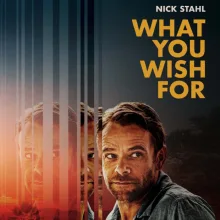
What You Wish For (2023)
Show notes
The film is playing at this year's Fantastic Fest. Find out more at the website http://www.wywfmovie.com (opens in a new tab).
Transcript
An automatic transcript, tidied into paragraphs. It has not been proofread, so names, titles and spellings may be wrong, and it does not say who is speaking.
Show the transcript (about 3,900 words)
Speaker 1: Hold your ears.
Speaker 2: It's show time.
Speaker 3: People pay good money to see this movie. When they go out to a theater, they want cold sodas of hot popcorn and no monsters in the projection booth.
Speaker 4: Everyone for 10. Podcasting isn't boring. Turn it off.
Speaker 1: Now you work for an agency catering company. I guess you call it. They just send you to places like this. Pretty much.
It's a full experience.
Speaker 5: You, I didn't cook until next week.
Speaker 1: I got to get here and find the produce, you know, make sure everything's tip top. I just do the gig and I'll leave.
Speaker 5: I'm telling you if you need a sous chef, Jack. I'm a good one. All right.
Mike White: Welcome to a special episode of the projection booth. I'm your host, Mike White. On this episode. I am speaking with director, writer, producer, editor Nicholas Tom, all about his new film.
What you wish for the film is playing at this year's Fantastic Fest. Find out more information at the website wywf movie dot com. Thank you so much for listening and I hope you enjoyed the interview. MIKE WHITE: You've been in the industry for a long time.
Can you tell me how you got your start, how you made your way to this point of writing, directing and editing your second feature film. NICHOLAS TOMNAY: And I started as an assistant editor in Sydney in commercials. And then I made my way to becoming an editor there and then a director in Sydney and then I moved to New York and I continued editing commercials. And then I made the perfect host, which was an expansion of a short film I'd made in Sydney, which was my first film with Perfect Toast.
And I still direct commercials from time to time in the Bay area where, where I live and I just, I'm just kicking along man, I'm just, I'm cheering out work. I'm writing screenplays and yeah, I've, I've been a fan of movies for a long time. I wanted to do this for a long time and I think that's one of the things about me, maybe that I always think of filmmaking as an audience member. I'm trying like, what do I wanna see what's entertaining?
What do I find entertaining or interesting as an audience member rather than just me spewing out my own personal agenda? Like I'm trying to, I'm trying to find something entertaining and interesting to say because that's what I want to absorb when I watch films. MIKE WHITE: So where did the idea of what you wish for come from? NICHOLAS TOMNAY: It came from a whole bunch of stuff.
I've had the, I had the idea of someone who was wanting to escape their own sort of life or situation and then assuming the identity of another person. And then that turning out to be worse than their identity for a while, just that conceit. And then, but probably it all came together when what I thought I hit my mid-forties and I was like realizing, oh, wow. I'm no longer just potential.
This is, this is it, this is who I am. This is my life. There's an element of that in it. And then I started thinking about that idea with that notion.
And then Patricia Highsmith played in there a little bit but, and then the final thing probably was that I was just responding to the world we're in now where profit and money is more important than everything else seems. And so how and how that's probably not a good thing is eroding our cultural and our, our world in society a little bit. MIKE WHITE: That's one of my favorite film nor tropes of assuming somebody else's identity. And then finding out that you probably shouldn't have done that because that was a really bad idea.
NICHOLAS TOMNAY: I view this film as an a movie in that way too. And I think that there's probably no actual antagonist like that. Ryan is his own antagonist, like in the tradition of film Noirs, it's the character, central characters, moral filings that he that, that act, the undoing and the sort of trade, the drama and the tension. And so I think in that it is absolutely in that tradition where it's like, no, in its construction.
MIKE WHITE: So how did the film come to be? When did you start to actually put this all together? NICHOLAS TOMNAY: I wrote the film in over the fall and winter of 2020 20 no, 2018 and 2019. Yeah.
And then I had another movie that was actually gonna happen and I had a movie star and money a whole deal and just fell through completely. And I was like, man, and I'd made the perfect host in 10 years before this. And I was, had been trying, I've been trying to get a movie going and I had a few chances I had money. I had cast all that stuff, but there's this, it's this constant asking for permission and you've got all these things have to align at the same time for things to happen.
And I was getting a fairly frustrated with that process and I had a very sort of stern talking to myself. And I was like, look, man, you just gotta go and do this. You just, you've got to stop asking for permission from other people and do this yourself, which is so I produced this film. And so I real and then I looked at the, because I've been running screenplays fairly consistently for the past 10 years.
And I looked at all the scripts I had and this one was, I thought I can do this, I can make this movie. So that, and so I was, then I, and then I spent a very long process of raising the money for it and through COVID and the whole deal and, yeah. So it's been a five year process riding it to now. Wow.
When did you actually shoot it in the fall of September? October 2020 one. MIKE WHITE: Ok. We were still pretty much in the pandemic at that time, right?
NICHOLAS TOMNAY: That was, that was tenuous as it, as it, the whole world. Everybody was in the same situation when we had, I had a great company in Bogota Production Services company. We've been prepping to do the movie and we were ready to go and of course, there were spikes omni and so we, it was just one of those situations where the summer came in 21 and then the COVID just reduced dramatically in Colombia and we had to take you like, ok, let's just go. Let's do it, not knowing what was gonna happen.
We just began production. MIKE WHITE: Tell me about your cast and the casting process. It was so nice to see Nick Stall back after I it's been a while since I've seen him. I was a huge carnival fan.
So to see him as a lead in a movie was terrific. Yeah, I grew up. NICHOLAS TOMNAY: Thanks, man. I feel the same way.
I think he's a really brilliant actor and it's one of, it's interesting. I mean, I was looking at a few actors and then I started, I came across Nick's recent work and immediately I was reminded of the older work that he was doing and he, it's one of those intuitive things where I saw him on screen and I was like, yes, there he is. There's Ryan and he had taken a break from acting and reassess his priorities in life. No, because he's a child actor.
Yeah, he started really young and it worked for, I think 20 years as an actor and then he took a bit of a hiatus and kind of came back with a new invigorated love for acting, which he told me he's like, he has this sort of new, has a new spin on why he's acting. And so I really feel like I'm hoping that this is gonna be the beginning of Morley roles for him because he's great. But in the film, I think, and the, I mean, obviously the character is the film is called subjectively. So we're seeing the whole movie through his perspective, Ryan had to be a compelling performance.
So I think that Nick gave that. MIKE WHITE: And this takes place in the rough and tumble world of the culinary establishment. Did you have to do a lot of research as far as the food and the cooking? NICHOLAS TOMNAY: Yeah, a little bit my mom made cookbooks.
That's what she did. That was her, that was, she was in, that is her cooks. So I grew up with food and nothing that actually played that heavily into it, but just like I'm aware of food. And yeah, and then so once I realized that it was gonna be about food, I actually written another script set in restaurants.
And so I've done some research on that previous and so then I used a bit of that in this and yeah, it was just a matter of the internet's an incredible resource, right? And knowing that I was gonna, I had to create a menu. And so I started to spend a day going through, what could I, what could it be and how would it work? And it was an unusual day trying to figure out what it was, how it was gonna work.
But yeah, you see the food has, is a big part of the film and it has to look delicious and be special. And so we had a food stylist on the day who was making it for us. MIKE WHITE: And yeah, I was very curious about that because yes, the food does look amazing. Made me very hungry watching your movie.
But can you tell me about your cinematographer? Because the film overall looks terrific. NICHOLAS TOMNAY: Yeah. So Mateo is Colombian cinematographer.
This is his, I believe this is his first non Colombia non Latin American film and he's got a great eye, really good visual sense. He typical, he had traditionally had been working what he refers to as slow cinema, which is so, I guess, much more contemplative and it's more naturalistic and less about the camera and it's more about sort of how the actors letting things play out. So this was a bit of a departure for him. But from the get go, I had said to him and the production designer, the three of us, I was like, look, I think what we need to do is we need to create a very seductive film and that it needs to look very glossy and aspirational.
And so as an audience member, you also think, oh yeah, I'd like this. That's my, was my hug. And so then we worked pretty hard to make the film feel that way. And that's why the film looks the way it does and feels the way it does is because hopefully it's playing into the theme of the film.
MIKE WHITE: And tell me a little bit as far as once you, once all these pieces lined up and you actually started to shoot every movie is a challenge. What were some of your biggest challenges actually making this? NICHOLAS TOMNAY: We did it was 23 days. I know that people have shut it for less, but I found that very hard because I spent so much of my time just wondering part about making the day, the time you just, every filmmaker says the same thing I'm sure, but it's just time is your enemy.
And so then, so then it was figuring out, ok, these are, this is the crew that we have, this is the days we have to do it. How can we execute the best movie with all these circumstances? And that became, and I'd said I'd set a certain style, you know, there's a problem with the film is not handheld, rough and tumble. It's a very considered succinct style of film making.
And so that actually requires a different way of crewing a film. And so that was the stressful, I gotta be honest, the whole, the to create a sort of very precise film in 23 days was that was the most challenging part of it because, and also trying to keep myself loose enough to be spontaneous with actors and stuff like that because that's the other part is you don't want this sort of not rigid but exacting film with sort of a type performances. You want the opposite. You wanna lose spontaneous performances within a rigid frame, I think.
Or at least I did. MIKE WHITE: Could be interesting for you to be a writer, the producer, the director and the editor. And how slavish are you to your words as the director, how loose are you with your takes as the editor? What does that trying to find that balance to be able to shepherd a project all the way through all those stages.
NICHOLAS TOMNAY: I think that with, then when you go, at least for me, when I'm writing the script, I'm trying to write the best script, I possibly can, the best story that I can on the page. So it communicates the feeling and the ideas as best as I possibly can do on a page. And it's all playable visually, it's playable. But then when you're shooting it for me, it's, I always forget I've written it, but I try and forget about what's written and try and then respond to what the actors and the cinematographer and the house and the environment is doing with that script and make that find the most interesting way to make that work.
So if the dialogue changes and there's things happen, not at all concerned about changing things, if it's more interesting or if it's more genuine or if it's more spontaneous or if it and try to be interact truthfully with what's happening there. And then the editing is probably just related more to the writing in a way that you, then you have all this footage and you're like, OK, so this is what I intended to do. This is what I actually shot. Now, how do I marry the two?
How, how do I find that? And so that be honest that I, so I'm in, I have to have an editing background and so that process was really enjoyable for me. I loved it. I was cutting in this room five in the morning.
It was great. MIKE WHITE: I watched it with headphones on and the sound mix was really strong. I just noticed how great everything sounded and especially during some of the cooking scenes and things like that to hear the scrape of the pan and those things, it just all really came together so well. NICHOLAS TOMNAY: Oh, thank you.
We, yeah, Jeffrey and I worked really hard to make it feel again. I think this is the issue is when you take it, when you take a style of filmmaking, that's going to be precise, which I think this film is a precise style of filmmaking, then everything has to think precise. So there's, there is a level of labor that's involved to create that. And so there's a fastidiousness that's required to make that work.
So, yeah, there was a lot of labor involved to get it there. But I guess the trick is that you don't want the, you don't want the audience to feel the labor. It's just gotta feel like it's there. But thank you for saying that.
Yeah, we worked hard to make it feel full. MIKE WHITE: When did you actually have your premiere? NICHOLAS TOMNAY: We premiered at Fantasia which was in August and then we went on to Fight Fest in the UK and we were playing fantastic at the end of the month. MIKE WHITE: Are you going to actually be at the festival.
NICHOLAS TOMNAY: I'm really looking forward to it. I've never been to Fantastic Fest. So, yeah, I'm really looking forward to it. MIKE WHITE: How was it seeing it with an audience for the first time?
NICHOLAS TOMNAY: It was great. So, it, we saw, I've seen two audiences, one at, in the evening, like eight o'clock and then one in the afternoon. And it was really interesting how the audiences were different, the evening audience, the black humor played pretty well. There was lots of vocal responses, people booing and a, and yelling and that was enjoyable.
That was that I think every filmmaker enjoys a vocal response. Right. And then the second screening was just a lot more. People were just sort of dialed into it more.
And that was also interesting. They were just like in it but less vocal. But, yeah, look, it's, I don't know, I've only made two movies and I find that quite a nerve wracking experience watching it with a, with an audience because you could feel it in the room. But when it's working, when it's actually going well, there's really nothing better.
That's why we do it. MIKE WHITE: Yeah. When you're in the editing process, do you do like, test screenings with friends or anything to get feedback or do you just feel that you've got this on lock? NICHOLAS TOMNAY: Yeah.
In this case, not really. I showed it to the other producers who live in Florida and, you know, they, I would show them, I showed them a couple of cuts and that got their notes. I showed my wife who's one of the executive producers. But, yeah, I think the pro maybe I just showed some more people but I actually had just cut it and was like, I think this is pretty good.
I think the interesting thing is it was a very long post process and as we were posting the movie it's one of those weird things if you, as soon as you send an email and he puts it gone and you think, 00 no, I should have written it like this. I shouldn't like that. And so there was elements of that happening a little bit with the post and so I would see things and luckily we were able to, I just like minor things to adjust, nothing structural, just small things. So there was a lot of that going on.
But in terms of the look, in terms of the way the final product of the film, it's not that dissimilar to the script. I really just follow the script more or less. It's very close. MIKE WHITE: Do you have distribution locked in and everything like that?
Yeah. NICHOLAS TOMNAY: Well, I, to make a sale. Fantastic. Fist.
So that's, yeah. MIKE WHITE: Do you know what you're working on after that? NICHOLAS TOMNAY: I got a stack of scripts. I've been writing fairly consistently for about a decade and I have a couple of projects that I'm that I wanna make and produce what you wish for.
I understand film as a producer now in a way, maybe I didn't before and that's informed. But what I want to do and it's interesting and you got to look at the film climate and where we are now and what's getting made and why it's getting made and stuff. But I have a few things that I've got that I'd love to make. So we'll see.
MIKE WHITE: Wonderful Nick. Thank you so much for your time. This was great talking with you. Thank you, Mike.
I appreciate it. Yeah, good luck with your screaming. I hope you have a great time in Austin. Thank you.
NICHOLAS TOMNAY: See you. Bye.
Speaker 9: I've been thinking a lot about ambition and how you might make it, whether you're a regular human or rap you or any other human for that matter. So I guess if I had any kind of invites to give anybody trying to do anything with their life, it'd probably be something like this, you know, just party don't try so hardly or just live.
Speaker 2: I think we need a new position, wound up, bound up in submission, getting lost in the mission, false definitions, but causing division. All these people talking competition, all these people talking is division first. We gotta do those eyes before we get across those bridges. I mean, talk television, house politicians that wisdom caught up in.
But what kind of thoughts we get this 2015. This is what I call in bish.
Speaker 10: Just party. Try so hardly or just let, yeah.
Speaker 2: I've read a book about a drunk, wrote an album and it took a lot of luck and it took a lot of man, it look a lot of fun. Be careful what you wish for. It could be what you want. You want the in my mind, let him stay too long.
So we stole me blind, left the oven light on. So we stole my shot and I keep the doors locked and I close my blinds. I think I care just a little too much. It's hard to tell when enough's enough.
They're only happy when I spill my guts and I'm only happy when she feels my cup. Come on.
Speaker 10: Don't work. Just party. You try so hardly or just live life.
Speaker 2: I'm not a punch line. Rapper reduced price lunch, live rapper. I went from rapper to kick back. Let me fucking know rapper, rap to Emma for the primo kiss.
A little primo for the emo kiss. I'm just focus where the people live. So you can suck my emo dick. What you want a pop culture reference on?
So oh What you need on, go listen to some beats by Andre just party.
Speaker 10: I'm gonna try so hardly. Or just live your life.
Comments
No comments yet.