
Special Report
Cru Ennis, and Lee Roy Kunz on Deliver Us (2023)
Show notes
Check local listings or visit https://www.magnetreleasing.com/deliverus/ (opens in a new tab)
Transcript
An automatic transcript, tidied into paragraphs. It has not been proofread, so names, titles and spellings may be wrong, and it does not say who is speaking.
Show the transcript (about 6,600 words)
Speaker 1: Hold your ears. It's show time.
Speaker 2: People pay good money to see this movie. When they go out to a theater, they want cold sodas of hot popcorn and no monsters in the projection booth.
Speaker 1: Everyone pretend podcasting isn't boring.
Speaker 3: Running off this now. This is pregnant with twins. She claims it's immaculate.
Speaker 4: You don't think that these children are from God. I think all children.
Speaker 3: Are from God. She says her two unborn kids talk to her and that she knows that one of them is good.
Speaker 4: And one is evil.
Speaker 5: You see and he I to I, he, I think we were chosen well, like Mary and Joseph, if they are born, they bring about the end of day in and in and out.
Speaker 6: Yeah, I know game game. MIKE WHITE: Hey, folks, welcome to a special episode of the projection booth. I'm your host, Mike White. On this episode.
I am talking with co-director crew Ennis and Lee Roy Coons. All about their 2023 film. Deliver us. The film is opening on September 29th, 2023.
Definitely check it out. I hope you enjoy the movie and I hope you enjoyed this interview. I'm really excited to talk to you about deliver us. But before I do that, I would love to know a little bit more about you guys.
Can you tell me even just how you met, like how you got into the business crew? Can you start? CRU ENNIS: I from Arkansas went to school at U Of A and then when I graduated, I went out west and relatively quickly, I met Leroy on a graduate student film at US C and then within nine months, we were making a micro budget indie film. We really hit the ground running and we've been working together ever since.
MIKE WHITE: What even got you interested in pursuing the business. CRU ENNIS: Mine started in eighth grade. I had one of those very impactful teachers. Mr Robinson, my eighth grade history teacher, I was a troubled student and he thought he could reach me through film.
So I'd always quote and do movies. And so he let me do my mid semester project on film and it was on Pearl Harbor. And so I did it like a live broad news broadcast at Pearl Harbor was on a pond with little islands, setting them on fire and crashing stuff. And he submitted it to a arts competition for the state and I won it in eighth grade ever since then.
That's all I wanted to do. That's it. Nothing else. MIKE WHITE: And Lee, how about yourself?
LEE ROY KUNZ: Yes, I went to US C film school and that is actually how I met crew is I was acting in another film student's project and we hit it off immediately became good buddies. And when me and Isaac who were school together decided to drop out to make a feature film with our tuition. Instead of spending it for another year, we enlisted crew to work on it with us and then me and crew ended up playing brothers in it and the three of us produced it together. And then 15 years later, we're, we're making this song together.
MIKE WHITE: And the same question for you as far as what got you interested in filmmaking in the first place. LEE ROY KUNZ: So I did, I always loved the movies. I think a big part of it. My dad was a high school football coach and we would go like practice and work out with the team and then we would movie hop, we'd see three movies in a day sometimes.
And there was this, even this one summer I think Gladiator played for the, for a year. I probably saw it at least seven times of because it was just the only one after a while. And I think that young, when you see a movie over and over again, you can start to see how it's put together or how it works and just gets, oh, I think I could maybe do something like this or I think I get an idea of it. I wanna learn more.
MIKE WHITE: That's pretty brave. To decide to make that feature rather than continue school. But I definitely applaud it because I'm sure you learned a lot. LEE ROY KUNZ: Oh, yeah.
Yes, I would recommend it to anybody in film school to save that money. Support yourself while you get a job working for someone else in the business, working it in. Or to at least use a part of that to make something you learn quick. And then also, then you have a calling card, someone can see what you do and they connect with others, you know.
MIKE WHITE: And you guys have done more than just directing, obviously, just quote unquote, directing, writing, acting and a whole bunch of stuff. Can you tell me a little bit of what is that like wearing all those different hats as you go through these projects? CRU ENNIS: I think it's helps develop your voice as a artist, as a filmmaker, as an auteur. All of the above our approach to filmmaking is I think you should do everything at the beginning.
Everything you can, the better sense you have of everyone's duty, the better you can direct, the better you can produce better. You can write. Even our post sound supervisor, Brent Kaiser who has unbridled sound and super sought after guy. He is a super sought after guy in the industry.
He did everything everywhere all at once and he's the Daniel brothers guy and he did, honey boy. But anyway, he said something that stuck with me once and it was our foundation of what we do by doing everything. It's really beneficial as an artist and a filmmaker. But when you get to a certain point, you can be dangerous to yourself.
And so when you get to that point, then it's learning how to collaborate, instead of compromise, it's learning how to work with other artists in order to take what was originally envisioned or take what you have and be able to add what they have to offer. And I think that's what separates our great filmmakers that we from someone who just knows how to direct or someone who does a good job in making a film that just comes out and doesn't really live with. LEE ROY KUNZ: Us can either be the greatest strength or your worst enemy because you can synergize it, you understand what it's like to be going through for an actor.
So then you know how to work with actors as the writer. You're, you really know what you're trying to do as the actor. Usually bad acting is like usually when you're still in the intellectual space. So if you can separate the two, then it's great and then the acting is just the physical part and they can inform each other.
But I think that it does teach you to if you can rely on your collaborators and get outside of the, there's like this myth especially that's perpetuated in film school that it like directors, this all knowing being that's just gonna have the answer for everything you set the tone and the like me and crew, you set the energy and the pace of it, but you really good directing is getting great collaborators to then do what they do best structure or a lot of freedom within structure. And so that's the blessing part of it and just say what you like.
MIKE WHITE: I know you guys both worked on Boys of Abu Grabe. Can you tell me about that project and how that one came about? CRU ENNIS: It was a friend of ours, Luke Moran who wrote a really great script. We had is a micro budget, no money but wrote a really great script.
And it got a lot of buzz in town as far as people wanted to work on. And I felt that it was, Luke had written was a really good sense of what a lot of soldiers went through at that time. Like that slow burn, that arduous journey of sitting. It's like my father who was a Vietnam veteran.
He, she was stationed in South Korea and that movie really related to his experience. It's not a go out and conquer and save the day. It's trying to survive from yourself on these, this horrific environment. And then the stain that Abu Ghraib left on us.
It was thought it important to have that as a reminder of how anybody put in that situation would come to that conclusion. Like the Stanford experiment was a great, it was a great study of just that how you get that outcome pretty much every time. But, and then Leroy was, he's a phenomenal actor. He does everything else, but he's also a great actor.
He blessed the project was just there. MIKE WHITE: So tell me about deliver us. I have to say you guys really did a great job with the atmosphere. LEE ROY KUNZ: We made it in the middle of the pandemic.
It was pretty quick from the moment we had the idea to the script to making it's probably within 6 to 8 months, which is really, really fast. So you could say the film was definitely inspired by the anxiety and the feelings of the time. And so we definitely wanted to capitalize on that and get into production as soon as possible. CRU ENNIS: Leroy Dad pitched the idea for the screenplay over beers at a bar and then they, the Lee and Kane went and wrote the first draft within less than six months.
It was like super quick and when we were talking about it, I thought that I was like, this idea is, it's, it should have been done before. It was one of those. Oh, some. Why hasn't no one done this?
We have to get on this. So we contacted Elena Lit Nova who is a producer out of Estonia who is in 2020. She was like top 20 producers to look out for in Europe and we knew her from a project that comes out next that we was shot over 12 years, 16 different countries that are, I don't wanna say it's, but it's like a big deal for us. Just, it's how we learn to become filmmakers.
And Lee wrote and Dr that and it's gonna be great. But Elena was very respected. It was the pandemic hit everywhere in the world and not quite Estonia, Sonia was safe. She got the government backing and fitted us with the best the region had to offer as far as crew.
And we were out there immediately, we got on a plane, got out there living, living in a hotel room and did two months prep and we got there were six days of lighting and the time we left the, it was mid summer and the sun never went down. So we got to experience not only the change in the season, but the change in the people during the winter, they're very cold and they're so wonderful people, very cold and like, I don't have time for this then the summer, they're very like, fun and outgoing and ready to hit the town.
That's great. MIKE WHITE: So, what's that like living in Estonia for you guys? That must have been quite a little bit of a change of pace and especially to come from the US where we were in lockdown at that time into a country where it doesn't sound like there was one. LEE ROY KUNZ: Oh, I love being in Estonia, especially just the snow.
It was six hours a day in, it was in Thailand. It's just as beautiful. It's like a fairy tale architecture. At least where we were staying, we've always dedicated an extreme amount of time to going and finding the most beautiful location and not just it being like perfect, but when it is the right space, then you can actually block the scene and you can move through shooting much quicker rather than if you don't have the right space, then you have to do a million different setups.
And something that Isaac as AD P, he actually shot season two of Loki. One of the best things he does is he will set the light sometimes for individual shots like some dps do that and it's a nightmare. But for the most part, he spends the time lighting the entire area so that no matter where you put the ca where he's ready to put the camera, it's pretty much ready to go. And so every night in pre-production, me and Isaac and crew and Thomas and Vera, the actress, we were able to form that bond because we would just hang out late into the night listening to albums, drinking beer and talking about the project.
So we had that kind of family aspect to it that carried through the difficulty of production. CRU ENNIS: When we got there. It was one of the safest places to be in the world as far as the pandemic. But the time we started shooting because of the delay, everywhere else started to open up.
It just got to its worst there. So everything went completely shut down, stopped. And our production was granted licenses like a necessity. We were able, we had the keys to the kingdom.
We were able to go anywhere and shoot anything because we were developing COVID protocol with other European nations through the Estonian government. And so we had a lot of help and leeway and it was like an adventure. I mean, it was tragic because it was the pandemic, but he was going one day to the next not knowing how this was gonna shake out a lot of our actors, Estonian actors are like, have won their equivalent to the Academy Award because everything was shut down for five and under lines, we got the best the country had to offer.
It was amazing. And then who is one of the leads who plays aura, she's classically theater trained, amazing actress, she can do anything. There's no limits to what she could do. And then Maria Varis from Italy who spoke Russian and is like super sought after.
She just really embraced what that character is and supposed to be. And then our two, they're European actors and Alexander Sadig and Thomas Kretchman. But they work so much in the States, they stay predominantly here. That was like a life time of knowledge that they were able to give to us.
They were just so amazing and generous with their wisdom, something that we take with us for the rest of our careers. It was amazing working with everyone but those two really thank you. LEE ROY KUNZ: Yeah, a lot of planning and the storyboards is another big thing in going and working out the shots and then rehearsals. So that by the time we do shoot, you're not wasting any of the cruise time, you're not rehearsing the scene that you should have done before.
So everybody really brought it and you felt the difference in the end of the film for sure. MIKE WHITE: Now, Kane, is that your brother? LEE ROY KUNZ: Yes, that is my brother. MIKE WHITE: How was it working with your brother on the screenplay?
LEE ROY KUNZ: Oh, it was great. We did it through Zoom and we just have a short hand, we're both Catholic background and we would always read the same books and me and my dad, we went through this phase where we were all reading Tolstoy at the same time or Sky at the same time. So we have all the same kind of literary references that there's a short hand between us. And then once we have some of these ideas, we, when you bring it to crew, it's filtering it and compressing it and how to get some of these ideas across visually.
And in the sense of just a story that this scene happens and then this scene happens, which technically then communicates this idea or allows the potential for an audience to interpret that or to experience and crew. MIKE WHITE: What is it like when they bring these ideas to you? Are you just like this is the greatest thing I've ever heard or what is all This Mumbo Jumbo? CRU ENNIS: It's always a great idea.
One of the things that we have is there's a safe place so Leroy can bring me a very rough idea and he does all the time. And just to see if there's anything there to throw off of me like him, just saying it out. He'll call me and be like, what do you think of this? And he'll explain it and he'll be like, oh, never mind hang up.
It's like a trust someone that you can throw the ball to, that'll throw it back. I'll listen and throw it back. They're always great ideas. It's just which ideas worth putting the amount of time it takes to make them good.
That's the one thing that people that aren't in the industry don't know about how hard it is to just develop a screenplay, the amount of time that goes into that. I think that that's one of like cramming a full story in 90 pages and all the beats that in order to have a beginning, middle and end of all these different storyline converging is one of the hardest things and takes so much intellect if you can write a good screenplay that you can probably be do most other jobs, I think not to downplay what other people do.
Not at all. It's just saying it's very hard to write a good screenplay. And Leroy is, he's a great writer and him and Kane are very fast working together. And so when they presented this or this story that examines all these biblical themes, my concern was all right, authenticity.
Like where are we with that? And then Hunter Leroy is not shy away. He's, he wanted to get, he wanted to have a story that showed the opposite ends of the humanity the best we have to offer and the worst we start the film with the worst humanity has to offer. It's very important to him.
And so we had to figure out how to make that work in order to set up all these biblical themes because this is very controversial territory. People have been arguing these ideas for thousands of years. And so to stick your neck out there. Like he's one of the most well read people I've ever met, not just people I know personally he's actually put a lot of time and I've read the Bible cover to cover a few times and he knows more, way more about it than I do.
There's respect anytime he brings me an idea. I know it comes from a place of careful consideration and an intelligence. And so it's just ok, uncovering what it is that's trying to be said. And if it's being said or conveyed.
MIKE WHITE: Did the movie change much while you guys were in rehearsals? Was there a lot of input and feedback from the actors as you were working through things? LEE ROY KUNZ: Yeah, a good example is Thomas, he plays Saul Thomas Kretchman. He'd sit me down and he'd find a way to get rid of almost all his dialogue like that character had a lot.
And then what if we do this and that? And yeah, and you have to work with them. And then Alexander Sadi came and he understood the script and everything that I was trying to say better than anyone by far. And he sat down and was able to correlate how everything was put together and then come up with ideas, things that I wasn't aware of how he'd want to say something, his own research.
And so then we did it that way. Vera was finding a way more to work like, like the physicality of it too outside of her needing to learn Russian to get her to embody that character. So it was more, yeah, I don't know how you, I don't, it's like an Alexander technique or something. And then Jane was someone who came from the theater who plays Laura and she came like maybe a little closer to Alexander Sadiq where she knew what she was doing and I could support her, but I didn't really have to worry much about her.
And either. MIKE WHITE: So tell me about the working relationship between you two guys as you're both directing this movie. What is that balance as far as the day to day as you go through this? CRU ENNIS: I think it's one you got to remove your ego and collaborate.
Instead of concede Le Roy spent like a month and a half working with Marie Bear where they rehearse every day, that's their time, actor director and finding those characters physicality. And then where I spend more money on cinematic storytelling with Isaac and then we have a system of checks and balances. We come together critique each other, see where we are and then move forward. Lee might not like something we're doing and I don't think I ever didn't like anything they were doing but whatever that conversation is and then go forward and that's all in pre-production.
And then once production goes like this is what we're gonna do. And then if we have a disagreement, we always have Isaac who would let us save energy from arguing and it'd be like, OK, that's the way we're gonna go. And once we start started production because an independent film, you don't get a second shot. It's not like student films.
It, this is it and you gotta live with this forever on the day. It's prioritizing the portraits. So you gotta, I need these beats. In order to make a movie, you gotta have a macro view of the story editorial.
I have to have these to make the movie. And then the other things are how good it's gonna be. And then we operate from, from that and. LEE ROY KUNZ: I think who you were jumping at something good.
Do you maybe hold the macro in your head a little bit more clearly? And I would be focusing on individual things, making sure that it was as tense and like on point as possible, a sort of divide and conquer kind of thing. But he could put his focus on something. I could put mine completely on something else.
CRU ENNIS: I'm always thinking editorially, that's just how my mind works. And it goes good with Lee, like from a writer foundation who's thinking about the emotion and intent in that moment. And so it's a really good balance. MIKE WHITE: We talked a lot about what was going right with this project.
But what was going wrong? What were some of the biggest challenges other than COVID that you had to overcome? CRU ENNIS: The weather was changing so fast? Like I said, it started like tundra, it was like just everything was under snow and then it started to like melt immediately.
But because of our schedule was location dependent and after availability dependent, we didn't have a lot of wiggle room even though we had it. Ralph was a great ad we had these days, we had to shoot this thing and if it was an exterior, it was an exterior and we were just so blessed that it would just snow the night before and there'd be eight inches of snow. It was the most unbelievable thing. LEE ROY KUNZ: Everything, usually everything that goes wrong can go wrong and on our film, every possible break that we could get, but we'd always get it.
But I think to answer the question is the most difficult thing always is that you're running a marathon and just that there's times where you're gonna be completely drained. Your dope mean or your will to live is gone and you have to draw on something else to just push forward. And I think that's what you have to do day in and day out and having each other again is another thing that makes it so that if one's completely burned out the other can do it. We lean each other on that, lean on each other in that way.
MIKE WHITE: And tell me about the editing as you guys are shooting this. Are you having David Heinz do the editing at this time or does he come in later on? CRU ENNIS: He came in later on. We had a, an Estonian editor Tambe who brilliant man, but he did our assembly, we rap production.
I stayed with him for two months there and just did the assembly and then shipped it back to Leroy and David and then came and joined in for the, for the rest of the edit because we have Russian and we have Estonian dialogue. We had to have someone for that element of the project to make sure that all that lines up. And that was something you always want more time on. I don't think how, no matter how much money you got, you always want more time there and it can always be improved and you can always have an idea later how to can dance or explore something, something even more.
And we were lucky. We had David's amazing and Leroy and David got on great and me and David got on great. And that was a really, it was like one, it was like just out of nowhere. He wasn't working.
It was like the most lucky and he was like, I think I'll take three months off. No, I think I'll do this and then he came on and it was like, just such a great experience. I had done huge movies and we were able to learn so much from him. LEE ROY KUNZ: We want to much more.
Like, that's the first thing and that usually comes down to editorial is that you're getting rid of scenes, you don't need, you're getting rid of dialogue you don't need. So it's, it's threaded. MIKE WHITE: I'm glad to hear that you guys got along with David very well because I always hear that it's more like a marriage between the directors and the editor, once you get to that phase of the production, it's more like us. CRU ENNIS: Marriage is usually fine.
It's more us. It's more like the marriage departed. LEE ROY KUNZ: Yeah, David is amazing and he's a director too and just a great storyteller. Another example of someone else coming in and just giving you something you don't have.
MIKE WHITE: Tell me about your music and sound design because the music again talked about tension and just creating that mood. CRU ENNIS: Todi his sister has held her as far like a group and she won the Academy Award for Joker, which he was the arranger on. He was presented to us by Patty Mcmillan who's, we've worked with a few times as an agent and she's awesome. And he would, he had just come off 8 24 lamb which didn't have a, it was, didn't have a lot of score, but the bits that it did were so incredible, they're so overpowering and really makes them like those moments of the film are my favorite parts.
And she sent that over me, Leroy and Isaac looked at him as like this could be, he's perfect because it set such a severity to everything, everything was serious. And then we went to Brent Kaiser is a longtime friend and a collaborator. Everyone wants to work with this guy. He did everything everywhere Oliver wants and now everyone's like, finally sees how great he is, but he's a genius.
I wouldn't say that to his face and then what he was able to add to the film in order to our low end, it's like when you hear it in a theater, it's, it's haunting that five, that 51 surround mix compared to a stereo. It's in your bones. LEE ROY KUNZ: We said we had like a manifest. We had like a Bible for the sound.
And so when we were, every time we were shooting it, we had a pretty good idea of that. Like, we needed to have something here. So that Brent had a lot to work with because we knew that he would, that he's the kind of artist that would elevate the film and take it to where we needed it to be. MIKE WHITE: So tell me about that first time that you actually get to see the movie with an audience.
Do you do any sort of prescreening or is it at a film festival? What is that like for you guys? LEE ROY KUNZ: It was great because audiences loved it, but it was also torturous because it didn't have any of our sound mix and the color was wrong. And so it still played well.
CRU ENNIS: But yeah, yeah, it was like my skin was on fire. So we had a, some something happened like our, the DC P one is made to use old files for like temp sound and then used a UNC I don't, we don't know what happened. There was a change position who put the film together for us. And when it played, it was the first time for us to see it.
We'd seen it with some friends and watched it had those arguments and those laughs and all that stuff. But first time seeing was an audience and I was having a panic attack and then this woman behind me that out of the road, you know, reserve for us. She was having trouble seeing, she asked if she could sit by me. There was one extra seat.
And so she sat by me at that, it was the first time that I felt good about it because she was like, recoiling in fear and then she was like, covering her or plugging her ears and covering her eyes. It was like, and that was, she was jumping whenever there was a jump scare. And I was like, oh, this is all hitting and it's not even the final product. This is great.
But yeah, apparently that happened to a lot of festivals. I don't, I don't know, it does. MIKE WHITE: Yeah, if you don't do that precheck. And then even then it sounds like you guys were kind of up the creek.
CRU ENNIS: We did a precheck there and we're like, we thought maybe the theater was something was off or like what, like what's going on. Maybe we're just too close to it and then two minutes into it, this is wrong. Yeah, it was exciting. MIKE WHITE: It was exciting.
September 29th, this comes out, is it wide or select theaters on demand as well or strictly theatrical? At first. LEE ROY KUNZ: It's, oh, it's that same day and date like about 14 cities. I think we'll get the final list here soon and vod the same day our L A premier Wednesday and then we release on Friday.
CRU ENNIS: Leroy's got a Q and A at US C Tonight with his alma mater. Like the So house is like a members type social club or something like that. And they're doing a screening and I'm gonna go introduce the film to that. We're dividing and conquering.
That's fantastic. MIKE WHITE: I can't wait for more people to see this. That'll be a great movie, especially you guys opening right before October. That's terrific.
CRU ENNIS: The idea is to have that right now. It's already started. People are getting into Halloween here and you know, so it's like the idea to let it play through there, Magnolia, they know what they're doing and we trust them. And I'm excited to see how the film lands.
MIKE WHITE: Tell me about this next project that you guys are working on your magnum opus. LEE ROY KUNZ: It's called Devil's Fruit and we've been working on for the last 14 years. Shot it for 12 years is a good example of filmmakers having to raise a little bit of money, shoot this and then shoot this part and then it just evolved into OK, we're not gonna be able to shoot it in this way. So then we just allowed the characters to age and it's about a Russian oligarch comes and corrupts this American family.
And it's basically a Russian crime thriller, a revenge story. MIKE WHITE: It's your boyhood. CRU ENNIS: This, yeah, we couldn't find anybody crazy enough to play the role. So we play brothers in that film.
All we're waiting on is opening credits. We're working with this company, King And Country right now and that Chris Coeli who did our art and deliver us the skins and the tattoos. He did our, the graphics for our opening credit sequence and it's awesome. It's gonna be so it's gonna do it really well.
Like it's a perfect time for the film. One dealing with Russia, what's going on in Russia. But two, it's just like festivals are gonna eat this thing up. MIKE WHITE: I don't want to totally nerd out.
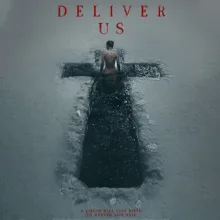
But the poster for deliver us is fantastic. LEE ROY KUNZ: Oh, thank you. I love that poster. And it has a really deep meaning to, it's actually in the Russian Eastern Orthodox Church, how they a slut and go get baptized, they'll cut the cross in the ice, they'll go out there and they'll perform the baptism.
And something about our dream sequence is me and Isaac are real big into young and he's always talks about dreams and it like universal conscious language. And so we tried to use that in a way of like this is how God would speak to these characters nudge them on. MIKE WHITE: I guess the most important question for me is Lee, what did your dad think of this movie since he was the one that was pitching this all the time? LEE ROY KUNZ: The crew was going on about that because he was on a losing streak for a while and I was over it.
I was like, I don't want to hear another idea. And then we were in a brewery drinking together and there was this baby on the floor playing. It was crazy. We had to like, keep an eye on it.
It was, and it just made him, he's like, you know what, Lee just shut up and you gotta hear this idea. And then I was like, dad, that's the best idea I've ever heard. He's so pleased with himself. He's, he's pitching on left and right now I brought you into this world.
You, your existence to me and your best film idea. MIKE WHITE: It sounds like this. Next one is almost wrapped up. Do you have the following project?
Are you guys working on that already? We do hope to. LEE ROY KUNZ: Do a sequel and like a trilogy with this. I don't know if we'd probably give some time, but there's an Inuit hor script that I've been working on for a long time.
That's, it's in the religious horror genre as well. But exploring more Inuit mythology through basically thriller again with a detective thriller in the Arctic crew are you? MIKE WHITE: Ok with that? Or would you rather shoot someplace warmer?
CRU ENNIS: I would rather shoot someone about something very beautiful about, like those very cold remote places. And then in Estonia I found it's meditated. It's like therapeutic, helped get through it. I am more partial to humidity and from where I'm from and warm weather, anything for the sake of art.
MIKE WHITE: Let that be noted that maybe after that, like a voodoo thing where you could go down to Jamaica or Haiti or something. LEE ROY KUNZ: We shot fruit mostly in Cuba. Crew. You loved Cuba.
CRU ENNIS: So I won't be going back to Cuba, but I do love the Caribbean. MIKE WHITE: But I didn't even think we could shoot down in Cuba. LEE ROY KUNZ: It was at a time when we were still open to, it was a while ago, like right before the it got not blocked again. Yeah.
MIKE WHITE: Yeah. CRU ENNIS: You feature to ever be shot there from American production, I believe unless they just made that out. MIKE WHITE: Is there a good place for people to keep up with you guys in your projects? LEE ROY KUNZ: Yeah, we have a world's fair pictures website now that we have created and then also our all our socials.
Mine is just Leroy coons and we post and crew. Yours is just crew En Instagram crew underscore en Yeah, Leroy and crew. MIKE WHITE: Thank you so much for your time. This is great talking with you guys.
I really appreciate this. CRU ENNIS: You awesome. Thank you so much. Thank you.
Speaker 10: Yeah, deliver us for more and deliver us for more blow up. Hey, in the right way, help us make this. I bet you and help us through our brother a bit old. You love a number.
Very clear if there's a way that and give us they and Bill. Are you here? Yeah.
Comments
No comments yet.