
Special Report
Frank Uhle on Cinema Ann Arbor
Show notes
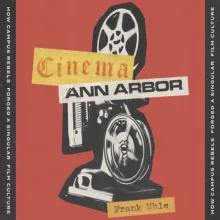
Buy the book at https://www.cinemaannarbor.com/ (opens in a new tab)
Transcript
An automatic transcript, tidied into paragraphs. It has not been proofread, so names, titles and spellings may be wrong, and it does not say who is speaking.
Show the transcript (about 7,600 words)
Speaker 1: Hold your ears, folks. It's show time.
Speaker 2: People pay good money to see this movie. When they go out to a theater, they want cold sodas, hot popcorn and no monsters in the projection booth.
Speaker 3: Everyone pretend podcasting isn't boring. Turn it off. MIKE WHITE: Hey, folks, welcome to a special episode of the projection booth. I'm your host, Mike White.
On this episode, I'm talking with Frank. He is the author of Cinema Ann Arbor, how Campus Rebels forged a singular film culture. It's a new book from Fifth Avenue Press and the University Of Michigan Press. I consider this a real page turner.
You'll hear me tell Mr Eli later on in the interview that even if I hadn't gone to the University Of Michigan, I would have found this fascinating. But as a student of U OF M holy cow, this was such a nostalgia trip for me. I had such a wonderful time reading this book and finding out more about some of the professors that helped really mold my taste in film and what they were up to in the fifties, sixties, seventies, eighties and beyond. The book is beautiful, informative.
Can't say enough nice things about it's available via Cinema Ann Arbor dot com. Also check out there for different tours that Frank is going to be going on with the book, different places where it's going to be featured at. Thank you so much for listening and I hope you enjoy the interview, Frank. You are rejectionist historian.
You do a lot of stuff. How did you get involved in all of the stuff that you do? FRANK UHLE: I started as a college student in art school and I was always interested in film. So I joined the film society which led to the book eventually.
And while I was doing that, art school isn't really a lucrative necessarily proposition. So I ended up getting a job as a projectionist when I graduated. And then as time went on, I ended up going back to school and getting a degree from library school. And I was not really happy being a librarian and I wanted to be more of an archivist.
So I've always collected things. I collect records. I collect every lots of stuff, graphic, cool, vintage graphy stuff, movie posters, rock and roll concert posters. Anyway, over time, my library degree was I was a librarian and I really didn't have any great archivist opportunities.
But I started writing because some friends of mine who had also gone to library school were writing for Gale research in Detroit, which is one of the biggest reference book publishers. They just churn out reference books. So they needed me to write a business histories which I didn't know much about business, but it was paid a decent amount of money for the 3000 word history of everything. From the Detroit Tigers to XM Sirius Radio.
So it was interesting. I would pick up little knowledge but all sorts of different fields through these articles. And I enjoyed it. I started really enjoying writing more as a creative pursuit perhaps than like being an artist.
I have a friend who was talking about this with recently she designs things for fabric and stuff and she's like, you know what? Nobody knows my name. I just like the process of doing the design. I don't necessarily want to be, I'm a big artist and I felt the same way about writing these company histories.
I would just be like, oh, what am I gonna write about this week? Oh, this is cool. I'll learn about this weird topic. I enjoy, like tweaking it.
So as time went on, I started writing music history because I collect records as well. Here's this obscure rock record I really like, why don't I find the band members to interview them? So I did a few things like that. And that's what I shifted my interest in creativity of art and my collecting and my archiving and my interest in historical stuff.
It all led me in this direction. MIKE WHITE: Do I remember correctly? Was there another that's mentioned in the book. FRANK UHLE: Yes.
As a matter of fact, I just was visiting him 20 minutes ago. My father who's now 95 I went to the university starting in 1945 when he actually skipped a grade. So he was 17, came here and everyone was like a, you a World War Two vet that was like all sorts of people had just got out on the G I BILL. Anyway, he was a movie fan too.
So he started going to movies on campus. And as I did the research for the book, I uncovered that there was this really pioneering film society in the thirties and forties called the Art Cinema League. And nobody had ever heard of them. And I asked my dad, I was like, you were on campus in the late forties.
Oh, I used to go see their movies. Like what? So that was quite an awesome connection. MIKE WHITE: The how did Cinema Ann Arbor, the book come about for you again?
FRANK UHLE: I've written these sort of history things. I like interviewing people and I knew some of the stories from being in the film societies that were I thought been interesting to commemorate this existence of something that had just vanished from campus. There were, there is a film society quote unquote, but they show like one movie a month and they, it's basically what do you guys want to watch instead of just showing it in our dorm basement? Why don't, we just get a classroom and put it on the screen and we'll invite some people and eat popcorn.
It's not the same thing. It's like we were curating these film societies so completely forgotten around here. And the university's Bicentennial was celebrated in 2017. And so in 2016, I actually a projection is still for the university in ev tech support.
And our unit knew I had done some writing. So they said, why don't you write a history of our unit for the Bicentennial? And as I was doing that, I started uncovering bits and pieces about the film societies because our unit actually started primarily to support the film society because they need to have a projection of seven days a week and up to six or seven different auditoriums show in the films, skilled people were hired to do that. So when classroom A V kind of got blown up to digital production of power point slides, the people in the projection unit slotted into that.
And so anyhow, I was digging into that history and I was also uncovering all this film society stuff, some of which I didn't ever had, never heard and didn't know about. And I like the Art Cinema League. I was like, what the heck? Because I'd always been told hard fact.
The film society started in 1950 but here they had started in 1932. So, yeah, I approached the Bicentennial committee with this sort of history professor Howard Brick and he, oh yeah, we'll figure that out. We'll have like space on our history website and you can publish it that way. So I thought, well, that'll be fun.
So I did some initial research but gosh, as time went on, I thought, man, I wanna do this justice. I don't wanna just do a kind of quick hit highlight piece. And I started interviewing people. And when this friend of mine who is a professor who's still teaching, he's 93 and he's teaching a class this fall.
He was arrested in 1967 for showing termed obscene movies by the Ann Arbor police. They actually went in the projection booth project film out of the projector. People are going to jail. It's like what?
And I wanted to interview him about that and he had other stories that I hadn't really heard. Gosh, it just seemed like I couldn't get it together in time for the 2017 thing. So, yeah, it just expanded into a book gradually. What's that, Hugh Cohen?
Hugh Cohen? Exactly. MIKE WHITE: Had I not gone to University Of Michigan, I would have found the book really fascinating. Having gone to U OF M having attended a lot of screenings in the early nineties.
It was such a nostalgia trip for me to be reading about Vicky Honeyman before she was the head of the an Arra Film Festival to be reading about Robert Scar to be reading about Frank Beaver and especially Hugh Cohen just goes through, through the whole book. It was so great to me because Hugh and his, what is it? Art, the art of film, art, film, 2 36 36. That's the first one that I took when I was a freshman and it just lit such a fire under me.
And that's why I still talking about movies today. FRANK UHLE: That's so amazing because, yeah, he inspired so many people over the years and I was once walking down the Hall Of Angel Hall with him a couple of years ago and I was chatting with him. I said, did you ever have any kids? And he said, no, never had any kids.
And he pointed around at the students, he said these are my kids and he really, he just assumed this role in so many people's lives of just kind of father figure, not, not in a kind of I'll be touchy way but just an inspiring guy. MIKE WHITE: And the movies that he chose to show us, we watched so many Bergman films because he was working on that Bergman book at the time. Just the amount of stuff and then the amount of stuff that we would see every weekend I would go through, magazine and highlight all the things I wanted to see.
I'd be going from MLB to Angel Hall to Lorch to Nat. Yeah. Wow. What a time and to read about those decades before that and to hear that there were screamings, five days a week, seven days a week.
That's wild. FRANK UHLE: Oh, yeah. Oh, no, I came in right when it was really at the peak because the home video cable TV, VCRS, none of that. It was in place yet.
So, circa 1978 when I first came to U OF M, you had to go to an auditorium and there were the film culture here was so well developed that there were screening seven days a week, almost year round. Even what cracks me up as I think back. And like in the summer, we were still like showing movies 34 days a week who was here, it was like the community was so interested in film that it would just be locals, not, not students in the summer. MIKE WHITE: You have this experience, you've got the library science, you know how to get around in archives, but it's such a huge topic.
What were some of the challenges of bringing together this entire history of this kind of somewhat in the mainstream but then also somewhat underground phenomenon that was happening? FRANK UHLE: I honestly look back on. It was just really pure joy from start to finish. I started the first person I interviewed was Hugh Cohen sat in his office for an hour and a half and he just read me every story.
And I was just like, man, this is gonna be fun. People would point me to other people. So there were certain people I knew I had to talk to that had clearly been key participants. But the challenges were in the end trying to find images.
I did a lot of Googling and looking on Facebook to see if people a name matched. There would be people who I wasn't even trying to, they weren't on my radar and someone would say you should talk to this other guy. And there was a guy named Andrew Lo, who was a Cinema gull member in the late sixties through the mid seventies. And he was also an experimental filmmaker.
He has an interesting, easy to find Googling name. So I got a hold of him and he was a very wonderful man lives in Montreal. He's retired philosophy professor, but he was like, you should talk to my friend Rick Ayers and this name was not on my radar at all. And I was like, I guess so.
Sure, why not? But Andrew hadn't remembered as precisely some of the details as some of the other people, some people, it was just like they closed their eyes and like they were there, you know, this is clearly the highlight of their lives being in a film society. And it was a pretty potent part of anyone's life because it was, it became like the central, central focus of your college because you go to class during the day. But at night for 34 or five nights a week, you'd be watching movies and you're seeing the same people and it was very much a second major.
But, yeah, so Andrew was like, talk to Rick and I, ok. Sure. And Rick Airs was someone who had very vivid memories of it all. And he was the chairman of Cine Mcgill when Movie Flaming Creatures was Compass.
During the year, it was under trial. And during that year of the Velvet Underground, Cine Mcgill had these at a having fundraisers and they got Andy Warhol in the Velvet Underground to come and play at Hill Auditorium. And Pugh didn't even remember that even happening. But I was like talking to Rick and he's like, oh yeah, we here's why we did it.
So he was very helpful. But then I didn't realize, but his brother is Bill Ayers, the famous Weather Underground guy and I'm trying to put two and two together. And then Rick reveals that he himself was in the Weather Underground. I'm like, what?
From Cine Mcgill chairman to the Weather Underground living in with a fake name during most of the seventies. And I just, I was stunned that changed the direction of a little bit, wanted to include his personal story. So again, it wasn't really a challenge but it was just like, wow, the store keeps expanding. MIKE WHITE: Yeah, I imagine one of the challenges was trying to keep the guard rails on with this because you could have gone down so many different paths with it.
FRANK UHLE: And again, put a long kind of disclaimer at the end and acknowledgements to say, hey, if you were in a film society and I didn't mention your name or the wonderful things you did, I sincerely apologize because there were so many things going on that I had to cut things off. I mean, again, when I started, I was like, OK, the film societies and I was like, they did have these film festivals. So I gotta have a chapter on the Ann Arbor Film Festival which still exists today. And I like delving into history to show how things were and like, take people to a place that doesn't exist anymore.
So I didn't really want to follow the history all the way up to the present day because as soon as the books published, it's out of date anyway. But because the Film Festival had been co-founded by Cine Miguel that existed as a part of Cinema Guild for 20 years, I thought, well, that's a good place to cut it off. And I have a couple of paragraphs saying after it split from Cinema became a separate entity, it did this and this, there were guard rails that I had to put in like that consciously. MIKE WHITE: He said it was a little bit of a challenge finding images, but the images that are in the book are fantastic.
Where did you end up digging those out from. FRANK UHLE: You know, that was a big thrill for me because I had published things in magazine called Ugly Things, which is a rock and roll history magazine. And it's laid out. The guy editor Mike Stack has been doing it for, he just celebrated its 40th anniversary images are integrated very well with the content.
Unfortunately, he doesn't have the budget to do it on slick paper. So it's a little fuzzy grainy black and white pictures. But I really wanted the book to be that way where you just, you turn a page, you're reading about something and here's a big picture, super sharp or color. And so from the start, I was looking for images and there were certain things I knew I had had and there were things that nobody could get me like the Velvet Underground playing at the first Ann Arbor Film Festival in 1966 or the first time they played in Ann Arbor, no one had ever published a photo of that.
And I knew there had to be some pictures out there. And I was talking to an artist friend again, another person, Pat Ales who was a performance artist who appeared at the Film Festival said you should talk to my friend Buster Simpson again, a name I didn't recognize. And as I'm talking to him, he mentioned, so I took pictures of the Velvet Underground and I was just so stunned and he had already digitally scanned them from the negatives and he emailed them to me like an hour later and they weren't just like a couple of blurry grainy shots.
He was sitting in the front row with a 35 millimeter film camera and he turns back and takes a picture of the projection booth with Warhol sitting in it that was like holy grail number one. And there was a big deal where Frank Capra was brought to campus in 1973. And he at the time was, it was about the Vietnam War was on and Frank Capra movies were considered like the corniest, whatever the common man triumphs over the corporate masses. It just didn't wash in Vietnam era.
But the film critic and author Neil Gabler and his roommate Richard Glatzer who sadly died of A LS, but he made a bunch of really amazing movies still. Alice as his director, co-director. They were like, let's get Frank Capra to come to campus and they got him and he came here for like almost a week and did you know, presentations for movies, visited a bunch of classes. So I figured great that there's gotta be a photo of him.
The Michigan Daily had published a kind of crappy looking picture, but like this is 1973. So people aren't like, hey Frank, let's get a selfie and all these people, Hugh Co and Diane Kirkpatrick, the professors, Neil Gabler himself. I didn't take a picture with him. Why would I?
But I was Michigan Daily as which has been digitized as part of the Bicentennial actually. And is searchable. This amazing resource had this one blurry picture. It was credited by a guy named David Margolick.
So I was able to figure out, you know, it's not a too common of a name who that was. And it turns out he had switched from photography to journalism and he has written, I think Pulitzer nominated pieces for The New York Times, written a number of books. And I approached him and I said, gee because, well, the other thing is Michigan Bailey's photo archives were transferred to the Bentley historical Library here. But I would say half of them negatives are missing.
They're just the photographers would keep them or I don't know, they'd get misfiled. But yeah, the negatives of that were not there. So I went and I found the photographer and like, yeah, I might have them and in a few weeks when he would occasionally say any luck yet, but then he found him and he just fedexed me this packet of negatives and they were amazing. MIKE WHITE: So how many people do you think you talked to during this whole process?
FRANK UHLE: I counted about 80 some of those were people like you and I talked to him a dozen or two dozen times. Yeah, there's a lot of people. MIKE WHITE: He was such a thread like, yeah, going all the way back into sixties because he just was around for so long and had been so involved that it was felt like every couple pages be like, oh, and here's what he was up to. FRANK UHLE: Yeah, that was so amazing.
And again, he has this very sharp memory and yeah, he was joined Cinema circa 1960 was a judge. The very first Film Festival. They didn't have jurors. Then the second one they did.
And it was Hugh Pauline and Kale and a couple of other locals. And he, I didn't know that he, so that was again, the interviews were so critical because he told me things that hadn't been written down anywhere. And again, he remembered vividly and I would try to triangulate and sure enough, I found another friend of mine had to send me go papers in his basement when they shut down. They just hung on to them and read lens and some guy Lou Goldberg who saved them that passed them on to me.
And there was this ancient leather bound ledger and I was paging through and it's item Pauline Kale $267 plane flight. It's amazing. But yeah, Hugh just copes right through the story. He's, he's arrested in 1967.
He starts the film class or the basic film class when the film program is started with help from the film societies that I feature in the book. And then there's a protest where people burst into his classroom to protest the screening of the Birth Of A Nation, obviously super racist silent film. And then he's there at the end when SID MGD is going under and he's like, basically lying to the UFM and saying all the films are for my class and they're like, not actually, yeah, he was awesome. He still is awesome.
MIKE WHITE: Just to see the reprints of some of the old programs to see what was being shown during different eras. And then, yeah, you mentioned Birth Of A Nation and that had continued controversy. Like it felt like every 20 or 30 years here's it would crop up again again. FRANK UHLE: That was something I knew nothing about that.
All this controversy had happened on campus over the years. The obviously the film is controversial. But yeah, in 1950 they were just starting to teach a few kind of primitive production classes for students on filmmaking. And they were like, let's show the Birth Of A Nation and they didn't realize for some reason that it was incredibly racist.
I don't know why, you know, you couldn't see a film until you got a can of film and had a projection to show it. So people that remember the film remembered it as a stirring film and it hadn't shown in Arbor for probably 25 years. And when they bring it here, people that know what the film is about were like outraged and but yet that film just kept being controversial. MIKE WHITE: You mentioned some of the holy grails that you were finding the pictures of the Velvet Underground Frank Capra.
What were some of the other things that really just you're like? Oh, wow. I never thought I was going to run into this. FRANK UHLE: Woman who appears at the Film Festival.
Still. She was here through the 60th a couple of years ago, Paco. You know, there's photos of her around that have been used at this local restaurant, Dominic's wonderful Italian restaurant that has like cheap drinks. And it's right next to where Cinema used to be based, like half a block away.
And right next to the law schools today, they have some amazing collection of framed Film Festival memorabilia, old posters going back to the original first years and there's a little wall of Patco photos, but there's stage photos that don't really show what she was doing at these Film Festival events. And I really wanted actual photos look like when she was performing at the Film Festival. And she very kindly, she went back in her files and she had color 35 millimeter color slides of her earliest performances that she digitized herself.
Like she had to do it three times because they had fuzz all over because the slides had just been sitting there. But yeah, that was certainly a holy grail. There was one that was really elusive that I couldn't get. And that was 1972 Film Festival.
A guy named Bill Finneran who I interviewed had done this piece where he got it was the 10th anniversary of the Film Festival. So he wanted to do a spectacular piece and he did public art with vehicles. And he called the Ford Motor Company and said, I want five cars. I want five brand new cars and we're gonna paint them black one in one every day of the Film Festival.
They were like, ok, and which kind of amazes me to trust some guys just OK, we'll wash it off after we're done. And so sure enough, he gets these cars and one at a time painted flat black. And there was a picture in the Michigan Daily that was pretty blurry. And I found that photographer that and because the files at the Daily Archives didn't have those photos and he looked at his own archives and he didn't have them.
And Bill Finner and himself, sadly, he had a crisis of artistic competence where he actually destroyed all of his documentation of that piece. So the only photo I could ever find was this really fuzzy one that was in the Michigan Daily, which I reproduced from the printed paper. I really tried to track down anybody who would have taken pictures. And people like the person who ran the festival was a photographer that year, Jay Cassidy's.
No, I didn't take any pictures. So one that got away. MIKE WHITE: Does the university itself. Keep pretty good archives of these things.
FRANK UHLE: The Bentley historical library is an amazing resource and it's the official archives of the university. They actually, you'll do all sorts of cool internal memos that came about when the film societies were going under. But like the Michigan Daily, it's a student run paper and photographers would just take their photos with them when they left or who knows they got misplaced or they, it was like, they're doing a daily paper. So they probably had 10 photographers every day out there shooting the football game and the cheerleaders and something in the diag and at a certain point in time they must have just either thrown them away or people said, oh, I'll just keep those myself.
I like the pictures I took this day. But, yeah, it was haphazard. Especially going back as far as I wanted to go. MIKE WHITE: I was really hoping to hear that.
Oh, yeah. The university keeps all of that stuff and it was so easy to find. FRANK UHLE: But no, in fact, I don't want a full belly at all, but the, I worked as an archivist a little bit. The way things are filed and categorized is not clear to the average person.
So, really, almost at the 11th hour is my illustrations bulked up. I had nothing for the first two chapters and it was right. Very little for the Art Cinema League. And I was just like, I don't want to just run newspaper ads on every page.
And then I somehow going back to the belly for the 30th time looked in a different area of the search because when you search it wasn't coming up with things always. But I found that there was something called the vertical file. And when I was a librarian, the vertical file was very much separate from everything else. It was like filing cabinets where loose leaf kind of things were stuck.
And it had, they had a vertical file that include the Art Cinema League and it had a whole bunch of flyers and a membership card. And this is like almost when I was done turning in everything. And I was like, oh my God, because that made that whole first chapter just amazing to have these actual printed things that these people produced in like 1933. But yeah, the Bentley is a great resource and I'm gonna give a lot of the stuff that I've been collecting to them for safe keeping, but they can't keep everything and they struggle to get everything out.
MIKE WHITE: Unfortunately, who did the actual layout of the book? Because it looks fantastic. FRANK UHLE: Thank you so much. Yeah, the Ann Arbor District library has an imprint called Fifth Avenue Press and they were so incredibly supportive.
And so the book is cop published by Fifth Avenue Press and University Of Michigan Press. What happened was Fifth Avenue Press exists to support local authors and local history and they were happy to take it on. And as it went along, we decided to create like a PDF. So everyone with a library card gets the Fifth Avenue Press free ebook in Ann Arbor.
That's what they do. They generate books that everyone can look at and then the author owns the copyright and it's on them to print it. But the back line, the layout, the proofreading is paid for by the library and they actually paid for a lot of the photo scanning at the Bentley and some licensing. But I had to find a way to print it.
So because it was gonna be an ebook, I was like, let's do it up and we just did color on every page and eight by 10 big size format because I was like, you know, I'm not worried about the cost of printing it, which miraculously was the right thing to do because then when we got it done, it looks so good. We took it to University Of Michigan Press and Elizabeth Demers took it home for the week of color, full size print out and said, look, we gotta do this. And I was just like, so amazingly gratified because that's, that was my dream and I was gonna probably print like 500 copies and put it on my own diet.
But without distribution, without any publicity mechanism, you. MIKE WHITE: Having worked at the film societies and been a part of the university and all this. Were there any things that really surprised you as you were doing your research? FRANK UHLE: There were actually a lot of things that really blew me away.
And when I started, I didn't think it was fluffy but it was like, oh, it was fun being in a film society and we just became this vital part of our lives. And I was thinking about the people who gone on, like my old housemate John Sloss, who's now a producer from Richard Linklater, Movies, Boyhood and all sorts of stuff like that. Errol Morris John sales credible success in the business. I thought people should know that these people came through Ann Arbor.
So that was my goal was to like celebrate the film societies and the way they added to film culture. But it just more and more became clear to me that how the people that were there before me more had been really sticking their nose out of the administration and putting themselves at risk for being arrested and doing things that were cutting edge in a way that I probably wouldn't have had the guts to do. But as a group of people you get focused on, we're gonna do the right thing and go when they showed blaming creatures, people had already been arrested in New York and convicted of they were not sent to jail, I think get a suspended sentence, but they were like we wanna show this film because it's the right thing to do and we're willing to challenge administration and the actual Ann Arbor police because you didn't have its own police force.
So the Ann Arbor police would patrol the halls in the classroom. I think you're showing a dirty movie. The police can be a little more mellow. The Ann Arbor City police, which was in a conservative town.
I don't think so. But yeah, surprise was that it was just like these people were really pushing the edge man. And that's ultimately, that's the subtitle of the book is how Campus Rebels forged a singular film culture because they were so many people that were willing to bring the latest greatest movies to Ann Arbor, even if someone thought they were obscene somewhere or if people were gonna protest, they didn't check it out. And I went to Kazoo College for a year and did a film series, but it's, I'm not sure, but I think it was just put on by like the Committee Of Student Life or something, but they weren't trying to pick anything that was gonna ruffle anybody's feathers.
But here, the student film society drew in these kind of people like this guy, Ed Weber who was a longtime Cinema gull member. He just was like gay anarchist basically. And he just wanted to show whatever was out there. And that was something I would say unique.
But Ann Arbor certainly had one of the top film cultures in the country because of the independence and because the people were taking more risks. MIKE WHITE: Yeah. It's interesting to read this in 2023 and to read about, oh, yeah, they were bringing French New Wave to campus and then to realize, oh, wait, no, this is, as the French New Wave is happening, this is the way that you see these movies. You probably just can't go down to the local multiplex, which didn't exist at the time and see these, I was like, oh wow, these, they were really doing some groundbreaking work of bringing these things to the masses that they wouldn't have been able to see otherwise.
FRANK UHLE: No. And again, there were little tangential fines like you Cohen had a scrapbook of what happened when he was a flaming creatures thing. And one of those things in this very thick scrapbook along with his mug shot, which was awesome was which is featured in the book was a letter, they actually solicited letters of support from some of the film distributors. And this one letter was from this guy Charles Booze, who was the midwest booker for what was called Brandon films, which was the top two or three film distributors in the mid sixties for college campuses.
And he wrote this letter and he said, yeah, we think that Cinema Guild is probably the finest film society in the nation. And I think he said with a possible exception of the Museum Of Modern Art in New York. And they were really, as you say, they were bringing the that particular schedule which is printed in the book, which was flaming creatures. Thing happened.
But they were doing a festival in guard movies. They were doing a festival, I think of Eisenstein movies. They were doing, they had every Film Festival, they had multiple nights of experimental films. They did like Andy Warhol's infamous blowjob, which they actually canceled.
It was the next week after Flying Creatures. Like that might be a little too hot. That same year they brought Andy Warhol and the V Underground to campus. This is about a group of about 15 college students with a couple of kind of grad student, older guys and they were really on a national level putting together some of the finest film programming in the country.
MIKE WHITE: I had never heard of some of the films that, that these film students made like the Doctor Chicago series. Were you able to actually see those? FRANK UHLE: Yeah, that was another cool part of the story after you're asking all the good questions. Thank you so much, Mike.
I appreciate it. I started talking to some of the filmmakers and some of them had to actually digitize things like Andrew Lord was like, oh yeah, you can see a couple and this friend of mine is actually digitizing my movies. So he sent me links to watch things the filmmaker Jay Cassidy, who is now Triple Oscar nominated editor for American Hustle Stars, Born Silver Linings Playbook. He had one of his titles digitized when he sent me that.
In fact, he even just recently digitized more stuff he made here for me to use some future programs I want to do. But it was a really kick to go over. I went to a couple of people's houses and watch their films in their basement. They had made 50 years earlier and that really broadened.
The whole book two was so many really diy films were made around here. MIKE WHITE: The book obviously ends pretty sadly just the dissolution of the all these societies. What is the State of film in Ann Arbor these days? FRANK UHLE: It's probably about as good as it can get.
The Michigan Theater and the State theater are combined nonprofit total of six screens. And I work there sometimes when we say we bring in the latest Art House hot titles that play for a week or two week run. We have special screenings, one off things where we get a director, bringing their film on around the country and comes and shows that the university sponsors a civil language series. So there's a Polish Film Festival, Korean Film Festival, Japanese Chinese.
So, you know, once every semester of the school year, there's usually one of those or the other which screens at the Michigan Theater and the State theater on campus per se. There's very little campus auditoriums at night used to be again after seven nights a week as we talked about with lines out the door of people wanting to spend $2 to see a new New Truax film or a Bogart film that you couldn't see on TV in those days. And that's just gone. And the Michigan Theater and the State theater keep up their end pretty good.
We don't show as much stuff on film, but there's the Anna Film Festival of course, which continues to this day and it's just a gem. I can't say enough good about the festival unless they Raymond who runs it now, they really go far beyond, they bring again films in competition. But then they also have amazing archival series and guest speakers. Last year we had this guy Sam Green who view them alum and he did this thing which I personally missed.
I think it was called 32 Sounds where everyone in the auditorium had a pair of headphones on and you're watching a movie and like weird stereo stuff going on. It sounded amazing. I showed some of his short films. But yeah, there's definitely some cool film programming in an harbor but it's not that like daily every week, movies that we're gonna see this week.
It's like a, more of a special event where, oh, there's a silent film with a live performance music periodically, but it's not quite the same kind of forefront of the culture. It's more like going to a concert and oh, this month I'll go see this one movie or something again with beyond the current Art House hits. MIKE WHITE: Do professors still show films in class or do they say? Oh, this is streaming on Netflix, go watch it.
FRANK UHLE: There are currently about 10 classes that screen films at the university in classrooms in the same rooms. We used to watch those movies for the students. They require them to come. He Collin is doing a class on the western.
So I actually have the projection. So I showed stage coach last week and I forget what we're showing next week. But yeah, there's actually a friend of mine who used to be in the anti film co-op. Bill Holman has assembled a collection of 35 millimeter prints.
So we show things like Magnificent Ambersons on 35 Apocalypse. Now he's got a print of that. There's a mix. It's mostly DVD S and Blu Rays, but there's a few films that are showing up.
The students are able to watch things. I think they offer it, come to the screening or watch it on your computer. So it's either or. MIKE WHITE: So what's next for the book and what's next for you?
FRANK UHLE: We have been nominated and shortlisted for something called the Alice Award and that is given out October 24th at the Strand Bookstore in New York and the five shortlist books of which I'm very proud to say, Cinema, Ann Arbor is, will be given a short presentation there. So I'm gonna go to New York in October and who knows, maybe we'll win my first book, not super expecting to win, but just being on that short list is amazing. It's a pretty Tony award. It's for illustrated books that combine text and images in a meaningful way.
So it's a huge honor. But we're gonna do an event this fall. There's a university and the theme semester every year and the theme semester is arts and resistance this fall. And I am actually, I've just awarded a grant to put together a program of some of the films that I were made here.
I'm gonna show an evening of Ann Arbor made experimental films. So that's we're working on plans for that. But yeah, we're just hoping maybe the fall Christmas shopping season people, little alumni will get in the groove and buy some more books. MIKE WHITE: So not having current, easily available to me anymore.
Where's the best place to find out more about that film screening? Because I'd love to see some of these movies. FRANK UHLE: I have a website for the book called Cinema Ann Arbor dot com, which has ordering information for the book if you can't find it at your local bookstore and we have a list of tour information and that will be under that tour page. Once we get that scheduled, we had a couple of local in our Detroit bookstores things.
We went to California, we did a couple this summer and we'll keep updating that page as more events pop. So, do you have. MIKE WHITE: Anything else on deck? Another 567 year project waiting in the wings?
FRANK UHLE: I've explored my options in a few pieces on an Arbor music history that I might merge together with some other additional content. I just really liked being able to illustrations in the text like that. And I'm looking for something I can do which really immerses you in the story with the images Frank. MIKE WHITE: Thank you so much.
This is so great talking with you. I'm glad we were able to do it. FRANK UHLE: Same here. My gosh, I'm really excited to have people learn more about the book through your podcast and all good luck to you and your continued wonderful work on the projection booth.
Speaker 6: I didn't know I know. Is that like we always stick. Ok. The and mix it all with.
I can compare to the girl sitting by my side. Right.
Speaker 7: Yeah. Listen. No.
Comments
No comments yet.