
Special Report
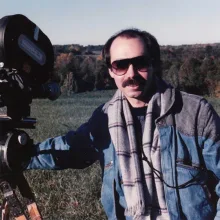
Interview with Matthew Mallison
Show notes
Filmmaker Matthew Mallison discusses his career including Fist of Fear, Touch of Death, editing Chameleon Street, and his involvement in The Baron.
Transcript
An automatic transcript, tidied into paragraphs. It has not been proofread, so names, titles and spellings may be wrong, and it does not say who is speaking.
Show the transcript (about 13,700 words)
Speaker 1: Hold your ears. It's show time.
Speaker 2: People pay good money to see this movie. When they go out to a theater, they want cold sodas of hot popcorn and no monsters in the projection booth.
Speaker 3: Everyone pretend podcasting isn't boring. MATTHEW MALLISON: Turn it off. MIKE WHITE: Hey, folks, welcome to a special episode of the projection booth. I'm your host, Mike White.
On this episode, I am talking with Matthew Mallison. He is an editor, director producer. He started his directing career with fist of fear. Touch of death, went on to work on things such as Chameleon Street, even had a little bit of role in bringing to life the Baron, which we spoke about earlier this year.
It was a great time talking with Mr Mallison had a lot of good stories to tell. I had a wonderful time talking with him and I hope you have a great time hearing him. Enjoy the interview. I wanted to know how you got into filmmaking.
MATTHEW MALLISON: Like a lot of people, I went to school, went to college, I actually went to NYU and to Queen's College wanted to see what the NYU experience was like. But any hour after that went out and a lot of people go knocking on doors. And I made my way to a place called August films, which was referred to at the time as the Technica building because Tech Cola occupied most of the space in that building. That 321 West 44 tech is no longer there.
But August films was like the East Coast version of New World pictures. For those of people who are old enough to remember. New World, lots of production, throw you into a situation and you just went for it. We cut a lot of trailers.
Americanized, a lot of pictures. A lot of pictures that come over from Europe, Italian, German, French British, a lot of the new wave stuff and we would do a variety of things there, but it was just a great way of experiencing the whole production process. We also did a lot of the, what do you call the exploitation pictures from the stuff, what I call the predation of Times Square from the Sony Chi of pictures. Things like me playing guillotine is one I remember but did a lot of work for this guy, Terry Levine Aqua saying leave scene Allen Shackleton.
Yeah. Really got my feet wet really fast. Great place, great experience for anybody who got in there was able to cut it because there were people who came to August films and just didn't have it and they will go on after a period. Of time because they just, they, it wasn't a thing for them.
MIKE WHITE: You mentioned Americanization of films. And I'm curious what that entailed. MATTHEW MALLISON: Well, a lot of times you get a picture and I'll give you an example. Terry Levine got a picture which eventually we called Brutal Justice.
There's an Italian picture. It was like Dirty Harry, an Italian answer to Dirty Harry had this very good looking guy like a cross between Clint Eastwood and Rob Redford. It was Italian. And in order to American eyes, a picture, they'd come in and they'd have a lot of locations, but they'd be Italian locations, but they'd have elements that could be utilized in the final cut.
And like for instance, in this film, Brutal Justice, we fortunately it was already dubbed. So that saved us a lot of heartache. But first, if they had a scene in an arcade, like fascination used to be in Times Square, but it was called something else and it had an Italian name, so I would go out and shoot footage of like Fascination Times Square as the exterior establishing shot and they'd cut into the interior and you see these guys at the arcade games. And so for all intents and purposes, it was taking place in New York at one point in that particular picture, the guy picks up a match book cover and opens it up and it has a clue, the Dirty Harry character of where he should go to find these killers.
So of course, that again is something that was all in Italian. So our art department made a matchbook that had the information that was important. And I, in fact, I remember in this particular one, I spread out a big plastic sheet, got some potting soil with, mixed it with debris and stuff to match where he was. And I got this Guy Scott because his hand looks similar to the hand of the Dirty Harry character and had an insert shot where he reaches into frame and pulls up the matchbook and then inter cut that was from the Italian version with what I reshot, which showed that, you know, he had to go to this warehouse because that's where this after hours party was taking place and that's where the matchbook cover indicated he should go.
So that's the kind of Americanization we would do. So that as well as possible, people felt they were looking at an American version of the film and a lot of times the dubbing was not the best in the world. This dubbing was actually pretty good. The reason being is they had there was a popular thing to do, which was when actors American actors were just falling out of favor with the audience in the US.
They go Overseas to make a picture in Clint Eastwood's case. He started his career on the Italian Spaghetti Westerns and then became popular and then was able to come back to the States. But in this instance, Arthur Kennedy, who was a really great stage actor and screen actor went over there and he played the police commissioner. And so he was English.
And if you know anything about Italian pictures, they shoot and they do all the sink afterwards on any picture, even on the Italian based pictures, because they can shoot much faster than we on the sound department to say. Yeah, we got a good take. So when you have an American actor dobbing themselves, they obviously can do a much better job than if somebody is saying something in Italian. And you're trying to put words in their mouth that are the English equivalent.
But yeah, so we did a lot of that at a films sometimes which is a subtitle job for French New Wave kind of things for German pictures. Sometimes they want to do rec cuts to cut down the running time or things were deemed to be unfavorable or maybe not something somebody would understand an American audience. It varied. MIKE WHITE: Do you remember what years you were working there?
MATTHEW MALLISON: You know the funny thing about August films because Simon Nour founded August films. You'd come there and work for him and he knew you were going to leave eventually because he didn't pay a lot of money. So I started like 70 I think it was like 75 76 and I left around 79 80 but like, for instance, I would rent edit rooms from him. And this is well in, through the, into the eighties, into the early nineties because he still had, he had great deals on space and it was reliable and it was dependable and I knew the facility and I knew the people there.
So I probably only worked there for about, you know, maybe three or four years, but I worked at that space in one capacity, another 10, 15 years, not necessarily for him. MIKE WHITE: How did don't go in the house come together, don't. MATTHEW MALLISON: Go in the house was actually something that started out as an idea from this fellow Joe Mayfield who we referred to at August films as Hollywood. Joe.
He was one of these guys who just had, he knew all this minutia about Hollywood, the things that you know, there. Did you that. So and so was the second ad on last house on the left. And I'm saying no.
And do I really care, Joe? He was a great resource. He would put out these little newsletters which he would print out and distribute to us about all kinds of little film events that were going on. And this was pre internet.
So it was like he was disseminating his information way before people were doing stuff online. Anyhow, he had this idea which was called The Burning Man. And there was a couple of people who were hanging out at all his films, Joe Ellison and Alan Hall. And they, Joe was, Joe had been working as a dubbing director and he really wanted to do a film.
So when he was schmoozing with Mayfield, they started to work on this idea and they thought it was feasible. And at that point, they needed somebody who knew the process. She didn't want to get involved in the production, post production process. I knew what there was to know Joe Ellison and his girlfriend, Elan Hamill, who became one of the producers didn't really know anything, Joe knew dubbing, but he didn't know anything once he supervised the a dubbing session, anything that was involved in the process.
So they brought me into to handle all of that. I became like the line producer of the show and we've brought it together, it was real grind and I have no budget film. And in fact, it was probably the first film, at least that I'm aware of where the technique where you would take a credit card, get a cash advance and then use that to finance the motion picture had been used. I think it was, I think it was Ellen who actually came up with the idea and I always found it amusing because you're staying one step ahead of the credit agency, but you're getting cash and I don't know how many cards she and Joe took out because, because I said to them, I said, I really don't want to get involved in that aspect of it.
But I said it's a novel idea. Go for it and they kept taking out credit cards. Hey, the film eventually got done. So it worked.
So you do what you gotta do to get it done. That's what it comes down to. MIKE WHITE: How did fist a fear touch of death happen for you? Just a fear.
MATTHEW MALLISON: Touch of death was, it was a pleasant accident. I had done a lot of work for Terry Levine on various pictures. Like Brutal Justice is one of his pictures. And I had actually just, I rent him on the street and I had just produced some, they weren't even called music videos back then because it was just back in like the seventies, late seventies.
It was a music films. We have a recording artist and we had hooked up with Albert Grossman. I don't know if Albert Grossman was the man who discovered Bob Dylan and he had this new recording artist Randy Van Warmer who had one of these hits where you sit on the beach in the summer. He would play a noise, him over and over again.
And yeah, I had just done those music videos and so I was between gigs, I was out of August films. And Terry said to me, you're very familiar with my inventory of films. I've got these boxes sitting over on the west side. Can you go and inventory it for me?
Because I want to send it to Bonded and I don't even know if it still exists. But boded was a place where you'd send your inventoried footage, box footage for long term storage and you had to carefully inventory it because if let's say you needed the printing negative for the Brutal Justice trailer, you had to know it was in box seven. So when you made a call to Bonded and said, can you bring me box seven? They'd bring you the box that had the material you wanted.
So he just had a bunch of material over there and he wanted to organize and he knew I was good at organizing stuff. And so I went over there and I went through all the material and most of it I was very familiar with and then this one box was there and it was a box of 10 reels and it was a black and white film and a lot of Chinese writing. But on the outside it said Bruce Lee and it didn't say Bruce Lie or some very with Bruce Lee. So I'm saying, wow, Bruce Lee, I said, what is Terry doing with a Bruce Lee film that I've never heard of?
And why didn't he release it? So I inventoried all this stuff and then I pointed this out to him and then he said, oh yeah, I forgot all about that. He had acquired a Bruce Lee film, a black and white film of Bruce Lee as a straight dramatic actor. And he was called thunderstorm and he was a very young man, probably, I don't know, late teens, twenties, but definitely Bruce Lee.
And I always referred to it as Bruce Lee and death of a salesman. Because as you watched the film unfold, there were a lot of elements similar to death of a salesman. He had an older brother who came home, it was a failure and the people were hard on him because he didn't make it. And Bruce was his young energetic kid from what I recall the original story, long story short.
The Bruce kind of they allude to Bruce taking up with some sort of liaison with his older brother's girlfriend. And of course, the elements looked down this unfavorably. So they're both struck down by lightning and killed. But it's like kind of, I guess it's like Chinese morality play.
You don't do that. And here's what happens if you do. You're looking at it today, you say, wow, they would even let somebody in China mainly in China make a film like this. Who knows?
But anyhow, so you look at it and you say, yeah, it's Bruce Lee. He's not doing any martial arts. And this guy named Ron Harvey, who worked in Terry's office who was an aspiring screenwriter said he had this idea and the idea was why don't we incorporate this into a much larger film? And it turned out at the time that Terry was able to convince people like Aaron Banks, Bill Lee Fred Williamson to participate, but didn't really have a story.
So then I said maybe if you use this black and white footage in conjunction with something else and maybe film some action sequences with Fred and Bill Louis and Aaron Banks and Aaron Banks was like the reigning karate guy in New York. If there was such a title, Bill Louis was the up and coming guy who was saying, I'm the new kid on the block. Come to me. So that was enough to get Ron's creative juices flowing.
And then they came to me with this really weird thing. They said we have that Japanese samurai film as well. What if the Japanese samurai was Bruce Lee's great grandfather? And this could be like a flashback kind of thing.
And I said, wait a second guys, you tell me that a Japanese samurai is Chinese. Bruce Lee's great grandfather. And I said, yeah, I said, no guys, you're serious. I said, oh yeah, I said, I don't know that, that's crazy.
I said, Japanese just because they're Asian doesn't mean that they're related. Jeff Japanese, I'm related to Chinese. I'm sorry, it's, and they said, don't worry about it. We'll handle the marketing.
I said, OK. All right. So Ron worked out this framework where we utilized this Japanese samurai film and the Bruce Lee film. He just had to have it in the film.
So you could legitimately say Bruce Lee's in this film, but the bulk of it had to be new footage. So we did this whole whole sequence of events where we utilize Aaron Banks. We used Bill Louis, Fred Williamson. Oh, we also had Adolf Caesar who you may or may not be familiar with, but Adolf used to do a lot of voiceover work for Kerry.
Oh yeah, he's got a great voice. Oh man, just like really just, you know, I'm not doing justice says you feel the terror, I feel the horror Adolph would walk in and you just did it. And he was a trained theatrical actor. He got nominated and I think he won our soldier story which was directed by no one Jewish and just, oh and just a really nice guy so he can in on board.
And we conceived this whole series of, I guess you call it, I call it a mockumentary because what we did was we went to Madison Square Garden because Aaron Banks was hosting his big martial arts event and we got Adolf Caesar and Fred Williamson to act as if they were commentators at the event. Kind of like a World Federation wrestling kind of thing was funny is that most of the stuff I did, it was like nonunion stuff, although I would work on union stuff but went and presented Terry with a crew. But I said Terry Ma for Gardens a union shop, you have to bring in a union crew and he says we can't afford that.
I said, I said the only way you could go in there is if you were doing a documentary. So that was enough to get Terry and his art department going. So they concocted these the oldest artwork that made it look like a film crew from a television station was coming in to cover the event at the garden. So with a documentary television crew, they don't care about the unionization aspect of it.
So it was really hilarious because to this day, although maybe now if somebody listening, as far as Madison Square Garden was concerned, this was just a television station came in which really floored me because the logo was Waq Aquarius releasing AQ and that was on all of the stuff on the lapel logos, on the microphones on everything. And nobody ever questioned that. What station is that? I never heard of this station.
But we went in there with a full crew and shot this thing and incorporated this footage and I shot some exterior stuff. I shot, I remember I did a whole thing with Bill Lou down in Chinatown on Baard Street and also in the South Street seaport doing this whole thing as a Cato kind of character. The whole thing, like I said, I looked at it as a mockumentary because it was, it reminded me of Woody Allen's, what's up Tiger Lily. You're making something into something that appears to be legit, but it really isn't.
Some people understood the humor behind mind is Sofia to death. Some people didn't. They thought it was shameful. The criticism about the Japanese grandfather Bruce Lee's Chinese that I completely understood because right from the get go, I said that's ridiculous.
Again, there was Terry and Ron and that's the way they operated. And actually Ron came up with a structure, but I would go in, I had to, I had a really challenging task with the footage because I had this Japanese samurai film which was cinemascope. So it's wide screen. And then I had the Bruce Lee footage which was black and white four by three, but could fit into 185 mask.
And at the time, most theatrical releases were done in 185. So I said to Terry, I said, Terry, we have to decide on the format to go with so that I can conform all this material. Plus he also acquired some, I also was shooting in 16. So the 16 had to go to whatever format we were shooting in because Terry felt shooting 16 was going to be more economical.
I said, yeah, I said, but then you have a conversion factor in there. So we decided to go 185 which meant that I had to go in like to brutally footage which had Mandarin and English subtitles. I had to go in and mask that to fit into the 185 frame. I had to take the scope footage and I had to do what's called pan and scan because the scope footage, the wide screen is great when you're in a theater.
But in order to the action would be far left and far right, you have to make a decision. Ok. What do I show at that point in time? Or do I pan across as if the camera was panning a lot of times, that's what I did in order to keep it within the 185 frame, which is a smaller frame than the cinemascope frame.
And then I had to blow up the 16 millimeter to 35 and also position it to 185. I, what did I use? I used a company called Select Effects and I remember this guy Tom, he just, he said, what? Now I said, hey, Tom, we got to do this and he was great because he took it all in stride was probably today the most challenging technical job I had because of all the different formats that I had to contend with.
Kind of like today if you were working digital and had to deal with a variety of codes and behind the scenes, what people go through nowadays is just when you go to a theater and you see something it's like, you know, I don't think people really appreciate the nightmare that post production. People go through to get there. Sometimes, sometimes they don't go through a nightmare. But a lot of times if they do so, finally, when fifth Few And Touch Lift was fifth year to lift was finished.
By the way, the title comes from an argument Terry and I had because I wanted to call the film Touch of Death And because we alluded to the whole thing about Bruce Lee dying from the touch of death. And Terry said, you have to have Fist in the title because martial arts films, the successful ones have fist. So it was like it was like the Chinatown scene, the daughter, sister, daughter, sister, this fear touch to death, fear, touch of death. And Ron said, why aren't you called this fear touch to death?
So, and I like we went OK, so that was it. So that how it became 5th, 5th to death. One of the longer titles in a martial arts film, Rival Riling the length of Crouching Tiger, Hidden Dragon. But anyhow, oh I forgot Rob Van Cleef, sweetheart of a guy.
He was also in the film and I loved working with him. In fact, we did one scene and we were in Thompson Square Park with Ron and his, he brought his students in and we had this altercation with the fight and Terry had never produced a film before, but there are things that I knew and one of the guys on Ron Van Cliff's crew had a T shirt on, it had all it had some logo. I can't remember from what, but it was a very recognizable logo from a sports company. And I said he can't wear that.
And Terry said, why? I said, Terry, I said, if the company sees this and they don't feel you're depicting them in a favorable fashion, they'll sue you. So he said, what we gotta do. So you know that saying, I'll give you the shirt off my back.
I looked at the guy, I said, you and I about the same side. So I literally pulled my shirt off. I had this Terry claw t-shirt and I gave it to the guy and he wore my shirt and that's how we shot the scene that day. So I'm standing in Thompson Square Park shirt lists, but I'm getting it done the way that it should got gotten done.
But I'm more confused when I hear somebody say, oh, I'll give you the shirt off my back. Well, let me tell you about shirt off the back. It was an interesting picture to put together the cut. I was very proud of the end result.
It opened and was reminded, Cle because, but it opened Showman that Terry is, he went and he put on these live shows at the theaters on 42Nd Street. He had one at the Selwyn Terry's actual office was right above the Selwin theater. But I remember he had this live show at the s and I don't know if you've ever had an opportunity, if anybody had an opportunity to visit those theaters which were old war guilt theaters before became the exploitation X rated cinemas that they were. But fabulous theaters, the DF that went to these places.
It was a shame that so many of them had to be leveled to bring in new places. I love it when I hear about things where old theaters are being resurrected and they're trying to maintain the same integrity that the theater had in its heyday. But he put on this live show with Ron Van Cleat doing a live stage show which was unheard of in Times Square for any theatrical release. But it brought in the people.
They did phenomenal box office. He did great business with that film and was able to shop it around the country. And what was interesting is that when he released the appear to death, it was around the same time that don't go when the house was released. And I actually have a pointed out somewhere from a variety when a variety was on a print form.
And it's very unique in that I had two films in variety's top 50 in the same week. Don't go in the house and fifth fiat to death. And what was great about fifth fiat after death is it had great Perth theater grosses. That's how you really judged the film back in the day that, you know, it, they released a film but if it was point in five grand, four grand, it was like, ok, but he opened fit the theater to death in New York, I think in probably about 25 theaters and he was grossing somewhere 10, 12 grand per theater on a, in the low budget picture, which was you were getting first front pictures that weren't opening with those kind of grosses.
And it was interesting to hang in with Terry because he showed me the whole distribution process. We had a total of, we had 33 prints and he would just move them across the country. And I said it was interesting the way he moved them from East Coast to west coast. And he said the reason he did that is that by the time they got to the west coast, the prints were pretty much beat the hell and back in the day it wasn't digital.
You had these big IC C cases which were heavy shipping was expensive shipping added to the out of pocket costs of the film. So by the time they got to the west coast, the prints were probably on their last legs and he would just have them die a death in the west coast. No, no point shipping them back east because he just incurred a shipping expense so he could store it somewhere. It was probably actually cheaper to print, make a new print in New York at the lab than to ship any of the other prints from the west coast back to the East Coast because they were so beat to hell.
Yeah, that's just to touch to death in a nutshell. MIKE WHITE: When you were working with Mr Levine. From what I understand you worked on a lot of projects that you weren't necessarily credited for. Is that true?
MATTHEW MALLISON: Oh, yeah. Yeah, that happened with Carry. That happened with Bo his films. Sometimes it depends on what capacity you were working in.
But also there were instances where there were NBAS involved, not in everything. But a lot of times you just would like for whatever reason, like friends with and we were working on Survivor and I could talk about Survivor because they said, yeah, you could tell people you work on Survivor, but you can't tell them what you saw, which, which made sense because there were times when I'd see things that were critical to how this CBS show Survivor was going to move along. Oh, look at that, look what happened there and I come home.
Hey, honey, you know what's new? I was Survivor today. I said, oh, interesting. And that was it.
We're not talking about anything else on that day because I honored the NBA. There was one film in particular that didn't have an ND A but it was very interesting in that Terry approached me and he had given a slight clue to people who were rurally killing aficionados. He was approached by a guy who had a low budget horror film named Mustafa Cod. That's the hint.
And Mustafa wanted Terry to distribute this low budget horror film. So Terry said, Mustafa and I were discussing this and if we can cut about 15, 20 minutes out of this film, we can get an extra screening in every day and that's get enough money in the bank. And I remember telling students I taught Avid at NYU and I used to tell as soon as we all want to be artists, but you will find quite often that people will discuss options with you that have nothing to do with art but have only to do with dollar signs. And this was it.
And Terry knew I was going to do a good job. I was gonna do a hack job and he basically, he left me alone and often when I do the free cards, I'd say is the director going to work with me? And they said, no, the director has bowed out. The director sold his shares back to Mustafa because he felt the film was going to be an utter failure.
So I went in cut this film and cut out the footage. They didn't really care what I cut out. They just wanted me to get it down to this running time so they could book it for one extra screening per night again. Just dollars and cents.
And the film open did phenomenal box office. We never could have guessed who would have done this box office. That film was the original Halloween and no credit on it. I know it.
Handful of my friends know it. I don't, there are times when you go in and you cut films and you say God, I'm really doing something good here. I don't for any moment think that I saved Halloween. Not even the least bit all I did with Halloween is I tightened it up, but the story was all there and I just tightened up really more to accommodate Terry, but also tightened it up in a way that I could live with that.
I could feel proud of that and they said they'd kill two birds with one stone. I could accommodate their priority and I could accommodate the idea that I want to do a good job. There's a bunch of those floating around that have NDAS and it is what it is. A lot of times the stuff I did in August films, it wasn't practical to add a credit after the fact, actually, I worked for Mustafa.
A later on Mustafa made a directorial debut. He did a film called Line of the Desert Oliver, Reed, Anthony Quinn, and he brought me in to, he wanted to do a recut on it. I remember being there and there were a bunch of, I get to call them suits for lack of a better word. And Mustafa classy guy, very nice guy.
But I remember these suits were really taken aback in the room there because I had watched the film and I would have given Mustafa my feedback and some of it was critical, I wasn't fresh, just critical about seeing that. Let's say it didn't work the way I think it should work and how it will work better. And I could tell these guys were like, whoa, you're talking like that to Mustafa because they were all, they were all yes men. They wanted to keep the six figure salaries and heaven forbid they should say anything.
And again, I wasn't trashing Mustafa. I was giving him constructive criticism and he appreciated that. And that's the way, that's the way I work. I can be a button pusher if you want me to be a button pusher.
But sometimes people want me to give them the cold, hard facts. And that's what I said. Sometimes I would talk to people about how about if you shoot this or shoot that. And most times they won't do a reshoot because you're already too far in the red to want to incur any additional costs, which is unfortunate, but anyone who's in post knows that they hear this over and over again, somebody goes out and does their picture and they say they want to pay X dollars for the post and they say, well, I don't work for that.
We have no money because they take, they always budget and they take all the post money and they put it into the production and by some miracle think that the money is gonna magically show up and it doesn't. Yeah. What are you gonna do? That's a light.
I give people budgets and I think they're realistic budgets and I gotta say I can't recall actually going way over budget on anything. I did a lot of pictures for Earl Owensby and Earl. I know got really fed up with the post production people to the point where I was the only editor left at his place, which really didn't make much sense because he kept shooting pictures and he would sit on the shelf waiting for me. And I think what it came down to is that I'd say to her, oh, it's going to cost X dollars.
And I'd just tell him if it was maybe X plus 10% would end up maybe what it actually cost as opposed to flew with like one picture they did there. And the sound job was in excess of $100,000 but it wasn't because mistakes are made because they just decided to do it and not tell Earl and what's e all going to do about it. I don't know. It's, I don't know, it just, I don't work that way.
I can't work that way. I know a lot of people who do work that way. But that's their thing. MIKE WHITE: Where were you in your career?
When Chameleon Street came. MATTHEW MALLISON: Up, I had been cutting a film called, it was called Trapped. I think it was later released as fa mine and the farm was being handled by a company called Films Around The World. Alex Cogan.
And in fact, I edit a rented by edit room at August films and this was back in 88 89 something like that. It was shot out in Wisconsin and I was doing the post in New York and it turned out that the edit suite across the way was occupied by Wendell Harris and Dan Lawton, who was the producer and they shot on film and were transferring to tape and they were screening Dan Elis in that room. They seem to be having a good time. There were a lot of laughter because the way these edit rooms were set up, if you can imagine like cubicles in an office, the tops are all open.
So there's like a level of privacy, but you could hear anything that's been going on from room to room. So I would always hear a lot of laughter and I remember that, you know, I met Wendell, I met Dan and they were just having a jolly time Wendell was, I don't know, he didn't seem to have much to say Dan was very talkative. Mile a minute, blah, blah, blah, blah. And you meet people and everybody's always excited about the film they're working on.
So I finished up this film, I guess we call it Trapped for Alex Cogan. And like a year later, Dan Lawton calls me up and I figure, oh, Dan got my info. He's called me up, I guess maybe they have another picture. And Dan says we're looking for somebody to cut Million Street said Chameleon Street.
That was like a year ago. He said, yeah, we don't have anything. I said, what do you mean? You don't have anything?
I said it's been a year and so Alice Cogan sent me a tape that was supposed to be what they had managed to put together over the course of the year. It was pretty much unwatchable. It was like, and it wasn't like, like I'm basing this on editorial decisions. It just was like, it was just like a mess.
It was like all over the place with trying to look at this thing. What's going on here. There were, first of all, there were massive technical issues. There was for people who are not aware of, there was no pretty much no control track on the tape.
And for those of you familiar with that control track, it basically is what stabilizes the video image. Now. It's like people go into post and you get a filter if you apply. So you can make it look like you have no control track because you want to create certain quality in the imagery.
But this just had no control track. It kept dropping out. And I was trying to figure out with somebody like doing as symbol edits on top of symbol edits with out control track though in I said, I don't know what's going on here. So you could only see little snippets of what this story was.
And Alex said he had apparently advanced some, some money based on the guarantee of foreign distribution. And he was very concerned. And Dan and Dan told me, he said, yeah, Wendell's mother took the film away from him saying reality. So Wendell's not working on the film.
She said, no, I guess it was problematic, you know, skirting around what the situation was. And then Helen from what I discovered, Helen was in real estate. That's where she made her money. And so she all she knew she was the executive producer and all she knew was that the film had to be cut or it wasn't a film.
So she said, Dan said, yeah, Ellen pretty much will give you like Carte Blanche. She just wants you to finish the film. I said, OK, send me a script, send me the footage. She said, there is no script.
I said, what do you mean? There's no script? I said, was there a script? He says we had something but there's nothing here that I could send you.
I said what I said, wait, I said, do you have a scoop supervisor? He said, yeah, does a scoop supervisor have notes because any script supervisor has notes when they shoot? And they said no, we don't have many people work there either. I said you got anything.
So Dan was able to dig up some, like articles about the guy Douglas Street and that's pretty much all I really had to go on. And so I watched this tape a couple of times because the one that had all to drop out and the control track issues and tried to make the best I could out of it, plus whatever I could read about Douglas Street. And I thought this is an interesting character. So basically all they sent me was a Foot Locker and the Foot Locker becomes critical later on with these tapes.
And that was it. And that one tape what Kogan had given me, which was, I don't know, it just was like there were brief moments there but just kept dropping out. It was very frustrating. So I just sat there and I would put the tapes in the system and I would just watch each of them.
Unfortunately, they had slated the stuff. So I knew essentially what the intention was sequentially for the film. I went to all the footage and I decided here's the course of action. I'm going to take to cut this picture.
I have worked on occasion without directors. Obviously, I did the thing to Halloween. That was like a very small scale sort of thing. Two pictures I did for Earl Owensby where he pretty much cut the directors out.
Actually, I take that back. One of them, the producers were from California and they cut the director out and took me to California to finish cutting their film. In those instances. I had a shooting script, a material to work with.
It was like I had a road map here. I had nothing other than the articles and whatever I can get out of whatever that tape was. Dan tried to be as helpful as he could. And so I moved forward and I had some ideas and it's kind of like when you're writing a script and you write something and you say I like it today and then you don't like it tomorrow.
That would happen with me. I'd, I'd something I'd say, yeah, I like the way that's going. And then I'd say, yeah, I don't like the way this is going and I'd go in and take another approach. Helen Harris would come in to New York because she was based in Michigan with her son Hobart who was, he's nice young man.
They didn't really know anything about film, but that didn't really bother me because they could watch something and express an idea about what they think it should do you know who it might play to more, who should be more sympathetic so forth and so on. And that's fine. That worked. I think Hobart was pre mid, I think they were fine.
They come in, Wendell got hold of the phone number for the edit Ramos and he would call me up and I don't know, he just seemed to be negative, I'm there to work at the behest of the production. And if he wanted to call up and say, well, the scene with such and such, but he didn't really lend anything to it. He just called up and he was just angry and I can understand him being angry if I had directed something and it was taken away from me and now somebody else is doing it, I would be upset but don't be angry at me if it's not like I took it away from him, give me some feedback that can be constructive.
So what ended up happening is that Helen found out that Wendell had been calling me up and she said, don't talk to him, you're wasting your time. And I said, really, she says, I want you to spend your time editing for me. I don't want you to spend your time talking to him. And obviously there was a problem going on there and I was not gonna get into the middle of it.
I said, OK, I just went and did her bidding she was paying me. I felt bad for Wendell. Here was his vision but whatever had gone on the previous year, I have no idea. And my objective was to move forward and get this picture locked.
But actually a little side note, very funny about Helen again. I really like Helen a lot. She was a, how could I describe it? You know what she looked like?
She is like that woman. What's the name? El Getty from golden girls. The little diminutive woman who was the grandma or whatever, this very diminutive black woman.
Really? She's very sharp. Just she looked like she would be it. She'd go to a lady's social or something.
And one time Dan came in before they were coming in for a session and I'm sitting in the room and the room was small enough that you could, how could I say a room was good Carry? And I said, damn dinner. Are you carrying weed on you? And Dan had package of re fur in his jacket.
He says, oh yeah, you could smell that. I said, yeah, I said, oh thank God you told me. I said that Helen would be really pissed off. I said, why would Helen be really pissed off?
I said, yeah, maybe she wouldn't like it. He said, oh no, she's really anti drugs and then you don't want to get on her bad side. I said, why is that? She says a little purse.
She carries. I said, yeah, she says she's got a revolver, a lo revolver in that purse. I said what he says, yeah, when she goes to collect on her real estate holdings, everybody pays. I said, oh, ok.
So I had a whole different, I had a whole different view of Helen from that point forward. I'm saying, is this a sweet little woman who could probably blow my head off if I wronged her. And, but no, she was very nice. She was very nice as was her son Hobart again, I had very fun constructive times working with them to get the picture cut but not nice people.
MIKE WHITE: That's amazing. It's like trying to put together a jigsaw puzzle without the box cover. MATTHEW MALLISON: That's a great way to put it. But it's just, what happens is you eliminate issues, you eliminate problems and eventually you don't have any more problems.
There were times when I would take stuff, I tried to follow the linear passion of the intention based on the scene numbers, but there were times when I would bridge stuff back. In fact, a lot of times I developed this bridge where I used like a, there was, there was some footage of a shot of a train passing and it became like a lot of times people have establishing shots in the films, a little bunch of films, they often forget to set up a scene with some kind of establishing shot and it's very rudimentary. It's still making 101.
Sometimes it really helps to bridge from one scene to another. What's his name? Jim Glickenhaus, who did the exterminator, his first film and I can't recall the name of his first film. He came and my friend Victor cut his first film and Victor was lamenting.
He says they shut all these scenes in these locations in these rooms, but they didn't do any establishing shots. And we were looking at the footage and when you shoot film and the assistant cameraperson rolls out the role so they can send to the lab, they just point the camera anywhere. And so sitting there with Victor, we're looking and at the end of the roll, like the guy is sitting out somewhere and the camera's rolling off and maybe he's pointed at a house. So I said, Victor, did you establish a shot?
He says, what are you talking about? I said there, look the rollout, you know, and lo and behold, we kept trying these rollouts from the second camera person who happened to be pointing it at a deserted street or a house or some parking lot or something. And so Victor went in and he froze the frames and those became the establishing shots on this film, the astrologer that was named them the astrologer. So if anybody watches the astrologer and you see these establishing shots, those are all camera rollouts by the assistant camera person that are frozen because they had no establishing shots in the astrologer.
But yeah, but so anyhow, coming back into Chameleon Street, I went and tried to build some bridges. You know that after a while you got the sense that not that it's an uncommon theme, but the whole thing was about money. How are you gonna get some money? How do we deal with this life and get some money?
And like, I love the drug dealer guy, make some money. I just love that guy. The stuff with the train going by became like a rhythmic kind of thing. That was one of the things I started to develop at the film.
Film takes on a life of its own beyond the writer, beyond the director, beyond anybody. It has its own soul and that's what I try to do with any film is I established the soul of the film because it's you experience that film for what it is, whether it's Ridley Scott or whether it's Spielberg, it's still that entity that stands alone by itself. Some films you could look at and you can say what it's a Ridley Scott film or it's a Spielberg film. But even if you don't know who directed it.
MIKE WHITE: I have to ask about the voiceover because it's so integral to the film. Was that already recorded or did Wendell come back in and put that on after you had laid down the visuals? MATTHEW MALLISON: There were parts of that, that he had recorded when he shot the original film. So I was able to lift that stuff out.
But he did a fair amount of it in post production. After I had locked the picture, he was basically married to the cut because Helen didn't want him to do anything picture wise to the cut because she was afraid that the film wouldn't get finished. So he did a lot of that. Actually, the, once the film was cut, normally the picture editor stays through to deal with the post, the audio, I had actually set up the arrangement with a guy I knew named Bernie over at a place called Sound Dimensions, which was actually in the same building that I was in, you could literally walk around the corner.
And there was a way, even though they were on the fourth floor, there was a doorway on the fifth floor, which is where August films was, you could enter and you can get into that facility. I had made the arrangement and Helen went in and sealed the deal, which is what she needed to do. And they were happy with the arrangement. I was always happy with working with Bernie because he always delivered more than I expected.
He also would work a flat which sometimes he didn't care for a flat can shoot you in the Foot. I would almost never work a flat unless I was going to build an exorbitant price that people would say you're out of your mind. And then they play me on a weekly or an hourly whatever, because you can get carried away in post production. I've worked on pictures from literally where the director spent working with director spent nine months and he just kept changing everything over and over again.
And it was on Avid and I kept looking at it. I'm saying to myself, I'm going to go look back at my old cuts and I'm saying this is the same cut we did six months ago. But anyhow, that's the danger of post production. Anyhow, they took me off the picture.
Rather Helen took me off the picture. It wasn't anything malicious. She just said it was going to be more cost effective to bring in Wendell from Michigan and do the audio than to keep me on hired. And Wendell could have come in, could recorded the lines and could have left.
Now. I could have finished it, but he was there the whole time. I would say they spent at least 20 weeks if not longer on the audio, which is not unheard of for a film except a low budget film. That's a bit too much on a low budget film.
And I did hear a couple of the editors who work on the film were lamenting about working with Wendell that something in fact that they couldn't understand and I can appreciate he would go to the recording session and he'd wear, you know, that Walkman, he has in the film with the headphones. Yeah, he would wear that Walkman into the recording session in the studio while he's recording, but he'd have the headphones on. And so one, they're getting bleed from the headphones when he's recording. And two, he wasn't focusing on the fact that you got to do recording and might have been because Bernie was working a flat.
If he took two minutes to record this or two hours to record it wasn't going to cost him any more, which I personally find a bit abusive. I would never have anybody coerce me into a very hurry if I've got a flood. But at the same time, I would respect the idea that let's do this and move on once we get it right. The other thing that, that they were lamenting about and lead us to your imagination to figure out what was going on.
Then Wendell had this personal assistant that came with him to New York, this guy Dale. I don't know what Dale did other than to be a personal assistant. And these editors said that sometimes they'd have to stop working because we would go to Dale, go out and get me some videos which is apparently code Dale would go out and he'd come back a little bit later and granted we're working in the Times Square area just to give you a sense of where we were. And this is back in the late eighties, early nineties, it was back.
The film was released in 90 so late eight. So he'd come back a little bit later and Wendell Lindale would excuse themselves and go down the hall to the men's bathroom and lock the door and, you know, you use your imagination. That's all they told me. That's what I know.
But whatever everyone wants to do with their life, that's their business. But in the time for work and the time for play, and I think one has to prioritize what one is doing at any given point in a time. Anyhow, that's what they told me. Like I said, it took a long time for them to do the post audio on it.
Bernie was just the right man for the job. He Bernie had worked for people like Robert Altman, he would build a sound design. And in fact, a lot of the notes I gave to Bernie were based on, I had done a fair amount of sign design. I did Richard Foreman.
I know if you feel me would, Richard Foreman. He's an avant garde theater director. He did one theatrical feature called Strong Medicine. And I was his sound designer on that.
And it was really fascinating working with Richard because if you've ever seen any of his avant garde theater, it's just very revolutionary, unique. One of a kind of things. Again, the kind of experience where sound is just not a knock on the door and you put a knock on the door. Richard Foreman was the kind of guy who would create an audio experience with his theatrical events.
He didn't just think that it's just a visual. It was also the audio experience. So I really appreciated working with Richard Foreman and I did the sound the line. So I gave a lot of notes to Bernie, which I think was helpful to the extent, especially when I was written out of the picture.
Anyhow, it was this thing about the Foot Locker, as I mentioned earlier, they gave me a Foot Locker with the tapes and Helen's last trip to New York, I had an empty Foot Locker because the sound people need whatever the source material it is to pull audio for whatever reason to replicate something to extend audio tracks, whatever. So I had gotten all the tapes over to Bernie. He didn't want the Foot Locker. We just trying to take up space.
He put her on a rack anyway. So I had this empty Foot Locker who was sitting at August films in the edit suite. So when Hele came to see me, she said, do you need that? And I said, no, I don't need a Foot Locker anymore.
She said, ok, I'm going to take it back with me to, Michigan. I said, ok, so she took the Foot Locker. So, and now, I don't know, a week or two later, the lab guys, and basically there were three labs in that part of town. There was Precision Deluxe and Technicolor and there was TV C and the guys in all the labs, they all knew me and they're coming to me and they're saying, hey, there's some guy running around town in a fil center building in a technical building.
They're saying that you stole a Foot Locker. I said what? And at first I'm trying to figure out what Foot Locker and then I said Foot Locker, oh, maybe it's that Foot Locker that Helen took. So apparently it was Wendell was yelling at people that I had stolen This Foot Locker and I'm going to myself, my God, this is the guy I ever talked to his mother.
I said so eventually, apparently he talked to his mother and she explained to him that she took it back there with her. And what annoyed me about that was that he knew that I was hearing all this nonsense from people, but he never came up and apologized to me. A simple apology. Ok?
An oversight. Ok. We all have oversight so we all can make mistakes. So just sewn up to it but never heard word from him.
And in fact, Simon up turned from August films. I said what a character Wendell came to August films and he was shouting at Simon. He says that ma and he stole my Foot Locker. Have you seen the Foot Locker?
And so Simon goes over to a desk and this is what he tells me because I was a witness to this. He goes over to the desk and there's a pile of papers and he said, lift up the pile of papers and looked underneath the pile of papers. He says it's not here. And then he goes to another pile of papers and lifts up the pile of papers and looks so good.
I don't see any Foot Locker here and apparently Wendell got so ticked off, he just stormed out of the office. But you know, again, I understand that Wendell could be upset that his mother took the film away from him, but it was completed. People look at a film and they look at the end but they say who directed this film and that's what it really comes down to. So he should have just took it for what it was and left that, that in fact, when they were doing the end credits again, because everybody in the film community in that part of town knew me.
They were doing the end credits at effects unlimited the end. And this guy mo who owned the company called me up and said, Wendell's removing your name from the end credits as an editor. I said, what? So I went and I called Helen up and I talked to her and she was very apologetic.
She had no idea what did she know Wendell's in New York, supposedly finishing the film. And so Wendell in the end credits, he put himself says, I think, written, directed and edited by. And I'm saying to myself, God, the guy is like, what is with this guy? Apparently, a lot of people had seen the cut and they were really excited about the cut and thought it was really great and it's like he decided then that he was going to take away any possible glory from me by putting his name as the, as edited by and removing my name.
So she said to me, really sorry, what about? And I guess this is a compromise between a mother and a son. You can't deny a mother and son. She said, what if he make you supervising film editor?
I said, Allen, it's really not the case but if it's going to appease the process, so be it. So it's very funny because who's on the world released a VHS, but the VHS was back in the day. That's what it was on the sleeve. It says I'm the editor of the film, but on the credits in the film, it says I'm the supervising film editor.
I told people put this on my tombstone, which is sometimes the most important credit in this business is the one on your bank account because it really comes down to that. Sometimes the other one I'm infamous for is that now? Especially see it nowadays, if you watch like a movie on like a TNT or a TV S or something. And I said that, that television stations utilize what's cool relative velocity.
And I, they say, what's that? That's when the credits roll by so fast that only a relative can catch your name if they don't blink, that's relative velocity. There's so many things that I worked on that my name isn't attached to. I know it.
A handful of people know it. I remember this one guy told me early on, he said, editors are whores. And I just said that that's a really poor attitude. I said, editors are that taken advantage of and on rare occasions, somebody will say thank you to an editor or appreciate an editor, you gotta go in there and do your job and accept the fact that what you did and move on.
I just say, unfortunately, and it's not just editors but a lot of people in various capacities in the film business who are just not happy people because they feel they were taken advantage of. And I don't know it's life. I don't know why I'm just recalling when you know, the film went to Sundance and it won the grand jury Sundance Prize, which is a great accolade for the film and talking to Helen. And I said, I heard the, that's great.
Did you get any distribution deals? He says, oh, yeah, we got a distribution deal from Hemdale And Hemdale at the time. People may not have heard Hemdale, but I'm pretty sure Hemdale was the original distributor of the Terminator movie, the original Terminator movie. That was a big thing for them.
So I said, oh, I said that they're tied into major studios, you should get a good distribution deal. And he said, oh, we're not going with them. I said, why not? He says we've been told they're crooks.
I said, Helen, all distributors are crooks. I said that comes from the territory. I said the only distributor that ever had half a decent track record was Orion and they went out of business because they were actually giving legitimate payouts to the people who they were working with. And in fact, Terry Levine told me, Terry Levine again, a distributor said to me, Matt, if you ever have a picture and you got me to deal with the distributor and you get your advance.
The first thing you do with that advance is you put it all in the bank, don't spend any of it. I said, why is that? He says, because that's the money you'll have to use when you hire an attorney to get them for trying to beat you on the tail end after it becomes distributed. This is coming from a distributor like I face a fear, touch of death.
My deal with Terry was like all my money was upfront. I had no profit participation. I really wasn't interested in it. He did very well by me.
I was very happy the day the picture opened, I was paid in full. I actually remember the budget for the picture because he showed me the sheets. It was 100 and $22,500 is what is to feel a touch of death cost. And I made about between 20 $25,000.
So if you do the math, there you look at that and you say in today's numbers, that's like a 1/5 of the budget. So if I did $100 million picture today, would I get now? Would I get $20 million? I said that that would be pretty good.
Everything is relative afterwards. I don't know. I thought Wendell really didn't take advantage of the situation he had been presented with because again, obviously, not everybody wins. Sundance.
And when you win Sundance, you got to capitalize on it while you're hot. He was on national television. And I remember I went to watch this thing and I said to myself, this would be great. You can talk about the process and you know about the struggle filmmaking.
He gets on and I don't know, maybe he had 10 minutes of being interviewed most of that 10 minutes. He spent moaning and groaning and griping about his negative match because the negative match had withheld a reel because they had a dispute and he was holding up his creative process from what I could talk because I knew the negative match Wendell with delinquent on payment. So you know anybody in business you pay me, I give you your goods, you don't pay me. I don't give you your goods.
That's life. Just even if that was the case. National television, I would talk about the struggle of making the film. I would just swallow whatever anger I might have about that situation and say, yeah, we made this film and it was, it was a real struggle and a real challenge and people work really hard and people were just dedicating themselves to the task.
And that's the kind of stuff you talk about. Probably more than half the people who are watching that. If not more said, what's a negative match and why does that even matter, Wendell? He needs to relax.
He just, I don't know, I do think that he's a brilliant individual. The concept buying Chameleon Street was excellent. Sometimes you hit and sometimes you miss, I had actually worked years before with a fellow named Philip Fenty. Granted until Spike Lee came along, there weren't a lot of black filmmakers of color making inroads into the industry.
And Philip Fenty had written the screenplay for Superfly. And so he did a film called The Baron. MIKE WHITE: I love the Baron. I've been trying to get a hold of Philip Fenty for years.
MATTHEW MALLISON: I don't know what he's up to. But I'm gonna tell you such a nice Philip Fenty. I gotta tell you across the board. Probably if not the most, one of the most intelligent focused people I have ever met in my life.
This guy was sharp, very sharp. And the film The Baron was not the average black exploitation film. It wasn't even an exploitation film. He had an intelligent actors, people of color, was it Calvin Lockhart Raymond Saint Jacques?
We actually worked on that because he came to August films and the ending of the Baron. Assuming which version you saw is an ending that we created at August films with the thing with the car and the explosion when we did the barren Simon and I were working on it and we did the whole thing that we cut and the finishing and of course, we had to do a print and he needed a print for a screening the next morning of when we were working on Simon and I were actually doing the timing. We actually had a Hazel team printer. If anybody knows the Hazel Hazel team assigns the color values to sho RGB.
People have heard of RGB. So in the day this was the technology and basically what you do is you look at it, you analyze it when you like the color, it gives you values for the red, the green and the blue and you put those on a piece of paper you write down those values be 25 30 25 whatever. I'm just making numbers up. And then you had to go in order to have a print that lived, you had to create a punch tape which were like those old punch tapes, the data systems, like, like the old punch cards when computers were these big monsters, but they were punch tapes and they had retrofitted these punch tape technology to the printer so that as it would hit each cut, it would change to the number, the value of the shot colors, whatever it might be.
So in order to get this done, Technicolor was not going to do anything to help the Baron because this was when one of the Rocky movies came out and I think it was Rocky Two and we were working on the barren and so they could care less. One guy with one print is going to do when they have printed out hundreds upon hundreds of prints that had to go out the next morning for the release of Rocky into theaters some ridiculous amount. And you can understand how labs worked in a day. Technicolor had operations the East Coast and west coast.
So they would make an inter positives, generate an interne and then that became a printing negative. And you, so you'd have prints made on the East Coast princes made on the west coast. And then you'd have two shipping hubs east and west to distribute to various theaters. I remember going up to one of the mini brothers and a lot of the film business.
You had brothers, fathers, sons and it was Richard Minnie and you'll have to excuse my French. But I remember him saying to me, I said, we're having a print done of the Baron. I'm gonna come pick it up tomorrow morning. He says, what the fuck do you think you're doing the Baron?
We're doing Rocky here e out of your freaking mind. Forget it. And he was laughing at my face. He was one of the expediters.
And so Simon said, here's what we're gonna do. He says, I'll do the timing. You do the punch tape, put the punch tape inside of the cut negative hands and then you got to go find Charlie Ponti. Now Charlie Ponti was the night manager of Technicolor and he says, and you got to give him this.
And Simon on his desk had a brown paper bag and looked inside the bag was a bottle of Tank Of Ray Gin. He said, he said, I've spoken to Charlie. You give this to Charlie. Charlie will take care of the print.
So I went down there, I was pulling an all nighter. So I'm there. I don't know. I finished the punch tapes like two in the morning.
I take the bottle, take the brown paper bag. I go to Charlie's office. He's not there but it, I go in and put it on his desk and I leave because I figured that's all I could do. And so apparently what Charlie did is Charlie went when the guys take their lunch break in the lab because he was, he's a printer.
That's, that's how he started in the business. So he knew I had to print. So he went, he took all the cans of the Baron from the expediting room, brought them into a printing room, put them up on a machine. He printed out a print of the Baron with my pudge tapes.
And I remember contacting him when his shift was about over. I called up. I did you get the package and said, oh yeah, I got the package. Thanks a lot.
So he got his package from Simon. So I remember going in the funniest thing. I went into the expediting counter and of course, they're going crazy because they're spooling off all these prints of the Rocky movie. And I come in and there's Richard Minnie and I said, Richard, I'm here to pick up my print of the Baron.
And he again, what the fuck you're talking about, man? There's a print of a Barrett. Come on, we're doing Rocky here. I said, could you take a look please?
Cause Charlie had assured me and lo and behold, already in ICC cases broken down, ready to go right to the projector, these two ICC cases with the Baron. So he looks at me with this look of like how the heck did you pull that off? Kind of look on his face and so signed for it. I came, took the IY cases.
I just smiled and I, you have a great day and I just left. That's the way we worked at August films. You get it in and you got the job done. But I do know that Philip as nice a guy as he was, he had a real challenge.
I think some of it was due to the fact that he was a, he was a person of color at a time when that was not expected. Again, this is probably like a good 10 years before Chameleon Street. And I was really surprised that nothing came further for Wendell after Chameleon Street because then it was right around the time of Spike Lee and they were just like a lot of emerging black filmmakers. I'm just guessing here that the subject matter was not the assumption of what Hollywood thought black filmmakers should be doing because that was, that was a case with Philip Fenty that it was not the expected black filmmaking experience that Hollywood wanted.
But open up, open your mind be receptive to a new way of thinking because it may become the norm, the gay community, the same thing. It's like people got out there and started to produce things that were, shall we say not the standard fair and a few of them fell by the wayside. But then nowadays, we have great filmmaking experiences because we have perspectives from people from all walks of life. And I just love it because it just, it enriches us all.
MIKE WHITE: So what are you up to these days? MATTHEW MALLISON: I do consulting as the case may be. But most of the time I'm sitting and writing and I'm actually in the process of trying to write something that one of, one of the best things I personally think I ever did. I did a short, it was a mystery a while back.
We got a lot of positive response from it's called Jokers Wild, not to be confused with the game show. But HBO bought it when, you know, when they have a film running and it runs and then they have 15 minutes left over before it runs up to the hour. They bought it to fill in those spots. Showtime, bought it.
I won loads of festivals with it and I did this a while back and I said, this is kind of the direction I think people want to go because people have shorter attention spans and like, like I love black mirror and I said, I would really like to do something along the lines of a black mirror, you know, and everything doesn't have to be a feature film story should find its own, I don't know, natural beginning, middle and end. And if it's 28 minutes long if it's 14 minutes long, so be it's natural, it's real, it's genuine.
So that's why I've been writing. I want to put together enough of a body of work so that I could say here we have X amount of stories and actually, I write stories at this point. I'm not writing screenplays for you. I think the stories have to stand on their own because the story stands on its own, then the rest will come along naturally.
And actually, if my daughter is listening to me, my daughter is in production. She's a producer. She's got a group of her girlfriends, she got together with who did a professional job, a really professional job. They've been doing some group of concert films and I'm really pulling for them and it would be nice to work with my daughter.
One never knows. And one can only expect that she goes her way. I go my way and if our path to cost so be it, but that will be a fun thing to do remains to be seen. Anyhow, I'm having a fun time.
I'm enjoying life. I was one of the smarter people, I guess just from a, I guess a financial perspective in that I was putting money into my retirement fund decades ago. I've reached a point now where I can retire, I can retire comfortably if I want to, I really don't want to retire. But I'm not all that concerned about my financial future.
Although heck, if I live to be 100 I might have a problem, but I'll cross that road, Mr Mellinson. MIKE WHITE: Thank you so much for your time. This was fantastic. MATTHEW MALLISON: Ok.
It was great fun. I am enjoying it. And by the way, they interviewed me for Don't go in the house for the Blu Ray edition, which is coming out next year. So people want to look forward to that doing these Blu Ray actors.
I did one for 50 year touch of death and I said I just did this one for don't go in the house, but that's not coming out till next year. I'm also in a movie on Netflix that came out a documentary about filmmakers in particular martial arts filmmakers in New York, martial arts Chung. It's saying Kung Fu kicks, but there's more to the title than that. I'm sure as soon as we get done here, I'll say, oh yeah, that was the title.
That's about it. At least that's all that comes to mind. Although I found with these things that when you get done, you say, oh, I could have talked about this or oh, I could have talked about that. But anyhow, it is what it is as they say.
Comments
No comments yet.