Episode 638 · Film year 1995
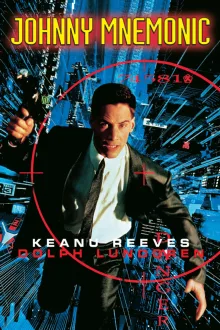
Johnny Mnemonic (1995)
- Special Guest
- Robert Longo
- Guest Co-Hosts
- Duane Swierczynski, Dahlia Schweitzer
Show notes
Duane Swierczynski (opens in a new tab) and Dahlia Schweitzer (opens in a new tab) join Mike to discuss the film while director Robert Longo dishes about the behind-the-scenes struggle to get the picture made.
Labels: Barbara Sukowa Dahlia Schweitzer Dina Meyer Dolph Lundgren Duane Swierczynski Henry Rollins Ice-T Keanu Reeves Robert Longo Takeshi Kitano Udo Kier William Gibson
Transcript
An automatic transcript, tidied into paragraphs. It has not been proofread, so names, titles and spellings may be wrong, and it does not say who is speaking.
Show the transcript (about 29,100 words)
Speaker 1: Hold your ears. It's show time. People pay good money to see this movie. When they go out to a theater, they want cold sodas, hot popcorn and no monsters in the projection booth.
Speaker 2: Everyone pretend podcasting isn't boring.
Speaker 3: Turn it off.
Speaker 2: Good morning. This is your wake up call. Yeah, the year is 2021. It is no longer safe to transmit information.
Phones, computers and satellites are all vulnerable but there is a solution. Your storage capacity, I can carry nearly 80 gigs of data in my head. Input the data into the brain of a human courier. Like Johnny Mnemonic hit me.
How do you feel all that in your head? Anyway? I had to dump a chunk of long term memory. You had to dump a chunk of what my childhood.
What are you doing? Making a long distance phone call? I got the goods, Ralphie now, I just want to get them out of my head. Now, in a future, we locked on them with those who control the information and control the world.
I've been charged with recovering the head of the Mnemonic career. Everyone wants what is stored in Johnny's head double cheese anchovies. You were waiting for me. Ralphie time is running out.
I'm a dead man. If I don't get this out of my head, if I can get it out. Oh, the cranial drill and a pair of forceps or the future's most wanted fugitive, right. Great.
Keanu Reeves. You can't shoot me. Not in the head. Johnny Mnemonic.
MIKE WHITE: Welcome to the projection booth. I'm your host, Mike White. Join me. Once again is Mr D Syski.
DUANE SWIERCZYNSKI: Hey, Mike. Thanks for having me. I'm thrilled to be here for Sci-Fi July. This is exciting.
MIKE WHITE: Also back in the booth is MS Dahlia Schweitzer. DAHLIA SCHWEITZER: I'm so excited to be here. MIKE WHITE: We conclude Sci-Fi July with a look at Robert Longo's Johnny Mic released in 1995. The film was based on a story and adapted by William Gibson and stars Keanu Reeves as the titular Mr Mic, a data career with an implant in his cranium.
He's hired by a trio of scientists who overload his hard drive with the cure for a disease of the future. We will be talking about at least three versions of this film from the theatrical version to the extended cut to the recent black and white version. So if you don't want anything ruined, I suggest you track down at least one of those and watch it before proceeding. You have been warned.
So, Dwayne, when was the first time you saw Johnny Mic? And what did you think? DUANE SWIERCZYNSKI: What's funny is my first experience with this story was not the movie. It was actually the short story.
My father, I used to when I was nine years old, he used to hang in this wood shopping, you know, place and he'd buy back his of Omni, which is where the story first appeared. I would read this. My nine-year-old brain was way too young to comprehend any of this stuff. Like it was a great magazine.
But I was like, what is this stuff? I remember, remember you sent me the cann of the actual story. I remember that image vividly like that weird double face thing. I thought, oh my God, that's what this was, you know, and again, I'm not gonna claim I was nine years old and read it and was, and got it.
I was a dip shit when I was nine. But that was my first exposure to this story. So I God, years later I saw this on VHS when it came out, not in the theater. I saw it.
It came out on home video at the time I was living somewhere without a car and I had no life so I was reading everything I could and this is one of them and I remember it being like fun. It was interesting. It was, you know, kind of a fun Zippy science fiction movie. It didn't really resonate with me until years later when I saw a trailer for the Matrix and I thought, didn't I see this already but, you know, as we all know, the Matrix is very different but it had the elements.
It was like, ok, Keanu Reeves, he's a hacker guy. He's being chased by killers, you know, it's this whole, you know, but I only thought, did we do this already four years ago. So I was kind of down in the Matrix before I saw it because of Johnny Mnemonic. But yeah, I enjoyed it fine back then.
MIKE WHITE: And Dolly, how about. DAHLIA SCHWEITZER: Yourself, John Demonic is one of those movies that it kind of feels like it's always had a place in my subconscious. Like I can't remember the first time that I watched it. I just kind of always remember having seen it.
I'm guessing I probably saw it in college. Maybe not that long after it came out. Like it feels like it's from that cultural moment of, you know, the mid 19 nineties where there were just kind of, you know, all these different movies. 12 Monkeys Safe, Todd Haines is safe.
This sort of like dystopic kind of moment. And then as you know, I'm a big Cindy Sherman fan and she Robert Longo was her partner for a long time. And so I'm imagining that I also saw it out of that curiosity. But I it's weird because like, there's certain movies that I can remember the first time that I saw them and with this one.
I know that I, you know, I've seen it at least once before rewatching it for this podcast. But I couldn't tell you. It's just kind of like with The Matrix. I don't remember the first time I saw that movie either.
I don't remember the first time I saw Blade Runner, but it's kind of like they all just have a spot in the same, like file folder in my brain. MIKE WHITE: I remember when this movie came out that I was relentlessly making fun of the title just because who knows what Mnemonic means? Amongst The Great Unwashed. And I just kept coming up with other titles for this movie instead.
Automatic Johnny Johnny Montana just like coming up with all of these different things, which is ironic since he was Johnny Utah. But gosh, I guess can, who's played Johnny quite a few times? John Wick, Johnny Utah, now he's Johnny Smith or Mnemonic in this one, Johnny Johnny, who the fuck are you anyway?
Speaker 7: Johnny Johnny, who just Johnny? DAHLIA SCHWEITZER: Is there a Mnemonic device in the movie? MIKE WHITE: Not that I know of. No, just that he remembers a very weird title.
DAHLIA SCHWEITZER: Yes, because yeah, I feel like there is no pic device in the movie. So I don't know why, I mean, I meant to read the short story before we recorded and I did not, but I don't know if in the short story, maybe it's more clear I did. DUANE SWIERCZYNSKI: That's not there. I mean, I think it's, it's a clever title as far as meaning like it means how to remember something.
But doesn't mean that doesn't really have any relevance in the actual plot of the story. It's a clever, that's all Gibson, you know, but it doesn't really quite hang with what's happening. DAHLIA SCHWEITZER: I'm just thinking about the movie and it's like he doesn't really remember anything. I mean, literally because he doesn't remember his childhood memories because they've been removed from his brain.
But then he doesn't have access to the privileged information that's stored in his brain. So I feel like the only thing he remembers is like the access code or whatever to like, you know, get it out of his brain. The whole point is that he doesn't know what's in his head because it's like, separate from him. So again, it is just, it's a very strange title.
DUANE SWIERCZYNSKI: Yeah. It's more like Johnny Flash Drive. Right. Exactly.
DAHLIA SCHWEITZER: Johnny Gigabyte. MIKE WHITE: Yeah. Yeah. It's so funny to hear him talk about like, oh, yeah, I've got 100 and 20 gigabytes in my head and I'm like this flash drive right here.
This is 40 gigabytes. You can put this in your brain pretty darn easy. DAHLIA SCHWEITZER: And this is one of the things that, I mean, I'm sure we'll talk about it, but I love movies that in the future, which is where we are living now, you know. And so it's kind of fun to see what people in 1995 thought that 2021 was gonna look like.
And so of course, in 1995 you know, even just one gigabyte felt like a lot of, I mean, it was just like, oh my God, that's so much space. What could, you know, because we have like floppy discs. So it's just kind of funny to think that, you know, the movie is full of those sort of funny contradictions where it's like, it's trying to be like super futuristic. But then there's like the, you know, it's like play it on your VCR.
But again, I love the sort of the time capsule of it. It's both a time capsule for 1995 but it's also a time capsule of what 1995 thought our present was gonna look like. DUANE SWIERCZYNSKI: Yeah, no one could do the use of high definition screens in the future. Like it's all so low res, that's all it cracks me up.
All the screen is so like, like seventies ATM level screens. It's, it's great and no one predict. Oh, shit, we'd have great high definition screens in the future, you know, and, but we wouldn't have, you know, these wild fashions. I mean, honestly, you told me in 1995 what our current year, 2023 looked like.
I would not predict this. It's all the same. It's the same thing except for models, cars and technology. That's about it.
We're the same. It looks the same, essentially. DAHLIA SCHWEITZER: Yeah, it's been a real bait and switch. I was thinking about, you know, the 30 year anniversary of office Killer is in 2027 and, like, 2027 sounds like a fake year.
2023. Sounds like a fake year. And, like, we're living in 2023 and yes, every, everything, I mean, it's like, you know, we have cell phones and they're smaller. But other than that, it's like, I don't feel like day to day life has changed that much.
The idea of technology and like the fusion of technology and prosthesis is interesting, you know, because you kind of like, we sort of kind of have that to a certain extent. But even then it's like, we don't have that much virtual reality and don't have flying cars and it's like, we don't look like Blade Runner. It does, it feels a little bit like a letdown. DUANE SWIERCZYNSKI: We're not wearing like, you know, you know, see through ponchos with bikinis underneath.
I mean, fashion comes and goes. It's repeating all the previous 40th century fashions. I mean, we're not really putting great strides aren't being made, you know. DAHLIA SCHWEITZER: For the future.
We have mom jeans, you know, we're dressing like the nineties again. MIKE WHITE: So after I finally got to see this one, which I probably like you Dwan saw on BHS and I fell in love with this movie. I really have a punch for cheesy sci-fi movies and this just fits the bill and my wife. Thank goodness, she also really loves cheesy sci-fi movies.
So I've seen this movie, I don't know how many times over the years and just, yeah, it's one of the mainstays of the house to the point where she was just, like, really excited that I was going to be rewatching Johnny Mic last night. And what about hackers? DAHLIA SCHWEITZER: Because to me that this should be like a double feature with hackers. MIKE WHITE: Yeah.
Yeah. Well, especially the way and we're kind of introduced to the movie through internet 2021. You know, back before we, this is 1995. Like you said, this is before we're throwing around the word internet like crazy.
And now here it is, this is the visualization of the internet, which is hilarious because we all know it's just a series of tubes. The internet is not something that you just dump something. It's not a big truck, it's, it's a series of s and yeah, this is, makes it out to be like super cool. But yeah, the whole VR thing is amazing.
The VR thing is probably my, one of my favorite parts of the movie just to see piano opening up all of these things and doing the mimicry of hacking into the system and the fakey hands and everything and these, the special effects are just so funny because they're so rudimentary and look like they're right out of like amazing stories or something. Just we are, you know, we're two years past Jurassic Park, but it does not look like it. DAHLIA SCHWEITZER: But the production design, production design is amazing design is, I mean, that is just love like I, so I watched the black and white version, which I feel like I'm taking things out of order, you know, but this was my first time.
I don't remember the black and white just came out. I don't know how recently it came out, but this was my first time watching it, the new release, the new black and white version and you know, I'm still like, I mean, we can talk about the differences between the black and white and the one that was originally released, but I wanted to like take a screenshot of just, it was like every other frame was just, I mean, just the look of it, you know, and he's got like the headset on and like, I mean, it's just everything looks amazing.
DUANE SWIERCZYNSKI: He does. I mean, even like the black and white version, maybe he was, oh my God, this is a Robert Longo film. Ok. Now I get it like it seemed like he was lost in the theatrical release.
But this is like, holy, it was a revelation. I was like, wow, this is what he said, you know, it was like, this is Alpha Vill meets Blade Runner. This is so cool looking. I mean, every frame is, yeah, you're right.
Every other frame is like I put that in my wall. I, you know, love that. That's a great his image is, it's fun. It's funny.
It's lost when it's in color. It's lost when it's in. Like you can't see through the kind of the gloss of mid-nineties. Hollywood.
You know, it's kind of hard to see. DAHLIA SCHWEITZER: I think you're right. The Alphaville Blade Runner Fusion is much more obvious with the, with the black and white and I'm still not sure that he had like, I think it could have worked with the muted tones of Blade Runner. But if I had to choose between, you know, what was released in 95 and the black and white, the black and white is better.
I still missed a little bit of the color but you get the Neon Noir style really hits you over the head with the black and white, which I think is what he wanted. MIKE WHITE: The color version reminds me of things like Judge Dread or Demolition Man where it's kind of more candy colored and it's a little bit more in your face, which I think is what the studio was probably going for. It feels much more like it's a comic book. DAHLIA SCHWEITZER: Oh, that's totally what they wanted.
I mean, they wanted, you know, speed meets computers. DUANE SWIERCZYNSKI: Very wired, like circa 1993 94. I mean, that whole, like, it was a whole explosion of like, oh, the world discovers the internet or back, it was called cyberspace, you know, back then you're right. The internet really wasn't commonly used until later.
But, it's like, oh, this whole crazy new world, I mean, to me it was like lawnmower man was like, ok, ok. I was like, you know, like, wow, ok. What, what can we do with this thing? And they didn't quite figure it out, but it was, you know, pretty revolutionary for the time as I recall, had fuck all I'll do with the Stephen King story.
But still. MIKE WHITE: Well, and Gibson did a, did a great job of adapting his own story. I mean, it's just like a little bit of the bare bones here and there, but he took it and he took it into some very interesting places and I'm not sure how much of that was him, how much was being, you know, impressed upon them by the studio. But I definitely saw a lot of his ideas in here and just saw the ability for him to take, you know, I listened to the story and the story altogether took 45 minutes to do and this just takes that and explodes it out into so many different areas and I thought he did a great job with it.
DUANE SWIERCZYNSKI: Gibbs. The style is very impressive because it's, it's very hard boiled. It's like a fusion of hard boiled noir with science fiction. But like, you can't speed read it because you'll miss something very important.
Every line has, like, all these things kind of baked into it. It's like, slow down, understand what he's talking about. It's, oh my God. This is a really cool concept.
He's done like two or three words. Even with the, what's it called? The mono molecular, the strand of the kind of the race a wire that cuts through flesh, you know, and bone. It's just, it's like three or four words in the story.
But it's like, oh God, OK, that's cool. I mean, he has a knack for that. I'm a speed reader. So Gibson to me sometimes is like, I missed so much.
The first read, like, wait, slow down the way and go back, go back and read this thing and really appreciate what he's doing there. And it's funny translating from the story. It's really, it feels so fresh and wild when it reached the screen. Not so much.
It's funny, it kind of, it loses something. I'm not sure what it is like because maybe because your brain is flushing it out in a cool way that no filmmaker could have like the magnetic dog twins, you know, the bodyguards of the UK character in the story is only a few sentences about them. But like they have a whole like back story implied. Whereas in the film they're kind of comical, they're kind of jokes, you know, like there's this goofy tall, you know, androgynous bodyguards.
I don't know, it was the story kind of makes that feel fresh and really transgressive. Then the film loses that kind of. DAHLIA SCHWEITZER: It makes me really sad when I, you know, was reading about sort of all the drama that Longo was having with the studio and the fighting and like I read Dolph Lundgren had a much larger part and the studio basically cut it down to, you know, the handful of scenes, like he just like he shows up to kill somebody and then, you know, cut. But he actually had like a story and there was a scene where he was preaching in his church to like an audience of naked women who were all suffering from the nerve attenuation syndrome.
And I get the impression that the nerve attenuation syndrome was larger in the original version of the film than it is now, which is also interesting because, you know, I wrote about viruses. And so that's sort of like I'm fascinated by viruses and the idea of, you know, I mean, I think the movie is very much about bodies and technology, but it's sort of like, you know, the idea is that the NAS as I understand, it comes from exposure to too much technology, which of course also has profound implications for the way we live in 2023.
You know, but this idea of the dynamic between the physical body and then technology and sort of how the two were really not compatible. It sort of like this whole theme and, yeah, it just makes me sad because I wish I could have, I wish I could have seen the original version of this movie. DUANE SWIERCZYNSKI: Yeah, I wish I could have seen the original, like $1.5 million black and white, ultra low budget version of this that long ago. Had in mind it sounded seen the black and white version made me think.
Oh, that's what he's going for. That would have been so goddamn cool. Like just like I think all the things that all the missteps you see in this movie are all about Hollywood interference like, oh we need a love interest. We need like, you know, Keanu has to punch harder, not, not, not Jane The Assassin, like it's all this like sort of every executive has their own little checklist of things.
Oh, we need this, this, this and this and those are things that kind of ruin. I think what, what Longo was going for in Gibson. You know, I think they really had a cool vision in mind and they were burdened with this huge budget. They had to, you know, sort of in this, these sort of creative choices that didn't serve it.
DAHLIA SCHWEITZER: Well, he even had like a different soundtrack that he wanted to use, like, like there was a band that he wanted to use and the studio said, no, they wanted more traditional action. I mean, I feel like he really wanted to make a completely different movie. DUANE SWIERCZYNSKI: I mean, it's funny this, I wasn't really feeling Lugo's work before to see this movie again and kind of diving into his work and I saw your interview Mike, which we'll, we'll be hearing later in this podcast. It's just amazing.
Like this guy has this amazing career. All the ingredients were there for a spectacular science fiction movie that would feel so fresh and different. But I think it was not, you know, allowed to be, he. DAHLIA SCHWEITZER: Never made another movie, right?
MIKE WHITE: As far as I know, no, just shorts. Yeah. He directed one of my most favorite shorts that ever played on MTV. The one with Steve Buscemi who quoting the lyrics to songs to this tall woman there.
Speaker 3: And if you want to dance, get into the groove, you can dance. If you want to dance, dance, dance, dance, they're dancing, they're dancing in the streets. I want to change my clothes, my hair, my face, you know, dancing in the dark, the disco in front of here. Hey, let's twist and shout like we did last summer.
Shake it to the left, shake it to the right. I wanna dance with somebody. Do you think I'm sexy? I want your sex, sex and drugs and rock n roll.
Boom, boom, boom. Let's go back to my room. When I get this feeling, it's like sexual healing, sexual healing. It's good for you.
This place is slamming your face is jamming. Let's get to ran. Is this love? I want to know what love is.
Tell me, tell me, tell me, tell me, tell me, tell me, tell me, who do you love? I think we're alone now. Come on baby, shake your love. Love is all you need.
You're my baby. You're so emotional. Sha sha who's bad? MIKE WHITE: Beat it.
I still quote from that stupid short all the time. I haven't seen it. Is it is online. I'll send you a link for it and I'll definitely be posting that with this episode.
DUANE SWIERCZYNSKI: Yeah, that was great. I forgot about that. Until, until you mentioned it in your interview. I went, I searched for it like, oh my God, I remember this totally that bumper MTV would run.
They run some great creative bumpers. Like it was just some weird shit which I love about MTV. Back in the late eighties, early nineties, there was no reason for it, but it just was there. MIKE WHITE: It's funny because some of the computer animation in John And Mic reminded me of some of the Liquid TV stuff that they were getting on MTV.
And it was like, oh yeah, this is some pretty cool stuff. Like it's kind of cheesy and stuff to look at now. But I kinda like it. I like the longer piano Reeves with the tall head and the tall hair, he looks almost like a pencil with an eraser at the top and just him there, like finding that image at the end and it's the ghost in the machine and he's the way that he's, you know, wrestling with it and everything.
Like this is kind of cool. Like, I kind of like this. DUANE SWIERCZYNSKI: It was fun. MIKE WHITE: Get that scene of Dolph in front of his church that was shot but it was not a bunch of writhing naked women.
Unfortunately, so it was more people standing with candles. Yeah, sorry, sorry to break it to you. DAHLIA SCHWEITZER: But I read that there was supposed to be that scene. Yeah, but you're saying that it wasn't that it was edited out.
It was that they were not even allowed to shoot it. MIKE WHITE: No, no, they shot it but it wasn't, it wasn't women writhing in there or just normal people with candles. DAHLIA SCHWEITZER: So, you know, I read that in one of the articles that you sent. It was supposed to be Dolph and naked women.
I'll see if I can find it. MIKE WHITE: But yeah, they shot a version of that scene is what I'm trying to say. DAHLIA SCHWEITZER: Oh, I see. I see.
I see. Ok. MIKE WHITE: Yeah, Dolph suffers a lot and we'll talk about this more in the second half of the show. He suffers a lot and beat Tashi suffers a lot as well.
And I think that that's from a longer version, extended version. And for the longest time, you could only find it from Japan. So it had Japanese subtitles burned into it. And I was like, OK, did they make this just for the Japanese audience?
Because be Takeshi is much bigger presence over there? It's kind of like that whole thing with Asian characters that show up in Marvel movies and they have these huge extended parts when you watch the Chinese version, like, oh, this doctor saves Iron Man's life and then does this and blah, blah, blah. And I actually, I think it's Don Cheadle's life and I'm like, OK, yeah, that's nowhere in this version, but it plays well Overseas. DUANE SWIERCZYNSKI: That was actually, I loved it.
Tai's role was great. I would have wore that. I mean, I believe one that's a compelling story actually more compelling than any other story we're seeing. It's like he's grieving, he's trying to hold on to his company.
It's like a, it's really a human but it's, you see glimpses of it in the theatrical version. You know, it's hinted at, it comes off as just kind of an ass, you know, but it's like, it's really compelling if you kind of think about it and like watch some bits of the extended cut that amplify that a bit. It's a scene of him in his daughter's room surrounded by stuffed animals. It's like, oh my God, that's, you know, it's heartbreaking.
It's also very Blade Runner. I too, with the, you know, the toys and the sort of, you know, but it was like, oh, wow, nice nod. But also an emotional moment that I thought was missing. I want to see that.
MIKE WHITE: And I think one of the first times you see him, his daughter is there with him and then he turns off the hollow program. So you realize that she's actually not there. Yeah, he has a real arc, like of all the characters. I mean, every he's got an arc.
Jane's got an arc. John, he's got an arc. That's about it really. But all of the side characters, I think they're fantastic.
I love the Dolph London character even though he's not in it very much. I love Henry Rollins when he shows up. Ice Tea is great. What's that?
DAHLIA SCHWEITZER: The Ice Tea character? I was agreeing. MIKE WHITE: Oh, yeah, I love the whole idea of these low tech and just I mean, they're very much like those underground dwellers in demolition man, you know. But thank goodness we don't have Dennis Leary there to do like one of the stand up bits while we're doing that Ice Tea.
DUANE SWIERCZYNSKI: The same year Tank Girl came out Ice Tea as well as an underground dweller. This sort of like underworld, you know, freedom fighter, basically playing the same role, essentially one in a kangaroo, get up and tank girl. And here he's more of a, you know, more of a human being. But it was, yeah, it was kind of good year for Ice Tea playing the freedom fighter.
DAHLIA SCHWEITZER: Speaking of the year I had messaged Mike about this when I was doing the kind of the reading for the podcast. And I'm always fascinated by this, this sort of like synchronicity that happens with movies because it's like, if a bunch of similar movies are released around the same time, you know, they're not copying each other because it means that they all probably went into preproduction around the same time. And so there was really this moment in 1995 where you get tank girl strange days, hackers, 12 monkeys, the city of lost children and Johnny Mnemonic.
And that, like, all comes out in the same year. I mean, it's just, it's like this really crazy, like dystopia cyberpunk end of the world. Apocalypse, you know, future. Like this weird, I don't know, it just really makes you wonder like, ok, what was happening in 1995?
DUANE SWIERCZYNSKI: Judge Dread too. Judge Dread was there as well. And that same thing, a future, you know, weird dystopia, you know, it was that in the same kind of color palette, same kind of feel. Yeah, you're right.
Something is in the water, right? That they're making all these similar movies. MIKE WHITE: I wonder was that we were four years away from the, well, I hate to say the millennium changing because it didn't change until 2001. But yes, we were four years away from Y2K basically at this point.
DAHLIA SCHWEITZER: That's true. And then, I mean, this is, I talk about this in my going viral book, that 1995 was a pivotal year for viral movies and that there is actually like a clear chronology, but 1995 was when outbreak came out. And you can kind of see trace this through line from like, you know, Richard Preston's article in the New Yorker in 1992. I mean, it's like, because again, I'm fascinated by the way these sort of cultural things happen because they never happen in a vacuum.
But it's funny that it's almost like in a parallel lane, you have these virus movies where it's like a cyber virus of some kind. Yeah, it's just, it's just interesting because it's like, ok, what was happening off screen to fuel all these so similar movies. DUANE SWIERCZYNSKI: A lot of this is about what's the mirror of what people in 1995 are concerned about and worried about it was, this is a total reflection of, that's what science fiction is, right? What the person, the people creating this in the time period, what their concerns about are concerned about and that's viruses, technology running rampant corporation going on.
I mean, it's all there. You, it's, it's funny how that's, you know, it's more of a time, it's more of a time capsule and it is a forward thinking, you know, piece of art. It's really a piece of history, probably. DAHLIA SCHWEITZER: Yeah, it's not to keep referencing office Killer, but like one of the things, an office Killer which came out two years later, you know, the 19 nineties were when the internet was starting to become a thing.
Right. And then there was this fear of bodies disappearing. And it's interesting because it's sort of there you can see parallels to like TV, shows like the outer limits which were reflecting fears of television, right? And the idea of television in the home and like, you know, bringing that specific kind of technology into the home.
And now in the nineties, it's a similar kind of fear of technology, but it's about the internet and how is the internet going to change the world? And yeah, it's, I mean, this is, I think this is why I get really excited about movies is to see like, how they reflect, you know, kind of what's in our psyche at that moment. DUANE SWIERCZYNSKI: I'm, I'm wondering now, like, we're all freaking out about A, I especially Hollywood writers are freaking out about it. So I'm waiting for the wave of A I movies to come.
Right. Just give it a couple of years. Right. You're gonna see in 2025.
I'm sure these A I run on muck movies we'll see a ton of those because we're all freaked out about it. DAHLIA SCHWEITZER: Yeah, we've already had them with like 2001, you know. So it's like, yeah. MIKE WHITE: Right.
Or that horrible one with Johnny Depp with, the, I can't remember the name of that one but this one was, it was funny rewatching this last night. And Takeshi, the character Takeshi played by Beat Ashi Takahashi. There we go. Takahashi character played by Beat Takeshi.
There we go. His whole puppet thing that he was doing with the white guy with the voice and the face and everything and he's just moving his hand. I'm just like, ok, I could pretty much do that now. Like you can go out, I mean, I could go out right now and replace my voice on this podcast with a computer generated Mike White voice.
I've taught an A I to listen to my voice enough that it does my voice. I could have an avatar that looks like me or looks like somebody else and we could start to do this. So it's possible to have these kind of things. It takes a little bit longer.
I can't do it on the fly and respond like, like that. But yeah, you know, give it six months. DUANE SWIERCZYNSKI: Well, all these podcast listeners had no idea. Actually, we're watching Mike.
He's on a beach now sipping on Margarita. He's actually not even talking to us. It's his computer talking to the two of us. So it's weird but it's already taking over.
MIKE WHITE: Signed an NBA. DUANE SWIERCZYNSKI: Oh, sorry, sorry, Mike. Whoops. Sorry.
Too much behind the scenes. MIKE WHITE: It is remarkable to see because you laugh at, or I laugh at some of the graphics and stuff and then I looked at the rest and I'm just like, yeah. Yeah. Like how important the web is, how important it is to try to find these things.
I mean, of course, it's funny that they're sending faxes rather, then emails those kind of things. But you're, they're right there. It's like we are right on the edge of what is coming, you know, even to point from earlier as far as the Matrix, like there are things in the Matrix that are rather quaint, but then there are other things where you're like. Yeah.
Oh, yeah, that's kind of the way it is. That's the way that we're headed with some of these things. I mean, once Duolingo gets better, it'll just download the language into your brain. I know it'd be fantastic.
DUANE SWIERCZYNSKI: Actually, I love that. I download in a heartbeat. I'd download like you speak, read French in a heartbeat. I'm doing it just now.
I pay for that in a heartbeat. MIKE WHITE: That's what I loved about that movie. Code 46 where you could pitch a virus that would give you the abilities to do things. And it's like, ok, so that's kind of mixes what you're talking about.
Yeah, that having the virus and the technology be the exact same thing. I mean, the people that caught that virus to learn how to speak Japanese or whatever wouldn't know what they were actually saying. They would just say words and the Japanese would come out. But I love that kind of crossing of that barrier.
And this whole movie is so much about the barriers, especially between the flesh and the technology and that you've got two main characters between Jane and Johnny. And I definitely think they made sure to change, what was her name? Mirror. DUANE SWIERCZYNSKI: A Molly Millions.
MIKE WHITE: Millions. Yeah, to change her to Jane. So that she kind of matches Johnny a little bit more with those Jays and that they're both damaged goods, you know, she's got the implant, she's got the disease and then he's got his whole problem going on with his head. So neither one of these people can really walk down the street without one holding the other up.
They're constantly trying to like revive one person or the other because they're both screwed up. DUANE SWIERCZYNSKI: So to me, if she flashes a flashlight in his eyes, he freaks out has a Fit, you know, and has the rest, she loses, you know, her ability to sort of just walk. So they would be right. They're both sort of walking wounded, you know, going through this adventure together.
It's interesting, but the story, the story is very different. The story is that the narrator, you know, Johnny is just a courier. She's the bad ass, you know, they give, they give Keanu the badass stuff in the movie. But it's not, that's not the story.
I mean, it's Molly Millions is the one who just has all the gear, all the, all the moves, you know, the skill, the training but you tell she's damaged but it's still, you know, very different, I guess. God forbid we have, you know, a woman being badass, you know, in 1995 movie, it's just like, ok. DAHLIA SCHWEITZER: But do we know if that was the studio or if that was long ago? MIKE WHITE: I know it's a good question with this movie.
DUANE SWIERCZYNSKI: I know that I read that William Gibson didn't want to sign over the rights to Molly Millions because she was in Neuro answer or other part of that trilogy. So he wanted to create a different character to fill her role, you know, I thought that, that, that sort of that function in this movie. But yeah, I'm not sure who, whose call it was to like give, you know, Kiana more the fighting moves, you know, and he's more badass than his version of the short story. For sure.
Even that though too, it's interesting, like I can't help but watch his character through the lens of Neo and John Wick, which are super amazing battles. This was kind of like kind of lame. He's all the fighting is like, sort of like, really pedestrian. Right.
I am I being too harsh. I don't know, I felt like it was ok. Action. Nowhere near the Matrix.
Nowhere near John Wick, which is just an action orgy. DAHLIA SCHWEITZER: Well, I think it's also worth talking about the fact that his acting was really slammed in this movie and especially given, you know, given hindsight, we know that he who can act. So it makes you think that the woodenness was maybe intentional that this was part of, you know, that he, and again, maybe it worked, maybe it didn't, but that he was trying to play almost this kind of like robotic character. And so maybe the stiffness was intentional, you know, that it was like that he wasn't fully human kind of like there are other characters in the movie who aren't fully human, right?
It's like a spectrum, you know, with the Dol Lungren one being sort of like the extreme. And this is what I mean, I was kind of wondering like, when I was watching it's like, is it a bad movie? Like, I'm like a little bit on the fence, you know, like, and again, it's, it's really hard to say because there's so many variables like the production design is amazing. Check, no question.
But then it's like, ok, well, the script obviously has some flaws but is that Longo's fault or Gibson's fault or the studio's fault? And you know, he, who seems really wooden but was that on purpose or was that bad acting or was that bad directing? I don't know. What do you guys think?
DUANE SWIERCZYNSKI: I wonder the same thing because, I mean, the one thing that's unanswered is like, ok, so you have a bunch of your memory dumped his childhood, entire childhood is gone because that result in that being wooden, it's like, sort of not him. Like you're right. That's a great point. But it's never quite, you don't actually know for sure.
That's what it is. You know, people assume that he's acting. I think you're right. I think actually it was a intentional choice to do that because he comes off as very much.
Like I almost got a full breath, you know, I want room service. I want my, that's like, it's great, but it speaks to you like, ok, here's a kid who doesn't have a childhood in their memory. Like we all do like all our childhood traumas and our childhood, whatever kind of fascinating. I do think you're right.
He was unfairly slammed because Ken was great as an actor. I don't know that even the year before in speed charmed the hell out of me. I thought it was wonderful. You know, he's fantastic.
So I gotta think this is a choice. I think you're right. Daa, this is like him choosing this or long ago and piano choosing this. DAHLIA SCHWEITZER: Because it's true.
I mean, if, if your only purpose is to basically be a courier of someone else's information, you are going to be two dimensional because it is. It's your memories. It's your past that create the richness of your character. Yeah.
I don't know. It's just interesting watching it because, yeah, like, for instance, when he does the, I won't room service, that line was supposed to be funny. Right. DUANE SWIERCZYNSKI: I think so.
Yeah. Yeah. MIKE WHITE: Well, yeah, the way that long ago talks about how they built up that mound. So he's like on top of the world type of thing.
And he does that I want and I need throughout so much of this movie, he's constant computer. I need to be very, very demanding of things. And he's got that, you know, he's got a few funny lines. He's got the whole thing where he holds up the briefcase and asks if anybody ordered a large pepperoni or something.
And then he's got his little John Mclean Zinger where he knocks out the one guy and he's like, next time, knock baldy. DUANE SWIERCZYNSKI: What? That fell flat for me? He was like, oh, really?
It was like almost like they had to say, oh, insert one liner here. I was like, come on, like, you know, I mean, that to me it was like Hollywood interfering. Maybe I'm wrong. Maybe it was like that was there all along.
But it is the most clever jab at, you know, a Bald Assassin. I don't know. MIKE WHITE: I don't know how good his acting was at this time or not. Of course, I loved him in my own private Idaho and TED movies and things.
But 92 was Bram Stoker's Dracula, which was one of the worst performances I've ever seen on film. And then what to do about nothing. He wasn't much more lively than that if memory serves. But I mean, I will concur that.
He definitely brought it in speed. He brought it in his earlier movies. Love Point Break for whatever reason. But I love you to death.
He's amazing and I love you to death. He's amazing in parenthood. How could you? So, I think that this wooden acting was on purpose.
I think it was a choice. So I agree this whole thing of him dumping his childhood just so he can make a living. I mean, you don't get much more 2023 than I saw your childhood memories just so you can make a few dollars and go to New York. DUANE SWIERCZYNSKI: That is the funny thing.
There is so much that is on point about this movie. Like it's like, wow, I nailed it but like it's not the things you expect it to be to be nailed, like not the science fiction stuff, not the science and technology stuff. It's all the other stuff that it's like, oh wow, the vibe of like this virus that attacks your nervous system that we're all dealing with. You know, all these things are kind of really, impressive.
There was that great moment too where he walks into the shop and he asked for an iphone, which, you know, we all know about that one, right where he asked for a Thompson iphone, which iphones didn't exist back then. But, you know, he's asking for like, this, this made up thing that Gibson, he was like an iphone, a phone. But it's kind of a nice little weird thing. DAHLIA SCHWEITZER: Yeah, I actually like I hit rewind because I was, I just hear.
Right. DUANE SWIERCZYNSKI: Yeah, it's kind of cool. MIKE WHITE: And the whole thing too of Port Takahashi being screwed over by his own company and then voting against letting out the cure for this disease that they basically have helped create. It's just this whole, we will do anything to continue the cycle of making money even if it means this little girl die.
DUANE SWIERCZYNSKI: That's dead on as far as like we'll, we'll treat you forever as long as you're paying us. Here's something not so much because that ends our profit line that ends profits. That's dead on. That was impressive.
DAHLIA SCHWEITZER: This was a quote that was mentioned in one of the books. One of the articles that I read to kind of prep and it was in the foreword of a book by Danny Cavallaro and he was talking about again, this is one of the, that really fascinated me about the movie and the notion of like the prosthesis. And he's talking about how we are surrounded by objects, like mobile phones, computers, personal stereos, microwaves, video recorders, et cetera. And he said that all these things are integral components of many people's everyday existence.
Often they are regarded not merely as useful tools for the accomplishment of practical tasks, but actually is defining aspects of people's identities, lifestyles and value systems. They thus become comparable to prosthesis, which I think is, I mean, the movie nailed it, you know, and like an office Killer, there's one part where the main character, it gets her first computer set up and she says, like, you know, this could be my best friend. And it's like, you know, it's like this chilling moment because you're like, oh my God, like, you know, my iphone is my best friend.
You know, it's like you don't leave the house without it. It's the first thing you look at in the morning. It's the last thing you look at before you go to bed. You know, I mean, it's like, you know, I always think about the, like the ear pods as being like kind of like a pro this, you know, because you'll see someone walking down the street and you for a second, you're like, oh they're talking to themselves and then you realize, oh no, no, they have teeny, tiny little headphones in and yeah, just, I don't know, the integration of technology with the body and our reliance on it is just any kind of movie that sort of foreshadows that is chilling to me.
MIKE WHITE: We could all three pull out our phones right now and they would all be personalized. We would have our personalized home screen probably have a personalized case. Do we have the little pop socket on the back? If so, what is that?
You know, everybody has to make their phone their own. Which is kind of remarkable to me, like, because we could all just be carrying around a single, single black box and that's it. But no, everybody's got their own different spin to it. DAHLIA SCHWEITZER: Because it is a prothesis.
Yeah. You know, I mean, it is, it becomes like we use the calculator rather than like, you know, doing the math inside of our head. You know, I mean, it's like our reliance on it. DUANE SWIERCZYNSKI: We have attenuation disorder but we have changed.
Our, our nurses have hardwired to their devices. I mean, we all are, are our habits. It's all like, you know, the scroll idea, you scroll, we all behave so different than we did. I wanna say 10, 15 years ago, we would these people that we are now, I mean, just.
DAHLIA SCHWEITZER: The attention span, the fact that like, you know, I'm incapable of watching a movie without, you know, googling the actors or like, you know, what, oh, what else did this director do when did this movie come out, you know what I mean? Like, you didn't do that 10 years ago. DUANE SWIERCZYNSKI: So, yeah, I mean, the one reason I love going to an actual theater now is like to see, like, I don't pull up my phone because if you, if you go to your, don't allow phones as they should not, you know, but it's like I can't distract myself from this, this piece of art I'm trying to enjoy.
It's kind of weird. Right. I have to do that. Go out to do that because at home you're right.
I'm doing the same thing. I mean, trivia, I'm like looking at, oh, where's that face from? Who's that character actor? And that's what we do.
It's crazy. We can do this now. MIKE WHITE: Well, now when we have a question, it's like you Google it rather than look it up someplace or you just shout out to the air and go Alexa. Who is this or Siri?
Who is this? You know, like Google, you lower the lights in my room, you post. DAHLIA SCHWEITZER: On Facebook or Twitter or whatever, you know, like, oh, does anybody know what the, you know? But yeah, I think that to me is the most kind of prescient aspect of this movie is just the integration of technology and sort of the warnings of, you know, like I like that the rebels are the low tech people.
MIKE WHITE: Well, it's weird too because Ralphie, he's got that guy who cleans up at the bar, I guess he might be the bartender as well. And that, when Dolph Lundgren as a street preacher attacks him, he doesn't put his real hand into the liquid nitrogen or whatever. He puts the prosthetic hand in there and then smashes that hand and the guy's equally upset, you know, like, oh, why did you have to do that? And it's like, dude, like, he could have taken your whole hand, but I don't know if the guy would have mined it because he could just get a new hand, I think right now, more than anything.
It's the inconvenience of having to get a new prosthetic hand. DUANE SWIERCZYNSKI: Like, if you, if I smashed your iphone, like, right, if you'd be so pissed off rather than putting off a finger of yours because, you know, you know, the finger somewhere because you have, you want. MIKE WHITE: A toe, dude, I'll get you a toe. Exactly.
DUANE SWIERCZYNSKI: Exactly. You're right though. It was good. It's kind of, yeah, it's like the, all the Keanu's the little plug in his, in his neck, the back of the head, like the, all these little devices and it's actually quite subtle.
It's not, I mean, there are you the bartender at the prosthetic, you know, you hear the mechanical services, like here's your drink, man, you know, that's, that's obvious. But a lot of little ways that, you know, it's interesting that the Yakuza guy his thumb is like now this razor wire, you know, the symbol of your shame is now your asset, you know, whatever you said that, you know, that's a great line about him using his, this, you know, disfigurement as a weapon, which is great. MIKE WHITE: Well, since they say Yakuza, he probably had to cut off his thumb to feel to.
Yes. Exactly. And it's so cool that whip, laser whip going around. I mean, the mono filament of the shirt story is pretty cool too.
And he does manage to get a guy into like three big junks. But I love the look of the laser whip going through and just slicing people. DUANE SWIERCZYNSKI: If someone actually did recently a super cut on Twitter of like all the scenes where people are chopped up very fine and they fall apart like it's a common trope, you know, I wonder where it started. Was it this or it can be this?
It was like the nineties, they had a classic, like a whip whip thing and like your head falls apart like it's been a thing for years now. But I wonder if this was one of the first ones where we saw that. MIKE WHITE: I wonder when Vincenzo Natali Cube came out because that was one of the first ones. Ok.
So this one predates that. All right. DUANE SWIERCZYNSKI: So it is very much a again, I do love that trope. I love seeing people turn to lunch meat.
That's my thing. Yeah. MIKE WHITE: Well, even in, Ice Pirates, Dwayne that we talked about Angelica Houston slices, that guy's head off and he goes to nod and his whole head comes rolling on that.
Speaker 7: Right, man. MIKE WHITE: Maybe that was ground zero for everything. I mean, it kind of fits, you know. DUANE SWIERCZYNSKI: Ice Pirates, the ground zero for anything is shocking but cool, I think.
Exactly. MIKE WHITE: Yeah, we haven't even talked about UDO Kier who just, of course, I mean, I think when you and I were talking earlier, you're like, oh, have you done an episode on Barb Wire? And I'm like, not yet, but I want to and he kind of plays a similar role if memory serves. DAHLIA SCHWEITZER: Like Dwayne had mentioned with the Ice T character, you know, being very similar.
And again, I don't think it's typecasting because they came out too close together. It's just, it speaks to like what these characters represent or, I don't know, like, you know, I think any time you want sort of like a cool underground guy, it's like Ice Tea is your man. And yeah, UK is just good at being that sort of villainous type. But yes, I'm waiting for the Barbed Wire podcast.
DUANE SWIERCZYNSKI: Yeah. Modern audiences. Not remember that for a while. Ice Tea was the most dangerous man on the planet.
Like everyone treated him as it was like, oh my God, what are you saying? Like, and now it's like he's on law and Order. I mean, he's like kind of like he's, he's sort of like comforting as Ray Cozy. I think Ice Tea is Ray Cozy now.
Love Ice Tea. By the time that it was like late, early nineties, he was like kind of be the bad ass you want. He and Henry, he was also like speaking some hard truths, you know. MIKE WHITE: Yeah, I can't remember when liar came out but I think that was prior to this and that was a great video.
And then yeah, ice T was all about body count. I mean, first he had his whole og you know, rap career and stuff. But then when he got into body count and started mixing rap with hard rock pop. Killer is the first song that comes out of the gate.
Holy shit, man. I, when he did that at Lollapalooza, I was just like, wow, this is terrific. DUANE SWIERCZYNSKI: But II I do wonder if you know people today watching it who don't quite work, you know, as old as we are watching that like iced tea really? But now he was dangerous.
He was a dangerous guy. We love him for it. MIKE WHITE: And then I think he plays that slimy European and bisexual. So him having the two bodyguards and one might be trans, the other one might not be and just the way that they interact and everything and they're kind of dressed in that clown makeup and stuff and I'm just like, is having a good time with these two and probably anybody else that walks in the bar as well, you know, like, I don't think UDO cares who he fucks as long as he's fucking, you know, and I think that's a perfect role for him to be this underground connector of all of these different people.
And then of course, he's immediately going to sell out Johnny when the Yakuza come knocking. It's funny. DUANE SWIERCZYNSKI: His character, the short story, it's the same as his Ralphie face is his name of the story and he has his face modified. So like the last big pop singer who won the quote, was it the race rock wars?
Like it was the whole thing. It's implied that in Gibson's world rock music, we had a racial battle at some point. And this guy Christian White, he was an Arian reggae singer won and this character Ralphie Faith, he made his face look like this guy. It was just again, that's why Gibson someone is brilliant.
It's like he packs in so much. It implies this like oceans of backstory that you barely get. But you can actually feel OK. Yeah, that, that sounds right to me.
Yeah, I get it. We have that, you know, we have like those kind of characters now who are, you know, trading on what have you. But it was, yeah. So to me, it was like, OK, I don't know how you do that in a film?
Like, how do you translate that into a film? I guess the answer is you hire UDO here. Who's awesome, you know, and slimy and creepy and wonderful. MIKE WHITE: I think if the movie has one big downfall, I think it's the third act.
I was rewatching the movie again last night and I was just like, ok, yeah, we're coming up to the end of the movie, they're about to ascend up into heaven and we're going to talk to Jones and then we're gonna get the stuff out of Johnny's head. Save the world. And then we're good. And then I'm like, oh, wait, no, Takahashi has to show up and he has to get defeated and then the show, the show up, oh and then they have to be defeated.
Oh, and then the street preacher shows up and he has to be defeated. And then Takahashi comes back and I'm just like, my God guys, what is going on here that you have all of your villains converging on one spot and doing these kind of individual fights. It's like this doesn't work. You know, I'm like, at one point I said, you know, all the street preacher hasn't shown up and Andrew's like, no, he's been in this movie several times and I'm like, no, no, I mean, here at the climax, like we have yet to get to you that whole part.
And that's gonna take a long time because that fight takes a while. And, yeah, it was wild just to see the pacing of that third act and just realize like this third act is, I mean, it's a good 30 minutes, maybe even 40 minutes. It's kind of wild. DUANE SWIERCZYNSKI: It's long and pretty sure I love the character and Dolf Lure is amazing.
But it's really redundant. Like they didn't need him. I think it was just, he was shoehorn in there to be Dolf Lungren. And that's cool.
Yeah, I love that. Just the perversity of it. It's, it's kind of great but they could have made that character somebody else, you know, or you, or, you know, gotten rid of the, was it sin the other, the assassin? It just sort of got redundant.
DAHLIA SCHWEITZER: What was, what's on the cutting room floor? MIKE WHITE: Yeah. It makes you wonder what else was out there, what else they shot? What else didn't they get included?
Because, like I said, there is a lot more Takahashi and the longer version there's a little bit more street preacher and there's a couple other, like, just minor things here and there. But, yeah, for the most part, otherwise they run pretty concurrent. But, yeah, just, it was an odd feeling and I, like, I like the street preacher. It feels like street preacher should have almost been his own story.
Yeah. I hate the idea of doing a side. Cool. Or you know, a comic book based off of the movie where you take a character and kind of expand the world.
But that's what it felt like with street preacher almost like to your point from earlier, he is so modified that he should probably be preaching about modification and just that, you know, the Lord made us one way, but technology makes us better and just like, really embrace that and take that as the way to go. And maybe even like, rather than his cross being a knife, maybe it's, you know, some sort of electronic device or something like a laser sword or something. I don't know what it would be, but just pump up that whole idea of him being this modified person.
And because you've already got Dolph Lundgren who's just a monster of a human being and he looks amazing in this movie. I mean, this is prime time Dolph Lundgren take that and like have him be the, you know, the anti spider, you know, and once Spider is out of the picture, it's like, ok, I'm kind of done with street preacher as well, but when he shows up again later, I'm like, oh yeah, I guess he's still out there. I kind of forget he's in the movie sometimes. DUANE SWIERCZYNSKI: You know, it's all you mentioned.
I'm missing that scene. You mentioned where it's like him preaching. I wanna see that preaching to the, you know, his followers who are the people are suffering from this thing. You want to hear that.
Yeah, that was missing. It's kind of sad. MIKE WHITE: Yeah, because he has a whole congregation you would expect with the name street preacher, he would just be out literally on the street doing that whole kind of, you know, the end was coming kind of thing or, you know, wearing a sandwich board, whatever it is. But it's like, yeah, they just, it doesn't feel like they really had a hold on that character as much as they needed to.
DAHLIA SCHWEITZER: I was gonna say, and I kind of wanted more about the virus. Yeah. You know, like what is because I think the, it doesn't really make his motivation very clear. Why is he doing what he's doing?
And what is the connection of the virus to it? Like, it just would have been useful to have a little bit more fleshed out. MIKE WHITE: I even feel that it's a little insincere that the low tech are the ones who are spreading the word about the virus, the cure for the virus. Because as a low tech, I would think that would be kind of like screw all those people who have exposed themselves to technology for all these years.
We're fine up here in heaven. We don't need to worry about those people down below that are all suffering from this disease. They deserve it. DUANE SWIERCZYNSKI: Because you were talking about the third act.
It was Yeah. Very long. Third act and I'm so astonished most of the movie takes place in Newark. I mean, I love Newark.
But like you imagine the kind of globe trotting thing like, oh, they're in Beijing. This is exciting. It's like, oh, we're in Newark. Cool.
You know, it was weird. Like, I mean, and also it ripped off part of this is self plagiarism. The whole bridge thing is from Light Gibson's novel, like the whole idea of a society on an abandoned bridge that was like Gibson picking from his own book that appeared and not in the story at all. And I'm fascinated by that, you know, the idea that they were trying to build this Gibson esque world, which I love, but it didn't quite, it's like, OK, why is this happening up there?
You know, it didn't quite explained or a lot of world building with not a lot of explanation I think, which may have baffled people back in 95 or even today. So, yeah. MIKE WHITE: Yeah, I like the idea in the short story that it's this, this whole series of like geodesic domes and they think they call them like Fullers or something after Buckminster Fuller. And the idea of the one that they have the big climactic battle in is called what like Night City or something like that.
DUANE SWIERCZYNSKI: Is the killing floor that's like that. And part of that, right? MIKE WHITE: And it's Night City because all the smoke and everything that has gone up in the air has basically blotted out all of the windows in the place. So it's perpetually dark inside of this city that reminded me a little of something that would come from like a judge Dread comic book.
Not necessarily the movie, maybe Dread but not judge. Totally. Yeah, totally. MIKE WHITE: So, but, yeah, I like that idea.
And so that whole idea, this society that's living up in the rafters more than anything and that, you know, there are certain stations that you get to as you're going up and up and up inside of Knight City until you get to the low tech area. And then that's protected by not J Bone. But this, I can't remember the gentleman's name, but he basically has all of these implants. So he has like dog teeth and he looks like a.
DUANE SWIERCZYNSKI: Yeah, Gibson's great at that and he's, he's just great at, you know, again, these little details that really just speak volumes about, you know, the role that he sees that I'm currently, I mean, I'm terrified that Gibson's idea about jackpot is we're living in jackpot. You know, the idea is that, you know, it's not just one calamity, it's not like one catastrophe. It's a series of that will just build exponentially. And I feel like that's kind of a very accurate reflection of our world.
That's where we're living in. Like, oh, we have a plague or we have a virus, we have the ecological collapse, we have corruption. It's like all these things are not, not one thing won't kill us. There'll be the 18 things that kill us eventually and we won't know it because like where the frog in the boiling water doesn't feel the boiling water until we're cooked.
You know, as that's kind of his idea, he's just great at sort of predicting the worst, you know, and I think we see a lot of that bit bits of that, at least in this movie. Bits of his like, yeah, this is where we're headed. Be careful strap in because guess what? It'll be interesting, you know, in your future, like almost, almost a depressive Chriswell.
MIKE WHITE: My friends in the future, everything sucks. DUANE SWIERCZYNSKI: You have no idea how fucked up it will be. MIKE WHITE: We're gonna go ahead and take a break and play an interview with director Robert Longo and we'll be back with that right after these brief messages.
Speaker 8: Classy is a film journey to the east, a curated streaming service offering the best of contemporary and classic cinema from Eastern Europe and Asia using coupon code Mic 50. You can get classy membership for just $5.50 a month, giving you the opportunity to sample award winning films, documentaries, silent masterpieces, classic comedies and more. You could also get access to the classy journal exclusive cast and director interviews, video essays and watch lists. Visit Klas SI K I dot online and sign up now to start your adventure in film.
MIKE WHITE: Tuning into sci fi TV. Hey, everybody. Welcome back. I'm Brent Barrett.
I'm Kevin Bachelder. I'm Wendy Herock. The viewer's guide to genre television. Welcome everyone to a special supernatural focus phone.
Hello, everyone and welcome to the FB A family of podcasts for the genre loving television viewer. Welcome to Saturday B Movie Reel. Everyone. Welcome to the Steady group, the top genre characters of all time.
Countdowns. Tonight, we're obviously, you know, you're an artist first and foremost, but you've done so many different types of art, types of entertainment even. I mean, where do you see that intersection as far as do movies inspire your art? Does your art inspire movies?
I mean, how does that actually happen for you, Cindy? ROBERT LONGO: And I grew up around the same time. We actually grew up like maybe 10 minutes away from each other and we both watched this thing on, it was on channel nine, a local network. They had a thing called the Million Dollar Movie and it would come on three times a week at like 10 o'clock, four o'clock and seven o'clock.
And they would show like the same movie that week. So you could see King Kong like, you know, 20 times in one day, you know, when you're sick and home as a kid, you know, you watch that from King Kong. Mighty Joe Young, all the John Ford movie movies. The Double Circle Movies.
We both watch the same movies and I think they really shaped us a lot. Television really shaped us a lot. I mean, I also was a dyslexic so I didn't really read so magazines and newspapers, things like that were really important to me. I also grew up in the age of Epic films, Epics which are like Spartacus and 10 Commandments.
All those really epic films that had intermissions in them and things that had music. Yeah. So I mean, those epic movies really shaped me for sure. I think they shaped my art as to becoming, I wanna make Epic Art was one of the things then when I'm sitting and I moved to New York, the art world that we thought we were moving to like the conceptual art and things like that was basically dying.
And the white rooms kind of gave way to the darkest night of the CB GB and things like that. And the other thing that was happening was there was the bleakest street cinema and the Carnegie Cinema and we would go see all these movies like, you know, Godard films and you know, Truffaut and Hitchcock, things like that. We did that on a regular basis instead of going to a galleries. And also at the same time, there was a Spender Festival which was quite amazing at around at the same time.
And at the same time this idea of appropriation was coming into the picture. I mean, I was whipping Pictures out of newspapers and making art out of it, but I didn't realize what I was doing so much. And then I was Ard's group show called Pictures. And I was really lucky enough to have this writer Doug Crim kind of tell me what I was doing, which is interesting to have someone outside of me kind of like, look at what you're doing.
I think movies had a huge effect on all of us. I mean, we would get up early in the morning, be the first one online to go see close encounters or taxi driver or things like that and sit in the front row. And so, and I was ripping off images from newspapers and at for movies too. But the piece that kind of launched my career was this piece called American Soldier, which is based off the steel from fast.
But so I always had this fan, like, wouldn't it be cool if I got to make a movie that I use my own stills from? So I tried to make a movie called Empire with Eric Bogosian. And that mutated into a, my art led me to having friendships with lots of different people. To this day is one of my closest friends, Richard Price and Richard Price wrote a script called Steal A Angel with for Eric.
And I, and we can never raise, raise a couple of 100 million, couple of million dollars to make the movie. And fast forward a couple more years later, and I became friends with William Gibson again. Through the art connection, I was a fan of his work and he was a fan of my work and I really loved reading this stuff. And by this point I started reading it, I got sober and I needed to have something to go to sleep at night.
So I read books. And I remember reading, no man, I thought this is really fucking cool. And then I remember reading John, I had this is really cool. I love the beginning of the short story where he's, he's making a shotgun.
It's just so it's so such a cool. Anyway, I thought it would make a great movie. And so I called him up and I said, would you be interested in doing this to me? He said, yeah, maybe anyway, long story, it's a long story out, John was made, but Williams started working on this first and then the art world kind of collapsed and I was one of the artists got blamed for the eighties and I moved to Paris for 1980 89 88 89.
And in around 1990 or so my apartment in Paris was in the and it was, it was around the corner from this club called the Ban. And it was funny. It was a club where when I played in a band that I played there a bunch. Oh, back, back up a second.
So when I think about man, as I make this movie, I had my background in cinema was, is a weird combination of watching these million dollar movies and you know, seeing all these epic films. And if you combine that with when I was in Buffalo and I started this alternative space hall walls, there was a thing called media studies in Buffalo where they had a lot of experimental structures, filmmakers working there. And I saw, they had these really great film programs where I saw Eisenstein, things like that. But they also had all the structural filmmakers like Paul Retz and Tony Conrad and Michael Snow and things like that.
And I ended up working for Paul Sheri and making his films like the, I worked for him. And so I knew all this like Michael Snow and I started seeing how I started thinking of stretch films as like the abstract expressionism of film because like, you know, abstract expressionism is when paint was no longer used to create a representation, paint basically became the subject matter and cinema at stress with filmmaking is films without stories. It's about the material of film where you take guys like Stan Brackets or Ken Jacobs, these guys that they would, you know, Stan Brackets would shoot a film and then hang it in his closet and let it get moldy and then put it through a film projector and things like that.
And I thought this is really wild because as someone that never really read that much, it thought, I always thought that, you know, when writers discover the nature of cinema, they kind of freaked out because it existed in time. So they thought there's gonna be a narrative. So we had to make, we had to make narratives, film, we have to make film narratives. So I was filled with all that stuff.
And then in the mid eighties, when I was trying to make this film, I thought maybe I should really learn how to make movies, actually physically make movies. I thought rock videos would be a really great way of doing that. So what I did is that when I made the rock videos, I called upon all my knowledge of stressless filmmaking and I made these like videos that had, you know, 800 edits and, or I broke a couple of ads and things like that. And what I did these videos, we rock videos.
What I did is in the middle of the video, I would put a little acting scene as if, you know, somebody accidentally hit the control and they went to a movie for a second. So that was the, you know, the videos were really pretty important in the sense of kind of educating me as to how to shoot a film and what it's like to be a film, crew, film set, things like that, that was really informative and the videos where I'm, I'm very proud of the rock video because I thought it was really funny about what I thought about music is that music is this formal mechanism where anybody can imagine what it looks like.
I remember seeing this rock video for a song, Billy Idol did called White Wedding. And he actually made a video of a White, it was so stupid. I thought so I kept a thing with the rock videos. I should make videos that evoke what the music sounds like.
Not what the music really. So the videos are not on narrative and they're, they're just lots of images that kind of bombard you and rhythmically. I mean, I think they're very cool images of those are, you know, very cool. But so anyway, I, so fast forward out back to Paris and living in Paris and one night at Ben Douche, I bump into some guy there and he says, oh you Robert Lagos.
Yeah. Yeah. Tonight I have. Anyway, he says I own some of your work.
Oh, great. And he owns a really great piece of mine. He's from California, but he's also, he lives in Paris. He's in the film business and he said I heard you want to make a movie?
I said, yeah, I do he says, well, I'd love to make a movie with you. And then I said, well, I just so happen to have this called Johnny. And he said, oh, it sounds great. And that's where the journey began with staying with Stean Aber, really amazing guy.
He's produced a couple of films, a movie called Quiet American and he kind of got burnt on the Hollywood as well. But anyway, so the origin of Johnny, how it started was being Stefan Haren, that was that, that was a big part of it. And then the next stage of the night continued and because he hooked me up with a producer that he is, was working with a guy named Peter Hoffman who was this really slimy dude and he wanted to bring the film to car. Meanwhile, back in the early days when we had Steele Angel Richard Price and I would go out to L A to meet people and try to make the movie.
And the reason why we're meeting people in L A is because people wanted Richard to write their scripts. So they were seeing me but they really want to get to Richard. So Richard developed his whole career of writing movies and being a script doctor, he was so great with dialogue and things like that. So that never really panned out.
But I remember those Hollywood movies. So remember meeting Coral was made Terminator, all the ramble movies, things like that. What the fuck am I doing with these people? And Hoffman was started to manipulate, trying to alter the script.
He and his wife kept fucking with the script. And I kept thinking, you know, you know, William Gibson is one of the most prolific, well known known writer, most important writers of his generation, he's translating into like, you know, 50 languages. He sells millions of books. These motherfuckers was actually trying to tell William what to write.
It was he was just so stupid. It was kept just thinking about, I get pissed off the script was through so many mutations and it was really ridiculous. And then they took us to Khan to raise money. I went to K to raise money.
And at that point, we didn't have any, some of the actors locked in yet. And Hoffman had a connection to Val Kilmer. And what about Val Kilmer being? I never met Val Kilmer so I didn't really know him.
And I said that'd be cool. You see you know, I thought the doors is a really great movie. Some of the movies just made real great. And they said, but we need to add some international stars to the film so that we can sell it to different markets.
So they come back and I said, well, we have to have Dolph Long in the film. I said, what the fuck do Long Coy is a says, well, he's really big in the Middle East. So Dolf Lung is in the film. Then next thing they come back and he says we need to have this Japanese guy.
He's the, he's the most popular actor and performer in Japan. His name is Takeshi Katano, which at that point I didn't know was also an incredible filmmaker his own. And I said, OK, that's cool. It's me.
But Shi really didn't speak any English. And then we had to create these characters with them in the film. That was whole other thing. So they weren't in the script originally.
So they came into the script and William did an incredibly great job for Doll created. We turned Dolphin, this character called street preacher, but we had him, he gave, we had him give sh sermons in a church. We what tries to cut out of the movie of Dolph is so fucking great. I mean, he was actually really pretty great in it.
He went along with everything we asked him to do and he such an extremely bizarre character. Meanwhile, Tei was only available like a certain amount of days to shoot. So we had to shoot it very specifically and he didn't speak any English, but he was actually pretty cool, but I mean, but highly limited in that sense. So anyway, they ended up raising the money.
And next thing I know that we had to shoot the movie in Toronto because the Tax Alliance was just starting off as a film company back then and I can't remember the name of the guy Robert. Can't remember his name. He was the head of it all. And anyway, we had to shoot the film in Toronto and which was a bit bizarre.
My wife at the time, Bora Soko, who was like this really great drum of an actress and I thought this would be really great. She should be in the movie. She's like, you know, she's won every award for acting in Europe as possible. She's only the award that she hasn't won an Oscar.
So maybe we should use her. So we put her in the film and William wrote this incredible part for her and of course, they cut the shit out of it in the end. And, my youngest son was born in Toronto when I was there, which we actually was born the night of my first shooting, which so I'm running back and forth between the hospital and a set where we had 400 Asians rioting on the street. Pretty bizarre.
But yeah, so it's, it's a bizarre story for sure. And I didn't realize that Hoffman had this plan where he had hired this second unit director who had been the second unit director on a lot of, I guess Cameron's films and things like that. And he kind of promised him that I would get fired after the first week and he could take over the movie. And meanwhile, we still got word of that.
And Ciano and William Ball said they quit if I got fired and he got really crazy and it was a really difficult shoot. Also, I have to admit I was learning on a spot for sure. I mean, I had all these plans, how I wanted to shoot things and I realized, you know, I didn't realize what, how much, how complicated things are like, I mean, I realized what had just happened with this movies that you have all those beautiful Pictures that you want to shoot those images that you want to shoot, you can't do them, you have to do what's important to the story first and then if you have time you get all that juicy stuff of later on.
So that, that was really important that I learned a lot. I mean, yeah, it was a, it was a real intense period of time. MIKE WHITE: What was the original vision of the film? What was that like before you started to have to change all these things?
ROBERT LONGO: It was gonna be black and white. It was gonna be like Alphaville. If Alphaville and Blade Runner had a kid, you know, something like that. It was a, it was a very and grungy and yeah, I had a lot of has a while ironically, by turning it black and white, the film is, it's actually closer to where it originally was going to be for sure.
But I mean, I like the idea that there is, this guy has this stuff in his head and his head is going well, which I think is what, you know, every movie has to have this epic like save the world thing at the end, you know, so that, that was part of it for sure. But Keanu was a really great in that film for sure. I mean, he which interesting through the course of the film, he actually lost weight. He got more and more gaunt as we went because we shot in sequence, which was great.
What the movie was gonna originally be? I don't know, I mean, it's very close to the black and white version was very close to it in a way, right? I mean, I might never got a chance to do direct, just cut. What was ironic about doing this black and white version?
It was when I realized that giant amount was set in the year 2021 and it was like the 25th anniversary of the film. I thought this is, this is my chance to like have some closure redemption. I felt like I owed this to Keanu and will to like somehow redeem this film and I was gonna turn to black and white and dump it on the internet, you know, and I showed it to my, one of my good producers, this guy don, I said, I just want to let you know I'm gonna do this and I don't care about, you know, Tri Star. So he comes after me and sues me up.
I just gotta do this. And he says, said it to me. I sent it to him. But he watched, he said, he says this is fucking great.
He should show, show it to Sony and you know, maybe he'll do Sunday with us. So I showed it to. So the guy there, I can't remember his name. He loved it.
And he said, we should do this, we should rerelease it. We should do a blu ray up for May. Would you do a commentary and things like that? I said, you know, I don't got a lot of good shit to say about you guys.
He said, no, that's exactly what we want, you know exactly what we want. My new wife, Sophie Shannon is a, is a director and she directed the commentary. She did an amazing job. Kiana was in Paris.
William was in Vancouver and I was in New York and we had a great time talking about the film and so we sent it to Sony. And meanwhile, that guy that was really enthusiastic about it had moved up the ladder and was replaced by some robot chick that as soon as she heard me say, fuck, she said, said the whole thing to the lawyers and then it became this horrible process of them editing the shit out of the commentary. And I said this is why I don't make movies because you motherfuckers just, you don't know, you only, you make more versions of the same shit that work.
So you make part two, you know, the continuation sequel, but you have no idea what originality is at all. I mean, it was, you know, that thing that said is like art is a boy's name for these, for those guys. Art is like the worst thing possible for them. And you know, it's amazing that that there are films that get made that are really great works of art for sure.
I mean, I'm very impressed when I can see that because I remember asking somebody like who has final cuts and everyone says nobody really has final cut. I mean, distributors have final cut, you know, they can mess with your film to like right to the very end. It's like, it's, it's really weird because you start realizing that Hollywood has, has become a bit like the Vatican. Like I was at one point, John Tour and I were talking about making a movie about Caravaggio.
Caravaggio was his painter who was born in the northern part of Italy. He has great talent and he really wanted to make it big, but he had to move to Rome, like the artist moves to New York and to make it big you gotta work for the church. But if you work for the church, what kind of pain you make the same stories over and over again. Sounds a lot like Hollywood.
Right? And that's what Hollywood's feeling was. It was a bit like that for sure. MIKE WHITE: But so the black and white version is not just you go in and turn to the chroma right off because it looks like it's been manipulated to the point where the black and white is so striking.
ROBERT LONGO: Well, if you think about black and white films, they're mostly gray, right? You know, they're gray, not black and white gray. So I work with this really great editor Cyrus. And we literally went scene by scene and tweaked it.
So it's, it's really black and white, it's very dark and see the thing is also, you know, when we were shooting the movie that, you know, they kept, the thing is too dark. I'm saying it's too dark because we don't have enough money to show everything, you know, and also there's no reason to show everything. Sometimes it's not necessary and I thought it would be cool to see all those video, video graphics turned black and white because they all look so incredibly date because the guys that did the last sequence of John and Mo at that time were the most, most cutting edge guys in computer computer animation that existed and they were fans of Gibson and that's how we found them and they were like these like crazy guys working independently and they said, OK, we'll do this for you.
So that last sequence at the very end was like we evolutionary relationship to video graphics. William was also, was really incredible through the whole experience. He stuck by me. What was very funny.
We always talk about how both of us after the film was over. Never or thought about making movies again. We realized we both had ptsd from this experience. You know, it was just like William went back to being a writer.
He's been incredibly prolific with his writing. He's been really great and I went back to being an artist and that's, I'm very happy doing what I do now. Nobody's telling me what to do. I mean, the thing about movies is like, it's like as if like you go, you go buy a can of paint and you open it up.
This analogy doesn't make that much sense anyway. It's just a lot of people telling you what to do. This is really awful. You know, it's like he opened up and I said, this is the color I want.
But the guy who paid for the paint says, no, it's not the color, it's not the right color. But I said that's the color I don't want, but I paid for the can of paint. So get the right color. So what was interesting is that a year or so.
After a couple of years, I, and my Keanu comes to visit me. He says I want, so I've stayed very close to. We're really good friends and I want, I want to show you this, this film that I'm working on now. He brought a bunch of like video cassettes, you know, remember those a little bit.
So he came over, we had a couple of beers, we sat down and he, we slammed into the machine and he's playing me the fucking Matrix before the, before the with the effects on it and stuff like that. He said, I just wanted you to see this before it comes out. So what was really smart about the Matrix? They shot it in Australia.
So this is before you could send files over the internet. So they were in Australia. So by the time that the day s got back to L A, they were like two days in. So when the film studio could bitch, they couldn't go back that far.
My problem was my work was going from Toronto to L A overnight and they were seeing the shit and they were telling me we shoot stuff and it was like horrible. I really admired those guys going to Australia to make that movie. When I saw that. It was like, yeah, where I see him putting the thing in his head.
I mean, there's a lot of giant in the Matrix to chef. MIKE WHITE: What was your experience working on things like Arena Brains or tales from the crypt? ROBERT LONGO: Arena Brains was again a thing about learning to make movies. I met this really great art collectors.
He was a collector, ran, he ran Elect Records and he said to me, you know what, if you want to make a movie, I'll give you like, you know, $100,000. But you have to make a video for me of this band called World Saxophone Quartet. I said, sure, whatever you want. World Saxophone Quartet are these, this super group of jazz players, these four African Americans, extraordinary Julius Hempel, these amazing players.
And I went to see them and asked him about doing it and they said, no way. I don't, we don't wanna do a video and, but it turned out I made a video that was so great that they loved it and they wanted me to do more videos for them, but it was really, the video for them is really great. It had Bill T Jones in it and it's, it's kind of black and white in color. So I got this money from this guy at Electric Records and he says, but I want you to finish it in time so it can get into the New York Film Festival.
Give me the money. Give me a time now. Now I have time. I had to get it done by a certain amount of time.
How do you know it's gonna get new from her? He says, I trust you're gonna make something really great. I have no script. I have nothing.
I don't know. It's, it's, it's not enough money to do with the feature. I wanted to do. I got in touch with all my friends that were writers and I said, could you write me scenes and I'll connect them somehow.
So Richard Price or seen Emily Praeger wrote a scene. Emac Fry wrote a scene. I know who else wrote. See, I wrote a scene anyway, and it was connected with Michael ST being this guy who's like a guy who kind of wanders through the film somehow one way or another.
So, and it did get into New York from Fessel. It was kind of great. It opened with Barfly. That was a really interesting experience because it was a really crash course.
And I met Joel Silver, another art collector who, who said, well, you want to make movies? Well, why don't you do one of these tales from the crib? And I said, OK, I'll do it. And then I moved out to L A and that's where I met my first wife Barbara Sco in L A.
Yeah, that was an interesting experience with Joel's really, it was really fun because Tales of Crip had two, had two camera crews and one, the camera crew, I got the guy who was a young guy, camp DP. And I said, I would say things in what I like, I want this scene to be like, like Citizen Kane. And then he says, I've never seen Susan Kane. I said, what do you mean?
He says, I'm waiting for it to be colorized. I was like, what the fuck. So anyway, but there are all these kind of weird obstacles that have like for instance to go to Toronto, you have to shoot the film in Canada, you have to have to get the Canadian tax break. At that time, you have to have a certain amount of key people be Canadian.
Fortunately, Keanu was Canadian, which is really great. The guy that wanted to shoot my movie was Michael Chapman who did raging Bull because he knew my art and I said this square, I'm gonna have the greatest cinematographer. No, you can't have Michael Chapman. He's not Canadian, you have to have a Canadian DP.
So I go from a work potential work pool, you know, a country of 203 100 at that time, it was like maybe 275 million people to a country with 20 million people. So all like scrounging to find a Canadian DP. I found one who's not, he's actually was pretty good. He did, he done this movie called Black Robe and he's interested in doing it.
But apparently he's been working too much and his wife doesn't want to want him to take some time so he can't do it. You keep on scrounging. The finally the one guy that Lantos, that was the guy Robert Lantis said they suggest this guy, I can't remember his francois or something. Anyway, his major film credit was weakened.
Bernie's, I mean, real classic. But the thing about him, he was French so he knew who was, and we had a common language which was kind of great. It was really good. But he was also, I think he had some drug issues at the time and he was, he was sometimes, you know, mi a the camera operator I had was not willing to do a lot of things I would wanted to do.
Like when we were shooting, we would take a lunch break when he come back, I would turn the camera, you know, I put it on Dutch and I'd call action before he had a chance to fix it. Things like that. It was pretty weird experience for sure. MIKE WHITE: You talk a little bit about the role for Barbara Sako.
What was that originally supposed to be? ROBERT LONGO: Like it was a pretty big role. There were some, some amazing scenes between her and Keanu was so amazing. The only one that kind of ended with was the stuff at the very end.
So we shoot the film and Ron Sanders agrees to edit the film and Ron Sanders. Is Cronenberg's editor and he's knows everything I'm talking about. He's very cool. He's had lots of experience.
He's edited a great movie because he's making great movies and we make it all the cuts, we make, they just trash it and they eventually take the film away and take it to Hollywood. Oh, first they send up a script editor out a guy that worked for Cameron Michael Duffy and he starts butchering the shit out of the film and then they want to take it to L A and my producer, this guy Don Carmody fights to keep it in Toronto. And somehow we come up with some compromise which was, which was torture. But Eddie, it was really horrible experience.
But that's why I didn't want to go back and do a director's cut because I thought about all the great stuff that's like there's a scene where Kashi, when he thinks about he's sitting in his daughter's bedroom and he's surrounded by like hundreds of stuffed animals and it's a Dolly Zoom shot that starts on him and he comes back and also you realize there's hundreds of these stuffed animals and it is in his daughter, daughter's bedroom and there were some really great scenes with, you know, her character was a really amazing character.
We always thought if John M would be successful, we could do the sequel and it would be a story about her being head of pharma becoming neural net persona and things like that. MIKE WHITE: I'd say it's pretty cutting edge to be looking at the pharmaceutical industry at that time before it even gets to be the monster that it ends up being one of the most poignant lines in the in the script is that the pharmaceutical company, what was more interested in treating a disease than curing it? ROBERT LONGO: That to me is so incredibly profound and I thought it thought it was so important.
It still exists right now, you know, treating a disease is far more profitable than curing it for sure. And like the whole idea of the plague, well, we just went through a plague. It's like, yeah. Yeah.
No, no, there you go. MIKE WHITE: You mentioned them adding extra roles. I mean, what were some of those roles that weren't there before other than street preacher Kasi's. ROBERT LONGO: Character was not quite that, you know, was, wasn't quite as big as it was in the original script, but the street preacher and that those those two big ones for sure.
And the other thing is also finding the character to that plays Jane his bodyguard in that film was like, so the scenario what happened with Val Kilmer is that I learned this express and call money pregnant, that a film could be money pregnant. Do you know this expression? No, I've never heard that one before. What it means is that the money is locked.
So you have to, you have a start date. So if you don't start on that date, you lose the money. So we had to start on a certain date. So Val basically knows this and he's holding the film hostage.
I spent like a like a couple of weeks with Val in a hotel and in Toronto, I mean, he was such a dick. I mean, we were looking at women to play the part. What happened is he was basically holding our film hostage because he was waiting to find out if he got batman. And then when he locked into batman, he just split and left us with nobody.
And ironically is the two guys that signed my DG A to join DJ was Martin Scorsese and the other one was Joel Schumacher and Joe Schumacher calls me up saying, tell me about, he's about to direct the batman. He says, tell me about Val. I said you're in for a special treat. Then the interviews that happened after, after that with Schumacher talking about Val man.
He fucking really ripped into Val after that. According to, according to Val, Val basically directed every movie that he's ever been in. Yeah, he was like, yeah, let me talk about. This is anyway.
Yeah, there aren't, there aren't that many. It was, it was what, how they reduced all the peripheral characters, you know, by cutting back the Barbara's character, which was really stupid and creating this street preacher and then cutting down street preacher, we kept on saying to him like, you know, evil guys have you, have they like the evil guys? Because then when they're evil, they're really even more evil, you know, and then I realized how little they actually they, I mean, the little bit that I knew about storytelling and film making far exceeded what these, these Hollywood executives.
I remember going in these meetings and they're going well, we got to change the name of film. Mark can saying we gotta change the name because I can't say John, my mom, my mom, let's change it. Johnny get you gun. You said there is a film that call, that call, it's also a really famous book.
Stupid. MIKE WHITE: But anyway, yeah, the cast of the movie is just incredible. The different types of people that you've brought together, I mean, seeing Ice Tea and Henry Rollins in the same film. ROBERT LONGO: They were great.
You know, I, we really enjoy again, Henry is still, is a, is still a friend. And I thought he was really great in that film when he does the whole speech, what's killing her? This everything is, I think he was, he was really good. It was good.
MIKE WHITE: The way he says just Johnny is one of my favorite things. I know. ROBERT LONGO: I know it's very funny. I was, I was in Berlin doing an exhibition in Berlin.
This friend of mine had told me about, you know, this artist named Trevor Palin. So Trevor does all this kind of like covert stuff, spy stuff and, you know, in our NSA and all that stuff. And he says he had these friends in Berlin that are called black hackers. They're, they're like, you know, the dark net.
There are these heavy duty computer guys, you know, that they can do anything on the computer to steal your money, whatever. Anyway, they show up on my show, they looked pretty intense to begin with. But they started doing Wines from Giant. I need a computer.
They were like, it was like, I realized this movie was so important and I remember they're saying to me like, if I have any problems on, oh with my computer or my bank or anything like that just let them know they'll fix it. They were actually, they're very cool people. They were very cool. But I, but I realized Johnny had a life of, you know, it would.
So what happened is when the release date of the film was supposed to be like in February or something like that. I kind of like a dead zone where nobody, you know, wasn't competing against anything. And when they took it out to L A and they started fucking with it. Tristar's Summer film at that time was supposed to be a film called Mary Riley, which was like, at that time, our movie, at that, this point was like maybe 20 it become like I, all I wanted was $2 million.
I got $25 million. They like 100 $20 million film called Mary Riley was apparently in total chaos and it could release it as a summer film and had just blown up with speed. So they thought, wow, let's make GM Mo our summer movie. So my movie opened the weekend of Die Hard And Batman.
But it actually was, it did actually, it was like number three for the first two weeks of it. I mean, it has made money and it continues and I still get residual checks from it every now and then. But it kind of them trying to turn into something that wasn't really bizarre. It was art.
That's why again, I go back to the black and white version. I feel very good about the black white version. It's very close to what it matched. MIKE WHITE: Did William Gibson?
Did he, was he on set with you during the shooting. ROBERT LONGO: Every now and then? Yeah, you come, you know, it was very funny. One of my favorite scenes in the movie and I think for a lot of people is Johnny's tirade under the bridge.
So that's not in the original script. And I said, well, I said, William, we need a scene where Johnny freaks out and we're freaking out. So we need him to like you need to channel all our piss anger and have it come out and see here because all the shit that's happening to him is like the shit that's happening to us while we're trying to make this movie. So I found a place under the bridge where I built this mound.
So it's like the curve of the earth. So it's like a dirt mound. So it's kind of curve. And again, here's the situation.
The tirade in its entirety was so fucking great. But they chopped it up. They had reaction shots to which it wasn't necessary, but they chopped it up. It was, it was a little bit longer, but Keanu fucking killed.
It was so great that that's my, one of my favorite bars, all movie. I want room service. I want a computer always like their lines are out of my movie that people still remember, which is great. MIKE WHITE: Are all these things that you've talked about?
These extra scenes, these things that they chopped out, do they still exist that you know of or are they just gone forever? ROBERT LONGO: You know, what? Who knows? I don't know.
I tried to find, I tried, I had some of the eight millimeter like copies of dailies that I had, I couldn't find anything like that scene with cast would have been really great. And a lot of scenes with Barra and Keanu would have been great. But no, it was, it was like, too painful to go back to try to figure out how to put these things back in there for sure. It was not, not worth it, not worth it.
I mean, I remember them. That's, that's about as far as it goes. MIKE WHITE: With Takeshi, not speaking English very well. Was it difficult to direct him?
ROBERT LONGO: No, he was great. He was, he was, he was like, he was a very kind man and I went to visit him in Japan. I mean, he was really great. I mean, I didn't realize what a gigantic story is and he's huge and I love his films.
I mean, he did tell us some really great stories while he was working. He told us how his father was actually in the Yakuza. And he, when he died, people came, they wanted to get his tattoos, go to the museum. His mother wouldn't let them because when, when his father died, his mother was washing the body discovered his father had another woman's name tattooed in his armpit, which apparently is really painful, but it's a game.
So and these like little stories they told me were really great. He was. And then when I visited him in Japan, he gave me this really beautiful ceramic pot piece of pottery. And as I'm going to the air, as I'm going to the airport, one of his assistants called me and said, don't say what you have.
I said, what do you mean? Because this, the piece of pottery is made by a national treasure is not allowed to leave Japan. So I have, I have it, I have it in my house. So I have, I have a ceramic pot by a national treasure in Japan.
MIKE WHITE: So you just turned your back completely. Did you ever make any like another music video or anything else? After this? ROBERT LONGO: I made a short film with a German film playwright.
That was a friend of my wife who I liked very much his named Klaus Pol. It was for German television and it was it was for Heinrich Heinrich's birthday. So it's kind of like he wrote the script and the problem is that he was a bit of an alcoholic and he's a really great playwright, but we had some hard times with it. It script wasn't finish in time.
He was a brilliant man, but it had its own problems for sure. Nobody told him what to do, which is ok. But at the same time, I had no script, they would come for shooting that there was no script, you know, what, what am I supposed to do today? So actually Cindy's Cindy's in it, Barbara's in it.
It's actually a nice little film, but that was the last thing I did really. Now what I'm making is I'm making these like little short art films, which is like, great and I'm very happy. No, I pay for them myself. Nobody gets, tells me what to do.
Meanwhile, I have a, my youngest son just, just graduated from NYU or the master's program in the film that he's like a real, he's gonna make movies, he's gonna, he's gonna make movies. I wish I would have made sure. So he's busy doing that for sure. MIKE WHITE: There's one thing that I think you did, but I'm not sure because I it says long ago on the beginning of it and I figure it has to be you.
It was an MTV bumper with Steve Buscemi where he's saying all these titles. I love that. I just little quote from that all the time. ROBERT LONGO: Is the first movie that Steve was at rent.
I mean the cast of Rena brands, regret MTV had these things called art breaks. So they asked me to do it and I did it and everyone would end with just like a kind of boom that my name would come on. I remember Michael ST telling me that he was like in Indiana or someplace and he heard my name being used as an adjective and he asked the kid, do you know why are you using that word? He says because I heard it on MTV.
He, the kid had no idea who I was. They just thought that my name may become an adjective that's really long ago. I thought that's very funny. MIKE WHITE: That's one of my favorite things ever.
So I have to thank you for that, that, that short a like. ROBERT LONGO: She's, she's also in re brands. MIKE WHITE: It's been a while since I've seen that. It's like even available any place these days.
I think I still have it on VHS. ROBERT LONGO: It's Andre brands is not, it's not bad. It's like for like slapped together really quickly, but it's not bad. There are some moments in our great ray art is really great and it, and the scene that Richard wrote, which is so great anyway, with all this is pretty good and E Max Fry has become like this huge, you know, writer, he's written a bunch of movies, very smart guy was fun to do for sure.
I mean, but it's not really a movie. It's like I guess I learned from my kid. He at NYU this, this whole world called shorts short films. I guess the brain is a short film.
MIKE WHITE: Our work can be so solitary, you know, just working on your drawings, working on your photo, you know, these kind of things when it comes to film, it's I would imagine it's super different. You have to work with so many people or am I completely off base? ROBERT LONGO: Well, for me, you are a little bit because the thing is that when I, when I started as an artist I met these two guys, Toronto and Jack Goldstein. Jack Goldstein was an artist who was making photos and short films and he didn't know how to make films.
He had somebody else make films. And so he said, you know, as an artist, you don't necessarily have to do this shit, somebody else can do the work for you. You have to have the idea to do it. So very early on in my career, my work was really ambitious and I realized if, if I was to do the work myself, I would only get one work done.
But if I had help, I had an assistant, I could get two done, you know, and from two turned into three. So eventually in the eighties, I had, you know, maybe 10 people working with me in my studio to get work done. So the solitary part about it is like figuring out what I'm gonna do, making sketches, making plans, but then it becomes very so I make arts very much like a director makes movies right now. I mean, I mean, I have a studio with like my office has four people in it and an archivist and someone that does the payroll, you know, that I have in the studio, I have like six people working in the studio.
So if for my charcoal drawing, if I, if I did the drawings myself, I make one a year, but it's so time consuming. So I have a lot of really great young artists working for me in, I mean, I'm the boss that I wish I had for sure. I mean, I pay them really well. I give them a lot of free time.
I mean, I give them time to be artists for sure. And at the same time it's a job but I know it's a, if they have to leave their studio it's gonna work for me. But at the same time, I make it as pleasant as possible for sure and financially as beneficial to them as I can. But yeah, my work is very much like making movies for sure.
It's like the ideas are once you figure out what you want to do, you know, I mean, I work a lot on the work myself for sure. I mean, I think of myself as a white in relationship to Frankenstein and put, I turn, I maybe come alive. But yeah, you know, I have my crew is like, almost broken down like a film crew. There's, they're just, they are the guys that are still in.
There are the guys that are finishers, there are different categories of jobs for sure. I use, I use that these, the cinema as a kind of role model as to run the studio for sure. Although my way, I run my studio after reading our history books is not a whole lot different than or Rubens who had like 100 and 40 people working for you. Wow.
You know. So in that sense, it, I'm not that out of whack with it, Mr Lago. MIKE WHITE: Thank you so much for your time. This has been so great talking with you.
ROBERT LONGO: My pleasure. Now, you know the whole story, but when you, now when you watch the film, you'll cry. Oh my God. MIKE WHITE: Alright, we're back and we are talking about John Mic and we've talked a little bit about some of the other versions that are out there, the extended version, theatrical version, black and white version.
And I will recommend again, folks, there's a great site out there called movie dash censorship dot com. And they go through all of the beats of the theatrical versus the extended version, which is great and they have screen grabs out there. They really do a good job with that. I don't know if they'll compare the black and white version to the theatrical version.
But last night I had the, I felt like such a loser. I had the extended version of the TV. I had the black and white version on my laptop and I would sync them up and let them play out. And then occasionally I would see, oh no, that's different or oh, this is different.
And with the black and white version, of course, the credits are different because of the way that they're doing on screen credits. On the old theatrical version, which is very odd. It feels like the credit sequence goes on for the longest time and they hold all the credits until the end of black and white one, which I think is a lot better. But yeah, the black and white one really just does a good job.
I never would have thought that just by, they don't just turn down the chroma theyre graded everything. And I've seen like the black and chrome version, I think it's called of the last Mad Max movie that black and white version of Logan that's available on the Blu Ray. But I have to say this is probably one of the most effective versions of seeing a movie in black and white that originally wasn't that way. DUANE SWIERCZYNSKI: Yeah, I mean, pardon the pun but it does color everything.
I mean, I listen to the interview with Robert Longo and I was struck by, he mentioned as a kid looking at, you know, life magazine, all these magazines where he'd see things in color and that seemed fine. He liked color. But the kind of things of Pictures of Viet Vietnam more or like more hardcore reality was black and white always. So it was like to him, like black and white meant authenticity, which is kind of fascinating.
So seeing that through that lens, like to me watching the black and white version was like, wow, this feels so more real and more like no gloss. No, I'm not being lied to. This is like, OK, this is happening. It was a documentary which is kind of a fascinating way to watch this movie because it can be really campy and goofy at times.
But damn if I was like, impressed by the every frame of it. DAHLIA SCHWEITZER: Yeah, like I still feel like ideally it would have been something that was more tonally like Blade Runner, you know, where it was more, I don't know, just it had more of like a color identity, like the black and white almost seemed like it was an easy way out, you know, that it, like, I'm interested in like how Neon Noir uses color, right? And if you look at a movie like Chinatown, how it uses color, you know, to still convey the noir, but it's doing it with certain tones.
And so I kind of feel like I would have wanted to have something more like that where it just would have felt more sophisticated to me. You know, it's kind of like if you go back to another podcast that I did with you, like the conformist, right? I mean, the way that they use color in the conformist to represent the different locations, the different states of mind. I mean, there's just, there's so much potential there and by just kind of going to, you know, just sort of wiping it of color, it just feels a little bit like the easy way out that said, if I had to choose between the two extremes, right?
The 1995 version which, you know, we kind of said cheesy dated quality and then the black and white. Yes, obviously I like the black and white better, but I still feel like it would have been nice. I mean, even if it's just like, you know, taking the colors and then just doing something with them. Holy to make the, I don't know, I just, I would have liked the color but maybe like a little bit more desaturated.
I mean, that just would have been more interesting for me personally. DUANE SWIERCZYNSKI: No, I totally hear that. You know, in fact, I love that you about Neo Noir to me. Noir is like choosing the limitations.
You know, Chinatown is very example. It's a lot of like browns because it's about a drought. It's about, you know, lack of water. It's just a conscious choice.
It's kind of wonderful. And my favorite New Year in Noir is do that. The kind of like a favorite of mine in the early seventies is Hickey and Bow. It's unbaked L A but it's very, it's a horrible sun baked L A.
You don't want to live there because it's such a weird, you know, dry place. I agree. You know, it was perhaps black and white is, it was a simple thing, a simple fix or not simple. DAHLIA SCHWEITZER: I'm sure it was, it was, it was, it seems like a simple fix one choice.
DUANE SWIERCZYNSKI: Yeah. Designing like around that because I mean, for me as a, I'm a you know, a no novelist, I love that idea of limitations are what actually excite me. Like I get, well, I can't do this, this and this, I do a little list. Ok.
Know this, know this, know this, what else do you have in your palate? That to me is exciting because like when you have everything cool, you do everything you want. And that's the problem with, you know, computer effects, you can do whatever you want. You have a dinosaur on the moon fighting a spaceship.
Cool. But we've got very little to work with that to me is exciting. We have a noir story because that's a noir is about life telling you the universe telling you no, fuck you. You can't do anything you're trapped.
What do you do now? That, that's great. DAHLIA SCHWEITZER: So I mean, imagine imagine if, I mean, if Blade Runner was in black and white, it would still be a cool looking movie, but it wouldn't be as cool as what they do with color, you know, and if you think about a David Fincher movie, you know how much it would lose if it was in black and white because so much of what he does is kind of like what you were saying it, he uses this limited color palette to create this sort of, this blue grayness that's become almost like his brand.
But it's like, it just puts you in David Fincher world. Whereas with black and white it's like, oh, I get it. We're supposed to be noir, blah, blah, blah. So anyway, that was a very long winded answer to your question.
But it's like, yes, I appreciate the black and white, you know, it definitely looks better than the original, but I still would have loved to see it in color, but maybe with some des saturation, you know, but that's, yeah, I just feel like there's more that could have happened. That would have been interesting than yes, it's maybe it took them a lot of time to get the right black and white, but it felt like they just pushed a button. Someone's gonna come after me for that. No, no, no.
DUANE SWIERCZYNSKI: I hear you do that. MIKE WHITE: You mentioned earlier, the whole idea of this taking place in Newark and that we start in Beijing and then we're in New York and there is no transition between the two locations. I mean, I'm kind of used to the idea of talking about Blade Runner that we get these megalopolis right that start over on the West Coast or maybe we get one on the east coast, you know, it goes from Boston all the way down to Atlanta or something. It just takes up the entire area, the whole entire eastern seaboard.
Great. But the movie's defeated a little bit for me because this basically is a story that is being told in one night. You know, we have the information being loaded at one point. He wakes up at the beginning of the movie, he does fall asleep at one point during the movie and he's very upset.
You let me sleep. But really, this whole movie is supposed to take place over one night and I think it kind of is defeated because of that transition. And we're suddenly like, boom, we're in Newark. And I'm like, well, what happened in between?
And I don't need to see everything. I don't need to see him going to whatever and buying a ticket and then going here and we do get to see him, you know, with the passport and everything coming into the country. But I'm very curious, how do you get there? What's the modes of transportation at this time?
DAHLIA SCHWEITZER: I actually didn't realize at first when I was watching it that it was supposed to take place over 24 hours, like it felt longer to me and again, not to like, you know, be a dead horse. But I feel like with black and white, you don't get as much of a sense of passing time because it's not as obvious that it's morning, that it's afternoon, night time, whatever. And again, maybe that's just because of how it was filmed. But I don't know, like to go back to the conformist.
I was just thinking about this scene on the train, you know, where they're going from Italy to Paris and you get the sense of the passing of time and I feel like that's missing from this movie, which is why I felt. Yeah, I wasn't really thinking about time and I just kind of assumed that it was a couple of days. DUANE SWIERCZYNSKI: It's always night. You're right because it's, it's a one long night, but it can't, all that action can't possibly Fit in one night.
Right. I mean, it's, he has at least two naps. He's like knocked out, the surgeon's table gonna cut his head off and later in the tunnel he is sleeps again, isn't it a third instance where he falls asleep again? There were, he's knocked out, there's like a lot of, we had the classic nor, nor throw, being knocked out when it was time.
But yeah, it was the longest night ever. There's a lot going on. MIKE WHITE: Well, because even at the very end when they're there, after they've let the secret out and they're looking at the world is on fire, there's no hint of a sunrise. You know, that's what we should have.
It's like the long night has passed. We are about to move into a new era and we don't get that. We don't get that last bit of Griffin Dunn showing back up at work and walking into the office. You know, you don't get that last bit of, I'm trying to remember.
There was just another one that we were watching where you had a little bit of sunlight at the beginning. A little bit of sunlight at the end and the rest is all one crazy night type of thing. This is, yeah, it's one crazy night but it does feel like it's three crazy nights just all stitched together or that the world is so fucked up that there is no sunlight. But are we to know that?
I mean, this isn't highland too. We don't get the whole explanation of the sky being scorched or something like in the Matrix. DAHLIA SCHWEITZER: But also what about the time flying from a to New York? Like how is it?
How does I mean that doesn't make any sense that it would be one night? MIKE WHITE: That's the thing. Like if we knew a little bit of that transportation, does it do like total called the remake where you fly through the earth and show up on the other side? DAHLIA SCHWEITZER: Oh Yeah, the future.
So maybe he like, right?
Speaker 7: It could actually. DUANE SWIERCZYNSKI: It's wait, this reminds me of the open line to Neuro answer. This is the same world. The very first line that speaks to this.
It says I'll read this. The sky above the port was the color of television tuned to a dead channel. So maybe in Gibson's world there is no morning or daylight ever. Like, I mean, maybe it is intentional that it was always this forever night.
But I just, maybe you guys are talking about, I sparked this and like, oh wow, ok, this is, you know, holy shit, right? Maybe it's says land where goodbye, son. MIKE WHITE: Because the whole thing of Johnny having the leak of the memory in his head is our ticking clock. But we never really get a sense of how it's going to take for that total disruption to occur.
You know, they never say, oh if you don't get help within four hours, you're gonna be dead. DUANE SWIERCZYNSKI: Like you say you have, it's a couple of days before you die. Remember the warning? Yeah, but that's right.
So I presume, I always thought it was like about 48 hours. The first day was in Beijing. There's travel time, then it's a one long night, the next day. But that was just me trying to fill in the gaps like you, like you said, there's no explanation of that or you know, information given.
MIKE WHITE: But despite all of the little things that I keep bringing up, am I gonna keep watching this movie? DUANE SWIERCZYNSKI: I Yeah, let me ask you and your wife, what excites you about it? What is the draws you back again and again to watch it? DAHLIA SCHWEITZER: I mean, it looks amazing again, going back to the production design, it looks amazing.
MIKE WHITE: It does what brings me back is I want, sorry.
Speaker 1: Yes, I want the club sandwich. I want the cold Mexican beer. I want a $10,000 a night hocker. MIKE WHITE: I love when he freaks out in the movie and it's like we've seen him emotional but he gets real emotional there.
And I just love that part. I just crack up every single time it happens. DUANE SWIERCZYNSKI: II I give you that. That's cool.
MIKE WHITE: Like also the Henry Rollins, you know, the just Johnny, all of that, some, all of these character actors throughout this entire film. Just make it such a pleasurable experience for me. You don't get.
Speaker 7: Much of that out here in Newark, just Johnny kind of upscale for us, you know. DAHLIA SCHWEITZER: Yes, you're right. The character actors really help make it. DUANE SWIERCZYNSKI: Yeah, I mean, should we discuss the Dolphin in the room?
MIKE WHITE: I was so surprised that Jones is in the original short story. He is. DUANE SWIERCZYNSKI: Yeah, I was gonna say that sounds so Hollywood, but that's the part of the story, you know, that's kind of great. I don't know, it was like it's a fish, as he said.
DAHLIA SCHWEITZER: It's a mammal. MIKE WHITE: The version you guys watch. Did you see iced tea? Give it drugs.
Give Jones. I thought of it. DUANE SWIERCZYNSKI: And the story is heroin, the dolphins hooked on heroin, which I loved and I did that. MIKE WHITE: He, that's in the extended version.
It gives him not heroin, but it's this like blue liquid that he shoots at Jones and they talk about how the government got him hooked on drugs to. DUANE SWIERCZYNSKI: Do the job. Yeah. MIKE WHITE: Makes him feel like he's swimming.
Is what Ice Tea says? DUANE SWIERCZYNSKI: Oh, man, I messed up. It is. MIKE WHITE: I mean, it's like day of the Dolphin, you know, on heroin.
And do we. DUANE SWIERCZYNSKI: Know how, how, you know the spoiler? But, yeah, how, how Jones the Dolphin takes out the street preacher with what a mind laser. Like, what is that?
What is he doing? Exactly. Like the whole Dena Myers turning the radar dish and he's challenged this energy beam from the Dolphin. They wouldn't explain it all right, or did I miss something?
DAHLIA SCHWEITZER: Well, I think the idea is because remember he's like, almost entirely parts, you know, like he's been replaced with these like sort of cyborg elements. And so I thought that it was maybe some kind of like, powerful, like magnetic waves or whatever. DUANE SWIERCZYNSKI: That makes sense. DAHLIA SCHWEITZER: Because, and that's why it affected him and nobody else because he is all the parts.
And so it was somehow again, I thought it was some kind of maybe a very powerful magnet or magnetic waves or whatever and that maybe, you know, was like pulling them out of his body, you know, like it's like going into an MRI if you have metal in you and. DUANE SWIERCZYNSKI: Not because he had the implant in his head. That was the whole, that was the hurting. Ok.
That makes sense. Ok. All right. Sorry.
Sorry Jones. MIKE WHITE: Yeah, I love how Jones and Johnny team up in the story. And that Jones, it's hilarious because they describe these machines that can go in and extract information as squids, which is what they call the creatures that the Matrix uses to hunt down people. Yeah.
Squid are squids. They call them, but here these squids will go in and extract information that has otherwise been overwritten. And basically they are using all of that to learn about and eventually blackmail all the companies and all the people that ever use Johnny as a courier for the whole thing. All that you're talking about as far as he has no access to that.
Memory Jones is the one that can go in there and just start pulling out all this data, which is hilarious against Fuller. DUANE SWIERCZYNSKI: A bummer and Neuro master realized the fate of Johnny is revealed because Molly Millions talks about what happened to Johnny. He doesn't make it. So it's.
DUANE SWIERCZYNSKI: Kind of, it's kind of sad. Yeah, Yakuza gets some some lab grown ups from the Yakuza takes out poor Johnny. So yeah, that's a Yeah, I love about it is that he was trying to lay track for a bigger, you know, Gibson verse for lack of a better term. But like I just love that.
Yeah, I wish it, you know had happened. We could have used that. MIKE WHITE: They've been trying to bring Neuromancer to life for so many years. I know a friend of the show Vincenzo Natali has been trying to do that.
Yeah. Yeah. And I don't know how close he got, but I mean, I think they announced it a few times and then they've announced other people making neural answer as well. And it's like, ok, great.
DUANE SWIERCZYNSKI: There are some books that II, I wonder if it's like, you know, it's a bummer or a blessing because like then to try to make, for instance, Alfred Bester, the star is my destination for decades, literally decades. Beautiful novel. I fuck. I adore that novel, but I worry that he'd screw it up somehow.
They would just, they would just do something awful to it. So I kind of, you know, I must not want to see it and in the right hands, I'm kind of relieved that it's not been made yet, you know, because the novel lives on. MIKE WHITE: I want to say that Dipalma was almost great that at one point I think you're right. Yeah, I remember there are various versions of that script floating route.
I don't know about the Neuromancer script, but definitely starts by destination has been, yeah, they are floating. DUANE SWIERCZYNSKI: It's been a passive project for many, many creators over the years. You know, many directors have tried it or try to get it going and it's just, again, nothing beats to me that idea of like, you know, the words being beamed into your, if your eyeballs into your brain and making this move in your head, that to me is the optimal conditions for that kind of story. I'd love to see it just to see if they can pull it off.
But it really doesn't work, you know, when a beloved book or story, you know, make it that way that far. MIKE WHITE: But pretty soon it'll be an BO mini series. Oh, sorry. HBO doesn't make Max, it'll be a Max mini series.
DAHLIA SCHWEITZER: It's interesting. I just, I just looked online and, yeah, it seems almost like it's been a cursed project that just version after version and it just keeps bouncing from like person to person. DUANE SWIERCZYNSKI: This is Neuro answer or stars my answer. Yeah.
Yeah. Oh, yeah. I mean, I'm sure that they came out, they were trying to figure out how he cracked this thing, how he cracked the cyberspace thing. It sounds, sounds hot.
But, yeah, no one's been able to do it. DAHLIA SCHWEITZER: How weird. I wonder why it keeps because it seems like it would be such a great movie pretty soon. MIKE WHITE: We'll be living it.
DUANE SWIERCZYNSKI: The casting stuff. We just, the cast. I mean, a little bit of the cast is, it's a really great cast. I'm impressed.
I mean, by, but. DAHLIA SCHWEITZER: He apparently didn't really have any say in the cast. Kind of. DUANE SWIERCZYNSKI: Yeah, that is true.
It's like it was very gracious. You do wonder was sort of forced upon him but he actually saw a lot in Doll's performance. He liked his performance. That was, that was really cool.
Who else was he? Yeah, was kind of coursed upon him when Val Kilmer dropped out. So I know Val Kilmer was on for the longest time. That would have been fascinating to see the do Kilmer version.
So I do like Val Kilmer a lot in these kind of roles, you know. DAHLIA SCHWEITZER: I don't know and that they wanted him to use Canu because he was hot from speed. But yeah, I didn't, I didn't get a sense. Like, do you think Robert Longo was like excited to work?
I mean, it just felt like he didn't have any say in the casting. DUANE SWIERCZYNSKI: I think you're right. Yeah. MIKE WHITE: Well, it is interesting that when did that black and white version, they have an extra on the disk where it's Canu Gibson and logo all talking and they definitely feel like they're best of friends.
It's nice, you know, all these years later that they can sit down and still talk about this. DUANE SWIERCZYNSKI: That's great. And Kiana is obviously still a fan of the movie he loved and then he really is happy with how it turned out, which is nice to hear. I think Gibson is actually was very much all years years later, it seems like he kind of appreciates, you know, what was attempted.
At least that was a cool review. I watched that too. Yeah, that extra with three of them talking, chatting. I guess it was from last year or.
Two years ago. Yeah. MIKE WHITE: It feels like it was definitely shot during COVID. It was funny reading some of those articles about the making of, John Anemona and they're talking about who was, it?
Was, somebody was supposed to be making new rose hotel at the same time. DUANE SWIERCZYNSKI: It was, Kevin Bigelow. MIKE WHITE: That's right. Yeah.
Which is funny because she ended up making strange days and then it ended up going over to Abel Ferrara. They kind of knew at the time while they were writing it. Oh, no, it's coming to Ferrara. But we're not sure.
And then eventually I think three years after this it would come out in 98 I haven't seen, I haven't seen, I mean, then I think, didn't Gibson write an episode of the X Files? I think so. I think so. And I think that's the only other thing of heads that I've seen and most recently as the series, a series based on the peripheral.
DUANE SWIERCZYNSKI: That's, I haven't watched it, but I've heard it's good. II, I heard it interesting. DAHLIA SCHWEITZER: Looks like he actually wrote two from season five and season seven. DUANE SWIERCZYNSKI: That's cool.
Wow. DAHLIA SCHWEITZER: Kill Switch and First Person Shooter. DUANE SWIERCZYNSKI: That a Bell. DAHLIA SCHWEITZER: That's really cool.
Yeah. And I want to go back and watch those two episodes, like, at the time when I watched them, I didn't realize that he'd ridden them. That's very cool. And I like that, he wrote the screenplay.
I mean, again, we don't know what the original unedited version would have looked like. But I like that he, you know, because sometimes they just buy the rights and then, you know, the original author has nothing to do with it. So, I like that he was involved. MIKE WHITE: The one person we really haven't thought about is Dena Meyer.
Oh, yeah. I think she does a great job in this. And I really, like, she seems kind of fearless in this role. She's not afraid to look ugly.
She's not afraid to, you know, really get into the physicality of it. I was really down for what she was up to. DUANE SWIERCZYNSKI: Yeah, I agree. It's like the one moment, it's not, it's not all about her performance.
The one moment that I'm sure this is forced on by an exec that she's watching piano hack in his VR glasses are always hacking. What are you doing? Like, this is a woman who's had her body modified to the end. Like, what are you doing?
What, what's this hacking thing you're doing? It's like, come on, like, come on, this is not, you know, a weird thing that he's doing right now, you know, I'm sure there's some execs saying, let's explain hacking to the audience. They don't know what he's doing. Like, come on you better than that.
Do you deserve better than that. DAHLIA SCHWEITZER: It reminded me of that moment in the first zombie movie, White Zombie where you have the, like the two tourists arrive in Haiti and they're like, what's that? And the guy driving the, like the carriage is like, those are zombies and then, you know, he explains what zombies are. So yeah, I feel like whenever a character asks that kind of a question, it's like for our benefit, it's like, you know, the slow audience really.
DUANE SWIERCZYNSKI: And I think that's just a burden. It's like she's a badass assassin. She's wonderful. It's like she wouldn't ask that question, she would know everything he's doing.
Like she'd be ahead of Kiana that entire time. So, but I thought, yeah, I thought performance was wonderful. I actually met Dena Meyer years ago at a comic convention. Lovely.
Very lovely. Very awesome. Loved her as Starship Troopers. I thought she was awesome in that.
Yeah, I think she's been in. DAHLIA SCHWEITZER: Do we know if Longo wanted her or if she was given to him by the studio? DUANE SWIERCZYNSKI: It was her debut. So good question.
DAHLIA SCHWEITZER: And then Barbara Sukova, always amazing. And Robert Longo's partner for, I don't know how many years. So she was always a delight. I'd forgotten that she was in it.
DUANE SWIERCZYNSKI: Actually. II I didn't, I know about that. This is minor, but I gotta bring it up anyway because I'm a Dork. Robocop, the TV series had a similar character.
The Ghost of the machine. Have you ever seen that Robocop TV series where this former like employee was killed and her sort of her consciousness uploaded to the, you know, OCP computers and she would appear every so often to advise Murphy on, you know, police work and such. And I thought they was off on that or they was just floating around before that. It was kind of a weird thing like OK, interesting ghost in the machine thing.
It was, that was fascinating and at the end, the big reveal of it, right? Is that, that's Johnny's mom, right? Am I misunderstanding that at all? DAHLIA SCHWEITZER: I mean, in the, at least in the footage that we see.
DUANE SWIERCZYNSKI: That's implied, at least. Right. DAHLIA SCHWEITZER: I, well, you see the video where he has his like or the scene, you know, where he has his childhood memory and it's Barbara Sukova, but I didn't know if that was, you know, the system or the Matrix, right? Playing tricks on him and, you know, putting her in it kind of like, you know, she'd been put in these other videos.
So it was like, like had she, was she like, you know, a I into his child memory or was she actually his mother? Which seems a little too like cut. DUANE SWIERCZYNSKI: That's my question. What, what is it?
Yeah, exactly. One or the other. It's actually, and if she was his actual mother, mother, how did he fall into this lifestyle of carrying being a human flash drive. Like, what, how did that happen?
That's the whole untold, like, did you know that? Did you notice that? MIKE WHITE: I never noticed that that was for his memory. So that's.
DAHLIA SCHWEITZER: What I thought it was. I thought it was that she was like a I in that what it is to show, like how his memories had been manipulated. And then, then, like, I mean, I think one of the things that was kind of cool was the way that these characters would sort of just show up on these video screens, you know, that it was almost as like, you know, I mean, I feel like this is a trope in numerous horror movies, right where it's like the evil spirit can use any screen as like a device to enter, you know, any, any, the screen becomes a portal.
And so I just kind of assumed that that's how she was, like, beaming herself into his memories. DUANE SWIERCZYNSKI: Like Ice Tea pops up to say, you know, free your mind. DAHLIA SCHWEITZER: Exactly. Exactly.
And Ralphie or whatever his name is seems to kind of keep showing up on these little monitors. Yeah. MIKE WHITE: Yeah, that's how we're introduced to a lot of characters is through that way. DAHLIA SCHWEITZER: And it's funny because, I mean, this is just from living in New York, but it just always reminds me of those little monitors in the cabs that like those little TV s and it's funny because it's not Jimmy Fallon.
It's like you get in the cab and it starts talking to you and then you're like, scrambling to figure out how to, like, turn down the volume. But it's just, that's what it just felt like. It's like these, like, ghostly forces keep, like beaming in through all these different monitors. Go back and watch the childhood scene because it's, it's her as his mom.
MIKE WHITE: Ok. Yeah, I definitely will. Well, I always felt that her role was a little thankless because most of the time she just shows up and goes ta shame on you. What are you doing?
DAHLIA SCHWEITZER: Don't you realize like, OK, but maybe she was, maybe her role was larger, you know, in the original version, he was right there. I just made that up. DUANE SWIERCZYNSKI: But yeah. No, no, I think you're right.
I think this is an interview. There was a lot more to that role that was cut out, right? You talk to Robert about this. MIKE WHITE: Yeah.
And there's definitely extra stuff in that longer version too. I really recommend that longer version. It does clear up some things and have some, some good bits to it too. It's like we get more of Takahashi and his Shinji shows up more times and he shows up at one point with two of the white guys that are on his team and we see earlier that Takahashi has all of these Yakuza tattoos and at one point, you know, he's like, hey, Shinji screwed up.
Not once but twice. And he murders the two white guys and then he cuts the buttons off of their shirts and he opens up one of the guy's shirts and he's like, what's that? And she's like, oh, tattoos and goes misspelled. I'm like, oh, that's nice that these guys are fake Yakuza with misspelled tattoos.
That's pretty great. DUANE SWIERCZYNSKI: Nice. Nice. Yeah.
DAHLIA SCHWEITZER: Yeah, it is. MIKE WHITE: It is. And, yeah, you get his little monitor on his desk at one point gets hacked by Jay Bone and you definitely get more of the saka character talking at him and riding on him for being a jerk. So, yeah, there's definitely a lot more of this stuff and yeah, I kind of wish that long ago had taken a look at, why don't we look at all of the footage rather than just what was released and maybe tweak some more stuff because there are some good bits to it.
DAHLIA SCHWEITZER: I was gonna say that I had assumed that the new version was going to be longer. I didn't like I was, I was surprised that all he did was sort of change the color. DUANE SWIERCZYNSKI: Yeah, same here. I mean, it was, yeah, we take the extent cut.
Do the black and white thing there, the optimal cut. But I think that the extent of cut isn't the problem with quality. Like it's all a standard definition, not high definition. I think so.
Maybe it's not possible. MIKE WHITE: And there is 1/4 version out there that I just want to talk about for sake of completeness. There was a fan editor who took the entire movie and cut it down to about 25 minutes and it made it feel like a TV show. That was, it was kind of this like kind of case kind of thing.
It's not very effective. I, not a fan but had I never seen Johnny Mic before, maybe I would have been ok with that. But yeah, I would have shared it with you guys, but it was like, it was a huge file to download and I didn't want to burden your, your servers with that because it was like, I don't know how many gig and I'm like, this is 30 minutes long. This should not be this long.
Is it good because you follow it or is it's pretty choppy. MIKE WHITE: It's pretty choppy. Yeah, I mean, it's kind of like people have taken playing out the apes and tried to cut it down into a toilet zone episode. It's like, this doesn't really work and sometimes they'll take a Star Trek movie and cut it down to episode length and they might even add like old sound effects and things.
And it's kind of like one of those where you're like, yeah, maybe that was a good idea but you didn't really execute it that well. DAHLIA SCHWEITZER: We've been talking about how we want the movie to be longer. You know, how it's already too choppy. Like, don't take more out of it.
DUANE SWIERCZYNSKI: You see the version of the Lali that was sort of reediting, chopped down. It was like the Mni series chopped is Stephen King's the M series. The Lali was chopped down to an hour basically and it was black and white and it was also weird cutting effects. Like they actually animated, kind of weird parts of it.
It was in like theaters for a second last year. It was fascinating, but like, it flew by too fast. It was like, almost like you don't really have that lived in experience of a, you know, proper length movie. It was, you know, someone might have been the same thing and it just felt it flew by in a blur, you know.
Right. Right. MIKE WHITE: Well, speaking of black and white, the mist was the other one where I think they wanted to do that in blood and white and ended up doing it in color and I think they released the black and white version, which for me kind of goes back to the old monster movies again. You know, it definitely feels more like a, almost like a universal monster movie rather than it was.
DUANE SWIERCZYNSKI: Yeah, that makes sense. MIKE WHITE: Well, let's go ahead and we're going to take another break and we're going to play a preview for next week's show.
Speaker 1: Would you fasten your seatbelt, please. We're about to land.
Speaker 10: And keep it possible. You are about to be jolted into a new realm of suspenseful terror. Who are you? What do you want?
I think your destination a house on a lonely stretch of beach in France time, the night of the following day.
Speaker 2: Oh, please, please let me go.
Speaker 10: Nothing. Grips the imagination. Nothing matches the excitement. Nothing builds in suspense.
Like a good hard hitting crime movie. And here is one of the best. You want to shut up. Listen to me, man.
If you want to get freaky, you don't do it with her. The night of the following day, fear seeks a way out out of this thing, man. You're crazy. You're gonna get us all killed.
Brando. Here's the old magic, the romantic star, the lean adventurer. Hungry for excitement. Richard Boone here and now the living image of a sadistic Killer.
Don't let anything happen to my little girl.
Speaker 2: I OK.
Speaker 10: I, the night of the following day love seeks a way out and a kidnapped girl sees no way out. Yeah, I got him on the line on the line but no one is off the hook. Look, this is gonna be a one way conversation. You listen, you understand.
Just listen. All I've got is this little girl and oh I, if I come back, I might find that she's not. All right, I'm gonna take that burp and I'm going to jam it up your nose and I'm going to pull the trigger till it doesn't work anymore. As sure as night follows day, this startling motion picture will create a new must see, a compelling, must know about what happens to all of these people in the different and daring crime thriller the night of the following day.
MIKE WHITE: That's right. We're kicking off a month of requested movies with a look at night of the following day. Until then, I want to thank my cohost Dwayne and Dalia Dwayne. What is the latest with you, sir?
DUANE SWIERCZYNSKI: Actually, I'm very proud to see. I have a, my first short story collection is out. It's called Lush and Other Tales of boozy Mayhem and it actually is a key connection. The title Story Lush was optioned by Chad Stael who directed the John Wick film.
So I am one degree away from piano kind of well sort of anyway. So that I'm very proud of that, you can buy that. That's online through Simmer on street books and also the same place. I have a column I have started writing for Bare Bones magazine called a Field Guide to L A Pulp where I kind of find my favorite writer and trace their working locations, their drinking locations, their final resting places sometimes as they told here in Los Angeles.
So I'm very proud of that and do how about yourself? DAHLIA SCHWEITZER: The bar has been set really high by Dwayne. I feel a little bit guilty because my writing has sort of taken a back seat because I've been very busy with my day job where I am now the new chair of the film department at Fit in New York, which is really kind of exciting because it means that I have the opportunity to, you know, put all these different initiatives into play. And so I've just been kind of distracted by that.
I am working on an essay about the Black Dahlia For This True Crime Anthology. And I'm going to be arguing that her murder and the way that it was covered really sort of launched the True Crime phenomenon as we know it, hopefully that will be written by the time this podcast comes out. MIKE WHITE: Are you still working on that proposal for a book about memory? Yes.
DAHLIA SCHWEITZER: Yes. So I have to, I have to write the Black Dahlia essay and then I have to write a chapter about sort of like the history of zombie films for a different anthology. And then I get to go back to memory. But yes, my next book is gonna be about memory and sort of its impact on film and television narrative and what that says about the sort of cultural and social erosion of memory in our real lives offscreen.
That is the next book and it has sadly been neglected, but I am hoping to bring it back front and center once I finish these other two chapters. DUANE SWIERCZYNSKI: That sounds awesome. I look for the chapter on Johnny Mic, obviously the whole chapter about Johnny. So I got presumed.
DAHLIA SCHWEITZER: Right, because it's, I mean, it would be, it has to, it has to show up in the book on memory because, I mean, it is, it's like part in it, you know, and sort of the relationship of technology to memory and this idea that, you know, and this is true that we don't have to memorize things the way that we used to because of our reliance on technology. And the idea that he literally doesn't have room in his brain for his actual childhood memories because he has data in instead is I have to unpack that.
But it's fascinating. So maybe there will be a chapter on John. MIKE WHITE: Yeah. Speaking of pneumo devices, I mean, I don't know how many younger people know some of the pneumo devices that we know thinking about like the names of the planets or the colors of the rainbow or any of those kind of things.
And it's just now they just look it up. Yeah, we don't have to worry about that. And our pneumatic places have changed over the years too. I mean, I grew up with nine planets, kids these days have eight planets.
Speaker 7: That's true. DUANE SWIERCZYNSKI: Like every good boy does fine. Oh yeah, some good boys do fight. MIKE WHITE: Yeah.
Yeah. Yeah. DAHLIA SCHWEITZER: Roy G Bi Yeah, I mean, I, yeah, Mnemonic devices were very important. MIKE WHITE: A rat in the house may eat the ice cream.
I know that that's how you spell arithmetic. Well, thank you so much folks for being on the show. Thanks to everybody for listening. If you want to hear more of me shooting off my mouth, check out some of the other shows that I work on.
They are all available at Weirding Way Media dot com. Thanks especially to our Patreon community. If you want to join the community, visit patreon dot com slash projection booth. Every donation we get helps the projection booth take over the world Six.
Speaker 2: Yes. DAHLIA SCHWEITZER: Yeah.
Watch
Music credits
- "Lo Tek" - Black Rain
- "Memory Johnny" - Black Rain
Links & resources
- Become a supporter of The Projection Booth (opens in a new tab)
- Buy Johnny Mnemonic in Black & White on Blu-ray (opens in a new tab)
- Buy Johnny Mnemonic (Limited Edition) Blu-ray (opens in a new tab)
- Buy Burning Chrome by William Gibson (opens in a new tab)
- Buy Shredder Orpheus on Blu-ray (opens in a new tab)
- See the differences between the extended and movie releases (opens in a new tab)
- Watch the Longo MTV Spots (opens in a new tab)
Related episodes
Episodes that share keywords with this one.
So I Married an Axe Murderer (1993)
Shared: TriStar Pictures
Cary Woods, Rob Fried, Amy Nicholson, Mike Sullivan

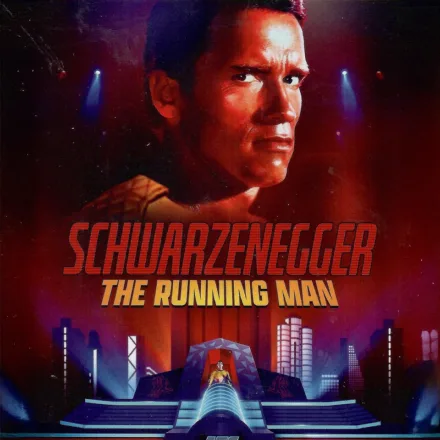
The Running Man (1987)
Shared: TriStar Pictures
Steven E. de Souza, Kurt Fuller, George Linder, Rob Cohen and others
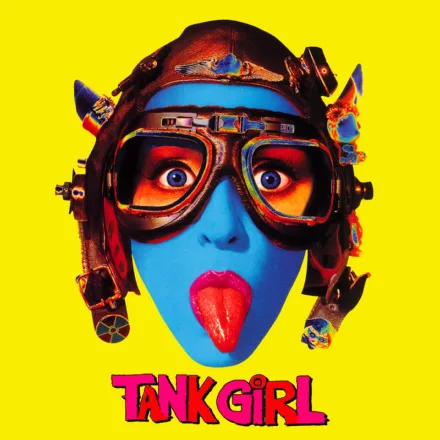
Tank Girl (1995)
Shared: Ice-T, Dahlia Schweitzer
Rachel Talalay, Dahlia Schweitzer, Rahne Alexander
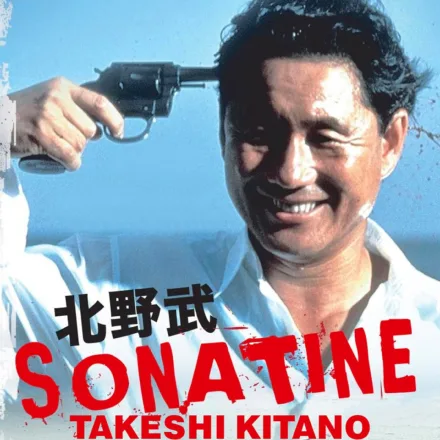
Comments (3)
WilloughbyStain Would add Virtuosity to the list of similar 1995 films. Even, to a much, much lesser extent Batman Forever. (Listening at the moment so apologies if my comments are redundant)commitmentfilms@hotmail.com Maybe I missed it, but did you mention the Johnny Mnemonic full motion video game for PC? It co-starred Julie Strain and Isaac Hayes. It wasn't good, but it was interesting.Mike White I don't think you missed it. I'm not really a video game guy. :(