
Episode 823 · Film year 1971
The End of Man (1971)
- Guest Co-Hosts
- Rob St. Mary, Ben Buckingham. Interview: Andre Barcinski
Show notes
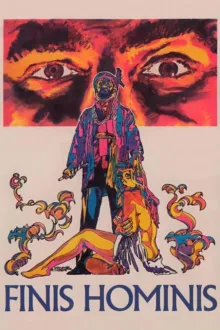
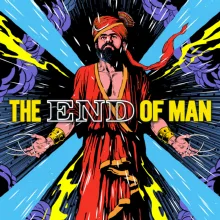
A naked man walks out of the sea and into São Paulo, and nobody can agree whether he's the Messiah or a naughty boy with a beard. José Mojica Marins, best known as Coffin Joe, kicks off Shocktober 2026 with The End of Man (1971), a strange, scrappy sermon.
Mike White, Rob St. Mary and Ben Buckingham dig into Finis Hominis: the head-in, tail-away walks that carry Mojica from scene to scene, an ending that jabs Catholic society in the eye, echoes of Dostoevsky's Grand Inquisitor, and the follow-up, When the Gods Fall Asleep (1972). They also talk about Mojica's death in 2020.
Then Mike talks with André Barcinski, co-director of Coffin Joe: The Strange World of Jose Mojica Marins (2001), about visiting Mojica in São Paulo, the dictatorship years, Cinema Novo, and a man who was never allowed to stop being his character.
Transcript
An automatic transcript from Spreaker. It has not been proofread, so names, titles and spellings may be wrong, and it does not say who is speaking.
Show the transcript (about 28,400 words)
Hey folks, just a little intro before we actually start the episode today. I just wanted to let folks know what's going on with me. This is your host, Mike White. If you are on my socials, you might have seen that I got fired back in August of 2026. Don't worry, I'm okay.
I'm doing all right. It's probably the best thing that has happened to me in a long time. The job was... not good. And I got fired for the dumbest of all reasons. I liked a post on LinkedIn that was critical of the company I was working for.
The company whose stock price had gone from nearly $ 7 all the way down to less than $ 2 and had stopped giving any sort of dividends and is in some sort of receivership type stuff. It's not good there. And I liked that post and the CTO saw it and said that I should get fired. And then I was fired. So once I found out that and how stupid it was, I was really okay with things.
This is also giving me a whole lot more time to work on other things, work more on the podcast, work more on some writing projects. Of course, having a nine to five, is good insofar as having a steady paycheck, but everything else is going pretty good. I don't want to come on the air and ask for people to reach deep in their pockets as if this was some sort of a fundraiser for NPR, but I will say that there has never been a better time to join the Projection Booth Patreon, which is at patreon.com slash projectionbooth. Of course, if you can't afford to give, totally understand. I know how it goes.
If you want to take a few minutes and maybe share out some episodes on your social networks, tell friends about it, hire a Skywriter or any of those kind of things, that would be fantastic. Every little bit helps when it comes to that. Go over to iTunes or Spotify, rate and review the show. That also helps out quite a bit, and that is totally free. As always, thanks for listening, and let's get on with the show.
Hold your ears, folks. It's showtime. People pay good money to see this movie. When they go out to a theater, they want cold sodas, hot popcorn, and no monsters in the projection booth. Everyone pretend podcasting isn't boring.
Turn it off. Turn it off. Turn it off. Multifilm presents... Cine Omni.
The End of Man. He came, but we don't know where he came from. Who is he? Or where is he going? His appearance overpowered society.
His acts created an ideology. His mystery motivated a belief. And the name emerged among a disoriented people. Sinis Omni. The End of Man.
With this movie, José Mujica Marin... leaves the horror genre that made him. Zé do Caixão. to live an exotic character in a totally new theme. Sinis Omni. The End of Man. Scenes of great realism.
An open book covers your steps. The extreme of sex, bringing back a modern Madalena... with the same sin, the one of Atheri. THE END. The end of man. The end of man.
The report of a diabolical conspiracy, bringing to our days the coincidence of a passage that was recorded in the Book of Truth twenty centuries ago. The resurrection of the dead. The resurrection of the dead. The End of Man. The End of Man.
Take them to the psychedelic world. A youthful of truth. The paradise of the hippies. In all its glory. Rock Rodríguez.
Teresa Sodré. Rosângela Maldonado. Andréa Briand. Mário Lima. Say in this film, strange characters.
For everything you have. Seen so far. The end of man. The end of man. The history of an age that has evolved.
And a man within this age. Strange, but different. Who is he? The new prophet? An interplanetary being?
An inhabitant of another dimension? Or the new belief? In all your career, one thing is known. Your name. Cine Omni.
The End of Man. A ferocious production worthy of your good taste. A majestic story worthy. Of your intelligence. Do not miss this magnificent spectacle.
Cine Omni. The End of Man. Directed by José Mujica Marín. Welcome to the Projection Booth. I'm your host, Mike White.
Joining me once again is Mr. Rob St. Mary. Oh, never mind me. I'll just be podcasting in the nude.
Why start wearing clothes today? Also in the booth, sorry, also back in the booth is Mr. Ben Buckingham. Certainly a pleasure to be here, as always. We are kicking off Shocktober 2026 with a look at Jose Mojica, or Mojica, Marin's End of Man, Finis Omenis.
It's the story of a creature who looks a lot like Marin's, coming out of the sea fully formed and fully naked and walking around Sao Paulo, interacting with a wide variety of citizens. It's kind of like a Neil Breen film had it been made in 1971. We will be spoiling this film as much as we can as we discuss it, so if you don't want anything ruined, Go track down the movie and come back after you've seen it. It's part of that wonderful Coffin Joe box set. We will still be here.
So, Rob, when was the first time you saw End of Man, and what did you think? Well, as I mentioned when we did it, it's hard to believe. What has it been like? 13 years when we did the original? It was like 2012, so like 14.
Years, yeah. Wow. Yeah, so as I mentioned on that one, go back and listen to that. That's probably part one. This is the sequel.
I was introduced to Mujica through my good friend, Troy Gregory. And so Troy, I met by working at the main art, RIP. It's been torn down. Art house theater here, you know, in the Metro Detroit area where I grew up. Troy had kind of an interesting pedigree in history.
He was the replacement bass player for Jason Newstead and Flotsam and Jetsam and then joined Prong. And when he was in Prong and Flotsam, he toured with the guys in Sepultura. And they were like, oh, you got to see this guy's movies is crazy. So Sepultura introduced him to Mushika. I got to know Troy and it just happened to be when I was working at Thomas Video a few years before Something Weird Video had put out on VHS here in the States about as many as it's actually in the AeroBox set that you're talking about.
I mean, that AeroBox set is incredible. I think there might be one or two movies in there that I hadn't seen before, but there's some other stuff that isn't in there. We can talk about that later. But anyway, I just started watching them. And I started with, obviously, with the Coffin Joe stuff at the beginning.
And you get to this point, and this is, you know, almost 10 years in, because I think the first Coffin Joe film is 63, 64, so it's like 71. And so it was like, this is interesting. To me, it feels like You know, if it's like the coin of Hoff and Joe in many ways, it still talks to a lot of the same issues that he's kind of talking about in there in particular ways, sort of satirizing. The society in which he lives. And especially in this period, it was much more dangerous to do that.
And we can talk about that as we go. But yeah, so probably 2000, 2001 maybe is when I saw it. And Ben, how about yourself? Brand new to this one. Yeah.
It's hard to talk about any Coffin Joe without going into all of it. I've had so many glazed looks in the last couple of weeks and people ask, oh yeah, what's the film you were talking about? And you're like, well, it's kind of hard to, if you just say it's this thing and then you just like, but it kind of doesn't exist without its context, which is, and you can just see them start to tilt to the side and glaze over a bit as you, deep into Brazilian 60s horror history. Yeah. But I was so shocked to learn about the Coffin Jerry really wasn't that well known before 2000s and definitely not before the 90s because I grew up reading the Phil Hardy's Encyclopedia of Horror where he gets a shout out.
So I just kind of assumed that he was at the same kind of level of knowledge and awareness that like the Jess Franco's and the Jean Rollins and such. And so I'd always had that in the background of those images and that would be got to see this and for some unknown reason to me sbs in australia back in 2003 did two weeks in a row and played at midnight i will take your soul and this night i'll possess your corpse and it was about the same time that i found a book called fear without frontiers which had a whole chapter dedicated to him an old fan press release from way back and so coffin joe's been with me for about the same amount of time 20 years now, but had never had an opportunity. Something weird was never releasing videos or DVDs in Australia until there were some brief releases in the noughties, but it tended to be all the American sexploitation stuff and the gore stuff.
Picked up the box set a year or two ago and saw this come up on the agenda. I was like, oh, definitely now is the time to take that extra couple of steps into his filmography. Yeah, this was a new one for me as well. I did pick up that box set, but have not had a chance to really look at it. I want to say that you suggested this one, Rob.
I think you said it was time to go back to the Coffin Joe, well, especially because of the box set. And yeah, it's one of those, you know, I bought it. Have I had a chance to watch it? No, but I was very glad to be able to watch this and watch the sequel, question mark, which we'll talk about in the second half of the film. Sorry, second half of the episode.
But yeah, why this one, Rob? Is this because of the sea change between Koff and Joe and Finnish Homanish? Because I think that's supposed to maybe be his character name, but also the name of the movie and, yeah, End of Man, which feels very apocalyptic. Yeah. I think part of it for me was I didn't even know the box set was out.
So I I remember the first person that I ever pigeonholed to do Coffin Joe box set was our good friends over at Synapse. So it was Don May and Jira Chandler. Because we would go to conventions in the Detroit area and they're in the Detroit area. And I'd be like, yeah, you guys got to do this. And I remember Don's like, those prints are fucking terrible.
The negatives, like you can't get good stuff to work from. And he's like, and it just isn't going to happen. And I'm like, oh, man. I'm like, I thought, you know, because they did the reissue of the DVDs here in the States. The original was Fantoma.
So kind of the chain of title here in the States was Something Weird, did the VHS, Fantoma did the DVDs, and then Synapse. But it was only just the Coffin Joe movies. And so I think really what... Why I wanted to bring it to you was because, oh, wow, this AeroBox, this stuff looks even better than it deserves. There's almost part of me that's like, I can't believe they, A, found the negatives.
I can't believe they cleaned this stuff up and it looks as good as it does. And I was like, fantastic. Okay, so this is out there, so people can go get it. The other thing is, sadly, that, you know, Mujica passed away. He passed away.
I don't know if he died from COVID, but it was during the early days of COVID in 2020. And so there was part of me that was thinking about Andre and his book. And like I say, I have the first edition of the book. Andre sent this to me, I think, in 99 or 2000 when I reached out to him originally through the Internet. I was just wondering if there was going to be sort of a here's the everything we need to say about him.
He's passed, sadly, and here's a complete look. And so for me, it was more like, okay, let's kind of take that next step. But also, I think it's really the only other character that goes on into another film that's like a sequel character that he did. And also, it's more of a philosophical character, too. In terms of what he's doing.
So to me, like I say, it's kind of a funhouse mirror of Coffin Joe. Coffin Joe, obviously, if you're not going to listen to the first episode, which you should, please do, is basically he's very nihilistic. He's very Nietzschean. He's very like, I'm smarter than rubes living out in the countryside. And so his attitude is to tear everything down.
He's very kind of, fuck you. And in this, it's like a Christ allegory or something. Yeah, and it's just this guy who shows up naked off the beach. He starts walking around, and things happen around him. It's just, things happen.
But through the process of things happening, he's highlighting all of these inequities of the society and stuff like that. So to me, it's kind of another way to attack a lot of the same things that he was talking about in the Coffin Joe films. So, like, there is a mirror scene in here about, like, children and protecting children. Because that's the one thing that Coffin Joe is always about. It's like, don't, you know, abuse your kid.
Like, what the fuck's wrong with you? I'll fucking kill you. And in this, he's like, no, let's get them together and stop fighting and, like, being good to each other. So it's this kind of... balance between the light and the dark that I find interesting. It's not a horror film, really.
I mean, in the other one, in the sequel, and we'll talk about that after the jump, there's some stuff in there that's rough. No, that's horrific. No. It's more of a, I guess, a comedy or a satire, I would say. I mean, there are times where it may run into old man yells at cloud territory.
Like, this is society's ills laid bare. everything from you know the inequity of all this stuff you know things happen like you said including his mother puffin joe's real life mother in this film of being able to walk again so like he can cure i guess but there is a blind guy that he walks past who's asking for charity of course he gives to the blind person doesn't have a pithy line or anything about go get a job hippie any of that kind of stuff Yeah, he even is pointing out, like, this public water fountain isn't working. What the hell? Everything. Like, from the big issues down to the smallest, like, niggling things, it is... I keep wanting to say coffin jail, but it's Finnish hominids just being like, oh, there is a problem here.
Society is broken from the big things all the way down to public works. Yeah, I think it still fits into Shocktober because there's plenty of... He shocks... Plenty of people, all as he goes, including his own mother with his body double stand in penis. But did either of you get a chance to listen to the audio commentary on the box set?
I did not, no. Because that is... I watched it and then I listened to it and I was like, oh, yep, okay. There's a very different read on it when you hear what he was intending. Because he did...
He calls the character Finis unconscious madman, whereas Coffin Joe is a conscious madman. And that is the two sides of the coin that they are. They're both madmen, but one's aware and alert and rides it like lightning. And the other one that Mojiko believed would turn out more positive and net good without the consciousness. And that every single miracle is just not necessarily coincidence, that the shock of the nudity at that period of time in Brazil when elderly woman wouldn't just have a naked man wandering into her house, that shock is what startles her into standing up that she was healing and it allowed her to overcome her psychological barriers and go, bump, I'm out of here.
And every step of the way, there is a rational reason. He is just looking for water when he goes to the church. He's just thirsty. There's nothing to do with an awareness of what It even means that he's essentially, well, he doesn't quite have amnesia, but he's existing in the world as a newborn. And that his name, he just hears these words and he likes them, so he takes them but he doesn't know what venus hominis means right and so yeah every step the way it is so it it's mocking the this second coming this messiah of being of just it literally is he's just a naughty boy like except he's not a naughty boy he's a he's a chill boy it's everybody else who's worship and it's that it's the shock of the different it's simply being different enough from everything around him that sets him apart and makes people following him and project onto him so it was just like it's that without the commentary it's like oh yeah we all project he's doing that and it's like he kind of is but he's really.
Not no no he just happens to be there and and the thing is it's like Coffin Joe is so confrontational, like you were saying, Ben, that he is the guy of action. And I was thinking about how when that movie came out, the year that came out in, I think, 1964, is when the military dictatorship comes in. So the military dictatorship happens. By this time, it's been in place six or seven years. And so I think this is his way of also nudging You know, the dictatorship, the, oh, you thought things were going to be better?
You know, he's kind of slyly doing it where it's, like we talk about, Mike, when you have the Czech films, it's like, how did they not see this as a rip on communism? You know, like, how did these guys smuggle in this stuff under the radar? And I think to a certain extent, it is that. At the same time, I think he's also kind of playing, like you were saying, Ben, kind of playing a joke on the fact that Brazil was such a Catholic country. And Catholicism and that story would have been so woven into the culture that this is like a lighter way to satirize the miracles of faith in Christianity than it is to just have a guy ranting about how stupid y'all are.
Yeah. Watching it another time when he goes into the church looking for water, that whole scene is his only interaction with the church and all he gets out of it is red wine and a name. I feel like that's probably pretty apt for a lot of people's experience. You get baptized and you go and drink wine and have a cracker every week and that's about it. Well you've used the phrase naughty boy and i'm pretty sure you're probably referring to life of brian because this is so life of brian to me and it's funny that life of brian would come out just a few years hence this whole thing of like he's not a messiah he's just a dude that wandered out of the the ocean fully formed like you said and and fully naked for a lot of it i kind of think maybe he should have kept the whole naked thing but instead he opts for a turban a bright red turban and this kind of it feels like he would be perfectly suited for the center ring at the circus with this coat he looks very much like a swami in this outfit that he's wearing and yeah like eventually he starts to get followers and it's this whole like oh this guy he's great kind of thing and i just kept thinking of that through this he's his shoe he lost his shoe but yeah this kind of speaks to that whole you know spiritual void coming out of the 60s that we've talked about on the show so many times where okay this leaves room for things like rosemary's baby And is God dead?
These kind of things where it's like, OK, you know, there's something definitely missing from people's lives here. Things are upset and they're looking for answers and they'll look for them in the strangest places, including this. But what did you say? Unconscious madman walking through the streets. And I think I said Sao Paulo before.
I don't think that's actually where it was shot, but at least the beach scene was not Sao Paulo. But yeah, it's it's. I think it was in some of the suburbs surrounding it, I think, because he primarily, throughout his life, didn't tend to travel far from there for shooting. Right. And you definitely see a lot of man-on-the-street kind of stuff, like when he's walking across the street in his new outfit, and you see a guy who's trying to cross the street the other way, and he is definitely eye-fucking... mojica as far as like what is this guy doing and like scenes in the park with all of these people and it's just like i'm sure they're takeoff and joe's doing a new movie and everybody comes out kind of thing but yeah all these crowds of people.
It's it yeah when they were shooting when they were shooting when they were shooting the naked scenes it's a body double in a commentary he doesn't claim that it's because he was embarrassed he puts it all on being that he had a lot of things on his mind otherwise, because they didn't have any permits, obviously. And they were shooting that on the run and he was like, I couldn't be naked and acting because I had to keep an eye out for the cops and get ready to grab everything and run. So that's why all of those scenes are quite short and it's a body double. And yeah, they're fun to watch a couple of times for all of the reactions on the street because they are all very real. But the costume, because there's been a lot made of Coffin Joe's costume and how it kind of came together a bit on the fly.
And this was very similar, actually, because originally there was a producer on it who was a rich Indian businessman who was going to bankroll it and was going to give him... It wasn't clear in the commentary if he did... I think he got a number of film cans from him to work on more than he'd ever had. But he was going to supposedly get even more and it was going to be this huge thing. This guy was loaded and was looking to get into filmmaking.
And he had a falling out with one of Mojica's friends. And Mojica wasn't aware how much this falling out was a very much like done and dusted, it's over kind of thing. And he had dinner with this friend in the lead up as they were preparing to shoot. And the Indian producer found out and said, nope, if you haven't you know breaking bread with him then i can't be part of this and i'm rolling you can keep what you've got so far but i'm out and so he went from thinking he was going to have his biggest budget film with all these possibilities nothing at all but in the process he still he you know the the indian was dressed very in all these fineries with this kind of outfit and he like seeing that was like that's what he should wear because it will make him stand out as there's There is nobody dressed in Brazil like this.
So it makes him really stand out and be different. And that's part of what makes him so captivating. And maybe this was on the commentary. Sadly, I didn't get a chance to listen to it. But the film, actually, this one in the sequel, flips between black and white and color very often.
And it doesn't seem to really have a reason. It just does. He says there is a reason. I think you're saying there's a reason a chunk of the time. He said like, yeah, they didn't have enough money to do it all in colors.
They had to do it in black and white. And he tried, the word he uses is that they're mirages. And the black and white is actually the mirages. And that he tried to make it so that all these black and white instances were when it's this mirage. And I'm, is this a mistranslation?
I'm not quite sure how these function as a mirage, other than they are the most everyday kind of mundane scenes a lot of the time, where it's people kind of, chatting at work and things like that. So is the real world the mirage? Right. Yeah, because a lot of times the black and white does feel like it's the real world. It feels like it's more the people at the news station that are kind of following the story.
At least that's when the black and white... Well, the black and white is introduced at the beginning in the credits as he's coming out of the ocean. And then it moves to. I think there's a color shock pretty early on, and then it moves back to color for a while, and then we, you know, cut to a radio station where it's like, oh, hey, there's this naked guy wandering around the city, and it seems to keep to that storyline for a lot of it, but then towards the end, it just kind of all comes together, and that's where the, and this whole thing is very cinema povera to me, you know, like, you talk about the budget and everything, and yeah, you can tell that this is not the most well-funded movie in the world but at the same time there's such a quaintness to it and just that real crappy exploitative vibe to this i mean and he does such interesting things like the the head in tail away kind of thing that he does constantly where he will walk at the camera.
And usually he tries to use his beard to kind of like black out the screen, you know, like Hitchcock would do in rope, right? Exactly like that. And then like to the back of his head as he's walking away and walking into like the next scene. And it's a great way to transition when you don't have that much budget. And then the, we have to talk about the soundtrack to this thing, which is just, absolutely freaking insane you can just like turn off the movie if you need to but just listen to that soundtrack it moves so many different places has so much stuff going on and it is just for me like a master class of audio you know fuckery I mean it's just like this layered thing where you're moving from and sometimes it has something to do with the scene that you're in visually but a lot of times it doesn't seem to whatsoever and we get like little clips from stuff.
Rob, before we started recording, you were talking about the raindrops keep falling on my head. I was talking about Auld Lang Syne. I mean, we are all over the map when it comes to the types of music that are in here. But then you just have howling and screaming through so much of this. And you were talking about the music drops, and the abrupt, they're abrupt.
Like if it cuts a shot to something, it's like the music ends abruptly. and another piece of music comes on, and then it'll cut back to the other piece of music. And the only other person that I know of who was doing the exact same kind of thing, and it was around this time, a few years later, and I doubt he had seen this because it probably didn't get out of Brazil at all, is I'm thinking of the party scene in Pink Flamingos, where there's the music and then the cops. So when John Waters cuts between the cops and the party, there's the party music and then there's the cops music. And still, it's very hard cut on the music. I mean, it's, yeah, it's quite incredible, the sound design.
It's funny you mentioned John Waters, because there's the black and white fourth story, almost a story, in the sequel, When God Sleeps, where he goes to the brothel room rental place. And I'm like, man, this is such a John Waters scene. You know, you have the woman sitting on the toilet having a crap and, like, all the close-up shots of the toilet seat and just all these, like, very, like, gay dudes. And then women fighting and biting each other's face and ears. Maybe John Waters?
No, there's no way John Waters saw these films. But they're, like, wow, they were on that same wavelength. There's, like, Blood Feast happening the same year as Midnight. Oh, take your soul. It's just, like...
So there was something in the waves going across America at the same time with certain people. They were connecting on some subconscious level. But yeah, the soundtracks for both of these films were rad. The soundtrack for the second film was easily my favorite thing about it when it just goes bananas at the end and starts intercutting the 1812 overture as the ambulance is rushing back to the the insane asylum that's like about to close down and they cut back to the insane asylum and it's like Japan's funeral march and it's just. Like, holy shit!
Yeah. Yeah, I think there's going back, like before we started chatting again, I just sort of chucked Phenosomonas again on just to like, okay, separate these films in my mind because they're all starting to blur together a bit after cramming them. And I was just like watching it while, you know, tidying up some stuff. And the cinematography in Finis Hominis makes it so much captivating. So much more captivating than When God's Asleep.
And the cinematographer on this one was the same cinematographer who did the first two Coffin Joe films and Awakening of the Beast. Giorgio Attili. And he didn't do the cinematography for When God's Fall Asleep. And There's nothing in When Gods Fall Asleep that humanizes Finis. Like, he just kind of, like, either just there, or then turns up there, and that's it.
But just, like, from the moment that Mojica takes over from the naked stunt double, you get these beautiful shots where it's, like, him just pausing and kind of, you see him just, like, experiencing the moment. and having whatever feelings or thoughts that this unconscious madman is, and the framing is like in a mirror. And it's just the whole thing, everything just pauses for this moment. It keeps having moments like this where it's just him experiencing the world, and they feel fully fleshed out in those moments that it makes the film feel a lot, makes his character feel more depth, which there isn't a lot else to hang on to. And it all comes from the cinematography, looking at it again. Like, it's his performance in the cinematography.
And without that cinematographer, the second film, Billy Lane. You know, Mike, you were talking about how in End of Man that it really represents, I think, this feeling of desire by the world for something. Right. And I think. That is really the driver of You know, if there's it's interesting to watch a movie where the character, the main character is not the plot driver.
Like they're not trying to really achieve a goal. It's everyone else around them. Kind of an inversion of everything that you're ever told in any writing class. It's like your main character has to act. They have to do shit.
And it's like, not this guy. He just walks around. He's kind of like Chauncey Gardner, you know, just like he walks around and things happen, you know, and he's he talks a lot less than Chauncey is very closed mouth. Much of the time, you know, there's the guy at the restaurant who's just like, hey, you got to pay. He's like, why pay?
You know, like, OK, well, if everybody stops paying, then the problem solved, like not very much dialogue to this guy. But it's funny how so many of the things that are in this movie in 1971 are still gripes today. We could talk about the water and all that kind of stuff. But even the social inequities, there's an amazing scene that happens at a hospital where guy calls up and it's just like oh you need a room oh count maximilian like yeah yeah no problem you'll you'll be okay and then cut to this waiting room where all of these guys are just like hanging out just very you know hey we we need help here and we've got a kid who's covered in this horrible fake blood it just looks amazing i i just love the the quality of the blood and it's hate nurse, we need some help here.
This kid is bleeding out on the table and it's like, oh yeah, sorry, no, we're busy and we have no rooms available kind of thing. And it's just like, okay, yeah, the wealthy get taken care of, the poor don't. Okay, yeah, it's like, I'm sure it goes back thousands of years, but it's just watching this today where it feels like the inequities are finally getting a little bit more attention. Yeah, maybe the doctors shouldn't be spending all of their time naked lady and just having her say 33 over and over again and watching her ass, which was fantastic. I love what a perv this doctor is.
Yeah, the whole hospital scene was taken from Bojica's personal life because his father had just been going through some health problems. And he felt that the hospital treated his father differently when he was around because of him being Goffin Joe. And they were like, didn't want to have a bar of him. And so he kept like having these like really terrible interactions with the hospital. And it turned out okay in the end, because every time he left, they seemingly were like, yeah, no, we like your dad.
Don't come back. So, okay. That is a bit of a man yells, old man yells at cloud hospital from his own personal grievances, but also entirely valid that it was definitely like a lot of the same problems. And there's, yeah, that's, it's, I feel like I've seen a bit online at the moment of people going, oh, wait, this film wasn't ahead of its time. We just haven't dealt with any issues in 60, 70, 80 years.
There you go. You have the hospital, but you also have, you know, which I would say kind of represents maybe the establishment. And then you have the anti-establishment with the hippies. who are also, they're like, oh, when's he coming? Like, God, like, we need his help. And it's funny, because I was watching this with my girlfriend, and she goes, God, these are the worst hippies.
Their music's terrible. They don't look like they're having any fun. It's like... They were real hippies, apparently. There was only a sprinkling of his students from his theater classes in there, and the rest were all real hippies that they let stay in the studio for, like, a couple of weeks.
And he says they were lovely, that they... kind of kept didn't keep to themselves as such but they didn't like they were a cohesive unit that only did their stuff between themselves and didn't try to like mess with anybody outside of their unit and that they were really chill and lovely and he just said the only bad thing about them was they absolutely stank to high hell and that they believed that water was only for drinking And that it was like a badge of honor of the more you stank, the more real you were. And he said it was really terrible with all the lights and everything and the closed face. He felt bad for his crew to deal with that. But he like. Oh, sorry.
He said that scene was collaborative, that he wanted to communicate their visual aesthetic. So he worked with them and being like, do you like this? Does this work for you? How would you like the colors and the things and all that kind of stuff? And that was all a very collaborative scene.
At the same time, I find it funny that he just has enough of them. And he's like, all right, yeah, enough with the nudity, enough with all this. and so he starts throwing money at them and they're like you know rolling around like pigs and shit in the money and they're so excited by the money that it to me that feels like a commentary like it's like oh you know yeah the money will. Get you out of this spiritual quest i guess that's he mentions that in the commentary he said to them what would you do like if someone just started throwing money at you like what would you do like we'd like we'd grab it and, like, mad and, like, try and, like, probably fight each other for it. Because, yeah, to make life easier, we could get the stuff we need.
Like, the hippies were still, like, they were realists. He made it hail as opposed to make it rain because he's throwing coins at it. It's like, ow, ouch. I love the, like, no second takes thing that you can clearly see that there's a wooden board underneath the bag of money that there's only about, like, you know, like, 10, 20 coins in there. That's it.
It is remarkable, like you're saying, that our main character basically just kind of wanders around and does things. We will cut away from Finnish hominish at the hospital, and then cut to a party scene and a sex scene, and you're just like, what the hell's going on? Is somebody having sex? There's this kind of... Lounge lizard type guy who's out in the front room, who's kind of hitting on these people.
And then eventually the two stories collide and you find that that guy who was the lounge lizard, his wife is in this other room having sex with this other guy. And so then it becomes like chasing her down the stairs while she's wearing just a sheet and a crowd of people down below. And I love this, the crowd of people just standing there, which is great. line reading as I'm giving, or at least they will say the lines with a little bit of force, but their faces are completely blank. They just like the power of the common man, you know, like, okay, it's not a lot here, but then it's like, you know, it's basically the whole, you know, but he without sin throw the first stone or in other words, this fish is good enough for Jehovah kind of thing.
But it's like, you know, it takes a while before he shows up and then he, the situation, or counteract the situation, mostly through the power of his eyes. But he does have that staff. We haven't talked about the staff that he carries around, and I have no idea. Is that like a magician's wand? Because it feels like he could bust that across somebody's head with no problem, but I don't think he ever does.
Do we find out it's a sword in the first film? I don't think he pulls it out as a sword in the first film, but the second film, it's got the blade inside it. He must have got an upgrade in between the two. Well, the thing that's interesting is you have that sort of cheating wife piece, and then there's a section in here in which he kind of disappears for about 15, 20 minutes. It feels almost.
Like a episode from, and I know that he was very kind of influenced by horror comics, it feels almost like an E.C. comic, like a Tales from the Crypt kind of thing, or where the wife is cheating, and they're trying, like, to scam the husband for his money, and all of that, and there's, like, a funeral scene and all of that. Yeah. I forgot all about that. It's very pulp novel. Pulp murder mystery.
Yeah, and he's, like, not in it at all. Like, it's, like, all of this happens, and one of the things I found interesting is, like, one of the goons who's plotting actually has a Michigan t-shirt, so... I don't know how that got to Brazil, but it did. But anyway, the thing that's interesting about that section is it almost feels like it's part of. Another movie in a certain way.
Because, like I say, he just disappears. He's not in there. And so there's this whole thing where the husband goes to Rio to take care of business. And they're plotting, oh, we're going to get him, you know, and all this. I know that it's like his funeral, and that's when Finis Hominis shows up, and he rises the guy out of the coffin.
And I believe this story, Ben, I think, if you listen to the commentary, I'm sure he talked about this, that when he was a kid, there was someone, he told this story before in one of the documentaries or something, that there was a funeral, and someone actually came out of the coffin, like they weren't actually dead. And that person was like ostracized by this community that he grew up in that they thought like for the rest of their life, they didn't see it as a miracle. They saw it as like, wow, you're weird. Get away from us. You're probably cursed or something.
And so I think he put that in there to kind of play with that idea. Yeah, he mentions that as catalepsy or something. Again, as though it's not a miracle. But there's the two digressions and one with the woman who's sleeping with a man while her husband sleeps with three women, and one with the guy who's murdered by his family and then rises back up. And they are obviously meant to be, it specifically says in the commentary, it's Mary Magdalene, and this is Lazarus, and that he wanted to have the Lazarus story in there.
So he's kind of like his apostles, these two characters, Mary and Lazarus. So that's the very religious theming in there. Which, yeah, works really cool with the Pope, AC Comics, Tales of the Crypt kind of vibe. Did we ever find out what happens to Lazarus after Jesus rises him from the dead? I mean, it feels like, yeah, he would be a bigger part of the story after that, but I swear he just kind of disappears.
Yeah, I have vague memory he wasn't happy about it, though. There's something about it that he was like, yeah, no, this isn't great. But maybe that's just one of the many variations. I can't remember. It just reminds me of the life of Brian, where he cured me of my leprosy.
Now, you know, I'm a bloody do-gooder. Right. Alms for an ex-leper. Alms for an ex-leper. And yeah, these.
Sorry, go ahead. The funeral scene hinges on the murderess not being able to cry. And there's so much with Mojica's films where there's all the different versions of his history, the different little variations of the different tales. Wait, didn't you say this one? Was he born in 1929, 1936?
Don't worry about it. And there's so many people projecting their interpretations onto these stories because they're not always entirely clear. So the woman who cries... they make her cry through sex. Like, they unzip her skirt, and he has sex with her from behind. This maybe, I don't know, I'm revealing something about myself here, but I assumed that it was anal sex, and that's why she was crying.
Because then I was reading somewhere else that they were like, oh, she only cries when she has sex, which is like, that's... I'm not the only one. So you thought it was anal sex as well? Yeah, I thought it was backdoor, just because of the angle. Oh, she's like, she's standing next to the coffin and she's a little bent over, but not enough.
Yeah. Cool. Good. Not just me. I'm not the only pervert watching Goffin Cherry films.
Good. It really does. Yeah. Even these films are just, you know, when you think about them in comparison to like a Basilides. Gospel of St.
Matthew, and even El Topo is kind of chill in regards to perversion. These two films really go all out for films that are meant to be about the positive influence and changing society for the better. Going back to what we were talking about before with the black and white versus the color, this is where we lose any sort of Why are we shooting this in black and white versus why are we shooting this in color? It just feels so grab bag and it feels very much like you were saying we ran out of money. So here we are.
This is basically the what we had left to shoot of this whole storyline. We're now going to shoot in black and white because we're flipping back and forth like crazy. It's like Oliver Stone would be impressed with how much we're cutting from black and white to color. You're right. As far as this does feel like an EC comic, it does feel like we've left the Phoenix showman is narrative.
Eventually. Yeah. It comes back into both of these, but yeah, there is a long stretch of this whole film. I mean, it's almost like the third act is just all of this other people kind of stuff. It's in these crimes.
And yes, also pointing out the hypocrisy of like, she's sleeping with one guy. He's sleeping with three ladies. Yeah. Like, All right. Yeah, I'm glad that often I'm glad that Mojica is carrying through the whole time of like pointing out all of these ills and really like being pretty fair to point out how the hypocrisy. is just inherent in so many of these things.
And this film, the difference between the two films is that the first film is very much the hypocrisy of people within institutions. There's a little bit of variation in that, but it's like the institution of medicine. the institution of marriage, the institution church, a bit of institution of media, and it's very much taking its shots at the structures that make up society, whereas the second film tends to feel like it's a bit more like social groups and class groups and such, which is a bit of a bad taste in my mouth, but I think he was well-intentioned. The. Sorry, I'll leave my train of thought for a second. Um....
He did say that there was a specific message. I just found in my notes here that I wrote this down. The message that he wanted to bring was that Brazil should unite under one religion, that it had 27 states and 27 different flags, and he felt that it was all splitting them up and sending them in their different directions. That was actually his intention, the film, was to try and communicate that you could all get behind one person who was unconscious madman, but showing the power of rationality and that everything exists for a reason and all these other jumbled messages that he brought together. And this quote from the commentary that the people needed something more positive, that is, they needed to see something they could believe in and wanted to believe in, something solid.
So I tried to kind of do the 70s version of what Jesus Christ would have been like 2,000 years ago. I mean, this is prime time. I mentioned Life of Brian, but it's like Godspell is happening around this time. Jesus Christ Superstar is happening around this time. We are just desperate.
And like you said, El Topo, he becomes a messiah at the end of that movie when he breaks out with all of the people from under the mountain kind of thing. There are such messianic figures just running rampant through these films. And Yes, of course. And then all the Manson's exploitation films that are coming out from that. Yeah.
And, you know, when it comes to finally he's going to get, I guess it's his sermon on the top of the quarry, I guess, whatever that location is. I like that it's kind of been pushed. It's like, oh, he's going to speak. You know, we're going to carry it live on TV. He's going to speak.
He's going to tell us the truth. And, you know, it's going to change everything. And it becomes kind of like you were saying, Mike, a little bit like Life of Brian, where it's like, I'm not the Messiah. Leave me alone. And the thing that he does do is, and what I got instead of Ben, the Lazarus Mary Magdalene thing, although I can't see that now, is I thought of it, it's like, you are the new Adam and Eve.
You shall go forward. You know, you are the new, you know, this is the new world. This is the new genesis of the new world. Go. Go be together.
Go take my message. We've stripped everything back. We've made everything better. You have the truth. Now go.
And that's what I thought of that ending. Yeah, that's definitely appropriate to it. Him standing in front of that big red curtain, having everyone give him their money is fantastic. And then, yeah, he just disappears for a little bit before the quarry scene, I believe. And with the quarry, I was just like, hey, Mojica, we're going to have some dynamite go off.
You might want to come over and capture this on film because it's going to make a great special effect for your next feature. Yeah. It's like production value. You know that was the truth because he was probably like getting cued into, you know, oh, you're going to blow something up? Cool.
Yeah. I'll be there. I'll figure out how to work it into the next movie. You know, I'll just wander around with my camera. Yeah, the.
There's the scenes with all the crowds massing everywhere and he's walking through. And they had some difficulties with those scenes. They got a bit out of control and it was all a bit hectic. So that was part of the decision to not have a huge group of people at the quarry at the end and instead they just have the... It is actually the bus for one of the official Brazilian TV stations that they were kind enough to be like, yeah, we'll send the bus out with the camera crew and set up and pretend like we're really filming this.
So. That's how he becomes a 20th century messiah, is broadcasting his message out through mass media. Yeah. And I think that's a much better way to go as opposed to being in front of the masses. I mean, I like the idea that it's like, oh, I can get further with my message through the media in the modern world.
But also, it oddly deadens it as well, because it's like, oh, well, then they pack up and leave and that's it. And it's always like, oh, well, people turned off the channel and moved on to the next thing. And it makes that ending feel undermined in a really interesting way. Well, I mean, the ultimate kind of slick irony of everything and kind of the joke is the final scene of the movie, which is him returning to the mental hospital. And we can talk about our various interpretations of what we think of that.
I'll let you all go first, and then I can add. Yeah. Yeah. I'm not sure. I think he's always portraying himself as an outsider.
It's Coffin Joe, it's finished. He's outside of things. He's not part of it. He's separated from. And that gives him so much freedom.
But it also becomes a prism. And so this becomes a more literal way to represent that prism. of being, like, isolated and cut off. But it doesn't, you know, he seems to come and go as he pleases pretty easily. So it does, like, undermine it a little bit. And then we find out in the second film that he's bankrolling the asylum as well, which, again, is like, what is this, like, crazy bat?
Something like that. But that, to me, seems to be, like, it's... There's so much... I've been zigzagging back and forwards all day between like reading about third cinema and cinema Novo and this and that. And I'm like, oh yeah, this kind of fits his films a little bit.
This kind of fits his, this kind of fits. And then, and there's a, there's a great interview with Andrew Leavold in the box set where he's basically like, yeah, he's everything. Like he taps on every genre and he zigzags all over the place and you can't pin him down to any one singular thing. other than exploitation. And I was like, oh, thank God. It's not just me like losing my mind here.
Cause it is just, he, he's like, there's another one of the little interview with Guy Adams. And he's like, he had ADHD. You can't know for sure, but he has ADHD. And I'm like, yeah, as an ADHD person, I probably agree with that for various reasons. And it comes out, I think in these girls more than anything else, because it's like, he is constantly, he's, undermining the positive that he's doing, that he undermines the negative that he's doing.
Like he's being cynical and detached irony, but then he's like really earnest and fully engaged. And it's like, it never even happens like within scenes and it's over the place. And then you listen to his commentary and it digs, does that even more than just looking at the film on its, on the surface. And, I think in some ways it does, it makes it a much more difficult film to approach because you feel like, especially if you only watch it once, you tend to only see like one side of it, that the way that you're projecting into your reading of it and you'll miss the other side that is absolutely there that makes not a lot of sense really other than it's superhuman. And I don't mean superhuman, one word, super space human.
It's very human. It's just, it's not, gray it's lots of gray it's like it's not black and white it's a full spectrum of complex difficulties and turmoil that reflects the turmoil of the world that he's come into and it's that he's this being that's like a newborn that's he's detached it's just you know i think like at one point the mojica describes as being like all just part of human normality that all of what happens in the film is just human normality And I was like, yeah, it's real messy. It's real messy. And that ending is like, it feels like him, like, getting the pointed burnt stick and really jabbing it in the eye of, like, Catholic society and being like, yeah. It's like, it feels like, you know, it made me think of Dostoevsky's Grand Inquisitor kind of thing of, like, a real, like, oh, yeah, this is what you, like, you'd fuck over your Messiah and put him in the asylum.
But then that kind of undermines so much of it by being so angry at the world and society for like wanting to but then at the same time it's like it's like this character this being can only exist by being locked up by being kept separate from all of this noise and mess which is like feels like a way of protecting finis by like removing him from all of this and being like yeah you better go back to the cave dude it's safer there. Yeah i mean this whole idea of the madman coming out and teaching us a lesson is definitely something very familiar you know my mind immediately goes to uh the the big dig israeli film or even like a bad boy bubby coming out of complete isolation and kind of leading the way you know eventually becoming a i believe a successful punk rock singer you know like they're this whole idea of the madman being able to hold up that mirror to society i'm not exactly sure what if it exists there's a reason for it to exist final lines of this but him walking back into an asylum at the end of this, and I do mean walking back, because I have a feeling that's where he started from, and that's where he's ending up, and it's just amazing.
It was such a great little twist on the end of this film that I was like, oh, nice, and just probably literally started applauding in my living room. That's a good boy with a bad boy Buffy thing. Actually, these films. They have a fair bit in common. I'm now also imagining a Finis ominous film where he teams up with Max Cavalera and Sepultura and becomes a member of the band.
And that would also be rad. I was thinking that, you know, mad times call for a mad man, you know, kind of idea. I think it could also be read maybe a little bit more cynically that it's like, you are so crazy. worlds that you do need someone crazy, you know, like you could kind of read it two ways, but Ben, you do make a good point. And in terms of the humanity of the piece, I, I ultimately think that even coffee Joe, to a certain extent, you know, he is a very humanistic filmmaker. I think he does care about people and wants to see things improve.
He's not just nihilistic, tear it all down. It's pointless, you know, uh, for the sake of it. Um, So to me, like the ending, I just thought it was a nice little kind of irony, you know, that it wouldn't be someone who is of means. It wouldn't be someone who is learned. It wouldn't be someone who is, you know, together.
It would have to be someone who is crazy or out of it by standards of society who would be someone who would lead a new vision and a new way forward. Hmm. Yeah, for sure. There's so much going on in the society around him at that time, just in Brazil alone. I've looked a little bit into the history and it's real bad times starting up.
There's a chunk of this film which, if you don't know so much about the Brazilian history, it's easy to look at this as being him going like, oh, well, you didn't like me as the bad guy like oh well screw you i'll show you what i can do as the good guy like an antagonistic manifestation of that but then there is also that part of like he really cared about people that he wanted the world to be a better warmer place that he wanted to like pour that shit out through coffin joe and like exercise it to a degree But here it's like trying to think of a better way to lead forward. And so much of the connections to the cinema, Nova and the third cinema movement, is really present in these films. That there is a kind of Italian neorealist kind of bent to other parts of it.
That it is concerned with the toils of people, the everyday troubles. And the lack of attention being paid to them and sort of giving them a little bit of that. It's just also there's his big ego up front in front of everything. So let's go ahead and take a break and we'll be back with an interview with documentarian and journalist Andrei Barzinski. And we'll be back with that right after these brief messages.
Hello, everyone. This is Malcolm McDowell. I just want to say that this is a request to listeners of the Projection Booth podcast to become patrons of the show via patreon.com. P-A-T-R-E-O-N dot com slash projection booth. That's pretty simple.
I think you can do that. It's a great show, and Mike, he provides hours of great entertainment. So now it's time to give back, my little droogies. Settle down and take a listen and have a sip of the old Malaco. And then you'll be ready for a little of the old in-out, in-out, real horror show.
Bye-bye. So, Andre, we talked. Yes. How is it still being the expert all these years later? Well, well, I think I'm really happy that more people got to know Mojica.
I call him Mojica, right? People in the US and Europe call him Marins, right? Because it's his last name, but we're used to, we always called him Mojica. I'm glad that a lot of people, because of the efforts of many people, beginning with like Mike Vrini from Something Weird Video, who put out the VHS tapes of Coffin Joe in the beginning of the 90s, right? And then the guys at Fantoma Video in the UK and everyone who wrote about him.
I mean, during these last, I don't know, 30 years or so, his name got really big. And everywhere I go, I talk to people and more people are knowing about him. There's just been an amazing box by Arrow in the UK on some Blu-rays of Mujica. So, I. Mean.
I think people still consider me the expert because I wrote the book about him and I did a film about him. And I mean, I was his friend for like almost 40 years and I directed TV. Shows with him. And I'm glad that the book, especially in Brazil, helped a lot of people get to know his work because it's an amazing work, you know? But it like lightens my heart when I see like Tim Burton coming to Brazil and the first thing he wants to do is meet Coffin Joe, you know?
This is amazing, you know? Or people like Danny Elfman or Paul Schrader, you know, a lot of Joe Dante, everyone who spoke so nicely about him, you know. So it would be great to have our book. I did a book in 1998 with my friend Yvonne Finocchi. It is the only Coughing Joe biography.
It would be great to have that book translated and maybe published in English. You know, who knows? I would absolutely love that if that could happen. That sounds fantastic. Yeah, yeah.
And there's a lot of talk about new projects involving the character of Coffin Joe. A couple of years ago, Elijah Wood, I think he has a production company, he announced that he was going to or was in talks about doing kind of a reboot of the Coffin Joe films, you know. And I am myself, I mean, I worked on, I wrote a screenplay for a TV series called Coffin Joe, Zé do Cachão in Portuguese, right? there's talks of film now, you know, about his life. And I mean, it wouldn't be a Coffin Joe film. It would be a film about the life of the Coffin Joe creator, which was Jose Mujica Marins, you know, and his life was as momentous and incredible as Coffin Joe.
So this would make for a great film. With that box set that came out, there were what, like six features on that? The Arrow, the Arrow video. I think it's even more, man. I think it's like Eight or nine features and included there was the documentary that I did about him with my partner, Ivan Finocchi, my friend, and a short film that we did called Mojica in the Snow, which shows our experiences at the 2000 Sundance Film Festival, which is hilarious.
2001, actually. We went with him to Sundance, and it was, I mean, so much fun, you know. We won a prize there. We won the special jury prize. And just to have Mojica, you know, talking to Forrest Whitaker or Roger Ebert, not knowing who any of those people were, you know, so funny, you know.
Meeting Michael Stipe from REM in the middle of the street, you know, it was just a hoot, you know. He directed the what? 40-some films. So we still, here in the US, still just getting like a tip of the iceberg, I would say. Yes, yes.
Well, Mojica's career was kind of problematic, to say the least, you know, because he very rarely had control over the films that he was doing because a lot of the times he was working as a director for hire, or he was doing projects just to, I mean, just to survive, basically, you know? He started doing films in the end of the 40s, amateur films, right? And did a lot of those. And then he does his first feature film in the end of the 50s, right? Which was a film that was never concluded because one of the... actresses died, the other lost a leg in a train accident.
I mean, it was just incredible. Yeah, it was bizarre. It was called God's Sentence. The name of the film, he never finished it, you know. Then he did dramas, and then in 1964, he directs At Midnight I'll Take Your Soul, which was his first horror film and the first horror film made in Brazil, right?
Then he has kind of a golden period from, let's say, like 64 to 69, where he does like his masterworks. He does some At Midnight I'll Take Your Soul in 64, then two years later, the sequel, which is This Night I'll Possess Your Corpse, 66. Then in 68, he does The Strange World of Coffin Joe, which is a great episode film of three short films. Then in 1969 comes a film that kind of changes his career for the worst. It's probably his best film.
It's my favorite of his films, which is Awakening of the Beast, right? And it's a wonderful film, not only horror film, but kind of a psychedelic, countercultural expose of the underground of Sao Paulo in. The end of the 60s. But this film was kind of very. Problematic for Mojica because...
All his films had trouble, had problems with the censorship aboard. You know, we had a. Military dictatorship in Brazil starting in 1964. And all his films were cut, badly cut, because of blasphemy and violence and indecent material. But this film, Mike, was totally banned.
You know, this film was never shown. So what happens was Mojica was, in the end of the 60s, probably Brazil's most famous filmmaker. He had a number one TV show. He had one of the most sold, best-selling comic books in Brazil. He had.
He was kind of like a merchandise king, you know? He had a lot of toys and products made of the Coffin Joe brand, you know? There was like a Coffin Joe... There was... You could buy like a Coffin Joe gravestone, you know?
You could buy Coffin Joe... Yeah, it's It's incredible. Like, fingernail polish. They used to have one called the Mystery Line, which he was kind of the spokesperson, you know? He was, like, really, really famous.
He couldn't even walk in the street. And then suddenly, he had a film totally banned. And because his films were always produced and paid for by private investors, right? Guys who were movie producers that invested. Their own money.
His name became kind of, nobody wanted to go near him after his film was banned, you know? I mean, nobody wanted to pay for a Coffin Joe film and have his film totally prohibited from being even shown, you know? The other films until then, they were badly cut, but they were at least shown and they were huge box office successes, you know? But this one, Awakening of the Beast, was never shown. I mean, it was only shown in the 80s, you know?
So his career took a big dive in the end of the 60s. And then he started doing films that were not Coffee and Joe films, you understand? Because, I mean, nobody wanted to use the character anymore. And then he did a lot of porn films. He did a lot of really, really bad films in the 70s and 80s.
In the mid-80s, when I got to know him, he was doing like explicit pornographic material, you know, because it was the only kind of film that was... he was able to shoot, you know, was unfortunate. So yes, he did, he directed between, I would say like around like 35 feature films, you know, but I guess only like eight or nine are films that he is proud of in a sense that they were projects that he started from scratch. And he was really happy about. Most of them were, some of them are pretty good, you know, some of them have great scenes and all, but them were films that he did for hire, you know? Well, that, Let's talk a little bit about the film that he made after Awakening of the Beast, The End of Man.
That is not necessarily a Coffin Joe film, correct? No, it's not. And it's one of those films that he did after. The film, it was not... I was rereading my book just to get an exact notion of the chronology.
When he started shooting The End of Man, he was still editing Awakening of the Beast. So the film was not even... prohibited then, you know. After he finished shooting The End of Man, then he submitted Awakening of the Beast to the censorship board and the film was prohibited, you know. And this was, as I said, a major blow for him and his producer. When he was doing The End of Man, he was already thinking of doing something outside of the Coffin Joe universe because he was getting a lot of problems, having a lot of problems with censorship on his TV shows.
On his comic books, you know, the character was becoming so famous that he was having a lot of problems with the police. The police invaded his studio many times, you know. End of the 60s was the worst period of our military dictatorship. You know, it was the most severe when people were really, a lot of left-wing people, intellectuals were arrested. A lot of musicians and artists had to go to exile, you know.
And I mean, Mojica was not a political person, per se, but he was worried about that, you know, and he thought that it would be a good idea to try to do a different character, you know, and this became a necessity after the censorship board voted to prohibit, to ban Awakening of the Beast. You know, it took a long time for him, six or seven years, to direct a Coffin Joe film again. End of Man, Finis Ominis, is a very curious and very, very cool film, right? Very, very kind of psychedelic, esoteric film about this kind of like, I wouldn't say a psychic, but he's kind of like a guru, right? A mystical guru that appears in Sao Paulo.
And the funny thing about this film, Mike, is that Mojica shot actually two films at once without telling the crew. You know, he shot The End of Man and its sequel, which is called When Gods Fall Asleep. And they were two different films, but he only paid the crew for one film, you. Know. Nobody knew that he was shooting two films at once, you know.
So, yeah, if you see the, especially the second film, I don't know if you had the chance to watch that one. It's a very bizarre film because some scenes don't make very much sense, you know? Because the narrative of The End of Man is kind of episodic, you know? The film is basically a road movie with this sultan character, kind of like a psychic, magician, guru, with his worshippers, right? Walking in Sao Paulo and meeting all different kinds of people and living all kinds of adventures, you know?
Because the film had this episodic structure, you know, Mojica shot a lot of these episodes and then he used several of them for the second film and obviously didn't tell anyone. So when filming was done, he had two features, you know, it was something. I think that Robert Zemeckis did that later on, didn't he, on The Future 2 and 3? Yeah, I think they were shot simultaneously. Yeah, yeah, I know.
But at least on these films, the crew knew that they were shooting two films, right? Yeah, it was kind of hard to hide that with the Western garb for Marty and Doc and everything. Yes, it's true. It's true. But Mojica shot two films with the same crew.
You know, it's really funny. That's amazing. Yeah, it felt like with him coming out of the ocean at the beginning. Yeah, maybe he was the son of the devil. It just felt very, very religious through this.
And I know religion is majorly important to Coffin Joe. Yes, yes. The first film, one of the first films of the scene shows Coffin, I was going to say Coffin Joe, Finisomenes, yeah, coming out of the sea naked, right? And then he's on a beach and then he goes into a house and there's this old lady in a wheelchair, right? You remember that scene?
And the old lady stands up and runs and she's not paraplegic as she thought she was, you know? That lady was Mojica's mom. It was, yeah, Mrs. Carmen. He used all his.
Family in his films because he didn't have money to pay a lot of the actors. So his dad appeared in several of the films. He's the guy in the tavern who serves people in the tavern on Midnight I'll Take Your Soul. And his mother appeared in several films. But on this film, it's really funny because the character sees Phineas Omen is arising naked. from the ocean, and then she suddenly jumps out of her wheelchair and starts running, you know, it's a really funny scene.
And Mojica was, I think, with the character of Finisomenes, what he wanted to do was make an exposé of cult and religious figures, which were really big in Brazil at the time, and in the US and everywhere, right? And the beginning of the 70s, right? So the film, in the end, I don't want to spoil it for a lot of people, but the film is a very big condemnation of that kind of character, right? I think, and of the people who follow him around, you know, not knowing exactly what he not understanding exactly what he's saying or understanding his message, you know, but just to follow someone, you know, as if people needed kind of a guru or spiritual guide, you know. So I think it's a very ironical film.
Yeah, absolutely. You talked a little bit about the dictatorship. I mean, what else was going on in Brazil around this time? Well, This film was shot in 70, 71, and it was a very tough time because the military dictatorship in Brazil lasted from 64 to 85. But the worst.
Period was right in the end of 68 when they closed Congress and arrested a lot of people. And then things got really, really violent, you know. And Brazil didn't get it as violent as other countries in South America, Argentina, Uruguay, Chile, you know, with Pinochet, right? He killed hundreds, thousands of people. And in Argentina with Videla.
And Brazil had a lot of people that went missing and people who were tortured and killed in military facilities. And a lot of people had to go to exile. Mojica was one of the most censored filmmakers in Brazilian history. Because he started doing films, I mean horror films, exactly on the same year that the dictatorship started, right? At midnight, I'll take your souls from 64.
So he, in our book, I wrote a book about Mujica, it was published in 1998, and called Maldito in Portuguese, The Damned, right? And we found in the National Archives in Brasília, the capital of Brazil, we found a lot of the how we would say, like the test that... The censorship board, you know, they had meetings to evaluate films. And then each censor, there were like three censors per film, would write down kind of a dossier, you know, examining the film and in the end giving it a green or a red light, you know. And we found these dossiers and they're pretty amazing to read, you know.
There's like just normal people, you know, just... saying what he should or shouldn't do in a film, you know? And what should be cut and what should be left on, you know? And the evaluations of his films are brutal, you know? We found one of the evaluations was from This Night I'll Possess Your Corpse, which is the second Coffin Joe film. And it's a bizarre film because during the whole time, Coffin Joe is kind of a blasphemous character.
And he's always mocking religion and mocking priests. And then in the end, he. Is kind of submerging on a lake, you know. And he suddenly has kind of a religious epiphany, you know. He accepts God and repents from all the stuff that he did, you know.
What people don't realize is that this dialogue was redubbed, you know. This dialogue was totally written by the censorship board. On the original film, he died, Coffin Joe died, cursing everyone and saying he would be back and kill everyone and kill their sons and their whole families. You know, it was a much more violent ending. But we found the dossiers of the censorship board where the guy from the censorship board actually wrote on letterhand the text, the monologue that Coffin Joe had to say in the end of the film.
It was crazy. I mean, so if you watch the film, you can see that the dubbing doesn't match what he's saying. He had... Mojica had. To go back to the studio, you know.
Mojica didn't dub his own films, you know. They were dubbed by other people because his Portuguese was really bad and he spoke with kind of a weird accent and it's not his voice that you hear in the. Films, you know. But he had to go back to the dubbing facility and redub the whole film and actually... put kind of a religious text in the end of the film, like saying how Coffin Joe repented, and then there's a passage from the Bible. You know, the ending is pretty ridiculous, you know?
It's really, really funny. But people don't know about that, you know? They're like, oh yeah, Coffin Joe repents in the end of Admit This Night I'll Possess Your Corpse. Well, he didn't, you know? Why was his Portuguese bad?
Well, because he was semi-illiterate, you know? I mean, he only went to school. His family was really poor. When they were, I mean, his father was the manager of a. Really small theater, a movie theater.
So he grew up inside a movie theater in a very proletarian neighborhood in Sao Paulo, you know. There were a lot of Eastern European immigrants and people from Spain and people from that were... I mean, Brazil is a huge immigrant country, right? Sao Paulo especially. And that neighborhood where he grew up, Vila Anastasio, was...
There were a lot of, it was a very proletarian place. People were really poor. They worked in factories and there were people from all over the world. So you had a Lithuanian club, you had a Spanish club there, you had kind of people from all over. And Mojica only studied, went to school until he was 11 or 12 and then he left school.
And he was never, I mean, he wasn't a good writer. He knew how to read, of course, but he wasn't like like a big reader. He loved comic books, you know. And he was a very, very humble guy, you know. I mean, he was very ignorant guy in terms of study, you know.
He never had a chance to study. And his Portuguese was really bad. And he would often mistake, say mistakes on words, you know, even to the end of his life, which is, it was really funny. Like in Brazil, a lot of people like imitate him because he became such a popular figure, right? And And I directed a talk show with him that lasted like eight seasons.
And it was really funny because he would say words incorrectly. And they became kind of, this was before Memmys or before any of that, you know. But it became kind of a fixture in Brazil for people to imitate him, you know, saying the wrong words. Yeah. But I mean, he took it all in on, he wasn't mad about it.
You know, he thought it was funny. Did he have a relationship with some of the other filmmakers that were in Brazil at the time? Because this is a great age for the Cinema Novo. You had like the Russia films, you had Macunaima, just like these amazing movies that were coming out all at the same time. Yes, it's true.
I mean, the guys from Cinema Novo, they all worshipped Mojica, but they never helped him. That's the truth. You know, Cinema Novo was, even though Glauber was from Bahia, you know, which is a state in the Northeast. Cinema Novo was centered in Rio de Janeiro, right? Which was kind of the cultural capital of Brazil in the 60s.
It's where Bossa Nova came from, you know? And all those guys, they were mostly like upper middle class or even from really rich families, guys who studied in Rome. They did films which were really good, some of them, but they were not from the same social strata as Mojica. Mojica came really from a very poor family. And Mojica worked in São Paulo in a place called Boca do Lixo, which translates to mouth of garbage, which is kind of like the Brazilian place where there used to be a lot of independent film companies and they used to do a lot of exploitation films, right?
Westerns, porn films... Gangster films, police films, they were really cheap films, and they were done with, like, very little money, you know? And these guys from the boca do lixo, from the mouth of garbage scene, they were not helped by the Cinema Novo guys. That's the truth, you know? Glauber Rocha has a famous story that he said once he was watching a Mujica film, and he started screaming, oh, this guy's a genius.
And this became kind of like a really famous story in Brazil. But when you read Glauber Rocha's books, there's not one mention of him. You know, it is crazy. I mean, he never mentions him. And Mojica was really helped by filmmakers from São Paulo, more urban filmmakers, I would say, and guys associated with this kind of more exploitation films.
Guys like Louis-Sergio Persson, who is a great filmmaker from Sao Paulo, who did a film called Sao Paulo S.A. In 1962 or 63, I guess. And he was a really huge Mojica fan and he was a film professor and he would take Mojica to his classes and show the films to his students, you know. Then there's this other guy from São Paulo, Rogério Sganzella. He's actually from the south of Brazil, but he shot a lot of films in São Paulo.
He did a very good film called O Bandido da Luz Vermelha, which is The Red Light Bandit, 1968, which is very much influenced by Samuel Fuller, Roger Corman, that kind of filmmaker. You know? And he was a Mojica fanatic, you know? He would copy scenes from Mojica's films and tell everyone how great Mojica was, you know? There was one instance that is really funny and it's really telling about Mojica's relationship to the Cinema Novo guys. there was this Cinema Novo director called Gustavo Dall, right?
I think he was president of the Brazilian production company, you know? Because this is one other thing you need to know about Brazilian films. Like, the Cinema Novo films were mostly paid for by the. Government, you know? It is kind of a weird situation where the government is paying for films that supposedly... criticize the government, you know?
But the truth is that Embrafilme, which is the national film producer, you know, was a government agency, you know? So they had public funding for these films, you know? And Mujica never got one penny from the state. I mean, his only film that was produced with public money, public funding, came in 2008, you know? So he had a whole career without one penny from the state, you know?
And there's a funny story about Mojica that he went to one, he was in Rio and he was, um, he went to a meeting or a dinner for the Cinema Novo guys. And this director, Gustavo Dahl, gave him kind of a movie encyclopedia or how to make films, you know, some kind of book about film directing, you know, and said, Oh, Mojica, you're probably going to like this. It's a book that helps you with know how to do shots and how to edit your film, whatever. And then Mojica came back to Sao Paulo. Sorry, my dogs are barking a lot.
You're probably listening. I can't even hear them. No. Oh, okay. That's cool.
And he went back to Sao Paulo and then he showed this book to Luiz Sergio Persson, this director, and said, look what I got, the gift that I got. And Persson got really mad and he totally ripped the book, you know, and he tore the book and said, Mojica, you should never in your whole life, you have to promise me that you'll never read any encyclopedia about film, you know, because you do your films your own way, you know, you don't need to learn anything from anyone, you know? And that is a lesson that he, I think he took till the end of his life because his film school was the movie theater where he lived, you know? I mean, he was practically born inside a movie theater. It's a great cinema paradiso kind of story, you know, but it's true.
You know, his father was the manager of this movie theater. And they lived in a house that was adjacent to the projection booth. So, he would screen the films and they watched the films kind of like. From inside their house, you know? It's a great story, you know?
And one cool thing about Mojica having this kind of relationship to film is that he, during his life, he saw thousands of films, right? But he didn't have... the instruction, right? The knowledge to kind of organize them in his head, you know? So, I mean, he would watch like horror films, universal film, horror films. He would watch B movies.
He would watch cinema noir, you know, and all these detective films. And then he would absorb like the beauty of some sequences, but he wasn't able to discern where that film was made, who was the director, you know? There's a very cool story, like, I was talking to him once, and then I don't know why, somebody mentioned a sequence, a long sequence that was in Touch of Evil, you know? And the opening sequence, right, that Orson Welles does, and I think it's a four or five minute sequence without cuts, you know? It's a continuous shot.
It's beautiful, right? Mojica could describe the whole scene, man. Like, it was incredible. He could remember the whole scene. He would say, well, then the camera does that.
He couldn't remember the name of the film. He didn't even remember that it was Orson Welles, you know. It's crazy. You know, he had kind of a photographic memory of film, but he didn't have the means to organize that, the information he had, in kind of a theory. He had it all.
It was very, it was something that was in his unconscious, you know. It was beautiful. It is fascinating. There's some books in Brazil. There are some films about it, you know.
It is fascinating because the Mouth of Garbage is still, I mean, located in the downtown São Paulo area. And it was located there because it was very close to the bus station and to the train station, right? So that is where people would pick up films and take films by bus or train to other cities in Brazil to be shown, you know. So all the independent companies grew up around that area, you know. And it was a very happening area in the 60s and 70s.
You had dozens of film producing companies, film production companies, you know. And they were film production companies that lived kind of in the margin of society. I mean, they didn't get money from the state, you know. And they catered to a very humble, poor people who liked watching films. And you have to remember, Mike, that in Brazil, Television wasn't a big thing until the mid-70s, you know.
It's a very poor country. And the urbanization of Brazil, especially of São Paulo and Rio, it really starts in the mid-60s, right? It was a rural. Country, you know, until like 1960-something. And then a lot of people might come from the country areas, rural areas to the big cities, to Rio, São Paulo, Belo Horizonte.
So you have this influx of people. But radio was the biggest way, the biggest form of entertainment and information, you know? TV only became a big thing in Brazil in maybe 75, 76, mid to end of the 70s, you know? So people used to go to the movies a lot. Every neighborhood had one or two small theaters, you know?
When I grew up in Rio, I lived in the suburbs of Rio, we had six, I'm not kidding, six movie theaters in maybe a two-mile radius from my house, you know? And I'm talking about the 80s, you know? So if you think about the 60s and 70s, and the only thing that people had to do, and with no television, they would listen to soap operas on the radio, and they would go to films every day, you know, or three times a week. And films were shown. One movie theater would show three different films in a week, you know, one film for two days because the whole neighborhood already saw them, you know.
It's fascinating, man. And then the Mouth of Garbage, they did a lot of films for these kind of movie theaters, you know. They weren't for the fancy movie theaters in Ipanema or Copacabana. They were for these, like, neighborhood theaters. I mean, drive-in wasn't a big thing in Brazil.
They were really, like, the big thing was suburban theater. neighborhood movie theaters they had a lot of other attractions but mainly they would have films and then on the weekends they would have like a matinee they would show they would show serials it's pretty amazing story. Man it yeah it's such a different culture even though it's so close by. Yeah yeah yeah i mean what i think is fascinating is that brazilian cinema i mean they cater to all different kinds of audiences, you know? These mouth of garbage directors, they didn't care, I mean, very much. I'm not going to say that they didn't care about the quality of the films, but you understand what I'm saying.
I mean, they were very quickly done, right? And films that were done for very cheap and they were musicals, they were comedies, they were porn film or adult films, they were police films. You know? There were hundreds of them being done, you know? And they would...
There was no huge distribution. So literally, one guy would take a print of the film with him by train or by bus and travel the whole country with the film for maybe months or years. Mojica had a partner called Mario Lima who appears in a lot of his films. It's probably his biggest partner. Mario Lima did that for years.
We interviewed him for the book. He would get a copy of a Brazilian police film and he would just stay with the copy for like I don't know 12 months traveling non-stop playing in small theaters getting the money and taking the money back to Sao Paulo it's very very cool like like a carnival right. That's amazing um you talked about how you worked with Coffin Joe but I don't remember the first time that you actually saw one of his films well. I'm from 68, so I grew up in the 80s. I was a teenager in the 80s, and we heard about Coffin Joe, Zé do Cachão, but there was no way of seeing any of his films, right?
Beginning of the 80s was impossible to find any of his films in Brazil. There were mentions of him in some books, there were some photographs, but you couldn't actually find the film, right? And then I remember that one video company... put out a very bad copy of At Midnight I Will Take Your Soul. Very bad, on VHS. That was probably like 84 or something.
And that was the first time that I saw any related to Coffin Joe. And I went crazy with the film, you know, I loved it. And then a year or two later, I guess it was 86, there was a festival in Rio, and Mojica was going to show Awakening of the Beast for the first time. You know, because the film was done in 69 and it had never been shown commercially. And then in 85, the military dictatorship ended and censorship kind of ended in Brazil.
And then this festival called Mojica and said, don't you want to show your film that was never shown? So I can remember to this day, I mean, it was a packed screening. He was there dressed as Coffin Joe. And we watched Awakening of the Beast. And it was one of those moments.
It was so. I get emotional just speaking about it because it was so powerful, you know, just to see that guy with a film that was done 18 years before that he could never show. And the film was amazing. Probably, it's one of my favorite films of all time, you know? It's something that, I mean, with some mixture of Luis Buñuel and Samuel Fuller, you know, it's a fucking amazing film, right?
And then in the end of the screening, I was probably 17 or 18. I went there and I told Mojica, I said, look, I... I only saw one other of your films, At Midnight I'll Take Your Soul. I loved it. This film is amazing.
I would love to be able to go to Sao Paulo. Do you have copies of your films, you know? And he told me, well, I'm shooting a film right now. If you want to give me his address, you know. Probably he thought, well, there's another, like, somebody that was saying some bullshit and will never show up.
But... But I actually, I didn't take it for granted. You know, like three or four days later, I took a bus and did the trip to Sao Paulo and went to visit him, you know? And he said he was shooting a film, but he didn't tell me which film it was. So when I got there, I didn't know anything about the Mouth of Garbage, Boca do Lixo, but the film was being shot there.
And it was an explicit pornographic film. It was, I mean, it was bizarre. I mean, I had just seen this amazing horror dash, um, horror slash countercultural film, you know, kind of like Samuel Fuller meets, you know, Jodorowsky was a really bizarre film, you know. And then he was shooting, man, the poorest in poorest conditions, you know, with like these really, really bad actors and actresses shooting this explicit pornographic film, you know. And, but then we became friends after that, you know, in the end of the 80s.
And then finally in I traveled to the US to write a book about the grunge scene. I'm a writer. It was my first book. And I actually met Mike Vranney. You know, Mike Vranney was a really nice guy who owned Something Weird Video out of Seattle, right?
You probably know about Something Weird, right? Oh, yes, definitely. Yeah. Exactly. Yeah.
And then I took some of Mojica's films to Mike. And I showed him and, I mean, he went crazy. You know, I mean, Mike was, he had really good taste. He had really good taste in bad films. We could say that, right?
He knew how to recognize something that was special, right? And then we, he asked me what the name of the character would translate to. And then we decided on a Coffin Joe moniker. It was a talk between Mike and myself. And then he started putting out on VHS the Coffin Joe films.
And then that was probably like 92. And that is when a lot of people in the US began to know about Mojica, you know. And I'm so curious what you've been up to since the documentary came out. I mean, I remember seeing that at the Maryland Film Festival years ago and just falling in love with that and falling in love with these movies. But what have you been up to since then?
Well, the documentary is a very simple film, right? I mean, we couldn't get I did the film with my friend Yvonne Finotti, who also wrote the book with me, and his brother, Andre Finotti, edited the film. And it was such a poor production, Mike, that we had to make up a lot of names on the credits, you know, because it was just the three of us. It was actually just me and Yvonne, you know, and sometimes just me. I mean, there was no crew at all, you know.
I bought a small Sony camera, and we started interviewing a lot of Mujica's friends. And interviewed him at length. And then we did a film kind of like, well, let's just show people what this guy is about. Nobody wanted to know anything about him at the time. It was really easy to get rights to the scenes of the films.
I mean, he would just give us the rights. And then we did the film, and it was shown at the São Paulo Documentary Film Festival, International Documentary Film Festival, and it won an audience award. And then at that. Particular year, there was... A lady called Rebecca yelled him.
She was from the Sundance Film Festival, and she loved the film, so she invited us to Sundance. I'm not kidding. I thought it was a joke, you know, when we got the invitation to Sundance, right? And so we went to Sundance to take the film there, and it was hilarious. We spent like a week, Park City, you know, and it was so funny because we left Brazil.
It was in January 2001. And we left Brazil, it was like 105 degrees, you know, because it was the middle of the summer. And then we got to Sundance and it was like three feet of snow. Brigica had never seen snow in his life. He was totally, yeah.
If you have the Arrow video box, check out the short film we did with him at Sundance. It's hilarious, man, because he had never seen snow in his life. And the first time he sees snow, it's really emotional, you know, because... In one of his films, This Night I'll Possess Your Corpse, there's some snow. Obviously, he didn't have snow, artificial snow, so he did it with popcorn, you know?
If you watch the color sequences of At Midnight I'll Take Your Soul, there's a scene where a coffin jewel goes to hell, and then sometimes it's hot and sometimes it's cold, you know? And in the cold scenes, there's a lot of something that looks a little bit like snow, but it's actually like popcorn, you know? And he's saying, oh, I did my snow made of popcorn and I was right because the snow really hurts. You too, you know? The scene is really, really funny.
And then, man, it was hilarious because we had our flight back booked to leave the festival. And then on the day that we were leaving, somebody from the festival said, well, I would suggest you guys stay until like, stay a couple more days, you know? And I said, well, I can't tell you, but it would be nice if you stayed a couple more days. So I told Mojica, I said, I think we won an award, you know, because why would they ask us to stay longer, you know? So we changed our flight and we were there for two days.
And then we did get a special jury award, which is amazing. You know, Mojica going on stage. And I think the guy from Pai and Aronofsky, Yeah, Darren Aronofsky, I think, was the head. Of the jury that year, you know? And it was...
I mean, it was hilarious, you know? Roger Ebert was there, and Catherine Deneuve was there. You know? And Mojica was there winning a prize, you know? It was so funny.
I remember that we met Aronofsky. He was really nice, and he went to congratulate Mojica. And at the time, I think he was scheduled to do Batman. I think Christopher Nolan ended up doing that, but I think... And then he told Mojica that he was going to do Batman.
And then Mojica started giving him tips about how he should do the film. I said, Mojica, this guy is an award-winning filmmaker. He doesn't need your tips. He said, well, I know Batman pretty well because I've collected all his comics. And, you know, I really hate Robin.
So I'm just going to ask him not to put Robin in the film. I thought he didn't like Batman. I thought he was going through his comics at the beginning of your talk, and he's like, I like Superman, Spider-Man, not a big Batman guy. No, he was a Batman guy, but he hated Robin, you know, for some reason. And he said, well, I don't like Robin, you know, so I just want to tell him not to use Robin in the film, whatever.
It was hilarious, you know. You know where he ended up on the whole Dick Grayson debate. Yeah, yeah. But just to have Mojica there, you know, with all, there was a lot of rock stars and it was so funny. I mean, the film, we did this short film called Sun and Mojica in the Snow, I think it's called in English.
It's really funny, man, if you can watch it, you know. And then later on, I moved to the US. I lived there for like 10 years. I was a correspondent for a paper there. And when I moved back to Brazil in the beginning of the 2000s, I started to try to get a project together about doing a film about Mujica.
And then I finally succeeded in writing a screenplay for a TV series about him. And it's very cool. It's called Coffin Joe's Educação. And then in 2007... I had the idea of doing a talk show with him.
And I convinced a Brazilian TV company, Canal Brasil, which is a very alternative, very cool TV station, cable TV station. And we did it for seven or eight seasons, man. We did almost 200 interviews. And they're hilarious. You can find them on YouTube.
Because Mojica lived in a kind of a parallel universe. He didn't know anything. Anything about anyone, except for Pelé and some football players. He didn't know who people were. We interviewed really famous rock stars in Brazil, but Mojica had no clue who they were.
So, basically, I did all the interviews on the intercom, you know. Is it called intercom? I guess it is, right? That you speak to the person. Yeah, in Brazil, it's called ponto eletrônico, right?
And it was hilarious because Mojica was doing all these intricate questions about, like, rock music. And he had no idea what he was talking about. And I think the people loved the show because it was so spontaneous and fun. ask questions like, he would ask like Brazil's greatest actor, you know, he'd say. Have you ever seen a ghost? You know, they would start speaking about ghosts, you know, there was no questions about the guy's new movie or about the new record, you know, every conversation was about like esoteric or mysterious or crazy things, you know.
And it did really well, Mike, you know, we did, I think, seven or eight seasons with 26 interviews each. So it's a lot of stuff. Yeah, that sounds pretty intense. Wow. Yeah, it was intense.
And it happened right in the time when Mojica was doing his last film, which was Embodiment of Evil. I was not involved with that. That was a labor of love of two very talented Brazilian guys, Paulo Sacramento and Denison Ramalho, who are both filmmakers, great filmmakers, and who were Mojica disciples. They had some importance in the Brazilian film industry. They had done some important films.
And they put their fame and talent in service of helping Mojica do his last film. So he did Abornment of Evil, conclusion of the Coffin Joe trilogy. And it's also a film marked by a lot of tragedies. Like they started shooting with one actor, Anselmo Vasconcelos, who had Parkinson's disease, I guess, or dementia or something like that. And he didn't last like three weeks on set.
You know, they had to replace him. And then they replaced him with another actor who died like a month into shooting. So it's crazy, man, the stuff that happens in Mujica's. Films, you know? And one of the actors died and then they had to replace him and find kind of a solution in a narrative, you know, kind of his character, kind of like the Bela Lugosi character in Ed Wood, you know, kind of disappears in the middle of the.
Film, you know? Yeah, it was one of those occasions where something... weird happens when mojica is around you know. I it sounds like you know we talked about like for me it's a little bit of a paucity of of films that are available sounds like maybe not everything should be available or is necessarily like the best thing to check out are there movies of his that you still would like to see that you haven't been able to though. No i've seen all of them i've seen all of them yeah i've seen all of them including the stuff he did in super 8 he has a whole a whole feature film in Super 8 called The Plague from 1980. And we were able to watch all of them.
There are some of his childhood and teenage years films that he did when he was a teenager that I've only been able to see parts of them because this is what it's left of the film, you know. But we were. Even able to find, I mean, Mojica was so disorganized, you know. If you went to his house, he had piles and piles of, cans of film, you know? And almost all the cans were unmarked, so you never knew what was there, you know?
So, at one point, we were going through every film can and trying to find out what was inside any of those cans, you know? And we found, for instance, a print, partial print of Sentença de Deus, you know, God's Sentence, which was his first film that was never completed, you know? And they even had the slates, you know, you could see the slates on the film, you know. Then at one point, this is a very cool story, like in 1974, I guess, Mujica went to Spain. His films are shown at the Sicci Film Festival and he was honored there.
He met Christopher Lee there, but most importantly, he had a meeting with Salvador Dali, you know, in Spain. Yeah. And he went to Dali's house. And spent a whole afternoon with Dali and he filmed it, you know. But I had never seen any of those scenes, right?
And I was always asking him, Mojica, where are the scenes with Salvador Dali? You have to show me. I mean, this is gold, you know. And he said, well, I don't know where they are. They disappeared, blah.
And then at one point, I found in his house a little can of film, you know, film can, written Spain. So I went crazy, you know, I said, well, this is probably the Salvador Dalí scene. So we took it to a lab and it wasn't even developed. Yeah, we had to develop. It was a 16 millimeter film and it was from Spain.
It had a lot of great scenes of him in a bullfight. It had scenes with him with Forrest Ackerman, you know, the, yeah, from famous films. Yeah, yeah. Scenes of him and Forrest Ackerman in Sicily. scenes with him and a lot of filmmakers, but not one single frame of him and. Salvador Dalí, you know.
So, we were never able to find that film. And he told me, I mean, many times that he shot the whole afternoon Dalí showing his house. I mean, can you imagine those scenes? Probably amazing, right? The two great minds, crazy minds, you know, together on that 1974, I mean, probably really cool.
Oh, absolutely. Wow. No, that sounds amazing. Wow. Yeah.
And we found so much stuff, you know, like we would in our book, we do research for our book. We would go to his house and there are these boxes and boxes of paper, you know, and then we would find like he would when he was 16 or 17, he started film school. I mean, he was so arrogant, you know, he was so full of himself that he was a teenager. He started a film school. But the film school was only a pretext to get money from, to get people paying monthly fees.
So he would teach them like theater and film, you know, and he would use the money to do his own film. We found a lot of these like forms that people would fill out with their information to be able to attend the film school. We're talking like 1954. You know, it's crazy. I mean, he's from 36, you know, and we were able to track down some of the people that were there, you know, people who had been in his film school in the 50s, you know, who still remembered it, you know, and he was 16, 17 years old.
I mean, it's such an amazing story, you know, and because he's so disorganized, he was so disorganized. It was, we found out a lot of really great, interesting and new stuff that nobody knew about, you know, because it was all there just waiting to be discovered. And how about you? What have you been up to lately? Well, I'm a writer.
I just published my 10th book. And I usually write about... I do biographies of Brazilian either musicians. Mostly music people. I write screenplays for film and TV.
I did a screenplay for a series called The King of TV, which is about Silvio Santos, our most famous TV host, you know. And I also. I produce shows. I have a company called Marati, and we do a lot of international shows. I've been doing this since the 90s here.
And we bring usually alternative indie rock bands and stoner and metal bands to Brazil. So I've been doing this for a long time. It's something that has a lot of relationship to Mojica because a lot of bands were really big fans of his, right? The Ramones and Johnny Ramone was a good, I knew Johnny pretty well, and he was a huge Coffin Joe fan. He would have all his films.
Also, the couple from the Cramps, Lux and Ivy, you know, they were huge Coffin Joe fans. They even, they gave me a, Lux gave me a great quote for a Coffin Joe release once. He said, I feel weak and inferior in his kingdom. Of violence, which I thought was pretty cool. There was talk.
In the 90s, I lived in the U.S. And I lived in L.A. and I got to know Lux and Ivy a bit. And we talked a lot about them playing in Brazil and shooting a video with Mojica, you know. And that almost happened, man. I mean, it didn't happen because they canceled the tour like maybe like three months before.
They had some kind of logistical problem and couldn't go. And then we ended up never doing it. But it was something that was scheduled to be done. And they were really happy about it, you know. Yeah, it would.
And another guy who was a great guy was Roger Corman. And I knew Roger. I interviewed him several times. And then I helped do a retrospective of his work in Sao Paulo and Rio in the 90s. And he came to Brazil.
And it was great because we had Roger Corman and Mike Vrani was here too, because he brought a lot of the something weird prints, 16 and 35 millimeter prints to be shown, you know. And then we had a really nice dinner, Coffin Joe, Mike Vrani and Roger Corman in an Italian restaurant. And we talked about Corman maybe producing Conquer New Horizons, right? Corman's company producing some of Coffin Joe's. Film, you know?
But that actually never happened because I lived in the U.S. at the time and Mojica was so disorganized that he could never get... He couldn't get together like any kind of production, you know? But Corman was really interested in doing it, you know? I'm glad I'm not the only one that's disorganized. Oh, no, man.
Well, you have no idea about Mojica. He was the most disorganized guy I've ever seen. I mean, he was. capable of losing everything and he would have like these amazing expensive things that he would just lose in his house, you know, and then he would find it like three years later. You know. He had all the props for his films in his house, you know, so the house was filled with coffins and grounds, you know, and I'm sitting here right close to to a skull that he gave me.
It was like a scenographic skull, you know, made, it's really, really made of plastic. You know, this was one of the stuff that was at his house. I said, I'm taking this. It's really nice. You know, I said, well, you can take it.
I don't want it. You know? Oh, well, Andre, thank you so much for your time, man. This is great talking with you. I really appreciate this.
Hey, Mike. I mean, anytime anyone wants to speak about Mojica, I'm really happy about it now because I think it's, He did some great films. You know, I'm really a huge fan of his. And I think he is kind of the only example I know of an artist that was so confused with his character that people called him by his character's name. You know what I mean?
Like, I mean, Chaplin was Charles Chaplin and he was Charlot in France and in Brazil he was Carlitos, right? But he was always the tramp. Right? But Mojica, for his whole life, he was called Coffin Joe. People thought he was Coffin Joe, you know?
And this created kind of... I mean, it kind of screwed up his head a little bit, a. Lot, to be honest, you know? Because at some point, he started acting like Coffin Joe because it was the way that he found to make some money, you know? He appeared in talk shows and he would do commercials and stuff, you know?
But I can't think of any character, any artist... that was so confused, you know, that had such a mixed relationship with his own character. You know, it's fascinating to me, still is. Yeah. No, I can't really think of anybody else right off the top of my head that was like that. And so many actors fear being typecast, you know, like, oh, I don't want to ever play a second role that looks like this.
With him, it was the opposite, you know? He was pissed when people didn't call him Coffin Joe, you know? And this made for bizarre situations. You know, people thought that he was Coffin Joe. I mean, there was not one single time that I went, entered with Mojica on a plane that at least five people didn't leave the plane immediately.
You know, this happened all the time. You know, people would cross sidewalks when saw him, when seeing him. You know, it was so funny. I mean, people were just, I mean, in airports and planes. It was hilarious.
I mean, the amount of people that just asked, no, I'm not going on this flight. I mean, I'm just taking my luggage out. I'm not going on this flight with this guy. When our first daughter was born, Mojica came to visit us, you know, on the first day. And there was a kind of a mutiny of all the mothers and families there because they didn't want him there, you know.
He was at the maternity, you know. And he was all dressed in black. And all the mothers were like, take this guy away. You know, I mean, what is he doing here? My daughter.
Exactly. It was hilarious. We have some photos of that day. I mean, he had to actually leave through. An emergency door, you know, because the head of the hospital asked him, looked politely, said, sir, would you mind please leaving through that door?
People are really complaining. They're starting to get really pissed off. Yeah, it was really funny. This happens to him every day, so it's nothing, it's not something that would surprise him, but it was hilarious anyway. Mike, thank you very much, man.
Always a pleasure speaking to you. Thank you. I'd like to get you back on. As Andre noted in his interview, while Mojica was filming The End of Man, he was also filming another film, and let's talk about When the Gods Fall Asleep, and I just want to interject real quick. The version I watched of this yesterday, I have no idea where this came from, but it was the movie, and I swear it had the restoration note that the entire Arrow set has.
I was watching that. It had English subtitles, but the soundtrack was not the soundtrack for this movie. It was something else entirely. It might have been End of Man as the soundtrack for this. I don't remember.
Raindrops keep falling on my head. But it was definitely not synced to the movie that I watched at all. And we already talked about the way that he uses sound in these movies and how freaking insane it is. So imagine a Mojica movie with a completely different soundtrack from another Mojica movie while this movie is playing. It was insane and it was glorious.
And I really enjoyed watching it this way because it was so fucking confusing. And it was like a silent movie with all of these people just talking and subtitles coming up while all this insanity is going on around them. It was glorious. Yeah, you definitely had a better first experience than I did watching this. That sounds rad.
It was great, yeah. It was the drug trip without the drugs. It was great. So, Rob, what did you think of When the Gods Fall Asleep? It's a Mondo film, isn't it?
Like, in this one, he's borrowing from the Mondo kind of tradition. And he even warns you, like, on the soundtrack. He's like, for the next five minutes, you might want to go outside. And so there's that, like, in the middle of it, which is really weird. The opening, though, With the atlas and the voiceover.
Paper mache planet. And the first thing you see is a little string holding up a model of a planet. Yeah. Mojica films that open with styrofoam balls. Yeah.
Or just sort of representations of the universe and stars. Because this reminds me of this whole kind of. Spoken voiceover piece. Like the Coffin Joe movies, because, like, what is there, like, two sort of prefaces to the first Coffin Joe. Movie or something, or three before you get into the plot?
So him talking to the audience and going, you know, and all of this philosophical gobbledygook, which I don't necessarily even think makes legitimate sense, but whatever, he's setting up the universe. I wanted to like this, but the. Fact that you... I now know, you said, is that this was shot at the same time as the other one. It feels like The Leftovers.
It really does. It feels. I got enough here to make another one, which is kind of like, you know, our good friend Lloyd Kaufman talked about, you know, why was there a Toxic Avenger 3? Because they were going to put it out on VHS and pay me a half million dollars for it. So we made it, you know, out of the scraps of the movie that was supposed to be.
So it really kind of feels like that. It really kind of feels like it's kind of leftover dribs and drabs. It doesn't have the same kind of through line. It's kind of a disappointment as a sequel because to me, sequels, and granted, this is not a time when sequels were known. There were serial film, but the ideas of sequels as we know them now, it's like sequels always have to go bigger.
Yeah. And deeper, as far as I'm concerned now. If you're going to do a sequel, you can't really do the same thing. There has to be a twist to it. And I didn't feel like there was enough in here.
If you're a completist, it's great. Watch it. I'm a big Majika fan, so of course for me it's interesting. But it doesn't feel as good as the first one. I really love.
If I was going to compare the two, it's like, here's this one and then the other one's down quite a bit. But that's just me. Yeah, as I said, it's a different cinematographer. It has a vibe of second unit. It's like, hey, you go and shoot a whole bunch of stuff with all these extras and I'll pop in at the end of the day and do my little capping off scene and we'll get an extra film out of it that way.
Or maybe it was originally meant to be all in this film, and he was like, oh, no, actually, I'll just keep the two side narratives of Mary Magdalene and Lazarus and all this other stuff and get scraped off. But it does have a consistency to it that. In one of my like, what the hell am I going to say about these films wandering through books? I read an article on rural men and masses in propaganda cinema, which actually made me kind of like this film more. That There's no masses in the first film, other than the crowd he wanders with at the end and a little bit at the beginning.
But he never actually deals with any masses. But in this, it's all mass groups. There's only one where it's a few less, but otherwise it's like, oh, it's a mass slum. It's a mass ritual. It's the mass of the Romani people.
And the first time I watched it, I was definitely a bit tired and not in the mood. And I fucking hated it. Like I was just about ripping my eyeballs out to the point where I was like, okay, I think I do actually need to go back and rewatch a bit of it because I definitely missed something a lot. But one of the first things I did was I actually, I'm trying, the opening narration you spoke of, there's a teeny little bit of it at the beginning of Finis Hominis and it makes more sense partly because it's brief. In this one, I actually sat down and typed most of it out because I'm like, I can't keep this in my head, like subtitle to subtitle.
I need to have it in one place. And I was like, oh, it does actually kind of make sense. I think there are a couple of instances of errors in the subtitling in this second film. It was clearly a bit of a rush job because originally it wasn't meant to be part of the box set. And I guess they just managed to pull it off at the last minute, so it might have been a bit rushed.
It's essentially, I think, what he's arguing and what the, at the beginning, it's Atlas holding up the world. And so when the gods sleep is Atlas, you know, as he's talking, he's even being put to sleep by Mojica and Finis and is like slumping down and puts his big paper mache ball down and falls asleep. And it's that, what happens is, when the gods fall asleep is that we are the gods. We are humans, and we are the ones who are absconding from our responsibilities. And we are the ones who can make the world worse, more intense, more crazy, and when we bail on that, that's what will happen.
So then we have these groups who, from a third cinema you know cinema novo perspective they're all these masses who are being turned to infighting instead of being a unified force against what actually affects them they're getting bogged down into the like messy noise of like existence in the modern world and getting all turmoiled over you know who's sleeping with who or getting all just distracted by you know false idols and these you know the the the At first, I thought I found the Macumba ritual scene to be a little bit on the incredibly offensive side, because it is largely black people being portrayed as animalistic deviants who are literally tearing the throats out of chickens and eating their guts and everything.
But then I was like, I came back to it and I thought about it a bit more, and it was like, it's not. Even though each of these scenarios where you've got, oh, the poor people will fight amongst each other. Oh, the primitives will worship the devil. The Romani will slit each other's throat at the drop of a notice for honor. It's like, this feels like these could all be headlines in a conservative newspaper.
But instead, I was thinking about it that it's like, oh, no, this is how groups get turned against each other. Instead of focusing on who's the real enemy, which is the people upstairs, the structures, the institutions that are more represented in the first film, this is the actual on-the-ground experience of when we abscond from our responsibility. And when we allow this bullshit to get in the way and get all the noise on top of us until we're sacrificing each other and destroying, when really everybody should be able to just exist and love as they desire and wish without... fear of it, you know, rubbing someone the wrong way. What does it say? It's like the, there's a great line, each one should lead their lives by following their instincts.
What's life worth if one can't live it? I was like, okay, you know, like it's, it is a little bit self-help-y, influencer guru kind of stuff. But there's like, there's this song that plays over the credits and it has the lyrics, have a little love, don't hide from the truth. Don't hide from the truth. Stay abreast of reality.
Gentle mothers wake up someone responsible and capable of organizing. Otherwise, it will be the end. Mankind is delirious and our world is ending while you sleep. I was like, okay, that explains it. I appreciate this movie better.
Thank you. Because, you know, which to me is interesting because, you know, When the gods fall asleep. So what you're really saying is this movie is really woke. It was woke before. It's like, wake up and take care of each other.
Yeah, it's the film that I actually thought was his most cynical and reactionary and actually makes the first film for me. It's the film that was cynical and reactionary. This is the one that's actually a bit more third cinema and progressive and revolutionary and weird way it just also is incredibly naff and not very entertaining. It's true yeah these scenes go on for quite a bit. So long oh my god i mean that first one the slum's pretty funny with like cartwheeling like dudes like fighting each other like it's a west side story or something and then it's all like little kid playing accordion really obviously Yeah, and it's really didactic.
Like, it's so didactic. It's just him, he turns up at the end of each little narrative to be like, but don't do this, and here's why. And then, like, buggers off, and they were like, oh, yeah. Yeah. Okay.
Well, fuck whoever. Cool. And then it has a John Waters weird, like, transgressive, like, brothel gang club toilets thing. Which just goes, again, goes on forever. Yeah, these feel almost like chick tracks.
It feels like you took a whole bunch of chick tracks and laid them, I decide, and Mojica's the Jesus coming in and being like, ah. Ah, ah, no, no. It's what you need to do. And then everybody being like, oh, thanks, Jesus. Thank you so much.
Oh, it does have one of the most incredible lines I've heard in the film for a very long time. Have you heard? That weird man everyone was talking about is back again. That's it. Phenomenal.
That's so good. Oh my god. If your kink is people eyeballing the camera, then just watch this film. Watch any Mochika film. There's so many extras.
Just like, oh, don't look at the camera. Don't look at the camera. My kink is barrel sex. I really like to fuck people in barrels. And this movie satisfied that urge.
I was very appreciative of the barrel fucking it's like half the reviews the letterboxd are like well i've never seen barrels not over a barrel in the barrel rolling around in the barrel on its side is that where the song roll out the barrel. Barrels are fun yeah yeah definitely yeah and i love the woman who's so irate he fucked me in a barrel i was like oh my god this is so funny. But yeah, there's like the irony of passing of time for what makes something special or not. Because in the previous film, there's like a white graphic sex scene in the Lazarus section. And on the commentary, he says that there was a lot of Super 8 pornography going around at the time.
And in suiting that sex scene, he very specifically wanted to recreate the aesthetic of And the angles and everything of the Super 8 pornography, which wasn't in any regular cinema at the time. And so that was really shocking and very out there and transgressive. And now it's like, oh, that just looks like whatever. But we get to the barrel sex scene and it's like, it's 2026 and we're all like, I haven't seen that before. Yeah, yeah.
And this is like the Waters connection thing again, where, because Waters in Pink Flamingos, there's this scene, he goes, and I remember on the commentary, he goes, yeah, Deep Throat had just come out, and this is sort of my homage slash satire of Deep Throat. So if you know the scene I'm talking about. I know that the cops in Brazil all drive little VW Bugs. That was kind of cute to see whenever the cops show up because there's a cop car in the first one too. And I was like, well, that's weird.
And you hear the sirens going off and it took me a while to see that little siren up top. And I'm just like, where's that noise coming from? Is that just all ADR? But no, I think those were legit cop cars at the time, which is pretty wild. I think they were.
I don't remember him mentioning that in the commentary, but the scene where just before he goes up on stage and takes all the people's money. And he's going through that very ornate building. that was actually the police that the civil police barracks and they were closing down just a couple of weeks afterwards and so he got permission from the police to go and shoot in them it's part of the reason why He actually wanders through so many rooms in that sequence because he was like, it looks so incredible. I knew it was going to be destroyed soon. So I wanted to try and preserve it. And so he filmed as much as he could in there.
And the extras, the police officer extras are real civil police officers. So it's a good chance that the BW bug is a real cop car. But that's also that you can look that up. After hearing the comedy, I looked up, and yeah, it was like in September 1970, the dictatorship officially set up the Department of Information Operations, the Center for Internal Defense Operations, which stripped local civic safety institutions of power and centralized them within this militarized system of power, leading this to greater human rights abuses. So that would have been shot like three months, I think he said, before that happened.
So middle of 1970. And so, yeah, it's like this real pin in time of being like, oh yeah, it was a couple of months after that it got really bad in Brazil. That Herbie the Lovebug had gone ACABs. And he would. He would.
And go and turn up with Doodoo, his Nazi counterpart in Germany. I mean, he does work for Disney. What else do we want to talk about this one, fellas? Let's see. These are the most chaotic.
My notes reflect this film. Like, this is my most chaotic, insane notes I think I've ever written for this podcast. They're all over the place. Oh, there were meant to be three films. There is a, apparently somewhere out there in the universe, there is a third script that he never got to do.
It's just as Coffin Joe, he always planned as a trilogy. But I'm not sure, I can't remember if in the commentary he says it is the same script or not, but there is a script where Covinger and Finnis meet, that his intention was to make a film where the two sides would collide, which, holy shit, that would have been a hell of a film. You know, the fact that he returns to the asylum, and the asylum's like, you know, we're going out of business. We don't know what we're going to do. He gives him a check, and he's like, oh my God.
So I'm trying to figure out, because I'm not seeing in here where he got the cash. How did he get a bank account? The checks from when he was doing the thing on stage at the barracks. There's also a thought, and this was after watching the first film. I did not subject my partner to the second one.
She said to me, she's like, Could Finis Hominis actually be like Santa Claus in Miracle on 34th Street? You know, like, he's the messiah, he just happens to hang out in the mental hospital? Very much, yes. Definitely. But, yeah, I do agree.
I think maybe part of the money, you know, plot-wise, does come from his performance, his stage show, which I don't really. Think there's much of a stage show, you know? It's definitely set up to be, oh, yes, you know, an old hawk and then, you know, at the last minute exits and leaves everybody waiting while he, like, disappears off out the back. Like, no, I'm just here for the cash. That's it.
He's an unconscious madman. He's quite on it. Oh, very much. Which, again, is not so much about him, again, reacting. He's not an active character.
He just kind of wanders around. In some ways, he does have... There's definitely, like, a shyster quality to him that he, like, as part of, in the commentary, and he turns it back on them and being like, oh, and what about you? You're sleeping with the sergeant. You're sleeping with the bar.
And he says, like, this is very much meant to be, like, when psychics are doing, like, the cold reading kind of thing. It's like, well, the majority of people have this happen in their life. Well, that happens. And just kind of. Being able to look at someone engaged in their character, that they're likely to be involved in this or that, and that's what his skill is there.
So yeah, there's definitely, and the outfit has a kind of like, yeah, like a shyster-y guru kind of vibe. It's, yes, it's, Machiki is like such a bullshit artist. Like he's such a E.T. Barnum kind of like guy in real life that he could just make shit work. And a lot of the time he couldn't.
You hear about his life with so many things going wrong in his life, derailing this, derailing that. But at the same time, there's so many things that he pulls off these magic acts. I found this quote from the commentary talking about Finis, the character of Finis, that his subconscious instinct is against violence. This is normal for anyone who has ever been out of their minds and has been ruled by instinct. You can say that Finis doesn't have an animalistic instinct.
He doesn't have the beast inside him. Therefore, he does not go down the path of aggressiveness, of evil, and so he becomes captivating. So it's like, you think about that in relation to Coffin Joe, that Coffin Joe does have the instinct of violence, he does have the beast in him, that he does go down the path of aggressiveness. And then reading this character as just the other half of the coin, that he is just the same kind of powerful will to power, that coffin joe has it's just without the teeth and so this is how he felt that would manifest and so like yeah there's so much that you have to detach from reading it as messianic in the way that we would generally think of those kind of films or that figure or that character but he's christ-like in how we read the archetype but in how he was presented he is the other half of the coin to joe He is Christ, just as Joe was not the Ubermensch or Satan.
Yeah. It kind of makes the films very not successful in what he's intending to do because they are so obfuscated in a lot of ways. And you do have to really go, okay, dig in, do some research before it really bounces all over the place to come out with something like that. But once you get there and it's like, oh yeah, there's One of the main figures in the Cinema Nova, Roberto Groucho? I'm not sure how to pronounce his name.
Something like that, yeah. He praised Mojico with that Medano position. He was a big fan, and he was very anti-North American-influenced Brazilian film. He was very proud of the much more studious, stripped-back third cinema. political, subversive kind of cinema and intellectual cinema. And it's, I think it's easy to, it's, it's simultaneously easy to like over intellectualize this film and under intellectualize them.
The over intellectualizing tends to come from, like I've mentioned Dostoevsky before that I like, you know, um, The first Coffin Joe film feels very much like crime and punishment to me, that it's this, you know, the Ubermensch, I am above this person, so I can commit this act, and because there is no God, there will be no comeuppance, and I will be fine. But, and then this is like, Dostoevsky's The Idiot, with a bit of Grand Inquisitor thrown in, and, you know, the Nietzsche, Nietzsche kind of stuff, and there's so much there that you could be like, oh, clearly he's read all these things, but it seems by all accounts, like he, Mojica did describe himself as being illiterate, largely. And apparently, like, with Black Negro Exorcismo, Exorcismo Negro, which is an exorcist ripoff, supposedly he had his partner read it and just tell him the best part.
So it's a good chance maybe he might have been, at least to some degree, like, he was writing these screenplays sometimes with assistance from partners, but it does seem like he, again, he might be a shyster. He might have been just going, oh, no, I've never read all these books. Don't look at my bookshelf. Yeah. and pretending he came up with it all off the top of his head but then at the same time we've talked about so many things that he feels so strongly connected to that there is absolutely no way that there's connections between them it's like he really was tapping into this sort of you know the kind of collective unconscious and pulling something up from out of the depths that feels deeply intellectual and at the same time is very not very instinctual and and It makes these films very difficult to pass easily, because you can get hung up on this or that and miss a whole shadow that's lurking behind that.
The production value at the quarry, and then, of course, Ben, you mentioned the production value of the police station that was closing down. I appreciate these movies, too, that they are... You mentioned what a time capsule these films are. Just even having... the sequence in here where it looks like he's at some sort of like big carnival or something. There's all of these big drawing artwork on the ground.
It's like, there's a, one looks like a carnival. One looks like a, there's a soccer player and all these kinds of things. It's like, you know, Robbie mentioned Mondo and this does feel very Mondo in that, like it's a slice of life of what's going on in Brazil at this exact time and seeing these things. And it's like, kind of nice that we have these films, if even just to see what Brazil was like in the wild during this period of time and i just love that this it's become such a time capsule for us to see this whole other world you know like mondo films love or hate them but at least they're giving you kind of a picture of what the world was like at that time which is kind of crazy absolutely. The world cup was happening at the time he mentions that in the commentary uh that's why there's the reference to people watching soccer in the hospital being distracted by it because the crew carson crew kept running off and be like what's the score what's the score and yeah i think that's what that was some sort of world cup carnival that we see when they had all the people together for something to do with the soccer and took advantage of just kind of leaping into the crowd.
No, they're not there for the soccer. They're there for Finnish hominish, of course. You know, they're all there for that. It's so smart the way that he does this stuff and just like, oh yeah, there's thousands of people here to see Finnish hominish. You're like, look at all of these people on the street.
It's wild. And when you're like, oh, okay, yeah, like, How did he do this? Well, obviously, yeah, it was something else, and he just stole it. I mean, he's stealing shots all the time. And I just kind of love that about these movies, is that you feel that desperation.
Like, I have to make this movie. And it really comes through. And something especially like when the gods fell asleep, where it's like, oh, we still have some stuff. It kind of reminds me of Ed Wood, where it's just like, okay, I've got this footage. How am I going to use it?
I've got access to the stock footage library. Where am I going to put these buffalo? Yeah. Well, he was so iconic as well. The crowds definitely recognized him and would happily follow him.
I don't think that was even part of the problem. They were a little bit too enthusiastic about his presence. Because he had such a massive hit with the Coffin Joe films. And he had the TV series that was like a Tales from the Crypt anthology series. And there was the comic books.
He was a huge part of the culture at this time. He just was in such a constant conflict with the censors and the dictatorship and the church that he wasn't making any money. At midnight, I think Gasol was, to get it finished, he had to do a deal where the person who bought the rights to it kept all the money and he got nothing. And then Awakening of the Beast was banned entirely and didn't see light of day in Brazil for 20 years. And so this was him desperate to be like, oh, well, I'll make something that's more acceptable that you guys can't get so upset about.
And also something a bit more intellectual so that he could also probably play into the growing popularity of Cinema Nova, even though that was moving away from the more intellectual cinema and moving to more populist as well. But it just tanked it. He said it only played in cinemas for two weeks and that was it. And I don't doubt the second film played for very long. Unfortunately, there's no commentary for the second film because it's never really been released until now.
And all the commentaries we have from the 2003 recordings when they did the remasters and re-releases back then. So unfortunately, we'll never know. As I said, there's so little written on these films. there's so little information out there. It's like you type in Finnish homonous into the internet and it spits out like metal band more than anything, which is appropriate. Well, yeah, the, The idea, Andre mentioned his book and possibly getting it translated into English.
It's like, yeah, please, let's have more scholarship around Moshika, please. I really, I agree with you that we need more. And also all the movies that still aren't available. You know, I know I asked Andre specifically if he's seen everything and he said he has. So I don't know what shape he's seen things in, but it's like, yeah, I want to see more of this stuff and just have it available to people because it's again, very much a cultural artifact, if nothing else.
But it is so much more than just a cultural artifact. I don't know if I need to see, you know, some of the sex films, those kind of things, you know, some of the stuff around some of the topics that they get into in the documentary, some of the more canine stories that they discuss. I don't necessarily ever want to see that, but I would like it if there was something available for people that want to see the rest of the story. I was a little disappointed that there's only excerpts of his first two features in the box set. They say that it was just in too rough a condition.
I'm like, yeah, I've watched some fucking god awful copies. If it's that bad a condition, it's not going to take up much space. Just whack it in there. I guess they want to have the excuse that they do manage to restore them better or turn up a better copy that they can do a proper full release then and it is a little bit more special to bring people in. Did you get a chance to check out either the first two films, the excerpt?
There's the first feature of the Western, Adventurer's Path, or something like Fate of the Adventure, something like that. And then the second film, I'm going to blank on all of these, but the Western really doesn't look like much. Pretty basic, hot-boiler kind of thing, which apparently he was very unhappy with, because they went out into... wilderness and shot it and were just like shipping the footage back without looking at it and then they got back and looked at it which was out of focus and all sorts of issues and then the second film was like a musical teenage delinquent story that he got the blessings of the church from the script they were like yeah we're happy with this it's all good because he'd run into trouble with the church on the the western and made it and then the censors were like no this is gonna get slapped with the highest rating we still don't think it's okay but The excerpt that's in the box set is the first scene and the last scene, and you just see how much he understood the visual language of cinema.
Like, it snaps. Like, there's so many, like, the finale of the film is in a bell tower of, like, the alcoholic father's turned over a leaf, but the son freaks out and runs away from him at the bell tower, and they're, like, it's starting to, like, collapse around them, and the angles and the editing and everything was just like, oh, just watching that alone was like, oh, I'm so invested in this. It's a beautiful looking film. I was like, oh yeah, these, because he, it's, I've read some bits that his parents owned a theater when he was growing up and some that they just worked in a theater. But you can tell this is a kid who grew up like in cinema, just watching it constantly, that he understood how it functioned and worked and he had just that intuitive connection to it.
And it's like, It's not there as much in Finis Hominis, and it's definitely not there when the gods fall asleep. Because then watching, I watched the strange hostel of whatever pleasures, all these titles, too long. I watched that after these and was just like, oh, no, yeah, okay, cool, we're back, man. We're all good, I forgive you. That again is just, Helts along like a manic beast that is so, just someone just picked up, opened your brain and poured LSD in and like set you on a bad trip.
And I was like, God, yeah, no, he had something. Him trying to like play a bit more by other people's rules is just, it doesn't quite get there. That doesn't, I mean, that also could just be because, you know, there's the old saying of like, you know, the devil has all the best stories. It can just be that and it's just more fun. To watch the devil at work, and it is the messiah.
But still, these films are deceptively complex. On the surface, it does just feel like, oh, this naked dude walks out of the ocean, and then he fixes some shit, and then he goes to the asylum. Oh, my God, he was mad all along. And it is exactly that, and yet so much more. Yeah, yeah.
You don't have to watch the mic. I'll watch the perverted, bizarre stuff and let you know. Yeah, yeah. All right, I think we should wrap. What do you guys think?
Sounds good. Like I say, this box set is just incredible if you get a chance and you have an interest or you've seen the first, you know, like I said, most... Most people who engage with Mushika probably have seen the first two Coffin Joe movies, maybe the bigger budget third one. But it's just fascinating to see how beautiful these restorations are and to engage with it a little bit deeper. So I agree with you, Ben.
I hope that more is coming. We can. I'm hoping someone does the Black Exorcism of Coffin Joe as a released because unfortunately that's missing from the box set and I was watching them in order as I went through them and it is a big jump you can feel that chapter missing where he really goes heavy on the meta of examining his relationship to the Coffin Joe character and it feels like oh that I needed that after the Finner's films because that does you can feel the evolution of how he's engaging with his films and his characters and it's a big chunk that's missing from the set yeah. I mean, in terms of the movies, and I can't remember if Hellish Flesh is in there, but I remember, yeah, I remember seeing that, and then Perversion was also another one that I don't believe is in that box.
That was the Something Weird release. Hallucinations of a Deranged Mind, that's another one that the Something Weird put out. So I remember seeing those. Basically, everything up to think about like 79 and then it kind of falls off the cliff anything past that i haven't really seen. Yeah i really want to bustle up demons and wonders this is our long autobiographical film that will apparently never be released because it it doesn't use uh versions of famous songs it uses the actual famous songs pink floyd and such over recreations of his heart surgery and all sorts of actually no it might actually be real footage of his heart surgery I vaguely remember that he did have his heart surgery filmed and included it, and if not that film, one of his other films.
Guy was a maniac. Dedicated to his craft. But yeah, I saw Embodiment of Evil when it played at the film festivals back in 2008, 2009, and I remember it being fine, not particularly engaging with it, but I'm sure it's going to be very noughties, edgelord horror still, but I'm actually eager, I'm I've saved that and I've saved Hell is Flesh and Hallucinations. And I skipped over The Strange World of Coffin Joe because I'm like, it's almost October. That is going to be four perfect films for October.
It's like, man, the weather's just started turning warm here, which will sound weird to all you Americans. But for me, that's like the first chill hitting for you guys over there. That's like, it starts to turn warm and I'm like, October's coming. Halloween's coming. Okay.
And watching these Coffin Joe films again, I'm just here being like, oh, come on, guys, hurry up. I'm ready to go crazy. Watching these again, it's like, man, it's like the October vibes of Coffin Joe films is as intense as Night of the Living Dead. Like, it just feels like that season. And there's not a huge amount of that in Fitness Hominis, but as I said earlier, there's plenty of shock still there.
All right, let's go ahead and take another break, and we'll be back after these brief messages. This is the sound of a human heartbeat, but this heartbeat is different because this heart is beating outside the body. Vincent Price saw to that. Vincent Price has long been a master of mayhem, but in Theater of Blood, he outdoes himself at doing people in. Theater of Blood, from United Artists, rated R, under 17, not admitted without a parent.
That's right, we'll be back next week with a look at Theater of Blood. Until then, I want to thank my co-host Rob and Ben. So Ben, what is the latest with you, sir? Not a lot happening at the moment. As usual, you can find me on Letterboxd and Blue Sky as Dissolved Pet on Word.
I'm trying to write a bit more on the Letterboxd that actually makes sense, so I think I probably say that every time, and we'll see. I'm being inspired by Coffin Joe and Madriga to maybe make less sense. We'll see how we go. But yeah, come and check me out there. And Rob, how about yourself?
Well, I was recently on Caliber 9 from Outer Space podcast. So, you know, Rob Spencer, who's been here as a guest host from time to time. So it was nice to be on that show with him. So we were talking Bunuel. So, you know, if you want to get completely trashed and play the Bunuel drinking game with me, as I joke about. that's the place to do it.
So we talked about that and happy birthday to me. So that'll be coming out soon, if not by the time this episode's out. And as I've said over the last couple episodes, looking forward to being back on later in the year. Got a few more shows coming up before this year's out and maybe into 2027. So as always, enjoy my time with y'all and Mr.
Mike, and thank you once again. Well, thank you. Thank you guys for being on the show. Thanks to everybody for listening. If you want to hear more of me shooting off my mouth, check out some of the other shows that I work on.
They're all available at weedingwaymedia.com. Thanks especially to our Patreon community. If you want to join the community, visit patreon.com slash projectionbooth. Every donation we get helps the Projection Booth take over the world. Nothing's born, nothing lives, nothing dies.
Without a reason The creation of mankind The beginning of the existence Wandering our love in a. Foreign place We've been lost all this time inside our fate Struggling for survival Reality we face Locked between disbelief and your faith. The answer soon will come The truth is. Only one. Yes, the new world, the fate of the universe.
Once God, reality, you'll bring the end of man. When man looks inside himself. And focuses his mind in what he sees, in this very. Moment he will understand his origins and why he exists. We are alone on the edge of a cliff, prophesying for no one.
We are crazy, infected, we are the cause. Of the contagion. Presos em nossa resistência, em um manicômio sem sentido. Nossa insanidade é. A essência do infinito.
Nosso fim não. Está distante, Messias! Here's the new world, the fate of the universe. Oh. Down reality up here is the new world fear of the universe comes down Thank you.
Comments
No comments yet.