Episode 826 · Film year 1965
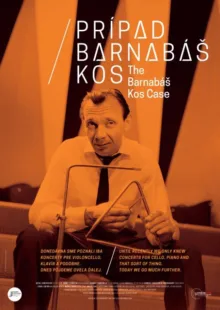
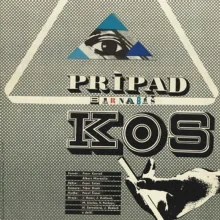
The Barnabas Kos Case (1965)
- Guest Co-Hosts
- Carol Borden, Rahne Alexander
Show notes
A mild-mannered party man, one triangle and a promotion nobody should have given him: The Barnabas Kos Case (1965) turns an orchestra into a bureaucratic nightmare. Carol Borden and Rahne Alexander join Mike White for Czechtember to take on Peter Solan's Slovak satire, adapted by Peter Karvaš from a short story.
The trio trace the film's obsession with shapes, from triangular tables to heads poking through glass boxes, and its line from Kafka to Brazil (1985). They argue over whether the anarchic, rearranged orchestra is liberation or farce, why the musicians shrug when order returns, and what that closing scene means.
Transcript
An automatic transcript from Spreaker. It has not been proofread, so names, titles and spellings may be wrong, and it does not say who is speaking.
Show the transcript (about 11,100 words)
Hold your ears, folks. It's showtime. People pay good money to see this movie. When they go out to a theater, they want cold sodas, hot popcorn, and no monsters in the projection booth. Everyone pretend podcasting isn't boring.
Turn it off. Turn it off! Turn it off! God damn it! The whole orchestra will be destroyed!
You don't understand. It's over. The whole orchestra will be destroyed, do you understand? Do you understand? Zrejme nepoznáte ľudí, kdežti povedia, že ste proti majistrovi Kosovi, pretože vás prepustil.
Welcome to the Projection Booth. I'm your host, Mike White. Joining me once again is Ms. Rain Alexander. Hey, everybody.
Also back in the booth is Ms. Carol Borden. Honor work, comrades. We continue Check Timber with a look at Peter Solon's The Case of Barnabas Koss. Released in 1964, the film is based on a short story and adapted by Peter Carvesh.
Carvesh? There we are. By Peter Carvesh. And the second of two times the two Peters would work together. The film tells the tale of a good party member, Barnabas Kosh, who plays the triangle in the orchestra.
He does all the things the party wants him to, though he's kind of a bad triangle player in truth and not very well liked by the rest of the orchestra. He gets a notification that he's gotten a promotion to be the director of the orchestra in a bureaucratic nightmare that shows what happens when power goes to someone's head and especially someone with no qualifications for being put in charge. We will be ruining the film as much as we possibly can. You have been warned. You have been warned.
There we are. Rain, was this the first time watch for you? Yes, it was. This is opening a whole new world for me. And I just, I really, really liked this film a lot.
I'm not sure I'm going to say I loved it yet. Like I feel like I'm going to reserve that, but I'm going to be watching this a few more times for sure. And Carol, how about yourself? I think I'm just going to go straight with, I loved it. And it was also the first time I saw it.
This was the first time for me as well. I had this one on my radar for a long time and I just kind of got kicked down the road as different Czech timbres would continue and finally got to it this year. I tend to talk more about Czech films than Slovak films for whatever reason. And this would qualify more as a Slovak film. And I'm not that familiar with the director, not that familiar with the writer.
Definitely familiar with our main character, the gentleman who plays Barnabas Kos. I've seen him in a lot of things. Actually, I think you and I were on the Witchhammer episode together, right, Rain? Yes. He was in I Killed Einstein, Gentleman, Four Murders Are Enough, Honey, The Straw Hat.
So he's worked with Lipski quite a few times. Great, great face. And. really plays this role terrifically. I think I'm going to go with you, Carol. I think I love this movie.
Yeah, it's so fantastic. I was also on The Four Murders Are Enough. So I've been following this guy inadvertently for quite a while. So maybe I'll be kicked over into the loved it category by the end of this hour. I mean, we've talked about bureaucratic nightmares before.
We've used the word Kafkaesque on the show many times before, whether we're talking about real Kafka, like The Trial, or just more of these Terry Gilliam-type films. This is right there, man. This is one of those where, I mean, just even from the very opening of the film, with just the little half of the triangle with that empty chair... And getting to know our main character, Barnabas Kos, oh my gosh, it knows how to increase and just play into that absurd so well. And it has the bureaucracy that's so often in Kafka.
It's absurd, he's absurd, his obsession with the triangle is absurd. And then he just does that sort of endless doing paperwork, endless having interviews with officials who aren't willing to commit one way or the other to anything. Yeah, just eminently Kafkaesque. You get things like the, what would you call those guys? It's not triumvirate.
It's the tribunal. You get those guys from the tribunal who are sitting behind the glass and you can barely hear them. They're sitting there like see no evil, hear no evil, do no evil type of guys. Everyone's complaining to them. And of course, I'm jumping right to the end, of course.
But what I like is just the slow buildup of all this stuff. Though, they plant a lot of things before the beginning credits. Jesus. before the beginning credits are even over. Yeah, it's true. I mean, you know, obviously this is a huge critique of the ways these bureaucracies are being deployed and being that counter effect to their stated desired expectations, I guess.
But, you know, I'm still trying to formulate my thoughts and feelings about all of that because I feel like I've seen a million of these kinds of movies at this point. Let's critique the system. And, of course, this is early, I think, in that, for lack of a better word, genre. And I think this is why I'm still, like, really on the fence, ultimately, about how I feel about this film is because, you know, these are the arbiters of everything. Their authority is not to be questioned, even though they, like, changed their minds, right?
But, you know, we've got Barnabas, who is... The first time I watched this film, I thought Barnabas was so dedicated to the triangle, and that was really his thing. But the closing scene where he seems to be getting a different calling, and now he's thrilled about it. This is the scene that's really, really making me confused about how I feel about this film. Does he really need that tribunal to determine his fate? right?
And of course, it's a tribunal. So it's a triangle. It's also a triangle. What is this other kind of triangle? Is this where he's seeing his happiness?
Is this what's making him become the Joker at the end? I don't really know. And I feel like the more I watch this, the more confused I get about how I feel about all of this. It does tie back in several ways to early. The end part ties back to the beginning part in several ways.
And one of them is you might remember His practicing scene. He is utterly scattered when they have the empty chair in the orchestra room where he just shows up to play his one thing and then he's running in from us. The first thing we see him doing is just attending a meeting or group or activity thing one after another while the orchestra is playing and waiting for him to play his triangle. They're playing and he's eventually going to play the triangle. Then after he comes in and plays it, he leaves immediately again to go do some other meeting, and he gets called out on his way out, as I remember, by the conductor.
And then later, they paint this lovely domestic picture of him practicing his triangle, which is just wonderful. Everything about it is wonderful. His costuming, his corduroy jacket, his house, the housekeeper. But He's willing to stop playing when he gets one letter after, or when the letter comes. And he tries to determine which one it is.
He tells his housekeeper, the woman who runs his boarding house, or whoever she is, what kind of letter it probably is based on the shape of the envelope. So as central as I think the triangle is in his life, these letters are something that even in the beginning... interrupt his playing it. And so I wonder how much of it is, like, he longs to do it, and he wants to be a maestro. And he, like many people who are caught in a bureaucracy, would like to be doing something artistic with themselves. And I think there is a big part of himself that, you know, honestly, the triangle is important, but it's not as important as his meetings and his letters and his participation in these things.
And the other thing that I think is really sort of central in how the triangle plays out is not just what you call the triumvirate, which is three people who are running everything. Like, the triangle is... present in everything. There's a triangular table. There's triangles on the wall. Shots are arranged in triangles all over the place.
By the time we get to him finally dinging the first time, we've already seen so many triangles. I love that shot from the back of the orchestra through the triangle with the conductor framed in the triangle. It's so nice. Or when he's making triangles later on and there's just that huge container filled with all of these rejected triangles that he has struck and just found them wanting. He's such a dick in that, too.
Well, yeah, he starts off pretty sympathetic to me. I mean, the way that he, you know, yeah, he's got all of these obligations. He kind of tries to sneak into the back of the orchestra. We've seen all of these other people striking the triangle for him because he's been absent. He sees somebody trying playing his triangle he runs over kind of takes over and as soon as he starts to dig on that triangle the band director's hey what's up with the triangle something's going on here and then it's like oh how nice of you to join us comrade cost this is fantastic you know you've been pretty busy and he goes through all of the different activities he's been doing and it's like what and the director's like well what do you got tomorrow he said oh well tomorrow is that you know it's like He's completely oblivious that the band director is making fun of him.
And you really get the feeling pretty early in the film that not a lot of people in the rest of this orchestra like him. And I'm surprised that the band director, the one that kind of humiliates him a little bit or would humiliate him if he was more aware of his surroundings, I'm surprised he's still alive by the end of this movie because he really gives it to Barnabas quite a few times, all for good reason. But yeah, Barnabas... You get to see how hapless he is, that he's really trying his best. Like you said, that scene of him practicing the triangle at home.
I'm not making fun of percussionists. I love a good percussion instrument. I used to love to be in the back of the band and find all the different noisemakers. I loved the whip that we had that you would play during the winter songs. that one and you would hit that whip and I was just like, yeah, this is the best thing. But man, to make the triangle so important, so central to this movie, what a genius idea.
Well, and when he has two people in his orchestra and I would say like I think people come to dislike him more. I think the conductor is frustrated with him from the get-go. But he does have two people in the percussion section who are both willing to cover for him and both humor his delusion about the triangle. Because normally, as you say, percussionists play multiple instruments. They don't specialize in the triangle.
And they cover for him. They could do his job. They let him come running in and hit his one little ding and then run on out and continue to cover him if necessary. Right. Yeah, that he just comes in, wants to play the one note and then leave at one point.
You're like, it reminded me of the Michael McDonald skit from CTV where he runs in and he's just like, got a long way to go. That thing. Yes. Yeah. But it's true.
I mean, you know, like me, maybe in the pieces that we hear, it's not really to our liking, but like he's, you know, he's spending his time waiting and waiting. And, you know, I love that one of the things that happens when he becomes director is he upends that and suddenly you're seeing so many other musicians that are used to being at the front. And that's one of the pieces that really endears me to the character and what he does. I actually, well, I'm sure we'll talk about this more at length later, but the scene where the orchestra has been rearranged and becomes, you know, becomes effectively a state of anarchy is so gorgeous. And I'm like, I love what I'm hearing here.
I love it, right? It's just, here's a new music. And it took very little for this to be achieved after he's taken that role. And it's so interesting to me that I think trying to force that into a structure is what ended up making it seem like a failure by the end of the film. Did you have an impression about how the musicians felt in the end when the normal order of the orchestra is restored and people are returned to their seats and the clarinetists can have their full instrument and not just their reeds to play and stuff like that?
And it was interesting to me that the conductor obviously expected everybody was going to be so excited that things had been returned to normal, but it They seemed more ambivalent about it to me, and I don't know if there was some part of them that had finally gotten into what Barnabas was doing, or if they're just like, oh, the conductors and their ideas come and go, and we'll just show up and see what happens when we come back on Monday or whatever they were going to do. It's amazing that they can keep a straight face through most of that. Of course, when he gets called away, it just does go into anarchy where they're just making fun of him completely. And everyone's just, you know, tapping everywhere.
And I think that that might be before the, the big concert, the one that so many people are brought in on, but they, they play along with it. You know, literally they play along with it. And yeah, I love that when he's, Oh yeah. Take off the, the mouthpiece from the clarinet and just play that. And just how disruptive, even just that noise is.
And then, I mean, there's not a lot of tonality that can come out of a triangle, at least the triangles I've experienced. So him just tapping on all of the different parts of the triangle, and it all just sounds exactly the same to me, to the point where you're just like, oh my God, would you stop that? Would you stop tapping on that triangle? Well, I will say that this has really sent me down a rabbit hole of looking at the history of the triangle. I'm still not very deep into that hole, but it's really, it's got this fascinating history, and in the course of doing so, found a video where Leonard Bernstein is working with a couple, this is like a rehearsal shot, so in many ways could have been lifted right out of this film.
Leonard Bernstein is going at it with two triangle players during some rehearsal. It's just a couple minutes. I'll dig this up. I'll send it over to you both. But It's such an interesting...
I mean, here's a composer that I'm familiar with that is speaking in English and is using 20th century terminology to interact with these triangleists. Triangleists? Triangle players? Percussionists? So it's more relatable to me personally.
But it really just makes me wonder. Why would I as a composer put something into my piece that is only like dinged a few times, right? What's that motivation? Like, and I'm going to be sitting with this just as an artist, as a musician for a little while, like what else am I doing in my own work, which is a shimmer or a glimmer that just appears in one piece of a thing that I'm doing, but it still feels important enough for me to always leave it there. Yeah, it's like those little extra marks that an artist might make on a canvas or on a drawing.
And you're just like, wow, for me, I never would have thought to put that in there. I had Nathan Cain, who used to do the covers for Cashier's to Cinemark. he would always do like these little stars or asterisks or things just like in the corners, all of the, you know, like little, little extras and be like, I would never think to do that. I would never think to put that in there, but that really just adds so much to this picture. But yeah, that's to me, those are the little triangle beats. And the other part of this research that I'm still like, I'm definitely out of my depth with is that a picture, Apparently, at the turn of the last century, 19th and the 20th, the use of the triangle was often used in compositions to echo Ottoman Empire military bands.
So, like, this brings up, like, of course, I read this and I'm, okay, well, what does this mean culturally for this region that's, like, you know, been in contest for so many, you know, so many decades in so many different kinds of contexts? You know, what I don't know about the Ottoman empire explorations over the centuries could fill a book but like but like what what is there a leitmotif underneath of all of this which is uh you know kind of dealing with uh uh czech and and slovak uh feelings about the ottoman empire mm-hmm Is that in there? And what does it look like? I don't know yet, but I want to know a little bit more. I am looking forward to coming down to Baltimore next spring for Rain Alexander's One Woman Triangle show.
I will be right there. I'll be first in line to buy tickets. The big concerto. I'll have to wait until it's on PBS and then I can watch it. The absurdity of this film...
Yes, the triangle is rather an absurd instrument, whether it was used in the Ottoman Empire or not. But you've got the visuals. I talked about the guys who are behind the glass. There's one part pretty early in the movie, I think before even the end of the first act is over. There's a woman who's walking down a hallway and it's all glass cubes that line the hallway on all sides of it feels like other than the floor and the ceiling.
And you have all of these people with their heads. There are these windows that go all the way down evenly spaced. They almost look like cells or something. And just little windows that are too high for these people to be standing there. They have to be on objects because they are a head taller than the woman who's walking down the hall.
And they all have their heads just sticking out. It's almost nightmarish the way that this stuff looks because you're like, why the hell would this be the way that this is? They almost look Like the heads of animals that you chop off and stick on your den wall or something. Just the way that these people are lined up as this woman in this beautiful sundress and hat and sunglasses is walking down the hallway. And this whole scene too, it's very dreamlike for me because you've got, that's the scene with the water fountain where like she walks past him, he turns, she's gone.
He is there knocking on these doors. There's a guy who gets a drink from the drinking fountain. He turns around and that guy's gone again. And it's like, what is going on here? I love that this is just in the middle of this film or towards the beginning of this film, really helping to set the tone of just how absurd this whole movie is.
And none of the doors have numbers on them. He's trying to find this office to talk to those guys about this letter. No one can help them because they keep disappearing and none of the doors have numbers on them and they just have those mysterious hats. Yeah, I love the way that shape plays into this. You know, you're talking about the, you know, the heads and the boxes.
Of course, you go into that room where everybody is waiting in line. You've got this line of clerks who are all also behind glass doors. squares, rectangles that are all being, yeah. And then there's the circle in front of their face, right? And so we've got your three major shapes, your circle, your triangle, and your box. But even like those gorgeous doors into the rehearsal space, right?
Which are just covered with like layers and layers of rectangles. But as soon as you go through that door, you're in a room that's just full of giant triangles everywhere. I just like the visuals of this, the set design in this film are just, they're breathtaking. I want to walk around in so many of these rooms personally right now. Yeah, when he goes in and there's the guy who's got all the squiggly lines and he's like, oh yeah, here's what you had for breakfast.
And it's like, what? And it almost looks like a family tree behind him with all of these connections and all these. It's got just letters, Roman letters on there. So like, W X V L and I W and it's what is going on? I don't, I maybe if I was a slow box speaker, I would understand, but I don't think so because they have a literal squiggly lines on the screen that keeps thing that I love the way that this effect is done.
And the guy just turns and goes shoes number 43 with an orthopedic insert. It's like, what? And then it flips to his next an intelligible but beautifully mid-century design chart with a new bit of data about Barnabas's life. Yeah, it's on the less threatening side of the theater of the absurd. It's threatening because it's kind of, I guess, a parable of power and what happens to people who get power, even people who are getting the power because they seem modest and mild-mannered and likable enough. they're all lucky that when he goes power crazed, it's all about making everything about the triangle.
Although I have to say that one scene where he, once he, he's gotten his, like once, once they've told him that he's the director of the orchestra, whether he likes it or not, actually is the, is he, he's like the director of more than one orchestra, I think. But, Yeah, the director, not the conductor, which I kept getting mixed up because I was like, he's not really conducting. And it's like, oh, no, no, he's just leading all of the now bureaucracy of that. Yes. Yeah.
And in a way, they kind of made a good choice. Like if I was in his orchestra and he got chosen, I would be like, well, I don't think he's super competent, but at least he cares about music. And he probably won't do anything drastic. And then he goes absolutely nuts when they're playing Dvorak's New World Symphony. And he wants to come in and play again, which seems relatable.
But that one segment where he realizes that when he gets too excited and hits his triangle to add a ding, he realizes he has so much power now that his conductor will let him change Dvorak. And there's that moment where you see it on his face where he's realizing this. And because he's been so sympathetic to this moment, you're like, maybe he's realizing that his power is bad. But no, he's very tempted now. Yeah, I love that because that's the real first crack in the facade for me is just that moment where he's like, oh, oh, oh, you like this extra little beat I put in here?
And yeah, just that we saw that same conductor that was the one who was kind of reading in the riot act. And now he's like, oh, that's very interesting. And at first I'm like, is he being sarcastic? Because it feels like he's being sarcastic, but then he's actually playing it straight. And Barnabas knows because he's been sarcastic to him the whole time.
And now he's like, I'm just going to ignore the sarcasm, you know, because I'm getting what I want. Yeah. I mean, I've worked in enough arts nonprofits in my life to kind of smell everything that's happening in this film. And it's one of the things that really, like, again, makes me feel very confused about this film, ultimately. You know, when he pulls out the data... the spreadsheet that is basically saying, look, we're going to increase our triangle presence three times in the next year.
Thanks to my efforts. Right. And I'm just like, God, how many times I've been in that meeting? You've taken your bad idea and now you've somehow made your case for it. So this is what we're going to be doing now.
And, uh, well, yeah, it's painful. Oh yeah. It's painful. It's legit painful. And it's so, clearly grounded in music like you can tell that everyone in that orchestra is an orchestra person they're not actors and probably the the one the trumpeter that on one hand they're having him be sassy because he's good at being sassy and they need someone who's sassy in the orchestra but to like what the trumpet represented in the 1960s like it was jazzy and it was you know um but yeah it's it it just has this uh amid or woven into all the absurdity with the weird charts and stuff and the just wonderful stylishness is like this painful reality about how people behave and how again bureaucracies operate and and how people with power become abusive with their.
Power And of course, most of the time when we talk about stories like this with this kind of crazed bureaucracy, so much of it goes back to things that we've seen like 1984. I mentioned Brazil. And a lot of this gets lumped in with just communism and how absurd the system was in the East and all of the waiting in line. I mean, when we see him at the post office, he's in this interminable line, maybe post office, but it just reminded me of the post office so much, especially with those circles in front of the people's faces and just everybody standing there looking miserable. I mean, that's what we think of or were taught to think of when we thought of communism.
And in this case, it is very much these guys are making fun of the system that they're living in. No doubt about it. And this was one of these films that was really hard to make for a long time. They were trying for, I think, what, 10 years to make this? There was The director and the writer worked together on this.
There was one other writer that was involved with this. They tried it a few times, and then finally, by 64, the thaw had happened enough in Czechoslovakia that they were able to finally get this thing made. And then, of course, they're not going to be able to make another film like this in four years. It's going to be very tough. But it's funny how often I see orchestras in these Eastern European films as kind of this microcosm of the system.
I'm trying to think of all of the different musical films that we've talked about, just even on the show during Checktember, where we've got a bugle player. There was Romance for Bugle. There was another bugle player. There's another movie called If a Thousand Clarinets. And of course, Foreman made films about musicians as well.
It's like you have all of these things that are just this wonderful microcosm of how the world works, and they just set it within the four walls of the orchestra pit. Yeah, I like that it really highlights, I think, the tension between this, whatever, group activity and individualism, right? So it's such a ripe ground for that. This week, I also watched a relatively new film called Tuner, which is a a heist movie about a guy who's a piano tuner, you know, a high end piano tuner. It's a pretty good film, but it really, that film is also about somebody who's kind of like on the periphery of this orchestral world for reasons that we find out in the film.
Um, and, uh, watching them together, it really made me want to see a Peter Strickland remake of this film in particular, because I would love to see not only what he does with sound, but also what he would critique about the art world, the symphonic world as he sees it. I was really glad to see his name mentioned in the notes for this as somebody who's deeply familiar with this film, probably deeply influenced by this film. Yeah, I know he wrote something for the liner notes for this, for the second run disc, if memory serves. And I know last week when Jonathan Owen was on, I was getting mixed up. I thought that he had done liner notes for Invention for Destruction, but actually he did liner notes for this one.
So I should have picked his brain a little bit more about that, because there's not a ton written about this one. I was looking a lot for different articles, and This one kind of goes under the radar a little bit, so I'm really glad that somebody like a Strickland or like Jonathan are writing about this and kind of getting the word out a little bit more, because there are, what, a couple essays I saw? I think it gets mentioned in Hames' book, but it's not like people are penning thousand-word essays about this all the time. Yeah, I'd really like to read those liner notes that Strickland wrote. You can see he has such a similar sensibility that I wasn't surprised when you were saying that he, he had done the notes for this.
Well, yeah. And like you said, right. And with the sound, I mean, barbarian sound studio, all of his films are wonderful when it comes to sound, but yes, like that, he is very tuned into that. I have a collection of his mole cricket field recordings from Duke of Burgundy. Oh yeah.
Yeah. And, I think I'm going to frame them. Well, you have even the little musical motif of that lighter that comes up several times as well. I love a good musical lighter, and I'm a big fan. I think it's a musical watch for a few dollars more, but I always enjoy something that just plays a little jaunty tune in a movie, and just to see how that's a counterpoint to some of the dark things that are going on.
Because it's not like... I mean, there is evil in this world, and we get to see Barnabas kind of embrace that. It's not like anyone's losing their lives, but it just feels like one step away. I mentioned the band director, the conductor, and I was like, oh, he's going to get it. Or that trumpet player that makes fun of Barnabas as well.
And it just feels like this little man is going to use this power to do some bad things. And of course... There's no sort of metaphor I can see for anything else in that type of statement. But at the same time, you know, there's this moment that strikes me, you know, the first time that they go in to question the authority of Barnabas. He's, you know, they're saying, well, they're laughing at him.
And the response is, well, they're laughing. That means everything's great. Yeah. Right? And I mean...
Sure, that's not empirically true, but also, like, there's a point to that, given what you're saying. Like, we're still all in an orchestra. You know, we still have all these cool things that we can do together here. Yeah, I mean, it's sort of, you can look at it positively like that. And then there's also the first step towards terror is not sharing what other people think or feel and just... going ahead and implementing your ideal world.
And in this one, it's the world where people have to write him an elaborate triangle concerto where he is the soloist and everyone else tries to turn their instruments into the triangle. Yeah. Yeah. And I'm not going to bring this up too much, but like the last 10 years, I feel like I have a much deeper understanding of the theater of the absurd than I ever wanted. And I wonder how this would land for me in those terms 10 years ago, if I could just be like, this is silly and crazy, and I understand it intellectually, but I don't have this shadow feeling at the same time while watching it.
Like, not this far. I understand. I mean, I understand intellectually, but I don't feel those hallways with no numbers and heads in them. windows above the doors but i can see that maybe someday i will and i don't know how i feel about. That well at least the film is very clear about where it stands on dilettantes that much i like and i think that that's that's something that we can grasp onto especially as we're engaging this current political. Climate yeah and and again like the fact that they're like um The dangerous moment is when he realizes he can change Dvorak.
And I'm like, this film is definitely on the right side. They're like, no, you play the composition as best you can, but it deserves respect. It feels like this would make a really good double feature with something like The Cremator, where you just have that kind of, again, bureaucracy goes wild, little man with a job that he thinks is very important. taking it way too seriously i don't think that well at least at least by the end of the story i don't see barnabas basically wanting to exterminate the world but i can see if he was in this position for a little bit longer that would be a possibility i think we stop this movie before things get really. Dire yeah Well, and hopefully it's another position like this, like he's on the committee of what to do with that thing that's in the middle of music building.
Yeah, I love that that's just such a an obvious thing that he almost bumps his head on it every single time he goes into the orchestra room. That it's just this massive mess of concrete and wood and iron that's just sitting there. And it's like, what the hell is this doing here? Why aren't we talking about the real problem. In the room?
Is it a sculpture? Is it collapsed ceiling? Have they brought like detritus from a construction site and dumped it there in front of the doors for the concert room? But I love that it's also just another object colliding with another object. I mean, we get to see this.
So much of it is intentional, like him hitting his triangle, him hitting the fences as he's walking by. I mean, in a way, I would love to hear a remix of this that's just the thunks and the tings, you know, and just see where they all emerge. And there's something I'm still trying to figure out how I feel about this. You know, there's a scene in a restaurant where his two opponents are trying to figure out what to do. And one of them.
Starts tapping on his glass with a fork or a pencil or something like that. And the server comes up and says to him, you need to stop that. We're a decent place. Suggesting that, like, any time, really, that you're taking a stick and hitting another stick or another object, there's something actually decent about that. Yeah, you're being dissonant in society's orchestra.
Yeah. What do you all think about the relationship he has with that woman? Is it his secretary? Yeah, it was the previous director's secretary. And then when he became director, she was his secretary.
And he had. I feel like that was pretty realistic. He was determined to be, and I think he actually was, oblivious about her feelings about his behavior. And one thing, I watched three of the movies that you made available to us, and one thing I really appreciated was for a mid-century, like a 1960s film, about the kinds of things that were about. I felt like they, even though the women didn't have big parts, they got to be people.
And so we get to see her sadness about the direction he's taking, her feelings about, you know, her disappointment in him and her caring for him. And her irritation when he uses her words about, like, even a triangle is, you know, a musical instrument, which is true. And he really seemed like he needed to hear that. But then he turned that into, you know, I'm going to be the concertmaster now. And it's the most important instrument.
And going back to the orchestra metaphor, they're all important in the orchestra because together you make the music. Yeah. Like Rain was saying, there's a reason why that triangle gets put in there. What is that reason? We may not know.
Somebody, the composer, thought that it would be a good thing. So there's a reason, probably, for every single note, let's hope, in a piece. And he plays that little part, but man, oh man, does he start to take it very seriously. Yeah, and you get that moment of that concert towards the end of the film, and it's just so that Emperor's I almost said new groove, the emperor's new clothes type of moment where it's like, everyone should be laughing at you, but because we're in this society where everyone is just bowing and scraping, no one's going to call you out whatsoever. Yeah.
Would we have made the wrong, like, what did they say all the time? Like basically would, would people think we may, well, what does it mean that you think we made the wrong decision? You know, like, And so it goes even to that, like, we'll bitch about it privately, but we're not going to say anything about this was a fiasco. Right. The party cannot be wrong, comrade.
Right. And of course, all of this also brings to mind that question, which is, or that statement that's often attributed to Margaret Atwood around how, generally speaking, men are more afraid of being laughed at while women are more afraid that they're going to get killed, right? And you know, again, not knowing really the nuances of gender politics in Czechoslovakia in the 60s, I can only extrapolate and assume there's something in common with what we had in the United States at that time. Really, the worst thing that can happen to Barnabas is to be laughed at in this circumstance, because ultimately, what, the state's going to give him another role no matter what. Yeah.
Yep. Yeah. And he can probably continue being in the cooperative orchestra playing triangle. It's that Peter principle that they talk about with management, where they just keep, now that he's gotten into that management track, he's just going to keep failing upwards and never really realize that he is in the wrong whatsoever and just keep thinking he's more and more important as we go along. And it's so extreme because I forget her name.
Jolka, I think. Right, yes. Jilka is the secretary for the director and she is basically making everything work and everything happen. Well, he goes off and, you know, he starts wearing his suit and doing his triangle business and reinvents the modern orchestra. And she's like making sure everybody gets paid, making sure everything is scheduled, making sure all the things get signed.
And it's never run so well. Yeah, exactly. Yep. Yeah. Yeah.
I mean, I figured she was going to become the power behind the throne as soon as she got introduced as a character. And I was glad that the director did not prove me wrong with that. Yeah. Yeah. And trusted us to recognize all the things going on with her.
I mean, again, going back to the cremator and even thinking of things like Vampire Farad, this isn't a horror film, but I would say it's very close to being a horror film. It could be. So yeah, Peter Strickland should definitely think about a modern day remake of this one. Or a sequel, right? Barnabas 2, The Reckoning.
Exactly. Exactly. You know, just briefly, one thing that I think why I would say I love it, even though it is complicated emotionally and complicated in terms of its themes and stuff, But it had me from that diegetic opening where it's it has its theme song going and then you find out that it's that music that the orchestra is playing. And I think it had another time where it's even though it had done that, it managed to surprise me again with some diegetic music. And I just just wonderful.
Yeah. So let's go ahead and take a break and we'll be right back after these brief messages. Hello, everyone. This is Malcolm McDowell. I just want to say that this is a request to listeners of the Projection Booth podcast to become patrons of the show via patreon.com.
P-A-T-R-E-O-N dot com slash projection booth. That's pretty simple. I think you can do that. It's a great show, and Mike, he provides hours of great entertainment. So now it's time to give back, my little droogies.
Settle down and take a listen and have a sip of the old Molocco, and then you'll be ready for a little of the old in-out, in-out, real horror show. Bye-bye. All right, that's back. Sorry. All right.
We are back, and we are talking about the Barnabas Cost case. And I'm glad that, yeah, I found out that the director had worked with this writer before, the writer of the short story this was based on, a.k.a. also the screenwriter. And the collection of short stories is... Why am I blanking? It's called The Dirt Nesby with The Devil Never Sleeps.
The Devil Does Not Sleep. Thank you. The name of the collection of short stories was Cert Nespi, The Devil Does Not Sleep. I was unable to find that collection of short stories, but I was able to find the book that was then turned into... I was able to find the movie that was based on those short stories, the other short stories, which is just called The Devil Does Not Sleep from 1956.
So it sounds like when they were unable to get Barnabas Koss off the ground that they ended up making The Devil Doesn't Sleep, which also skewers bureaucrats like nobody's business. I had a great time watching this one, though the first story, again, the absurdism, it was almost too much. I would not say watch these back to back because it was almost oppressive. I did not do that. That's a good idea.
What did you think of The Devil Doesn't Sleep? Me? Yeah, Carol. Okay. I thought it was very good.
I did not love it like I loved the first one, but I appreciated the hell out of it. And I think some of it, I think if I were in Czechoslovakia at the time, I bet I would find it hilarious. I think all the jokes would land. as opposed to being like, that's interesting, or that was funny. But I think if you lived in that society in that time, you would feel probably all of it in your bones. And I loved the acting.
The acting was incredible, that they used the same five or six actors playing different roles in each story segment. And then with an interstitial segment where the the censors are meeting to discuss about making Czechoslovakia's first satirical film, and that they're trying to improve the satire by diminishing it and protecting their own status and their own power was very delightful, too. Also, the fact that it was too cold in the theater, I really appreciated that, too. Yeah, that one I watched without subtitles because of circumstances. So I just kind of put it on while I was in the midst of doing some things and trying to osmosis by the vibes.
I felt a strong Muppet show vibes from it in many ways. Actually, more to the point, the Muppet movie, right? In terms of just the broadness of it was very clear. I thought it was very gorgeous. I really am excited about for when I do have sufficient time to sit and make sure I can subtitle it and get the full story.
But, I mean, it made me very excited to delve more into this filmmaker. So thank you so much for the opportunity to discover something new. I feel like I don't get to discover new things anymore, so this is especially exciting. The subtitle file that's in the drafts is about seven minutes fast i believe i was messing around with that yesterday so. I watching it wasn't quite bad and that bad for me it was like a few seconds off for each person which is irritating but not unfamiliar to.
Me I wonder if I, because I took one file yesterday, I backed it up 10 seconds so that everything showed up earlier, but then I had backed it up too much. So I need to now push it forward probably two seconds. So I might have uploaded the 10 second one to the Dropbox and then forgot to upload. Well, actually, I don't think I ever made the two second jump. So I need to do that as well.
So there's a program called Subtitle Editor. editor, which is really your friend, unless, yeah, and it's free, freeware. So, and it's very, if I can use it, other than PAL to NTSC or some of these other transfers, which you might run into every once in a while, and it does have the ability to translate PAL to NTSC or even CCAM. But for whatever reason, every once in a while, I'll download an Indian film. And there's just no saving it. I don't know what's going on, but I have the worst luck.
And it might just be because at three hours long, stuff keeps slipping a little bit. And by the end, you're like two minutes away. So there's my plug for subtitle editor. They should send you their non-existent money. Exactly, yes.
They make so much off of giving away software for free, I'm sure. Yeah, I definitely want to see more of this director's work because I can't say that I'm very familiar with Peter Solon. He just has either he is a Slovak director I just don't run into or, you know, he didn't make that many movies. I know he did. He's kind of got a very typical Czech character. career where it's like okay in the 1960s he was making a lot of movies and then it slows down after 68 just really starts to go down because there's one he made called dialogue 20 40 60 which just sounds fascinating to me where it's the same bit of dialogue that is spoken by people in their 40s and people in their 60s.
Oh, wow. And just how that changes. So Second Run also put that one out. They've put out a lot of his films, which is great. I'm so glad that Second Run does this.
Yay! And I think it's three different directors. He directs, Solon does the 40-year-olds. Oh, yeah, I can see that. And then it's Skolomovsky who does the 20s, and Zbigniew Brinich, who we've talked about on the show a ton of times.
He does the 60-year-olds. Very cool. That's cool. Yeah, he was the one who did Fifth Horseman is Fear, which I also think would fit in well. Now, Fifth Horseman is Fear, I think, is much darker than anything that we've talked about, but it also has that bureaucratic nightmare quality that really fits in well with The Cremator and Barnabas Cause.
It's actually kind of sad thinking of the film version of Devil Does Not Sleep in this context, because if you look at it in the history, you can see it as they're trying. Guys, we're going to poke some gentle fun at you and your attitudes, and then maybe you'll let us make these movies, and then we'll show the most... they're not toothless satirical shorts, but like the segments are benign. There's nothing really stabby at bureaucracy or at communism in them. Like one of them is like a guy who runs whatever workers cooperative it is, is very excited about how the advances they've made in the year. And there's a young guy who's obviously in love with someone and And he decides that something is wrong with him.
And that because he can't celebrate the progress of society because he thinks the girl he likes doesn't like him. And then when he finds out the girl he likes does like him and finally has a conversation with a man in his 60s who gives him advice that's basically go tell her, then he's happy. And this is, of course, a huge problem both within the film and then in the surrounding story where... They're like, oh, no. I don't even remember why.
We can't have a movie about a young man in love, and his supervisor is like, you're not sufficiently supportive of me because you look sad. That's a problem. Yeah, that was a lot to handle. I'm glad that you made it through that one so well, because that was tough for me. Yeah, yeah.
Well, you see, I... Because I was sick during the time, like I watched the first movie, I got sick. I watched this and now we're recording. Well, I watched this a couple of days ago. I've only been going through the notes now.
So I didn't read your notes to provide this context of like, I can see how it would be heartbreaking when you're like, this whole movie is a plea to let us just make some movies. And even this isn't enough for us to get to do it. And if we had if it had happened just a little later, like they're so close to the new wave, but not quite there. One of the films that he did, Solon did after The Devil Doesn't Sleep, I think it was 63, was one called The Boxer and Death, which is interesting that it's the, I don't know if it's the same story, but there have been so many stories of people in concentration camps that are boxers. I mean, I think of the guy that played James Hurley was in one, Willem Dafoe was in one, and that's just like the 1990s.
I mean, there's so many things. I could be wrong about James Hurley, and I'm sorry, I'm forgetting the actor's real name. He was always cool, though. It's just odd that there have been more than one, and this one, The Boxer in Death, is definitely one of those. He does a few other films.
He does The Barnabas Cost Case. And then he did another one, which, Carol, I think you also watched, was Before This Night Is Over. Yeah. How was that one? That one I found, like, that one is really good.
And it's, it's, I suppose, it's a, it's, darker is the wrong word. But I found it more painful in terms of people's interactions. Because it's a group of six people at, a nightclub in Bratislava who, from my perspective, start out wanting to have fun, then have some fun, and then try to force the fun to keep happening, and things fall apart, and people's secrets are revealed, and it ends very tragicomically. But there's two guys who are plumbers who are trying to have a night at this fancy new nightclub that also has a lot of cool geometric shapes and a band led by a trumpeter and like a cool globe that dangles from the ceiling that has a rocket circling around it and lights up and yeah and they do a lot of there's like a really neat like if you like 60s nightclub sequences from international cinema this has Great those.
It has like great dancer ladies. But these two guys come and they want to meet women and get drunk and have fun. And there's two women who've come from somewhere outside of Bratislava. After saving up their money for a year, their vacation is going to the city, staying in a hotel, getting to do whatever they want, getting to eat out every night, getting to go to the nightclub. And these two guys attempt to pick them up.
And they do get to sit with them and talk with them all night. But we get to see, like, the jerkiness of one of the guys revealed. And, yeah, there's just, like, a lot of realistic behavior. Like, one of the women lets the guy make out with her a bit. And then when she's concerned that people can see that she's a little disheveled, he tells her that she's not.
But then later he needles her for having been easy, kind of. And. And there's a guy who's embezzled all the funds from his worker cooperative. And we don't find this out till the end. But during the course of the movie, he's buying everybody booze.
And at first, he just seems like a generous, wealthy guy. But then he gets really aggressive about how people have to accept these things from him because, quote, everybody takes. And then in the end, when he's bullied the trumpeter into letting him borrow his trombone to play, I'm sorry, his trumpet to play a high C. which even I, a non-brass instrument person, know is very difficult. After the police come to stop him, we find out that he's embezzled all the funds from his workers' cooperative and has not, in fact, honored work at all. Yeah, so it's one of the more intense, edgy comedy kind of thing.
Reen, was that a high C that you were trying to sing when we first started recording today? I can't confirm that. I was just randomly doing some exercises, testing the limits of my microphone. So who knows? Who knows?
Call up Peter Strickland. He and I are working on a thing together. Oh, okay. All right, cool. As long as he doesn't lock you in a trunk, I guess we're okay.
Hey, look, you know, anything for art. I don't know. Maybe you go to that special institute where people make all the music with food. Exactly. You get to wear those fabulous hats and stuff.
I mean, you know, there's worse ways to go out. That's all I've got to say. I would be very curious to know more about Peter Solon. Because, like I said, after the dialogue movie I talked about, 204060, was 68. After that, you look at his credits and it's just TV movie shorts.
Occasionally there is a feature film in here, but not nearly. I think there's like maybe two or three features over the entire decade of the 70s. You see a movie in 81, 83, 85, and that's it. So of all of the films that he did, 28 things that were shorts, TV films or feature films. And he started, of course, his career with a lot of short films, which is usually the way that these work.
So, yeah, kind of sad to not see that he was able to do more because he had the framing of these movies. Everything looks so good. There's a moment in Barnabas Cause where he Barnabas is at his desk. I think it's one of the first times we see him really trying to plow through some paperwork and the camera starts to move in on him. And it's almost like he has a little bit of a revelation.
He perks up and the camera pulls back really quickly. Like, okay, he's about to do something. Or from The Simpsons, he's about to do something really stupid. But then he doesn't do anything and the camera just moves back in again. And it's just like this really subtle thing, just like putting this person under the microscope in a very interesting way and just showing how he moves through the world.
And again... To talk about our main actor, he just, he knows how to use his face. He's got a great face. There were some reviewers who were talking about his face is like a bunch of triangles with all of the wrinkles and everything. But Josef Kemmerer really, really knows how to own the screen when he's on.
Well, given that sequence when he's practicing his triangle and we're just looking at his face where you can tell he's silently counting out his part. And that they just stay with him and that he can be riveting while he's silently counting out for his next thing. Just remarkable. Yeah. And he's got that heavy brow.
So it's like when he turns his face down, he looks very, very serious and almost to the point where it's like, there's more going on behind his eyes than he's letting on, because otherwise he can look happy and friendly, but man, oh man, can see he give almost death stares. Yeah. So fun. I am so glad that we watched this. This was just a real hoot for me.
Yeah. Well, let's go ahead and take another break and play a preview for next week's show right after this, sorry, right after these brief messages. Well, they want to know how to use out of cool. How does it sound? It's shining.
What? It's shining, but how does it sound? Count me in. What's good, Fiegl? You're in the battery's pocket, aren't you?
I'm the battery myself. Plus, minus. Every tree has energy. Every tree has energy. Every tree has energy.
Otherwise, nothing would work. So, I had it, and now I don't have it. Well, well. I think you can feel it. Well, great.
You know, it's like he's showing off somewhere. He's showing off somewhere for the first time. Well, I said total loss of energy. So I'll try it. You know it would work, but you're stealing it from me.
Damn your trick, but if you come here, you won't enjoy the energy of people. Whoever enjoys it, Bude mi vrát se do. That's right. Gosh, I'm having such a hard time reading tonight. That's right.
We're going to. That's right. We'll be back next week with a look at Accumulator 1. Until then, I want to thank my co-hosts, Rainn and Carol. So, Carol, what is the latest with you?
You can find me, as always, at The Cultural Gutter at culturalgutter.com. And probably by the time this is airing, we will be starting to move into Gutterthon, which is our annual fundraiser to support thoughtful writing about disreputable art at The Gutter. And I guess that's it. All right. And Rain, what's the house with you?
Well, by the time this airs, I will have achieved a longstanding goal of finally getting my website back up and running the way that I want it to. This has been going on far too long. My inner project manager is very disappointed in me. But yeah, I've got a publication date, a go live date of labor day so by the time this goes up i think we should be in good shape there i've also started a new uh music radio show uh that's on gutsyradio.org uh every fourth tuesday so me and my uh my colleague madam trash heap are just spinning tunes for a couple hours every every fourth tuesday and uh You can get that live when we broadcast or streaming in the archive at gutsyradio.org. Sounds like Madam Trash Keep would be a natch for being a fan of the cultural gutter.
Probably. Let's make that happen. All right. Well, thank you so much, folks, for being on the show. Thanks to everybody for listening.
If you want to hear more of me shooting off my mouth, check out some of the other shows that I work on. They are all available at weirdingwaymedia.com. Thanks to our Patreon community. If you want to join the community, visit patreon.com slash projection booth. Every donation we get helps the projection booth take over the world.
I've got my life in such a mess and I don't know what to do. How can I live in this old world and be in love with two? If I said goodbye to my first true love, my heart would break in two. For I'm halfway still in love with him and half in love with you. Triangle, triangle, triangle.
Triangle, tra-la-la-la-la, triangle, my life's in such a tangle. Tra-la-la-la-la, triangle, tra-la-la-la-la. Triangle, tra-la-la-la-la, triangle, what'll I do about you? I saw you at the movie show just the other day, but I was with my other love, so I looked the other. Way I didn't want to hurt him couldn't bear for him to see the way that I would look at you and the way you'd look at me Tra-la-la-la-la, triangle.
Tra-la-la-la-la, triangle. Tra-la-la-la-la, triangle. My life's in such a tangle. Tra-la-la-la-la, triangle. Tra-la-la-la-la, triangle.
Tra-la-la-la-la, triangle. What'll I do about you? Tra-la-la-la-la, triangle. Tra-la-la-la-la, triangle. Triangle tra la la la la you my life's in such a tangle triangle triangle triangle triangle.
Triangle. What'll I do about you? What'll I do about you? What'll I do about you? What'll I
Comments
No comments yet.