
Show notes
Labels: Special Report
Transcript
An automatic transcript from Spreaker. It has not been proofread, so names, titles and spellings may be wrong, and it does not say who is speaking.
Show the transcript (about 12,200 words)
Hold your ears, folks. It's showtime. People pay good money to see this movie. When they go out to a theater, they want cold sodas, hot popcorn, and no monsters in the projection booth. Everyone pretend podcasting isn't boring.
Turn it off. Turn it off! Turn it off! Hey folks, welcome to a special episode of The Projection Booth. I'm your host, Mike White.
Today, I am joined by one of my favorite people, Kayla Janisse, the founder of Spectacular Optical. We get into how a scrappy, underfunded festival side project turned into a full publishing house and distribution outfit. You can find all of their books and releases over at SpectacularOptical.ca. I had a great time talking with Kayla, and I hope you have a great time listening. Enjoy.
How long has Spectacular Optical been around? Because it feels like that's been a thing for quite a few years. Yeah, I started it in... I mean, I started it as a book publisher in 2014, but the website existed since 2011. Because it was originally a project.
It was originally a Fantasia project. So when I first moved to Montreal, I started working for Fantasia because they wanted to expand their reach year-round. They wanted to just keep activity happening year-round and have people remember the festival year-round and stuff like that. And so they had this idea of having a website where there was articles and stuff, like just content. So I sort of pitched the idea of it being like a website where there was monthly content, you know, so that it wasn't like this constant news cycle or anything, but it was kind of more like a journal, you know, where each month would have articles would go live like the first of the month or something like that.
And sometimes they'd be on a theme that month or whatever, you know, so there'd be like a limited amount of content because we were just like, they didn't have the money. They weren't certainly weren't paying me very well. And, you know, there wasn't a lot of money to have like a proper, like actual web news website or anything like that, you know, so it was very just curated and stuff. But after it existed for two years, I think Pierre who runs Fantasia decided that the purpose of it was not serving its purpose, it was basically reaching people. The people reading the website were people from all over the world and not people in Quebec, which is what he really wanted.
He wanted the local audience to be galvanized year round. And people from Quebec, even though we translated everything, we paid to have every article translated into French, people from Quebec just were engaging with the site. It was all just people who followed me or followed the other writers I hired and stuff, you know, so it was kind of like people from all over the place that were tuning into it. So Peter was, or Pierre was like, I don't want to keep paying for this because it's not really getting Quebecers to keep talking about Fantasia all year. And so he just gave it to me.
He was like, well, you built this website because I had been the one to work with the designers on it and everything. And he was just like, you can just have it, you know? So he gave me the URL, gave me the website. And I just sat on it for a year because I didn't really know what to do with it because I didn't have money on my own to make it into a news website or anything. And then I had thought of making a magazine.
I was like, well, maybe I can just make a physical, because I was also more interested in physical media than website stuff. And so I was like, maybe I can make a physical magazine, right? Like once a month. And I started to look into Canadian grants to see what kind of grants existed for magazines. And it turned out it was actually way easier to get grants for books than magazines.
I've never gotten a grant for any of my books, but That was my thinking when I was like, oh, I'll publish books under the name Spectacular Apical. So I was thinking I'll apply for a grant. It'll be great. Because technically, there were all these qualifications you needed to get funding as a magazine. But for a book, it was like it could literally be anything as long as it was 40 pages.
And it would count as a book. Like the restrictions and eligibility requirements and all that stuff were way less. So I decided, oh, I'll just publish a book. And then once I publish X amount of books, I'll be eligible to apply for grants and stuff. And so that was sort of how Spectacular Optical started as a book publisher.
It was like in 2014, I published the book Kid Power. That was the first one. And it was an anthology. And anthologies, like I've done a lot of anthologies and the anthologies are just really good. They're so much easier to sell than...
They're easier to sell than a single author book, you know, because you basically have all these different writers and they all have their own fan bases and they all become ambassadors for the book. But they also come together quicker than a single author book because you basically just have all these people writing an essay. They're not writing a whole book, you know, so everybody can actually write their essay in a few months. So it can actually come together fairly quickly. And so most of the books that we've, most of the anthologies we've published, the actual production time was relatively short.
You know, it was kind of like, I would usually give people a year almost to write their essays or whatever. And then we would spend about four to six months doing the layout and editing and stuff. Um, but you know, I would say every year and a half you, you could have a new book out. And so that, so that was something I kind of focused on at the time was doing anthologies, um, And, you know, but it's all based on my own taste and stuff, you know. So it was like Kid Power was very much like I was into weird kids movies.
Unfortunately, that book was maybe two or three years too early. Nobody like I couldn't give those things away. Nobody bought Kid Power. Nobody cared about it. And then all of a sudden, in like 2016, 2017, when all the books were locked away in frigging storage somewhere and I had no access to them, all of a sudden people became like, remember how weird kids movies used to be?
And so this whole new realm of scholarship started with no knowledge that I had this background writing about these things. So it was like, I've been totally written out of that history of like this new scholarship about weird kids movies and stuff. So it's like, yeah, nobody bought that book. Nobody heard of it, whatever. But a lot of things that people were writing about, like the dark movies of Disney and stuff like I did all that shit in Kid Power, you know, like I interviewed John Huff about his movies and stuff.
And I had a whole big thing on the on the after school specials. And I mean, there was lots of stuff in that Kid Power book. But anyway, so that was the first one. And what was this? Oh, yeah.
The second one was Satanic Panic, which I think we may have talked about back when it came out. I definitely own all of these books. So I'm very familiar with them. Yeah. And Satanic Panic was interesting because that was the first time we had the challenge of dealing with things that were affecting people's real lives, you know, or like where things we wrote could be potentially painful to people in their real lives, you know, because it was like, We really tried to keep the focus on the pop culture that was created around the satanic panic so that the book was not about the satanic panic.
It was about the way that pop culture interpreted the satanic panic, you know, because we were not historians of the satanic panic, you know, like there were other books that were more that. And but it was still sketchy, you know, because you're writing, you're doing these essays and you're realizing all the like We were thinking when we first had the idea to do the book, like it'd be this really fun book about hair metal and Dungeons and Dragons and stuff like this. And it was like, oh, actually, no, the whole book is about child abuse. You know, it's like it actually is like all this stuff is so much more depressing than we were originally thinking. And so many of the essays were about protecting children and you know, you had people who were very divided on that.
Obviously, you had like the Christian side of things where they really believed all these little kids were being raped in daycare centers and stuff. And, you know, the first when all the essays came in, the first draft of every essay was mocking Christians and making fun of them and stuff. And I was just like, I sent everything back and I was like, no, don't do that. Like, just keep it neutral because Some of these people have issues that are really unresolved from this time, you know, so it's like, just keep it neutral, you know, because there's like nobody, nobody won out of this hysteria, you know, and you still have like the very first kid that set off the McMartin preschool trial and everything that base, literally the baby was thrown out with the bathwater, you know, because you had this kid who had something wrong with him.
And then everybody blew it up into this big satanic thing or whatever. And then everybody by the 90s got so sick of it, they're just like, oh, well, acquitted, whatever, forget it. And it's like, well, something did happen to that one kid. and it just stopped being looked into because it was now tied into the satanic panic and not like a thing of like just a child being abused by somebody you know so there was a lot of stuff like because people got so exhausted with the satanic panic hysteria there actually were, you know, cases where it's like things were not looked into properly, you know? And then everything, it was like, yeah, all the evidence that was contaminated and, you know, and it was just like, so deal doing a book that actually dealt with all that stuff was kind of like, Oh, this is a much bigger responsibility than what we set out do initially, which was just going to be this fun, goofy book about crazy Christians, believing that age mute Ninja turtles are satanic or whatever, you know?
Um, So, yeah, but that was an interesting challenge because it kind of set us up for, you know, how we approach things like that. You know, like it's like when we're picking a topic to do, that's the kind of thing you have to think about, because if you have an opinion about a movie, it's not going to matter really to people, you know, like it doesn't affect their life if you don't like their movie or whatever. But if you're saying something about their child being molested and you not believing it or something, that's a totally different thing, you know. So we just tried to be as respectful as possible. But the book is still full of amazing imagery from movies and stuff like that, you know.
But yeah, so those were like our first two books. Satanic Panic did really well. It's still in print now because Fab Press in the UK basically took it on. I didn't like doing reprints like because I found it too boring. Well, it's just not it's hard to get excited again about reprinting books you already did and then having to store them somewhere.
So I basically licensed it out to Fat Press. So all the subsequent editions have been published by them. And yeah. And then 2017, we did two books. We did the Yuletide Terror, Christmas Horror on film and television.
Did the Lost Girls, which is the one that Sam Deegan curated about the films of Jean Rollin. And the Rollin one sold out super fast. We got so much press on that. That was like a... perfect timing kind of thing, where it was like people were just starting to become re-interested, or in many cases, interested for the first time in Jean Rollin and his world and his films. And there was a bunch of them being restored for Blu-ray and stuff at the same time.
And the fact that it was all women that wrote for this book meant there was all kinds of press we got that we probably wouldn't have got if it was a mixed authorship, you know? But because it was all women, writing about these weird, poetic sexploitation films, a lot of writers really grasped onto that idea of like the feminist audience of genre length. And so we really benefited from that. And that book, unfortunately, is not, it hasn't been in print since 2017. And I can't get it back in print because my license for the original, I get emailed about that book so often from people who are asking if I'm going to reprint it.
But My license lasted five years. I had an agreement with Sam Deegan and she had all the individual contracts with the different writers. And part of that strategy was that I was trying to keep my Canadian content quota because I was still thinking at that point I'll get a grant. So I didn't want to have all these like American authors and stuff like making my roster look like it was mostly American. So I basically made a deal with one American.
It was Sam. And then she made the agreements with the authors. But The problem is that some of those authors no longer speak to each other. So getting an anthology back together, you know, like I would have to relicense everything. And even if I licensed everything with the people individually, some of them don't want to be in the book anymore.
You know, so I haven't been able to get that book in print again because of people not liking each other anymore and not wanting to be in the same book with each other. It's unfortunate. I mean, it's it's kind of sucks because it's just like like literally every other author that did this work is now not being getting royalties that they could be getting because I get requested for this book all the time. And I've tried a few times to appeal for it to be done. But it's yeah, there's just some people who won't agree to it.
And the idea of cutting out their chapter just feels like it's not the book anymore. Like everybody has to be on board. And that was also a lesson I learned about doing anthologies was like, my licenses were too short. You know, like I wasn't leaving enough time, you know, for the books to get an audience, like the way that, you know, they don't always get an audience right out of the gate. Sometimes they get an audience a few years down the road.
And I didn't leave long enough licenses for that to happen, for the books to get like a second wind or whatever. And yeah, and I learned, about changing wording in the contract so that I could extend licenses and stuff, you know, so that this kind of thing doesn't happen again. But yeah, so that was a learning experience, but it's still very, I do, you know, there's, there's various things happening at spectacular optical, but it's still just me doing it, you know? So it is very, it's got a very lackadaisical pace, you know, I don't put stuff out constantly. And because of that, it's been hard to get proper distribution because they want clients that are producing more regularly.
So my books aren't even on Amazon because I cannot figure out how to get them there. And yeah, so they're basically like direct-to-consumer sales, and it's just me managing everything. So it's kind of like in between this place where it's kind of a hobby press, but not because it costs a lot of money. But I run it kind of like a hobby press in terms of the pace of everything. And, you know, I do it around my job, you know.
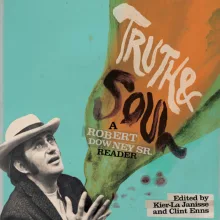
Where did the idea for the Robert Downey compilation come from? That was a conversation I had with my friend Clint Enns, who is co-editor of the book, back in 2013 or 2014. It was like, I remember we were watching the Eclipse, Criterion had their Eclipse box set that they put out, a bunch of Downey's early films, and we were watching that, and we were like, how come there's, and the thing is, those Eclipse box sets have no extra. You know, so they're just, there's nothing. No context or anything.
And So we were just like, why is there no book about Robert Downey Sr.? There should be a book about his films. And so it really came about because we were trying to find a book about his films so that we could just find readings of his films because they had such a weird humor, you know, and a lot of people were we knew didn't really know how to read his humor, you know, and we were just really wishing there were some sort of critical book or something or some even just a history of his films or anything. And there was just nothing. And so we were not like experts in Robert Denny Sr. by any means.
You know, when we started having conversations about doing the book, it was just because there was kind of like a hole that we were like, this book should exist. So we started trying to find people who knew a lot about his films to write chapters for this book. And originally first had the idea and it's first started reaching out to people. Lewis Black from the Austin Chronicle contacted me. He was like, oh, I'll totally write a chapter and I'll get Jonathan Demme to write a chapter and I'll get Paul Thomas Anderson to write a chapter.
And then, so at first I'm thinking, oh, this is amazing. I'm going to have this great lineup of people, you know, and it's just going to work like this domino effect where they all get each other involved and stuff. But then literally within days of us even having this idea, like we had just started reaching out to people. And we contacted Andrew Lampert, who used to work at Anthology Film Archives. And we were like, you know, he had done some writing or interviews or something with Downey.
And so we were just sort of like, hey, do you want to write something for this book? You know, and we're like, keep everything confidential for now, because we're literally just starting to investigate if there's enough people to do this and stuff like that. And The next day, I get an email from Rosemary Downey that Andrew Lampert has told her about this book happening and Bob does not want this book to exist. And so then there goes Jonathan Demme and Paul Thomas Anderson and Louis Black and Wheeler Winston Dixon, who actually handed his essay in really fast. He agreed to do it and wrote his essay really fucking fast.
And then he pulled his essay out because Bob didn't want this book to exist. And so I've sent her a whole bunch of my books, I sent her House of Psychotic Women, like I tried made an appeal, never heard anything back. And so then for a while, we were just, we were gonna forget it, we were just like, Oh, well, I guess, you know, if he doesn't support the book, we can't do it, you know, and all these people dropped out of it. And then I found out that CineFamily was doing, this is such a saga, sorry. I found out CineFamily was going to be doing a retrospective of Robert Downey Sr.
's films. And Hadrian from CineFamily contacted me and was just like, hey, let's do something together. We can do the book together and all. I'll, you know, I'll get Bob on board and whatever. And he was just like, you know, he's like, just don't reach out to him or anything because like, I'll take care of it.
And I know him and blah. So I was thinking again, like, oh, this is great. Like, I'm going to have this partner to do the book with, but I'll have like so much more sources and promotion and all this kind of stuff. And then their retrospective was getting closer. It was like going to be happening in December.
And I contacted Hadrian about, I was like, okay, I'm going to buy my plane ticket to come down. For this thing. And he was like, oh, you can't come to it. And I was like, what do you mean I can't come to it? He's like, well, it's sold out.
And I was like, well, yeah, but I mean, we're doing this thing together. And he's just like, yeah, we decided to just do our own book. And so he just basically the whole thing was just him trying to keep me away from Downey for four months until his thing happened so that I would not kind of spook him from the idea of doing anything. So he just wanted me to stay away. from Downey. So then I wasted another four months thinking that I had people on board.
So then again, I gave up the idea of doing the book. I was just like, oh my God, you know, all these obstacles. And that just kind of kept happening for like 10 years where I would be like, no, I got to do this. And I would start working on it again. And then we'd face obstacles from people I came to call the Downey bros, the Downey bros.
There was a lot of people, men who consider robert downey senior to be their property their intellectual property their cultural property don't like when other not. That these people fucking do anything to share his legacy anywhere outside of their own immediate bubble but they did they just didn't you know just there was a lot of misdirection for 10 years a lot of misdirection and By the end of it, me and Clint were just defiant. We were just like, we're just going to do this book. And people, a lot of people, I guess, won't be happy about it. But it's 10 years later and there still is no other book about him.
I mean, the thing that CineFamily did was just reprinting some old articles and stuff like that. I mean, it was not a proper book or anything. So, well, we're just going to do this. It's going to have a bunch of Canadian writers. It's going to have a bunch of writers that are not known for their writing about Robert Downey senior, but there's going to be some critical writing about his films and it'll.
Be, it'll exist. And it'll be maybe someday there'll be another book about Robert Downey senior that has more of his friends involved. But until then this book exists, you know, and it's like, it's basically a, It's like we go film by film of all the films he directed, and we just tried to have an angle on the film. So a lot of the films were not about, a lot of the chapters are not about how the film was made. It's more about the reception of the film.
So it's either a reading of the film or something about the release of the film. Like Stephen Bessette wrote an epic chapter about the release of Sticks and Bones. And then there's other pieces that are more theoretical and stuff. But in general, it's like the way that an academic would approach a topic. They don't go out and interview people.
They're just kind of doing readings of the films. The approach that we ended up taking when we realized that a lot of the people in Downey's circle are not going to come on board for this book. And then the ironic thing, sadly, is that now Downey has passed away. We sent the finished book to his widow, Rosemary, and she wrote me and said, oh, my God, I wish Bob could see this. He would love this book.
Wow. Yeah, she was like this chapter about the chapter about Putney Swope and stuff. It's like this person lives or no, it was the chapter about chafed elbows. She said it's like this person lives inside Bob's brain. And I mean, I was so happy about this.
But also I was just like, oh, my God, so much time was wasted. And he could have seen this book. He could have seen this book. It could have come out earlier, you know. Oh, wow.
So that was depressing, you know. And that's all. But that's also part of my life. That's what happens. Every book I do, the people die before the book comes out.
So if I ever say I'm going to write a book about you, start preparing your will. It's true. I mean, not all of his work is available. How did, like, you know, you mentioned Sticks and Bones. I think maybe you can see that at the New York Public Library.
So that was how I saw it originally when we were doing the book was I had to fly to New York, go to the New York Public Library and see it in the reference library there. But Somebody leaked it on YouTube a couple of years ago. And I don't know if it's still there, but it was there long enough for me to take a download of it. So yeah, somebody put it up on YouTube. And I mean, Anthology Film Archives restored it in 2019 and then just sat on it.
Wow. For years. Anytime somebody went, because I knew they were working on a restoration and I kept asking them about it and they kept telling me it wasn't ready. And then I found out I have seen film evidence of them playing it for Robert Downey Sr. in 2019. So that restoration has been ready for quite a while.
And then Sweet Smell of Sex, isn't that another one? Yeah, that's another one. How did I get that? I got a porridge of that somehow. I got a bootleg of it from somewhere.
I mean, I'm assuming because that's a, I mean, that was a work fighter, right? So, I mean, that I think just came out. It was like, I don't know if it was out on something weird, but it was probably something like that, how it got out, you know, originally. Because he did it for, like, a sexploitation producer. Weirdly, how we found out any detail about how that movie was made was from...
I cannot remember who it was now. It's in the footnotes, or it'll be in the footnotes or the bibliography for that essay. But Clint, my co-editor, found he was reading it book about like Eddie Lamar or somebody like that like some Hollywood star and it was mentioned in their autobiography that they knew the producer that Downey made this movie for and it was just the most roundabout weird coincidence that this movie happened to be mentioned in this person's biography and that was how we got some information you know to put into that essay or you know About how it was, you know, what the process was of how it was commissioned or whatever. Yeah, but that one is, it's certainly not one that is considered part of the Downey canon.
You know, whenever people do Downey retrospectives, you know, they don't really play that movie. I don't know where there's like a print of it or anything. I don't know where my torrent came from, but I got it on, I think, Caragarga. Wow. Yeah.
And and then there's lots of other like a lot of his 80s movies are not available. But also so many people hate those movies, you know, like Downey hated them. A lot of the ones he made in the early 80s. You know, he was on drugs at that point and did not does not consider them to be his authorship, you know, because he was like, hey, there was interference from producers on them. And there was also just him being drugged out.
I guess, unable to negotiate his position, you know, competently or whatever. Because his ideas were up the academy. I mean, his original idea was that it was supposed to be all little kids. They weren't supposed to be teenagers. They were supposed to be little kids.
And he was just like, basically, he's like, the joke doesn't work if they're teenagers. He's like, this whole movie doesn't work because he's like, if they were children, it would be funny, you know? And I'm like, yeah, I could see that, you know, so he so already making the film when the producers insisted on casting teenagers because they wanted to cash in on the burgeoning sort of sex comedy movies that were happening then. It was like, well, already the film is fucked, you know. And then like Moonbeam, which became America, you know, was shot in like 82, not released till 86.
That one definitely has Downey in it. you know, I've read the script for it that he wrote, and the only thing different really is, or the main thing different is Richard Belzer's character. Richard Belzer was pretty much able to take control of that character, and he has a co-writing credit on the movie, which, I mean, the writing that he did for the movie is incredibly racist, Belzer, but Yeah, so so his character, I think like at the time, the producers really wanted Belzer to have like a bigger role, you know, so yeah, so I think that's basically all the parts with Richard Belzer suck. Lots of other stuff about that movie is really fun. There's lots of good stuff in that movie. But all the Richard Belzer stuff is no good.
And part of that is because it's not down. It's basically Richard Belzer writing his own character. But that one, again, it's like you can find it on VHS. So you can find VHS rips of it. online and a lot of the 80s stuff same thing you know it's like they existed on vhs so if you can find a vhs rip that's the best you're gonna see and so many of them have problems that it's hard for like a reissue company to spend the money restoring something like too much sun which is so homophobic it's not even all this is the hard thing about his humor because the thing is It's not homophobic and it's not coming from a homophobic place or a racist place, but it's coming from kind of this old liberal place where there's like this brand of satire that would have been considered very progressive in 1970 and is no longer progressive in 1986, you know?
By the time you get to the late 80s, a lot of this humor doesn't feel satirical anymore. It just feels very out of touch. very um just like dad joke kind of thing you know and so a lot of it is just not funny like the late 80s stuff and rented lips which is really i mean some of his late 80s movies are really just showcases for robert downey jr you know so robert downey jr did a lot of his early character work in those films you know like a lot of the elasticity of his performances in later films, he's trying all that out in his dad's films, you know, because his dad just let him go nuts. But it's also one of the things we learned doing the book was how big of a role Elsie Downey, his wife, and Robert Downey Jr.
's mom played in all of his movies that are good. And it's also where you can see Robert Downey Jr. gets his acting style from his mom. You know, like, he is basically... All of the character work he does is based on her character work because she does. She's an incredible character performer in the movie Moment to Moment, which was recut and edited as Two Tons of Turquoise to Taos Tonight.
She plays like 20 different characters, you know, in all these different skits and stuff, you know, so she's like incredible comic performer. It was such a shame that basically after her and Downey Splitch just didn't really act anymore. Because, yeah, she was so good. But, yeah, I don't know. There was...
A lot of his films are hard to get, but I feel like if a proper box set could be done, then all those other films, those kind of secondary films, the flawed films or whatever, could all be part of that and could be properly contextualized. I think that could work. But some of the more, you know, popular films or whatever... Yeah, you would have to... You'd have to license them, sub-license them from other distributors who currently have them.
But also, you know, there's Pound, which is the one studio, big studio film, which they've never released. And I actually traced, I didn't, we paid somebody to trace the copyright chain, chain of title for that film. Because everybody, you know, they've played it at Anthology. They played it at CineFamily. But they always said, oh, it's abandoned.
It's an abandoned film. And it's not an abandoned film. It is owned by Amazon. It's owned by MGM, which is now Amazon. So it's most certainly not abandoned.
And it is now bookable. You can book it from, because we kept trying to book it when we were doing the book launch events and stuff like that. We could not get an answer out of MGM. or Amazon. And then it showed up on the Park Circus website. So Park Circus does theatrical.
So they don't have like home video rights or anything, but they have theatrical rights and they have it now listed on their website. So you can book that movie as of a few months ago. So I'd like to think that was something to do with my prodding for that movie. But Yeah, I think that basically it was restored when they did the documentary Senior because there are clips from Pound in that movie that were much better quality than anything I had seen before. So I was like, oh, they must have done a proper scan of this movie for the documentary.
And so, yeah, so it's it's available. It's it's in HD. Wow. But Sticks and Bones, I'm trying to figure out who owns Sticks and Bones. I don't know whether it would be CBS or whether it would be Joe Papp. or Joe Papp's estate itself or something, and Anthology Film Archives, who restored the movie, will not share this information.
They will not share where the materials were deposited from. So they restored it and they played it last year when they did a Downey retrospective, which they, yeah, I don't want to get into it. But anyway, they have a restoration of it and it would be great if other people could play it. That's all I would say about that. Tell me about the move to distributing videos and this new venture that you're involved in now.
Yeah, so basically Spectacular Optical, so I started a distribution branch, but again, it's very small. I'm only going to do one or two movies a year. It's not going to be a lot because I have to kind of fit it in around my other job you know like I work for Severin still like that's my main focus and so everything else I do for Spectacular Optical or my own writing or anything like that has to be kind of done around Severin and the only reason I am doing my own label because I have quite a bit of autonomy at Severin in terms of acquiring films I want stuff like that is that there were certain films that I kept thinking of acquiring for Severin that were I just couldn't get it to fit. There was movies I was thinking of getting for all the Hans B.
R. 's for core box sets. There's this movie, Win Stanley, that I was trying to get from the BFI, but I just couldn't. I was going to put it on a disc with the field in England, and I still wish I had done that because it was a very obvious touchstone for a field in England, but it's just not a horror movie at all. It's just kind of like an uprising movie, like a drama, you know, very low budget, dramatic reenactment type film.
And I just could not get it to fit in the folk horror box set because I'm just like, people are just going to be like, why the fuck is this movie here? You know? And so I never released it. And then when it came to the second box set, I was really looking at A Year in a Field. and trying to shoehorn it into that box set and being like, well, it's about a standing stone. So maybe we can put it on the disc with psychomania, you know, because it's got standing stone.
And but again, it was the same thing where I was just like, if I put this on here, people are just going to be like, what the fuck is this movie? Why is this here? Like, this is not horror, you know, like it's not even like some of the things in the box set people already argue are not horror, but it's at least close enough that you can understand why it's there. But this I was like, no one is going to understand why this is there. It's not going to make sense to them.
But those movies still stuck with me and were kind of eating at me, you know, and I just was like a year in a field. Severin is not going to want that movie. It's like even if I convinced David to release it, which I could if I pushed for it, if it underperformed compared to what he wants, that's going to affect my ability to pitch other movie to Severin. So I was like, because I already know this is going to be such a niche audience for this movie, I don't want to like waste whatever pull I have at Severance on a movie that I already feel might be for a really limited audience, you know? So I was just like, you know what?
So I asked my friend Andy Starr, who's a producer, he's done a bunch of Ben Wheatley movies and stuff. Um, but he was the, he was the person who first sent me the link to a year in a field because he was like, oh, I think you will like this movie. Right. Of course. And so I contacted him and I was just like, do you think they would go for like a really small deal for me if I start my own label to release this movie?
And it turns out they did. So they accepted my very piddly offer. And the fact that I had no credibility as a distributor on my own or anything, they took a chance on me. And it's been so great working with that film because, like, I love the film. I loved doing the extras for the film.
I edited all the extras myself. Well, one of them was partially one of them was co-edited, actually, with Will Sheff from Pocerville River. did a Q & A with the director in Los Angeles. And so he sort of did first pass at editing it. And then I went in and cut in clips and titles and stuff like that. But anyway, I edited most of them and put that disc together myself and work with the artist and everything.
And he did the cover and stuff. And I don't know, I was really happy with it. And I continue to work with the director now. And we're working on releasing the soundtrack. We're going to do an LP of the soundtrack.
And we're also going to do a book of his photographs because he actually documented that standing stone for a decade just in still photographs before he started making the film. So it was like the film was like the culmination of a 10 year obsession. And he actually still goes to that stone all the time. So how did you even run across that movie the first time? Well, because my friend Andy Stark sent it to me.
He just recommended it and said he thought I would like it. And it had played, you know, when it first came out in 2023, it did a bunch of festivals. It did like the but it didn't play like a lot of the types of festivals that I pay attention to other than some doc fest. So it played Sheffield Doc Fest. which I do pay attention to, but otherwise it played a lot of like environmental festivals and stuff. So it wasn't, wouldn't have been on my radar necessarily without Andy Stark recommending it.
But Andy sends me movies like that occasionally. He'll just be like, I have the, you know, I saw this weird little movie and I think you might like it. And he's always right. He gets my taste pretty well. But yeah, that was how I found it.
And it just stuck with me. You know, I watched it and I just was thinking about two years later, I was still thinking about it. And I was just like, nobody has released that movie. So, I mean, that's the only reason I started my own label was for movies that kind of ate at me like that, you know? So it's like, I'm not out there looking for movies to buy.
I'm not, you know, wheeling and dealing or I'm trying to, you know, It's really just like this movie is just living with me somehow. And no one has put it out. And I just want it to be out there. And so I'll take a chance and see if the distributors are willing to or the licensors are willing to work with a small person like me, you know. So that was kind of how it started.
But also because I worked through Severin, I made a deal with them that's very similar to the OCN deal. It's a bit, you know, it's a better deal than the OCN deal, but it's structured similarly, you know, where it's basically like, you know, OCN has all their partner labels and stuff, you know, and so I basically have to hand in a finished disc, like ready for authoring to Severin. but they replicate it at their replicators. I have to send them print-ready art for the packaging, but they pay for the manufacturing at their manufacturers. And then it goes into their distribution cycle. So it goes into their direct consumer sales, but it also goes to their wider distribution, which is MVD.
So MVD, distribution outside of, or dissemination, I should say, because distribution is a term that people misuse a lot. But like they're like aggregators or disseminators, you know, so they basically take movies from all these distributors and they get them out onto streamers. They get them out into big box stores, you know, like more mainstream. You know, they do like more mainstream dissemination that we don't really have the contacts for. So we do a lot of our business direct to consumer, but it's supplemented by what MVD does, which reaches a wider audience. audience but like a less dedicated audience you know yeah so it basically my movie goes through that whole chain still so it's so anything I release has the same chances in the market as anything Severin releases even though Severin is a much bigger distributor so.
Makes sense well what's on the docket for the next releases do you have that all planned out Yeah, I. Sent out a press release back when I, you know, like when I first announced I was going to be doing Blu-rays, I sent out a press release that had my first six titles on it. So I have right now in restoration, I have Pure Shit, the Australian film, which is a 1975 drug movie. It's like a day in the life, Melbourne junkies. And I, it was like when I lived in Australia, this was a favorite movie of many people that I knew. but it had never been released in North America.
And again, it was one of those things that just kind of stuck with me, like, why isn't this movie out? And so then I contacted the daughter of the director who'd passed away and arranged, you know, to do a new restoration of it. So that's in restoration right now. And also Melody is in restoration. Melody is the movie directed by, it's written by Alan Parker, directed by Weres Hussein, came out in 1971. with Jack Wilde and Mark Lester from Oliver.
So it's kind of like, it's a puppy love movie set in this, you know, British school. And, you know, it's like little kids, you know, they're supposed to be 12 or whatever, even though Jack Wilde is 19 or 20. I think he's 19 in the film. He's actually much older than the character he's playing. But yeah, it's an adorable movie.
It's literally the most adorable movie ever made, if you've never seen this movie. You will agree with me when you see it, I promise. And all the music is by the early Bee Gees. So this is like the Baroque pop era of the Bee Gees. So it's like before disco and everything.
It's like... Yeah, because they had this whole other career before that disco. Yeah, they were telling jokes. And no one's laughing at them. Exactly.
Doomed or Doomed Love? Oh, Doomed Love, yeah. So that was another one where... I think I saw that movie. I was doing a commentary for the film Decoder, which is like the only vinegar syndrome commentary I've ever done.
But it was about this movie that I used to play as a film programmer. It's basically about like corporate Muzak, you know, and like this Muzak being used to brainwash people and this resistance that comes up against the Muzak and stuff. And it's a German early 80s. And The main character in that movie is a sort of New York, Lower East Side, avant-garde underground movie guy named Bill Wright. So he was like an actor in a lot of New York movies of that time.
And, you know, he's like an older actor, but he's just like a character face type of guy. And so he was cast as the in Decoder. And so I started looking. you know, when I was doing the commentary, I was researching all these other movies he was in. So in this movie, Doomed Love came up that had been directed by the same director who did the Nomi song documentary about Klaus Nomi, which I love. And it was an early movie that he made where all the sets are made out of cardboard, the same as like Forbidden Zone, you know, where everything is just like two dimensional painted cardboard set.
And I love that style i was talking to a friend of mine just yesterday about some other movie he saw with that style and i was just like is there a name for that like there's like i don't know if there is a term for that like it's basically like a theatrical set kind of you know like a cheap theatrical set where it's like painted doorways and painted you know whatever everything's just painted on 2d cardboard or whatever or flats you know um and so it's just got this weird surreal aspect to it and it's just like a sad story of a guy who's trying to get over a lost love and you know speaking to a therapist and it's yeah it's like very it's like a melodrama you know but all set on these like cardboard sets and it's a really really unique film and it again was one of those things that had just not been released since the 80s I think it came out on VHS you know when it was first new but not like by any big company or anything like that you know and yeah and it just that all of the negatives and everything were at an archive in Germany and you know so I just felt I was able to connect with the family through spectacle because spectacle in New York would play this film a lot they were like the only people I knew who played this film and so I contacted them and they connected me with the family so that I could license it and again it was kind of like I was able to get the movie affordably because the rest, my, the money was going to go into the restoration basically, you know, like because the film is on AD rolls, which means it's basically like scanning the film twice.
It's like, there's twice as much footage. Um, so it's like double the cost of scanning a regular movie. And so because of that, you know, again, they were willing to give me a good deal as long as they could get a copy of the restoration at the end of it, you know, plus they get royalties and stuff, you know, so that, Whatever advance I give them is not the only money that they'll get. But yeah, it's just like I've been trying to work out with the licensors to kind of take a chance on making the money on the back end, you know, which is not really a deal people like. But for some of these movies, if they haven't been restored in decades, it's sometimes the best offer they've got, you know.
So they're like, well, it's only a short license, too. Right. So it's like seven years is like the standard license for Blu-ray. So they're like, all right. So basically, I take this money.
I got to wait another seven years before I can do anything with it again. But I'll have a new restoration that I can then license out to somebody else. So ultimately, I think for some of these people, it's worth it just to get the film restored. Who are you working with on the restoration? It varies.
So the melody is being restored through Severin because we co-licensed that movie together. So it's going to be released together. So Severin is doing restoration on that. The restoration of pure shit is actually being done by a guy. I'm trying to remember what the name of his company is.
It's like a guy that I've known forever. This guy named Doug McCaffrey from when I used to do my first film festival in Vancouver, San Muerte. There was this guy that was a printer. He was like a professional printer. And yeah, he had like a drum scanner, you know, so he would scan the images for my programs for the festival.
But I would always have to like rip pages under my books in order to give them because it wasn't like a flatbed scanner. It was basically you had to give them the thing and it would go on this drum scanner and it would be like super high res, you know. And a lot of times, even though I was such a budget festival, other festivals in town would be like, oh, nice res. They would always compliment me on the resolution of my images. I was like, well, thank you.
I've destroyed half my book getting those images. But anyway, he was always kind of a techie, but like an analog techie and stuff, you know. And so when he retired from being a printer, he bought a scanner and just started this like scanning operation. Then he got into restoration and stuff. And he told me that he was doing this, but I still didn't know.
I was like, well, I don't know what the quality is of what he does. But then I contacted Todd, who's the lab manager, the lab archive manager guy at Severance. And I got him to look into everything that Doug was doing to see, does this match like Severin's standards? And he's like, oh yeah, no, it's good. That guy's good.
So I was like, okay, great. So I basically am getting him to do the restoration on shit. Also, he's Canadian and he lives in the Gulf Islands like me. So I live in this little island called Bender Island. And about two or three islands up from me is another island called Cortez Island.
Um, If you ever saw Avalon Fast's movie Honeycomb, I don't know if you saw that, it came out a few years ago. It was filmed on Cortez Island. So this is the island that Doug lives on and he has a little business there where it's like half film scanning and restoration and half he makes coffee. Like he makes coffee and has a cafe with his own homemade coffee. So he's carved out this weird little life for himself on the island up there but I really liked the idea of working with somebody who lived in the islands like me you know and like hiring Canadians and stuff so that was a big part of why I wanted to work with Doug on that restoration so yeah so those are happening right now doomed love I haven't started on the restoration or scanning and stuff yet because I'm you know just waiting for one of these other ones to be done first so that it can move into the queue And then I have a couple films that were restored by the BFI that are already ready.
I'm just working on extras for them. So, Herostratus by Don Levy was a late 60s movie that stars Michael Gothard, who played Father Barre in The Devils, like the exorcist with the John Lennon glasses. So, he's the... Yeah. Yeah.
He's the lead in Herostratus. And so I'm working on extras right now for that. And then I'll be working on extras for Arcadia after that. And Arcadia is basically like a video essay type film that I saw right when I was finishing my folk horror documentary. I saw Arcadia and it had so much of the same footage of like anything British in my movie is also in this movie, Arcadia.
And I started, I was just like, oh God, like, This movie came out three years before my movie, and I just heard about it right as I was finishing my film, and I started to feel like, oh, what's the point of my movie existing if this movie already exists? It's better. It's better than my movie. And ultimately, my movie's more international, so it covers tons of shit that's not in that movie, you know, because it's just about the British countryside, and it's using all archival footage, you know. But it is a great film, you know, and So, yeah.
So I just was like, well, I'm going to license that movie for my label because it basically like a lot of the movies I like that are not strictly genre films. You know, I love drug movies. I love psychedelic movies. I love juvenile delinquent movies. And I love experimental genre films like films that are probably too slow for the average seven audience, you know, like just just like things that are slightly weird or, you know, like experimental science fiction and stuff that, you know, like, so I love sci-fi that doesn't look like a sci-fi film, you know, where it's just kind of like, Oh, I guess this is in the future or something, you know, but it's like, everything just looks the same as now, you know, like I like those kinds of science fiction movies that are just more kind of existential and philosophical and stuff.
Um, but that don't have all the like gadgets and everything of, big budget science fiction movies. So anyways, so those are kind of my guidelines in terms of like things I'm most likely to release on Spectacular Optical. Obviously, there will be some intersection with other labels that already exist. But the thing is, I'm not out scouting for movies or looking for movies the way that they are, you know? So ultimately, no other label is going to be threatened by me because I'm just doing a few movies, you know, at a time.
So you are one of the busiest people I know. Yeah, I know you're down and celebrating Severance 20th. But what else are you working on right now? I mean, right now I'm working on I'm working on two big projects for Severance. One is a 20th anniversary book.
So I'm doing this book called Sharp Edges. And it's going to be structurally, it'll be very similar to the book I did for the Weird Wednesday series at the Alamo Drafthouse. I don't know if you ever saw that book. That's called Warped and Faded. but it's like history of Weird Wednesday and how Weird Wednesday sort of morphed into the American genre film archive. And so the Severn book is kind of similar to that in that the last half of the book is all the copy, like all the write-ups of every movie, every feature film we released for the first 20 years of existing.
And then the first half of the book is an oral history, you know, so it's got interviews with people who, work at Severin or used to work at Severin or have worked with Severin as collaborators and stuff, you know, so I still some of those interviews I'm still doing and some of them like so I've already started editing the interviews and putting them in the book and stuff like that. But I'm also still interviewing a few stragglers that I haven't interviewed yet. But yeah, so that's a really big project. And then also I'm working on a documentary for them, a feature documentary based on the book Killing for Culture. Remember that book from the...
Yeah. Yeah, it's so hard to explain to people who haven't read it, like who have never heard of it. It's just like, ugh. The look on their face when I tell them what I'm making a movie about. I feel like if people have actually read the book or know the book already, they get more why I would make an adaptation of that book.
But just like when you're telling the topic of it to somebody cold, they're just like, ugh, why would you want to spend two years looking at footage like that, you know? Which is true, right? I have not gotten to the part of the movie where I have to watch all the worse stuff, which I'm dreading. So it's like a lot of what I've focused on so far in the interviews I've filmed and everything has been all the like Mondo stuff and like the fake, not fake snuff, but like the narrative films that involve somebody investigating snuff. Or, you know, Did you ever see that movie, Sandman?
Yeah, so literally that's who I'm interviewing on Saturday is the director of that movie. Yeah. Yeah. Yeah, I'm interviewing him actually and his wife, Sarah Langan, because she's in the movie. So she's like a horror author.
She's like a great horror author. I just finished this book that she wrote called Good Neighbors, which was so good. But she's also in the movie as one of the victims and also... You know, so I'm going to actually interview them together. But Sandman, it was kind of funny because he kept getting mentioned in other people's interviews.
When I would interview other people, they would always bring up Sandman. And I was just like, yes, I must remember to interview J.T. Petty. And I kept forgetting. And every time somebody would mention him again, I'd be like, oh, my God, I keep forgetting to interview J.T.
Petty. So finally, I'm doing the interview with him on Saturday. That's great. Yeah, I love his work. I don't know if I've seen any of his stuff recently, but I really remember liking the pro saying, I think Evan, didn't he do like Mimic 3?
I think I even watched that. And the thing is, his Mimic, I remember when I saw it, I actually liked his Mimic movie, and it doesn't have very good reviews on IMDb. People are just like, what the fuck is this, you know? But I mean, he was also the first person I think I paid attention to this pattern. I think he was the first person where I started to notice that this was a pattern where somebody would make an independent film, like a very low budget independent film that would make waves on the festival circuit, you know, because he made soft for digging.
And then a studio would come in and offer them the opportunity to make either a remake or a sequel from a franchise. They would then make, they would take that opportunity and they would make that movie and it would kind of make things difficult for them from then on. Because A, it would get bad reviews because usually there were some interesting director who was not going to be satisfied making a run-of-the-mill version of that franchise they're going to try to do something interesting right but then the existing fan base is going to be like what the fuck is this and not like it and so it's going to get bad reviews the bad reviews will then be blamed on that director and then that is the last thing they directed which has bad reviews and everybody says you're only as good as your last movie right so it then then you have to like try to rebuild your whole career after that experience.
And I've seen that over and over and over again. And every time I see an independent director that gets the opportunity, like their second, you know, they have some breakout movie and then their second movie is some fucking children of the corn part seven, you know? And I'm just like, don't take that opportunity. Do not take that job, you know, because it's, yeah, it's just gonna hurt you, you know? But it's it happens over and over again.
And the money is hard to not accept. Right. If you're an independent person and you want money to make movies and all you got to do is direct this sequel and you'll get a big schwack of money. It's hard to turn that down, you know, so people take that opportunity over and over again. But it never turns out well.
It always it always has like a bad result that gets blamed on you, you know. And it can hurt your career. And so I feel like even though I liked his Mimic movie, the fans of Mimic did not like his Mimic movie. And then, yeah, I think it took a few years for him to get to, you know, I don't know how long after that he did The Burrowers. But The Burrowers was great.
And Tony did Hellbenders. Hellbenders? Is that what it was called? And, you know, but he also, even before Soft for Digging, he was writing video games. Mm-hmm.
So he still writes video games a lot, like writes the I don't play video games, so I don't even know what that means. But he writes the narrative of things that happen in video games. So that's something he's always done as like a secondary career. Yeah, which is good that he's got something else rather than just films, because we know how difficult it is to make a film. You can speak from experience on that.
Yeah. Yeah. Although I've been lucky. because I have Severin and I always, every movie I've made is for Severin. So it has an end. It has somewhere where it's going to be at the end.
Right. And where it's going to be at the end does not require me to change it. You know, like, like, so I'm really lucky in that sense that like, I got to make movies for David Gregory, who basically, like when I was doing Woodlands Darkened Days Bewitched and it looks like it was going to be over three hours long, he was like, I don't care. It's going to be on a Blu-ray. You know, he's like, make it as long as you want.
What do I care? And so there was no producer making me cut it shorter or anything. And everything's kind of been like that. You know, he's just like, if we release it on a Blu-ray and we connect it to some other movie we're releasing so that they promote each other, he's like, it'll sell. you know? So it's like, he's like, you have good taste, so it'll sell.
So there's no pressure on me from like a producer to change the movie or make a different kind of movie or anything like that. And so my experience has been really different, I think, from a lot of people's. Also, I mean, the budgets I'm working with are like nothing, you know? I mean, they're not even at the level of a micro budget according to what an actual industry funder would consider a micro budget, you know? And You know, there's so and I also never wanted to be a filmmaker.
So it's weird. I've now made a few films, even though I never wanted to be a filmmaker. And I know all these people who've been struggling their whole careers just make films and have had, you know, and they're like, what the fuck? How do you get to like you just get to make films and you don't even want to make films? And I'm just like, hey, I wanted to be a film programmer and all the friggin filmmakers took my job. pops as a film programmer like I couldn't get work as a film programmer that's all I wanted to do was program for a movie theater or program for a festival but it was like all the people who were getting the jobs as programmers were people who just wanted to be filmmakers and were just taking these programming jobs until they got to be filmmakers and I was just like this is so backwards because I'm making films because I can't get work as a film.
Programmer you know the best place for people to keep up with you and all your. Work i mean probably spectacular optical.com or kaylajanice.com and if you spell my name wrong a couple different ways i think i bought i bought like a redirect of a couple of wrong spellings um just look forward to the right website um but yeah it's kaylajanice.com you know, so that's just me personally. And then spectacularoptical.com is where anything I'm working on related to my releases or books a lot, you know, anything that's published by Spectacular Optical, a lot of that stuff will be uploaded, updated there way before I get around to putting it on my web personal website. So I would say personal website is good overall, but I don't update it as much as I should.
So it's often a little bit behind, but yeah. Well, Kayla, it is always great talking with you. I really appreciate this. Yeah, no problem. I'm so sorry.
I feel like I just blabbed and blabbed and blabbed and you hardly got to ask me anything. Do you know how much I enjoy that rather than trying to pull answers out of people? So I appreciate that. Thank you. You too.
Music credits
- "Six Cats and a Prince"
Comments
No comments yet.