Show notes
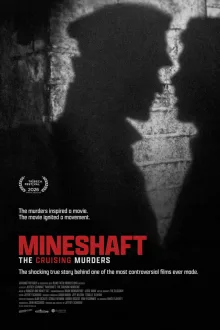
A notorious leather bar, a murdered film critic and a Hollywood shoot that turned Christopher Street into a battleground. Mineshaft (2026) is a new festival documentary about gay New York in the late 1970s and the killing that fed into William Friedkin's Cruising (1980). Director Jeffrey Schwarz, fresh from the Tribeca premiere and a run of festivals including Outfest, joins Mike White to talk it through.
The conversation starts with Addison Verrill, the Variety critic murdered at 36, and the one box of district attorney files that survived, autopsy reports and crime scene photos included. Schwarz explains how he earned the trust of Verrill's sister, found his partner Bob Geary, and why he refused to make another exploitative true crime film. From there the trail leads to Paul Bateson, the killer who also appeared in The Exorcist (1973), and to Arthur Bell's Village Voice columns, the leaked script and the street protests that dogged Al Pacino and Friedkin.
Also on the table: Friedkin's refusal to be interviewed, the vintage audio that still gives him a voice, protest tape Schwarz held onto for thirty years, Vito Russo, and the Showgirls (1995) documentary he hopes comes next.
Transcript
An automatic transcript from Spreaker. It has not been proofread, so names, titles and spellings may be wrong, and it does not say who is speaking.
Show the transcript (about 7,000 words)
Hold your ears, folks. It's showtime. People pay good money to see this movie. When they go out to a theater, they want cold sodas, hot popcorn, and no monsters in the projection booth. Everyone pretend podcasting isn't boring.
Turn it off. Turn it off! The movie crew was unable to film on Christopher Street as they had planned yesterday. We never knew until the last minute where they were going to be filming. So the information had to be gotten out to people on the street.
People would put crude notes and just tack them up all over town. And there were phone treaties. where one person would call 10 people and those 10 people would call 10 people. And that's how the information got out. You tell a gay boy and it immediately is like a case of crabs in July. It goes everywhere.
Okay, so we'll be marching down our street and everybody knows that it's our street and belongs to the gay community. We found out where the shoots were going to take place the next day and so we were one step. Ahead of them. The word got out. And we showed up.
Making sure that if we were going to mess up that scene, we were going to do it right. At the protest, there were brothers and sisters together. Everybody's out. Everybody's having a great time. Well, this was the most exciting thing that was happening in New York in the summer of 1979.
Speak out! Publicly against. The. Hey folks, welcome to The Projection Booth. I'm your host, Mike White.
Today I am talking with director Jeffrey Schwartz all about his new documentary, Mindshaft, The Cruising Murders, which traces the making of William Friedkin's cruising alongside the real 1970s New York murder of village voice critic Addison Verrill, one of the events that helped inspire it. Mindshaft, The Cruising Murders premiered at the 2026 Tribeca Festival and is currently playing the festival circuit. I had a wonderful time talking with Jeffrey. It's always great to have him back on the show. I know he's been working on this documentary since probably before we even did the cruising episode all those years ago.
So it's really nice to see this film. Thanks so much for listening. Enjoy. Here, can you talk about kind of the inception of it when you first came up with this whole idea? I think we talked about this project when you did your cruising episode.
And that was, what, 10 years ago? Around there? Yeah. So I think, and I guess I'd already started developing this project. But documentaries, as you know, because you talk to so many documentary filmmakers, average, they could take anywhere from five to 10 years.
I mean, and when you start something like this and you open that door, you have to know that you're going to be in it for the long haul because your story is going to change. You know, if you... start making a movie and you end up with the movie you thought you were going to make, then that's not supposed to happen. You know, so in this case, when I started the film, I was always been fascinated with cruising and we can talk about that film, of course. But I thought, what a great topic for a documentary because there's conflict. There's great conflict.
There's like protesters in the streets. There's an artist who wants to make his movie and nothing will stop him. There's cultural issues. There's a world, a vanished world of the late 1970s gay New York underworld. So I thought that was, wow, that's great.
That's great for a doc. And I knew that the film Cruising was inspired by real murders that had happened in the gay community in New York in the 70s. And Friedkin was inspired, William Friedkin was inspired by that. In particular, the death of a film critic for Variety named Addison Verrill. And I knew that would probably be touched on in the film, but I didn't know how deep it would go.
And I didn't know that the film would emerge as really... Some of it is about the making of Cruising, but a lot of it, maybe even the emotional core of it, is about Addison Verrill and her murder. And that was because I was able to connect with Addison's sister, Pamela, who decided that she was going to trust this process and sit down with me and tell that whole story. And I was able to locate Addison's lover at the time, Bob Geary, who was a similar situation with him. He sat down, told his story for the first time, and then also the best friend of the guy who turned out to be the killer, Paul Bateson.
That totally transformed the film into something that I couldn't have predicted, and I hope makes it a much richer experience for people. Oh, absolutely. I mean, I knew just the tiniest little bit about the story from that cruising episode, but you just went so deeper into this, which I guess is appropriate with the title of the film. Yeah, I mean, there's multiple stories going on, like I said, and they're all fascinating. So the tricky part of this was to try to balance all of these competing narratives.
And people have told me, oh, this could have been a four-hour movie. And like, I don't really like four-hour movies. I like 90-minute movies. It's trying to just boil it down to its essence. And hopefully that we were able to do that.
Yeah. What was the first time where you said, oh, wow, there's a lot more to this case than what I thought was, you know, walking into it? Well, I think it was tracking down Addison Verrill's sister. And we were lucky enough to access the district attorney's files from the Addison murder case. And I remember I had a credible PA in New York City, and I said, just go down there and ask for the box because I'd been in touch with the office.
They always say, oh, well, there's a fire and we lost everything. They always say that. But this time, they didn't say that. They said, well, there's one box left from this case. So I sent him, Marcin was his name, and he went there.
I said, just try to see what's left. And he came back with scans. They gave him the box and they didn't supervise him. So there was stuff in that box that I can't believe, first of all, that it survived. There were graphic crime scene photos in that box.
There was the autopsy files. There were letters back and forth between the DA's office and the Addison Verrill's family. There were notes from the cops that were investigating the murder. Everything was there, and I couldn't believe it. And for a documentary, that's just gold, right?
So I felt like we were getting away with something by having this. So a lot of that material ended up in the film. And Through that process, we were able to determine some of the players that I wasn't aware of. Like, well, Pamela, we found her through some of those back and forth letters from her. You know, her brother had been killed and she was working with the district attorney's office that they were investigating the crime.
And then once they caught the guy, there was the trial. And, you know, they were very kind to her. She was very appreciative of them. The assistant district attorney was in the film. There are letters back and forth between them.
So we were able to find Pamela Addison's sister through that process. And then also through that process, Pamela, and it was a lot of back and forth with her to sort of determine if this is something she wanted to participate in. you know, that's what happens with a lot of these docs. You have to establish a trust. That took a while before she decided to sit down and tell her story. And then when she did, she says, oh, there was, I asked her, is there anyone else you think I should talk to?
And she said, well, there's this guy named Bob. I think he was maybe Addison's roommate. And so all I had to go on was Bob. And then we were able to track down Robert Geary after a while. And it turns out he was not just Addison's roommate, but his lover, partner of several years.
And when Addison was killed, they were still sort of, you know, semi together, you know, and Bob had left New York around that time and came back after the murder. So, you know, that opened up a whole, a much richer and deeper story. And it also was reflective of gay life in the 70s, where a lot of guys could live very openly gay lives, go move to New York, you know, experience the bars and the clubs and the sex and all of that, but their families wouldn't know anything about it because it was just that was the time. Even though there was gay liberation, there was still a sense that, well, this is just for us. We're not going to share it with our families.
So Addison was not out to his family. So he was sort of posthumously outed i mean his sister suspected he was gay and wanted to talk to him about it you know the last time they visited him in new york he just seemed so happy and pam said to her other brother you know i think i think i'm gonna ask next time i talk to addison i'm gonna bring it up and see maybe we can talk about this as a family and she never got the chance to do that and she only found out about his life after he died by you know being sort of embraced by his gay family in new york. What what do you think finally kind of broke through with her as far as like building that trust because that is so important Well, I think it was, it.
Just took time. And I think she didn't know, and there's a lot of shitty true crime documentaries out there, you know, and exploitive things. And that's not what I wanted to do. And so it was, she didn't want Addison to be besmirched in any way. And he, if anyone knows his name these days, and hopefully this film will change that.
But if anyone knows his name these days, he was just the victim of a horrible murder. And it was very tawdry. And it was, you know, he was killed by a trick, of course. And that's, it was just, It was very ugly. And then the tabloids picked up on it, of course, beyond the gay press.
And so she just didn't want him to be disrespectful. after death. So part of my conversations with her is about just restoring some dignity to Addison Verrill, who only lived to be 36 years old. It's so much more to contribute. So I think that was ultimately it. And she saw my other films.
I sent her some of my other films that I've done. And Luckily, I've been doing this for a while, that the warden can speak for itself to a certain degree, that they can see that I'm coming at it from a place of curiosity and respect. How do we go from the story of Addison Verrill and his tragic murder to a serial killer murdering gay people in New York? Well, if you look at all the press at the time, this is the 70s, and You know, we had our spaces. We had Christopher Street and we had the village.
But people would come to the village or they would go to Central Park and the cruising areas and they would bash gay people. And there were murders, not just in New York, all over the country. So the more visibility that we had, there's always going to be a backlash. And people would come in and just mess with queer people. And there were a series of murders that occurred.
There was a reporter for The Village Voice, which was the weekly reporter. newspaper that everybody read. And it wasn't a gay paper, but they had an openly gay columnist who was one of the first, maybe the first, I don't know, who was writing from a gay perspective. And his name was Arthur Bell. And Arthur Bell had a column called Bell Tells, of course. And he was highlighting these, what they called bag murders, which were murders of what they've determined to be gay men.
Body parts were wrapped in plastic bags and they were washing up. They were floating in the Hudson. So there were They determined that there were five of these murders. They felt that they were connected in some way. And now Addison wasn't connected to this.
This was, well, the film gets into whether Addison was connected or not, or whether Addison's killer was responsible for these other murders. But these murders became kind of, they did happen, but I was really not able to find a lot of information out there about it. The mainstream press didn't report on these murders. So what Arthur Bell was doing was so important because he was rallying the community to make sure people were aware that there's danger out there. Yes, you can go to the bars like the Mineshaft, which is the title of the film.
Mineshaft was this notorious leather bar sex club in the meatpacking district in New York City. And, you know, it was... There was safety in this, but occasionally bad things can happen. You could take the wrong guy home one night, and that's what happened with Addison Verrill. Was the connection for Friedkin, was that the murderer who was actually in The Exorcist?
So William Friedkin was looking for another movie to make, and there was a book called Cruising. which was about murders in the gay community. It was published in the early 70s. It was sort of a very trashy, tawdry, ugly book. Not a great book. And other people had tried to make this movie.
Brian De Palma was attached to do it. I think he wrote a script, which I'd love to get my hands on one day. Spielberg was attached at one point to direct this movie, which I cannot imagine the million years him doing this, but I'd love to see that version. And then ultimately, Friedkin started thinking about it and just took the title and started developing his own story. But then one day, he was reading The Village Voice, and he was reading Arthur Bell's columns about these murders.
And that definitely inspired the writing of the script. And then one day, he read about the murder of Addison Verrill. And a few days later, they He read about the capture of the killer. And that man's name was Paul Bateson. And I don't want to talk too much about it because it's a spoiler for the documentary, although your audience, I'm sure, knows about this already.
You know, Paul Bateson was arrested for the murder of Addison Verrill. And it turned out that he was also in The Exorcist, in the scenes at NYU, where he character Linda Blair plays is getting an arteriogram and they're trying to determine what's going on with her brain. Why is she thrashing around on her bed and doing all these crazy things? So Friedkin is all about reality and he takes a documentary approach to so many things he does. So he wanted to film in a real place.
So they got filmed at NYU with the real team who does this procedure. There were doctors there. And then there's an assistant, a radiologist, who's in the movie. You can see him. He has dialogue with Linda Blair.
And He is the real assistant. That's Paul Bateson. So when Friedkin made this connection, oh, I know this guy. It's Paul Bateson. He went to visit Paul Bateson when he was at Rikers Island.
I think it was before the trial or around that time. And interviewed him and realized that, wow, this is sensational, the kind of movies that he loves to make. And it's also getting to explore a hidden society, which he loves to do as well. someone says in the documentary, you know, he can talk about cops or priests or people in leather, right? And so all of this kind of came together to result in what turned out to be cruising. So how do you find the balance?
Because we've already talked about the real life as the Verrill case, and then there's the movie Cruising, but how do you balance all of those things? Plus, you're also kind of setting the stage with this gay liberation movement that's happening in the 70s, and then the backlash, and then just the attempts to get the message out there, hey, we're not a bunch of crazy killers, these kind of things. You've got a lot of plates spinning, sir. Yeah, there were a lot of plates. The context of it all was really important because when people think about cruising, and what I knew about cruising was it was protested very heavily because And cruising was like a forbidden movie for many, many years.
You were not allowed to see cruising, much less like cruising, right? A lot of that is because of the protests that exploded in the streets of New York when the movie was being filmed. And the context of that is the history of LGBT representation on screen. And Vito Russo, who wrote The Celluloid Closet, that was really the first book to talk about how we're depicted on film. And we're always depicted as either victims or monsters or clowns.
And in the case of Cruising, we're victims and monsters. And there were so few films that depicted gay life in any kind of realistic way. Here comes a movie that is focusing on murders in the community, and it was going to be filmed in the streets of the village. Christopher Street, Meatpacking District, this is our space. So this line isn't in the film, but one of our interviewees said it was like filming Birth of a Nation on the streets of Harlem.
So it was a very... People felt it was very provocative to be doing that. And Arthur Bell, the reporter for The Voice, he got a hold of the script. There was a mole in the production, a gay mole. And I guess he was a gay mole, I don't know.
He somehow leaked the script to Arthur Bell. And it was an old version of the script. What Arthur Bell read was probably not very close to what actually was being filmed. But when he read it, he lost his mind because it was very violent and dark and showing the gay community in a really horrible light. At a time when we were trying to come out and we were trying to show the world who we really were.
Now Friedkin, I don't think that he had any, I don't think he's homophobic. I don't think he was trying to sort of condemn the community at all. He wanted to make a murder mystery. And this is a world that most audiences, particularly straight audiences, had never encountered before. So there's a shock factor too.
You're going to see, we're going to take you into these clubs. We're going to drag you down into the basement and you're going to see things you've never seen before. Um, now, you know, you could look at the movie and you can interpret it however you want. You can interpret it as a deeply homophobic, uh, sex panic kind of a movie or, or not, you know, I think it's, it's complicated. So, but Arthur Bell, there was no nuance there.
You know, he felt that this movie needed to be stopped, not necessarily to shut the movie down, um, permanently that they shouldn't make it, but Do it in Hollywood. Do it somewhere else. Or maybe don't make it. Maybe there were some people that felt like it just shouldn't be made. So what they did was they just showed up in the streets and Arthur Bell had a big audience and he said, if you see them in your neighborhood, make their lives as difficult as possible.
So that meant showing up when they were filming in the streets with big crowds, people blowing whistles, chanting, throwing things. I mean, it started to get out of hand and violent because the crowds got so big. And there's Al Pacino, the star of this movie, in the middle of all this, who's the least homophobic person you can imagine, and got into this because he thought it was a really great part and a challenge. And suddenly, there are people screaming at him, throwing bottles at him, and calling him the F-slur. And that's not what he signed up for.
So I don't remember what your question was, but that's the context for all this. And you also have to remember, in 1979, this is just 10 years after Stonewall, Just a year after the assassination of Harvey Milk, gay bashings are rampant, especially in New York City. Anita Bryant was running this anti-gay slander campaign out of Florida. So there was a lot of rage in the air, and there was a lot of militancy in the air for good reason. So that's the context of cruising that I didn't really understand.
And I think most people were like, well, what's the big deal? It's just a movie. But it was not just a movie at that time. And in the years since, you know, people would not. I talked to people who were protesting the movie who still haven't.
And then or some of them said, well, I'll watch it just because we're going to talk about it. I'll finally watch it. And they still didn't like it. But I'm from a different generation. You know, when I saw it, I came out in the early 90s.
And it was still a forbidden movie, a forbidden object, right? And I was living in San Francisco in the early 90s. They were playing it at the Castro Theater, and it was being protested. There were people leafleting, even then. But now, it's a whole different world.
I think younger people are really into this film for... a general audience. It's just a great freaking movie. It's a great thriller and it's really creepy and atmospheric and upsetting. And it's great, you know, for that reasons for queer audience, especially younger folks who never experienced this world, it's like a vanished world for them and they never got to party like that. So they, they love to see what it was like and, and also now creating their own version of it.
All right. Well, With all of the controversy, was there any hesitation from anybody from the film to actually talk with you about it? Well, William Friedkin, you know, he's somebody, of course, I wanted to talk to and approached him pretty early on. I'm sure you know he was a prickly personality, rest in peace. And I have some interesting emails from him.
I think he had gotten burned by the press and it was a very bad experience for him in making the film, although I think he secretly enjoyed it. maybe not so secretly, you know, because he loves to be in the midst of a battle, and that's just his personality. So he didn't want to be interviewed because he didn't know what my motives were, I think. And I think, you know, we lost him, obviously, fairly recently. But I think I probably could have kept working on him, and I might have gotten... But, you know, if you've heard any interview with William Preakton, you can't entirely 100% trust what he has to say.
Because he's a myth maker. And if you read his book, it's a great book, great stories. A lot of his things that he says about cruising are completely fabricated and not true. And having talked to other people who worked on the movie, I know it's not true. And he was also talking about...
He said things about... And this is one of the other things about watching cruising that is so melancholy, is that so many of the people who are in the film... are not around anymore. So, you know, HIV in 1979, we didn't, we're not aware of it. Just a couple of years later, there would be the first cases of what came to be known as AIDS. And historically now, we now know that the virus was being circulated in the community and people didn't know that they had this virus until years later.
So if you look at the film, that hangs over the entire movie. But Friedkin in his interviews was saying, We heard about this thing that was going on. You know, he kind of rewrites history a little bit in saying that he knew it was happening in 1979. And that's not really true. We tried to represent him as best we could in the film through vintage interviews.
And Nat Segoloff, who wrote William Friedkin's biography, Hurricane Billy, he provided me with an incredible audio tape of a press conference that Friedkin gave. for cruising in 1980 when it came out. It had never been heard before. And it was sitting, I think it was at USC or UCLA. And you hear some of that in the film as well. So, you know, he's well-represented.
If you want to hear him talk about cruising, you can read his book. You can listen to his Q & As and see what he has to say about it. Well, it is really nice because he does have basically a voice in the proceedings. You know, the pieces that you chose were very judiciously used and I thought really helped add to giving him a voice when he could have been a voiceless filmmaker. Yeah, that was really important.
I mean, he's a major character in this film and I wanted to give him his due and I wanted to... I want the audience to understand what motivated him to do it, you know, what motivated him to make the film. And the other voice, obviously, who's missing is Al Pacino. And he's famously, you know... That was a very bad experience for him.
And if you see the documentary, you'll see beyond the protests, just creatively, what a miserable experience it was for him. And, you know, he and Friedkin did not get along by the end of that movie, to say the least. He didn't do any press when the movie came out. He's never talked about it. He's avoided the topic for decades.
So when his autobiography, Sunny Boy, came out, I was so excited to read that and see if he would talk about it. He did. There's a couple paragraphs, but very, very brief. It comes up briefly on his Marc Maron interview, but he doesn't really go there. So he, you know, I don't even know if he was aware of my interview request, because you never really know.
People are at that level. There's so many barriers to get to them. But I'm pretty certain he would, even if I met him in an elevator, he would say, no effing way would I ever want to talk about this movie. And I love the guy. It was funny because we premiered at Tribeca in New York a few months ago, and he had a film there as well.
And I was hoping to run into him. I don't think that happened. So he may be aware of this documentary. I don't know. What ended up being the richest vein of research for you or a person or a place or something, some sort of cache of information for you?
I think that the Addison Verrill story was so fascinating to me because he is such a product of his time. And he, you know, thinking about it, he'd be in his 80s today and he should be here. You know, he, like I said, he only lived to be 36 and his area of expertise was porn. And this was a time where I couldn't really get into it in the film to talk about what he was really writing about. But his beat was the porn beat.
And this is the era of porno chic when Deep Throat was playing in movie theaters and Jackie Onassis was, you know, leaving the theater with, I think, with Andy Warhol. I'm not sure. And so he would write about it in a serious way because it was a real, legit business. They don't report on it. I don't think Variety reports on it. anymore.
But he was doing that. He was writing reviews. A friend of mine, Elizabeth Purcell, she ended up tracking down a print of a 70s porn film, and there was a label on it that said, for Addison Verrill, for screening for Addison Verrill. So that was cool. She would send me things about him all the time.
And I'm hoping to be able to compile some Addison's writing someday into a book. We'll see. Become the person that... I'm just wondering what would have happened to Addison Verrill. Likely, we probably, based on his proclivities, we may not have survived the AIDS crisis, you know, which would just be right around the corner.
And so that was a really rich vein. And then, of course, the protests themselves, we were able to find like hours of audio, just this one guy just wandering around the protest, recording and interviewing people in the streets. And you hear the protests, you hear the whistles, you hear the chanting, and you really feel like you're there. And we were able to find some video recordings Of the protests, there's a filmmaker named Jim Hubbard who was there with his elevator camera. So there's really cool film footage of that.
And years ago, I worked on a documentary called The Cellular Closet based on Vito Russo's book. This is in the early 90s. And the filmmakers, Rob Epstein and Jeffrey Friedman, they had somehow located a tape of a cameraman just wandering around the village for the protests. And I held on to that tape for 30 years because I knew that there was going to be some need for this. And so when you ask, like, where did this film start?
I mean, it probably started then, thinking about it. And I had this tape, and it's just fascinating. And you see, if you look really closely in that tape, you can see Figures' little John, who was the original bank robber that Dog Day Afternoon is based on. He's in a lot of that footage. You can spot him in a lot of the photos.
He's always right in front of the camera. You can see Marsha P. Johnson in the footage, too. And she was always at every protest. And there she is, you know, raising her fist and protesting cruising.
It's just Just amazing to me. So that was, and I love that when you find something like that helps you bring that world to life. It's such a thrill. Imagine that the editing of a project like this has to be a really arduous process. Well, that's my favorite part.
I love it. I love doing interviews and I love working with the archival and doing the editing. And I'm, you know, pretty much my own editor these days and definitely had some help along the way. But, you know, you live with it for so long. When I'm doing the interviews, I'm already in my mind editing and thinking about what The structure was really tricky because you're bouncing back and forth between a lot of different topics and time periods, and you want to keep the characters alive and audiences mind.
Paul Bateson is talked about significantly during the murder section, then you kind of forget about him, and then he comes back at the end. People always wonder whatever happened to Paul Bateson. This movie probably provides some answers to that. Were there any things that were really hard for you to cut? Oh, boy.
Yeah. Uh, that's such a good question. You know, there's so many things about Cruising that are fascinating, but just didn't fit into the film, like the music of Cruising. There's all these, you know, the music that would have been played at the Mindshaft probably would have been Donna Summer or, you know, High Energy Disco, things like that. But Friedkin loved, he just fell in love with punk rock at that time.
So the whole score is all punk rock. So I would love to have gotten into the music. It just didn't fit into the story. And that was a biggie. And, uh, Maybe more about the reclamation of cruising.
We probably could have gotten more into that and how it became sort of acceptable to like cruising. But we did touch on it. Like I said, my style is very economical. If it doesn't fit into the main themes or really keep the story moving, it's got to go. So I'm pretty comfortable in letting things go, even if I like them.
If it doesn't fit into the story, it's got to go. Was Tribeca your premiere? Yeah, we premiered in Tribeca. which was so cool because we were premiered just footsteps away from where all this stuff actually happened. And at Tribeca, we put the word out to the community and a lot of leather guys showed up. I think in the leather community, that film is...
I wouldn't say it's beloved, but it's... it is respected. There is an authenticity about cursing, not so much in a lot of the dialogue, but in the scenes that, you know, those bar scenes, the guys that showed up to be extras, they were real leather guys right off the street who wanted to be in the movie and were proud. to be in the leather community and wore their gear and everything. So when we screened our movie, a lot of those guys showed up in gear. My parents were there. And my dad said, you know, these guys, they look so rough and tough with their leather, but they're all sweethearts.
And that's really true. We had a great premiere. Pamela Verrill came out from Canada to be there. And that was the first time she had seen the movie with an audience. And she did a Q & A and she just, you know, was riveting.
And the whole I'm just so grateful to her for participating in that because it's so still, it's very raw and personal, but there she was. And the audience just fell in love with her. And we had a similar variance in LA. We screened at Outfest and Bob Geary, Patterson's partner, came to that screening and he did a Q & A with us too. So it was an interesting kind of bookend.
Yeah. Wow. That's fantastic. And yeah, that's so nice that you were able to do it like right there and, you know, ground zero basically. Yeah.
Yeah. Yeah. And we had our, after party at Julius's, which is this classic gay bar in the village where Addison met Bob Geary for the first time. So it was all meant to be, you know, I believe in, in, We call it, my people call it Bechert. You know, it's just meant to be.
And I feel like these movies, they just attach to me at some point, like a barnacle, and I don't let go until they get done. And this one I feel like was definitely meant to be. I was able to bring Vito Russo into the film as well. You know, he pops up talking about cruising on a talk show. That's what starts the movie, really.
So I was able to revisit my old friend Vito Russo, who did a film about years ago. And You know, we're on the festival circuit now. I would love to tell your audience that you could just, like, turn your podcast off and go watch it. But not yet. Soon, we hope.
And we're playing in lots of festivals all around the world, which is very cool. It shows that there's an audience for these kinds of films in places you wouldn't expect. So, I'm grateful for that. Is there a website with all the screening dates? You know, this is the first...
I'm trying to think. I think this is the first doc I've done that doesn't have a website. Wow. Things are changing. So...
I'm pretty active on social media now, and that's where I post all the upcoming screenings. And we're all over the place. And I think it's so important for people to show up for these festivals because some of them are having a tough time. Funding is not what it used to be, and it's tough to get audiences to show up. But these festivals, we've been selling out all our screenings.
And it's a party, you know? I mean, it's a serious movie, it's a serious topic, but it's also a lot of fun, and there's a lot of laughs, surprisingly, to be had in this film. So if Mindshaft comes to your town, I would say definitely go, because we don't know if this is going to screen on a big screen after the festival circuit is over. And that's my favorite thing to do, is go to see the film with an audience, and I love to watch the people watching the movie. You know, it's always fun.
To return to your metaphor, what are some of the other barnacles that you're hosting these days? Well, I've been working on a doc about Paul Verhoeven showgirls for almost as long as this one. And that one had its roots probably in the DVD extras days. I started my career doing DVD extras and documentaries for retrospective documentaries about films and was lucky enough to work with Paul Verhoeven on almost all of his titles, American titles. And Showgirls was the one that got away.
But I think we needed a few more decades for that thing to develop its cult even bigger than it's ever been. So that one is, fingers crossed, that'll be the next one out, hopefully early next year. We'll see what happens. And there's a few others, but we'll talk about it when the time comes. You're hypnotized The life you lead is a lie You're hypnotized And you've forgotten Why you do these things Can't you see It only brings you Fading pleasures No real treasures You got no help You got no help You're hypnotized Be hypnotized You're hypnotized Be hypnotized.
Don't hypnotize. I see it in your eyes. That's why they glare. They lock their tails. My passion, that is real.
Remember how it feels. The love that touch can't get enough. I don't know why you let it slide. You're hypnotized. Feel hypnotized.
You're hypnotized. Feel hypnotized. In the moonlight Yeah, dancing on you Can't you smell why You're hypnotized I see it in your eyes You're hypnotized And you can't see Why you do these things Remember how it feels I don't know just what y'all do or what y'all say, but it ain't too real to me. No more. Cause y'all here.
No time to get back. No more being no time. No time. No time. No time.
I don't know what you believe in me. I don't know how I feel. I'm here. I'm here. I'm here.
I'm here. I'm here. I'm here. I'm here.
Watch
Comments
No comments yet.