
Show notes
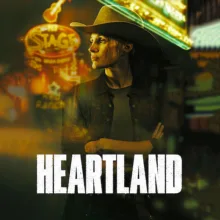
A country star who walked away from the spotlight, a mystery that won't stay buried, and songs that each have a job to do: Heartland (2026) is a Netflix thriller with a country heart.
Mike talks with writer-director Shana Feste ahead of the film's November 13 Netflix release. Feste explains why she writes women who don't care whether anyone likes them, and how film noir helped her uncover the part of Misty, played by Jessica Chastain, that she had left behind.
The film is available to view on Netflix starting November 13, 2026.
Transcript
An automatic transcript from Spreaker. It has not been proofread, so names, titles and spellings may be wrong, and it does not say who is speaking.
Show the transcript (about 6,500 words)
Hold your ears, folks. It's showtime. People pay good money to see this movie. When they go out to a theater, they want cold sodas, hot popcorn, and no monsters in the projection booth. Everyone pretend podcasting isn't boring.
Turn it off. Turn it off! Misty Jones, you've been away from Nashville for how long? 20 years. So why have you come back now?
My niece, Charlie Hart, is missing. And I've come to find her. I don't know where my little girl is. She's 22 and famous. You must still know some people in Nashville.
I don't know, that was a long time ago. Misty Jones, Queen of Mean, isn't that what they used. To call you? I just need you to do your goddamn job. I know when somebody's gone missing, the clock starts to tick.
You found something, didn't you? This case will now be in murder investigation. This town's changed since you left. And you really don't know much, do you? Stop digging.
Or you'll be missing right alongside her. Somebody knows something. Don't you think if someone knew something, we would have gone to the police? You're not alone in this. Be a good girl and just go home, Misty.
There's no such thing as good girls. Oh, you gotta let your heart land. Hey folks, welcome to a special episode of The Projection Booth. I'm your host, Mike White. On this episode, I'm talking with Shana Fest, all about her new film, Heartland.
The film stars Jessica Chastain as a former country star, Misty Jones, who leaves her little private life in order to find her missing niece. The film will be coming to Netflix in November. I had a wonderful time talking with Shana. I hope that you have a great time listening to this interview. Thank you so much.
Enjoy. I am so excited to talk to you about this new movie, but I want to know a little bit more about you. Can you tell me, like, take me all the way back to how you first got involved in making movies? Sure. I, well, I think like so many filmmakers, movies were like a very big part of my childhood in that, like, you know, when my parents got a divorce, my dad would take me for the weekend and we would go to like he had like a VHS or a Betamax, you know, the two options.
We would go to rent movies and he would be like, okay, I have you for, you know, two days, you can pick 12 movies. And so I would just like come out with like an entire stack. And then we would literally just spend the entire weekend just watching movies. And he did not You know, he was like an 80s parent. He was like, all right, you know, I was eight years old.
Godfather, Jaws, what are we watching next? Like, we watched everything. And I think early on, that was just, I equated it with spending time with my dad, probably, who I really love. And it was like the purest form of entertainment, like this bonding moment with him. And so I was always enamored with movies, but I didn't see myself as a director.
And I think especially growing up in the 80s with filmmakers like Steven Spielberg and Spike Lee, as you're kind of like, you're not hearing about the Catherine Bigelow's. There weren't a lot of women coming up at that time. There were, but we just, we didn't hear about them like you heard. And so when I went to the American Film Institute, I actually applied as a producer because my job getting through school as I was a nanny to the stars, which is just so crazy. But that's how I made my money and supported my way through school is I would watch celebrities' kids.
And I was working for a female producer and watching her kids at the time. And I said, well, I could do this. This is how maybe I could get in. So I went to AFI for producing. And I realized very quickly that I was not a producer.
And I realized that these guys who had no more experience than I did were calling themselves directors like out of the womb. They were saying, I am a director. So I was like, why aren't I just calling myself a director? I can do this. And then from AFI, I started working.
I actually worked for the president of creative artists. And a lot of young people are like, how did you do it? Who did you give your script to? And you're like, gosh, I really did not do it that way. I really, I worked for Richard for two years as his personal assistant. you know, doing everything from organizing salad dressings to, you know, walking dogs and everything.
And then I think at the end, I said, I am a writer. Would you ever consider reading my script? And he said, yes. And it got me started. It's amazing.
Which script was that? Was it made? No. And I mean, I think that's another anecdote that I always say when people are asking me like, oh, you know, it's so important. It's really difficult when you're first getting things started to be like, I have to have more than one thing at a time.
You know, you're like, okay, it was a script I wrote called Love Easy. And it was about the tumultuous marriage of my parents. And it was near and dear to my heart. And it got an actor that fell through. It was like this roller coaster that I was on for. a year and a half.
And I was like, oh my God, how do you do this? This is so... My life is either amazing because I think the film's actually going to get greenlit. And then the next day it's taken away and I have to start again. And then it's this constant hustle.
And so I was like, someone told me, I don't remember who, you have to have more than one script out there. And so I was working as a nanny once again. And every time the baby would fall asleep, And they, you know, they wanted the baby to sleep on me because they didn't ever want anybody to put their baby down. So the baby would sleep on me and I would just... I was writing another script.
And that's actually what. Got made first. That's amazing. That was the greatest? That was the greatest, yes.
And that was, you know, I... It was... That was such a dream come true because... That was the first time I had directed, was directing Pierce Brosnan and Susan Sarandon. And then I had, for the first, maybe an only time in my career, I had the most flexibility as far as who I could cast.
So I got to choose. Once Pierce and Susan were in, I got to say, okay, this young girl, Carrie Mulligan, I think she's really special. This kid, Aaron Taylor Johnson, I know you haven't seen him anything. He's really great. Zoe Kravitz, I wish she could play Carrie's role, but we have another role.
Also, let me write a role for her. Mike Shannon, Mike Shannon had already been in a few movies and had been totally discovered. Jennifer Ely, we just had this really special cast. And that was one of the, yeah, probably last times that I was able to just like cast who I love. That's amazing.
You went from zero to 60 though, to be able to write and direct to your first feature and have that cast. That's amazing. And it was like a fairy tale. I mean, I, and I'd got my, the DP, my favorite, one of my favorite movies is Ordinary People. And so I wrote a letter to John Bailey and I said, you know, here's the script.
Would you ever consider shooting it? And he did. He did for no money. Me and John Bailey were, we had an intern named Nick who was driving us to set in a little 1982, like Toyota Civic. And me and John Bailey would squish in the back seat And we would go from set and back to our apartments in New York.
It was a fun time. That's amazing. I mean, at least you've got consummate professionals as your cast, which is amazing. And yeah, all these up-and-comers. But like you said, you hadn't directed a person, an actor before.
How do you even approach that? No, I mean, there was definitely that panic attack moment the night before. I remember this very viscerally. I was laying in bed and I was looking at the clock and I had to be at set or wake up at six in the morning. And at like 12 midnight, I'd be like, okay, in six hours, people are going to find out I have no idea what I'm doing.
In five hours, people are going to find out I have no idea what I'm doing. And it went like that until I just got out of bed and went on to set. And I do think that is something that women tend to do is say, I need to know everything before I start. And I was a mentor for women in film and it was a really incredible experience, but I saw it firsthand. In order to get into this mentor group, you had to have directed a feature.
And it had to have been just released in some way and gone to a film festival. And so I was with these 10 brilliant women and we were sharing, you know, their stories, their scripts. And I can't tell you how many times they would say... I just feel like I should probably make a short out of this feature first just to like prove to people that I can do it. Or I'm taking this one more class.
I'm actually taking an editing class and I'm learning to do this. I'm not quite ready yet to send it out. And I was hearing so many of those stories like, I'm not quite ready yet, but I plan on next year after I've done this. And I'm like, you guys have all directed a feature. Like you're ready.
Send it out. Let's go. But I mean, I was definitely a little bit like that too. I had taken, I'd studied under this really incredible woman named Judith Weston. And she wrote a great book on directing actors.
And she helped me a lot. She actually taught at the American Film Institute. And when you went to the American Film Institute, you weren't allowed to have a job, which was crazy because the tuition was so insane. So I lied. and said, I didn't have a job, but I actually had three jobs. And so I was working as a baby nurse.
So I was like feeding babies overnight. I was working as a nanny to a 12-year-old. And then I was doing like one other weird side hustle. But when I graduated from AFI, I never got to take her class because I was always at work. And when I graduated, I told her, I was like, this is a class I would have killed to have attended.
Can I just... to offer any kind of workshops or anything like that. And she's like, of course. And so I started studying with her at the workshop. So I had directed a few of my scenes in her kind of classroom-like setting. All right.
Well, yeah, I imagine Pierce Brosnan is going to be pretty darn nice to you when you get on, yeah, totally brand new thing that you're doing. And like, yeah, these people, of course, you're talking about the up-and-comers, but then you've got these heavy hitters that have been around for decades. I mean, Susan Sarand had since the early seventies. Yeah. I mean, it was incredibly intimidating to even work with John.
I remember having, I didn't know what order I was supposed to say action, you know, in their camera set, camera ready, everything. I was like, okay, when do I say action? I was that green. I remember they, on the call sheet, it said, you know, PA is seven o'clock. And I was like, what are PA's?
I didn't know a lot of things. And I think not to make this all about gender too, but as a woman directing movies, you feel like you have to know every single answer. Like you feel like, okay, the worst thing that could happen to me on set is someone's gonna ask me about this lens or where I want the camera or this choice. And I'm gonna be like, I don't know. So you wanna like make something up or you wanna feel like you know everything.
And I think that was one of my biggest mistakes is because I was actually surrounded by incredibly generous people, Pierce, Susan, our cinematographer. And I learned even, more on that set that it was okay to ask for help and to say I don't know what do you think I think that's probably one of the things that got me through it but also I had a very personal attachment to the subject matter it was about being raised by grieving parents and so I think I lost a brother before I was born so I don't know what it's like to lose a brother but I I was raised by a grieving father. So that allowed me to at least feel like I was an expert on the subject. And that gave me a lot of confidence going in. Well, talk about your subjects a little bit.
What draws you to a story when you write it? Because I think you've written more than you've directed, but you tend to direct what you write. I do. I think that's that hustle. There was a study... that I was part of after I went to Sundance.
And it had all of the women who had premiered films at Sundance. And the women on this list were, it was like Ava, every single, Lisa Cholodenko, like it was the craziest list. And I just was even looking at my name being like, how did I end up on this list? This is so amazing. And they asked us, you know, how many of you have directed a second feature?
And there was a drop-off rate, like a pretty big drop-off rate. It was like 40% of us had went on after Sundance to direct a second feature. And then they said, how many of you wrote your first feature? And it was 100% of us had written our first feature. And then they said, how many of you wrote your second feature?
Once again, it was 100% of us. So I feel like as a woman. You're not necessarily being sent the same amount of scripts that men are. I mean, this study was probably now about like eight years old, but I definitely had something where I was like, okay, if I'm going to make a movie, I have to be my own engine, my champion for this story. I have to write it and create it and say I'm the expert on it and get it out into the world that way.
What about the movies that you've written but haven't directed, things like You're Not You? I mean, that was one of my first jobs, you know, after Sundance. I would have directed that if they had asked me, but I just, I think they went from a few different directors. But I think once I write something, do you write, do you write scripts ever? Okay.
I get very like protective over them. I get really, because I'm such a loner, so I spend so much of my time by myself in a room in front of my computer and I feel like, I mean, my imagination probably got me through my childhood, right? And I think my imagination with creating these worlds gets me through my adulthood. So I become very attached to these characters and they feel really real to me. And having the idea of someone else taking them away and making different choices or not being as protective as I would, that's hard for me to give up.
I guess I'm kind of like you when it comes to like, I will defer and say that I'm not a writer because I'm, I'm like, well, I've not been picked up by it. I've not done this. So it's like, yeah, no, I'm not a writer. Yeah. No, but... you're a writer.
You technically are a writer. And I. Remember coming back from Sundance after I made my first movie. And that was the greatest. And I was coming back to my nanny job because you don't get any money and you made an indie film.
And I was working as a nanny. And I remember I was at a party and someone asked me what I did. And I said, I'm a nanny. And I still didn't feel like I could say I'm a director, but I was like, no, I still am a director. I was probably a director even before I directed this movie.
Why aren't I calling myself this straight? You know? One of your other earliest films was Country Strong, and you were kind of in this Southern milieu, and now your latest one is also in that same world. What attracts you to that? Well, I live in Texas.
I'm in Austin now. I'm really attracted to... writing women that aren't necessarily concerned with being liked, right? I find women like that really intriguing. And in the South, growing up in the South, you are really taught how to behave and how to be liked. And I'm interested in women who grieve incorrectly, who fall in love incorrectly, who... get their heart broken incorrectly, that are just kind of rule breakers.
And I love putting them in messy situations because I am, I wish I had that, but I really try to be liked. And I see it a little bit in my daughter too, where you want to be liked and get other people's approval. And so I think I'm naturally attracted to characters that really do not care if you like them or not. And then I think, you know, the country music space, You know, country is one of my favorite genres of music and I think a really incredible form of storytelling and a genre of music where men can be really vulnerable. And my father loved country music and we would listen to country music when we would drive from L.A. to Texas.
And just I keep thinking about how all these formative memories really like pushed me into who I was. And I'm thinking about my kids, like what are their formal memories that are going to push them in the direction that just a little tangent, but it's interesting. Absolutely. And then also you've got the songs as kind of a storytelling way as well. And I'm so curious how you, do you work with a songwriter?
Are you writing these lyrics? No, I sometimes I'll write just the title of the song. So I'll say they sing, you know, a singer songwriter gets on in the bar and sings a song called Texas Land. And that's just all all right. And then I've been working with Randy Poster, who's my music supervisor since Country Strong.
And he is obsessed with country music. And even after we made Country Strong, he would just still send me. every week YouTube clips of different country singers. And I was like, random. for like 10 years, you know, like this is enough. We're not even making this movie anymore. But he was always so passionate about country music.
And so finally we were like, let's do it again. Let's go back into this world. And what was really fun about working with Randy is that exchange of songs. Every morning I would wake up to 10, you know, new text messages with songs. Listen to this.
What about this? And I think it's really fun because like Country Strong, in Heartland, we have characters that have very distinct sounds. So we wanted... My biggest pet peeve in a movie, a music movie, is when everybody is saying, they're the... you know, the most successful Grammy nominated singer. And then they cut to this actor singing and they don't have the stage presence.
They're just, you know, immediately, okay, well, this is a movie. And I just didn't want anybody to feel like, oh, this is a movie. They didn't have Faith Hill or something like that. So Randy and I were really tasked with that burden of finding songs that felt like they could have been successful. And really had a moment.
And building someone's kind of persona with music. And then on top of all of that, making sure that each song actually furthered the story. So we weren't just saying, okay, pause the movie. We're going to show a song now. All right, now that song's over.
Let's go on with the movie. That each song, like I think of Family Ties when Jason... Jessica sing. I mean, for Jessica, that was an investigation. That whole scene was an investigation for her.
Is he a killer, right? Or can I mow this kid down? And so there was a power struggle there when we talked about it with the choreographer of how by the end of the song, how will Jessica know that he did not do this and she can move on? And Also at the same time, give me a song where I can show very easily that Jessica's character has a really rich musical history within Nashville. So there's that amazing call out that suddenly everybody in the audience knows and is able to chant.
And then you know, okay, she was a real artist with real fans. I'm starting to see what she walked away from, right? So for a song to have to work on so many levels, it was really, really tricky and time-consuming. And sometimes that came from Randy saying, okay. let this songwriter like Fergie ended up writing Texas Land and he wrote with John Prine, like let him take Texas Land. He's going to kill it.
And then he would write it and you're like, wow, did he nail the atmosphere and the sound of that song? That's amazing. Or Carter Faith, who is now just exploding in her career. I mean, I really feel like when I worked with Carey Mulligan on The Greatest and she was just like, multiplying before my eyes, right? She just was taking off.
I feel like that's the same thing with Carter right now. You know, Rolling Stone just said her album was the best country album of the year. She got nominated for a CMA. She is really on the rise. And she wrote the last song in the movie.
And we went through a bunch of different songs, choices for that. But at the end, I think Carter's lyrics... said so much more about her experience in the film and forgiveness than I ever could with any dialogue. So that was just a very powerful moment for me. Well, obviously, I know Gwyneth Paltrow can belt out a hit. I've seen duets I don't know how many times, and of course, doing Country Strong.
But how, you know, do you have to look for the actress first, the singer second, or the singer first, the actress second? Because I never knew Jessica Chastain could belt out a song like this. Our list, when we were thinking of who's going to play Misty, was only actors that could sing. Because I do think making a movie about country singers in Nashville, we're, you know, from Hollywood, there's already stink of like, will they try and be authentic? Will they get this right?
And I think going in, if you were revoicing someone, that would hurt and it wouldn't feel as authentic. So Jessica, I knew Jessica had a gorgeous voice and she was, you know, one of my top choices. And then when she was also Netflix's top choice, we got really lucky because that doesn't always happen. And then a lot of actors, like I was very adamant too about and what I did with Country Strong, but mixing real singer-songwriters into the cast that could act. I think Ross and Carter and Jennifer Nettles just add authenticity into this world.
There is such a richness to this movie. I'm sorry to just slather you with compliments here, but there's such a richness when it comes to, you know, yes, she had the nine hits in the past. The songs have to reflect what country music was like when she was coming up. How is it now with her daughter and the scene that's currently happening, the young kid that you were talking about? And then, yeah, you've got the mystery that's going on on top of all of this.
And this whole idea of, you know, the stranger coming back into town kind of thing, or like the person who is Ron coming back, what's the mystery with her? And then what's the mystery she's trying to solve? I just love, it feels like such a rich world where I was just like, is this a book series? Like there's so much detail I feel coming out of this. Well, that's great.
I fell in love with character-driven books. you know, thrillers. I think when I watch a thriller, that's what I need to keep myself invested, that there has to be more underneath. And I really liked the idea that Misty as a character is this kind of discovering this part of herself that she had abandoned through film noir, right? And so the genre is actually helping me uncover who she really is It is complicated because when you think about all the things that are elements that are in the movie, you're like, well, how does this all even work together? This is like a crazy soup, right?
But I think Every one of my films has kind of evolved in a way where this is what I would naturally do next. You know, Run, Sweetheart, Run was a really fun genre project for me. This is kind of Run, Sweetheart, Run with a little country strong, with a little boundaries. I feel like I'm constantly adding things. So I guess the next film I make is going to be like a spy thriller with music and a YA component and also historical elements.
I mean, I could stand to see Misty Jones in another adventure, you know? Well, that would be super cool. I could too. We had a lot of fun. We had a lot of fun making this movie.
And I. Think going back to that idea of trying to have all the right answers, I think with Jessica, or having all the answers when you're on set, Jessica was one of the first actresses where it was a true collaboration and that I was, I felt... we trusted each other to say, I don't know, what do you think? I don't know, what do you think? What do you want to do? And I think, you know, as a young director, that kind of collaboration would have scared me a lot because it's like, okay, what about if you're on the bed and then someone coming in and saying, no, I would never be on the bed.
I would actually be hanging out the window and you're like, we didn't plan for that. The camera, how, you know, like, 200 people are looking at me, but thinking, okay, why? Why do you think you want to hang out the window? Well, I just think about how to this like dangerous element. And what if this is where I always smoked or, you know, just like that nice kind of ideas get flowing.
And you're like, wow, I really love that. And I think with Jessica, she's so brilliant that it was, I needed her to be incredibly involved and engaged. I really needed it. And so did the character. Because I was creating a character that didn't care about being liked.
And I'm a director that does care about being liked. So she had to constantly remind me, Shauna, Misty does not give a shit. Like she would not do this. Like, no, she's not polite. She's not, she's going to interrupt him.
She's going to put her gum out on his table. Like she had so many great ideas. She almost, you know, started to know the character better than I did. That's amazing. And then I love John Hawks is just, oh, it's such a welcome presence when he shows up in a movie or television.
They sang a duet after that scene. And it's like, it's heartbreaking images to have on the cutting room floor. When we were shooting it and John and Jessica are singing together and it's really, the story is of their marriage. It feels like you are in their marriage together. With them through all the ups and downs and you come to a place of forgiveness by the end of the song and they say it all with their eyes and singing to each other.
And I remember shooting that and being like, whoa. that is, it feels like gold. And then we don't have time for it because in its heart, it is a thriller and we have to move on to the other storyline and the ending of the movie. And that is some of the most heartbreaking footage to have on the cutting room floor. Anything with John Hawks. Yeah.
And these days we don't really have physical media, so you can't really say, oh, it'll be on the Blu-ray. Yeah, yeah, yeah. And also it's like, it's making a movie for Netflix. Like, I don't know, I might have written this movie differently if I had known what I know now about Netflix. You know, because there is... at the end of the day, you are competing with a lot of different elements.
You're competing with people doing the laundry. I watch Netflix. I play Netflix for me when I go to the dentist's office. When you're like, oh my God, these filmmakers are having to show their movies while I'm getting a crown in and I'm reading. I can't even hear the sound design because I just hear a drill.
So when you're making a movie for Netflix, you do have a lot of different competition than just having an active person who bought a movie ticket sitting in the quiet theater for two hours. Is there that opportunity? I remember with The Irishman, they would show it at theaters. Is this going to have a theatrical run as well? Sadly, no.
I mean, we really were in a moment where Dan Lynn was our was the head of the Netflix at the time. And for him, he was like, this Netflix is an at-home experience. Our movies are going to be released at home. And so we had to do everything we could to make sure it worked for the home viewer. So maybe next, maybe with, you know, the new leadership, they will be doing more theatrical.
I hope so. Cause I mean, that's where I feel like movies are meant to be seen. Do you already have your next project in mind? Well, I was, maybe I might not ever direct after making this movie because it was really, really hard. Yeah, it was really hard.
And I was like, okay. I think the last day of shooting, I got on, I was like, I think I'm going to be an EMT. I'm going to go to EMT school, learn how to be an EMT, because that in my mind makes so much more sense of like, there's a problem, you address it, you take care of it, and then you go home. Like it just felt like easier somehow, like being part of saving lives felt easier than making a movie when I was done with this one. What made this one so tough?
Well, I don't know. I just. It was really complicated. There was a lot of, there's a lot of different, you know, components with music. And music on the page is one eighth of a line of exposition.
And they sing Heartland. But that is 12 different camera angles and choreography and blocking. And that's To shoot a song in its entirety, it's probably a day if you really want to do it justice. But instead, we're like, okay, what are our four hero camera angles that will capture as much as possible and feel as dynamic as possible? Because each number, each performance you want to... it to feel different and have its own like visual identity, right?
We were just run and gun and it doesn't even feel like I've made run and gun movies, but this one still felt run and gun. Even if you have more money than you've ever had, it still feels run and gun. And I think just the stress of that and not seeing my kids and being a working mom, you know, it was really hard. Um, And, but ultimately we got there and I'm incredibly proud of the film and I can't wait for people to see it. But it wasn't an easy experience by any means.
I think every movie I lose like 20 pounds and I just lost so much weight. And I had, you know, I went to the doctor and I was like, all right, let's fix these 10 things that just aged me 20 years. So I still have my open application to be an alien. course, I just started writing again because I can't really not write. It's just like that thing. I don't know if you experience that.
If you have an idea, you just have to get out your computer and start writing. And that's what I'm doing now. Do you have an online presence? Are you out on Instagram or anything? I'm not.
I'm not. It's fair. That's very fair because you've got other better things to do. No. I devour content.
I mean, I'm making an Instagram recipe for dinner tonight. Nice. Yeah, but I think I'm private online. So what's the plan for the movie? It's going to just drop and is there like, do you have to go out and, you know, obviously you're talking to me about it.
You're probably going to talk to a lot of other people about it. Yeah, we have a great plan. And what I'm really excited about is we're having a premiere in New York and then we're having another premiere in Nashville, which will be great. Oh, wow. Yeah.
We'll do press in New York and in Nashville. I think we're going to have some musical performances too that will feel really fun and continuing doing the press. And then, yeah, releasing on Netflix, which I've never done before, but all of a sudden there's just a box on screen and there it is. Fantastic. I love the movie.
I'm super excited for more people to see it. This has been such a delight talking with you. Thank you so much. Oh, thank you. I really appreciate you taking the time.
Thank you so much. I should be married by now Two kids in a paid Ford house I can hear them now Asking what I'm doing now I should have a little more to show Than a suitcase smells like smoke I should have an alibi On where time goes when it flies Cause I've been on the rocks I've been on the road On the other side Every door closed I've been on the limb Trying to catch a break Something's gotta go Sometimes you gotta. Take Take it down fast. Lane right back To remind you where you came from You're still shining in the same sun It don't matter how. High You've been floating in your new sky Nothing gets you like a goodbye.
Can When life is out of your hand You gotta let your heart land Take it down fast. To remind you where you came from You're still shining in the same sun It don't matter how high You've been floating in your blue sky Nothing gets you like a goodbye can When life is out of your. Hands You gotta let. Your heart land. You gotta let your heart land You gotta let your heart land in the middle of nowhere.
Oh, you gotta let your heart land. Sometimes you just gotta go there. Sometimes you just gotta go there. It don't matter how high. There's nothing in the sky.
Nothing gets you like a goodbye can. When life is out of your hands. You gotta let your heart land. You gotta let your heart land, yeah. Thank you.
Comments
No comments yet.