
Show notes
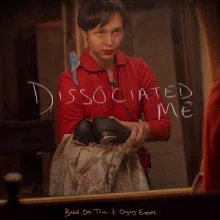
What happens when a filmmaker can't make the movie of her own life? Janaé Rachel Ballot tried to write a biopic about herself, ran into dissociative episodes and flashbacks, and started shooting without a script instead. The result is Dissociated Me (2026), a comedy about trauma that she calls an anti-biopic and an anti-therapy film. Mike White talks with its writer and director right after its world premiere at the Reykjavik International Film Festival.
Ballot grew up in a Hollywood family, and the film opens with a song and dance act drawn from her own childhood of dance and pageants. She explains why she rebelled against the family business, how years of feature development taught her she had been producing all along, and why a biopic of Anthony Perkins gave way to her own story. Her pandemic-era short Managed was her first step into directing.
Then came the accident: a car hit Ballot the day before a shoot she had been waiting for, and the footage filmed in the trauma unit ended up in the movie. The two talk about how much is act and how much is real, a cast playing heightened versions of themselves, and editing a film about dissociation without stylistic tricks.
Mike also sets the film beside You Can See Everything (2026), another recent picture asking what is true and what is an act. Where does the performance end and the person begin?
Labels: Special Report
Transcript
An automatic transcript from Spreaker. It has not been proofread, so names, titles and spellings may be wrong, and it does not say who is speaking.
Show the transcript (about 5,700 words)
Hold your ears, folks. It's showtime. People pay good money to see this movie. When they go out to a theater, they want cold sodas, hot popcorn, and no monsters in the projection booth. Everyone pretend podcasting isn't boring.
Turn it off. Turn it off. Turn it off. Hey folks, welcome to a special episode of The Projection Booth. I'm your host, Mike White.
On this episode, I am talking with Janae Rachel Ballett all about her new film, Disassociated Me. It is a fascinating personal documentary fiction film-ish. A lot of stuff going on in here. I had a real fun time with this movie. The film will be coming out probably to hopefully some festivals, maybe eventually some streaming stuff.
It's kind of in that nascent stage where it is just shown for the first time. You'll hear more of the details of where you can see it and where you can find out more about the film as you listen to this. Thank you so much and enjoy. I read that your family is kind of a Hollywood family. Is that true?
Gosh yeah unfortunately I mean I say unfortunately because it with me it kind of comes like as a blessing and a curse so um as the baby of the family I would hear stories about my grandfather working on Broadway with and then working with Alfred Hitchcock and Orson Welles and how he would be sending checks or not checks like cash back to his parents as he was traveling around the world because of He was the breadwinner as a kid. And then my nana, she was a model. My sister, a child actress for Disney and Nickelodeon. My mother, she wore all different types of hat. And yeah, it's just nonstop.
Yeah. Were you kind of always faded or did you kind of push against that? I mean, obviously you start, you're disassociated me with, you know, you doing a little song and dance act. Well, not, dance but song for sure i. Mean i faded as in like i just say oh i wanted to be in it or just like sort of i mean i always say like my mom figuratively drew up the contract for my sister and i and we lived in like a very suburban place called scotts valley and which is in like northern california My sister, who's older than I am, she was dancing in front of Pinocchio.
And my mom looked to my dad and said, she wants to be an actress. We need to move to LA. She's dancing in front of Pinocchio. But she became a really very fantastic actress. And so for me, it was I did dancing at four, like what you were just talking about, which is in a film and pageants and winning like Miss California and all this kind of stuff.
It was after my mom, she passed away when I was 12. I remember going into a Coca-Cola commercial with a Pepsi can in my hand. And it wasn't because I was rebelling. It was because I actually thought I was being clever in some way. I was coming up with some sort of story.
Like, ooh, the casting directors are going to take notice of this girl. It's just really dumb. And then I came in, I remember, for another audition for this popular girl. And I was just on the phone the whole time during the audition. And.
Two weeks before my mother passed away, she did go to my sister, unbeknownst to me, and she said she's not going to be an actress. She's going to be a director. And I would be like the first director out of her family. So my sister probably at the time was like, okay, we all know acting. But yeah, so I just, I kind of rebelled against it in a way.
I wanted to be a kid. And then I also, would have my sister come home with, like, sides and stuff like that and see a romanticized version of this world, especially because it happened while my parents were divorcing. But I brought something. You're going to have to sign it virtually. So speaking of, like, kind of rebelling or either naming into this whole entire world of entertainment, this is featured in the movie.
It's a jacket that has all these... Lovely soldiers. Jeff is on here. And they have messages. Ryan.
I'm Ryan Johnson. I don't deserve to be on this jacket, but I'm very happy to be here. You're in Sorkin. And you have interviewed so many wonderful people. So, take this pen.
Okay. All right. There we go. All right. Now you got a sign.
Where do you want to sign? Oh, there's a good blank space right there. Oh, who's is that? Brian? Yeah.
Oh, yeah. Okay, here we go. You gotta put a message. That's the thing. Like Carrie Fisher, she put a very cryptic but poignant message, as Carrie does.
All right, well, I'm not that clever, so I'll probably just, you know, but I usually go by impossible funky, so I'll just say stay funky. I like that. And then I'll sign that underneath there. Right. And there it is.
Okay. I will be out in LA next week. So if you want to bring by the jacket, I'll be at the Academy library. So yeah. Oh God.
Yeah. All week doing research. I'm excited. Research on what? Ellie Gould and a couple other film projects.
I'm writing a couple books. Oh, okay. Yeah. All right. You got it.
You got to text me that information because I'd love to be there. Okay. I'll see you then. But yeah, before we sign off, let's talk a little bit more about you and some of the shorts that you made over the years. And was that kind of your foray into making movies?
I, yeah. I mean, with directing, that was my foray. But before that, I was doing lots of feature development work. The writing features, you know, Bruce. creating packages, talent, investors, all that financing, the very fun, push the boulder up the hill type work. And so that was the more conventional route.
And then COVID hit. So I thought to myself, well, I always wanted to direct. So I'm going to direct my first short. That was called Managed. And it's with Devin Brochu and Savannah Fallow.
And it was a a great experience. Yeah. How did you get into the packaging of films? I mean, that sounds amazing. So I was writing a biopic and the biopic, basically, as I was writing it, I started to, you know, I was also, I was really young.
I was in my early twenties and I thought to myself, okay, well, I love the script and I love the story. I'm going to go try and make it. And it's a biopic, a period piece that span decades. So the budget is quite high. I started to just meet with different people, producers and actors, and was very blessed enough and fortunate enough to get their interest.
And it was a major learning curve as well. Lots of experience behind that. And I remember going into a meeting with an entertainment lawyer. And he said, you realize what you brought to me here and or brought here today. And I said, no, I have no idea.
And he said, you brought a package. And I was like, OK, what is that? And he's like, well, and he went into it. I was like, oh, so all the things I've been doing essentially is producing. And he's like, yeah, you're getting and producing credit no matter what.
So, yeah, I mean, that was a good amount of my life. biopics in this film associated me as sort of like the anti-biopic. But yeah. Can I ask who the biopic was about? At the time, it was about Anthony Perkins from Psycho. Yeah, Norman Bates himself.
Oh, that's fantastic. How close did it come before that boulder came back? Oh, that's a good question. I'm thinking back. In all honesty, Osgood Perkins, I had spoken with him.
That's his story to tell. And he is a brilliant storyteller. But I had met with Elvis Perkins, his brother, and that really, that truly is there. So it was, I come from writing this biopic about Perkins, but, and doing years of research and going through different producers, rolling calls, pitching to studios, having A-list actors attached and all of this stuff but it just felt in the end like oh I'm going in a different direction myself but a realization this I've gone through my own traumas and my own you know personal story this is in fact their story. Yeah.
And tell me a little bit about Managed. Managed. So Managed, speaking about rebelling against entertainment, Managed is a satirical short film about Hollywood. And it's about a manager who, she has this client who's in his early, he's 21, and he's like a Tom Holland type. And But if Tom Holland was extremely manic and extremely egotistical and probably took one too many steroids or antidepressants and just mixed up all of his meds and thought it was like a perfect cocktail, I don't know.
But he says that he wants to retire at 21 because he feels like he's a cog in the superhero machine or any of it all. And she just... gives it to him that, you know, he's 21, he's white, he's privileged, and he shouldn't be retiring, going back to the theater. And she gets fired, but she gets her revenge by hiring a social media influencer as a client in his place. And that's when the guy, the actor, he comes back around and starts begging her back. So, yeah, that was a good one.
Elizabeth Ronsar, she executive produced that. And Matthew Minnelli, he produced that as well. And you said that came about during the pandemic? Yeah, because I would, I mean, I would meet all these actors and I would go, you know yourself, these... These Q & As and these events, especially before COVID, L.A. had tons of them, like, all the time.
It comes a time where you just start hearing, and it's like the same stuff. Everything's getting regurgitated. There's a lot of things that interest me as a filmmaker and as a person was a study called the parasocial relationships, if you're familiar. Yeah, and so... Going back to how personas and how people say in the public image, they say something, but that's not really them and their actions can completely contradict their words.
And just the juiciness of being able to take an actor and really amplify that sensitivity or egocentric, you know, behaviors or quirks without doing the same thing that we have all seen. I grew up on films like The Player and Bob Roberts, Tim Robbins, I guess, Double Bill. And so it was fun to be able to poke at social media and consumerism and how we perceive celebrity and worship. That's interesting. You're talking about these parasocial relationships and just this associated me brings up so many questions.
I mean, I don't want to be one of these like zeitgeist people, but it's like, I just saw you can see everything. And I feel like this associated me is having an interesting conversation, even though you didn't mean to have a conversation with that, but just, it feels like a treading some similar grounds as far as who are these people? What's the truth and what's an act? Yeah. I mean, I saw them.
Oh, wow. Are you still thinking about the movie? Which one? Oh, that's good. Hey.
Oh, it was such I'm still thinking about that film. But that's yeah, that's a major compliment because it's such a it's amazing film. Just brilliant. But it was when I watched it, I did think to myself, oh, wow, they're touching on something that. We somewhat touched on, but in a way, it's completely, it's their own thing.
You know, it's their lines. We're fact and fiction, and you can jump in on this, but we're fact and fiction. They're more like, what's the truth? It's, yeah, it's interesting that it's coming out at a time like this, especially post the world premiere. How organic was this associated me?
Is this, how much of what we're seeing on screen is act versus real? It's, I like that question and I don't, you know, I'm not asking you to tell me if Santa Claus is real or not or anything, but I'm just very curious how, how you approach this project. So, oh, so I guess it's, it starts with the origin story, but Elizabeth Ron Sautter, who's edited like John Wick and Atomic Lawn and just a, Good. Her credits aside, she's probably cutting like four different movies right now. How to Rob a Bank is the new one.
She's a great friend of mine. And she told me that I should make a movie based on my wife. And coming from a biopic background, I thought that was one, pretentious. Two, I thought she has to like, She has to tell me more. She has to really tell me more like why.
And she's like, well, the rats and Beverly Hills, the dysfunction, your life there and the palm trees and the mansions. And just I love the dichotomy of it. And, you know, your dad was cooking DMT and then making cupcakes. And I was just like, OK, so it's like a coming of age story. But the more she would be talking about her ideas, I kept seeing the budget rise in my head.
And that makes sense because, you know, she comes from studio land. And so I was like, all right, I'm going to go and I'm going to write this. And she was on board to produce it. I went and I tried to, I thought too, like really, I thought I'm a source. I don't have to do years of research.
I don't have to go interview a bunch of people. I have an immediate family. That is my only family. And I, I just, I'll be able to do this. It should be simple.
And so when I opened up my laptop and final draft, I just had dissociative episodes and the most severe flashbacks. And yes, I have dissociation, but never to this extent. I treat writing like a job. So I just kept getting dissociative episodes and flashbacks. And I would just keep doing it.
I knew I was torturing myself, but I couldn't write a biopic. And so we started filming without a script. That drew me, like, I was already in a very weird headspace. That made me go even more mad. I want structure.
I want, like, because Elizabeth and I, we talked so much about Savannah. who's a producer and my sister on this, and acts in it about trauma and how it's not inherently relatable. And here are the things to make it more universal and open this movie up for the audience. And I just felt like, okay, we're losing all of that. It's becoming very essay documentary. And I'm interviewing, you know, friends that I knew in Beverly Hills and talking about their traumas.
And this is just boring. It's just, it's about trauma. What, me? And I don't want that. And so we kept filming, though, as I was really trying to find it.
It was hours of footage. And then I got hit by a car going 35 miles per hour while crossing the street. Right before I had scheduled a shoot, the very next day, That was something I was excited to shoot, like finally. And then Matthew Minnelli, the director of photography and co-producer, he filmed me in a trauma unit. He just looked around.
He was like, are you okay? Is she okay? He didn't even get an answer. And he's like, all right. He pulls out his iPhone.
He starts filming me. I'm in a neck brace. I have a roommate that's calling for more morphine. He had a gunshot wound and everything. So that footage ended up in the film.
And it was like this process of filming, just trying to find it, and then getting hit by a car. And, oh, okay. This is what the film is about. It's not about me per se. It's about the present.
We're going to take this footage. We're going to put it in the film. And we're going to make it about the present as much as it is about the past and me failing to make a movie based on my life and carbon mentalizing a lot of the trauma. And I can't write this script, but I'm hiring actors. I'm locating scouting and I'm doing everything with this blind ambition to heal by the end of it I do the smart thing and let go of making the film the idea of it and what was real and what's not it's hard to say to be honest, because Bradley James Holzer, he was 40 at the time.
He was truly going through an existential crisis. The whole cast, they play heightened versions of themselves, including Elizabeth. And I had finished a script after I got hit by a car, and it was. It's hard to decipher what is what because a lot of people, especially playing high-end versions of themselves, they came in with their own ideas. So some stuff is very improvised, some stuff is fact-written.
But yeah, a lot of people just have said, I don't even know if the car crash is real or the car accident. And that's very real. I mean, yeah, that's very real. Well, it's funny you mentioned the word heal in so much of this movie is about, I'm going to confront these things that happened to me and I'm going to use that as a healing process. And then you're literally physically injured during the making of this movie and you have to heal from that too.
I mean, it's just like... layer on top of layer when it comes to, okay, well, which healing is she even talking about now, like internal or external? Both, right? I mean, if somebody wants to make a movie based on their life and they have such unprocessed trauma and not the tools to be able to process it or to make a movie based on their life or write it, it's like you're way in over your head, right? You're just, you're trying to be your own therapist and analyze everything, thinking that this one thing is the answer. And so it's sort of, I loved, because going back to trauma not being relatable, there's so many movies that talk about trauma and it could be quirky.
And I just love kind of poking into what trauma is supposed to be depicted as. So, you know, stuff like that, like an anti-therapy cinema type film, I don't go off and go see a therapist finally and, you know, talk about all my problems. I go off and I get hit by a car that eventually tells me, okay, I got to stop torturing myself and slow down and torturing other people too. You know, if you can agree in the film, I come off crazy. I asked my own sister to play herself at 17 after our mom passed away.
And she passed away in front of us in our arms. And I'm like, you got to get back in that headspace of grief. And so like using, taking that and also the vision of the filmmaker, right? And the ambition and the need to heal. It just felt very delightful to mix those things together while Savannah is saying, I might as well just shoot myself in the head.
Like, my trauma is meant for what? Your footage? And she has a major pushback. So, yeah. Yeah, which is a great counter to all of this.
Because, yeah, at times it's like, well, Janae's going crazy and she's sticking everybody with her. Yeah, I'm wrapping people in. And then eventually I do. You know, I do go crazy. crazy to where everything just hits like a breaking point. And so I, I really did end up dissociating and all that.
I remember, um, that going in with a plan, seeing a wedding video in the film of my mom and my dad seeing an expression. My mom hadn't had, I just never, I caught it before and just went into a freeze state. And, um, I hear again from Matthew Minnelli, the guy who didn't wait for my scans to be clear in the trauma unit. He's like, that's the take. And I'm like, okay, I can go again, though.
He's like, no, no, this is going to be used. So, yeah, it's lots of healing upon healing. After you get hit by a car, do you say, did you get that? Look for a camera person? Yeah.
I mean, after I got hit by the car, I felt a familiar shock where I was like, oh, we've been here before. And we've kind of, yeah, it's like, find your phone. Where's your phone? And it's like, go through the steps that you need to in order to figure out what's going on. But yeah.
I mean, Elizabeth did ask me, she's like, did you film it? So we filmed me right in the hospital. I can look for like the security camera footage or whatever, you know, outside the bank I was hit. And I can, you know, I don't know, figure out some kind of deal. Yeah.
I don't want to be trite, but they say like, oh, movies are made three times, right? You know, in the writing, the directing and the editing. And you're talking about, you know, disassociation. And I'm so curious because you edited this yourself. So how is that?
Okay. Wow. You know, in that point, you're not living the experience anymore. You're watching yourself having lived the experience. So what is that like for you?
Is that like Because that seems like the most disassociated that you could be is seeing yourself on that little screen and trying to make those decisions how you're going to tell this story. Yeah, it was. So Yu Jung-ho, she's a brilliant editor. She was the one who did the majority. She edited this film and really credit goes to her.
And she would like fight back and say, no, you did a lot. But the thing is, it was her and Yu. me and then Elizabeth came in and, you know, it was like all, it was wonderful having just us three women really collaborate and focus in on this film. It was interesting to see, like, I just, I wanted to steer away from anything that was stylized or too exploitive of dissociation, or I'm going to do an edit to where I'm it'll make you feel as if you're feeling the dissociation. And that just reminded me of Requiem for a Dream or entering in a little bit of that realm of filmmaking. And I didn't want that for the audience.
I wanted to make it as authentic as possible to where you're not being, you know, you're not having a DSM being shoved down your throat, but you're also not having these little editing tricks being played on you to where it, felt like it was taken out of reality or just an immersive experience. And it was supposed to be a little bit more, you know, conversational. It was supposed to be like you were there. And I think editing will definitely pull you out of that if you're going to be doing all these stylistic choices. But it was, I remember getting cut And I didn't know what you, the editor, she had changed or what was going on.
And boom, like I saw something. I was like, whoa, okay. And it took me a moment. I remember she even mentioned at one point, Junaid takes quite a bit of time to process an answer. So I'm like, yeah, it's because there's a lot of stuff in here.
But And on top of that, we were filming while we were actually editing. We were still filming because Elizabeth and Editor Yu, they were like, hey, why don't you film this scene? And then this can go after this scene and it can make so much more sense. Or I would just pick up the camera with Matthew and I would say, okay, I really like this. Let's incorporate it somehow.
So we were editing and filming for a year and then just filming on the beginning of filming was for a year on its own with no editing. Yeah. You, this is a weird question to ask, but do you do any sort of, do you do any sort of like test screenings with people and go, okay, what works? Yeah, no, absolutely. I, I did one, especially for people who have dissociation because everything, you know, and be in our heads and our choices.
We want to see if they translate. And that was a very strong where people really loved the restraints of the film. And they like, they commented and they overall, everybody really liked it, especially like a man who he lived, he lives with dissociation for, I think it was 20 years. And so that was a big undertaking for me. And I felt, a massive responsibility.
And then there were plenty other people, but a lot of people just took away from it. Like, they would start talking about their stories like my mother passed away or I remember my father and you know when he passed this happened they would just bring up like memories of their loved ones or they would bring up addiction or they'll bring up Somebody just recently, I know this is not a test screening answer, but somebody just recently watched the film and he said that he had to, he related to it very deeply. He had to escape Virginia because he grew up in a very dysfunctional household. And this is a comedy. So it leans more comedy, which is interesting that people really take, this is their takeaway.
Come in with the weird. Come on. Yeah. This isn't going to be too weird, but one of the things that I don't know if people really realize, hopefully the people that listen to this show realize this, but you as now a filmmaker, you're probably fated to see this movie countless times or be around this movie, especially if you're showing it at like festivals or something. And I'm curious about like the life of the film now, but like, Now you have to live with this like so many times.
And this is like such an exploration of your trauma. Like, how are you dealing with this? I'm fine. I mean, before when it's a good question. But before when I first saw the cuts coming in, I would like my brain would get very scrambled and I would get very triggered because it just was seeing my trauma better. in the hands of somebody else, as much as I trusted them, it was in a movie form.
I grew up with movies. It was wild. Over time, it just, and we had a lot of time, and time was on our side. So it just, I didn't become numb or anything. I just sort of locked in, thank God, to what is best for the audience and what can, what is the, what are we doing here in the edit?
What's the narrative that we're actually telling the audience here? And that's always at the forefront of my mind, the audience and maybe to fault sometimes where, you know, I'll stop and it's because I really want, I'm focusing on the audience. But yeah, I mean, I, living with it for so long, it's, it's, it's rewarding. It's rewarding to be able to do this. I can't complain.
I really can't. Do I get tired? Yeah. Do I start to go, wow, okay, this is a lot to do still. Yeah, of course.
But it's like, this is people on this team and people like, you know, it's, I do not take any of the time and the thought for granted whatsoever. I mean, three years is a long time for people to work on this. And that's like including sound designer and name minor, all these people that are not just friends, but they have like successful careers and wonderful lives and families. And so, yeah. And then as far as the life outside of where it is today, it's going to call it a baby.
I don't know why. I guess you guys are right. My brain was back there. The life today. Well, it just premiered at the Reykjavik International Film Festival.
I literally... Basically just got back from Iceland. 14-hour trip, 11-day stay. And we had a packed screening. It was wonderful.
And it world premiered there. I mean, it's just a small island, beautiful festival. And Elizabeth's Icelandic as well. So there was a wonderful connection there to world premiere. And now we're just gearing up for public screenings.
So one in LA in January. And then I spoke to another person for Boston and would love to bring it to Iceland. Just kind of do the rollout. And it just feels to me like this film, if I can be as objective as possible, it can have a nice little tiny cult following. And that's my only expectation.
It's a very unique and unusual experience. but moving film and just let it, it can, I don't know, some sort of Rocky horror kind of feel to it. Yeah. Maybe get another level of reality and have the shadow cast in front of the screen. Yeah. Yeah.
I just see a trips and acid or, you know, film the sequel as my dad wants me to film. And he wants me to call it a script list. And he wants me to get hit by a car in every single movie that I do moving forward. So the sequel of it, in his mind, would be Elizabeth. She would hit me with her car.
And she wouldn't know that I was there. And she would panic. And I would tell her, okay, you've got to get the film out into the world a lot more now. So, yeah. It's something that I won't consider.
Yeah. I have to ask this question because I ask it of everybody. Where can people actually find out more about the movie? And are you out online? Do you have a presence out there?
Yeah, dissociateme.com. And so you can go there. There is a seven-day virtual screening happening. And you can find all the information on our website. And then I hate social media, but Instagram.
Janae underscore Balbo. I had to remember. You can reach out to me. Yeah. Well, Janae, thank you so much for reaching out.
And thank you for sharing the movie with me. I had a great time watching it and it really made me think. And like I said, it's up there. It's stuck in my head just the way that this new Elizabeth Holmes movie is. That's a good movie, though.
It's a very good movie. So if those two things are stuck in your head, that's a major compliment. Well, take it as such, please. It happened on one of them zippity-doo-dah days. Now that's the kind of day.
When you can't open your mouth without a song to jump right. Zippity-doo-dah, zippity-yay. My, oh my, what a wonderful day. Plenty of sunshine heading my way. Zippity-doo-dah, zippity-yay.
Mr. Bluebird's on my shoulder. It's the truth. It's actual. Everything is satisfactual.
Zip Zippity-doo-dah, zippity-yay. Wonderful feeling, wonderful day. Yes, sir. Zippity-doo-dah, zippity-yay. My, oh my, what a wonderful day.
Oh, plenty of sunshine in the way. Zip-a-dee-da-da. Zip-a-dee-da-da. Mr. Bluebird's on my shoulder.
It's the truth. It's actual. Everything is satisfactual. Zip-a-dee-da-da. Zip-a-dee-ay.
Wonderful feeling, feeling this way. Zip-a-dee-da-da. Mr. Bluebird's on my. Shoulder It is the truth, it's actual Huh?
Why is that bluebird? Mm-mm. Everything is satisfied. Zip-a-dee-doo-dah. Zip-a-dee-ay.
Wonderful feeling. Wonderful day.
Comments
No comments yet.