Special Report
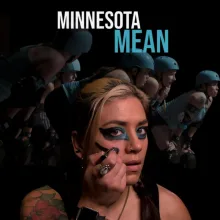
Minnesota Mean (2024)
Show notes
Find out more at https://www.minnesotameanfilm.com/ (opens in a new tab)
Transcript
An automatic transcript, tidied into paragraphs. It has not been proofread, so names, titles and spellings may be wrong, and it does not say who is speaking.
Show the transcript (about 6,200 words)
Speaker 1: Hold your ears, folks. It's showtime.
Speaker 2: People pay good money to see this movie. When they go out to a theater, they want cold sodas, hot popcorn and no monsters in the projection booth. Everyone pretend podcasting isn't boring.
Speaker 3: Turn it off then a soda fee.
Speaker 4: Hey, hoisting the hydra high. It is the pinnacle of the sport of women's flat track.
Speaker 5: Everybody needs to work out hard all the time to like stay up with the top 10. MIKE WHITE: I've got broken fingers. All my ring sizes have to be like nine and 10 because my knuckles have broken backwards and forwards.
Speaker 7: I just transferred here really great to escape at this level. But at the same time, it's kind of frightening and terrifying too because I'm not used to this level of intensity.
Speaker 8: 123.
Speaker 5: Today we have a lot invested this season. We have a lot of skaters gonna be there last season. You know, this is it. You know, we gotta do it now or we're never gonna do it.
MIKE WHITE: They are my family. We share blood, sweat and tears. Hey, folks, welcome to a special episode of the projection booth. I'm your host, Mike White.
On this episode, I'm talking with Dawn Mikkelson. She was on a few months ago when we were talking about the documentary, Finding her Beat. She's back with a new documentary that was kind of shot before the other documentary, but is coming out after you'll hear all about it in this interview. The name of the documentary is Minnesota.
Mean, you'll hear all about Roller Derby in the star of the North. Thank you so much for listening and I hope you enjoyed the interview. Tell me how this project even started. I want to know the beginnings of this one.
DAWN MIKKELSON: The beginnings of this one was that my friend Lisa started playing Roller Derby and she was 40 at the time and I remember thinking you are nuts, you're going to hurt yourself. And she did, she broke an ankle, which in Derby is not a rare occurrence, but the community that she found was so positive and embraced her and took her to doctor's appointments. And what I discovered was, yeah, they like hitting each other, but they also are incredibly dedicated to one another. And it was a community of powerful women.
And I was like, I love these guys. And so when the season 2017 season rolled around and it was the last season for a number of the top players that have been playing with the team for a dozen, 1015 year. No, not 1510 years. It seemed like the right seasons do it.
And so I reached out to the team and they were absolutely on board. They were tired of how Derby had been portrayed in media in general except for whip it. Everybody likes whip it, the Drew Barrymore film. But beyond wh it, they were not thrilled with their portrayal.
And so the idea of getting the proper athlete treatment in a film, which is where I was going with, it appealed to them and they trusted me because Ber Nasty, Lisa said I was legit. And actually at the premiere, I think Herr Stein said we knew that Ber Nasty wouldn't do us 30 what she's to why they were agreed to do it. MIKE WHITE: So it sounds like he had a pretty easy time getting in and getting them to open up to you. You were almost a known quantity already.
DAWN MIKKELSON: To some extent. I mean, Ber Nasty, clearly more than me and it took a season for them to get comfortable enough to share their innermost feelings, which in the film, that was a built trust over time. But yeah, it's, they're a great group of powerful women and non binary folks. MIKE WHITE: How did you even approach the filming?
I imagine it took a long time to get this done. And how long did you shoot, what was your schedule of going out there and shooting games versus interviews? DAWN MIKKELSON: We did every kind of major game except for there's one tournament in Missouri that we missed and it was due to funding. And so you'll notice midway through the film, they'll be like this tournament happened.
Here are the scores. Here's what happened. Couldn't be there. No money.
Nature of independent Cell. Conveniently, not much of huge impact happened at that tournament. So we didn't miss anything critical there. Yes, it was very close.
We did a crowdfunding campaign to get ourselves to championships so it was tight. But that's the nature of it. We're used to that. I started shooting with them in April of 2017 and shot through through champs and then did follow up interviews within a couple of weeks of champs.
But there were really only maybe 33 days of interview. Each player got an interview at the beginning of the season and an interview at the end of the season and they were long and important interviews. Yeah, it was very, it was a lean machine in terms of film production someday. I would love to do a series on Derby and have a robust budget so we could really get in there with folks.
MIKE WHITE: But yeah, so you're saying that Raquel Welch movie or the Peter Falk movie? All the Marbles. Those aren't accurate portrayals of Roller Derby. DAWN MIKKELSON: Those are old school Derby too.
And so old school Derby was banked track. It was in many cases, there was some staging involved in the big plays of the game. And since the early aughts Derby has been on a flat track and it has been all real. They have the fun names but they are, those games are legit.
It's a different world than, than that time. And I think that it's fun to have that legacy. It's fun to have those crazy bouts that people remember. But, you know, it is frustrating for the play because they're like, no, this is real.
I actually did break my leg. MIKE WHITE: Were you a big Derby fan before you started this project? DAWN MIKKELSON: I was a big fan of Lisa and would love to see her play. I became more of a Derby fan while making it because it really was seeing all the work that went into that and how dedicated these players are now, I watch Derby and I have that context and it's just like, oh my God, the things these players do for no money, they're doing it strictly for the passion, the community, the joy of hitting their friends.
This is it for them. So I've grown to be a mega fan and my 11 year old daughter now plays for the junior Derby. So I've become more involved in that regard as well. MIKE WHITE: It must be a little scary because there is that hurt factor involved just to see your daughter in that precarious situation for sure.
DAWN MIKKELSON: At this stage, a lot of them are still trying to just stay upright. No, they're good. But the level of hitting isn't quite as brutal at this age. But I have to say that there's something nice about there being a place for girls to express themselves in this way and do a full contact sport, particularly when they're often told to be small and not take up space and always apologize that they're in the way.
And this is the opposite of that. This is my space period. And so I think it's incredibly important for learning about her own physical presence in the world. MIKE WHITE: I think, speaking of physicality, I love that scene where the one woman's getting tattooed and she's just look at my arms, look at these calves.
This is amazing just to see that difference for her in her own body. I love it. DAWN MIKKELSON: Yeah. No.
And I love that. The pride in the strength and the pride in what my body can do. That's what's so amazing about Derby is that it's not for anybody to say that they're pretty or look good. It's to be the best, you know, player you can be and whatever your body type, there's a place for you in Derby.
And that's fun too. It's fun to see all of these different bodies doing amazing thing and it really rewrites the script of what's possible as a woman. MIKE WHITE: I think one that also taking makeup and turning it on its head and doing like more war paint like literal war paint. DAWN MIKKELSON: Yes.
Yeah. And I think that the players who do that there is something meditative to that. There's something like they get their game faith on. Right.
And it's like literally their game faith. And I think if I played Derby, I would, I'd be one of the ones with the makeup because there's something about channeling the badass having it on your awesome. MIKE WHITE: Did you come up with a good Derby name for yourself? DAWN MIKKELSON: I did not, but the team gave me a name at the World Premiere.
I now have a t-shirt which I'm not wearing right now, but at the Dawn Of The Dead. So I appreciate that. It is very kind of, they know that I will never be on skates, but they honor that as well. MIKE WHITE: It almost reminds me of drag queens with the way that they have their play on word names and then these players have their because a clever name like that can go just miles with entertainment.
DAWN MIKKELSON: Absolutely. I think that there's, there is some overlap there and there's also there's a queer community that is very represented in Derby. There's a ton of straight ladies playing Derby. So that's not, it's not a queer sport, but it is in a very welcoming sport.
You have trans players, you have every gender identity in Derby, including male. There are male teams and there's more and more of a movement for Just Derby. I don't know how far that will go in the long run. But because I do think that the women's Derby or female leaning Derby is more popular with fans for whatever reason.
Maybe it's history. But yeah, there's some great subcultures in Derby that like the adventure sports is also something our distributor in international distributor is an adventure sports distributor because they see a crossover in their audience that, that it's not just Derby, it's, oh, yeah. No, rock climbers are gonna like this and people who jump off cliffs are gonna like this and there are Derby players who do those things. A lot of Derby players actually also do trick skating, like what you'd see with skateboard, the ramps and all of that.
So, Derby is a great entry to a number of different subcultures. MIKE WHITE: One of the players who was saying just how long she had been scathing and how long she'd been playing. Do they have an off season or is this like a year round thing? DAWN MIKKELSON: This is a year round thing for those who play at this level.
What happens with most teams in Minnesota in particular? But is that they have a home season, Minnesota has four teams and they play each other fall through early spring and then in early spring, the All Stars, which is what this film is about. They play internationally spring through November, December. So there's some overlap in those seasons too, which is a little tricky.
But yeah, they're playing year round. MIKE WHITE: I can't imagine just how exhausted they must be after just one game. DAWN MIKKELSON: No, it's amazing. Actually, with the junior league, our coaches are players on the adult league and the practice after their games are usually very low.
Like, they're like, we're gonna be watching a movie today because none of us want to get on skates. We're tired. It's a full body sport. And actually, yeah, Diamond Roth, who I spoke with her recently and she was saying that as a blocker, she takes the full impact of the jammers going around that track, that the whole goal is to get through this pile of women and she is the epicenter of that.
And so she takes the full force of this person on roller skate. And so her back is not great because it's a lot, but she loves it and she has actually retired since then, but she loved it at the time. MIKE WHITE: Thank you for having the moment in the movie where you just break for a minute and explain the game to us as viewers that was so important to be like, oh, ok, because otherwise it just looks like people going around the track and hitting each other and you're not exactly sure what's going on and I didn't even notice the stars on the helmets at first.
So that was crucial that you were able to give me that five minute primer in there. DAWN MIKKELSON: It was helpful, but that's what the team does at every major bout is they will do that the audio from that 101. Derby 101 was actually from the Derby 101 of that game where they have people do a, mock bout in the middle of the, of the track. Just so because over half the audience is usually new to Derby.
And so they have to educate the audience every time. So they've got this down and I was a beneficiary of that. But it's true though. We didn't want to make a film without that because there's, there is confusion and I want people to at least understand the jammers role.
If nothing else, just understand that that person needs to get from point A to point B and pass a bunch of people. Yeah. MIKE WHITE: When did they move from that bank track down to a flat track? DAWN MIKKELSON: I don't know the exact year.
I will say that happened in the early aughts. So it, there was a break in Derby somewhere in the early eighties. It wound down and then it was reborn in Austin, Texas and that area in the early odds. And at that time, there was a lot of should we be doing bank to track or should we be doing black track and frankly having the infrastructure to have a bank to track at for every team was just not realistic.
Where do you put it? Do you have to have a permanent space? That thing is always up and it just, it made it really difficult for this sport to take off. Whereas they found they could play Derby in so many other places, gyms.
And I think that we're playing in the Roy Wilkins arena. So it's conference slash concert venue and all they have to do is place down tape on the floor that meets the regulation size. And so it became flat track Derby when it became a serious conversation about we want a robust league with dozens or hundreds. And currently there's over 400 leagues worldwide with multiple teams within those leagues.
So flat track was the decision that I think gave a boost to the sport to make it what it is today. MIKE WHITE: Yeah, I can definitely see that being a lot easier to handle. And yeah, I was curious about that auditorium space. If that was a multi space, it felt like it.
DAWN MIKKELSON: You know, Minnesota is incredibly lucky with that space. Not all teams have a space where they can have music and light than the big jumbotrons like Minnesota's. When you talk to other teams who played Minnesota, they're all like, oh my God, you guys are so lucky. We're in some random gym with a couple of bleachers.
Not that is not that for all the team, but it's tough. It's tough to find a venue that will host you. And the Roy Wilkins arena has been their venue since the early aughts. Minnesota is one of the first teams that joined on the WFTD A after Austin.
So they're also, they have long history. Yeah. MIKE WHITE: As you're shooting this, you already talked about the challenges when it came to the budget. But what were some of your other challenges?
I imagine scheduling was part of it as well? DAWN MIKKELSON: Sure. There was scheduling, there was learning how to shoot Derby because when we first got there, first of all, the camera operators are like, what do I point at? I'm like, Jammer, shoot the gal with the star.
And so we got much better by the end of the season and by the end of the season, we were able to pull from the WFTDAS cameras, they allowed us access to their cameras because they live stream all of their major bouts. And then that gave us the freedom to focus on the bench and on the faces of the players and the real emotional stuff. And so there was a learning curve there when we were making the film. So I'm just like, oh my God, I wanna do a series that benefits from all the stuff I learned because now we know how to shoot Derby right now, we know how to do it.
And also the camera operator has an opportunity to go into the middle. They rotate in the still cameras and the film cameras rotate in. So there's one camera in the middle of the track at most times and oh my God, the footage you can get from the middle of the track. But that camera operator needs to know where those Gators are.
They need to understand the flow of the game because they could get hit and it could be ugly. It's a learning curve. MIKE WHITE: You gotta have a new project so it can actually show off that Derby skill that you had. DAWN MIKKELSON: But I've got teams that are absolutely willing and excited to be a part of something.
So we just need to figure out the funding and the, you know, distribution and we could have ourselves a Derby series pretty easily, which would be amazing. But I'm also working on a bunch of other things too. That's the nature of the work that I do. I'm always juggling a lot of different projects because you never know when one's gonna take off nature of independent film.
MIKE WHITE: You called this the Irish Twin with Finding Her Beat. So how did you balance the two projects? DAWN MIKKELSON: So this one was shot first, which is interesting, but due to funding of independent film, it came out second because Finding Her Beat, found funding much more quickly. But Minnesota mean, was an inspiration for Finding her Beat in the sense that I fell in love with all of our footage that was behind the scenes.
And when it came to making Finding Her Beat, I was like, I want to make this film with no interview. I want this just to be microphones on people doing their thing. And so I think that film benefited a lot from Minnesota Maine. And yeah, this is the film, I really fell in love with that cinema verite style that I would like to continue in my work going forward as much as I can, which is interesting because I think early in my career, I loved the interview and that was my favorite part.
And I still do like interviews. But as a, as a storyteller and as a person who edits, there's just something so raw and beautiful about just watching people live their lives and having it play out in real time. MIKE WHITE: I was curious as far as the editing goes. Were you trying to edit this as it went along since you had a schedule of games or did you save that all to the end?
DAWN MIKKELSON: I saved it all to the end. I would, and part of that was again, independent film and funding had there been funding. We would have been editing right along. But as it was, I was like, ok, and then there's that client project and this client project and this thing over here basically got everything in the can and then edited on weekends and evenings for the next few years.
And actually in 2021 I left my day job and my goal was to finish Minnesota Mean and finding her beat. That was the goal and finished both of them and actually was editing them. Back to back when finding her beat was sitting with colleagues getting feedback. I was editing scenes on Minnesota mean and vice versa.
They were just dating at the same time and benefit from each other. And if you watch them back to back, you will probably sense similarities in how the story is told because I learned back and forth on both of them. MIKE WHITE: Was your support network for both of those the same as far as who you're showing this to and getting the feedback from. DAWN MIKKELSON: Yes and no, I have a core group of people, but I really respect their opinions of but not always their fellow filmmakers that I actually had a book club that I was a part of bunch of ladies, a bunch of librarians and teachers and I usually send it to them because they're awesome and they're so excited to watch it and they will be honest.
But with every film, I also tend to try to find test audiences that are both an audience that loved Derby and knows Derby and can call me out when I'm wrong about how I'm portraying Derby and then another audience that has no idea what's going on so that then I can check with them and be like, did you understand that? Would that make any sense at all? And so it's really a combination of test audiences, but I'm a big believer in getting feedback because I know that I get too close to something and I have no idea what I'm making anymore.
And I actually learned that early in my career, I had a day job at a place called the Playwright Center and it was a place that was dedicated to doing readings, staged readings of plays for playwright. And they had honed that practice of getting feedback and what works and what doesn't, what don't you understand and saw how valuable that was for playwrights and the, if the same for the film. MIKE WHITE: Just keeping track of your timeline for the editing. Are you using a note cards or is there a system that you have already set up?
Like what is that advanced technology you're using? DAWN MIKKELSON: I wish there was advanced technology. I'm still trying to find that. No, there's an element of the games are in chronological, logical order because they build on each other and it's a season.
So I do tend to work on projects that have some sort of in life through line. The Finding Herbie, it was, we want to put a concert up to the concert. This is we wanna go to champs up to champs. So there's an obvious through line there.
But then in terms of interviews and where everything else happened, it starts as a word file for me. I'll just hit those various scene moments and what are the plot points and then I'll move them around and move them around on paper until it makes sense on paper and then I'll edit and then they'll be like that, that actually didn't work. And in reality and they'll move around. Actually finding her beat was much more that way.
That film was much more chronological in when we did the or not did the ear. But when scenes happened where I, we took some license or liberties with the scenes at home and things like that and move some things around in the timeline when because it was like, this just doesn't make sense without knowing Xyz. And actually, that's one of my favorite parts of the edit is when you move a little scene or even like a sound byte from one place where it worked. Ok, over to another place where it changes everything and I love that.
That is oh my God. When that happens, you just get chills all over your body. God, so cool. I've often talked about editing is doing collage.
You have all of these pieces that already exist and you're making something that makes sense of these existing pieces. I love editing a lot of documentary filmmakers either I think come from being dps or camera folks or editors. And I'm on the editor side of that. I shoot periodically, but I'm not amazing.
It doesn't thrill me the way editing does on. I like seeing the story come together in the edit. MIKE WHITE: Tell me about your crew primarily. DAWN MIKKELSON: I worked with Jim Tittle and Jim was a cinematographer as well as a documentary director in our region.
I'm saying was because Jim passed away in the summer of 2020 not COVID, he had cancer, but he did see a cut of the film. That was, it was not a rough cut, it was further along at that point. And so I, and he liked it at that time, so I feel good about him being able to have seen it. But Jim was so committed to this project from the beginning and with a project that has no budget.
So that's what you need. You need a very excited person because you can't do it alone. And Jim was my colleague in that and great and the access we had to these players and the fact that they were comfortable for the most part with Jim was wonderful because this is a bunch of women and an older gentleman coming into the locker, but he was great. So I worked with Jim Tittle and then I also brought in a handful of other folks near the end.
Would we need multiple cameras? I shot a little bit just a little bit in a pinch. I would shoot, I also did audio recording. Yeah, this was really a small and tight crew.
When we got to the edit, I did bring in three additional editors and editors were people who'd worked in Docs around sports because I knew that the edit around those scenes of the games was an art form and not something that I'd ever done. And it's like a story within a story. How does this, the story of this little game play out? How does it impact the bigger story?
How do you pull in elements of your overall story into this little game? Which games do you choose? You know, because they played a lot more game than the film focuses on. So that was done with three other editors who were awesome.
And then I was the editor that pulled all those scenes together and then arranged them and brought in the personal scenes and crafted the final thing. This is a group effort all the time. And this was just a small group that made it. MIKE WHITE: How long did the edit go on?
DAWN MIKKELSON: It started, I was in January of 2018 because to be fair. And when we were done shooting in December of 2017, I was like, I need the holidays and I'm tired. But yeah, we were editing up through late 2022. So what is that?
That's four years, not constantly that had to do with funding. And I've, I've often said if there was the budget and all the money was there, we could have finished the edit in nine months, easily, maybe even shorter. But when you're doing it on the cheap, you do it when you can. Independent film is goofy that way.
But I will always say that I, and I'm thrilled that it's coming out when it is. Not only because we're in a position of having women's sports be on people's minds in a way that they were not in 2017, we've got Caitlin Clark and we've got the professional hockey teams and professional soccer teams and all these teams that were either did not exist or didn't have any attention are getting attention right now, which is great timing for this film. But also we're in a different time for women, I think, right at the end of this film, I remember sitting in the hotel watching when we're in the end of shooting.
I remember watching the stuff about Harvey Weinstein starting to make the news and that me too was happening right when we were wrapping up production. And I was like, that changes a lot that changes a lot of the context of this film and how people perceive it and how I perceived what happened that year. They always benefit from a little time and if you're forced to have the time, OK. MIKE WHITE: Tell me about the first time that the team actually gets to see the documentary.
DAWN MIKKELSON: Sadly, they didn't all get to see it together. They all got to see final cuts of it on their own and they gave feedback and often that feedback was teary because for many of them, this was their final season. And so they were seeing that last, those last moments, but I will say the World Premiere was amazing. That was April of last year 2023 at the Minneapolis Saint Paul International Film Festival.
We decided to premiere there because it was Minnesota. It was like, we're here. This makes sense and you can have the whole team there. And that was amazing.
They were able to get this community support and acknowledgement of who they were at that time in their lives now that most of them are in a very different stage of their lives. And so it was pretty cool. Yeah, there's still, I don't wanna give away too much about where they are now. That's in the film.
But yeah, some of them are just like, oh my God. That's right. That was my life. They're still in touch.
Some of them are still their closest friends are still Derby folks. So it's a neat space. MIKE WHITE: And what was the path after this premiere? Where else did you show it at?
DAWN MIKKELSON: We went on to Florida Film Festival was next and then Cinques was shortly after that. And it's been to, I don't know, a dozen festivals around the United States. It's won a handful of awards. So it's been a good year for Minnesota.
Mean, interestingly, I didn't mention this at the beginning of this, but this film was shot as more of a television series style because I had the first month and a half, two months of production, I was pitching it as a series. And so we were shooting it because we're like, here it is, here's what we're shooting, get on it. And then we just weren't in a place where women's sport, particularly women's sports that aren't basketball or known entity. We're making it very far in sports media.
So when everybody kind of passed, I turned to the team and said, I think this is a film. Do you mind if I keep following you? And they're like, oh, this is great. But so the style of this film is very much more TV, feeling to me as a filmmaker.
So yeah, different style. MIKE WHITE: I didn't really pick up on the TV, ness of this. But God, I would love to have a series where do you get to meet these characters and keep up with these characters and then see the actual games and the reactions and all that? I think that would be wonderful.
DAWN MIKKELSON: I have four teams right now that are some of the top in the world who would be on board. Absolutely. If we could get it picked up and to have people playing at that top level, particularly from very diverse regions of our country and potentially diverse regions of the world. There's international teams that would also be interested the stories you can tell there about what it is to be an athlete, be female, non binary.
It's, there's just, there's a treasure trove of things I actually just got a message from a player in, from Angel City who played for Minnesota while this film was being made and is now in Los Angeles playing for Angel City. And she was telling me her potential storyline or their potential storyline actually because they are transitioning and are going by the AM. Now people want to tell their stories and their good stories where and when is this going to be available for people to see it was available July 2nd. So we're on what day three now of it being available on Amazon and Apple TV.
It's also available on a bunch of other digital channels and streaming services. So if those two are not in your wallet of services, I would go to our website M Amine Film. Com and I've got a list with links for all the other places where you can find it. MIKE WHITE: And what's next for you?
What are you working on now? DAWN MIKKELSON: I'm working on getting That Derby Series off the ground. We'll see what happens there. And that exactly beyond that, I'm actually producing three different films for Kerry Pickett, my former co-director of finding her beat because Carrie is prolific and has a number of films that are in production right now.
One that is in late post, one that is in early post and one that is in production. I'm helping her get those out into the world. Great stories. I can't say much more about them.
At this moment. But, yeah, I'm at a stage where I've got a lot of things up in the air that are all happening at once and I will talk about them when I, oh, yeah. MIKE WHITE: I'm sure every independent filmmaker has to have a lot of pokers in the fire. DAWN MIKKELSON: Oh, yeah, absolutely.
I was saying recently to somebody, I'm at the spaghetti throwing stage of things where I'm throwing a lot of spaghetti at a lot of walls and seeing which one sticks, I'm open to other Italian foods. If anybody wants to talk to me, if there's a budget involved. MIKE WHITE: Dawn Of The Dead, it was great talking with you today. You as well.
It was great talking with you and I look forward to your next one because this was a hoot. Of course, I love finding our beat and yeah, just best of luck in the future. DAWN MIKKELSON: Thank you and thank you so much for doing.
Speaker 3: She like stuff to fight nothing. Ro and Derby. Saved my soul, right? Tattoos attitudes.
Well, if that skinny I and quiet on her butt and order be me. Save my soul slowly like a wheel with no a that just ease my pain here. A woman in my OK. I'm talking about, I'm talking poor Derby.
Save my.
Comments
No comments yet.