
Special Report
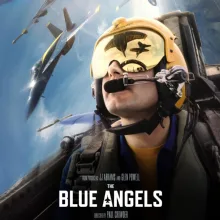
Glen Zipper on The Blue Angels
Show notes
The film is playing theaters as well as being available on Amazon Prime.
Transcript
An automatic transcript, tidied into paragraphs. It has not been proofread, so names, titles and spellings may be wrong, and it does not say who is speaking.
Show the transcript (about 4,800 words)
Speaker 1: Hold your ears, folks. It's showtime.
Speaker 2: People pay good money to see this movie. When they go out to a theater, they want cold sodas, hot popcorn and no monsters in the projection booth. Everyone for 10 podcasting isn't boring.
Speaker 3: Turn it off.
Speaker 4: First time you take off, you gotta push the I believe button. I fell in love with aviation at four years old. My dad took me to an air show and I got to watch the fight for the very first time this year. We're bringing five new people into this team, something I never thought was actually gonna happen.
Speaker 5: It's one in a million. We only have three months to get to a point where we can take it on the road.
Speaker 3: It can be frustrating at times. The challenge is to get the newbies up to speed and that can be scary when you're flying 12 inches apart. Everybody's lives are in each other's hands. It's an eye opener for how inherently dangerous this job is ready to roll hats every once in a while, the jets just kind of freeze and the water around you seems to spin to make six jets fly as one that's The Blue Angels magic.
Just pinch myself when I get a chance to be part of it. These things that I've done. MIKE WHITE: Hey, folks, welcome to a special episode of the projection booth. I'm your host, Mike White.
On this episode, I am talking with producer Glen Zipper all about his latest film, The Blue Angels. The film is a documentary about the Blue Angels flight group from the Navy. All the tricks and things that they do, how they form the squad. It's very, very insightful and interesting documentary and one if you can see it in the theater, definitely check it out there.
Otherwise I believe it is streaming on Amazon Prime had a great time talking with Mr Zipper and I hope you enjoy this interview, Glen Zipper. How do you go from being a prosecutor to being a documentary filmmaker? GLEN ZIPPER: It's an excellent question. Sometimes I ask myself the very same question.
It's a long story. I've done my best to distill down to three minutes or less with a mask and it actually involves a dog. I came home from when I was still a prosecutor, came home from work one day and came across a stray pit bull puppy on the street which then brought me to an animal shelter with this dog. And they told me they put the dog down and I had not done any animal rescue work at that point in my life and wasn't really familiar with how it worked.
And I was a lawyer. So I tried to lawyer these folks and he'd be the dog's death row advocate. And then they brought me into the back and they showed me the floor to ceiling cages of all these animals and basically told me, look, it's a math problem. We don't want to put any of them down, but one comes, then one's gotta go and I had a mini nervous breakdown.
I turned in my badge and I want to volunteer at the animal shelter and helped them create a volunteer program where we got a lot of these. So I adopted and after six months, I had this feeling I wasn't familiar with called my brother who is a doctor. I thought something was wrong. He said, no, I know what exactly that is.
I'm gonna give you a diagnosis. It's called happiness. This, that, yeah, I know it's something you're unfamiliar with. And I said, yeah, OK.
And it quickly thereafter, I determined to, I need to feel this way for the rest of my life. And what I always wanted to do is I wanted to be a storyteller, except in my family. If you said you want to be a storyteller, you might as well say you want to be a finger painter. But by that time I was an adult, it occurred to me that I need to make decisions for myself with my, about my life and not let other people dictate, came out to L A and didn't know anyone.
And through a lot of luck and a bit of hard work found my way into the documentary community and the rest was history. MIKE WHITE: What were some of those early projects for you when it came to the documentaries? GLEN ZIPPER: I met a producer by the name of Nigel Saint Clair who had a track record of doing a lot of scripted films. But he was just getting into documentaries and his first couple documentaries were huge.
He did the Martin Scorsese Bob Dylan Doc, no direction home. And he was foolish enough to give me an opportunity in his documentary department. And I was doing some clean up on a film that had already finished called Amazing Journey. The Story Of The Who, which was directed by Paul Crowder.
How we met Paul Crowder went, you know, went on to direct Blue Angels many years later and there were a lot of speed bumps. I found out much later that I came very close to getting fired, but really had no idea what I was doing and then a film came in or an opportunity came in or Billy Joel wanted to do a documentary just playing the last concert at Chase Stadium before they tore it down. And Nigel, he's a Scottish dude loves the rolling stones. The who the Beatle didn't really know much about Billy Joel and he wasn't sure he wanted to do it.
And I said, hold on, I'm a kid from New Jersey. I know how to make this movie. I talked him into doing it and I learned the ropes on that film and that was the first film it's called the Last Played Shay. And we got Paul Crowder to direct that as well.
And that's really where the, my friendship began with Paul Crowder and his partner Mark Monroe. And that film came out great and premiered at Tribeca and Billy was very happy with it, which was the most important thing. And then another film came in about an American high school football team and being a dude from Scotland, NASL didn't know much about American football either and he, I couldn't convince him to make that one. And so I said, if I can go out and raise the money myself and raise enough money to hire you to produce it with me, will you do it?
And he said yes, because he didn't, I presume he didn't think I'd be able to do it. And I enlisted my brother, I created Ziffer Brothers films. We did raise the money through a consortium of gynecologists and emergency room physicians and brought on Nigel. We made that film and it went on to win the Oscar for best documentary.
And that was my company's first documentary. MIKE WHITE: You mentioned working with Paul Crowder. It seems like you work with a lot of people over and over again throughout your career. I know that you've worked with Colin Hanks at least once.
And I think there's another one on the, in the future. That's right. You've got Alex Winter. You've done a ton of his films.
It's funny. We covered all things must pass. We've covered Zappa. So as I'm looking through your filmography, I'm just like, I have seen a lot of this guy's films and they have talked about them on this show and you have been very busy, sir.
GLEN ZIPPER: Yes, I do work with a lot of the same people over again. As you mentioned, Colin Alex, Tom Zimny Paul Solid. And I don't think I was the person who came up with that idea. I, you look at other filmmakers in this business doc scripted and when you find the collaboration that works, if it ain't broke, don't fix it because at the end of the day, all of these projects, they're marathon.
It's so hard to do. I always say to someone who's coming into the documentary business for the first time. So look every documentary and I'm not saying this to be funny. Every documentary is a disaster.
It's a fucking disaster until it's not right. And you will get to that until it's not moment. And you just have to have the religion for the story you're telling and some stamina and it's easier to run that marathon when you have chemistry and trust with your collaborators. And that's the reason you go back to the, well with the same people because you run that marathon together.
You can trust each other. You can get to the other side of the, of the disaster and ultimately come up with something that's pretty special. That's not the same. We don't work with new people as well because we new people and new creative ideas or the, what this is all about.
So we always want to bring new people into the fold and expand outward and then we'll keep working with those people. And yes, I've been busy. But I think part of that is because I, this is a second phase of my life starting with a different career as a prosecutor. I feel like, you know, the race started without me.
So I've got a sprint to keep up and I've never really taken my foot off the gas because I guess I'm afraid to, it's all worked out pretty well so far. MIKE WHITE: So how does a project like the Blue Angels come to you? GLEN ZIPPER: Projects come in all different manner. A lot of projects.
We'll just come with an idea and then we'll go chase it and then they are inbounds and the inbounds come in many different flavors. In the case of Blue Angels. I was introduced to Glenn Powell is my team at CAA and Glenn had trained with the Blue Angels while he was preparing for Top gun. And he formed a relationship with former boss of the Blue Angels, one of the former bosses of the Blue Angels Greg Wooldridge.
And they had had the idea to come up with a documentary or to tell the story in documentary form. But none of them were documentary filmmakers. So they needed to be introduced to someone like me. And the first call we had, we really hit it all.
And I told them what I thought it should be. And I told them filmmakers that I'd like to bring on to it and they were excited and we very quickly locked arms on it. Then once we had decided to make it together, I brought it in to the JJ and BEAV robot. They were in Hannah Manello who runs film for bad robot.
They were equally excited about the project and, but we were running out of time because if you have you seen the film? MIKE WHITE: So yes, I saw it last week. GLEN ZIPPER: So thank you for seeing. It follows a year in the life.
The Blue Angels. We didn't have financing as late as December and the season starts in January. So we really had a hustle and we went into IMAX, met with John Turner who runs Docs for them and just like me just like Hannah Manella, just like JJ. John couldn't have been any more excited about the project and we dove in right away and it was we never had a chance to catch our breath.
We just dove in and it was off to the races and we followed the air and made the film and here we are. And I woke up this morning to see that we're the number one film on Amazon. MIKE WHITE: If there is a movie that was made for IMAX, it is this one, it looks so spectacular. And as we're watching the film or actually, I guess as we're walking out of the theater, my wife and I were like, where's the cameras?
How are you even getting these shots? That some of these are just amazing? GLEN ZIPPER: Yeah, and that's a great question. It's where I iii, I must confess that I do look at the social media comments and one of the recurring questions I see or comments I see.
They're not even questions. You just people presuming that we digitally painted out cameras, which we didn't do is they said we'd have to see a camera somewhere. I said, no, that's not what happened, but it's a, it's flattering for people to think that we did that. So we use the same mounts that they use for top gun two.
So that was one thing that we did and they bolted on to certain areas of the jets. And then there are cameras in the cockpits. And then the one thing that we did that's never been done before is we had helicopters inside the Blue Angels airspace and which they never allow. And I think probably the reason we were able to prevail on them was we use the same aerial photography team as Top Gun.
And so I think they were familiar with them and trusted them. And then we had Greg Wooldridge, the former Blue Angels boss, who's one of our producers. And I think if Greg is telling them we're gonna be saved, they're gonna trust that. And so it was really an amazing experience to be tired of something as groundbreaking as this film and be able to do something that's never been done before.
MIKE WHITE: And like you said, this is a year long process that you're following. I love that you have that structure and that there's this constant cycle of these teams coming in and people coming in coming out. I think that's a really amazing way to tell the story, but then to do your cutaways and to talk about the history of the Blue Angels and just where to put all that stuff. I thought that was very well done as far as the pacing of the film as well.
GLEN ZIPPER: Thank you. I'm glad that it landed that way with you. That was our intention. You know, it actually is a very difficult the aerial stuff, ironically, that's the easy part, right?
Because as long as you put the cameras in the right place, The Blue Angels jets are and pilots are gonna do all the work and we know that we're gonna have that amusement park ride element to the film. The story on the ground is the hard part and you're dealing with two challenges. One is by the very nature of what the Blue Angels do, it's repetitive because you can, these are jets are flying 400 miles an hour, either 12 or 18 inches apart. Much of the time, the only way you're able to do that is to crack this again and again, the very same maneuvers.
And we noticed in the early edits of the film that we had much more aerial photography, you get a bit jaded to it and it gets a little repetitive, right? So we do need to stay on the ground, but he'd been on the ground. They're talking about the same things. They're going through the same motion.
The locations may be different because they move all around the country. But the routine is the same, right? So we had to find ways to get in with these characters and tell their stories in ways outside of the regimen of the Blue Angels day in and day out. The other issue we deal with is that certain opportunities that are available for us in other documentaries weren't gonna be available for us in a documentary like this.
It won't be a surprise to anyone to learn that we were not going to be asking Blue Angels pilots about their childhood traumas. Right. That's not what this film is and that wouldn't have been appropriate to ask of active military personnel. Right.
So, we weren't going to go to that level of a personal emotional stakes for these pilots. What we were, the stakes that we were gonna have to concentrate on were the job itself was the job itself because every time that they strap in and hit an altitude, they're putting their lives at risk. And so we had to find a way to achieve that balance between the aerial photography, the on the ground story and then the personal stakes of, are we going to survive this? And I'm glad that you thought that we struck a good balance on that account.
MIKE WHITE: How were the actual pilots to work with as far as documenting their stories following them being that kind of fly on the wall when it came to their home lives? GLEN ZIPPER: It was a tight rope and look, that's really the job of Paul Crowder and our boots on the ground team. Because they're the ones that are there day in and day out when I'm more often than not back at the office. But it really wasn't any different than most documentary subjects in the sense that you've got to earn their trust.
And when you start, they're just getting to know you and the guards are up and they're very mindful of everything they're saying. They're aware of the camera. But then the longer you're there, the more they get to know you, the more they trust and the camera kind of becomes invisible to them. And so the longer we were there, the deeper we were able to get, the more their families got to know us, the more they trusted us, the better opportunities creatively that were available to us.
MIKE WHITE: And you said you're back at the office sometimes while the film is going on because, yeah, you released what three documentaries this year so far? We're only in May here. You need to slow down a little bit because you've got the Elizabeth Taylor one. You've got the Blue Angels and then I believe one on the beach voice as well.
GLEN ZIPPER: Yeah. And there's another one that will be coming out in July that hasn't been announced yet and probably will be in the next few weeks. Yeah, it's been pretty busy and you do have to balance your time between the projects, but it's all about building a team. And I do a business partner.
His name is Sean Stewart. I wouldn't be able to do any of this without Sean. Anything that I'm able to accomplish. He's equally responsible for and I actually met him on all things must pass.
He would is also Colin Hanks's partner and childhood best friend and they brought me on to all things must pass and we really formed a friendship on that film. And when we got onto the other side of all things must pass, we both said are really complimentary to one another. We have some skills that overlap, but we also are flip sides of the coin in certain ways as well. I'm a lawyer.
He went to film school. He's a deep production guy. I'm good at the business affairs stuff and we're both good at. We like to think we're both good at creative, but we'll let other people decide that if that's true or not.
And so we've worked in almost everything together since then. He's become a brother. It's just weird. I go back and try and think of the projects I worked on without him.
And I just like a lot of times we'll be in a meeting, pitching something or just having a general meeting with someone and I'll be talking about a film like undefeated or the series Dogs that Sean wasn't on because I didn't know him yet. And I always say we, and I'm putting him in those stories because my brain has just reprogrammed itself to think that he was on those projects because I can't even conceive of not being on projects with him. MIKE WHITE: How many things are you working on at the same time? Because you probably have a whole raft of stuff that you're just about to ramp up or that they're different pokers in the fire.
GLEN ZIPPER: We scale up, we scale down. I think it was, there was a point last year where Sean said something to me where he got 16 now and I was like six and he was 16. And I said, no, we don't have 16 and he said, no, we have 16 going through the late, I was like, oh, you're right. Of course, they were in different stages.
There were a bunch that were in pre production, there were a few that were almost done. And so it's just again, it's about striking that balance and there is a team on every project, not just me and Sean, you have the director, you have our head of production, Marin Dezo, and then we build an infrastructure and a unique infrastructure for every project. It doesn't entirely rest on my shoulders or Sean's shoulders, but it is about forming the right team. And if you form the right team, you know that you can take your hand off the wheel from time to time and it'll be ok.
If you get hit by a truck, they'll still make a good movie. MIKE WHITE: If you had a magic wand that could make any documentary you wanted to where you knew everything would go, right. No problems, no blockers. What would that be?
GLEN ZIPPER: I'm making it? I, that's a trip I just got back from. Unfortunately, it is a confidential project. It's I can tell you that it's a white whale documentary project.
It's a project that everyone's wanted a mate for in, I would say decade and the person who was very alive and well, just didn't want to do a documentary on their life. And they're thinking evolved on that. And there was a very competitive and I think a lot of people knew that person was ready and there was a very competitive process around that person. And I met with him and I to him and actually, like, my publicist is probably going Glenn, stop talking.
And JJ JJ and I went to New York to meet with the person. And fortunately they entrusted us with their story. And so I was just down somewhere south meeting with this person. And it's surreal.
It's just one of those things where if you do have a dream to tell a certain story and then you find yourself actually doing it. And you're like, how did I go from a courtroom in New Jersey to be sitting here with this person telling this story? And I'm growing up admiring this person and really caring for this person and their legacy from afar. And then waking up one morning and saying that person is trusting me with their legacy and other people too.
Again, it's, it's not, it's always gonna be a team effort. So I'm, I'm excited for a time, which will probably be about 18 months from now where I can be asked that question and talk about who the person is. And how it all came together and say, yeah, I the Magic Wand did get ways and I was able to tell that story. MIKE WHITE: Did I read that you're doing a.com John Candy?
GLEN ZIPPER: They are. And that's being directed by Colin Hanks and produced by maximum effort alongside us. And that's Ryan Reynolds Company. And that's another one.
That's the huge look when you're doing a biographical documentary. We always look at it as not just a creative opportunity but a huge responsibility. We've done Elvis, we've done Elizabeth Taylor, Johnny Cash who fires Billy Joel. Now John Candy, the legacies that these artists create, take a lifetime.
You could materially injure or otherwise ding that legacy in the span of 90 minutes through a documentary that is not well executed or has the wrong point of view or is asking the wrong questions. And so any time we're talking with one of these iconic people or the fair takers of their state, that's where I start. I said, look, I see this as a huge responsibility. The entire scene scene is a huge responsibility and that's the perspective that we're gonna take every day.
And I think I come at it from a unique place because of where I came from. When I wake up every morning. I do pinch myself that I'm able to do this for a living. I never thought I'd be here.
And even when I started finding success, I thought it would be over the next day. So I feel like I'm playing with house money. So it's never about where we're gonna sell it, how much money we're gonna get for it. It's just like, wow, I get to do this and how do I get to keep doing this the way I get to keep doing this is by delivering for the people that trusted us.
And with Elizabeth Taylor, for example, the estate, they're absolutely wonderful. The caretakers of the state, a woman named Barbara Berkowitz, Elizabeth's grandson, Quinn Ive and a gentleman named Tim Mendelsohn who used to be her personal assistant. They were very cautious. I don't wanna say nervous because I don't think they were nervous, but they have a huge responsibility being the caretakers of her legacy.
And they, I can tell man, is, did we do the right thing? It was this gonna work out? We trusted these guys and is it going to just bleed out onto some platform and be forgotten? Is it gonna make a footprint or not?
And then it goes to the Cannes Film Festival and then goes to Tribeca and it goes to HBO and to be able to be at Cannes with them and walk the red carpet with them and then go out to dinner afterwards and go. Are you happy? Did it all work out to your best ambitions and for them to say yes, that is the greatest reward when we make films like this. MIKE WHITE: Is there a good place online for people to keep up with you in your work?
GLEN ZIPPER: You can follow me on social media, but I hope they like dogs because it's at least 50% of me posting silly pictures and videos of my dogs at L Zipper. My name with one N on Instagram. That's really where I spend most of my time in social media. I don't think I don't want to turn this into a political conversation X or Twitter is I sort of can of worms at this point.
There's not a whole lot of engagement anymore. So that, that's probably the best place to find me Mr Zipper. MIKE WHITE: Thank you so much for your time. This is great.
GLEN ZIPPER: Thank you. I really appreciate you giving me the opportunity to talk with you.
Comments
No comments yet.