
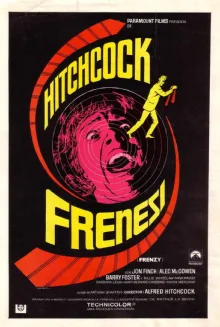
Show notes
Labels: Alfred Hitchcock Ian Cooper Jon Finch Rebecca McCallum
Transcript
An automatic transcript, tidied into paragraphs. It has not been proofread, so names, titles and spellings may be wrong, and it does not say who is speaking.
Show the transcript (about 17,600 words)
Speaker 1: Hold your ears, folks. It's showtime.
Speaker 2: People pay good money to see this movie. When they go out to a theater, they want cold sodas, hot popcorn and no monsters in the projection booth. Everyone pretend podcasting isn't boring.
Speaker 3: Turn it off. ALFRED HITCHCOCK: I am about to introduce you to a lady in a Frenzy. My God birthday. Alright.
The dictionary defines Frenzy as a state of wild emotional excitement. I will not quarrel with the dictionary. Actually, the motion picture Frenzy is unique in its choice of a murder weapon. The murderer uses neck ties to strangle his pretty lady victims.
As you might expect. Scotland Yard finds itself tied in knots. The dictionary tells us that it is possible to Frenzy a person. We hope to Frenzy you in our little exercise in love and strangulation.
Oh, yes. Frenzy is rated R under 17, not admitted without parents. MIKE WHITE: Welcome to the projection booth. I'm your host, Mike White.
Joining me is Mr Ian Cooper. Hi, Mike. IAN COOPER: I'm positively glutinous self approbation. MIKE WHITE: Also joining us is MS Rebecca mccallum.
What about coming up? REBECCA MCCALLUM: Then? MIKE WHITE: This week, we are discussing one of Alfred Hitchcock's later works and his final British film Frenzy. The film stars Jon Finch as Richard Blaney and Barry Foster as Robert Rusk.
They are a couple of blokes in a swinging London that is plagued by a murderer of women, the Necktie Murderer. We will be spoiling this film as we go ahead. So if you don't want anything ruined, turn off the podcast and come on back after you've seen the movie, we will still be here, Ian, when was the first time you saw Frenzy? And what did you think?
IAN COOPER: I saw it on TV? In what must have been one of the earliest screen into the late seventies? And it freaked me out completely. I really enjoyed it.
But I think because I've not seen Straw Dogs or the Devils or any of those kind of films from around the same period, it really, really freaked me out even though I suspect it had been cut. It had quite, quite an impact on me, but I loved it. MIKE WHITE: And Rebecca. How about yourself?
REBECCA MCCALLUM: Yeah, I was in my early twenties when I saw this and I don't know if it's something to do with it being a later entry in the Hitchcock Cannon. But the older I get, the more I find myself coming back to this film, like, like I, and I remember feeling shocked at the violence and even even the vocabulary, the language in this film, there's, there's a crudeness to it that I hadn't really seen in Hitchcock before. And I think as well, there's just, there is also to speak to that difference, but also to speak to a lot of those like signature things that we recognize in Hitchcock I see here as well.
But just with that slight rougher edge, this is a very nihilistic film, I think it contains humor for sure, but not, not a lot of positive things happening for women in this film and not enough really to temper that overall kind of hopeless feeling that I really feel this film carries. And this is, I feel like a culmination of a lot of the themes that we've seen in Hitchcock's career from, you know, the wrong man. And I'm sure we'll talk more about things like the Lodger and strangers on a train and those exchanges of killings.
I see there as well, but also like the use of like non stars this time and Hitchcock choose not to go down that path and this return to London as well being important to him not wanting to avoid those cliches. I think so. And I'm also interested in how this film builds on Hitchcock's interest in audience complicity as well and those uncomfortable spaces that you like to put us in. MIKE WHITE: Yeah, I remember renting this on VHS back in.
It's probably like 9293 somewhere around there. I had taken some Hitchcock classes. I was in film school at the time, but this was not one that was shown in the Hitchcock cannon. You know, you saw Dallon for Murder and North by Northwest psycho.
Of course. Yeah, we watched The Lodger but this was not something that we were shown and I was pretty taken aback by it just to see the level of violence the nudity that was in here and not really realizing like, oh, well, this, you know, this is coming after, not just Hitchcock's work, but after, you know, the whole cycle of the Italian gallos and things where it's like, oh, we're taking these kind of things that Hitchcock gave us and elevating them even more and making them even more outrageous. The thing I remember the most is the potato truck scene and we'll definitely talk about that.
But that was the one that stuck with me the most when I went back to re-watch this for this podcast. Couldn't remember very much at all. But I was very pleased by what I saw and very happy with just some of the things that he was doing with the camera. Of course, you know, this is Hitchcock and some of the things that he had done before but was taking to another level in this one.
And of course, we'll, we'll be discussing that as we go along. One of the things that stood out for me with this viewing was going back and watching the trailer and seeing just how similar the trailer for this one was to psycho and the way that he was kind of taking us through all of these different locations and playing upon his own stardom. Of course, because, you know, this is Albert Hitchcock of 1972. Everybody knows what they're getting quote unquote with a Hitchcock film at this point.
REBECCA MCCALLUM: Yeah. And the Hitchcock being, you know, 70 plus at this point as well, I think, and just being able to demonstrate his mastery. And I think to your point about the trailer, I think being able to look at that as well and how that feeds into readings of the film because Hitchcock trailers and his promotional materials are all part of the fabric of his art, aren't they? We can talk about Hitchcock and what this film might mean in his career maybe in a moment, but it opens the trailer with him floating in the river and it's like this idea of him kind of being playing at being dead almost for having a religious as well.
And him, you know, speaking to this idea of rivers and like rivers as being like or what they should be like cleansing, purifying, you know, sources but here they muddy they brown and he does that corruption in psycho as well and just how he shows us those key beats and like you said that the title so representative of psycho, but then we do have that humor but then there's also that real darkness in the trailer and he makes the dry joke about Babs and her wearing his tie and he takes it off the body and he puts it on and he asks, he asks us, so we're invited into this trailer.
You know, how do you like my tie? So to me, this is really bold. It's very dark and again, it just positions him or seeks to position him slash align him with the murderer of the film. MIKE WHITE: Yeah, we got to see him, put him in that position of is Alfred Hitchcock himself a murderer.
We would see that so often in things like the Alfred Hitchcock Hour or Alfred Hitchcock presents where he's there with all of these tools of destruction, you know, him doing the exercises, but then you find out that he's pulling the blade up and down on a guillotine, you know, these things where it's just like him having this whole thing where he wants to murder the sponsors of the show and just this, like, not back and forth, but just it was always him introducing the commercials and just talking about, you know, like, oh, here we go again, here's the sponsors.
And wouldn't it be great if they were just all dead? It's like, all right. But yeah, putting himself in that position of both victim in the river as well as potential murderer. Where, you know, hey, yeah, how do you like my tie and then her reaction.
Oh my God. The tie. Pretty clever stuff though. IAN COOPER: With the Potato Trump also in the trailer with the kind of glee he talks about these these dead women when a guy called James Allardyce was hired to write the links for Alfred Hitchcock presents.
And one of these, the notes he was given was where Hitchcock is very objective towards death. Dead bodies are not necessarily sacred to him. And that kind of understates just how playful the attitude is to dead bodies. And obviously in the trailer for Frenzy, these dead female bodies.
Now there's this kind of, yeah, glee in corpses. MIKE WHITE: Now, Ian, I read your book about Frenzy and some of the stuff about how long it took for this project to gestate. I really was not familiar with that. Can you talk a little bit about how this project started and changed over the years.
IAN COOPER: Originally, as I'm sure everybody knows Hitchcock has been interested in was interested in serial Murdoch, going right back to the logic and he had the idea in the early sixties of writing a film from the point of view of a serial killer. And a treatment was actually registered with the Writers Guild in 1964. The treatment reference the shadow of the doubt and it's almost sounds, it's gonna be a prequel to that in Uncle Charlie, the serial killer. And over the years Hitchcock approached various writers, Robert Block, Ben Levy Howard Fas, who wrote the Sparti novel about working on this.
And he worked on this idea for a long time for a film that was gonna be called Kaleidoscope Frenzy, which is a notably kind of groovy title. And it would have been very different to anything in the Hitchcock. It was going to be the story of Willie Cooper, no relation, a gay bodybuilder with a mother fixation, obviously who murders a woman in central park and then becomes involved with this female cop who's trying to investigate murder. But what would have been really notable about it was h Cock was very envious of like Antonio and be well and the European directors and freedom they had.
And so he planned things like the 360 degree and really, really striking color scheme. There's all sorts of reasons why it didn't happen. One was he ran the script past Tr who said it was banal. I mean, the stills from it make it look fantastic.
It looks like it's a brisky point or something with all these kind of really, you know, these sort of hippyish, fashionably skinny young people in various states of undress, but also MC A where Hr universal hated it. They called the villain impossibly ugly. I say this in the book and I look at this story that Hitchcock never forgot this during the making a family plot. His last film, there's a bit with the Garage and somebody suggested Debbie graffiti on the garage and somebody said, what's he gonna say?
And Hitchcock said, fuck MC L. He was obviously still all these years later angry that his, I was gonna say this wildly different project, but obviously, it wouldn't have been, it would have been experimental so psycho and so was Rope and you know, this constant experimentation is there in Hitchcock anyway. But it would have been, it sort of anticipates Frenzy very much because as Rebecca was saying, it's this kind of it would have been quite Phil. Not only ugly characters but no stars.
No, Kelly, No Montgomery Cliff, you know, would be these kind of average looking people in quite an ugly part of New York and weirdly what struck me when you were talking about the Thames, quite a lot of the scenes took place in the Hudson River. So you do have this idea that, you know, the river and up subverting that already. So elements of it do turn up in Frenzy. But it's one of those great what ifs in filmmaking, I think?
MIKE WHITE: Yeah, even when you bring that up, I'm thinking immediately of the, was it the garbage bag killer from cruising, which is eight years later? Yeah. But it almost, there's with the gayness and this stuff. It kind of recalls that as well.
That's funny. IAN COOPER: Yeah. And it would have been really frightened and there's a bit where the character Willie's mother walks in on him masturbate. You know, he was trying to push the envelope in a way that we see again in Frenzy.
But also, yeah, that's, you know, Janet Leigh in her underwear in cycle. There's always this sense pushing against censorship in it. But I think it would have been too, he would have gone too far, too fast for the people financing his films. MIKE WHITE: Essentially the opening credits of this movie.
We have a treatment for the title. We have this kind of Stripes and the word Frenzy, but we don't get that for the rest of the titles. Like when you mentioned psycho, psycho is very famous for its opening credits and the way that the words will kind of build and shift in these things. So you have the treatment throughout the entire credit sequence.
Whereas with Frenzy, it feels like just normal credits until you get to the title and then it's got that treatment to it. Is there a reason why he wouldn't do that for the entire title sequence or was that just didn't want to do it? IAN COOPER: It's funny to you said that I hadn't really noticed the path of the title and The Black Smoke we see in the, you know, the end of the tracking shot. It's a really playful opening sequence that hadn't actually occurred to me.
That's this jarring note in the, in this otherwise, I mean, it could be the opening to any other swing in London or slightly Uns Swinging London. Really? MIKE WHITE: Yeah, I said Swinging London. But really, we don't see the nightlife, we don't see the things that would make this Swinging London.
It's, yeah, it is pretty stayed overall. REBECCA MCCALLUM: First of all, the Ron Goldman score and this, this kind of regal to it. It's very patriotic sounding and for me it kind of laws us into this full sense of what we are about to see. We spoke just before about expect and being able to expect with Hitchcock.
But I think what he's so good at is subverted that and you know, putting us in one place and then actually, oh, we find that we're somewhere different, this like ultimate God's eye view shots that we get, which we often talk about in Hitchcock that denotes fate. And we'll see that again with Blaney when he's walking through Covent Garden. And this suggestion that he is at the mercy of a higher power and these shots as well, talking to suspense. And if we think about suspense and those shots, we're literally hanging as though hanging in suspense.
So I like that. And I also think Hitchcock's playing about with, you know, the idea of what's on the surface and what lies beneath as well with this opening as we descend and we pass through tower bridge, we like Ian said, what, what really struck me is that pollution that's streaming from, there's a factory in the distance, I think first and then we see the ship with the black smoke that's protruding from it. That puts me in mind of the train of Uncle Charlie arriving in shadow of a doubt, you know, and then on the ship, and I confess when Father Logan and Ruth meets in secret.
So we've got all those themes going on as well and it's just such a fantastic opening. It's to me, it's Hitchcock saying, oh, this is what you think you're going to get and you know, this is where I'm going to take you. And of course, where he's taken us is back home. MIKE WHITE: That very opening shot where it has the, it's like a seal in the upper right hand corner that has its London.
It very much looks like you're looking at a postcard or something. So I suppose it does make sense that it would be normal credits through that whole sequence as we're flying through and the bridge is opening and we're moving through this whole space and then you get to the very end and then, yeah, it does kind of hit you in the face that this is not what you're expecting with that title card with Frenzy written that way, I suppose. And then that great way that I don't know if we've moved from the helicopter to a crane or something at the end because we are getting a pretty steady shot of this gentleman who's addressing this crowd and talking about the pollution that we've been bringing up and talking about how, you know, we're going to have clean water and things are going to be better.
And, you know, this is 1972. We are, this is right around the time of like, you know, the first Earth Day and just the actual environmental movement is starting to kick up. And we're realizing how much we're polluting the rivers. I'm sure you guys didn't see the famous commercial we had in the United States where it was a native American gentleman crying at all of the pollution that he sees around, right?
And then the joke of it is oh, the river is polluted with a dead body when we get that shot of the naked dead body in the, in the river with the tie. And then the gentleman who I believe it's the guy who's giving the speech is like, oh, is that my club Thai? So you immediately start to think about higher versus lower as far as class. And we're going to play with that through this entire film.
IAN COOPER: Each cop being a Londoner. I mean, there is this strange thing about the Thames anyway, they do find a body a week in there still. It's quite a well known sort of suicide spot. And also I'm not sure that certainly the Arthur the Byrne novel, Goodbye, Piccadilly.
Farewell Leicester. Square seems to be quite heavily influenced by the London nude murders which took place in 6465 maybe earlier. The series of serial killing seems to never caught the nude murderer. He was dumping bodies in and around the Thames.
And I often think watching the there be those who've forgotten now, but I think audiences watching it there only a few years after we have had this extra kind of free song seeing this obviously, the nude murders were about the bodies were naked. It's shocking and I'm not sure if it might not be more shocking. Then with the idea of these murders still brushing people's minds. REBECCA MCCALLUM: I'd like to talk more about representations of female characters as we go along and I'm sure there'll be plenty of opportunity.
But I think, I think it's worth noting at this point that this is the first female victim of the film and she is anonymous as well. So she's not known to us, she's not given an identity. And I think as much as we can see the humor and the jokes in this scene, there's also an indignity as well to the female body that's just floating in the water naked. You know, there's no consent in.
She becomes really the subject of the gaze of the crowd here. And it's interesting how the conversation within the crowd becomes like instantly minimizing and they miss the weight of this crime you know, there's half jokes about Jack the Ripper and then that, that's not my club tie. So they're turning it inwards on themselves. So I just think immediately this is a portrait of a very self interested Nihilistic London.
MIKE WHITE: Well, I'm trying to remember you mentioned the Lodger earlier and I'm trying to remember remember Hitchcock's cameo and the Lodger wasn't he part of a crowd? Kind of like this one because he's also in this crowd listening to this, this person speak though he is not applauding of all the people. Everyone is applauding around him, but he just seems completely stiff and almost draws more attention to himself by not participating. REBECCA MCCALLUM: I think in the Lodger Hitchcock's cameo was I the way I remember is him in like the press office.
So in like the hub of all these communications going out, that's how I remember it. IAN COOPER: At least I do remember this bodies in the river though in the Lodger. So there is the defense come full full circle. But I don't remember the cameo.
REBECCA MCCALLUM: I think people often mistake at the end when the mob are coming for the Lodger. I think there's often talk that, oh Hitchcock might be one of those people, but I don't know if that's actually been like verified. But to this cameo, yeah, we've got him like to begin with. He's sort of resting on the wall looking out pensively.
But then in the second shot, which is more interesting to me, he's placed within the crowd. And to me, this is some kind of got to be some kinds of commentary on him demonstrating an alliance with his audience, which he was always so conscious of, wasn't he? And it just may be a commentary on him as both an insider and an outsider. MIKE WHITE: I should also mention that the music that plays over this helicopter shot very regal kind of reminds me of Elgar or you know, some of these more upstanding composers that we have and then to find out that this wasn't the original music for this that Henry Mancini had, didn't he?
I think he completed the entire score before he got removed or did he only do part of it? IAN COOPER: I don't know, you can see bits of it, you can see the opening with the Mancini score on YouTube, but it is really good. I mean, it's a great score but it's, it's very much a conventional thriller score. Not that sort of the bombastic because Ron Goodwin had scored the Battle Of Britain not long before and it feels like it's of a piece with that.
So, yeah, I don't think Mancini was very happy that Hitchcock scrapped. He was basically a hitchcocky at school and I don't think that's what Hitchcock wanted. MIKE WHITE: Yeah, that famous line of, if I wanted Bernard Herman, I would have gotten Bernard Hermann though. They had split up what 23 films before this.
IAN COOPER: And I think Herman actually came up with that line. I find out who said it seems like it was actually her and who said it. MIKE WHITE: But yeah, we are immediately wrong footed going from the tie of the woman who's in the river to cut to Jon Finch putting on a tie. And we are just throughout this entire first act, being wrong footed, being told through all of these visual cues and clues that this is our murderer that we're looking at.
And Jon Finch does nothing to dissuade us of that opinion because he plays this role at 11 throughout the entire movie. He is just over the top when it comes to anger and, you know, there's one moment in a few minutes where he's going to be at lunch and he crushes a glass in his hand and cuts his hand. It's just like this guy is way over the top and I really like Jon Finch and I kind of admire what he's doing with this. But at the same time, it's like, ok, you know, even watching this with my wife again the other day, she's just like, there's no way this guy is the killer.
And I'm like, yeah, exactly. It's like, she's like, he's laying it out way too thick. I'm like, yes, yes, I completely agree with you. IAN COOPER: He's so unless, and it's funny because when you compare it to his performance in Polanski is, but Beth, is Macbeth is much more sympathetic, even though, you know, he kills multiple people than he is in Frenzy.
He's, he, I mean, he's so horrible and I saw thing in, you know, there's a bit of that in psycho that, no, that is very sympathetic and Sam Loomis isn't, but this is, it's like he's playing with that but to the degree that he's just awful and it does make you wonder why these seemingly, you know, appealing women would have anything to do with it. I mean, the way he reacts later on with the Hetty and Johnny Car, he's just so unpleasant in it every way that he's directed to be like that. I know him and he didn't really get up, but it's, every time I see her, I mean, I saw it again a couple of days ago.
I'm always amazed at that, you know, that it's how did he direct it, you know, be more horrible. Be more or less. MIKE WHITE: Yeah. If you had told me that Finch was drunk through this entire performance, I would have believed you, but I don't think he was.
We should also talk real quick. Just take a little pit stop here as far as the names in this movie because it almost feels like we are reading a Marvel book here with some of these names. We've got Robert Rusk, Brenda Blaney Felix Forsyth. You know, they all have these alliterative names and then have Richard Blaney and Robert Rusk as our two main male characters.
I was just losing my shit as I was going through and writing my notes and just like, wait, is this Richard or is this Robert? And I'm like, I know he wants us to confuse these names though. They do use the nicknames for these folks very often. It's much more Dickie and Bob rather than Richard and Robert.
But man, oh man, it was tough for me to keep these guys straight in my notes. IAN COOPER: It's actually worse in the book because in the book, his name is Blaney with an M and his nickname is Blame Worthy. So it's like I was trying to push the wrong man thing and Bob Rusk's character's nickname is the biscuit. I don't know if that translates at all, you know, because Ross were a popular kid snack.
So he is annoying. But the book its much worse. I mean, Delaney. MIKE WHITE: And he only eats red herrings for lunch, right?
Yeah, he's so intense in this and everything is being handed to us as far as like, oh, it's this guy. He's fired almost immediately. He works at a bar and he's pinching the booze and Felix's boss is not very happy about that. Now, we do have Anna Massey in here and I really, I always love seeing her show up and things at one point she's talking, I believe about Felix and she says he's always fingering me.
I have a notion of what that means. But does that mean something else in Britain? IAN COOPER: It can do. I think there's definitely a double meaning often.
I mean, it would mean, certainly when I was a kid it did mean you would touch it. But obviously it had apparently Hitchcock like the bit in psycho where somebody talks about Norman's stuffing birds because obviously that has a double meaning in Britain. So I'm not sure if it wasn't that kind of, I don't know what Rebecca thinks about that. REBECCA MCCALLUM: Yeah, I, obviously it's got that sort of stronger sexual suggestion to it.
But I think here it kind of means, you know, pouring at her, just sort of like touching her when she doesn't want to be touched, sort of like mauling her. MIKE WHITE: All right. That makes a lot more sense because, yeah, I just had the one meeting in mind. I was like, you can't be saying that because you would, you would be filing for assault, you know, even in 1972 at this point.
So, I was curious what you guys thought about the presence of Anna Massey because of course, when I see her, the first thing I think of is Peeping Tom, but again, she had credits way beyond that, but that's the thing I'm most familiar with her and I wasn't sure how Hitchcock thought of Peeping Tom because Peeping Tom basically Powell came in and ate a lot of Hitchcock's lunch that year. Yeah. REBECCA MCCALLUM: Well, Peeping Tom kind of forecasts Frenzy. And I spoke about this last year at an event where we looked at the birth of the slasher with Peeping Tom and psycho.
And obviously we've got the streets of London, the griminess, the serial killer. This is a time for sleaziness, seediness in general in cinema, as Ian's already said Straw Dogs, but things like Clockwork Orange, which finds a general but Anna Massy as Babs, she's, she's street smart. She gives as good as she gets. She is really engaging and interesting and memorable.
She reads Blaney pretty well. I think she questions him later about some of his actions and she's right to do that, but she also believes and trusts that he's innocent as well and she's right to do that as well. She has the measure of foresight as well, I think, which is quite correct. But unfortunately she just slightly misreads risk, which we'll talk about later.
I'm sure. IAN COOPER: Yeah, she apparently auditioned for the role of the Monica Barley secretary. That was really smart decision on his part because she, I mean, I know that Helen Mirren was talked about for the bads part but, and a message is perfect. I mean, apart from, as we were saying before, it's slightly unconvincing because she is such a smart character that she put up with this ghastly.
But, she's really appealing, but also she does seem to come from that world very much so. And it's also because class is social, class is quite an element in the film and she really works on that level as well. It's also really awful. I mean, I'm not sure it's not too old when she's murdered, but I think that that's obviously partly why she's playing the role is that we do relate, we do sympathize with it.
So it's all the more unpleasant when her fate is all the more distressed to and. MIKE WHITE: And she almost solves unquote the murderer when she's a corpse, you know, by her grabbing onto the TP, which I know we'll talk about. But she pretty much becomes like the clue, she becomes the TP almost because she's so inexorably linked with it. So you have to break your freaking fingers to get it out.
Oh, which is, that's something. But yeah, this is around the time too where we're introduced to the Robert Rusk character played by Barry Foster. And he just brings such mirth to this role. I really, you know, for as much as bad as Jon Finch.
Finch's character is this guy, Barry Foster is just playing such a likable person. He just seems like, you know, the whole thing of like, well, Bob's your Uncle Bob's, he just seems so caring and giving, blame me a AAA tip for a horse that's going to come in at 20 to 1 and then the horse does come in. It's like, wow, this guy is just terrific, how nice of this person. And then also that he is a small businessman and he seems to be doing pretty well for himself.
IAN COOPER: He seems really obviously to be based on Neville Heath was a murder. It was fascinated by it. And it's weird because Michael Caine turned down the RP and Michael Caine also looks like Neville Heath, but Heath was apparently very charming and also very witty. And there's a great story of when he was going to be hanged.
It was traditional to give a whiskey to the condemned man. He said, under the circumstances, could you make that a double? He was always, it was this kind of gentle and I mean, I was going to say he was a gentle and sex murderer. But then, and that's a contradiction.
But then so is Bob Ruts, you know, it's this the likable person who does, you know, terrible things. Hitchcock seems to have had. He in my, the R. REBECCA MCCALLUM: As true, I think pointed out.
Hitchcock reveals the identity of the killer 15 minutes into the film. And in the gallery of Hitchcock villains, I think he's very familiar because he, what I call charms to deceive and we're drawn into him so much more like like Brandon and Rope and Bruno and strangers. And Uncle Charlie, how well turned out he is as well as presentation and how Hitchcock corrupts that idea of who we might trust. And one of you mentioned before about this idea of like that, well, what I call it the likable v, the unlikable wrong man.
And I just wanted to talk about like doubling in the film and how Blaney is, you know, disrespectful, he drinks, he gambles and by contrast, risks this polite controlled mother's boy and one's obviously blonde and one's dark and we've got that double and two in the two murders, we see mirror and psycho and something I'm interested in that I need to maybe flesh out a bit more. But there is an idea of another Dublin, which is the notion of private versus public violence. So, you know, we see Blaney a lot of his violence is public, the cushion of the grapes at the club at the hospital.
Whereas risks violence is very much behind closed doors. And there's that, there's that moment as well where Rusk says brothers in law, which kind of binds them. And it's this idea of law as well within the film as well, like being lawless and the effectiveness of the law as well. And I think, yeah, we've spoken about Blaney's character, but there's no charm with Blaney and there's no sense of a journey with him either.
For me, it's Hitchcock's wrong men. I think by the end of a film, you get a sense that they've learned something. There's been an arc there somewhere for me. I think there's this kind of sense of entitlement with Blaney.
This idea that the world is against me a little, you know. IAN COOPER: He also treats women like shit. I mean, that's what's significant that what we see at Russ when he's killing people, he's actually, you know, he's nice, he's warm, he's helpful and you see plenty all the time. He seems to make a point treating women on shit and he's so cruel to his ex wife and it, you know, it.
And so yeah, I, so I, and I think it's noble. He's not just horrible. He seems specifically to have a real issue with women referred to him in the book as the wrong is to pick up the wrong men because I can't find another one who's quite unpleasant and I obviously Rusk is contrasted with that, you know, I'm not sure how well that place now, you know, I it's like watching it with the younger people, people often find Rusk a bit creepy now in that kind of sleazy seventies kind of way and I don't think that that would have been the case at the time.
One for the birds now sounds all kind of pretty icky. But I don't think you did that. MIKE WHITE: Now, his business is selling fruit and vegetables it looks like in Covent Garden. Is that right?
And what is the significance of Covent Garden? Because I don't think I've ever been there when I've been to England. IAN COOPER: The Fruit and Veg lock isn't there anymore. It moved and Hitchcock kind of captured it two years before it moved.
I mean, aside from this, all the talk about the Garden Of Eden and the Garden Of Love and this and that, and there's obviously a whole thing about food and appetite. But also Hitchcock's dad was a Green Grocer. So, and he used to sell stuff, come and go. So I think there is, a sort of personal aspect when you go there.
Now it's just this kind of thing full of tourists. It's not, you can, I mean, it's weird when you go there, you walk past Henrietta Street, which is where Ross, you know, that's still there is Russ's, I think it's a personal, you know, they fully shot through with all these autobiographical things for Cock. And I think that the Covent Garden, the Green Grocer setting is a big part of that. REBECCA MCCALLUM: This idea of Rusk's profession just ties in with him being sweet and sour maybe.
And this idea of forbidden. So, yeah, it's, and again, yeah, Covent Garden. It's just, it's a return to Hitchcock. And you Hitchcock actually.
Now I'm thinking of it. There's a few films with markets in the money knew too much. I think the 56 1 there's markets there, to catch a thief, I think as well. So I think it's like this idea of the public.
You know, Hitchcock's very interested in how things affect the public and has been in public spaces and obviously juxtaposing those with private spaces as well. MIKE WHITE: It almost feels like other than the potato truck that takes us out of the city, it feels like this whole movie takes place within a few. I don't know if it's a few miles or a few blocks, but everything feels very walkable where our characters are walking quite a bit in this film. Even when we eventually meet the characters of John and Hetty, they seem to be a walkable distance away to the point where, where they're meeting John and Babs and Laney, you've got heavy looking at them from their apartment just a little ways away looking down at them.
So it just all feels like there's a very small world that we're dealing with and just a few blocks of space. And we've got characters walking into buildings, walking out of buildings and that will become a big clue slash red herring later on as far as LA me walking into a building and then coming out and being seen, coming out after Rusk has already gotten there in him not knowing what the hell is going on. That is typical for a Hitchcock protagonist. We have, yeah, I was reminded a lot of Bruno and guy, but it was almost a Bruno and guy where Bruno didn't tell guy, I'm going to do this for you or like, I'm going to use what I do to put the blame on you.
It felt like a twist, even though guy and Bruno are twisted relationship already. It felt even more twisted. Like it felt at first like I'm going to take care of your problems. Well, actually I am your problem and I'm gonna put you away for the crimes that I'm committing.
IAN COOPER: What is weird though as well with the, because Christie's mentioned at one point. Yeah, the Christie, which people, you know, if you're not familiar with it now from Ted Wellington play. And what is weird, obviously that there's quite a lot of the Christie turns up a lot in the film so in spirit as well as being name checked. But of course, there was a wrong man in the Christie case, you know, that that man was hanged for Christie's crimes.
So there is actually, it's funny, I thought a lot about the different, the real life murders that influenced the film and it hadn't struck me until quite recently that, you know, the Christie took place in London, the Christie murders. But also, yeah, there was a wrong man and he did, we, you know, it's not known how, just how much Christie settle Timothy Evans. But then you have the Russ character doing the say, you know, he actually ends up setting up. So you do have, yeah, I mean, I think you're right.
It's this, I was gonna say even warm the line. Bruno. Bruno is pretty the line. Anyway.
MIKE WHITE: So, yeah, the mention of Christie is from these two guys at a bar that are just like, oh, hey, yeah, this is great having these murders in town. This is really putting us on the map again and we'll get all kinds of tourists from it. And I'm like, these are the most cynical so, Bs I've ever heard. IAN COOPER: Well, Oliver Stone did that though when he was in, there was a series of murders a few years ago of sex workers and Oliver Stone came up and presented the one at the baftas and said, oh, it's Segre back in England, there's fog and there's rick halls, you know, it's not 1972 anymore.
You can't say that kind of thing. It's weird when you teach the film or when you show it to students, the dialogue is often more shocking than a lot of the incidents. You know, the sort of casual misogyny in the, in the way people speak, you know. REBECCA MCCALLUM: Yeah, I like how that mention of Christie creates a bridge.
I see that as Hitchcock just creating this bridge between the cinematic world and the real world, which I'm sure would be very hard hitting. And those two men in the pub who are like the sort of Shakespearean commentators they make mention of social misfits and it just, it makes me think about how Bob fits into society so well. And Blaney doesn't he? Is that misfit?
And to speak to like the notion of tourism, you Tanya Molesky writes about the contempt for tourism or what we might equate with cinema is being tourism as well. It's just coming back to the idea of us as tourists coming to the cinema and thinking, oh, this is Hitchcock, this is what we can expect and finding out that it's something very different. MIKE WHITE: Yeah. And we find out soon that the horse that was being talked about one by a mile.
And that's around also around the time that Bob's walking down the street and Dick, he's up in the window and he's just like, have you met my mom and like this woman just pops her head out. I just, something about that is so funny to me. And then every time we go back to his apartment, I keep thinking, well, where's his mom? Isn't his mom there?
Like, does she live with him or did she just stop by? I guess she just stopped by. But it was like, you know, look at what a lad, I am. REBECCA MCCALLUM: In the photograph, we like to see it on the mantelpiece.
And I love, I love that idea of again, the facade of the respectable, you know, it's this notion of I've got my mother's picture on the mantle piece. How could I be a serial killer? MIKE WHITE: And yeah, you mentioned the food and the grapes, the way that, Dicky gives Bob these grapes and everything and it's just like, oh, ok. Or did I say that?
Right? The names that Bob gives Dicky these grapes and then when he, when he gets upset, he just throws them down on the ground and crushes them. But yeah, we've got food through this whole movie. I mean, of course, having our, our criminal work in this food market.
But also, you know, we'll talk about the cop and his wife later on. Oh my God, that whole relationship is all about food and it's just wild. Those scenes are probably some of my favorite ones. But yeah, just that he couldn't take that hint, couldn't go out and make that bet.
I don't know if it was that he didn't have enough money. He didn't have enough time, but he definitely didn't take that bet that a little birdie again. I'm not sure if that's a real, obviously it's not a real bird, but I don't know what his source is or if it was another reference to a woman because I know that y'all call women birds over there quite a bit. And so you wonder what was his source?
How does he know that of all the horses in this movie? This one who hasn't won is going to come in first place by a mile he says. REBECCA MCCALLUM: And just on the back of that I wanted to mention about this motif that I've identified with regards to like look and fortune in the film, we repeatedly hear characters make mention of, you know, RT he can make a fortune on place in this Bet Blaney later remark of how he's a filthy look. You know, Bobs will say, oh, that was lucky.
And then there's things like lucky to be alive. Some people have all the luck it really made me think about is this coincidence and happen stance. And the more I thought about it and particularly about Blaney and this sense of entitlement, I wondered about invitations around him, using the idea of luck and fortune as excuses really and aiming this aggression and tension at Brenda because here's someone who's his ex-wife, here's someone who's created something herself, you know, crucially in their separation. So without him and she succeeded at it, whereas he is struggling.
And I think he's really someone who when there's nothing else to grasp on to, he's unwilling to take accountability. So he tends to look and blames look and fortune. IAN COOPER: There's also this sense of fate in a lot of Hitchcock. You know, there's been when I was saying it's Marian drive and she comes to the turn off one road leads to California, the other leads to the base hotel.
And there seems to be quite a lot of that. You know, the fate itself plays ahead of them. Something kind of Malign about it that, you know, things can go wrong and you know, it's disaster is so near death and disaster. I think a lot of the time things that are really contrived in this film and in old films, the whole sort of wrong man aspect is often so contrived in bad luck and terrible fates for all people.
But it's almost like the soul of the piece, you know, that, that life is out. What's the line from detour, whichever way you turn life will trip you up. MIKE WHITE: Like I just happen to be at the United Nation and this guy gets stabbed across the room, but I go to help him and I pull out the knife and that's just when the photographer comes and takes a picture of all the dumb luck. Come on, you mentioned Brenda Bailey and yeah, they were introduced to her here and we're not really aware.
At least I'm not aware when I'm watching this, that Richard is, has been married and we get to meet her and then we get to hear a little bit of the back story and we get more of the backstory of their marriage throughout this film eventually finding out that they wanted a quick divorce. So she, they agreed that he would put down or she would put down in the reasonings that he was just really abusive to her. So he was able to get that quick divorce and then Yeah, Brenda, like you said, she's built something out of nothing.
She's built this whole dating service, friendship service that she has. And we're introduced to these two characters, this very small man and taller woman. And it just feels, I mean, this whole thing just feels so hitchcocky for me as far as like the way that, you know, like, oh, well, we're just mad about beekeeping and like, let's go back to my place and the way that she's brushing his shoulder, oh, you need something for your dandruff. And I wrote in my notes here, this guy is just doomed.
He's going to be henpecked for the rest of his life and I think he's there for it. I think this is what he's been looking for this whole time is somebody to be that, that Hen Pecker and to just, you know, put him in his place, it feels. REBECCA MCCALLUM: Doomed is the same way that I've got. Yeah.
And I wanted to talk about this, This Blaney Agency of Love and marriage and how it becomes a site of both love, sex, death, all taking place in conversion in that same location. And how really relationships in this film as a whole romantic relationships that is, are presented in a very doomed way. I mean, marriage is full of conflict. Look at Hetty and Johnny.
I mean, I can't see their time in Paris being filled with romance, divorce makes people unhappy, you know, Brenda and Blaney, I mean, arguably Brenda is happy but it certainly not Blaney trying to start a new relationship is also blighted Bobs and Blaney. You know, their relationship doesn't come to a good end. And even this couple at the marriage bureau, it's such a, it's an actual bleak portrayal of love and understanding between the sexes, you know, when, when they're leaving and she says, you know, oh, my husband would clean from like, 5 a.
M. Till 9 a. M. Every day.
This is this guy's future and it's not looking good. IAN COOPER: Yeah, I think that, that it's like you say, the fundamental incompatibility of men and women seems to go through this, this whole thing. And the only relationship that seems even quite nice is the Oxford and we give it to a celibate relationship. So it is this, this idea?
Really? It's very, very dark. You reminded me of what? So shepherd was the war between men and women.
It's this, it's interesting that, that isn't there in the novel that the Hetty and Johnny character seem, they're quite warm. They stick with Blaney all the way through. So it's a deliberate strategy and that, yeah, that, that obviously isn't there in the novel that the Australian woman and the little man. Yeah.
It just seems to be this unbelievably pessimistic, even without the murders, you've got such a bleak view of sexual relationships. It's so grim. Yeah. And I mean, I guess at a push then, then Ross and his crimes are just an extension of this.
You've got all this misogyny, this casual kind of misogyny. You've got the equation of women's dead bodies with waste in the beginning and in that kind of world where you can't have a healthy relationship, I guess Rusk is the, is the end product of that. REBECCA MCCALLUM: Yeah. And this idea as well of like love being manufactured and you know, the idea of making money out of love as well.
You know, Blaney says if you can't make love, sell it. And it's the idea for me of love, love as a business as something transactional. And how if that's the backdrop to this world. Well, of course, all we're gonna get is love.
That's very inharmonious. MIKE WHITE: This is also where we get introduced to her secretary Monica played by Jean MERS and Monica. It's an interesting role, especially later on when she's asked to give a description of the man that she saw and she gives this amazing police description of Richard M Barley.
Speaker 8: Could you describe Mr Blaney for us? What he looked like, what he was wearing and so on?
Speaker 9: Well, I think I can, he was a man in his thirties about an inch or so under 6 ft tall. He had dark hair, green eyes and a mustache. I estimate his weight at about £155. He was wearing a rather old fashioned jacket with leather patches on the shoulders and at the elbows, in my opinion, it was quite unsuitable for London.
He was also carrying a raincoat.
Speaker 8: That's an extraordinary precise description Miss Barling.
Speaker 9: In my job, I've learned to keep a sharp eye on men inspector. MIKE WHITE: Also, we have this whole thing of what she hears versus what she sees and we'll definitely be talking about audio as we go through this, especially later on in the court sequence. But that the court as well as the courtyard. The moment I was talking about earlier with, Johnny and Petty and you get their dialogue is silent for her and it's silent for us as the viewers.
It so reminds me of going back to North by northwest, the whole scene on the tarmac with the noise of the planes where you've got Leo G Carroll, explaining things to Cary Grant and vice versa and everything is completely blocked out by the sound of aircraft. So it's like we're able to catch up on the, he's able to catch up on the story though. We don't have to hear it all again because we've already seen it. We don't need to know all of this stuff as opposed to in this movie where you have the Inspector Oxford and his wife and he explains the entire movie to her, at least as far as his perspective goes.
And I'm just like, ok, I haven't seen this before. Normally Hitchcock would just blank this out. But I it's almost like for the people in the back, this is what's going on just in case you weren't aware of what's happening. But I am jumping ahead a little bit because we do have the whole thing, like I said, at the restaurant where it is Brenda and Richard having this lunch and she sneaks some money to him.
He doesn't understand that doesn't know about it until later on when he's almost pickpocketed at a Salvation Army place. And that great shot of him walking out of the restaurant and walking almost right into the camera. And the way we go out of focus as a transition to the next scene, that was interesting because there's no chance shots in Hitchcock film, right? So I'm just like, ok, that was a choice.
I'm not sure why you did that, but that was an interesting choice to do that. IAN COOPER: You have a difficult relationship with bench and it does look like that wasn't blocked. But it does look quite effective. So he kept it here because it's funny, there's a similar shot in Cape Fear, which is obviously deliberate where De Niro nearly walks into the camp.
So I wasn't sure if that, you know, didn't inspire that. Just one thing about the Secretary Monica Barley encounter, we've talked before about everybody's covered a bit down the end of film. It's a really ugly view of London. And I think it's weird that they, she's so beautiful Jean Marsh and it's like, on some level, obviously Hitchcock wanted to, well, not ugly her up but, you know, make her kind of more dowdy.
So she's becomes this parody of the busy body secretary with these in the bom glasses. And her character is just bizarre and her performance is fantastic. It really, I, every time I thought more of her character, I have a theory that he's trying to bleed people up anyway. I mean, be, she's a good looking guy, look with that ridiculous jacket, that sort of, that patched jacket that he wears.
She's obviously fulfills an important task in the film. But, I mean, she's fantastic. I just want more of her in the film every time she's on screen. MIKE WHITE: Oh, yeah.
The whole use of the glasses for the busy buddy women. I mean, Patricia Hitchcock in strangers on a train with those incredibly thick glasses that she has. REBECCA MCCALLUM: Yeah, I just wanted to talk to the idea of female threat as well before we move on. And I mean, I've already spoken about, you know, Brenda being successful, you know, but she's, she's, she's also warm.
She's open, she's got qualities, accomplishments that I think Blaney really envies and resents and it's here that sits behind the desk of power in the office. Like that's a really strong image actually. And he is the invited visitor. She has a club normally in the, you know, films, you know, this time it will be the men's club club.
She takes care of the dinner, she takes care of the tip and the taxi. So she is the provider. She is financially independent and in being self sufficient, she really reminds me of Lisa Freemont rear window and the threat that she re represents to Jeff there, I think as well. You know, we mentioned Oxford's wife the treatment of women in this film.
And you know, I guess the where these women all end up to me, it puts a question Mark over whether the film seeking to punish women who are confident and liberated and independent while it's the stay at home, wife of Oxford who survives. So for me, that's the big question Mark or is it commentating really on the behavior of men? But I think it's both, but. IAN COOPER: I think it is, I mean, it is weird when you see it as part of a wave of films made around that time.
It's really hard to not think there is something going on with these great films in response to feminism generally because I mean, what when you had the collapse of the production code and a lot of new freedoms and the freedom to put nudity and sets on screen. So many directors just straight away thought right now, we can tell rape scenes, not sex scenes and you know, clock M orange Straw Dogs I don't think it's as simple as Hitchcock thinking. I don't think independent women are a good thing, but there is clearly something in the zeitgeist.
Do you know this fascination with kind of Gangsters and mobsters and super macho men and, you know, women being treated like shit when you watch a lot of movies in that period. And it, I mean, you know, I think 1971 is maybe the best year in my experience, it's the best year for films has ever been. But my God, you know, women get a pretty grim, a grim tummy in a lot of those films and friends. He, you know, taking it, I don't think you can separate it from those other, again, equally good films.
But they're really quite, you know. MIKE WHITE: Difficult the scene when Robert comes to visit Brenda. So we finally get his return to the film and this is when we get the whole revelation that he's actually the necktie killer. This scene goes on for a long time and is kind of excruciating in the way that it should be because the way that she tries to bargain with him and constantly is like, no, let's go back to my place.
Let's do. Go over here. Yeah. Oh, that might be my secretary coming back.
Oh, I need to pick up the phone because somebody might come around and interrupt us and just, she's trying to placate him at the same time. Also trying to escape and avoid her fate and it just keeps closing in and closing in and closing in. And it's just, it's a really excruciating scene this, this murder. We've never, usually we've seen people being played with, but generally I'm trying to think of in Hitchcock films.
Have we seen a scene like this where, you know, somebody is going to die and it's not quicker than this because it just goes on for a while. And plus, like we said, there's the rape because it's the rape and then the murder though, it doesn't sound like it was always that way when it came to the real case, it sounds like it was more the murder and then possibly the rape. IAN COOPER: Yeah. And it's funny because I was reading before this because I'm not sure in the book.
I mean, I don't know what Rebecca thinks, but it seems like the rape, it's an attempted rape and a murder. And I think it's deliberately kind of befuddled. But I found this quote from Hitchcock talking about Christie where he said he was a man inspired by his impotence to murder eight women. And it, you know, this idea that, you know, and Oxford says that later on, don't like, don't mistake rate, the potency.
And so you have this sense of, you know, when he went in, you know, you're all the saying and all this. But I think it's deliberately sort of fudged as to what actually happens, whether that's for reasons of so the decorum and it seems so awful. But what I think is knowable as well as the cross and the prey. And, you know, the idea that, that that is not going to do any good.
You know, it's like the whole Rebecca mentioned Nihilism. It's this idea that, you know, nothing, nothing you do will help you and you know, nobody will come to rescue you, not even you know, God. So it's a very bleak affair. REBECCA MCCALLUM: This to me seems like a replay of a scene with Blaney, which is interesting and although there is the similarities, like the sense of entitlement, the aggression and their behaviors, there's also a difference as well.
R violates right from the beginning in his behaviors. He comes in on ved. He also violates through, go through the filing cabinets as well. Like that is a violation of privacy of women.
And you know, in terms of the details, the personal information, what happens to Brenda is horrific. But the way we see her think through risk bill to the attack, everything that you just mentioned there, Mike the boundaries she tries to set. I think she does a really good job of trying to keep things on track and just trying in every possible way that she can, you know, she's proven to be quite smart, resourceful, she's very alert but to use your word like she just cannot bargain with him. And I think he makes this comment about, you know, but I like you and I think he likes her because she is a conquest.
She's a struggle. And I think the moment of a given into that struggle is a really complex one. And I wonder, is this an act of defiance in some way? Because she knows it's the struggle that turns him on.
It is a very protracted scene and it is inevitable where it's going. And I don't read this as it's not a climax for risk. You know, he grows really angry and it's, it's reminds me of Rope actually where it's that point of strangulation that seems to be the orgasmic moment. But what's really macabre is the way that she's left.
It's so undignified and it makes such a mockery out of the image as well, like with their tongue hanging out. It's this really twisted macabre comedic sourness to it. It's a, it's very, you just don't know where to put your emotions with this image that puts you in conflict, I think. And I liked your point that you made Dean and I read your book and you made a wonderful point about the violation of risk, putting his hand into a P and that being like an echo of what's happened to her.
And that made me think of a Tory we and Island for murder and how he goes, not just into a P but into a B that's within a person. How that, that's another example of that. And to put this rape in an environment that's supposed to represent friendship, love marriage. And again, later, we'll go to the cupid room and that will become a place of hostility as well that people need to escape from is it's just, it leaves such a nasty taste.
It really does. MIKE WHITE: Well and I forgot about the praying part because II, I love the reading of Shadow of a doubt as Uncle Charlie as vampire. And this whole idea of, you know, praying to keep away the devil, the demon has no effect at all. And then yeah, his whole almost shamanistic repetition of lovely, lovely love.
And at first I'm like, is that like, is this marking him thrusting? Like when he says lo lovely, is this what's happening? And you cut back to him and he's between her legs but not in the right position, let's say. So I'm just like, OK, is he, is he masturbating what's going on with this?
But it was just a very odd way of shooting this. But also at the same time, the right way of doing it because it is so confusing. You're just like, I don't know exactly how this is happening. But yeah, you're right the way that it culminates.
It is definitely the choking, the murder itself. That is the climax moment for him. REBECCA MCCALLUM: All of the ways these women are left in the film, it's very undignified always is. It's, it's the way the face is positioned, whether it's the eyes, the tongue, it's very nasty and it's very dehumanizing.
MIKE WHITE: When you've got him afterwards going through her lunch and taking her lunch, taking that apple. So again, kind of this snake and Eden type of imagery that we have and the way that he was picking on her for not having a very proper lunch I thought was interesting. Again, going back to the whole food theme of this movie. And then you've got the him leaving going out and then you've got Monica coming back in, you know, eventually, sorry, I should say that blame me comes in, goes up, can't get into the office.
So then he leaves and that's when Monica sees him leaving, she goes up into the office and you wait for a long time before she finally screams. You know, that scream is coming, but it just takes a lot longer than you think it would. And then I think it was Ian in your book where you pointed out that the people passing by the two women passing by, they just kind of like look up and then keep on walking. There's no like, oh, we have to go help this person.
It is very much like no, this happens. IAN COOPER: You know what we were talking about? This notion of this is just a world where love is doomed to fail and terrible things happen to people unless those people are women. I mean, the familys, women as well as significant.
So, we would really different if it was two men, you just walk on. Yeah, they just pause for a minute and then it's like, well, nothing to see here. MIKE WHITE: Richard gets back with Babs. They have this whole thing of, you know, getting my things and that's when we meet, I kind of miss the connection between he and Babs Richard and Babs hanging out and then going to Johnny because the Johnny character for me just kind of showed up and I must have missed the dialogue to explain his presence.
But Clive Swift is Johnny. I think it's fantastic. And I've really, I've, I've always enjoyed Billy Whitelaw. Mostly I know her from her performance in Hot Fuzz, but she's terrific in this and just again, so shrewish, she's just like the person who doesn't believe anything and not only does he have the cops after him now, but now he's got, he who just keeps undermining him and every time he brings up the Oh, well, yeah, of course.
Oh, she just keeps painting him into a corner. She basically is the witness for the prosecution in this. IAN COOPER: There's a whole thing with the Air Force and, you know, Jolly, I don't think that works all the Suez thing in the novel. It's World War Two.
And the Blay character took part in the fire bombing of Dresden. So you do have this sense that he's already haunted by the terrible things he's done when he's arrested for the murders. He says he killed bows in Dresden and obviously Hitch Foot wanted a younger actor. But the idea that, oh, well, we've got to make, we've got to have some sort of combat better and let's make it sue.
I don't think that works. When I first saw the film, I couldn't believe that Finch and Clyde Swift were around the same age, although I looked it up and they are, they're not that they look, you know, quite different in. MIKE WHITE: It looks like he could be his father. IAN COOPER: Yeah.
Yeah. So I thought, oh, this is really unconvincing that I looked up and there's like six years between them or something. I mean, I said this before in the novel, they're really nice. I mean, there's a bit when Blaney's awaiting trial where Hetty brings in mobster and champagne.
So it's a deliberate decision to make her so unpleasant and so judgmental it fits in with the whole world of the film. And also they mentioned going to Paris in the film, he does go to Paris. Blaney goes in the novel, sorry Blaney goes to Paris and then comes back it, the screenplay is so much better than the novel in almost every way you really see how Chaffer did such a good job on what is basically a bit of pulp. So all these things that slowed the narrative down, like trips to Paris and really lengthy trial.
And they've all got to the strength of the film to. MIKE WHITE: Spend as much time as we do with the potato truck. That's where this movie shines trips to Paris. I don't think so.
And we get the, I kind of skipped over this whole thing at the hotel. Like eventually Richard does find out that he was secreted this money by his wife, his ex wife and I was like, ok, great. He can, I don't know, rent a room or do this or do that. But instead he goes and gets Babs and then it's like, hey, let's go to a love motel and have some sex and I'll get my suit pressed and everything again, reminding me a lot for, of North by northwest with this whole thing with the suit and all that.
What, what's a man gonna do for 20 minutes without his pants? Right. That, that whole thing or two hours? I think it is.
I wasn't giving Cary Grant enough credit there. That's really his undoing is this whole thing of, you know, giving that jacket and like the, like I said, the way that the secretary describes everything about him so clearly and especially talking about that jacket with the patches on the arms and they're talking about it like, oh he oh, he must be pretty poor to have patches on his arms. It's like they're not familiar with that whole fashion style. Like this is, this is every professor that I've ever had has jackets with patches on the arms.
But I was curious, you mentioned in the notes in that there was a scene that was cut here as far as the clothes. IAN COOPER: You see stills from it. Sometimes that there was an instance of a woman runs out of Rusk's apartment, sort of semi naked. She's carrying her blouse.
Rusk comes after her passing copper stops and says, what's going on? And Rusk says, oh, the bloody little fool, she ran off the minute I started taking off my tie and the copper says, oh, you really need to start wearing turtlenecks. And there's this kind of laugh and it works in terms of, you know, ha ha, you know, blokes together having a laugh when we know he really is this man. But I think maybe the reason it went is then if he'd have killed somebody or even attacked somebody while Blaney was in the hotel, Blaney would have an alibi.
But I don't know, I can't find out Margaret Nolan was the actress who turn quite a lot of things in the early seventies. I'm not quite sure why it went except maybe for time reasons because it is quite a long film. Anyway. But yeah, that, that scene would have gone there before they wake up in the KK hotel.
MIKE WHITE: Yeah, I'd love when he eventually does meet up with Johnny and Hetty and he starts asking, oh, how is Brenda? And I was like, oh, well, that's right. They were divorced on the grounds of extreme cruelty. That's what it was.
Yeah. Then she just is like, oh, yeah. No, I read the paper. IAN COOPER: You idiot they Hinton or something there because when she says what you made her do and it used to be, I don't know when this stopped, but it used to be that sodomy or anal sex was grounds for divorce in Britain.
You know, that you could always say, well, he performed this gray in it and it seems like they're stepping around that a lot. They're suggesting this is kind of depraved sexual practices. And given that that was what could, you know, was considered to be, you know, mentally and physically cruel. I'm not sure if that's not what they're getting at, you know, and again, it feeds into this idea that the beast deal, the best deal lusts of men that women are, are subject to.
MIKE WHITE: This is around the time that we're introduced to the police. And we've got, I mentioned Inspector Oxford and his wife will meet his wife pretty soon. Also introduced to S Sergeant Spearman and Rebecca. I think you mentioned Clockwork Orange earlier.
And I mostly know this guy as the prison guard at the prison that Alex is in and that was just the year before, which is kind of wild because he looks younger in this movie than he did in the previous one. They must have put some gray in his hair for that film. But he's fantastic. I always love when he shows up and things.
And then this whole thing of seeing Inspector Oxford eating this English breakfast and talking about how, you know, you should have these three times a day type of thing because he is not getting proper breakfast at home when we finally get to meet his wife and that she is taking all of these French cooking classes. And I'm trying to remember when I think this is right before Julia Child kind of took over the airwaves here in the US with the French chef, right? But yeah, these dishes that she serves them are just ridiculous.
The most ridiculous things I've ever seen like that. She serves him quail. That is about four inches long. It's like they're smaller than the chickens in Eraserhead.
You know, they're just these tiny things, they're in danger of being crushed by the grapes that are next to them and that fish so revolting Pilch and which he lists off all the fish that were in there. They're the most disgusting sounding fish that there are rock face, but she becomes his counsel. She is the one, you know, he's there telling all these tales about this case and she seems to be the one that is figuring things out way before he is. REBECCA MCCALLUM: I've got a note about them being kind of stand ins maybe for Hitchcock and Alma because she has that role.
And there's a, there's a comment about women's intuition which we also get in rear window, sorry to keep bringing rear window. But it's this idea of why can't women just be smart and intelligent? Why is it going to be like women's intuition? But yeah, she's, she's always pointing out where he's going wrong and she makes that comment, doesn't she about them being together in eight years?
And he can't keep his eyes open. It's clear really that she's, she's substituting food and sex for one another and she really wants to just spice things up a little bit. I guess it's this idea that on the surface, these romantic dinners and end of the day conversations might look ideal, but actually they're both on slightly different tracks. IAN COOPER: No, she's not in the novel.
In the novel Oxford is a character who's a minor character, but there's nothing of the Oxford's out. So again, this is something that, you know, it really works. It's a great, great art film, but also it's, it's complete invention from Schaffer and Hitchcock and I think Rebecca's, right. I think it's a portrait of, and Hitch really.
Although the food is ghastly and all this, they do actually seem quite warm together and it's the only hope for some kind of warmth in the whole film though. MIKE WHITE: They look at her like she's got three heads when she serves a margarita, which is so funny to me. I mean, the difference between 1972 and 2024 is like margarita. Yeah, everybody knows what a margarita is.
But when it comes to this in 1972 it's like, what the hell are you talking? Tequila? Triple? What are you talking about?
And then like, even when she talks about putting salt around the rim of the glass, it's like, oh boy, how weird is this? IAN COOPER: And she pronounced it the Kia and I always think the beer and it's like, did people pronounce it that way then, or is it just some kind of weird foreign one word that always, I mean, I never know why I don't, you know that I really noticed that because it's like, you know, I don't know, maybe people didn't, maybe it was so unusual. Ben, I mean, it was a very different type. MIKE WHITE: Yeah.
Well, yeah, I mean, remember how people treated sushi in the 19 eighties in movies. It was just like, 00, raw fish. Oh, yeah. Yeah.
This is around the time that we get back to Felix Foresight played by Bernard Cribbins who most people know as the crying man in the tuxedo gift from doctor who I believe is how he know his, he's famous now, but he is turning in his former employee and eventually puts Robert and Babs together and then the murder of Babs, it all takes place off screen. But it is such a wonderful way that they do this. You know, it's kind of a nice thing that they are returning to this camera outside of the house or the business that we had earlier that we just talked about with the screen from the inside and you're waiting for the screen.
This one is so similar, but the camera follows them and follows them up into Richard's apartment or up the stairs to his apartment. It takes us pretty much right to the door if memory serves and then the door closes and we go back out the same way that we came in and I, and I will tell you, I never noticed that cut. You mentioned there's a hidden cut in this, that we go from a sound stage to a location. Never saw that before.
It is so clean. The way that we go right outside with that. It's so nice. IAN COOPER: Yeah, it works really well.
Yeah, I mean, it makes sense when you see those houses and Henrietta Street, it would be they already crowded inside. They obviously it's a set. The staircase is a set. But yeah, the cheek cut is really well.
MIKE WHITE: Done and that's what sets us up with the whole potato truck thing that he's trying to get rid of the body. And that's the whole problem through so much of this is once you murder somebody, what do you do with the body? And the way that he doesn't dispose of the body of Brenda is what, you know, sinks Finch's character. But with this, he's like, ok, we're going to take, take the body away, put it in this potato truck, put it in a sack, you know, just completely, you know, you talked about the sacredness of a corpse and there is no sacredness here.
The way that he just dumps her in there. And when he goes back and realizes that he doesn't have his type in. It's funny, I just rewatched blood simple two days ago. And it was so similar to the moment of Walsh when he realizes that he doesn't have his lighter with his name on it.
And here we have the tie in with the arm on it, which is funny because that our type in that could belong to Richard or to Robert, but definitely belongs to one of them. And the way that we have that, I mean, that scene, the potato truck scene goes on for so long, but it is so masterfully crafted to have us wrong footed a few times, you know. Oh, we're all set with this now. No, we're not.
And the way that he keeps ratcheting things up, oh, there's potatoes falling onto the road. Is he going to get caught this way? Oh, he's stopping at this truck stop. Is he going to get caught this way?
I really, this is like the master class for me. Is this whole sequence with the potato truck. IAN COOPER: With, put in the position of sympathize with them. It's like, oh my God, this is this Nario and it's, I think I said this in the book.
There's a bit in which Hitchcock talked about in psycho where Norman dumps the car and there's a moment where he looks like he's up in the sink and Hitchcock, you know, the people thought, oh no, you know, oh, and so you're forced into kind of empathize with this, this person who's hiding the body. And it's weird because it is grotesque and it's funny and it is really quite distressing. But also it's like there's a part of this thinking this is, you know, this, how much worse can it get sneezes? And then the potatoes fall out and it is a really, really bizarre scene because it makes us feel so many different things and it's so well done.
It's like he doesn't want to try and top the murder. So we don't see the murder of bouts, you know, it's model of restraint and then it gives us this really grotesque situation with the, in the potato truck. Yeah. REBECCA MCCALLUM: Yeah, I love these moments when something goes wrong for a Hitchcock villain which invariably it does, you know, when they think they've executed the perfect murder, like, like Tony again in dying for murder with his watch not being worn correctly.
And here it's the pain interestingly too, in both cases. Yeah, I agree with you. I, we are in a space of like conflict of, and both men are in contained settings that contain setting of him being in the van really adds to the suspense and just that reflection of his psychological state of mind, I think as well. It's the combination of the humor, the empathy, but this idea of some kind of revenge being enacted upon risk as well from the female corpse in holding the pain as well and holding it so tight.
It's, it's threatening power. That's how I see it. It's power that's unfortunately come too late, but it's power that she manages to exercise over him if only for a short time. And I, she can screw with him, but there's nothing that he can do now to hit or harm her, but she can still screw with him.
And I like that. And I think this is really the first sign where we see a slippage of risks. Power. So that the way that those are combined I think is nice.
MIKE WHITE: I was surprised though that we do get to see a shot of Babs outside of the truck and outside of the bag that she's in. You mentioned the trailer earlier in the whole thing with Hitchcock with the leg in the potato sack and things. And here we kind of have that. But we have, I was so surprised that they went and showed what her face looks like.
I really thought that we were going to avoid that because it really, you know, you're talking about how she finally has a little bit of power but that just humiliates her humiliates a corpse. You know, and it's really tough to see that because especially because we liked Báb so much. IAN COOPER: It's really distressing. I mean, I'm not sure how we're supposed to take.
We talked about that Brenda with the tongue sticking out. There's always a part of me that thinks Hitchcock is trying is part of the degrade. They also, I think it's supposed to be so funny, but it's just awful when we see perhaps so. It's a really shocking moment.
Yeah. MIKE WHITE: I don't know when Robert has decided that he's pinning all of this stuff onto Richard because the way that he leaves the ex-wife, he doesn't know what has occurred when it comes to, Robert coming in to see her and slapping the furniture. So it sounds like he's hitting her and just all of these things. He doesn't know any of that stuff, but he leaves the corpse there leaves his friend in the lurch, makes it look like he's the murderer though.
Again, it could have been anybody. And then now killing Babs, it's, you know, he doesn't know where Richard's at, doesn't know if he's got an alibi or anything. But when they meet back up again, then it's like, oh my gosh, I will take care of. You.
Don't worry about this here. Give me your bag, I'll walk this over to my place. You can stay there. And as I guess as he's walking with the bag, or probably more likely once he gets to his place and he has to get there fast and first, so he has Richard do this whole circuitous route to get to the place because he doesn't want them there right away.
Really? Then when the cops just suddenly show up and all of those clothes, Babs clothes were stuffed into that suitcase that Richard owned. So it's, you know, open and shut case and then you have the whole trial sequence, which again, I was glad you in your book when you're talking about how they shorten that up, it sounds a lot smarter. And again, we've seen all of these things.
We know all of the reasons. We've even gotten a lot of stuff from. He where she's like, oh, well, they're going to say this and they're going to say this and you know, like he, she is the, like I said, the witness for the prosecution, she's laying out all of the things that the cops are going to accuse him of and then to shore that up so much. And then also just give us little flavors of that when it comes to the audio.
And the way that the, I guess he's a bailiff or something outside the door opens up the door and we hear what's going on in the trial and then the door closes, we hear nothing again. And then we get just like little brief moments of the audio coming through the door and the way that it's framed where we have Richard on one side and the prosecution on the other side. And then we get that great hymn like, no, no, it was Rusk, it was Rusk. And we get that exact same thing repeated again for Inspector Oxford to think about shortly thereafter and get that replay.
And it's finally like, oh, maybe it was Rusk. Maybe I should look into this reminded me a little bit of the end of speaking of Anthony Perkins. It reminded me a little bit of the end of pretty poison when it's him being set up for all the murders that to say, well committed. And it's like, oh, well, maybe I should look into this.
Jan Randolph says and starts his investigation. IAN COOPER: Yeah, I mean, the book is growing to a halt during the trial for the reasons you said. I mean, it's all been, you can kind of imagine how the trial is going to go anyway. And it goes on for ages and ages trial seem slightly cinematic, but they're not very literary.
The suggestion that maybe Blady will get off and you read and there's no way he's going to get off. You know, this is just, and the way it's done it's so cinematic really. It's, it's best. I really like that, you know, just the use of the silence and the bits that we hear really works.
MIKE WHITE: Yeah. Really gives you all the information that you need to know. And basically it could be a newspaper that lands on somebody's doorstop that says, you know, necktie murder, convicted type of thing. But thank goodness we don't do that.
And then we get to move from our protagonist to our new protagonist who is professor, sorry, professor Inspector Oxford. And the way that he is now having to solve this and getting counsel from his wife over the pig's feet. It's horrible, horrible pig's feet and her talking about the what was in the hand and the how I think she says not a cross, I think. And then he has to bring up that religious and sexual mania are closely linked.
And it's another one of those nice things where Hitchcock just slams the church, you know. It's kind of. Oh, ok. That's good.
Yeah, I always appreciate that. But yeah, this is so interesting too that we have dust coming through this movie quite a bit. We have the face the makeup that left dust on the £10 note and that's what's going to be used to convict him. But then we have the brush that was found that has the potato dust all over it and that's what's going to help him realize that it's actually Robert rather than Richard.
IAN COOPER: I wonder how much of this came from Shaffer because Saffle was kind of quite obsessed with crime and the bit when Ross takes the apple after he's killed, Bren, obviously a thematic thing. But also because you could match it could match teeth then dental marks. But apples, I always wonder if and the same with the potato dust. I wonder how much this is from because Shafer wrote quite a lot about murder and it did seem so odd of the potato dust being this big clue in this pretty melodramatic story.
Yeah, it really bumps along as well. It really picks up the pace, you know, when he said we just wait the spare and to turn up, it really picks the place then. MIKE WHITE: Yeah. Yeah, because you do have the pretty, it's pretty wrote the whole thing of Richard faking and falling downstairs and being taken to a hospital and you're just like, ok, he's going to escape and try to try to clear his name and try to put it all back on to Rusk and all this and you're like, ok, that's pretty typical and then you get that moment at the end, when he goes up to who he thinks is Rusk sleeping and he hits him with this tire iron several times only to pull back the sheet.
And there's another murdered woman with the tire on her neck. Again, to your point from earlier Rebecca anonymous woman, we have no idea who this woman is. She is as known as that corpse that was in the river. But here she is and suddenly like all corpses in the movie, she becomes a problem.
And you think for a brief second that now he is looks like he's come back out of prison to murder again. But that's also the moment that the inspector shows up and you're just like, oh for God's sakes. But then thank goodness you hear this thudding off screen and everybody's just like, what the hell is this? What is this thudding noise?
And so when the door opens and Robert comes in with this huge trunk, thank goodness that they all realize what he's doing with that trunk. And when the trunk falls and thuds there, finally in the credits roll, you don't need any more than that. You know, everything's going to be ok. But we have lost some very great female characters throughout these proceedings that had to die in order to put this person away.
But at the end of the day, Rob's gonna go to jail and maybe even be executed for murder. But freaking Richard's still going to be a Dick. I don't think he's going to be redeemed. I think he's still an asshole after this.
So he's just going to go out there and continue to be that angry young man until he becomes an angry old man. IAN COOPER: Yes. With a string of more failed businesses behind it. Yes.
Yeah. And more disappointed women. MIKE WHITE: It's a very nice way of ending this and it does feel very similar to things that we've talked about, like with Rope, you know, where you just finally have to open that trunk before you can, you know, put things to bed in this and you have those moments and at the end of Hitchcock films where you realize that things are going to be ok, but things are never exactly. Ok.
Your main character might not be thrown into jail for the rest of his life. He might have a happy ending. He and even Murray Saint might go off into the distance. But, you know, like things like Jane Lee's sorry, Mary Crean's sister and maybe she hooks up with Marion's former boyfriend.
But you don't know, you don't know what's going to happen with these characters at the end. IAN COOPER: Of the book is actually more disturbing because he goes there and he hits the body and he takes the sh and it's Monica Bling Z who's dead with a stocking of the net and Rosa's gone. And, yeah. So it has, it's very kind of you know, this really haunting ended.
This is the only thing I think that the book does really, really well is the ending because it's such a sort of shocking end. But there's no, there's none of this so ironic at the ending you get in the in Hitchcock. Oddly enough, it feels more at the end of the seventies, maybe the book than the one we get. But I agree, I think it works really well, especially with Mr Rusk.
You know, I've wearing a tie that it's the understatement and I like that. They get the last night box. But I mean, I think he's really a great, it's a great film. It's a great character.
MIKE WHITE: Yeah. In Poor Oxford, he's gonna go back home and the next night he's gonna have, what is it duckling with cherry sauce? Which actually sounds kind of good. But yeah, it is gonna look, it's probably gonna be, you know, a pinch of duck and like the cherries will be all around it.
Yeah. Yeah. No, you're right. You're right.
It's not gonna be good. All right, we're going to take a break and play a preview for next week's show right after these brief messages.
Speaker 3: Welcome to the future. The whole world is gasping for water, begging for mercy and dying for freedom and no man can survive in this kind of world. Wait, that's too heavy. But one girl can't.
That's your mind. Bigger. Than yours. What I'm practicing.
Save the world. Finish my beer, finish my beer. Remember the girl next door? I ran her over and just stay on girl.
Fabulous. A word of advice. Lock up your son. I prefer to be on top.
MIKE WHITE: Yes, we continue a rather eclectic month around here with a look at tank girl next week until then I want to thank this week's co-host Rebecca and Ian. So, Ian, what is the latest with you, sir? IAN COOPER: I got a book coming out in March and it's called Kentucky Wild. The film's William G and it's published by Bear Manner.
So I'm quite excited about that. MIKE WHITE: And Rebecca, what's the latest with you? REBECCA MCCALLUM: Season two of my podcast to Hitchcock is launching this month and my first episode, Deep Dive of Style and for murder with plenty more content coming across the year. I'm also busy working on commissions on hostility and hospitality in the 39 steps, Nihilism and nature in the beds and mob behavior in Hitchcock's films.
I'll be hosting some special anniversary screenings later this year up and down the country. That's the UK. So to keep up to date with that, the best way is to find me on socials at Pencil Pumpkin and you can follow talking Hitchcock at Hitch underscore pod. MIKE WHITE: Well, thank you so much folks for bringing down the show.
Thanks to everybody for listening. If you want to hear more of me shooting off my mouth check out some of the other shows that I work on. They are all available at Reading Way media.com. Thanks especially to our Patreon community.
If you want to join the community, visit patreon.com/projection booth. Every donation we get helps the projection booth take over the world that completes our music, sir.
Speaker 10: Good night, sir.
Watch
Links & resources
Related episodes
Episodes that share keywords with this one.
Marnie (1964)
Shared: Director Alfred Hitchcock, Universal Pictures, Psychological Thriller
Tony Lee Moral, Tippi Hedren, Tania Modleski, Susan White
Shadow of a Doubt (1943)
Shared: Director Alfred Hitchcock, Universal Pictures, Psychological Thriller
Tania Modleski

Psycho (1960)
Shared: Director Alfred Hitchcock, Psychological Thriller, Suspense
Alexandre O. Philippe, Christine Makepeace
Vertigo (1958)
Shared: Director Alfred Hitchcock, Psychological Thriller, Alfred Hitchcock
Patrick McGilligan, Dan Auiler, Tania Modleski, Susan White
Stage Fright (1950)
Shared: Director Alfred Hitchcock, Crime Thriller, Alfred Hitchcock
Patrick McGilligan, Tania Modleski, Filip Önell
The Frighteners (1996)
Shared: Universal Pictures, Crime Thriller, Crime Drama
Jeffrey Combs, Grant Major, Jeff Meyers, Chris Stachiw
Comments
No comments yet.