Special Report
Terry Hayes on The Year of the Locust
Show notes
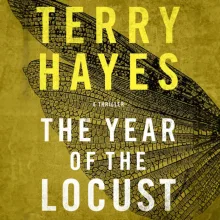
On this special episode, Mike talks with writer/producer/author Terry Hayes about a few of his films like The Road Warrior, Dead Calm, and From Hell, as well as his two novels, I Am Pilgrim and The Year of the Locust - now available at https://amzn.to/3uDPLts (opens in a new tab)
Transcript
An automatic transcript, tidied into paragraphs. It has not been proofread, so names, titles and spellings may be wrong, and it does not say who is speaking.
Show the transcript (about 8,400 words)
Speaker 1: Hold your ears, folks. It's showtime.
Speaker 2: People pay good money to see this movie. When they go out to a theater, they want cold sodas, hot popcorn and no monsters in the projection booth.
Speaker 3: Everyone pretend podcasting isn't boring. Turn it off. MIKE WHITE: Hey, folks, welcome to a very special episode of the projection booth. I'm your host, Mike White.
On this episode, I am talking with Terry Hayes all about his new book, The Year of The Locust. But more than that talking to him about his amazing career in Hollywood and elsewhere. He is the writer behind things like the Road Warrior, A K A Mad Max Two Beyond Thunderdome. Dead calm, vertical limit from hell.
Pay back. I had a wonderful time talking with Mister Hayes and I hope that you have as much fun listening to it. Enjoy the interview. How did you even get your start when it came to the writing?
TERRY HAYES: My late mother always said it's because I couldn't hold a job. And, that's the truth. It was a very strange and quite confronting experience. It's just that you're a very impressionable age and I was born in England and Australia was a very different country to small village in England.
And so luckily I learned to read at a young age. So I took great refuge in reading and storytelling and what have you. And so it became part of my DNA that one day I was gonna be a writer. Of course, it's a wonderful thing being young because you had no idea whether things are possible or impossible.
So, I thought, well, there's a lot of books in the library. You got the bookstore and there's even more books. They can't be that hard and it just became what I was gonna do now. Yeah, I have four children of my own and the daughter that I'm going to go and watch riding in a minute will be.
She was much the same from the first moment she was ever put on a horse. That was what she was gonna do. Some people are lucky, they know their purpose in life. So I went to high school, went to a very good high school government, high school, but known in Australia as a selective high school.
So highly intelligent and promising young people. So clearly they made a terrible mistake, Mike. And, but I slipped in, I got in under the wire and you can't go, you can't go and talk to the careers advisor and say I'm gonna be a writer. He'll tell you that that was an idiot.
So I kept them very much to myself. So I became a journalist because that was what I thought was a near round thing to writing. So I became a journalist and loved it. Absolutely loved.
I was at college and I was going full time college, full time job for a very prestigious newspaper group. When I was 21 they said, do you want to go to the New York office and be a foreign correspondent to this day? I think I'm the youngest foreign correspondent that Australia's ever appointed. I went to New York.
I lived opposite the Dakota where John Lennon and Yoko Ono were living, had an apartment there. But the best thing, mate, best thing never to be repeated in my life. 21 alone in New York living on the west side, 20 m from Central Park and they gave me a credit card, they gave me a company credit card. Now, can you?
And I knew in that moment I was very young, but I knew in that moment the company was gonna go broke. Any corporation was stupid enough to do that is clearly being rubbed by the wrong people. I had the time of my life, not because of the credit card but because it was a very small office. We were reporting on really major events and you could go anywhere you want.
We had to do a think up a story. You'd think I'm a story in San Francisco. You'd fly to San Francisco. I spent an enormous amount of time in Washington.
I did all right at that better than, all right. They, then they made me a politic, an investigative reporter and then I became a political bureau chief. And that one I was, I Don't know, 2829. And I had a decision to make.
Would I go into the management of a newspaper or would I be a writer? I decided to go through the writing side of things. But I became a, the producer in Australia's one of Australia's two top rating current affairs programs. Then a guy walked into my office one day we had a mutual friend in common and he said, Maori has suggested, I see you.
He'd read a book by Pauline Cale and we best screenwriters in the world came from journalism. I was a journalist. I had some sort of profile and he said, so I thought I'd meet you. I was, oh, that's good Greek guy, lovely man.
Bit overweight. But I, who am I to talk? And I warmed to him very much told me he was a do, ok. And I've directed a film, I thought, well, you're a bit seven years, seven years that it high regular light and you wanna be a film director?
He said, do you want to see it? I said, sure, we get this car, this tiny little old laser or whatever. It was terrible. Driver, awful driver.
God, I'm glad I've got a doctor I bought, I need it pretty soon. It drives me out to the suburbs. It's in Melbourne, Australia. It drives me way out suburbss.
The living room is somebody to this? Do. I have no idea who was, he was sleeping on the couch? So he puts this movie on 17 inch black and white TV.
And he shows me this movie but this whole bit's missing, you'd hardly hear half the dialogue. And he says to me at the end of it, what you see now, I didn't know anything about movies, but I intuitively knew how you operate. I said, oh, very interesting. I didn't say I was good or income brands the Boat or anything.
I said, so we had a chat about, I had no idea what we were talking about. And he said to me, what do you think of the lead actor? I said, oh, he's got, he said he's young. I said early twenties or whatever he was.
And I said, he's a very handsome guy. He said, yeah, he is very handsome. He's gonna be a movie star. I said, oh, really?
I said, well, you know more about that than they, you wouldn't have the first and nobody can even follow this movie. I said, anyway, what's his name? He said, oh, his name's Mel Gibson. He hasn't done anything.
And the movie was the first Mad Max and the guy that was showing it to me was George Miller, Doctor George Miller who's gone on to win a few Oscars. So my, the lesson from all of this is what do I, what do I? Nothing. And William Dot was a great screenwriter.
So that's the most important to learn about Hollywood. Nobody knows anything. And I am living proof of that. That's how it all started.
I became a screenwriter. I made things which thankfully were very successful and highly regarded, at least by me and my kids, maybe nobody else, but I liked them, not all of them, but I like and then I went to Hollywood. I, you know, wrote some movies there wrote a lot around credited, wrote some that never got made, decided it was time to do what that five year old kid had wanted, wrote a book. So I did and that was I am Pilgrim and now I've written the next one.
MIKE WHITE: I've always been curious about the Road Warrior as we call it over here or Mad Max Two, as you called it in Australia. It was such a different film. How did that kernel of idea even get started and become such a wider world than what we saw in the original Mad Max? TERRY HAYES: That's a very interesting question that really is because that was deliberate on the part of Georgia myself.
As I mentioned, I was working as a radio producer, like brilliant I, that we should do a war of the world style thing where we would tell people that this was all invented, but this is how it might break as a news story. So I saw the host ha have both been pretty high level journals. So we had a good idea of what had come over the A P wire and how it worked out. So we did this thing and it all starts in the Middle East over oil and then there's an attack on some American assets.
Lots of bad things happen within three hours. The world's really facing Armageddon. The Russians are getting ready to launch. The Americans have got to preemptively strike and of course, every fire three minutes, we're telling people this is not true.
This is just an idea of how it might unfold. So be scared because this might one day help because nobody heard that because that's the public. Everybody's hearing the Russians are gonna launch II, I think I can't say for sure. But I think to this day it holds a record number of complaints to the Australian Broadcasting Authority.
I guess they read to be proud of. We managed by clinging on by our fingernails and ratings, of course, went through the roof was good news. We managed to hold on to our job. But I learned a very interesting thing from it.
How much unexpressed fear there is out there about a, an apocalyptic event leading to a post apocalyptic world. So I said to George why Don't we take Mad Max and project it into something which you established in the first movie. But something a little bit more extreme, something a little bit more, a bit, a little more frightening. And, but we're gonna have to motivate.
He said, let's go for it. We did. And it was difficult because any story that you write is very difficult. But I got the job of putting together the opening montage of Road Warrior.
We because I was having to write the narration. So I was having to write narration about two Maori warrior tribes going to war. So I had to write that and get the images to match to it. Then of course, George's visual genius in some way.
So he'd come me that, give me a hand and he'd tell me that I'd lost my mind. Why Don't we do this and why Don't we that? And so all the time, I'm trying to craft the narration, make the images fit the narration. So that became the opening of Road Warrior, which I think even now is fairly well regarded as piece of filmmaking, all credit to George and pretty reasonable sort of piece of writing.
And that so Road Warrior differed quite an amount from Matt Max. Of course, it wasn't the fact that Matt Max had made a lot of money and therefore we had a much bigger budget. They were still tiny bar, but we had a lot more money to work with Mel Gibson was. Mad Max had helped him a lot and he was on the brink of stardom.
A woman called Nola Morris did the costumes, did a brilliant job. She was to me, one of the most talented been my privilege to work with Dean Sam was the cinematographer won the Academy Award for Dancers with Wolves. A number of other people that worked on the film also went on to win Academy Awards. I didn't.
But then everybody ignores writer. Nobody cares. No, no, they won a war. They won the Oscar of the later in their career.
But it showed you how talented they were and also how that film opened the door for so many great career. I'm really proud mine too. I mean, might understate mine too and Georgie's, of course. And so, yeah, it was, it was a pivotal event in a lot of people's lives.
And I many months later I set up movie house not far from where I've been a foreign correspondent, 100 yards up the road and sat there and they were showing Road Warrior and I'm sitting there watching it there, three guys in front of their dad and his two late teenage sons and the movies coming to an end. And the father says, what or where the hell did that movie come from? And one of the subs says it's Australia. No, it's not.
No, you're wrong about. Yeah, you're wrong. They can't be Australian and I make like that. And then there's yes they do because there it is.
And I led forward and I said to be rude. But yeah, it's Australia. And they said, are you Australian? I said, yeah, they said, well, you must be mighty proud.
And I said, yeah, I got up both the p I didn't tell him, I didn't no f silly. But yeah, but I thought it right. It was an Australian movie and it was unlike any Australian movie I think we've seen and America responded and the rest of the world responded accordingly. Hey, I got one thing in my life.
MIKE WHITE: How was that transition for you? Going from writing articles and writing pieces for the radio into writing screenplays? Was that pretty natural for you? TERRY HAYES: No, not sure it's natural for anyone.
Really. When I was the radio, she shows really highly paid the radio, especially back. Extremely loop. The companies load the radio station were making money, hand up chest and they're willing to pay people who they thought could deliver ratings.
So I was, I was y unmarried and there's a fair amount of social problems associated program. And what have you and you got paid extraordinarily. Well, after I'd seen Matt Max George said to me, do you wanna r frankly? Oh, yeah, I was under the mistaken belief because he made, it felt that he knew what he was doing.
And it was a terrible shock to me. And I told, you know, it was a terrible shock to me three or four months later to realize he knew about as much as I did. We're both lost, completely lost. That was fright.
But I said, you know, my, I stay many months of this. Oh, George, I know if we go about this. How much do I get paid for doing this? She said, oh, we should talk about that.
She said you'll get $25,000. Now, that was a fraction. I got paid the other a 25,000. So I said, ah, he said, is that all right?
I said, oh, I guess I'll be able to eat. I know about the rate, but I'll be able to eat. And he said, oh, yeah, but it's only 25,000 if the movie gets made. I said, oh, ok.
We gotta finish the screenplay. Finance. I said, oh, ok. I said, how much is a different slot page?
He said, oh, nothing. So I said, oh, that's not so good. He said, oh, can you still do it? I said sure, I did it and I'm not telling stories out of school here, but they changed the deal later on and I remember the day got a check for a million dollars.
It was back then. A lot of real. I've never felt bad about. I gambled everything IG and it came up 99 times out of 100 it would.
But there was something in me about being a right that I wasn't gonna let go of. I knew this was the opportunity and every 100 screenplays written, I think it's lucky if one is made. But I took a chance. And I say to my kids, I say to them all the time opportunity doesn't make an appoint, it doesn't knock on your door, you turn around and it's there and you grab it or you do, I grab, I Don't know why.
I often think that it's to do with that frightening five year old that I knew one day something would happen. And I'd worked very hard as a journalist. But to make a career from us, this was nothing like this was a real opportunity to try. But at this end, I didn't know anything about it.
I found out George. He said, oh no, I got bad backs and said, I said, what did you think? Mad Max was compared to your vision for it? So 25% maybe, maybe less, probably less.
I said, oh, he said the story. He said the story is really derived from other movie. He said we can't do that this time. He said, we're on our own.
Oh my God. Having no money, no profit making the land of the blind. The one eyed man is king and I'm following George around thinking he knew what he was doing and then I find out he's his blind desire. But we, he's an extremely intelligent man, highly intelligent.
And yeah, we had a lot of interesting conversa, I'm not saying I was intelligent, but we had a lot of interesting conversations and we stumbled around him. We came up with Road Warrior, which was a pretty good story told in 90 minutes and brilliantly director acted and, but the transition, I Don't know, I've written a lot of screenplays. I've written a couple of talks of quarter of a million words each. I'll be the first person to tell you.
I Don't know. Like I'm still groping in the darkness. Yeah. And maybe that's the way it should be.
Maybe if I thought I knew everything, it'd be boring every day is a learning experience every day. You know, I said, God, I didn't think of that. So I did. So I'm still here.
Still ST they still got a seat at the table. They're still dealing. MIKE WHITE: They can't try to w so not only are you a screenwriter but you moved into producing pretty quickly after the Road Warrior. With, what was it?
The dismissal, I believe was one of your first writing and producing credits? TERRY HAYES: Yeah. But if you're totally unqualified for, if you're uneducated, had no idea of a career path and completely lost individual, you should go to Hollywood, hang a sign on the door saying producer because in a lot in a lot of cases, they have no idea what they're doing and nobody else knows what they're doing or not doing. But it sounds better than going to the latest fashionable restaurant saying I'm unemployed.
Every waiting you me serving stuff is wants to be an actor and everybody is sitting at one of those other tables who tells you they were a producer, they were unemployed too. I through the Road Warrior experience and dealing a lot movies. I realized that it's not that hard to be a producer. Do is have some idea of what you're doing, some sort of vision and be willing to tell other people and explain to them with some degree of clarity what you're looking for and look, all of the stuff that was produced by me was done in conjunction with George and a guy called Doug Mitchell who handled all the business affairs as well as, you know, being a creative, each very interesting and knowledgeable person.
So I didn't have to worry about how much money we were spending except it was always too much. Doug would always say, can't everybody bring AC L to a brown bag lunch? Just that because look at the cost of it cer be right. But so I could handle all the creative side and with a lot of the things they'd been written by me.
So I had a very clear idea of what I was thinking and or how I'd imagine that. So it was a natural evolution and, my kids, God bless them but unpleasant people really. The two boys, late teenagers and girls are a little bit of early twenties. Yeah, they're not very polite.
They say, oh dad, your problem is you're a control freak. This is clearly not true. This is nothing, could be the most relaxed, easy going, get along to go along to get along. Whatever it's saying is it appear that my vision of myself may not be entirely accurate.
And so I was in a good play to say to me, I wrote the damn thing. Let's try it this way and that, but I didn't make always one really good decision. I worked with directors who were highly talented and decent human beings. That was the important.
I Don't think I ever had harsh words, really harsh word with anybody that I was the producer on something that they directed at. Yeah, Phil, no directed Dead Car with Nikki, with Nicole Kidman and I'd known Nicole for a number of years. My idea that she played that role. Phil went on to do quite a few films with Harris Ford and like Cain, a lot of well regarded movies and Phil and IW would be friends to this day as I am.
I think with everybody, I work, there's no need for this performing behavior in Hollywood all the time. It's not necessary. It's not. But you gotta make sure that you cast your director and your crew correctly.
Everybody gives a lot of attention to the casting of the actor. Yeah, that's good. But there's that other third coin and I'm not a, I have strong views on this but I'm not a prima donna and I hate that behavior and nobody I've worked with outside of the behind the car has ever been guilty of that. That sets the tone, that sets the tone for the entire production.
If they know that professionally you're serious and we're on a tight schedule and there's a hell of a train coming down the track behind us. So it's gonna run us over. Then people respond. I've heard all about people at work.
It never like with us. And yeah, I think it comes from how do you behave yourself? I Don't throw tantrums. I Don't pick up stuff off the craft services table and chuck them at peep.
I Don't have screaming fits on the set and I wouldn't expect anybody else to do it. I did have an experience on a movie that I wrote. Car. I didn't produce Martin Cars director.
He just come off a couple of bomb pictures. He does Zoro Catherine C Jones. Very good movie. And he said one day it was standing on set, one of the actors started to tell the other the other actors what they should do.
So I, so I would just take a couple of minute break and he said to us very well was Catherine. Oh, anybody like, yeah. Well, anyway, we'll just take a short break when so and so has finished directing. I'll come back on and maybe we'll have a go by everybody.
Oh, sorry. And that's a very fighting sample of a non hysterical person, but an a but a perfectionist and a very fine. Yeah. So I'm lucky I never had to work with the luna, but that's been a choice.
I hear stories all the time. You think? Oh, Don't think I wanna go there. Thanks for it.
MIKE WHITE: You mentioned some of the unproduced screenplays and I read your screenplay for Planet of the Apes and I was curious how that came about and what your experience was on that. TERRY HAYES: What was it like? Was it any good? MIKE WHITE: I seem to remember.
TERRY HAYES: Because I read a few. MIKE WHITE: It was the one, was it the one where you used MRN A to travel back in time. TERRY HAYES: About the DNA? Yeah.
MIKE WHITE: Yes. So, yeah, it was a very interesting take to do that because you had to do the time travel thing somehow and outer space is played out. So I thought that was an interesting way of doing it. It's almost like altered states.
TERRY HAYES: Yeah, it came about because I was working on a movie called From Hell, which was made with Johnny Depp, the Hughes Brothers directed at Great Guy. A real fun. They said I was the only non racist person I'd ever met in Hollywood. It's a bit of a sad indictment.
I thought, I thought, oh, ok. It never occurred to me because I've never had the experience that they'd had. They said, oh, you seem to be as unpleasant to us as you are to everybody else. I said, oh, I guess that constitutes being non racist.
He said, yeah, everybody leans over backwards to help us or to not a fan. So I'm Australia. I know and that, no, they were great guys. So I was working on from hell and it was produced by a guy called Don Murphy who'd done natural killers and a number of other things and ended up being a producer on all the Transformer movies.
But anyway, we had done that and he said to me one day, Oliver Stone do admire enormously, but Oliver Stone is interest in producing and possibly directing a remake plant of the Apes. Would you be interested in writing? So that's for sure. And because again, you Don't want to work with the idiots steel and Ollie started certainly not in that category, highly intelligent man, very filmmaker and a great writer, a great show.
And so I launched into it and I felt very confident that that Oliver Stone would understand where we were trying to go. The problem with movies is they want you to write a script in 12 weeks and they want it to be brilliant. It's just never possible. And, yeah, now and again, somebody might hit the mother lode, but that's like winning Powerball.
That's not a business plan, is it? Oh. What's your business? I'm gonna buy a ticket this week and I gonna win Powerball.
Then you're not gonna win that internet and, 00, yeah. All right. Good luck. I was very confident.
So, it was an interesting screenplay and I was excited by the project, but it's a great movie and it's a very, the original and then remake is very good too. The first remake was very good, but you've got to try to push out. And the problem with movies is that whatever happened last week becomes the conventional wisdom for this week. Everybody's looking for who invented a bomb that was bigger than the atom bomb because the Robinho, we're gonna be inundated with bloody movies about toys because of Bob and that none of them kind of do any business because everybody's had that experience.
Can't tell that. Yes. So you can't anticipate, you can choose your filmmakers. You can't choose how you're doing with the studios.
So anyway, turn the script in and we have meeting at the studio. All there. Do myself, I Don't know. Some of the spear carriers, the featured extras from the studio to make up the up so that they can out gut they turn I know it running executive vice president at the time, but I have also.
What's so we'll leave his name out of it. But anyway, said, Don't have this meeting and he says, you know, what's wrong with this? Great, interesting. Always we had all our own conversation about what's wrong with it.
You know, what's wrong with this? No, he said needs a base guy or? That's interesting. Yeah.
What, this goes back to the Mad Max Wild Days. What do you think of the film to? It's interesting. But, well, what we need is a base.
Yes, that's interesting. Why, how it wouldn't it be great if the Apes play a baseball game against this year? What I guess that would be, you can hear all these stories about people, like going into studio meetings and having terrible yelling matches and tell him not to screw in my work and you're an idiot. You're studio, say you're an untalented po si, Don't firsthand account of that.
It's generally done in a very polite level. Everybody nodding a lot. It's interesting. And that.
So I said, oh, yeah, good. I game between the apes of the issue. Why w why would we have this baseball game? He said, well, it'll be fun.
You know, I can see that, that he really, he said in the audience will love it. Yeah, I said be, it seems like the situation within the P park pretty great between both sides of this coin, the eights and me. I Don't know. I know in the first World War.
I think it was the first world one. Couldn't it be the second, there was a soccer match between the British and the German in no man's land because it was Christmas Eve or New Year's Eve or something said I, they could come to some sort of truce but I think the Apes are in the white flag. Let's have a truce business. Oh, so he says that's what the sort of thing I said, yeah, I said, yeah, I said, I Don't know much about place and he said no, because you're Australian.
Yeah, that's right. He said, maybe that's the problem. We all, that's not a problem that's easily solved. Is it?
I could read a lot about baseball. I could do a lot of watch a lot of baseball movies, but I think I'm gonna still be an Australian at the end of the day. And I did later I marry an American woman who I'm still married to after all these years. And that, that was too little, too late.
And we watched out with all our days or at least Terry's days. And then as usual, they were draft like, like that and the studio lost interest, change of management, the guy that I was dealing with got fired and nobody wants to do somebody else psyche. But then enough years passed and I know it's a great idea to do it all I can say this. We are Oma and Don had the idea first and it never came to pass.
And same with my Black Panther script. Same thing. The exact same story. I have a remember having dinner with Wesley nights to play Black Panther.
Now then he got arrested on taxation the o but nothing happened. So the Black Panther it was made this huge business. So I guess somebody did it right? Would have been the story I wanted to do.
But by the end, the whole of Hollywood changed, have a white guy my age writing Black Panther and that's great. I complaining about that, it's just a vastly different landscape. Probably. If we'd have made my Black Panther, it would be on the forbidden list or whatever.
I Don't know, but it did happen and some things did get made. So that's Hollywood. It's every Hollywood career ends in tears. So I thought time to leave, time to go eventually and they wrote a novel.
So I did. MIKE WHITE: Yeah, I was curious, how did I am Pilgrim come about it? And how was that experience writing? Fantastic book.
Very thick too. You definitely put a lot of work into it. TERRY HAYES: Yeah. Yeah, I know we were, my parents had passed away now, but my parents that we got, you know, very, very and my wife and I decided the best thing for them is to take back to Australia with my brother, my aunt, sibling.
And because better environments we had four children under the age of 62 elderly parents down to Australia any part way through riding Pill. I lost my brother, my brother and my father all within one year and it was tough because they hadn't finished. Now. It never finished.
I was fighting back to death, but I didn't know that. Of course, to go down to Australia. I wrote a great, even my agent thought it was a great then head of the agent. Or you said it's just wonder that because you never start out.
Oh, yeah. What's wrong with it? And yeah, hi. Accomplished piece of work written for Julia or Roberts.
But enough. And Julie is a great one, a great actress and her agent at the time recommended that it not be a good movie to make agents. They are good agents and agents. It's not best advice that she ever got.
But if you Don't take the advice, then you better find a new agent anyway. Never got paid. And so that was very frustrating. And I was writing out the screenplays and only a lot of money and I need it.
These children totally there. It's not cheap. Anyway. I said to my wife, I said, oh, I said no.
And I went to Holywood and she'd worked apart. So she knew it. And I said, when I first went to Hollywood, I was like, I cut Figure Spike, but let's say it was 100 and 40 movies a year. I said, I think I might seven now.
It's in west. I see it. It's just getting at the big made at diminishing by the year because I'm not interested in just writing money. You get paid anyway.
It's made or not looked up on the list. You get quite a lot of money. And I said, but I'm not interested and I'm, I like things being made good, bad or it different. I think that marks the passing of mo I say, oh yeah, that was the year, I guess that was the year I, you know, what are you gonna do?
I said, I, the day said no, I had no idea how Hollywood would finally embrace some sort of diversity. People like myself were not gonna be the beneficiaries of that. I'm certainly not complaining just the way things are all done. Hollywood's always been a very, most in light place.
So said, well, I'm gonna run home. Not all right. It's what I'd always wanted to be. I said I will write a novel.
If it's a good novel, they'll sell it for the movie as a movie. They'll make it as a movie. Hopefully it'll be a really good novel. I nol I got a lot of money so I guess they do.
Yeah. Bible seems to sell really well, year in year out. Somebody's doing all right. I said, we see best sellers.
And all that and she said, oh, ok. So off we went and what I thought would take a couple of years to go long. But I had to stop and do some screenplays and meantime, but because, you know, you Don't get paid, I think I'm just writing it on spec, then as I say, I sharply passed away, I, if I were to reread which I had never done and have no intention about doing, I Don't need to be reminded for my fate is they're embedded in my memory. I Don't need to read them again.
And that's I, no, I'm not really. But if I were to, I could tell you where each of those people died because I remember those days. So they're not the sort of thing you're ever gonna forget the deeply they drilled into your soul. So I plugged on the very difficult stance is plugged on.
But God, I halfway through the book, I thought it would be a good idea to expose it to both my age to see what they thought. So anyway, I couldn't find a call from the head of the tree at Boris different per person. And she said to me. So I read that.
I said, what do you think? She said, do you want a career as an international best selling? Because if you do, you've got it. I thought that was great.
Terrific. Thank you very much. She said, yeah, we'll go out with that. They never buy partial manuscripts, but they'll buy this.
So I said, got fun. Top White. It's off to the races for us that we be, drink a beer and plant Skittles for the rest of our life. And she's so wonderful.
A, this has been a variety or like how much people get paid. So, again, I'm not telling it. I think it's too far, not particularly confidential, but it was well over 1.2 million a script. There's lots of people in Hollywood are writing for a year.
I Don't know how they do that. They ok. It was a lot of, especially back before pilgrims. So anyway, they called me from the, I said great.
It's great on the USA Simon Schuster got so test they're gonna pay you in advance. That's good. How much they said $80,000? I said, oh yeah, that's good.
I said yes, of course. I got a father. I said to my wife was gonna change things a bit. She said, what do you mean it's gonna change?
So I said, I think we're gonna have to start looking at the price of things before we buy them. I said, I think that would be a good start. She stuck with. She, it was hard, it was hard.
We had to adapt our lives to a new reality just like when I was right, producing side of things. So I wrote this Great Life for that promise. And with four kids different situation, $80,000 is I'm gonna say it's not a lot of money, but it wasn't enough. Let's say that compared to what I, what I like, I plugged away.
I finished it and oh yeah, well received became international best seller. Criticals, acclaim. And I got incredibly depressed. That's life.
Everybody thinks you're gonna celebrate, go singing from the rooftops, crack open the champagne. Now, when I knew that what it was or I had a clear idea of what it was gonna do, but internationally very difficult experience, Mike, a really difficult experience. It's a Chinese pro be careful what you wish for. You might get it.
I'd wished all my life since being a five year old to write a best selling novel, I got it and I had no idea what to do. I had fulfilled my ambition and I thought, what do I do now? I'd set a goal that seemed impossible for a young kid. Yeah, getting off a boat from England.
And I was there with this huge hole in my heart. I'd lived with that ambition one day, one day that day. Right. And I'd seen enough of Hollywood to know one thing that more people are ruined by success than I ever ruined my faith.
And I thought, and I said to the British publisher and he was very dear friend of mine. Now, I said, I knew in those days my life would never be the same. Not because I'd be recognized. God, for me, I've been in the bar with Tom Cruise.
Seen the riot. I've had to run across Green Park in London Mel Gibson being pursued by hordes of people and it was at the absolute height of his f at lunch. Jerry F and I know the right mind. Not even them how, but I knew that my whole psychology would be very different because I had this ambition and I'd lift it.
I'd somehow stumbled my way cross country finding what I was, what Chris says, what happens tomorrow? I didn't know. Eventually I wrote another book but it was, it's kind of intuit you and it's was vastly different to what I thought vastly different. And it took me a while to center myself again, as the actors would say to find an equilibrium.
But the kids say I have a bad like I never had they, you know, iii I mentioned before, not that, I mean, I love them unconditionally and absolutely, but I'm under no illusion. If I was going to write nice people, I can promise you, mate, they would not be based on my four children because I'm very frank in their assessments with their fathers. So, yeah, so that was Pilgrim. It was when I look back on it was a link in a very long chain.
Other people would look back and say, God, he got lucky and they may well be right. Ii, I divide provident, bless my life. And I'm grateful for that every day I have lived what I wanted. I wanted to be a writer and I did it.
What more can anybody ask? Really healthy children? Great marriage. And I lived my ambition and I'm still living up.
So, yeah, I'm thankful, thankful for everybody that's bought one of the books. MIKE WHITE: They say they're writing a book is very difficult. But I imagine writing a second book has to be even tougher because now you're judging yourself against what you did before. TERRY HAYES: Yeah.
Yeah. And all the stories I think with both books and I'm sure for every future book I write, I go into a altered state. You mentioned a movie. It's perfect for it.
I go into a different reality. I live with those people. I think about it 24 7. But a problem that now a problem I can't solve.
It's the last thing I think of before I fall asleep and that you'd be surprised how the unconscious mind were that you wake up in the body with a solution. And so I become much more of a mope like figure and very short temper, not the easiest person for you around. So it's always, it's not here. Look, it's not cancer research.
It is in the scale of human endeavor, whether I write a book or not, it's not that significant except for one thing it is to me means everything to me that I try as hard as I possibly can. And near enough is not good enough in Locust in the year of the Locust. I think there's 260,000 published. Now, that's about 2.5 times a normal I wrote 1 million and 70,000.
It's at the bottom of the, at the, on the word documents. It'll tell you how many word. That's an awful thing to come from. So I threw away 800,000 words.
That's me. That's charity Wake Yard in the morning. So I let it improved. But that's how I enroll.
I Don't like that near enough. Is good enough. Now, that doesn't mean that it's a well written. All it means is I went as far as I could.
I know both of those I gave and then I left it all on the feed. And to me, that's very important. That's one of the things I've tried to pass on to the child that you're gonna do something. And by God, you better come here, you'd better lay your life down for this.
So, you know, I have a daughter who's going to college training the Hope, joining the Australian Olympic equestrian team. I have a son named play 16, plays off Patrick Golf. I have another daughter who the University Of Amsterdam doing very well and the son of God who wants to write the narrative video games because he thinks movies are finished. And he's right.
Hitler Adolf, their father. Adolf drives them off and when they play, I say the same thing to him. But sure I'm tough on you. But I tell you, there's no, it be as tough on you as I am myself.
So get over it. I beat myself up every hour of every day. So do look here for, simply Don't talk to your mom and they do so they all gang up. But it's hard to write lo it's gonna be, I'm contracted to write Pilgrim Two and I'm in the midst of developing that.
I know what it's gonna be. I know I go into that different reality. I know it's gonna be a place. I know it's gonna be challenging and I know that I'm gonna find out more about myself than I'd really like to know about my own short.
You start off with this. You think it would be good to be Chuck Mcs or F Scott Fitzgerald Haing Way and somewhere along the line you think? I Don't think that's gonna happen but you never know. Do you?
You just might turn the corner because let's face it. Shakespeare wrote some not so good plays. Not all of Hemingway's were great if Scott wrote one, right? The others.
Yeah, they wouldn't have that Halo effect. So, yeah, a journey on more in hope than certain. Yeah, you're right. It is tough.
But look. So, punching rivets on the general motors for an action. That's tough. I go to bed.
I know. But I gotta be, I think that was good. I did that well. Right.
I found that saying, I punch those rivets really good. Or then we laser cup that panel. Probably. No.
Listen to me and I wouldn't rightfully. So a lot of people, they say you had a charmed life and I have, and I'm quite happy to meet that. It is not quite what it seems from the outside. Different, it's different in a lunatic of writing a book.
Mr Hayes. MIKE WHITE: Thank you so much for your time. This was such a pleasure talking with you. TERRY HAYES: Oh, thank you very much.
I, yeah, I Don't get much of a chance myself to discuss things like, yeah. No, it's not a common thing. It's nice to be forced to reflect how you to care and look back and say, but if you look at it, if you just look at the mountain piece of it was interesting. Right.
Thank you very much for leaving out the worst of the valley where we skipped over all the failures. So that was good. Fantastic. Ii, I hope that it was enjoyable for you and for your listeners and everybody else.
I hope they, when they go into a bookstore they see some poor person's name on it. I think that's all she must have tried really hard people ask me all the time. What's the worst book you've ever read? I never, but I'll tell you why anybody that wrote the first word and wrote that words at the end, they've got my, a dying admiration.
It might not be a book that I'd like to write or necessarily one that I'd like to read. It's not a bad. They say there are no bad dog, they're out. No bad.
So, thank you for this opportunity. I really enjoyed it. MIKE WHITE: Thank you. It was such a pleasure.
I hope we can do it again sometime. TERRY HAYES: You bet, you bet.
Comments
No comments yet.