Special Report
Out of Darkness (2024)
Show notes
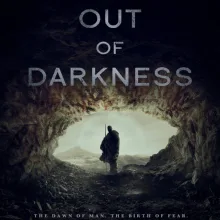
Director Andrew Cumming discusses his feature film directorial debut, Out of Darkness, a horror film set in prehistory times. The film opens in the U.S. on February 9, 2024.
Transcript
An automatic transcript, tidied into paragraphs. It has not been proofread, so names, titles and spellings may be wrong, and it does not say who is speaking.
Show the transcript (about 5,500 words)
Speaker 1: Hold your ears, folks. It's showtime.
Speaker 2: People pay good money to see this movie. When they go out to a theater, they want cold sodas, hot popcorn and no monsters in the projection booth.
Speaker 3: Everyone pretend podcasting isn't boring.
Speaker 4: Turn it off.
Speaker 5: Oh, Anna Rum T in Barra and Su La De, we hunt around. Look at the coat.
Speaker 4: And Senor, we live in English. What do you have guys? Yeah, I can. MIKE WHITE: Hey folks, welcome to a special episode of the projection booth.
I'm your host, Mike White on this episode. I'm talking with director Andrew Cumming all about his latest film Out of Darkness. It is a prehistoric horror film. Well, it was made recently, but it's all set in the prehistoric age, also filmed in the same place where Quest For Fire was filmed.
Probably not the exact same locations, but I know that that was shot in Scotland as well. Great place for prehistoric stuff. And this is a great horror film. Thank you so much for listening and I hope you enjoyed the interview.
Tell me a little bit about you and your background. How did you even get into filmmaking? ANDREW CUMMING: It was a slow burn. I originally I could draw as a kid and I loved drawing my own little comic strips and graphic novels.
And I say graphic novels sounds very grand. It was just before paper state together. And I liked writing phrase of writing. Then went through high school and specialized in art based subjects.
And an art teacher encouraged me to go to art college. The art college I went to had an animation course and I thought, oh, I like drawing and I like writing. We put those together and I'll become an animator. And then I realized that animation is a very particular skill set and I didn't have the patience for it.
It's extremely laborious. And obviously you can see the wonders that are made in the genre. But I knew I wanted to be outdoors. I still wanted to tell stories and that's when I picked up a camera and started experimenting with telling live action stories.
Yeah. So that was it really? And then you just build up over time, you build up, you make a lot of mistakes and increase your talent pool of people you can rely on to help you. Then I went to film school.
MIKE WHITE: And once you graduated, how did you work your way up through the industry? ANDREW CUMMING: I got an agent film school which helped because it doesn't guarantee you work. But it does mean you're a professional means. Somebody will at some point pay you some money, maybe to direct, which is nice.
But yeah, even then it was still two or three years before I got my first professional gig directing television. Till that point I was hustling. I've directed educational videos for the National Health Service in this country. I've done charity videos for banks.
I've, I did, I once did an instructional video and underfloor heating installation. I've done it, you know, I've been around and eventually I broke into television and while I was doing some telling early television directing, I was also developing out of darkness. So, yeah, those two things eventually ran in parallel. MIKE WHITE: And tell me how the project came about and how it started to change as it went through its gestation period.
ANDREW CUMMING: Towards the end of film school, I watched a documentary at the BBC about early modern humans and just found that a really fascinating time periods just because it raises so much questions about how we lived and have we changed how we became the dominant species on the planet just really felt. But it felt like something I would make in 20 years, 2030 years in my 2001, I was lucky enough to ever attain those levels of creative control. And then I read William Golding's the inheritors. It was his follow up novel to Lord of The Flies.
And it's a terrific book, could really encourage everyone to read it. And then I met Oliver Kman that produced a general meeting with him through my agents. And I said, I've got, I would love to do something in the prehistoric period. And he said, I've got an idea that I want to do in the prehistoric period.
The horror movie, he gave me the permission to think that this could be a debut as opposed to a passion project in 30 years time. So he saved me a lot of physical labor when I'm an older man. So I really thank him for that. And then, and then we brought in Ruth Greenberg, we pitched it to her because I felt I need a strong writer who had up and Ruth has a very muscular style, very visually driven style.
She puts a lot of sound design in her scripts, which is very important, especially for a movie in a made up language. And the three of us went on that adventure together and develop the script over the next 4.5 years until we eventually got the money to make it. MIKE WHITE: And you decided to make it right during the middle of the COVID Pandemic. ANDREW CUMMING: If I'd had my way, we wouldn't have.
But was this, it was this very bittersweet serendipity because COVID put a lot of businesses on their knees as well as a lot of people and a lot of my friends were really struggling, being either laid off from work or their businesses were struggling. But in a very strange way COVID allowed us to make the movie because when the entire industry shut down sex discovery, actors, not huge names, six actors up the hill in Scotland was probably one of the safer bets at that time because this was pre vaccine. So you had to create a bubble and shield everyone and make sure nobody brought anything in or out.
And yeah, making this movie felt like one of the probably the few viable options, certainly in the UK. In fact, we were the first production in Scotland to go back. So, yeah, we were guinea pig in a way and yeah. And so that's strange how the world was falling apart.
Covid provided me with this amazing opportunity. So it's like I say, it's a very bittersweet irony actually. MIKE WHITE: When I imagine it was beneficial that you're shooting so much outside as well. ANDREW CUMMING: Exactly.
I mean, again, that's part of it. It was the only time that the crew were really confined was when we shot the cave sequences, I would call it a studio. It was a barn, but we brought some giant bits and blocks of polystyrene into. But that was the only time we were in a confined space.
And let me tell you when you've been outside for five weeks in the rain, the crew, we're so grateful to spend the last week in that really cold barn. It felt like a studio. But yeah, so again, it was a much easier pitch to financiers to say we can control this. You can make sure that there are no COVID outbreaks and everything was well managed and, but he's health being was a paramount.
So, yeah, again, I think if it, if it wasn't for COVID, I think we would have still got there because there was a lot of love for the film. But the idea of the vision, but COVID certainly accelerates the process. MIKE WHITE: Definitely tell me about your cast. How did you find them?
ANDREW CUMMING: We got a wonderful casting director, Heather Boston has obviously links to establish talent through the agencies, but she also does street casting and she's one of these great casting directors that has, she has her ear to the ground and is constantly looking for new faces at surprising places. So yeah, we obviously your open casting, you get yourself tapes in, especially because we're doing it for not foreign language, a constructed language specifically for the film. You don't want to hit people with that too early.
It's already quite a big ask. So the first self tapes that we got were just in English and then the people that we liked that had a certain energy or a certain physicality. We did another round of cell tapes. This time, we gave them the language which we called Tola.
And if we like those guys, we whittled it down again and brought people into the room and we set up an obstacle course. They had a mop handle as a spear and they had to hunt a ball just because I wanted to see how they moved because so much of the film was going to be physical. And do they have the imagination to go there? And then we get into a couple of scenes, a couple of key scenes for each character and that would be into all law and I would give direction and I saw it was a feed process.
And then, but yeah, but Linda, we who plays the boy Heron comes from Switzerland, she made a feature film over there that I watched and thought she's incredible. But this part has to be a boy because the themes are in patriarchy. If Luna will shave her heads and pass as a 10 year old boy, I'm doubting and she was too, she went for a full who had a number one or number two grades right across her head, which took her a lot of time to grow back and Arnold learning who plays the elder Odah comes from Berlin is a sort of multi hyphenate artist, actor, break dancer nomads, sort of guy, very eccentric and wonderful, wonderfully experienced human being.
Then again, he just had the right physicality, the right look. And yeah, once we found him and obviously we got the rest of our past in the UK. We were good to go. MIKE WHITE: Tell me a little bit more about Tola.
How did you come up with that. And was there real structure to it? I know if you watch Star Trek, you can understand the Klingon or there's the Elvis from Lord of the Rings. How strict was Tola?
ANDREW CUMMING: It was strict? So Oliver Kman, the producer knew Daniel Anderson and he's a Multilingual acade and an academic translates a lot of papers from various indo-European languages into English. So we set him the challenge. I was thinking Basque Sanskrit Arabic, can you mold these and try and merge them together and try and find what the root language could have been, what the mother tongue could have been, would have led to these languages.
So he disappeared with the script for a few weeks and presented us something that was actually maybe too complex because I didn't have a lot of time with the past. Everything was pre-production, period was really concertina. Once we got the money, we're suddenly at the races. So I read that his first attempt simplified quite late.
And then yeah, I mean, we stuck to rigidly. However, when you get on set and you're working with the actors, you want the scene need to have a certain musicality, certain rhythm. If that's something you can just say, not something intellectualized. So sa would say something and I say that that feels too long, it should be punchy.
So maybe let's take, let's trim this, take this out and just create short or more colloquial version of that light. We were, we were pruning as we went along and it was great because Daniel did 1 to 1 sessions with each of the actors to give them just the base level of confusion around pronunciation. And then Kit Young plays GRE he grasped it really early and became a sort of became a bit of a to a guide on set and I'd hear sometimes the other actors saying, how should I pronounce that? And so he became this sort of go to amongst the cast for them to just nail that.
Yeah, that level of cohesion familiarity that you would help with your first language. MIKE WHITE: Seems like he took what could be a real hurdle for your actors and turned it into an advantage. ANDREW CUMMING: Yeah, I was worried about it right up until the first take the first day, first shot. I thought this is gonna work and I think it's partly because I can't speak for actors, but from what I've heard from speaking to them, what I've gleaned as ever you can do to burst them from themselves is a bonus.
So they can just plow head first into the character. Once you're in the cold, once you're in the landscape, once you're holding the spear, once you're covered in blood and then, and once you're speaking that language and the person you're acting against is giving you that back that same commitment, then you lose yourself in it. Think for them that was a bonus. And certainly for me watching the monitor, I didn't have to worry about the fire details of this language that we call English.
I was much more about the intent behind the line and looking in their eyes and saying, do I believe it? And that's a nice place to be as a director because I would rather focus underneath the line than worry about. There was a color there. Did you miss that?
That's, yeah, that's less fun. MIKE WHITE: Tell me about the locations. How did you find where you shot it? ANDREW CUMMING: We are.
So originally before Ruth Greenberg, the writer wrote page of dialogue, she had the great idea that we should go on a Recy around Northwest Scotland, Oliver and Ruth, they live in London. They came up on the train and off. We went around the Northwest Scotland. We went out to the Island Of Sky.
We stayed in the bothy from under the skin. Jonathan Glazer's film where Scarlett Johansson's character stays. It's like a little, I wouldn't say a cottage. It's basically just a roof and a wooden floor.
We call them bothies in Scotland. We stayed there, made our pilgrimage there for the night. We camped out under Starlight with the fire and on some of the experiences that we had in that wreck, he made their way script, the sequence in the fog. That was something that happened to us.
We almost got lost halfway up a mountain. We took a wrong turn and ended up in this, yeah, this fog. So yes. So these are things that had an impact on us at the time, made it into the script.
I knew from the Get Go that Scotland would give us everything we needed. So, because I'm Scottish and I've been around either professionally or just on family holidays. And thanks and I knew that screen Scotland would back us as well if we were shooting here. So all these things felt really, I felt like a lot.
But also there's something about the Scottish highlands that just give you there's a vastness and there's something quite ancient and primeval about it. What I'd say is, it's almost like the gods just smashed these rocks together and left them there and it just feels like this great big playground and then you could shoot West. I don't know why anybody hasn't. Maybe I should give it a go.
But yeah, it just, it's this very mythic landscape but well serviced good roads infrastructure. You're not short of access and yeah, and it was challenged. The weather was a challenge and getting to some of these locations on foot was a challenge, but you can't fake it. One of my favorite filmmakers is Akira Kurosawa, the way he shoots landscapes and the way he uses the weather to tell the story and to create these amazing moments of visual board, right?
I feel like I was walking in his shadow a little, which is not a bad place to be. MIKE WHITE: No, definitely not. Yeah, the movie looks amazing and those locations are fantastic. Tell me about your DP and how did you get together with him?
ANDREW CUMMING: So Ben in Forsman had shot Saint Maude for rose glass. Producer of that movie was Oliver Casman produced our movie. And I, it's funny actually because on Saint Maude Rose in a few days at pickups and I was between jobs at the time. And Oliver called me and said, do you want to come and be the first ad?
Because people might listen to a Scottish voice. We can be quite tough when we need to be very sergeant major. So I says, yeah, I'll come along and that's where my first minute then through the pickups in ST Maude and I got to see him work and I got to see that he could make his days which is important. The whole got really great work, really evocative lighting that really helped the scenes and he was good with the actors.
So when it came time for us, I said, how do you feel about doing something in the outdoors? He was like, absolutely, my team will be up for love and adventure. And we share a similar sense in terms of how we like things to look and how we like the camera to move or not. And yeah, he just again, the commitment of the actors was mirrored by the commitment of the crew and him and his team just jumped in with his grip was fantastic.
Camera assistant, first class never complained about any of the conditions we threw at them. And then yeah, in terms of the lighting you, if you're going to commit to making a film in the prehistoric period, there's a few rules, no porches, no, no car headlights. But also it's like, how do you don't want to over light? You don't want to smash a 10-K into the trees and call it moonlight and be done with it.
It's all about how do you create shadow. How do you create mystery and danger beyond the campfire? Because that's that they drew the story. So we used mostly firelight those night scenes, just the S FX team rigged the gas fire.
They could turn more gas, less gas, obviously made it lighter or darker depending on what we wanted. Maybe a little bit of fill coming in a tiny little led panel just to give something in the other eye. So you're seeing the emotion and then, yeah, and then it's just, and in the daytime scenes, Ben was just really first class sculpting natural light just with ND filters or with poly boards just to get enough. And then in the grade we worked on trying to eke out the colors like trying to give the daytime scenes this sort of oily blue complexion because you didn't want everything just to like brown and gray and in the nighttime scene, like, how can you make that orange pop?
How can you make the green of the Aurora Borealis pop? And with that, with the northern lights again, it's how can you light the nighttime scene different way that evoke a different motion uphold what's happening on screen. So yeah, it's just finding any way you can to inject believable light but still something that allows the audience to see what the hell is going on, but not too much. That's, it's still a horror movie.
MIKE WHITE: Was that the real Aurora Borealis or was that S FX? ANDREW CUMMING: That was all big? Yeah, all of that. So yeah, it was, we added the Aurora Borealis was added in post from an Effect House in London.
The Green light was just giant, a big title on a stand. The Gaff for H connect to his ipods get the right kind of green preprogrammed to do this sort of pulse. And then, yeah, actually, so, yeah, you've made my team. That's great.
MIKE WHITE: Yeah. No, it looked legit. I was. Yeah.
And yet you really capture depth of the clouds really comes through with the way that it's graded. ANDREW CUMMING: Yeah, we did that. We tried to because sky information can get quite lost because it just tends to get quite bleached out. So we were really in the grade, Rob Pez who's an amazing, great based in London was doing a lot of sheets in the sky just to bring the contrast and get more definition to the clouds and make them feel just as oppressive the landscapes.
MIKE WHITE: So you're shooting outdoors primarily in a made up language. You've got rain, no snow. ANDREW CUMMING: Hail storms, we had about hail. MIKE WHITE: So that it sounds like you've given yourself quite a challenge.
But I'm sure that there were more than just that. ANDREW CUMMING: On the days leading up to the first day of photography, we were at the tail end of storm that had been passing over the Atlantic Ocean. So it was a lot of rainfall. And I think we, there was one location that we wanted to get to that had amazing vistas.
And the only problem was there was this one access roads and the rain had washed a lot of this roadway. So we spent £5000 of our budget on like hardcore like the big rock rubble just to resurface this roads and Oliver came to me and this is a day before we were going to shoot there. I think it was the maybe the 48 hours before we were going to shoot this location. It was the second day of the shoot and he said the roads washed away again.
Our five grand of hardcore is gone and he said I could pay more money to put more hardcore down. But I think we need to change the location. So yeah, so we had to go and find another location that ended up. No sh like this tenant, basically wind tunnel like a certain valley.
And we record that we thought, ok, this, we can make this work. It's not ideal but it'll do. And then that second day the rain and the winds coming, being pushed through this wind, this valley, it just killed us. Really?
The cast. They're wearing these heavy duty furs. Once they're wet, they're carrying an extra £30 on their back. And once you're wet, there's nothing you can do.
And we're in a bog. So we're up to our ankles in mud and shit. God knows what else. It was really hard.
And the crew said, if this is what it's going to be for the next 5.5 weeks, I need to rethink my life choices. I don't know if we can do this. And then luckily Oliver and I apologized to everybody and said, we will double down on making sure everybody is as safe and as warm as they can be. And then our fortunes turned.
The storm spiraled, went a different direction, burned out. We had a good run. We had a good run of decent weather. The great thing about being in the outdoors is whenever you see the weather coming, you've got a good head start so you can, you just turn your back on it for five minutes down to wait till it passes and then you can go again.
But in so that's just one example. And it was hard and the blood pits, for example, that sort of giant abattoir in the middle of the forest, those are real animal remains. And our production design team tried to boil them as much of it away. But the smell, especially if you're downwind, there was a few vegans on the stand like poor yola who plays avi the pregnant woman, she's full vegan and she has to get down on her knees and her to her rests in this viscera.
And you're asking people to go there, you can't fake any about it. We can't shoot it in the volume like the Star Wars stuff. We don't have the money but also I don't, I wouldn't want to, it needs to, you need to see the dirt under their fingernails. You need to see the sweat and you need to know that we didn't fake it because then it feels more real when you care more about these, these actors and also the characters that they're playing.
MIKE WHITE: Yeah, I did appreciate the dirt because there are too many times where I've seen prehistoric people with veneers and absolutely clean faces, no spots on their face, nothing. So I was very glad it's funny though. ANDREW CUMMING: You mentioned that because since the films, the trailer hit socials, there have been some wry comments saying, oh, they obviously had barbers back then. Yeah, they did cut their hair like this, like one of the challenges of the film and one of the great rewards is being able to read, frame the depiction of us as a species back then.
And just because we've not us personally, but we've dug up sewing needles made of bone. So these people were tailoring their clothes. I just can't understand this idea that I'll just cut a hole in this fire put over my head. I'm good to go.
I've got the little, I've got a little shorts on and I'll just have cold legs for the rest of my life. Like the idea that these people wouldn't have thought to make something that covered their legs, covered their arms that felt comfortable to move in. These guys are running marathons every day to buy food. There's no way that they are thinking it and it's not like they're distracted by other things like everything is geared towards survival and making that as efficient as possible.
So it was really interesting to speak with the hair and makeup with Neve Morrison or hair and makeup designer Michael O'Connor costume, Jamie Laps, the production design and say, ok, let's just assume that these people are very cultured, very intelligent, they can speak, they can, they want to look good the same way that we do, right? Because we're, we're all just trying to procreate, we're all just trying to keep this species going. So let's start from that level and get rid of the sort of shaggy haired Troglodyte, the knuckle driving idiot.
This almost Sinon depiction. Let's forget that. And let's close the distance between the audience and these characters that you actually give a shit about. So, yeah, it'll be interesting down the line if people think, oh, their teeth are really clean.
Yeah. They didn't have any refined sugar in those days. Just, yeah, it's funny. I think we've all become programmed with a certain way of how these people were.
And it's nice to try and break that a little bit. It's been a fun opportunity to do that. MIKE WHITE: Tell me about your premiere. When was it?
And how was it? See this with an audience? It was great. ANDREW CUMMING: We did London back in 2022 and London were great.
They were really supportive. They put us like big screen, the national film Theater where my graduation film had shown like years earlier. So it was a real nice buzzing of the circuit and yeah, the audience were great. We had so many nice things said afterwards that good reviews and all that stuff.
And then, then we went to stitches in Spain and it's a really strong genre crowd there and it was really cool. Just nice when complete strangers come up to you and say good job, you didn't waste your time. And that's, that's nice to hear after 20 years of pursuing this as a career revival career. And then, yeah, and then obviously we did, we were picked up by and that's great because they've been so supportive of having a theatrical release, which is important for a film that is trying to be this epic and a big canvas.
What a huge canvas and fantastic best was awesome, great community of film bands there who really care about movies and they are very knowledgeable and they gave us a lot of love as well. There, this is the reason you do it for better or worse. This film will not be for everybody. The end, I understand the end of the second act is going to be divisive and some people aren't going to like it, but just to be given the opportunity to share vision with people.
Our, take our interpretation of the research that we did. It's, it's a privilege to be able to have that conversation with people. Yeah. No, I'm, I hope I get to do another one that'd be fun.
MIKE WHITE: I was gonna ask, what are you working on now? ANDREW CUMMING: I'm doing some television in the UK. Just I like to dip in and out. And the TV show I'm doing is the closest I'll get to a western that's set on the Isle Of Shetland, which is off the coast of Scotland.
It's a sort of detective show and like I say, it's Shetland is Shetland a place that is just hammered by the winds like a lot. So there are no trees because trees don't be very well because of the winds and the people there consider themselves a lot and consider themselves more Scandy, more Swedish or Norse than they do Scottish. So, you've got this great cultural lash. The landscapes are great and yes, it's a cop show.
But really, it's, I'm treating it like a western. I'm watching a lot of John Ford at the minute to see how the master did it. So that's cool. But I'm also what I would like to be my next film.
I'm actually, I'm writing it at the minute and it's a contemporary noir. Said the UK can't say any more than that but was trying to channel films like sweet smell of success. I just, I love that movie. I love it so much.
I love that. Tony Curtis took that risk to play that character. I love Clifford and Ri Ernest Lehman as well. Sandy Mckendrick's direction, a fellow Scot and yeah, just trying to channel those vibes and trying to put a contemporary spin on it and sent it in a world that's quite different for noir is sent very different, a different industry.
Yeah, that's that I'm pursuing the minute as well. We'll see if anybody wants to take another risk. MIKE WHITE: That sounds fantastic. I definitely will buy a ticket for that.
ANDREW CUMMING: Awesome. Awesome. Thank you. Thank you, sir, Andrew.
MIKE WHITE: Thank you so much for your time. This is so great talking with you. ANDREW CUMMING: Thanks Mike, some really great questions. Thank you so much for taking the time as well.
I really appreciate it.
Speaker 8: What we're gonna do right here is go back, way back, back into time when the only people that existed were Troglodytes, caveman cave women and they end it all. Troglodytes. Let's take the average caveman at home listening to his stereo is a more was that first?
Speaker 4: Is a he stop.
Comments
No comments yet.