
Episode 669 · Film year 1974
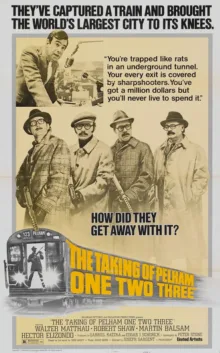
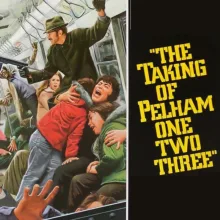
The Taking of Pelham One Two Three (1974)
- Special Guest
- Sal Viscuso
- Guest Co-Hosts
- Keith Gordon, Duane Swierczynski
Show notes
Duane Swierczynski (California Bear (opens in a new tab)) and Keith Gordon join Mike to discuss the film and its two remakes while actor Sal Viscuso (opens in a new tab) talks about his role in the original film.
Labels: Duane Swierczynski Keith Gordon Martin Balsim Robert Shaw Sal Viscuso Walter Matthau
Transcript
An automatic transcript, tidied into paragraphs. It has not been proofread, so names, titles and spellings may be wrong, and it does not say who is speaking.
Show the transcript (about 26,700 words)
KEITH GORDON: Hold your ears, folks. It's showtime people pay good money to see this movie. When they go out to a theater, they want cold sodas, hot popcorn and no monsters in the Projection Booth. Everyone pretend podcasting isn't boring.
Turn it off. MIKE WHITE: 123 P ma crowded subway train starts its run from Pelham station in the Bronx 1:45 p. M. Four desperate heavily armed men seize control of the train.
Open the door. I blow your head off taking 17 people as hostages. Your attention, please. SAL VISCUSO: Now then you'll all remain seated.
Anybody who tries to rise is going to get shot. MIKE WHITE: I do hope I have made myself understood. 2:13 p. M.
The city of New York is given one hour to come up with a million dollar ransom. SAL VISCUSO: You're out of your skull. No units stand by on the double. What's up?
See a train's been hijacked. MIKE WHITE: Millions have read it. Now you can live it. The taking of hella 12.
SAL VISCUSO: Three, there is no way you can get away with this. You are underground in a tunnel at precisely 313, we are going to begin executing the hostages. Nothing will happen as Long as you obey my orders. MIKE WHITE: New York City is held powerless in the grip of four ruthless men from the mayor's office.
Don't tell me, I Don't want to know to police headquarters. KEITH GORDON: I've got about 50 men inside the tunnel, all wearing vests and on with machine and submachine guns. We could fight the third world war down there. MIKE WHITE: To the nerve center of the world's busiest subway system.
SAL VISCUSO: My only priority is saving the lives of these passengers. Maybe an hour isn't enough time. An hour is plenty of time. We agree to pay the ransom repeat.
We agreed to pay the money. Now, turn your clock off, the money has to be counted stacked tight, transported uptown. It just isn't physically possible. You'll be surprised while it's physically possible.
KEITH GORDON: 123 s in motion. SAL VISCUSO: How Long does it take to get all that money together anyway. KEITH GORDON: We'll never make it. The passengers are dead, ducks.
What the hell are they expecting our lousy 35 cents to live forever. MIKE WHITE: Walter Matthau, Robert Shaw, the most spectacular hijacking history. The taking of 123. Welcome to the Projection Booth.
I'm your host, Mike White. Join me once again is Mr Keith Gordon, like. KEITH GORDON: My bon ha motherfucker. MIKE WHITE: Also back in the Booth is Mr Dwayne Syski.
It's not, dude. DUANE SWIERCZYNSKI: You never saw a sunset before. MIKE WHITE: On this episode. We are doing something unusual.
It's actually a redo of the third ever episode of the Projection Booth. Yes, we are talking about Joseph Sargent's 1974 film, the taking of Pelum 12 and three based on the book by Freedgood and brilliantly adapted by Peter Stone. The film stars Walter Matthau as Zach Garber, a Transit cop whose train is taken hostage by Robert Shaw as Mr Blue and his three henchmen, Mr Green. Mr Gray and Mr Brown.
The film is a who's who of amazing character actors from Dick O'Neill to Kenneth Mcmillan, to Julius Harris to Salve Scuzz, to Christopher Murney and so many more, we will be talking about all of them as well as spoiling the film and it's two remakes as we go ahead. So please be warned. So, Dwayne, when was the first time you saw the original taking of Pelum 123? And what did you think?
DUANE SWIERCZYNSKI: It's funny. I moved with my wife to Brooklyn in the fall of 97 and because we're dorks, we walked around looking for museums and things and found the Transit museum which had at the time. I'm pretty sure a nice kind of display about taking a poem 123, and I'd heard of it, but I never actually swashed it. So, of course, we rented the VHS, maybe it was a DVD by then.
I'm pretty sure it was a VHS from the corners place and I loved it. I was blown away. In fact, it started for me a Long season of watching Gritty seventies, New York crime movies. It was funny.
They're being 20 years later, felt like, wow, things have changed somewhat, but mostly it's the gritty New York of the early seventies was like Catnip to me from French connection. The C Code. And it all started with Pelham. I think it's genius.
I love, I adore this movie and I was very happy to have the chance to re-watch again all these years later. And Keith, how about yourself? KEITH GORDON: I saw it when it first came out. I'm old enough that I was 13 when it opened.
And I have a two sides to my connection to the film. First of all, I love the movie. But also I grew up in a New York theater family. So I knew a lot of the people, even as a kid, Jerry Stiller and Anne Miller and Mira were old friends with my parents.
That was part of going to see it because Jerry was in this movie and my Dad and worked with a lot of the people, Doris Roberts who plays the mayor's wife. And so there was that connection to it, which then only grew with time because I as an actor in New York as part of that film and theater community. So a lot of the people in this film I ended up working with then in the years that followed and Jerry Greenberg who edited it, edit it just to kill and you know, Barry side who plays the Wasps. Passenger was in Richard the third with me on Broadway.
So there's a whole personal connection side to it. But then that all aside, it's a great movie. It's a really, I think, rare combination of, gritty, dark and violent, clever thriller with smart twists and things you Don't see coming because I usually feel even as a kid, I started getting ahead of a lot of movies and you Don't end up ahead of this. But it's also got a great streak of dark humor and it can be really funny.
Very few films I think have pulled it off this. Well, there are comedy thrillers, but that's a whole other thing. This is, this ain'T A comedy, it's a very tense thriller, but it's a tense thriller with characters who have moments of great humor and great, just really funny stuff happen and then it has a whole sort of social, political dynamic. They used to be watching the movie, but whether it's about sexism or racism, there's something about New York in that moment that it captures and also a generation.
And so everybody in the movie, the all the leads in the movie are late, middle age or older and they're all part of that kind of that attitude. I think that was changing and moving out. But like Walter Matthau's character, great character, you love him. But he also has some really politically incorrect moments and forget even at the time what?
And you forgive him because he's so great and it's so well written and the character is so neat. But it also has moments of you go. Oh, that's weird. So, I Don't know, I just seem like a very original and unique film and maybe more than anything, just really clever and it's so character driven, even the thrills, there's some action but it's really about behavior and about human beings and how they act and what they do.
And that's something that's very lost. And I do think that later Sequels lost each word more. But the original man, it holds up because of that because human behavior is still human behavior. It's a all I loved and see it a lot.
MIKE WHITE: I do a podcast on Barney Miller and one of the things I tried to get across on that, especially in that 1st and 2nd season of Barney Miller is just what a position New York was in the late sixties, early seventies. You know, a few weeks ago we did a recording about Midnight Cowboy and that was during an administration that really wanted more people to come and shoot in the city because it was so difficult for them to shoot in the city. This movie is New York through and through. You know, for me, it doesn't work if it's a city other than New York or at least New York is such a central part of this film.
And also that economic turmoil that's going on is such a part of this film that they're having problems getting a million dollars together that the mayor who looks a lot like Ed Koch is having so many problems getting votes and that he's booed when he shows up on the scene, you know, they have to talk him into getting out of bed. I mean, Tony Roberts is fucking amazing. And there's another great, great actor and just the way he comes in and bosses around the mayor just you got to get down there and then Doris Roberts.
Yeah, with her. Well, you've got 18 sure votes. That's, that's what you're going to get out of this million dollar payment. I love it.
I love that. That is so intertwined with this movie later. DUANE SWIERCZYNSKI: I think of Ghostbusters where Bill Murray is telling the mayor, think about lenny and millions of people who are all registered voters that, that this movie has an impact on some of the other like New York comedies and you know, movies that my friend Vince Keenan talked about how this is one of those rare movies where the, it's working class heroes versus really tough gunmen and they're equally matched. They're not, it's not these bumbling middle aged guys, they have their shit together, which is impressive.
They're good inappropriate, but they're really good. It's a cat and mouse game which is, it makes, it's fascinating. It's a rare movie. I can't think of many other movies like that usually have one intrepid hero and a die hard for instance.
But this is not, it's every kind of member of that. The Transit Authority is like, wow, they got their shit together. It's cool. MIKE WHITE: Yeah.
And I love how they cut from one to another. There's like so many different locations within the Transit Authority, different subway stations, the actual T A itself. Keith, he mentioned the editor, the editing in this movie is so great that we're constantly moving between multiple locations and multiple threads. I mean, you've got think of the end of this movie where it's OK.
We're gonna try to find these guys who are finally coming out of their train. Meanwhile, the train is shoveling down the track at insane speeds. We've got just so many different things going on and that's the way that this movie is all throughout it. I think the only time you get a respite from that or respite from that at the beginning when you get to see the train being taken over and even then it's OK.
Here's Mr Green, now here's Mr Blue. Now we introduce Mr Brown and Mr Gray and they all converge on this train and then we've got that poor conductor who's, you know, walking us through the numbers giving us a little bit of exposition there as far as how this stuff works. And then, you know, it isn't until the train has taken over that. We finally get over to Walter Matthau's character.
I mean, what an amazing way to open up this movie and then boom, we are just all over the place as far as all right, who's affected with this, you know, the guys in the station, why the hell is that train network? You know, it's just all these guys, I love it. The one station where the lady has lost her wedding ring down the toilet and again talking about the sexism of the time. I mean it's, it's great.
I love how inappropriate it is. How they're like, Don't swear there's a lady here. KEITH GORDON: Grand Central Tower calling a command center. If you picked up on Pelham 123 Years on, that's what we're trying.
SAL VISCUSO: To find out now what he say, they're backed up all along the line. KEITH GORDON: Jesus Christ, guys, you pick the hell of it to be late. You wanted to plummet down here. Whose goddamn wedding ring was it?
Who else? Mrs Jenkins? But ca you doit had just stepped off? What were you doing with your hand?
And it John. Anyway, I had, was you the toilet's behind the board? Look, Caz for Christ's sake. Will you listen to me?
There's a trade down classifications been open to women for only a month and already we're in a goddamn toilet. DUANE SWIERCZYNSKI: There were a bashing breed of New Yorkers in this movie. I can't think of. Well, maybe it finally died out with Tony Soprano maybe.
But that kind of again, salt of the earth like that. I Don't know. That really thick New York. It's refreshing.
I love it. I grew up in Philly and it's, and then partly Italian family, uncles and great uncles. That, that's when they talk, that's how they behaved. That was.
It's very comforting in a weird way. I want those guys to help out. KEITH GORDON: They get it without being cartoony. They get real New York as opposed to that kind of Hollywood stick of New York.
It's a New York crew. New York cast New York. So that's what I also feel like you Don't see a lot, a lot of times movies do New York and you feel like you're watching people do a sitcom spin. These feel like Real New Yorkers.
These are the guys that worked in the subway. These were those cops and these, I grew up in New York and these were the guys, they were all around you. MIKE WHITE: Yeah, I absolutely love some of the accent that, because I Don't know about Mao as far as his New York if he was originally from there. But I mean, he's got the accent down some of those things that he says just some of his lines are so rich and just dripping with that New York ness and I just love that.
He's so cranky. I mean, Walter Matho has always been, you know, was a grumpy. Old man. Right.
He's always been the grumpy old man even when he was like, in his thirties and twenties. But he just exudes that so well. And I've talked before on the show as far as the, what I consider kind of a trilogy of action films that he did with Charlie Vere, the laughing policeman in this one. And I'm not sure if you put a gun to my head.
I couldn't tell you which one was the best out of those because they all stand very high on a great list of terrific crime movies that he just owns through and through and every time he's on screen is great. But like I said, everybody else is fantastic as well. Yeah, Jerry Stiller. I love their back and forth.
They're like a freaking comedy team as they go back and forth to this. SAL VISCUSO: G it, the Patron g, it, the patron come in. Patron Mrs. Patron Rico.
I want you to plug everything you got into the I RT Train Masters Circuit. Will you and all units stand by on the double call in the city. Cops. Put it on a 911.
So their computer gets it. What's up? Ze? You won't believe it.
DUANE SWIERCZYNSKI: You know me. SAL VISCUSO: I'll believe anything. A train's been hijacked. DUANE SWIERCZYNSKI: I Don't believe it.
And Walter Math is funny. I'm not sure if he's a New Yorker, but he has his own kind of his own accent. It's Walter Math. I'll speak right now.
What do you love me? It's, you're just there for it. It's him even like patiently walking. Give me a spiel to the Japanese Sway crew.
It's, it's just like, fascinated even though it's by, for him it's by Rote. He's, oh, blah, blah, blah, these many cars. And man, I just, I want to hear him talk forever. He was in a previous movie written by Peter Stone.
It was a charade He was in. This is how the connection. I think it's how you hire of this movie. Oh, what was it called?
1965? It'll come back to me, but it was like a noir thriller. And ma played a private eye kind of think all through his life. He's had that kind of, he's been, he draws you in just his voice basically.
MIKE WHITE: Was it Mirage Mirage? DUANE SWIERCZYNSKI: Thank you. My brain just lost. MIKE WHITE: Well, it sounds very similar to charade and yeah, Stone brings a lot to this.
Like those moments of humor that you're talking about. I think a lot of that is thanks to him because I listened to quite a bit of this book. The book is great and the book is interesting too because the book takes different people's perspectives through the entire thing. So it's actually very similar to I believe the Charlie Vere book is, each chapter is a different person's point of view.
This is very similar to that. So you really get, get a lot more of those passengers that are on the train, especially the undercover cop. And as far as this movie being very clever and surprising you at all times, I really like how they set up the undercover cop pretty early in this movie and they remind you about it one more time, right around the middle part of this movie. Just to let you know that that is something that is still out there, something unresolved.
But I also like that. They obfuscate it pretty good because you know, here we are talking about, oh, there's, there's women now in this, in this office and we can't speak freely and they say, well, it could be a man or it could be a woman. We Don't know who this cop is. So then you are looking around at all of the people on the train.
Could it be this person? Could it be that person? You Don't know? And then you tend to forget it and then they bring it up one more time.
You're like, oh, wait, no, now I have to pay more attention and they still save it for quite a bit later until that cop finally jumps off of the train, the moving train. You Don't even know why he's doing it at first until he finally pulls out the badge and says I'm a police officer jumps off and then that poor guy just, I mean, pretty much wrecks himself. Not a good thing for him to jump off of a moving train. KEITH GORDON: Well, one of the things the film does so well.
And the cops a great example. But obviously the sneeze is the, that is the core of all. But the film really lays in important stuff without giving it away. And that's again, I think super hard.
I feel like I've seen so many movies that go too far one way or the other, too so many thrillers that either overplay the hand. So you go, ok, I get it. That's a clue. And then you Don't forget it and you aren't surprised or they Don't lay it in at all and you feel like all right, that's random.
And this film does a beautiful job of setting things up but making you forget them, they just lay it in enough that it's not a cheat, but they Don't lay it in so much that you're waiting for the payoff. And so you really can be surprised and you really can be like, oh my God, I forgot all about that or, oh, that's what that's about. And that's, I think super hard to do. I feel like I watched so many movies when I was a kid now, whatever, just fail at that.
And this film has a bunch of things that an hour later it suddenly paid off. I, you suddenly go, that's why we saw that brief shot or that moment or that person's look or, and I think that's a beautiful thing in the thrill of it. You can pull that off. DUANE SWIERCZYNSKI: Well, at a craft level, it does a great job.
Even like the first opening moments teach you how subways work to a degree. Like you have the guy teaching the young trainee. Ok. Head out.
Do this check. It's like, oh, we're learning. But it's also colorful and fun. I Don't think it's exposition dump.
It's not like it's not the bad of versions. Me Garber explained to the Japanese visitors. Oh, here's how our subway works. Literally, we have a dead man switch.
It can really be a, the hack version of that. They Don't do that throughout the structure is really clean and amazing. It's also, I was struck by how, well, we actually have a weird version of a locked room mystery at play because early on they plant the idea that all right, they want this million dollars, how this is gonna get out of this situation out of the tunnel. You have no idea how you could possibly pull this off and it's in the back of your head for most of the movie until, oh, of course.
But I never would have guessed it. It fooled me all over again. I forgot how they did it. And it's, that's masterful.
MIKE WHITE: Which is another nice thing that a lot of people probably forget all the skyjackings that were going on at this time. Like when they make the joke. Oh, they're going to fly the train to Cuba. I mean, that was a thing that was happening all the time.
Planes were being taken over and being hijacked and taken to Cuba or wherever to the point where there are so many jokes about it in movies, you know, I want to say there's one in airplane, there's definitely airplane two, it's all over the place there. Maybe even Kentucky Fried movie. I mean, this was a common thing to have things taken over, you know, hijacked. And I think, yeah, we'll definitely talk about how 911 colors the remake, the 2006 remake because we're in a totally different world at that point.
But with this one, yeah, it's like, it's not that surprising that these criminals have taken over this train because things are being hijacked all the time. DUANE SWIERCZYNSKI: Good evening. The Middle East conflict boiled over today with four airplane hijackings and the Israeli government pull out from the Middle East peace talks. Arab guerrillas have claimed responsibility for the hijackings, including one that was aborted at London's Heathrow airport.
And it's also in that wave of very much of its time in a beautiful way for that reason. Hijackings but also New York as like New York, a city on its ass. You but being terrified of riding the subway, let alone being hijacked. Just the trip alone.
What's the one line for 35 cents? We gonna live forever. It's such a great cold line. Yeah.
What do you expect this New York? You may die. Move on. I was like, wow.
KEITH GORDON: Well, that's part of why the film has such a beautiful, sort of dark hor nihilism to it because that was, that moment New York was at the peak of its criminality. Crime rates way higher than they are even now. People talking about. Oh, crime.
Yeah. Seventies was a lot of crime. But yes, the city was broke and was being ignored by Washington. The Vietnam War was still grinding to a halt, but people were still dying there.
Watergate was going on in the country really did have this deal of this sort of everything was collapsing and rotting and just falling apart in some ways. There's some echoes of that now and, but that was a moment when things felt like, oh, is this society collapsing in on itself and is, are the moral workers there anymore? All the things that you thought you could count on turning out to be dark and awful. The president was a crook and we were in a war that nobody knew why we were fighting.
And New York, the be the biggest, best city in the country was collapsing economically. And so I think it sets a tone that the film really plays with a kind of nihilistic. Where do we go from here? Feeling that's really makes it affecting and then makes the humor, not just jokes for the sake of jokes, but it was a whistling through the graveyard humor or gallows humor that I think people really did have at that moment to try to get through.
What was a time that felt like, where the hell are we all going? DUANE SWIERCZYNSKI: Our leader, New York's leader, the mayor is the weakest character. He really has the flu. He's a coward.
He's booed and then disappears like he has no active role in this except for paying the money, which is amazing. And that the real heroes are like, I guess it is. But despite the nihilism, it's just totally true. It's almost like who are your heroes?
The guy next to you at the bar, the working class stiff. That's who's gonna, we're gonna save ourselves. And that's a bit of ray of light all the darkness of this movie. But to me it's, wow.
Super New York. KEITH GORDON: What people talk about in the war, that war stop fighting for some ideal. And you're basically fighting to save your body and you're fighting to save the guy and you're right, you're fighting to save. I do think that was probably true in New York at that time.
It was like, there was a little bit of every man for himself, but there's also this sense of ok, we're here for each other. Everything may be collapsed. We're gonna, we're gonna get ourselves through it. But there was a part of it.
What's so great too is like, how, when you were talking about that, what do you want to live for 35 cents? It was a kind of humor that was about really was like, nothing surprised people, Jerry Stiller's character, sitting there reading the paper, even as this was all going down being like, all hijacking, ok, people may die. And it's interesting to see how the later versions of this to me are so much more chicken about dealing with the fact that people in some jobs you have, develop an attitude for cops, have it, the EMTS have it, whatever people die.
It's part of what happens in the world. And we Don't see that in movies much. We see the, we see heroic figures who weep over every loss and the Real world I think will get cold and this still catches that, I think in a really amazing way. DUANE SWIERCZYNSKI: Yeah.
Compared to the speed, like 20 years later, speed. Similar concept. It's a bus hijacked. It's not like it's a team of people for sure.
But it's Kano's movie. It's Sandra Bullock's movie. It's, they're like the, our heroes we point to, it's not in the people on the bus, they have their moments too and it's similar but I know not in the same way. This is, this feels that's an L A version that's very L A.
This is Super New York. It's pretty refreshing when it's dark and it's darkness. MIKE WHITE: I mean, how many muggings, how many jumpers, how many people falling onto the rails? I mean, these guys must be so inured to that kind of stuff that every day violence and mayhem that.
No. Ok. Yeah. Whatever.
You know, after a while you become so inert to it that you're, yeah, it's like you are in a war with the great city of New York and all of the crazy people that are in it. KEITH GORDON: And even the characters who take action also have a certain kind of ne that. There's the dispatcher where I Don't remember what his job is but there it goes down the track. The crazy dumb ass son of a bitch stopped.
He's halfway between stations. What the hell's going on down mental case. I'm gonna nail a speck to the goddamn wall. His G taking.
Will you? Oh Come on. If I gotta watch my language just because they let a few broads in. I'm gonna quit.
How the hell can you run a goddamn railroad? But elsewhere. Grand Central terminal. This is the desk train master.
Who the hell's in charge down there? It's for you, Mr Dolo. It's me Frank Chez. Doit.
We're watching it on a board. What the hell God is watching and I got trades piling up behind it. Get some goddamn supervision down there. I'll be back.
He goes marching down the tracks and with the teeth of a hijacking. Oh fuck, not letting these guys do this and if that character exists in later versions, but he's portrayed as an idiot. And then this version, he's portrayed as making a terrible mistake, but he's not like an idiot. He's, he's a tough New York guy and he's, nobody else is gonna do something.
I'm gonna do something. And yeah, it works out really badly, but there's a certain grudging respect too for the fact that he's all right. Somebody's got to take an action. I'll take an action and that I thought was great because again, in so in the original version, even when people make real errors, everybody's doing the best they can do as opposed to later on when it's, oh, there's the smart characters and then there's the idiot characters.
It's just so much easier to blame the mistakes on, oh, this person's stupid as opposed to, yeah, everybody's great. And then this is a movie where, yeah, even the heroes again have really questionable political attitudes or do really stupid things or put their foot in their mouth or make bad judgments and even the silliest characters have heroic moments, love movies like that. And again, that was very seventies. It was very, we had antiheroes, we just had complicated characters agree that the script really was part of that too.
It's written that way it's written so that everybody is complicated. You have moments of empathy, even with e even the killers, even Robert Shaw. Yeah, he has moments where you almost like him and then you go, what, what am I doing? I can't like him.
And I feel like that's really good writing and really good acting. It's, those are hard things to do without blowing at one direction or another. And this film does it really well through the whole thing. DUANE SWIERCZYNSKI: It feels realistic.
It feels at no point. I feel like it was a character being pushed around. Oh, here's the idiot bureaucrat. Here's this.
It's also like people responding as they would in a real situation like this. I never felt taken out of it. Whereas the remakes, yeah, I'm pushing and pulling and it's like they're set, there's certain types and stereotypes and it's a little more transparent. But man, this one, it's almost like a documentary as if someone walked around and film this happening.
MIKE WHITE: I love that we Don't ever really get that much background. Well, pretty much anybody, but especially when it comes to the criminals, especially when it comes to Mr Blue where he's like he talks about military and you know, he's killed men for speaking to him and the way that Hector Elizondo's, Mr Gray speaks to him feels like he was a mercenary. Maybe he like fought in some black ops type of thing. You Don't get a whole lot about him though.
And it's, he's very whether I live or die just going to try to get this thing done. And I Don't mind if I die. I love when he's like, do they have the death penalty in New York City? No, we Don't anymore.
Oh, ok. Well, here, let me take care of that. I mean, his death is great and I love that. It's him killing himself.
We Don't have to have that Big standoff at the end where it's like, come on, do me a favor. Kill me, kill me. You know, it's like, no, no, I'm just gonna hit the third rail here and take care of myself with that awesome effect of the smoke gull coming out of his jacket so good. And when he keels over face first, what a moment.
KEITH GORDON: And that to me speaks to that thing. I was talking about where it feels like it film is also about the end of a certain generation. This was a guy because he's got this British accent. He probably, I imagine he was probably a mercenary in Africa fighting on the wrong.
So this guy was basically like killing black South African leader. This is a black guy who did all really, really bad things and part of a colonial kind of way of thinking. And you got these New York kind of tough older guys who like, Don't think women can do anything and you feel like this is all part of something that's fading and the film that was great in the film. Is it condemns it all?
And at the same time, there's a certain, like, nostalgia at this about things you shouldn't be nostalgic for. There's Shaw has a certain kind of coolness that was pulling away. Now, it was the coolest coming out of cruelty, the coolest coming out of meanness. All these sort of sexist guys that you can see them all heading for the scrap heap of history.
But this is like the last to all, whether it's Mata on one side or Shaw on the other or, and even that thing of all right, then I'll just take my own life. It's a very of other time and it's all screwed up and ugly and weird. And yet it's also, oh yeah, that was this generation that by the next generation things were different. People acted, different.
People saw the world differently. People perceived differently, men perceive their roles differently, racially, things were different. Matho puts his foot in his mouth about Eric Con. Well, whether it's the black chief of police guy, whether it's the Japanese guys that are, he's called to show around.
He's awful at a certain level. SAL VISCUSO: Gentlemen, this is the T A command center. Come on in a lot of laughs in here. Terrific place you see each train is identified by the name of its terminus and the time of its departure.
Thus, an expressive train leaving woodlawn at 6:30 p. M. Would be Wood Lawn 630. While on its return trip, its destination might be let's say like flatbush 825.
I hope you're memorizing all this junk. I'm gonna ask questions later. Hey, hey, what the hell? Don't worry about a thing.
They Don't understand a word of English this way. Dummies. Just step this way. Dummies.
KEITH GORDON: How are you? The cop lying on the ground dying and he goes, the ambulance is on the way. Miss, it's like the why you, the very end that he is a dinosaur in his own way. And these are all dinosaurs, Mark Balsom.
All these guys are on the way out for me. There's a certain dark gritty ele this about it that I think is like, you know, really cool and odd tone and it's hard to do without glamorizing. So really fucked up out of date, awful attitudes even for that era. And the film manages, I think to do it doesn't glamorize any of it.
But it does say, yeah, these were these guys of that time and they had great stuff and they had terrible stuff, but they are part of a way to go away the way some of the old westerns would capture the ending of an era. I feel like this film is caping an ending of a certain kind of male dominated white, male-dominated way the world worked. And it's right at the end of that time. DUANE SWIERCZYNSKI: Absolutely.
And the one non non dinosaur on the team is Mr Gray. He's like little younger. He feels and he's also, he's not a replacement. He's all, he's worse.
Like at least the older guys have a code of honor. They have something like something that binds in this guy. He's playing grab ass, he's throwing the slurs around. He doesn't care at all about anything.
So that, that's like almost even darker commentary on what's coming next, the next generation of tough guys and criminals. Oh boy, we're screwed if this is the guy. MIKE WHITE: He's the only guy who I feel good about when they, when he gets shot. You know, like I am like, oh no, Robert Shaw.
Oh, but when he Elizondo gets shot in the back, I'm like, yes good. Ok, you deserve that. You definitely deserve that. DUANE SWIERCZYNSKI: He drops the NBM bomb.
It's, it's shocking even today. It's a moment. KEITH GORDON: And it really is of that moment that fell were sure dealing with that didn't feel the Godfather, which I think it was the same year or is it two years earlier? A 74 was like his Godfather too.
Again, these are like these awful mafia criminal guys but they still had some kind of code, some kind of and you knew that was what was coming next was gonna be even worse. And I think a lot of American films in that time dealt with that kind of weird. Things are dark and yet there's another darker way of coming. It's just, it's an entertainment.
It has no pretense of being art and yet it says a lot and it deals a lot of like bigger issues, but while being completely entertaining and not ever feeling like you're being preached to. And that's, I think a really, again, really hard thing to pull off because all the stuff that we're talking about could feel like, oh yes, it's making a point, but it's just a really entertaining story. It just happens to touch on a lot of things that were part of the world. MIKE WHITE: Obviously, the acting is superior in this film from everybody.
But I absolutely love the performance of Martin Balsam towards the end of this film when he, I mean, he goes from that elation of having all the money in his bed and he's rolling around. He's just so super happy and then the panic when somebody knocks at the door. But I love how, when Jerry Stiller and Walter Matthau in his apartment, how he's, you know, still pretty nervous, you know, you got these authority figures, but then as they're on their way out the door, he kind of squares himself and he just like starts to give it to him with both barrels.
Like, listen, I know I got a gripe with it. Yeah, I know. I got a bum rap but I wouldn't do anything as stupid as what you just told me. What do you think?
I'm a jerk. Just do me a Big favor. We didn't get the hell out of here for Christ's sake. Come on, Mr Longman.
We have to follow our leads. It's our job. Yeah. Yeah.
Yeah. Big deal. Look, I got my rights. This is my home.
I want a little peace, but just do me a little favor. Will you get the hell out of here? SAL VISCUSO: Sorry if we bothered you, Mr Long. MIKE WHITE: And he just, like, really, like, puts on this Big show and everything and I just love how this little guy finally feels like he's, you know, tough enough to stand up to the authority only because they're on their way out the door and then, you know, we can talk about that end shot now or later, but that end shot.
This might be one of my favorite endings of all times. That final shot. Amazing. DUANE SWIERCZYNSKI: I'm not sure it tops it.
It's pure cinema. It's, it's purely, it, he's, he's a sneeze and a look. It's, it says everything. It's, it's really amazing.
There's no final. Oh, gotcha. That's just, man. Look for Walter Math.
I was, look, I was terrified of getting my grand father. Oh, I did something wrong. Oh, he got me. MIKE WHITE: You know, I screwed and score comes up and, you know, it's on, that's the glue.
DUANE SWIERCZYNSKI: Oh, that's of the whole movie, I guess. If you think it's, man, it's like part military but part like funky. It's also like the brass. That's really, that's a perfect, like the perfect score.
I write to that score all the time because that in the conversation, David Shire, it's great writing music for certain moods, conversations, great for more sneaky nor stuff. This is like in a bombast and the I'm writing, I put the soundtrack on beautiful. KEITH GORDON: Like everything else about the movie. It's very much of its time, the style of music but it doesn't feel dated, you know, and that's the thing about this movie and really everything about the movie, the acting, photography, music.
Yes, everything of it is, does feel mid seventies but it doesn't feel like, oh, yeah, that was back when things were clunkier or this weird or it doesn't, it hasn't dated at all that film. If anything, I feel like the more recent versions feel wildly, more dated and wildly more of the two, particularly the most recent version of the 20 Scott version to be felt like, oh, this was of the two weeks that it was out and then it was dated at, but that it was the third week of the theater. It was gonna feel like, oh, this, yeah, that was, that's old.
And yet this movie just, it's the beauty of classicism. It's a sort of a classically done film. So that, yes, the style of photography of the moment that you can relate to the movies like Serpico and, but it, you could show this movie to 19 year old now and they're completely enjoy it. Completely get it completely.
There's nothing about it that feels like, oh, you have to be there to understand. MIKE WHITE: It, the production design of this as well. I mean, I was shocked when I found that they didn't actually shoot in a real Transit Authority office because you feel, you feel the grime, you feel the sweat, you feel the stale coffee, it's almost like you can smell that room that they're in when they're at that nerve center so well done. And I love that they all have these old school microphones that they're talking into and just everybody's there like, you know, communicating out to the world and poor Dick O'Neil just, he's so pissed, he's always pissed, you know, but he's so pissed when it's just like, what are these guys doing fucking with my life?
You know, I'm here to run these trains and even when I got Walter Matthau here, Lieutenant Garber here, he's in my shit. I Don't even want this guy here and whatever Robert Shaw asked for anything. He's like you gotta be out of your fucking mind. He's just so angry and I love that, that space seems to reflect him.
He seems like the spider at the center of the web. DUANE SWIERCZYNSKI: It is so lived in compared to the Tony Scott film. It looks so high tech. It, this can't be real.
This is like super make the Pentagon doesn't have this shit. It's like, what the hell is going on here so slick and so held down. It's like, I Don't know. That's not the city agency.
I know and love. It's gonna be grimy. It's, you have an old tuna fish sandwich in a drawer somewhere from three years before. That's what it feels like unpleasant discoveries that poor plumber going for the ringing in the toilet.
God help that guy. Because, well, I. KEITH GORDON: Remember I was working on something. I wish I could give the person crediting the production designer or costume designer.
Maybe it was Anne Roth. Somebody I worked with who talked about the fact that to make something feel real, everything's, if a movie is set in a certain time, everything has to be 56, 10 years older than that, whether it's the cars on the street clothes because in real life things get old and people have old stuff and particularly when you get into government places or things that aren't stuff, their equipments all ancient and falling apart. I feel like the phone really caught that like, everything should be replaced in that in those offices and it's barely working anymore and the trains are barely working anymore and it really caught that it really caught that everybody's getting by in life, whether it's the people in the Transit Authority or just the people on the subway people, they were in the same coat they've worn for 10 years and this still really has that and I feel like that's something that's gotten lost in a lot of filmmaking.
Now, is that sense that most of the cars on the street, what, three months ago? But this really gets the fact that in a time when economics are bad and particularly city economics, that stuff's ancient and nothing's working. And the early on the train motorman they say, oh yeah, this, this trains a dog, it fucking on every nothing. And I think that really makes things feel real because that's how we all experience the world when you go get on a subway train.
Unless it's a really bizarre lucky moment. You're not walking on a train that was put into service a month ago. And, you know, when you look at the Tony Scott movie and all that, you're seeing stuff really that probably doesn't even exist. Now.
It looks like some science fiction version of a, and certainly New York City has never had the money for the most. Yeah, most Pentagon wall to wall computer screens, all of which were making all sorts of funny beeping noises for absolutely no logical reason except that something happens on any computer screen in a movie. You have to have a funny beeping noise even though why would you do that? We've all got our switches, lights and knobs to deal with striker.
I mean, down here there are literally hundreds and thousands of blinking beeping and flashing lights, blinking and beeping and flashing, they're flashing and they're beeping. I can't stand it anymore. They're blinking and beeping. I'm all, I'm all right.
It's so nice in this film in the original to see. Yeah, that stuff seems like they'd be stuck with, which is old and cra crappy and not very, it's not, it's almost impressive. This is that, it's not that impressive. DUANE SWIERCZYNSKI: The one false note, there was one false note and I read, I was curious about this and I just look this up.
There was no graffiti in the trains on the cars. That's the one thing I, at the time. People how like, oh, come on, this is that they're all I read the NTA insisted. Ok, you can have this shoot down here and use our subway stuff, but you can't show graffiti on the trains because it's on its way out.
If we solved graffiti, it's leaving soon. It will be dated. It's, yeah. Ok.
Sure. That's the one thing that I, that's the one they had to concede to the MT A. But wow, it was like, no, it's not. I never even r the New York subway.
There's still some decades later. Yeah, some grime on this thing. It's graffiti. So that was the one, I think the one false note, but not by lack of design.
That's just by, by force. They were not allowed to do that to show that. MIKE WHITE: Gosh, when that undercover police officers crawling through or crawling down the tracks and you see just all that grime and grit and soot it looks like. Oh, I mean, I heard that people, you know, getting really sick when they were making parts of this movie, the parts that were down in the tunnel.
I even Walter Mat. I was like, oh, yeah, I got something that I have no idea what it was but there was something down in those tunnels. I'm like, oh, boy, oh, boy. That, that must have been bad.
Like a lot of this stuff was actually real. This wasn't just a manufactured tunnel that they put together and then made it look old. It was from what I understand, a real tunnel. Yeah.
I think the. KEITH GORDON: Only things that were set were some of the interior office stuff. Some of the places where they are theoretically running. I think anything that's on a platform or in a tunnel or on the street as far as I could gather just a few things.
I read that that was all real. DUANE SWIERCZYNSKI: Yeah. Yeah, I guess the apartment was a set. Yeah.
It's probably obvious even this looks so lived in and so wonderful too. So I see. Oh, that's obviously a set in the streets of New York. I think the tunnel stuff was in the train came later, the Transit museum.
But at the time it was just an abandoned station and being abandoned for decades, apparently only later became a museum. But that even that was still pretty funky. Like you Don't be laying down the tracks there on subway station has been sealed shut for 50 years. You know, that's not nice afternoon for anybody.
MIKE WHITE: I went and I watched, tried to watch some of the other movies that were credited to John Goi, who I can't remember the gentleman's real name, but that was the author name. I have. Very good. Yes.
The Nom de Plume, John Goi. And he did never a dull moment. The one with Dick Van Dyke who's mistaken for a criminal, which again has an amazing cast to it. You've got Edward G Robinson, Dick Van Dyke, as I already mentioned, Henry Silva Slim Pickens, Jack Elam, who was in so many of the Disney movies.
So this was Buena Vista Classic and then I tried to watch Johnny Handsome and I was just having a real hard time making it through Johnny Hansom. Maybe I just need to give it another shot. But I, after watching Bullet earlier this year with Mickey Rourke and that it just feels like Mickey Rourke is in a war against his own face and Johnny Handsome is yet another siege on his own face with just being under so much makeup in that movie. DUANE SWIERCZYNSKI: It pays me to say that as a novelist, I always want to slide the novelist, the book is always better, not the case here.
I got to say Peter Stone's script gives this the most memorable things came from Peter Stone, the color Codes, the Criminals. That was all that was not in the book. They had names, you know. And of course, the Cold, that's all Peter Stone.
That's not part of the book as well. Quite a few other things. I know. I read the book a bit.
I read through the script a bit and it's like, wow, you see that evolution. It's OK. This is something else than the book, John Goy Morton Freedgood. He was, I think 60 in this book came out in 1973.
He was like, he's again a bit of a dinosaur himself. As far as a writer, he had written a lot of popular fiction. He was a publicist for the studios for a Long time. I Don't think he wasn'T A cutting edge crime writer.
He wasn't like Elmore Leonard back then. He wasn't like Richard Stark or Donald West. Like he was a journeyman, I think writer, it felt like and again, it pains me to say this. But man, the film is so much better than the book saying that.
MIKE WHITE: Yeah, the book is very, very Long too. Like I said, I listened to it and I want to say it was eight hours Long, which is pretty good size for an audio book. And yeah, very surprising. It just like I said, there's a lot of that dialogue or internal dialogue from so many people, especially the train passengers and I like that.
You Don't get a whole lot of them, you know, you talked about the people from speed. I feel we get to know some of them a little bit more. You know, Alan Rock, you know, I like that. There's not, those aren't the familiar faces, you know, the character actors are outside of the train other than, you know, our four main baddies, you Don't necessarily know all of these passengers inside.
And I think we're ok for that. And plus that also helps keep the mystery of who is the actual undercover police officer too. We with you. KEITH GORDON: But when I was watching the Tony Scott version, for example, I felt like the original, yes, you Don't get to know the passengers but somehow they're not just anonymous, felt like in the Tony Scott version, which is like, even though you actually spend some more time on some of them, they all felt like types.
They all felt like I felt like the people in the Joe Sergeant version, you could have told their story to me. I love in a movie when you see it, look at me at extra and you feel like if you wanted to, you could follow that person's story and it just makes them feel real and I felt that way with the passengers and I Don't quite know what the trick that of it is. But whether it was the clothing, whether they picked actually very good experienced actors, even though a lot of those characters had no lines at all or whatever.
But without spending any time or exposition or explaining who any of them are or whatever, I still felt like they were a bunch of little people. Whereas time we got to the more modern version it felt, oh, there's literally just like Harvard cut out but there that we, they, there's no sense of humanity and somehow I think in the original without ever doing the thing of let's set up the victims. I still, you still have some sense, empathy for them as people in that situation. It's interesting.
DUANE SWIERCZYNSKI: I actually look for me, replicate, replicates the moment where like in a subway train, you Don't really pay attention to your fellow passengers because that's something you can do in New York. You just keep your own council, you do your thing, your book, listening to music and it's almost an arm's length. Everybody, you know, you Don't want to get too close. Whereas the Tony Scott version is like they intentionally put you in their lives.
You're in their faces. The little b older brother, younger brother, it's like, oh, there's my heart's breaking for them. It's also though you wouldn't do that in a subway train is what I'm saying. You wouldn't really care that much about unless some shit goes down.
You have to, we're all human. But it's also at the same point you want to just fuzz out and not get to where you're going. And the first one felt like that I Don't wanna know your story necessarily. KEITH GORDON: And ironically, at least to me with the 22 hour version because I felt like I was being told, feel empathetic for this old kid.
I didn't because I felt like I was being directed to have a reaction. Whereas in the original, when I see the people there and they look scared and they, I feel for them as a group, even though I'm not involved with them, I actually believe, oh, there's a bunch of, yeah, that would be really scary. Wow. The second I'm told, look at this sweet o old man.
Look at this sweet little kid. I'm like, ok. Yeah, you're now, now I'm very aware I'm watching a movie and that you're trying to get me to have a reaction. And what's funny is and I Don't think I'm alone.
I think a lot of people when a movie says have this reaction, I think there's often that you need to pull back. Don't try to, Don't try to manipulate me to have that reaction. And I think the lack of effort actually makes me more care more in the first is, it's a bunch of people I go. MIKE WHITE: Back for, here comes the airplane, here it comes just with the PM right on the end.
Eat it up. All right. It feels like we're champing at the bit to talk about the remake. So let's go ahead and take a break and we'll be right back after an interview with Sal Vescio right after these brief messages.
SAL VISCUSO: Remember the stories that kept you awake at night? They living in that closet Doctor Fenner. Can you still hear the screams? I love having the children for dinner.
All from your television set in the night gallery. A dark side midnight viewing the horror anthology podcast. Join hosts, Father Malone, Mike White and Chris statue as they exhume some of the most infamous horror television of all time midnight viewing from Weirding Way Media. MIKE WHITE: I'm so curious how you decided to get into acting.
SAL VISCUSO: So imagine this only child Saint Mary, star of the Sea in Brooklyn in Red Hook. Dad was a longshoreman. Left my mom and me when I was fairly young, young Irish immigrant Franciscan brothers ran it still there. School is gone.
Hopefully they're all dead and they picked on me because I was the loudest mouth. I'll give you one example. You've got to learn the whole days of obligation. How come you Don't know the whole days of obligation?
I went home. I didn't even know what the word meant. I looked it up the definition back the next day. They said, do you know what the whole days of obligation are?
Did you learn them? And I go, no, they said no, I said, but I know what the definition of obligation is. And they said, yeah. And they said, and they said, what is it?
I said, I Don't feel obligated and I got hit all over again. And that in a nutshell. Salvatore Donato, Anthony Stefanelli, Philip Tessaro, Louis, Taani, Angelo De Trento Salves Gusau. We all got hit.
Robert Ramsey was spared cis OK. My mother moved me to Sacramento when I was 11.5 in June 60 because her sister, my late aunt Madeleine had moved there with her Sicilian husband because he had family there and their kids. And she said to my mom, I guess I wasn't privy to that conversation. He's gonna be a teenager soon.
I was gonna be 12. And why Don't you come and stay with us? I never got to say goodbye to my Dad. I Don't remember if I even got to say goodbye to any of my friends.
It was horrible. And so I am in this Sacramento, California. What the hell am I doing here? I sounded different than everybody else.
I dressed different. I had been inspired by a west side story by related to the sharks, not the jets. So I'm trying to, I've had curly hair and I'm trying to comb it back and it's popping out and I got a purple shirt, black pants, black pointy shoes. I wasn'T A mobster but I was trying to dress like them.
And so all the other kids, their dads bought them like Chevy Impalas and they were in surfer clothes and they had the hair like beach boys. I did. Ok. Just try to imagine in the 60 World Series when the Yankees are playing the Pirates seventh game of the World Series, bottom of the ninth in Pittsburgh, Mazurowski hits a home run.
I'm the only one crying and they're all making fun of me because the only team that they were close to from Sacramento was the San Francisco Giants, a national league team. You got it. Ok. I hated it.
My mother says, ok, we're gonna move back to New York. So get through one quarter, one semester of my seventh grade, junior high school, Fern Baker, junior high school, but it was co ed. So already I was starting to blossom. February 61.
We moved back to New York and now we stay with my grandma in the Bronx. I'm in another Catholic school. Our savior. I got through it.
It's July. I get taken to my first professional baseball game. I had to go to Yankee Stadium. 61 Big year for the Yanks.
And I said to my mom, I hated it. I wanna go back to California. So my mother let me and in junior high school, I will see what at the new junior high school. My, it was my home room or my English teacher.
It was the day before George Washington's birthday. She hands me a poem. She says here, read this it's an Italian immigrant. You could do this.
He's in New York. I sound like Chico Marx and the Marx brothers. And it was an homage to George Washington and a grateful Italian American immigrant that I was in America. Right?
The class laughed and it was the first time that I associated what came out of my mouth is a good thing here to four. I'd always been hit according to that cloak closet chalk thrown at me, sit in the corner with my back to the class, right on the blackboard. I will keep my Big fat mouth shut 100 times. And the late Anne Frank had something similar.
She was a chatterbox and she had to stand up and write on the blackboard. So when I was in therapy, which I still am, I told the therapist who was Jewish about it. And I said, can you imagine Anne Frank went through this too. So anyway, that was the first time that I was performing.
And the next day we did it in front of the whole assembly, 400 people were laughing and clapping for me. Ok? Cut to senior year of high school hiring Johnson Sacramento. My best friend Brad Miller said to me, hey, I'm doing this play.
Call Our Hearts are young and gay. And Mrs Seymour, the drama teacher is looking for a guy who's loud and funny and if you got it, you get to kiss the head cheerleader Sandy Beers because she was casting it. Sandy Byers Dof the head. She didn't know I existed.
I got the part and I kept trying to finagle rehearsal time so we could kiss. She never did it. But when we got to do the two performances, she was a great kisser. That was it.
Go to college freshman quarter, fall 66 Davis almost flunk out 1.4 grade point average. I had to take the bonehead English. I had to take a science class flunk. Both of those.
That's eight units down the toilet and got ad in history at a 1.4 grade point average. I was put on probation. People liked me. They said we gotta figure out a way to keep you in college.
They got me through the second quarter. I learned how to study, I learned how to divide up my time properly. It's the last day before the fresh, first quarter of the last quarter of our freshman year. I'm watching the final War Of Ollie Winter.
A teleplay written by Howard Rodman starring the late Ivan Dixon who was one of the only two blacks on network TV, was on Hogan's heroes, Bill Cosby being the other on I Spy and I'm watching with my friend Ginger Drake. We're both a mess at the end of this thing. Hence the title, The Final War Of Ollie Winter who was a soldier in Vietnam. You can imagine.
I was crying. I was a mess. I pointed to her. I said, Ging, I gotta do this, I gotta do this.
She said they're having auditions in the drama department tomorrow. Why Don't you come with me? I'll go. Ok.
So I went with her. I walked in every me, I had super short hair, Italian Catholic conservative family and everybody else had these beards and Long hair. There was a beautiful blonde with granny glasses. I noticed I was watching she wasn't wearing a bra.
She looked really fantastic. I was a, I was a virgin. I was 17 years old. What the hell?
I know I was 18. I was 18. And I did this reading and they got up and they hugged me and they said, where, who are you, where have you been up? We've never seen you the drum.
I felt like I found my family and that was how I got to acting. I'm sorry, I'm so damn Long winded. But that's really the truth. Those were the key moments.
Ivan Dixon's performance. It did something to me and I just knew I had to do it. Gish. MIKE WHITE: Yeah.
Oh Yeah, completely. Yeah. The tend to ask a lot of people, how did you get into acting? And it's usually a combination like you're saying like pretty girls addiction to applause.
SAL VISCUSO: Byers Doer, Sandy Byers Doer who did not know I existed because she was going out with my Paisan Nikki, Pia Tni, who I think was a quarterback on our high school football team. So Nicky and Sandy were like this, Nicky and I were pals, but I didn't exist as far as she was concerned. Ok, same class we were in, she, I was invisible. MIKE WHITE: So you come in, you get the hug.
They're just like you found your tribe. SAL VISCUSO: I go and I got cast in three of the four plays and I felt, and here's crazy stuff. I married a second time and I met my wife in a painting group. And if you saw my website, I also paint Bever who's now a therapist.
At 57 she reinvented herself, became a therapist. The night that the play, one of the plays our plays opened in Davis was June 2nd 67. I'm an idiot Savon about dates and it was the night that Sergeant Pepper was released. So here I am 18 listening to Sergeant Pepper with all these pretty college girls.
And I found later when I met my wife, she's nine years younger. So she's in upstate New York jumping rope at nine. And I'm 18 in college. Isn't that funny?
And now we're married. She's now 68 and I'm gonna be 75. 60. It's, it's crazy.
Just she's nine. I'm 18. Yeah, I remained a virgin for two more years. Thank you very much.
MIKE WHITE: So, you threw yourself in full bore and become what a drama major. And you're just like this. SAL VISCUSO: Is what my late best friend who I met that spring of 67 Scott Rubenstein, only child, Jew from Brooklyn connects with an only child Italian from Brooklyn. Best of friends.
He said I'm majoring in poly sci. It's one of the few majors that you Don't have to write a dis paper at the end. So just major just come and I'll take notes, you go off and do your plays and I'll take notes and then at the end of each quarter, he would give me his notes. I cram because I was never in any of those classes because I was only in rehearsal.
I got better grades than he did. And he went to every class. But he was, he believed in me and he was a pal, I majored in poly sci. That's what I did.
For example, one of the classes I took, I never went because it was on mccarthy and Ism and I was always rehearsing every Monday night. And the teacher said to me at the end of the court, he liked my work because he used to bring me his daughter to see me in the place. He said, what did you learn? I said, and I noticed the paperweight collection on his desk.
I said, tell your secretary busy for the next hour and it was pass or fail then. So he told her, I taught him how to juggle because I had just learned how to juggle in a play that I had just done a comme dear with Carlo Montoni Clemente taught me how to juggle and I played brig who was a murderer and a cook. I'm a cook. Not a murderer in real life.
And I taught him how to juggle with the paperweights. He gave me a passing grade in the class because I showed him I did learn something that quarter. Although I never went to one of the 10 classes on the blacklist. I did what I had to do.
Hey, I do what I had to do. I was always fast on my feet. I was fast on my feet the way I talk, but I wasn't an athlete. I used my speed way.
I mean that summer of 69 I had to make up 12, those 12 units, eight of those 12. And I flunked another class somewhere along the line. I'm in Berkeley that summer, I'm gonna become a senior if I can get through that quarter. The draft board was bearing down on me.
Ok. I made up to 12 units and in the class I wrote the, I Don't know, do you aware what the Smothers Brothers were, the comedian? They had a variety show on and they brought on Pete Seeger who had been blacklisted and they did some radical stuff with George Carlin. They got taken off the air and I wrote a paper for the poly PSY class.
Today, the Smothers Brothers tomorrow, the Lennon sisters and the T A who was from Czechoslovakia right before Czechoslovakia was invaded with the tanks with the Russians. He said, T A said to me, I can't grade this. You're gonna have to perform this, play all the characters for the t for art, for your art. My boss teacher and I basically played all the characters and he gave me a name.
So passing grade. So this did what I had to do this, whatever came up I did. That's how I got to college. Fortunately, my senior year, the month after Kent State where it was Kent State was May 4th 70.
Right? And then June, I graduated, I didn't know how I was gonna get there last quarter. Fortunately, I was sleeping with my anthropology teacher, Patty Abrams and she said, listen, you're doing Merchant of Venice, go give a speech, learn shylock speech because it's about humanity and anthropology and go give you, give it to my T A and I'll give you a passing grade. So I learned that shylock speech, even though I was playing Launcelot Gabo, the son, the crazy Wayward son of Father Gabo and who couldn't make up his mind which way it was, which personality he had.
And I got a passing grade in the anthropology class. That was the science that I made up for four years previous that I flunked freshman quarter because you were required to take a science class. I stretched out those 12 science units over four years. That's how I got through college.
Ok. I auditioned for NYU neighborhood playoffs. Cal Arts was starting in Valencia. I read about Disney financing this brand new school.
I wanted to stay in California and I didn't get accepted there, but I got accepted at NYU and Neighborhood playoffs. I auditioned for the NYU had to do a song. So I sang, I get by with a little help. My friends.
I managed to get in there, Peter Casson. Late Lloyd Richards Lloyd was famous because he directed a lot of the early August Wilson plays just so, you know, and he went on to found, he ran Yale rep and then he ran to Eugene O'Neill Center. He was a great man, a great director. Anyway, audition for them, got the NYU and one of my teachers, the late John Heffernan, he got me his agent before I left the NYU.
So May 73 when I graduated graduate school, I already had an agent. And within a month, the day after I met this agent, he goes, so Mike Roscoe, he says, sorry, kid, I can't help you to Nik. That's spelled Etnik. You gotta change your name.
I looked at, I said, change my name. What are you out of your mind? My grandpa Salvatore Viscous from Mai Castello Cicilia, Cecilia Sicily, I'm gonna change my name next day. I booked my first national commercial with Dominic Rossetti.
The director and Jimmy Brei, who was Sonny playing Sonny Laie in Greece on Broadway, Ivan go Mike Rascal. Ok. Ok. A month later I had Dominic and his wife Lorraine, Goma.
May they rest in peace over for dinner? He called me up. He says, hey, meet me up, Paul and Jimmy's un iving place, we're going to dinner. I gotta talk to you about something.
So we go to Paul and Jimmy's really cool place. Very low key mob. And he says, what are you doing on Tuesday? This is Sunday.
I go out on a white. He said, why you're busy, Mr Big shot. You got one commercial. You a Big shot now?
No, Dom. He said I want you to do another commercial. I go really? He goes, yeah, I said I got a problem.
He says what problem? I said I got to join this union. I didn't even know that what the union was called and he goes, that's not a problem. Lorraine find out how much money is.
Give him the money. Next day I called this union was called screen Actors. Gil said, right? I call my how much they said 300.
I call up Lorraine. Lorraine says, come on over in her bag. She's got many $100 bills. That's everyone dealt with cash.
Then you and G cash pulls up, peels off 3 $100 bills. I split, I go over to S A Screen Actors Guild pay him 300 bucks next day I shot the commercial. Four months later, Dominic calls me up. He says I'm using Jimmy again.
You're busy. We're going out of town. You took a club beer. Come, you'll be gone all weekend.
Made 1400 bucks. I was able to pay him back the 300. But boom, that same week I got back from the commercial. I got Pelham, 123, Alex Gordon, Alex Gordon and check this out.
She wanted me to play the conductor and fought with Joe Sergeant about it. But Joe wanted his friend, the younger guy. I Don't remember his name to play the conductor. But the conductor gets killed.
I got to live and I got to deliver the ransom. So my mother was glad I didn't get killed. She already gave me enough grief, enough grief. Four years later, five years later playing Father Tim on soap, I left the priesthood.
My mother was devastated because one of her fantasies was that I was a priest. Still blame the producers to her dying day that they wrote me out of the priesthood and made me become married to Corinne. And then she went ballistic when I dropped when she dropped me off the show. But that's a whole other thread.
That's how I got Pellan. Jeff Hunter. Jeff Hunter was my age and you know Jeff who's Jeff Hunter when they did Mad Men and Jon Hamm's wife was an actress and this is how smart, this is how period conscious they were. You know what our agent name was Jeff Hunter because he was the biggest, one of the biggest independent agents at the time.
And when I met him, he had is out of our office, a guy there and Jeff two open doors and I didn't know that Jeff was on the other side. So I'm meeting this guy, Otis Elvis. He says I'll give Jeff your information. I guess Jeff heard me and he came out and he goes, just come on and I got to meet you and that was it that things happen like that.
Ok? He got me an audition with Dustin Hoffman for all over town. The one play that Dustin was gonna do on Broadway that ended up not doing an H gross bar took over and did that. We then directed Dustin in.
Yeah, see all this stuff like this happened and when I met Dustin couldn't even talk. It was like Ratso Rizzo, forget Benjamin Ratso Rizzo, Salvatore, Ratso Rizzo from midnight cowboy, forget it. Ok? He says, calm down.
He says, put the script down. He said, I want you to go run to Central Park and come back and then just knock on my door. My secretary will let you in. You're the only one I'm seeing this morning as a favorite in Jeff.
He says I had to meet you. So I ran to Central Park, the middle of summer. I'm soaking wet. A co secret knock on the door because he wanted to see me because he saw, he realized that I had learned the whole script and that he wanted to see me without being self conscious about the script.
He wanted to see Sal, he wanted to see Sal, you understand? Because I was like Dustin Ratso Rizzo Benjamin. It's like in 76 I met Anne Bancroft and she says, I told her how, how anxious I was because I had seen the graduate. She says this is Annie.
May she rest in peace, Anna Murray, Italiano from the Bronx. She said, so I turned you on? Sally. And I blushed.
Apparently that's another thread. How I got Fatso spaceballs and world's greatest lover because of a dinner at Carl Reiner's house because I cook for Carl Reiner. And in the summer of 76 the bicentennial summer, my wife, first wife, Tessie was my best friend. Even though we're not married anymore.
We have staff for Carl Reiner. When I met Carl, I got the Montefusco, right? The first series in 75. Ok.
Summer of se right before the summer of 76 I get a call from this woman who was the mother of one of the kids who play one of my nephews on the show. I played the out of work actor Nunzio Montefusco. And she says my son and Carl Reiner's son are friends and Carl Reiner's son, Lucas was telling my son that Carl and Norman Lear are gonna go to China and they need it. And Carl the dog sitter at his house and I recommended you and Tessie went over.
So Carl The Jew from the Bronx sell the Italian from Brooklyn when we talk about food. And next thing he says you make fresh pasta. I go, yeah. And he goes, you wanna cook for me and some friends?
I go, yeah, he gets up, goes to his desk, roll a deck. You'll explain to your listeners who are 12 with the roll a deck is and he goes, hello, Mel, I got this kid. He's not really a kid. He's 25 or something, but he's an actor.
His name is Salvatore Viscous. Sal Viscuso. Is it ok? If I call you Sally?
Anyway. No, Sal Viscuso. He and his wife are probably gonna house sit for me and take care of Buffy our dog. He says he cooks.
You want to bring Annie over on Saturday night? You're busy. Great. Hangs up.
Hello, Dom Deluise. You and Carol free on Saturday. I got this blah, blah, blah, blah, blah. Oh yeah, you can bring your mother.
Ok. We make fresh pasta. My meatballs in bra and Carl Reiner's massive kitchen. Mel Brooks and Bran Croft.
Carl 2000 year old man, Estelle Reiner, Dom, his wife, Carol and Don's mother and tested me and the dinner and yells to Mel, get your goddamn bread out of my plate. And I remember Mel had a pale Blue cufflink, beautiful dress shirt and he had sauce all over his cuffs. I got spaceballs out of that dinner. Fatso.
The only movie Annie directed and World's Greatest lover that Gene Wilder directed. And he wasn't even at that meal. Two things. I have to tell you about that for those people who are listening to this.
If they didn't like my food, even if they liked me, it would have been ok. The fact that they love my food and they loved me who was like blah, blah, blah, unable to put two words together. As I'm sitting next to Anne Bancroft, Mrs Robinson. Mel, who who she said, Mel, I wanna sit, I want Sally to sit in between us.
I want Sally, who I just met her. She already adopted me. And when we did Fatso at Fox every Friday, she had Italian bread flown in from the neighborhood. I would cook for everybody.
The cast and the crew very special and they had a picnic with the Carl would organize, Bill Persky who was one of the producers of the Mana Fusco's. And he and Sam Denoff, we used to write for Dick Van Dyke show that we all met Martin Landau when he was married to Barbara Bain, right in the Rancho Park, right opposite 20th century Fox. And I cooked and I met everybody and they just it was really wonderful. Albert Brooks was there.
You wouldn't even believe you can imagine. You could imagine all out of my meatballs and lasagna Bol Carl, Rena House and Georgie Shapiro may rest in peace. Carl's nephew who was Seinfeld's manager. Georgie used to come over and he took my ex-wife and me to see our first Rolling Stone Show with Lucas Reiner at the forum in 76.
Georgie was great. Georgie was a Mensch, really beautiful guy, just beautiful guy. All these good people, all these New York people judging you on just who you are not a version of who you are not an ideal. I'm gonna act a certain way in front of no, the raw as you are present tense.
And that's the only way I've ever been. And I met Calf from Ash at Julia Taylor's who was Marion Doherty's number one casting director and she and Gretchen Rannell, she being Juliet Taylor cast most of Woody Allen movies and Juliet would call Jeff Hunter said Jeff Sal needs to meet this guy. He's from California didn't tell me anything else about him and he needs to meet Sal. He's not real.
Sal's not really right for any part in this pilot, but they need to meet each other. And it was Burt Metcalfe, the associate producer Mash in summer of 76 because I wrote bet and he said you, I still have the envelope with the 20th century Fox logo on it. And he said, you're very talented. If I could ever do anything for you.
When you come to L A, look me up and sure enough, we at Carl's Dale Drive and I get a call, he says you wanna come in and do an episode of Mash Sal and I go Yeah, and it was July 76 and I went out to the ranch which was like Korea out in Malibu And I got to do and he says, hey, and I want you to come over and I want you to record this, the guy we used to use to record, got a TV series, Todd Sussman who had done it the first bunch of years, the loudspeaker uncredited voice. So that ended up becoming my gig for the next four years.
And then I got notoriety on soap. So I became known as the loudspeaker voice from m even though Todd had done it the first bunch of years. And then I did it for four years and then he ended up doing the last two or three. So that's how that happened.
People were just ok. Just Yeah. Yeah. I was very fortunate and very grateful it would, things happen easily for me.
I didn't struggle really until I got into my fifties and sixties as I became an old white guy, which there's not a lot of room for us, all white guys right now. But you know what? I Don't begrudge anybody who's been invisible or marginalized. I just watched the first episode of Reservation Reservation Dogs about the Indians in Oklahoma.
It's brilliant, brilliant. Who knew Klor Sharon in 1923 having that one thread about how the native Americans were forced into Christian schools. Who knew about any of that brutality. I experienced a version of brutality in Catholic school in Brooklyn but nothing like what Those Native Americans went through.
Mine was not even on the radar compared to what they went through. I'm not comparing my being treated like a piece of meat compared to what happened to them. Please. I'll be very clear about that, but I'm still finding work.
I'm doing view from the bridge right now. Ray Abruzzo, who's a little Carmine on the Sopranos plays Eddie Carbone. I'm Al Fieri. He's called Tori.
It's a wonderful opportunity for me at the Ruskin theater here out in Santa Monica where Rob the kid from Northern Exposure, Rob Maher, he did. He just the death of a salesman there. It's nice, nice. How high profile theater, a little intimate theater.
It's family run John Ruskin runs it. Mikey Myers is a producer and my director Mike Riley and they also have an acting school there and we open on August 18th. So your little Rascal, you find yourself and your wife out here in California between August 18th or whatever. I'll get you tickets and we're still, we're in the middle of rehearsal in that right now.
MIKE WHITE: Tell me more about your experience on, Pelham. I want to know what that was like for you. SAL VISCUSO: We shot it in an abandoned subway tunnel in Brooklyn in the dead of the winter. And my biggest fear was that giant rats, the size of cats were gonna be crawling out all over me on the tracks and I couldn't say or do anything.
And there would be these giant cockroaches just crawling everywhere. None, not a single one because nothing could survive down there because it had been abandoned for like 40 years. The most frightening thing was the first time those machine guns went off because right before it, I met Robert Shaw and Marty Balsam and Hector Elizondo. They were great gentlemen just said, you're gonna get a little freaked out.
It's gonna be deafening. Just try and keep your shit together and we'll try not to make it too bad and we'll try not to run off too many rounds during too many takes. They were really great about that. After a while, I stopped hearing it but not really.
I was terrified the whole time every second, I was scared to death. So if you look at the footage and he's got, I was scared, those guns were very real to me even though those rounds were not real apparently. And those third rails, I treated them like they were third rails. Everything was treated very seriously, very legitimately.
No one was playing around. And when we shot up on the street, when I was handed to back Kenny mcmillan, who I saluted him. And we had that was improvised, great guy and great acting teacher. And I learned about it and became one of my mentors just from meeting him that day on the set, Joe Sargent was wonderful.
Every, no one treated me like I was Green behind the ears and all I was making s a minimum was like 100 and 34 a day. And yes, I still have that one page contract. I felt like a million dollars. It felt like a million dollars.
I was working and imagine me a year, two years later, a year later seeing Jaws and there's Robert Shaw on the boat, the very guy that held the machine gun in my face. It is pretty special. I only regret that he never got to work with Walter Mat. But check this out who played my mother on soap, Doris Roberts who was in the taking of Valan 123.
So it's just so many. I got to be on the picture. It was drop and pick up. So I got to be on it like two or three times.
It's still, it was still one of the greatest experiences I ever had in my life. I didn't have a lot of lines but it didn't matter. I just, it set the stage when you work with real professionals who are just doing your job. I imagine if I've ever had the fortune of working with Marty Ball.
Marty Scorsese and Bobby De Niro, whom I both, I met them both for raging bull. I auditioned for them for raging bull and Juliet Taylor set up that meeting through New York. I would imagine it would be the same kind of work ethic. I worked, I met Martin Ritt blacklisted during that thing.
I met him for a movie. Everyone on that level, Robert Altman. I did three women. I was treated like I was a major movie star and on set, they treated everybody equally.
I did Matthew Broderick's first picture. Jason Robarts, Donald Sutherland, Marsha Mason played the baseball coach, Max Dugan returns. I was treated the same way as those principles that was on every major film that I did. Even though I didn't have Big parts between 75 and 80 I was treated like that only when I was around a lot of lower budget things where people aspired to be more than they actually were, was I treated and they treated other people like unless they perceived them as being important to further their career.
They would treat them somewhat disdaining. Been to a couple of retro screenings of Pelum, 123. And it's really nice to be asked to speak. I certainly didn't have a major role, but apparently that was one of the great early seventies films and look who was our, our cinematographer Owen Reisman French connection exorcist.
And he was great to me too. He told me how to position myself. So I get maximum exposure when they did the close ups and stuff because it was my first movie. I didn't know.
And it's funny when my Dad passed away summer of 74 he didn't live Long enough to see the premiere of Pem. I had to go to Florida where he passed to clean out his belongings and he had the paperback of Pelum 123. Because in one of the pictures, I'm on the cover where I'm being handed the ransom and we had it saved and he had wanted me to sign it. I know.
I know. Right. Bittersweet. Another show that I got to do three or four episodes of I started the first time I did Barney in 76 I had four lines, Danny Arnold and I, the producer may rest in peace.
We really connected. He ended up writing parts for me subsequently on the show. So whoever's listening, there's no such thing really as small parts, there really isn't. You could, it's what you make out of everything you do.
And if you bring a commitment to it and you're a team player, reminds me of the line when John Fogerty came back in the song center field, put me in coach, I'm ready to play. You're a team player. People will respond to you? Yeah.
What can I do? Yeah. It's, let's put on a play. Yeah.
Yeah. Like in one it's a wonderful life. When, what's his name? The son went off to become the war hero.
Now, George says, where are you going? My place ma, I'm chairman of the Eats Committee. Everybody can't do enough to make it happen. That's the ethic that I was brought up in.
There's no accident. I was treated like family on the set of Pelum. 123, I was treated like family on Fatso. Robert Alman treated me like family even though I was hired, basically do improvs for a week in Palm Springs.
I didn't have any real lines, but he had heard about me in this theater group that Ralph Wal Ralph Waite, who was the father in the Waltons. He ran this theater and he recommended me to Robert Altman because Robert Allman's sister was associate director at Ralph Waite's Theater. Look at these things and suddenly I'm playing Backgammon and smoking grass with Robert Altman in Palm Springs. All because of my improvisatory skills in a little tiny theater with 90 seats in L A.
MIKE WHITE: That's awesome. So, yeah, please tell me, how did you get the role? I'm so curious. SAL VISCUSO: I met a woman who ran, who was a casting director for a theater in New York called the American Place and the late Wynn Hanan who was a very famous New York acting teacher who was my acting teacher in a briefing this summer of 74.
His casting director connected with me and she went on to become a director. She did a Jules Pfeiffer play called Hold Me. And she was doing it in California and she said, would you like to do it? I said, yeah, she was doing it in San Francisco.
So I went up to San Francisco got flew up on a Sunday, Monday. The theater is dark Tuesday morning. I go, where's Tuesday morning where it's Wednesday morning? Where is Thursday morning?
Because I was replacing the guy in the play Thursday morning. I get a call from the company manager and saying you need to come upstairs, you need to call your agent in L A, call the agent in L A. And he says you have to come back tomorrow morning. These producers of soap, this TV series wanna see you.
They're filming it. It's not a pilot and I'm not coming back. She and he goes, why she and I said because I had read for them for the part of their brother who thinks he's in the mafia for Danny. And they passed on me.
Could you imagine they passed on me for the Italian hit. Wanna be mafia kid? Little did I know? And the agent said to me, what time do you have to be at the theater?
I said I have to be at the theater at 730. He says I'm calling you at 725. You really will I pay my way. I go.
No, he says I'll call you at 725. 725. The phone rings. I'm eating Focaccia from Luria Bakery.
That's another story. I love to eat. Focaccia is one of my favorite foods. And anyway, that's still there in San Francisco and North Beach, right opposite Washington Square.
Said, listen, I've got a good feeling about this. They taped the show on Tuesday. They're desperate. You should come back.
I Don't really know if I heard any of that. I flew myself back the next morning. I go and I read, they said, would you mind waiting outside? I go outside.
Somebody new walks into the room, come back to get me. Come in. I read the, is it true? You have to take a one o'clock flight back to San Francisco.
Go. Yeah, I gotta rehearse, I gotta rehearse tomorrow. I got to rehearse Sunday and then Tuesday I got open in this play. So would you mind not going back to the airport yet?
It's already 11 o'clock. Could you go? Wait outside, wait outside. Another person walks in this beautiful woman.
I remember she had, she has like parachute pants, very style. She dressed Long red curly hair glasses. It's beautiful. Coming back in.
I read again, they start laughing. She starts laughing. They go, do you really have to take that flight at one o'clock? I go Yeah, they go, all right.
Do us a favor. Just hang tight, go back outside for a minute. But they call me right back in. They said, look, just call San Francisco back and just tell him you might be late.
I go, ok. I drove basically 10 minutes from the studio to my house. By the time I walked in my house, my wife, Tess said, honey, you have to get this phone call. I got on the phone to the casting director saying you're going to ABC Network for Pam Dixon and Marcy Carsey Carsey Werner went on to do Roseanne Golden Girl.
And you're the only one that they're reading for father Tim. I showered. I drove to Century City where ABC was at the time. Pam Dixon, Marcy Carsey, the producers were there waiting outside this Big glass window.
They hugged me so they could see the audition doors closed. I go in for the two women I read, they start laughing. They get up and hug me. The producers get up, come in and grab me.
One hour later. I'm doing soap called San Francisco. I said I'm not coming back and she goes, yeah, I had a feeling you weren't coming back. We've already got someone to replace.
You. Flew up to San Francisco, picked up my suitcase and got back to L A Tuesday. I had my first episode me in the confessional saying to God, is this a test? A couple of months later, soap is gonna air.
We have that premiere party and the late Fred Silverman who ran ABC was standing next to me. We were Bob Seagram who was the Olympic gold medalist who played Billy Crystal's gay lover in soap. He, we Bob Seger's Big House, right? Ok.
With the Big giant screen TV. And Fred standing next to me and he goes, I gotta tell you. So you're really wonderful, but you may not get on the air. These Christian fundamentalists who never read the scripts who never seen any of our episodes have this script that they have written about a priest who commits sins and has an affair with a woman in a church.
None of which happened. Tony Thomas, one of our producers, Danny Thomas of the Danny Tommy Show's son is Catholic and we weren't gonna violate anything. In fact, one of my soap episodes where I'm kneeling down the church and I'm praying in Latin. I use my actual con confirmation missile because the whole episode was me only speaking in Latin with Corin is hitting on me saying Al Pacino and I used to get more excited in my praying, but I'm only praying in Latin.
That was my favorite soap episode. And I didn't even speak in English and Tony and I would discuss what we could do and what we couldn't do. Isn't that something? That's how I got soap and these are all true stories.
Yeah, I'm a lucky, man. I have to pinch myself sometimes I can't and I'm gonna be 75. Can you believe it? Did?
I do justice to what you wanted to know you did? MIKE WHITE: This was so wonderful talking with you. I hope we can do it again sometime. SAL VISCUSO: Look, I hope I can shut up next time so I can, you can actually do your job.
I feel like I monopolize this conversation. Oh, this is great. MIKE WHITE: Who wants to hear me? They wanna hear you.
So this is perfect. SAL VISCUSO: All right. Listen, I want to just give a plug to my buddy Jeff Maxwell who did 89 episodes as Igor on Mash, he's got the Mash Matters podcast and listen to me on there too. It's really great.
And Ryan Patrick, his buddy in upstate Illinois or downstate Illinois, they got it going. It's really wonderful. Mash Matters. Ok, Jeff Maxwell Igor 89 episodes.
Mash, he runs it. Ok. Call me any time. I really truly hope I didn't make this crazy Lops side podcast because I Don't, this is great.
So I Don't know if you Don't shut me up. I keep talking. MIKE WHITE: I love it. I love it.
I, this has been such a pleasure talking with you. Thank you so much. SAL VISCUSO: I adore you. Thank you.
KEITH GORDON: Ok. I'm gonna need the R train to switch over to the express tracks at 34Th Street. Ok. N unlock the door, do it now.
I'll kill you. Control center column. Pelum. 123.
Why you stop? 123 year old Green Ahead. Rail control center. Do you read me?
Who is this? This is a man who's gonna give the city a run for the money. Now, what is the price for New York City hostages this morning? What do you think a million a piece is too high?
Oh, I'm not a hostage negotiator. I'm a civil service employee. Oh, I think you'll do just fine. Now, what time do you got on your watch?
Two? 1359 minutes. I'm gonna start killing passengers. You Don't want innocent people dying?
Do you? You tell me life is simple. Now you just have to do what I say. Call the mayor now somebody just hijacked Pelham.
123. You Don't think this was fate. You and me. You know, I'm just a guy, I'm just a guy on the other end of the mic.
I do like you, man. You may be the last friend I ever make. How are you gonna get the money here? They're setting out.
SAL VISCUSO: In every intersection from here to Brooklyn. The money's on the way. There was an accident. Now somebody else has to die.
KEITH GORDON: Those cops are gonna be down that tunnel. Get an easy shot. Please advise. Yeah, I want to make you a deal.
I will trade you for all these passengers. You Don't have to do this. SAL VISCUSO: They want me to take the money down to the tunnel. You do what you have to do but we need milk.
So, on your way home, I want you to bring a gallon. KEITH GORDON: I can get a half a gallon. I'll get a half a gallon. You just like me gar you use one of these.
You got five seconds. Ok? We didn't know how the day was gonna start. I know exactly how it was gonna start.
DUANE SWIERCZYNSKI: Yeah. KEITH GORDON: But do you know I was gonna end? MIKE WHITE: All right, we're back and we're talking about the taking of Pelum 123. And let's talk about the first remake from 1998 A TV movie, which I was only able to find a censored version of it because I think they say as at one point and they just censor it right out.
You can tell that this movie is Super Canadian. As soon as Kenneth Welsh's name comes up on screen. I was like, oh, it's Canada and man, oh, man, you want to talk about clean subway station? Toronto has a great, great subway system.
It's very clean and does not have that same grit that we saw earlier in 7498. Very, very clean version of this. Though it has some great people. Richard Schiff as Mr Green.
I love Schiff. KEITH GORDON: I talk, I thought it was cool and I was like a great cast, I thought, but somehow we, it's a wonderful cast but somehow does not even though they were really good actors, they Don't, they're not as effective in these roles as the people who did the originals. I love Vin Ario, I love the actors. I'm really enjoying things but I feel like it just doesn't have the richness of the original.
I think a lot of the context is gone, whether it, because it looks like it doesn't feel like New York and New York is such a huge character and this feels very much like a TV movie. Desperately trying to fake New York. Nobody sounds like they're from New York. It just feels very generic.
It feels like the Road Company version of the original. It's very similar in terms of story and plot. They Don't change a lot and everything is done professionally. It's like it's not embarrassing.
I actually, when I saw who the cast was ok, this is and it's never awful. It's still a really clever story with clever twist. It just feels like the everything is one notch less good. So by the end that adds up to, oh, it just, it's just not memorable the same way.
Now, if I feel like if I saw that movie and I've never seen the first, I wouldn't go. That was bad. I just feel two days later, I've had a hard time telling you a lot about it. Like I would have just not, whereas the first one I felt it was a blazing in my brain forever.
From the first time I saw it. DUANE SWIERCZYNSKI: Even opening the opening credit sequence of the 98 version to back to 1998. I'm like this is so this time, this is like, like you said that this was appropriate. So the time these two weeks this came out that was dead on.
It was like the late nineties TV, opening a zippy credits but none of that power of nothing like that. David Shire score announcing what this is right away. It doesn't have that. What is this?
Ok. We're kind of exterior shots in New York and it's like, oh, we're in business in New York. It is crazy and busy and it, but I Don't feel that kind of menace or anything else that the original had, I did feel very generic. I wanted to like it because I like people in it but it felt like there's some nods to the times there was that motion detector in the subway tracks hooked up to a Mac power book or something.
It was like, oh, ok. That was 98. Sure. They'd use that.
Cool. But I Don't know, it wasn't that different for sure from the original as far as plot mechanics. They tried. MIKE WHITE: Yeah, there were some interesting twists as far as, and I Don't know if this was April Smith, the other credited screenwriter, who was bringing this to the party or not, but Mr Brown is actually Mrs Brown.
Tara Rosling playing Mr Brown in this also that we switched the Jerry similar character to Lorraine Brocco. So we had this kind of man woman thing going on with her and Edward James Olmos who is basically the Garber character, but he's Anthony Pisco in this like, ok. Yeah, that's kind of cool that they're doing a gender swap, but at the same time, it didn't bring a whole lot to the party. You know, just made it easier for, if there was a woman who was talking back then Mr Brown could stop step in and tell her to shut up and it wouldn't look sexist.
KEITH GORDON: And it also was like they had to do the gender because things had changed again. The original at a moment when women's lib was still new and women fighting for these jobs was still new. And now by the nineties there were women cops, there were women in New York City Transit. I thought that it would have been, it would have seen weird to not do the gender swap.
It was, it was an all white male world. The way the 74 1 was, it would just feel like, ok, what that seems like, not real. So it didn't feel like they were doing something interesting as much as to me, it felt like they were just going along with. Yeah, the world was a different place.
So they had to, in some ways if they kept it maybe all male and all. It actually might have been more interesting. I Don't know, maybe some of the resisted change and you would have actually made it, that could have been something to explore. But just, but it just felt, I guess it all just felt like let's just do the way it would be if you did the same story now.
But it had this feeling of, I mean, something both to that it was being done for money. I think the original is a story told by people with passion about the story that both of the remakes in different ways felt like, oh, this was a Big success and we could do it for the certain kind of budget. So that's a good business decision. And I felt like watching the TV movie version, it felt like a business decision.
I Don't feel like anybody was like, I have to tell this story and there are reasons I have to tell this story. And I, and it's about something more than just this robbery which the original does feel like. And this just feels it takes the cleverness but loses all the grit and atmosphere that made it about something more. DUANE SWIERCZYNSKI: This is one I think in the seventies, but like they didn't try to do a sequel where Zach Garber goes on vacation and someone hijacks the funicular.
I was like, his characters Don't continue. It's not a sequel, Speed Two Cruise control. They Don't do that. Thank God.
You know. But that's the bad way. I guess I'm happy for that. They try to remake, they didn't try to do a that'd be bad.
Only other remake to left to make, in my opinion. I actually love to see. This is taking a P 123 set in like 19 twenties or thirties, different technology, depression era, like almost the gangster era. I Don't know how it's not commercial.
It's just for me personally to want to watch. But I think I would love that definitely way to justify, pin it to a time and place. That's interesting. Not and see seeing this the most recent one, Tony Scott's version, Post 911, the stakes aren't that as high as it.
I Don't know, it's people, it sounds callous. I know it sounds awful but like we've seen some awful or horrible things by now by 2000. So, yeah, it feels a little dated in that way. Not in a good way.
MIKE WHITE: I found it funny that both in the novel that well, in the novel, the Gerber character, Garber character is somebody else basically Stone took that idea kind of combined a bunch of characters. And in the screenplay, they actually describe him as a black person. He's a black man. And I thought that was neat that they kind of went back to that with the Tickell of 123, 2009.
The Tony Scott version, but that's kind of where my compliments and for that one rewatched it again yesterday. And I was like, ok, it's not as terrible as I remember though. I was so glad Keith, you know, before, so I go to MJR theaters. Those are like the local theaters around here and before the movie starts up, they have a little montage of like famous lines, you know, like et phone home and badges who needs badges, you know, just all of these things, even like I'm the king of the world and all these things.
But the one thing that they missing is lick my bong ho motherfucker, which I think, you know, it goes up there with like Rosebud, you know, there's in fact, maybe like my Rosebud would, would work as well. So, but yeah, just Travolta is so obnoxious in this movie. He's, he just had like a period of time where he was playing obnoxious characters like, like freaking the guy from swordfish. I mean, it was just like, oh, would you please stop it with this, please?
KEITH GORDON: And for me, I never buy it for a second whereas Robert Shaw felt really real and I feel like there probably were criminals like that. I feel like John Travolta is a movie criminal. He is no real criminal has ever been anything like that guy. They've never looked like that guy.
They've never dress like this guy. They never OK, you're robbing a train and you might as well be wearing a sign saying I am a dangerous criminal when you're walking down the street, everything about it feels completely artificial. And it, to me, that's the arc of the film, of the three films. It's like the first film feels gritty, real second film, like, like more generic and, but the third felt like you're in a Hollywood movie.
And I do remember as I was reading a little bit, some reviews, but we talk about an interview where Tony Scott admitted he's like, never been in a subway essentially in his life. He said, yeah, I think when I was young a couple of times, maybe in England, I got drunk in one of the subway. I didn't really have any interest in going back that we were creating our own world. And that's what it feels like.
It feels like some Hollywood person's idea of New York, some Hollywood person's idea of the subway, some Hollywood person's idea of what Transit people are like, what cops are like what robbers are like what it just every and then the ending is horrible. It's everything that the first film and the second one to which brother did brilliantly, which is make it about interaction between human beings and it becomes a shootout and a shoot up movie that makes no sense. And with Denzel Washington, suddenly a guy who's not, this kind of guy is like suddenly an action hero and going up against a full time criminal.
But somehow when it just feels like every bad action movie you've ever seen, I was hanging with it. Ok. And then the last 30 40 minutes I just thought, oh, Mike, you're not going there, are you? And, oh, you really are, you're really gonna turn this into a generic guy who's never held a gun in his life taking on super criminal guy and winning.
And at that point it was like, wow, you trashed everything. That was great about what was this movie. MIKE WHITE: Was a super criminal who should not be a super criminal. The guy is a white collar criminal who spent time in jail.
Yes. And I guess that's where he got hard. I guess he went through the Will Ferrell program of get hard to go to prison. Just he shouldn't be that guy.
He is just, yeah, completely wild in this and then just the phone conversations he has with Garber and the communication shouldn't work that way as far as it being two ways anyway. I'm not going to be the movie Nitpicker guy, but just that is an opportunity for him to just chew on the scenery and tell all these, you know, monologues. Like I was there in Iceland with this ass model and I'm like, oh my God, like this is not Tarantino guys. Like I know you're really trying to capture that pulp fiction thing.
Again, but it's not here. It really is not here. And this script went through a lot of different people. I know that Helgeland is credited.
Obviously, Stone is not on this one because they Don't use the color coded names. A lot of the humor has been stripped out of this. They try to put in other bits of humor that I just Don't think are nearly successful. But I know David Kepp worked on this for a Long time and then it was like, no, no, you're off the project now.
It's Helga in here. So I Don't know how many fingers touch this, but it just feels like it's gone through. Like, like you're saying, Keith, especially that third act just feels like, OK, we have five different versions of the last act of this movie. Which one are we going to go with?
Let's go with the action hero 10, and Don't forget to pick up that gallon of milk on the way home and have it end with a weird Denzel kind of reaching down to open up the fence and then we stop and freeze frame before the shitty end credit theme comes up. I'm just like, what, what kind of ending is that? What a weird way to end it? Like, he doesn't even open up the door and see his wife or anything.
He's like kind of mid grasp of the fence as the movie ends. I'm like, that's a strange strange place to end. It not to be a nick picker again, but it just was absolutely bizarre. You end with like I said, one of the greatest shots in history of Walter Matthau and that amazing hangdog face of his and that great music that comes up and punches you right in the face compared to this, which is just like a wet fart.
DUANE SWIERCZYNSKI: I love me by Tony Scott. Some. The bomb bath in some films is appropriate. It's wonderful.
But this is, it's a wrong marriage of style to the material is about people. It is about that. It's a smaller, more intimate heist movie in a lot of ways. It sounds strange to talk about it.
It's a lot of moving parts but man, it's just like try to almost, they try to pump it up almost like we're on steroids just for the steroids sake. Why do you need all that? And then again, the style of the choppy editing and the slow motion bits are like, what's going on here? What?
KEITH GORDON: Yeah, stylistic that there's no reason for all the stylization that got through at it was only harmful because it just takes you fully out of the actual rhythm of what's going on. It just feels so superimposed. Look, I love, I'm with you, right piece of the right movie, the right style stylized films are great, but this is field is like I have a stylish director. So I'm just throwing, I'll throw in some motion, I'll throw it skip motion now.
But without any, without really ever saying anything, it just seems like somebody just pulled things out of my head of, oh, what effect haven't I done for a few things. I'll do that. Like, like the camera motion. It, I love camera motion but like, it's the same motion over and over again on Denzel Washington every time he's at the desk and it's just going back and forth and you can just feel like they just put a piece of track.
Then I went back and forth. It never seems to be about something that's happening to him. And oh, the camera's moving because his perspective is changing or the way of the film is changing it just yet. But the camera sit still so we'll just move it.
I find that stuff really frustrating because I find that it takes me out of the movie. It doesn't pull me into it and I think good camera movement or good sort of flashy direction pulls you in. And this, I was just very aware of just why that, why does she, why this shot? Why this ankle?
Why the helicopter? DUANE SWIERCZYNSKI: Why the and when the credits must read edited by edge Lord, who, who, who is this guy impress his boss? They like, oh look, check this out. I found this on pro tools.
That's what. MIKE WHITE: Yeah, all those weird things where it's like, oh we're at 23Rd Street, you know, like, ok, like Google Maps, relax, man. I mean, we talked about how Garber is in a white knight, you know, like they're calling the Japanese people dummies and just, you know, like, oh, this is Victor Rico Patron and on weekends he works for the mafia, those kind of things where he's just, it's slightly inappropriate, if not fully inappropriate, but he's not a thief and that we have to have this weird subplot of that Denzel.
And I'm guessing that he just didn't buckle to the pressure of Travolta who just keeps going. No, no. Tell me, tell me, tell me, tell me, tell me. And finally he's like, ok.
All right. I took the money, I took the $35,000. It was all a bribe that really didn't make any difference whatsoever. And I gave it to my kids for the college fund and this won't come back at the end unless maybe that's what Gandolfini is talking about that.
He's going to take care of me. The city will. KEITH GORDON: Stand behind you. MIKE WHITE: And Klein is the guy who basically solves the crime.
You know, he's the one who's just like, who the hell would go to Iceland with an ass model. Oh, a white collar criminal. Let's go to the record book and I'm just like, oh, you're the one that solved this crime. All right.
DUANE SWIERCZYNSKI: Great. Compared to the mayor. The first original. It's who we've gone full circle.
Not 8180. It's what? And on the mayor is the. MIKE WHITE: Mayor who only takes a dollar salary but has all those Fancy suits and I'm glad that they're just pretty much like, well, this is Michael Bloomberg.
He even makes the Giuliani reference at one point. I'm like, again, setting this in a very, very particular time and place like we, you know, we did get to hear about Fiorello laguardia from Doris Roberts. But that was a great, great insult rather than this takes place. Exactly.
X number of years after Fiola Fiorello laguardia. KEITH GORDON: And you mentioned that Denzel's characters being taking a bribe and it's everything that's different about this in the original is both what he did wrong. He is so much more clunky and on the nose than anything Walter Matthau's character did. Whereas Walter Matthau was a bit of a jerk at times and a bit of a racist and a bit of a sexist and this guy actually stolen $35,000.
But then the movie completely chickens out and immediate, like within seconds of finding that out, it starts apologizing for it and it starts, I gave it to my kids and their college fund that it didn't really change. Yes, I took the money, but it didn't change any decision that anybody ever paid about what subway cars it goes over the top and then completely disowns its own over the top. So it ends up being a little a nil rather than being something small and gritty and real. And that, this is a flawed hero because he's a human being and he's flawed suddenly he's got to be the guy who's rifted the whole city, but he's the greatest guy in the world.
Other than that, he's gonna bring all of the belt to the wife and it's gonna be, but just that thing of just, and again, it feels like modern Hollywood just go way over the top and back away from any inference of what you just did and say, yeah, but Don't, but pay no attention to that. We told you that this guy is actually really is a criminal but not really. DUANE SWIERCZYNSKI: Exactly. And also the government of like on Hollywood over explaining because I'm guessing it from notes from executive saying, oh, you got to nail this down and you know, have their arc will follow through.
Like for all we knew Zachary Garber in the original was a shady character. Who knows we Don't know about. I mean, these guys are kept to arm's length. It's, it's wonderful.
It's like they have the entire backstories that make me so interested to hear that. I want to follow the lady who fell asleep in the train the entire time and drunk. I was like, what's her story? What was her night?
But it's all endless. Like, it's the most like modern movies. Be too much. This is just enough to entice you as a man.
I want no more. I'd read, I'd watch a, you know, a Mr Blue backstory novel or movie. What's his deal? I love that.
So, yeah, that's, I guess that's classic over explaining spoon feeding you motions and such. So, understand me. It's your friend. I really do.
I'm playing, is your friend what I. MIKE WHITE: Feel so bad for Louis Guzman in this movie because he's one of the most fascinating character actors that are in this and one of the, you know, I mean, Michael Rispoli is great. John Turturro is a great actor as well. But I mean, I love Guzman and it just feels like he's completely sidelined like we barely get any Guzman in this and then he gets shot in the head so early in the movie, it's like 45 minutes in, they're already bringing the money down.
And I was like, whoa, whoa, this is way too early. What are we going to do? How, how's this movie being paced here? But yeah, when he gets shot, I was just like, well, movie is over for me, you know.
No Guzman. No film. KEITH GORDON: Weird use of a really good actor because he like, he gets to do nothing. And yeah, it's, I guess that was the idea would be to surprise you with a sort of Hitchcock, you know, c a really well known actor early on and you won't see it coming.
But it just in this case, feels just clunky and that's too bad because that's a character I would have liked. I did one of the things that's interesting also in Hollywood is that it all you stand at? The original was a fairly modestly budgeted film. It was not a huge movie.
It was a studio movie but it wasn't among the more expensive films of its year. Whereas the remake, it's gigantic, it's huge. Car crashes and everything is so Big and over the top and in the process lost everything that made it work. And that inflation of budget probably by a you know, a zero is actually exactly what's wrong with it because it loses the sight of why didn't this work work?
Cause you had great actors getting great performances and great characters and suddenly when it cost 80 million instead of 8 million or whatever. But oh we gotta have people being shot in slow motion with blood flying out and then huge ridiculous car. Is that like no cars ever in the world actually crashed like and part of it in the original is that even where there are stunts, it's like real life. It's oh a car that another part of that turns out it's quick and it's over and it's, and you see an accident on the street.
Oh I got did that just happen and here it's everything is drawn out and this car flips over a wall and then it's hit by another car and then it, all the cops still walk away. It's just that, it's that inflation thing that Hollywood's decided that people will only be interested if it's because the other thing you talked about earlier with the first one is that it's very pacey but it never feels rushed. The ritual never feels rushed. It moves, it gets you right away.
It moves. But it doesn't, it doesn't think it doesn'T. Yeah, I Don't feel like the movies worried that you are gonna get bored. The first one, I feel like the Tony Scott movie spends the entire movie terrified.
You should ever be bored for a second. So we're gonna do so many noisy and fast things and all that you can ever have a chance to get bored. But of course, you will never have a chance to get emotionally involved or grounded either. And to me that's also very much, something that happened over that 2030 year period between the two.
DUANE SWIERCZYNSKI: I funny you mentioned the budget. I actually have that here. It was 3.8 million. So I was curious, which is almost four times the ransom demand, which is funny.
And then the three movies I was curious, it goes from 1 million ransom to 5 million in the TV movie to 10 million. That's a fake out, of course, because there's more going on there, of course. But that was there. Clever.
But by by, by 19. I'm sorry, 2009, 10 million doesn't feel like to New York it's ok. In 1974 1 million feels devastating. It's, oh my God.
A million bucks we're strapped. We can't afford to pay. Well as it is, that feels more painful to me. 1 million.
KEITH GORDON: Although it's so interesting is even in the first one you had the old guy on the train going, that's not so great. A million dollars. I actually think what's interesting is even at that time it was a lot of money. But, and to me it spoke to the cleverness of a Robert Shaw's character was that he knew the city was financially Strat.
So I always assumed is that he picked a number that New York at that time could come up with that. He was smart enough to go. Yeah, I could on paper, I should get 10 million even in 1974. But if I asked for that, I won't get it because they Don't have it.
So I have to have a number that I actually can get in my hands and to meet that part of the cleverness of the original film. DUANE SWIERCZYNSKI: That, that's so right. He also, he knows how much to ask for and how much time to give them. He knows an hour you can do it in an hour.
I know your systems. I know how you work. You can do this, you know, the hustle, but you'll do it. That's a great criminal right there.
MIKE WHITE: And, yeah, that, it was all a, basically a stock market scheme that he had his $2 million seed money that he planted in the stock market and was just waiting to drive stuff up. Which again, I think is a reference to 911. And we definitely have that reference of, the aide telling the mayor that he's supposed to read the cat in the hat for the third grade. It so reminded me of when George W Bush is reading what it was a story about a goat to a grade school during 911.
And then there's the whole thing of like, this is not terrorism, this is not terrorism and that just seems to like end the discussion, but this is a city that is just underwent, I mean, yes, eight years prior, but we're still talking about it today. Obviously, 20 years later, we're still talking about it. These people are traumatized. They're going to bring up like, oh my God, these guys are going to murder us all the, you know, like they are going to panic way more than the people that are on this train are just like, oh, ok.
Yeah. Like they should really be, you know, like, oh my God, we have to rush these guys because, you know, Don't forget what happened to, you know, United 93 or whatever just should have taken this into their own hand, it should have been a different feeling than what we had with, you know, 911 happening just eight years prior. KEITH GORDON: Certainly they would be looking at every other train they would be looking at. There would be an assumption this might not be isolated there.
On the other hand, I Don't believe for a second that Wall Street crash the way that Wall Street crashed after 911 because it was a huge attack on city that brought the city to a halt and destroyed gigantic pieces of infrastructure and thousands of people, a subway car full of people having survived 911 and Wall Street being the cold hearted faster than it is would go. Oh yeah. Even if they shoot everybody in the car subway, it's not gonna, that would be bad, but it's not the, I just Don't believe that the stock market dropping 10% because there were tons of, there were school shootings.
There were awful things that happened and the stock market doesn't react because the stock market doesn't care about human beings. I think 911 was very isolated because you had to shut down all the planes, you had to shut, you had two of the largest buildings in the world collapse. You had, the census can be part of a huge international war. This taking over a subway train was never gonna cause it.
So even on a base logic level, the plot is like aiming and clever and missing by about 20 miles. You know, that parted into that. DUANE SWIERCZYNSKI: That is so true. I'm sure the room was like, oh, I got it.
This is so clever. You'll love this. It's like stock stuff. It's, it doesn't feel, doesn't, you know, feel anything for it.
And also it's, you're right that you think about it does not actually add up at all. There would be a blip. Far worse things happened last week. I think this country, the shootings alone, like all kinds of things.
We've had far worse things or the. KEITH GORDON: War in Israel, which is a far more that, that is a bigger possibility interrupting the global economy and interestingly had seemed to have very little effect on Wall Street even there. But I feel like that the new film doesn't take the audience seriously in terms of being intel. I think people are smart enough that most, a lot of people would sit there and go what this doesn't make, that's gonna make the Wall Street collapse.
I just feel like it's funny with all those really good writers, all the really good minds involved. The problem is that you have no central voice and no central idea. Logic starts to go out the window because we were just desperately trying to patch things together and make it add up. MIKE WHITE: It kind of reminds me of like a Mash up of die Hard Three and die hard four, live free or die hard I can't remember which number that was.
Unfortunately, we have moved past numbering Sequels, but because it's got basically keeping our main character busy with something like John mclean and solving all these riddles while, Jeremy Irons is doing his thing very much like his brother did with, you know, this is all about bar bonds for this one. It's the Federal Reserve, but then you kind of mix in that whole live for your die hard, which came out in 2007 by the way, where it's we are going to, you know, crash all these systems and there's gonna be this fire sale and just manipulating the markets and everything that way rather than this cockamamie scheme that John Travolta has which yes, shouldn't, should not have worked at all.
KEITH GORDON: The real crash that happened just a couple of years later was much more interesting and much more that's didn't make a much better movie. Even there were much better films made about the real mess that Wall Street was than this. It just makes no sense at all. MIKE WHITE: I always feel that the recession was happening way before 2000.
Don't they usually point it to 2008 these days? It feels like it had been going on for a while before the actual like, oh this is we're in a recession. It felt like somebody just woke up one day and realized, oh shit, all all these junk loans and all these houses that are being liquidated, what the hell is going on? It's like, I know it's been happening for a, for a while here.
We've been kind of in the shitter. DUANE SWIERCZYNSKI: The truth. It is always sad when, like, when real life feels far more ominous and worse than any kind of Hollywood invention. It's, yeah, what else you got?
Because it's just not doing it for me. I'm not scared about this at all. It is not it a small potatoes compared to what's outside our front doors right now. I think we've all established the original.
Nothing can touch it really. And maybe, but it should not be remade ever again. It just, it's perfect and it does. As Keith mentioned, it's enjoyable by anybody today who like comes with a cold will get it immediately and see the fun of it and the thrills of it even, they Don't know the back story about New York at the time and anything else it holds up beautifully.
KEITH GORDON: I'm not a Big fan of remakes unless it wasn't made. Well, I am actually much more interested in whatever a great novel. Trying to think of examples. I know they are a bit of software, a great novel or something is done.
Not all that well. And then 2030 years later, somebody doesn't watch a better version and that's wonderful because, yeah, I find like good story gets a chance to shine or if somebody has a really different take that goes deep if a passion to tell this story from a new angle, but just making something again goes well. Once is almost never a good idea because it just, you're starting to the wrong place. It's just, it's once you're starting from, this was a success, let's make it a success again and yet make it different.
But try to keep it this, you're already, no, that's not a good place for storytelling to come out of. And I think the fact that there's a remake now of every major story, it seems like every 15 years they just remake Cliff Fruit was a Big success. So it's a little, make it again. And that's never seemed like a very good way to do.
DUANE SWIERCZYNSKI: Things to me. It's like you only should either write a book or make a film. If you have something to say something new to say something that brings the table that, you know, you haven't seen before. That's justification for me is always so I write this book on the shelf already.
If it is all right, it's good there, it's not there. And I want to read it. I better write a thing because no one is gonna do it. So that's really the only impulse that I trust artistically for a movie to have something to say, a voice, something just different that and not just being inspired by.
Oh, that did. Well, we can cash in again. On this thing because people know the name of it. I think the name is funny that people, this has been remade two times and I'm pretty sure most people have no idea what it means.
Pelham 123. And I'll admit the very first time I saw it, I thought I was referring to the 123 trains, subway. So, oh, I didn't know it was the time it launches from Pelham Bay. That's obscure.
That was fascinating. This is the one that's remade. It has name recognition, but no one gets it. What it means.
MIKE WHITE: The thing that I really like about the first movie is that moment when Garber realizes that they are completely blind inside of that train that they have no idea what's going on in the real world. And so that he can actually say, oh, the money is there. Now it's going to take us a few more minutes to walk it down the track that he ends up lying to them in the 2009 version. And maybe even in the 98 version, there should have been a little bit more thought to put into.
How can they know if they're being lied to and that they have internet down in the train, which I just find I've been on New York subways before I Don't get any signal. And these guys are being able to stream and their Google searches coming up super quick and all this it's like, why didn't you solve that problem? That should have been, you should have maybe had like a man outside or something in order to give it a little bit more of a twist. But yeah, the original and like you said, it holds up and it holds up so well.
And it just, it's such a pleasure to talk about this movie. I'm glad that I was able to revisit this so many years later. And this is one of those man when it's on TV. And I happen to catch it.
It's on no matter what if it's at the beginning, it's in the middle, at the end just to see that end shot again. I will watch this movie, you know, just and to hear that music, oh, this is one of the best. KEITH GORDON: And I watched it on the four K disc that came out recently, which I bought for this cause I goes, oh I love that movie and I should own the newest version of it. And it's, I really thought it looked great.
At least in my system, I really, to me look like a seven D film. It's not a disc used to show off your system, but it's a and I thought they did a great job of capturing what those films look like. I it's, the disc feels ragged in the right way because it feels like the film, not the disc. The contrast is great.
And the darks are dark and, but yeah, the cinematography looks ragged at times and, but it's not the sh the sharp image at all times and when they're in places without a lot of light in the tunnel, it's a little soft, but that felt right. That felt, oh, that's what movies look like when I was a kid and you went and saw them and I thought they did a terrific job of after that without trying to update the look of it at all. And I thought it was very impressive on that level. Really felt.
Oh yeah, this is what movies from that time looked like when you sat theater. So just on a, I know we Don't really talk about the presentation side of that much, but I was actually quite impressed by the disc. DUANE SWIERCZYNSKI: I watched the 98 version, the TV version of Janie YouTube. So I couldn't find for some reason the follow you sound because I'm an idiot, but I watched it on YouTube.
Was it shot on video because it looks like it was shot on video. It was such a weird, the quality of jump is so different. It was like, what is this? This is so weird.
KEITH GORDON: I couldn't tell that it might be just that it went through YouTube or, you know what I think. And I think it looks like it's just horrible compression. DUANE SWIERCZYNSKI: It certainly, I was like, what is this person that. KEITH GORDON: That I got the file and it just looked, yeah, just compressed to the point that I can't tell what this looks like.
It was a TV movie made in that time. So it probably didn't look great. Digital was still a while away from being mainstream. Most television that I think that happened more in the two thousands.
DUANE SWIERCZYNSKI: The sweet spot of film is the seventies that and into the eighties too. Like to me it's just, it's a beautiful world I want to live in and watch at a certain point. It just, it jump tracks to use the pow metaphor. It just, it feels OK.
No, nothing feels like that. The warmth of the grain and everything else that if you think here I go to the New Beverly Down all the time seeing things on film. I get it. I'll defend it forever.
It's like nothing like seeing it on film, a film that it has been watched and enjoyed. I love all that stuff. It's a vibe as the kids say. MIKE WHITE: So apparently you can buy a DVD of the 1998 taking Impel 123.
And ironically it is on a disk with Runaway Train. The Amazing John Voight, Eric Roberts film. KEITH GORDON: Interesting ecological combination. MIKE WHITE: I felt like the Tony Scott one would be a good double feature with Money Train.
The one with Woody and Wesley, you know, that feels about on par as far as the way that these were shot. DUANE SWIERCZYNSKI: I'm shocked no one's done a video about the taking of Thomas the tank engine that I watch in a heartbeat. The kids, I Don't know, sir. Top Hat is on it and on the fix.
KEITH GORDON: I like it. I like it. The animated right eight year old is about that. DUANE SWIERCZYNSKI: Bring on a start.
I narrated it. Well, Mr T. Yeah, I just love that. The whole britishness of it would be awesome.
MIKE WHITE: Let's go ahead and take another break and play a preview for next week's show. A young man is full of adventures and eager to do what he can. May be a joy but Don't send a boy to noon work of a man. KEITH GORDON: While lean, the magnificent.
It was hard for a man to look at her and keep to the rules. SAL VISCUSO: That was her, try for trying too hard. KEITH GORDON: Mal Ferrer wanted for every crime under the sun, but there wasn'T A jail he couldn't bring to reach the woman who wore his brand, Arthur Kennedy. Driven on to find an unknown killer.
SAL VISCUSO: Men are funny and all men are jealous French. She only gave me one of these. What about that? Oh, damn.
It was part of my cut Kinch gave it to me. It was Kinch. What's the matter? Now?
The game is over and I can tell you what's been choking me every minute since I chased after you. I'll tell you who wore that brooch before you did, it was a girl, a girl that I was going to marry a girl. The last time I saw was lying on the floor, out braised and butchered by the man who took that from her and gave it to you for 10% of her life. You're not going to meet Ben.
He wouldn't have me because I belong to you. I know like a word of you. I'm asking you, where are you going away away from here? The body gunders or the Golden Dollar or the Arca or any saloon?
That'll have me. I'll kill you before. MIKE WHITE: You do it. That's right.
We are kicking off a full month discussing westerns with a look at Fritz Long's Run Show Notorious until then I want to thank my co-host Dwayne and Keith. So Keith, what has been keeping you busy, sir? KEITH GORDON: Busy? Trying to get live passion projects named to what I've been doing for as Long as I've been doing, I have nothing exciting to report because you can't really report anything until somebody's written a check for a lot of money.
But in the meantime, actually trying to enjoy all the other parts of life. I am being with family and wife and friends and it's the holidays. That's what they're really doing right now. MIKE WHITE: Are you and doing going to collaborate on a 19 twenties remake of taking Impel 123?
KEITH GORDON: Either the 19 thirties idea? Cause that'd be cool. Because it's guys trying to get money in the thirties is the depression and you empathize with the villain. It would be interesting or you do it when the subway was first like getting going into like the gilded age when it was all super wealthy people.
And again, you'd have these real working class people and you have, you could take all the class divide up and really deal with it and also make an echo of right now. DUANE SWIERCZYNSKI: We'll talk, I'm in, man, I'm in and Dwayne. MIKE WHITE: What is the latest with you, sir? DUANE SWIERCZYNSKI: After seven years, I finally have a new novel out.
So I think it should be appearing by the time this episode may be dropping or close to it called California Bear. It's my comedic novel about grief. It's not the way to sell this thing, but it's true. Yeah, it's my take on that sort of buddy cop comedy.
Although it changes abruptly as you go through it. It's my piss take on the buddy cop comedy basically. And I Don't wanna say two more about it, but basically, it's about California Bear is a retired serial killer who's being blackmailed by an ex cop and an ex-con who he forces into service and it goes crazy from there. So it's off from Holland books, January 9th.
I'm proud of it because I it's been way too Long. So I'm proud to have finally have a book out on the shelves. Again with my ridiculous name on it. You did a good job filling a debate, Keith.
I'll see the copy. Happy. I'll see you both guys. I'm happy to send the copy.
KEITH GORDON: I wanna read that. That sounds great. MIKE WHITE: I've got on preorder right now. So let me know if I should cancel that or not.
DUANE SWIERCZYNSKI: So I might go see a copy but I'll buy it for a friend and I'll send you a copy personalized. How about that? Compromise. MIKE WHITE: That sounds great.
I like that. Well, thank you so much guys for being on the show. Thanks to everybody for listening. If you want to hear more of me shooting off my mouth, check out some of the other shows that I work on.
They are all available at Reading Way media.com. Thanks especially to our Patreon community. If you want to join the community, visit patreon.com/Projection Booth. Every donation we get, helps the Projection Booth take over the world.
SAL VISCUSO: Your zoo. Hi.
Watch
Music credits
- "Main Theme" - David Shire
Links & resources
- Become a supporter of The Projection Booth (opens in a new tab)
- Buy The Taking of Pelham One Two Three (1974) on Blu-ray (opens in a new tab)
- Buy The Taking of Pelham 123 (1998) on DVD (opens in a new tab)
- Buy The Taking of Pelham 123 (2007) on Blu-ray (opens in a new tab)
- Buy The Taking of Pelham One Two Three by John Godey (opens in a new tab)
Related episodes
Episodes that share keywords with this one.
All the President's Men (1976)
Shared: Composer David Shire, Martin Balsam, Martin Balsim
Andras Jones, Robert Bellissimo

Colossus - The Forbin Project (1970)
Shared: Director Joseph Sargent
Eric Braeden, Maitland McDonagh, James Kruth, Chris Bricklemyer
Straight Time (1978)
Shared: Cinematographer Owen Roizman, Composer David Shire
Charley Varrick (1973)
Shared: Walter Matthau, Heist, Crime Thriller
Andy Robinson, Heather Drain, Maurice Bursztynski

Sgt. Pepper's Lonely Hearts Club Band (1978)
Shared: Cinematographer Owen Roizman
Dianne Steinberg, Agatha Luz, Andrew Nette
Comments
No comments yet.