
Episode 657 · Film year 1978
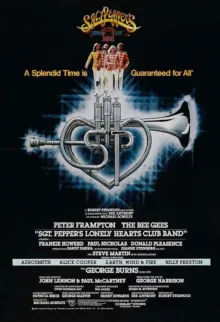
Sgt. Pepper's Lonely Hearts Club Band (1978)
- Special Guest
- Dianne Steinberg
- Guest Co-Hosts
- Agatha Luz, Andrew Nette
Show notes
Singer Diane Steinberg (opens in a new tab) who played femme fatale Lucy (of the Sky with Diamonds) discusses the making of the film and her illustrious career.
Labels: Agatha Luz Andrew Nette Bee Gees Carel Struycken Donald Pleasence Michael Schultz Musical Robert Stigwood Steve Martin
Transcript
An automatic transcript, tidied into paragraphs. It has not been proofread, so names, titles and spellings may be wrong, and it does not say who is speaking.
Show the transcript (about 21,500 words)
Hold your ears, folks. It's showtime people pay good money to see this movie. When they go out to a theater, they want cold sodas, hot popcorn and no monsters in the projection booth. Everyone pretend podcasting isn't boring.
Turn it off. In the town of Heartland. He left his musical instruments. These instruments have the power to make dreams come true.
And as long as they remained in the heartlands, care, humanity would live happily forever after there. Is all of the. Welcome to the projection booth. I'm your host, Mike White.
Joining me once again is MS Agatha Luz. Hi. Thanks for having me on again. I'm very excited about this episode.
So be careful. Also back in the booth is Mr Andrew Nette. Yes. I'm glad to be here for this interesting film.
On this special episode of the projection booth. We are looking at Sergeant Pepper's Lonely Hearts Club Band. It is the story of what's kind of the story of the Beatles album or albums actually told as a narrative film and stars a whole host of people that maybe should have known better. If there's anything to spoil about this film, we're gonna do it.
So you have been warned Agatha, when was the first time you saw this film? And what did you think? I don't know. It has been around my whole life.
It's older than I am. So it's very possible I saw it as an infant. I don't know, a time in my life where this movie didn't exist in one form or another or people didn't ask me. It's like, hey, you've seen that movie, right?
Isn't it crazy? Especially when it came down to the room. When the room started, I had friends were like, you still have Sergeant Pepper, right? You have Xanadu, right?
I'm like, yes, enjoy it. And Andrew, how about yourself? Was this the first time viewing for you? I have to be honest and say that I had never even heard of this film.
Wow. So you approached me to be on this episode? Thank you for that. I thought it was an incoherent mess.
I've watched the film twice now. I still don't really understand what's going on in this. I mean, a suspension of disbelief I think is required for most seventies musicals. Yeah.
So with the, you know, we've got very strong fantasy and countercultural links, but even this was sorely tested for me. But with Sergeant. This was not my first time viewing it. I remember watching this while I was working at Blockbuster.
I think I've probably told this story on the show before that I would get in trouble by playing movies on the overhead TV. S while I was working at Blockbuster, occasionally the, regional manager would come in or maybe it was the assistant to the regional manager, but she would come in anyway and be like, you're not playing the preview tape. And I'm like, no, I'm not playing the preview tape because otherwise it's the same two hour tape that plays three, sometimes four times during your shift. And I'm not gonna sit there and watch the same trailers over and over and over again.
Every single time I've come into work, especially, I'm working the day shift. There's nobody coming in and most of the time that when they come in, they'll be like, oh, what are you watching? Can I rent that? Which was kind of a bummer because I'm watching it, motherfucker.
But with this one, I would have given it up, I didn't remember a whole lot from it when I went back to re-watch it for this episode, other than George Burns and his little soft shoe thing that he does in fixing a hole. And I know someplace in the back of my head was burned in those images of Steve Martin's performance. And we'll definitely talk about that performance. Omg was quizzical in the whole.
But it's a strange movie. It's, it took me a little while to realize that there's no spoken words in this. It's all sung other than George Burns. And his voice over is there at the beginning and then it gets real sparse and it occasionally comes back, but they shot this movie almost as if it was a silent movie.
We don't have title cards necessarily, but we have a lot of captions at the bottom to give us a little bit of a set up. And then of course, we get the instructions from someone Steven Tyler. I don't know who's sending these instructions to me, Mr Mustard, but maybe Agatha, you can fill us in on some of that stuff because there are some nuances to this film that I don't necessarily understand. So yeah, let's, let's try to unpack this movie as we go along.
If you're asking about the future Villain band FVB, they are the ones giving the instruction. But I believe and this is off canon because it wasn't in the script. It wasn't in the novelization. I believe that there was another record industry pressure like these are the new guys that are coming up.
This is the new Sound Sergeant Pepper and their wholesome rock are gonna be pushed to the side and FVB, whoever the FVB is that generation is going to take everything over. So oust them from their number one spot. But it's good that Heartland America wins in the end. It does.
But do we, yeah, as for the happy ending, I don't know how far we wanna skip ahead on this, but all of this stuff happens. And Sergeant Pepper, who we experience in the beginning of the movie as a white man of army age becomes a black man. Billy Preston. And I have a lot to say about that because I finally think I understand why they bothered to change race.
Although, ok, I don't think they thought any of this through. This is just me reading into it. So I'm gonna pretend they did the Beatles took music from black musicians. So it feels almost like Billy Porter at the end is doing a reclamation of that music.
It's like, no, no, no Heartland is because of us. And in the book and the novelization, those musical instruments are alive. So there is a higher form of magical realism going on. I believe the whole movie is kind of a critical look at the record industry.
Who did the book? Oh, the screenwriter, it was the same guy. This is a movie. T are you talking about a movie time?
Yes, it was a novelization of the film and it did, it explains some things better for me that I'd never gotten from the film, which it doesn't necessarily improve it. It just kind of explains it a little bit with like the magical instruments that they are actually magic. And when Sergeant Pepper the beginning and goes into World War One and World War Two and they instantly stop the battle that's going on. It's because the musical instruments are magic and they bring happiness.
So they stopped a war with happiness. Supposedly. Does the book explain when they take off in a hot air balloon turns into a jet plane? No, but I kind of believe that that's magical realism.
But going up in a hot air balloon, it's so wholesome. It's Middle America. These great big beautiful balloons and then they smash right into L A basically big shiny new jets and giant cars and women and drugs. So they're corrupted.
They're boys from Middle America. I believe Heartland is a Middle America area. Going to the. Big city, Heartland Of America.
Yes. Exactly. Becoming corrupted realizing, hey, you know, our old town was pretty sweet. We're going to take what we learned and go back there.
I don't think that they get corrupted enough when they get there. Feels like this should be more beyond the Valley of the dolls. You know, you've got the Carry Nations or at that time, you know, the pre Carry Nations. But Kelly and her friends doing their thing and then they end up getting seduced and going to L A and then you've got the Z man who's just kind of this vampiric figure coming after them.
You didn't really get that. Like I was thinking there would be much more of Ed, the character that Donald Pleasence plays. I thought there'd be a much more or like even the other film that I really kept thinking of was the Apple and this whole idea of taking the young and innocent Adam and Eve characters. And then you've got Mr Boogaloo who is totally a horrible influence.
I mean, he is literally Satan in the movie and he does this whole faustian deal with them and takes, you know, Catherine Mary Stewart and gets rid of the guy. And it's just like, oh, yeah, you are my ingenue and we don't need this other person. I thought for sure that there would be some sort of ousting of somebody from the band or something would happen because you've also, we haven't even said this, but you've got the Bee Gees playing three members of this band and they're not necessarily the Lonely Hearts Club Band.
They're just part of this band. You've got Peter Frampton playing Billy Shear who hear about in the famous song, of course. And then you've got Paul Nichols cousin Kevin himself from Tommy playing Dougie Shear and Dougie Shear is a piece of shit, but he never really gets his comeuppance. He's always seems to be like lurking and here's drugs and here's this and I'm gonna go after that, but I have no stakes in character and I have no stakes in any of these characters.
Really. The screenwriter did not have any stakes in Dougie either. He goes to say that he's a horrible person who has never left anything by Sergeant Pepper because he was just a horrible child. And he was a child at that time.
It's, you know, pretty judgy. We should also say that this was actually based on a stage play that was off Broadway production. Tom O Horgan was one of the writers, Robin Wagner was the other. I mostly know Tom O'Hagan from Rhinoceros, which was turned into a movie with Gene Wilder and Zero.
Mostel, not the producers. What is a rhinoceros is a rhinoceros? You're talking gibberish Nicholson became a rhinoceros. And this production sounds amazing when I hear about the cast of it.
But the reading from Wikipedia, the source of all knowledge. So the plot tells of a Candide like rock music singer, Billy Shears who marries Strawberry Fields, Billy loses her to death and his own integrity to Maxwell's silver. Hammerman, Jack Sledge and claw dressed in chain mail and representing the hell's angels of commercial music business. Billy's Bete Noir is a temptress named Lucy.
So the original cast of this was Ted Neeley Jesus himself as Billy Shear. Alania Reed as Lucy. David Patrick Kelly as Sergeant Pepper. Can you imagine that?
David Patrick Kelly, he almost always plays a Villain in movies. He turned into a snake and Dream Scape. He was the guy with the bottles on his hand and the warriors. Of course, yes, that guy, he's Sully from Commando.
And then you've even got our old friend Alan Nichols plays Jack Hammer, one of the bad guys. He was of course, the director of Dead Ringer, the Meatloaf film and played one of the Tufts in Popeye. So, yeah, what a crazy cast. This and there's like little things that kind of come through as far as like the, I imagine that the Four Horsemen of The Apocalypse are basically these, the hell's angels type of characters.
And you get the bikers in the movie. But then in the screenplay of Sergeant Pepper's only Hearts Club Band from 79 you get Lucy and her backup singers are basically those hell's angels characters. But for some reason they eliminate that. I guess maybe the ladies couldn't ride the motorcycles or something.
I don't know why they changed that. The bikers that they're on the bikes with are actually hell's angels and I guess they're hell 's angels Diamonds or whatever it is. And I think they changed that so that the boys would all have a girl to lust over. That means there are four of them and four of the girls.
Yeah, which really comes across in the Bizarro sequence of the billboards coming to life. This song, Lucy in the Sky with Diamonds. I kind of think that that's Strawberry's hallucination. By the way, she gets off the bus sees these billboards and has a wild possibly drug trip because now she's in L A about the two billboards merging and Billy cheating.
No, you're totally right about that. And it's kind of is this what's really going on or is this in her head? Is this what she's imagining, Billy is actually going through? Because that whole thing too, from off Broadway play was, you know, Billy and Strawberry.
And we carry that through with this one though. Again, they're not talking to each other. Like I really wanna emphasize that they are singing to each other and this isn't the kind of, you know, like we've talked about and I've just mentioned Jesus Christ, superstar. We've covered Evita on this show, this whole idea of like the sing, talking kind of thing or just singing all of your lines, but they are locked into Beatles songs.
So they cannot vary from what the Beatles have put down on paper. They rec contextualize the songs, but they don't sing different lyrics to these things whatsoever. There are a couple of moments where people do talk, but they're so rare that you miss them. The computer s which is the name of the robots inside Muster Car, then they have some lines, they'll say stop.
For instance, when things start going a little loopy inside with the boys in the band, and I believe that Colonel Mustard has Colonel Mustard. Mr Mustard. Mr Mustard has one or two words, but that's it. It is a silent movie.
We're taken completely out of the realm of reality. It's a movie that does better if you come up with wacky theories like I do or you watch it with a very loose mind because there's really no thread to follow. It's the story that you tell a child at the end of the night. You're like, ok, well then Billy did this and now they're in an airplane and now they're going to L A and they're chasing their dreams.
It's not a very nuanced script or story and I kind of love it for that. So yes, I obviously approached it then in completely the wrong way because I was trying to make sense of it. No, I think the description that you just gave about it being like one of those on the fly, children's stories that you tell your kid when you're on a bus trip and they're getting bored or something like that is, you know, is exactly what this is. None of it joins up properly, none of it is connected.
There's all these various little clock strands that go on that never really find any kind of conclusion anywhere and actually don't even really get followed through even that trope. I mean, that trope about, you know, that the innocent band that sort of goes to a big town and gets the record deal and is then corrupted and exploited by managers and agents and other various unsly music industry bastards even that's not really very followed through in this sense it's called, that's what I thought this was going for about the 1st 3rd of the film and that aspect just stops dead and then they're rescuing magical instruments, that bizarre thing with the magical, which also actually makes no sense at all because it's not really explained who's taken the instrument or what's kind of happening here.
They just get these commands from this computer as you say, doing that sort of bassy on, sort of sounding voice because they've stolen in Mustard, aka Frankie Howard, that British commute, which is sort of vivid proof of how bad English dental care is and they've stolen his bands and they're doing it. It doesn't work and it's overlaying that as you sort of say. And that's, that struck me too. It is a silent film because all the actions that they're doing are they do these exaggerated, sort of like facial mannerism don't really work either, I think.
But, you know, to indicate what they're thinking or what they're sad. They're doing this really? It's almost like a kids show. Yeah, it feels like Sm Croft could have been behind the production of this rather than Robert Stigwood.
And it works because none of them are actors. So just acting more broad would have been natural for them. They need to be seen from stage. I'm pretty certain that they all have their screen personas.
Oh, I meant to mention that tonally, I think it's this way because they were trying to get some of the energy from Beatles help movie. So kind of mad camp. You get little sections that are sped up a little bit as a nod to that movie, I was. Getting a lot of vibes of Kiss Meets The Phantom Of The Park as well.
This whole thing because we keep talking about these magical instruments because the movie, it starts off, you know, we set it up a little bit as far as, you know, these four kids are growing up in Heartland. They get called out to L A like, hey, you're a great band. You've got BD, the Donald Pleasence character singing, you know, or crooning. I want you to them and they come on out and they sign up for this stuff and then not a whole lot happens until you get suddenly the plot point of these magical instruments that are back in Heartland being stolen by mean mister Mustard and his cronies.
And then it just becomes where are the instruments? We're gonna get the instruments back, we get the instruments back that leads us right to the finale of the film in this big fight that they have with Aerosmith. But it doesn't feel like those to your point, Andrew that those instruments, they don't do anything with them. And why it reminds me of Kiss me.
The fan of the park is that whole thing of the talismans that each member of Kiss has. And eventually, you know, Doctor Devereaux steals those and is trying to put them inside of the robot version of Kiss. So making like the anti Kiss with this stuff. And so I'm like, ok, well, they're gonna take these musical instruments and they're gonna melt them down and they'll become guitar picks or something like that.
Something to give that power to the FVB, the future Villain band played by Aerosmith. But they go in, they take the instruments, the Lonely Hearts, guys go in, they take the instruments back and that's about it. And there's not a whole lot of conflict. There is no conflict.
I agree. But the instruments themselves go to a guy who is making rich. Older people look young again, act young again, father's Son who takes those very people and brainwashes them into, you know, we hate love, we hate joy, we love money, which obviously they do. And then the third one, Mr Mustard got that one.
That's what it was and he is real estate. He has gone into Heartland and somehow foreclosed on everything that's there. So he's development. He is gentrifying in a way he's making Heartland a city.
And then of course, to FVB, who is going to influence the younger generation with their corrupting music. So these instruments do all go to one piece of taking away joy and the instruments themselves are powerful. So those instruments help each of these guys do their evil deeds. And again, it's so just like, oh look, this princess has a dress, this dress makes her invisible.
It's not meant to be taken seriously. But I think they were trying to do that. It certainly took my joy away. The three hours I spent watching, I did like the other thing associated with that.
So film, you know, I'm, I'm doing hand singles that indicate extravagant and I love the big Telegram. There's a lot of big things in this film. That's one thing I did notice. There's a big Telegram, there's lots of big belt buckles.
There 's a big hamburger in the middle of Heartland, which I just got no idea what that meant. There's also they're drinking cognac from big glasses at the sort of semi the semi orgy that BD Hoffman Donald Pleasence got, he made some, but I was looking into This Donald Pleasence made something like seven film. Yeah, he made seven feature films in 1978 alone. And that didn't include two made for TV films and at various TV series.
And of course, one of those films in a parallel life, he was doing loomis in the. Imagine my surprise. He would have just taken the check and gone. Thanks for the, get handed up a bit, then just gone like all of them.
But he doesn't even really manage to pull off a convincing, bad sort of evil music person because they have that orgy, semi orgy, he sort of drugs them, he makes them sign the contract, then they become famous. Then they go back to Heartland. They get famous in 24 hours. The record is done.
There's a mention of Mr Mustard being obsessed with eating hot dogs with Mustard all over them. The script and the book have so much, like always covered in dirty Mustard stains. So I think the burger was supposed to show the Mustard dripping down film. Does have a sort of interesting look at sort of half and a weird battlestar Galactica look, half chits sort of days of our lives.
Middle America, the Heartland sort of scene, but just plucked in the middle of it is the giant burger. I was getting real mcdonald vibes from that. I was thinking, oh, they're representing mcdonald's with the burger and I was thinking that it was cheese coming off of it. But now you're saying Mustard falling off, I'm like, OK, that makes a lot more sense.
And I do have to say I'm so happy when Carol Stren shows up as brute his right hand man. I love him, of course, from, you know, all the stuff that he's done over the years. But I forgot that he was in this, just playing this punch drunk ex boxer who gets woken up by mechanical boxing glove that punches him in the face. Isn't that banana splits?
We all need one of those mechanical arms that extends and hits you. Absolutely. Just talk about the novelization for a second. There was a lot of material in there that led to like, oh, well, he got off on getting hit in the face.
And now all of the boys are caressing and loving these computer acts to get information from them. It got pretty dirty at times and I know the old back on that. And besides that, I just wanted to go back to what you said Andrew about everything being large. I think that relates back to it being a children's story because everything is big.
It makes the actors look smaller and how brilliant is it to have a person read a Telegram and read the stops and the music will never stop stop. I love that still. But I love puns. So many of the songs from this.
Well, let's say two of the songs from this are now really part of pop culture. The covers of Got to get you into my life by Earth Wind and Fire. That is something that you could probably turn on oldies radio and hear that right now. And if you don't hear that you're gonna hear come together by Aerosmith because they still play the hell out of that song.
I'm not sure I'm a big fan of that. I definitely like the got to get you into my life version better. But my God, the broking of fixing a hole by George Burns that goes up there with like Bing Crosby singing, hey Jude or Joe Pesci doing, got to get you into my life. I mean, the, it's probably one of the worst Beatles covers.
I've ever heard. And that it's so soon in the movie really hurts my heart. I'm fixing a hole where the rain gets in and stops me one where it will. He wanted a song.
He insisted on having a song. So that's what he got, man. You don't think it's up there with Frankie Howard singing when I'm 64. When I get home, losing my head is from, will you still be sending me a Valentine bottle of wine?
Oh, that's pretty. Bad up Strawberry Fields. Oh boy. We have to talk about my most least favorite song of this entire thing.
What the hell is Steve Martin doing as this Maxwell Silver Hammer type character? And I know that Maxwell Hammerstein was coming from the play and everything, but I forgot Agatha as far as the whole thing of like turning the old people and the young people and they all have these same uniforms as described in the screenplays being very Hitler youth and I can very much see that. And then, yeah, getting brainwashed by father's Son, but I'm not sure what Steve Martin is doing. What he was on at the time.
The vocalizations, the stylization that he's doing it would make William Shatner be like, whoa, whoa, you really need to calm this down. Oh, somebody call her over the phone, take you out. Ok. I remember as a kid loving this song and I think it's a rendition made for children because it is not good and he overdid every single line in different tones and volumes.
It was all over the place. Yeah. Yeah. Andrew Big fan of that song.
Not really. No, we did get the light Saber Fight the Silver Hammers striking. And that was just one year after Star Wars. Well, I picked up on the sound effects in this movie that when they're in the limo, it's the same sound as Luke's Land Speeder.
And then at one point these alarms are going off and suddenly I hear Mark Campbell's voice in my head going. What's that flashing? Because it's totally from that scene. I'm like, how did you just lift these sound effects so much?
No one told them. No, that's true. That's pretty much it was the seventies, you know, it's really ironic to me too that this is being produced by Robert Stigwood who apparently also produced that 74 off Broadway play being produced by him. And that it's so talking about the evils of record producers to the point where when guys are signing this contract for BD that all of a sudden their t-shirts will change to be his logo, the BD logo he's owned now, right?
But that BD logo is the exact same font and style as the RSO logo, which is Robert Stigwood logo. And I'm like, do you know your putting yourself on here? But I mean, I'm sure he must have. So I kind of applaud.
That, that was, you know, he was at the peak of his career that he would have been so busy that he probably wouldn't have. I mean, I was thinking about this in the context of Stigwood career, which I hadn't actually thought about as much as I, as I thought I should. I mean, I think how big he was and it occurred to me that the same year that this film happened, of course, he had so it was a massive flop. But then he had a massive hit with Greece.
No, he just would have forgotten completely all about it. Yeah. What I, that was, that was bad on the great. It's so funny because I realized that we've talked about four Robert Stigwood productions on the show and we've talked about, we talked about a vita and we have not ever done an episode on Grease or Grease Two, which he was also behind Jesus Cross.
Was it Jesus Cross? No, I haven't talked about Jesus Christ, superstar ever. I would love to do an episode on Jesus Christ superstar, but Ted Neely keeps ducking me here. Yeah, Tommy, I forgot he was behind Tommy.
So there's that connection with cousin Kevin. So is that, yeah, this is the 4th 13 prior to that. And then we've also talked about a bunch of Michael Schultz works as well who ended up directing this. And this is up there with like the last dragon as opposed to more of what I prefer, which is more like Coolie high or car wash.
You know, I mean, what a wild career this guy has had 100 and 14 directing credits over the years. Still working. And this is the first of his films I'd actually seen. Really?
Oh, he has done some good ones. I know. Amazing. I thought, who is this guy?
This guy's made so much. But it's interesting because I also read, I can't remember whether it was in Wikipedia or somewhere else that when Schultz took the reins for the musical Sergeant Pepper's Lonely Hearts Club Band. It was the largest budget ever entrusted to an African American director to that date. So while I, while I wanna bag the film out for paying a piece of garbage, obviously, it's got some historical significance there.
Definitely it would be easier for me to just be like this movie is garbage and don't pay any attention. I did find it not nearly as bad as some people have said, like I was reading a book about rock and roll and movies and basically it was the less said about this the better. And then I rewatched it and I was like, it's not that bad. I mean, it's not great but it's not that bad.
Like you're saying, Agatha, it's very much a kid story. I could see, you know, you seeing this when you're young, I can see this being this indelible movie for you because it's kind of entertaining at times and it's just interesting to see how they kind of recontextualized these songs. Like I said, I don't think they do the greatest job with that. This is not like a Mamma Mia where it's like, oh, well, this song makes sense in this context, which is strange.
But then at the same time, Abba and I freaking love Abba. They're not writing tons and tons and tons of lyrics. It's just very good pop songs. And then you come to the Beatles and you're like, wow, there's a lot of lyrics to this.
Like you realize that a lot of these poems are very poetic and that they have stories to them, you know, a day in the life and you know, she's leaving home and all of these things and then kind of cram this like, oh, well, this would be the perfect time for a day in the life. And you're like, really? Now we're gonna talk about all the bows and Albert Hall. This doesn't make a lot of sense here guys.
It was supposed to be the three boys, not Billy, they were supposed to be worried about Billy and his behavior and somehow that song was supposed to fit. It didn't, there was a lot of behind the scenes fighting over who was going to get witch song and the Long And Winding Road was one of those ones that was in contention. They were really fighting over that one. Peter Frampton won out.
And the sad prize was it a day of life? I really think I'm mingling the title of that song. I think that's right. Yeah.
Is it? Ok. That's a song at the end that they're singing, isn't it? When Strawberry Fields has been at her funeral?
When she's been killed. Retreating music that was carry this weight, which is one of the most on the nose readings of a song. Just carry that weight down to the cemetery. They pallbearers at that point.
And it's like, boy, you gotta carry that weight. I'm like, she 's not that heavy guys. The coffin is heavier than she is. It is bizarre when, when she dies in this movie, I'm just like, wait, what?
She died. I don't get, how can this happen? And I was like, you know what good she's dead. That's good.
They had to make this sacrifice. That's perfect. And then all of a sudden, fucking Billy Preston, not Billy Porter who I kept screwed up and saying Billy Porter, Billy Preston shows up and starts zapping people. Oh, she's back to life.
00, she shows up and I'm like, does she remember her own. Death Sergeant Pepper from the weather vane has come back basically as a Jesus figure and he's rewinding everything like, no, no, no, no, this isn't how the story goes. And there is all of this religious connotation to this stuff, especially because he's zapping, mean mister Mustard and brute and turning them into, like, I think, mean Mr mustards in a nun's habit and then he becomes a bishop and I'm just like, what is going, why all these religious symbols and then changing the Mustard mobile to, like a VW bug.
And I'm like, ok, this is really kind of strange. I mean, that fits in with the whole movie though because there is this edge of strangeness to it and I wouldn't say it's surrealistic. I mean, there are moments where I'm like, ok, this just doesn't make sense rather than it being like a real artsy type of movie. But then there are other moments where I'm like, oh, that was actually very clever.
And, you know, I think Andrew, you brought up like this movie looks good. Like I saw the DVD of this and I was like, this actually looks pretty good. They did some good shooting. Can we talk a bit about that bizarre end sequence where all of a sudden everyone just turns up and sings that.
What's the song they sing at the very end? Sergeant Pepper's Lonely Hearts Club Band. So they're reprising Sergeant. I love a film where the entire cast come together, even if they're dead or they've moved on or, you know, like died of old age or being killed, they come back and they're all suddenly.
I've loved that ever since I saw Lindy Anderson's a lucky man. So this group, it was an open call. So whichever celebrity showed up, it was like, come on in and they fed them. Which is why cook is there.
There's a couple of guys from Greece Carol Channing is there and not knowing the words, by the way, Edna Eridge Stigwood actually is in there if you look really closely. I mean, there's all these singers, there's one of the Carradine is in there, I think, I mean, there's. Johnny Ra somewhere. I still haven't tracked her down in there.
I've had a list of all the people who are in there. I mean, half of whom I didn't know they're gone the way of musical anonymity but Etta James Curtis Mayfield, Bobby Womack, Tina Turner, Ellen Reddy, Carol Channing Donovan is in there. Everyone is in there. Leif Garrett is in there.
It's just a who is who of seven top and Barry H with Dana Ever. What, what the hell did that? Was she just walking past the I just said, come on in. It is definitely a little less higher caliber than what we had in the script, which was this band might very well include Elton John David Bowie, Barry White Cat Stevens, Neil Sadaka, Paul Simon Rod Stewart, Eric Clapton Stevie Wonder, Barry Manilow Bruce Springsteen, Joni Mitchell Aretha Franklin Dolly Parton Waylon Jennings, Charlie Rich Loretta Lynn America Jefferson Starship led Zeppelin Bachman, Turner overdrive, Ohio players.
Average white band Earth Wind and Fire. Chicago Beach Boys and the Spinners. Oh, sorry, Pat Boone. Bing Crosby Perry, Como Dinah Shore.
Chuck Berry. Little Richard, Bill Haley. And the Comets worse. The novelization is about either three or four full pages of just names.
Oh, my God. It's like. Deron just names. Exactly.
It's the begets. That's crazy. Makes sense in terms of your analysis, which I'm now going with and which is suddenly just the veil has dropped from my eyes. It's a children's story.
It's just a weird fucked up, vaguely psychedelic children's story. I'm sure there might be drugs, rape liquor. But as a kid you don't read it that way, you just don't. It's like a magic potion that makes you feel weird as a kid.
You're not like, oh wow, he 's taking drugs right now. Yeah. The whole scene with Alice Cooper wearing a big old mustache just. Out of rehab too.
I mean, taking a day pass from rehab, he looks like shit. He looked perfect for the role. But yeah, he looked like shit. Yeah, I thought he looked perfect in it and I really liked what they were doing with his face on that screen and the way that he, yeah, we talked about Steve Martin just overdo those lines.
But I think when Alice Cooper overdoes those lines, he does it in a better way. Just that whole I want you thing that he's doing it. That really works like it worked when Alice Cooper says because the sky is blue. I'm like, ok, again, the lyrics don't make sense in this point.
But I like the, his interpretation of it. The wind is, yeah, five. The backup singers and that are actually the Bee Gees, which I didn't really know for ages and for, because apparently the first time he recorded, he basically mimicked The Beatles and he was told, you know, that was fine. But why don't you do it?
How Alice Cooper would do it? And that's how they got that take, which is brilliant. And he's a cult leader, the bjs in their career, they were at the height of their career and this movie is sort of kind of credited as the beginning of the end for the B J's popularity. Yeah.
And apparently they offer Billy Shears role to Andy, who's the only brother Gibb who's not in this one, but he said no, and a dodge a bullet there. And I thought that Frampton's voice worked well with the Bee Gees voices. But of course, the Bee Gees, they have that natural harmony with one another. And so some of those songs that they sing, I'm just like, wow.
Yeah, this really works for me to hear their voices to look at them. Maybe not so much. No offense to Robin or Maurice. I mean, but, you know, Barry, he's got him beat by a mile.
He's got that lustrous hair. My God, I just want to run my fingers through that hair, man. I'm pretty sure he still has a lot of it too. Do you think he sells any of it?
Oh, he should. I'm sure there are plenty of people who want, you know, a few strands from Barry Gibbs beard. So Sergeant Pepper. I'm just trying to think that 78 when was Saturday night fever?
76 I want to say. Was that or 76? Because of course the bees have done the parts of the soundtrack for that, which was KASPER and deserve it to fight. Yeah.
0 100%. Yeah. The use of the Bee Gees. The use of staying alive in that movie is just amazing.
Just so good. Saturday night fever was in 77. 77. That's not just the year before.
So they really, they've gone stratospheric and then they come back to it balloon deep like it's. Amazing to look at woods producing career. This, this run here of Jesus Christ, superstar, Tommy Bugsy Malone, Saturday night fever grease, Sergeant Peppers. And then it kind of falls off a cliff there with Sergeant Pepper.
It's not to say that I really Bugsy Malone is another fucked up movie. But moment by moment the John Travolta, Lily Tomlin film, which for a long time was very hard to see. I don't know if that's a more readily available Times Square. I really like Times Square, right?
And then Fame he produced the soundtrack for, he produced the soundtrack for Empire Strikes back. And then he does, the fan, the psychological, which I know he produced that the 81 PWG, which I had no idea about this guy was everywhere. It was wild. His career.
You're not a fan of Bugsy Malone. I think Bugsy Malone is Ben Hur compared to this film, I have not seen it Bizarro movie, but I think it's a very similar thing. I have to say Agatha, it 's a very similar thing to what you're saying because I saw Bugsy Malone when I was quite young. I just loved it.
I just absolutely loved it and I watched it about five years ago with my daughter and look, yeah, I still loved it. Did she love it? No, I think it was a bit early. I'm not sure I'm not, she didn't love it and she didn't love it as much as I wanted her to love it.
Oh, I mean, it's Paul Williams. I'm surprised that I have not seen this. Oh, yeah. It's those.
Guys that walk around with the cream puff firing pommy gun, the Gangsters. And of course, it's got that great thing which at the very end they have the dance somewhere where everyone in the film is in the dance. I love that. I love that.
Yeah, it's an interesting thing to play with tropes of gangster films. But then you cast all young actors I mean, very young Scott Baio, Jodie Foster. This, which was. They're all nice pedal cars.
Yeah. It's really wild. Kind of like terror comes to tiny town or something where it's just like, oh, we're gonna take this western and cast little people in it. You know, it's like we're gonna take this gangster film and we're gonna cast kids in it.
And he also need Pippin, which is my high school musical. You have to say, I play King Charlemagne. But because I've, I've been thinking about these too because we're watching M Cargo at the moment. You know that show, I.
Have heard of it. Yeah, with Keegan Michael Key. Right. Yeah.
Where they take off the musicals? Ok. Yeah, I haven't watched it yet. It only relates to this because the first series of it is older sort of musical.
Chicago is set during the seventies musical phase. So they're setting, they're taking off all the seventies musicals. There's a take off Chicago, there's Pippin, there's the Sweeney to. Is there Brigadoon as well?
Yes, I think so. That might be it. This is, this is the. Next series I think I've heard of Smead more than I've heard of Miko.
The one thing I was very surprised about that they dropped from the final film because the script is pretty close to the final film is this whole idea of BD bootlegging his own artists, which is kind of a thing that went on this whole idea of like, I'm gonna make money any way that I can and the best way is to cut out the artists from paying them. So I'll even bootleg their records. And there's a scene at the end after this whole, you know, the group singing, Sergeant Pepper's Lonely Hearts Club Band reprise where BD has this bootleg mobile and Sergeant Pepper shoots his finger at this bootleg operation and the whole thing explodes and then you get a cut back over to his logo on his building, I think.
And all of the logo crumbles away. So it's like, oh, ok, like you get to see him have his comeuppance otherwise BD just kind of drops out of the movie. That would have been a great addition. Honestly.
Is he in the fall singing thing? I don't know if he is or not because there's also those weird scenes I think, isn't there that scene where they come back after they've been to L A and they're in Heartland and they're doing the con and of course, Strawberry Fields is scaring the hot dog stand, you know, the hot dogs because why not? Why not Mr Mustard loves her for his hot dogs and BD is around then, but then he kind of disappears. I thought it would have made more sense to make BD the main bad person anyway.
But that's, you know. I think that would have been great to have the Bens play against each other. That will be my remake of Sergeant Pepper's only house my reboot. No one asked for it, but we do deserve it.
This will be what I'm going to devote the remaining 20 years of my life. I'm gonna get a reboot of Sergeant Pepper's. Please do it is the problem. So I was talking about this whole idea of who is sending the messages, who is sending the messages to me, Mr Mustard.
And at first I was like, well, it makes sense if it's BD, if BD is this Machiavellian character behind the scenes, pulling all these strings, but it really doesn't feel like it. And to your point, Agatha, I agree with you that it feels like it's coming from Feb Future Villain Band. I think they actually say it's coming from Feb. But FVB feels like it should be a person.
Again, a Machiavellian type that is pulling the strings and creating this band and, you know, using the instruments and using the power. And like, because again, like, once we get rid of the Alice Cooper character, Father Son, it feels like all of the fascists just kind of drop out of it. Like the last time we see them, they're all grasping at their ears because they've been hearing, you know, nicer music than what Father Son is singing to them. So it's like they just kind of drop some stuff through here and again, it works.
If you consider this a children's movie. But if you actually are watching this where the plot, it's kind of like reading Playboy for the articles, just like. Yeah. No, this doesn't really add up.
Sometimes there's no adult who can put this movie together in a way that a movie deserves to be broken apart. Like, there's not much there, I can impose as much theory on it as I feel like, and anybody else could. But truly, it does not all add up. I wish it did.
I think some of the things we've been talking about would have solved bigger problems with the movie and it may have been more successful. Yeah, it feels like the screenplay deserved another few passes. It deserved fresh eyes. It's a shame that it had potential.
Henry Edwards was eventually the credited screenplay writer on here. So it was screenplay by Henry Edwards based on Words of Music by John Lennon and Paul McCartney and an original story by Robert Stigwood and Henry Edwards. There's no mention of the o'hagan and Wagner stuff at all. Well, that seems very odd because it feels like it was based on that and it obviously pretty much destroyed Henry Edwards' career too because with the exception of the great skyscraper rescue sky copped a rescue in 1980 he didn't do anything else which yeah, I tried to reach out to him.
I tried to reach out to, I've tried so many times therapy. And no one wants to talk about the movie and I wish they would. I wish it was one of those movies that had some sort of nostalgic resurgence where people are like, oh, there is value in this and they would want to talk about it more, but especially Steve Martin famously, this does not exist for him. He does not acknowledge it at all.
But you are doing an amazing job. No sarcasm intended. Agatha. Basically keeping this alive.
All by myself. I wish, I wish I might actually someday sit down and write something. We might never know. You've got enough information on this is.
My husband got me some of the trading cards for Christmas one year. It is that deep. So I have about 2025 of the trading cards. When you said that you were for this episode.
I had no idea. I got so excited because I never thought I'd have the opportunity to talk about this movie ever. So, yes, I'm pretty qualified. No, no, no, we talk about it is not a good movie.
I acknowledge that fully. And it's strange to kind of hold the place where yes, I love it and I know a lot about it, but no, it's not a good movie. So I did actually find somebody to talk about this movie. So let 's go ahead.
We're gonna take a break and we'll be back with an interview with Lucy herself. Dianne Steinberg right after these brief messages. Step into the gallery. Dear Friends for horrors, Nightmares and Spooky Tales.
This is the midnight viewing podcast and we like to discuss the frightening world of television horror anthologies from Rod Sterling's Night Gallery to Tales from the Dark Side to Hammer House of Horror and more. Father Malone Chris ST. You and Mike White will be your docent during this midnight viewing available wherever you download your podcasts from Weirding way. Media.com.
From what I understand you grew up in a very musical family. Yes, I did. My dad was a, an orchestra leader and his brothers, all he trained all of his brothers and it was a family of 15. I mean, my grandmother had five kids with one man and then my grandfather married her after he passed and pretty much a great percentage of them became entertainers, musicians specifically.
So my grandfather, when he was 21 years old, Milton Steinberg, his mother was from, I think she was from Arkansas, but she had a lot of family in Memphis. So he was illegitimate. So she took him back and raised him down on Beale Street. So at 10 years old when he was working for Pong's laundry, you can imagine the kind of music that he was exposed to during that time.
And you know, Bill Street was a buzz. I mean, with everyone coming in at that time as the ragtime era, I never found out if his mother was musical I mean, maybe he was just a kid, like a lot of us get interested in things and then we just, we hear it, you know, I always say faith comes by hearing. So if you hear it's gonna be in your blood, you know, it's gonna be part of everything that you are. But when he was 21 he started working at Pee Wee saloon.
And do you know much about WC Handy? No, ma'am. WC Handy was a musicologist from New York. I think he was also from Saint Louis.
But you know, many people performing down on Bill Street didn't particularly read music and he was able to write down what he heard, you know, in the alleyways and things like that. Now, I know I'm getting all around it, but I just want you to know that WC Handy was someone who he wrote the Memphis blues, wrote Saint Louis Blues. He's an established person. They have a WC Handy foundation in Memphis.
And so the Steinberg have each one of the brothers and the sister who did go out with Fats Waller. My aunt Nan, they're all noted as authentic Bill Street musicians. Well, my grandfather started it all because when he was 21 years old, he was at Pee Wee saloon. Pee Wee was a guy that was Italian got on a train.
Now, I'm going by what WC Handy explains. And he says, Pee Wee got off that train and he, you know, I guess he had what hobo, his way across that, a hobo that gets on the trains. I don't want to call him something that he wasn't. But anyway, and he went down to the Mississippi to kind of wash up and he had an accent and a lot of people, you know, in those days, if you had accents, I mean, you get it down South but he was welcomed by the black community there and went up on Bill Street and started gambling a little bit and got himself a new suit and then he got himself a fruit cart and then he got himself enough money to bring the family from Italy.
And then he started the market and eventually Pewee Saloon. And that's where a lot of notable people came through. That was one of the high places at Pee Wee. So at 21 years old, my grandfather was in there playing ragtime Piano and, WC Handy came in and heard him and he went out on tour like to New Orleans and, you know, a lot of the jazz spots down there down South at that time and my grandfather couldn't read.
So he didn't stay very long with WC Handy. I think he did maybe several tours and then things have to progress from there. But all of his kids, all of his kids learned how to play Piano, even my Unc Gladys, you know, who was a teacher, my father actually had to hire Han a gig once because the keyboard player didn't show up and she only knew one tune tenderly. And the guy at the club loved her.
He just thought she was the most prettiest thing he had ever seen in his life. And so, he told dad, he says, look, you know, if she's not gonna do the gig, then you don't have it. And she played Tender Away all night long. And I guess it was ok with him.
But as far as the rest of the family, my dad was a jazz musician, taught all of his brothers. My aunt Nan was the first one to leave Memphis and she went out with bunny Berigan and there were several other jazz big band people she went out with. But then she ended up with That's Waller for a stint. Then after that, she settled in Detroit.
The rest of the brothers were in my dad's orchestra and my uncle Morris played saxophone. My uncle Wilbur was a vocalist and he, they all played Piano. Everybody had to play Piano. And my uncle Louie and my uncle Louie wanted to be a trumpeter like my dad.
But again, musicians didn't show up for a gig. And so my dad had enough of it. He went and got one of those upright bass bass put on top of the car because that was the only way they didn't have electric bass in those days. So you got this big thing on top of the car, come rain or come chilling.
And, he took it home and he gave it to Louie. And Louie said, what am I supposed to do with this? And he said, you got a gig tonight? He said, I don't know what to do with this.
He says you're just gonna play up and down the net until you hit some write notes and we're gonna get through it. The thing is that Louie is now in the rock and roll Hall Of Fame and has gotten a Grammy lifetime achievement award because he was one of the founding members with Steve Cropper, Al Jackson and Booker T Jones and Booker T and EMGS my dad, you know, he was such a staunch jazz musician, but he had his beginnings being discovered by Sam Phillips and Sam Phillips and Leonard Chess took him and changed his name from Luther Steinberg to Lou Sergeant and he went in and cut something.
But yeah, his response to having the, and he had a hit in the Mid South. His response was, you know, after I did that whole thing, I just closed the door on it and I never looked back because, you know, jazz guys are kind of hard, you know, it's like if you get him to play rock and roll, that's a very versatile guy. But they don't, they don't really go that way. My dad just, decided he would keep doing music.
Louie stayed as a session player at Stax, you know, about stacks, don't you? You got ST and you got Motown. So Louie stayed with Stax and played on lots of records, including when Duck Dunn came in as his replacement. After a couple of years, Duck went fishing with his grandfather.
So he missed, he couldn't do a session. So they called Louie and he did the session on one of the biggest hits that the Marquis had called last night. So that's Louie playing on that. And, you know, he did a lot of stuff.
Carl Thomas, Rufus, Thomas Otis Redding. I mean, you know, your session guys just like the Funk Brothers and just like the wrecking crew that was all established there. Now, my mother was in radio and so she started a radio in 1953 and it was a contest and they had lost one of their main stars there at w dia loss, meaning she was getting sick. And so, you know, they had to move on.
So, she ended up in radio. So in my household there was just music all the time, you know, and I really wanted to be a dancer. I didn't really want to be a, I played Piano and I played classical and I was trained that way, but I really wanted to be a dancer or something. You know, the thing is Sergeant Pepper and I've done, had done some theater and, you know, I taught high school music, of course, choir and accompanied for the performance groups there.
But, when I was in college there was a girl in my dorm, she was playing Puff the Magic Dragon. And she's, I said, are you getting paid for this? And she went, yes, I get paid $4 an hour now, you know, in college, especially during that time you can go out and you don't have to bum cigarettes off anybody. That's what I used to smoke.
I don't smoke now. And I thought, well, I'm gonna go down there then and get that gig too. Or, you know, I see if they got me in their openings and sure enough I did so during my entire college career I played at the whistle stop and, then toward the end I started doing theater, you know, and, then when I was teaching, I did more theater. West side story, man of La Mancha.
And, you know, I had never done anything. You know, I went to, I know Steinberg, I went to a Catholic school. Ok. I've got a very varied background.
I'm sure you've read about it. Right. Are you? Ok.
Good. Yeah, I'm truly Miss America. I am Miss Universe. Excuse me.
But anyway, I got a chance to do theater and then teaching when you're teaching anything, you really gonna become a student too. You know? I mean, there's no way that you can teach that you don't end up learning something. A lot of things, a lot of things about yourself.
You know, I didn't know how to play gospel Piano. I mean, I played classical music, you know, so, and I could read everything and, you know, I have the jazz here but I never really played jazz. I knew the standards but I wasn't a Bebop player. So there were some kids getting together, you know how everybody congregates.
I don't know what school you went to and where you guys congregated. But the music room was the place for a lot of kids. I mean, I guess sports guys had another place but so they would all come and they were all going to all these different churches and they just started singing songs from their church. You know, I knew Currie Y a song.
But during that time the ho Nanny Mass started coming in and a lot of us kind of like headed for the hills after that happened. So Vera Wardlow, she was 16 years old and Vera come on and play and she'd play all this stuff and I sit there and go, yeah, this is, I said, show me that, show me what she did there and so she go, just do it like this and do it like that. And I went, but I you know, even though it was classical, I love pop music, you know, and of course, you know, we all loved Elvis. So she showed me that.
And so that really broadened my, to box for, my experiences with another kind of music that I had always heard, but I had never played it. You know, I think that was when I was teaching really expanded me tremendously during that time in my life. And I, something about Elvis, my dad was supposed to be what Elvis became, they changed his name. They thought they could make that work, you know.
And, but that was, you know, still, it's that thing between jazz and Boogie Woogie, you know, was coming in before they actually called it rock and roll, you know, let's put it like this. Elvis was right on time. Elvis was down on Bill Street and I saw Austin Butler, Austin Butler Elvis and I like that. They had him going down on Bill Street.
Why? Because he was down there a lot buddy, you know, and if you read Howard Grimes who's a drummer, they used to just have things going on the street where people would come in and, you know, Mike night and stuff like that. And Elvis was always down there and he also, I always hear the story, you know, Elvis just sat in with your dad on his band a few times and I go really, you know, Yeah. And then, my dad would say things.
Yeah, but he couldn't play, you know, you know that, ok, I'm sure he couldn't do Bebop. But Elvis would see the way that they were dressing those guys, you know, going down there with, Lansky Brothers, you know, where Elvis got all his stuff. Well, everybody else was getting their stuff from Lansky Brothers way before Elvis came on the scene. But he went down there and he saw how sharp they were dressed and it made him a little different than his contemporaries.
And then he got criticism for it too and he didn't care, you know, he just liked what he liked and he felt what he felt and that was a good thing about Elvis kind of helped open the door for, well, a lot of people were doing down there but his application of it and he kind of copied my dad's look, you know, and nobody is seeing this right now. I'm looking off like, you know, ok, but I'll send you a picture of my dad. And so I think he was able to see my dad. He, I, they say that he liked Tony Curtis, you know, but that dark hair and that, that look my dad had, he kind of went, yeah, you know how you get inspired by things and you just claim it and try it on for size and it fit him very well.
And he went on and it was pretty good thing for him, that's for sure. And my sister went to school with Priscilla. He brought her into Memphis and sent her over to the all girls Catholic school. And so she used to see him come pick up Priscilla and they would all see him trying to Kiss her and stuff.
But anyway, that's, you should probably interview her for that. I don't. So you're talking about, you know, you're into classical music, you wanna be a dancer? You're into theater.
How do you go from that to, I think you got your first record contract in the early seventies. Yeah, I did. Well, first of all, my mother being in the radio industry and broke a lot of records. So therefore she had a lot of promo people and executives.
I mean, Clive Davis used to send, you know, they all knew that she had the power to break a record, she knew how to put it in rotation, she knew how to sell and then she would play those records and I remember one in particular, this was much later, but Barbra Streisand came out with a Christmas record or an album or that they were gonna push all Holy Night and a lot of people were going, she can't show Christmas stuff because she's Jewish. My mother said I'm playing it anyway. So she would always get a record. But if she liked what she heard on the other side, that's the one she was going with and she played the other one.
But she played the B side too. And so she made hits for a lot of people. I heard that, the song, neither one of us because Gladys night the pips had a lot of up tempo things and you know what they would say about mom when she moved from Memphis. And then we went to Detroit in 63 was that she took her common sense and she had an ear and a feel for things and she took it to Detroit.
And because she was from the South, they were able to hear somebody that sounded like them. You know, because of the migration of the long ago when everybody got out of the South, not everybody, but many people left and, you know, went where the jobs were up in Detroit or, you know, all the car businesses and everything. So she appealed to grassroots people. And so they listened to her and whether it was playing music or giving advice or whatever, you know, so she made a lot of hit records for people.
And so how did that play into me? I was a music major. Piano was my major instrument, but it was a public school music. I wanted to be a concert pianist at some point, I think I realized that they weren't, were not going to, you know, you had to go to these adjudication things and these juries and play, they determined early on, like, ok, she's not gonna be a concert pianist.
She thinks she is. You know. So I think my junior year was like, ok, you have to declare your major and I went, I don't know, what should I do? This said public school music.
Ok. You know, and then I had music and theory minor. So, what are you gonna do with that? Well, I'm playing at the whistle stop for all those years.
I was in college and so things begin to form in me and I'm kind of a natural performer, you know, I don't just play, I mean, I was in love with Liberace, you know, when I was five years old. But, he was pretty, entertaining but, and we have such entertainers in our family. It's not enough just to play, you know, like, I mean, I don't know about you but I'll listen to Van Cliburn and anybody play, you know, classic all day but singers and, you know, just don't play at me. You know, I wanna get involved with your trip.
You can be in your own world and jazz and just play and just dazzle everybody and you can get into that. It's a very, you don't have to do much, but then there's the pop music and stuff. If you're gonna do it, you better be entertaining me with my dance and then all the different kinds of music that I'd been influenced by. I figured I started writing songs, you know, and then I was in the basement because, I'd come home from school and there wasn't much I really wanted to go, I'd go in the basement.
They gave me a tape recorder, you know, with the reels, you know, and I started splicing things together and, you know, what kids do. If you don't have stuff, kids get creative, you know, they'll find a way or they'll figure something out all by themselves. And that's what I did. And I started listening to albums and challenging my ear.
So I used to play Barbra Streisand, of course, I say, of course, because she had the theater and everything with her, then there was Roberta Flack and Melissa Manchester. And at that earlier time, it was the rotary connection. I think Minnie Riperton was in that group then because mom was a disc jockey. All the record companies used to send the albums in the 40 fives way before anybody else, you know.
So I got a chance to kind of audition things. Hey, mom, listen to this or I did a couple of non popular decisions that she quit trusting me after that. But hey, when I saw the Jimi Hendrix thing come through and then I listened to Rufus and discovered Chaka Khan and Chicago and I spent a lot of time and then as I started listening to others, you know, on applying, you know, once you play something or, you know, you can play it becomes a seed and then all of a sudden you start doing your own thing or maybe you like to do it this way and sometimes you can't play it.
And so you try something and you ended up liking what you, what you came up with that You because of what you were trying to do over here. So the creative process is just it's interesting, you know, it's yeah, you know, you do get your writers blocks and all that stuff too. But when you're in those formative years, it's just like you can't consume enough, you know. So I started writing that took a long time to get to writing and playing some things.
So my mother would, after she would get these hits for people and they'd come over the writers, you know, like the Motown guys would come over queen because they called her Martha Jean the queen. They go queen. Bring big bouquets of flowers. You know, she say, can you sit down here, Diana wants to go into performing and listen to something that she's doing and tell me if you think she's got anything, she's wasting her time.
And then I found out because, you know, I'm married to Kenny Lee Lewis, you know that and he 's in the Steve Miller band. And when I hear some of Steve Miller 's stories about some of the people that his dad who was a doctor used to have all these blues and jazz greats come over to the house. I think he was an amateur guitar player too. And Steve was real little, little Stevie.
It was, he was a wonder, but it was little Stevie Miller, you know. And so he would play for everybody that came in. So the historical people that came to our house, you know, or Willie Mitchell, he was the one that did all the horns for Stacks. And his Son is Boo Mitchell and Boo is the one that got those big hits with Bruno Mars.
I mean, legacy still, you know, keeps coming around. But all those people used to come to our house at one time or another, even when I was younger, BB King, you know, later on, it was like seeing Aretha and she go, how is your mother? There was another thing that I had, which was OK. Now they say that you have it.
So she went to New York and we had a meeting with Clive Davis and then we had a meeting over at Philly For Philly Sound, you know, Tom Bell and I got up and gamble. I didn't know if I was gonna go R and B because I wasn't really playing it. It was kind of more like Melissa Manchester and Laura Naro those singer songwriters are the ones I gravitated to. So then the Atlantic Records said, yeah, you know, and then mom had worked with Le Baron Taylor who used to be at the radio station with her at WCHB in.
Now WCHB was one of the first African American owned radio stations. So when they saw her in Memphis, they kind of stole her and gave her, you know, better deal in Detroit. So now I'm in Michigan and finished school. I finished teaching and Le Baron Taylor is over at Atlantic Records.
Well, you know how contacts go, somebody knows your family and they, you know, can you go listen to my daughter? So he listened and he said, let 's go in the studio and I ended up going in the studio playing with Babbitt and all those guys that I got a chance to play with them. So that album came out and then it occurred to me, you know, Diane, what are you doing here? I mean, you gotta, you gotta leave Detroit, you know, and I used to tell my students and I don't tell anybody listening to this, especially young people, especially if you have privilege or you got it because you know somebody, I don't think anybody gets anything without somebody knowing somebody.
Number one. But I have to prove to myself that I could do something on my own. So I got out of Detroit and it was either gonna be New York or it was gonna be Los Angeles. So I came to, Los A Hollywood and the other record company helped me get established there.
They didn't renew that contract, but I went on to perform in the Hollywood area. My whole thought then because you could go to any hotel and there'd be a Piano bar and, you know, you get the brunches with the, collect the crab and everything. You know, they don't do that anymore. Very, you know, free.
All you have to do is buy a couple of drinks or something. So me and my boyfriend, we would go and have a glass of wine and we went, you know, we, well, we're not gonna starve in this town. All we gotta do is go to happy hour. And so there was always somebody playing and I would, I'd sit there and I'd go, can I sit in or I'd sing along with them?
And there was always somebody in the audience and it was agents and they go, why don't you come and audition? But oh, so one thing leads to another. You gotta be willing to go out there, put it out there that you don't want to be obnoxious, but you gotta be charming enough to let somebody. So they don't even have a lot of that anymore.
So, what am I talking about? I mean, you know, I'm thinking definitely in the seventies right now. But, that's how it started for me. And then as an agent leads to this and a performance and, you know, Bill Withers used to come down and listen to me at, down at Marina Del Rey.
A lot of people were playing down there and then I went, there was a group called The Silvers Family. Now you have Jackson Five and then you have the Silvers. I think the Silvers had one bad Apple. Don't spoil the whole bunch.
I think that's, that was one of their songs. But my mother knew the Silvers and they had a manager named Michael Veer. And Michael Veer was a guy that, he ended up marrying, Deborah Raskin, I think was her name and she won an Academy Award for a movie. I think it was called 40 Car at Sea.
Oh God, I don't want to give you the wrong information, but they both ended up coming up with a concept called Books on Tape. They started that whole thing. They're both deceased now. But he wanted to give a party for my mother or just invite to Perry Botkin.
Do you ever watch The Young And The Restless? It's been a long time. Me too. But they did have a theme song.
God Bless the Beast. And the children, Perry Botkin wrote that and he was very good friends with a lot of songwriters because of that. And he had a party at his house. We went over there and a songwriter, he was good friends.
I forget his name all the time. He was good friends with John Lennon. John Lennon looked up to him anyway. So Perry Botkin gave a party for the songwriter and through that, I met Otis Smith who was at ABC Records.
So Otis Smith said, well, send me a demo. So my mother went back home to Detroit. I sent him a demo and he called up, he says you should be in the studio recording again. So, we did it and he said, no, I just like the way you sound.
So, you know, it's, it's like, nobody can make me sign somebody. So I felt a little better that it wasn't like doing my mom a favor, you know, God bless her. But, you know, and so I was able to go in there and I got, I got David Pomerantz who were trying to get the feeling again for Barry Manilow. He's written lots of songs and then Barry Foss and they came to see me at one of the clubs.
They said we want to be your producer. So we got into it, finished that album and when we finished the album, I didn't have a manager and Lotus was so we gotta get you a manager at that time. He wanted me to get with Dick Broder because he had Marilynn MC Coon and Billy Davis because they had taken over the, you know, they were Sonny and Cher. So they had a format like that for solid gold just presenting songs.
And then all of a sudden there were all these girls in these skimpy outfits, Dan. The solid gold dancers. I should remember that. Oh my God.
So anyway, he thought that Roder could possibly get me on that show. Well, I didn't have any disco songs on that. I was a pop writer with some soulful things in there. So Charlie Miner who was right across the hall, he said he was such a ladies' man, you know, so Otis Smith would say, I want you to stand right here.
You're not going in his office, you know, it wasn't a problem anyway, because one thing about being my mom's daughter is that record, guys didn't want to mess with me and do any naughty things because then my mother would pull their records so she wouldn't play. She goes, no, take all the Atlantic Records off until we, they, you said you were gonna release the record so you better release it or I'm not playing. And that's how my first album got released. And I went, I can't have that happen.
So being at ABC and now Charlie Minor is across the hall and he says, OK, Otis, she's gonna stand right here, just stand right here and he gets on the phone and he's going, yeah, I'm looking at her right now. I don't go. He says, yeah, I'm looking at the album cover the inside when you open it up. That is the picture that should have been on the cover.
I always say. But anyway, so, he says, yeah, I'm looking at her and then he says, yeah, I'll make sure that she comes down to the studio and I'm thinking, what is he talking about? He says I got another call to make and then he calls, who was the casting director? His friend Fran.
I forgot Fran's last name too right now. But he says, yeah, I'm looking at Lucy now and I didn't know what he was talking about. So, he came back and he says, OK, let me tell you what's going on. Car.
They wanted Carly Simon for the part of Lucy, but she didn't want to do it for some reason. So he says, and I think you'd be perfect for it. Would you like to audition? And I went, sure, I'll tell this new manager, you know that I have.
And so I go to the manager, I said, why didn't you tell me about this audition? He says, because you said you did never wanted to do a movie or anything with a bunch of rock and rollers who didn't know how to act. I said, yeah, but Peter Brampton and the Bee Gees are gonna be in this dog gun and Carly Simon turned it down or whatever it was. She stage fright or whatever I said, and then I had a friend who had done the outfit for my ABC record.
So I called her and I said, you know, I think I'm gonna try out for this Sergeant Pepper thing and she went, well, you won't get it. And I went, well, why is that? She said because my friend Donna Summers is trying out for it. So you won't get it.
Oh man, like my mama said, she can be a wild cat if you make her mad. So I wasn't mad. I was a little outraged that I was dismissed. You know, I went well, hell, you know, before I even left Detroit, they said, well, what are you gonna do in Los Angeles?
I says, I'm gonna perform and, you know, and try to get my career. He says, but there's a lot of pretty girls sitting and playing Piano. You won't get anything. I mean, what do you mean a home kid?
Anything? So, as I got there and on my own, we went, we had jobs all over the place. You know, it's like I have this thing in my mind. I love Barbra Streisand, but she 's not me either.
And I felt the same way and I met Donald Summers. She was lovely. I really like her. But at that time I went, no, that's got nothing to do with me.
Your opinion has nothing to do with what I'm thinking. So I didn't say that to her. I just went. Ok.
Hey, they can, we talk about this audition and he went, yeah. And, I just found out I went to high school with one of the other casting directors. So I went, wow, that's gonna be very good. So, I went down there and they, I got all dressed up.
I tried to go to, Fredericks of Hollywood because I, they said, oh, this Lucy part is gonna be sexy. I'm thinking, what do you mean sexy? You know? Ok.
So I went down to Frederick's of Hollywood. I didn't like any of that stuff. I thought a fish net poses. No, no way.
So I go to the capiz shop next door and some of the guys in there, you know, with a theater background. I said, honey, don't wear that. Just here are some new tops. We got from New York, some, some new, leotards.
And so check this out and it was a leotard and I'm pulling it up and the whole back was like a halter top with the lace. And I'm going, is this the new dance stuff they wear in New York people? Oh, yeah. And here, here 's a cape.
I said, what am I supposed to do with the cape? Then I'm thinking, I guess I'm supposed to be superwoman or something. I said. So this is.
No, honey. Just take that cape and wrap it around your hips. Have it down here and wrap it around and have the leg out and it looked pretty good. So I got, I got my fish, that hose and I put on some, stiletto shoes in those days, I could walk in those things.
So I went on the lot, Mike. This was my skinnier days. I know you're looking at me now and I look beautiful. But you know, so I was all confident and I walk in there and I walked through the lot and all the guys, all the crew guys, they came out and they started applauding me and I went, oh wow.
I'll never forget. It took a lot of noise, it took a lot of noise to go and wear that outfit out in public, you know. So I got there and they said, oh OK, they take me to a room and there's this guy playing the Piano and here is Michael Schultz the director and he's got a camera guy looked at me a little camera, not a big one just and so they say, well, Saint Lucy, this guy with Diamonds, you know, I knew Beatles songs but I was, I wasn't like a Beatles fan fanatic. Like a lot of people were so Benny had a friend who was in a Beatles sound alike band called Rain.
So they sent me the music. They sent me the lyrics and so I'm out on the street even before I went, you know, for that audition, like trying to memorize the lyrics. I was on, I was living on Beachwood Drive, you know, the one they always show when they're going up to the Hollywood sign me Manchester was at one end, she had a house and then Madonna had, was staying in an apartment and this other one so up and down that street, I mean, artists always came to that area because then you can look out your balcony and see Capitol Records and if you didn't have a car, you could walk down there, you know, but that's where everything, that's where all the music stuff was going on.
So the guy started playing the Piano. Now, you know, we've had a discussion that I am a Piano player. This guy started playing and, you know, I was also a teacher. So my, all of a sudden my teacher, choir director sells got ignited because this guy, he was just going so slow and I'm thinking he's not playing that, right.
I mean, you know, it would have been nice if Lucy and the Diamonds could have been a band, you know, like the Bangles or the puzzles or no, you know what I'm talking about, play their own instruments and that would have been hot. But then they wanted us to look like Diana Ross and the Supremes and Oh, I'll tell you about the end, but let me finish this. So he's not playing it very well. And so I started directing him, like, come on, you know, like, hey, dude, try to do that again.
And I said, we go 123. And so I'm kind of doing my band direct, you know, leadership. That's what I call it, the writer Henry Edwards and all the other guys that were with Robert Stigwood, looking at everyone who had auditioned and so forth because Pam Greer tried out for it. Natalie Cole tried out.
I didn't know this till afterwards. Tell me, Hopkins tried out and then there were some other people who they told me try it out. Donald Summers tried out. But see, I, like I said, I didn't find out about all these people trying out and I'm glad they didn't tell me who else tried out.
But see, they didn't get it. So Edward Edward said it was so funny because Robert Stigwood when you came on and they went back and he said, go back to the girl that's yelling at the keyboard player. You know, you never know what's gonna work through you when we did the end where everybody's in the background, man. Look, I got a big poster.
I'm looking at wolfman Jack and oh my God, there's Tina Turner. There's oh my God, Shana, La Minnie Riperton. Oh my God. See, I should have turned this around so you can look at it.
I'll, I'll, I'll send you a snapshot but we start everybody 's there. Beach boys are up there. I mean, I'm looking at Brian Wilson right now. Oh my God.
Our own car. And then I see my ex manager up in there. But anyway, so Tina Turner walks in and boy. Oh, boy.
So I turn around to the girls who played, the Diamonds. I go, that's the way we should have looked. We should have looked like Tina Turner on this movie. Oh my God.
She came in, she had that little short dress outfit on the slits up the side and those stiletto shoes and she came in and she was such a perfect lady. She sat down like she was the queen. No attitude or anything. She was just so, you know, nothing like you would have.
Well, yeah, she 's a performer. She came in, she was a lady and I'm telling you when she walked in and I mean, Carol Channing was up there with us and when Tina came in everybody, she's here. I mean, oh, it was great. But anyway, we should dress like, should I could have, would have I can still dream.
Can't I? What were your memories of making the movie? What were your experiences. Like God trying to stay away from that Honey Wagon with all those donuts and no.
Ok. What should I tell him today? Ok. Lucy plays a lot of different characters.
You see when, when she finally meets the guys and they get their record deal from big deal. And BD played by Donald Pleasence. And so that there's that whole montage where she's the chauffeur picks him up at the airport and then she's hitting on Brampton in the rear view mirror and then Dougie played by oh Nicholas. And then we come up on the side with the motorcycles and then it's me and Stargard.
So just that car number one, I almost killed the Bee Gees in Frampton. I'm from Detroit. I know how to drive. You know, they said, OK, we're gonna shoot this next segment and the guys are standing up in that car, you know, I don't know, they must have chopped some car and then pasted them up together.
So they did a wonderful job on that, that interesting limo. But I started driving and I took off and they almost fell out of the back of that, you know. Oops, thank you because I didn't want anybody to get sued who knew I thought they were gonna be ok. I just hit the gas but, and so they said, hey, shoot it again because that's a good idea.
But you guys look petrified. So we shot it again. So when I hit the gas, they pretended like we were going so fast like the G force was getting, you know, so again, some things come to you as a mistake and then become something else, you know? Oh, and then when I'm filming the scene where I'm looking in the rear view mirror, they have a car, a truck or whatever equipped with the camera in front of you.
So you're pretending you're driving, but they're pulling you. I mean, you know, and even though we were on a road that didn't have any traffic, you just never know what will happen. You know, you have to take all your precautions. And so I don't know if anybody knows how that's done.
I have a picture that I'll send you of us on the road with that trailer pulling us during that scene. And also now this is kind of sticky here. But when we were up on the billboard, you know, we're in these gowns and then all of a sudden magic happens and then we're in these tights. I don't know if I should tell you this.
Well, built it up so much. Come on. Ok. So they were all whispering and we weren't paying attention, you know, I mean, they called us all down and they said, look the total costume designer.
They said oh God, I don't. Ok. So Michael Schultz told them that you know, we had to go and get a razor, you know, because do I need to tell you the details? I think I got it from the razor Ok.
So, who knew we weren't doing Brazilians in those days? I still don't do them old fashioned. But anyway, so, I mean, we made sure that our armpits were pretty good, you know. But, we weren't thinking about anything else and they went, we need to have a talk so we went and took care of that and finished up the scene.
So I guess everybody look at that scene a little bit different. You know, I don't want anybody to get disillusioned but it happened so that ta ta I, let's see what else they were, you know, working with the camera guy, the lighting guys that had worked on so many movies and now I see their kids are working, I see their names, you know, and I go, I know they gotta be related because that's the same line of work. You know, that their dad was in Jack Rowe was one of them. I see this Roe.
I was watching something and I'm seeing him quite a bit. I ought to call over there and see if they're related. But, a couple of times we had to redo shootings because like there was one thing where Sandy Farina, you know, where Peter jumps off, he's gonna kill himself. And Sandy Farina, Strawberry Fields, I should say is holding the picture and we had to come back the next day because she had her wedding ring on you know, she's not ma, you know, it 's like little stuff like that, you know, or we had on the very first day of shooting at the, in the gazebo when the guys play the song and, you know, there were a lot of people there so she was in this, like, pollyannaish dress, you know, and so they shoot the whole scene and, she didn't like the dress so they had to call all of those people back for another shoot because she wanted to wear jeans.
So I kind of learned something about all that, you know, these decisions can be expensive, you know, and people said, well, what can I do in the industry? There's so many things you can do in the industry, not just act, you know, if you're gonna act, you need to understand stunts or if you're gonna fall, you can't just fall or roll down a hill or something. Listen, you have to go and double check yourself. Even though those stunt people and the props people, they will see if anything is in the grass, you need to go and look at it yourself because that'll be the day that you roll over a piece of glass or rock or something, you know.
But when you think of all the accidents and things that happen on set, you know, and some recent, you know, where people have lost their lives, it's a very serious business, you know. And so you have to be aware of things, you know. And, you know, in the old days they used to groom the stars. Nobody does that anymore unless somebody's just taking an interest in you.
So you're going to have to be prepared. Just having talent is not enough. So, did Sergeant Pepper end up doing anything for you in your career? After Sergeant Pepper?
I actually went on and did a gospel album. It was a commission thing. And then again, I had never done it. But, it was like they wanted all kinds of gospel music.
They wanted something to sound Catholic, something that was Presbyterian sounding. They wanted just different and that it was a great challenge. And then I even did some radio cues and I did, I wrote the theme song for evening at the improv that show that used to be on. So I had a couple of TV shows that I had written.
These are the types of things that Sergeant Pepper didn't really do anything for me. You either know your music or you don't, you can either write or play Piano or you don't. And it doesn't make any difference either Sergeant Pepper if you were in the 10 Commandments or whatever, if you're gonna get hired for something specific, you have to know that you have to have that skill. But what Sergeant Pepper did do is open up, you know, people have been trying to get, you know, I did the one movie after that I didn't really want to do it.
I mean, it was, it was a bittersweet experience because my manager left and then there you are and you're kind of out there on your own and if you don't have that vehicle or that mechanism with everybody doing this stuff for you, then, it's just not gonna happen. Look, Peter Frampton never even wanted to. You couldn't even talk about Sergeant Pepper around him. And, the BGS they went on, you know, it's like it was just an experience for them and they moved on.
They were always very lovely. Other people, I think Frampton was the only one that just thought that it was not. And then Paul Nicholas, he had done Tommy before he did Sergeant Pepper and he has an acting academy in the UK, you know, so he's still going on. Didn't stop anything for Donald Pleasence.
He always kept going on and do what he did another Friday the 13th. But it opened the door for those who are interested and love the movie and love my character for us to be able to get together or to hear the stories. And, now after all these years, it seems like it's so everybody wants to know about the movie, you know. And it's always a plus if you've been in a movie and I would say that especially for that time, it was a pretty high profile experience.
So, like I said, I want to act, I want to sing. I want to do a movie. I already taught. I finished college.
I had all the things that I said I wanted to do and I had to do was a plan, my plan, some people just get right to it. But I went, I knew I had to graduate from college because my mother was not gonna have it. But, you know, high school that 's a given, you know, and then college and then while I was teaching, I did theater and while I was in school, I did music and performances. And so everything has come together.
I've been blessed. I've done a lot of aspects of this whole entertainment industry that a lot of people just don't get to have. I know that it was a little tough for us to find the connect just because you are so busy these days. What are you still working on?
I'm, performing. I would co co coach at Questa College, the cabaret 805 class. So anybody can be in that class, adults, children, drummers, other musicians who say they play great. But they go, you know, I've always wanted to sing and you would think that this guy has been doing all this rock and roll.
What is he gonna sing the most times? They, I'm gonna sing a Sinatra song. Oh, wow. Ok.
Let's see. What you're gonna do or we'll have a female giano. I'm gonna sing Streisand. And then they want, they think that they sound like Streisand and they pick the key for some Streisand and then we go, OK, we heard you, we're gonna lower the key and we wanna start bringing you up.
So you already have the class there. So everybody, they have a built in audience and they know that we're not there to do anything but help. So we get them the right key, the right style, you know, and if they need work on their stage presence or how to set up the stage so that they can cheat and look at lyrics and still perform. You know, these are little things that one lady came and she says, I've never sung.
I've always wanted to and she wanted to be in that class and I say this, if you wanna do anything like that, just do it, but just come out to San Luis Obispo, we'll take you on a Wednesday night, you know. So people are still growing, I'm still growing again doing that. So now here we are, we did a gig here for a big thing for a church, you know, and we just said, let's just call congregation house, people, not just at this church, anybody can come and we're gonna do music and they just have to, if they want to tip, they got parking here, they don't have to go in a bar, you know, and they're, oh, some of them are older people and then some of them younger and now there's a, we got that going.
And then right after that I joined Kenny on tour with Steve Miller in Florida. Wow, that was interesting. But I won't get in. Well, thank you, Mike.
Thank you. No. Ok. You answer.
Yeah, I, ok. And she's ok. Bye. Rocking horse people.
All right, we are back and we were talking about Sergeant Pepper's Lonely Hearts Club Band. Let's talk a little bit about some of these other musicals. I mean, Agatha, you mentioned Xanadu, I mentioned the Apple, you know, Saturday Night Fever for all intents and purposes is a musical. Can't stop the music which came out after this.
I mean the Apple Xanadu and can't stop the music. All came out in 1980 which kind of you would think would nail the coffin shut on these musicals. But then Fame is also 1980. Very beloved.
A lot of people love that movie. I think it's pretty darn good as well. But I mean, there was just a run of musicals in the seventies. I mean the seventies was a great time for musicals.
I mean, I'm thinking of like Rocky Horror and I mentioned Jesus Christ superstar. I mean, there were so many good ones. Yeah. Yeah.
Oh God. Yeah, I'm gonna throw out also the Phantom of the Paradise. Oh, fuck. Yes.
Yeah. My favorite movie. Hands down so good. And it was a great time for stage musicals as well.
I mean, I want to say that Sweeney Todd was coming out around this time as well. I think it was 1979. So there was some great stuff. And of course, Andrew Lloyd Webber just kind of owned a lot of the movie versions, but all of his stage stuff was out as well.
Well, a lot of it. Yeah, some great stuff and some people just, you know, wanna chuck all this stuff in the bin. And I think there's so many high points of this and yeah, thinking about the soundtracks that I own from this era. There 's a lot of them.
There is a lot and the one that I didn't mention was shock treatment, which I know some people hate that movie, but I love that soundtrack, man. Such a good soundtrack. Yeah. Yeah.
When did Flash Dance come in? That was the eighties, wasn't it? Yeah, I want to say 84 for some reason. And we also got cop rock and the TV version of Fame in the eighties as well.
Oh, yes, we sure did. Cop rock lasted, I think one season it was done. But Fame was pretty beloved. Yeah, I mean, when Irene Cara passed away just recently, you know, that was all over the place and to your point as well.
Like her song from Flashdance. What a feeling Wow. What a great, great song that is. Have you guys ever heard of the Pallet Swap Ninjas?
No, but I would like to. I recommend that you look up the pallet swap ninjas. The pallet swap ninjas are, I don't have a lot of information about them as people, but they put out as a duo and I think I call them ninjas, but it's just ninja. They put out an incredible Sergent Pepper's parody which took all of the Sergeant Pepper songs and replaced the lyrics with moments from Star Wars, the original Star Wars.
And so it is just this whole, it retells the entire story from start to finish all through Star Wars. It is a amazing that they were able to do. This is this one, the Princess Leia's stolen Death Star Plan. It is excellent.
I'm looking forward to seeing this tonight. It is wonderful and yeah, there are accompanying videos that are out on YouTube, but even just listening to it as a stand alone piece, it's one of the best things I've ever heard in my life. I'm a big fan of people who take lyrics. I mean, like weird obviously, but take those songs.
We know so well and change the lyrics. I know even in high school, my friends and I would change the Beatles lyrics to meat. So there's £8 of beef where you don't need no chicken wing. So those are a lot of fun.
Definitely. A lot of fun. I was hoping you would sing that for us. Oh, no, no, no, I'm, I'm good.
It's been a very, very long time since I've done anything in public. I think. I think my voice is over. It's passive prime.
It's going to the farm. Oh, ok. Ok. His flesh dance was 83.
Ok. Cool. I should have known. I just talked with Adrian Lyne.
So, come on, I should have known these things. I feel like we're missing a really important musical in the seventies. Oh, Tommy. Oh yeah, Tommy was.
Makes absolutely no sense whatsoever as well. But in a much better way. Yeah, it's kind of, again, sort of dream logic. Follow it where it goes kind of film.
Yeah. But it has an energy and an edge and a sort of broadly coherent narrative arc that I think Sergeant Pepper's doesn't sort of possess. No, there's definitely a through line to Tommy. Yeah, but it is.
Completely batshit crazy. Also. Don't forget the movie version of Hair, which, you know, you can listen to our episode about that, which we all kind of posit like email a little too late. You know, the hippie movement was pretty much dead by the time the musical came out or the movie came out.
Yeah, it's a damn good musical and I think it's a damn good movie too. I just think that it didn't hit as much as it should have because of you know, the stuff it was talking about was quote unquote in the past. And don't forget too that there was a special, this is 1971. There was a special pay per view video production of the musical version of, oh, Calcutta that was shown to selected theaters.
So, what an amazing time to be alive. There's hair, there's, I suppose on the, I'm not sure that cabaret all that jazz. Yeah. Oh, yeah.
I can arguably little shop of horrors of Beta Annie Gods. Well, chorus line, which I think they were trying to put together a movie version of a chorus line back then. And it took, did they ever come up with that? I think they did.
I mean, we're keeping that kind of tradition alive now with Repo the Genetic Opera we have, yuck. Yeah, I know. But it's sort of trying to keep up with that tradition of tongue in cheek musicals. I wouldn't mind it except that I think that the music sucks.
It just is not good. But then you counter that with something like Hedwig and The Angry Inch. And you're just like, this is one of the best musicals I've ever seen. And The Lure, which is a, horror musical mermaid movie.
There's another horror comedy musical in the Apocalypse, which I went into that movie. Not knowing it was a musical. So that was a surprise. Yes.
Moulin Rouge Chicago again. Which is great. And Moulin Rouge, it goes back to Sergeant Pepper's only Hearts Club Band because they are taking pre existing songs and making them fit with this. You know, it's like Mamma Mia, the musical Mamma Mia and the movie of Mamma Mia.
And I'm not so sure about the sequel because I've never actually seen down and watched it that I can remember. But I mean, like I said, I'm a huge Abba fan and I really liked that movie and I think I've seen the musical as well because I do remember the whole thing of they like kind of dance you out of the theater. Those are great. And those really work is that your upcoming projection booth episode about Mamma Mia, I probably do Abba the movie, but I wouldn't, I don't think I would do Mamma Mia.
So, and we'd. Be in error to not mention across the universe, which is again, Beatles songs with, I would say a better storyline. It doesn't quite work in every aspect, but it is better when it comes to the story. So the bottom line is then that sig is Joseph.
The World Bank is sort of banging some of this stuff out so quickly. That quality is suffering on some of them. Yeah. Is that what we're getting here?
And this was the ones that quality very definitely suffered on. Interesting also to sort of speculate, I suppose about too soon for a Beatles revival, all of the Beatles were still alive at that point. It was the seventies, it was only the sort of late seventies. It was just too soon.
It didn't, just didn't have the cultural zeitgeist that maybe it would have had if it had been a decade or two later. Yeah, I do wonder if this movie had come out now, if it would be another midnight movie kind of situation where it would have the same kind of viral flair as something like the room. That's a really good point. Yeah, that's a point.
And I think you bang on with that. The people would be going to say because it is so wacky and so comprehensively incomprehensible. No, I did have the luck to see Xanadu in a theater and that energy that was there. Everybody was there because the movie is not good because they love it so much and it played on the screen so well.
So I wonder if seeing Sergeant Pepper with an audience would have that same sort of energy. People who know the Beatles songs, but haven't necessarily seen it presented this way. I can really see that I can see this going over very well at a midnight screening. I'm surprised that it hasn't, you know, because like Xanadu seems like people have tried to, you know, recover that one.
But this one, it feels like it's been left out in the cold quite a bit. It feels like like I said, that book about rock and roll movies, the less said the better and it 's like, no, go back and take a look at this. I think you could have a really good time, especially you get really wasted and see this movie you're gonna be singing right along with these songs. I don't know if it's caught up in rights issues at all.
I know repertory screenings for Phantom of the Paradise is a little rough because the rights are held on to pretty tightly. I do wonder if, because of the Beatles songs, if there's a problem, like a hold up with repertory screenings. Mccartney was at the premiere of Sergeant Pepper. He did it.
Yeah, one of the other Beatles and they absolutely loved it and they hated The Bee. I wonder if they have the rights back. I know Michael Jackson bought them ages ago but I don't know where they've gone since. There's that movie that it took forever to.
I think it's finally out now from 1976 called All This in World War Two, which was a documentary directed by Susan Winslow, which had newsreel footage from World War Two Contra Pod against Beatles songs. So it's very, very strange and yeah, it took a long time for even just a bootleg of that to come out. I don't know if that got caught up because of one, the Beatles rights and all that. And then all the stuff with, was it Avco the Apple video label basically because they also held on to all of those Kowski films.
Remember how tough it was to find legit copies of El Topo and Holy Mountain for the longest time. Yes, we also didn't mention the wi that's true. Definitely one of them. I seem to remember that there was another Michael Jackson film or wasn't there another Michael Jackson musical in the seventies?
There was the Wiz which was similarly completely incomprehensible from memory. It 's been a while but. I don't remember it being incomprehensible, but I do remember that there was a lot of finagling from Barry Gordy senior for that one. But I remember liking that more than I think other people do.
But I think I'm right there in Agatha 's Scamp because I grew up watching that movie. I grew up Force. Fed The Wizard of Oz. So I prefer the Wiz when it comes down to it.
Well, and that's where that hot air balloon comes in as well. As soon as they showed the balloon, I was like, oh, ok, they're getting around like The Wizard of Oz. That they think they're going over the rainbow. They're actually going down the gutter.
And as we said, walk far enough up into the G A. It looks like all this in World War Two is available, but I don't know if this is a legit release or not. You can buy it on Amazon under the title, The Beatles and World War Two, you can buy it on DVD for $25.20. I will probably do that.
It was a three disc set, one DVD and two C DS. So, get ready. I'm prepared. But I'm always down to try out anything like this.
I only think I saw clips. It was when I was hunting for it and was able to find bits of it. And then I think a friend of mine, Don Alex finally found a copy. I was more into looking for Jim Morrison's Highway, which is not a musical though.
Maybe it probably should have been. Yeah. So it was bizarre. Oh, apparently you can find it all on YouTube as well.
So, there you go, Agatha. You can just watch the whole thing there first if you want. Can we just talk for a moment about Georges? He was really big for a while, wasn't he?
He had just done? Oh, God. And I think, oh God too as well. At that point.
On screens everywhere in my youth, I didn't really pay a great deal of attention to it. But I just remember, yes, he played God. It was very odd the way that he and Bob Hope just were sticking around for a long time and Bob Hope every year he had TV specials. And then, yeah, like, I don't know if there ever was a time where George Burns wasn't around, but it took me so long because I grew up with Old George Burns.
I grew up with George Burns doing a body swap comedy. 18. Again. You guys remember that one?
Yeah. Yeah. And of course, yeah. Oh God and Old God book two.
And what was it? The Sunshine Boys and just so many things, like you said, he was just everywhere. And then when I went back and I watched the old George Burns and Gracie Allen show. I was just like, oh my God, this is why this guy is so popular because that show is freaking hilarious.
And the radio version of it, the TV version of it. It's amazing. I never got to experience that. I just got to experience old George Burns who was ok and he was kind of funny, but it was just kind of the same.
I'm very old jokes, like over and over and over again. I'm like, ok, that stick, it gets old real quick. I mean, we talk about New Hollywood, we talk about the vitality of the 1970 10 cinema. But on a more on one mainstream level, it was a real sort of period of almost stasis in the industry, in the sense that there were a lot of these older, particularly male actors who had been around for a long time.
They were still getting gigs that now they would never get, they would just be too old for, you know what I mean? Yeah. It's very bizarre to look at his filmography on IM DB and see all of these movies that he did in the 19 thirties, you know, really starting with 29 tons and tons of movies in the 19 thirties. You hit 1939 and there's nothing until 1956.
And it's like, did he just move to radio at that point? Because then after 56 he starts to come back and he starts to become a staple on television to the point where you've even got him doing voiceover work for Mr Ed or showing up on the Lucy show and just all of these things. But it's just what a weird little gap there of 17 years, 17 years. That's, that's older than some of our listeners.
You're traveling the world and in the war with magical instruments, solving world hunger with magical instruments. Just, you know, just. 17 years in Heartland. That's right.
That is a bizarre scene where that they're having that sort of war. The Germans and the British and the Americans are fighting at the very beginning of the, and then the band comes up and all the Germans are going. Oh, and of course it's all silent. So no-one's speaking.
So they're all going. Oh, yeah. Look, it's not anymore. Oh my gosh.
As a kid, I thought they were celebrating the end of the war. And then I read the script as a middle aged woman and no, those instruments were so magic. They stopped. The World War never would have guessed.
Yeah, I kept thinking of the funniest joke in the world skit from Monty Python. And just, you know, how do you read that joke in German? And then the Germans here? And they start to laugh and then they laugh so much that they die that kept going through my head.
So I'm very morbid that way though. All right, I want to thank my co-host Agatha and Andrew so much for being on the show. Thank you guys for talking about this. I really appreciate this.
So, Agatha, what have you been up to podcasting with my husband on Cinemas, Cinemas.com. It is pretty much on every podcast streaming network and that's about it right now. I'm actually spending some time back in school so I can make some money. That's kind of taking up all of my free time to do anything else.
But give us a listen. And Andrew, how about yourself? What's a few, few projects on the go? And I have a new crime level called Auckland Road, which will be out in about a month.
Yeah, I'm not sure that there's much crossover between my Auckland Road readership and potential readership inside of people, Lonely Hearts Club Band, the musical. But if you should read the first sequel, the first novel in this series, which was called Guns Shine State. So then the a sequel of That Auckland Road will be out in about a month. Well, thank you so much folks for being on the show.
Thanks to everybody for listening. If you want to hear more of me shooting off my mouth, check out some of the other shows I work on. They are all available at Weirding Weight media.com. Thanks especially to our Patreon community.
If you want to join the community, visit patreon.com/projection booth. Every donation we get, helps the projection booth take over the world. I So what I would find there another road where maybe I could find another kind of mine. Yeah.
Didn't run. You didn't hide. You knew I wanted just a whole. Had you gone?
You knew in time we'd meet again Friday. I want every day on six name, we picture yourself in a boat on a river with tangerine trees and marmalade skies. Somebody calls you answer quite slowly. A girl with kaleidoscope eyes.
Copan flower of yellow and green tone over your head. Look for the girl with a sun in her eyes and she's gone. Follow our bounds to a bridge by 1000 where rocking horse people eat marshmallow pies. Everyone smiles as you drift past the flowers that grow so incredibly high newspaper taxis appear on the shore waiting to take you away.
Climb in the back with your head in the, you picture your soul on a train in a station with glass to see porters with looking glass ties. Suddenly someone is there at the turnstile. No, with Kosco quizzical. In the what?
Some of it? I taking a while. Ok. I in school again.
Oh, these are young to stay one claim stand. We, he must go noise. Ok. So.
Watch
Music credits
- Selections from Sgt. Pepper's Lonely Hearts Club Band soundtrack
- "10 Got To Get You Into My Life" - Little Joe (Pesci)
- "Lucy in the Sky with Diamonds" - William Shatner
Links & resources
- Become a supporter of The Projection Booth (opens in a new tab)
- Buy Sgt. Pepper's Lonely Hearts Club Band on Blu-ray (opens in a new tab)
- Buy the Sgt. Pepper's Lonely Hearts Club Band Soundtrack (opens in a new tab)
- Listen to the Palette Swap Ninja's Pricess Leia's Stolen Death Star Plans (opens in a new tab)
- Buy Golden Throats 4: Celebrities Butcher the Beatles (opens in a new tab)
Related episodes
Episodes that share keywords with this one.
The Last Dragon (1985)
Shared: Director Michael Schultz, Michael Schultz
Taimak, Christopher Murney, Mike Starr, Louis Venosta and others

The Blues Brothers (1980)
Shared: Universal Pictures, Musical
John Landis, Steven Williams, Laila Nabulsi, Brad Jones and others
Comments
No comments yet.