Show notes
Labels: El Goro Kat Ellinger
Transcript
An automatic transcript, tidied into paragraphs. It has not been proofread, so names, titles and spellings may be wrong, and it does not say who is speaking.
Show the transcript (about 12,000 words)
Speaker 1: Hold your ears, folks. It's showtime.
Speaker 2: People pay good money to see this movie. When they go out to a theater, they want cold sodas, hot popcorn and no monsters in the projection booth.
Speaker 3: Everyone pretend podcasting isn't boring.
Speaker 4: Turn it off, ts in sin to le and then you are more you and to those past got loads of simple the big time. Who wants to take it as the car goes? I have, I said yawning. It's all in the building.
MIKE WHITE: And welcome to the projection booth. I'm your host, Mike White. Joining me is Miss K Allinger. Also back in the booth is El Goro.
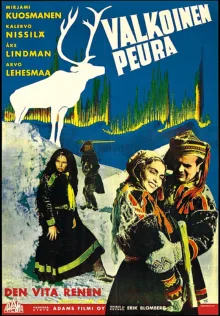
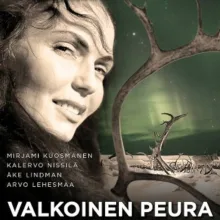
EL GORO: Hello. How's it going? MIKE WHITE: This week? We are looking at the Finnish folk horror film, The White Reindeer directed by Erik Blomberg.
The film was released in 1952 and is the story of Perria played by the film's co writer Mirjami Kuosmanen. She's a newlywed who misses her husband when she goes to a Shaman to have him craft a love potion for her. She accidentally screws up the procedure and she's turned into the dreaded where Reindeer it's a canopy in Lapland here, folks, we're going to spoil the film. So if you haven't seen White Reindeer, go ahead and check out the movie.
We will still be here when you get back. So El Goro, when was the first time you saw this? And what did you think? I actually saw.
EL GORO: It last year and I became aware of it. I think about the year before due to the very excellent documentary that at least one of the people on this was actually in that documentary. So this will be Fun Woodland, Stark and Days Bewitched from Kayla Denise. And if of course, it was for those that are unfamiliar, it was a rather exhaustive and wonderfully wonderfully put together survey of folklore throughout the world.
And White Reindeer became up in that conversation and I'm a big fan of this particular manifestation of horror that certainly opened my eyes to a lot of the different forms it could take. So I was absolutely delighted with that doc. I was writing down titles throughout it. And then when it came time on my show talk without rhythm to put together my yearly list of 31 days of Halloween where I find 31 horror films.
I've never seen watch them record daily podcast. I put in White Reindeer because I love being exposed to different aspects of horror throughout the entire world. And I really, really enjoyed this. Not only was it a well put together horror film from this time period, but also it provided a rather interesting glimpse into a culture that I wasn't terribly familiar with.
And there was, as I'm sure we'll get into this, the documentary feel of some of the sequences were just delightful. And it made me want to move to Lapland and hang out with Reindeer cat. MIKE WHITE: I'm so glad you deign to come on to a podcast and talk about a movie where you had actually provided commentary for that movie before I know not everybody does that. So, thank you.
Thank you so much for being a part of this. And when was the first time you saw this movie? KAT ELLINGER: I knew you were gonna bring that up. I fucking knew it before we go on.
His name isn't pronounced Blomberg is some weird imp pronounceable thing if you look it up in Finnish and I don't want to repeat that because I can't even remember how to say it, but it's like Blomberg or something. I'll say Blond Beg and I don't know, I don't know when I first saw this film. This is another one of my cinema GDD adventures. Yeah, it'd been fans subbed for quite a few years before it eventually got to this where I know Eureka put it out here.
That's when I did the commentary. There was another film from this year Finnish horror film as well from 52 called The Witch or The Witch Comes Back, which is a really interesting film not really known for horror though. Are they the finish? I think that's what attracted me to it.
Was this just how unique it seemed like a Finnish horror. And I'm pretty sure this was the first as well. Not that they're a prolific sub genre. But yeah, it caught my eye that way.
And then it was one of these things that I'd started to build up this theory that folk horror wasn't just British because prior to that, there was like a hardcore of English critics who would insist that folk horror was the trifecta, the Wicker Man blood on Saints Court and which found the general. But over the years, I've got really into a lot of my Czechoslovakian film. And then here we have a Finnish horror. I did a lot of stuff around Japanese horror and I started to realize this all constitutes folk horror one way or another.
It's not gothic. Although this one does have some elements of Western gothic put into it. But it's not gothic. It's based on folklore.
And so I started to write about it just really started to be in my bonnet and so contributed to everything, being folk horror now. And for that, I apologize. EL GORO: Don't apologize. KAT ELLINGER: Was it me?
You mentioned it on the documentary. EL GORO: I think it was actually. KAT ELLINGER: Yeah, I can see, I don't even remember. I haven't, I flicked past my seat.
I can't look. EL GORO: At but picking up on what you said it's that certainly was my whole lived experience. You know, I first came across the even the term folk core in the re in reference to Mark Giss documentary of a history of horror. When of course, he talked about that aforementioned trifecta blood on Satan's claw witchfinder general and Wicker Man.
But then seeing just the expansion of the scope and the work that you certainly did in that field to expand that scope has been amazing. I mean, not only did it, you know, redefine what this kind of genre could be, but also it provides an easy sort of entree for people to explore. You know, if somebody says, hey, I like folklore. I like these sort of things.
All right, let's see how that looks from this country. Let's see what looks in there and it just sets them off on that journey or at least it did so for me. So thank you. KAT ELLINGER: You're welcome.
It just started to irritate me because I thought it is a really anglo film anglo centric view that all horror must be gothic and therefore those three films because they were slightly different. Oh, this is new. But then you look at something like this from 1952 or you look at a lot of classic Japanese horror and even Kabuki theater before that and all the ghost story tradition there that was folk, that was what was being identified as folk horror. So I got annoyed about it that it was almost as if horror can only exist in the English speaking Ram or Western in the Western Canon.
And so I did go through a phase of trying to find as much as I could to because I was starting to brood on this. So this could have very well been one of the films that came out of that, but I really wanted to reinstate that. Yeah. Ok.
A lot of commercial horror is Western. It is from a Western Canon, but we aren't all it, you know, it's not just us, there are other traditions, there are other ways of seeing things. I'm not an expert on Sami culture, but one of the things that did stand out to me in their spiritual system, it's not really a dogmatic religion, but it's very pagan and nature based. Is this similar belief in the world of the dead and the world of the living being on the same plane very much like we see in Asia.
So that really fascinates me because I think some really interesting quote unquote horror comes out of that usually more emotional than the Western Gothic is. Well, because it's slightly more ambiguous. I just find it really interesting and that documentary is amazing because since then, a lot of people have gone out looking for these films and I just think it's so brilliant to see people actually actively tracking them down. Certain companies have become more interested in them as well.
I think the Czech side and the weird side. So I think it's really good, I think with these films are finally becoming more known, although this one did was an international success. It played Can did really well at Can. Yes, it wonderful film.
MIKE WHITE: And that's one thing I love about these movies from 1020 3040 years ago, not 10, but 30 40 50 years ago and more is that they had such a long journey since there was no home video releases. This movie came out in 52 but did it play Con right away? It was winning awards in 54. So it was still out there and traveling around.
It wasn't just, it comes out for two weeks, it disappears. EL GORO: And that's one of the things I absolutely adore about the genre and also to this, the broader notion of film, you know, we've been doing, I've been doing the show for a fair bit of time and there's always the reoccurring refrain not from cinema fans or the deep cinema fans, but other people when they're like, w why are you gonna ever run out of movies? Are you, is there everything that you won't do? It's like, no, this is a medium that's been around for over 100 years.
There are so many people making so many films and in terms of just the limit of section that have been available to me by virtue of the fact that I only speak one language, there's so much out there to discover. And so you can come into a film like the White Ranger that for me and completely out of nowhere and still find something very interesting to engage with it. And just again, that expansion of the view. MIKE WHITE: Before we even get into the movie proper, I just want to say that this is one of the most beautiful films I have ever seen.
Having your director be your cinematographer and having cinematography be one of his, you know, big things that he was a cinematographer before he was a director. This movie looks fantastic. I just think that every shot has so much life and vitality to it and just the framing of everything the blacks versus the whites. And especially when you're out here filming in Lapland and how these could look like Stark landscapes.
But every single shot looks gorgeous. KAT ELLINGER: When I did the commentary. I compared it to things like Marquetta Lazaro, which I know we did an episode on, but just the way the director is able to bring alive this sense of magical realism and he doesn't use his artificial sets. I do love really artificial films, but he doesn't use artificial sets.
He doesn't, he uses national dress or cultural dress. Everything's quite simple, but he's got this incredible sublime landscape which he's able to bring the magic out from that just all inspiring landscape and it's interesting when I researched him for my commentary, it was almost impossible. He may, he directed five films and he basically set up this little production, independent production company with a bunch of other directors. So this was his first film, but he'd been a bit of a Mario Barber but not as prolific.
So he'd been a cinematographer before that for a long time, really hard to find anything that he made. But he had a lot of experience in documentary, which is interesting, some of the reviews to picked up. It was like a travel log. So there are scenes like the Reindeer race at the beginning that do feel kind of documentary.
But then you get these moments where it turns into expressionism and you're just like it floors you. Absolutely. And even the one little experimental shot where the Reindeer goes into negative, you're like my God. Where did this come from?
So you get a feel that he was really experimenting. He'd finally got his chance and it was self funded, self produced. He's the cinematographer, he's the writer, he's the director working with his wife because Manon who, she was very much a collaborator on this. So it wasn't just him.
She came up with the story and was very much invested and they worked together very closely for years. She died really young though, I think 48 of an aneurysm, which is really sad, but I don't understand why he didn't go any, like he didn't appear to go anywhere after this. He makes this incredible film that shows so much flair and it's so much its own thing. It's not in any commercial tradition.
It's playful, it's beautiful. And then he makes a few other films and just goes off to do documentaries. And this, this is criminal, fucking criminal that he decades later, it finally gets the Blu ray release. People finally start to look at the film and go wow, it's like why that didn't happen at the time?
I don't know, I think it's really unfair. MIKE WHITE: And it's a pretty universal story even though it deals with Reindeer. I mean, the idea of the wife who misses the husband and tries to get him back. But really the whole idea of the wife who is secretly something that she doesn't appear to be.
I was not a boy scout, but I was a cub scout. And I remember sitting around a fire like the only time I ever went camping with the cub scouts and sitting around a fire and hearing a ghost story around the campfire, which was very similar to this, this whole idea of, you know, this guy who's out hunting this wolf that is attacking the sheep and all this. And he ends up shooting the wolf and he comes home and he finds all this blood all over the place and it was his wife who is actually the wolf. It's so similar to that and to other things, I was reading like a whole article about women as werewolves and it's just fascinating know that that has gone through so many cultures.
It was actually focused on Estonian culture, which I know is fairly close to this as far as the geography. But I love that they're using this Reindeer and I love that it's the White Reindeer, the rare Reindeer that becomes this creature that she can transform into. I just think that's really super clever, especially because of the place of Reindeer in Sami culture. It's just amazing.
KAT ELLINGER: We just quickly talk about the Sami angle. Yeah. And I'm not any expert on this. So Sami people from very Northern Europe are an indigenous people, not a large culture, but they occupied lands in Russia, in Finland or Nor Norway and Sweden.
I find it really interesting that the director and also Guzman and when they wrote the script focused partially on the Sami people. So you've got the Shaman who we can talk about and the Shaman drum. But then they've also mixed in, like you said, quite universal horror themes. So you've got the succubus character, there's vampirism in there's the werewolf, which wasn't really much of a part of gothic literature.
It became more of a thing in cinema and it's always usually men when it's cinema outside of some exceptions. So it's interesting that they chose to use this because during this point. And right up until the seventies, there was some pretty hardcore social cultural policies in place, especially in Sweden and Norway and Finland. You had eugenics happening in Norway where they were forcibly sterilizing Sami women.
They had this whole normalization program where they use Christianity to try and bring the Sami people into line with whatever culture and all the states are guilty of this. There was a whole thing in the 14 hundreds of witch trials, the tsunami people were caught up in that they were killed as witches and they really had to try hard to keep hold of their language, their customs and now obviously today, they are recognized as indigenous people. They do have protections. I think they're the only culture who are legally allowed to Reindeer.
Now it's seen as a sacred thing to their culture. So it's protected by law. But it's fascinating that the director picks this subject in Finland and places like that. They would call them lap Landers, which is apparently really insulting to Sami person.
So they are mixing these things in. But the message is there seems to be a genuine curiosity there, but the message is mixed is what are they actually saying about Sami people? It's, it's really interesting that they would pick such a, I guess a controversial subject and you do get the iconography of the church in here as well and you do get these more Western things. So I don't know just, just wanted to note that I think, I don't know enough about the culture to really talk about it critically.
I just find it fascinating that this sort of outcast group of indigenous people, they decide that this will be the focus, although none of the law actually come seems to come from Sami culture, this idea of the shape shift in Reindeer and that, that seems to come from somewhere else is something more Western. EL GORO: Yes, certainly in the presentation of the White Reindeer as a malevolent force, you know, I was trying to find examples of it within the Sami folklore. And the closest I could find was the story of Miano, which certain Sami people point to as sort of a ancestral forerunner to them, who was somebody who was, had these Reindeer characteristics could resume presume the form of both man and Reindeer.
And it varies depending upon the tradition out of it. But some people saying, hey, we descended from him or he's a representative of a sort of older spiritual tradition, but in terms of it being in the negative sense, yeah, the Reindeer didn't seem to occupy that sort of space. So it almost feels as you were saying that's sort of push pull that Blom Bery seems to be doing with this film. On one hand, a very sort of sympathetic and almost idyllic depiction of Sami life when we're introduced to the, you know, the Reindeer races and to the happiness involved in that and then that shift into the fear of the spiritual side.
So we have this like, oh look how nice this is. But then they also have that otherness to them, the shamanistic quality of them. So, as you said, yeah, it's, it's, it's a weird sort of push pull in this movie in their depiction of the si. MIKE WHITE: I'm just glad that here in the United States we've never oppressed a people and introduced Catholicism or Christianity to them in order to control them or done any sort of, you know, eugenic type stuff.
I'm really glad that we are above any of that stuff. KAT ELLINGER: I'm British, I'm staying quiet. MIKE WHITE: No. History at all.
With no, no, no. EL GORO: No, no, it does speak a little bit. One of the things I noticed, at least in the depiction of the Reindeer woman in this of kind of echoes of American indigenous people's beliefs. For example, that in a lot of tribes throughout North America, there's the tradition of the deer woman that again is this sort of figure that can have a vengeful side to her, but seems to be presented a little bit more in a positive light compared to this sort of wear Reindeer.
For lack of a better term. Though I will say it's an interesting choice in the utilizing the Reindeer as a figure of horror. Certainly, it has that cultural resonance within the Sami since so much of their culture is around the over circulates around the Reindeer. I mean, it lends to their nomadic lifestyle and the herding of everything, but the Reindeer is not a terribly intimidating animal.
It's a very cute animal. So there are certain sections where in the horror I think is somewhat undercut because they kind of look like a big dog with her running through the snow. MIKE WHITE: The horns intimidate me. KAT ELLINGER: Yeah.
When they're in those big packs, I wouldn't want to get in there. I wouldn't want to get into this sort of throng. I think it does lean a lot more on the vampire though. This idea of ship shape shifting, shapeshifting in cinema always fascinates me because you want the male like like and throat.
But generally when women shift it is into a Reindeer or a moth or a butterfly or I don't know why that is. I did interview Gavin badly. My friend who wrote the book on Werewolf Cinema for fab press and asked him this and he was talking about the animal of man and things like that. Maybe it's to do with that.
But then you get later on is like Angela Carter doing Company Of Wolves. There's a really good seventies film called The Werewolf Woman, which is nuts and there are earlier ones I didn't mention on my commentary, cat people because I didn't want to be accused of giving spoilers. But there is a bit of that to it as well. And I don't know how far I should go into that, but I've been shouted at by Foreign men for spoilers.
So other films. EL GORO: As we all know, we can generally disregard a lot of forum guys. KAT ELLINGER: But this idea is somebody bought like they're born into this innate without saying too much about cat people though. Most people have seen cat people by now, haven't they?
So you've got this woman. MIKE WHITE: Who their performance by Malcolm Mcdowell. It is one for the ages. KAT ELLINGER: Fucking do not to go off on the, on a tangent.
But I saw that film again fairly recently after not seeing it since the eighties. And in my mind, I thought it was a great film and I watched it again, I think maybe last year and I thought Jesus Christ fucking terrible. EL GORO: Yeah. But it had a banger of a David Bowie song on it.
KAT ELLINGER: It did. But it's such a horrible sleazy. EL GORO: Film and speaking of the kind of the notion of the vampire and how that fits into perhaps, you know, the more seductive quality and perhaps informing why we have this woman as the Reindeer. I was able to find certain references again within Sami folklore, talking about the notion of the White Reindeer, which is a rare thing that emerges amongst them and the desirability of it.
And in the broader sense, it's the idea that if you find a White Reindeer in the wild if you catch it, you're assured great wealth and great prosperity. So it's this, it's this very desirable thing and that, of course, fits into what we see the character of Perria, how she goes about her ways and also what kind of informs it because the sexual politics of this film are rather interesting. And it's, it feels as if it's punishment for sexual desire of horror. KAT ELLINGER: Isn't it true?
Very true. That's why I would love the Carter because she has that whole beast deal thing all the way through her literature and it's all about women embracing the beast. That's what the company walls is about. So what a lot of the short stories about is don't fear the beast be the beast in the case of the White Reindeer though.
It's an accident or whether it's truly an accident or not, we don't know because she goes to the Shaman with this little drum and it's the first living thing that she sees that she has to sacrifice and happens to be this rare reindeers. It's like she has this witch inside her, but the shape shifting thing appears to come from the spell. And what if she'd seen, I don't know anything about Arctic circle, a bear or a polar bear or a penguin would have, then she would have had to have possessed a penguin. I don't know.
MIKE WHITE: Are penguins in the Arctic or just the Antarctic? KAT ELLINGER: I have no idea. EL GORO: I believe they're in the Antarctic. KAT ELLINGER: Oh, I was thinking that one saw documentary about the depressed penguin.
EL GORO: Penguin that goes wandering off into the, one of my favorite bits of KZ and narration.
Speaker 8: He would neither go towards the feeding grounds at the edge of the ice nor return to the colony shortly afterwards. We saw him heading straight towards the mountains some 70 kilometers away. Doctor Ainley explained that even if he caught him and brought him back to the colony, he would immediately head right back for the mountains. He's heading off into the interior of the vast continent with 5000 kilometers ahead of him.
He's heading towards certain death. EL GORO: At one point, we've all been that penguin. MIKE WHITE: I love that when she visits the Shaman. That well one, he's a complete drunk, but I love that he's just got the goat hanging out with him in his shack.
At first, I thought she was going into a sauna because I know that saunas are a big part of like Finnish culture. And I, speaking of Finnish horror, the only other Finnish horror film I've ever seen was one called Sauna and I believe that was from Finland, but it's definitely set in there. But yeah, I was just hanging out with this goat. So I was immediately thinking more of like Western stuff with how the goat represents the sexuality and especially Satan.
KAT ELLINGER: Oh, they definitely put this in all over the place because one of the things that I was trying to figure out on my commentary was, is this a vampire film? Is this a werewolf film? What is it? And it seems to be simultaneously both of those things.
And of course, the vampire, the female vampire is such a key part of gothic literature. But that goes straight back to mythology and even religion. You got the vampire's lilith. It's this whole thing, this fear of women's sexuality.
But that feels to me like such a Western thing, such a Christian thing, such a Christian fear. You generally don't see an awful lot of that in folk horror though. It usually takes on different forms or is more ambiguous, especially that I'm thinking of the Japanese ones where women turn into cats or possess spirits, but they're not entirely evil. They're never entirely evil.
It's usually some tragic story that they were killed before they could live their lives or by rogue samurais or have some brutal death where they were raped and they come back that way. So it is treated in a totally different way. Whereas this seems to be very much the female vampire. Although the prize that they're chasing isn't a beautiful woman.
It's this sacred Reindeer that can bring them luck and bring them money. So they're not even really chasing sex is interesting. I don't know whether they did this to make this more because it does have a Western sensibility in this sense. I think that's why it did so well because there are certain things are recognizable in that this is a horror, the evil succubous woman and things like that.
It's not entirely out there. So it's interesting how they mix those two things together. She's just horny though. Can we talk about?
It's not that she misses her husband. She's the horny. She gets this lovely wedding night. He goes to fucking sleep.
EL GORO: And then you have those other men that are sharing the room with them. And then there's that, that moment of catching the eye that she has. And then it's, it is, it's, it's coming out of her sense of horniness. And one wonders how, you know, we were talking about this being perhaps molded to fit for more international audience.
But if looking at just the notion and the nature of Sammy society as depicted in this, you know, the idea of the semi nomadic existence that is so keen about following the Reindeer herds. You can possibly draw the connection that you know, she not only she's representing, essentially pulling the man away from that kind of work. You know, he's meant to be out there with the Reindeer, she wants him to remain home. And so there's maybe that kind of push pull in their society.
But yeah, I think it really is just punishing her for having some sort of sexual desire. KAT ELLINGER: A society of no women either, apparently because you barely see any women in this though. EL GORO: You do see that bad ass older woman that has the most lackadaisical knife throw in the entire movie. I love that.
MIKE WHITE: Yeah. Yeah. I think it's very pointed pun intended that a woman is the one that injures her later on when she is in her Reindeer form that no man seems to be able to get her. But the woman is the one that does the damage and then God, when she's licking the blood off of her shoulder.
Wow, that's both very hot and twisted at the same time, which is the way I love it. EL GORO: At least until the very end in which she is fatally penetrated by her husband. MIKE WHITE: That's an interesting thing too that they're using iron because that's usually something I associate more with Western mythology as far as iron is the thing that can, you know, drive out the beast and hurt any sort of supernatural thing. I'm not sure why iron has such power but that they are forging these weapons out of iron.
I was like, oh, ok. That's a nice crossover too. And yeah, I totally agree with you cat as far as there are enough Western things in here that I can latch on to this and I can see why this became the international hit that it did. KAT ELLINGER: He laughs at them.
She laughs at the men and they're very upset about it. I can't see where the two goes. So she's just laughing. She just laughed.
They're totally defeated by that. They can't take it. EL GORO: And then you get that wonderful scene in the church, which I'm still ambiguous. Exactly.
If that's meant to represent a Christian church because the subtitling in that scene, it's, it doesn't feel like traditional Christian hymns. But from the look of the priest, he appears to be very sort of Nordic protestant and, you know, the way he's dressed and everything. But taken as if that is a Christian church, just the sort of what she represents within it, that elements of the pagan that's lurking in the community, drawing the eye and the attention of the men and thus the attention away from God. I love that particular scene even though I'm sure the motivations for it were not as positively pagan as I myself am.
I see a scene like that. I'm like hell, yeah, let's abandon this and let's go out into the wild. But, you know, I'm sure that wasn't the motivation of Blom Bery. KAT ELLINGER: It's really interesting because if you think about not just his army culture, but the occupation of Protestantism in Northern Europe.
Anyway. And obviously, in recent years, we've seen a huge kick back to that and return to Nordic paganism and things as a point of restoration and revolution and a lot of outright have latched on to that as well over there. EL GORO: Yeah. Unfortunately, it goes hand in hand with a lot of racism.
That's one of the things I've ran into, even when I was trying to research you the background of the Sami and a bad rabbit hole of racism of, well, they're not really European, they're Asian. It's like, ok, I'm not going down this route. KAT ELLINGER: In terms of the Sami culture because that was part of the normalization was to try and make them Christian, which is always the way. And so the presence of the church, again, it's ambiguous was this because the church isn't really presented as the salvation, which is interesting, if you think about the Western Canon, it's the church that generally becomes the salvation or the sign of the cross or the pure man or the man of God.
And it doesn't really have that angle. It's the husband that, that kills but not in this religious sense. It's not all backed up with this sort of gothic jism. So it's interesting that you see her in that context because the church was the oppressor.
Basically, it's fascinating. MIKE WHITE: The way she's framed in that church scene is just great. I love how the focus is on her face. And we should probably say, or I should probably say that she's gorgeous.
She is absolutely a gorgeous woman and just that she stands out so much and then just has that way that she's framed in there and she's looking up, everybody else is looking down. I love it. KAT ELLINGER: From the beginning though, she's like one of the guys. So she's involved in the Reindeer race and you get the idea she could give the guys a run for their money.
She's very physical. She's very outdoorsy. And apparently because Marlo was very much like that in real life, she's very outdoorsy. She loved to swim and hike.
And so you see her at the beginning, she has this almost masculine energy there in that she is very comfortable being in this male world and obviously thinks when she gets married, then she gets to have a sex life and realizes that the men are all useless. Blame her. Really going to Shaman. What are you gonna do?
EL GORO: Bar is even the way that she preys upon the men. It's the emasculation of it. All the laughter that she has before she breaks it down. It's like, yeah, I got you.
There's, there's again, have a thing in my note of don't have sex with the Reindeer lady. I mean, if you, if you were tracking a Reindeer and all of a sudden she spontaneously turned into a woman, I don't think my next move would be like, oh, it's time to have sex. KAT ELLINGER: Yeah. But men always fall for that mermaids.
When they're gonna learn, they're always the mermaids. They lure them away the sirens, the succubus. EL GORO: If people don't take away anything else from this podcast, take away this gentleman don't have sex with the Reindeer lady. KAT ELLINGER: I do want to say it's very ahead of its time in terms of, if you think about the vampire canon in American and then British films.
So you rarely see female vampires. You've got Dracula's daughter, you got like a few vampire. If that's like a hag character, that's totally in its own universe. But the more Carmina adapted ones, you've got blood and Roses and crypt to the vampire.
But generally it was 52 There weren't that many horror films being made in the, in Western Europe or America. Anyway, it was all post war stuff. So you got the universal stuff before that. When it comes to Hammer, it becomes very much about Christopher Lee, the sexual predator.
And you don't really get these female villains come along. There's the occasional one, there's the gore on and the reptile I Hammer do a few, but nobody really realizes there's a potency in that until the seventies. And then you get the vampire lovers in 1917, the door, just every single lesbian vampire just spews out in a wave. And so this seems miles ahead of that because you can say, wow, on one hand, these films reinforce that women should be punished, but they had a lot of the time they had to put that in, there had to be a punishment.
But the real bones of the film is that you are enjoying the villainous parts of the woman, the seductive parts, they just stick the little moral on the end. Oh, yeah, this is totally a moral message. I never felt as a young woman growing up that I wanted to be on Teen Van Helsing. I always wanted to, they're appealing.
And so I think there's a, there is an empowering aspect to films really use monstrous femininity. A lot of the time it also goes against these, I guess, really conform to male desire or male fantasy because it more often than not reflects male fear. And there's a power in that. A lot of the films I focus on are about that boy call the Catholic feminine, which I stole from Camille Paglia.
But this idea of the woman from the underworld, it's abject, it's not of patriarchy. So it's almost not important that they get punished at the end. It's the fact that they get to wreak havoc for a small while. That is the appeal to me and nobody was doing this in 1952.
It was a whole seventies thing and nobody was doing this in Finland. You get two films that come out this year. The other one, the witch or the witch returns very different in tone and style. You basically got this house full of people and they accidentally dig up this witch.
Now that film has got full nudity in it. 52 and this, which is taunting them and she's seducing the parts of it are like weird comedy. It's an amazing film. But again, it's like this very Catholic feminine energy that the men are simultaneously drawn to but terrified of, they're like, terrified of this witches.
And that film I did some research around it. Just complete coincidence that was made the same year as The White Reindeer. There's just two and then nothing really, it just, it's like you were on to something here, you were years before Hammer years before your call. This becomes a massive thing 18 years later.
But I guess in 52 we're still in the Haco, this sort of thing would be very dangerous to Americans. EL GORO: Because, you know, I often think about this, you know, would this film be made in America during this time period? And there's on some level perhaps because there's nothing in here that's on the surface ne necessarily would violate the Hayes Code, especially since with the ending, you know, all the guilty people have been punished and everything like that. But I could certainly see, you know, going back to the depiction of Christianity in this, another filmmaker leaning very heavy into the God aspect, very heavy into the Christianity of it all.
And one of the things that came to mind certainly was Bergmann's Virgin Spring, which would come a few years later after this, which also has that sort of dip into the pagan background of the culture. But then boom, he immediately abandons it and it goes all very Christian at the end of it all, which I still think the best part of fake. KAT ELLINGER: Ah, but does it though, because it's like this point and not to go into Bergmann. But Bergmann was a, was another director that I compared this to because I even wrote a whole article on this Bergmann's quote unquote folk horror in that.
You have films like The Hour of The Wolf and Seven Seal and Virgin Spring. And they are very much horror, not commercial genre, but they're using folklore. Bergmann was very inspired by that. But Virgin Spring, you get this retribution.
But at what cost it doesn't satisfy anything. So you get that ending and it's just so bleak. It's just like Bergen Bergman was no fan of the church and his dad was a protestant pastor. EL GORO: And that's where I was thinking that at least in terms of the, obviously the complicated relationship as you said, that Bergmann had with the church.
But it felt when I watched Virgin Spring that you have the embrace of the pagan. When he goes and seeks his vengeance, he puts on the leather, he put even just standing at the or sitting at his table. It feels very, very much evocative of certain kind of Norse traditions and Norse iconography. And then when the vengeance is gone, here comes the guilt, which in Bergman language, guilt seems very much wrapped up in Christianity.
And again, I think that's the influence of his father on that. So that's what I was saying, at least in terms of Christianity, reasserting it in the pagan, it would have ended with, yeah, we got our vengeance. Fuck. Yeah.
MIKE WHITE: I was thinking about what you're saying, El Goro earlier about the desirability of the White Reindeer in the culture. And just that, that helps her out so much that people are hesitant to shoot the Reindeer because the Reindeer is something that's seen as being very lucky and will bring wealth and all this. So it's very fascinating that she becomes that, that, that totem that thing that people want. So rather than going after her to murder her, they're going after her to capture her and that becomes like her way of getting her victims, which is great that, you know, one of her first victims after that amazing first transformation scene, which I absolutely love and I love that, you know, I think you pointed this out in your commentary cat that she's let from underneath so much to give her that sinister thing.
But it's all motivated by the campfire, you know, the actual light source. So she's got that light source that's bringing that demonic look on her face. And when she jumps over the fire and transforms into the Reindeer and then when the other people see her, it's like, no, no, don't, don't shoot that Reindeer. Let's go out and capture and the first victim that she has, is a guy who's been tracking her because he wants this White Reindeer.
And I love that. That's a desire that then becomes a sexual desire. It's a desire almost for money and for status and things and then it becomes a sexual desire. Suddenly it's.
KAT ELLINGER: Not the typical succubus in that sense, it's very much its own way. The female vampire would you to appear is a beautiful woman and seduce that way. But here we have a Reindeer is completely different. That's not why people are attracted to the Reindeer.
And I find that fascinating is, yeah, I can't think of anything that I've seen that uses that usually there's the shape shift, they will attract the victim out of shapeshifting character and then they will transform into the war for the killer moth or whatever it is the vampire type, they will appear as this innocent maiden and she does it back to front, which is interesting. There was one thing I noticed this time around which I didn't pick up on the commentary. I really kicked myself for it is when you first see the husband on this, say a black cat crosses his path and I didn't notice it when I did the I'm like, why didn't I notice this?
And it is that deliberate is that again, like relating to our superstitions, this little black cat just runs across. So there is such a mixing of certain traditions. And so I know, Reindeer sacrifice was part of Sami paganism. But then the White Reindeer is like the sacred is like the special animal because they are so rare.
Apparently, they have 100 and 50 different words for Reindeer as well, which is amazing. I love that. But it is like this very sacred, like all life is around the East Reindeer. And it was that kept the culture together because in Norway and Sweden and Finland, they didn't want them speaking Sami language, they didn't want these customs here.
And so this nomadic life, these Reindeer became like the core of keeping that culture together because that's how it survived. There are other ways that the Sami people bear hunting, fishing and all these things. But the Reindeer is like the special one. It's like an honor, it's passed down from family to family.
And that was how this culture was really kept together. And I find that fascinating because all these different states did everything they could to really quash that, to turn people to Christianity, to get rid of their language, to get rid of the cultural beliefs and the folklore and all of that. So it was the Reindeer, it kept that together. But then you have a Finnish film with Finnish language.
So it's not really, it's like, and I love the film, but it is appropriating some of that, not really doing it, not really doing it true to form. But I do think there is a genuine fascination there from both director and writer. I do think, I don't think it is. Damn, the Sami, the two that there's more to it, there's a definite curiosity to explore this and I don't even think that the White Reindeer pare is evil.
She just makes a mistake. She just, you know, perhaps the message is don't go and see the Shaman of he's pissed, you know, because it's. MIKE WHITE: Not for you. KAT ELLINGER: Can you turn me into this evil thing?
So I can, she just wants to have sex. She wants to have a good time with her husband who keeps falling asleep because he's so tired and she doesn't go there and say, send, I wanna kill men. I want no, she just wants to get laid and maybe it's something to do with the fact that the Shaman is there with a bottle of whiskey or whatever, knocking it back with his little bone or whatever it is on the drum and it just goes tits up. EL GORO: But then there's also that suggestion that there's something inherently magic about her, you know, with her own origins of her mother coming out of nowhere.
KAT ELLINGER: But she doesn't know this though. EL GORO: She doesn't know. But it's the notion also that even the Shaman seemed afraid when the drums started going out almost as if her inherent magic was being awakened by his pissing around with his shamanism. And so it creates this very sort of tragic story that as you say, what's her motivation?
She wants to, she wants to her husband to be around more often so they can have sex, which is not a terrible motivation. I think that's very positive. KAT ELLINGER: She doesn't want to be running around with all these other guys. She doesn't.
EL GORO: And then even later she has that she has that whole moment which again, I think in another filmmaker, they would have definitely layered on the Christianity there. But where she goes back to the altar and is begging to be removed from this curse that she doesn't want this anymore. But what happens? She gets transformed right back into the Reindeer.
So it's a very tragic story. MIKE WHITE: Either she or the Shaman or both of them together have awakened something, I mean, awakened something for her, but the Shaman seems to be punished. I mean, when she goes back and what is it? He's all completely iced over that whole little shack that he's in is iced over.
I'm like, wow, OK. It seems like the gods are. EL GORO: Angry that his drum, which is, you know, his spiritual connection to that world. Because again, the very, very surface level exploration I did of Sami shamanism.
The drum is a very, very central part of that. That's how you get into the proper mind space for this sort of religious experiences through that drumming. So to see it shattered like that, it's his connection to the spiritual world has been broken. So he is being punished in some way.
But it, and it feels like they unleash something they could not control whether it was inherent to her, whether it was coming from him. I don't have enough of a grounding within this sort of culture to make any sort of informed things. I can only watch the movie and draw from there. KAT ELLINGER: You just need to lay off the source.
Really? That's my take. EL GORO: Everybody was drinking pretty good. But then again, if you're living in that cold environment.
KAT ELLINGER: Now everyone's dead. Now everyone's dead because of you, shamans are interesting. I do love a bit of shamanism and they generally don't appear much in horror films because they are like the conduit to the spiritual world. They are the go between.
But then you could say, didn't the gods or the spirits allow this transformation then that because the Shaman doesn't really have magical powers, they're not like the megas or even the witch, what they are is like a spiritual medium between the two worlds. I could do it. They're able to speak to the spirits. So one example would be somebody's very ill or they're depressed and they go to the Shaman and the Shaman says you're possessed by the spirits.
So the Shaman will go and speak to the spirits and say, hey, can you leave this person alone? They don't really have magical, they don't do spells in that way or they don't really have magical powers. It's, it's interesting that it's still granted in some way by this guy banging on his drum. MIKE WHITE: Absolutely hammered in him there.
KAT ELLINGER: I have like the thing as well. It's like they can't resist. EL GORO: It was also interesting to see how that was depicted. Again, not having much of a background in Sami shamanism, but having a little bit more, at least in traditional Norse depictions of magic.
And the idea that in traditional Norse culture, magic was viewed as being very feminine. And so when a man would practice magic, he would inherently take on more feminine or mixed gender characteristics and seeing that played out within the Shaman character with his higher pitched voice and the contrast he had towards the other men in the camp and they were so you seem to be fitting in with that sort of tradition as well. I don't know if that was informed by actual Zamy shamanists at practice or that perhaps is coming from more of the Nordic influence in Finland in this.
KAT ELLINGER: It's definitely Nordic, I think just in the case of shamans globally, the Shaman is generally taken as the wise person. They are the enlightened, wise person who hold this responsibility. What you have in this is basically a piss head. Who when you first see him, you think is this a woman?
Is this a guy pretending to be a woman? Because it's the hag they sometimes like to do that or you need a really ugly witch. Let's get a guy to play it. Then Donald Sutherland does it in cast the living dead.
It caught me off guard again and I've done the commentary for God. God knows how many times I've seen this film. It caught me off guard yet again, I think. Is this the, because it is doing all that I have.
You do and you think is the test of 10 Reindeer that isn't a Shaman though. The Shaman are like the enlightened spiritual leaders, the wise people that seems, I don't know, offensive to shamans really. Like you said, it's probably more of a Nordic influence because they have a Shaman basically acting as a witch, which is interesting. Yeah.
But it is that whole thing like is this a fairy tale witch when they, when she first comes to the hut and he's in there like Mike said, hanging out with his goat sitting over his little cauldron? I think it's wonderful. I am a pagan. I never get offended by any of this stuff because it just fascinates me how it crops up in film and stuff.
I just love to see it here. I know Christians don't take that for you with their representation. So they tend to get very upset about it. I love the Wicker Man and stuff like that.
I love all that. MIKE WHITE: But that you mean the Nicholas Cage film I'm sure, I. KAT ELLINGER: Don't know if that one. Actually, I do love the scene.
I'll give it that. MIKE WHITE: Yeah, that, that movie has the best highlight reel, the best scenes in all. EL GORO: What I'm hearing is we need to do a remake of The White Reindeer with Nicholas Cage as the Shaman. I mean, he did talk about his acting style being neo shamanistic.
So I think if we cast him as the Shaman. MIKE WHITE: It's almost like his role in that Rob zombie trailer. You know where he Yes, yeah, I could see that. KAT ELLINGER: He really describes.
EL GORO: Something along those lines. I forget the exact term he did, but he referred to his acting in shamanistic terms. MIKE WHITE: We need to do that soon because he's going to retire pretty soon from what I understand. And I say, I.
EL GORO: Say this as somebody who's come around to being a fan of Nicholas Cage because you know what, at the end of the day, he's an eccentric guy doing his own thing. As long as he's not hurting anybody, be you Nicholas Cage. He's, I won't enjoy everything you do, but I do enjoy quite a bit of that. KAT ELLINGER: I love him.
He is so totally mad but my great friend, the late great Mike Mc Padden, see, I loved Mandy, but Mike Mc Padden wrote a whole article on it and it's still online called Mandy is a meme where he described Nicolas Cage as human trauma. And as much as I love that film. I love Mike's review even more, even though I was a complete opposite opinion of mine. But now I, now whenever I see Nicholas Cage, I just think of that Nicholas Cage's human trauma.
He is. But no, I don't want him anywhere near the White Reindeer. It'd be a bloody CG. I Reindeer now as well.
Whereas here they're grappling with actual Reindeer that bit where she pulls the Reindeer down by its horns. It, oh my God. Yeah. And sorry, you think, and it's not here I kept looking at and it's not a devil or anything.
She wrestles this bloody thing to the ground. It looks really mean the way they do it is, wow, they twist their heads and make them submit. But yeah, they're really getting now you'd get CG I Reindeer. It wouldn't be as good.
MIKE WHITE: I love after they find out and we cut to her in the cabin and she is looking at herself in the mirror and she's got those teeth going on in the reflection, but it seems like her reflection is not her, she's separated from herself, which is great. And I love how her husband comes in and he's just like, oh, I'm going to go hunt this witch or, you know, like hunt down this Reindeer. I'm like, and she puts her hand up to her neck. I just, oh, it's so good.
And I love the way that he's using So I'm just like spewing. I love the way that they're using the light through the window and have the shadow on the floor. And you've got the one transformation scene where you see the shadow of her and she almost looks like Max Shrek going across and then you get another where you see her walk across that shadow on the ground. KAT ELLINGER: There is a lot of expressionism in the horror scenes which I love.
I just love that anytime it comes up in anything. EL GORO: And if you want to talk about amazing lighting the scene with between her and I believe it was Oka Lindman who played, who's credited as Forest Ranger, but basically the man who encountered her survived and then realizes around the campfire when he hears her laugh, it's like, oh that's her. And just the way that that's lit with the fire and the black background and just the Stark contrast between the two and he has this fiery brand that he's running through and they, anytime anybody's dealing with an open flame like that, I just get impressed.
It goes back to thing from another world where you just set a guy on fire and see what happens. But there was, there was that element of danger there. And again, as you were speaking of cat, the expression, expressionism quality that comes out of that. Oh, it's amazing.
Good stuff. MIKE WHITE: You're right cat. It is a shame that Blomberg did not direct more movies and more horror movies and just because he's got such an eye, such an eye and to have his wife be his muse and his co creator, what a team. KAT ELLINGER: I could not find his directed work when I tried.
I know it wasn't in genre, it was more to do with drama, but it just seems a real shame because it is such a beau just in terms of horror, the way it meshes gothic and folk horror, the way that it's shot, the way that sort of juxtaposes all these contrasting things like expressionism. And then you have these almost naturally and then you have the gothic in the folk horror and all this stuff that goes on in it in an hour. And what seven minutes there's so much packed into it and it's so rich and it's like why this is just seems really unfair.
MIKE WHITE: All right, we're going to take a break and play a preview for next week's show right after these brief messages starring Charlie Weber, Madison Bailey and John Voight.
Speaker 9: The painter is available to buy on digital today. An ex CIA operative is put in danger when a mysterious woman from his past resurfaces now targeted by a relentless rogue black ops program. He must rely on skills. He left behind in a high stakes game of survival.
The painter get it on voodoo now rated R from paramount pictures.
Speaker 10: He 123 is racing underground at 70 miles an hour, the train and its passengers are under the control of four armed desperate men. Anybody who tries to rise is going to get shot. What happens next will keep you on the edge of your seat. The taking of Pelham 123.
You've got to see it. You'll never forget it. The taking of Pelham 123 rated R under 17, not admitted without parent. MIKE WHITE: That's right.
We're doing something completely different next week as we go back to redo an old episode of the show, we are revisiting the taking of Pelham 123. Until then I want to thank this week's co-host Kat and Goro. So Goro, what is the latest with you, sir? Well, at the.
EL GORO: Time that this is going to be released, I'll be probably deep into the episodes that my patrons have selected. The first part of the year is always turned over to the people. Support me on Patreon booking the episodes, which is always great for me because it's, there's a tendency when I book to just kind of go down where my mind is at. So expanding it out to other people is always fun.
But yeah, we have some fun things lined up including one of the very first episodes I'll be doing of the year, which is very much in the folklore tradition because one of my listeners requested I take a look at Heda Fen which came, came out of that same Severn Folk or box. MIKE WHITE: Set, that Severn Folklore box set so annoying because there's just so many great movies. It's just, it's like that Woodland Tales documentary where I'm just there like writing down all the, oh, I gotta watch this. I got now I gotta see this.
KAT ELLINGER: I was in it and I came away from that documentary with the list of films. EL GORO: I still haven't watched all the movies from the documentary, but I will, I have at least watched all the films in the box set, which is always a trouble with me because I have, I have a physical library and so much of my patreon content is devoted towards watching the movies I haven't watched that are in my physical library. I refer to it as my great unwatched pile and there's so more, so many and it's, it's still well over 100 titles that I haven't watched yet in my library.
MIKE WHITE: I mean, sometimes I curse Kayla Janice's name because even with her book, I was writing down so many titles and I'm still working through that list of psychotic women or darn you, Kayla. Well, now she. EL GORO: Has a new edition of it. So I got to pick up the newer edition.
KAT ELLINGER: Yeah, that's got a whole new bunch of films added. I got that all fab press though. Just a little, if you get the special edition, I don't know if it's sold out, but you get a free CD where she reads the yellow wallpaper, which is, yeah, it's really cool. EL GORO: How dare you, Kayla doing quality content in the horror sphere.
How dare you? It's only to pick up this, the actual new seven box sets that they did around the house of psychotic women. So let's to watch. But yes, that's what I've been doing.
MIKE WHITE: And k how about you? What's going on with you? KAT ELLINGER: I'm just feeling ashamed because I barely touched my seven folk horror set because I never get time I saw Alison's birthday this year. Actually, that was a discovery.
I seen that one. That was really good. What am I doing though? There's not a lot I can announce coffin Joe set that I co produce is out this month.
I got slightly delayed. But so looking forward to that talking a big box sets, a kind of a huge undertaking and you produce 15 extras for that video extras and you've just got six discs. I can't even remember how many films but all been restored that's coming out. I just got my head.
By the time this comes out, I'll be waiting for my first Mark on my first essay for my masters. Yeah, so I can listen back to that and listen back to this and think of the headier days where I wasn't sweating over that Mark so much and yeah, my Patreon still chipping away at that doing videos. Hopefully, I've done some more episodes of to the devil a daughter, my podcast on the Catholic Feminine by the time this comes out, but you never know eyes bigger than my belly. As usual.
EL GORO: Speaking of people that are doing quality contributions to the horror genre, you're doing amazing work and I'm definitely looking forward to that Coffin Joe box set. I was disappointed when it got delayed, but I'm kind of ok with it because it put it outside of the Christmas rush so I can spend money on other people for dropping the money on Coffin Joe. KAT ELLINGER: Yeah, there was a hell of a lot of work that went into that set because obviously the way the films had been available before were not in great versions.
It was great to have them. I still have the whole old Anchor Bay set. It was wonderful to have them but not the great, not great restorations and it was a bit of a journey to get them restored. But I've seen the restorations and holy fuck.
EL GORO: Considering some of the, some of the ones I think it was what the host of. KAT ELLINGER: Yeah, that's one that it's just, I can't wait for people to see them because it's like Jesus Christ. EL GORO: I'm looking forward to watching that with an actual translation because when I watched it didn't even have subtitles. I was just like, OK, let's see, let's see what Jose has for me.
KAT ELLINGER: But I always remember one scene from that, that I'm pretty sure I had it with the hard coded, it might have been on the anchor base there or, and there were just people going. Everybody know some reason I have that subtitle burned. EL GORO: Into that inning of the beast. KAT ELLINGER: The beast.
If I've been waking for some reason, I just have that burned into my head any time. I think everybody, there's a lot of naked people and all sorts of things and that I just, I'm really excited and this has been a long time in the works. Like I personally, I've known about this set for at least four years. I didn't know I was going to be brought on as a producer.
Then it's been a whole journey. Can't wait for the bros to come out and complain about it. Fresh blacks or something. EL GORO: Well, they should go back and watch it how we used to have to watch it again with grainy quality and no subtitles.
I'm just looking forward to be able to see what's going on and I'll still hold on to my old coffin, Joe box set because it's got a cool coffin design and it looks cool on my shelf. KAT ELLINGER: But I'm looking forward to better restorations stuff without these big chunky hard coded bloody subs and stuff. Yeah, it's like we can have nostalgia over that, but I wouldn't change this area of the world to be honest. MIKE WHITE: Well, thank you so much folks for being on the show.
Thanks to everybody for listening. If you want to hear more of me shooting off my mouth, check out some of the other shows that I work on. They're all available at Weirding Way. Media.com.
Thanks especially to our Patreon community. If you want to join the community, visit patreon.com/projection booth. Every donation we get, helps the projection booth take over the world.
Speaker 4: Finland, Finland, the country where I want to be pony trekking or camping or just watching TV. Fin Fin. It's the country for me. So near to Russia.
So far from Japan. Quite a long way from Cairo. Lots of miles from Vietnam. The country where I want to be eating breakfast or dinner orm on that land.
Has it all collective, often ignored a per second to Belgium when going line country where I want to be so lofty. Yeah. So tall in life. Finland has it all up in the fire.
The country where I quite want to be tree tops, so tall. All I see it all. Ok.
Watch
Music credits
- "Finland" - Monty Python
- "White Reindeer Suite (Valkoinen Peura)" - Einar Englund
Links & resources
Related episodes
Episodes that share keywords with this one.
Close Encounters of the Third Kind (1977)
Shared: El Goro
Joe Alves, Matthew Robbins, Jim Bloom, Douglas Trumbull and others
Comments
No comments yet.