
Show notes
Buy David's book at https://amzn.to/47NqQlR (opens in a new tab)
Labels: Special Report
Transcript
An automatic transcript, tidied into paragraphs. It has not been proofread, so names, titles and spellings may be wrong, and it does not say who is speaking.
Show the transcript (about 7,400 words)
CLEAVON LITTLE: Hold your ears, folks. It's showtime. HULK HOGAN: People pay good money to see this movie. When they go out to a theater, they want cold sodas, hot popcorn and no monsters in the projection booth.
JUSTIN ROILAND: Everyone pretend podcasting isn't boring. Turn it off. MIKE WHITE: Hey, folks, welcome to a special episode of the projection booth. I'm your host, Mike White.
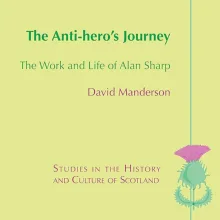
On this episode, I am talking with David Manderson. He is the author of the Anti-hero's Journey, the Work and Life of Alan Sharp. It is part of the Studies And History And Culture Of Scotland series. It released this year.
It is all about Alan Sharp. If you've heard our episode about Night Moves, you've heard us talk about Alan Sharp. He did a lot more than just that. He led a fascinating career and Mr Manderson captures that in his book, highly recommended.
And I hope you enjoyed this interview. Can you tell me more about you and how you got into academia. DAVID MANDERSON: As you can see? I'm not necessarily all that young anymore.
I was teacher for many years. I worked in further education colleges in America. The equivalent is the community college and I taught in them for 30 years for 25 years or so, 23 years. And then I got an offer of a job at a university.
So I went to that and I became a lecturer in screenwriting. It wasn't necessarily my whole bag quite liked it, but there were other aspects of things that I can done, maybe teaching as well that wasn't allowed to. So after about 10 years I quit and I just got out and I decided to become a writer instead. And I had a crazy talk one night when I was walking across Byrs Road, which is a place in west end of Glasgow.
Don't know if you've ever been to Glasgow, but it's a place you probably visit if you ever came here. But I thought I want to write Alan Sha's biography. I was going to a meeting that night and I went in and shared with a friend of mine, a guy called Carol mcdougall who's quite a well known writer. And he said that's a great idea.
That's a great idea. He said, don't go to a Scottish publisher. It's bigger than that. I had to tire up.
They call it retirement. I've never been busy actually, to be honest with you, within a month of the t A publisher came to me and said, do you want to write a book about something which is some ideas? So I did and one of them was about Alan Shah and they grabbed at it. They really liked that idea because nobody's written about Alan Shaw, other than Matthew Gear, who I know has been in your program for years, literally decades.
So that was how it came about writing the book. MIKE WHITE: So when were you first aware of Alan Sharp? Is he a Scottish national hero? DAVID MANDERSON: No, not really.
He was once but not now. Very few people remember him here. I was in a pub in Barnes Road. The same road that I mentioned before.
I was with some people and they were saying, what kind of a writer do you want to be? Like, Dave? I was young at this time. This is 1977.
Ok. I said, oh, I really want to be like a real guy who goes abroad and raise adventurous stuff like Robert Louis Stevenson, but a very adventurous, we always Scottish too. And they said that's Alan, she and I said, who, who's Alan Shaw? And they told me all about this book called The Green Tree and Getty, which came out in 1965.
And in fact, they sang a little bit to me. The lines are here. We sit Birds in the wilderness down in De Merano. And it's an old song that's probably associated with music hall and even with need what we call spirituals now, like minstrel music and so on.
So it's got a bit of a dark history as well. But this is what Alan Sharp used in his book called The Green Tree and Gary as a kind of refrain throughout, I tried to get hold of the book, couldn't buy anywhere. I actually went to London to buy it, found it, read it and was just completely blown away by it. So from then on, I really followed Alan Shark as much as I could.
And he became very well known down in London first for those novels and also for his television writing. And then he did an unbelievable thing from, for a working class guy from Greener, he became Hollywood screenwriter and a very famous one. He wrote five films in five years that were produced by Hollywood's top directors, Arthur Payne, Robert Aldrich, Peter Fonda, et cetera, et cetera. Five really amazing years.
And then he completely disappeared. And as far as we heard in Scotland, we had nothing, absolutely nothing. He just left, he just seemed to disappear, he vanished. And over the years people stopped asking about him.
He didn't, there was no reports of him. No, nothing. And I got very curious about that when I retired and I was thinking writing this, what happened to him? What was his life all about?
And that was how I got hooked when Alan Sharp really became a quest for me. MIKE WHITE: So how did you approach your research for this? How did you find those missing years? And what was your take on building out his life story?
DAVID MANDERSON: First of all, I met Matthew and Matthew had written his book already. So I knew I had a start. So I looked at Matthew's book and I looked at the bits of Alan's career that Matthew hadn't looked at because Matthews has focused mostly on Sharps, Hollywood years. Then I went about investigating those bits that Matthew hadn't looked at, but also added to what Matthew had looked at.
So there's a lot of stuff on the internet. It's a lot of stuff which is kicking about that hasn't been looked at in books for many years. But I also spoke to a lot of people. So I interviewed people who had worked with him.
People who work with him are now in the late seventies or eighties. But they were still around. Some of them. I spoke to Lem Dobbs.
That'll be a name. You probably know. I'm the writer of Dark City and Limy. I see.
I think you've done programs on them. He became very interested because he got hold of the book and got in touch with me. I spoke to Alan's family. He had a lot of children.
He had six children in front by four different women, four wives and six kids. And they were wanting to know my interest was why would I take that interest? But I showed them more and more of the group. I eventually had to ask their permission because I had, by that time interviewed them and was quoting them and I was also using the material Matthew had gathered quoting people like Jennifer Warren was Sharp.
Alan's third wife, various other people who are still around and obviously you need to ask permissions if people are going to be quoted. I also went and met the family on one occasion in a very famous pub called the Ubiquitous Chip, which is just around the corner from the road. I've already mentioned they had different opinions about that to be honest with you, but they know each other pretty well and they meet like each other and get on well. So there's a whole story there.
So the research was those sorts of things. And the other thing I would mention was I spent about a month in an archive in Dundee which was put together at the recommendation of Brian Cox. He was Rector of Dundee University. And when Alan died, he recommended that they buy the archives.
And Alan's fourth wife, Harriet gathered up all the papers from his house in a place called TNA Brie, which is near Greenock where he originally came from and sent them to the university. But unfortunately, Harriet died for, she herself could gather the rest of the papers from Alan's other house which is on Kawau Island in New Zealand, in the Bay Of Auckland. He had a very international life. He liked flying, going to different places.
And so she couldn't gather the papers up there. But those papers eventually passed to his adoptive son Rashan Hall who works in the Hollywood in a, an organization that collects residuals for actors and so on has recently had much to do with the strike that was going on there. He's now fedex over the remainder of the archives. It's been sitting in a garage, his garage, actually, I think for a number of years and now that somebody's taken an interest, the family have decided to move it all over to Dundee to donate it to Dundee archive and put it all in one place.
It was four years work and like, and it was a long journey, but I enjoyed it for c that. MIKE WHITE: Did you have to do a lot of traveling for it or were you able to just stay in Scotland? DAVID MANDERSON: I stayed in Scotland. It's mostly here or it's online.
Dundee was the place I went. I visited Greenock with Matthew. Matthew wanted to see Greenock. So we went down there.
I don't think I went further a field when I was, when the book was published and I wanted to give it a bit of promotion. I went to Prague to a conference in Prague and presented a paper there about it to other academics because they haven't heard of a shark for years either. And there's always been this curiosity over what happened to him. So the fact that I was able to give him, give them, my book was important to me, I wanted them to be able to use it.
It's a sort of gig which I think academics will buy for the university libraries. And my hope is that students in Scotland and beyond will start to realize what an important writer, Alan Sharp was because he was a venue play, well known international Scottish writer who's fallen off the field for some reason and needs to be put back in and I want them to look at his films and talk about them and generate interest up. MIKE WHITE: Yeah, it's amazing to look at his filmography and just to see the number of films and the different types of films which you've got some westerns like is on his raid or Billy two hats.
And then you've got things like the last run which I seem to remember the version that came out wasn't the version that people wanted to have. Am I correct? In remembering that. DAVID MANDERSON: There was a very throt production.
George C Scott was having his difficulties beginning to have difficulties with certain substances. I think again, I shouldn't name them. He had recently remarried his wife and she was cast as the prostitute to the gangster which he played. However, I think somewhere along the line he had the idea or somebody had the idea that casting George C Scott's girlfriend as the girlfriend in the Claudia in the picture was a good idea.
Now, I can't imagine anything more tense on a set and the ex wife playing the prostitute who is now married again to George C. Scott, seeing Scott have his scenes with his new girlfriend. It was really complex but it wasn't just that directed after director came and went. One of them was John Houston and Houston who was Alan Sharp's huge hero.
Houston turned out to be a real difficult man to work for. And Alan was must have been completely disenchanted with this man because he made him write it again and again. And then we just give it back to him and just dismiss it out of hand. That's not what I wanted to say.
Alan Sharp said, I don't mind being told when people say they don't want to, but I would like to be told what it is that they want. And that was where Houston was in his own life. Eventually, Houston two calls her kind of semi sacked. Sharp got his son to start rewriting the script and then Houston was sacked and they brought in a guy called Richard Fleischer who successfully directed the film, but it was a, it was Alan Sharp's first Hollywood film and it must have been a really difficult introduction to that life.
He was in Spain while this was being filmed. That's where the film was, film was made. I was living in a hotel in Grenada, churning out these scripts and just not getting anywhere. He described, he described John Huston as a sadist.
So he had changed his mind about this one director. And when Alan was young, he imagined his parents were like obviously Bogart and Katharine Hepburn in the African Queen. That was how much he admired that film. He was just a young boy, but he was completely steeped in Hollywood, like many western Scotland youngsters, they went to the pictures all the time and watch westerns and gangster films because they had no nothing of their own culture up there.
So watch this golden Age of Hollywood and subsequent decades, he was always insisted that he learned how to make screenplays from watching the films just from talking about them and thinking about them. He was absolutely steeped in Hollywood lore. Absolutely such an admirer, but it was a really difficult junction for him and a big tense as he entered Hollywood when it came. MIKE WHITE: To the work that he was doing right before that he was working in television.
Was that all based out of London? DAVID MANDERSON: It was based out of London, but it could be filmed in different parts of the UK. For example, we had a series of single play anthologies that showed here for many years. These were either called the Wednesday Play.
That was the first series, second series was called Play for today. The importance of these dramas is they're reflecting the new waves of the period. So British New Wave and also French New Waves. So they're filmed in the streets they often use a documentary style.
They're often highly political and they were so political indeed that they could cause huge ructions within the BBC and even in parliament. So there was a famous case of one claim for today being broadcast just before a debate in parliament on abortion. And there was a huge protest from right wing MP S and executives about the influence this was having on the vote in parliament. There is a famous play called Cathy Come Home.
So these were very impactful pieces of drama. Everybody in the UK watched them because there were only two channels here at the time there was BBC. And then on the other side, there was ITV, it's rival. So everybody watched the same thing and this meant that when something hit the airwaves, everybody was talking about it.
So to be a television playwright at that time was to have a powerful position in the UK. And Alan's output was mostly filmed in London. But now and again, he got a drama or filmed either in Glasgow or even once in Greenock. In 1965 a play called a Knighted Tarnished Armor was broadcast on the BBC.
It was a Wednesday Play. And if you look at that play, I've got the script for it. I can't get hold of a print of it. I'm never going to stop trying.
But these things are supposed to be wiped by the BBC. If you look at that play is very much a first stop of what became night moves. It's questioning the role of the detectives. You can tell a lot in the title Knight and tarnished Armor is straight from the Chandler text.
But that was filmed in the streets of Glasgow. Not all of it. It was produced from London, which meant that it was all put together there and interior shots were done there, but outside footage was shot in Glasgow. And it was really the only time Glasgow had appeared in television for decades, maybe, never, maybe occasionally news programs, but in real drama never.
And then that became later, that became almost the norm here. As different playwrights such as Peter Mcdougall began to write other plays set in Glasgow. Peter Mcdougall is linked to Alan Sharp because they were related, not through blood, but marriage. They are what you call good brothers.
So Alan Sharp and Peter Mcdougall married sisters in London in the 19 sixties. That was Liz Thomas and Glynis Thomas. Alan did that after a very notorious affair with the novelist Beryl Bainbridge, but he slipped from Beryl to go away with Liz and he and Peter and all their wives and children lived in the same house in Primrose Hill for quite a time. And there are stories Peter have told me of the stuff going on in that house that are quite amazing, things like stuffing hundreds of dollars into scripts and putting them in the bag to take to the States to I dare not ask what for.
But these guys, they always work to the edge of things, you know. Alan also did radio plays for radio, some very good ones. He did a documentary set in Greenock drama documentary called Home And Away. And that was his hometown.
So he was very embedded in that culture, knew very well. I agree is a shipbuilding town traditionally and it was then heavy industry. I think you'll have equivalent towns and States that are now that that industry has been devastated. We don't have that anymore.
It's had to turn to other things, but it's a good documentary and that it looks in a small family and what the impact for them is of the sun thinking of leaving and going away and really it reflects the reality of the times people were leaving Scotland to go to London or for London was the big destination and eventually Sharp himself joined that. He went to London and although he came back, went away and came back all the time, he stayed in London from really the 1960 to 71. When he departed for the States. MIKE WHITE: You talked about how you read that book of his, what was your first exposure to his other work?
Whether it be through television or through movies? DAVID MANDERSON: Years ago, I went to see Alan's work in the cinema. It was still current then. And the big one of the time was Night moves and people still ask for night moves here.
A good thing that's happened as a result of the book is that I approached the Glasgow Film Theatre, which is the local kind of arts cinema. And I said, why don't you put on an Alan Sharp season? And they said, who's Alan Sharp? That's what we're dealing with.
And I told them all about Alan and he said, oh, that's amazing. So we had a guy here that did that. Yeah, that sounds like a good idea. So that happened in September and I'm pleased to say that Night moves and all Alan's other films at that time were played at the GFT for the first time here in 50 years.
Wow, it's been 50 years since these things have played in big cinemas. We have had them on television and so on and I would always watch them. But I was also interested in his books. He brought out the Green Tree and get and then the wind shifts, which was the second follow up.
It wasn't as well received, but the big thing about it was that it earned a $10,000 advance for his sales to the States. And it was with that money and a few other pieces of good fortune that Alan made his jump into Hollywood. There were some films I hadn't seen until I wrote this book. I hadn't seen Little Treasure 1985 film with Burt Lancaster, produced by Burt Lancaster's daughter, Elsa Lancaster.
I think her name is and I think it's a film that you could say it's ok. I liked it. The things I liked about it a lot. I don't think he ever quite realized whatever it was he wanted to do hadn't actually seen the Osterman Weekend until I wrote this book.
The Osterman Weekend is an experience that is constantly unique and there was some very good footage of Alan talking about Sam Becker and working with Sam Peckinpah while Sam was bugging his stars, loads of drawers in case they were up to anything that he wanted to know about. It was the last film that Beck and P and Alan bore the brunt of working with him, but Alan rather liked him. In fact, somebody said, what do you think of him? And he said he said he was just wanted to go, oh, come here you and give him a hug because he was such a little Elly man and he was so riddled with whatever he'd been doing and Alan had an affection for him and even although Sam Peck and gave him a hard time, Alan didn't bear grudges in that sense.
He was a very generous guy that way. And then I watched some of the TV, stuff that was produced in CBS and so on. In the 19 eighties, I watched one called the last hit. I watched a selection of those.
I watched the one about the Indianapolis, thinking of the Indianapolis and I watched, watched a couple of others from that period. I watched five all together. Oh, a great one called Coming Out of the Ice, which I would recommend to anybody. And it's a great story set in Russia about American workers who worked in Russia and they were imprisoned basically for being American when Stalinism came in another wonderful piece of work.
So throughout the rating of the book, I did my best to watch every film. It wasn't always possible, but I'm still catching up with a few. MIKE WHITE: I didn't realize how often he worked with Burt Lancaster. What was that relationship like?
DAVID MANDERSON: Yeah, we worked with him a lot when in fact, he was a friend, they were friends. I know this because a producer, he emailed me telling me some back story to the film Rob Roy. And he said that and Alan always used to meet in Glasgow and they would have a real good time and he would be there. And of the two Lancaster seems to have been the more doubtful and the more hesitant about his own identity.
And Alan would just laugh at this because Alan had no doubt sly won his own identity. Eddie Dick, who is the guy who observed this? Told me all about that. They were pretty close and I think they were pretty close from the time Alan arrived in Hollywood, Alan had a hugely charismatic personality and he knew how to turn it on.
And when he went to parties or when he met people, he could sway them. And I'm talking about some pretty hard nosed people who work in that industry a lot. Now, on his agent in London called Anthony Jones who works for United Agents. And Anthony Jones handles people from all over the world and has for 50 or 60 years.
And he phoned me back which I never expected. And he was laughing at the top of his voice. He was saying, oh, what a charismatic guy. He was just fantastic.
It was so full of life and this was what people say time and time again, Jennifer Warren, Susan Clark, all the people who knew him really liked him. He had that generous big personality that people in that industry I think just take to that was one of the keys to his great success. He really could charm people. They found him enormously funny.
They found him extremely attractive, particularly the women really liked him. And he enjoyed himself in Hollywood immensely for those five years. He lived the life and that's not just me saying it. He was well known Savant approach and enjoyed every second of it, I think.
MIKE WHITE: When did the bloom come off the roads when it came to Hollywood? When did he start to sour on that idea? DAVID MANDERSON: He soured on it because tastes changed as night moves came to an end. It was clear the New Hollywood Cinema was also coming to an end and new productions were coming through like Jaws.
And also what's the big one, fantasy one that came along? Star Wars, Star Wars, of course. And these just blew away all the sort of dark cynical songs that I love of New American cinema. I think that's my favorite phase of a New American cinema.
I love, I love Deliverance and I love all the ones you would expect. And I love nightmares. As part of that, the time was over for a writer like Alan, because Alan had always written dark questioning stories. That's what you like to do.
Even Rosanna's raid is a dark questioning story in the really apparel for Vietnam and an outside force is invading another force, another culture and is taking it over and brutally executing those who are part of it and they respond with equally brutal reactions. And so a war of attrition is going on. It was Vietnam through and through and Burt Lancaster and Robert Aldrich make no bones about that. Alan was part of all that and when that came to an end, so did Alan really from what I've been able to put together from his private papers, he seems more or less to have been unemployed for about five years.
He did manage to get script doctoring things. But you know what it's like in a town that only thinks about what's fashionable when the gloss comes off. You're done. He had a time at that time, he did write a film during those years called Damnation Alley, which means filming of Rogers, a lazy novel.
I'm sure you know of it. And I watched that and that was an experience again, could have done. I wouldn't say I shouldn't watch it and they watch it. It's interesting.
I quite enjoyed it in its way. But again, that was overshadowed by Star Wars. All that stuff is just nothing on that sort of idea. So he faded, the star faded and faded quickly and he also probably had a breakdown at this time.
I say, probably certainly said he had and he separated from his third wife, Liz. Liz was probably the big love of his life. He went to live by himself in a place called Sea Ranch, which is up in the very north of California that he became very isolated solitary in his marriage, which was breaking up. He was exchanging children, keeping Dan or sending many too early swapping over and vice versa.
He became very despondent. I've read his personal diaries at this time and they very, he's been knocked off his certainties in many ways and he never was really the same again. He did come back. But it was a big character change in and the real change was he no longer sought to be famous.
He didn't want people to know what he was up to. And that was a big change because in the sixties and seventies he had sought f absolutely gone out looking for interviews and he'd written for the L A Times and been quoted in Radio Times, which was the big newspaper in London. He was all over the place and he liked people to know it. He lived a life but from that time on, he valued his privacy.
I know this from one of his friends, Alan always said to him, I don't want anything to do with it. I don't want, I want nothing to do with fame. And he stayed well clear of fame. From then on, he didn't give interviews.
A very famous journalist came to Greenock to interview him and couldn't get a word out of him because there's no way he was going to get involved in that. Again, he became very private and state that way he became successful again, could have done, he couldn't give him many more interviews than he did. But if he did, he was usually the last guy to be interviewed. And even when he wrote about it, he would keep a very low profile.
He wrote lovely film called Dean Spanley, which was his last film. Actually, absolutely beautiful film with Peter O'Toole and Sam Neil in it and a funny film as well. And he wrote a book to accompany it. But in that book, he really played down his own role.
He said it was a producer, it was a director, et cetera, et cetera and no doubt they had much to do with it. Of course, he's a collaborative ventures. But before he would have been part of the whole promotional thing and he kept right that so he changed, he became much more family oriented. He reunited with his kids.
They all came over to his invitation in 1980 and they met for the first time. In fact, Michael Sharp, who is Alan's son who still lives in Greenock told me that he didn't know he had siblings until he was 12. And that was the day he was told you're going to L A to meet your dad and your brothers and sisters. That's a real life situation and people who are involved in that will hopefully be listening to this broadcast.
So I want to be responsible of the things I see, of course. And I really think that they, he created a very good, healthy family relationship. They had a lot of reunions. All those children got to know each other.
They are siblings, they are brothers and sisters now. And that was, I think that was one of his greatest achievements to create that feeling among them. MIKE WHITE: What took him to New Zealand? DAVID MANDERSON: They wanted to get out of the States.
When Reagan was elected, we wanted out and he wasn't alone. I think quite a few people decided to go as far away from where there might be a war as possible. And they, he decided on New Zealand and quite a few American expats went over there at that time. But he had another motive, I think.
And that motive was Robert Louis Stevenson, because Robert Louis Stevenson ended up living in Samoa, having left Greenock to sail to New York and then having traveled across America to marry his lady loves in San Francisco and then come back to England and then go back to California. And from there, commission a yacht and sail into the South Seas. Brother Louis Stevenson's final stories among the best that I have never been written in Scottish literature. And they're very interesting because they don't just look at Scotland, they look at Samoa and one of his most famous stories, The Beach of Fister Alan adapted or tried to adapt.
It was never made. It's in the Dundee archive. It's a tragedy that was never made because it's a wonderful piece of work. And Alan, I think just felt a great love for Robert Louis Stevenson's work.
But he also, I think identified with Robert Louis Stevenson as that rare thing, a Scottish adventurer who goes somewhere really exotic and writes about it. And because that was what Alan did too, he remains Scottish in accent and in view and culture, all that stuff, but he also connected with other cultures fully. He was part of American. So as much as anything that Scotland he did the film, Rob Roy.
So that was certainly part of Scottish film. But he had no hesitation about being good enough and being able enough and about being open minded enough to join in the writing and the making of traditional westerns, which he loved. New Zealand meant a great deal to him because it was far away. He could live a really good life there.
He had a beach house in Kawau Island, which is a place known for its sailing. He bought a yacht. He had a yacht in Greenock two or in K which is near Green. Mike told me it's a red dragon which is, I don't know anything about yachts, but I looked them up.
It's a big one. You know, a lot of yachting stories, for example, he adapted Ross D Mcdonald's Travis mcgee novels for one thing. Oh, John D Mcdonald, John D Mcdonald, sorry. And he's got a lot of unmade scripts.
I've got sailing and yachting in the New Zealand had been in the cards for him for a long time. He'd been talking about it for a long time before he went, he talked to Gerald Wilson who was the screenwriter for Wall Man starring Burt Lancaster again and various other films. And Gerald Wilson told Matthew who interviewed him. He almost, he made it to New Zealand.
Where did they end up? Matthew told him? He said, oh, New Zealand, he made it. So back in the sixties, Alan was talking about going to New Zealand.
So when Alan made his mind up to go somewhere, he went. MIKE WHITE: The name of your book is The Anti-hero's Journey. Is that the characters that he was writing about? Or was that Alan Sharp himself?
DAVID MANDERSON: Reason I used the title was because it could be either of them. Definitely. He used Antiheroes heroes with good and bad qualities. And if we work through them, Harry Collins in the hired hand, a bit of an odd ball, burst out into temper all the time.
Harry Mosby failed detective ground. Seems to be disappearing from under his feet. George C Scott in the last run. Arms is his name.
A hit man who believes that he just does one last job. Everything will go right. Not necessarily the best and most logical thoughts, but he decide to see it through meaning. Of course it goes wrong.
The anti heroes are people for whom things go wrong and we can tell right from the start that they're making mistakes. And I think that's part of what we want to watch. We want to see how it goes wrong for them because we know they've made possibly fatal error or it seems like that. But I also use the title because it just says a lot about Alan for me.
I mean, no disrespect because I really like him. He did make mistakes, he did commit things not anything terrible, just personal mistakes. The reputation that began to really follow him came from his relationship with Bell Bainbridge in the 19 sixties. And Beryl wrote a book about it called Sweet William, which came out in 1975 and was made into a film in 1980 starring Jenny Agata and Sam Walton is worth a look.
It's a really good, really funny film and in fact, Sweet William is a really funny book. It was published in Virago and I lent it to, I gave it to my wife to read and she gave it to one of her friends, her female friends to read because I wanted to know what women would think of this book and they found it absolutely hilarious. It was just this kind of concept of this guy becomes backcast of multiple betrayals and puts his arm around them and say, oh, it doesn't matter. It wasn't about anything and they go, oh, ok, darling.
That's fine. Like the way things were in the past. But the thing I love about it is that women laugh at it. It's not necessarily this evil person that's being portrayed.
It's a guy who was just when it came to personal relationships at that time, when I was saying nothing about Alan, I don't know if he was like this, but this character is not very good at that sort of thing. Disappears, goes away, comes back with a lame excuse and you didn't really need to read it because you have to. Doesn't did, was it actually true that actually take place? And a lot of it did a lot of it did for sure.
So Alan is an antihero fits quite well in a way, I think as well. He comes from a kind of background that suggests multiple influences and maybe even difficulties. I mean, he was adopted, he discovered who is his real mother and father were. When he was, I think 29 he got, he got to know his mother called, her name was Ethel Shy.
She was up in Dundee. They visited Dundee a lot. And that's actually one of the reasons why the archive was in Dundee because of that association. But he also had parents said and good could we remain very close?
So he came from a kind of very, it's not like sort of background. I that for example, because I just had two parents and two sisters, he came from a black pain that was mixed up in that sense already. I don't know if that's fair and if people come from that background themselves, they make no judgments and can be as stable as any other thing. But I think Alan always had some sort of wish to find his identity, some sort of drive to discover who he was at the moment.
I'm just typing up the supposedly missed third part of the trilogy. It was always meant to be third part called the Apple Pickers, which was advertised by never released and nobody knew why. When Alan disappeared, everybody assumed it had disappeared with him. All found it.
It's been fedexed over from L A by, by Rashan Ball. And it goes into that, the search for birth certificates, discovering whose parents were. And in the archive there was a set of very moving letters between him and his mother and they really are very emotional. I love you.
I will never forget you. You've changed my life completely. I want to see you as often as possible. I am you as close as possible as I can to be.
And this was to his birth mother, emotion probably came quite quickly to Alan anyway. But even so this is a life changing event for him. That was in 1961 too. He was about 30 then 3132 still young in that sense, youngish or that young.
And that was another big, a big thing in his life. So all this mix of things is what I mean by an antihero. Really, he had lots of different drives and tools and contradictions and oppositions. I think you can safely say that once you met Alan, you always remember them because that's how people always seem to talk of.
MIKE WHITE: It. Sounds like you are pretty involved in that project. DAVID MANDERSON: Yeah, it's exciting to find the last, the famous last missing thing that people have been asking about for all these years. But it's a long time since then.
And as I've been typing it up, I've been asking myself, is this OK? Is this good? Is it, how does it fit? And I really was thinking about that, should add that we're also hoping to publish or I'm hoping to publish as part of the same book, another unknown novel from the Archive called Picture Yourself, which I think Alan wrote about 1985 6 around about and Sam Peck and Pat era.
So we're going to offer two bits of novels really rather than as part of this deal. And I'm hoping that Matthew and another guy called River Seger who's also written about. And Alan in the archives, I'm hoping they'll contribute to the book. I was asking myself, is this good?
Do you know what I mean? It struck me as being, I don't know, was it a first draft? Was it a second draft? It's very hard to tell.
So I'm doing my best to analyze that to make those guesses. But what is done for me that just happened yesterday was it drove me back to the books and I looked yesterday at parts of the wind shifts and also a Green Tree and get it. And I'm realizing that Alan's actually quite cleverly planning the third novel as we've got it through the second. So there are clues that lead on to the third novel.
And they're very, they're important clues and there are also important things that are known in that third novel. So I'm finding myself more reassured as I go through that I'm going to be able to present the world and the family with something which echoes Alan's real spirit. And I think that's true. I think I'm going to have to make some changes to it with a mission.
May have to add in a bit at the end. And these are editor, legal decisions. I think I'm going to be the editor for it. So I'll make that decision, but only, of course, having, having got permission from them.
It's been a fascinating piece to do. It's been very tricky putting it together, but art was a vast amount of stuff in Alan's archives. If anybody wants to publish more, it's there to be done. And once this is done, I don't know if that'll be me but not possibly.
And yeah, it's been a good, challenging, difficult, fascinating project. MIKE WHITE: I'm quite a long way from sitting in that pub being told about that book that you didn't know existed to. Hey, where you are today. DAVID MANDERSON: Yeah, that's right.
That's right. In a few years as well. Quite a long time. MIKE WHITE: Dave, thank you so much for your time.
This was great talking with you. DAVID MANDERSON: Not at all. It's been great to talk to you. I've really enjoyed it and like, thanks so much.
Comments
No comments yet.