
Episode 659 · Film year 1968
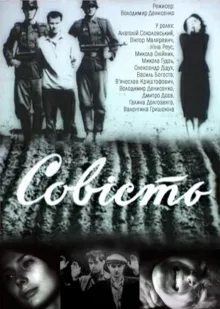
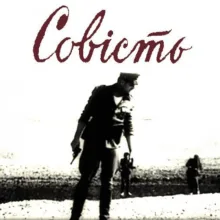
Conscience (1968)
- Special Guest
- Sam Goff
- Guest Co-Hosts
- Chris Stachiw, Ryan Luis Rodriguez
Show notes
Sam Goff of Klassiki discusses Ukrainian and Soviet cinema of the time.
Correction: Any references to "the Ukraine" should just be "Ukraine". Thank you to Ally Pitts for the heads up! (opens in a new tab)
Labels: Chris Stachiw Ryan Luis Rodriguez
Transcript
An automatic transcript, tidied into paragraphs. It has not been proofread, so names, titles and spellings may be wrong, and it does not say who is speaking.
Show the transcript (about 13,200 words)
Hold your ears, folks. It's showtime. People pay good money to see this movie. When they go out to a theater, they want cold sodas, hot popcorn and no monsters in the projection booth.
Everyone pretend podcasting isn't boring. Turn it off. Welcome to the projection booth. I'm your host, Mike White.
To once again is Mr Chris. I prefer to be known on this episode as the Token Ukrainian. Also back in the booth is Mr Ryan Luis Rodriguez. I am not Ukrainian.
When Chris is on the Sopranos podcast. He's like, well as an Italian and then when he's on this, it'll be like, well as in a Ukrainian. So I know that's it in terms of being able to claim cultural anything and to be fair, the Italian, this is more, it's just, I don't have an Italian last name. I have a clearly very eastern European last name.
So that's the one and only. Oh, it 's your, what's your last name? St you, what are you? Mostly Italian?
I can only claim half Costa Rican. And even then people go. So do you speak Spanish? And I go?
No, I speak Costa Rican. So it sounds very similar to English. Hopefully you can understand this. I learned how to say this phonetically.
I just gotta do is roll my R's more. Chris since you are partially Ukrainian, I'm hoping you will help out with all of the pronunciation of names on this episode. I'll do my best. I thought about saying something in the opening in Ukrainian, but I felt like that would be a little too on the nose.
On this very special episode. We are looking at conscience. It is a film also known as Sos from 1968 directed by Vladimir Dennis. The film is set in a small village during the German occupation of the Ukraine when one of the German officers is slain, his fellow soldiers demand that the partisan responsible be turned over lest the entire village be wiped off the Earth.
The film was banned and didn't see the light of day until the post Perestroika Thaw. We are going to be spoiling this movie. I think so just be warned about that. If you haven't seen it, you can go check it out on Classy.
It is available on that channel. We'll talk a little bit more about that later with our interview guest. But yeah, so I'm taking it that this was a first time watch for both of you guys. So Chris, what did you think of conscience?
I mean, this movie subject material is interesting for me personally, my dad's dad was. Ukrainian came from. Ukraine rode on the back of Nazi tanks to escape the Russians. During World War Two, lived in a displaced persons camp.
So all of this stuff, nothing I've heard about, but my grandfather didn't talk a lot about it for multitude of reasons. We, I remember one time we tried to watch enemy at the gates and he refused for a number of reasons. Again, I think it's just obviously none of us have grown up in any sort of similar setting. So to understand what any of this is like is to say, well, I understood because you told me it's like, no, no, no, you heard what I said, but you didn't live it.
And so getting to see this movie, it's interesting because obviously said in Ukraine German occupation, the Nazis doing what the Nazis do just, you know, fatalism on display for everyone to see. I mean, Ryan kind of mentioned it before we started talking like what an upper of a movie. This movie is brutal. It was banned for an obvious reason because it is so specifically its own thing.
It has no interest in being anything else and not only is it's its own thing, decides to do the thing that movies like this do, which is and in such a horrific way, the message is made clear as to the director's intent. And I can't say I enjoyed it because I don't know what that would look like to and enjoy a movie like this for a number of reasons. But I understand, at least I can begin to understand and I'm curious where y'all come from, the importance of it again and why it's important and who it's important to. But also I think right now given what the world is dealing with in terms of Russia invading Ukraine unjustly and taking it upon themselves to claim that they're, again, I'm sure there are Nazis in Ukraine, but not all Ukrainians are Nazis for fuck's sake.
So it's interesting to see a movie about Ukrainians and Nazis not coexisting obviously because of course they weren't going to fucking coexist. So I found it to be interesting if not, not uplifting, but just a reassurance of the spectrum of which the human condition you can exist on because again, I don't live in a wartime country and many people in Ukraine 10 years ago probably didn't think they were going to either. But now in 2023 that's where we are so long answer to a short question. Intrigued but not at all.
Something I would be like, hey, everybody, go check it, check it out, go watch it for a specific kind of person who wants a specific kind of thing. And I'm excited to see what you guys thought. Speaking of Brian, what did you think. Before seeing this?
I've had experience, not with Ukrainian cinema, but with Soviet Cinema but that kind of begins and ends with Tarkovsky. Like that was, that was my gateway drug. That's what got me into kind of World Cinema at large. And I've been even, I've been diving into the World Cinema Project.
Blu Rays that Marty Scorsese has been putting out with criterion. Oh, Marty, you're best friends with, we're buds, buds. All right. I'll have to ask you for his number sometime.
This was such an eye opener for me. It destroyed me. Watching this movie absolutely destroyed me. And it's the kind of destruction that I welcome because it brings with you a fresh perspective.
And my knowledge of the Ukraine is as limited as pretty much any other American, if not less so to see this Culture, especially at a time when they're being suppressed. Like the fact that nobody saw this movie for 20 years really says a lot and the fact that we really haven't changed in that suppression in all this time. And so yeah, this movie fucking gutted me, absolutely gutted me. The story is interesting.
The story is pretty simple. I mentioned, you know, this is what happened and that's pretty much what happens. There's a lot of little things that go on in between, but that's really the thrust of the narrative is this whole idea of somebody shoots this German guy. Hey, we need to get revenge.
I want you to turn over this person. I mean, it's kind of a typical narrative. We've, we've seen this stuff before somebody 's hiding this prisoner or somebody's hiding this assassin. We need him out here now.
But the way that it is shot, the way it's presented is such an interesting way of doing it. This is part of the Ukrainian poetic cinema movement I believe is a lot of people call this. And I can really see the poetry of this, the slowness of things, things like, you know, closing a door will take quite a few seconds or you get, and I'm not gonna try to pronounce some of the actresses names or actors names or character names even because they're really just standards. You know, you've got the German officer, you've got the woman translator, you've got, you know, the two killers, you know, like that's what we have going on here.
So when you've got, you know, the woman translator and she's standing there translating what the German has said to her and all of these guys are just standing there in front of this white wall and you get these shots often, it's almost like a tableau of these people just being on this stage inside of this German Commando House type of thing. And in the way that the whites are kind of blown out that some scenes that are outside are almost difficult to see what 's exactly going on. I mean, it 's not as overexposed and treated like a, it's a horror movie, we even covered it on the show.
Anyway, it's not like it's pixel vision or something like that where it's super extreme, but these shots are very, were blown. And I think it's a very effective way of presenting this story because not only do you have the visuals but then you have the audio where you've got like freaking Penderecki on soundtrack. So you've got all of this very emotional music going on which just adds even more to this pretty fraught story. And to piggyback on the, on the cinematography with the inky blacks and the contrast, it's practically expressionist and with the blown out whites that you mentioned, it kind of often makes the picture look like a sonogram.
So it looks like this transmission that which really adds to the palpable reality of what you're watching. It does not feel insincere for a single second. And the fact that it does all of this in 76 minutes is just remarkable. I mean, the matter of factness with which it's presented is almost documentary.
Like, I mean, again, like you're not saying that this didn't happen specifically, but I mean, this is a movie but the way it's presented is so realistic that sure, I mean, this is what would have happened, this is what did happen other than really washing it out. It's just very matter of fact, I mean, the moment that they show the sky and it's just start white constantly. It's just, it 's like, it's like they're in another planet frankly. You know, and again, it's just like you're seeing this story being told and there's nothing that can save them, there's nothing that they can, that can help them.
The outside world is closed off and you have to figure out a way to deal with this problem. And so the way that it's dealt with is pretty awful. I mean, it asks the big question, right? Like what are you willing to do for the people in your community?
And what are the repercussions look like? Should you make a decision that I don't know, I don't know how I would respond in this situation. But again, it 's, that's one of the things that this movie makes you do is puts you in the position almost directly and asks you what would you do in this situation? And that, that carries over to the dialogue because the German is not subtitled.
Yeah, it gives a sense of menace and incomprehension. It literally puts us in the shoes of the villagers. Like there's a line that is, I want to quote, what are you saying? I don't understand.
And that is basically the thesis statement of the film. These are two groups of people that will never see eye to eye because one is oppressing the other. And no matter how hard the oppressed, try to understand what their plight is, they will never get a satisfactory answer. The name in the movie I was trying to think of earlier is Begotten, the E Elias Merengue film, which is like extremely blown out as far as the whites and the blacks go.
But I would say some of these shots are right in line with that. And the thing about Begotten is some people would say it's a horror film. Some people say it's experimental and I would say kind of the same thing about this. I mean, there are moments in this that are truly, well, especially the end that are truly horrific.
And then there are other times where it almost feels surrealistic with the way that things are presented because we have the guy taking potshots at the German and a woman early on in the film. But the real murder happens later on this road and the struggle for these guns that goes on takes forever and it just is excruciating and I swear it feels like it's playing out in real time as opposed to, you know, movies where it's just like, oh you don't have that Bang Bang Bang kind of thing. Whereas this, it's like, oh no, we're gonna roll around on the ground and struggle and my friend over here is gonna not be able to find the clip for his gun and just, you know, the guy in the car can't get out.
I mean, it just takes forever for this stuff to happen. And then you get those great moments of editing where it's like the one guy, you know, the Germans holding the machine gun and the one guy is looking at it and then you get just all these flash cuts and then you even flash cut in other things like the new woman translator, the cows that were walking down the road. All of these things are just like right in there, what a, what an amazing heat of editing, you know, in 1968 where you're just gonna have to cut all that stuff by hand.
You know, we're not using Adobe premiere or anything. That scene in particular. I hate to use the word Hitchcock. And, but it reminds me of the scene in torn curtain where Paul Newman is strangling Gromek and it takes like four minutes to kill him because Hitchcock was trying to say you watch James Bond movies and the murder is instantaneous.
It's not a struggle but to actually try to kill somebody takes so much out of you and not only does it take it out of the character, but it takes it out of the audience. It makes it so uncomfortable and you're watching this life get snuffed out. And even though he's not a good person, the guy who's being killed, you're still watching a human being kill another human being in real time. Yeah.
The brutalism with which the violence is presented and again, just, there's no fanfare. There 's I mean, the stylistic approach is in a way to lessen how brutal the violence is. But for no reason other than, because otherwise it would just be two guys on the floor rolling around for five minutes and who 's gonna wanna watch just that in a movie? You have to do something to make it somewhat more interesting or entertaining at least.
But yeah, I mean, having it play out in full, it's so smart because again, like you just understand the level at which you're being oppressed and the level with which you have to fight back to not feel oppressed to get one inch of land back from these people from these again, occupiers. You have to, you have to hustle on the ground with them for five minutes to choke them out. Like it's, it's not like like you said Ryan in a James Bond movie and so many other action movies. I mean, how many people die without any fanfare?
I'm not saying there needs to be fanfare here. But if every kill in every movie were presented the way this one is, I mean, we just watched Doctor No and Sean Connery chokes someone out in that movie. He strangles them with his bare hands. It takes his third seconds.
Like if you actually had to see it, nobody would be like, oh, James Bond is a, is a mentally sound human being like, oh my God, this guy is strangling people with zero, again, like zero reaction. I mean, again, you see how much it takes out of them here. If you were seeing a character do it and then they didn't react, you'd be like this person is a actual verifiable sociopath. To have the one character having to carry around the other character for so long in this as they're looking for any sort of shelter afterwards.
I mean, that takes up a lot of the movie is just them after the incident trying to find some place to stay and to have safety and shelter. Yeah, it's literally survival. Like that's the only, that's the overriding principle in the entire film is we need to get not just from scene to scene but just from moment to moment, we need to keep living. To your point about the non translation of the German.
I agree that that's brilliant. It puts you in their shoes, it puts you in the Ukrainian shoes that we can understand each other. But the Germans we can understand though. It feels like they can understand us, but they just respect our language.
There's one moment where one of the characters says, you know, oh, I don't understand. And then the German parrot back don't understand. And it's like, ok, obviously you can speak our language, but you choose not to when the woman is translating and the German officers like you didn't translate correctly, you said that you know, this would happen but actually I said I'm going to kill everyone if that, if you don't turn over these people, obviously, he understands what's going on, but he just doesn't want to say it wants to make her do it, put her in this awkward position, whatever it is.
It feels definitely like a power play to humiliate. Yeah. The Ukrainians weren't viewed very positively by the Nazis. I mean, they didn't like the Russians but the Ukrainians look who's invading Ukraine right now.
Are the Russians? Do you think Ukrainians like Russians? We don't, so not speaking for the country at large, but I don't think a country that's being occupied by another country is gonna have positive things to say. But the Nazis viewed the Ukrainians even worse than the Russians because the Ukrainians were turncoat.
Russians per their beliefs and the Ukrainians didn't support Stalin and the Nazis hated Stalin, but they probably, they hated the Ukraine more because they're refusing to even play a ball. So, yeah, they're even easier to oppress. So, yeah, it's, there's just this distaste for the Ukrainians that comes through with these Nazi characters and we know where this is headed. There is not gonna be some final third act.
Somebody shows up and saves this entire village. We all know where this is headed. I mean, it's pretty obvious from the moment a Nazi is murdered, but it's just the pace with which the movie continues to subject us to everything that's going on, like you mentioned Ryan, it's an hour and 16 minutes feels like 2.5 hours. Just the emotional, just draining that is going on throughout this movie is just so overwhelming.
These two guys just attempting to survive when they know, like there's nothing, there's literally nothing you can do. And it's not just like Russia and Ukraine, but you can see parallels to this and what's going on in Gaza right now. If ever there was a time for the world to see this movie right now is that moment. And I really wish that it was like on movie, if it was on Criterion Channel, I wish that this was more proliferated out there because it has lessons to teach us all.
It's a movie that is a statement piece. So it's, it's hard to say like, well, it's entertaining and you know what I mean? Like ultimately, in a lot of ways, like when I think of what my perception was a long time ago for cinema, this is kind of that expectation of thing that's being filled. It's a serious movie with a message that has a point.
And like you mentioned, Ryan, we're at a time right now where people understanding one another is becoming less and less important to certain people. And there are plenty of us who are like, can we please just figure fucking some middle common anything out anymore? Because again, like we've all said at this point, there is so much going on here that we are not part of currently but other people are and to see how emotionally drained we are from watching a fictional version of it. It's, I can't begin to understand to live in that oppressed Culture or have that looming large constantly.
Like you mentioned, Ryan, at least it was looming and now it's a reality man. The timeliness of this movie cannot be overstated. I knew I was gonna have a rough time with this just from the first five minutes of the movie. Just to see what three people at least get murdered point blank and thrown into a pit.
Right into a ditch. And then immediately the German officer who's assassinated, these people just washes, washes his hands casually, you know, cleaning himself of absolution. Ok. This is, I've done this.
I don't really care. I'm moving on. It's my job. Who else do I have to kill?
And it is, it's a devastating way to open your movie like before any kind of table setting has been done. It immediately puts the tone in your mind of, ok, this is going to be the experience that is going to unfold from now on. Yeah. And it never really lets up.
Obviously, it isn't scenes of violence after violence after violence, but it's the scenes of what happens after the violence and what are the repercussions of the violence and what are these poor people? Trying to live through every single day. And you're talking Chris about the occupation of the Ukraine. I'm trying to remember how many years the Ukraine hasn't been occupied since World War Two because I would consider what the Soviet Union did to be occupation as well.
They had a little bit of break afterwards. But I mean, I'm trying to remember there was, well before Trump, I'm trying to remember who was the president that was making deals with Ukraine trying to ensure that there wouldn't be a Russian invasion. And that didn't go so well, that did it. About 24 years after the dissolution of the US sr because the Ukraine was invaded in 2014, the Crimea was the Crimea was annexed.
Dickheads, fuck you, fuck you. But yeah, it's about 24 years post the dissolution of the US sr So yeah, I mean, you know, barely in a, I mean, you know, a middle age, you know, like a middle aged young adult as they would say like a 24 year old. So that's not a lot again. I don't keep up with Ukrainian cinema.
I don't speak Ukrainian. I don't read Cyrillic. Those are things that unfortunately I got a, I was a little too young when my grandfather passed away to really gain any of that knowledge. So I don't keep up with Ukrainian cinema, but I will be curious to see the kind of films that are coming out of Ukraine right now.
And then in the next couple of years in the last year to see how their response right now in the pop Culture is to what 's going on versus this response because this is very much made in response to what was happening in World War Two. But also just to speak broadly about fascism and the way people have to exist under fascism. I think it's more than just World War Two. I think this was also speaking to the Russian occupation and just using the Germans as an excuse, using them as a stand in for what the Russians were perceived as doing.
So many people don't even know that the Russians were killing millions of Ukrainians by taking the wheat that they were growing away and starving them to death in the millions. Look it up if you don't know what I'm talking about, dear listener. But I, if you're listening to the projection booth, I would assume you're more learned than most. And, but again, like that's a thing that so many people in the West know nothing about.
And it's kind of sort of a little bit, I mean, it's not pounded home here, but they kind of allude to what was going on a little bit. But yeah, I mean, the timelessness of the movie is, I think one of the big successes because like you mentioned Ryan, this is not something that speaks to one specific thing it could speak to many things because of what it's speaking about broadly. And as you were saying, Chris about the cinema that the Ukraine is making right now and as to what that could be, we still haven't even seen how that cinema will be suppressed just like this movie was suppressing.
Stuff, makes sure nobody gets to see it. Which means that that part of the conversation never gets to take place. I mean, there were movies coming out that were having the same conversation but this movie just, it's an hour and 16 minutes of just this, it's very little else. And as far as the world is concerned, if we didn't see it.
Oh, it didn't happen. I like that. The Russians, even when they would ban a film and the same thing happened in Czechoslovakia, when you would ban a movie, they wouldn't destroy all the prints. Thank goodness they would shelve the prints.
So that's why we get to see stuff now. I don't know if they were thinking of the future or if they just didn't want to, I don't know, do the paperwork or what it was, why they would keep these movies around. But I sure I'm glad that they did. I mean, you can see some damage in the film, the, especially around the real change marks and it feels a lot of times like the audio has been replaced or at least sweetened in parts.
There are certain sound effects where I'm like, I don't think that that was recorded, you know, on the day and date that this was filmed, they probably didn't have a lot of sound equipment. So they probably did a lot of this, you know, the audio and things post sync. But yeah, a lot of Folly work and then sometimes the music feels like it was laid in. But I'm like, well, actually this is kind of contemporary to this.
So can by that, this wasn't a replacement soundtrack and it fits very well with what they're doing. I mean, you really, during some of the more harrowing scenes and this gets pretty harrowing, you really feel it. I mean, th that music really helps intensify these scenes. It is at times genuinely unnerving and there's like a, there's this dissonant kind of atonal quality to it that reminded me a lot of the early notes in the Texas Chainsaw Massacre or in the exorcist, which the piggyback on what we've said previous horror movies, which this, I think definitely qualifies at least a societal horror movie.
But also the sound work. I mean, it's not surprising that they wouldn't shoot with sync sound because this is 1968. This is World Cinema usually because there are people speaking different languages on sets, they usually don't record any sound. But the Foley work is kind of remarkable considering the lack of resources that they had.
But apparently this has been restored twice. So I don't know if it was once and we think we're good enough and then they do it twice to improve it or if they just went back to the original because you can't say the original negatives. I think there was one print of this that was saved and that was an answer print. So it's not like they can go back to, you know, the original camera negatives and restore this.
So they did a fantastic job with the materials that they had. Yeah, absolutely. Where did this, this suggestion for this film come from? This actually came from our friends of Classy.
Oh, fantastic. They were doing a month of Yugoslavian black Wave stuff and which I like a lot of Yugoslavian cinema. But then I think that I can't remember if I suggested or they suggested, hey, why not do a Ukrainian film? And I was just like, yeah, I've done some Ukrainian cinema on the show, I think, I think it was two years ago and especially with all the stuff that's going on.
Yeah, I guess it was either last year or the year before because the war's been going on for over two years now. Almost, almost two years, almost started, like started arch of last year 2022. But it feels like it's been for fucking ever. I mean, it's been, it's 2014.
Yeah, it's, it's been in my news briefs for what feels like forever and it feels like this, this nightmare that I'm never going to wake up from and I'm not even living through it. I'm living vicariously so I can't even imagine waking up every morning realizing it's gonna be more like this. This is my life. And right now we're not getting that much news compared to what we were even a year ago.
Yeah. You know what. They say, it's not happening anymore. I don't know.
That's what it kind of feels like. It 's, it's, it's very weird, like for a while there, that's all anybody was talking about myself included. And then I kind of, I guess everybody forgot or it wasn't, it wasn't in vogue to support Ukraine anymore. Nobody had Ukrainian flags on their Facebook profiles anymore.
I mean, hey, whatever, you know, Russia, you want to go back to Afghanistan and do that all over again, be our guests, I guess. I don't, I don't know. That's the thing. I mean, if you've been around in existence at all, war or occupation has been a thing that somebody's been doing somewhere and Russia has done it in the eighties for fuck's sake with Afghanistan.
So, you know, and the United States was doing it in Afghanistan up until now. So it almost feels like when one leaves another just enters the kind of the space left over the void is filled. So, yeah, I'm with you, Ryan. It's, it's very depressing.
Just like this movie to Ryan's point about, you know, Soviet and Russian film, you know, Mike, we covered on the Kulturecast three almost four years ago in March of 2020. All those Soviet sci fi movies. And that's what this reminded me of. It's like this is just so, you know, a joke from Euro trip.
It's nice. You came in the spring because of the winter. It's very depressing. Like, yeah, it's just depressing all the time in Eastern Europe is what it feels like and be it sci fi or, you know, societal horror.
There's just, there's no getting out from underneath it. Apparently it's what it feels like. Yeah. And I don't get this whole faction of the government that doesn't want to support Ukraine where it's just, I guess they want Russia to win is the thing that is the support of Russia that much that it's ok to just forget about Ukraine or is it that attitude that we are not world police?
I think it's. That, that's, I mean, it's part of it but it's less, we're not world police. We want to pick and choose where we police. That 's what it is.
Again. I'm not saying where, when or if I agree or disagree with it. But, you can't pick and choose unfortunately. And that's the problem.
And if you do it, once everybody assumes you're gonna keep doing it over and over and over again until everybody is constantly asking for help. So yeah, we want to be world police. We just don't want to have the all intents and purposes. We do not want to make it look like that's what we're doing.
But definitely that's what we're supporting. We're just, we're just choosing to be conservative about it to use a euphemism of parlance as one might say, I'm just thinking of the scenes of all the women and children and the camera just canning across all of their faces or just doing, it might be a dolly across everybody and just to see all these people that, you know, by the end of the movie are going to be dead and you get those amazing shots of when they're out in the fields, you get those tall, I guess it's hay that's up there and you get the guys that are up on the hay and then that's echoed later on when you have the Germans on this kind of ridge and then all the people below, it's just frightening.
You know, so many things about Nazis are either fun and stupid because it's Indiana Jones and you got, you know, pop Culture, Nazis. But then you have this, which is the brutal reality of what it was, which is, these are people that are being asked to kill with no care in the world they're killing with zero repercussion and so many of them were doing exactly what they were told, I mean, there are plenty of documented cases of people that were essentially conscripted Nazis. That's not what we're talking about here. We're talking about.
These are the dyed in the wool. Rah, Rah, let's go kill as many people as we can because I mean, again, we never get the sense that there is any sort of moral quandary to what they're doing. Like Ryan mentioned the 1st 10 minutes. We have a guy washing his hands both literally and metaphorically of the murder of what we can only assume are innocent people because throughout the entire movie, more or less everyone is innocent, including the two people that murder the Nazis.
Because as far as I'm concerned, the only good Nazi is a dead Nazi. And there's this, this often re recited phrase that no war movie is actually anti-war. But I would make the argument. This is, this is one of the rare examples where there are no victors.
There's, there's no, there's no catharsis, there's no release. It's like this and come and see are just these palpable reminders of the horrors of it and that, you know that we can't rely on the American soldiers to come sweeping in and kill all the Nazis and Bang Bang Bang. This is something that is systemic that will be lingering far beyond when this movie is over and it just washed over me watching this movie. And I don't think I'll ever shake it.
All right, we're going to take a break and we'll be back with an interview with Professor Sam Goff right after these brief messages. Classy is a film journey to the East, a curated streaming service offering the best of contemporary and classic cinema from Eastern Europe and Asia using coupon code, Mike 50. You can get Classy membership for just $5.50 a month giving you the opportunity to sample award winning films, documentaries, silent masterpieces, classic comedies and more. You could also get access to the Classy journal exclusive cast and director interviews, video essays and watch lists.
Visit Klas si K I dot online and sign up now to start your adventure and film. Professor Goff. Thank you so much for joining me today. I'm super excited to talk to you about conscience as well as you and your career.
Can you tell me a little bit about you and how you got involved with Russian history? I studied Russian and French my undergraduate degree in the UK, I went into that not really knowing very much about Russia or the other now post Soviet States as we're talking about today with Ukraine. And from there, I developed a real fascination with the Culture, particularly of the early 20th century modernist Culture, avant, garde Culture, the Culture of the first few decades of the revolution we could say. And then after that, eventually, just a few kind of standard life twists and turns I ended up doing a phd in the subject and then I've worked in and out of academia.
Since then, I've taught Russian and Soviet cinema and just Russian and Soviet Culture more broadly. I've worked for magazines that kind of publish more broadly on the whole kind of post socialist region and more broadly on Eastern Europe, the Caucus of Central Asia. And now I am working for class key curating and publicizing the cinema of the whole post Soviet and post socialist region. So all of Eastern Europe, Russia, Ukraine, the Baltics, the Balkans, the Caucus of Central Asia, etcetera, and so on.
So plenty to keep me busy. What initially drew you to learn about and teach about Soviet cinema. I was studying Russian language and Culture. Initially, a lot of people who end up with an interest in Soviet oppose Culture more broadly, including the non Russian states and cultures get into it through studying Russian because often that's the only those are the, those are the undergraduate courses that you can do.
And then through that you get exposed to non Russian cultures, which speaks to a an ongoing issue in terms of the hangover or kind of imperial influence in terms of how we approach the region as a whole. But anyway, that's maybe we get back to that later. And yeah, so I went in quite blind and it was just, it was, that was what captivated me the most. It was the initially, like I said, it was the kind of modernist avant garde, so not just film but also other visual Culture, incredibly rich, an incredibly multi culturally diverse revolutionary Culture of the 19 tens, 19 twenties.
And then within that, obviously, Eisenstein Wirtel Kokin, all of the big hitters. And then I made my own way into specializing in film over the years that followed because I did, I didn't study film. I never had any kind of disciplinary training or specialization when it came to it. But I just turned it into my speciality, shall we say over a period of time?
Can you tell me a little bit about Ukrainian cinema? And what that was like was that as old as Russian cinema? That's a complicated question. It's a very old tradition.
The problem is that the kind of historiography, if that's the right word of cinema from across the whole of the, what would become the Soviet region experience this this massive rupture after the revolution. And then there is a, there's several years of violent warfare across that whole region. There 's different kind of forces try and fill the vacuum left by the collapse of the Russian Empire. So it can be hard to speak in terms of continual continuous history over the period.
But what we now call Ukraine, what is now the Ukrainian state that was situated in this kind of crossroads between different empires, very multicultural regions. So it was definitely exposed to the kind of cultural currents that brought new inventions like cinema into the region. So cinema was in Russia in the 18 nineties and it was definitely in Ukraine from the same time. So the cinema history of Ukraine is as long, but like all of the kind of cultural histories in the region, it's, it can be complicated to draw out very straight lines if that makes sense from one point to another.
What can you tell me about Volodymyr Dennis Shenko and Conscious. Conscience is an important film, fantastic film, very difficult film which as I'm sure you agree, Dennis's career was curtailed by political repression to put it bluntly. He had not even finished his studies in the what was then called the Set Institute in Kiev when he was arrested in 1948 and imprisoned for five years in a prison camp. The charge against him was bourgeois nationalism.
That should be in kind of air quotes for listeners, which was a kind of standard charge of the time that was leveled against people who it was thought had, whose whose sympathies were too local and nationalistic as opposed to can Soviet. So this is maybe a little too complicated to get into the details. But basically throughout the Soviet period across all the different Soviet Republics, there is this tension between nationalism and national Culture and Soviet identity, transnational, Pan Soviet identity. And it's a kind of constant back and forth often it's a case of like direct suppression, repression and censorship.
Sometimes it's more a question of mediation, but basically a different points, particularly late stylist period. At the end of the forties, you could really get in a lot of trouble for expressing, holding views, expressing views in your art that could be too readily associated with nationalist. That is in this instance, Ukrainian identity rather than some Pan Soviet identity. Anyway, he was in prison for five years and he was liberated and rehabilitated after Stalin died in 1953.
So then he returns to his studies. He does a stint in Moscow where he studies under Aleksander Dinka, who is the kind of godfather of Ukrainian cinema. He is the director after whom the national studio in Kiev is still named. And then he established himself as a screenwriter and a director and a lecturer, a teacher, importantly at the Davka Studios in Kiev by the end of the fifties.
So when in terms of conscience, Dennis Inko was obviously even more painfully aware than most of the dangers involved in pushing the envelope in terms of the authorities. And so when it came to shooting this film, he took extra care to not provoke anyone. He technically shot it as a student diploma project in an attempt to avoid too much scrutiny from too much oversight from the sensors, but that was to no avail and it was banned anyway. So it wasn't actually released in Ukraine until the 19 nineties and then in very poor condition, it's been restored, I think twice now by the Do Jenko studio.
In the meantime, the version we have now still a little rough but much closer to the original vision. The script by a writer called Vessel Zemlya was a kind of quasi autobiographical account of Vassel Zak's experiences in Nazi occupied rural Ukraine during the Second World War. And it is precisely in its treatment of this question of occupation, resistance collaboration. These kind of very fraught questions.
This is precisely the reason why it offended the Soviet census. But we can possibly get into that in more detail if you're interested. I'm a big fan of Czechoslovakian cinema and I know that for a lot of that, they'll use Nazis and use World War Two as a way to critique the Communists though they're critiquing quote unquote the Nazis and decrying them, vilifying them is that kind of the same thing that we're doing here with the way that we're using the Germans versus the occupying force that 's actually inside of Ukraine.
But the answer to that question probably comes down to who you're asking. I can't, I wouldn't want to speak for any kind of Ukrainians, let any kind of Ukrainian cinema. My personal take on the film. If that's the right word would be that it's about that very specific experience of occupation.
It's a philosophical take on the nature of occupation more than it is an attempt to provide any kind of fine grained detail about the experience of Nazi occupation. But there is certainly a historical narrative which is very prevalent today for obvious reasons that sees a lot of continuities between Nazi occupation and what people would call kind of occupation by the Soviets. Whether occupation is the right word for the kind of Soviet relationship to Ukraine obviously very kind of controversial question. But it is interesting that in this film, there is no representative of what we might call the kind of Soviet state, right?
So usually in kind of mainstream or kind of non censored Soviet Second World War films, especially from, yeah, especially from this period. What you have is this appeal to this kind of the cause of the Soviet Union. And there'll be figures representative of maybe there'll be figures of different ethnicities who are identified as being part of the Red Army or part of the cause, the resistance against the Nazis. Sometimes there'll be a figure representing the party itself who provides this kind of ideological, rationalizing oversight.
And I think what's really telling and fascinating about conscience is that's absent and it's much more, it's almost more abstract in that sense. It's much more this kind of philosophical take on the experience of the emotional experience of the hopelessness, basically of occupation. It's very different from a film like the ascent by Larissa Shao. Another very famous Soviet film about a Nazi occupation, another brilliant film, but Shao's film is very much about the partisan cause and it views collaboration as this kind of spiritual death.
Whereas Denisco has frankly a more kind of nuanced understanding of what exactly it means to be a collaborator or a partisan or to exist in resistance to the occupation. So yeah, that would be my answer. But like I say, a lot of these questions are obviously very fraught to this day. 1960 it was such a pivotal year.
There were student protests all over the place. There was political upheaval riots, what was happening in the Soviet Union and particularly Ukraine. At this time. By the late sixties, the Soviet Union broadly had, had its a period of liberalization been and gone.
So after Stalin's death in 1953 you get what's called the thaw in a lot of in a lot of civic Culture, which is this kind of like period of liberalization, relative licentiousness, a kind of reconsideration of the past, a kind of reimagining of what the Soviet future might look like, et cetera and so on. But by the time that Khrushchev is ousted and et cetera and so on after the Cuban missile crisis by the mid to late sixties, that's basically done in terms of that kind of liberalization period. And of course, in 1968 the Soviet Union put down the Prague Spring, the Soviet Union was not particularly symbolic of that period of kind of uprising across Europe that you mentioned in Ukraine and in particular in Ukrainian cinema, the period is more vibrant because this is really the period that we associate with what's called Ukrainian poetic cinema.
So this is a kind of loose movement that really emerges after the release in 1965 of Sergei Parajanov film, shadows of forgotten ancestors, which people may be familiar with fantastic film. And then it Sergei Parajanov was not actually Ukrainian, he was Armenian, but he was living and working in Ukraine at the time. And Parajanov s film turned to native Ukrainian folklore. In this case, the traditions and folk tales of an ethnic minority called the Hals who live in the mountains part of Ukraine.
And it turned to that and combined it with kind of modernist experimental techniques to create this new form of Ukrainian national Culture on screen, we could say and Parajanov film and the response to it inspired a lot of younger Ukrainian directors, people like Borisenko Y I, Vladimir Denis himself. And so at the end of the sixties, you're starting to get this wave of kind of folk nor inspired modernist kind of Ukrainian new wave. If you like that is very focused on this idea of Ukrainian national identity and Culture and which locates it in this kind of rural past.
And this is part of a broader movement at the end of the sixties towards a kind of reassertion of Ukrainian national Culture and national identity on the part of intellectuals within Soviet Ukraine. So Ukraine is going through, we might say a more exciting period than say Russia is by the end of the sixties. And then last one that is due to this idea that they should try and find a kind of Ukrainian specific kind of artistic language and cinema is a great example of. On speaking of language.
One thing I really picked up on while I was watching the movie again was the difference between the German language. And then the language that everybody else is speaking, is that, is it Russian or is there a dialect? Ok. No, Ukrainian is a language.
They are speaking Ukrainian and that's not unusual. It's not the case that no films would be shot in Ukrainian films would be, films would often be shot in Russian, Russian. It was the lingua Franco, the Soviet Union, but often films were shot in Ukrainian and they could be dubbed into Russian for so Soviet Union wide release. If you like films are often shot in the language of the countries, they were made into Ukrainian, Latvian, Georgian, et cetera and so on and then dubbed for release elsewhere in the Soviet Union.
But in this film, they are speaking Ukrainian. But you're right that the question of language is a big part of its treatment of the idea of occupation in the first place through the figure of the woman who is forced to act as a translator to the Nazis. And I like that. One of the Nazis tells her you didn't translate me correctly that I said this and you said something else.
I said that we would kill everyone. And you said that something much less harsh. Yeah. That's a, it's a brilliant chilling moment.
It's an upsetting film. I don't know what to say, obviously. Absolutely with people's time. Oh, yeah.
Upsetting from the very first scene. It doesn't get any easier as you're watching it. There's no reprieve. No.
And the ending is whatever the antonym for reprieve is that 's what the ending is. No, Miss Willis. You said that this film was banned and I'm curious if you know anything about how that happened, it just sounds like it didn't even ever come out until the nineties and when the nineties happened after Perestroika and Glasnost and all this, how many movies were re-released at that time? How many things had been censored so much that they weren't even available for 30 years, 20 years, I guess that is a lot.
I would, but obviously don't have any exact numbers. So what often happened was that a film would be completed and then just denied a release. So which is what happened in this instance, happened in a lot of instances, which is why we are able to now watch it now, right? Because they shelved it.
The expression is, it was made for the shelf. It was the kind of idiomatic expression which speaks to how complicated and back and forth the relationship between filmmakers and censors was I think people presume that censorship was a very strict kind of top down centralized process. And at different times it was more like that, but it was actually much more like complicated mediation and that kind of outside influence would come in throughout the filmmaking process of the way that studios work now, like in America, for instance, you're constantly getting notes from the studios, notes from producers and so on, rewrites, recasts, et cetera.
So it happened a lot that that films were completed and then shelved, which is good in a sense, cos it means we get to watch them now in terms of it coming to light in the nineties. So there was a lot of films actually came to light at the end of the eighties during per striker, a lot of films, there was a something called a reconciliation committee established in the kind of central cinematographers union based in Moscow under the auspices of this kind of cultural per Stroker. That was a basically committee that went through and tried to get previously shelved films uns shelved.
And so at the end of the eighties, there was this huge flood of films that we uns shelved. And yeah, that list is as long as my arm. And then since then, it's been a question of. Ok, so taking it off the shelf is one thing, does it need restoration?
Who owns the, who's got the exit, bro? They're prints. Can we get it into cinemas? Because you can't just release 40 years worth of lost forgotten heritage onto screens or the once.
So since then things, it's obviously been a piecemeal process to get things back into public consciousness. But yeah, that's been happening since the eighties. And it one of the reasons why it's so complicated is that the Soviet Central kind of film archive gos film fund is based in Russia outside Moscow. And they had basically everyone 's material from all of the former Soviet Republics and the process of newly independent National National Archives trying to get their materials, what they see as their materials back from, from Moscow since 1981 has been up and down obviously now very much on down.
But that's a, that's a whole other history of kind of film preservation. When did you first see this one? I actually only saw this one last year when we brought it onto Classy. Like I say, it's under, I'm not a expert in Ukrainian cinema by any means, but we were consciously making an effort to expand our Ukrainian collection and we were bringing on a number of films from this movement, Ukrainian poetic cinema.
And yeah, I wanted, I was aware of this film, I hadn't seen it. So when we got out of it, I watched it then and it was really, like I say, it fits, it's so interesting how you can see it fits within this kind of very long tradition of partisan films within Soviet cinema history. But it's also so specifically Ukrainian, it's part of this Ukrainian moment, this Ukrainian movement and it's also just completely singular, even within that. It's not really a lot of other Ukrainian poetic cinema.
So yeah, it's the recent discovery for me, totally worth the wait. What other Ukrainian films have you seen that have made an impact on you? I really came to Soviet Culture through the early as the kind of twenties and thirties. And Oleander Davka, who I mentioned before.
I think I described him as the godfather of Ukrainian cinema. He was the kind of great master of Ukrainian silent film. And he was one of the greatest kind of silent filmmakers, not just in the Soviet Union, but I think anywhere in the world film like us from 1930 that is just, yeah, that's an intensely lyrical extreme propagandistic, but with a kind of animistic spirit. It's, there's two interesting example of the ways in which incredibly inventive and vivid artistry in that kind of twenties, thirties period could be conjoined to a kind of propagandistic agenda.
Although I don't hugely like the word propaganda, even though I'm using it myself because I think it's a bit reductive. But yeah, so that, that's a film about the collectivization of Ukrainian agriculture, which doesn't sound very thrilling, but it's really indelible images in that one. So yeah, all of the danko films from the end of the twenties, in the early thirties, Ao Grad Arsenal Ivan and I did also mention earlier in passing Ziga Vertov. So people might be aware of man with a movie camera.
Ziga Vertov is a classic avant garde documentary from 1929 Vertov, s brother who is the teacher of the man with the movie camera. He was vil cinematographer. After man with the movie camera, they split and his brother, Michal Kauer was Vel's birth mate. We as an a non dep Kaufmann went to Kiev and he made an amazing kind of essay stick documentary called in Spring in I think 1929 which is another kind of fantastic experimental silent film.
So there's two silent films for you, at least in Spring by Kaufmann and Earth by the Jenko. How did you get involved with classic and what do you do for them? So I was teaching film language Culture at Cambridge and they had initially launched in, I think let me get my dates right? February 2021 it was a response to the pandemic.
They was initially launched under the auspices of this charity that restored and promoted Russian civic cinema. And because of the ongoing effects of pandemic, canceling their ability to kind of screen films in person. The founder of that charity, Justine Waddell had had launched this streaming platform and I got in touch and said this is great. This is my bag, can I help?
And so I started started with working with them like that. My official title is editorial director. I basically work with Justine to program films for the platform. So it's curatorial role.
We have a kind of permanent library, I think at this point, it's 100 and 10 films. And then we also have a kind of a rolling weekly pick of the week, which are, those are often more kind of contemporary films pick of the week, films. And the library is more classic cinema. So there's a lot of curation to do help run our partnerships with various festivals and celebrities.
I apparently I go on podcasts and Ram Bon and also we run a journal. So a kind of online publication where we try and complement. We've always tried to have a this kind of multimedia, complementary approach to our programming. So if we're in putting a film on the platform, let's try and interview the director even if it's a film from the sixties and they're 90 don't want to talk about it anymore, which has happened before.
So yeah, let's have an interview with the filmmaker. Let's have introduction to the movement of this. Ok. So we got this collection of Ukrainian poetic cinema.
Let's have an introduction to what that is a watch list for readers. So we try and provide more insight into cinema from the region through that. So I commission and edit and write that as well. So yeah, that's me.
Are you still teaching at Cambridge? At the same time. I was doing two jobs for a while but now just worth making this kid, I am writing a book based on my academic research. No, I'm not teaching.
Thank you so much, Professor Goff for taking the time to talk to me today. I really appreciate this. Thank you for your interest and thanks for showcasing a film like Conscience. I think it's no better time and place to be talking about this stuff.
So thank you. All right, we are back and we are talking about conscience. You mentioned come and see earlier Ryan. That really is the only film that I can think of that's anywhere near this as far as the brutality.
I can't really think of any other war movies that are nearly as brutal as this. I was going back and watching Turner Classic movies and kind of catching up on the Veterans Day, a celebration that they had, which is all war movies for 24 hours. And I rewatched Sam Fuller's the Steel Helmet and that movie ends so hopelessly that I didn't remember how just destroying the end of that movie is and it really left me with a very similar impression to watching this where it's like the movie is over, but it's gonna linger and it's gonna fester and that, that festering is just gonna, it 's gonna atrophy and just shit is going to go purple because of this.
It was something I had watched on the suggestion of someone else Spencer Parsons when we talked about a prayer for the dying and I'm trying to remember the name but it was on the BBC and it was about the troubles which a prayer for the dying is also about, and it's essentially just people being murdered on the moors. Can't for the life of me remember the name of it. But it was on the BBC. It was kind of like a found footage, horror movie.
And there was this br I, again, I watched it on YouTube and if I could remember the name of it, I would. It was an elephant. Was it, I guess? Well, I'm not sure I'm just guessing.
Right. I mean, that was on, was not released. That was just a because again, I watched it because Spencer suggested it and then, you know, like anything else just didn't think I would ever have a reason to revisit it. But yeah, I guess it was, it must have been elephant.
Yeah. And I mean, that's, that, that is similar to this in my mind in terms of just like, it's brutal. Where it's going, it's pretty obvious from the start. There is very little in terms of like, well, we're not gonna show you what we didn't say.
Like we told you this is what it's gonna be. You see that this is what it's going to be. There is no moment where we turn away from it. I mean, you've mentioned it already, Ryan, like they tell you in the first five minutes of this movie, what's gonna happen?
You see murder of people by Nazis and then you see the Nazis say we're gonna kill everybody if you don't do what we say and the Nazis do it. Elephant has that same thing. It's just like, yeah, we're just gonna keep killing people because that's what's going on and we just need to bring light to the fact that these are the things that are happening. I'm not a war movie guy.
So that 's why my answer is not a war movie. We tend to not watch war movies for a number of reasons. Just they don't scratch an itch for me in any stretch of the imagination and to be fair, most of them end the same way everybody dies. So you know, fun.
Another one that really sticks with me is jean-pierre Melville 's Army of Shadows, which is an incredibly personal movie for him because even though he did like very cool caper movies and very much con man movies and criminal movies with a sense of precision and it was all about the process of it. But I mean, like he during World War Two was in the French resistance, fighting the gestapo and fighting the Nazis tooth and nail. And that movie in particular, it feels like everything is cyclical. Like no matter how many people you take off the rung, there are going to be five more people that pop up and even when the war is over and your enemy has been vanquished, there will be more enemies.
That is just how life works. Some of the things in here where they have, you know, they take some of the crowd and they have them run across and put their hands up against this building and you're just like, ok, are they gonna shoot all these people in the back or what 's gonna happen? It reminded me a lot of transport from Paradise, the Czech movie, which that movie also reminds me of distant Journey, which was another concentration camp movie. And I think those for me are the most brutal, especially when it is people being taken from their homes and displaced, put onto these trains and being set someplace where, you know, they're not going to survive.
That part of the journey. To me is always the most brutal where you know what's going to happen. And maybe some of the people know what's going to happen, but not everybody does and you just get to see the destruction of hope and individuality and personal liberty and everyone just being hurted like the cattle that we saw earlier being thrown onto these transports and being taken to their doom. Yeah.
Thrust into the void. You know, I know people love true crime. And I have a podcast where we talk about true crime but in a lot of ways for me, I sit here and I look at something like this and I go like, if you're getting your jollies about how much you wanna like, see the brutality of people being like murdered, just outright the evil of the human soul. I'm not gonna go watch Dahmer the Jeffrey Dahmer monster story because that's just mythologizes it.
This is literally what this is, this is what evil looks like. It doesn't give a shit. If you sit and cry on your knees, that gun is going up to your temple and they're going to pull the trigger doesn't matter. And if it were presented this way all the time, I think people would have a much different reaction to it.
Which again, to your point, Ryan, it's like these kinds of things. This movie specifically is important for more people to see because again, there's nothing in the third act that's going to change anything. You can't change the reality of the situation. And no matter how many times we put our head in the sand or we look the other way or we somehow pretend that's not what's, what's happening, that is what is happening and it will continue to happen as people continue to look the other way here.
I was thinking 23 months ago. Oh, well, this movie is so important to see in 2023. And then to your point, Ryan, as far as the conflict that's happening over in Israel and the Gaza Strip, this makes it even more of a thing that we need to see in 2023 something else that is really, you know, crystallizing this brutality as well. Trying to think Chris, you know, you mentioned as far as, you know, the occupation and things like that.
I'm trying to think of when in my life, have we not had war? You know, I was born during the Vietnam War and it's just been conflict after conflict after conflict since then. I can't think of a time of peace in my life. A couple years maybe.
But even then, like, again, like Ukraine has been invaded since 2014. We were in the Middle East since 2002. Russia was in Afghanistan in the eighties. You know, I mean, it's just like for fucks sake, like for fuck's sake at some point, what like are there just gonna be places that people stop wanting to invade or it's just gonna be the same places over and over and over again somehow, maybe three months from now, we'll be, we'll be commiserating over the fact that now China has invaded Taiwan and now the movie is even more important and it's like Jesus Christ, like it's, yeah, you're right.
Like it's to say the last couple of years have been exhausting is an understatement and there is no end in sight for anything for anyone, for any of us, about anything. Like you said, Ryan, your feed has had Ukrainian stuff on it for the last year and a half probably will continue unfortunately, for the foreseeable future. And now there's just more things one could add, they want to continue to be thoroughly and constantly bummed out by the world and the decisions other people make about how to conduct themselves. The other shoe will continue to drop in perpetuity.
China has been brutalizing the uighurs for at least six years now and nobody talks about that. Do what now? Do you know what I'm talking about? I know what you're talking about, but I'm just pretending to be everybody else because you say uighurs and people go what.
Ethnic Muslims in China. I'm saying this for other people, not for you. Chris are being thrown into, into camps, forced labor, it's forced sterilization, but they get to control the narrative. That's why this can keep going because they are the authors of their story and if anybody tries to intercede, it's like no, that 's not happening.
Haven't you checked the internet? That's, that's not happened. Well, will you own the internet. That's why it's not out there.
I don't know if you. Guys know this, but John Cena said Taiwan is not a country and he apologized for it. I'll never forget that. Like as much as I maybe like him as an actor, it's like that idea of like now we can take the oppression of people and pop Culture, eye it and mainstream it and then put people on the spot to have to apologize for speaking a reality that exists that is not controlled by some sort of media entity.
Be it the state or a conglomerate of its own. Like, I don't know, it's subjectivity and objectivity are fucking dead. And it's really hard to exist in a post truth society. And I don't think it's just the last 10 years.
I think if you ask someone much more learned than me, they would say it's the last 30 or 40 years probably have been a post truth society. So many of us are just now growing up and realizing and internalizing the things that so many other people have seen forever because again, the three of us are all different ages. And Mike, like you said, you were born during the Vietnam War. You lived through Reaganomics.
I only heard about it on the internet and in books that were again shockingly nonpartisan thankfully. So yeah, and when it comes to the John Cena thing, I would say that the biggest mot motivating factor behind that is, you know, a little bit of lucre filthy lucre because it's, you know, don't, don't say that Hong Kong is a different place. Don't say that Taiwan, it's a different place. Don't say that Nepal is different place.
They all are owned by China and if you disagree with that, then we will not play your movie, we will not post your event, we will whatever it is but to damage you economically. You know, I remember, I think it was the Katy Perry, somebody like wore like a Taiwan T shirt years ago and then she was just banned from ever performing in China. So there goes that revenue stream. And to piggyback on John Cena like wasn't he just in a Chinese movie with like Jackie Chan?
There was, he sure was man and it looked real good to look like he was produced by the Chinese government in a way that only those movies do. Like, I don't know how else to describe it, but I will see movies advertised sometimes and all I can think is somehow the Chinese government is funding this movie. And I can't tell you how I know that it's just the way it looks, looks overly positively Chinese. And again, I have zero feelings towards China at all other than don't fucking oppress people for fuck's sake, Jesus, it's not that hard.
I guess it is. But I guess it's I guess it isn't like, I don't know, never been given the opportunity to someone. So I don't know what it 's like to not have the willpower to not do it. I would like to believe like I'm sure both of you would, if given the opportunity, I would say fuck no.
But there are clearly so many people that are just one little push is all it takes. And then you have plenty of people signing up to be Nazis and then you know, they're shooting people whether or not they thought they were going to be doing that is beyond the point, but they're there and they did it. So there you go. Well, I'm sorry, Chris, but this podcast is destined to take over the world so soon.
I will have that power and I will go mad with that mad. I tell you. Well, you know what they say about serving at the right hand of the devil. Yeah, that's what they're saying, right.
Yeah, man. Fuck. Yeah. See he's.
Killing everybody else. I want to thank my co-host Chris and Ryan. Thank you so much for taking in this movie guys. I know it wasn't easy, but I do appreciate you doing it and I do appreciate this conversation.
So, Chris, what have you been working on lately, sir? Just, you know, posting podcasts and audio nonsense over at weirding way, media.com where everything is shockingly anti China and anti Russia. Just kidding. It's fucking not, it's just podcast to entertain yourself in these horrifying times.
Weirding way. Media.com is where you can go to distract yourself as we continue to plummet into the oblivion. And Ryan, what is happening in your world, sir. I have two podcasts.
The first is an audio commentary podcast. I call it the only commentary podcast that matters because as far as I know, it's the only one and that is one track mind where we analyze film through the prism of audio commentaries every week. Mike has been on the show, we discussed the disc for Fight Club and Chris, you are invited any time you want. I would love to have you on the show and Mike, we got to get you back on the show as well.
The question is, have you ever covered Armageddon? Yes, that's the pilot episode. Ok. Cool.
That's what I, that's what I thought. Yeah, because I mean, that's like holy grail. That's one of those like holy Grail commentary. It's a 2.5 hour self own from Michael Bay just laying everything bare and like, you know what you think?
I'm a disgusting pig. Well, guess what I am. Look, look at me, look at, I have money. So that's, that's good.
Right? And then I also have another podcast, a fake movie court called Reels Of Justice where we have a prosecutor, defender, a judge and a jury and we try to determine if a movie is guilty of being a bad movie and you can find both of those podcasts wherever you listen to this, you can find me on X. I'm never gonna get used to saying that I'm just gonna keep saying Twitter, you can find us on Twitter at one track, Mind Pod on Instagram at one that is the numeral, one track Mind podcast and one track Mind on Blue Sky.
And you can find Reels Of Justice at Reels Of Justice on Twitter and Instagram. Well, thank you so much guys for being on the show. Thanks to everybody for listening. If you want to hear more of me shooting off my mouth, check out some of the other shows that I work on like Chris said.
They are all available at Weirding Way Media.com. Thanks especially to our Patreon community. If you want to join the community, visit patreon.com/projection booth. Every donation we get helps the projection booth take over the world.
Watch
Music credits
- "Fluorescences For Orchestra" - Krzysztof Penderecki
- "Sym. No. 3 - Passacaglia - Allegro Moderato" - Krzysztof Penderecki
Links & resources
Related episodes
Episodes that share keywords with this one.

Alucarda, la hija de las tinieblas (1977)
Shared: Ryan Luis Rodriguez
Mark Begley, Ryan Luis Rodriguez

Real Genius (1985)
Shared: Ryan Luis Rodriguez
Neal Israel, Gabriel Jarret, Jon Gries, Chris Bricklemyer and others
Comments
No comments yet.