
Show notes
Labels: Samm Deighan Spencer Parsons
Transcript
An automatic transcript, tidied into paragraphs. It has not been proofread, so names, titles and spellings may be wrong, and it does not say who is speaking.
Show the transcript (about 10,800 words)
Hold your ears, folks. It's showtime. People pay good money to see this movie. When they go out to a theater, they want cold sodas, hot popcorn and no monsters in the projection booth.
Everyone pretend podcasting isn't boring. Turn it off. It is good for the, but give a, like smoke or something. Mai Os.
A, I just want to knock my, I put a call in. So in. Welcome to the projection booth. I'm your host, Mike White.
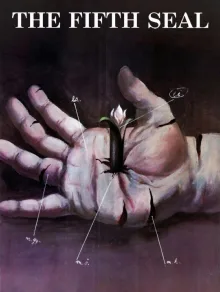
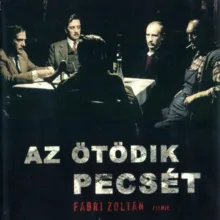
Joining me once again is MS Sam Dean. Also back in the booth is Mr Spencer Parsons. On this special episode, we are looking at the 1976 Hungarian film from Zoltán Fábri, the Fifth Seal set in World War Two. The film is a deceptively simple story of five men who meet and drink in an urban watering hole.
One of them proposes a bit of a thought experiment which colors the world of his compatriots and eventually manifests in real life. Thanks to the fascists, the Arrow Cross Party, running the place. We will be spoiling this film as we go along. So if you don't want anything ruined, please turn off the podcast and watch the movie, we will still be here when you get back.
So Sam, when was the first time you saw the Fifth Seal? And what did you think? Actually, I just watched it for the first time recently. I am obsessed.
It's incredible. I did a book on European post war World War Two themed movies, but I didn't cover a lot of Hungarian Cinema because there aren't a lot of Edgier World War Two movies. And this one kind of goes as far as it possibly can in the most imaginative way framing it around this thought experiment. Incredible and Spencer.
How about yourself? My first time watching it was because you asked. Yeah. Fantastic surprise.
I really love this movie and the framing around the thought experiment. I had a very similar reaction to Sam. It's a kind of device that we know from literature that is rarely done in film, but it works so well in this one as both an incredible scene of dialogue, but then also as a story structure. So I was, I was really, really excited to see this movie.
It's new, probably the best new to me film that I've seen this year. Yeah, I had never heard of this film. I really hadn't heard of the filmmaker. I have a blind spot when it comes to Hungarian Cinema.
I just don't think I've seen very much at all. And luckily it was one of my listeners through Patreon. He came aboard this year at our request level. And can you do this one?
And rather than making him wait for a whole other year, I was like, yeah, sure, let's do it up. And I was so glad that you guys were game to discuss this with me and wow. Yeah, I did not know what to expect. I didn't read anything about it before I went in because I just wanted to be surprised and just within the first few minutes, especially with editing style of it, especially with the Corona Bosch painting that they keep going back to.
I was like, what is this, what is happening now? And just the turns of the story were so not what I was expecting. And like I said, deceptively simple, I think there's really three big chunks to this movie pretty much your acts that you have in here. And I didn't know what was going to happen with any of that.
And where we were gonna go with these gentlemen sitting in this pub and the bartender joins them and they are talking and we're cutting back to that painting and then we get this thought experiment and we should probably talk about that pretty close to the beginning here because that colors the entire rest of the film because once we leave the pub for a little bit, which I wasn't even sure if we were going to leave the pub. I thought we might have the entire movie here. Once we leave there, everybody's obsessing about this story.
It really eats away at them and I wonder if this was easier for Fabri to make. So my main reference point for Hungarian Cinema is Miklos Janko, who I absolutely love, but who couldn't be a more different filmmaker than Fabri? And Janko had a lot of problems getting the films that he wanted made during this period in Hungarian history because of the censorship and my understanding of Fabri is that he's somebody who was maybe a little bit more like an like a Polish Andrzej Wajda type character where he made maybe more conventional historical films.
So he could get away with a bit more because he wasn't constantly trying to push the envelope. But framing this as just like a conversation in the first half of the film, challenging people's sense of moral duty is such a crazy approach for a film that is actually set during this time of really high moral stakes decision making. And I don't know if you guys will agree with me, but it feels like it's starting to lean into this fantastic realism territory in the way that the storytelling is. So they're also drawn into this hypothetical story about the sort of master and servant situation and it makes them all crazy.
It's a wild set up in terms of a literary reference, the one that I think of in relation to this very different, but a similar kind of setup and then execution of drama in a way would be notes from underground where we spend a long time ruminating over a philosophical story or concept put out by our narrator. And then the second half is telling a story of how this philosophical worldview is, at least to the narrator justified through his relationship with a particular woman and lots of ironies and everything. But this is similar in using a conversation to set up.
This idea plays at first like it might be based on a play, even though it turns out it's based on a novel. Actually, the theatrical qualities are great in part because of how beautifully it's shot. So I guess we should lay out what the moral quandary is. They talk over a parable of vicious, evil king and a slave and their sort of moral relationship to one another, their moral relationship to themselves that this king who has done all kinds of terrible things to the slave and to others is then pitted against the sort of moral experience of the slave who has really just suffered throughout his life.
And then the question is asked, would you rather be the king or would you rather be the slave? And it first seems like an easy answer? Oh, there's one more to this that I think is actually really essential. Sorry.
So would you rather be the king or would you rather be the slave seems easy. But the big wrench that goes thrown in the works here is that both of them believe that they're actually morally pure for different kinds of reasons that on the one hand, the slave only suffers, so has no particular reason to believe that he has the agency to do evil. And so in the terms of how this is set out, he can sleep well at night. But the king at the same time believes because of his historical time place and sense of morality within the culture that he lives in.
He too has no problem with any of the things that he's done, all of the things that he does as king are, right? And so he can also sleep well at night. And this is the thing that really starts to set the characters off because at first, the easy way to say it is I would rather be the slave. But then if you truly believe that you are morally pure, either way this does really complicate things because for instance, it implicates really almost anyone 's position in society, however much others depend on them, however much privilege they have above others or what have you.
A real accounting starts to make you ask, are you actually more like the king or are you actually more like the slave? And to what degree is this a guilty conscience? That is speaking and saying that the slave is who you would prefer to be. This is extremely discomforting for all of them.
And the one who answers the most easily, I would obviously be the slave. The others are cynical and they attack him. They say no, that's not how you really think. Obviously you would want to be the king because you're gonna have a better life in this thought experiment.
And as a result of their cruelty to him, he reports them to the local fascists who then round them up and submit them to yet another kind of moral experiment. But now lived out in real life but not just in their heads. The king in this situation is called Katy and the slave is Gy. And the final part of the whole thing, I think in the subtitles might have been good or bad.
But the last thing is if you were to die, who would you come back as I believe that was part of it. So that's also the whole crux there. And it's once he lays that out. Yeah, there's a photographer who really isn't part of the group.
He comes and later after them, I don't think he's one of them. I think the other four men are pretty regular. But that fifth guy is the guy who's, oh, well, I'd be you, yeah, of course. No problem.
And they're just like, yeah, how does it feel to be a liar? Thanks buddy. The photographer guy who appears to be really passive. I think he 's meant to be like a secret fascist character because he has so not only does he report them, but he also has this dialogue.
So he comes into the inn or the bar and asks if he can sit down at their table and they're welcoming and friendly and they have this conversation about right thought and right behavior and he has this dialogue. That's pretty creepy where he basically says, if you know, in your heart that something is right. Wouldn't you go to any lengths to make other people see your point of view? Which to me is super fascist, super totalitarian.
They're all, no, that's not necessary. And the guy who runs the bar who 's the most like a stereotypical collaborator, like he's paying everyone off, he's trying to keep his life comfortable. And he says he basically says to the guy, it's ok for different people to have different points of view. And the guy looks at him like, yeah, but when you're right and they all brush him off.
But this guy is clearly a fascist sympathizer. You peel back the layers from each one of these characters and we don't, I get a ton of it front, I think to your point, we get the most from the photographer right up front and then we get a little bit of the barkeeper because of him just wanting to keep the piece because we get a visit from these. I keep forgetting the name of these. I thought they were Nazis at first because their symbol is pretty similar to a Nazi.
But the Arrow Cross Party get these guys to come in and it doesn't hurt either that the main guy, the, I guess he would be like the Sergeant Schultz type guy. He's got the little Hitler stash as well. So he really seemed, and he does the whole Hitler salute as well as he comes in and leaves the bar. But he's definitely secondary to somebody who more superior.
But yeah, when they come in, the bartender is just like, ok, we're not doing anything wrong. Let me give you some alcohol here even though I'm not supposed to have this and just really trying to make sure that everything's ok and they eventually go away and you're like, ok, that they'll never come back. But yeah, sure enough. They will come back after a very long night and we get to experience the rest of these guys and what goes on at home or at their mistress's house or whatever they're doing out in the world.
But yeah, we stay in this pub for so long and have all these conversations. To me, the most fascinating guy in the pub though is this Miklos and they gave him a weird name in the translation in Wikipedia 's Gita played by Laz Jos Jose. Oh my God. He's amazing.
He was just riveting to watch this guy. He reminded me of a, almost like a more well kept David Hemmings. Yeah, they're all amazing. The performances in this are so good.
The bartender. I love the bartender's face. Oh, my God. That face ruddy complected in different areas.
He looks like he's been beaten up before he gets beaten up. When he gets beaten up. His face looks really awful in the film. So, I don't know what's intentional or what 's not, I don't care.
But in the texture of the film, there are all these like really interesting things that are going on visually to set up later ideas and later images. You mentioned Mike, the editing is really striking here, but it 's especially striking because there's a strategy for the editing of a real push and pull between an extremely fluid moving camera that is constantly traveling among these men's faces in fairly long takes of their dialogue and is very much focused on their reactions to each other and setting up the drama between them as the camera is always in the right place for the next person to speak.
But then this very fluid camera style is interrupted by all these sudden, really quick shortcuts and montages of these Ron Bosch images which come from a few different paintings. This movie set me off on a little bit of a Bosch errand to figure out which paintings and are they particularly symbolic? And I don't know that any one painting is particularly symbolic here, obviously, Garden of Earthly Delights was the one that I was able to identify the most images from. But that sense of delight and cruelty at the same time, I think is really central to what's going on in the film.
And with this sort of maybe this is something to loop back to in a moment, the title, the Fifth Seal and what that means and the kind of particular artistic history that goes along with thinking about the Fifth Seal, which is not elucidated in the film. But the Fifth Seal when it 's opened is the seal that sort of unleashes these true believers who have been martyred and who asked for God to mete out justice and revenge. They at once Christian true believers and yet also this sort of force of vengeance within the Book of Revelation.
And I find that really interesting and the way that it 's that the title is almost thrown away by the photographer character in a monologue that he has with a certain assumption about how much the audience might know about this. The use of the paintings. And the title really made Me Think of a Zoss third part of the night, which was made a couple of years before this in Poland. It's even more expressionistic and abstract than this film, but also is a World War Two movie and it has a very similar sense of spiritual religious apocalypse.
And here, the story paired with the photographer monologue. And the shots of the painting gives you this like major purgatory sense where in this sort of World War Two holding pattern and the point that you made a little bit ago, Mike about the Arrow Cross, they basically are Hungarian Nazis, the founder of the party. I think it was one of the first people to describe the idea of national socialism and they have very similar beliefs, they came in and out of power. But once Hungary makes an arrangement with Nazi Germany, they fully came to power.
And so they're like a 1 to 1 parallel. But I think having them be weirdly in the background of the film and having the focus being much more on these guys. And this moral dilemma highlights more of that apocalyptic kind of spiritual sense in such, I think maybe that's what made me think of fantastic realism a little bit is like, it sometimes seems like it's not meant to be set in the real world. Even the facts of the real world create a sort of magical space out of it.
Obviously, it's war time and they have to turn off the lights every time they open a door. So that way they won't pass light out into the streets. And even though people are still moving around the city, and that 's one of these elements that comes from real life, but it becomes a part of a magical space that there's been closed in for this conversation. Then we get other kinds of bits of when they go home to their wives and lovers and girlfriends, et cetera.
That sequence is mar marked by again, a kind of the women in the film are treated as magical in a way. They're not the, this is, this is not the most feminist film in the way that the women are treated, but they're treated in a really interesting way in relationship to these men who are going through this kind of moral dilemma. And the moral dilemma is played out in the way that they present it to their wives and lovers ends up being played out in at least very specifically gendered, if not sexual terms. In some cases, it's sexual, in other cases, it's gendered and very much about the relationship between these men who are the main characters and these women who are like magical creatures to them within the context of this film.
The guy who's having this illicit affair with a woman who 's pretty much coded to be a sex worker. I love that. He has this brief sequence where he imagines his wife decked out in this renaissance kind of non garb. It 's amazing.
But also the fact that the guy who tells the story goes home and his version of a wife or a girlfriend is child and he's been hiding all these Jewish children in his house or at least I think we're supposed to believe that they're either Jewish or they're war refugees. It's such a contrast. That's what I'm thinking is that they're Jewish children. He talks about how she saw her parents gunned down and also him there, he's a watchmaker which I didn't pick up at first.
But when we get to his place and you just get the tick, tick tick of what sounds like 100 if not 1000 clocks in his place. That was really interesting. Just that sound barrage that we have and him there just like working on this little clock. And you've got all the clocks around.
I like, ok, I have a feeling that there's some symbolism here that I should be picking up. On extreme symbolism about the mechanical nature of the sort of moral tale that's put out there. And then within cinematic terms, the those clocks I felt were very much linked to the mechanical musical device, this brilliant beautiful piece of musical machinery that begins the film and then also becomes the theme for the end of the film as it comes back. And one of the things that's really interesting is at the beginning of the film, as each of the instruments start up mechanically, it's actually quite unnerving and strange.
And the sound of the song, which is obviously it has a circus quality to it is unnerving because of how it starts out. But then when it comes back at the end, the way that it plays in relationship to the very grim ending of the film and this kind of vision of apocalypse in which everything is being blown up. That same piece of music from the same mechanical device comes back. But this time because it starts right in the middle and possibly they worked up a slightly different version of it.
But it sounds basically the same. Now, this music after this grim ending sounds more like a circus, more, more happy, more joyful, even though it's coming from the same machine. And I associated both of those machines, the clocks and the musical machine together and particularly the way that they alter the soundscape of the film at specific points. Yeah.
When that music comes back on the machine, I think it's right around the time that the Nazi guys come back and it really is this awful counterpoint of this happy jaunty music with. We're about to get taken away by these Nazis. The use of the mechanical devices. It in a way it feels like a visual nod to the Bosch paintings because he does have all of these weird bits of machinery mixed in with the figures that are mostly I think supposed to be human, but some of them are pretty fantastical.
And so I'm wondering if there's maybe some kind of medieval religious allegory element in there. I also need to ask because this was the first thing that I thought of. And maybe I'm reading too much into this based on my knowledge of Yano, Miklos Jano was I think, very frustrated with Hungarian communism because he was an actual Marxist and wanted it to be not a totalitarian state but a genuinely progressive leftist communist state. And a lot of his films are allegories expressing that as best he could.
When I first got to the part where the watchmaker tells the story about this king and this slave made me think about Hegel. And in phenomenology of spirit, one of the main focuses of the book is this whole like Lord and Serf master slave dynamic, which super influential, read a ton of different ways. But I think the core of that argument, he's saying there are these two different moral impulses within everyone's consciousness that you can either be this one figure or the other. And they're always fundamentally at odds with each other.
But if you lean to one side fully or the other side fully, you're not entirely human because there's just that and it 's exactly what's presented in the film, this idea that if you're fully the tyrant king who 's committing these acts of torture and violence, but you think that based on your position in the world, you're doing the right thing or on the other hand, you're this sort of ultimate sacrificial victim who just is content to suffer and thinks that's your position in life and you can't change anything. I don't know if he's intentionally embedding Hegel and thus Marx, because Marx is so influenced by HGL into this or if I just, my brain took me on wild goose chase.
Do you think that's mixed in? And Hegel is of course, also influenced in this kind of work by Nietzsche. And Nietzsche is setting forward the idea of master and slave moralities. And Nietzsche falls more on the side of condemning the slave morality in the way that this story plays out is certainly a kind of a Touchstone for the novelist.
I don't think that the novelist is saying, hey, Nietzsche is exactly right. But he is calling into question very strongly, the sort of slave morality narrative of I would rather be the slave than the violent evil king under these circumstances. But then one of the things that the piece of it really pops out that made this distinct to me from, for instance, my reading of Nietzsche in the past is the attention to the sense of time and place that situates you. So that constructs a certain moral worldview that allows you to behave in a certain way with a sense of right and wrong, where for instance, the king in this case can do all this violence but sleep well at night because it totally comports with the morality of his time and place and position.
So when that what that brings me to think about within this film. And what the second half of the movie is really about, is this the sense of how the this particular world of a war torn city that, that is being ruled by these fascists is creating a morality that the time and place and the mindset that puts all these characters in it is creating a kind of morality. We then bringing into question about how are your choices, moral or not moral, if you can, for instance, live to fight another day and the fight is worth fighting, then sort of moral crimes that might be committed along the line.
What do they really mean? And that's something that especially is brought up in the scene where the fascists are talking with each other and the older and the younger fascist are talking and the older fascist is schooling, the younger one on how you're gonna break people and how it's actually more important not to kill them. But in fact, to really change their minds, change their morality and their position within this society. And make them hate themselves.
Yet that dialogue is so chilling. But also makes me feel like he's really condemning this, this argument that I think a lot of people had during World War Two and especially in the decades after World War Two, this idea that, oh, I'm just trying to survive. I'm just trying to keep my family alive. And there's all this dialogue in the movie about how people feel powerless and they feel like they're just a cog in the machine.
And fascism encourages you to continue feeling that way. But if you give in to feeling that way you've lost and you've not only have you lost, but you've committed some sort of actual moral evil. And it's interesting to watch a film like this now and think about it in reference to World War Two, in reference to the seventies in Hungary and various Soviet States and Soviet satellite states, this idea that people just let things happen because they feel powerless and they give into a state, making them feel powerless and watching it.
Now, it feels very unfortunately timely again. Which do you hate to see. Going back to the whole thing of the watchmaker? It starts to make more sense to me when, because I'm trying to remember the name of his friend who gets really super drunk.
He's the one with the Veal. And they keep talking about this. Veal is Oracular, his name. That's what I had for the watchmaker's name.
Is that completely wrong? I thought you were talking about the watchmaker. So, oh, I'm sorry, Sam, I think. I got my subtitles mixed up.
So, Oracular is the watchmaker. But you're talking about the guy who 's like a hedonist. Yeah, he's the guy who has the Veal and he's got the mistress and apparently the Veal is for the wife, but the mistress ends up finding it in his bag and she wants it. So he is screwing himself over by going to her first rather than going back to the wife.
He makes a remark about the watchmaker when he's out on the street, he says, oh, he's talking about little boys and little girls and what a pervert he is. And then I'm thinking that he thinks that the watchmaker is like picking up little kids rather than protecting them after we're talking about this. I'm like, OK, that line starts to make more sense. Now, I also wondered the drunk guy, did he sell a painting to get the Veal?
Like how does he get the Veal? I thought they mentioned that at some point because they really, they're talking about that Veal a lot in that pub. They also do a weird thing where that kind of in the beginning reminded me of Pasolini a little bit where there's all this dialogue around food and consumption and looking at people as chat all and the dialogue around the Veal. And what's the difference between if you just ate a person?
And how strange would it be to walk down the street and think there go two cuts of meat versus there's a person and with all the different dialogue around people, not making decisions and not taking a moral ground with that hedonist guy. It seems like him being taken advantage of by his mistress is just another version of that story because he rehearses in his head that he's going to tell her, ok, you can have the Veal, but you can't have the sirloin or whatever it is. He has two pieces of meat in his bag and he watches her take it out and he doesn't say anything to her.
He just sits there and again has this internal dialogue where he's, I guess now I'm fucked. And it's, you literally, all you had to do was say that's not for you. He fantasizes too, which is interesting. And at one point he fantasizes about, I think it's about his mistress and she's got her legs open and there's a red ball there like in the Bosch painting like right in the Bosch painting.
I was like, oh that's really nice. This movie just got so much like at first I was thinking, what am I watching? When am I stuck here watching these five guys in a bar just pontificating and having thought experiments and talking about Jesus, talking about how to cook Veal and why would you put salami in this in the stuffing and all this kind of stuff? And I'm like, what the hell is this?
And then once we move out and we go through all of these guys what they're doing outside of the bar and we get to see the bartender with his wife and we get to see the guy with his lover and we get to see the photographer who's just stewing about it. We get to see the watchmaker and how he's protecting this little girl. And OK, now this is making sense and then that really makes us invest in the third act where we're like, oh, these are real human beings. These aren't just the guys who are sitting around a pub talking about bullshit, which is not bullshit.
The thought experiment really every single person that we see outside of the bar. They're just like, of course, I choose Gy or of course I choose the king and just to keep going on about it and they're not, they're, it's really eating away at them throughout the entire night until they come back together the next night. Even the cynical response where they expect that any person is gonna want to be the king in this situation, speaking it aloud, then puts them through a kind of inability to sleep. They go home, they present the idea in different ways to their wives and lovers and or monologue about it.
But then ultimately, they all come back together the next day with trouble sleeping because either answer is revealed to be troubling where the entire thought experiment is about people who are not troubled in their sleep by their morality. I wanna go back to the title again because the idea of that the Fifth Seal, this relates to something I think is really interesting that I hadn't really thought about that much before I will confess the kind of person who's been in a church a fair bit. But my thoughts about the Book of Revelation are mostly like cool imagery for apocalyptic visions and stuff.
But haven't really taken it all that seriously. And it is a very strange hallucinated text that I don't think is particularly coherent. And that's a reason why it's actually interesting, an incoherent thing is gonna get you going. But this idea of the sort of righteous martyrs who want revenge, this is actually quite central to the idea of at what point is, does the slave become the master?
And where is the master, a kind of slave within this morality that the once the righteous person who, because they've been wronged turns and wants revenge, they are making of themselves a kind of slave to that emotion. But at the same time, back to the Nietzsche, the righteous person would be the person who has followed this kind of slave morality. The view of wanting to have revenge because of how you've been wronged would seem to go a little bit more with the Nietzschean master morality and both end up in a really kind of crazy place where, you know, one of the things I found out about this film while I was looking up what I could find, which wasn't all that much was that it's on multiple lists of that people have made of the most Nihilist movies ever.
Of course, I was reading these lists and going that movie is not Nihilist. That movie's not Nihilist. It is just like, so I had my critiques for the people that make those lists. But I guess this.
Movie is a Nihilist. I don't, it 's Nihilist or hopeful maybe is, yeah, it's saying that you're not trapped in this purgatory forever. There's a way out of it. You just have to, you need to interrogate your moral decisions and also consider your actual place in the world and your actual power in society.
And it also bringing up this whole question of apocalypse and revenge in a really weird way. It makes me think of the Trotskyist take on revolution. This idea that revolution needs to be perpetual because the people who rise from the position of slaves to overthrow their masters will eventually become masters and need to be overthrown. And when you don't overthrow them, that's how you get Soviet totalitarianism.
Just it's wild to think about how effective this is at interrogating World War Two and people's lack of action that led to millions of deaths. But also it's, I think it's so important to think of it as being a film of the mid seventies and being a strangely kind of hopeful film at a time when we're in this post 1968 situation where people expected there to be these big huge positive progressive changes and there weren't but to have a film like this where he says, you can still go through these situations with fascists and torturers and you still can be like the watchmaker and decide to make the right moral decision rather than just being frozen in action.
And at the end, he does something he doesn't want to do because the stakes are high and he has all these children in his house that he needs to go home and protect and it seems because he makes that decision. Yes, it 's said at the end of the war. So we knew that was going to come at some point. But it almost reminds me of, have either of you seen Hunt Cor's film Kapo highly recommended.
It's much less allegorical than this film. It's from the early sixties and it's about this young Jewish woman who gets taken to Auschwitz and survives. Her whole family is killed. She survives because she assumes the identity of a political prisoner.
But she goes there when she's so young, she's like 14 basically learns to survive by becoming a capo and a capo for anyone who doesn't know in the concentration camps. It was basically a person who was a prisoner who oversaw the other prisoners. And so you're making some pretty awful moral decisions, but you get more food and better clothing and you're not doing as much backbreaking labor, you get medicine when you're sick. And so she compromises herself and becomes this awful person goes through these experiences in the second half of the film that make her remember her real Jewish identity.
And she goes through this transformation where she realizes that yes, I do have power here and I can help overthrow the camp. And it 's similarly set at the very end of the war. So it's once she makes this moral decision, then you see the Soviet tanks coming in and liberating Auschwitz and just reminded me a lot of that in the way that like once he steps out of the prison, it's like we have bombs falling on the city and the, I think it's implied that the fascist reign is coming to an end. Which reminded me then that he's a watchmaker and it's just the time is up for these guys.
I was like, I'm probably going way surface with something like that, but I was just like, yeah, ok, this feels right that he's a watchmaker and now the time has come and that those scenes of him going down the street and the bombs going off and just to see the buildings crumbling. Wow, very so striking. And we see buildings crumble in movies all the time and they're not as effective and interesting as this of course, filmed real buildings crumbling. But that is a, an amazing kind of thing to watch and the angles that have been chosen and the rhythm of the editing at this point in the movie is really, is really beautiful and could be wrong.
But I think one of the first of the buildings to get bomb, to blow up is the one that he's come out of and that everybody, all the fascists that are in that who are just torturing him and others, they're all dead, they're all blown up. And so he 's just barely escaped with his life and nothing that happened in there on certain terms really mattered, ultimately, unless he can escape at the end. Really beautiful. Yeah.
How can you see it as nihilistic? He escapes and the fascist get bombed to death. So that's a win. We should probably say.
So once they get back to the pub and they talk about how they've had these sleepless nights, that's when the Arrow Cross guys come in and take them away after kind of messing with them for a little bit. And then that's when they are thrown, thrown in jail and then let out and there's this whole thing of they're beaten like crazy and tortured and there's this younger Arrow Cross guy and an older one and the younger super, a very attractive young man and then his boss who 's got that, that he's smoking the cigarette in that only way that I see Europeans smoke it where he's holding it up and it 's almost like a little digit sticking out and takes little puffs out of it that way.
Oh, man. The relationship between those two and just, yeah, we talked a little bit about how the boss is critiquing the younger guy and just, hey, what are you doing? Why are you torturing these guys? There's got to be a reason for this.
And just at first I was like, oh, is he gonna save these guys? You know, he wants to break them completely. He doesn't want them to be looked at as any sort of heroes or we managed to get away. And so people will look at us like you can't get away with these things or gain respect for anyone who raises a fist against us kind of thing.
So we have to remove their pride completely. We have to make them hate themselves. So to your point from earlier, they set up this other almost thought experiment where it's a man who has been tortured, who's hanging almost Christ, his arms are raised and he's on these chains. He looks like he's been beaten so bad and he is an active resistance person and they bring in these four older guys and they're like, ok, if you want out of here, you need to go up and slap this guy twice in the face.
And that's where everything happens in that third act and to see all of their reactions to this order. Wow, the way that it plays out. And I'm just like this is the movie where these guys were sitting in a pub an hour ago having all these conversations talking about cooking Veal and now this is what's going on in this movie. Holy shit.
Yeah. The morality of participating willingly in the torture of another person that will allow them to live. And so this becomes that impossible ish kind of moral quandary if you slap the man and which would seem to be completely terrible. But is the situation one in which you can then sleep well at night because you have not committed a moral wrong in order to survive and take care of children who you are protecting.
So really playing out this very difficult moral notion. And then one other thing is interesting in the, I don't know if that the older man actually was the most contemporary looking character in the movie that everybody looks to be the 19 forties and certainly his suit and everything are possible within the 19 forties. I'm not saying that he's dressed in contemporary clothes, but the combination of the older nastier fascists suit and his sunglasses really makes him look like 19 sixties thriller kind of villain, maybe not Ernst Blofeld, but like one of the guys that Blofeld sets on bond various points found that one kind of contemporary feeling costume to hold something that I didn't fully understand.
But maybe Sam, this is getting at something that you were mentioning. Like how does this land in the 19 seventies? Where is the artist making choices about how to use this World War Two set story to speak to contemporary values in Hungary at the time. The seed in the jail is so harrowing, not just because of all the torture stuff going on, but I think because it so effectively parallels these different moral quandaries.
He almost reminded me of a mob boss in a polizia tie where he gives off confident businessman vibes like he's nothing like Nazi Commandant character. He's like very smooth and the fact that very rarely see fascist commander characters asking people around them to think through their decision making process. It's so often when we see these kind of fascist characters, they're just violent. There's no like nuance, it's very morally black and white.
Sometimes you see sympathetic Nazi characters like jean-pierre Melville's Silence of the Sea where you know Howard Vernon, we never see him doing typical Nazi stuff. We don't see him in concentration camps. We see him in a house talking about literature. But here to see this guy explaining fascism and they need to defend fascism as if there is like a moral justification for what they're doing is wild.
Also, I know I keep bringing up other movies. But one of my favorite new to me movies that I saw earlier this year called Black Jesus from 1968. It was made by Friend of Pasolini's Ballerino Zini who is an Italian communist and it's this great. So most of the film is a lot like the prison scene where you have this black political leader who's supposed to stand in for Patrice Lumumba.
And they turn the African freedom fighters, especially leftist freedom fighters into this sort of religious allegory. But there are very similar scenes where you have characters listening to the torture of other characters and someone asks them, why don't you get up and do something and intervene and to see them made less than a decade apart from each other. Wonder if maybe there was some influence from Black Jesus, especially because it has almost the same religious allegory themes, like similar shots of a guy in that like Christ, like pose who's just been tortured and guards come in and ask these two different characters basically to either decide to do something or not.
And it's way more nihilistic than this movie. There's no happy ending, but it just, it's so interesting to see political filmmakers taking these kind of religious spiritual allegories using them in a way that feels much more universally applicable if that makes any sense. Black Jesus was that woody strode? Yes, it's woody thrown at Franco Citti who's in all the Pasolini films and fucking Stephen Forsyth for some reason, who is, who's the character who just decides not to act but looks so airbrushed that it's like he walked off of a modeling set and everyone else is like dirty and grungy and just been tortured.
It's, it's incredible. You would love it. Hungary at this time is communist country and invoking this religious elements becomes very, this is really interesting and I don't know enough about the history of the film. Unfortunately, I wasn't able to turn up quite enough.
But, yeah, for instance, in your comparison with, Yano who had so much trouble getting the work made, I wonder if in a way this kind of very dark and tangled religious parable and one in which the Communists can win at the end by taking out the fascists, if there's also a kind of devious construction to it to escape censorship while working through. Yes, specifically Christian titled and Christian coded Moral Parable in order to create something that is more universal and does not necessarily depend on the specifics of supernatural Christian beliefs.
Yeah, it's interesting. I guess I'm just laying out my thoughts without really an answer on this because it does get my mind into a bit of a tangle that seems right that there's something about a desire to take this kind of mythology and turn it into something more universal than it would have been before the experience of World War Two communism and fascism and all of this stuff leading up to a present in the 19 seventies and then also our present. Now looking at this, I also felt it was uncomfortably contemporary.
Yeah. The way you were describing that film earlier, Sam about the woman that becomes the capo. At first, it sounded like you're talking about Night Porter until she takes the power the way that she takes the power. I think the girl from Knight Porter has power in her own way.
But yeah, that's really fascinating. I'm gonna have to watch that. And then when I was watching the torture scene in this, I was like you, I was thinking a little bit about salo but just the surroundings, the set that they're in for some reason I wrote in my notes. It feels very Roman, just those columns, I suppose.
And just it almost felt like the emperor would let the poor slave go if he were to slap the prisoner, who they, ironically they do call him father Christmas. There's this great bit of dialogue where it seems like they're in building that's been repurposed, which was typical Nazi tactic. Yeah, that sounds like the conformist, remember the buildings and that holy shit. But there's also this great scene of dialogue where the older more religious guy is trying to say I have a family.
Let me find out what I did wrong. So I can explain myself and please tell me why you brought me here and the younger fascist fucks with him so hard and he's OK. But what is here? Where do you think that you are?
And because it doesn't look like a prison and it looks like this place out of time that also really reminded me of Black Jesus because in Black Jesus they go to this village in Africa, to this basically abandoned prison. And it also has this very similar almost ancient world vibe that there's just so much incredible stuff going on in this film with the set design that I think really does give it that sense of that sort of fantastical quality. But to a point that Spencer made about having the bad guys in this film be fascists, that definitely was Soviet filmmaking 101.
If you wanted to say something remotely subversive, you made the unpleasant or villainous characters, Nazis because then the Soviet censors were like, yes, they're the worst. Even the Czechs like closely watched trains to just we can make fun of or vilify Nazis all day long. We've talked about so many World War Two set films from Czechoslovakia. Be they comedies or some of the most harrowing films that we've seen.
It was a neat trick that they would do. And it's wild how much they got away with it. Not always, but they were able to push the limits even if you think about something that came after this, come and see, which has all kinds of religious allegories and is the actual most nihilistic film ever made. But funnily that wasn't on the list.
Yeah. Come and see us on the most disturbing films. Most fucked up films I've ever seen list, but I didn't find it on these, these lists. I saw somebody on Letterbox comment that they came to the Fifth Seal because Park Chan Wook gave a sh a short list of some of his recent favorite films that he had watched recently.
Of course, he loves this film, of course. Oh, and I should probably say I did look it up and it was my listener, Peter Rogers is the one that requested this. So, thank you, Peter because this was Yeah, thank you. Yeah, absolutely.
Thank you. Yeah, this is terrific. Maybe an easiest thing to do. But again, something that really struck me as a visual strategy is that again, back to how the camera moves very fluidly over their faces as they're talking in that in that early scene.
And then all the images from Bosch are interrupting these like fluid camera moves. The this, it's not the final scene of the movie, but this big final set piece where they're asked to participate in torture. It is again, a series of camera moves, there's one shot in it that is very long. I gotta be about 2 to 3 minutes long in the middle of the scene following their faces as they're reacting to the sort of the father Christmas who's hung up.
And then as the camera kind of rocks back and forth through the room and over their faces, when the final guy who manages to survive s slaps the man who's been tortured and is hanging up, slaps Father Christmas who's hanging, the camera moves with him as he moves around and then walks out of the room and he walks through this like very large door kind of portal. And the camera has moved very slyly to follow him in a way where this man is hanging in the foreground, but his top and bottom are cut off. So he becomes like a piece of meat.
He is the sort of meat from the beginning which has a very similar, the Veal shank has a very similar shape to this man's body as he's hanging, as we get the door and the figure within the door. And then this kind of hanging meat there really obviously big kind of symbolic thing but done with a lightness by simply following the movements of the characters, following the reactions of the characters to each other as a strategy in order to land in this kind of highly painterly kind of composition that is actually different from a lot of the rest of the movie, except for some of those interludes like the wife who appears as the kind of medieval nun figure or the woman with the ball and some of these other images, those are set apart as very different.
And we end up landing on one of those as this kind of final as well as the exit for our main character before he walks out into the street and everything gets blown up around him. The way he walks out and he's got his arms, not fully up, but just up still. And he just seems like he's in a trance. He seems like he is so devastated and also so afraid that he's walking with his arms just up until one of the guards put your arms down.
Nothing bad happens in this place. You need to put your arms down before you leave it. I'm sure this is not a conscious influence that they had, but it 's more like the sort of cultural air that everybody's breathing in that final over that climactic scene. Our main characters end up looking Romero zombies.
They move like zombies that they're made up in a way that's very pale and fucked up. And they particularly look very dawn of the dead, which came out just a couple of years later. The sheer symbolic and thematic symmetry of this film, like you cannot pull something like this off unless you're an extremely talented filmmaker, you have to watch certain things a couple of times to pick up on how careful he is with some of those shots. But it's such a beautiful film.
Oh, it's gorgeous. And yeah, I was completely unfamiliar with Fabri, but only to find that he had two films that were nominated for the Academy Award for best foreign language film. It's like, where has this guy been? For me?
You keep mentioning Janko and Janko is a filmmaker that I have yet to indulge in, but I know he 's there. He's a known quantity for me. Eventually I will get there. I will brave those waters.
Fabre was somebody who is just not in my orbit whatsoever. And I'm so glad that he's there now. Yeah. Can someone request a Yank show episode?
And any time you want to talk about him? I will be here. I will also volunteer the red and the white as one of my all time favorite films. And there is nothing else like that.
And that's also a challenge to talk about it is it's such a profoundly non verbal experience. If you like to see naked people and horseback riding and very uncomfortable folk songs, singing, boy. Have I got a film maker for you? The reason I know about Fabri is just for the research I did for my World War Two book.
But I think because he is more of a quote unquote mainstream Hungarian filmmaker and he's not this edgy arthouse figure. I think he's somebody who definitely gets passed over. And I'm so glad that I finally saw this. It's, it makes me want to see more of his films for sure.
With films like this. It's such a perfect balance of being a somewhat conventional film while also having that kind of arthouse vibe and genuinely challenging you in a lot of ways I could see this being something that I rewatched multiple times in the future just so much to get out of it. I think also back to that question of nihilism and that this is not a nihilistic film but is a genuinely challenging film and a really genuinely challenging film might arrive, feeling nihilistic because it puts you into a kind of knot that feels like nothing can be right or that you can't have the right reading or reaction to it.
But it is a really morally full experience and being put through something extremely difficult. And we just don't, we don't get stuff like this every day. But I don't think you got stuff like this necessarily every day of the seventies while the seventies was also a better filmmaking era than the one we're living through now. So true.
Rare film. Yeah, you definitely feel like you've been on a journey after you watch this movie to think we started here and we ended here and what a trip in between. Holy cow, it could feel nihilistic if you're not used to having a filmmaker take you to real task about your moral decisions. No, that's hard.
That might then appear nihilistic. And I just want to encourage anyone who has maybe read one of those lists and wants to see this. Yeah. Anyone who felt overly challenged or felt that it was really nihilistic to take another kind of look because I think you're exactly right, Sam, that it's what it brings out of you is actually the point not to just beat you down with a notion that nothing means anything.
But we have to go through a process of really considering our own morality in a way that may seem at moments like nothing means anything because we've had to overturn our emotional and moral apple cart. Break your slave chains, buddy. And right now it doesn't look like this one is too easy to get out on DVD. The print that I saw looked really good.
Yes. The subtitles could have been a little bit better, I think. But yeah, it's out there for kind of pricey and I don't know if it's even a region one disc, but I think I did find couple cheaper versions on ebay. But yeah, I would love for this to get wider release.
Yeah. Get some good subtitles in there and maybe if we can get some extras about more about Fabri and how this movie came to be. That would be wonderful. Thank you so much guys.
This has been terrific talking with you, Sam. What are you up to these days? I am coming to the end of a year long retrospective on Jean Luc Godard's films that I've been doing on my over on my Patreon, speaking of director who really puts you through the moral ringer, that's been amazing, but definitely a big challenge. I working for vinegar syndrome now and something I did recently that you helped out with was this great release of Arnold, which is this crazy seventies gothic black comedy.
Thank you. So much for doing a wonderful commentary for that. Thank you so much for having me. And yeah, as soon as you say the name Arnold, I get that theme song stuck in my head.
What's next for you with that? Do you, can you reveal any secrets? One of my big passion projects in the last year or two or probably the last two or three years working on lots of Hong Kong releases. And I did a video essay about Black Magic movies for this incredible possession film called Ghost Nursing.
That I highly recommend what a title, the title. It leaves nothing to the imagination. I have the poster image in my head and I want to see how that compares to the real poster. Black Magic movies for some reason are really into breast milk and other bodily fluids and.
Would something like Boxer's Omen. Would that fit into this? Ok. Yeah, those are amazing.
Yeah. Or like Seventh Curse or any of those. Yeah, those are great movies. They go bizarro places and live by their own internal logic where I'm just like, oh, if you do this with the bat and then this with the blood, then that can do this thing to this large breasted woman over here.
Ok. All right. I got it. So this one, the general premise is this woman has what the film describes as bad luck, which means that she's just surrounded by a bunch of fucking terrible men who either harass or literally assault or rape her.
And the way that she decides to turn her life around is she starts an altar to this ghost child who as long as she nurses the ghost child, he will keep her on the right track. But when she meets a hot guy, she forgets and the ghost child gets a little jealous. Oh my God, it's incredible. Give it to me now.
And Spencer, whats been going out with you, sir? I'm nursing a ghost child. As part of my research for the classes I'm teaching this year. The students have a lot of questions, but that's the idea of education.
I am part of the producing team on a movie that is partly being made under the umbrella of vinegar syndrome. So I guess unexpected connections this evening and yeah, just researching a lot and trying to get various projects done that I don't want to speak of too much more because it almost feels like bad luck because they've been going on for so long and I just have to finish. You. Don't let that ghost child to be mad at you.
Thank you so much folks for being on the show. Thanks to everybody for listening. If you want to hear more of me shooting off my mouth, check out some of the other shows that I work on. They are all available at Wording way media.com.
Thanks especially to our Patreon community. And thanks again, Peter Rogers for turning me on to this movie. If you want to join the community visit patreon.com/projection booth. Every donation we get helps the projection booth take over the world that so Vernon, how's your ferry with you?
Watch
Music credits
- Opening Theme - George Vukan
Links & resources
Related episodes
Episodes that share keywords with this one.
Comments (2)
Adam Bazso Fábri is fabulous. He adapted a lot of literary works, mostly novels and created many classic Hungarian films. A bit similar to "The Fifth Seal" is "Isten hozta, Őrnagy Úr" (The Tóth Family), which is an adaptation of a play by István Örkény, who mostly wrote absurd pieces (like Sławomir Mrożek). That film is also an exploration of the way how power/tyranny and obedience distorts and destroys one's personality and leads to total catastrophy. He also worked as an actor in few films, most notably in "A tanú" (The Witness/1969)from Péter Bacsó, which is an absolutely hilarious, but also scary analysis of Hungarian communism. One of my favourites and one of the pinnacles of Hungarian experimental and absurd cinema is András Jeles's "Álombrigád"(Dream Brigade).Adam Bazso Fábri is fabulous. He adapted a lot of literary works, mostly novels. He created many classic Hungarian films. A bit similar to "The Fifth Seal" is "Isten hozta, Őrnagy Úr" (The Tóth Family), which is an adaptation of a play by István Örkény, who mostly wrote absurd pieces (like Sławomir Mrożek). That film is also an exploration of the way how power and tyranny and obediance distorts and destroys one's personality.