Special Report
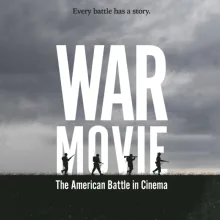
War Movie: The American Battle in Cinema
Show notes
Find out more at http://www.cantileverfilms.com/ (opens in a new tab)
Transcript
An automatic transcript, tidied into paragraphs. It has not been proofread, so names, titles and spellings may be wrong, and it does not say who is speaking.
Show the transcript (about 7,200 words)
Hold your ears, folks. It's showtime. People pay good money to see this movie. When they go out to a theater, they want cold sodas, hot popcorn and no monsters in the projection booth.
Everyone pretend podcasting isn't boring. Turn it off. Hey folks, welcome to a special episode of the projection booth. I'm your host, Mike White.
On this episode, I'm talking with Steven Summers. He is the director of war movie, The American Battle in Cinema. It is a five part documentary series looking at the history of war in American films. The more you think about it, the further down the rabbit hole you get, I had a great time talking with Steven.
Thank you so much for listening. And I hope you enjoy the interview. Can you tell me how you even got interested in making movies? I come from the fine arts background.
So I start off as a painter getting my hands dirty that way, drawing and stuff like that got involved after that. It 's a video art video installations that you would see in museums experimental you will. And then I got into narrative filmmaking and then I started to do that and then rolled in a documentary. So it's been this evolution of going from the still image to the moving image in different ways and different ways of expressing it.
So I from a personal standpoint of filmmaking, what I like or how I approach things. It's not your standard documentary perspective. I come from like an art background. So I look at it that way.
Has all of your work been documentaries or have you gone into narratives at all? No, I've, I've, I've done narrative shorts. I did a narrative feature but a few years back, I started doing these Short form shorts, I guess is the way you'd call them films that are, they were looking into my family and in the history of my family and my father and my grandfather and they were documentaries, but they landed in the realm of essay, filmmaking like Chris Marker and, you know, just many others. And I discovered that as a way of working and I really like that.
But I also wanted at some point it was like, let me try to do something a little bit more formal, a little bit more traditional in the filmmaking way documentary. And yeah, that 's how I got into doing the five part series. It wasn't supposed to be five parts, but it grew into that. But yeah, I it's kind of been an organic growth to get to documentary where I am now.
So yeah, I never thought that if you ask me 1520 years ago, I would be, I would be very surprised that I'm, where I'm at. Not a bad way. Just didn't plan on it this way. Sometimes plans just go awry.
So it might be good that you're just feeling your way through it. Yeah. Yeah. I really don't worry about like, how it's gonna look on the resume down the line.
It's whatever feels right at the above and like wherever my curiosity leads me, I go that direction, you know. So what was the impetus for a war movie? The American Battle And Cinema? It was a lot of things I think on a basic level, it was a curiosity to look at these films, films that kind of, there 's a lot written about, but there's not a formal visual representation of them put together as a documentary.
But the real impetus of it was my father, actually my dad because I would watch these movies growing up with him on the couch and he'd always have little comments about it, things like that. And I like these movies growing up. I really, I was a kid in America and I played army in the woods and all that stuff as a lot of us do. And they were really, they were an important part of my life in some ways.
And I looking back, I realized how much of an influence they had on how I saw the world and stuff. But as I get older, I got a little more educated in this world and I developed different perspectives. I started to look at these films and we were like, they really curtail the way we think about certain things and they really shape how we look at history and war and all different types of things and every film genre that has its huge amount of value. But the war film for me has it's just like great intersection thing, like politics, history, the idea of realism versus fiction, lived experience versus represented experience.
But then dealing with something as horrible as violence and war, right? The idea of wanting to sit down to watch that. I like, why do we want to sit there and watch that? That, that, that became a big thing for me of this is the worst thing that we want as human beings.
But yet we're ready to plop down and have some popcorn and watch it happen. It on screen. That kind of give and take was really what drew me into it and I wanted to know more and yeah, like I said, it was, it originally supposed to be five episodes. It was supposed to be one movie, hour and a half in and out.
But it became so big and in order to tackle this subject even a little bit, I had to make it as big as it was. And how did it start to grow. When did you realize? Oh boy, I'm in deep with this documentaries.
I haven't made a lot but I do know when you start off with an idea, but you also have to be ready for that idea to just go in a different direction or mutate or organically form it as something that wasn't originally intended as I met more people as I interviewed more scholars, as I just got involved in it just grew bigger and bigger even just representing, let's say the 120 years of history of war films just to do that in five hours is not fair. It's still not enough time. But it was like, I could at least try to talk about some of the big things in that time that I think are for.
It's one thing just to do a film series just about this happened then this happened. But to me, it's more about why did this happen? How does that affect us now? Like the cause and effect of these films, right?
Not so much just who directed it, the struggles getting them made that I think it was more about the weight of these films. You've got a ton of clips, you've got a ton of interviews. Where do you even start with all of this? You just jump right in, you just, yeah, you just, I the first person I interviewed was, I'm in Chicago was Jonathan Rosenbaum.
The great film critic and he's got some things to say. So it was really interesting hearing somebody from his low, I call, like, the film Cine, I'll call the cinema world have attitudes and opinions about it. Right. So, I was like, ok, that 's one thing.
And then I would go interview a different scholar and they would have a different opinion and I was like, ok, and then I interview a veteran and they would have a different opinion and it was just a matter of just getting the pieces and starting to flesh out the story, whatever that story was. And yeah, at times it was like, I need to find somebody to talk about this and I would find an expert or somebody to talk about it. But yeah, it was a lot of just trial and error and just seeing what fits and I have a lot about this, but I don't have anything about this.
It's took about a year and a half, two years to really put it all together. When did you actually start on this? Yeah. It was probably three years ago now and it, the interviews were on and off for a year and a half, traveling all around the country, finding scholars to talk about it.
Yeah, it was all over the place. So I seem to remember something happened about three years ago that might have slowed your process down like a global pandemic. Yeah. It's a real taking the teeth.
Let me tell you when you're, like, ready to go and they're like, no, the world's shutting down. Yeah. It, but what you gotta do in that situation, or at least I did was say, ok, I can't do this. I tried to do as much as I could and I couldn't.
But what can I do in the meantime? How can I learn instead of just going? Oh, shucks. Like, I've read a ton.
I talked to other people in different ways on emails and just try to find the story without going to people for the interviews. So it may be a blessing in disguise and saved me a lot of money and aggravation in some ways by forcing me to build it out before I didn't do it. Yeah, I mean, just, just got, you gotta roll with the punches on that stuff. How many war movies do you think you watched over that time?
Too many? Too many, I think? Yeah. Hundreds that I've never seen before.
Just so many. And it's, it's really, that's also very interesting of going back and looking. It's one thing to watch something blind but to have a knowledge of the time period around it just makes all that stuff so much more fruitful and, yeah, makes it so much better. So it really made the viewing experience far better knowing some of this stuff going into it.
And if I just watch some of the stuff, cool, I'd be like. But knowing what was going on in history behind that or you know what the studios were going through, which definitely helps my experience. No art exists in a vacuum. But the war film in particular seems so influenced by the times in which they were made, especially even if you look at something made during World War Two versus a World War Two movie made 1020 3040 years after they must change dramatically as you're using that lens of history to look back on something versus things being made in that present time.
That was also like the big discovery for me is like, things are never what you think they are. When you watch a film, a lot of historians are aware of this. But like history is, it's not a certainty, it's not a, it's a malleable sitting that can be presented in many different facets. And, but a big example of it changing through the present is to hit the Civil War film.
The Civil War film has been the one that like has been how we see that struggle has changed dramatically depending on society's viewpoints, right? And the movies mirror that. Exactly. Right.
Like how we do look at slavery or how do we look at racism or all that stuff? It's all in there. It's, it's, as one scholar said, Civil War films don't tell you about the Civil War, they tell you about now when you, if you're watching the current one and it's no different, right? You were saying war two films, we're all gung ho no pun intended during the war.
As soon as it ended, we started to get a little jaded and Vietnam started and we started to be critical and the idea of the hero was something different. Right? The, we need to just put soldiers up on a pedestal real quickly, or at least the conflicts up on a pedestal and then that can continue to evolve and change. And then you go into like the nineties where you have said in private Ryan and it's almost like we're back in the 19 forties again a little bit with some of those films.
That's the beauty of it. It's constantly a changing thing and it always showing on the past, but also the present. Yeah, my favorite one is, was it we want to thank the Mujahideen Fighters in one of the Rambo movies and it's, oh, yeah, I think they might have taken that out now when I look at it. Yeah, that's a cultural Slip.
Rambo. Bringing that up is just super interesting. Like I grew up in Rambo time, right? He was the guy everybody wanted to be.
But as far as looking at it from historical perspective, all three of those movies are super interesting as far as the first one's kind of first blood is about that PTSD veteran that's suffering. You feel apathetic for him. But then you get to Rambo the second one where he's, it becomes a whole different type of movie of reclaiming America's pride in Vietnam and the soldier and all that. And then you get to the third one and we're getting it almost lays the path to the future of like our relationship with Afghanistan.
And you know what, like, how, wow. Is that, who knew he would have, that wouldn't play out like that historically, right. So, yeah, you know, I don't know about this newer, the newer ones. But yeah, those three are very odd, very crazy.
What kind of rules did you give yourself? Because I know one thing is that, as you say in the title, this is the American war film. So we're not looking at films made anyplace else other than the US or at least made by American filmmakers. I take it.
What other guideposts did you give yourself for coming into this? I just wanna say I only did American films, not because I have no slight world cinema. I think there's a huge amount of superior world cinema war films come and see and lots of them. But it just had to do with again getting that took five hours, you're getting it down to something manageable.
If you start talking about world cinema, it's like, oh my God, it 's so much, it was a matter of economics in that way, but it was also America's influence on the world. I think that's a big thing. If these movies just don't live in America influence us, they influence how other people see us. And so I want to put a spotlight on that and say, what do these films do beyond our border, beyond our own states?
States side? So that was a big thing for me too. But as far as other limitations, I'm really, it wasn't so much a limitation, but it really was important to me to get multiple perspectives and that was from the scholar world, right? People that study these films, not so much filmmakers because I think there's a lot of stuff out there already.
But I also wanted, I wanted to get the better voice, the people that have experienced these things and how they see these movies, right? Because, oh, I, in my time I met veterans, I love these and still watch them and some didn't watch them at all because of, you know, what they represent or say or whatever. So to me, their voice was really important because I think it's so easy for us to just watch a movie and, you know, forget that maybe somebody experienced that and it's like, totally traumatic for them, but it's easier for us to just turn off and walk away again and going back to that, like looking at violence and enjoying violence.
I didn't want to condone it or say we shouldn't be doing it, but I think it's something that's really interesting we should look at and talk about. So what were some of the biggest surprises for you while you were making this? The biggest surprise for me was meeting a lot of people that you think would go one way and they're thinking about something and then they would, you would be like they would go in complete direction, opposite direction of seeing a film that could be problematic, let's say such as American Sniper, which is the highest grossing war film of all time, right?
Huge success. But traditionally has been seen maybe is leaning to the right or encapsulating some of those ideas. But I heard from a lot of scholars saying, yeah, but it really shows the depth of this character and the idea that he did struggle with PTSD and it is well rounded movie, even if it is saying some of these things that I don't agree with it works. So it was a lot of people waiting me and saying, you may not like everything that's being said, but it's done very well in that kind of fashion.
People are surprising what they say what they like if you start talking. I have a real penchant for war movies that don't necessarily have war in them, but it's more of the backdrop or something that inspires things like Bob Clark's death dream where it's all about the veteran experience coming home. And it's not a Rambo, but it's definitely deals with that. That seems like a whole other can of worms.
Does it have to have a battle scene in it for you to say this is a war film? No, it had to do. We talk a lot about the PTSD representation, veteran representation, going back to Rand, to me, it has to show weight, right? How did it affect the public in some way?
So the reflection of veterans and how PTSD is put or shown in film has been wildly influential on how we think veterans experience coming out from war. And it's really not true. The idea that everyone comes back is has problems and unhinged in the 70 early, late seventies and early eighties, there was a lot of films that had that as a character trait and I think that 's, and it's unfortunate in some ways it's makes for great writing, but it doesn't really reflect well on those who have served. So, yeah, that's important to me.
That's, that was like, yeah, that needs to be talked about. And we said there were movies coming out about the Iraq and Afghanistan war, right? As it started, that were like that too, we've learned nothing like we're still making the same mistake instead of giving him like an honest portrayal of this. It's tough because when you start to branch out beyond the battle zone, we'll call it.
You could probably go on forever and tie everything back to nearly a conflict in some way. But I think for me it was just being like, how big of a Mark on society does this leave especially? Yeah, I really like the way that you have things, chapters and, yeah, I'm amazed that each one is just about an hour. It must have been very tough for you to hone that editing, to get things down to about an hour, a chunk for each of the five of five pieces of this.
You know, I got hours and hours of interviews and stuff that's just golden. But DVD extras someday maybe. I don't know, you just find, you have to get to the gold and there was a lot of stuff that you're like, it's gotta go, like, it's gotta go but, and you gotta keep it moving too. That's the other thing.
It's, you could spend a whole hour on one film, take any of them and you could play. So it's, you feel like you're actually cheating the film sometimes by not getting into it. And this is a survey of just these films. And so I hope people that if they're like, they see something or direction they like, they'll be like, OK, and go maybe rent more movies or pick up a book because that's the video of books they can write on forever.
You can put a lot in a book, not so much in a movie, it's you're really limited. So yeah, it was a challenge. It was a challenge. As far as I can tell too.
This was a one man band. You were the editor, producer, director and writer all on this. It's a nut job thing to do. But yeah, I had other edit, a little help from other editors here and there help actually helping me make decisions because just having somebody else look at it with blind eyes can help you.
A lot of saying, no trim, this trim that get it out of this. I edit outside of this type of stuff for a living. So the editing for me is, I love it. I, to me that's filmmaking in some ways like that's my world.
That 's where and you can just really craft things and I it was a lot of work, no doubt. But yeah, I enjoyed it a lot. I could go back and keep tweaking it now. I won't lie.
So, one of my favorite edited bits is when you're talking about the structure of a lot of the World War Two movies and how they start with the scroll and then they've got the big speech at the end and just the beats that they hit as they go through and the makeup of the crews and things like there's the guy from Texas and the guy from, you know, New York and just all those differences. I love that bit. I love when you look at so many things and just start to find those patterns and are able to explore those on screen.
Yeah. Yeah. And there were more than that I put in there. I think I did put it in the fact that they all had like an animal, like a little dog or a pig or they had a mascot which is just wild that probably in some room producers are like the ladies like that and they like throw that in there.
It's just stuck. I don't know what G I to the dog around the middle of Italy during a war. But I don't know you were talking about what surprised me. Another thing that I found interesting is I didn't know like a lot of people about the Korean War.
So that was something I was excited to know more about the conflict, but know about the movies and it's in the documentary is the amount of orphans that end up in these films, Korean Orphans and how that becomes such a like narrative pivot point or structure part of the structure. And that kind of thing is interesting because it was happening in real life. They put it in films and you should see it popping up at other things after that too because you look at it. Indiana Jones Short rounds the character of Short as is stolen right from the steel helmet where the, there's a character named, he names him Short round and it's, oh my God, that's where Spielberg and Lucas got that from.
Like, they didn't even make up the name. They just stole it all appropriated it. That kind of stuff is awesome. When you see a through line through history like that too.
Or there was another film or two film called Red Beach. It's a lesser known B picture, but it's, it was made in the early mid seventies, I think. But they're star from this beach and this guy's arm gets blown off and that's just hard to see back then. They didn't show that kind of violence.
And you're like, oh Spielberg and all that and put that in Xavier Bright, you right? You know, like you can just see the things he appropriated and put in different movies that kind of like three lines really great. It makes the whole world like more colorful in some way. You mentioned inspiring people to watch more movies.
And I definitely want to track down the one that you were showing clips from where it was the Japanese Americans who were going into the army and just fighting for a country, their new country. I was like, oh, I had never heard of that one before. That movie is not even on Blu Ray. It's only on DVD.
It's hard to find, but it's fantastic. It 's one of those movies that during that time they were trying to write a lot of wrongs socially in films and stuff, that one needs to be shown more because it's cool. And they historically that regiment was incredible. So it's, yeah, it improves how much of an idiot we are as a country sometimes.
And we make these restrictions on ourselves of floating people. And then this happens. But yeah, there is, there's a number of movies like that. There's another one not gonna remember the name of it that follows a half Japanese, half American soldier.
It's based off a true story. He goes over there and actually talks Japanese soldiers out of caves instead of going in and killing them. And he convinced through because he knows Japanese convinces them to come out of the caves and there a young George Takei in that movie, it's like, really great just to see. Again that use of movies to right wrongs.
Like you were saying the whole idea of putting like an African American soldier in each battalion in the movies. Whereas it was like, no, we don't want to keep them out of here. We'll do it in the movies. But real life is a whole other thing.
Yeah. And that's weird during World War Two because that was like, the government wanted that, which is really strange. They were, the government wanted the image integrated army. They're not really gonna do that.
That's just crazy. Yeah, that, that stuff is just, yeah, it's hard to watch that stuff. It's ok. Yeah, you talk about like movies trying to right wrongs.
It's still happening now. There's a new movie out. I haven't seen it yet so maybe I shouldn't talk about it. But Guy Richie's the covenant where it's about, a, an American soldier going back and rescuing the Afghani interpreter that saved his life.
And I think there's just something. So, oh, so we're going back to Afghanistan to rescue the people in a film now because we might not have done the best job there. So it Rambo again in some way of trying to right the wrongs of history in a way, trying to get our, our pride back a little bit through that. That line of Rambos.
Do we get to win this time? That was so telling. See, I didn't hear that when I was a kid though, I just saw the Big Guns and the Muscle. And so I think you and I are about the same age and if so you probably clearly remember that glut of Vietnam films that came out around like mid eighties.
I don't know if platoon started it, but there was definitely platoon full Metal jacket, Hamburger Hill Gardens Of Stone. Just all of these movies just all seemed to come out right around the same time. And it was just like, oh, are we now suddenly ready to deal with Vietnam? But it just, it felt so odd to be coming out at that time right in the pretty much smack dab in the middle of the Reagan era.
And it was like, ok, are we doing revisionist history or are we just ready to actually have this conversation? Why it happened? How it happened? It's weird because some things can be said, you know, they happened because of this other things might just be a sheer coincidence, like Oliver Stone Making Platoon probably have anything to do with Reagan being in an office and maybe some of those movies like Rambo did because that's a little earlier, but Reagan was all about getting rid of the Vietnam Stink, right?
America is still powerful from that perspective. R Rambo fits into that like kind of political angle that he was going at. But the films like Platoon, I think were trying to give some that was more for the soldiers and more saying it was OK that you were over there and what you did. But yeah, there was a lot of them and I still, yeah, I think it comes down to you maybe have two or three films that are really honest that you probably have Platoon Hamburger Hill and you probably have full metal jacket.
But the rest are probably there because they know they can make a lot of money. But like they said it was a hot subject and they're like, let's get another one out. Maybe Good Morning Made at Vam. That one's pretty good too.
But there's a lot of schlocky. Oh, I forgot about casualties of war. That was right there in the mix as well. You had your work cut out for you.
I can't even imagine what it was like trying to put all this together and shape it. Like I'm saying too. I'm talking about all these Post Vietnam movies and meanwhile, during Vietnam, yeah, there are some movies being made about it but not nearly the amount that are gonna be made 2030 years from then. We come out of World War Two and we're just cheering the movies out and it's woo and then like the country gets jaded over the Cold War and then, then on happens and yeah, it's like a 180 degree turn of how the studios dealt with all that.
They didn't, they just, just mo because of the, they wouldn't have the sales, they wouldn't have the viewership and they knew that they knew young people didn't want to see Vietnam on screen. They hated it. So the only guy to try that was John Wayne. And I don't know if you've seen Green Berets, but it 's one for the ages and you get this kind of like a real time of trying to heal after that.
And then that's why it takes a little while for these like movies to really come out that were like, are very, speak to it very well or creative about it and really look at it in a kind of honest way. It takes some time. And it's interesting now with Vietnam and then we went into Iraq and Afghanistan, all the studios tried to deal with that. Like, they wanted to release movies but they didn't know how to do it.
And it was, it kind of, but it was a mess in the first seven or eight years. Like there's movies that come out but they're not, ain't good. They're just, they don't know how to speak of it. The language hasn't been formed yet.
It may not have still might not be. But I don't know if we have a good movie about Iraq and Afghanistan that really sums it all up like we do Vietnam or World War Two or any of those stuff like it may take some time for us to get there. Yeah, I recently watched Black Hawk Down and which I know is that about Iraq or Iran, but more Mogadishu and just to see the way that the people of that area are portrayed and it just is. Wow.
Have we not learned anything? They might as well be carrying spears and wearing makeup on their faces? That's an unfortunate thing because the book which I read not too long ago really gives a lot of perspective from their point of view. Everyday people having their world just shredded by this assault, right?
And they missed an opportunity there. They really did. I love that movie. I think Ridley Scott is what he pulled off is cinematically amazing.
And I can sit down and watch that any day. But, yeah, it really doesn't talk about the larger conflict the way it could happen. It's, it's a shame and it's funny, I talked to the series wraps up with me asking veterans, what do you want to see in a war film? What is missing from the narrative of all these films?
And they nearly all said the other side, we don't see the other side or get that empathetic viewpoint of either the Afghanis or the Iraqis or the Vietnamese or whoever. They're just like, they've got stories. There is a reason why this conflict happened and you always see the Americans come in and do their shit and that's it. And that's always been a challenge for American movie makers.
But I think American audiences, I think we have a hard time wanting to see that it doesn't make it into the films. Unfortunately, I thought that experiment of flags of our fathers and letters from Iwo, Jima was interesting. I don't know if it was 100% successful, but that was an interesting way to go about it to have one from the American side and one from the Japanese side to. Have it all in Japanese and really just keep it, they feel like the same movie in some ways, but they're wildly different.
And yeah, the, they're very interesting pieces that run parallel and he they took a big risk by doing that. But I think he really, and I'm sure he knew the American one would be pretty successful. But to have the other one, I'm sure he had to talk the studios into doing that a little bit. It's definitely a Hallmark film for that because of that, how many American films are made completely?
And in another language, be surprised somebody like Eastwood would even do that. Right? I want to ask you a very unfair question, which is if you were to recommend a few war movies to people that just say, oh, I don't like those or because they haven't seen them, they haven't given them a chance. What would you recommend?
What are a few titles that you would say are Gateway Drugs to more films? If somebody doesn't like them, they usually don't like the violence. And I understand that to me said the little ones that are are more s pieces than they are about the action, right? But to me, I love anything Kubrick touches, you could do full metal jacket, of course.
But I think Pad Of Glorious is super beautiful film. It gives you some of the work experience, but it gives you the corruption of power, it gives you a court room drama. So I think that makes you really not like war. It is very good.
Even the original All Quiet was really good. All Quiet on the western front is amazing. But also the new one is pretty, pretty spectacular too. I'm a big fan of thin red line.
I don't know, a lot of people are, but I think that is very contemplative and very interesting about talking about war and in a different way. But like I said, I can sit down and watch, you know, Black Hawk down and just be in love with that too because if it's, it's amazing from a production standpoint how they did that Red Badge of Courage is really interesting as far as again, showing the perspective of a soldier at PTSD. But in a Civil War, which is a very, we don't think about that being in that, right? So the thing that had scholars say is the movies are all the same sash, right?
It's all about these people going in a situation and it turns out differently than they expected in some ways. So no matter what war movie you watch, there's always that relationship through all. When did you actually have picture lock on this? When were you done with everything?
Probably about six months ago. I would say there were little changes that I had to do here and there because of the facts came up that were a little different and things like that. But yeah, I'd probably say six or eight months ago. So what's the history of it since then?
Did you show it at film festivals or what's happening with it? Since then for a. While, we got a distributor, but we decided to go our separate ways and kind of release it on our own and we, right now we're just pushing it to get it out there. It'll be on Amazon eventually and all that.
Hopefully, we would like to get it on a major tiered platform like Apple or HBO, but we just haven't gotten it yet. So am I correct that you're selling it to universities and schools and libraries? We're right now just releasing it to universities to get them to purchase it. But within the next month or so it will be out for the public.
We have Blow Blu Ray and DVS and it will be streaming it within, I would probably say a month. So we'll get it out there. Yeah. Yeah, I mean, the world of media film is it's changing every week.
It's so weird how we, what's popular, what platforms are popular, how they market things and do what they want. So it's what's hot. One week is not hot the other. So you just gotta keep moving and hopefully you get on a train that takes you where you wanna go.
Are you working on another project at the moment or is this? It diction continues as they say, yeah, I'm working on a, it 's the, it is a documentary but it's more of an essay, experimental film, part documentary I would say on the apocalypse on the idea of the apocalypse, the history of how we've always had this fear and how it kind of doesn't ever go away, just changes throughout history. And you know how this fear can be very dominating to people and really shape how we react and things like that. I always just pick light happy topics like or the apocalypse.
I know I have all these books around the apartment of war, the apocalypse and my wife just shakes her head just like, who did that? Mary? That's another very personal thing for me. If it comes from a personal background of the fear of that.
And it's again, something I want to explore and I think there hasn't been really anything out there about that and I think why not? It's turn on the news. Jeez. You know, like it's always on the tip of our tongues, but that'll be an hour and a half feature.
So just one thing. No, no, no more five hour stuff. Yeah, I can't do that. I love that.
You have this five hour documentary. I just was talking about a three hour documentary about erotic thrillers. And then I know that there's the five hour sci-fi from the eighties documentary. I just love that people are doing these longer documentaries and especially about something like war films where, like I'm saying, there's so much of a reflection on what was happening at the time and that it just really does make you think about this stuff.
So I really commend you for putting all this time and effort into this. Oh, thanks. Yeah, it's just, it turned out pretty much not exactly how I thought it would be, but like the, every film was a journey. It sounds terrible, but it's true.
You're like, you don't do it to have this thing at the end. You do it for the experience of making it and it, there's times it sucks a lot, but you get to meet these people, you get to talk to them and you get to learn just this huge amount of stuff. You really, you're forced to think about stuff differently. And hopefully that comes through in the film is, and I didn't want to make just another w war films, aren't they?
Great? Here they are. And here's the history of them. Yeah.
It was really important to me to make people think and maybe create a dialogue about them, not just celebrate them. I don't, I do but I should be critical too. I can't wait for more people to see it. I'm really excited for that.
Great. Yeah. Thank you. Is there a good place for people to keep up with you and your work?
Yeah, you can go to cantilever films dot com. That's the website and I'm on Instagram and I'm on TikTok and Facebook. Yeah. Just cantilever films.
Fantastic. Thank you so much. This was great talking with you. Thanks.
Yeah, it was great. What? Oh, well, thank you. Thanks.
Yes. Oh.
Comments
No comments yet.