
Episode 651 · Film year 1983
The Keep (1983)
- Special Guests
- Hawk Koch, F. Paul Wilson, Ivo Ritzer
- Guest Co-Hosts
- John Walker, Jedidiah Ayres
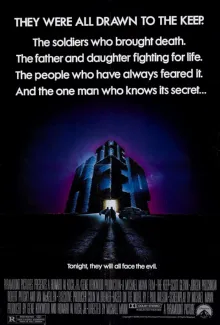
Show notes
Also joining us are Professor Ivo Ritzer who discusses his essay about The Keep and Manhunter in The Philosophy of Michael Mann (opens in a new tab), producer Hawk Koch, and the author of The Keep, F. Paul Wilson (opens in a new tab).
Labels: F. Paul Wilson Gabriel Byrne Howard Koch Ian McKellan Ivo Ritzer Jedidiah Ayres John Walker Jurgen Prochnow Michael Mann Scott Glenn William Morgan Sheppard
Transcript
An automatic transcript, tidied into paragraphs. It has not been proofread, so names, titles and spellings may be wrong, and it does not say who is speaking.
Show the transcript (about 29,400 words)
Hold your ears, folks. It's showtime. People pay good money to see this movie. When they go out to a theater, they want cold sodas, hot popcorn and no monsters in the Projection Booth.
Everyone pretend podcasting isn't boring. Turn it off. What is this place? Sure.
This place was not built to Keep anything out. This place was built to Keep something and we must not stay here. Something has been or at least something. Did you find what you were looking for?
Did you expect to find me? How are you. Whatever kills us gets in anyway. Nothing we do.
No security works. And a two, the key. Presented in simple. The Keep coming soon from Paramount pictures.
Welcome to the Projection Booth. I'm your host, Mike White. Joining me once again is Mr John Walker. I have been here for ages watching and guarding against what is happening now.
This podcast. Yes. This very conversation. Also back in the Booth is Mr Jedediah Harris.
Does it enthrall you? October 2023 continues with a look at Michael Mann's Moody supernatural film. The Keep released in 1983. The film is a real who's, who's of actors including Jürgen Prochnow as a German, Captain Gabriel Byrne as a Nazi SS major, Ian McKellan as a disabled scholar, and Scott Glenn as an ancient being on the side of light.
All of them eventually make their way to the titular. Keep deep in the Carpathians in Romania. Yes. It 's another mysterious castle in the Carpathians, but it's a lot less funny than the older Slips film.
We're gonna be spoiling this movie as we discuss it. So if you haven't seen the film, you may wanna go watch it. Maybe not. I'm not gonna tell you what to do.
Jetta Di. When was the first time you saw The Keep? And what did you think? I first saw it five years ago, I just realized I needed to finish all the Michael Mann movies.
I hadn't seen that one or Jericho Mile at the time. I found copies of both of them on YouTube or somewhere online and watched them and I, you know, really liked Jericho Mile and understood that the Keep was not a beloved Michael Mann film. And while I wasn't surprised that I didn't think a whole lot of it, I was pleased that there was a lot of Michael Mann stuff to enjoy in it even though it is and probably the oddest fit into his body of work of any of his films. But yeah, I revisiting it for this podcast.
I found more to appreciate about it. Yeah. Thanks for having me on. To do that.
And how about you, John? It's one of those movies that I think I knew more about. Then I knew the movie itself. I know I've seen it.
I think it probably was a college dorm room rental at some point. But I don't think we paid that much attention to it. And I think in my mind I had screwed it up with the, a different movie called The Gate, which is another movie. I don't really think I've seen watching it for this show was the first time I've sat down and given it like a full attention viewing, but I knew so much about it and had seen so many things about it.
My personal feeling is, it's interesting because Michael Mann made it like this film is very interesting as an outlier in his career is very interesting in terms of where it fits in between Thief and Manhunter in terms of his style and like the kind of genre thing he just wouldn't do again. And then as a movie, it's like a borderline incoherent film might have more in common with an avant garde movie, like a Yodo Rosky film or something like that than Sorcerer or then the obvious analog, which came out just a couple of years before, which is Raiders of The Lost Ark, which took a similar thing, occultism and Nazis and did a totally different sort of thing on it.
So I feel like it's a very interesting movie. Yeah, it's almost like for man complete us only in a certain kind of way. But those are the people that are gonna find a lot I think to talk about in this movie, whether it's great or not. Yeah, I think I saw this one on HBO or a cable channel years and years ago and I didn't really remember too much about it.
I just remembered some of the shots and we should say that some of the shots in here, most of them, if not all of them are gorgeous. So many, great, great looking movie. It's got, it's just super sumptuous when it comes to that. But when it comes to the plot, it's rough, man.
This movie is really, really rough. And the 90 what is it? 96 minutes? They ended up with 90 minutes that they ended up with, I don't know if the two hour and 10 minute version would fill in all these blanks.
But at the same time, I have to say it, the original script for this was 100 and six pages. It wasn't 210 pages. It was a pretty lean mean movie and it had a lot of the same faults that this movie has as far as we are just jumping all over the place. And when I watch this movie, I feel like I am fucking high because I'm just like, what happened here.
How did this person get here? What happened? I don't need to see the person walk through the door, get to the bottom of the steps and then take every single step up to the top of the stairs before they go into the bedroom upstairs. It's really ok.
Just assuming that they're going to climb steps to get to the bedroom upstairs. But this has you going from dock out to the Keep in a matter of one second and we just move through space and time. We don't care where these characters are. If they need to be in this room, they're gonna be in this room and we don't care how they got there necessarily.
It's a really jagged movie. Yeah, I was wondering that and I didn't know if there's any, is there really any indication there's this legendary 210 minute version of this? Is there any indication of how that script, that first draft script? Because I read that script, how that could even be.
I know Michael Mann does a lot on the fly and there's a lot of rewriting like the morning of and new lines and he changes things even with that skeletal structure. How could you get another hour and a half or whatever that would be? Which I think that's what that would be out of this material. The book definitely has more material but it's nowhere in the first draft like the first draft is already a wild departure from the book and I don't know, it's just an interesting thing.
Like, how, how much do you believe the hype of that 210 minute version? Do you think that's just one of those, this was like an assembly edit? People always talk about those versions like they existed as a finished movie when in fact, that might literally be everything they shot just laid out as opposed to a like a version that has that much more material that we missed out on reading the book. I just read the book which helped me understand the movie a lot more be between, between reading the book and reading the treatment, a script and things like that and watching the movie about eight or nine times in the last couple months, it's helped a lot.
But the thing that I've come away with thinking, ok, this movie is salvageable is actually making it shorter. Excising Scott Glenn pretty much entirely, you know, it for the book. He's a major part. But really, I think he's the wobbly, not his performance or anything like that, but just his character, the most wobbly aspect of the, you got a pretty, pretty solid antagonist protagonist between Ian McKellan and the, and Melissa are and Gabriel Byrne and I think he adds Scott Glenn and Ian McKellan's daughter in there and they just for the film, I don't think it may be what make it un ungainly and hard to manage.
It's weird that the movie has characters that are, you would say are heroes or protagonists, but they're not like main characters, like the time given to certain characters and certain events like the opening 20 minutes of the movie are like relatively faithful to the book in a sense because they really draw out that opening segment where you're getting to see the Keep and you're coming to the army trucks pulling up and Jürgen prognos character Worman being like presented as a kind of, oh, he's like the Nazi that we don't hate so much, even though he's still pretty terrible.
But like in the movie, he's presented and especially in the book, he's presented as a little bit of, there's a separation between German army soldiers and SS as represented by Gabriel Byrne and his crew. But I think from those opening scenes, it's so deliberately paced and so faithful to the book that I was watching it going. Like, how are they gonna then cram all the stuff in? I did not know they were gonna do what you said, Mike, which is basically, it's like a highlight reel moments from the book and some of the strongest stuff in the movie is taken directly from the book.
And also some of the strongest stuff in the movie is more that image stuff that where it's like Michael Mann's kind of music video kind of sensibility where it's slow motion and it's, you wonder what this, what the fog machine budget was for this movie because it really gets used a lot. But there is a lot of that visual style that really, you know, and on top of what you said about the, some of the beautiful shots, the set of the Keep itself, I just love like I grabbed screenshots when I was watching it just so I could look at the way the it's impossible architecture.
It feels ancient and yet it also feels like modernist in very German its way. I don't know, there's a lot of, there's a lot going on visually with the movie that you can tell Michael Mann was interested in creating those textures as the movie then jumps starts jumping around after that initial opening, that's relatively faithful. You really realize how disinterested Michael Mann is in the requirements of a genre exercise. Yeah, there's.
A lot of times where this feels like a 90 minute preview or to your point of music video and especially when you get that Tangerine Dream score in there, it's just blaring. I don't care if the music is loud, but if the music is loud, I would really like to be able to understand the dialogue as well. I had this thing cranked up as loud as my television can go to try to understand some of the dialogue that was being said because it is so freaking muffled and then God help you. If a music cue starts up because my speakers are gonna be blown out.
I'm just like writing that volume trying to get this. I'm trying to find subtitles that will match with this movie. But there's so many different versions of the movie that I'm like, I'm not sure if this subtitle file is gonna make, I never ended up getting subset I could even fix to make go with the movie because everything was always off a little bit. And that's part of the other problem with this is that there's so many different versions of this movie that it's tough to Keep track of.
But I think overall it's not like the Devils or some of these other films where I'm afraid to watch this cause I don't wanna watch the wrong version cause none of them really hold up that well, even the ones that are fan edits and expand things. Ok. I think this just added the, a little bit more to the ending. Otherwise I wasn't seeing a whole lot of differences because yeah, to your question about earlier when it comes to, could this be a 2, 210 minute film?
I don't know what they could have put in there. There are a lot of images that we see in movie magazines and the trailer just but they're quick images and it 's not like there would be 1015, 20 minute scenes added on top of all of this. And it would literally have to be every single time you see a still in a magazine that's not in the movie. There would have to be a 20 minute scene around it in order to build up that run time.
And I just can't see it sustaining that. The interesting thing is I noticed about the book when I was reading it. The book is long, long, it's a medium length novel. It's like over 425 pages.
I think it's like it does the novelistic thing of digging deeper into the characters and the things you'd expect. But it's like long dialogue scenes, I guess is my point. It's not like the movie actually cuts and in terms of like pyrotechnics or popcorn movie thrills, the movie doesn't really cut many of those moments as described in the book. There are a few things, there's, I know we're probably gonna talk about the book.
Maybe you have that set for later, but it's interesting that the book has a zombie army of undead Nazis that the movie not to use. And the book has a lot of vampire stuff that the movie just decides not to use. And you could see other directors in 1983 whenever they were making this 82 latching on to a pulpiness of those because what the book does is like, really try to grapple a little bit with the sincere issue of what could be more evil than Nazis. And then also throw this kind of celebration of pulp into it.
And you get a sense that like man is much more intrigued by the notion of the first part of that equation than he is. The second part. Like he's not really there to, I don't think he wanted to do a vampire thing. I don't think he wanted to do a zombie thing, but when he does that, he's cutting a lot of the sort of b movie fun that you would read that book and think, oh, any director is gonna have a field day with this or that and the movie is just not there.
So, yeah, you're right. It's not like they shot huge action scenes that they then decided to cut from this longer version. It would have to be those scenes of people walking across courtyards that you're talking about. Those transitions and music video type things are really the strongest bits of the film.
The more memorable, memorable things. When you've got an aesthetic like man working, it's not surprising that those are the best things I said to make a more coherent film out of it. You'd take out maybe Scott Glenn 's whole story and, but then you, I think my favorite bit is him jumping on the ship when crossing, crossing the ocean, just that shooting, shooting the ocean at night or at dusk and it's just gorgeous and of course, the Tangerine Dream is such a part of that. He 's of course worked with them and see and Manhunter as well.
He obviously worked very well with them. But yeah, I think as far as images and sound and editing on those sequences, it's really good stuff that I'm glad I saw and I would like to have a Pristine version of that as far as characters go if you're coming in at this, like a Michael Mann, what's his interest in this? I think probably Jurgen Broch. Now's character is the most Michael Mannish character.
He's a competent professional trying to do his job and getting it, getting waylaid by these supernatural events and these, this his horrible boss, let's say Gabriel Byrne guy. And there is an interesting thing and of course, I think the book focuses more on that, but it's surprising to me that there was less of his character that is in the book. Some of that back story of the relationship between Bucknell Gabriel Byrne's character would have made an interesting addition to the film. I think I'm not sure what it was about this project that Drew Man in w whether it was that character or wanting to do something supernatural or horror, because horror I think is definitely part of his, you know, interest.
Do you think Manhunter is, it qualifies as a horror film and following the Keep up, it's. Like a gothic. It's like a modern gothic somehow. It's interesting what you're saying about the, what drew me to it because he said so many things about this movie just over the years that you can try to stitch together.
That thing about it being a fairy tale for adults. A line that got used a little bit. And then he said he wasn't interested in doing a horror, doing something that fit in the genre of horror. But then he also says he thinks the movie has scary parts and he wanted to make it scary and visceral.
But he's so much about giving people an experience and it's so much what you said, Jed that aesthetic blast. Like that 's what makes this movie tolerable to watch even with all of these storytelling flaws or just storytelling hindrances that we're talking about. But that whole idea that he was that he was gonna go off and maybe write a script that supported the kind of images he wanted to use and more so than driven by the plot. But he still does use things directly from the book like you can tell where it serves him.
He uses line scenes. I think it's really funny that one of the, one of the few bits of description that is taken directly from the book is from, from one of the kind of pervy scenes that you, if you've got like an 80 early eighties like horror novel, you've got to have a couple of pervy sex scenes in there. But there's a scene that describes the Herb Bando being pulled down and her breasts being allowed to spring free that's in the book. And also in this like stage description is taken like word for word.
So it's like Michael Mann liked that part of the book, but he didn't like a lot of other things about the book. But I again, I feel like there's some moments in the script where you go, wait, what I had to flip back and forth around page 70. You can tell that like he's just picking things from the book and then this, I guess was what I wanted to get to. He invents so many things for the screenplay and the movie and he doesn't even use everything that he invented.
Like there's a whole Robert Prosky as the priest character. That's, there 's more with him in the screenplay than we get in the movie. But that's an example of something I kept waiting for that character to pop up in the book and then realizing, oh no, that's nowhere in there. So that 's another one of those cases of it's weird to then cut all this stuff out.
And then what you put in is it supports this like theological debate that Michael Mann wanted to have in the story that's not explicitly in the book. The spiritual part. Of the book is, and they kind of have the spiritualism because Yeah, they add this Robert Prosky character, Robert Prosky, who's having an amazing 1983 because I think right around the same time Christine is coming out. So congrats to Robert Prosky for that, he's getting added in there as this, I guess he's Greek Orthodox.
He might be a Roman Catholic. But regardless, he's a priest. The way that he dresses makes me think he's more Greek Orthodox. He's got his little dog and he gets in these debates.
He's trying to help out Ian McKellan 's Kuza character. He's once the, this message is left which is written in blood in the book, but it's etched into the brick in the movie. I don't care, Lena, that's fine. I'm not going to say that he should have been super slavish to the book.
But don't break your Kuza character into two people because that really Robs Kuza of who he is because that's the thing I love liked about Kuza was he has conversations with Molisa and Molisa is very much like Satan. He's the King of lies. Everything that he tells him is a lie and he just keeps lying and lying and lying and twisting poor Kuza, his faith basically because he's a devout Jew. And when he holds up a cross to Malisa, Malisa just freaks out.
He's just like, oh, get this away from me. And when he says the name Jesus, like Mosar flips out, but it's all just a game. Mosar is just fucking with him to make him think that Christianity is the right religion and Judaism, which he's dedicated his entire life to is completely wrong. And it's just another chip in the armor of Kuza just making this guy doubt himself to the point where Msar can take him and make him a pawn.
But if you take that away and you just make him an atheist, ok? There's barely any dialogue between those characters between Molisa and Kuza and he heals him, makes him take away Scala so early in the movie. And I'm just like, wow, ok, this is a weird choice to make him not cripple at this point in the movie. It should have been much later on.
And I love Gabriel Byrne. I like his Eric comfort character, but he feels very Elmer Fudd or Daffy duck to me because it's very much if you say I will, I demand my daughter will not leave this place. Da Da, Da Da Da then and Kemper is there, you say that it's duck season. Of course, you know, you're gonna do the exact opposite of it and they can play him so easily that he becomes a dupe rather than being a threat.
And I'm like, ok, that's all you have to do is just use reverse psychology against this guy. It's true. Doc I'm a rabbit. All right.
Would you like to shoot me now or wait till you get home, shoot him? Now shoot him. Now you Keep out of this. He doesn't have to shoot you now, he does so have to shoot me.
Now my command that you shoot me now. No, I thought that part was funny too because it is a little too easy. But I also think the book, it almost even that works a little better because in the book you have, there's a few paragraphs that I made note of that just describe the evil of Kemper in this, these stark mundane terms. There's this whole part that I actually put a little marker in there because I was like, oh, this is just a good description of evil.
There's they're intimidating villagers and he likes the fact that he's got one who has a little bit of pride because he really likes to see somebody who has pride, be broken down and humiliated that it makes it sweeter for him. And throughout the book, whenever we come to Kemp for kind of inner monologue, it's very much that it's, oh, he's having exactly the wrong human reaction to some of this stuff. And so I think it makes that Elmer Fudd moment almost like more like darkly comic in the book. Whereas in the movie, it just makes it like you said, it just makes it seem simple and too easily manipulated.
But I also thought that you're right about the Jewish dilemma in the book. The problem that's being presented to the Jewish characters in the book, which is that ok? If this supernatural being seems tangible, if he's afraid of the cross, then what does that mean about the power of the cross and the power of Christ and what that means? And I like the way the book because I had a lot of invested in that suddenly because I was like, this book better not suddenly pull some weird anti-semitic shit that's like disproving Judaism.
And I like the way the book doesn't do that and the way it plays that moment as like a comeuppance for actually Gabriel Byrne's character in the movie. But in the book, it's more of a comeuppance for the Jürgen Prochnow character who he's the one who's holding, who attempts to use the cross. And we don't, I don't know for sure still whether it's like Mosar was trying a different tack with Kuza and therefore plays up the idea that the cross would work on him or is it that it actually works when Kua is holding it? I don't know that I know fully what the answer to that question is, but I like the idea that Molisa tries a different tactic with everybody.
And that in that moment, he's, there's no reason for him to pretend that it's Christian iconography that has any power over him. But anyway, no, I like the way that was played up and I was again, it seems like something rich that the movie might have tried to play with, but the movie instead plays with it by, like you said, changing that into an actual dialogue between two characters which this priest character represents the Christian side of that debate. But it was interesting seeing pros he's one of man's guys. This was a really interesting him looking like Russ Button.
I really wasn't expecting that. He's a weird choice for that character, but I bought him, I didn't, didn't have a problem with him. I think I listened to that Tarantino Avery conversation about it and they were having a hard time with Robert Prosky in it. But no, I liked him.
I thought he was pretty good watching him smoke that cigarette. The beginning of the film, something about it. Remote and Timeless as the village around the key feels. It was a bit of a strange thing to watch him take out a pack of cigarettes and light that up.
I was like, how, how often does he have to hike down the mountain to get cigarettes? But he was a presence in the movie. I liked a lot. I actually, when I was reading the script and the, there's this scene near the end where he's sacrificed his dog and is drinking the dog's blood.
And I was like, that's weird. They put that in the script and then not put that in the movie. And I complete, I'd watched the movie several times. By then and I completely missed for God, I watched it again.
It was like, oh, it's in there. It's in there. But you missed two seconds of him turning around and you barely see that the dog is on the dais. You know what it is?
It's this movie's version of the famous shot in the shining where it's like the guy in the dog suit blowing the guy on the bed like it's played like that moment in this where it's just a manifestation of the chaos that 's going on. And that's an interesting idea that is developed in the book. And then the first script has the order of the scenes. I don't know if you noticed that like the order of the scenes in the movie and the script change up a little bit and it makes maybe more sense in the movie.
But I still was a little surprised at how much that part is not really explained in the movie where she's seeing all the weird stuff. But in the screenplay and in the book, it's much clearer that there's a moment where it's like just the evil of the Keep is spilling out into the town. It reminded me of like that movie, needful things where it's like a satanic figure comes to town and then gradually people, it just ratchets up the tensions that are already there, but it still felt underdeveloped in the book. And then I think the first screenplay at least tries to make some tangible use out of.
Oh, the town has just descended into hell. But then the movie doesn't really do all that. It just has like, about half of it. I don't know.
Oh, very, yeah, it 's one more hodgepodge aspect of it is just that, that there's no way to have any real context for what the hell is happening in that moment. It's funny. I just watched Paul Schrader's Dominion, the prequel to the Exorcist. And I don't know if it was made consciously as a remake of the Keep, if that was thing.
But it really, it does that whole thing where the town is going crazy as this evil is coming out. They break into a literal Keep and the same thing, these soldiers are stealing, trying to steal some jewels out of the Keep. They release an evil and it seeps out into the town and people start doing crazy shit and oh wow, this is really, it's a more successful version of this story. It's one of the ugly children of Paul Schrader's body of work.
Like this is one of the ugly Children Of Michael Bands but works better as a Paul Schrader movie I think than this does as a Michael Mann movie. But yeah, it was very interesting. I didn't, I don't know how much the Keep was consciously in mind of the writers, people developing Dominion, but definitely felt like a remake. To me just thinking of other movies that, that are part of this little web of references.
Do we feel like that's a pretty direct reference to Sorcerer at the beginning with the Tangerine Dream music and then the army trucks rolling in. So I had the thought and then I was surprised to see a several conversations that I found online where that comes up as a reference and I was like, ok, maybe that was more deliberate than definitely with the score being by the same people. It really did make me think. Is that a definitely, that's not something that necessarily pays off as a as this is the movie you're gonna see.
But I wonder if that was in Michael Mann 's mind when he staged that opening scene. It sure felt like it to me that that was my note as well in here. The opening reminds me of Sorcerer, the score, then the trucks and the rain. It just definitely hit me that same way.
And I love that the way that the cameras just tilting down and going through the atmosphere and seeing all these things again. It's beautifully shot. I have no objections to anything that's actually visual in this movie at all. Yeah, it is a cool and also I guess it's a good time when you talk about that those opening scenes that they found a place in Wales with these sheer rock faces.
It really gives it an otherworldly within the world. But otherworldly feel, you totally believe that there's this mountain pass where you get up to this mountain village and it's a little bit set off from the world and it's, it's completely not part of the world, even though this is a period piece. It's like the village is like, feels, feels old fashioned and an ancient compared to even what the army guys are, are doing there. And I think that opening scene really gives you that feeling with this slightly stagey looking sets, but they're so cool looking.
I think it really, I don't know, it really works on me. I love those kind of sets and I even like some of the practical effects that are used in the movie. I have a soft spot for the sort of optical effects that haven't aged that great. But I really thought there were a couple of scenes with the rubber Muscle man version of Molisa that I thought were kind of effective in terms of this is just an otherworldly kind of creature that I don't have a frame of reference for what it is.
And therefore it's scary. I think by the time we get to the final form, he's, he looks like an action figure. There's not much to do about that. But early in the movie, I like the idea of this evolving form that he's like a nerve system first with like eyeballs in a brain, even though that wasn't like a perfectly pulled off effect.
The idea that he generates himself out of nothingness into this monster man. At the end, I found it actually more interesting in the movie than in the book. The fact that he shows up and he's instantly a sort of vampiric count figure who, who pops in. So that was one thing I thought, what, what did you guys think of the creature effects?
I point of reference for the film is that the death of Wally Beaver's in post production is to blame for this film not working things like that. I'm not sure how much that's maybe a convenient, a tragedy but a convenient thing to blame for this gone bad because I think the effects work for the most part. I really like the smoke monster. I think that's, and that's actually I watched some other Wally Weaver films and he used that exact exact effect in Curse of the Demon from 1957.
It was a really beautiful in Black and white in that one for this demon effect. And it looked great in that and it looked great in the Keep. But I think I have a feeling that was maybe more his thing than the prosthetics and things like that. But yeah, I didn't really have a problem with any of the effects in this movie, maybe because that was, I'm the age that, to me that's what movie effects are supposed to look like.
That's what I came up understanding Mo Fanta fantasy movies and things like that looked like. And so I pretty much buy all the effects. I even think movies from that time have a long life now. Even with younger viewer, to a certain extent, there's certain things about older movies that will always seem slow paced or boring or whatever sty, there's still an attraction to like practical effects and sets and costumes and masks and the ingenuity it takes to come up with that and I'm not taking anything away from computer animators and what they bring to movies that can be really gorgeous to look.
It's just that there used to be so many different ways to do something and now there's like kind of one way that people use in different ways, but like it used to be, you had to invent a process for a movie like this to say, we know how to do this kind of thing with smoke. But this movie, the sort of hero shots of the smoke, it needs to be like this or even the idea of having a creature who we see stages of its transformation, but we don't see any transformation happening on screen, which was in vogue, maybe to have the effect where it's somebody, you see somebody turn into a werewolf in front of you, but to cut back and the creature looks different every time, but somehow you can tell it's part of the same thing.
I think there's like a philosophy of design that goes into that. That, yeah, I agree with you, Jed. It's not so much that I think nowadays people shouldn't use the tools we have now. But there's something about this era's effects that just age is better for me than say something from 2002 that had early CG I or early motion capture.
That stuff looks worse to me now than stuff that was made in the seventies and eighties before computer animation became the answer to everything. Yeah, I totally agree. I think it's very unfortunate that when we see the final version of Molisa, he seems to be like he's worked on his chest all of his life and he's got these little tiny teeny legs that look hilarious to me. They skip leg Century.
But I think he looks great and I love this whole idea of him being reconstituted as he takes more souls. It's very much like one of the best movies ever made. The Mummy starring Brendan Frazier. Just the way that Arnold Vlo will reconstitute when he's taking things or take people's eyes and he's got the eyes back.
But I liked Molia and I liked his design. I really like the smoke creature type of design. I thought that his voice was effective. I didn't realize that he's played by the same guy that was Bip For Tuna in return of the Jedi.
So also potentially a busy year for this guy, which also came out in 1983. But I think that there is such a delay because of the special effects. That's why we're getting things like peak prats where it's all of these movies coming out at the wrong time for this movie. And I think maybe even if it had come out a year earlier, it might have done a little bit better, but it was up against some real heavy hitters.
But at the same time I watched the Siskel and Ebert review and everything that Gene Siskel was saying, normally I disagree with the guy a lot, but I'm just like, yeah. No, I get you. I think some of the dialogue that they have is pretty cornball, but I'm here for it. I'm enjoying what I'm watching.
I just wish there was a better way of presenting the material. Sometimes I just feel like it's just so freaking choppy and that we're missing some of the better things in there. I don't need, I don't need Molisa to be a vampire. Him being whatever he is great.
He reminded me a lot of the golem. So I was hoping maybe with that they would, you know, Keep the Jewish angle and go into that for a little bit. But whatever he did what they did, they changed him from a vampire. I think that was actually pretty smart idea the way that he reconstitutes also very smart idea.
But I did think that some of the reviews that I read at the time didn't realize that he was reconstituting that they just thought, why does he look different every time I look at him and it's maybe put a little thought in there first to see the skeletal, then the musculature and then eventually he's got skin and, yeah, I think that the suit, especially the upper body of it looks fantastic. Yeah. And the weirder effect is Scott Glenn in that final battle looking more like Molisa than Molisa looking like Scott Glenn. But yeah, you bring up a Michael Carter, the actor who played Molisa and Bib Fortuna in the same year.
And I gotta think, man, that guy, too big high profile films in one year and he's completely unrecognizable on the system. Doug Jones effect that, that actor, he was like every now and then he pops up and you see him in something and in general, he 's, most of his resume is under latex. Some people just have that neck. I agree.
I think that like that mix that ingenuity and that mix of it's almost like most of the time movies from this era, they have an issue with that. Oh, well, we use a model and then we use the like a remote control face and then we used a close up for this so often those creatures are hodgepodge together anyway. So that even if it is supposed to be the same creature in every scene, it looks different. You know what I mean?
Like from like money shot to money shot. So this movie almost sidesteps that in a creative way by saying we don't have to make you think that that's supposed to look the same, that the makeup can look different in different scenes because he's evolving. But again, I feel like that was just a cool part of the character. And I, yeah, just underline what you said.
I think one of the things I think this movie would be much more ok. If it was just full of straight vampire imagery as well, like that would have felt like it's a, it's one of the, I believe F Paul Wilson, I've heard your conversation with him. He refers to it as like a red herring that the movie doesn't have that the book has that. I think it, that's true.
But I don't know that narratively we need more of a red herring than just the notion of who's telling us the truth. Is it Glenn? Is it the immortal being known as Glenn is a Molik? I think that is the thing that, that actually up to a certain point, I was even wondering which way is this gonna go not remembering the plot of the movie when I was reading the book and then doing them side by side.
I was like, oh yeah, that's an interesting. That's enough of a little bit of a hook to get you through that final act because again that you're looking at Magda or Eva, I wonder why they changed the name. I guess Magda is just a less common name or something. But why Eva and her dad, they're on the opposite sides of that issue.
That might be one of the bigger, actually interesting things that they Keep going with towards the end is like this kind of salmon frodo thing they have where her dad is like under the spell of this supernatural thing and she 's the level headed grounded one who's trying to get him to stop being self destructive or whatever. So I think there is something about that you gain, it becomes more interesting when we're not thinking about vampires throughout, throughout all of that. But yeah or no, that again, I'm, it's hard.
Are you having a hard time sometimes extricating what, you know, like you mentioned this earlier, Jed, that the book helps you understand what's happening in the movie, even if the movie doesn't really tell the story of the book straight. I still sometimes find myself going wait, which was that in the script or was that in the movie or was that in the book? Because there is just like certain things that are just shuffled around that are common to all three, but then there's also differences. So I get a little bit when I'm doing this kind of deep dive sometimes.
I'm like, wait, which, what is that from? I think sometimes I'm imbuing the movie with things I know from the book. Then you get the fan edits or the images and magazines. You're like, oh, was that shot actually in there?
Did I see that? So like with Prosky, I was like, wait, don't we see his dog and see like a cup full of blood? And I was like, oh, wait, no, that was something I saw on a YouTube video that wasn't this. And then there's the alternate ending which is very strange.
How did that ending come into existence? I don't know if I quite understood the context for that ending. It sounds like that was there originally that it was supposed to be more of a happy ending that she ends up with Glen at the end or Glen at the end. But it almost feels like this 90 some minute cut is a punishment.
I could see this being 100 and 20 minutes. Yeah. Like basically, it feels like a big fuck you from man to the studio and possibly to the audience just because there are music cues that clip off. It feels like it was just done to the completed film that they didn't go back to the original elements and do it.
It just feels like almost like a Kubrick special where it's like, oh, I'm just gonna trim this in all of these movie theaters. And then eventually Warner Brothers will issue a new print with all of my cuts in place. And yeah, it's tough with this because I don't need to have one protagonist and one antagonist. I think it's very smart that we have these morally gray creatures like Worman, I think is great because yeah, he's a German who was a hero in World War One and he has a family and is not a Nazi.
They make a very clear he's did, did not join the party. He hates the SS. He just wants to be like a good soldier and do his thing and more than anything, he wants to get back to his family. Ok.
That's great. And then, yeah, Kemper is very just, he's got his own thing, which I don't think makes it into the movie at all, which is I wanna get done with this mission as fast as I can. So I can go to Romania or deeper to Romania and start up my own death camp. I can't wait to do that because I'm gonna make all kinds of money.
I'm gonna murder all these Jews and Gypsies and Catholics and homosexuals and Turks and whoever else comes into this place. I'm gonna murder all these people. Great, great villain. And yeah, if Molis are takes out Kempfer, will they just send another person in his place to do this?
But then when Molisa is like, I'll go all the way to Berlin and Murder Hitler. Oh, great. This is gonna be fantastic. Just such a great carrot for Kuza to have.
But it 's like Kuza should be the most complicated character with him being morally corrupted. And for me, the hero of the book, at least to me was Magda slash Ava. And she just gets such short shrift here. It just feels like she's adornment.
She 's there to be raped, she's there to be fucked by Glenn. She meets Glenn. And it's, what, 20 seconds later that they're having this long sex scene. It might be one of the longest sequences in the movie and one of my.
Favorite, it's actually pretty nice. I like it a lot. It, yeah, it's otherworldly. And again, one of those things that if you excise Scott Glenn, you lose going back to the vampire stuff and the red herring stuff I do that the film fits into.
You could put it with vampire stuff, you could put it with gollum films. You could put it with haunted house stuff or cabin in the woods or the, I think one of the, one of the sub genres it fits best into is that war horror with the sort of supernatural element where the supernatural is paralleling real horrors going on like a Pan's labyrinth or something like that. I definitely thought of Pan's labyrinth too. Yeah, it's, it's a, it's a nice, maybe this makes a nice entry into that.
Maybe under of your used genre there. Maybe depending on what genre you wanna put it in or it even fits in the high fantasy in some ways. But which was definitely a thing in the early eighties that was hot. Maybe it's by design that it fits all of those and it doesn't really totally satisfy on any of them.
But I do think depending on what sort of genre you wanna stick it into, it succeeds or fails more. I actually think putting it on a double feature with Dominion would make both movies better. And I think putting in a double feature with Pan's Labyrinth would make the Keep more successful than putting it on with Dracula or. Something like that.
Oh, totally, that's a great point to make because it does feel like if there is anything that Michael Mann is fully engaging in and maybe it feeds into why the Robert Prosky character was even created is because he is interested in this sort of religious, political kind of debate that would happen, kind of the implications of when you believe in this kind of spiritualism, like what the implications of that are for how people might behave in real life. And I even think that whole idea of the fairy tale for adults had that phrase in my mind because I think Michael Mann used it in a couple of interviews and then in my final watching of this movie, Worman has the scene where he, it's a takedown of Kempfer.
And again, it's enriched in the book, if you know the kind of polarity that they represent, basically, he says to Kempfer, it's this belief in these fables and myths that war, a society's understanding of reality and to have lent Nazism this kind of occult nationalistic power that is that it had over the German people and Wurman as flawed as he is able to see that. And it's like a great cap takedown of what Kempfer represents in that moment too because he is the guy who's, he 's the kind of venal bully who is willing to use that just as he only needs to know about those things enough to use them to manipulate people and to hurt people.
Maybe Michael Mann wasn't as interested in making a fairy tale as he was in making a movie that rubs your face and how unhealthy fables and myths and fairy tales can be on a cultural level because he definitely was, as we've said, not that you can tell the world building part of this is not what draws him in, but he is more interested in that, that, that kind of debate that those two characters represent. And I think that like that, yeah, it isn't as easy as saying, oh, here's the bad Nazi and here's a good Nazi. Definitely like you said, if there was a protagonist and you start off the movie thinking you're gonna be following Borman.
He is probably the most interesting character in the piece because he actually does have an inner conflict that is feeds into the horror of what we're watching because he's already super corrupt by the system that he's part of. Whereas with the father and daughter stuff, it's almost like that becomes the only thing that they have Eva around for is to be like she's decentralized as part of the bigger story. But she's her big stuff is like her conflict with her dad. But no, I think all that stuff works well enough to be interesting, but I don't, we haven't really talked about the acting in this thing.
What do we think? I guess the first one I'm gonna throw out there is just Ian McKellan. He's so theatrical and so like sty in this, I feel like that's an aspect that holds me back in some of those scenes too. We Keep talking about like the script choices and the storytelling choices, but there 's some real big swings on an acting level going on.
What, what do you guys think of mckellen and just in general, maybe some acting standouts from this movie? You mentioned Lord of the Rings earlier and I'm so used to seeing mckellen as an old man. So to see young Ian McKellan in old man makeup just doesn't ring true for me. I'm like, oh, this doesn't look like Magneto it doesn't look like Gandalf.
It was like a school play or something. His makeup just doesn't look very good and there are times where I'm watching him and I just Keep thinking of believe the actor's name is Letter Cimino. I'm just like, ok, he doesn't look like Ian McKellan. He looks like another actor, especially when he's in the chair.
And then once he becomes young, it's, I just still don't buy it And his hair looks really super thin in parts of that. And I'm just like, why would that be you? You're supposed to be like 20 years younger. But yeah, and yeah, you're right.
He 's just very big in his role. And it helps though because I can hear his character a lot when he's yelling as opposed to when people are speaking at a normal volume or God help you when they whisper and you just can't hear anything at. All with this. You're saying he 's the only actor louder than Tangerine Dream.
I could see a little decibel rating there. Yeah, around Ian McKellan. Please wear headphones. Yeah.
How many mckellen's is that on the little EQ meter? Right? I think he's great as Gandalf. I rewatched Fellowship of the Ring just to see because he does the same thing.
And I remember watching Fellowship of the Ring and he pretty floored by his God. He performed that you shall not pass line to a green screen. It works so great. And he does pretty much, you can tell he's going for the same thing here and it doesn't hold the same kind of power.
And so it's nice to see. Oh, yeah, he developed, he got better. He was a stage actor for this is one of his early starring roles in a film. It 's nice to see that.
Yeah, he got better. He kept at it, he pulled it off later, he learned something. But yeah, he's not the standout strength of this film. The way you might think.
Looking at the casting and describing the rules. I think Jürgen Prochnow is pretty magnetic in the, in his, I just wanna look at him the whole time he's on screen. I really like that intro. Of course, the trucks were let up and he's, I like the first shot of them is he's looks like he's asleep in the truck as it's rolling along.
And you're like, wait, is this a dream? He's as the camera has been falling through the clouds and through the atmosphere. And I just watched the Shining Yesterday on a big screen and those early shots of the car driving through the mountains and the tig swooping Shara through. There was very similar to this and dreamy thing, but I went back and watched some Jürgen now films that I hadn't seen before and I know him from do and Net and from Dust Boot and some other films from around the same time, but he's one of these guys who I just know him as the guy who comes in and does couple of scenes and you're supposed to like Cherry's Wait because it's Jürgen Bruck now, but I don't really have a relationship with him as a sort of leading man for this.
There's probably a bunch of stuff I can go rediscover and get some real value out of because I really liking in this role and it's a good age for him and be happy to hear some recommendations from you guys. If you have any what to go catch up. With, I would mirror what you said. I really felt like he was the, again, I already said he's the most interesting character on a moral scale in this.
And I think that just his performance, there's something so credible about him that his obvious flaws are maybe slightly less obvious or at least it's not as he doesn't feel caricature ish because he's, we're used to, like you said, seeing him show up and have, even if he's there to be bested somehow, he's like of some kind of authoritative voice. And then when Gabriel Byrne shows up and you recognize, oh, we do have two different degrees here and we, here's even if we didn't have quote unquote good characters to root for in this, just those two men would create enough of a gulf between their motives that the story could get some juice from it.
But, yeah, I would agree. I think Jürgen Bucknell was the, that was the performance and the character that I came out of this going. Oh, yeah. Like I like his story.
Even the stuff that was in the book, they didn't make it in the movie. That was interesting, like, with his death, I think in the book, that is clearly something, I think F Paul Wilson clearly liked that character too because he gave him a sort of an excruciating kind of end. That was like very much like the cosmic comeuppance that a character like this might be cruising for. So, yeah, as far as his other performances, I grew up with him in the seventh sign as well as Beverly Hills Cop Two which were back to back.
But yeah, he's always gonna be Duke Lido Tradies for me. So when he's running out of the, Keep going, wait, wait to make them stop from shooting the guys. I just kept thinking of him trying to save the guys who are about to be eaten by war. I'm going, we run, we run all in the same thing for me, but I love him and yeah, wanted him to be more of our protagonist or at least more present because like you said in that opening, he's there throughout the whole thing we get.
He's the first person we see. We see those beautiful blue eyes of his. Yeah, we see him falling asleep. So I'm like, oh, this is cool, is adding to the dream imagery and everything.
Maybe this is all of his dream. But then after, yeah, 20 minutes it 's just, and Jurgen Broch now, somewhere around here we might run into him occasionally, but we'll, we'll go cut to Scotland and on a motorcycle for a while or on a boat. And it's like, all right, great. So here comes with his magic pole.
The pole doesn't have the same weight as a sword. Guys. It just looks so silly when he puts it together and that he shoots a big old laser beam out with it. I'm just like, OK, yeah, this anti climactic.
Speaking of somebody just being around, you know, somebody who, I didn't know their name until I saw this movie and then I looked them because I was like, oh, the Nazi guy from Raiders is in this, but it's Wolf Ker or Wolf Kahler. Do you know who I'm talking about? I guess, you know what? I took a little screenshot.
I'll throw it into the chat. So, I mean, when you see it you'll both go. Oh, yeah, that guy. Oh, ok.
I see who it is from. From his IM DB picture. Ok. Where was he?
Another one of the Nazis? If he was in this, he was one of the, he was one of the Nazis at the end that comes and takes the father and daughter to the back to the Keep for the climax. He's one of the three that show up in the room and he's framed up in a very similar shot, I think. I don't know.
Exactly. But in Raiders, he's one of the more recognizable Nazis, I think because he has, he's 62 and he has a very, like a lantern jaw and blue eyes that make him very distinctive on screen. But when I saw him, I was like, oh, ok. So then in a strange way that suggests that this is like an epic crossover event.
He's tying together Raiders of the lost Ark. Hitler's a nut on the subject. He loves all the supernatural stuff. Yeah.
If, if SS a Judi 10 or whatever his character's name was, unless he had been able to harness the power of Molisa, that would have been something. But yeah, I do appreciate that whenever these guys get attacked by Molisa that we see the soul coming out of their eyes with that animation stuff looks great to me and just that there are these desiccated husks afterwards. I think it's even better than the whole vampire thing when it comes to that just because these guys are really super dead. But talking about other actors, I was glad to see, I was really glad to see William Morgan Shepard.
And here is Alexander, the guy who takes care of the key P and his sons, he steals every single scene that he's into me and really is great that he's got the one fake eye, the one real eye, it just makes him seem a little off when he's talking to people. I just really like, his character when he shows up. Did they disappear from the movie or were they the three guys that get shot? I meant to go back and look and see if they were amongst the people that got gunned down.
The character. Economics are weird between them and the innkeeper. It almost feels like maybe there should have been some consolidation there because they don't really have anything for the caretaker and his sons to do outside of that opening scene which is never touched the crosses. Like that's great stuff.
But you feel like he should have been part of the story going forward since he's the caretaker of this place that now is being, I don't know, they don't even address like why he's not interfering more with what the Nazis are doing. That was one of the things I liked about the book too was that they go down two paths. One is we're going to explore the Keep itself and the other one is we're gonna find out who pays Alexandre and his sons because this has been going on for 500 years or more. So they're trying to do basically their Woodward and Bernstein, they're trying to find the money.
But in the script. Even both the innkeeper and the caretaker both have a death seat. They both as part of that evil leaking out into the town. They're, they're both murdered and it's grizzly and, but yeah, did make it to the movie just two seconds of Robert Pres dog pause.
And it's like bloody eyes. Right. But later he's fine. It seems when he comes out at the end and helps them on the bridge, like he seems to have eyeballs.
Then I thought maybe he had gouged his eyes out or something. But yeah, it's very unclear what's happening when she goes into the church and sees him sitting there, it. Looked like his eyes were filled with blood or like at least around the lower lid. When I saw that other image that was a little bit more clear to see what.
He was, what he was up to. I was just hanging out, drinking my dog's blood. And you see that dog, that dog is so cute. Might be the biggest blow in here.
Yeah. The least Spielberg thing about it is the dog, although he did kill a dog in the lost world. But now there is something about that that's, it feels like there 's more there again. If maybe in that 210 minute version, maybe there's more scenes with Prosky that set up some of that stuff, but it really feels like they just use what they had and they just put it into some kind of order.
It reminds me of another movie that I think is a far more successful kind of patch job. But I, the more I look into it's one of my favorite movies, the movie, the conversation, and you find out how much that was basically made in the editing, like the form that we have of that was like, really created. And there's certain things in that movie that don't make sense, like just visually or storytelling wise, but the editing, it's so expertly put together that you don't even notice there's a couple of little story leaps of wait.
When did he get from here to here? And when is this actually happening and what's here? But it doesn't bother you because it's cohesive and this movie kind of resists coherence at almost every turn. And it's a little bit hard to say why.
But I feel like we've, we've gotten at some of the things that make it such a, such an odd duck, but really, it almost seems like more money and more time is what they needed to make some of these things make it slightly more coherent. And I don't know that looking back at it now that it would be that much better of a viewing experience if it were like, if it were more mainstream and more successful, I don't know, I don't know, it's like I said at the beginning, I wonder if this movie is interesting because Michael Mann made it most of all.
Oh, I can see why the. Studio would be excited about investing in this looking at the film and all of the little, it's like Star Wars. It's like Raiders of the lost Ark. It's like the shining, it's like Poltergeist, which had all been big hits right before just in a couple of years leading up to it.
It seems like a very commercial prospect, but I'm not sure why they didn't give him the extra days that he wanted to finish the film and the extra money. Like if it was just clearly gone off the rails or there was personal reason to shoot it down or maybe they really thought no, what we got is great, but it does seem like a, an extremely commercial idea and ticket. I remember seeing commercials for this a lot when I was younger. So they were definitely pouring a lot of money in there.
I remember the logo for this. Nobody's business though. I used to also get it mixed up with the firm. Do you guys remember that band?
And they had an album that had a very similar graphic treatment to it? So, yeah, I remember this just being out and being around a lot, but maybe that was just my childhood impression. Maybe something about the trailer creep me out. Like the chud commercial used to creep me out like crazy.
But yeah, it feels like they wanted to make back their money with this, but they just had no idea how to do it and how to market it and how to Keep their hands off of it. Curious even, I don't care about the 210 minute version. Just let me see the two hour version just to see what that does for me. Maybe there's some answers and there's a board game and a role playing game that were made out of this movie too, which is you're talking about them trying to market it and maybe not knowing quite what to do with it.
It is an R rated dark fantasy that was coming out at a time when maybe this stuff was more PG. And so, I don't know, reminds me of when I think it was when aliens or maybe it was Alien three that like around that same time they tried to launch a toy line around the Alien series. And again, it's just like shows like a, they're not sure what to do with a brand in that case, but in the case of this type of thing, this isn't part of a brand, but it was part of a wave of like fantasy films in the early eighties. And some of them were hyper merchandised and some of them were nearly not at all.
And so you can almost picture them sitting there trying to figure out like how do we market, who are we trying to get to come see this movie that it may seems, I don't know several people that talk about working on it, talk about outside of Michael Mann who was seen. He's a control freak. I guess. I don't know if I realized that before I dug into this movie.
But you hear people from throughout his career talking about how he just likes to have a hand in almost every aspect of it. And so I wonder if that kind of our tourist sensibility just in some ways clashes with the idea of one of those kind of fantasy films that we think of from that time. But a lot of directors that with names that we know made those types of movies and had a little bit more success with them. Maybe, I don't know, it's an interesting thing.
I wonder what does Michael Mann really think of this movie? He doesn't seem to want to talk about it too much these days. But like the fact that there's not like an official directors, remastered version or something that's existed makes it seem like this is the redheaded stepchild of his filmography, but I would be interested to see, yes, some kind of restored version that could hold on to a little bit more narrative completeness. Maybe you bring up.
The marketability and of it and bring up aliens or Alien as an example of an R rated film that that was maybe not so on the radar of young children at the time because I've just watched Poltergeist this weekend and I'd never noticed the Alien poster in the children's room. The kids are like six and eight years old and there's a lot of Star Wars stuff around, but there's also an Alien poster in there and I would have been very into the Star Wars stuff, but Alien wasn't on my radar for a long time after that. But, and neither was the key.
I would have had nightmares for years if I'd seen that as a kid. I was the Hokiest kid. I was super interested in stuff, but it was like, I could see the wrong thing and yeah, I wouldn't sleep for a month. Mike.
Do you remember? Was there, was there anything for kids. With Alien or? So there was a Kenner action figure, very tall.
I think it was like a 12 inch action figure. I remember I wasn't allowed to see the movie, but there was a Marvel comic adaptation. And so we were able to just read the comic book and then I wanna say there was a novelization as well that one of my old, my friend's older brothers was reading that to us. And so we definitely, I definitely knew the whole thing about blowing the Alien out of the airlock years before I actually saw the film.
And I don't know if I even saw Alien before I saw aliens. Like aliens was more my jam as far as what age I was, that was the perfect age for me to see that movie. But yeah, and now when I look at Alien or when I finally saw Alien, I was like, ok, I can see why this was exciting but it just paled in comparison to what camera had done. Camera is more of an action treatment.
Whereas aliens almost just like a haunted house. I prefer Alien. But my jam has always been more horror than action. But I do think it's what a cool 12 punch for any movie series to have that.
And I still feel like that series is cool for that reason of maybe you can look at it and say that at least for a while there, it was about bringing in a new person to not be precious about the franchise aspects of it. Whereas now we're in a franchise era where people are extremely precious about movies. Are you setting up with this movie? And how are you following up the things the fans want to see and all that and the Alien franchises?
Yeah. No, we're not gonna do that. We're gonna bring in people that may not even like the last movies in the series to make a new one. We'll get the guy who made the first one and he'll make two.
Just absolutely wretched sequel, prequel type things, whatever. Those abominations are. No, I'm a fan, I'm a fan too. But I understand like of the most divisive movies that I think are that well made, particularly Prometheus that I think is that well made.
But also so divisive. It's like, that's one of those conversation piece movies for sure. I was reminded of Alien though while I was watching this and watched that alternate ending where Glenn and Eva get together because there's like a blue light going across the middle of the screen. And of course, there 's so much fog, like you said, the fog by Jenna and this must have been insane.
But the way that they're laying there with this blue light going across, I kept thinking about how there's, that field was LV, 4226 that the John hurt character disturbs and that's when the egg opens up and it's oh, ok. And I think that there's a light on top of that, that he actually breaks that beam type of thing. Almost like it's an alarm that's like a laser alarm or something like that. And I saw this in this movie and I'm like, isn't that really bad that they're breaking the bean?
But I guess it was just another, this looks cool. And I'm like, ok, yeah, it does. The fog. The fog in this movie is out of this world.
It's amazing. And I'm surprised that we didn't get more fog going from the Keep into the village to represent more of that evil seeping out. Because, yeah, to your point, it just, there's not that connection. It's, it's already tenuous in the book and it's just not there at all in the movie.
Now. I do think you're right. It 's almost surprising they didn't use that method of visualizing that because it, you could totally read it if that's what it was because it totally seems like that fog represents the evil that we see them. Lutz and what's his name?
Gunst Stat or whatever? Let out. Ready to be rich. What a great thing to say.
You know, those guys are doomed, but it's a great, they're so sure that there's just gonna be more follows logically, there's gonna be more silver and gold in this wall behind this silver glowing cross. But I know the smoke effects in general were, were cool. And again, I think that there's something about you like to see the sort of old and even I think with the lighting, the really extreme lighting, like the shafts of light coming through and the fog machine, it really feels like the kind of stuff they would have used to create atmosphere in a movie in the twenties.
And it's like, yeah, it's like both has a certain artifice to it, but looks really cool too. There's an amazing shot of prochnau at his desk and he's got a cup of steaming hot coffee on his desk. So you see the steam from that rising up behind him. He's got a window and just the way that the light is coming down and sprints apart just looks fantastic behind him because it gives him this like do light on his hair and everything and you just see the atmosphere in that room.
It's not necessarily fog or smoke. It's definitely not all the steam coming up off of the coffee, but it's like you could cut this atmosphere with a knife. It's so rich and you just feel like you're in a space, a physical place. When you're watching that.
I remember thinking he was actually brewing the coffee or the teas with that magnifying glass of a light. I think it was. Like his speech. That would be some rugged shit if that's how you heat up the coffee.
No, I was gonna say not that we need to continually bring up Ridley Scott. That's one of my favorite things in one of the making of documentaries of the Alien films was an Alien. There 's so many, there's like shots of him. He's just spraying like moisture into the air so that when you shoot those lights through it will create that sense of depth and atmosphere.
So I do think that's like almost a trick that just makes things look magical, makes things look really cool, even if it's somewhat unmotivated in terms of, you know, what's supposed to be happening in the real world. But I've that's that visual style thing that we know Michael Mann has always been a guy who is motivated by visuals in that way. So I like the attention paid to combining those sets with the lighting and the atmospheric effects and everything that's you could almost have no dialogue and this movie would be better.
They already almost do have no dialogue. But if they just didn't move their mouths, it'd be better. I wanna say that Michael Mann and Ridley Scott were classmates at the British Film Institute or wherever that I think they were like, would have studied together. So it's, it is interesting that they come up at the same time and do these Michael Mann wets down the streets and Ridley Scott does his fog machines but they, yeah, that carries a mister around and just, yeah, probably would have learned it the, in the same classes.
I never knew that Jed and I just looked up, he spent seven years in the UK, going to film school and then working out commercials along with contemporaries, Alan Parker, Ridley Scott and Adrian Lyne. All right guys, let's go ahead and we're gonna take a break and we'll be back with a whole host of interviews. First up, you're gonna hear from producer Howard Koch. After that, we'll hear from the author of the Keep himself, Mr F, Paul Wilson and finally, Evil Ritzer who wrote a great piece about the Keep in the philosophy of Michael Mann and we'll be back with all of that right after these brief messages.
Step into the gallery, dear Friends for horrors, nightmares and Spooky Tales. This is the midnight viewing podcast and we like to discuss the frightening world of television horror anthologies from Rod Sterling's Night Gallery to Tales from the Dark Side to Hammer House of Horror and more. Father Malone Chris Stash. You and Mike White will be your docent during this midnight viewing available wherever you download your podcasts from Weirding Way.
Media.com. Welcome to the interview portion of the episode. First up, we're gonna hear from one of the producers of the Keep Howard Koch, who also produced the parallax View. I started off by asking how it was working on that film.
We filmed it during the Watergate hearings and because there was a writers strike in Hollywood, we were the only film shooting in Hollywood so we could go anywhere and do anything we wanted because we were the only one filming. And then when we have a little TV, on the set and whenever we had a break, everybody was rupturing to see what was happening in the Watergate hearings. We spoke to William Daniels about that and yeah. Oh, Billy Daniels.
Hey. Yeah. Yeah, he was so wonderful. You worked quite a few times with Warren Beatty, correct.
I did, I did Para X View and I did heaven can wait. They asked me to do shampoo but I was doing something else and then I spent some time on his most recent movie, but I left before they actually made the film. But I think I only worked on two movies, but we talked about a lot of, can you talk a little bit about what it means to be an assistant director because you were an assistant director for many years, an assistant director is the main organizer of the shooting company. He or she breaks down the script into sections scenes and then puts a schedule together in cahoots with the director and decides how many days of filming it will take to shoot whatever epic we're shooting.
And once that agreement is reached, he is in charge of everybody and everything on a movie set. He's the one who rolls the camera. He's the one who through with his helpers, gets the cast and crew ready, delivers the call sheet, which is now online. In the old days, we handed out pieces of paper with a call sheet, meaning what 's tomorrow's work?
Who in the cast is in it? What crew is needed and what time, what scenes we're shooting, everything to do with the movie he's in charge of and he's in charge of, he's responsible to making sure that what was scheduled that day is finished that day and works with the director and the crew to make sure that it can get done and also has to be prepared for any, contingencies that if something does go wrong, it supposed to be a beautiful Blue Sky day and it is until 11 o'clock in the morning and all of a sudden clouds come over that weren't supposed to and it starts to pour rain.
What are you gonna do now? You can't certainly match what you were doing in the morning. He or she is the organizer of the filming unit. I guess that's the, probably the easiest way to say.
That sounds like possibly one of the most stressful things I've ever heard. Actually, it was my favorite job. I loved it. I loved putting together.
Let's see, the graduation dance at the college with Redfern and Streisand and the way we were with everybody in Black Tie and I actually donned a Black Tie so that I could take a, an extra cap woman dancing across in front of the camera and organized all that. The assistant director organizes all what we call the background action if you're in a scene and two major stars are sitting in a Booth in a restaurant. What about everybody else? The bus boys, the waiters, the maitre d, the people eating and all the other places we organize and direct all of that.
So, yeah, it is stressful, but it's a lot of fun. You sleep well, at night, I have to tell you because you're exhausted at the end of the day. Can you tell me what was William Castle like to work with. He loved movies and he loved scaring people.
He loved practical jokes and he wanted to be, he really wanted to be an, a list horror movie director, Ala Alfred Hitchcock. And unfortunately, Bill didn't get the chance. He bought the rights to Rosemary's Baby, which would have had he directed it and had it become as successful as it was with Bill directing, it would have put him on a whole different level. But the deal that he made with Paramount was that he could produce the movie.
But best efforts to direct and Bob Evans, the head of the studio, once that deal was signed, decided he didn't want William Castle. He wanted this young Polish director Roman Polanski to come over and write the screenplay and direct the movie. And unfortunately, for Bill, it really was he was very sad. It hurt him terribly, but I got a chance to work with Roman and then I worked with him again on Chinatown and he's one of the greatest directors of all time.
So Bill, I don't think Bill ever recovered from not being able to direct Rosemary's Baby. What was it like working on Chinatown? Because that is just one of the most monumental films of the seventies for me. But I think it's one of the most monumental films period, not just of the seventies, Mike, but I think we knew right out of the right out of the gate.
I was fortunate enough to be called in very early. Usually assistant directors get six or eight weeks prep. I got like about four or five months prep. And while Bob Town and Roman were working on, what we already knew was a great script, I got to go around with Richard Silber, this great production designer Oscar winning Oscar production designer.
And because I knew every nook and cranny in L A and Dick had his eye on certain things. We went around every day and found all these great locations. Everybody said, how did you in 19 74 make everything look so great for the 19 thirties. And that was Dick to eye and my knowledge of the city.
And as we were filming every day, you knew there was a scene that you went, wow, this is really cool. And when you got to the scene near the end of filming that my sister and my daughter scene there, we knew we had something great. The great thing is for those of you who don't know there was another musical score and Evans fired the composer four weeks before we were supposed to open the movie in June of 1974 and brought in Jerry Goldsmith A I think 17 or 18 time Oscar nominated composer and Jerry in three weeks, put together the score that's in that movie now.
And I know Jerry won an Oscar for, I think the Omen and he did pattern and too many great composing movie music, but I think Chinatown is its best and he did it in three weeks. What was the decision behind moving from associate director into the production role into executive producing? I always wanted to be a producer. I was working on a movie.
I was in prep on a film and I was sitting with the director and with the two producers and they were having an argument and I was the associate producer and assistant director and I stood up and said, wait a minute, I was the arbiter between the two different sides and everybody said, yeah, he's right. He's right. Let's do it this way. And I realized then that creative, I had a real creative bent to me, even as an assistant director, I was always, aside from the technical aspects of production, I was always very creative on the set.
And I sat down, I said that's it. You know, I no longer wanna just be a social producer. I wanna see if I can get if I can become a producer and I set my sights on it and it took me a little while, but I got to be a producer. I've always been curious about the film The Frisco Kid because the film, the novelization of that, that I read is so different than the movie that came out.
And I imagine that there were a lot of changes to the script that happened somewhere along the line. I don't know about the novelization because it was a original screenplay that was maybe novelized later. But we had the screenplay and we were working with Gene Wilder. And then we hired this young actor Harrison Ford, who had a good part in this movie called Star Wars.
And we had a great director, Robert Aldrich and we just went out and shot. Everybody said, oh, who's gonna care about a rabbi coming to the old West. It was fun and funny and good and it did some business. So we enjoyed it.
You've worked with some of the greats and I'm curious who your favorite directors were to work with. Polanski is right up there as far as technically, he knows more about putting a movie together than anybody I ever worked with Sydney Pollack. Certainly the way we were, this property is condemned is by far, I think the best actor's director I ever worked with. He had been an actor himself and he actually, when he directed Tootsie, he played Dustin is agent.
You remember great scene in the restaurant where he doesn't know that Dustin and Tie. So I would say Sydney, I would say that Alan Pakula and the parallax view certainly was someone I wished I had worked with beyond that. And Robert Benton, who I worked with on a little movie called Bad Company, I think it was Jeff Bridges second film as a young guy who Robert went on to get Oscars for Kramer versus Kramer and oh, a couple of others. He was phenomenal.
I think w working with Warren Beatty on Evan can wait was certainly eye opening. And while he takes a lot of time, he's a great director and I'm sure I'm leaving out some others. Herb Ross, we did a wonderful film called Secret of My Success. I obviously, I got to work with Francis on Peggy Sue got married.
So I've been fortunate to work with a lot of great directors. I'm always curious about the life cycle of films, especially when they start as one thing and end up as something completely different. Be it in the writing process, the filming process, the editing process. Can you tell me any stories of movies that you've seen just change completely from one form to another?
I don't know if it's completely changed from one form to another. I know that everybody talks about in Chinatown, Robert Town had a different ending that than what was in the final movie. As you may remember, this was first Polanski's first movie back in the United States after the horrible murders of Sharon Tate and all of her friends by the Manson family. And Roman always had a dark side and in film noir, of course, it's always great in those kinds of movies where somebody dies, somebody you are pulling for dies.
And what town wanted was I think at one time, Fay comes and kills her father, John Houston. But Roman didn't feel that was the right way to do it. And it was always about Jack's character here, Ja Jake Git. And as much as you'd like to be able to take care of things, you're helpless sometimes like the end of the movie where his partner says, forget it, Jake.
It's Chinatown. And so Roman came up with the ending of Kay being killed and it was shocking to everybody and great. I thought I know in your book, you said you were writing about the Keep and I don't think you had too much to do with that. It sounded like you almost abandoned the project.
Ok. Abandon is the wrong word. I think I de I developed that script to my partner and I Gene Kirkwood at CBS films and then it went into turnaround. And we had gotten a director named Michael Mann who was a young director at that time.
I worked with a lot of people when they were young, like me and that was on a Friday and we put it, we sent it out to different studios on Friday saying, is anybody interested in this? And on Saturday morning, we got a call from Mike Eisner and Jeffrey Katzenberg, could Michael Mann come in with us Saturday morning, they wanted to talk to us and we came into the Paramount Studios on a Saturday morning and they made a deal with us to go make this movie. And my partner Gene was working on one project. So I was gonna go with Michael Mann and move to London to do the Keep.
And Michael is a great filmmaker, but it's his film and his film only. And I'm someone who likes to be a collaborator and we just to say we didn't really get along. And I was also developing another movie called Gorky Park. And as it happened, I was able to package Gorky Park and put it together.
And at a certain point, I called Jeffrey Kleberg and said, listen, there's no need for me to be here because Michael Mann is not listening to anything I say. And I think it would be easier for him if I wasn't around. And Jeffrey said, you're right, come on home and I came home and turned around and went to Finland to make Gorky Park, which a movie I'm very proud of and got to work with Michael Apted. We had a wonderful time making that film.
That was another great one. You've just had such a long string of just amazing movies. You were behind both of the Wayne's World films. And I'm curious how those came to you.
I was doing a film in Texas and Lorne Michaels, Saturday Night Live obviously was Wayne's World was a Saturday Night Live sketch and I had an exclusive deal at Paramount and I got a call from my friends, Gary Lucca and John Gold, one who said, hey, Lauren 's gonna make this movie Wayne's World. And will you fly in and meet with Lauren? Because we really want a movie producer doing this one to work with Lorne, who's more of a television producer. So I flew back and met with Lorne first of all, sorry, I called my three kids who at the time were, I think two of them were teenagers and one was a little bit younger.
And I said, so what do you think of Wayne's World? And they went, oh dad, you gotta. Make this movie. We love it.
Wayne's World party time. Excellent. So I came back and Lauren and I met and we got along and long story short, my oldest son had just graduated Northwestern University and he worked as production assistant, what we call the key set P A On Wayne's World. He had worked with me during summers on other movies that I had been making and he did a great job, but I'll never forget he was up in rehearsal about a week before shooting and we broke for lunch and he came back to my office and he was laughing.
He said, dad, the funniest thing I've ever seen. We rehearsed. Have you ever heard of Queen? And I went, of course, Billy, I've heard of Queen.
And he said, oh man, he said, you can't believe what they're gonna do in the Blue Pacer to Queen's Music. Dad. People are gonna be rolling in the aisles and they were, and they still are still watching Wayne's World. That and I think the Blues brothers stand up as the two Saturday Night live properties that still really stand up today.
Yeah, I agree. Waynes World too. We had a real problem because four weeks before shooting, we got word from Paramount Legal that the script we had was too close to a movie that had been made in the 19 forties. And they said you can't use this script.
You're gonna have to get a new script. What? We're four weeks from shooting Mike and Dana only have seven weeks to film because they gotta get back and Lauren's gotta get back to Saturday Night Live. It's summertime.
I think it was summertime. Was it summertime or. Maybe that wasn't summertime. It was January February.
Anyway, they had to get back. So Steve Si and Bonnie and Terry Turner, the writers and Mike all while we're prepping the movie are writing a new script. So I never felt like it came up to the same spot that the trip that we had, that we didn't get the film I thought was better. And I think it would have been a real challenge to Wayne's World one.
What movie was it too close to, do you remember? Yeah, it was an ealing comedy called Something at Pimlico. You also helped produce one of the first cyber thrillers way back in, what was it? 95 with virtuosity.
How was that? I heard that was a rough one. I'm not a big fan. Yeah, I'm not a big science fiction person and that was rough for me because I didn't quite understand all of it in the way.
I understand real human characters. It was also Russell Crowe's first film in America after doing Chopper in Australia and everybody wanted to work with him, working with Denzel would certainly terrific what a pro he is, but we had problems with that movie. I'm not, not one of the movies that I put on my resume and say, hey, wow, did you ever see virtuosity? It didn't work as well as we hoped.
I got to work with Greg Hobble again, who we did a super movie called Primal Fear Together. And then we did another movie after frequency called Fracture Together, which also I thought was a really good movie with Anthony Hopkins and Ryan Gosling. And I love Source Code. Such a good one.
Yeah, that, yeah, that again, that one I understood. And I've known Jake Gyllenhaal since he was a little kid because I had worked with his parents. So I knew him growing up. So it was fun because as a kid he put on plays at his parents' house with his older sister and Maggie and they were little kids.
They were like, 10 and eight or something and now I'm working for Jake and he's the big star. So I had a lot of fun and it was a cool movie. Yeah. Very cool.
I really like Duncan Jones and the work that he's done so far it's been great. Yeah, I like Moon a lot. I'm not sure. I like that game movie that he made.
We all try to forget that 10. World Of War, Warcraft. Warcraft. Yeah, that was not good.
Yeah. Listen, don't, don't forget in baseball, if you hit, get a base hit three out of 10 times in your whole career, you're in the hall of fame. So I feel like I've made the dog, but I'm hitting better than 300 way better than three. One of the things I found most, I guess, charming about your autobiography was the moments when you were starstruck, especially when you were so young and picking up Leslie Gore from the airport.
Those stories are fantastic. Yeah. Thank you. And I hope your readers will either listen to because I did the audio or buy or do the Kindle of my book Magic Time My Life in Hollywood because there's a lot of great stories.
But yeah, not Clc Jones and Leslie Gore working with Natalie Wood when I was young, working with Jimmy Stewart. Oh my God and George Kennedy and Paul Newman. I got to work with Redford twice when he the first time was a basically an unknown Jane Fonda. I got to work with Jack Lemmon and I got to work with Myrna Loy and Charles Boyer stars of the thirties.
So, I'm a very fortunate human being. I've really been lucky and I think you have to have luck. You have to be good at what you do, but you also have to have a lot of luck. Mr Koch.
Thank you so much for your time. This is wonderful. I enjoyed it. It's fun for me and I hope your friends, your listeners will go get the book and I hope that maybe we'll do this again that time, Michael.
Real pleasure. I hope so. Thank you so much. You have a good rest of the day.
Next up, we're going to hear from the writer of the Keep F, Paul Wilson. I'm really curious about how you got your start and especially I read that you were in med school when you started doing some of your first serious writing. I was actually in pre-med at Georgetown when I decided I would sell a story. Yeah, deciding you're gonna tell a story and actually doing it are two different things.
It took me four or five years of rejections to finally sell my first story. And I was in medical school when that happened. It was April of 1970 and was to analog, I and I just, the thing was I said that to every magazine that was out there. And John Cameron was the first one to actually say why he was rejecting my story.
And of course, right away, that meant everything I wrote, went to him first and it was also the highest paying market at the time. So they were paying five cents a word. If you were established, you got six cents a word. But I got for me, it was five cents a word.
I got $375 I think for the story which I put into inflation calculator just now because I was doing retrospective and that comes up to almost $2500 in buying power. That's amazing that you can actually make a living writing short stories back then. They're still paying five cents a word. Now, a labor of love to write a short story.
It's not something that you actually do for money. But then with how I got started, we all got started really my generation of writers, we got started doing short stories for the magazines basically because you didn't know who to submit an Apple tube. And I did a blind submission. We called them over the transom submission.
And I said that once at a writer's conference and I got all these blank looks. Nobody remembered what the transom is. What's a transom? And but I said it doubled that because they published Asimov and it was good enough for Asimov.
It's good enough for me and I had a pub, a story published in analog and I included an outline of where I was going to go with it after that. And I was just might be being off point with the story. I sold the headline I heard back and it took three months. But for books that's not too bad even today and Sharon Jarvis accepted it.
She said, wow, this is easy. And I realized later and she told me later that because the first, the novel that had been published in analog by John Campbell, that I had instant credibility as a writer. Whereas somebody normally just send me something over the transom on agent did would not so that I had no idea sent that that would be a big help. But it was, and that book came out in 76 and I have counted there was a pop pipeline.
I think I'm up to about 70 now. It's been a good round. What were those early stories like. They were Libertarian science fiction.
I found out during college that I was a political orphan because I was basically too far to the left for the young Republicans and I was too far to the right for the for SDS and the young Democrats. I would go to the young Republicans and we could go to some of their meetings and I say we should buy a draft because that's, that's, that's pinging on everybody's personal rights and we should legalize things by prostitution and drugs because again, people have a right to do with their bodies what they want. And it was like, they're holding up crosses to me.
And I would go to the lefty meetings. I would say capitalism is the only valiant form of economics because you're free to trade with whoever you want and you're free to do things or not do things. And again, they didn't have crosses. I said they probably would have held them up if they did.
I learned quickly that this is a very Alien type of. We didn't have a name for it. Then it wasn't libertarianism, it was Cookie. You get to a cook, he wants to liber liberalize, he wants to free drugs.
What you decriminalize drugs, wouldn't you? Crazy? I said this is so Alien to everybody. I'll put it in my science fiction because it's an Alien philosophy basically.
So I made it the underlying philosophy of Villa Federation and I wrote a whole series. I came out to about five novels and lots of short stories because I've always thought the Galactic Empire was a joke. You just can't control people over those kind of distances that fall even with faster like tribes, you just can't do it as the main Federation. So do what you want to do.
But there's certain things you can't do. You can't you can't be impinging on people 's right of to own their own lives. Everybody owns their own lives, let them do that. But otherwise now you can make the society any way you want.
And I thought that was a viable alternative to the empire. And, but then I got, I won the first promethean award. Then I started getting known as the Libertarian science fiction writer. And my first love actually was horror And there was a market for horror in 1970.
When I started writing. When I started selling, then King came along and opened it up. So I jumped on that and I wrote the heap and everybody was doing small scale horror. Everybody trying to do carry again.
There was a lot small town horror and I said, I'm just gonna go, I'm gonna go big time. I'm gonna go World War Two and all this Robert Ludlum type Conspiracy is it? And we actually sold the movie right before we sold the publication rights and every publisher wanted it because they weren't seeing anything like it. And that has stood me pretty well over the years because I will take his genre and I will turn it on his head and right from that direction.
That's what I do with Repairman Jack. The Bourne books were huge at that time, the Bourne identity was like number one on the best seller list. And I didn't want to do a hero like Jason Bourne so I did it upside down. I said, OK, he's not from the CIA or any Black Ops operation.
He has no experience in law enforcement. He has no contacts in the law enforcement community and he doesn't even have an identity. He's below the radar. So I wrote it from that angle.
He never filed the 1040 or anything like that. And it's amazing how people just talk to him is this blue-collar hero that, yeah, it's hard to think of yourself sitting down having a beer with Jason Bourne, but you could have a beer with you. It was easy to imagine. And immediately people wanted more stories.
And I said no, because I didn't want to do a series. And it took me 14 years to do a follow up. I finally did it. Where did the idea for the Keep come from?
It came from Quinn Yarborough. She did a book called Hotel Transylvania and it's about this good vampire. And I knew Quinn. And so I wrote to her, I said there's no such thing as good vampire.
They're all good parasites. There's just no way they can be on your side on a feed on you. And so we had this argument going back and forth and I was so I thought, wouldn't it be interesting though if you have something that's worse than a vampire but poses as a vampire to hide. It's true.
Really worse nature. And so that, that idea started fomenting and he's pretended to be a vampire. So I had to set it in Transylvania to set up the reader to think that they've got a vampire novel and I was a big love and love them fan at the time. And so I have all his paranoia and all that kind of stuff in there and nobody's telling the truth, but I couldn't get the final Twerk.
I just couldn't, there was, there was something that just, it needed something more and it was like three in the morning and my vision was the walls of the Keep studded with all these crosses. And I was thinking he put him there just to fake people out. But no, wait a minute, it's not his play. It's not his Keep if somebody else created the Keep.
So why would he be there? And three o'clock in the morning, all of a sudden it comes to me, it's the help of a sword and the hilt of the sword is what is keeping him there. And I jumped up as one of those things where you jump up and you write it down because you know, you're gonna forget it. So that's what I did.
I wrote it down. I knew I was gonna forget it if I didn't. And it's there in the morning, the cross is a, is a, the health of the sort. And from there on the book Crater wrote itself, but that was the turning point in writing the book.
Now, is this your first exposure to working with Hollywood? That was it. And it turned out to be not a pleasant experience. I didn't know that until much later.
But when I saw my, the money was great. I would have, I would meet with the producers, they would blow Sunshine up my butt and we're gonna make, we're just fucking movie under your book. And I think they were all coked up to the gills. But you know, but then I saw Michael Mann's script.
I said, wait a minute, he has removed all the vampire lore from this thing. All the red herrings are gone. He didn't want a vampire. I said, there's not a vampire is a red herring.
No, I don't wanna, I went over there to Shepperton Studios. They were doing a scene where I don't know if you've seen the movie but where the soldier lowers his friend into the wall and all of a sudden something grabs it and yanks it and smashes him against the wall while he's holding onto this strap. And they did that all afternoon. He come on.
How long does it take to get something like that done? But he kept doing it and doing it and finally, I guess he was satisfied, he stopped doing it. But I'm saying this is exactly how I wrote it. So maybe things aren't so bad.
Maybe he's gonna be OK. And then I heard nothing. I saw nothing and he really wasn't happy to have me on the set to tell you the truth. But he did tolerate me.
He wasn't impolite or rude or anything like that. I could just tell it was cool. He was cool as in not warm. So I didn't get to see a thing until the screening in.
Oh, a couple, maybe less than a week I think before it opened, got invited the screening for the critics. And I was just like, oh my God, what is going on here? It started off great and then it just deteriorated into incomprehensibility. And I told this story before, but I was walking out with my wife and I was saying, maybe I'm just too close to it.
Maybe it'll be a cult hit. I can see it being a cult head and there's this young couple walking ahead of us and the guy turns to his girlfriend says, what the hell is that all about and say, oh, we're screwed. I got the worst reviews you could imagine in a sense is not totally, it is his fault, but it 's not totally his fault because it wasn't his cut. They took the cut away from him because he apparently I've heard different variations, but he turned in a multi hour cut.
I heard like it was, you know, 200 no, three hours, three hours plus. And Paramount said, no way, you know, and he wanted more money for the effect because he hadn't finished the effects. There is a documentary coming out which should be very interesting. It's called World War Two Fairy Tale.
The making of the Keep. And they say he ran through, I've heard things from the, from that, that he ran through his shooting budget and the location shots in Wales, that he was already gone through his budget and money came from somewhere else. Yeah, I don't know how much to believe or not to believe. But the thing is he's disowned the film and I think maybe rightly this is not his cut but still he is responsible for the excesses and that they went, they went so over budget and just that one scene that I told you about where they shot after shot, oh, this poor guy getting slammed into the wall later on, I worked with Argenta Diary, Argenta and on Pelts for masses of horror.
And some of it was funny in that you could tell he was used to working on a low budget because I'm thinking I got Michael Mann in my head and he goes Argento too. He said, man, it's over and do a new setup and poor me loy looking for direction saying how should I play this? Should I fight this way or that way? And I just like, oh, you know what to do, you know what to do on bang nothing was done and it 's really a very good looking piece of film and it shows what you're used to if you're really not confident in yourself.
I think overcompensate by doing too many takes. What do I know? I've never directed a movie. So II, I thought, I think it presumptuous for authors to second guess directors.
But the thing is there was so much stuff that he did that was not in his script, that he must have been adlibbing a lot. And I used to go over to England quite a bit and I would meet convention if I'd meet some of these guys who actually worked on the film and they would tell me it was snowing on the stage that it was on the set. There was so much cocaine. I don't know if that had anything to do with it either.
I don't know if he was involved, you know, taking any or not. But II, I don't know him. So I can't say, but then the special effects director died just as the movie was tying up. Yeah, there was a lot of bad luck.
They had terrible weather. They found this location in Wales, that, that wonderful snake for you. You got to admit that just a fabulous location. But the weather was absolutely horrible.
I think things straighten out a little when they went to Shepherd's Studios, no one from Paramount was really looking over his shoulder at all and I think that that may have had something to do with it too because he just little, there was excess there for sure. So I spoke with Hawk Koch and he was just like, this was Michael Mann's movie. He didn't want me there and he pretty much seems like he extricated himself from the project pretty successfully. Oh, how, Howard?
See Gene Kirkwood was the guy I would meet with. I never met with Howard under. I can understand what he's saying. But, and it's, it's obvious that kind of excess got to be where no one's watching.
Did the movie ultimately do anything for your career positively. We sold a lot of the movie Tie in edition. We sold a shitload of that. I know why too, because people went to the movie and yeah, people told me, I said I saw that movie.
I wonder what the hell was going on there. That's why I bought the book because I thought there was something going on there. That might be interesting. And I bought the book so I got a lot of new readers through it.
That's not a great way to get readers. But the trouble was it lost tremendous amount of money. It made almost nothing. It closed.
After two weeks, the reviews were astoundingly bad. You can Keep a Keep that those type of clever little headlines. And so that certainly didn't help my profile and, oh, let's do a book by the next book by Paul Wilson, which was the who really had a huge flop with whatever it was the key. But Roger Corman did take the Tomb and there, it was one of the worst screenplays I've ever read.
It was set in Pasadena movie. If you in New York City at Pasadena, you figure that one out and it just, it was terrible. Then Fred O and Ray pulled a fast one and stole the title for some cheapy, cheapy quickie that he was doing and it just died. I tried to say that I did a quick screenplay.
Try to be true to the character and try to make it cinematic but it was too late. It was dead. But in order to protect the stuff I've done for the screenplay, I wrote a day in the life in order to get it on paper and get it published and then get it protected and that started me writing Repairman Jacket. Yeah.
It's funny how things come around, you know, the way you're not expecting it things you never plan and the way they work out. I'm curious what your relationship with the movies and TV has been after that because you've done quite a bit. Monsters. The hunger.
You talked about masters of horror. How are you getting involved in these things? Most people who read the books, my stuff, that Monsters, because the guy that was in charge of scripts was a big fan of my novel, The Touch and we would have these long conversations, phone conversations. And he asked me, have you got any ideas for an original story?
We got, we're starting this new series. A we got the corollary to the Tales From the Dark side. There was Laurel productions and they were based in New York. So I thought I would go ahead and meet with them.
I set up a one page pitch. He said they loved it, do it. We're gonna send you a contract before they send me the contract. The writers go went on strike.
Even though I wasn't a member, I couldn't write, they could talk to me. It was one of the things that went on and on. So my Christmas story, my Christmas monster story wound up showing in February with everything up behind it was called, that was one of the best experiences I've ever had with, you know, Hollywood V in New York. But that was George Romero 's Company and Monsters.
Great Matt Vanney, who did the screen, but he called me up and said, I wanna pitch this to Master of horror. You mind that's gonna go right ahead. And then what they had to do was they had to write a script or I don't know whether the script or treatment or what I guess it was a treatment and submitted to Master of Horror and then the masters, the directors choose what they're gonna they're interested in. So Dario chose this, but he really wanted it sexed up and bloodied up because that, that's probably the bloodiest thing I've ever written.
But it 's so much if somebody grosser than what I wrote and he wanted a lot more sex and mess it hard. Didn't mind that at all. So Matt talked to me and said, do you mind? Yeah.
And I said, no, I'm gonna do it. So Matt did. He stayed true to the, that the thrust of the story. The thrust of the story is that there were these quote unquote holy animals with beautiful fur that these trappers kill.
And my thing was that no one who has anything to do or try to profit from these pelts, it's going to come out happy. It's gonna be something horrible happens to you. And that happened all the way through. And then at the end, I had a homeless woman find the coat and put it on to get warm, which is what furs intended to do that make it was all covered with mud and blood and whatever, but she was free.
So she put it on and it made her warm and she was fine with it. She walked off with her shopping cart and that 's the end of the story because that's what F is supposed to do. But he cut that part out and he had Jake get what Jake was the furrier and Jake wound up getting what he wanted from the stripper and I would travel back and forth to the remote site with either me loaf or Dario or Dario. I would say my whole thing is that nobody gets what they want from the pelts except the lady at the end and he had a translator.
I think he spoke English a lot better than he pretended to. And, you know, he didn't want to hear it. It just was, this is the way he wanted and he wanted Jake to get what he wanted. And which is what Gary really wanted.
I think I traveled back and forth with meatloaf for a number of times and he's a pisser. He is like your eccentric uncle. And one time we had to stop, we had to find a convenience store where he could get Diet Coke because that was what he was drinking and they didn't have any at the site. And I think they had die Pepsi or something or the other way around 11 way or the other, whatever they had there.
He won the other one and so we were hunting for Diet Coke and it was just funny to see him wandering around in the convenience store and picking out this stuff and he just, he had a long raincoat because it was all, it was raining a lot up in Vancouver and you would never know he was this big star. He was just, he was a totally regular guy and so was Argento. Really? He wanted to be called Darrio, you know, not Mr Argento, you want to be called Daria?
So, hi. So I never really ran into, I really run into many egos other than Michael Mann. Really? So I have no big complaints.
I be, I become friends with Chris Morgan who does the, you know, fast and furious stuff and he did one of the early Repairman Jack scripts. And so we stayed in touch. I go out there and I'll have breakfast with him or something. He's just, he's just a regular guy and his films make billions of dollars and he's just this, this regular guy.
So I think maybe the whole industry is crazy but the people I've been meeting there are really down to earth. How close has Repairman Jack gotten to actually becoming a film? It came pretty close with the Craig Specter script touched on. Want to do it.
No, no, I think it was Universal. Universal was gonna be the distributor, but they wanted quote unquote their guy to do a re rewrite. And if you know the WG A rules is that you have to, especially with the adapted screenplay before you can get your name on, you have to have written 50% of the screenplay. This guy changed so many things just for the sake of changing, it was very obvious he was changing it for the sake of changing it.
So he didn't get his name. He got a screen credit and he ruined it. And then we had, we got another script where then Touchstone is gonna be the distributor, but they wanted the star that could open it and they wanted the Rock. If there's anybody who's not Repairman Jack, it's the rock repairman.
Jack is the, this regular looking guy who can slip through a crowd unnoticed. Come up behind you and pick your pocket and move past and you're not even knowing he's been there can rock do that. No. So it was a totally different take on the whole thing.
And yeah, I've had a lot of problems with how big be, have handled this, but they did say does not repair my j so we're not gonna go wrong. I know we've had 11 script after another. I've got to the point where people were just a suitor and we don't want to see another Repairman Jack script, even though Chris Morgans was great. Absolutely great.
It was so because he was, he's a repairman. Jack man. Jack was there the guy, you know, from the books and he had, he did two scripts, one which big budget and one which was a lower budget, but everybody was just tired of seeing the repairman Jazz scripts. So they're looking at for a long time, they were looking to do a streaming series and now they might be looking at a theatrical.
So again, I don't know what's going on. It's like you throw your hands up. I've just been through this for so long. It's 25 years.
Come on. So now I'm getting the rights back to the he in February. So that's where I'm focused on right now. With these projects that have turned into movies or TV shows.
Have you ever done the script yourself? Monsters? I did it for, I did, that's the only one. I did a lot of scripts in the nineties for Interactive Matt Costello and I scripted the Math Quest with Aladdin.
And we scripted all I, the last four years of faster, the light news feed for the sci fi channel that was for four hours and 20 minutes of script a year. I've, I've done a lot of scripting fast of the light. What, what I say was the most though, actually produce Monsters was a challenge. He allowed two sets.
You have a lot of four characters and 22 2 minutes. Can I get a third set? Just their way to a door? Can I just get that, please?
No, no. Yeah. That's like some sort of like weird writing exercise. I think it makes you more creative.
And I also think censorship brings out the creativity in people. I'm, I'm sorry, against all forms of censorship. But when that does happen, you'd be surprised. You know what?
Look at the fifties and the blues songs that we're getting on the radio. Shake Rattle and roll. You listen to those, listen to those there. And if you're not really thinking about them, they're fine.
But when you think about them, I'm a one eyed cat peeping in a seafood store when you wear those dresses. But something comes shining through, I can't believe to my eyes. All this belongs to you. And so just went right behind the censors.
You know, they had no idea what they were listening to, but that's the kind of stuff is just amuses the hell out of me. When you think about it. When I called you were just wrapping up writing for the day. So what is your schedule?
How often and how much do you write a day. On the first draft? I like to do 10,000 words a week, 1500 words a day out of that. But a minimum of 1000 because some days are better than others and some days it's all of a sudden you'll get the pa and some books coming out and they want you to go through them.
So you gotta stop the writing and do that because if you delay it too much that goes on schedule, the book stopped at 50,000 words and then I just got back two books from my, one of my beta readers. And so I'm going through it with her notes and just rereading them back to back because they're, one's a, one's a sequel to the other and just for comp continuity and that sort of thing. So I'm just gonna, this week, I'm taking off from actual first draft, writing to editing and honing and that type of thing. How many books do you have in the pipeline at a time?
So right now I've got other, other sandboxes comes out later this month that's collected on pastiche. It's, it's a big market. It's 560 pages. That's a limited edition from Galland Press Borderlands is working on.
We're calling it the Compendium of F 50 years of F fall. Well, so it 's basically all my short fiction that's gonna be in three volumes. One and one is Getting Dark Tour is doing a book called Double Threat in July. And that just went to the copy editor Becky Mains who is my favorite copy editor there.
But I have the sequel to that which I'm about to have my agent send in. I have the two cozy mysteries that I said I'm reading and I'm writing a new one. A lot of things this COVID thing has, has screwed up publishing schedules because stores aren't open, nobody's touring, they're doing virtual tours. But those are a joke.
All my conventions were canceled this year. I had a whole bunch of shows against a whole bunch of conventions. They were all canceled. I did them by Zoom or not at all if they canceled completely.
Like, stoke economy was canceled completely. I don't mind isolation like this because I basically should in any way of conventions. Yeah. It's one of those things.
So, where is the best place for people to Keep up with you in all of your work? Probably Facebook at Real Paul wilson.com, back.com. Real Paul Wilson. Real F, Paul Wilson.
Don't forget the F so I have to have that in there and F Paul Wilson that on Twitter and I have Repairman Jack.com, the website which used to be really busy, but everything seems to have migrated over to Facebook. It still gets a lot of visitors, but it's, it's not like it used to be where I used to get like 3.5 million hits a month. That was back in the day with, when I was going to all the conventions and the romance readers were, you know, glomming onto my stuff. Paul, thank you so much for your time today.
I enjoyed it. You ask good questions and I hope I gave good answers. Last but not least we're going to hear from Professor Ivo Ritzer about his essay, Blood In The Moonlight towards an aesthetics of horror in the Keep and Manhunter, which is available in the Philosophy of Michael Mann. How did you get involved in the Michael Mann project?
I was asked by the editors of this very volume that you may be familiar with the philosophy of Michael Mann. Because as I said, I didn't start out in film studies. I started out in philosophy. So in the strict sense, I'm a, I'm a philosopher.
I talked to some of the editors and yeah, they just got me on board after they got to know that we share a similar passion. And this was, yeah, Michael Mann 's work as a director. When they approached you, did they say pick out a few titles to talk about or did you have an idea already in mind as soon as you heard Michael Mann? And you said, oh, I will write about these.
Two if I remember correctly. This has been some years if I remember correctly. They really gave me carte blanche so to speak and make a suggestion right about what you will. And then practically, I love all of Michael May's films.
Yeah, interested in each and every one of them. But well, I didn't actually, I didn't want to write the 100 Speed On Heat. Get it. So Heat is a great film or I didn't want to write 12 piece on Ali for example, or the Insider probably or Collateral because they have already been covered quite a bit and quite quite well for the most part.
So I just, I wanted not to take the very same parcel again, even if I probably probably would have had to say one or two interesting things about these films. So I just was interested maybe to come up with a piece on some less covered films. And then, yeah, the choice came to a Man Hunter, which is quite, also, at least by now is quite well known, not only among men aficionados, but also then of course, the Keep, which is still and the odd one out, even if the man Canon. So the non Canon film in The Man.
Can, were you very familiar with the key before you wrote about it? Yeah. Yeah. Yeah.
Yeah. Yeah. So second ago, I was talking to you about cinephile upbringing and being raised on the films of Walter Hill. Actually, this was a raising in the contest of a whole group of films and directors.
And Hill was for me, perhaps the most prominent, but it's really the whole generation of let 's call them post classical genre directors and New Hollywood genre directors that became so much of importance for me. And these include among g of course, Michael Mann, also Brandon Palmer, John Milios Friedkin and so on. So Michael Mann was really, he was there from the beginning for myself as a cinephile. And then as you were asking about the Keep in particular, yet the Keep the Keep was shown regularly on a German television in the 19 eighties and throughout the 19 eighties, it was shown regularly on and early early nineties too.
If I remember that correctly was shown regularly on German television. And this is where I, where I was hooked and where I watched it for the first time and then again as it came back and so on. So I sometimes I taped it. So I had not to wait several years to see it again.
But yeah, it left, I left a really lasting impression because it was unlike anything else on television. But also in cinema, it's, it's quite unique film until now there is no comparable film out there, by the way, it was called the Uncanny Power in German. Yeah, if I translate that correctly, the Gun Heimlich. Yeah, it is the uncanny power or power of the uncanny which.
Kind of ties it right back into Freud. Yeah. Yeah. Yeah, of course.
Yeah, of course. Well, it was writing in German and well, it was in Austrian language to be beside. But yeah. Yeah, certainly this was an association for the German distributors that called it the A Kak Power.
And I know some of his movies have been set in other countries. I remember the end. The Black Hat is not taking place in America, but this one, this is one of his earliest forays into another country and to set this in not a very but in the Carpathians, I mean, it must have also had kind of a Tie for you as well to see Jürgen Pro. Definitely, definitely as it is set in what do we call it now?
Old Europe. It is really said old Europe. It is also said during war time Europe, World War Two in Europe. And it's also said in Nazi Europe.
Yeah, of course. And this year definitely this connected to the German culture as a whole, but also to us as teenagers in the 19 eighties as we were all born after Second World War. Of course. Yeah.
And we knew the stories from our not parents but grandparents, but we knew that this is part of our legacy of our history. Yeah, so I mean, the protagonists, they are all either Germans or Europeans. There are no Americans in the film if I remember correctly, I mean, the pro of course, he 's a German actor, very well known German actor. But I mean, and of course, Scott Glenn is an, is an American, but he's not playing an A G I for example.
Yeah. So these are all aspects that add a certain certain layer or a certain further dimension to the film that it is also really interested in history. Yeah, Mi Michael Mann is a director, certainly very much interested in history. So all the biopics that did even the wonderful and also very underrated Western, the FM Cooper adaptation.
Yeah, the last of the morning tens. So yeah, he's definitely a director interested in historical events, historical persons, definitely. And this ties in to the Keep two and I know in, at least in Germany, but I guess this also extends beyond Germany. The film was also he was contested.
Yeah. And despite the historical interest in the end, it's a, it's a genre picture. Yeah, through and through, you can read in two different ways and it's a double edged sword. Obviously, it is a film that uses certain generic conventions.
Yeah, this would be the one reading but the other reading of course would be, it loses, it uses a lot of cliches and this extends to the pigeon of Nazism and so on. Yeah. And in the, in the end, we even have, we have the good Nazi in prognos character and the ultimate evil, of course, in the film is not, is not Nazism but is the supernatural power. I did like in your essay, how you were talking about how horror as a genre is just so disrespected and trying to kind of bring back the respect to it.
This is a basic basic strategy that I discovered in the two films I was talking and writing about Manhunter. And the key with that man's aesthetics of horror is actually probably probably better to be described as an aesthetic of horror, even the most frightening and the most horrible aspects transformed into something quite beautiful. Yeah. And this is I tried to capture that in the title of the year that is actually called blood in the moonlight, which of course is a quote from Manhunter and the Dollar he character.
Yeah, when he is talking about the most beautiful thing in the world when cutting someone open in moonlight. Yeah, and letting the blood flow. This is also something that, that me and man really accomplishes in quite extraordinary in these two films. Yeah, that he transforms the horrible into the beautiful by a radical stylization.
So they both films and they Keep in particular, they are really radically stylized, more so than, than the other titles in the man Canon through Mi Ens through Montage and sound design. And yeah, the design of color, obviously, this is very, very important for these two early early horror films by man. If we agree on the fact that Manhunter is also some kind of horror film. Yeah, it is, it is a generic hybrid, so to speak between police procedural and serial killer movie.
But I guess we can agree on that, that it also features certain key elements of horror movies. I found it interesting to the idea of Dollar Hide with the mirrors for the eyes. And then also the way that those crosses in the Keep are very mirror like. It can be connected to also to Michael Mann's interest in using film as kind of self reflection.
You know, because what we in the end, what we see in the cinema is of course also a projection Yeah, looking back to us and looking back some distorted form and this is exactly what is also going on in Manhunter and they Keep not so much than in the keyboard in Man Manhunter. We also have this very complex discourse on art and arts connection to the horrific. Yeah, it has been noted several times that the detective Will Graham in Manhunter, actually some kind of art critic, isn't he? While do he is this artist?
You can see that in this, in the famous sequence here, when Will Graham is kind of rest staging the murder when he's going through the house with the blood stained, very beautiful blood stained walls and acting as some kind of art critic evaluating the horrible deeds by the killer. Talking about that there was some skillful person at work. So besides direct quotes from the from the film, I'm not making that up if you want to go back to it, actually, remember the whole color design both in Manhunt and the Keep two is really extraordinary, the lighting and the color design.
It is not, as we say in film studies, it is not diag motivated. So there is no color or light source, at least to that intensity coming directly from the world of the film itself. So it's something extra DTIC some some authority from outside of the film world is intervening. This is of course the director himself as an artist Yeah.
And the they have the whole sequences in both films fill that with the primary colors, the deep blues for which man also has become at least to a certain extent famous now using strong primary colors. And you talked about the sound design and gosh, the music for both of those films. This is Tender and Dream. Another German connection.
Yeah. Pioneers of electronic music. First, they were termed crowd rock, weren't they making these sounds that nobody, at least in the rock world has ever heard before. And this strange crazy noises connected produced by electronica.
Yeah, I mean, in the, in the early 19 eighties Tender and Dream have become quite famous, haven't they? Yeah, even beyond Germany, I mean, scoring several several Hollywood pictures, I guess the first, the first major American director using Tangerine Green was Friedkin, wasn't he freakin Sorcerer was also. Yeah. Yeah, it was, it was using Tangerine Green's electric score.
On the one hand, we have the period setting as we have been discussing the period setting during the Second World War war time Europe. So history and on the other hand, we have this electronic very the definitely not Second World War Two sounding score. So this produces some kind of frictions tension that is very interesting and aesthetically pleasing. And it goes together with a strong visual stylization in the Keep and with the visual stylization in the Keep is even stronger than in Manhunter, I would argue here that again, the blue light and that is actually flooding.
Yeah, through all the openings in the castle walls, we all remember that they didn't see the film. Yeah. Also the strong backlighting. Yeah, there is even stronger and they Keep rendering the protagonist to some kind of silhouette.
Yeah. And shadows walking through the space. It's interesting to the other connection between the Keep and Manhunter that comes to my mind is that both of them have different versions that depending on whether you watch them on television or if you watch them in the theater, that there were different cuts of these movies. Yeah, I think on the one hand, this is also some kind of man specialty because there are different cuts of each and every one of his, of his movies actually because what is crazy and he's a perfectionist.
Yeah. So for him, film is a work in progress and it is not finished and he always comes up with new ideas and these new ideas have to become realized. This certainly one of the reasons why each and every film of his exists in several, in several versions. This on the one hand, on the other hand, while most of men's films, the Alternations, the modifications, the director's cuts and so on, they really make a difference to read the films.
For example, in Man and Hunter, the new ending in the director's cut is just a marvelous. I mean, it really reinforces one of the key, really key aspects of the film that is that detective the Graham character is probably becoming the heir to the killer. Yeah, so that the art critic becomes the artist himself and this is really brought out only in the director's cut to the full extent when the Graham character is visiting quotation marks victims, they are not the victims because they have survived due to his intervention.
But when he is going to visit them, it is kind of staged. Like now is he's he's become the killer and his intentions are not so clear why he is visiting this family. So this really makes a difference. This alterations, it is similar in a lot of other men films.
Now in the Keep all the different versions and all the alterations probably at least this would be my argument. Perhaps they don't make such a difference because of all of men 's films. The Keep is most certainly the title that is interested in narrative, the least that it is the film in the Man Canon. That is, it is really not concerned with developing some kind of coherent story, so to speak.
Yeah, this I guess this makes Keep again a special title in The Man Canon because men's interest is not as men's primary concern, is not that of a storyteller in that film. It's really that, yeah, that of an artist painting with light and using these strange crowd rock electronic sounds. So that's the point just I wanted to make in the keyboard probably doesn't matter so much which version you are you are watching because the alterations and the differences, the alterations and the differences are not the aspects that give the film its fashion bones, so to speak.
I'm trying to think is that the only man felt where it is not a person or institution that the heroes are fighting against. But the supernatural, I mean, almost everything I want to say like, you know, Miami Vice is very clear enemies, public enemies is very clear enemies, Black hat, but I'm trying to think of like, you know, heat, of course, you've got the two powerhouses going against each other. But with the Keep, I mean, just the way that they set up the hero and the villain is so different from everything else.
Yeah. Yeah. Yeah, I would agree with you. It is certainly the only man film overly concerned with the supernatural that even if we agree on the idea that Man Hunter is also some kind of horror film as we just did a second ago.
This is not a film concerned with the supernatural. Yeah, even even in these sequences that we also discussed the sequences when Graham is kind of resting the murders. This is not, these are not the psychic acts. Yeah.
Yeah. He actually he is reading the killer's mind but doing that on completely rational terms. Well, and he can do that because probably in his, in his inner self, he is connected so closely to the killer and the killer's mindset that he can accomplish this. But it's not some supernatural power, supernatural intervention that is happening in place and that there is no supernatural connection between the killer and the detective.
But we definitely have a supernatural connection between the two forces that's called the forces. The two forces fighting it out in the Keep. Yeah. And probably a man was also not feeling too comfortable with that because he did not, he did not come back to these ideas of supernatural encounters and supernatural battles.
Perhaps it has also to do with the fact that, well, let's face it. The Keep was quite some flop back then. Even if it had these, I don't know about the international sales. And I know that in, at least in the US, it was not a success, definitely not during Europe.
Probably also not so much in Germany, as I said, it was primarily a title on late night television. And let me tell you as we, as you were asking about the different versions of the film, the film on German late night television. It was quite, quite different than some of the versions that we can enjoy nowadays. And I don't mean so much cutting of gore and violence because there is hardly any in the film, but it was a pen and scan full screen version, which makes a difference as you can guess in this beautiful cinema scope film that really uses the scope aspect ratio to the full extent.
As a VHS tape, I got the tape as a weird s tape in Pan scan and full screen. And it's, it's, it is horrible. I mean, everything is destroyed, everything that makes the film great is destroyed and probably not to such a great level. But as the Keep, let's face it's not up there with once upon a time in the West.
But it is a, it is a very interesting and certainly very very intricated designs film and if you Pan scan the aspect graph so you destroy it because as I was saying before, the gratification of the Keep is not in the sometimes converted storyline, but it is in the visuals and the sounds emanating from the screen. So and in band scanning, you destroy the screen on last idea to you was saying converted narrative structure. The this will be the not so benign reading of the film. Well, there it is just a mess.
Yeah, it's an inquire mess on a storytelling level. Yeah, but there would also be a probably a little bit more positive reading of that, that the narrative structure of the film is just just a dream like structure, isn't it? Yeah. And probably a not so pleasant dream there in the end, it's structured like some kind of nightmare.
And I think, I think this ar argument could be made with some conviction for the Keep, the danger is, I mean, even the most, the most horrible form of schlock you can, you can by the argument. Yeah, pro probably, but I think, with regard to the Keep it might hold. Yeah, as it, as it is obviously not some form of schlock and it is obviously not the work of some hack even as we all know that there's some great slog done by some great hacks. But the Keep is not, is certainly is definitely not in that era.
Yeah, it is very carefully designed and it is directed by one of the great masters of post classical Hollywood cinema. No question about that. I'm curious what else you have written and written about? I think the work on Michael Mann and also manner and the Keep it false.
It falls quite nicely within my main aspects of research, which is genre studies. This is basically where I'm based. Yeah, and I'm interested in film genres all across the globe. Yeah, I started out as I was telling, I started out in Hollywood as we all do in one form or another and then systematically broadened my interests.
You going to Euro films, going to Africa, now going to Asia, to martial arts films, to Japanese horror films. Yeah, I'm interested in all these generic traditions coming from different cultural and national context. I love the idea of being able to compare these different things. And I mean, that's one of the things I love to do on the show is compare, like here's this version versus this version versus, you know, in 20 years they made this one and how did the times reflect this or how did the culture reflect that?
Yeah, I'm, I'm completely invested in that. Yeah, I've been doing quite some work in adaptation studies too because Jare and adaptation yet goes again together quite, quite fittingly. So just what you were talking about. Yeah, like remaking some kind of, some kind of so called marks original work in very different context.
Actually, this cause this interest again goes back to my earliest work actually because I was telling you, yeah, been written this book on the films of Walter Hill and this was the case of Yo Jimbo, the Ka Chanba or Sws Fight classic going to Leona who adapted your Jimbo to into for a fistful of dollars uncredited by the way. And it was again remade in the very, very underrated and actually really masterpiece in my last Man Standing. The film Noir Hard Boiled version starring Bruce Willis by, by Walter Hill. So yeah, this is really about whether the interest of also comparison come from and now nowadays, yeah, I'm, I'm first of all Comparative Media studies.
So it is really that which fills my fridge, Professor Ritzer. It is so wonderful talking with you. Thank you so much for this. No, no, it has been a pleasure really.
And also going back to this essay that yeah, it has been quite a while in some years and I got really interested again in the, in the two films. We'll have to watch them soon. Make them all right, we are back and we are talking about the Keep and we've talked so much about the visuals in here. But the one thing I wanted to bring up was the use of the wide screen.
And just what a wonderful job he does using the wide screen because I know that that was brought up in an interview with him right around the time. As far as does he compose things for television for later. And I think he basically was just like, yeah, no. Fuck all that.
Yeah. He was especially strikes me having made his debut Jericho Lyle for TV. And then of course, being best known for years for his TV shows, this is very interesting. I don't know if he ate his hat a little bit on that later or if he would do it all over again, double down on that.
But no, I think it looks great and I think obviously his other later films use that widescreen really well. Yeah, it's definitely part of the kind of sumptuousness that we've been talking about where it's just, it's, it feels like it has a scale to it. And it, and again, the more the further you get from any movie from this time, the being shot on film, all the practical effects, all the stuff that's done in camera. There is a kind of, I don't know, Majesty to it or something that lends power to it even when we're seeing maybe some hammy acting or there's some dialogue that leaves a little something to be desired.
I do think that's part of it. And also reading, I think it's the film Comet interview. Reading how much Michael Mann, maybe he's, maybe he has, like you said, maybe he has softened on some of these opinions, but just this idea that he's curious about people's cinematic experience, he's not really thinking about what happens to a movie after that. I would bet that now he would give a different answer just because so many movies are destined for streaming.
And also that's where a lot of movies live or die. And also we have wide screen at home now and we have screens as big as a wall at home. So I'm sure that's different for him now. But just seeing that sort of attitude about the visuals.
If you look at his movies, it's obvious that's something that's always been big for him. But yeah, that, that widescreen element is definitely something that lends a, I wish I had a better word for it than like class. It just lends a sort of, you can take these kind of pulpy images and you can lend a certain sort of classic quality to them. And I feel like that's something that, it's interesting how married he was to that and then how quickly he would then go into television and do the stuff that really made him a name in my world because I grew up knowing, you know, oh the Miami Vice guy also did movies was how it came to that.
But that was also people talk about that show bringing cinematic style to television. It's one of those shows alongside like Twin Peaks and 24 and a couple of others that people talk about is these like touchstones of oh yeah, someone made a show that feels like a movie or looks like a movie. So yeah, the fact that he was always, that was a kind of a line in the sand for him was he was much more curious about giving people the best cinematic experience that you couldn't get anywhere else. And widescreen is like one of those things.
When he returned to directing movies in 1992 with less the Mohicans that movie caused me such such curses. It was crazy. Just I worked at Blockbuster at the time and I don't know if they released last of the Mohicans in full screen at all. But every single copy that we had at Blockbuster was widescreen and it was very proudly announced that it was widescreen and it was one of the first widescreen movies that was very popular.
So I had so many people coming back into the store just complaining about that half of the picture is missing. And it was this whole thing because people didn't know what letter boxing was. We had to come up with visual aids for them. I had a little cardboard box.
It was like this is your screen and then this is a wide screen movie. And then I trying to explain, I wasn't getting anywhere with a lot of people. It was mostly I had to give a lot of returns because they thought they were being robbed of half of the film. But yeah, I also applaud Michael Mann for just standing his ground and saying this movie is wide screen.
It's gonna be a wide screen on your television. And yeah, I don't know how hot on that he was afterwards. But yeah, he was a very big proponent at the time and I admired that. I can't really imagine last of the Mohegans working any other way that film especially.
And so the images in that film are very mirrored, the right and left sides of the screen are, it's often groups of people looking at each other and they're, they're just, it's almost like reflections. And yeah, I can't imagine anybody trying to do a pen and scan that it's. Almost like it defies it. And there's somewhere in that, I think it's in that same film comment interview where he talks about not playing towards the center knowing that movies are gonna be watched at home, which is funny.
Now to picture that was a question you would ask because at that time it was still a new conversation saying like home video is this whole other thing. And our, what do we think of that? Now, that conversation is by its nature different. But I think that's interesting.
I'd heard about people complaining about early widescreen versions of things. Just not knowing that it meant they were seeing more of the intended picture, even if it was smaller on their set. Admittedly, people might have had 13 inch televisions or something back then or 20 inch televisions, which did you ever say to people when they would come in and complain? I guess you guys aren't ready for that yet, but your kids are gonna love it back then.
I was just watching an episode of Freakazoid and they were making a joke about in stereo where available. Remember we were, we were still in that transition. So yes, I totally see people having it was only two TV S back then old tube TV. S that are super small and not able to handle a picture that wide.
I'm trying to imagine watching Heat the diner. Scene and heat where you've the diametrically posed guys and way farther on either side of the screen. But I'll tell you, I still see weird framing and stuff and I'm like, when we come to a standard on things, but I'll see commercials and things where they just totally ignore safe, safe zone on your screen and the captions are going all the way off. I'm like, what are you guys doing?
Come on, have some, some dignity here. So one interview that we are missing that I was trying to get for the longest time was Stuart Buck having him back on the show to talk about a World War Two Fairy Tale, the making of Michael Mann's Keep. If folks remember Stewart was on, we talked about Wolfen or a special episode after our Wolf Wolfen episode. He just seems to have a love for damaged films and this is right up his alley.
So as of now he says that there should be hopefully a teaser trailer out for the dock this year, maybe December 16th. So fingers crossed. It's one of those kind of out in limbo projects where I'm not seeing a lot of updates. At least it's better than the Robocop Dock where they just went radio silent for five years.
I noticed in some of your interviews that there was like one that was done in 2020 or you were talking about 2020 interview and I was like, oh Yeah, that's right. We, that Doc has been, would be great to include it in this conversation. You wish there was that linear talking heads filled version of what we're talking about here and patching together on our own. So definitely look forward to seeing that because I too am a big fan of lost movies or broken movies.
I can't remember where I heard this notion. Someone talks about the afterlife screening room where it's like all those movies that didn't get made or that almost got made or that kind of got made that you can go to a screening room and you can watch all those movies that almost existed or don't exist. But that, oh this director almost made this and those kind of things. I do feel like this movie has a kind of, it's not quite a movie almost feeling to it because of what they, what they had to work against.
But I think that for all the reasons that we mentioned it is still an experience that visually holds up. I would love to know a little bit more about why this is the movie that came out of this material. Yeah, this episode has been a long time coming as because I was like, oh good, we'll have this ready in time for the documentary. And then finally, I'm just like, fuck it.
Let's just do this thing. Eventually. Maybe the Doc will come out, gave me something to do during the pandemic. So that helped out.
I'm very curious about the follow up books. This is the first book in a series by F Paul Wilson. I en I enjoyed it enough to at least be curious where the story goes from here. I don't know if I'll dive into the next book just yet, but I could see one of these.
This is in my sweet spot, like I said, for that era, the late seventies, early eighties pulpy horror stuff. It's like butter for me. Definitely think I'll read some more F Paul Wilson. But that other than that, I don't really have much else to add.
One comment that was made earlier about reminding you of Sorcerer with what a commercial failure and zeitgeist failure. Sorcerer was. I wonder if this movie had been released with the title Sorcerer in 1977. Instead it would have been a better, a bigger hit.
The name works. Yeah. I think the, this is probably more what people thought they were closer to what they maybe were expecting Sorcerer to be. Was that a complaint?
People didn't like Sorcerer because there was no wizard in it. Was that actually one of the, one of the knocks on it? Never heard that. But I do, I think it was, I think they were generally confused by the title.
The director of the Exorcist Brings Your Sorcerer. And wait, what the fuck. Yeah. All right guys.
Let's go ahead and take another break and play a preview for next week's show. That's right. We're wrapping up Sha October with a look at a virgin among the living dead. Yet another film with a bizarre production history.
Until then I want to thank my co-host Jedediah and John. So John, what 's been happening with you lately, sir? The last couple of years I've been teaching at a local magnet school, so I've been diving into film scores for a film scoring class that I'm co teaching right now. And so I'll just say I'm taking Tangerine Dream.
I'm taking this feeling into a future lecture. So I will definitely be spring boarding from this research for this movie into talking about Tangerine Dream and all their scoring work. But as for me lately, what has been going on as I continue to make podcasts and music, you can listen to me talk about current movie, recent television and occasional classic films on movies, movie, a podcast that comes out both visually and audio wise. So you can find that where just look up movies, movie, I do improv comedy stuff with my friends over on a podcast called the Sketchy Show.
I have my own podcast feed called Fyiz that just has talks with authors and people that make music and just different creative folks and different ideas for podcasts that come up on that feed and I make music under the name Sci Fi. That's Si Ghfigh. And if you go to sci fi dot Band camp.com, you can find my new album, The Dashed Hopes Joke Book, which came out in September 1st on September 1st. And by this time, when is this episode coming out, Mike?
By that time, I think all the sci fi stuff should be out on all your streamers too. So you, the album right now is just on band camp. But when this comes out, we'll probably be on Spotify and Apple music and all that good stuff. That's sci fi dot Band camp.com and J Dy.
What have you been up to working on projects that can't really talk about? But if you just absolutely have to Keep up with me, you can find me on Twitter or Blue Sky and I trust links to other podcast guests on once in a while. If you're in France or you read French and you wanna read my books, you can find them there. My second book in France comes out in the next couple of weeks.
But yeah, I'm completely out of print in English. So go in French. Thank you again, folks for being on the show. Thanks to everybody for listening.
If you want to hear more of me shooting off my mouth, check out some of the other shows that I work on. They're all available at Weirding Way Media.com. Thanks especially to our Patreon community. If you want to join the community, visit patreon.com/Projection Booth.
Every donation we get, helps the Projection Booth take over the world.
Watch
Music credits
- Original Soundtrack - Tangerine Dream
Links & resources
Related episodes
Episodes that share keywords with this one.

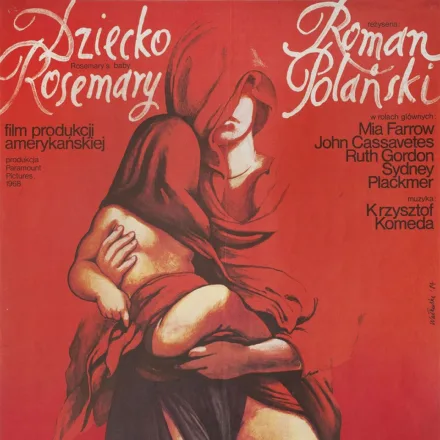
Rosemary's Baby (1968)
Shared: Paramount Pictures, Supernatural Horror
Suzen Tekla Kruglinska, Kat Ellinger

Airplane II - The Sequel (1982)
Shared: Paramount Pictures
Ken Finkleman, Robert Hays, James A. Watson Jr., Al Jean and others
Star Trek: The Motion Picture (1979)
Shared: Paramount Pictures
Alan Dean Foster, Jon Povill, Walter Koenig, A.J. Black and others
Star Trek II: The Wrath of Khan (1982)
Shared: Paramount Pictures
Comments (3)
Garmon FYI, There is a 4K fan-scan of a scratchy release print floating around if you know where to look. It can be synced with available subtitles. It's the best copy currently available.Mike White Hearing that Vinegar Syndrome will release a 4K of it in 2024.Garmon Excellent. Love Vinegar Syndrome.