
Show notes
Get your copy at https://amzn.to/49hjPuG (opens in a new tab)
Labels: Special Report
Transcript
An automatic transcript, tidied into paragraphs. It has not been proofread, so names, titles and spellings may be wrong, and it does not say who is speaking.
Show the transcript (about 4,200 words)
GENERIC: Hold your ears, folks. It's showtime. People pay good money to see this movie. When they go out to a theater, they want cold sodas, hot popcorn and no monsters in The Projection Booth.
Everyone pretend podcasting isn't boring. Turn it off. MIKE WHITE: Hey, folks, welcome to a special episode of The Projection Booth. I'm your host, Mike White.
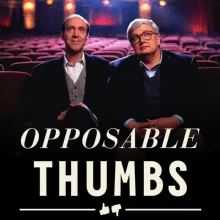
On this episode, I'm talking with Matt Singer. He is the author of the new book, Opposable Thumbs. How Siskel and Ebert changed movies Forever Book is now available and it is a great holiday gift. If you're looking for something for the film fan in your life.
Thank you so much for listening. And I hope you enjoy the interview. I want to know the Matt Singer story, especially when it comes to becoming a film critic. And did Siskel and Ebert have anything to do with that?
MATT SINGER: They had everything to do with that. I, some, someone else asked me a similar question and without ever having thought about it this way before I realized Siskel and Ebert is like Gwyneth Paltrow sliding doors of my life. It's what if I hadn't become obsessed with this show? What would I be doing now.
It's a terrifying thought to me anyway, where would I be? And what would I be doing? Probably something very dry and not very interesting. But, yeah, no, watching the show absolutely was the reason I wanted to become film critic.
Honestly, that age, I didn't really suppose that was a reality, but it was the thing that made me interested in movies. Obviously, as any kid might, I went to the movies. I liked movies, but I would say I did not have the most adventurous taste in movies or interest in movies beyond the boundaries. I grew up in suburban New Jersey and I was going to the multiplex, what I saw was really determined by what was playing at the Freehold Metroplex or the Movie City Five in East Brunswick.
And it's, if it wasn't playing there, I didn't see it and I probably didn't miss it. There was a whole world of movies beyond that kind of was eluding me at a young age. And then around middle school time I discovered the show and that was the thing that got me really interested in the bigger world of movies and talking about movies and thinking about movies and recognizing that movies were more than just something you sat in a dark room and watched while you ate Sour Patch kids like that. They, that it was art and there was something there.
And yeah, this show absolutely was the spark that started everything for me. MIKE WHITE: What era of the show was this? How old were you when you were checking this out? MATT SINGER: This is the early nineties, like 12, 13.
I don't remember. It wasn't like I was flipping, I don't have a great origin story where it's, I was watching, you can't do that on television and it was a rerun or something. And I turned the channel. Who are these gentlemen in sweaters and Blazers?
But nothing like that. I don't remember discovering the show, I think I'm guessing because this is also the kind of the time when I started to first get to watch the Tonight Show, Letterman, those kind of shows. I'm guessing I might have found them first that way. Or at least I would watch them on talk shows and that sort of maybe put them in the back of my mind and then somehow I found the show.
But by around the age of 13, I really was a huge fan of the show. And that's early nineties. We're talking the peak of Siskel and Ebert as a thing. This is the final incarnation of the show when they were syndicated by Buena Vista Television.
They were working for Disney basically. Although that certainly didn't ever really affect what they covered or what they were allowed to say. They didn't and wouldn't have ever let Disney dictate what they could or could not review. But that's the arrow of the show.
We're talking about. So it's the big colorful balcony, the blue balcony that I really think of as my version of the show. There were two, there was many balconies across all the different versions of the show. And even on that last version when they started at Disney, it was like like a tan, the brownish goldish tan.
And then a few years later they switched it to the blue version. And that's what like when I close my eyes and think of Siskel and Ebert, that's what I envision is that blue version of the balcony. MIKE WHITE: You've written a ton of books already. So why Siskel and Ebert, what brought you to them to be the subject of this one?
MATT SINGER: Perhaps as people can already tell, listening to the first few minutes of us talking, it is something that I hold very close to my heart. And as you'll see, once you wind me up, it's just I could talk about, I could talk about this for hours, which is good because I wrote about it for years writing a book. But to be honest, I have written a couple of other books and I was looking for something new and it, while the thought did occur to me, it took a while to almost talk myself into doing it for the reason of being intimidated by the subject.
Obviously, this show meant a lot to me means a lot to a lot of other people. One of the fun things about talking about the book now is talking to a lot of people about it. And one of the first things I often hear is, oh, I love this show growing up. And some of these people are film critics, journalists, podcasters, and some of them are not.
And it's fun to hear that too. Just people who just out in the world doing other things. And then they are excited because they have such fond memories of the show like I do, but it did seem like perhaps a daunting task, at least in my mind just because it means so much to me and I didn't want to screw it up. But I've always felt that there should be a book about them and about the show and a certain point you go, if I wanna read it, which I did, I might have to write it.
And like I said, I was looking for a subject and working with a literary agent and trying to figure out what that might be. And I made a list of topics that I would be interested in. And I didn't actually put it on the list initially and showed the list before I showed it to the agent. I showed it to my wife actually said, what do you think?
Do you think there's some good ideas? Do you think he's gonna like this? And she's like, where is Siskel? And why isn't that on the list?
And I said exactly what I just told you. I was intimidated. I was a little, what if I don't do a good job it, if I screw it up. And she's, first of all, you won't screw it up.
You just want me to tell you that I get it. You're looking for compliments. Ok. Fine.
You can do it. And she also said, you don't do it and someone else does and probably at some point someone would. You'll be pissed off that you didn't do it. And that was the kick in the pants that I needed to say.
She's right. She's always, she's always right. But in this case again, she's right. And that was the tiny little snowball that started rolling down the hill from that point.
MIKE WHITE: Yeah. I don't think people give spite enough credit. MATT SINGER: Absolutely. Spite and jealousy and seething rage.
Absolutely. It's a very powerful motivator. MIKE WHITE: Oh, yeah. There's seven deadly sins for a reason.
Where do you even start with a subject like Siskel and neighbor? Do you, how do you even begin your research on this? MATT SINGER: I was fortunate that the research began with, like I said, being 13 years old and obsessively watching the show. And so I had that to draw on.
And I was also fortunate that I had worked on some of the final versions of what was then called at the movies. And then Ebert presents at the movies after Gene had passed away after Roger had lost the ability to speak and they had tried to continue the show with other hosts. I was able to be a contributor on those shows and auditioning for them and being around them, I had met some people who had been long time employees, producers, directors of those shows. I had those contacts that was very helpful was that I could go back to those people and say, hey, you remember me?
Remember how, when I was around the show back then I would be needling you constantly for Siskel and Ebert stories for no other reason than just I loved the show. And I was a huge fan and I just wanted to hear the stories about Gene and Roger. And now I think, would you do that again? But officially and talk to me for a book and luckily just about everybody I asked said yes.
And then that, that was a great sort of foot in the door of talking to people. And then the other way it was watching rewa and watching hundreds of episodes, which I suppose for another person might sound like a chore or, and perhaps even a nightmare. But for me was I really gave myself a great gift of you have permission to re-watch this show that you love and watch every conceivable episode you can find. And that was what I did.
And so those two tracks of research, plus doing a lot of libraries and archives and online work trying to track down interviews with Gene and Roger. So that as best as possible, I could get their voices, their opinions about the show about each other to try to get as much of them as possible into the book as well. And yeah, the best way to do that was really finding old print interviews, finding some old TV interviews as well that they did. Luckily they did do a fair amount of that back in their day.
With enough digging. I was able to find good amount of that stuff. MIKE WHITE: Is there a online archive of all the shows or did you have to go someplace to watch these? They also, they changed networks at least once that I remember because I used to watch them on PBS and then they're probably syndicated after that.
MATT SINGER: You're exactly right. And they started a PBS and they went into syndication and then they jumped Syndicators. So they originally started at Tribune in the early eighties. That was the, at the movies with Gene Siskel and Roger Ebert show.
And then they jumped to Disney four years later. And that was the Siskel and Ebert in the movies, which eventually was just dropped to Siskel and Ebert. Yeah, that's a good point. And that is a reason.
Probably, I would imagine it's a big reason why there isn't an official resource online that has everything. But because this show does have such dedicated passionate fans. My people, I would call them. There are a ton of episodes available on YouTube.
Seemingly there's more going up all the time. I was doing a lot of this research a year or two years ago now and I look now for things and there's things that were there that weren't even there then. And there's also some great fan websites as well. There's this website, Siskel Ebert dot org.
That is a great place to find clips. A lot of which now are on YouTube. Some of them are not though. And they're arranged really nicely in chronological order.
They've also got stuff from their appearances elsewhere around TV, on talk shows and guest appearances on other things. So that's a great website too. I know that Roger's widow, Chaz Ebert has talked about that. She has tapes, she's got a library and has talked about wanting to make some sort of official site for the show.
I don't know if that will ever actually happen. I can't say I can't give you a scoop, but I would, I personally would really hope that it does happen and I'm sure a lot of people would be very excited for it to exist and maybe someday it will. But yeah, perhaps the fact that it is, even though I always just call it Siskel and Ebert because that was, as we've established, that was the version I grew up watching and they did host, movie review show from basically 1975 to 1999. It's technically three shows.
It's three different shows that basically look exactly the same with a few cosmetic differences. But they are owned and were made by three different companies. And, yeah, that probably is one reason why there isn't an official, obvious place to go to just pick any episode, any review, which would be an almost literal dream. Mine, if that, that did exist.
MIKE WHITE: Did you get to see the pilot that they shot? MATT SINGER: You can find a lot of the early episodes, pilot? Some of the very earliest episodes are available and they are striking to watch because it's like, how can a show be so similar to what, you know, and yet so different in the sense of quality. Some people who are maybe less familiar with the story have asked me they were so good together.
Was it magic and right away? And it's no, it was the opposite of magic. It was a nightmare. It was a disaster.
It's astonishing that the show lasted as long as it did. Much less made the impact that it did because the early episodes were so rough and they were probably fortunate that they were doing this on One Chicago PBS Station that had a lot of faith in the idea and thought the idea was worth doing and stuck with it because in today's environment, you wonder how long they could, they would have been allowed to keep going with the product they were putting out in those early episodes. It seems to me not very long. And I do think that one of the issues that the people that followed them face that tried to replace Gene and Roger faced was instead of starting on one local PBS station, they were starting on a syndicator that was pumping the show out to hundreds of local networks around the country who expected Gene and Roger or even Richard Roper and Roger Ebert.
And it's not easy doing that. They made it look very easy and then they made it look by the end of it looked like this incredibly natural chemistry that these guys could talk about anything in any movie and it would be fun and interesting and insightful. And as you saw with those other hosts who good critics, talented writers, good people on camera people are very TV savvy. They didn't have that.
They didn't have what Siskel And Ebert had. And if they had been given three or four years to figure it out, I bet some of them would have, but that's not what they were given most of those shows. In fact, I don't think any of those versions of the show lasted more than a year. That was it was, that was it.
They didn't get the same sort of runway to figure it out. MIKE WHITE: How soon after they started, did they start being parodied. MATT SINGER: I feel like by the mid eighties they were now showing up in Mad Magazine, which they loved because they both grew up reading Mad Magazine. So to them, that was a great honor.
In fact, on my bookshelf behind me, I have a Mad about the movies trade paperback. And the introduction is written by Gene Siskel and Roger Ebert. And they say that in there that they, you know, they're flattered with a lot of Mad as humor. They're flattered that they have been invited to contribute because they grew up Loving Mad Magazine and even saw Mad in the sort of anarchic style and the way that they approached mocking things as almost like taking a critical eye to things.
And perhaps that was like an early inspiration for that sort of mindset. So, yeah, probably around then the middle and maybe even earlier in the 19 eighties, really, the show started to take off at the very end of the seventies and the very early eighties, the final years when they were at PBS, when it was called sneak previews, and they were being shown all over the country on PBS stations. And that's when Letterman first took notice of them and started booking them as guests. They were one of the very first guests on late night with David Letterman in the first weeks of the show and then he kept bringing them back and then they started making appearances on Carson and all the shows.
They were great at, they were great talk show guests, something that there's a whole chapter in the book about that. And so I think that was really what kind of put them into the wider consciousness where it wasn't just people who are interested in movies or watching PBS who learned about these guys. Now they're seeing them on talk shows. Now they're appearing with the people that they're critiquing and almost being put on the same stature and playing field is them that I think that was what really pushed them into that next level of fame and stardom.
And that is around the time you do start to see. Yeah, they're being parodied in Mad and they would show up in detective comics and the joker would be pissed off at them for reviewing the movie he made or whatever and yeah, they were on the critic playing themselves in a very amusing episode of the critic. Yeah, probably around the early to mid eighties was when that became a thing. And then of course, there's movies that make fun of them.
They're basically characters, they don't play themselves. But in Godzilla, the American Godzilla, what is it? There's Mayor Ebert and his sidekick or his assistant Gene or whatever, which they were not amused by that one at all. Perhaps because that movie is so bad, maybe if the movie was better and it had been funnier.
Those characters maybe they would have enjoyed it more. But, yeah, they didn't particularly appreciate that. That one. MIKE WHITE: What was the most surprising thing that you found during your research.
MATT SINGER: As a huge obsessive nerd about the show who had seen so much of it already and knew some of the stories because I was lucky enough to talk to the people who had worked with them and stuff. The thing that really surprised me, I think was when I went back and watched systematically chronologically hundreds of episodes of the show, I was surprised by how much I was surprised by the world of movies from 1975 and 1999. Obviously, there's a huge percentage of the movies that I've seen or have at least heard of.
But I was legitimately surprised how many movies and we're not just talking a dumb stupid comedy. Two thumbs down. This is bad movies that I've never heard of. That's not surprising what surprised me were, how many movies got two thumbs up that they said were great films that they occasionally would put on year end lists even, or talk about a lot multiple times where I would go, I haven't even seen this movie or I haven't even heard of this movie.
And that was really fun. Surprise. And that was the impetus behind the appendix in the book. At the very end of the book, there's an appendix of 25 Buried Treasures, which is what Gene and Roger would call episodes of sneak reviews, they would do special episodes where they would basically like rereview or re recommend movies that they felt were overlooked.
And these aren't necessarily those specific movies, but it's in the same spirit where it's the movies that they really liked that I either hadn't seen, had never heard of or maybe I'd seen him but also agreed, this movie really does deserve to be talked about in the same way. We talk about those classics of this era. Pulp fictions, the do the right things, the hoop dreams, whatever they might be good, fellas, the movies that they champion that we now think of as the great movies of that period. So I, that was, that's where the appendix came from.
There's 25 movies in there that run the gamut from, I think I've seen this to OK, I've heard of this. I've never seen this to, there's movies that I previously had never even heard of. And then what I did was exciting for me because I was finding new things to watch. So all the movies in there I went back, I watched and loved myself.
And so I thought what a nice way to pay tribute to the show and impact it had on me as a kid where when I was watching it week to week I was finding things to watch and discovering art house movies, foreign movies in their home video segments, older movies that to me was a huge part of the show. And so I thought if I'm doing a book about the show, what better way to honor that spirit than with that appendix. And there's 25 surprises in there that I hope if people check out the book, check out the appendix and check out one of those movies, that would be great if some of those movies people started finding and watching as a result, that's about as good a reaction to the book as I could possibly get.
MIKE WHITE: Can you tell me what are you working on next? MATT SINGER: I have a job writing about movies, reviewing movies whenever I can. I work at screen crush dot com and that's my day to day job in terms of the next book or a next big project. I don't know that we'll have to wait and see.
We'll have to wait and see what ideas I put together and show to my wife. And then what idea she says, why the hell isn't this on there? And then I go, oh yeah, you're right again. I screwed up.
I need, maybe she could just tell me, maybe I can skip all that and just be like, yeah, what, what should I write about now? Can you just figure this out for me? You did it the first time. Let's cut out the middleman here.
Just tell me, I don't know, I'll just do whatever you say. Because she always has the right idea, man. MIKE WHITE: I love depos thumbs. Thank you so much for writing it out of spite.
Like I said, that's how this podcast was born. MATT SINGER: It was written out of spite and love. Let's make it clear. It started out of spite.
Yes. No, I don't disagree with that. But the act was written with a great deal of love. If anything could be done with spite and with love, it is this book.
MIKE WHITE: It definitely comes through the love, not the spite. Great job. Thank you so much for your time. This was great talking with you.
MATT SINGER: Thanks. It was a pleasure.
Comments
No comments yet.