Episode 652 · Film year 1973
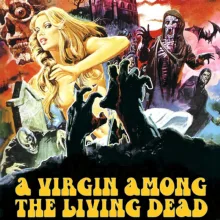
A Virgin Among the Living Dead (1973)
- Guest Co-Hosts
- Jessica Shires, Heather Drain
Show notes
We discuss the film's strange pedigree (and the directorial additions by Pierre Quérut and Jean Rollin), how difficult it was tracking down genre films in the Video Search of Miami days, and the seductive power of Carmen Yazalde.
Labels: Heather Drain Jess Franco Jessica Shires
Transcript
An automatic transcript, tidied into paragraphs. It has not been proofread, so names, titles and spellings may be wrong, and it does not say who is speaking.
Show the transcript (about 25,200 words)
Hold your ears, folks. It's showtime. People pay good money to see this movie. When they go out to a theater, they want cold sodas, hot popcorn and no monsters in the projection booth.
Everyone pretend podcasting isn't boring. Turn it off. Welcome to the projection booth. I'm your host, Mike White.
To me once again is Miss Heather Drain. Hello. Hello. Also joining us is Miss Jessica Shires.
Hello. On this episode, we are looking at Jess Franco's 1973 film, a virgin among the Living Dead. It's the story of Christina played by Christina von Blanc though. That's not really her real name.
A young woman who is summoned to her family's mansion after the suicide of her father. There, we meet her very odd family. The film plays out somewhere between a dream and a nightmare following its own pace and logic. And this episode is a request from our Patreon donor, Jessica.
So Jessica, why this one? I picked this one? Mostly because a huge fan of the show I've been listening to it. I started listening to it during the pandemic and it got me through quite a lot of time.
So I listened to a lot of episodes, going, going back pretty far. And one thing I noticed is that there wasn't a lot of coverage of Jess Franco who is one of my favorite directors and has such a prolific body of work. I feel like there's so much to say there. I know.
I know you covered Venus in Furs a couple of years ago, which is great, which is, you know, one of, you know, a great one to discuss. But in sort of thinking about like what I like to talk about most and sort of share with people, my sort of like passion and excitement for Virgin among the Living Dead definitely topped the list. So it was kind of a natural choice to pick that one. I think it's a really personal film Franco's.
And there's just, there's a lot of stories behind the kind of versions that have come out. And I think it reflects some of Franco's best qualities as a director has a fantastic soundtrack. So I think it has a lot of things to recommend it and to create a really interesting discussion. What's kind of your history with Franco?
And when did you see this one amongst his body of work? I've been watching just Franco films. I got sort of accidentally interest introduced to his films about around the early two thousands. Vampire Ros Lesbos was the first one I saw.
I think I picked it up randomly in like a virgin megastore on DVD and just thought this looks cool. I'm gonna check it out and I was blown away and it sort of really, like, lit the flame for me right away. And at the time there wasn't a ton of his stuff available on DVD. So, you know, you know, I had to hunt down some VHS tapes and, you know, look on the internet for things.
So I huge fan of his work and especially the period in which he worked with Soledad Miranda. So, like I said, Vampires Lesbos was a big one for me and then I knew he had gone on to work with just to go back a little bit. Soledad. Miranda was his sort of muse who died very tragically at a young age just on the cusp of her sort of ascent to stardom in 1970.
This movie kind of comes on the heels of that. But I was sort of love Soledad so much that I was kind of wary. Like, I'm like, ah, I don't know if I would like his stuff that didn't have Soledad in it. So I was very, this is like, you know, 20 years ago, but then I started watching this stuff from the seventies, the early seventies and really kind of going ok, like I get, you know, you know, it's sort of his work kind of, you know, went through a transition and there's still so much to love there and there's so much of Franco's work and themes and great stuff there.
And so I just sort of, it kind of sent me on like a second wave of like discovering Franco, sort of like a few years later when more of it was available on DVD. And then I think it was around the time that this Kino Lorber Blu Ray came out, which was around, I think it was 2013, something like that. It was, it was around the time Franco died. And I watched, I remember watching it and I remember going, that's cool.
Like I like the soundtrack, you know, there 's some interesting things here but it really didn't affect me particularly profound. I went OK, it was, it was good. And then, you know, I watched more Jess Franco. I went back to this film and then suddenly it all kind of clicked for me with this movie.
And I was like, OK, wow, like there's really a lot here and especially once I was able to like, really dig into that particular Blu Ray and see the different versions and kind of understand like, OK, like, you know, I understand like why this is such a personal film for him. I understand more of the things he's talking about and what he was trying to do. And I appreciated it so much more. And I think with subsequent viewings, it really became for me, like my favorite of his films because again, just because it crystallizes so much of his themes and motifs.
And even though it doesn't have Soledad Miranda or even Lena Rome for that, for that matter, it's still just a still, really an amazing, amazing film. And Heather. How about you, what 's kind of your history with Franco? And where does this film fit in for you.
Being into cinema is a journey unto of itself. But there are certain directors whose filmography and works are a journey unto itself. And I think Franco is definitely a living well, totally living definition for us because, you know, with cinema, you know, all artists are eternal. My first exposure to Franco was via my sweet 16 present to myself, which was Pete Tombs, immoral to moral tales, not immoral tombs, moral tales.
And that's where I first read about Jess Franco and was immediately intrigued because that book was one of my like cult film Bibles. It took me a few years. So because certainly, especially for those of us in the US was it was definitely a little harder to track down a lot of his stuff easily. Thank goodness.
I think Anchor Bay was like the label that I first was able to access this stuff because that's how I got Sy Bus, which was my first one. And coincidentally one of the very first professional film articles I ever did was on Succubus. I hope it's not on the internet anywhere because it's very green, it's very, it's, it's a very, very green, green Heather. But I want to see more of the stuff.
I've seen it, you know, I've seen a number of the Soledad stuff. Lena. Unfortunately, Mary Cookie. Which maybe I need to revisit that it's been years but it was, it was a lot.
But the thing about Franco and I think with this film and this film was a more recent watch for me. I was so, like, in fact, when this episode came up, I'm like, this is the greatest to push me to watch it because I've always wanted to. But, and I'm sure you guys, we all, as some people have like our list of like films we want to get to and then you have that pile and that pile is like, almost like insurmountable. But, and this film has like, everything I love about the Franco films I've seen like, it 's, you know, it's haunting.
There's some unforgettable imagery, there's a little bit of demined humor too. His, even though I call and I know we'll get to Roland later in the episode. I mean, Roland's work is dreamy, but they're so different. And Franco, he's got this like, like fluidity of chaos if that makes any sense.
Like I know he was a big jazz guy. And to me, like, the best jazz music has that like it's, you know, chaos but it's controlled. The captain of the ship is, you know, you're in good hands, but it's gonna be some weird ass waters we're about to sail into. And I love that.
I mean, and Franco is that to A T so this was so great. And also real quick when you mentioned Solid Dead Miranda, I completely what a presence. I completely see why. Like you're like, oh, I don't know if I watch anything because she like the perfect quote.
Anybody listening who hasn't seen anything with Soledad Miranda Christopher Lee who worked with her on El Conte Dracula with Jess said like when he does see where he goes to bite her, like he literally felt like a shiver like she was so like just charismatic Christopher Lee said that, I mean, if that doesn't tell anybody what they need to know that I can't help you because holy shit that the man's only like a relative of Charlemagne. Come on. Yeah, I mean, she had an absolutely incredible like unforgettable presence.
I think anyone even if you don't get the Franco bug right away, I think if you just see her like she has such a, she's just so magnetic and I think, I think that was really like the work of Franco that really brought that out of her. I mean, he often describes her as kind of like, you know, oh, she was just kind of like you know, this, like young woman, she wasn't really intellectual, you know, but I mean, you get like, he managed to like, pull this, you know, these performances out of her where she's just this dark sort of spectral figure with these haunting eyes and long hair.
I always compare her to like, you know, sort of icons like Mao Kaji and, you know, like Christina Lindbergh and like thriller, like, she has that sort of like, just sort of these eyes and like this presence that just, you know, it doesn't, you know, it doesn't matter whether or not you like the film, you can't help but appreciate the performance that, that she gives. I think that's what a Franco's like, superpowers too. With this casting is a lot of the, and we see that certainly here is that everybody, you know, even, you know, it's not just a matter of like, oh, here's some pretty people that are gonna get naked or, you know, whatever.
It's like these are like every single person is really interesting and, you know, very like each one has their own, sort of like orbital pool about them as actors. Even if some of them aren't necessarily like the most trained or experienced actors, it doesn't really matter. They're perfectly like they're the perfect puzzle piece in this film. Yeah, I think he just had a, had a way with faces.
I think he just, he just, he was able to, you know, sort of identify someone who, like you would look good in a film, you have a presence. Like he was able to identify that quality in his, I think, you know, some of those actors but I think mostly like his actresses who may, you may see in other things and see in other things and go, oh, yeah, they were kind of whatever. But if they're in a Franco film, they're amazing. Yeah, I wish I could capture the energy and performance of the guy who ends up being the doctor who's also staring at her while she's skinny dipping, just especially the way he holds his hand.
He's just like. And the eyes, you have these huge popping eyes. I will admit I'm, I'm very much a novice when it comes to Franco because kind of like to your point earlier, Heather as far as how difficult these films were to find video search in Miami was like the place to find these movies before we started recording, we were talking about how Franco had directed like over 200 films. And so as you're going through the video search of Miami catalog, they have so many of those.
But they also say this was directed by Franco under this name. But then they also would have Joe D'Amato and Joe D'Amato also would direct all of these things under different names. And then he has J Rolan and John Rolan had so many films as Well, so in my mind, I had confused d'amato Rolan and Franco. So just Joe and John.
And it took me so long to figure out who was who. And like, I know I had rented Vampires Lesbos because I was a huge fan of that soundtrack that was put out. It really kicked off this whole movement of soundtrack reissues on CD. So you had the School Maiden Report and all of these different, great, great soundtracks that were out there.
And I watched the movie, I was way too young to kind of get it. And then I know I saw fascination, I think or at least Living Dead Girl, the ro on film. And I'm like, is this the same as that guy? And both seem to have a lot to do with like vampires and stuff.
And so I was so completely confused and now only in my, you know, fifth decade, am I able to start unrolling this huge ball of yarn of these directors that really have nothing to do with each other? But then you come to this movie and it does have stuff to do with both Rolan and Franco. But yeah, we'll definitely talk about that later. So the version I saw because we will talk about different versions of this movie.
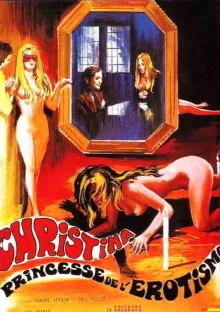
The version I saw I think is as close to the Franco vision as you get, which is I know, I think the English dubbed one is pretty good as well. This I watched, it was French dubbed with English subtitles. It was under the title Christine Princess of, what was it? And there's like one little extra bit inside of here where there's a sex scene with it kind of looks like it's Uncle Frank and Car D Car.
Oh, I love Carmen is amazing. All of these characters are amazing. I have to thank you before we even start really talking about this movie. I have to thank you, Jessica because I really loved this movie.
I think you might have seen in my notes. Where's this movie been all my life? Because I was just entranced. And I'm kind of glad that we delayed this episode a little bit because I've now been able to watch it multiple, multiple times and I'm not getting tired of it.
I just love it every time I see it even more and I tried to watch the other versions and that's pretty rough. But the one that I saw, I love. Yeah, I think if I think if you see that version, I believe, I know the version that you mean, I really think like, you know, that's that it is as close to Franco's original vision for the film as it gets and you know, this movie like, like several others, you know, get just basically like he made them and then, you know, it basically got taken out of his hands and tampered with and interfered with and re edited and things added to it and, you know, you know, he had no control over it and, you know, sort of, and then what goes on, like in the legacy of the film is like this sort of version that he never intended.
And sort of finally, you know, I think when it was that this finally, like landed in that Christina princess of Eroticism version on, I think it was, I think it was a French DVD maybe. And then people could really finally see it for what Franco intended it to be. I think you really begin to see like the dare I say, genius of it and how good it really is and how talented Franco was as a filmmaker, I think, you know, once you, once you see this like sort of integral version as it was meant to be, that's when it really like, you know, you again, I think you, if you don't already get it, you, I think you get it.
What's like people are obsessed with putting together the longest version of this movie they possibly can. And I did see one that was at least 15 minutes longer, but you don't want that if anything you want the shortest version that you can possibly find because it 's so much closer to what the original vision was and that is so much more cohesive and by putting in unnecessary sex scenes, I mean, hey, I'm all for sex scenes, but the sex scenes that they added in frankly very boring as well or throwing in zombie stuff.
I'm like, I don't need that. The Living Dead of this movie, the virgin who's amongst the Living Dead. It is her crazy family and maybe the queen of darkness and her father and just all of these people that haunt the chateau. And we've seen this kind of story before this young girl who goes to visit her family.
We find out that everybody in the house is basically ghosts or spirits of some kind. Ok. That's a pretty simple thing. But then you start to add all these extra layers on to it.
Like is she really in this house? Is she actually in an asylum someplace being observed? Because we have characters that kind of come in and out of this, that I mean, when she, one of the earliest scenes that we have, when she's at this hotel quote unquote and she wakes up at one point, she's like, oh, I had these terrible nightmares and there's obviously a nurse sitting in this hotel quote unquote. And it's like, ok, this is kind of neat and they're not making a big deal about it.
This is way more subtle than something like Shutter Island which just beat you over the head. Like from from the trailer. I was like, oh, well, it's obvious that everybody hears ghosts. You know, like there's no, there's no mystery at all.
I just solved it in the trailer. Whereas with this, I was like, this is keeping me guessing. I'm not exactly sure what's going on and it kind of lives by its own logic. And I love how often we see Christine sleeping and waking up and you just never know.
Like, is she still asleep? Is she not, is she even alive? Is she a ghost? And the rest of the people are real?
Like, I'm open to any interpretation of this. If you're just looking at it from like a very basic bare bones plot. I mean, it's like, it's basically a gothic story, you know, it's like, it's a girl goes to, you know, haunted mansion and there's ghosts there and then you just sort of take that basic narrative and then layer all this, like, very, like esoteric, surrealist imagery on top of it and like, you just like, it's like everything, you know, it's like, that's for me that's like Christmas, you know, so it's got, it's got, it's got everything.
So, I mean, but yeah, I think at its core, I mean, it's really, we've seen this, this is a kind of story that we've seen many times. You know, it's, it's, you know, someone goes to a haunted house and, you know, they are sort of occult experiences, you know, strange experiences there. And then you add into it the virginity aspect and she's kind of protecting her virtue and is it going to get taken away? What will happen?
Is she going to get raped by ghosts or creeps that are out in the woods? And I love that the creeps that are out in the woods will show back up in other aspects of this. So it's very, you know, oh, you were there and you were there and you were there kind of, you know, Wizard of Oz type ending. But they are, they're total creeps.
I mean, the lawyer, who we see with that bright red coat at one point. And then before we started, well, just earlier, I'm sorry, I mentioned that doctor and just how amazing he is that he's creeping on her and then when he shows up back later on that he's this doctor and he has that same lascivious look on his face. But then you also, you mentioned the score and the score is freaking incredible from the very first notes that we hear, which really puts you on edge all the way through this thing. And I wasn't sure at first that this was Nikolai doing the score.
Obviously, I saw the credit that it was him but that he's using the same singer that Morricone would use through so many things like once upon a time in the west at that. Oh, it 's beautiful, beautiful music. I think it's one of Nikolai's best and it's one of the best to appear Franco film and Nikolai and Franco worked together few times, especially, like from the sort of late sixties through the sort of early seventies, there's a couple of really, really fantastic scores for films that, that Nikolai did. And I think Nikolai and Franco really had a kind of like they understood each other, I think.
And because Franco, and again, I think we talked about this a little bit earlier, you know, Franco himself was a musician, had an interest in a big interest in jazz in particular, but I mean, he was a well trained musician and appreciator of music. So I think he and Nikolai got along like a house on fire in this particular film. And I don't think this is the case with every score that Nikolai did for Franco. Franco actually worked with Nikolai on this and if you'll notice in the opening credits, it actually credits Nikolai not only as music but as like special sounds or sound effects or something like this.
What happened was apparently Franco had an apartment in Rome, near Nicolai, either Nikolai's apartment or Nikolai's studio. And so he would actually go in with him in the studio and they would work together and a lot of the sort of like, weird, you know, sort of weird piano sounds and like this sort of bird noises and a lot of this sort of really, really weird stuff comes from Franco. Interestingly enough. So he was, he was very, very involved in the soundtrack as well, which I, again, I love and again, sort of reiterates the, that this is a really personal film for Franco because he was so involved in like every aspect.
For me when I think of like the great man like Maestros of Italian scoring or, you know, I always think of him and part of that is, you know, Mike, when you mentioned earlier about the, you know, we had that great sort of, you know, sort of renaissance of getting a lot of like cult film soundtracks on CD. There was this amazing compilation called Beat At Chinch. Oh I had that 10 my gosh. And that was oh my gosh.
And I mean, it's out, it's, I think it's long out of print but you can, you can listen to it on YouTube. So we're so lucky to live in a lot of ways in the era we do because it is so things are so much more accessible. Like Mike, you mentioned video search in Miami, didn't those tapes cost like 20 bucks? Oh my gosh, I never ordered from, but I would get the catalogs because I mean, I was under 18.
So I was like, but I would just look through, look through and study them and I was always fasting because it'd be like, you'd have not only different, like, you know, pseudonyms for directors, but it'd be like, you know, dubbed in German with Portuguese subtitles or something like that. I mean, we, you know, we live truly in a golden age of having so much more access to these, these films and the music and with Nikolai, I think, and I think it was in one of the supplements you shared with us. I think it was you, Jessica.
It was either you or Mike that when Franco was talking about, he's alluded to Nikolai using crystals with his piano work with this. And he didn't elaborate on that, but I was like, I was picturing like space Godzilla as a piano or something. Like it's just like, what was that? Like?
It's just that I love, I love that kind of musical esoterica and what I mean, what a perfect film to apply that to. And I love that Franco shows up in his own films. Like you mentioned that I covered Venus and Furs a few years ago and I just remember he had a really small cameo in there as one of the jazz musicians is playing at a club as opposed to this where he has a pretty sizable role though. I love that they cast him as a, I guess a mute, but he just makes all these crazy noises through the whole non verbal.
Basically, I think. I love Basilio, right? Is his name. Yeah.
And just from the moment he shows up and then every time he's on screen, especially when he brings her, like, the chicken head. And he's just like, I'm like, oh my God, this is amazing. He just reveled in the, like, sheer sort of absurd comedy of this role. And you love it because you really just, you see a lot of the joy that Franco had.
I mean, there's a lot of, there 's a lot of, you know, stuff in here that's, that's quite dark and, you know, we, I'm sure we'll talk about it, we talk more about the plot but, you know, you know, Franco, I think at this point in his career was in kind of a, sort of a dark period, like, you know, he was still only, just about a year after having lost Soledad. I think it was a little bit directionless and to see him sort of work through a lot of, I think the emotion and then by, you know, taking the role of Basilio and just kind of like, again, like, just sort of reveling in the comedy of it and just going for it.
Like, you know, I think that's one of the, you know, sort of a positive sign of him sort of starting to come around again. So, you know, loving films and finding his niche and things like this. And, yeah, I just think he's like this sort of pin, you know, sort of center point of like bizarre comedy in the film. And it's, it's so important because it just provides this sort of, you know, I think without that have sort of this, like, ultra seriousness and it would almost, I think you'd wonder if it took itself too seriously.
But because you have this, this comic streak that runs through it mostly through this character, gives it a whole new dimension that it's just really interesting and really just kind of really makes it like a fully flushed, you know, Franco vision. And the way that he handles the comedy, it's usually like mixing com comedic elements in horror is tricky. It's very tricky and, you know, especially when the horror is still the predominant. But the way he does, it just, it just adds like a whole other, just patina of odd and again, with that o lending to like, you know, what real are we in and it's perfect.
It's so perfect and some of the absurdism that comes up too. I love especially the funeral proceeding, the Latin chant, the Latin and nonsense. Basically, you know, we start the movie from a moving car and we're going around these roads and you have a real circular feel to it and it almost feels like we're going down a drain and you get that same feeling again once she shows up and Basilio takes her to the mansion that she's supposed to go to we don't ever, I don't think we ever see the driver. He 's in the back.
Basilio is in the back with her and she's doing this voice over this very purple prose type of voiceover and talking about how strange everything feels and that it's only like vultures that are hanging out by the mansion. It's not, you know, any of the songbirds and again, they're going around in circles and it just feels like she's traveling almost to hell with this. And yeah, there's a definite, like, descent into a valley, kind of a feeling. And I think she refers to like, I think it 's, I think she's like birds of like, I keep hearing birds of prey and, oh, you know, oh, come on, how is that possible?
Like, she almost like, just sort of, you know, brushes off that, like, oh, well, how can this be dark? You know, she sort of like, completely, like, negates any idea. This could be a bad situation even though she can see she has kind of like that trickling in. But she's kind of like, no, this is gonna be fine.
You know, she says, I feel like I'm in a strange dream and you're like, yeah, this so far is all a very strange dream. I also like that when she did wake up earlier and come down and say, oh, I had these nightmares, we never see the nightmares and I really appreciate that because I think we are seeing the nightmares. I think what we're experiencing are her nightmares. We don't have to cut away to her having nightmares and show these dream sequences.
I think that's what Franco is showing us. And thank goodness we don't get her shooting up in bed and, you know, with their eyes all wide, like Jimmy Stewart from Vertigo, it's like, no, she just, she's experiencing this nightmare. It 's almost a waking nightmare at all times. I think a lot of American films, especially like more modern ones when they kind of do that, whether it's unreliable narration or, you know, is it, you know, I see dead people or whatever, you know, it almost seems, do you feel like the difference between that and something like this is that I think sometimes maybe in certain, especially like mainstream cinema, it almost feels that I don't wanna say gimmicky but kind of, you know what I mean?
Like, it's a little bit like more to quote Henry Kosky, like obviousness and whereas, you know, with Franco and I just think in general, like something I treasure the most about, about everything I've seen of his, even Mary Cookie, I need to revisit it, whatever. But is that there's such a, like almost like a childlike commit to the sense of the fantastique? Like it's not, and it's like, doesn't have the night necessarily. It's not naive, but it's just like, it's so open to the process and open to creating a world.
And with that, there's, you know, I think it's just in a way, like to me, like, we're respectful in a weird way, like, as an audience person because it 's not like he's not hoodwinking us, you know, like there's not a sense and as much as I love old school carnies, but I, but I equally love the sense of like, this is a fairy tale and we're all kids. It's like he's a fellow kid that 's a little older, that's, you know, we're all huddled under a blanket, you know, with a candle and it's like we're gonna hear and be a part of this like creepy story and it's got that sort of things about child narration that doesn't always make sense even though this obviously very much like a film for adults.
I love that. That wonder is there and I don't know. It's like, it's, I think there are American horror films that definitely have that. But when I think of the ones that have that they're older and they're more independent.
I'm trying to remember what I was looking at that said something like it was in another language. That's why I can't remember it exactly. But it was making comparison between this film and something that would have been done by Marco Ferrari or Louis B Well. Yeah, definitely Boon in there.
Yeah. Very, very Boone. And then I was also thinking while I was watching this, I was reminded of Louis Mall's Black Moon. It's also kind of like a little bit of a kid story and you have a bunch of children in there and just, it lives by its own logic and this has its own logic as well.
But I like that. He's not setting up all these rules. Like, well, she goes into this room, she's going to see this. There is so much looking and spying and seeing things that she probably doesn't want to see.
And also, you know, smacking away the phallic and all this with that amazing shot of that huge black cock on the floor that max away. At first I thought I was dreaming when I saw that image. I like am I, is this what I'm seeing here? Ok.
All right. But yeah, I mean once we get to the house, she gets introduced to more of her creepy crazy family. Maybe. I don't know like Carmen Z, I think they call her a cousin or they just say she's part of the family.
That's it. We don't really know. Yeah, but Uncle Howard. Oh goodness he is great.
He just looks lascivious and I love that. He's just playing the piano, not giving a fuck about anything. Oh yeah, you're, you know Hermione, your aunt is. She's not doing too well upstairs.
Yeah, she's, she 's probably dying. She's like. Do you wanna hear a waltz in my, in my mind? Franco just said to Howard Vernon, like, just be yourself.
Like, in my mind like, this is how Howard Vernon was in real life, just like, you know, just like cool guy, happy go lucky, you know, kind of chill, you know, was a croupier a in the past existence, you know, it just floats around to, you know, casinos playing piano and offer Howard Vernon obviously a great actor. So not, not to diminish his talent. But, you know, I sort of, I just get a vibe of like, you know, Franco just kind of let Howard Vernon do his thing. 0 100%.
I was so happy. I Howard Vernon is one of those guys. I always smile when I see him like he is to me, like just one of those like sort of Euro Cult treasure actors and, you know, has that great face and yeah, you both nailed it. He's 100%.
Like if you got invited to a seventies occult themed swingers party, as I'm sure we all think about in our spare time. I know I do. He's the one you want to see. He's the guy where you're like, ok, like that's, I'm sure wherever he is in the afterlife he's happy to hear.
And yeah, he's, and he's so, I mean, gosh, I love the whole cast, but no, he's great and probably the most probably like seasons of the cast too, you know, I definitely think so. Yeah. Going certainly. I mean, even with Franco alone, you know, that's dating back to, you know, the early sixties because since we're all sort of equally fangirling over Carman.
Carmen. Carmen. Yeah. Oh, my gosh, she's so beautiful, like, impossibly beautiful Britt Nichols was her, obviously not her real name.
And again, I think this is sort of going back to like, almost like a Soledad Miranda, kind of like just electricity on screen, like just almost like you cannot take your eyes off her even though she's won like this really small role. That's, you know, you know, part of this ensemble cast. Like she just every time she's on screen, like you look at her, you know, she's, she's amazing. Apparently, I don't know if you guys know this anecdote but, you know, she was in a couple of Franco films.
She was also in the first tombs of the Blind Dead movie in like a small role. What happened is she ended up marrying this, like famous Argentinian soccer player and moving to Argentina. And, you know, she kind of just dropped out of acting. So like after she was in like this sort of like flurry of Franco role, she didn't really appear in anything else.
But my understanding is that Roman Polanski saw her either, I don't know what movies are and if it was to The Blind Dead or one of the Franco films, but he tried to get like her phone number basically from, from Franco because he wanted her to stop. I think, I don't know if this is, this is true, but I've heard anecdotally that the film that he wanted her for was what that makes sense. But basically her husband was just like, no, she's married to me now or she's not doing those kinds of films anymore. So, that's why her career is sort of very short and Franco centric because she got married and she's, she's still alive.
She talk shows in Argentina and I actually, I, a couple of years ago, I just was googling her and like, wanted to see like, you know, what does she do now? And you can find on YouTube videos of what she like. She, I mean, I don't know if it's plastic surgery. I don't know if a shim, like she is still as beautiful as she was in the early seventies.
It is amazing. So, yeah, she's. Well, not to say that Christina von Blanc is any slouch either and they definitely give us a lot of close ups of her with these wide eyes and I love that kind of seventies eye makeup that she's wearing. She does a really good job of not being annoying as this character because this character could just be screaming and carrying on and all this.
There's, there's one part fairly early when she's at the mansion where she walks into a room and there's a, I guess it's a vase on a table, but it looks like a human head and she screams and backs out of the room. But then she just walks back into the room again and I was just like, ok, well, that's good. At least it's not like the screaming. Oh my God, what's going on?
And like, Uncle Howard come on, like, help me out. Like, she's very self possessed and I like that. She's like, I'm going to go for a walk. Now.
I'm going to leave the chateau, like, when she meets with people. She's like, oh, yeah, my family 's up there. Oh, there's nobody that lives there. Yeah.
My family lives up there and she's not like a typical, like, screaming mime type of character. She's pretty interesting to watch and I really feel for her because she is such an interesting character. The doctor character at the beginning when she's in the hotel slash what we later learn is actually a hospital or when she's sitting down talking to the doctor and explaining, you know. Yeah.
You know, I have to go see my relatives but I heard there's no, no one lives there. So I'm kind of scared. I don't know what to do and the doctor tells her sure. Find the quote here.
You must be brave when you have a goal. So, I think that kind of instills in her that sort of confidence that carries through the film. And I think also, even though she's, you know, just sort of the nature of her character is one of naivety and of innocence, you know, she doesn't, the performance is not cloying. It's not sort of like, like, oh God, she's so whiny, like, you know, why can't she just like, you know, she like, she's like, fully charming.
She's fully, like, kind of, you just, you know, like just wide eyed again, not in a way that's particularly, you know, that could have been very annoying and she just manages to avoid that completely. She has like one of the smallest filmography, like she didn't really do a whole lot at all. She's, she has such a great approach to this role because usually, especially with films that have like a beautiful, you know, virgin or virginal type, there tends to be a tendency to either portray them as like almost supernaturally wide eyed to the point where it's like this is, it's a bit much, you know, it's just like running around looking like a Blythe doll or something and, you know, or, you know, they're, they're acting like they're four years old and that's creepy.
You know, she has a really good, she's naive but she's not stupid, you know, she is definitely has a sense of self and which makes it so smart because you feel protective over her. You do at times be like, man, girl, get, get out. It's the same place as much as we love a family. It's like you wouldn't, you know?
So, it 's, it's like art, it's like a lot of artists, you know, you can love the artist. But would you want to be roommates with them? Like, I love Klaus Kinski but I want a room with him. Probably not.
No, you don't want that. No, he would, he would shit in your shoes for sure. And that's a good day. Yeah, I'd like that.
She sees all these kind of crazy things, experiences these things, but she doesn't, she does either. Doesn't react in a natural way, you know, because yeah, you're watching movies and it's just like, why would you even stay in the room? What are you doing? But she just kind of accepts them and moves on and helps us move through this strange landscape as well.
And I just really like the pacing of this, the way that we're moving through the story. There's a lot of great camera moves. Speaking of moving, a lot of great moving cameras that we're doing here, like zooms and zooms in zoom out and just kind of moving around. I really appreciate the cinematography of this as well.
You get those moments where like she goes up to visit her aunt who's dying and we go through this large room and there's this woman in the background, but not out of sight and you would think, OK, is she going to acknowledge this woman? She doesn't, she just kind of passes by and then we stay with the woman for a while. And I think that's the person that we come to know as the queen of darkness. And she's there drawing all these crosses with what I can only assume is human blood on this piece of paper.
And I'm like, OK, this is a nice thing, you know, like I have no idea what's going on here, but this is pretty cool and it looks really cool. And then she goes into this room and sees her aunt and just this whole exchange where she's being whispered at and listening to her aunt and she's dying and she passes away and then you get that great wake. You already mentioned that Latin that's going on. But that the Ant is there dressed all in black just sitting there with her eyes wide open.
I'm like, what is happening here again? I think it's meant to be funny. I think it's like there's, there you go. There's, there's your, your sort of dark humor.
It's like, you know, am I supposed to be laughing at this? Like, it's hilarious, but is it intentionally? So, and I think it is, her. Eyes are like rolled up and she looks almost like a tortured Catholic saint.
This should be on the cover of like a current 93 album like it's totally some, some great, such a great image and there's car carves painting her toenails, Terry that I like. I live, I live for this woman. What I wonder if her eyes pointing up like that is supposed to be echoed with the blind woman, Linda that we see later on whose eyes are always up like that as well. Like, you know, her eyes are, are on heaven kind of thing.
And the first time we see Linda, we just see her in close up to the point where I was like, is her head now on that table where the vase was because we never see anything except for her head in these shots. And we just get the reaction shots from Christina like get full body of her and then we cut back to the head of Linda and that she's in Christina's room. I'm like she could easily be on that table where that head vase was. I could just be projecting.
But because we do get her full body later on when Kanzi is I guess apparently has stabbed her with scissors or cut her with scissors and now is lapping up the blood. So again, we get this nice vampire imagery in here which kind of comes out of nowhere. And then, oh, but the other thing with that vampire imagery is that Kermani is there licking Linda's wound. And I talked about how Christine would come into a room and then be startled and leave.
Well, k just keeps talking and keeps talking at the space where Christine was and then eventually Christine comes back into the room. Well, that's kind of nice. It's like she can't stay away from this stuff. Yeah, I think, I think there's, there's, like a kind of a theme of temptation there.
Like, I think she Carmen Z, at one point sort of says something like, you know, don't, don't you want to try it? Like, oh, come on, it's wonderful. Try it. And I think this is a sort of like reiteration of like Christina protecting her innocence or whatever, like she's not gonna be tempted to get involved with that.
So I think she's just sort of, that's a sort of like, you know, yeah, like a res resistance of getting involved, you know, in sort of this diabolical undercurrent that kind of runs through, you know, things that are happening in this house, you see it in other places like where, you know, they're Jess Franco is playing with a severed hand or they're trying to get the rings off the severed hand and she just kind of like, doesn't like that, that's the part of this sort of world of this house that she doesn't want to accept and like this sort of this darkness she like, that's the part of it like that she's not able to embrace.
Well, I should have checked my notes because what this reminds me of a little bit is Rocky horror picture show between Uncle Frank or sorry Uncle Howard Carman Z and then Aunt Abigail and then you've got the virginal Christine. I mean, all she needs is some asshole named Brad to be hanging out with her because it so reminds me of Franken Furter Riff and the two women type of thing just the way that it's set up And I'm so glad that she doesn't react like Janet Weiss, she isn't fainting and throwing her hands up and screaming all the time.
She's just experiencing this. And I kind of wonder how many times she has experienced this, if this is a recurring nightmare for her as she's in this hospital allegedly, like, has she experienced this before? And that's why she's not freaking out so much. It definitely makes you wonder what happened to the, you know, when she was in boarding school because they were given a little bit of biographical detail where, you know, her mother died when she was an infant, her father, you know, and that's why she's coming to the Montserrat.
It the and for the reading of his will, but she's never met him. He's never even sent pictures of himself to her that she later we find out she does get pictures from, from Uncle Howard. You know, and she's just been at this boarding school her whole life. She's just been very sheltered.
But as we all know, I mean, public school alone can have a lot of trauma attached to it that you're exposed to. I can only imagine a boarding school. So, and especially with the sadomasochistic elements. I mean, it's some good, that's the thing.
There's so many little like details and nuggets that gives you such fascinating food for thought. Like this is a film you just will keep thinking about after you watch it for so many reasons. Because it's the production history is somewhat complicated. Similarly, like if you read Stephen Thrower 's chapter on this in his book, Murderous Passions, he says something about the fact that this movie was like dubbed at some point.
And then he talks up even in the French dub, it's, it's dubbed. And I think it's the reason for that is because you have such, you know, for the typical reasons that you have so many European co productions at this, you know, time in film history, you know, everybody's speaking a different language. You know, I think that Christina Von Blanc was German, Britt Nichols was Portuguese, you know, Howard Vernon spoke, I think like every language basically, you know, there's Spanish speakers in there. So it was dubbed into French and the sort of like strangeness around this that, that Thrower points out is that they're in the scene outside the chapel when Christina and the sort of boy that she runs into while she's out skinny dipping.
They head to this little chapel, the cha of Saint Cecilia where this, like, this is a strange guy kind of out there and they had this weird sort of conversation with him and I think he said something like after the death of the general. Now we assume here, obviously because, you know, out of context that we're talking about General Francisco Franco. Who's still dead. Yeah.
Yes, exactly. So, and like when this movie was shot, which was according to my notes, again, from Thrower was shot in November or December of 1971. So obviously, this was well before the General Franco passed. And so it's kind of like, well, if this, you know, OK, if this wasn't done in the dub, like after 1975 which would be kind of, you know, OK, well, OK, maybe it's reflecting back but it was probably done before that.
So what is it forecast? You know, it was just sort of like, so, you know, what's, what 's actually happening here with the dialogue and the dubbing and when was it done? And, you know, sort of kind of calls into question like, you know, what's really going on the script here and you know, you know, where their, where their change is done in the dub. I mean, if you watch carefully, like when they're speaking, even even in the French, like it's not, it doesn't match.
So, yeah, so it's, that's an, that's an interesting facet that, for my part, I wasn't really able to find a lot of information on other than the what Thrower mentions in his book. It's kind of a mystery and I mean, I think Franco and just Franco and not the general Frank in general was not really a guy who was big on, you know, scripts, you know, and dialogue, he kind of just wanted to capture an atmosphere. I think a lot of the times because a lot of the stabbing was done in post production, it was just kind of like, you know, just slap your mouth and we'll figure it out what you're saying out in the rest and you kind of, you know, would, would create some of the story in the editing, at least in sort of his like kind of post very structured studio type of era.
So like once he's again, once he 's getting into the seventies, which is kind of like, yeah, we'll just, we'll figure it out and again because no one's speaking the same language. It's just writing a script that everyone can follow becomes somewhat difficult. I think he kind of just gave them some like, ok in this scene, you're talking about this and just kind of like, you know, I think he trusted his actors a lot and I think you see that and you know, like anecdotally, like actors who talk about working with him, you know, talk about how, how, you know, generally great he was to work with because he loved actors, he loved working with actors.
He wanted to, you know, give direction. So I think he was maybe not so much, like, you know, he'd probably scribble out kind of how the movie was gonna flow on like a couple pieces of paper and then just kind of figured it out as he was shooting. Or even afterwards. I noticed in the English dub it sounded like the voices were closer to the lips.
I know this is weird for me to say, but it feels like they were more in place with where characters could be as far as if a person is in another room. They sound distant if somebody 's, you know, watching from a distance, they sound smaller, quieter than somebody who's right next to the camera type of thing. But with the French D it all sounded like they were about three or 4 ft in front of the actors and almost like they were in my living room with the, you know, the microphones and the headphones on and doing the voices right there.
And I kind of like that even better because I always talk about this when I'm, you know, when we're talking about surrealistic films is that it adds another level of surrealism that you have these actors speaking in a language that obviously doesn't match the mouths and that they are so distanced physically. It feels like from the characters themselves that it just adds that extra layer for me. And I'm like, that's really a nice thing. I didn't mind the English dub and usually I do mind English dubs, but I just preferred this French one because it made it even stranger.
I could say that an English dub actually, which I gave a watch today because the French one was the first one and the main one I watched for this for this recording. But I was curious because I had to confirm something with the English stuff because I was, you know, when I was re-watching the French one, there was like a line of dialogue between Christina and later on which will see her dead father. And there was a lot of dialogue, I'm like this, this dialogue is so familiar and, but I feel like I'll need the English stuff because I'm like, this sounds like something that was sampled by my life with the throat kill call.
And it was, I was, oh really? Wow, that's amazing. I had no idea. I love that.
And in fact, I found out because in addition to the song I recognize which and it's off the same album, Confessions with the knife part one is the track that has that sample from the English dub version of the dialogue with Christina and her father but there's another track on the same album. I even made sure to write this one down. Burning dirt, which has some of the English dub conversation between her and the blind woman. So I was, I just got chills literally.
Right now. I was like, oh, I love, that's the joy of being into like just anything outside the bounds of, you know, straight society because you can find all this connective tissue and, you know, it's like, you know, even, even in the internet age, you still discover a little, like things that are new to you and it's just the coolest. But also I agree, like, I do love that, like, sometimes, like, you know, I mean, dubbing can be such a nuisance in so many films but when it works, it does and especially something like this, it does, like, it does kind of just add a whole other just like, ok, well, I'm not, there's no reliable narration already.
So, yeah, let 's go with it. Exactly. I think you just sort of embrace it as part of the weirdness and, you know, that's, that's part of the charm. That's like what we, what we love about these movies 100%.
And yes. Oh, and with the Nico thing, the French actress, she has a husky tone to it, to her voice. Like she sounds like Nico had that rain, that kind of deeper range to her, even just speaking voice that I love so much and just, definitely, it's like if Nico was like, saucy and un and potentially undead, she would be Cremins or crea. I absolutely love that guy that you're talking about at the chapel.
And I love that when we see him it's shot with a wide angle lens, almost a fish eye, it's so wide that it just gets so distorted and, yeah, he's just dropping like little, you know, little things around here about how, you know, they prefer when there are so many shooting stars. And I like how shooting stars was kind of the idea for this one that the original title was, what Night of the Shooting Stars? I think of the, yeah, it was Franco's preferred title and that they shot this in Portugal, which was so the dad Miranda's home or something or like very close to where she lived, I think is where they shot this at.
So it's like another tribute to her as well by where they're shooting this at. Yeah, I mean, and not only that, I mean, I think, I think Franco and, or maybe because of that, you know, Franco had a very close connection to this, this area and Portugal and what he loved about working in Portugal was that, you know, in contrast to somewhere like Spain, you know, he just had a lot more liberty is like, you know, the Portuguese government was, you know, just kind of said like, oh, you need, you know, some, some, you know, you need locations here you go or you need, you know, you need some, you know, like, I think they, like, there were Portuguese, like army members who were like, you know, stations, you know, sort of, I guess, like, you know, as bodyguards or as, you know, sort of to protect the shooting locations from, you know, people who might wander in or something like that.
His time working in Portugal, like he just felt very kind of like at home and like, he was able to do what he really wanted to do without the kind of like, you know, general Franco ask interference that he would have in Spain and which caused him to leave Spain to work in like France and other parts of Europe in the first place. Well, even, you know, you're talking about the Latin, the funeral scene from earlier the wake, I suppose. And that those lines, those noises that they were making were silenced in Italy because it was seen as sacrilegious.
It 's like, jeez and I don't even know what they would have done to this film in Spain because I mean, there's pretty big rivalry between Spain, Italy and Poland to me as far as, which is the most Catholic of all the Catholic countries. Well, and all those, like, really beautiful close ups of Basilio like doing that thing, you know, when you're so tired and you're trying to kind of stay awake and your eyes are like, practically rolling back. Oh, that was hilarious. I was the will reading scene I think was, is, I believe it 's what you're talking about and just like, you know, we all have been in that, that position again.
Brilliant, another brilliant touch of comedy. It just like, you know, everyone 's like, everyone else is like sitting there like, serious, like trying to listen and like, even Carmen, you know, normally just kind of would, will do whatever she wants to do is just like, kind of looks over at him snoring. Like, can you not do that? Like, and you know, Basilio is just, yeah, just like, like clearly expressing like the boredom that anyone would, would feel in this situation, you know, but not perhaps not be able to express.
Yeah, that lawyer just drones on and on and on while he's reading that will. And I'm just like, wow, is this really what we're doing here? And to the point where I was like, this is hilarious, this whole scene and I'm pretty sure I'm supposed to be laughing at this because, yeah. Yeah, it seems to be like a typical Franco, like, poking fun at bourgeois establishment and rules and tradition.
I think he's just happy to have a go at like how ridiculous and, you know, overly formalized it all is. Kind of reminded me of when they were walking Frank Drebin to the gas chain bearer or was it? No, no, sorry. It was Nick Rivers when they were walking Nick Rivers to the gas chambers in spirits.
Mobi Dios, Madre Omnia Gallia Di Visa. Estres part copos quid pro Deni IV Nolo 10 A ipso facto performer or O A in the Air Temples to co interrupts Mitsy Gay at no am. He's like, oh, I should read to you the statutes for, you know, article 23 and 24 but I won't. And then he goes on and does it anyway, you know, basically he drones on and on for several minutes to make his point, which is basically to say like, does anyone object?
No. Ok. Cool. Everything goes to Christina, you know, like really, it doesn't say.
I love it. Like the lawyers, one of the creeps that was like peeping and isn't he the one that says something like, oh, what would you, what would you do to young flesh like that young living flesh? Yeah, I would bite her to the bone. He says, yeah.
Yeah, that's a, that whole scene is really great. And you know, if we, if we could, I don't, I don't mind if I just back up a little bit to talk, talk about the scene in particular because I think it's really interesting for a number of reasons. You know, we start off where like Christina is, you know, having breakfast and she's like, I'm gonna go out for a walk and, you know, the aunt or whatever says, like, you know, oh, you know, don't go too far, like, as if she's a child and, you know, Carmen says, like, she's not a child.
She, you know, she's fine, like, let her go. And which, which Christina is very kind of like, oh, yeah, like, you know, I'm a big girl. I can do what I want. And I think again, so she goes out this beautiful sunny day and like there's greenery everywhere.
And for one, I think, I think this point, I think where you sort of are able to distinguish the house, which is full of dead things and dead people, like we've got the bats, we've got the fish head, we've got ghosts, all of these like dead things, death and decay and weird things and goings on and then she goes out and she's just like in nature and like greener and the music changes. And suddenly we have like this like lilting, you know, happy a del oro kind of slightly groovy, like just beautiful, like piece of music.
I love it. And one thing I noticed about this scene as Christina is like out heading down to this, I think possibly the first time we see the Lily Pond she's wearing like most throughout most of the film. She 's wearing like neutral colors. Like white or black or like the, and again, I'll get, when we talk about the end of the film, we'll get to it.
But, you know, Blue nightgown at some point. But in this scene, in particular, she's wearing like this, like little green velvet, like jumpsuit or like top and like little shorts and it looks like Boss, like it. She just like me, like, she's just suddenly like in her element clearly. Like she's, she's, she's just like, fully immersed in this, like, you know, this, there's this happy music playing, you know, she's, you know, she's skinny dipping.
She feel, I mean, she doesn't realize she's being spied upon, but she just feels like there's like the spirit of like, kind of like freshness and liberation that she, you know, has had to put aside while she's had to deal with all of, you know, get used to dealing with this family. So I think there's like a huge, like tonal shift that's so interesting. And then she meets like this younger guy. I still have, I have like sort of multiple interpretations and in my mind of like who he is and what he represents.
And I think it's not, obviously, it's not particularly clear, but I think what is clear is that like Christina is definitely like having a connection, like for the first time to this place where she is that she was initially like, you know, had some doubts about or, you know, some, some, you know, fear sort of crept into her mind and she's dealing with these weird people and there's death. But then suddenly she's like, in this, like, whole new world. And I love when that guy takes her back to the house and basically, I think he thinks he 's going to get lucky.
And when Uncle Howard comes out, we're seeing it from her point of view and he's just like, hey, get lost, get out of here. But the reaction of the guy's face, he just saw a ghost which is really pretty awesome because he freaks the fuck out and gets out of there so fast. Way more than just Howard being like, hey, get out of here. It's like, ok, you know, like, what do you want from me?
I mean, his reaction is just like, you know, not as big as like, you know, the Italian Spiderman or something like that, but it's a pretty big reaction. He's out of there in a flash. He also seems to really anticipate that something is gonna go wrong when he goes to the house because he, when Christina says, come on, I'll show you it's a great deal because she says like, oh I live at Monte Errata and you know, he's like, no, you know, as everyone says when they hear this name that's not in the immediate family, like nobody lives there.
That's ridiculous. You know, she 's like, oh come on, I'll show you and he's like, ok, if you say so, yeah, like I said, maybe, or like you said, like, maybe in the interest of, you know, getting on, getting it on with Christina or whatever. But yeah, he's, he's definitely like a little iffy about, you know, he's definitely, like, knows that something is up at this mansion. That's not quite right.
So, I think when he encounters that, that element, it's just like, oh no, like, I sort of thought of be interested to know what, what you guys think as well is this young guy whose name we never learn. We don't know where he comes from. All we know is what do we know about him? He doesn't have a job right now and that, you know, he tells he lives in the area and skinny dipping.
He is, he tells her skinny dipping is forbidden. But one thing he says, I thought was really interesting and I just didn't know how to really interpret it and maybe there's a mundane explanation for it, but he says to her, you know, as he says, hey, you know, skinny dipping isn't allowed here and she's like, no one can see me and he says you can be seen from above it stuck with me for some reason because like, I almost felt like, ok, well, yes, they're physically in a valley. So, I mean, because you kind of think about, ok, how is the geography of this place working?
And it's never entirely clear, like, you know, and intentionally so probably, you know, it's like, what is there, like? Are there towns up above that can see down into the valley? How does that work with the small Lily Pond? You know, and I almost interpret it as, and I think in the, in the commentary that's on the DVD for this, there's a lot of talk of, you know, whether or not there are, you know, are angels amongst these demonic characters.
Like for instance, the blind, the blind woman, like it suggested, you know, in the commentary that she's an angel. So I kind of wondered like, you know, is he this young guy, like one of these sort of celestial beings or an angel himself that, you know, by being seen from above, he's talking about like from heaven. I mean, again, just, it just sort of crossed my mind, but again, it could be, it could be a totally mundane kind of, oh, yeah, it's just from above the valley. She can be seen.
I wouldn't go so far as to say that he's an angel, but I think he is talking about being seen from above where we see the eyes pointing, where we see the blind lady's eyes pointing. I think he is talking about that for me though. He's, he's not necessarily an angel or demon. I think he's just a young man who wants to get it on and sees this very attractive girl, he's kind of a protector with chasing away those two creeps.
But at the same time, I don't think he's 100% pure at heart. What's interesting is, and I, again, I don't mean to talk about the ending before we get there. But, you know, if we just briefly jump ahead to the very ending where we have the stream of characters, we're all now in a group heading back into this pond. That guy is like the on basically, aside from like the doctor in the hospital and woman running the hotel, the only characters who are not amongst this group who are heading into the pond.
So, I mean, does that then cement him as a mortal or, you know? Yeah. Again, he, it's sort of like, why, why isn't, doesn't that character end up in the this last scene where everybody pretty much else is? And there are people that want to take advantage of Christine?
But it feels like it's her own relatives because of after they read that will, it's like, you know, hey, Car Carmany, get your ass off that rug. It doesn't belong to you anymore. You know, she's naked on this rug. One of the images that I know from this movie when I see it in books or magazines and all that, I mean, because again, going back to the, you know the early mid nineties when we're poring over video search of Miami catalogs.
This is also the era of Zines. So you have a lot of people writing about these movies. So it's like getting an image like that is something that sticks in your head. So all of these years later, as soon as I saw that, I was like, oh this, that image is from this movie, OK, I get it now.
But when, after they read that will, it's like, oh, well, I guess we'll be going now. This is going to be really tough, man. It's gonna be a lot of like, we'll find somewhere, don't worry about us. We'll be ok.
Oh, man. And then, yeah, she's, oh, no, no, you don't have to leave at all. And it's like, do you know what you're doing? You're keeping all of these bad spirits here, like by this time in the movie, I'm just like, yeah, they're totally haunting her after, after they talked about how they don't that much, they don't have much of an appetite anymore.
I'm just like, ok. Yeah. All right. I can get it now.
And after all the warnings she's been given by, by Linda, by her father, by even the woman at the hotel, several other characters, you know, the, Harmonia. Like, you know, don't, you know, it's, it's evil. Get out of here. You've gotta go while you still can.
Like, she's just like, ok, you know, but they're nice. That's what mystified me. But she was, when she was still like, oh, they're lovely. And it 's like, how are we defining this?
How are we? I mean, they're riveting, they've shown me so much hospitality and gracious. It's like, totally, I mean, it 's, it's the innocence of that, of a Christina, I think just to go like, oh, but they're, you know, they mean, well, you know, I just want to go back to the dancing on the carpet scene again because I this to me, I remember the first time I saw this and this is the scene in particular, like it sounds like with you guys as well, like it's, it stands out so strongly. It's like what's going on here and remember the first time, like I said, the first time I watched this, I didn't, didn't quite all gel for me, even though I had seen some Franco before, I was just kind of like, yeah, it's good.
But that one, that scene in particular stuck with me because one of the motifs and one of, you know, something that you see in almost, almost every just Franco film that you see, there 's almost always some kind of nightclub scene where there's a dancer or someone doing some kind of weird performance art. And in this movie, obviously, there isn't the context for a nightclub scene, but for me, Carmen a rolling around naked on the floor while the piano is playing is her nightclub scene. You know, and like Basilio is watching and clapping and I'm just kind of like this is the nightclub scene.
Oh, yeah, I love how happy he gets. I know lighting the matches and just throwing it just like Franco is just so it's just, I just can't say enough about like how hilarious he is in this. It 's just, it's just, it's effortless. I loved, I loved him with the matches for some reason, that little detail just cracked me up.
I was. And he really, it's, it's so funny because the character goes, really goes back and forth from, from being the sort of like comic of like doing like, you know, barely verbal, like, you know, doing weird inexplicable things falling asleep at the reading of the will to be like, actually pretty, a pretty diabolical character. I mean, like, you know, what do we see him? You know, we see him, you know, obviously he's like, they're playing with, well, the cut off chicken head, first of all, like, you know, which is again this beautiful, weird, surrealist phallic moment.
You know, we see him with a severed chicken head, we see him, you know, he's playing with the severed hand which he and the aunt have clearly like, you know, you know, gotten together to go like, ok, well, we're gonna steal her rings and our gold teeth and like, oh, we hated her like that at least is what the Ant says. So they're like, you know, conspiring to basically rob her grave and then, and then he murders Linda. So like he strangles Linda because I think Linda again for like the nth time in the film, Linda tries to warn Christina, like you've got to get out of here.
This, this family is not good. You know, it's, it's only gonna spell, you know, you're do, you know you've got to get out while you can and he, you see him sort of pass by as she's saying this for like I said the second or third or whatever at the time. And that's when he's like, ok, we have to get rid of her and that's when he, you know, shortly after that you see him like strangle her on the bed. So, yeah, so he, it's like this weird, this really weird mix of like, funny sort of stupid oath and like, also like incredibly evil henchman.
I mentioned the fallas before and so after she's like, oh yeah, y'all can stay here. That 's fine. And she climbs the stairs up to the second floor again. I love these stairs.
They're just, they look terrific. Obviously, I don't even think they were in this building. It feels like they were shot someplace else, but they're just so great and she goes up there and of course, we have another sleeping scene sleeping in this big seventies necklace, this chunky wooden necklace that looks like it would, you couldn't fall asleep with that because it makes so much noise. And if it ever got under you forget it's got to be super uncomfortable.
But anyway, then she starts to have that dream. I think it's a dream. Anyway of the big dildo on the floor and when she knocks it away, it's like, what have you done? Oh my gosh.
Everything's gonna go to shit now. Like the family like totally panicked that that happened. Like you didn't accept this gift. You know, you didn't def flower yourself.
Now, everything is going to go right to hell. And I love that. That's the moment that just kicks this movie into the third act before we get. To the third act.
I actually have a question for you for you guys and it's a detail that has been sticking with me. But my knowledge of Catholicism is not the greatest because I mean, I was raised the mix of all the worst protests religion. But the man outside the chapel mentions that he's traveled for miles and miles and miles because this was the only chapel left that was dedicated and follows Saint Cecilia. But the chapel has been closed for a long time.
Is there, is there a significance to Saint Cecilia in particular as a saint to this mess? I am not Catholic. But what I do know about Saint Cecilia and about in the context of this film. And I can't remember if it comes from Thrower's book or where I, or if it's from the commentary, I can't remember where I picked this detail up.
But Saint Cecilia among other things is patron state of the blind is what I is my understanding or at least, you know, Franco, you know, sort of, you know, this is like what Franco was working with so that, I think that kind of is some way in which it plays it. I forget and she's paint, paint her of something else. I think it must have been the commentary where I picked this music. Ok.
Yeah. Well, that would, yeah, that's right. That's right. Makes makes sense as well.
So, oh, man, that's so cool. And that plays in so perfectly to everything. And you know what's funny is my first viewing when I first saw Howard Verner, this film the first time I watched it, I for a minute thought, like, Uncle Howard was blind because when he's playing the piano, he never wants goes to really look at Christina. Like this is a new visitor.
This is a relative. He is never, he's never met his niece in person and he's just like eyes focused and I first thought, oh, maybe he's blind. But then later on it's like, oh, no, he's not blind. He just was rude.
I guess it's like, and also like, wow, no, that's, that 's fascinating because music is obviously such a big part. And then, I mean, blindness has many forms too. It's like, could we say Christine is blind because she willfully kind of doesn't pay attention to all of the red flags. Like now our own sort of willing.
I mean, it's God, it's kind of dark but, you know, sometimes like our willingness to try and see good and things that maybe doesn't have good in us, makes us unwillingly blind, that can kind of put us in danger too. It's so hard to grasp what's really going on the first time you watch it, you know, and again, that's why it didn't really stick with me on the first watch. I think it took me to be pick up all of these details just, just to bring back Thrower and, you know, his sort of analysis of this film. I mean, he calls it a poem and describes it as being distinctly non narrative.
I mean, and yes, there is a story of sort of an undercurrent of a story that runs through it. But I mean, really it doesn't necessarily, you know, take place in order or, you know, it's, it's, it's, I mean, kind of more or less in order. But I mean, it is, there is a very poetic structure to it, I think. And the details.
Yeah. So, I mean, it's, it's like, it's all, it's, it's the sort of poetic quality, you know, is all of these details that just sort of bring it together, like, like you can't absorb that in all in one viewing. I think, you know, I think, I think that's pick them up like, OK, I kind of know, know what happens in this, in terms of like bare bones plot. Now I can go back and pick up the details.
So, yeah, I think it, I think it really rewards the viewer by being watched more than once because then you start to pick up these little, these little things. Yeah, I can see myself going back and watching this one multiple times just for fun just because it's such a great experience to see this. So again, thank you so much Jessica for turning me on to this movie because it's wonderful. There's one part in here that I think is one of the best images that I've seen in a movie in a long time.
And that is when she has the vision of her father and her father had hanged himself or been hanged and you get that shot of him. It's a moving shot and he's got the noose around his neck and the rope is going straight up. And I don't think we ever see the end of the rope. It's like it's still, he's still hanging basically.
And we're moving through this forest and the cameras moving and just with him like a drifting. Yeah. And the camera is very much stuck in the same distance from him the whole way through. It's almost like a snoring cam type of effect going backwards as he is moving.
And I just, I love that image. I thought that was wonderful to see. In what I have seen of just Franco's films, which is not an insignificant number. It is absolutely one of the most striking images from all of his films.
I think there's a couple of them in this film, but that one in particular really, really sticks with you and the whole mood of that scene. Again, I feel like there's a really big shift here. The music, first of all is like this sort of very, very, like, it's almost like a lullaby but very sad. It's like this crystalline sort of like tinkling piano and you see the father, like, drifting and just Paul Mueller has this, like, very kind of like, sad, but like almost kind of like an acceptance of his fate kind of look on his face and Christina is just distraught and she's just, I mean, and not, I know like, we're going back to like how the actress does not overplay this.
Like, she's not, you know, screaming and crying, but she's just like, you know, you know, pair, pair, you know, father, father, you know, like, and she 's just crying out to him. And for me, like, the scene is really, like, kind of where just Franco's kind of pain in kind of recovering from the loss of Soledad Miranda comes in like his, you know, him trying to work through that pain is really visceral here. And I think he sort of the sense of loss and Christina's loss and sense of loneliness paralleled with Franco's really comes through this particular shot.
I think it's really like, I just could feel it like, I just think it works so well. It's, it's just so and it's, and if you, and you know, if, you know the story of like, you know, his working relationship with Soledad and her passing, it just, it's just so haunting. And the thing I love too is you get like depth to his character even though like, we only get to really see her father, you know, for like a handful of minutes if that. But, you know, because there's even a line and I can't, I can't remember exactly that phrase, but basically he alludes to like, you know, he was not a good person, you know, and he did, you know, a lot of ways, he kind of earned his fate like he did a lot of bad things, but you could tell he feels horrible because this is his daughter that he basically was not there for, of course, you know, given the family that's probably, and for the best.
But I love that and I love it when a film is savvy enough to kind of give you that little bit of gray or it's not just all villainy and Saints because that's not life. He's, he's not a good man, but you know, that doesn't mean he doesn't have good in him. But it also, I think just further lends to just like the doom, like the further you get, you're like, I don't think this fairy tale is gonna have a happy ending. It's interesting, the character of the father, I mean, we don't, we know he's done something bad and we know he is paying penance in the afterlife for, you know, some something terrible he's done.
Also, there's an ambiguity there because a he says to Christina they killed me implying that he was murdered and what we hear at the end, we don't, I don't think we hear a suicide alluded to until the very end of the movie where the doctor says, like, you know, when, when Christina is like recovering in the hospital and you sort of put together that like, you know, this has been a fever dream or, you know, it could have been a fever dream or it's, you know, some other working on some other dimensional level like, oh, you know, she was brought in here, she was very distraught after, you know, her father killed himself recently.
And that's when he realized like, OK, well, you know, there 's like, there's a weird ambiguity there. And, again, this is kind of an aside, but Steven Thrower in his, in his writing on this film suggests and I think it's really interesting and I don't know if either of you have seen this film suggests that perhaps, Ernesto, I think is the father's name. The father is perhaps a character from another Franco film, an earlier Franco film called Eugen Need the Sod where he's like a sort of a, it's a, an out of, it's one of Franco's like the saw adaptations and he 's like this completely evil character who's a murderer or, you know, he's like having an inappropriate relationship with a stepdaughter.
He's just like fully evil. A Thrower suggests that possibly, like this is this, that character is appearing in this film and paying the penance for the bad things he did in the previous film, which I think is an interesting theory if, I mean, if, you know, if you're familiar with this film, but, and again, sort of, I think because Thrower is such a, you know, obviously, like die hard Franco maniac, like, like, you know, many of us are, you know, I think he's, he's sort of like, kind of drawing those parallels, I think.
And again, it goes back to like, you know, you watch enough of these Franco films, you start drawing parallels between them which, you know, may not exist, but it's so fascinating to like, pause it, you know, that, that may be true that, you know, because, because these connections do exist, it's, it's so tempting to draw more. So when I read that in his book, I just thought that was like such a fascinating idea. And what would be entirely out of character for Franco to do even on a, like a very, very subtle level. No, I think there's definitely something when it comes to what he's doing with his characters is casting when, when he, because he reuses his people a lot and when it's like, oh, you know, you know, this is the Howard Vernon role in this one and this one, you know, I think he's very smart about who he reuses and when and what baggage they're bringing because he's making what average of like, 10 films a year at this point.
That's, yeah. Like this is like, this is kind of like the era at which like, again, I sort of because I see this movie as a kind of like creative redemption for him. You know, this is like, like after this film was done was like, like was the start of this, like, incredibly prolific. One of his most prolific periods where, yeah, he was doing like 1011, 12 films a year, just like pumping them out and, you know, not all of them are great, but, you know, there are some of his best work is in there.
Franco is like the king of reus, like, he's, you know, in a way, like, I feel like his films are in a lot of ways, like, re retelling stories again and again and, you know, it's sort of a, you know, you can interpret that as, like Franco psychologically working through his own issues or, you know? Oh, I didn't, you know, when I did this film this time I didn't, you know, I don't really like how I did it. I'm gonna redo it and he just wasn't afraid to like, completely reuse characters, ideas, names, themes, you know, just like, you know, oh, yeah.
You know, it's like, never mind that I already did a film that was like almost the same as, like, I'll remake my own film. You know, it's, it's, he was just not afraid to, like, tackle again and again, you know, or, you know, it's all kind of part of the universe, you know, again, it's again going back to, you know, the Tim Lucas quote. You can't, you can't see one Franco film until you've seen them all because, you know, really there is a way of connecting them, can draw so many connections. And that's intentional on Franco's part in some ways.
And also I think up to the viewer, the viewer imagination to like, make these connections. The father character. I mean, he 's all over this third act and before that he had only shown up in the photograph that she has of him. I kept looking at that photograph thinking that there were flies on the photo.
Were you guys seeing anything like on the side? Like maybe it was just dirt? I don't know. I think it, I think it is dirt but I think absolutely think you are not wrong with that flies parallel.
I saw it too and I think possibly it's intentional because before and again, this goes back to like the themes of like decay and death in the house is like, there's this scene and it's right before where Christina sees or hears her father, it's unclear whether she's actually seeing him or just hearing his voice sees him for the first time. It's where she's got this the dead fish in front of her and she turns around and she goes to the window and she looks out the window and she sees her reflection and there's these flies buzzing around and I think that scene is connected to the scene of the picture with the flies.
Again, I think it's suggestive of death and decay and I just think it's, it's, it 's, there is a connection between, between those two, for sure. Oh, I know it was LA or where there were flies on the father's face in that one as well. So I was kind of picking up on that one too just because it does really feel like he's a student of Boon Wells, especially in this movie. It just feels very natural to me.
Yeah. I think there's an undeniable and I think it's, you know, it has some things to do with the fact that, you know, they both sort of were lapsed. Catholics or Catholics who were, had turned atheists but couldn't let go of some of their natural born Catholicism based on how they were, where they were raised. And there's definitely a lot of parallels between their work.
And I think in this film really, you see it the most, I think back to like, want to talk about, like, distinctly surrealist imagery. I think Thrower actually calls this, like one of the most defining images of Franco's work is the scene where Basilio and it's almost a throwaway scene because it doesn't really necessarily mean anything if you just kind of watch it and are just trying to follow it from a narrative stand. But there's a scene towards the end where Basilio is standing near a grandfather clock and he reaches up and like, just twists the hands of the grandfather clock, like, just like he's like destroying time, he's like destroying a sort of a, you know, any kind of likes, you know, sort of sensical continuum or timeline, like, just kind of almost like this isn't real.
I just love that, that image so much and interestingly and, you know, perhaps, you know, it's, this is a segue into talking about, where we land comes in. It reminds me so much of the scene from Roland Shiver, The Vampires with the grandfather clock. Because I mean, I think clocks are such a, such a, such a, you know, I mean, you see them so often in surrealist paintings and surrealist art, it 's like it feels like it's undeniable. And since both Roland and Franco, even if you know, sort of don't connect their work as filmmakers, like there is an undeniable sort of lineage from surrealism and in influence of surrealism and surrealist art on their work.
But yeah, I couldn't when I saw that scene, like it stood out to me. But then also I thought of like, oh wow, this and which, and sure the Vampires was made the same year, is a shot shot in 71. So it's, it's, I don't know, it just draws like a really nice connection, I think between the two, the two of them, even, even though I think in and of themselves, they didn't necessarily consider themselves a similar filmmakers even though we, you know, who look back on their films can, can see the sort of relationship or, you know, similarities and, you know, people who would be fans of one where would likely be fans of the other or how there's like, it's sort of a Euro Cult tradition how to connect the work of the two that.
May be true. But where does Joe D'Amato fit into this? He is on another level except in our hearts, except in our hearts. I do love thinking of this, like, perverse holy Trinity where it's instead of the father and son and Holy Ghost.
It's the, what you say, like Jess Joe and Sean. It's funny because I kept thinking like Uncle Howard, I was like, God, he's fabulous. Like, I love the uncle so much and shiver of the vampires. Like the two uncles.
And that, and you, of course, have like a familial of a, you know, supernatural sort of kinship. Yeah. And again, it's an innocent coming into a weird house where she has family that she doesn't know and is kind of being drawn into a weird world. So, yeah.
Wow. I hadn't thought about that either but there, I guess there are sort of multiple parallels you could draw between those. The key difference is that with shiver. It's, you know, she 's basically, it's sort of like a chance for empowerment and sort of shedding off status quo duties and, you know, and here it's a completely different kettle of fish.
Like poor Christina. It shivers. I was, I was for the uncles 100%. I was like, man, that, that family is amazing.
I think shivers, shivers doesn't have quite that sort of streak of melancholy that Christina does, even if it has, you know, sort of some things in common, I think. Yeah, it's, there is a similarity. But, yeah, I think, I think fundamentally, like, there's, that's the difference is that there is, you know, I can't remember the name of the character Isla, I think is the name of the main character in shivers, you know, she's, she's just sort of like, kind of like plunges in head first. So, like, you know, all right.
You know, I'm gonna be a vampire. Here we go. And Christina sort of is more real of being sort of drawn into the diabolical. Yeah.
This movie just, it goes into overdrive. Like I said, once she slaps away that phus it just becomes this whole other thing. All of these layers start to peel away. We've got the death of Linda.
We've got Uncle Howard is going to murder her at one point. In fact, at one point I wrote in my notes, it looks like he's going to eat her. So going back to that cannibalism thing, you know, eat her to the bone kind of thing. And I love when she quote unquote wakes up and the doctor is there the creepy count.
I love that. They call him the count in that earlier scene too. Co co what would you do to her? That he ends up giving her a shot with one of the biggest needles I've ever seen in my life.
He just goes in for it. I'm like Wow. Talk about phallic symbols. My God.
Yeah. Absolutely. Yeah. And you've got those words echoing from the queen of darkness.
You know, you're going to create your own nightmares, like you're going to be stuck here forever, kind of thing. So, I don't know if five minutes after this movie ends, if Christina is comatose in a psych ward someplace or if she has escaped from what's going on, I mean, mentally escaped because I really feel that there is some good closure at the end of this movie with all of these spirits going into that Lily Pond. And it feels like, ok, this chapter has closed because otherwise it feels like I was saying before this could have been going on for forever.
We don't know. According to Ala Petit, who wrote another in addition to Stephen Thriller, wrote another really like huge in French on the works of Franco. And he was actually an associate of Franco's the seventies and onwards and wrote a series of, I don't, I guess there are magazines or Zs, they were called the Manic Coa Files. It was some of the earliest writing on just Franco from someone who worked with him and knew him personally and his associates.
I think, I think he's in downtown briefly as well since we mentioned that this is one of he cites, this is one of like the top five Franco films and he has a lot to say about this film and what he wrote his interpretation of the end, which was, wasn't really something I had considered because I too sort of thought like she's in a, in a mental institution and the last shot you see of her before the pond scene of Christina that is she's, she's sort of reaching out, right? Like she's kind of staring and like reaching out over the, over, like the bed frame, you know, in the, in the hospital, Ella petit suggests that she dies, that she's, she dies in that scene and that she has to die because and some of the dialogue that's a little bit like kind of poetic and vague, like implies this.
If you watch this a few times, he insists he thinks says that she has, she has to die as a sacrifice to like end the curse of the family. And so he sees that as her, you know, her death and then she's able to like lead the family into the pond. That's his interpretation. Like I said in multiple watches of this movie, I had not really, it hadn't really occurred to me that she had like died.
I mean, yeah, I thought she may be a coma but I don't know, I don't know if that 100% works for me. That, that interpretation. But that's, that 's what he suggests. But I think even if she does die, you have to see like a redemption there.
So death, it's not a tragic death, particularly, you know, in as much as a death cannot be, you know, can be not tragic. You know, she sort of transcends into another level of being and like I said, like, sort of redeems like herself, her family, her father, like all of these people who are there on the, with her sort of like staring, they're all kind of sta there. Not almost, not sadly, but almost like with a sort of like mute acceptance of what has to happen. Like, you know, OK, she 's done this thing.
They've gone into the pond, we will follow them. And that is how we end our story tying this into like where Franco was in his career. I don't see it as like a sad thing. I see it as like a kind of, you know, Frank a Franco coming to terms with like death and, you know, mourning and this kind of thing and depression brought on by, by, you know, experiencing the death of a loved one.
I think he sort of is able to like tie it up and move forward for me. That's how I interpret the end. Oh man, that shot of the family on the hill, like those different shots the way like the people like the composition and it's like, you'll have one sort of staggered, it's gorgeous. It's so, and how it goes, it sort of goes in and out of focus, like there's, you know, character in the foreground of a character in the background and it's sort of that beautiful, the cinematography in this is just so beautiful.
I think it was done by Jose Clemont and I don't know, I actually don't know what else he has done, but it's just so well done. It's some of the most beautiful camera work, I think in any of Franco's films. And I think that 's, that's part, I mean, I think Franco is responsible as well, but I think, I think the cinematographer is also should be given tons of credit for like how visually striking this movie is on so many levels. It just looks absolutely beautiful like the, you know, the panning shots of the father and the, you know, the way the camera moves through the forest and like, it 's just all so beautifully done.
It just, it just works. In my notes. I've got one where it's like, what was it zoom out from darkness? And I was just like, I love this shot like rack focus to the bed frame, you know, just like all these little things because I was so impressed that I was writing down these great shots.
Yeah, I think you mentioned the Zoom and I think we talked about it briefly earlier and I mean, yes, we, you know, everyone who knows anything about Franco, we make the jokes about, I mean, you know, if you love Franco, you love the zooms, you just have to, you accept it as part of the work. But I think this is a possibly as much as I love Franco. I'm gonna say this is one instance where the zooms are used so perfectly like they're not, they don't sort of, I mean, yes, they stand out because obviously, you know, Mike, you've noted them a few times, you know, you do see them, you do notice them and just a signature of Franco that sh that should be there.
I think there's no reason why it shouldn't be there. But I think for once Franco is, you know, very sort of economical with the use of them and very like, meticulous and, you know, only uses them for like very, you know, very specifically. It's an example of how you could see that he, you know, yes, he loves zoom, but he knows how to use it as well. He's not, you know, I mean, he may go crazy with it in some other movies but, you know, he does, he doesn't, you know, when it comes down to it, he's a, he's a technically very good filmmaker and he knows what he's doing.
It's just, you know, I think it comes down to with Franco, you know, does he care about the film that he's working on and with such a personal project like this? Yes, but I think, you know, in some other like, movies where he 's just trying to make a quick buck off something and, you know, he's working at a, at a pace and he doesn't, you know, just kind of like, or he started a film and he, you know, this is like a typical sort of story that you hear about Franco's working style as he starts something gets bored halfway through it and then goes, well, I don't really know how to finish this.
I just want to get it over with. So he like, you know, it's kind of sloppy. And again, I say this as a die hard Franco fan. But I think again, like, there's like, this is a film where you can really see that he does know what he's doing.
He's a technically very good filmmaker. He just doesn't, he's like a, like a naughty school child. It 's like he doesn't always apply himself properly if he doesn't care. So his report, his report improvement.
Yeah, that, that's such an excellent point, especially because I feel, I feel like sometimes, you know, I'm sure we've all read some, you know, reviews of, some of justice stuff and about just in general that are less than kind. And I always want to take those, those writers and be like, you name me, anybody who's made that much of anything, whether it's writing musician, you know, filmmaker, painter or whoever is every, everything going to be a masterpiece. There are filmmakers that have made four movies and not, not everyone's going to be a hit out of the park.
You know, it's, and especially because with film, jeez, I mean, there are so many factors you cannot control, like, unless, unless you're just in a, in a really great situation where you have money and no, and the people attached to the money are gonna let you do what you want to do, which that's something all filmmakers dream of, but it 's so rarely if ever happens. So, yeah, I mean, just, and the fact that, like, we're still talking about him and the fact that like, I mean, and you reminded me Jessica because I knew that Tim, like, Tim Lucas had been writing about just for a long, long time.
Him and throw are kind of like the two Ogs in a lot of ways, but I didn't realize it went back all the way as, you know, as early as like 1990 that's, which is so astonishing and again, like any, you know, because that era, especially in America, like, you know, that's so niche. I mean, it's niche now because there's any of us who have day jobs. If somebody is like, oh, what, what do you talk about on podcasts or write about? And you just get to the point where you're like, don't worry about.
It, stuff, you don't know. Tim Lucas's article from video watchdog. From 1990 how to read a Franco film, which is, as I was saying, before we started recording was really like one of the first, really, like, at least in English, like really critical breakdowns of his film. And what's great about that particular article is like, you know, Tim sets out at the beginning to, you know, and I mean, and this is 1990 when, you know, I mean, you think about how much of Franco's work is available now, it's still a fraction of his overall output.
I mean, what was available in 1990? Like, not a lot, but I think, I think Tim in 1990 still managed to get a hold of, like I think he said like 75 film, which seems like an enormous amount back then. It's funny because I think as a, as a reader and as a, as a, as a, someone who appreciates Franco films is like, you can see kind of as he 's describing catching the bug and it's just so fascinating. It's just kind of like, because he's, you know, he admits that in the article that, you know, he also wrote some unkind, you know, kind of like, oh, well, first time I watched X film, I wrote a really bad review of I, and I didn't like it, I didn't understand it.
But then, you know, again, like being able to put all these pieces together and contextualize things in a in his, you know, work, he came to understand it more and was able to talk about it and that, and I think that's hence that quote about, you know, you have to see all of them to have seen, one of them comes back. It's just a sort of a body of work that isn't so interrelated and, yeah. Yeah, I just, I just think, yeah, I mean, it, we talk about, you know, being a fan of Franco and how, you know, people who have caught the Franco bug really catch it and, you know, they have to see more and it's, you know, that they're always, you know, they're, you know, no matter how, like, sort of niche or discarded or sort of even poorly reviewed.
Some of his films are, I know for me, like, every time there's a new, just Franco Blu Ray out, I'm just like, yay one I haven't seen, I'm all for it. Even if it 's not that great, even just have a great reputation. I still wanna see it. Franco himself.
Like, and going back to what you were just saying, Heather about, you know, how he made so many films. I mean, he was a compulsive filmmaker. Like, he was driven to do it all the time and he made films up until the, basically the time that he died, he made films as long as he was physically able to. And just because he had to, and again, I think that's why he got bored of doing stuff because he was constantly having so many ideas and wanting to start new things that he was just kind of like, you know, if the steam was kind of running out on something, like he was just so hungry to do the next thing, he just had to move on to it and he was, you know, filming multiple, you know, he would be working on multiple things at a, at a time and it'd be like, you know, he was notorious for, you know, taking the money, taking the budget he was given for one film and then, like, doing a side film, like, and not really telling the actors kind of like, oh, here's some new lines, here 's a new scene we're working on and the actors are like, what, this doesn't make any sense and the story, yeah, just, just, just go with it, just go with it, you know, like, so, I mean, he just, it's like, again, it's like a surrealist sort of like artistic concept.
It's like, you know, the compulsion to, like, constantly do the thing and create and it's, it's just, again, there's sort of parallels between like Franco as a filmmaker making films compulsively and we, as viewers who compulsively watch them is an interesting dynamic. Exquisitely put and that's so true. And I think that's, you know, whatever, you know, because I always think that there's a huge, you know, or at least I hope huge. I always think there's an audience for filmmakers like Franco who are still very much new to, like, sort of cult film because it's like, filmmakers, like, just give you even, even with something like, even like, and I will revisit Mary Cookie.
And that's the thing, like, even, even with some of the stuff that you might not like, he is compelling enough creator to where you're open to return. Like, I've never seen anything of his that just offended me. Honestly, the most offensive thing for me ever is gonna be at the film's boring and it's just wrote and Jess Franco is not wrote, I mean, by any stretch and. It's like, there's always something there's even, even in a film, I mean, and there's plenty of just Franco films I've saw, seen and gone.
Like, that was terrible. Like I did not enjoy that very much, but there's always something, there's always like a quality or a shot or a scene or a piece of music that like, oh, but I liked this, this was good, you know, like I always, I feel like, you know, you're, there's always something there to be enjoyed. And I thought that I feel like is the most important thing, even if you didn't, you know, like you watch six or seven films and go, like, why am I still watching his films? Like, you know, I'm not getting on with this.
I'm, you know, I'm not like, I don't love any of these. But then you think about it and you go like, oh, but you know, this had this great scene or? Oh, Lena Rome looked great in this movie. You know, like there's always something there.
It's like sometimes people get so used to having a diet of one thing and it's like sometimes, sometimes you want something that you've never eaten before. You've want, you want to. Yeah. Life is a veritable feast.
Anti bame was right. And so yes, I mean, let's not starve like, like let's feast on these artists that give us something that we've never had before. And you know, and gosh, yeah, I mean, that's the thing because even with some of the films that he's kind of clearly half assing, you're right. Like there's always, there's still some magic there.
And then when he's given it as all, I mean, this is by far one of my favorites of his, if not one of just like my favorite period. Like this is a film, I just, I this is such a special film. The one interesting piece of filmmaking in this, you know, I mentioned the sex scene between the stand ins for, I guess, Cars and Uncle Howard and that was shot by another filmmaker. I'm curious about the opening because the opening credits themselves the way that they end on this guy who then like turns and sees that he's on camera and then walks off very awkwardly.
It's like somebody else shoot that or was just Franco having fun with. Here's this weird shot in my credits where I captured a person that didn't want to be in my movie. But of course, they're probably shooting, of course, there's multiple versions of these opening credits because of all the different titles. And, you know, you always see that with like the freeze frame and the new title that's thrown in there, that kind of stuff.
But yeah, this whole thing of so I understand what like that scene that I was talking about. The one sex scene was shot by another filmmaker and whose name is escaping me right now. His name is Pierre Care. Thank you.
It was a way to add some titillation because the original title, well, not the original title but the Christine Pri Princess of Eroticism title was not selling. So they're like, oh, well, we'll add some more sex. We'll call it a virgin among the Living Dead. It does that.
And then what is it later on? I think the sex comes first, right? They really sexed it up even more and they added this extended sex scene and I didn't catch all of it and there might even be more. But from what I remember it was again, a body double for Christine with a mask on, but she's got the long hair and she basically has, what is it?
A sword? And she's like blonde, I think. Oh jeez. And she's like, ok, you two have sex now you two and then eventually they all come for her and it's like this is bad.
It's really bad. It's like a bad loop. So the production company Euro who? Well, I think they deserve a lot of credit because I think in a lot of ways they allowed J Franco to and often gave him small budgets that they might be budget enough to do, you know, some, some really fantastic work.
But they, I mean, they were, they were a small company that wanted to make money and they were an exploitation film company, you know, they did horror movies, they did sex films, you know, they, you know, they needed to make money off these movies and, you know, if they had to tamper with them in order to get what they wanted out of them in order to get sold to the right markets, they were not above doing that and they did it many, many times the lasseur, I think it was the brothers or father and son, I forget now. But so after Franco completed night of the shooting stars, as you know, I guess if you want to refer to it as the directors, directors cut if you will of the film, they were like, it's funny to say this is a just Franco film.
They're like, it doesn't have enough sex in it doesn't have enough sex. And even though Franco clearly, like, you know, he's like, there's some naked ladies in this movie, like, come on, you know, you know. Every time Christina sleeps she 's in the nude and she sleeps a lot. Yeah.
Carmen says is rolling around, half dressed. I mean, come on, I'm giving you what you want, but they decided it was not enough of what they wanted. And especially since we're talking about kind of like in France, like this was just before, like as they were sort of rolling into the advent of like full, like all allowing X films to be released. So like the auntie was starting to be upped in terms of like sexual content.
And so anyway, they were long story short. They said, you know, this is not, this is not enough sex. So we're gonna bring in this Pierre Carew guy to shoot some scenes. So I think the scenes that Carew added are as you refer to the scene with Carmen Z and Uncle Howard where there you can see it's clearly not them.
And there's, there's sort of two versions of, I think in the, in the sort of director's cut of this, there's, it's very brief, like Christina is like listening, she hears a fight, which there's some really funny dialogue. I didn't notice this until, like, after several watches, like, there's some funny dialogue but that she overhears between the two of them that's about, like being dead. And this is what just more hints about, like, you know, kind of like, oh, you're just like a, you know, you're like a dead fish or I can't remember exactly what they say, but there is some funny back and forth the fighting between the two of those characters about, about death.
And then you go to the scene where it's just like this sort of weird, like, clearly not them sort of planted sex scene. And there's like, there's two versions of the scene, there's like a short version and there's like a, like a longer drawn out, more explicit version of the scene. And then, there's a scene you're referring to which got thankfully like, cut out of most floating around versions of this film, which is stars another Franco regular out. Her name is Alice Arne and she's the one with a mask on and it's got people who have nothing to do with the film.
Like everyone hates this. Like, you know, there's an extra on the DVD with Ellen Petit saying like, it's horrible. He's like, I made my own version of I made my own edit of this film and I just, that was the first thing I got rid of was this terrible, like, tacked on footage. And then also there's a scene which is kind of interesting to talk about, which is the scene in the barn where Christina comes in and the father is hanging and they have this sort of like tender moment and basically the father is like, kind of presents himself as like, you know, irredeemable and basically says Christina, you're doomed.
You know, you shouldn't have followed me. It was really the queen of the night doing the talking and, you know, basically, you know, kind of just like, sort of, you know, saying that, you know, this is your fate. You know, you're, you're doomed and then the family comes in or I think it's Basilio, Uncle Howard and an, it's an anti, yeah, it's, yeah, maybe it's the three of them and they sort of pin her down and in the sort of the Franco version you don't really see what happens. I mean, it's any number of things could suggest it, like, be suggested, like, you know, they sexually attack her, they cannibalize her, they're, they're vampires and they're like, draining her blood like we don't see it.
But in this sort of tacked on version, it's more explicitly like a sexual assault. It's more explicitly like a rape, you know, someone Uncle Howard. But is it clearly a stand, like the whole scene is just not any of the original characters, you know, pulled his pants down and gets on top of her and, you know, it's much more explicit and bad. It's not fair.
I mean, the sort of the suggestion of vampirism and cannibalism is, you know, and I think, and I think what Franco was trying to say there and why this tact on footage, like, is just wrong is that, like, I think Franco is sort of symbolically suggesting a consumption, like, you know, like, you know, that's why he doesn't show exactly what happens is like she's being consumed. But, you know, you know, he's not going to sort of say in what way that's up to us as the viewer to sort of imagine because then it goes to the scene where she's basically like, I think being sacrificed, you know, in that sort of circle of candles by the queen of the night.
So it's just kind of like, like basically like the, it's kind of the ghost, her ghost family is like, kind of like consuming her and like pulling her in and then ultimately she sacrificed and then the redemption comes at the end where she's goes into the pond. But yeah, that's another bit of like the tacked on footage. So those are like the three of the non Roland of the, of the what was added by, in like the early seventies, like around the time the film was being, you know, they were ready to like distribute or trying to distribute it.
Like those were the things by, I think the footage by Pierre Carew that were added. So that, and then that became, you know, Christina princess of Eroticism. Like, all this, like, tacked on, like, sort of extra sex and sex related, like, footage which doesn't work at all and just, you know, it wasn't, wasn't true to Frank's vision quite frankly. Now, the best part though is, says, I think Steve Thrower in his chapter and murderous passions on it.
So it makes a joke about how, like, what it's funny that, you know, I don't know how she's a princess of Eroticism when she's a virgin. You know. Exactly. It's like, totally antithetical to like the whole, you know, the whole message.
It's just, it's just so dumb. And even I think Franco, I can't remember if this is, this may be in the interview with him from the, from the extras on the Kno Laber Blu Ray. But basically, like he starts talking about the film and I think he actually talks about how, how much he likes the film in the version that once people finally put, put the pieces together and took the wrong pieces out that he actually likes the film. But he sort of goes my film that was titled Christina Princess of Eroticism.
And he kind of like rolls his eyes like, you know, kind of like, yeah, how terrible, like, you know, obviously, like, he knows, like, you know, yeah, like I had nothing to do with that. And you know. What's ironic that virgin. Among the Living Dead is actually a pretty good title for this.
But then they had to add more Living Dead later on way later on. I liked my Living Dead, but then it's like, no, no. Yeah, we're going to add a whole other in that with that. I did see some of that footage and they started pretty early, which is smart that they do that, but it just doesn't fit, it doesn't work for me whatsoever that the closest that it gets is when the family and everybody else is walking into the pond at the end, it's like, ok, well, they're walking, they're kind of shuffling like almost like a Romero zombie type of thing.
And those zombies that I saw that Jean Roland shot, they're pretty slow moving as well, but they just, they just don't fit, they don't work. You know what you know about the timeline of this, but basically, it was like Euros and the company that, that produced the film, you know, years later. So this is like 1981 you know, once the Italian, like once the, you know, Romero became popular and like the zombie, the Italian zombie craze was like in full swing. Basically, Euros was like, oh, hey, we have a zombie film but we got to zombie it up a little bit more like genre land.
What can you do? Genre land? You just like, you know, came off of zombie Lake, which is a terrible movie, but it made at Euro City a lot of money. So they were very keen to like exploit, you know, kind of like, ok, well, you clearly know how to do zombies.
So we need you to give us some more zombies. So what Roland was told about what you wanted was on is unclear. Like I've read in some sources that, you know, basically he was just kind of like very vaguely told, like here's the story. But I think if you look at the footage, you know, he must have been given specific prompts like, OK, we need a woman in a white nightgown with long hair that covers her face.
So, you know, we can't, we can integrate it into the footage. You know, we need some zombies, we need a circle of candles. We need a woman in black who kind of is a queen of the night. You know, like I think he must have been given some of these prompts and Roland said apparently that he never saw Franco's and Franco himself was also very kind of like, like, you know, I think in that same interview I just referred to with Franco like, you know, basically says, oh, you know, I know who did the footage.
I'm not gonna name him because he was just doing a job. We all need to eat et cetera, et cetera. I have watched it a few times and tried to, as a fan of Rolan, you know, like, kind of go, ok. Well, what can we see that Roland was really, like, trying to make an effort, an artistic effort here.
And, I mean, it doesn't take on its own. It's not like, it's not like badly shot but it, you know, he didn't see the original work. He doesn't know how it fits in. He was basically just told, can you film us some zombies doing this that and the other and have these elements and they just threw it in without, you know, like, you know, Roland was just, you know, just was doing what he was told basically.
So I don't think Roland and say, you know, anyone is necessarily like blaming him for like these horrible, you know, he didn't, it wasn't his idea to put them in. He was just the gun for hire. Absolutely doesn't work. It was just done to cash in on zombie movies at the time.
And it's unfortunate that at least my understanding is, and I haven't seen every version of this movie by any means. Like, I know there's like once home video happened, like so many versions of this movie, like, I can't even keep track of how many, like, you know, like how many versions like a different, slightly different cuts there are of this. But, you know, throughout the eighties, basically, the legacy, you know, this, this is how this movie was known and, like, so no one could really, like, you know, people could watch it and I suppose, I suppose if they had a sensitivity to, like Franco's talent they could go.
Oh, yeah, there's stuff there. But, yeah, this zombie stuff, like, yeah, it doesn't really work. It's pretty bad. It's pretty clearly tacked on.
But then, like, you know, again in the, like, once I think, I can't remember if it was the nineties or early two thousands when this, when someone, some video company decided like, ok, well, we know what this was supposed to be and we're gonna take out the zombie stuff. We're gonna take out the Christina princess of Eroticism with the woman waving a wand stuff and go and just show you what Franco init, you know, really wanted you to see from the very beginning that that was when, you know, it became a sort of like, ok, like this is an important film in his canon.
Like I said, it's just unfortunate that for so many years, that was, I mean, and this is the, I think the case with a number of Franco films because of any number of reasons like censorship or production interference, you know, any number of things like see butchered versions of his films and that was all you could get. So, of course, he was, you know, maligned by a lot of people because they weren't really seeing the what Franco was really capable of. It's like, gosh, because you think like a dream team, you know, for us, like, for our tribe is Raad and Franco even though, I mean, I mean, they have two different pulses but they're so like, like we said, you know, if you love one, there 's the odds of love and the other are pretty good.
But yeah, it's, it's not, it's not great. It's not the worst I've seen. There is a fabulous goth lady with a Torch. I did like her.
I loved, I did love her who tries to applied burns poor Christina. And pours blood on it. Like, yeah, there's a lot of stuff that I don't, I don't really understand what's going on. Like, yeah, it was like?
But, yes, I love that Franco was like, kind of protective of Sean in that, in that interview. I thought that was so sweet. That made me happy because I, yeah, obviously, like, because I. Think historically, these directors have been somewhat cagey when asked about each other in interviews, like Barosy, for instance, like, you know, did strongly disliked being compared to like Franco and Roland and like, you know, like, like some of these directors like Heather, you were talking about immoral tales, the book, immoral Tales that like so many of us who love these films.
Like, it's like the Bible for us. It's even now, like so many years after it's, you know, almost 30 years, probably after its publication, it's still an incredible resource and some of the first one of the first places that some of these directors were, were being explored and looked at as a sort of like, you know, kind of a genre of sorts, I mean, yeah, we can call it Euro Cult. But what does that really mean? And then, you know, these directors all kind of went, we're nothing like each other.
Like, what do you mean like this? You know, like, you know, they, I think they were all sort of a bit like? I don't wanna be compared to that guy, which is just so weird for me because it's like, I mean, you know, so, you know, and again, not, not everybody loves all the same films of the director but I mean, there is a sort of, you know, I think if you're inclined to like, one you're inclined to like the other, even if not all the films, at least some of them or appreciate the aesthetic of like Roland Brochi Franco Loraz, forget now, who else gets mentioned, you know?
Is it bear? Yeah. Yeah. Yeah.
Well, and especially because all of these are all guys that I think, I mean, and we know this now but like, for a long time, like, trying to tell people like these are artists, these aren't just like, you know, smut peddlers or, you know, just like schlocky. And there's nothing wrong with that. Like we, you know, I love camp. But these are, these are artists like this is Art House that got a lot of times sold and marketed as grindhouse or exploitation or s exploitation because of, you know, because of money and because they're basically kind of having to work in a working class budget situation too, you know, and that's because I've always felt like, you know, that whatever, like whatever situation film gets distributed to and through is usually how it ends up, kind of marking how the film is going to be taken in critically which is fucked up.
It's classism and you know, and it kind of makes me sad that I get it with Kat La Bark as we, as I think again, as we all do. But like, you know, it's like, man, no, you guys are all, you're all people that should have been, you know, treated a lot better as artists when you were still here, you know, and, but at least, at least now, at least now we can know that's the cool thing about doing the show Mike is you're giving, you're giving us a chance to, you know, kind of at least, right, a little bit of wrongs with the, with film history and give some justice to it to a truly, a truly great work.
This isn't just a great, like, you know, horror film. This is, this is a great cinema. We are going to take a break and play a preview for next week's show right after these brief messages. Classy is a film journey to the East, a curated streaming service offering the best of contemporary and classic cinema from Eastern Europe and Asia using coupon code, Mike 50.
You can get Classy membership for just $5.50 a month, giving you the opportunity to sample award winning films, documentaries, silent masterpieces, classic comedies and more. You could also get access to the Classy journal exclusive cast and director interviews, video essays and watch lists. Visit Klas si K I dot online and sign up now to start your adventure and film to Kok. There's so much in it.
That's right. We are moving from Jessica's request to a whole other request month with our discussion of Takeshi Kitano's Sonatine. Until then, I want to thank my co-host Jessica and Heather. So Heather, what's keeping you busy?
Life, love and rock and roll as well as writing because I it's not up yet. But hopefully by the time this goes to air, I just recently wrote a piece on Lucio Falcis House by the Cemetery For Arrow's website, which I'm very excited and that's a film. I love Chris Lucio. Speaking of great European cult directors, I also, this is so stoked to announce, I was very lucky to get invited to be a part of Vinegar syndrome's upcoming release of Michael Finlay's Proto slasher.
Arthouse Meets Grindhouse Flesh trilogy. I do three commentary tracks. There's also a great booklet that has, has an essay I wrote as well as essays by Lisa Petrucci, our psycho goddess of something or video. Got to sneak preview her essay and it's freaking amazing.
And of course, Liz Purcell, who's, who's also wonderful. So very stoked about that. Michael Finlay is a auteur near and dear to my dark little heart. And on the podcast front, you can listen to me with my audio file brothers, Father Malone and HP over at noise junkies.
We recently just did an episode on Deep Cuts for the Halloween season and of course, noise junkies is part of the Weirding Way Media family, which also has projection for as well as Kulturecast for Chris Dashi, which I we recently just talked about Eye of Fire. The Avery Croce's brilliant folk core film. And so, yeah, and any other sundries, you can find me at my link tree, link tree.com/mondo, Heather and Jessica. How about yourself?
What do you work on these days? Not anything nearly as interesting or prolific as Heather is. I have been working on a piece on Franco for a while now that just some ideas I've been kicking around. So I'm really hoping especially like coming out of this conversation that I can really sort of like put some of that together and actually like put it out into the world.
I post prolifically on my Instagram account where I do a post a lot of symbolist art and like sort of occult art esoteric art, other things. And it's, that is La Belle Otero law dot Bell Dot Otero at Instagram. And you can follow me there if you're interested in seeing kind of what someone who likes films like this interests are in art. Well, thank you so much ladies for being on the show.
Thanks to everybody for listening. If you want to hear more of me shooting off my mouth, please check out some of the other shows that I work on. Like Heather said, they are all available. Reading Way media.com.
Thanks especially to our Patreon community. If you want to join the community visit Patreon.com/projection booth. Every donation we get helps the projection booth take over the world and I hear she's calling me to her. I belong to her.
I belong to her, but I didn't know it. I was upon favorite Eddie. Every which way I bless you. Goodbye.
Daughter. Don't stay here the curse. Oh, I.
Watch
Music credits
- "Confessions Of A Knife (Theme Part 1)" - My Life with the Thrill Kill Kult
Links & resources
Related episodes
Episodes that share keywords with this one.
Downtown (1975)
Shared: Director Jesús Franco, Paul Müller, Jess Franco
Jessica Shires, Heather Drain

Caligula (1979)
Shared: Composer Bruno Nicolai, Erotic
Ranjit Sandhu, Alexander Tuschinski, Maitland McDonagh

The Image (1975)
Shared: Jessica Shires, Heather Drain
Rob King, Lina Mannheimer, Jessica Shires, Heather Drain
Comments
No comments yet.