
Show notes
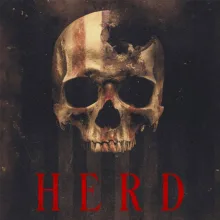
Mike talks with Steven Pierce, the co-writer/director of Herd (2023). He's joined by actors Dana Snyder and Corbin Bernsen to discuss the making of this contemporary zombie film.
Transcript
An automatic transcript, tidied into paragraphs. It has not been proofread, so names, titles and spellings may be wrong, and it does not say who is speaking.
Show the transcript (about 5,300 words)
Speaker 1: Hold your ears, folks. It's showtime.
Speaker 2: People pay good money to see this movie. When they go out to a theater, they want cold sodas, hot popcorn and no monsters in the projection booth.
Speaker 3: Everyone pretend podcasting isn't boring.
Speaker 4: Turn it off. I need you to see. We're almost done. A person.
That's what happened to you all. We're just trying to get the down for a hospital when this psycho started shooting at us. DANA SNYDER: I thought she was one of them.
Speaker 6: The hospital's no good. It's been overrun.
Speaker 3: What the hell is going on? Can we ask everyone please stay indoors and wait further instructions from the authorities. Everything will be fine.
Speaker 6: Just keep calm, stay back here, turn the perimeter lights on. What do you want? What you got? We can't afford to part with any our mess and sometimes we have to do things.
We don't want to keep people safe.
Speaker 4: Can't stay here. Yeah, I love my hey, folks. MIKE WHITE: Welcome to a special episode of the projection booth. I'm your host, Mike White on this episode.
I'm talking with director Steven Pierce about his latest film heard it's a zombie film by way of today's militias. We're also joined by Dana Snyder. And for the briefest of moments, Corbin Benson joins the call right towards the end. Thank you so much for listening and I hope you enjoy the interview.
Steven. I want to start with you. Can you tell me a little bit about your background because you've worn a lot of hats over the years and how you got into the business. STEVEN PIERCE: I have worn a lot of hats.
I grew up in middle of nowhere. Missouri actually, where we filmed was shot mostly in my hometown. And my best friend growing up was like a rope swing. So it had a lot of imagining.
Then it went to theater school in Saint Louis and ended up in New York editing or I wanted to be a director but didn't know what I was doing, couldn't afford an editor. So I just started cutting my own stuff and then I got a job working at cable places, doing online, finishing for cable shows and then got some network editing jobs and got do a couple of feature films and led me towards where I finally was able to get enough and experience in the career to just direct and do that as my primary gig. MIKE WHITE: What did you do on SNL?
STEVEN PIERCE: So I was on Saturday Night Live for four seasons as one of the pre tape editors. So I'd edit the trailers, the short films, the things in there. And then I was also on as visual effects artist whenever we launched the V FX team where we, I was in there for the first seasons for that as well. MIKE WHITE: So how did her come about?
STEVEN PIERCE: My co writer James Allard, I and I had been working on a couple of other scripts and we're trying to find something that we could tell and we know we could produce so that we could make a first film because everything we were writing was a little bit larger scale. So we wrote two specific locations that we had available in my hometown. And we wanted to tell a story about people that are caught between different worlds. And that's our lead character Jamie in our world.
So like caught between, I always feel like when I go home, I don't quite fit in there anymore because I don't, I'm not, I've been in the city for so long, but even here, I'm still feel I'm often viewed as a little bit of a country bumpkin caught between these worlds was the initial concept. And then as we got into writing and working on the piece, we realized it became more about groupthink and about how communities are can be ready to ostracize individuals. MIKE WHITE: It's a zombie film and what can you do with a zombie film?
You can use it as a tapestry for a lot of different things. You can use it as a sounding board discussion, jumping off point for so many things and I was really glad to see where the movie ended up going and have to commend you on that. STEVEN PIERCE: Oh, thank you, man. I look, if anybody watches the movie, I honest, I already so grateful because when you make shit and put it out into the world, it's just such a odd sort of experience that you create a little thing and cultivate on it for years and then boil it and mix it together and then bake it and then all of a sudden here it comes and somebody actually takes a moment to watch it and gives any sort of appreciation to it.
It just feels like a miracle. DANA SNYDER: But you throw, you do all that work and bake it and make it and then you throw it into an ocean of other baked, made little things. STEVEN PIERCE: Exactly. Right.
And a lot of sharks too. I appreciate the compliment. We worked very hard on. One of the things we like to operate in and is a stricture of a piece if stricture is a word, if not, I just made it up is why does a story need to be told?
So this, we tried to make an entertaining story that has a value of social messaging beyond just entertainment value. MIKE WHITE: Now, Dana, I know your voice more than I know your physical presence inside of movies and TV. Can you tell me how did you get involved in this film? DANA SNYDER: That's a great question.
I'm still asking myself, I feel like someone truly made a clerical error at some point. And then it was too far past the point of going back and fixing the mistake rather than trying to correct themselves. They just move forward so that the entire production didn't unravel Dana. STEVEN PIERCE: And I went to the same conservatory for acting a Webster Conservatory in Saint Louis.
And so I've always known of Dana. We've circled around each other for years. At least I feel like I've been, he's been in my orbit. So we wrote this specifically, Dana.
You want, I don't know if you wanna talk a little about lo but we wrote a character specifically for him. That's an act to imp very important kind of critical sequence. CORBIN BERNSEN: Here's the thing. DANA SNYDER: Here's where, you know, if it's a slide part, let's go down the names of the characters.
There's guys like nail Razor, Jamie Hope Louie, which stands that. So it's like Slobby Gooey. Any of those things? STEVEN PIERCE: I love Dana that you named a bunch of characters.
Only one of which besides your character made. Actually in the movie. DANA SNYDER: It's like Tough Daves. I've no point.
I don't know. People watch this, haven't seen it yet. STEVEN PIERCE: So it's like a all the time just waiting for anybody watching this having heard this and be like, where the hell was Razor? DANA SNYDER: There was a car, Razor, you said in the back, I was naming a lot of the animals under my care that people really see, I had a very elaborate backstory being a professional actor.
All about backstory. What was I in the middle of before I get interrupted? A lot of stuff. STEVEN PIERCE: We meet Dana's character in, he's a, he plays a veterinarian and we meet him after one of the lead characters has broken her leg in the end of the first act.
And then they go to his place to be repaired because this whole area in rural Missouri is under sort of the post apocalyptic zombie outbreak, right? So we meet Dana in the world closest. DANA SNYDER: They're gonna find to any type of medical professionals. And we say that in quotes, no one's seen a dog walk out of their, well.
STEVEN PIERCE: There are no, we don't make any promises for how good of a veterinarian he is. That is true. CORBIN BERNSEN: You know, he's got. DANA SNYDER: Some rubbing alcohol and he's got a lot of cotton balls.
So they figure this is better than nothing. STEVEN PIERCE: One of my favorite things is when Dana came on because we, he told me we met up the night before and I was like, great. So tomorrow we start with your biggest sequence, there's like a sequence in like a treatment room with a bunch of stuff and it's a long takes and lots of movement. And do you remember what you said, Dana?
DANA SNYDER: I hope I don't have any props. STEVEN PIERCE: Exactly. Dana's, I don't have any props. I'm done.
I'm allergic to props and I was like, we might have a big problem because you have a very long intricate sequence with props. DANA SNYDER: All pulling out scissors and gauze and bottles of stuff and things. And so if I get a prop, my mind goes blank because I'm just walking around going, what am I holding this bottle for? Why is this a bottle?
This isn't a bottle or whatever it's supposed to be. It's always something else. It's like holding a ketchup bottle that has a sticker over it that says rubbing alcohol. But we didn't, we did, we got through it.
I kept waiting, like kept waiting for the ax to fall. Him just turned to somebody holding the boom or something like you could do this part, right? Yeah, I'm like, yeah, I can. STEVEN PIERCE: And not saying that that didn't Dana, I'm not saying it didn't happen.
But at some point we were shot so deep into the scene, it just, there was no going back, you know what I mean? DANA SNYDER: I know they all were looking at you. MIKE WHITE: So when did you actually shoot this? STEVEN PIERCE: We filmed this in March and April primarily April 2022.
It's been about a year and a half since we wrapped it. We finished the edit about really pri primary edit was finished in December. After a bunch of testing, we did a little few pickups in October and then we've just been waiting a lot of final visual effects, final legal approvals. One hilarious aspect of filmmaking is at some point you make the thing and then you sell, at least for us, we sold the thing started selling internationally.
We were working with trying to find our US distributor and we ended up paired with Dark Sky who was a really fantastic partner a little bit later. But throughout the process of going through delivery sale, at some point, lawyers start watching the movie and it has absolutely nothing to do with the film whatsoever. But all of a sudden you start getting emails that are like at this time. Code two minutes, 25 seconds.
There is a, you know, it's the craziest stuff like you wouldn't expect. It's like there's a book in the deep background and look, we've done, I've done a ton of commercials. So and so did our production designer and he did a fabulous job making sure everything was like very brand agnostic once in a while. So in one of the scenes, one of the characters is wearing a shirt from gotta be the nineties.
They bought it at a thrift shop somewhere and there's no discernible logos anywhere on it. It has some kind of little patterns on it and they're like, oh no, that's, we were able to find who made that shirt. And so we have to have permission for that shirt, you know, like, what, what the hell are we supposed to do with that he's in a 10 minute scene with that shirt. There's, we're not, we can't change it.
There's nothing we can do about it. Something else stop looking. Yeah. Yeah.
It's just very funny before. It's, yeah, it's very funny that, you know, that at some point that happened. So, for us in the process then around we had to do a little more visual effects. It wasn't a whole lot.
But we had a, at some point we had an air conditioning or like an air freshener that was in that you'd never think you can't read. It doesn't have a brand on it. But apparently the shape is copyrighted and you're like, that's it. So we had to go out and then visual effects that.
DANA SNYDER: So it's a pretty funny experience, two million dollars to remove 1 35 cent car air freshener. CORBIN BERNSEN: Copus works. STEVEN PIERCE: It is really crazy but that is how it feels. Yeah.
DANA SNYDER: And that shirt he was talking about was, it's Charlie Brown's shirt. STEVEN PIERCE: He was definitely. DANA SNYDER: The Charles Schulz status. Very litigious.
MIKE WHITE: But you had one of the greatest lawyers of all time working with you and Corbin Benson did. He just put on the Army hat and start arguing against them, Corbyn. STEVEN PIERCE: He didn't help us in any legal sense. But I can tell you, Corbin was like an absolute gem to have like he's a, he's such an experienced performer, is such a strong creative in his own right outside of acting as a writer and director.
And he, you know, for instance, like there's an opening sequence of the films with Corbyn starts with Corbin Benson. And he's, it's our first experience with a zombie. We call he PS in our world and it comes up on Corbin and he's moving around this truck and trying to evade it. And we got to this one sequence, one point in the sequence.
And Corbin said he's something needs to happen here. He's, I need to do like trip on something or make a noise. And I was like, oh, of course, it's a great idea. You're right by this.
Let's put some wrenches here and make this. You were working on this tire because the car truck was on a lift and they're like, ok, so that makes sense. And when you get to the edit is just, if we didn't have that moment, it would have just been, the sequence would have been too long and it would have sagged right in the middle. You need that little moment of tension to just happen.
And Corbyn did that and it's a, he's a, there's a reason the man is such a well known actor and his, at least for me highly regarded because he's, he can do, he takes a small moment and just brings a really fun reality and a twist to it. And he's very memorable for a scene that it doesn't even have a line in and it's really, that's impressive. So that's real talent. MIKE WHITE: I know that you have acted in the past.
You've done, like I said before, so many things, but how was it working with actors? And obviously this isn't your first rodeo having done this before? STEVEN PIERCE: I love working with actors and they're all a little bit different, you know, like some, some performers like really like technical notes and that's what they respond to really, well, some performers really like little tricks and manipulation. So it's more like an acting class and you kind of and each, each like it all just depends upon the actor in the specific moment.
My whole philosophy when we're doing films and my hope is, and this is what I'd always be preaching to the crew is look, you light and you work as much as we can. But when the actor is here and then the actor finds the moment that's when we're going like, so if you're half lit, whatever this is, make this work because this is now when we're ready to go. And it just because you can't, you don't have time, at least in our environment to recreate that special moment. And there's so many, they have to connect and be like truly organic, awesome performance moments.
So we wanted to make an actor's actor or a movie, something with really strong performances. And I think for me, I think we did, I feel like we succeeded in that realm. And that was because we took the performance first and Brennan, our DP was very skilled at realizing when we had to just, oh, we're gonna have to pivot and do something faster here, you know. MIKE WHITE: Dana, other than props, what were some of your biggest challenges on this one?
DANA SNYDER: Lines blocking, connecting with the other actors costuming? I had some issues other than that, it was pretty smooth sailing. I really think I knocked it out of the park. MIKE WHITE: I thought you did a fantastic job.
And yeah, I don't know if you've ever considered a career in veterinary sciences. DANA SNYDER: But after this experience, no, I really had some thoughts about it. And then I said, I decided no. STEVEN PIERCE: Da is a perpetual smart ass.
So I'll jump in and say his character comes in because initially why would you have a Dana in there? There's also his voice is so recognizable. You don't want it to take people out. And I was like, for me, it works perfectly because the movie could be so heavy and it is pretty heavy in aggregate.
But in that sequence, it is a pretty intense sequence coming out of another intense sequence. And Dana just has an ability to even, even when he's playing it straight, he can't play it fully straight. He's got a, always a little, a little edge and a smart ass to him that just comes through. It works perfectly for me.
It just cuts right through what could be like a saccharine molasses sort of emotion and it makes, it just gives it a little lift and a little bit of energy and only Dana can do that. DANA SNYDER: I will say I was shocked that I did not stick out more. I put it not. Oh God Hair Cops.
You're gonna hear the circus music playing in the background and. Well, yeah, it was all right. CORBIN BERNSEN: Yeah. STEVEN PIERCE: No, I think you were worried about that.
I think we talked about that and I was like, don't worry, you're gonna be just fine, man. DANA SNYDER: I trusted you. I just didn't believe you. CORBIN BERNSEN: And I thought that's.
STEVEN PIERCE: All the director asks. You don't have to believe me. You just kind of trust me that I did. DANA SNYDER: And we had a wonderful time while I was there for what was going on screen.
We were basically just giggling the whole rest of the time. CORBIN BERNSEN: Yeah, much like this. STEVEN PIERCE: It in case you can't tell her mood is not always very intense while we were making very dramatic, it could be dramatic piece. The whole town we shot this in a town called Poplar Bluff.
Missouri is where I grew up. It is a small town of about 20,000 people. We basically took over This Comfort Inn for a month and people would, actors would come in and go out. And the day that Dana arrived was one of the best days because everybody would go back to the hotel and have a couple of drinks in the lobbies.
DANA SNYDER: They didn't have a bar, they turned their free breakfast bar into their private bar at night. CORBIN BERNSEN: It's like even clubhouse. STEVEN PIERCE: So when I came home I was always late because I'd be working through dailies and shot list for the next day. And anything else that was coming up for the next, I'd be about an hour or two hours behind everyone else, the crew and then I'd come in with James and we'd roll into the lobby and everybody's had a drink and like sitting around.
But I remember the night Dana came in, he's like sitting in the middle of the lobby and there's just a big u shape of people from the community, people that don't know who they are that are just staying in the hotel and all the casting and just sitting right in the front is Dana and being like, and there, no. Right, right in there. They just, just like telling stories and holding court for the whole whole group. So the whole week you were there, Dana, it was like, I think everybody still talks about that from the whole town as being like there was just like, it was stand up comedy night every night at the comfort.
DANA SNYDER: Yeah, we blew in a little hot Quinn GREs when I came in, he drove me from the airport. We had, we stopped at whatever it was. The TG I Fridays before we got there. So we were totally taken aback to walk in this hotel lobby and there's 40 people crammed into the breakfast bar, drinking weird brand off brand bottles of vodka and beer.
I've never heard of. And yeah, Dana is, that was great. CORBIN BERNSEN: Everybody was great. STEVEN PIERCE: Yeah, it was a wonderful time.
MIKE WHITE: So much of the movie revolves around Ellen Adair and her character. Can you tell me what it was like working with her and how she got involved in the project? STEVEN PIERCE: Ellen is a dream. Ellen.
They are the best, one of the best actors I've ever worked with. They just are so prepared. I met them on auditions like they were part of our casting call and they, I think the casting saw a few 1000 people and the first time I saw Ellen, it was like, ok, if she can embody it, like really? And they, I mean, I don't know, it's just, it's hard to describe how prepared Ellen is all the time and such an easy person to work with.
And she just totally this character the way she always said it. She'd tell you, I believe that they always play Republican individuals and women and like TV, shows and films. So this echoes her life experience and life vision much more as a character. So they were very excited about it and it would work with Ellen any day.
CORBIN BERNSEN: They're amazing and tell me a little Ellen loves the Phillies. DANA SNYDER: Jay told me all about Ellen. Yeah, Ellen is a super Phillies fan. STEVEN PIERCE: Yes, they are.
Hey. Oh my God. Look at this. MIKE WHITE: Face, Mr Benson.
It's great. Meeting you as it were through this medium. Thank you so much for being part of this. Can you tell me how you got involved in this project and how you found this character?
Speaker 10: I can't quite tell you how I got involved. I, if they came to me with an offer or my managers who I always tell, go look for interesting things and they reached out. But somehow we got together, which is the important part and the character was maybe, I don't know if you've seen the film, there wasn't an extraordinary amount for me to invest. A lot of, you know, just it needed, it was a function really more than anything starts the film, which is interesting.
I'd something I always try to tell my sons for screenwriting, started with a bang and literally it starts with a bang. And then you realize, and again, I don't want to give away a lot. There is a back story to my relationship with my daughter that drives the narrative forward, but I don't want to give away a lot there to people who might not have seen the film yet. But there then all good horror movies.
Sometimes there's not a lot of room to go beyond that, which you actually need to make it work, which is the important thing. So I'll say watch the film and I'm not as bad a guy as it makes me out to be. That was my take. That's how I would play it if I had more scenes.
MIKE WHITE: Yeah. Sema was telling me that you brought a lot to the role, including the whole idea of the wrench dropping, adding a little bit of tension to that opening scene. I was glad. To see that in there guys that looks, it's, the film is great.
They had sent me a link. I had seen it yet and I know it's been screening all over the place. And I honestly, I would do this anyway and tell you, I liked it, but I honestly really enjoyed the film and especially the little twist on the relationship of the women. And I, you know, like, hey, if you could do another 10 minutes on horror films, I'd say find a way to bring me more and to confront my daughter confront me a little bit more than post mortem.
But that's the sequel. He'll come back as a ghost zombie. Something I was waiting for him when he's lying there, dead to sit up. But it's a weird part when you name and you're in there and you're in there and you're in the credits and I realize part of it is I'm being very straight and I hope it's ok with you guys.
It's to help get the film there. CORBIN BERNSEN: I'm glad the film started with me. But you, sometimes you realize it also, it's my time availability and how much time I have to really commit to a project. But this, these guys here, I'll tell you anything they wanna do.
I wanna go a little deeper, but I've already told them that. STEVEN PIERCE: Yeah, it's corden's fault that I'm in this movie. That's something we never really talk about. And that was actually happened by absolute accident.
We had dinner the first night you came in, you Ellen Mitzi and I, well, Mitzi plays Alex. You were like, I love the script. I think the script's great. The ending was too fast.
It needs something here to be like an explaining without going into too much detail. You're like, you need one more scene here. And then I was like, he's totally right and I talked to James about it and we're like, yeah, we're definitely gonna do this and we started trying to write a little scene in a way to do it and we were gonna do it here. But we had to come at this hospital which we only had for a certain amount of time.
We're gonna figure it out and I kept trying to hire an actor for two weeks, but we didn't have anything written and then all of a sudden it just, we had a rain day like a following. We had a week where we were supposed to shoot the hospital the following week. But then we had a rain day that we had to reassign a week earlier and we couldn't lose. So we called the hospital.
Oh, magically they can get us in tomorrow. So now we're shooting this scene tomorrow and I wrote it in the, I rode in the grip truck and I wrote it in the grip truck on the drive down to the hospital and was trying to get on with the, and we were gonna have one of the ward, the costume designer play the role because I didn't want it to be me or anybody. And, but she'd never acted before. She'd never done anything.
And we were getting medical jargon at the last second. And I was like, if somebody's gonna screw up and look like a dumb ass, it's gonna be me. I gotta tell you a funny story. That's like that just very quickly, Roger Corman, the famous Roger Corman, who I blessed to know a lot as I grew up and worked around him.
My godfather that introduced my parents became my godfather, worked with Roger and a lot of those early films, he did some knock off a creature from the Black Lagoon and they all showed up at Zuma Beach on the morning, 12 of them with weather carrying equipment out to the beach making his $12 movie. And the guy who's supposed to be the lagoon Black Lagoon. The creature doesn't show up. So he goes to my godfather who doesn't know anything and says you're jump in the suit, you're gonna be the creature.
You know, I'm supposed to bring them food. Fuck them. They don't need food. You jump in the suit.
You know, what do I do? He goes, ah, end up season the creature of the Black Lagoon. But, you know, that's, to me really, that's some of the fun of filmmaking, the figure the puzzle solving at the last second, Steven. MIKE WHITE: I know we need to wrap up.
But what's next for the film? Where is it playing now? And where can people see this? STEVEN PIERCE: So, the film premieres, we do New York Comic Con on October 12th and then it'll be out digitally and theatrically in the US on October 13th.
There's lots of markets where you can see it in theaters, which is how I always dream people would see it even being a small film. So if you're interested, you can check out for where you can stream, purchase or watch it in theaters or online at HD dot film H D dot Film. MIKE WHITE: Thank you guys so much. I really appreciate this.
STEVEN PIERCE: Oh, it was really nice meeting you, Mike. Thank you.
Comments
No comments yet.