Special Report
Reading of the Lost Ark Pt. 9
Show notes
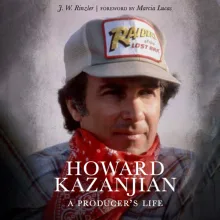
Get Howard's book at https://amzn.to/45M3wTQ (opens in a new tab)
Transcript
An automatic transcript, tidied into paragraphs. It has not been proofread, so names, titles and spellings may be wrong, and it does not say who is speaking.
Show the transcript (about 9,500 words)
Speaker 1: This is the story of Raiders of the Lost Ark. You can read along with me in your book. You will know it is time to turn the page when you hear the bull whip crack like this. Let's begin now.
MIKE WHITE: Hey, folks, welcome to a special episode of the projection booth. I'm your host, Mike White. On this episode, I am talking with producer Howard Kazanjian all about his book, Howard Kazanjian, a producer's life. We talk a little bit about how he got into the business.
What it was like working on the Empire strikes back Raiders of the lost Ark. Little return of the Jedi demolition man working with Alfred Hitchcock. This is one hour worth of stories that you're gonna hear. Howard's book is chock full of them.
Fantastic book written by our old friend Jw Rinzler. Rest in peace. I've been after Howard for quite a few years and was glad that we finally got to sit down and have a good conversation. Thanks so much for listening and I hope you enjoyed the interview.
Why now, or 2021 when it came out, what prompted you to do this with Mr Rinzler. HOWARD KAZANJIAN: For years my peers have been telling me, Howard, you've worked with his stunt. You've worked with this person and that person. You've got to write a book.
You've gotta write a book. And Randall Kleiser was the pushiest. He was the one that just every time we'd see. When are you writing that book?
And he has written now a couple of books and over the years I've been keeping call sheets, production reports, records, copies of the interviews, making notes. I have, I hate to admit it, but about 23 boxes of notes and whatnot and pictures and things like that. And so I put it all together, but I couldn't put it together. I couldn't write about myself.
I cori some other books, but I couldn't do it about myself. I met Rinzler through another friend Brendan Allinger and I actually met him in Comic Con, I think, and he had written three or four or five Star Wars Lucas Film, beautiful novels books. And he said I'd love to take this on. I wanna do it.
And so we met for two days, we communicated a lot by email. Of course, much of it was during the pandemic and I kept sending him stuff and between him and Allinger, they threw out a lot of stuff and was, I'm very pleased with the book. The publisher said 100 and 50 pages. It's, or how do you including the pictures?
And they loved it? And during that transition, publishers sold to another publisher who didn't do those type of books, they saw what it was. They said, oh, we've got to do it, not gonna touch it. We're not gonna edit it.
We're gonna leave whatever you guys have done. The only thing they got involved in it was the cover and they went back and forth and back and forth and I said, do the cover and that's it. Very lucky. I'm very happy with the book.
Now we move on to other things. But the book will be written, as I said in the beginning, not for the ego of it. I want potential young filmmakers and others to know the good and the bad, the ups and the downs. But also you really think about much of what I've written.
It's about determination, it's about finding a goal, whatever business you're looking for, perseverance and it's going after what you really want to do what you love. But you can't start at the top. You don't have to start at the bottom where I did. But you gotta learn the trait you've got, whether it's what you do or the film business or architecture, you've gotta learn, you can't start at the top and I've seen so many people fail directors included, they might have one or two good pictures.
But if they don't know their crew, they don't know what their crew members are doing. If they don't know how pictures are made other than directing, you're gonna fail. So I hope that message came across, but I'm happy to just move on to other things. MIKE WHITE: Now, this has been this kind of myth of the late sixties going into the seventies where it's the film brats coming in and just sweeping the floor and taking everything over.
But we forget that there were people like yourselves that have been involved in the movie industry for years, if not decades. And these movie brats are relying on folks like you to help them along. Have you've got the training, you've got the trade to be able to make things possible. HOWARD KAZANJIAN: One of the sad things about our business and others is once you pass 40 so many people think you don't know anything anymore.
And I really feel sorry for writers who have really reached their potential, they understand story, they understand structure and that's true with directors and other people as well. It's a challenge. Yes, you're right in what you just said. MIKE WHITE: Yeah, it's just amazing to read some of those stories about working with Alfred Hitchcock or working with Billy Wilder, just these luminaries and them as well as so many other people that you had worked with over the years moving up the ladder as you did over such a long period of time.
Loved to read the stories of that. HOWARD KAZANJIAN: We could have written 800 to 1000 pages because a lot of the detail is not in there. In fact, I've gone back now and I've added 100 pages, 100 and 10 pages or so to the book not to be published just for a record or my kids or whomever and I, any of us could keep adding and telling stories and whatnot. But it, but you gotta keep the book interesting.
MIKE WHITE: How is that going to work every day? And working with Alfred Hitchcock? HOWARD KAZANJIAN: It was what? And I've worked with some great people and you know who I've worked with, but Hitchcock was something else.
He was the only one really that mentored me, as I say in the book, he sat with me every single morning and we talked about his films and he would say, Howard, do you know why I did such and such? Do you know why I don't like inserts? And sometimes you knew the answer? But you'd say, tell me Mr Scot, it's a telephone ringing.
I don't like to do an insert of a telephone. I'd like to start on the actor reaching for the telephone and then it's a close up or vice versa. And then he'd say, I want you to look at a particular film and then you'd say in and Vertigo in Ernie's Bar, what colored dress was Kim Novak wearing? And I said, great.
And he said, no paz my eyes open. He said world great. And that taught me something and he would do things like that. And then he'd say, all right, let's take that same scene.
What direction were the hecks moving, walking. They never walked towards Camp Kim Novak was walking towards Camp Nobody. They crisscross, not me. And he's right.
And one of the films we were looking at before we started shooting and he was in the theater rarely was he in the theater when we were looking at his old films was swashbuckler And he was looking at that because the music was done by No, we were looking at Jaws. The mu music was done by Johnny Williams. And then we looked at swashbuckler and he just stopped the projector and he had his own projection room and he said, OK, there's this scene where we're on the second floor and it's a period picture, second floor and we hear a carriage pull up downstairs, you hear it on the gravel road and the person goes to the window and he looks down and then the camera jumps down and you meet the lady and the guy and they're whispering to each other.
Then the camera goes back upstairs or a point of view. And he said, how, how can the camera go downstairs? We're upstairs and I understand most directors do, but I understood what he was saying. You have to keep the camera in that position.
He's done it many times in car chases, you're in the car, you have to stay in the car he said, he was telling north by Northwest, he says, do you remember the train sequence? Yes, we talked about a lot of things in the train and he said, don't understand how a filmmaker can put the camera out in the field with the sheep and get a shot of the train going left to right or right to left. He said, I shoot out the window and we see the train go around a curve. He never leaves the train and there's something psychologically right about that.
Especially with his suspense movies. Yeah, he metered me every single day, every single morning in pre-production. And we usually had a shoot at 9 a. M.
And I was there much, much earlier and setting the cast and all of that. And then we'd sit in and if he came in at 8 30 sometimes we'd sit in his dressing room trailer when we're shooting and we'd have coffee on China and he'd talk to me about filmmaking. How could you beat that? What more would you want with.
MIKE WHITE: An education that must have been? HOWARD KAZANJIAN: It was. And then, or he'd invite me to lunch in his room and he, we'd not talk about movies, but we talk about his past, maybe his dog and he had set me up one day. He was a box right by, we were having lunch in his private office.
There was a box on the floor very near to where I was sitting and that was a set up and I'm looking down and looking down and he said, do you know what's in that box? No, Mr, it was Mr Hitchcock at that time. No, Mr Hitchcock. And he said it's from London and he says that they're slippers.
And I said a fairly big box for slippers. He says there's a dozen of them and I said dozen slippers. He said yes, because my dog chews them. It had nothing to do with nothing but it was a conversation piece.
MIKE WHITE: Did he have a good sense of humor about himself and his work or was he just serious all the time? HOWARD KAZANJIAN: He wasn't serious. He wanted to have fun at that age. He had established himself as his cock and he'd talk about, I don't like to do the commercials for Universal tours.
And a grandchild was just born today who never would have to work things like that. No, he had some humor. He, but he wouldn't show it to anyone else. There's some talented people out there that one is afraid of and you're afraid to approach and you're afraid to talk.
And I've been there before and it took me a little bit of time to really reach out to Hitchcock where I could talk one on one. But the crew were afraid of him. And this was the thing with Billy Wilder. People were afraid of Billy Wilder, but more so with Hitchcock.
I mean, one day, I said to Bob Murdoch, who was a prop man, Bob rather you asking me? I said, come in and talk to him. He tells stories about his youth and why he didn't like policemen and stuff like that. Why he didn't drive?
MIKE WHITE: I know you worked on family plot. But there was always talk of another movie, one that he would do after that. How close did that ever come? HOWARD KAZANJIAN: He was working on it.
He was passionate about it. He had told me earlier that he could make the phone book. That's what his contract called or he can make the phone book as long as the budget was. I don't remember now, 5 million or 7 million.
That was a lot of money for those days. And how do I say this? The studio Lou Wasserman took it away from me. They felt that he was too old, maybe too feeble and it, that killed them.
In my opinion, I was there. He had asked the studio, can we do the picture of Howard Kazanjian works with me? And Howard will do most of the leg work because I did most of the leg work on the other picture. I was busy with Raiders of the lost Ark.
I couldn't do it. But it was Wasserman that this is Howard Kazanjian telling you Wasserman in the studio, took it away. He was crushed, absolutely crushed because he had given his life to Universal. That was his home and he was having some difficulties at that time with his wife who was ill and.
MIKE WHITE: She was this world if I understand correctly. Absolutely. One of his best collaborators quite often. Yes.
HOWARD KAZANJIAN: Yeah. And that's how I originally met in London. The both of them were in the business in the beginning. She would come in about every other week and have lunch with him.
Then she got ill and there were times that he would go home early leave at noon or one o'clock and say you finished the picture, you finished the day's work. So we don't talk about it. Maybe it's in the book. You don't talk about it.
So I would direct the rest of the day. But it wasn't me directing, but it wasn't me. It was him through me because he had brainwashed me. So I knew what he was going to do.
I was the one that would say quiet roll cameras, action nearly every shot. I would say action. He never rarely did. And I would say cut and it wasn't me directing, but I knew what he wanted.
I sensed him. Oh, he was wonderful. He'd sit in front of the camera right underneath the camera and he'd turn back and he'd say Letty put on a 50 millimeter and cut through the third button of the actor. And on the left hand side, you should be just cutting through the door knob and on the right, you should be.
Oh, he knew his lenses, he knew what he wanted and he didn't go to DA because he said you guys better get it right. He step me to DA. And there was only two times where I came back and I said Mr Hitchcock, you need to come and see the days' work. A particular shot that wasn't working and then we go back and shoot it again.
Yeah, it was a wonderful experience again. I've worked with other great directors, but this guy is like a father figure. MIKE WHITE: To me, you worked on one that I just absolutely loved roller coaster. What was your experience like working as a production executive on that one.
HOWARD KAZANJIAN: Jim Goldstone who had just done swashbuckler at the studio and Lincoln Levenson wrote the screenplay and I had worked with them previously and it was really a family. Jim was one of the nicest directors you could ever work with. And there have been others never said anything negative about anybody, even though something would go wrong. Was he the greatest director in the world?
Was he the great? And he was very much involved in editing. Was he the best editor in the world? But I loved him and I had hoped to do another picture with him and he fell ill.
We tried to do another picture, he fell ill. It was a different type of picture, whether it was success or weren't, it was successful. But whether it was a wonderful picture to be credited on. I'm glad I did it.
We scouted locations. I was there from the beginning and there through all the mix right to deliberate. And I was close to Jennings Lang, who was the producer, the boss and I had worked with Jennings on the front page. So we all know each other.
MIKE WHITE: What would Lincoln Levinson like to work with? HOWARD KAZANJIAN: Fast. Here's a little story. They were doing Colombo.
They'd been around a long time. They had written a number of projects for Universal. So I did the budget roller coaster and the studio, I don't remember exactly what it was. The studio said it's too high.
You've got to cut the budget. So I went to see my office was right there, nearly 11. So I went to see them and they said, yeah, and they went through the script and they crossed out some stuff real five or six pages real quick. And I my eyes are opened and they said we expected the studio.
So we wrote the scene knowing that we wanted to take it out. Something I learned, I'm not a writer but some, but it's something as a producer. If they're gonna get, they always want to cut the studio budget. So you put something in there gonna take out or if they don't tell you to take it out down the line, you go say we really don't need this scene or yeah, I like them.
MIKE WHITE: What was that like? Transitioning from an assistant director into full time producer with things like a or American Graffiti. HOWARD KAZANJIAN: I went to school with George Lucas. So that's where we first met after school.
I was the one that introduced him to Francis Coppola. And George asked if I would do the peach film tax 11 38 because we were seeing each other all the time on Finian's and I said yes, but I had just recently got paid dues and gotten director skilled, which is I was a trainee for two years and I couldn't work nonunion at that time. Do we switch off with permission the day? Yes, you can and I could, couldn't do the film.
So I said, no, I it was obvious I couldn't do it. And then George was gonna do American Graffiti. And I said yes, but the film I was working on got delayed and he had to go without me. So that was the second.
No. Now he asked me to do Star Wars and the film I was working on got delayed or I don't remember, got delayed or we were a month away from finishing it. And that was the third time. I said no.
Now you don't say no to George and you don't say no to a lot of people. But he asked me to lunch when the studio said we'd like to do the sequel to American Graffiti. And he at lunch. He said, look, he said the studio wants me to do the sequel to American Graffiti.
I really don't want to do it. But if I don't do it, they're gonna do it without me. Would you produce it? I said yes.
And that was at the end of the roller coaster. MIKE WHITE: How did Bill Norton get involved in that one? HOWARD KAZANJIAN: We need a writer and eventually a director and George likes writer directors. So that was the first challenge, a writer director and one that maybe had lived through that period, whether it had been Haight Ashbury or those three or four of the Vietnam War and all of that.
So there were several people we were looking at a few weren't available. A few. George didn't want to go with and eventually became de nor the caveat was if the script works that you're writing, then you can direct. That's how it got down to a process of elimination.
But there weren't a lot of people we were that fit that category and had a head about that genre. I did the film work. MIKE WHITE: I've revisited it recently and I think a lot of it does. I especially like the use of the multiple screens, the split screen and just all the different povs that are going on in there.
I thought that was a neat idea and does reflect the sixties pretty well. HOWARD KAZANJIAN: Exactly. That episode reflected the hippie sequence where it was split screen and all of that. And Vietnam we shot on 16 Mil what on the news at night?
Vietnam and All Rod Howard Sequence was wide screen. What it may have lacked was a little bit of humor that the first one had. But also the times weren't happy. Now, should we have stopped it with some kind of humor?
Look, it's hard to make a movie. It's hard to make a successful movie be right on. MIKE WHITE: Can you talk a little bit about where Empire strikes back was when you came on to that project? HOWARD KAZANJIAN: I came on before the original Star Wars was released.
And remember George had asked me if I'd be with him on that? I never said, was I producing it or was I associate producer or co-produced? I never got that couldn't do it. I wasn't available when Empire after that.
And before the after the release, he said to me, I want you to be at every meeting on the Empire strikes back. Now, meetings were held in northern California and many of them actually on the Universal lot where we had offices. And he said, I want you to be in every meeting unless you have to get in an airplane all the time and play up north and he would come down to Los Angeles and because you're going to produce the third. MIKE WHITE: One, so he's already thinking that far ahead.
HOWARD KAZANJIAN: I don't want to talk about Gary Church and why Gary didn't do the third one. Gary almost didn't do the second one. In fact, Gary Kurtz, I took over as you may have known or saw the look towards the end of the Empire strikes back because it went way over budget. But I followed, I was the one in the beginning that broke it down, worked on the budget, broke down a board, a huge board for the special effects.
I didn't tell them how to make the special effects and broke down the live action, broke it down into the days and weeks and all of that. So I followed it very closely. Every, every very closely that. MIKE WHITE: Must have been huge to break down that production.
You think about the original Star Wars and there's maybe four or five locations and this, you are going from planet to cloud city and so many moving parts. HOWARD KAZANJIAN: You break each part down, figure out how you think you're gonna shoot, what order you're gonna shoot in. And then obviously when they really got close and they were building the sets, then they maybe a set isn't ready on time. So you change the order.
Plus you try to shoot all your people at one time, especially Obi One can the character Obi One, Kenobi, you can't have them there for the whole picture. So those are the things that really determine how you shoot of the order that you shoot. MIKE WHITE: Was that mostly shot in England. HOWARD KAZANJIAN: Yes, there was a little bit of post production done to build a new stage at ILN.
So there was some post production done there. There were some shots of and I'm the assistant director at that time because Gary was off on another picture in Europe and I worked with the director and there were little stuff, there was a big mat shot of the hanger with the falcon and the X wings. And now you had all these people, we chewed all these people on the ground and then ILM would take over. Actually, ILM was the camera people but I knew what they wanted to composite it.
So there were some inserts and things like that done in Marin, obviously the snow battle but it was all in Europe. Yeah, it was all at Emil Street. MIKE WHITE: Yeah, I heard that, that shooting in the cold was quite an ordeal. HOWARD KAZANJIAN: It's not easy to make a movie.
The more money you have doesn't mean it's easier to make, it feels like the more money you have, the more problems you might have to address and the longer the shoot, you know, you do television. I did some very little television way after that and your problems are only for six or seven days. And then you're on another episode. I mean, gee, I.
MIKE WHITE: Love the story that you tell in the book about coming up with the schedule for Raiders of the Lost Ark and that you had the two schedules, one for the studio and one for the actual production. I love that part. HOWARD KAZANJIAN: It was years later that I could tell that story, never tell it at the time. And my dear friend Charlie Maguire, who was at Paramount at the time, and Charlie knew me from Warner Brothers and other places that we had worked together.
So when I said Charlie, don't worry, we're on schedule. He believed me because he knew I was on as Howard and Steven wanted to Steven like the idea of two boards because we really were following the shorter schedule. MIKE WHITE: I mean, that's another one. Talk about moving parts.
What was that like when you were brought on to Raiders again? HOWARD KAZANJIAN: That started from the very beginning. I was the one that first scouted because it took place in Egypt. I went to Egypt and it wasn't gonna work out Cruz and all of that.
And George said to me, why don't you check where we did Star Wars? And that's what we did. And that was a little, we don't think about it, but that was a little dangerous because there have been, have been some, I don't wanna name them but people crossing the border and killing people and we had Steven Spielberg. So we had no one knew it.
We had a guard there and I don't even know that Stephen knew it watching very carefully because he was Jewish. But I would say, look, I love Star Wars. I love Billy Wilder's films and Hitchcock films and so many others. But Raiders of The Lost Ark is more me.
I like that type of filmmaking. I like a period picture. Star Wars was a period picture but not period picture and Raiders is my type of film so I enjoyed it. Probably the most was a challenging.
Sure. Yeah, you have to figure out where you're gonna shoot, where's the jungle? And there was strike going on at the time, actor strike. But we had signed all of our actors to equity.
Now today it's s a equity but back then it was equity, which is the European Actors Union. So when the SAG struck, we kept working and actually there was a production in London at the time with American actors and they went on strike. Warren Beatty went on strike. But again, even Harrison Port was working equity was working equity.
They were all working. MIKE WHITE: I really had thought that the idea of Danny DeVito as Sala was just an urban legend until I read it in your book. That was a real thing for a while. HOWARD KAZANJIAN: And Steven wanted him, Stephen wanted him and he just wanted too much money for the time.
Yeah, I think it was 50,000. But my mandate was this is $20 million. Figure it out. Not a penny more, not a penny more.
In fact, I'm doing the budget, I'm doing the budget and I send it over to Paramount because again, George owns it. Jordan Jones owns the copyright. George Jones. A negative Paramount's money.
So Paramount had to say yes, I send it over to Paramount and they'd say, oh, it's not $20 million it's $21.7 million. They say no. And come back to me and I'd look at it and went back and forth four or five times. And then I realized when I'm doing the pound was going up and down like this very fast.
I'm doing it at 2.1 or whatever it is, dollars per pound and is 20 million by tide. Paramount. Does it three or five days later, the pound is higher. So we locked it in at a number no matter what the pound fluctuation was and everybody was happening was $20 million which is even for that day wasn't a lot of money.
A picture that shot on location. Picture of the shot in North Africa, Africa picture, the shot in London, picture of the shot in Hawaii, pictured the shot in the United States at huge, not huge, but a lot of special effects. 20 million was nothing. Especially when you compare it to the second.
MIKE WHITE: Just those sets, the sets for the world, The Souls or the Map Room. Those are amazing. HOWARD KAZANJIAN: You know, terrific, art director, production designer Norman Reynolds, but really one of the best I worked. Henry Buns that I think it was one of two time Oscar winner.
I always thought he was the best. Norman Reynolds was Oscar winner too. But, oh, he was good. MIKE WHITE: When you're reading that script for the first time.
Does it feel different? Does it feel like this is something that's gonna be really special or is it one of those, you just, everything seems like it's gonna be that way and sometimes they're not. HOWARD KAZANJIAN: Because my office was cross. Now we're at the egg company because my office was directly across the street from Universal.
And I had come from Universal, even though Laura and Gray was a Universal picture. But independent. I had a lot of friends there. Mel Sattler was head of the legal department, Hilton and Marshall Green who were head of production, et cetera.
Bill Batliner who was head of casting. And those guys would always have lunch together and I'd come over and have lunch with them maybe once a week. The rest of the time I'd be eating lunch at the egg company. Didn't have time to leave.
And I did say to them, we have a winner. I didn't know how big a winner, but it did go out on a, we say this is a winner. Yeah, it just, it partly made me because I had grown up not in the theater but on video, seeing dozens of cereals with the cliffhanger and George had me look at s while we were still at Universal and I was starting to do more in American Graffiti and then we moved elsewhere. I would, we'd go into the theater and I'd watch cereals, flip hackers.
And sometimes I remember once how Barwood and Matthew Robbins were in the area, they came to see a pill and sometimes once in a while George would come in. But usually it was just me looking at cereals or with a few friends and it's, oh, that's a great, that's a great idea. Oh, let's use that. And you'd write it down and that's where Raiders came from and that we didn't even have Larry Kasson at the time and look around.
It's a serial, a cliffhanger except for the first one where you meet the government, me and it was designed for every 13 to 15 minutes a cliffhanger. And I don't wanna say we copied everything but a lot of the things in it were in other movies, old movies. I still love cereals. That's where Star Wars came from.
George wanted to do Flash Gordon. He couldn't get the rights. Come on, starting with the trawl and all this Flash Gordy look around and copy every film is a copy. You may not see it.
A lot of these cop and Robber Boo, I call them cop and Robber Newies are older Wester remakes. The guy with the white hat, the guy with the black hat is a policeman and the bad guy and the stage coast is the SUV, the horse is the car. Come on. That's the way I see it anyway.
MIKE WHITE: Yeah, I love the creativity that went into lifting all those different pieces and then just putting them together and making them so fresh. And that the famous story conference of Lucas and Spielberg and Casden and just George Lucas. Just so many ideas just pouring out of him. It was wild to read that.
HOWARD KAZANJIAN: George is an idea person. He's and with names, boy, whether it be Star Wars with all the animals and stuff like or R two D two or C three po or Darth Vader. Those boy, he can come up with the name instantly. I've never met anybody like that.
George. He hears some characters. What names do you want to give? Du Du Du Du.
MIKE WHITE: I seem to remember you saying that especially around return of the Jedi just how he would name all those characters in Javas Court and on the Skiff and all that. That's amazing. HOWARD KAZANJIAN: But he's like that with ideas too and he understands, he understands filmmaking. George is very good with budget too and you can look at a storyboard and say we don't need this part of it or all of the nearly all of the sets, whether it be a bunker or inside the Well Of The Souls or whatever, we build a miniature and figure out how it's gonna look or a corridor or the interior, the Millennium Falcon or the bunker itself had a lot of corridors and he'd look at it and say we don't need this.
We don't eat the art. We're never gonna see that in the book. I think I talk about the flying wing. We had a miniature and it was gonna cost a lot of, a lot of money because actually the company that built Rolls Royce was building a flying wing.
It could do everything but fly and it was way over budget. I didn't know what to do. George was coming down and I met him at the back door. He said, how are things going?
I said going very fine except with the flying wing. It's way over budget. This is in the book. So he steps in to this conference room and Kay Kennedy's there, which was Steven's secretary at the time and Steven and I don't know who all I don't remember, but the first thing he did was pick up the flying ring and he held it out like this on the tips of the two wings.
And he says, what is this? They knew what it was. And Steven says the flying way and he said, how much is it gonna cost Howard? And I gave him a number and I said, he says, what's in the budget?
I said 750,000. And he says, so he took it and he went and there it was a four engine plane and he broke the outer two engines off and he said, how much will it cost now? And I, we're on budget. I wish I had a picture of Steven Spielberg's face.
It wasn't because it was being cut. It was the way George did. It was a surprise to everybody as George. MIKE WHITE: How was it working with your fellow producers on that?
I think you worked for Frank Marshall. HOWARD KAZANJIAN: Frank was going to produce Radio Land Murders for us and was in and out of the office when it was being written. And it came to a time where the script wasn't working and we had it a writer director on it. And George said, and it was a Universal picture.
It was actually the third picture that George owned. Universal and he eventually made it and he said, go up and see Ned Tanen and try to convince him without him knowing that we want to stop. We don't want to do it, which I did. And that was the first one to say, let's put it on the back burner.
Now, Frank was out of a job. So George said, let's bring him on as a producer. And Howard, you be the executive producer with me. Frank had been around.
Frank is a very good producer today, Frank will tell you that Howard did all the work because that's me. That's how I was trained. And again in the book, one reason why I wrote the book, it's you can't start at the top. You have to learn what all your crap people do and why they ask you to leave early.
They may ask you to leave for lunch early because they're gonna go to the warehouse or they're gonna go to their office or they're gonna work on something for your picture. I learned that. MIKE WHITE: Did you always have that work ethic that you had when you were doing your director training and production? Yeah.
HOWARD KAZANJIAN: Too much. Yeah, I believe in that. And sadly, I see too many younger people today that don't have that type of work that they either want to start at the top or they don't wanna work, they just want to be paid and I'm not pointing my finger at anybody. But I think you see that too.
I loved what I do. I loved what I did. Then I wanted to be in the business, wanted to direct and to school c cinema department at the time it was called, I love what I do. I love movies but I love making them, love being a part of it, love making those decisions.
And if something goes wrong, I love being able to say this is how we fix it or if an actor shows up late or the actor doesn't show because he's sick. What are we going to do? I love making that decision now and then you have challenges many times with actors. How do you work?
With them. You were a lot of rationalizing an actor or director and certainly I, this happens, is screaming that day or nasty that day. And you say, well, why did he have a fight with his wife? Did he get a ticket on the way to work?
Are his children in trouble? Yeah, Billy Wilder. One day it was the sweetest guy. One day was, every time the phone would ring, would yell at me, answer it here.
I'm on the set and the phone's ringing over there, it rings twice and he's yelling at me. I brought a policeman in a security guard guard to answer the phone. Why I found out at the very end of the day his wife was flying to Europe. So he was concerned that you get on the plane.
Is the plane? Ok? And all the next day he was wonderful. Holbrook was difficult why he was having difficulty with his teenage kids back in New York where he lived.
I named three or four like that. And sometimes you never figure out why day after day somebody is another wonderful director. His life was dying and I didn't know that. So those are the challenges.
You don't want those challenges, but you have to be able to deal with that. You have to deal with personalities. MIKE WHITE: I'm almost amazed at just how early you're working on stuff before the cameras even roll. It feels like you're working on multiple things or at least there are things happening in the background that you're going to be involved in or maybe touch base and then they move on and then you come back to it just to read those sections of like Empire was working.
But I'm also doing a little bit of Raiders and then here comes return of the Jedi and it just feels like you're just never ending work at that period of your career. HOWARD KAZANJIAN: Also, after a while at Lucas Film, I was vice president of production. So you're not only handling the film that you're producing, you're handling vice president of production under production were other divisions. Few divisions, we had merchandizing that was separate.
But you had to coordinate. I, they came to me and said, what characters you have, we're not, I'd say we're not gonna let you read the script and you'd have to work with book division was another division. Then you have the accounting and all of that I research was under me, the library for photographs and all of that was under those are easy. The hard part, it is making a movie, a good mo and staying on schedule, staying on budget.
But when I do a budget, anything could go wrong. A lot of people will put in, let's say one of the things that I would do because I'm going back and forth from Lucasville North to Lucas Film South. And then even when we were all up north now I have to come back and forth to the labs because we're working with the film. So you put in Rattle Car X amount of dollars.
No, I would put in such and such day, another rattle car and then, because you're figuring all that out, what does that do? It's a lot of work, but you're basically on budget that way. You're just not throwing a number in. MIKE WHITE: I can't even imagine the amount of pressure that you were under when it came to something like return of the Jedi where it's built up.
You've had Star Wars this huge hit Empire tops that and then, ok, what are we gonna do for the next one? I can't even imagine the pressure that you were under for something like that. HOWARD KAZANJIAN: Also story wise, it was really the end. The Star Wars was Act One.
Empire was Act Two, which is the meat of everything. And of course Jedi was Act three even though George felt there would be Sequels and prequels at the time, but it was so you had to end it and it would, yeah, it's, it's always a challenge. You're always hoping you make the right decision. I will tell you that although she's not given credit, Marcia Lucas at the time is a great storyteller and she lent many, she's in the book too me many ideas, but she was one that would say George, this scene is so working.
Now go back and do it. She was very good at that. She's very creative and she came up with a lot of things like the end. I think it's in the book, the very end of Raiders of the lost art.
She said, what happened to Marriott? We went back second. You then and shot it in San Francisco where we were. MIKE WHITE: I was really glad to read in your book just because I had always heard that she was the secret sauce and then you really confirmed it just even with things like the scene in the carbon freezing chamber in Empire strikes back where she was taking a swag at the edit and said, oh, it was this beautiful establishing shot that looks like the devil in hell.
And like, why aren't we using the shot? It's wow. Yeah, like one of the more iconic images from the film itself, which is very true. HOWARD KAZANJIAN: I think that Rinzler interviewed six or seven people and I said fine.
But if they say anything negative, I wanted it in the book, I have to be fair. Although I'll tell you, I told Rinzler if there are any, we went through many drafts, but I start taking out some of the negatives, not the negatives of me, of things that happen to individuals. And I know that sells books but not for me, Resler. I said, interview Mark and Resler flew to Hawaii where she was living called me as he was driving to leave at the airport and he said, fabulous interview.
Thank you very much. I added to Ray, I was the one that called Marsh and said, say whatever you want. But I didn't realize she went beyond Howard Kazanjian is a nice man. She started talking about her and it was the first interview she had ever done.
And I said to Rinzler, how could we use this? It was Resler who put it in throughout the book. He did a great job and I'm so glad she's in there now, Georgia may not like it, but it's bad. MIKE WHITE: Can you tell me a little bit about your experience working on demolition man?
Because that is definitely one of my favorites as well. HOWARD KAZANJIAN: Peter Lakoff came to me with the script and I read it and I liked it and it had been something I had that type of genre I had never done before, but I said this can be a big picture and I gave him some notes and before I took it on, I gave him some notes and he went back and he made some changes and then I auctioned the script and took it to because this was their type of movie and they said yes. And I was to be paid more money than I ever had been paid before or since.
And we start working with them. And after about a month, some people came out of the woodwork and said, they own the script. And to make a long story short, Ter Leko had worked for these people as secretary or gopher. I don't know, I don't remember what, but at night he wrote several scripts on their typewriter and they claimed it was his so said you go figure out the eno and come back otherwise we don't want it.
That was a challenge. I, we eventually went to Warner Brothers who could figure all that stuff out. And they said this is really a Joel Silver picture which who was so Joel said I want to do it. And then there was a rewrite and another rewrite and then Stallone was considered and dropped out.
And then I brought in Steven Segal. I'm trying to remember the order. No, I think no, somebody else came in and it took so long with rewrites, he left and went off and did not a somewhat carbon freezing Mel Gibson, somewhat carbon freezing picture. And then we brought in, I brought in and we did one or two rewrites and then that disappeared and silver brought in finally brought in the cast and I was a visitor on the picture.
It wasn't the picture that I wanted to make. It got thinned out. And I still think one of the original scripts were the best. In fact, Peter Leko didn't get full screenplay credit.
There were other writers on it. I think we went through nine or 13 drafts, but I'm not. Joel Silver is great producer, right? You know what he has done, the success is he had.
But Howard Kazanjian and Joel, it's not that we don't get along. We're just two different people. It was his picture and he got it made, Joel got it made. MIKE WHITE: What was that earlier version?
HOWARD KAZANJIAN: Like very similar? But it was also dealt with Salome's character looking for his wife and daughter and more feeling, more human quality to it. But super got it made. Now, would I have been able to get it made someday?
Who knows? I've had numbered pictures don't get made. We all do it for whatever reason. MIKE WHITE: Does it get easier if you pin your hopes to something getting made and it doesn't.
HOWARD KAZANJIAN: No, it's hard to make movies today, especially if you've been around and you're a proven producer. Now you go to a studio, most of us, do you have to go in with a package? I can't just, we used to be able to go with a pitch, sit down and talk for 20 minutes. Not anymore.
Now, if you're maybe a big time successful writer that sells 7 million books, you can do that, but it's not even setting in script anymore. You gotta go in and say this is my director or this is my leading actor. You have to have somewhat of a package and that's what I'm dealing with today and with the agents the way they are, how can I go in and get a leading director without money or an actor, the agents you can say, show me your money. Yeah.
MIKE WHITE: It feels very much like you're in a catch 22. HOWARD KAZANJIAN: All of us are now, if you have a studio deal, it's a little different. If I had a studio deal, I could open my mouth and to the agent to say this is the man I want because they know the studio is behind me. But we are, that's our life.
It just has gotten harder, but that's what we have to do. MIKE WHITE: So what are you working on now? HOWARD KAZANJIAN: I co-wrote a book a couple years ago called Playing For Time. And then actually, and a screenplay to follow that was then the book got called Death Row All Stars.
And it's a true story about the turn of the century Wyoming prison where nearly all of the prisoners were on death row, but they loved to play baseball. True story, baseball. And it's a story. And basically as long as the team is winning where the individual player is winning, it didn't go to the gallows.
And it's a story. It's a story about this one individual who is in prison and death row because he shot his girlfriend's husband and he is one of the best of the baseball players. Now that in the background, it's the warden and the governor who are using these prisoners to play a game because they're betting on them gambling on them, they're using them to make brooms and stuff like that, which go into the coppers of these individuals and through a number of circumstances, our leading character does go to the gals. The point is that he didn't kill his girlfriend's husband, the girl did.
And while he's standing, you know, when executions those days, perhaps to date too, they have a little audience and he's standing on this rack ready to drop through the floor. And in the audience is true story. And of course he was buried and she died about six months later. And you don't get into that in the story, but she died about six months later.
And there was a baby too who died. And if you went to the cemetery today, the two headstones are next to each other. It's a great story. It's not Superman and it's not batman at the people.
We've showed her to absolutely love it. And I have two other producer friends in mine that will be on it. One of my passion projects and the challenge is to get a director or is the script perfect. It's not perfect for every director.
They're gonna want to make some changes. Actually, we're stuck in the book in the screenplay. It doesn't get into the brooms and all of the corruption, but there's some of the corruption there. But its story about people and the time end of the century baseball was big.
They played up various teams, they brought out onto the film in Shackles and they were a winning team. But because of politics it was his time to go to the gallons. That's what I wanna do. Death Row all stars.
It's about $34 million picture. MIKE WHITE: Coming from you. I'm sure it's exactly 30. HOWARD KAZANJIAN: 41 of my great friends that I trained when he was, nobody always used to say, and he's great at budgeting.
It would say you want to cut it from 34 to 25. We can do it. You want to cut it to 15, we can do it. But something's gonna go.
MIKE WHITE: I hope you get that made. That sounds terrific. I'd like to. Yeah, like you're saying, it doesn't always have to be superheroes.
We can actually have real human stories right now, which I think we're lacking this. HOWARD KAZANJIAN: What? Fail it in your heart and you'd learn a bit of history. That particular person is now a museum.
MIKE WHITE: Is there anything next for the book? Are you gonna do an audio version or anything of it? HOWARD KAZANJIAN: No, I would if we could, I don't want to do it on my own. It has to be the publisher, the publisher we went to was camera and they were very good and it was a genre of books that they do.
But during the process, they sold to Abrams, which doesn't do that type of book, but Abrams loved it. And let us go with the, everything that we had written the and pictures, 400 pages and said we'll put it on better paper and it'll be hard about him. So Abrams was great. But many public, unless you're Grisham or somebody like that, publishers don't do any advertising, you have to do with the promotion yourself, mostly in periodicals or trade magazines or whatever.
And so I just guess I'm too busy to try to set it all up myself and do it. Would I do it? Yeah. Yeah, because I can tell the story and I can do it with.
MIKE WHITE: You've done a little acting, right? I seem to remember you saying at least your hands have been in a lot of movies. Yeah, Mr Kazanjian. Thank you so much for your time tonight.
I'm so glad we were able to make this work. Thank you. HOWARD KAZANJIAN: We're good. MIKE WHITE: You kept up with me sometimes you have to.
So I appreciate you giving in.
Comments
No comments yet.